New Railway Station Between Hinckley And Nuneaton Receives Backing
The title of this post is the same as that of this article on Rail Technology Magazine.
This is the first paragraph of the article.
Plans for a new railway station between Hinckley and Nuneaton looks set to go ahead following backing from councillors.
The station will be called Nuneaton Parkway.
This page on Coventry Live gives some more information.
There is also a proposed station, to be called Nuneaton Parkway, situated off the A5 between Hinckley and Nuneaton.
This Google Map shows the area where the A5 crosses the Birmingham-Peterborough Line, that runs between Hinckley and Nuneaton..
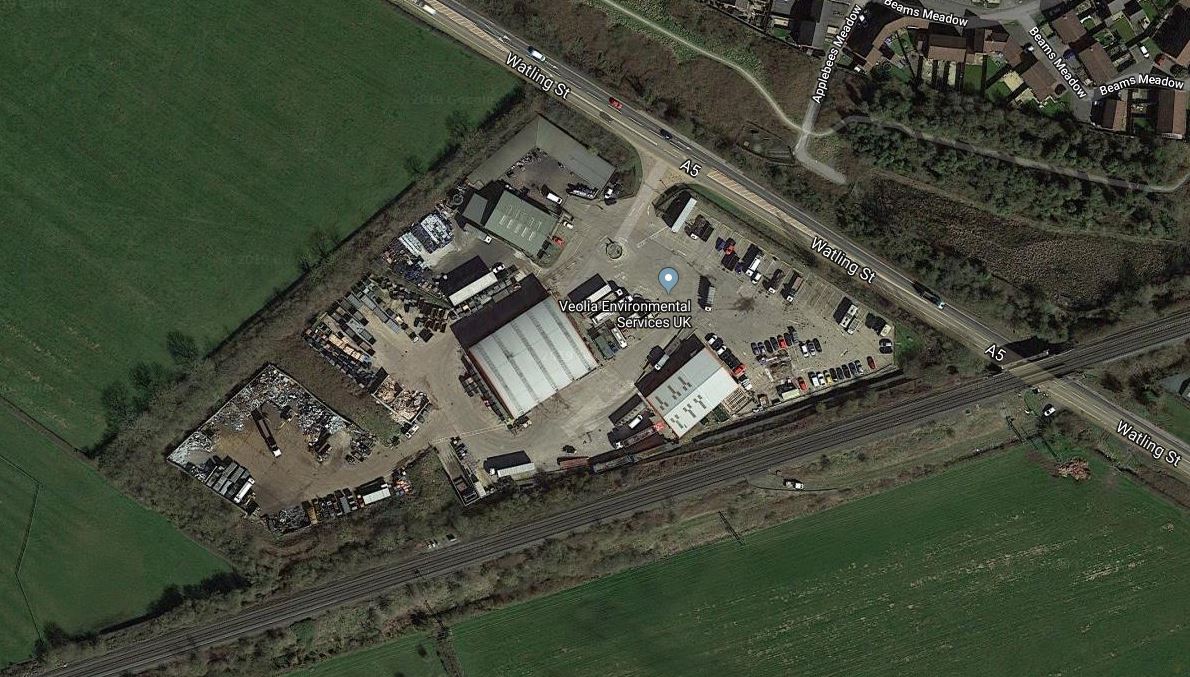
This must surely be one of the best sites to build a new Parkway station in the UK.
- The triangular site is a waste transfer station operated by Veolia Environmental Services UK.
- It has a direct connection to the A5, which could be easily improved, with perhaps a roundabout.
- Doing a crude estimate from the Google Map, I calculate that the site is about sixteen hactares, which is surely a good size for a Parkway station.
- There’s even quite a lot of new housing within walking and cycling distance.
It would also appear that the station could be built on this site without major disruption to either road or rail traffic.
Train Services
Currently the train service passing the proposed site of Nuneaton Parkway, which stops at both Hinckley and Nuneaton stations is as follows.
- An hourly CrossCountry service between Birmingham New Street and Leicester.
- In addition there are four trains per day between Birmingham New Street and Stansted Airport and/or Cambridge.
- All trains take seven minutes between Nuneaton and Hinckley.
But just under forty trains per day is not enough.
In my view, there should be a train at least every half-hour and preferably four trains per hour (tph) between Birmingham New Street and Leicester.
What About Coventry and Birmingham International?
Services between Nuneaton and Birmingham go via Coleshill Parkway and don’t call at Coventry and Birmingham International for the Airport, High Speed Two and the National Exhibition Centre.
So could there be a Birmingham New Street and Leicester service via Birmingham International, Coventry, Coventry Arena, Nuneaton, Nuneaton Parkway and Hinckley?
London, Liverpool and Manchester Via Nuneaton
Currently, the Nuneaton and London service is hourly and timed badly for connections at Nuneaton.
If it is intended that passengers will park at Nuneaton Parkway station and go to and from London, Liverpool or Manchester, the following must be arranged.
- At least four tph calling at Nuneaton, Nuneaton Parkway and Hinckley.
- At least two tph from West Midland Trains going between London Euston and Crewe calling at Nuneaton.
- Perhaps one tph from Virgin Trains calling at Nuneaton.
- A big improvement in cafes and waiting rooms at Nuneaton.
Note that times between Nuneaton and London Euston are as follows.
- West Midlands Trains – 78 minutes
- Virgin Trains – 69 minutes
Perhaps West Midlands Trains should be running trains with the same performance as Virgin?
Could Battery-Electric Trains Be Used Between Birmingham New Street And Leicester?
The route between Birmingham New Street and Leicester is not electrified, but two important stations; Birmingham New Street and Nuneaton are both wired, as is the route between Coventry and Birmingham New Street via Birmingham International.
Distances between Nuneaton and other stations, where independent power would be needed are.
- Birmingham New Street via Coleshill Parkway – 21 miles.
- Leicester – 19 miles or 38 miles return.
- Coventry – 10 miles
These distances are all feasible for battery operation.
In Porterbrook Makes Case For Battery/Electric Bi-Mode Conversion, I talked about Porterbrook’s plan to convert redundant Class 350 trains into battery-electric trains.
- They are four-car electric trains.
- They were built within the last ten years.
- They are currently used by West Midlands Trains.
In the related post, I estimated that these converted trains would have the following battery ranges for the power usages shown, if they were to be fitted with 400 kWh of batteries. I chose 400 kWh as this is the battery capacity of a Three-car Class 230 train.
- 5 kWh per vehicle mile – 20 miles
- 4 kWh per vehicle mile – 25 miles
- 3 kWh per vehicle mile – 33.3 miles
- 2 kWh per vehicle mile – 50 miles
In How Much Power Is Needed To Run A Train At 125 mph?, I calculated that.
- A Class 801 train needs 3.42 kWh per vehicle mile to maintain 125 mph.
- An IOnterCity125 train needs 2.83 kWh per vehicle mile to maintain 125 mph.
- A Class 222 train needs 4.83 kWh per vehicle mile to maintain 125 mph.
- A Class 170 train needs 3.15 kWh per vehicle mile to maintain 100 mph.
Looking at the last figure for the Class 170 train, I feel that a modern electric train must surely be as or more efficient and I’m justified to assume that a well-designed battery-electric train based on a Class 350 train, should be capable of a power usage of 3 k|Wh per vehicle mile, which would give a 33.3 mile range.
If more range was needed to handle Nuneaton and Leicester, the following could be done.
- Install a bigger battery in the trains.
- Install a charging station at Leicester.
- Extend the electrificationfrom Nuneaton for a few miles.
I very much believe that within a few years, the technology exists to have 100 mph battery electric trains running between Birmingham and Leicester, getting a quick charge en route at Nuneaton.
Conclusion
My logical thinking leads me to the conclusion, that a high-frequency service between Birmingham New Street and Leicester could grow into a Crossrail-style service.
- Six tph between Birmingham New Street and :Leicester.
- Services split between Birmingham New Street and Nuneaton, with some trains going via Coleshill and others via Coventry and Birmingham International.
- There could be extensions from Coventry to Leamington and Birmingham to Wolverhampton and Bromsgrove.
- Centred on Nuneaton Parkway.
- Possibly run by battery-electric trains.
Although the Crossrail branding is possibly overused these days.
I Had A Decompensation Stroke On Saturday
On Saturday, I went to the first half of the Spurs Crystal Palace match at White Hart Lane, so at least I saw all the goals.
But at half-time, I wasn’t feeling well, with stroke like symptoms, I suffered before, like bad eyesight on the left side and bad control of my left hand.
So I contacted a steward and he walked me to the medical room, where I was checked out.
They thought, I could be having a stroke, although, they seemed surprised I was so lucid and could remember details like my son’s phone number.
An ambulance was called and I was taken to University College Hospital.
They did a CT scan and cleared me to go home and then return on the Sunday to have an MRI scan.
They also said that I could stay overnight, which is what I did.
The MRI scan on Sunday ,morning, showed that I hadn’t had another stroke and they told me that it was a decompensation stroke.
The hospital fully checked me out, including doing the same mental check the doctors gave to Donald Trump, which I passed.
I was home by two.
But what is a decompensation stroke? There’s precious little on the Internet.
If nothing else, my small incident proves that the systems at Tottenham Hotspur, the London Ambulance Service and University College Hospital worked as everyone expects.
Class 755 Trains Are Now Serving Cambridge
Greater Anglia are now running Class 755 trains on services between Cambridge and Norwich.
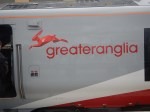
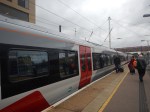


The first picture shows Greater Anglia’s new logo of a red hare.
- To my knowledge it is the only logo of a UK train company, that is not just a neutral graphic.
- Greater Anglia use it on posters in other forms.
I quite like it, as if any animal sums up speed in East Anglia it is the brown hare.


These pictures show some of Greater Anglia’s posters.
.
United Downs Deep Geothermal Project Confident On Potential Power Generation
The title of this post is the same as that of this article on ThinkGeoenergy.
This is the first paragraph.
With initial tests of the well drilled, the United Downs Deep Geothermal Project (UDDGP) suggests that the project will be able to generate electricity of as much as 3 MW in power generation capacity.
Two holes have been bored to a depth of 5 km.
If the project is successful, up to three MW of heat could be brought to the surface, which can be used to generate electricity or heat buildings.
A Look At Possible Costs
This page on Wikipedia is entitled Cost Of Electricity By Source.
It gives these for the capital cost of power stations for various zero-carbon energy sources.
- onshore wind – $1600/kW
- offshore wind – $6500/kW
- solar PV (fixed) – $1060/kW (utility) $1800/kW
- solar PV (tracking)- $1130/kW (utility) $2000/k
- battery storage power – $2000/kW
- conventional hydropower – $2680/kW
- geothermal – $2800/kW
Geothermal has one big advantage over wind and solar power in that it is a continuous power source like nuclear, hydropower and some fossil fuels, so it doesn’t need to be backed by energy storage.
Fire Up The Quattro: My Other Car Is An Energy Supplier
An article with this title is on Page 3 of the Business Section in today’s Sunday Times.
This is the first paragraph.
Car companies could be encouraged to become electricity suppliers under an overhaul of the energy market being explored by the government and the regulator.
This is an excellent idea.
These are a few of my ideas.
All-In-One Deals
It would open up the scope for all-in-one deals for the purchase of electric cars.
The cost of the car, servicing and electricity would all be included.
A cost per mile could be guaranteed, which might rise with distance.
Most importantly, he car company would handle all the hassle and give the customers appropriate training.
It Could Be A Range Anxiety Solution
Some articles in the media, are saying that range anxiety is holding back sales of electric cars, as no-one wants to get stuck in remote locations with flat batteries.
Up market brands already have their own rescue service and I can envisage a network of electric trucks, which can rescue stranded vehicles, by giving them sufficient charge to get to the nearest charger.
These trucks could even be in a common fleet with video screens informing everybody they were a particular car company’s Electric Vehicle Rescue Truck. So when rescuing an Audi, they would say Audi’s El;ectric Vehicle Rescue Truck.
If a prospective punter, saw a rescue truck, with their favourite make on the side, it might persuade them to pop in to a showroom.
Free Or Reduced Cost Parking In Electric-Only Car Parks
In Airport Plans World’s Biggest Car Parks For 50,000 Cars, I outlined how a massive car park like this could hold electric cars with a total battery capacity of 1.35 GWh.
This storage capacity could be used to store surplus energy, whilst cars were parked.
I can see a consortium being put together to provide electric-only car parks.
- National Grid to provide and distribute the electricity.
- The car companies to provide the customers.
- Airports and rail stations, local authorities to provide the land.
But not all car parks would be large!
I can imagine new housing developments bringing in an electric vehicle-only rule.
I wouldn’t mind living in one of that type of development.
There would be various charges in these electric vehicle-only car parks.
- An hourly or contract charge for the actual parking.
- A charge for the electricity used to charge the vehicle.
There would also be a payment from Nation Grid based on the amount of energy stored in the vehicle’s battery.
Billing would be automatic, based on when you were connected to the charger and the various energy flows.
\suppose you were flying away from Heathrow for a week, National Grid would have use of your vehicle’s battery to store electricity for seven days.
The car companies would be in a unique position to enable this deal.
- They have the customers.
- They can make their cars compatible with the car parks.
- They can handle the complex billing, as part of an All-In-One deal.
- \drivers would probably prefer to deal with BMW, Jaguar etc., than an energy company.
I would expect this model of car-parking to multiply.
- Many drivers would only use public transport on pain of death, so buying an electric car is the lesser of two evils.
- It would cut emissions in the centre of towns and cities.
- It would appeal to High Streets and Town Centres, as it could attract shoppers and visitors.
- For those with home chargers, it must surely reduce range anxiety
The only disadvantage, is that it might increase the use of cars for short journeys and increase traffic congestion.
But at least the extra vehicles would be non-polluting electric ones.
Conclusion
Used creatively, the proposal of allowing car companies to be energy suppliers, would appear to have possibilities.
.
Bollocks To Brexit
This snippet is in the bottom-right corner of Page 29 in today’s Sunday Times
Is there no escape from politics? The top and bottom rows of the cryptic crossword in Thursday’s Guardian spelt out “Bollocks to Brexit”. Very amusing, but not a message that isn’t available elsewhere in the paper. How much more impressive to have smuggled it into The Daily Telegraph.
There’s certainly no escape from hearing views about Brexit.
A Short Cruise At Greenwich
I had taken the Emirate air-line to North Greenwich with friends and we decided we needed to go to the Cutty Sark.
So we took one of the Thames Clippers, from where I took these pictures.
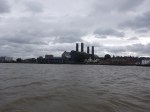




About the pictures.
- The first pictures show Greenwich Power Station, which generates electricity for Transport for London on a standby basis. It must be one of oldest power stations still producing electricity, although nowadays it doesn’t use coal, but six massive gas turbines.
- The rest of the pictures show the Maritime Greenwich World Heritage Site.
The trip between the two piers took only a few minutes.
A Tourist Route Between Bank/London Bridge/Tower of London And Maritime Greenwich
I do this route on a sunny day, when I perhaps want to show a guest around London.
- Take the Docklands Light Railway (DLR) from Bank or Tower Gateway stations to Royal Victoria station.
- Take the Emirate Air-Line across the Thames to Greenwich. Peninsular
- North Greenwich isn’t overloaded with attractions, unless you’re seeing a show or event at the O2. But it’s getting better!
- Take the Thames Clipper one stop to Greenwich. They run every twenty minutes.
If you want to be boring you can always catch the DLR to Cutty Sark station.
A few points.
Docklands Light Railway
The Docklands Light Railway is often thought by Londoners, commuters and visitors as a bit of a Cinderella.
However, like Cinderella she works hard all day and provides reliable and efficient transport, where the only alternatives are buses, bicycles, taxis and Shank’s pony.
Just after the 2012 Olympics, I met a big cheese in Transport for London on a DLR train. He felt that the DLR had been the star in getting everybody to the games.
It must be one of the most successful light railways in the world!
And yet, no-one has ever thought to build another running on the same principles.
- Mainly elevated track.
- Mainly step-free stations
- Universal step-free train-to-platform access.
- High-visibility trains for passengers.
- Trains every three or four minutes.
- Friendly, interested, visible staff.
- Driverless operation with a train captain looking after passengers and driving in emergency.
- Contactless ticketing
Perhaps the lack of a full-time driver on every train, means that many other places would have massive union problems.
Emirates Air-Line
I’ve taken many people on the Emirates Air-Line and few haven’t been impressed.
The best time in my view is just as the sun sets, as these pictures show.
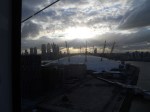



Note that unless you want a souvenir ticket, just use your bank card to touch-in and touch-out! My last one-way trip cost me £3.50 and appeared on my credit card statement labelled TFL TRAVEL CH Conractactless.
Thames Clippers
Since I moved back to London in 2010, the Thames Clippers have been continuously expanding and improving.
- .Five new boats have been delivered since the Olympics.
- Several piers have been improved, rebuilt or added in recent years.
- Cpmtactless ticketing can be used for all services. Payments are labelled THAMES CLIPPERS.
It should be noted that if you are a holder of a London Freedom Pass, you can get a discount on tickets at a machine.
Plans exist for the following.
- Extending the route to new housing developments at Barking and Thamesmead in the East.
- A new pier at Silvertown in October 2019, which could have a walking or bus link to the City Airport.
I can also see the following.
- Extensions to the West past Putney Pier to places like new housing at Brentford and Kew Gardens.
- Further extensions to the East to support the massive housing developments.
- Better connections to the London Underground, London Overground and National Rail stations.
- More use being made of the Thames Barrier as a tourist attraction.
- Thames Clippers becoming a river tube line.
- Thames Clippers appearing on the Tube map, just as the Emirate Air-Line does!
- A quick and easy connection between the City Airport, Canary Wharf and the Cities of London and Westminster being developed.
The last would surely appeal to City businessmen and those wanting to celebrate a special event.
If Venice can run a boat between the Airport, and St. Mark’s Square why can’t London do the equivalet?
Crossrail
Crossrail is the Elephant-in-the-Room, that will surely make its presence felt along the South Bank of the Thames, when it is extended to Ebbsfleet, as it surely will be.
- There will be a short walking interchange at Woolwich between Crossrail and the Tghames Clippers.
- If Crossrail build a station at Silvertown for London City Airport, this could be another interchange.
- If Crossrail eventually terminates at Gravesend, there could even be possibilities that far East.
The possibilities of designing the Crossrail Extension in conjunction with the Thames could open up the river has as both a leisure attraction and a transport artery.
Conclusion
London will reach towards the sea, to further enhance and add space to the undoubted Capital of the World!
A
The Crossrail Portal At Pudding Mill Lane Station
These pictures show the Crossral portal at Pudding Mill Lane station, as it is approached on a DLR train from Stratford station.
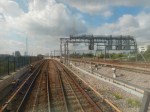
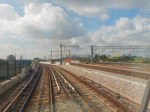
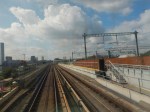
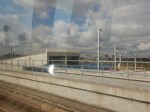
The portal does appear to be rather functional.
The New Bank Station Entrance At Cannon Street Is Taking Shape Nicely
The title of this post, is the same as that of this article on The Londonist.
The article contains some good pictures and says this.
- The building has now been topped out!
- The station is underneath an eleven storey block.
- The entrance will give direct escalator and lift access to the Northern Line.
These are some pictures of my own.
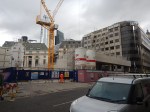
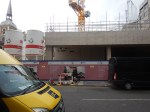
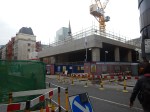
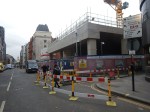
The entrance and the building above should be open by 2022.
Penge Interchange
This map from carto.metro.free.fr shows the lines through Penge West and Penge East stations.
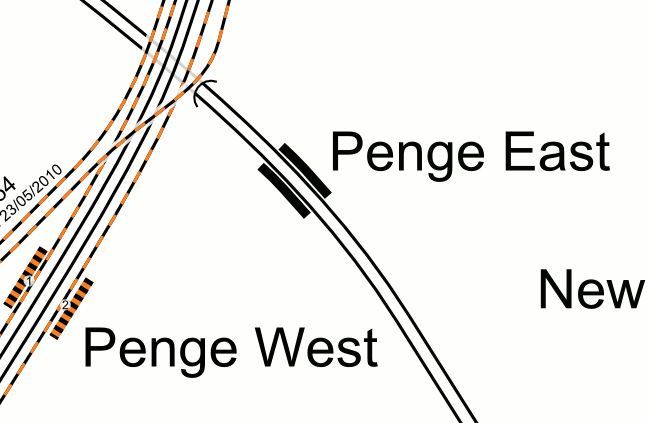
The two stations are a valid out-of-station interchange, but neither is step-free.
Penge East station could be difficult to make step-free, as the footbridge is listed.
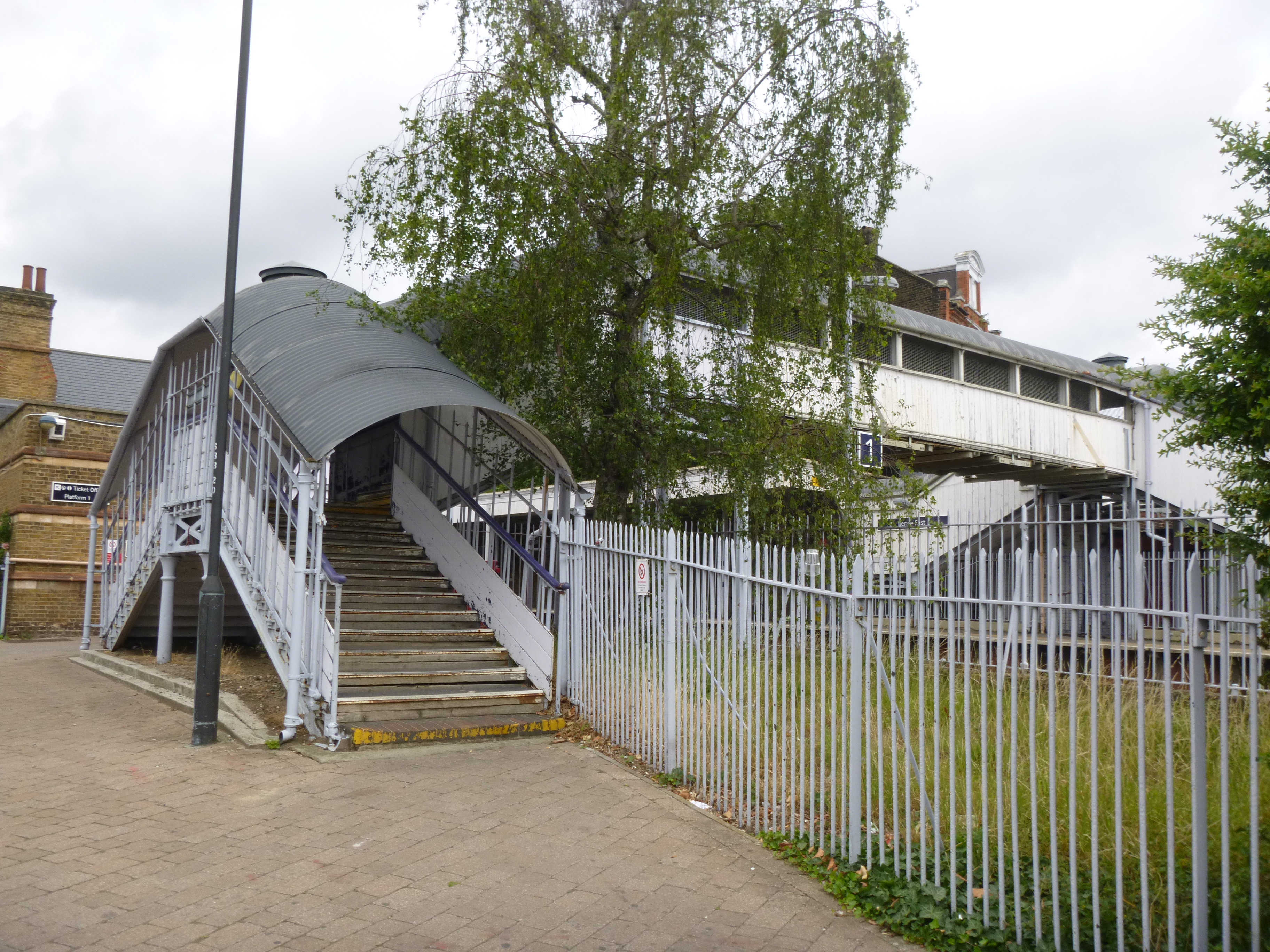
I think that it is one of those structures that Network Rail wouldn’t miss, if it was decided to install it at the National Railway Museum.
This Google Map shows the two stations and their distances from, where the two lines cross.
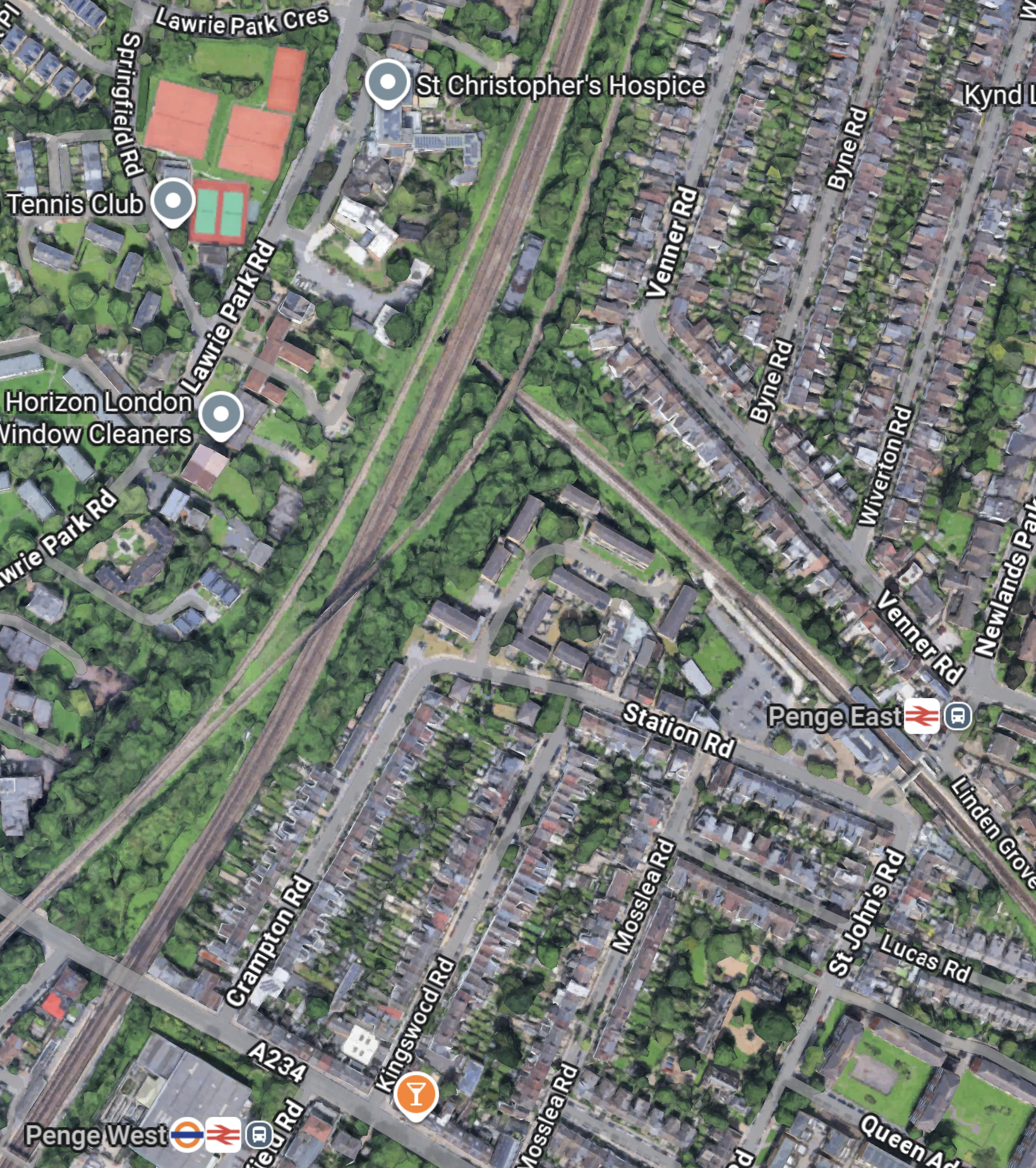
Note.
- Penge West station is in the South-West corner of the map on the East London Line.
- Penge East station is in the East of the map on the Chatham Main Line.
- The new Penge Interchange station could be located, where the East London Line and the Chatham Main Line cross.
- The two tracks of the Crystal Palace branch of the Overground can be seen either side of the East London Line.
Could this be one of the reasons, why it has been suggested by Transport for London, that a new station be built, where the lines through the two Penge stations? cross?
- The station would be built on railway land.
- The station could be a step-free four-poster station like Smethwick Galton Street station, which I wrote about in Birmingham’s Four-Poster Station.
- It would have four tph between Victoria and Bromley South stations.
- It would have four tph between Highbury & Islington and West Croydon stations.
- It would have two tph between London Bridge and Caterham stations
- It might also be possible to have platforms on the Crystal Palace branch, thus adding six tph between Highbury & Islington and Crystal Palace. stations.
- The station could have Thameslink platforms.
I feel it would offer the following benefits.
- Better connection between South East and North London, by changing at Penge and Whitechapel.
- Better connection between South East London and Crossrail, with all its connections, by changing at Penge and Whitechapel.
Penge Interchange might allow the two older Penge stations to be closed.
These are some further thoughts.
Southeastern Stations Served From Penge East
These stations are served from Penge East station.
- Beckenham Junction
- Bickley
- Brixton
- Bromley South
- Herne Hill
- Kent House
- Petts Wood
- Shortlands
- Sydenham Hill
- West Dulwich
Each station would get four trains per hour (tph) with two on Sundays.
What Does Artificial Intelligence, Think Of Penge Interchange?
I asked Google AI and received this answer.
Penge Interchange refers to a long-proposed but unbuilt Transport for London (TfL) project to create a major new railway station in Penge, London, combining Penge East (Chatham Main Line) and Penge West (Overground) stations, allowing seamless, step-free transfers between the East London Line (Overground) and Southeastern services, potentially linking to Thameslink, to improve capacity and connectivity in South London. Currently, there’s an “out-of-station interchange” (OSI) between Penge East and Penge West, requiring a walk.
Connecting to Thameslink could be worthwhile.
Note too, that Google AI refers to the East London Line by its traditional not its woke name.
What Does Artificial Intelligence, Think Of Brockley Interchange?
I asked Google AI a similar question for Brockley and received this answer.
“Brockley Interchange” can refer to two main things: the busy M1 Junction 4 near London (a motorway junction with the A41) or proposed future transport links for Brockley railway station in South East London, aiming to connect more rail lines, possibly reusing the old Brockley Lane site for better links to the Nunhead-Lewisham line. The current Brockley Station serves London Overground and Southern Rail but lacks step-free platform-to-platform access, with a proposed interchange potentially fixing this.
Note.
- The reference to the M1 Junction 4 is of course not relevant here.
- Brockley station also doesn’t have an entrance on the Up side.
This Google Map shows Brockley station and the Nunhead-Lewisham Line over the top.
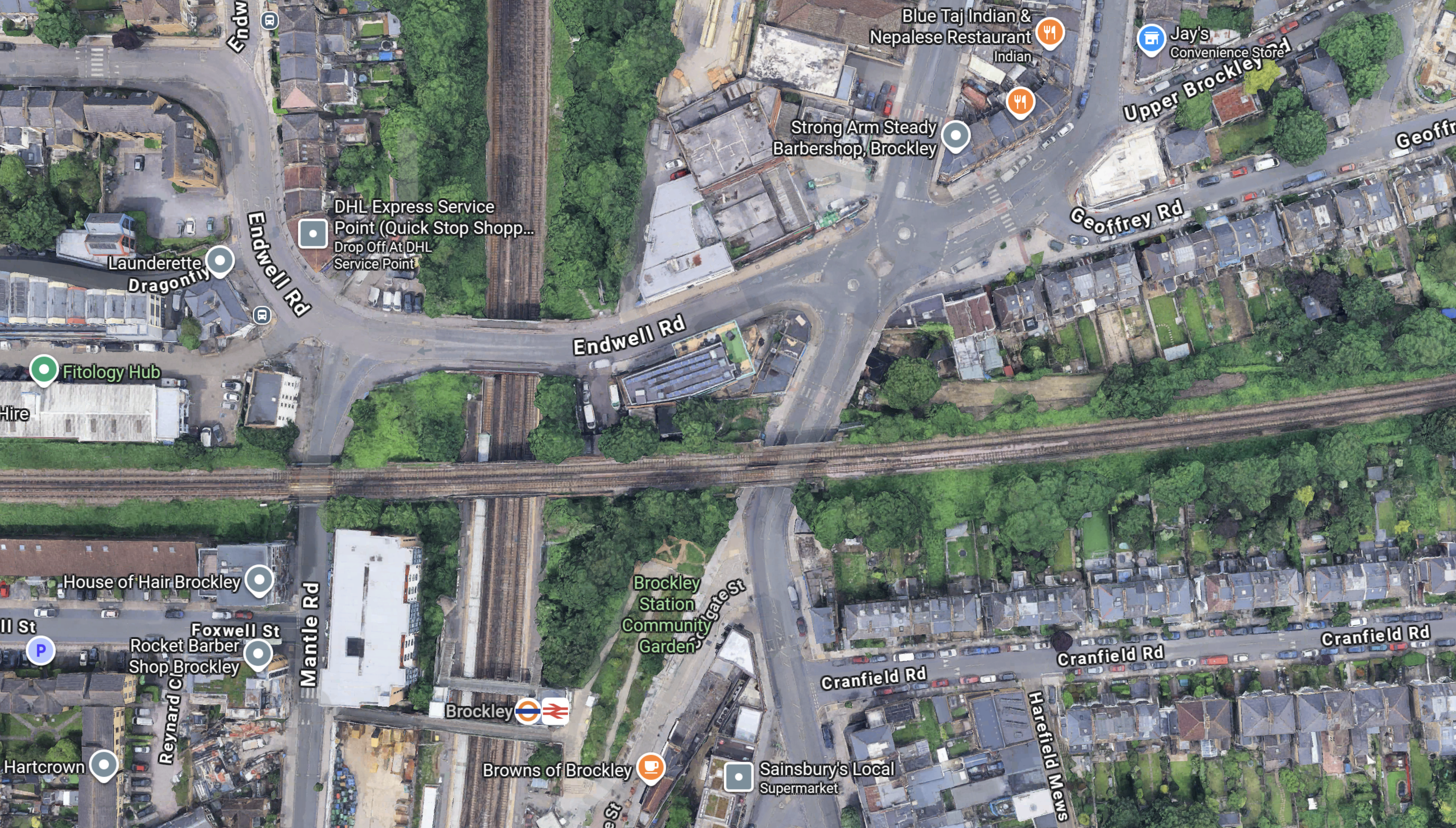
Note.
- The East London Line runs North-South.
- The Nunhead-Lewisham Line runs East-West.
- Brockley Lane station was just to the East of the East London Line.
- There is quite a few hectares of spare land along the Nunhead-Lewisham Line.
- A development called Brockley Yard has been given planning permission to the West of Brockley station.
It looks like the station could be redeveloped to join the two lines, with a certain amount of housing above the station.
Conclusion
It strikes me, that there are possibilities for station and network improvements, that would benefit passengers at both Penge and Brockley, that would release sites for housing.
The developments could also be self-funded, by property sales and more passengers on the rail network.
 The Anonymous Widower