An Unnecessary Diesel-Hauled Train
I took these picture at Blackhorse Road station this morning.
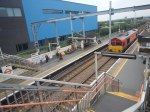
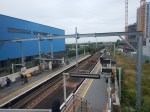


This train from Moss End to Dagenham Dock is pathed to be electric-hauled. So why was it hauled by a noisy and polluting Class 66 locomotive?
Class 710 Train Roofs At Blackhorse Road Station
I took these pictures at Blackhorse Road station.


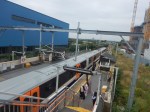


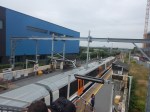

I couldn’t spot any resistor banks on the roofs, that could be used to burn off excess energy, that is generated by regenerative braking.
Consider.
- The roofs do have a rather clean aerodynamic look.
- I’ve never seen resistor banks placed anywhere other than on the roof of a train.
- Regenerative braking must either return the energy through the electrification or store in in some form of onboard energy storage.
It looks to me, that Bombardier have designed a very efficient train.
Carbon Capture From Cement Manufacturing Nears Market Readiness
The title of this post, is the same as that of this article on The Fifth Estate.
In Climate Change: The Massive CO2 Emitter You May Not Know About, I talked about the carbon dioxide that is released, by the manufacture of cement, mainly referring to this article on the BBC.
This is the first three paragraphs of the BBC article.
Concrete is the most widely used man-made material in existence. It is second only to water as the most-consumed resource on the planet.
But, while cement – the key ingredient in concrete – has shaped much of our built environment, it also has a massive carbon footprint.
Cement is the source of about 8% of the world’s carbon dioxide (CO2) emissions, according to think tank Chatham House.
However, the article on The Fifth Estate, raises hopes that new processes for making cement may reduce the carbon footprint of this important material.
This is the first paragraph of tThe Fifth Estate article.
A consortium led by Australian firm Calix is now well on the way to completing a pilot plant for its breakthrough technology that will capture carbon emissions from the manufacture of lime cement. Other projects with similar aims to reduce the global warming impact of construction with concrete are also racing to the marketplace.
It certainly looks like the Australians are doing something concrete about climate change!
Kremlin Lets Women Drive The Trains
The title of this post is the same as that of an article in The Times on Friday.
This was the first two paragraphs.
For decades, Russian girls who have dreamt of becoming train drivers or mechanics or captaining a ship have been forced to abandon their ambitions.
Laws prohibiting women from physically demanding employment, or jobs that could harm their chances of bearing children, were introduced by the Soviet Union in 1974, and updated by President Putin in 2000.
No wonder Russia a basket case, as they are not making best use of their resources. As do countries like Iran, Iraq and Syria!
Remember, that during the Second World War, the Nazis didn’t let women work in the war effort.
I seem to remember they lost!
Hybrid Selling
This picture shows a mini-brochure, that came in my copy of today’s Sunday Times.
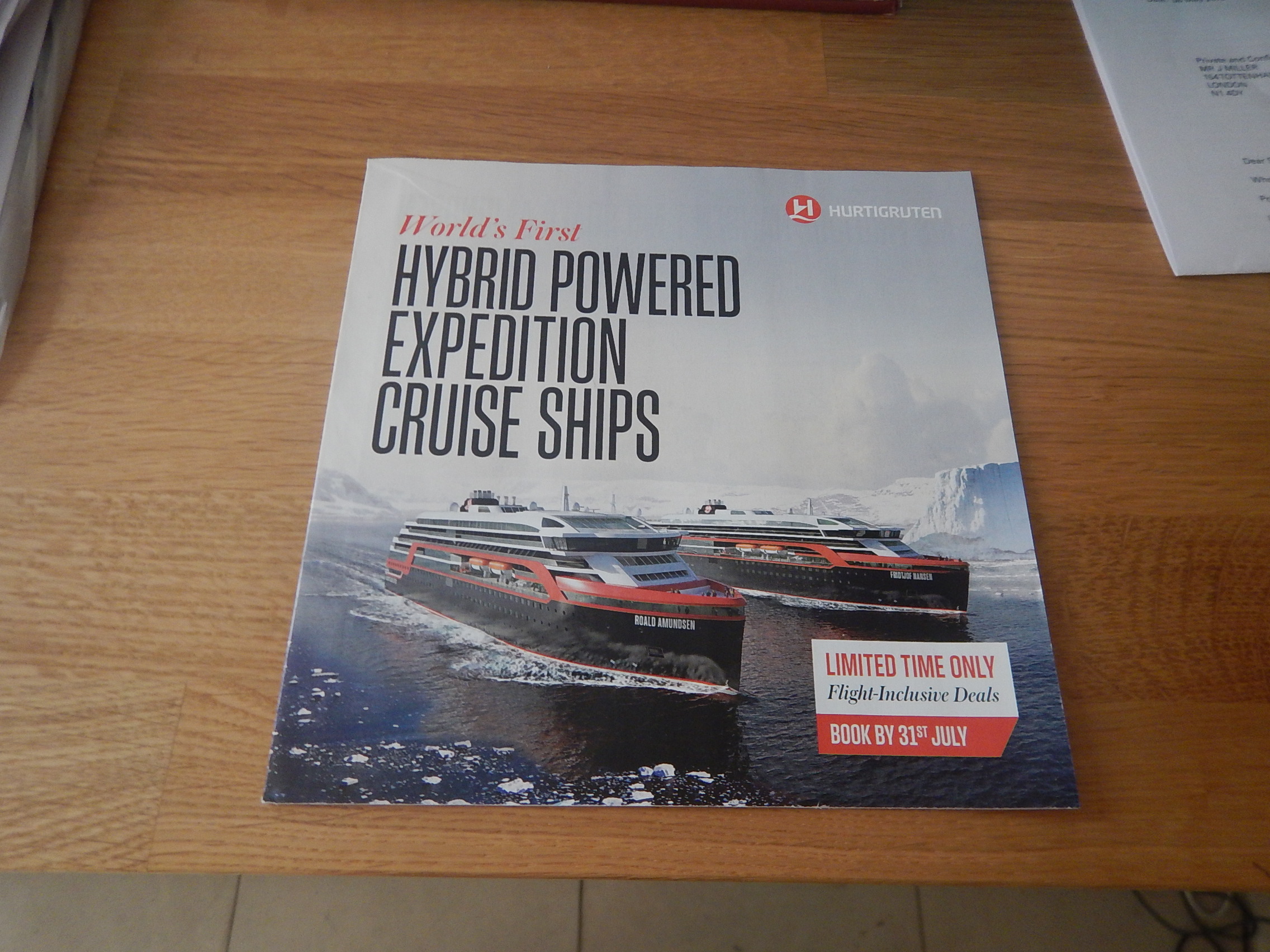
Thecaption is World’s First Hybrid Powered Expedition Cruise Ships.
Cruising isn’t my scene, as it attracts too many Daily Mail readers.
But I must admit, that the H-word caught my eye and I read the brochure!
My First Ride In A Class 331 Train
After yesterday’s post; My First Ride In A Class 195 Train, today, I took a ride in that train’s electric sister; the Class 331 train, between Leeds and Doncaster stations.
These are some pictures.
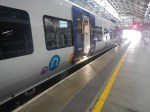
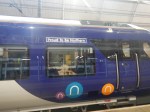
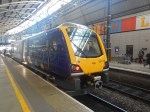
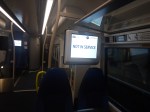
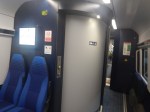
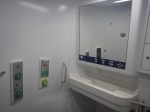
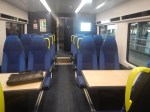

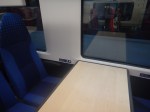
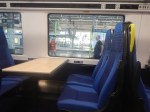


These are my views on various aspects of the train.
Noise, Vibration And Harshness
The electric trains, I travel in most are London Overground’s and TfL Rail’s various classes; 315, 317, 345, 378 and 710.
These Class 331 trains seemed to have a smooth ride, but a noisier transmission compared to say the Class 378 train or the Class 710 train.
To check, the day after I rode the Class 331 train, I rode the Gospel Oak to Barking Line, sampling both Class 378 and Class 710 trains.
It was no surprise that noise levels in the Class 710 train were lowest, but the Class 331 train was noisier than the Class 378 train.
Interior Design
The interior design is the same as that of the Class 195 train and my same comments apply.
- It is inferior to that of a Class 385 train.
- The seats are not aligned with the windows.
- There are lots of tables, which I like.
I also noted that the information display wasn’t working. Was this just teething troubles?
Entrance And Exit
As expected, this was the same as the Class 195 train.
Conclusion
The Class 331 train like its sibling; the Class 195 train, has a few design faults, that hopefully will be rectified in the next few months.
Irlam Station To Go Step-Free
This document on the Government web site is entitled Access for All: 73 Stations Set To Benefit From Additional Funding.
Irlam station is on the list.
These pictures show the station and the current subway.

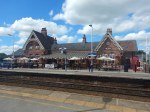

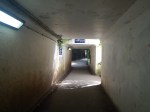

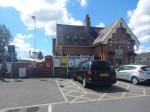
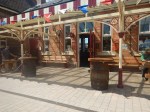
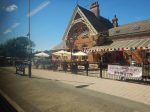
The station was a total surprise, with a large pub-cafe and a lot of visitors and/or travellers sitting in the sun.
I had an excellent coffee and a very welcoming gluten-free blueberry muffin!
This Google Map shows the station.
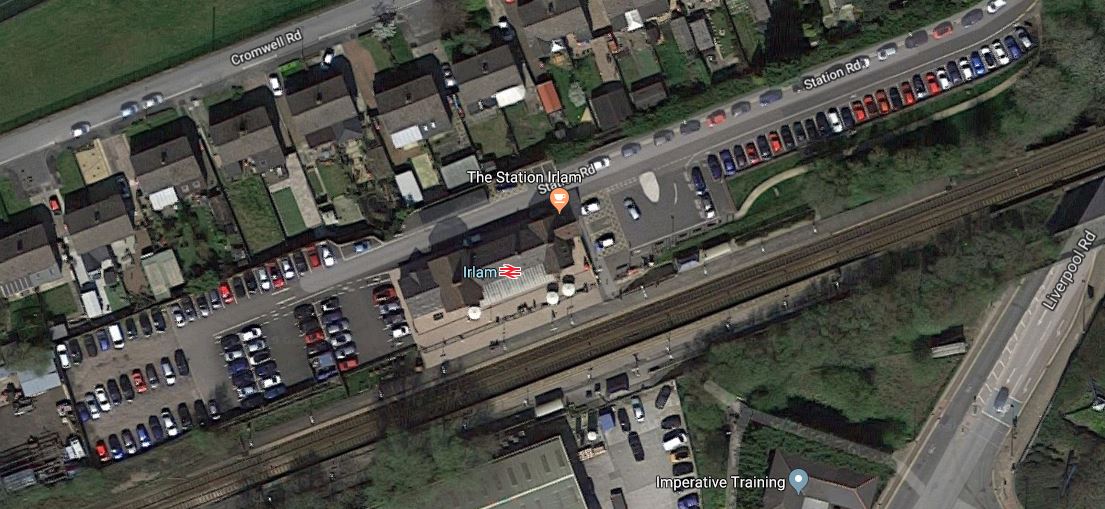
It is one of those stations where commuters have to cross the railway either on the way to work or coming home.
So a step-free method of crossing the railway is absolutely necessary.
The Current And Future Rail Service
As the station lies conveniently between Liverpool and Warrington to the West and Manchester and Manchester Airport to the East, it must be a station with tremendous potential for increasing the number of passengers.
At the moment the service is two trains per hour (tph) between Liverpool Lime Street and Manchester Oxford Road stations.
- Oxford Road is probably not the best terminus, as it is not on the Metrolink network.
- When I returned to Manchester, many passengers alighted at Deansgate for the Metrolink.
- On the other hand, Liverpool Lime Street is a much better-connected station and it is backed up by Liverpool South Parkway station, which has a connection to Merseyrail’s Northern Line.
- The current service doesn’t serve Manchester Piccadilly or Airport stations.
A guy in the cafe also told me that two tph are not enough and the trains are often too short.
Merseyrail work to the same principle as the London Overground and other cities of four tph at all times and the frequency certainly draws in passengers.
Whilst I was drinking my coffee, other trains past the station.
- One tph – Liverpool Lime Street and Manchester Airport
- One tph – Liverpool Lime Street and Norwich
Modern trains like Northern’s new Class 195 trains, should be able to execute stops at stations faster than the elderly diesel trains currently working the route.
So perhaps, after Irlam station becomes step-free, the Manchester Airport service should call as well.
As Liverpool Lime Street station has been remodelled, I can see a time in the not too distant future, when that station can support four tph, that all stop at Irlam station.
The Manchester end of the route could be a problem, as services terminating at Oxford Road have to cross the busy lines of the Castlefield Corridor.
So perhaps all services through Irlam, should go through Deansgate, Manchester Oxford Road and Manchester Piccadilly stations to terminate either at the Airport or perhaps Stockport or Hazel Grove stations.
But would this overload the Castlefield Corridor?
Battery/Electric Trains
If you look at the route between Liverpool Lime Street and Manchester Oxford Road stations, the following can be seen.
- Only about thirty miles between Deansgate and Liverpool South Parkway stations is not electrified.
- The section without electrification doesn’t appear to be particularly challenging, as it is along the River Mersey.
It is my view, that the route between Liverpool and Manchester via Irlam, would be an ideal route for a battery/electric train.
A train between Liverpool Lime Street and Manchester Airport stations would do the following.
- Run from Liverpool Lime Street station to Liverpool South Parkway station using the installed 25 KVAC overhead electrification.
- Drop the pantograph during the stop at Liverpool South Parkway station.
- Run from Liverpool South Parkway station to Deansgate station using battery power.
- Raise the pantograph during the stop at Deansgate station.
- Run from Deansgate station to Manchester Airport station, using the installed 25 KVAC overhead electrification.
The exact distance between Deansgate and Liverpool South Parkway stations is 28.2 miles or 45.3 kilometres.
In 2015, I was told by the engineer riding shotgun on the battery/electric Class 379 train, that that experimental train was capable of doing fifty kilometres on battery power.
There are at least four possible trains, that could handle this route efficiently.
- Porterbrook’s proposed batteryFLEX train based on a Class 350 train.
- A battery/electric train based on the seemingly unwanted Class 379 train.
- A battery/electric version of Stadler’s Class 755 train.
- I believe that Bombardier’s Aventra has been designed so that a battery/electric version can be created.
There are probably others and I haven’t talked about hydrogen-powered trains.
Battery power between Liverpool and Manchester via Irlam, appears to be very feasible.
Tram-Trains
As my train ran between Manchster and Irlam it ran alongside the Metrolink between Cornbrook and Pomona tram stops.
Manchester is very serious about tram-trains, which I wrote about in Could A Class 399 Tram-Train With Batteries Go Between Manchester Victoria And Rochdale/Bury Bolton Street/Rawtenstall Stations?.
Tram-trains are often best employed to go right across a city, so could the Bury tram-trains go to Irlam after joining the route in the Cornbrook area?
- Only about thirty miles between Deansgate and Liverpool South Parkway stations is not electrified.
- The route between Liverpool and Manchester via Irlam doesn’t look to be a very challenging line to electrify.
- The total distance bettween Liverpool Lime Street and Manchester Victoria station is only about forty miles, which is a short distance for a tram-train compared to some in Karlsruhe.
- Merseyrail’s Northern Line terminates at Hunts Cross station, which is going to be made step-free.
- There is an existing step-free interchange between the Liverpool and Manchester route via Irlam and Merseyrail’s Northern Line at Liverpool South Parkway station.
- Class 399 tram-trains will have a battery capability in South Wales.
- Class 399 tram-trains have an operating speed of 62 mph, which might be possible to increase.
- Stadler make Class 399 tram-trains and are building the new Class 777 trains for Merseyrail.
I think that Stadler’s engineers will find a totally feasible and affordable way to link Manchester’s Metrolink with Liverpool Lime Street station and Merseyrail’s Northern and Wirral Lines.
I can envisage the following train service running between Liverpool and Manchester via Irlam.
- An hourly service between Liverpool Lime Street and Nottingham, as has been proposed for the new East Midlands Franchise.
- A four tph service between Liverpool Lime Street and Manchester Airport via Manchester Piccadilly.
- A tram-train every ten minutes, linking Liverpool Central and Manchester’s St Peter’s Square.
- Tram-trains would extend to the North and East of Manchester as required.
- All services would stop much more comprehensively, than the current services.
- Several new stations would be built.
- In the future, the tram-trains could have an interchange with High Speed Two at Warrington.
Obviously, this is just my speculation, based on what I’ve seen of tram-train networks in Germany.
The possibilities for the use of tram trains are wide-ranging.
Installing Step-Free Access At Irlam Station
There would appear to be two ways of installing step-free access at Irlam station.
- Add lifts to the existing subway.
- Add a separate bridge with lifts.
These are my thoughts on each method.
Adding Lifts To The Existing Subway
Consider.
- The engineering would not be difficult.
- Installaton would probably take a number of weeks.
- There is good contractor access on both sides of the railway.
There are similar successful step-free installations around the UK
The problem is all about, how you deal with passengers, whilst the subway is closed for the installation of the lifts.
Adding A Separate Bridge With Lifts
Consider.
- There is a lot of space at both the Eastern and Western ends of the platform to install a new bridge.
- Adding a separate bridge has the big advantage, that during the installation of the bridge, passengers can use the existing subway.
- Once the bridge is installed, the subway can be refurbished to an appropriate standard.
Passengers will probably prefer the construction of a new bridge.
In Winner Announced In The Network Rail Footbridge Design Ideas Competition, I wrote how the competition was won by this bridge.
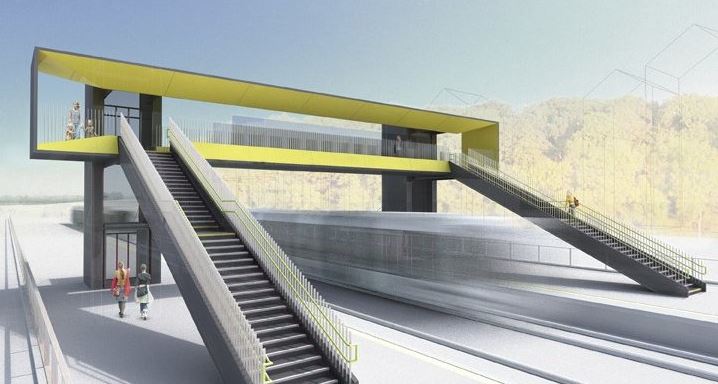
So could a factory-built bridge like this be installed at Irlam station?
There is certainly space at both ends of the platform to install such a bridge and the daily business of the station and its passengers would be able to continue unhindered, during the installation.
I’m also sure, that the cafe would be happy to provide the daily needs of the workforce.
Conclusion
From a station and project management point-of-view, adding a new factory-built bridge to Irlam station is the easiest and quickest way to make the station step-free.
It also appears, that Network Rail have made a wise choice in deciding to put Irlam station on their list of stations to be made step-free, as the station could be a major part in creating a new high-capacity route between Liverpool and Manchester.
This could also be one of the first stations to use an example of the new bridge.
- Installation would be quick and easy.
- There is no site access problems.
- There station can remain fully open during the installation.
- All stakeholders would probably be in favour.
But above all, it would be a superb demonstration site to bring those from stations, where Network Rail are proposing to erect similar bridges.
 The Anonymous Widower