Bonus For GPs If Patients Join Drug Trials In Plan To Lure Firms To NHS
The title of this post, is the same as that of this article on The Times.
This is the sub-heading.
£650m boost for medical research after number of participants slumps
These three paragraphs outline what is to be done.
Tens of thousands more patients will be signed up for clinical trials as ministers promise drug companies better access to the NHS to expand the economy and develop cutting-edge treatments.
Jeremy Hunt, the chancellor, is promising a £650 million package to boost life sciences as he attempts to lure pharmaceutical giants to Britain.
GPs will be offered financial incentives to recruit patients into trials of new treatments and hospitals will be given research targets under plans to reverse a slump in clinical testing while the NHS struggles with the backlog from Covid-19.
It all sounds good to me.
I have been involved in several trials and medical research projects.
- As part of my coeliac disease diagnosis, one endoscopy was performed by Rebecca Fitzgerald at Cambridge, as she was taking samples of bile fluids for her research into Barrett’s esophagus.
- After the death of my wife, I was interviewed by PhD students in the Psychology Department at Liverpool University for their research into widowhood.
- Oxford University interviewed me on diet for their coeliac disease research.
- After my stroke, I spent an entertaining afternoon at the University of East London doing balance tests by computer. Their aim was to develop a reliable balance test for stroke and other patients, that could be carried out by physiotherapists quickly, than by more expensive doctors.
- I have also been on a drug trial at Queen Mary University, but that drug was useless and had no good or bad affects, so the trial was halted. However, it did lead to other enjoyable activities in the field of patient relations with treatment and research.
As a confirmed coward, I should note that with the exception of the drug trial, all of the other projects were low risk.
I should say, that I also sponsor pancreatic cancer research at Liverpool University, in memory of my son, who died from the disease. I wrote about the first Liverpool project in There’s More To Liverpool Than Football And The Beatles!.
A Database Of Projects Open For Volunteers
I believe that this is needed, so that those like me, who like to contribute to research can volunteer.
Perhaps some of the £650 million, that has been promised by Jeremy Hunt, could be used to create the database.
I also believe the database could be used for other non-medical research.
A Waste Of Valuable Resources Between Paddington And Heathrow
Much of my working life was spent in writing project management software.
I like to think, I was an expert at writing software to juggle resources.
I wrote my first piece of software in that field in ICI, to get my boss out of trouble, after he’d promised the department a program to allocate the department’s office space more efficiently.
Unfortunately, the student, who’d written the software, without leaving anything that worked or any decent instructions.
So I told my boss;Colin, that I’d have a go.
In my previous position at ICI in Runcorn, I’d worked out an algorithm to decode mass spectrometer traces, which started with a rough idea of what was there, which was entered by an operator and then used permutations and combinations to fit the output.
I used the algorithm in every resource scheduler, I ever wrote and it worked a treat.
So when I see a waste of resources, I get angry, as I know those who devised the system could have done a lot better.
Look at these pictures, I took of a Heathrow Express, that I took today.




It is barely ten percent full.
It has become a waste of resources; train, valuable paths in the Heathrow tunnel, and platform space at Paddington.
These are a few thoughts.
Capacity To And From Heathrow
Consider.
- Heathrow Express uses twelve-car Class 387 trains, with a capacity of 672 seats, that run at a frequency of four trains per hour (tph), which is 2,688 seats per hour.
- The Elizabeth Line uses nine-car Class 345 trains, with a capacity of 454 seats, that run at a frequency of six tph, which is 2,724 seats per hour.
- The Class 345 trains can also carry another 1046 standing passengers on each journey, which adds up to a maximum of 6276 standees per hour.
- The Piccadilly Line uses 73 Stock trains, with a capacity of 684 seats, that run at a frequency of twelve tph, which is 8,208 seats per hour.
This gives a capacity of 19,896 passengers, staff and visitors per hour, or which 13,620 get seats.
Expressed as percentages, the four modes of transport are as follows.
- Heathrow Express – 13.5 %
- Elizabeth Line – Sitting – 13.7 %
- Elizabeth Line – Standees – 33.8 %
- Piccadilly Line – 41.2 %
In Effects Of The ULEZ In West London, I said this about journeys to and from the airport.
Heathrow Airport is one of the world’s busiest airports and 76,000 people work at the airport, with many more employed nearby.
The airport handled 61.6 million passengers in 2022, which is a few short of 170,000 per day.
If you consider that those that work at the airport do two trips per day and passengers generally do one, that means there are 322,000 trips per day to or from the airport.
But as it now so easy to get to the Airport using the Elizabeth Line will more people use the new line to meet and greet and say goodbye to loved ones or business associates. Since the Elizabeth Line opened, I’ve met a couple of friends at Heathrow, who were passing through.
I wonder, if that daily journey total of 322,000 could be nearer to 350,000 or even 400,000.
If the ULEZ charge makes some passengers and staff switch from their car to using a bus or train, this probably means that public transport to and from the airport, will need to be boosted by a substantial amount.
322,000 trips per day is 13,416 per hour assuming a 24 hour day.
Consider.
- The ULEZ will drive employees and passengers to trains to Heathrow.
- A lot of would-be travellers to Heathrow have had a tough couple of years.
- Because of the Elizabeth Line more meeters and greeters will go to the airport.
- The Elizabeth Line is making it easy to get to Heathrow for a large proportion of those living in the South-East.
- There have been numerous car parking scandals at Heathrow and other airports.
- Are there enough charging points for electric cars in Heathrow’s parking?
- Parking at Heathrow is expensive.
- Taxis to the airport are very expensive.
- Passengers with large cases can use the Elizabeth Line.
- Good reports of the Elizabeth Line will push people to use it.
- The Elizabeth Line serves the City, Canary Wharf and the West End.
- The Elizabeth Line has a step-free connection with Thameslink.
- Passengers seem to travel with very large cases.
- Passengers seem to be deserting Heathrow Express, as I wrote in Elizabeth Line Takes Fliers Away From Heathrow Express.
Note.
- The train, I took back from Heathrow this morning was full with all seats taken and quite a few standees.
- And it was a Sunday morning!
- We won’t know the effect of the ULEZ until August, but I believe it will be significant.
Obviously, I’m only using rough figures, but they lead me to believe that in a few months, the Elizabeth Line will be at full capacity to and from Heathrow.
Heathrow Express’s Train Paths Should Be Re-Allocated To The Elizabeth Line
This would increase hourly passenger capacity from 19,896 to 23,208 or by seventeen percent.
Great Western Railway would get two extra platforms at Heathrow and the Class 387 trains could be reallocated.
Where Would Great Western Railway Run Trains From Two Extra Platforms?
Consider.
- Various government levelling up funding has been allocated to Wales and the West.
- I talk about the Mid-Cornwall Metro in Landmark Levelling Up Fund To Spark Transformational Change Across The UK.
- The Mid-Cornwall Metro could include direct trains between London and Newquay.
- There are also plans for a new station at Okehampton Parkway.
- Given all the wind farm development in the Celtic Sea, I can see more trains between London and Pembrokeshire.
- Cardiff and Bristol would probably welcome extra services.
I don’t think Great Western Railway will have problems finding destinations to serve from two extra platforms.
What Will Happen To The Class 387 Trains?
Currently, twelve Class 387 trains are used for Heathrow Express.
In The Future Of The Class 387 And Class 379 Trains, I said this.
The Battery-Electric Class 379 Train
I rode this prototype train in 2015.

An Outwardly Normal Class 379 Train
I think it is reasonable to assume, that as battery technology has improved in the seven years since I rode this train, that converting Class 379 trains to battery-electric operation would not be a challenging project.
Creating A Battery-Electric Class 387 Train
If the Class 387 train is as internally similar to the Class 379 train as it outwardly looks, I couldn’t believe that converting them to battery-electric operation would be that difficult.
I could see a lot of the Class 379 and Class 387 trains converted to 110 mph battery-electric trains.
Would Heathrow Express Completely Disappear?
If the Elizabeth Line trains are going between Heathrow Airport and Central London, at a frequency of 10 tph or one train every six minutes, I feel there may be scope for marketing and operational reasons to create a sub-fleet of the Class 345 trains.
The trains would be identical to the Elizabeth Line’s current fleet, except for livery, seating and some internal passenger features.
- Perhaps, they could be called the Heathrow Train boldly on the outside, so even the dimmest passenger didn’t get on a Reading train instead of a Heathrow one.
- All trains would have wi-fi and 4G connectivity. These features have been promised for the Class 345 trains.
- Some coaches would be fitted with luggage spaces for the outsize cases people carry.
I could envisage the Heathrow Trains terminating at a wide number of places in addition to Abbey Wood and Shenfield. Possibilities must include Beaulieu Park, Ebbsfleet, Gravesend, Northfleet and Southend Victoria
Spain Launches App To Show If Men Shirk Housework
The title of this post is the same as that of this article in The Times.
This is the first paragraph.
Spain has announced plans to introduce an app that promises to address the gender imbalance of housework by getting users to log the hours they spend on chores.
At least it’s a free app!
How Sideshore Technology Can Optimise The Layout Of Your Offshore Wind Farm By Applying State-Of-The-Art Algorithms
The title of this post, is the same as that of this article on offshoreWIND.biz.
This is the sub-heading.
Smarter offshore wind farm layouts will accelerate the energy transition
These paragraphs outline the problem.
Wind farm layout optimisation is the art of defining the optimal locations of wind turbines, infield cables and substation structures. It presents a golden opportunity to increase project value.
The academic community has done extensive research into numerical wind farm layout optimization, however, in real projects, it is hardly ever applied. Wind farm layout optimisation is complex because it is multidisciplinary. A wind farm development is typically split into work packages (turbine, foundations, cables, substation). The location of each turbine influences the project cost across the various work packages. While wake effects are important, other aspects need to be considered as well. For example, water depth affects the foundation size. Turbulence levels need to be restricted. And cables, seabed preparation, and soil conditions are often neglected, while they too can have a substantial impact on costs. Fully optimising the turbine positions requires not only insight into wake interactions and the cost drivers across all work packages but also a way of linking everything together.
My project management software writing experience would take a system like this further and use the output pf their system to create the project network for a project management system.
The possibilities then are endless.
Tiny Data Centre Used To Heat Public Swimming Pool
The title of this post, is the same as that of this article on the BBC.
This is the sub-heading.
The heat generated by a washing-machine-sized data centre is being used to heat a Devon public swimming pool
These three paragraphs outline the story.
The computers inside the white box are surrounded by oil to capture the heat – enough to heat the pool to about 30C 60% of the time, saving Exmouth Leisure Centre thousands of pounds.
The data centre is provided to the council-run centre free of charge.
Start-up Deep Green charges clients to use its computing power for artificial intelligence and machine learning.
Note.
I find both of these interesting applications.
Green Hydrogen Powered, Off-Grid Data Center-As-A-Service Is A World First
The title of this post, is the same as that of this article on Hydrogen Fuel News.
This is the first paragraph.
ECL has announced the world’s first off-grid Datacenter-as-a-Service, fully powered by green hydrogen, with 99.999% uptime at a much lower cost compared to traditional colocation data centers.
This paragraph gives details of an installation.
It runs with zero emissions at very low noise levels. The data center’s modularity combined with having no need to depend on local utilities means that it can be designed and delivered far more rapidly than other companies’ data centers. Instead of typical construction cycles that take between 18 – 24 month, ECL’s data centers take between six and nine months.
The product looks like a promising development.
I think this is the company’s web site.
The Ultimate Bus Stop
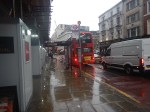
London has very comprehensive bus stops as these pictures show.







Note.
- Most bus stops have a pole mounted roundel, that can be seen from a reasonable distance. In many cases, anybody with reasonable sight can see the roundel for the next stop.
- Where space permits, bus stops have a shelter with seats, maps and instructions on ticketing.
- Some stops have been extended into the road, so that it is a level step into and out of the bus.
- As shown in the pictures, so bus stops have displays showing the next ten buses, that will be arriving.
But I do think, they could be improved, with extra features.
Internet Connectivity
I feel strongly, that all bus stops should have good internet connectivity.
This could be 4G, 5G or just wi-fi, but I believe this could help with the safety of people on the street.
Comprehensive Lighting
To contribute to safety, I also feel that all bus stops should be well lit.
CCTV Issues
I also feel that all bus stops should have provision for CCTV, so if there was a need, it could be quickly fitted. But if the bus stop had good internet connectivity, then this shouldn’t be a problem.
Phone Charging
New buses have this feature, so why not at the stops?
Power Supply Issues
If we add all these features, we could be needed an uprated power supply.
- So could we see bus stops, with solar panels on the roof.
- Perhaps even a mini wind turbine?
- I think a vertical wind turbine, which was similar to a SeaTwirl, but smaller, could be ideal!
- Could it be called a StreeTwirl?
- A self-powered bus could be created with the addition of a battery.
Self-powered bus stops might be easier to install.
Conclusion
Bus stops will have more features in the future.
Looking For A Job
There’s probably a lot like me these days, what with Putin’s war having depressed the financial markets and put up the cost of everything.
I’m now 75 and seem to regularly get good news about my health, which probably means that my pension will have to stretch further.
Before Christmas, I did a couple of weeks as a volunteer receptionist in a research institute and I enjoyed it.
Perhaps, I’m just lonely and feel a job would liven up my life.
I have a large number of skills and a wide range of knowledge about technical subjects.
I have programmed in many languages with the most useful probably being VB6, which I used for perhaps twenty years, so I might be the guy to update a VB6 system, that is vital to your business.
I am very much an algorithm person because of my background and have done a lot of work in project management.
I also live a few miles North of the City of London.
So if you have any ideas let me know!
Second Life Energy Storage Firm Smartville Inc On Modules vs Packs, Ramp-Up Plans And Tesla’s Approach
The title of this post, is the same as that of this article on Energy Storage News.
I like the concept of taking the life-expired batteries out of electric vehicles and giving them a second life as grid batteries.
Smartville seem to have taken this simple and useful idea to a new level.
These are my thoughts.
The Internet Of Batteries
By the use of clever software, it appears, that they can control different types of battery packs, in a manner that could be called the Internet of Batteries.
They can also measure the state and performance and calculate the replacement date of each battery pack.
The Mother Of All Batteries
The implementation of this concept in their MOAB product allows the controlling software to manage a number of battery packs precisely to deliver a battery of the precise number of MWh, that the customer ordered.
- Provided an interface driver can be written, any type and make of battery pack can be incorporated.
- Nearly new, salvaged or elderly battery packs cab be used.
- The operating system can predict, when a battery pack must be replaced.
- Smartville are planning to install a 4MWh grid battery in central California that will be co-located with an existing power plant.
In some ways, the controlling software, is like the Chief Coach of a tug-of-war team, of mixed sexes, weights and strengths, that by asking for the right level of power from each member, gets the required performance.
Working With Tesla
The article talks about why, they don’t work with Tesla, where this is said.
Our experience in the US is that Tesla does not seem to be interested in working with outside partners. They’ve also publicly stated that they’re not focused on battery repurposing, not in their current business model at least, which I think might change over time. But that’s their public stance at the moment. We’re absolutely open to working directly with them but the opportunity hasn’t presented itself.
Does this indicate, that Tesla and Elon Musk are not the easiest people to deal with?
Conclusion
I shall be following Smartville.
I Can Now See Why A Big Pharma Company Liked My Software Daisy
Yesterday, I went to a seminar about medical research.
There was a presentation, where data in several dimensions was shown and the data was crying out for a Daisy Chart.
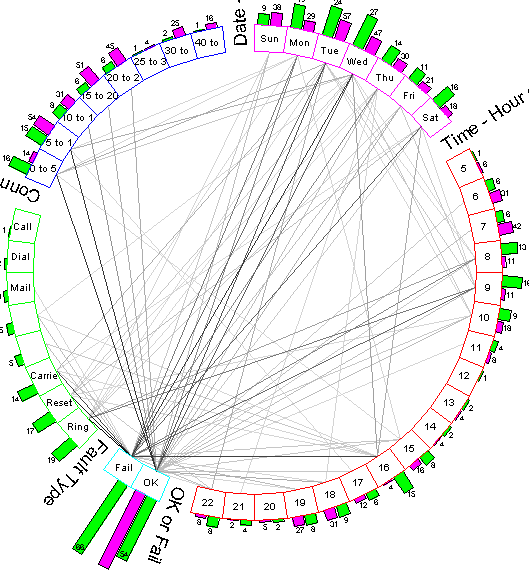
A Daisy Chart
This chart is a very simple presentation of telephone data, but I can imagine arcs showing factors like Dose, Blood Pressure, Sex, Patient Satisfaction etc.
Note.
- This chart is what I call a Day of the Week/Hour of the Day chart, which is a powerful way of looking at any time-based data, like faults or A & E arrivals.
- You can click on the nodes and links of the chart to access the data underneath. So if you wanted all female patients with high blood pressure in a separate Excel spreadsheet, this is possible with a couple of clicks.
- The charts can also be clipped from the screen and inserted into reports.
Daisy was used by one Big Pharma company twenty years ago and after yesterday’s presentation, I can understand, why they used it.
The seminar changed my mind about my attitude to Daisy and I got rather fired up about its possibilities.

