UK’s Largest Carbon Capture Project Will Turn 40,000 Tonnes Of CO2 Into Sodium Bicarbonate For Dialysis Machines, Pharmaceutical Tablets And Baking Soda Every Year
The title of this post, is the same as that of this article in the Daily Mail.
These bullet points summarise the article.
- A facility that turns carbon dioxide into sodium bicarbonate was opened today
- Tata Chemicals Europe will remove up to 40,000 tonnes of CO2 each year
- The resulting sodium bicarbonate will be used as baking soda and in tablets
- Much of it will be used in haemodialysis to treat people with kidney disease
When I worked at ICI in Runcorn, the company had a facility at Winnington.
- In the 1960s, when I was there the main product was soda ash, which was produced by the Solvay process.
- The plant is now owned by Tata Chemicals Europe, and I suspect the new process is a replacement for the Solvay process.
- The carbon dioxide probably comes from a local 94 MW gas-fired power station on the site.
This ia a good example of Carbon Capture and Use, where a modern process is much better for the environment.
How much better could we protect the environment and the health of everyone, by improving or changing industrial processes?
Memories of the Solvay Process
I went over one of the Solvay processes a couple of times, when I worked at Runcorn.
- I can’t remember why now, but it was probably just to give the newest engineer in the department some experience.
- ICI trained me well at that time, especially in Health and Safety.
- One of the Victorian plants, I went over was built using a framework of oak beams, rather than the steel, we’d use today.
- The thing, that I remember most was the white sodium bicarbonate powder everywhere at the finishing end.
All the grades had uses from baking down to clearing up acid spills. Wikipedia details these uses.
Solvay Process Repurposed
Searching the Internet for more information on Tata Chemicals Europe’s process, I found this article on Scientific American, which is entitled Desalination Breakthrough: Saving The Sea From Salt.
The first paragraph outlines the problem.
Farid Benyahia wants to solve two environmental problems at once: excess carbon dioxide in the atmosphere and excess salt in the Persian Gulf (aka the Arabian Gulf). Oil and natural gas drive the region’s booming economies—hence the excess CO2—and desalination supplies the vast majority of drinking water, a process that creates concentrated brine waste that is usually dumped back into the gulf.
Benyahia, who is a chemical engineer at Qatar University appears to have solved the problem, by repurposing and simplifying the Solvay process.
I suggest that if you’ve got this far, that you read the Scientific American article all the way through, as it paints a horrific vision of the dangers of water desalination.
Hopefully, though Benyahia has the solution, which turns the problem into baking soda and calcium chloride.
We Can Suck CO2 From The Air And Store It In The Ocean As Baking Soda
The title of this section is the same as that of this article on New Scientist.
I first heard about this process on Radio 5.
It concerns some work by Arup Sen Gupta at LeHigh University in Bethlehem, Pennsylvania.
He seems the sort of researcher, who does it properly and his research on capturing carbon dioxide and turning it into baking soda, that is stored in the ocean may well be an idea in the right direction.
It further supports my view that research will find new and better ways of reducing carbon dioxide levels in the atmosphere.
NHS Prevention Programme Reduces Type 2 Diabetes By A Fifth
The title of this post, is the same as that of this article on The Times.
This is the sub-heading.
Participants are given free Fitbits or smart watches to help them lose weight
These two paragraphs outline the program.
An NHS scheme that sends obese patients to slimming classes and gives them free Fitbits has cut diabetes rates by one fifth.
The NHS Diabetes Prevention Programme, also known as Healthier You, offers health advice alongside free cookery and exercise sessions online or in person. Participants are given NHS-funded Fitbits or smart watches to monitor their activity to help them lose weight.
Note.
- Manchester University have analysed the project.
- Those on the scheme lost five pounds on average.
- The Healthier You programme is available in all parts of England.
It sounds like the programme has been a success.
I’d like to hear of peoples’ stories about this programme.
Appliance Of Science To Boost Stevenage
The title of this post, is the same as that of this article in The Times.
These two paragraphs introduce the article.
Planning permission has been granted for a former TK Maxx outlet and two other stores in the middle of Stevenage to be knocked down and replaced with laboratories.
The £500 million development, funded by UBS Asset Management and designed by Reef Group, is the latest example of how Britain’s town centres can be adapted and brought up to date.
Note.
- We have a laboratory shortage in the UK, which is especially serious in Oxford and Cambridge.
- Canary Wharf is also turning offices into laboratory space.
- There was even an article in The Times yesterday about converting offices to laboratories in Harley Street.
It’s probably a sign of success!
If Stevenage is to become a worldwide centre for life sciences and medical research, it probably needs the town’s excellent rail links to London and Cambridge to be further improved.
- LNER runs two fast trains per hour (tph) to and from London King’s Cross.
- Other fast services call during the day.
- Local services include two tph to Cambridge, London and Peterborough.
Services need to be improved, especially to and from Cambridge.
ERTMS Is Being Installed Through Stevenage
Installation of full digital signalling on the East Coast Main Line could have various effects.
- LNER and other fast services could be faster to places like Doncaster, Leeds and York.
- Fast Cambridge, Ely and King’s Lynn services would have to be run by 125 mph trains to keep out of the way of the expresses.
- 125 mph services to Cambridge would reduce journey times by a few minutes and might allow the Cambridge Cruisers to sneak in a stop at Stevenage, whilst maintaining the current times.
- Will the Thameslink Class 700 trains have to stick to the slow lines?
- As the Hertford Loop Line will also be digitally signalled, it might be possible to divert some trains via Hertford North.
There will be a lot of hard thinking going on to find out the best way to run services on the Southern section of the East Coast Main Line.
High Speed Norfolk
I like the concept of running high speed trains to Ely, Norwich and Kings Lynn.
- It would open up a lot of West Norfolk for laboratory space and commuter towns for Cambridge.
- The Breckland line between Ely and Norwich would be improved for higher speeds. It could even become a 125 mph line.
- High Speed Norfolk trains would have a frequency of two tph and call at Stevenage, Cambridge South, Cambridge, Cambridge North and Ely before alternatively going on to Norwich and King’s Lynn.
- Cambridge and Norwich services would alternate with the Norwich and Stansted Airport service.
Norwich could be the overspill city that Cambridge needs.
The Luck Of The Genes
There’s an article in The Times, which is entitled When It Comes To Success, Luck Can Trump Intelligence.
It got me thinking about my life.
I have been pretty successful in life, and I put it down to winning the gene lottery, with a part-Jewish father and a part-Huguenot mother, who taught me hard work and everything they knew. So were my genes forged by religious persecution in the harsh conditions of the ghettoes of Europe?
But luck has always played a great part in my success. On the way, three or four successful men have chosen me for projects and I’ve repaid them by succeeding. I’ve been at the heart of the creation of two world-changing companies.
But the luck turned bad, a dozen years ago. My wife and our youngest son died from cancer and I had a serious stroke.
But the genetic lottery of being coeliac and therefore having B12 injections, has meant, I’ve made a good recovery from the stroke. The B12 injections is a stroke recovery method from the States, but is considered quackery over here. I believe it saved my life.
And then during the pandemic, those coeliac genes and the gluten-free diet I need for health, seem to have protected me from a severe dose of the covids. I’ve yet to find a fellow coeliac, who has had one either. Scientific research from Italy and Sweden, is also backing up my observations.
Lady luck has smiled on me. Or does the devil, look after her own?
Coeliacs And Migraines
Yesterday, I watched BBC Morning Live about migraines.
I used to suffer from migraine-like symptoms, especially, if I was in a room with small tungsten downlights. One real tennis court at Cambridge caused them and the other didn’t, as the lights were different.
In 1997, I was diagnosed as a coeliac and went gluten-free.
I’ve not had the symptoms since!
I also stopped nail-biting, which I’d done since I was about five. Incidentally, I’ve had others tell me, they stopped nail-biting after being diagnosed as a coeliac and going gluten-free.
On the program, the doctor has just said that women have a 1-in-5 chance of having a migraine, whereas with men it’s 1-in-15.
The NHS web site says this about who’s affected by coeliac disease.
Coeliac disease is a condition that affects at least 1 in every 100 people in the UK.
But some experts think this may be underestimated because milder cases may go undiagnosed or be misdiagnosed as other digestive conditions, such as irritable bowel syndrome (IBS).
Reported cases of coeliac disease are around 3 times higher in women than men.
Now there’s a thing!
Belmont Station – 20th January 2023
These pictures show Belmont station.
















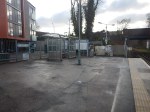
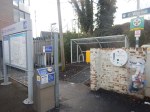
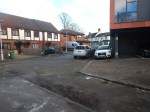
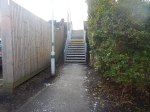



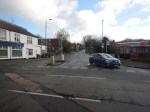



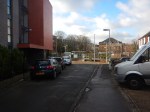




Note.
- The first four pictures show the remaining double track between Sutton and Belmont stations. The double track finishes shortly before the station.
- All trains use the only platform, which is numbered One.
- The remains of the second platform.
- There is sufficient space to put in a second track and restore the second platform.
- The steel stairs up to the bridge over the railway.
- The bus station outside the station.
- The S4 bus takes everybody to and from the Royal Marsden Hospital.
- There was no signage on the station about which bus to take to the hospital.
There is a large amount of traffic outside the station, which very much seems in a hurry.
Balham – Gateway To The Royal Marsden
With apologies to the late great Peter Sellers and his iconic Balham – Gateway To The South.
After breakfast this morning at Leon on Moorgate, I decided to go and look at Belmont station, which is the nearest station to the Royal Marsden Hospital in Sutton.
Currently, Belmont has a two train per hour (tph) service from Victoria which goes via Clapham Junction, Balham and West Croydon.
From Moorgate the easiest route was to go via the iconic Balham station, where I took these pictures.
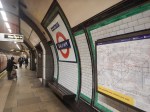
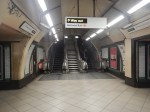





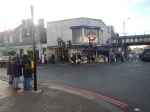

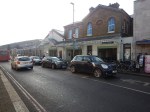





Note.
- There are two fast and two slow tracks through Balham station.
- There is a cafe on the two slow platforms.
I transferred here to an Epsom Downs train for Belmont.
The only problem was that I just missed one train and had to wait half-an-hour for the next.
The service between Victoria and Belmont needs to be increased in frequency.
Levelling Up Funding Will Double Train Services To Belmont In Surrey
The title of this post, is the same as that of this article on Rail Advent.
This project is outlined in these three paragraphs in the article.
An award of £14.1 million to Sutton Council from the government’s Levelling Up Fund will unlock the full potential of the London Cancer Hub and allow the number of trains running to the village of Belmont in South London to be doubled.
The London Cancer Hub is a world-leading life sciences campus that is being developed at Belmont in Surrey, and which will create 13,000 jobs and £1.2 billion each year for the UK economy.
Until now, Belmont has been poorly served by public transport and the money will enable its train services to be doubled to four trains an hour, and extra direct services from Belmont to London Victoria.
This document from Sutton Council gives more details in this paragraph.
This bid will double train frequency between Belmont and London Victoria from 2 to 4 trains per hour by building a siding turnback south of Belmont Station. It will improve accessibility at the station and provide better routes for people walking and cycling to the station from the nearby area and The London Cancer Hub. As a result, public transport accessibility will improve and active travel will increase.
This map from CartoMetro shows the current track layout at Belmont station.
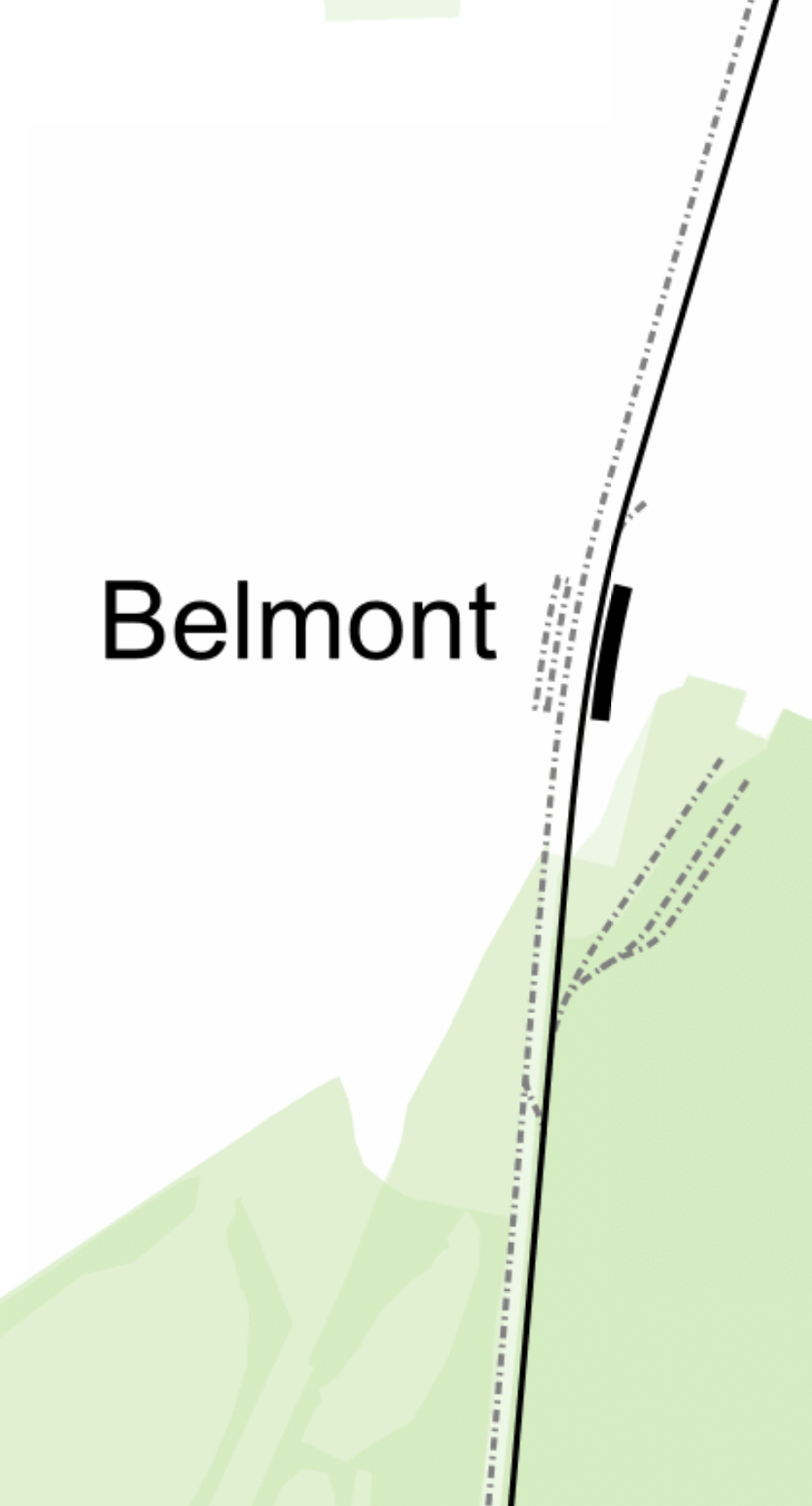
Note.
- The Epsom Downs branch used to be double track, with a second platform at Belmont station.
- There used to be a cross-over South of the station.
I suspect a length of the other track will be reinstated, with a cross-over the other way round to create the turnback siding.
This will allow two extra trains per hour to run between London and Belmont, that will turn back at Belmont.
In Could Third-Rail Tram-Trains Work The Epsom Downs Branch?, I walked up the hill to the Royal Marsden Hospital and it wasn’t an easy walk, as these pictures show.




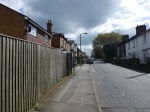


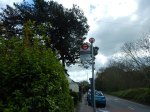
Perhaps all trains should be met by a zero-carbon shuttle bus.
Going to a cancer hospital is not a pleasurable experience, especially for a child, so why not liven it up a bit with a ride in the best zero-carbon bus, that can be found?
Mexico Tightens Ban On Smoking In Public Places
The title of this post, is the same as that of this article on the BBC.
This is the sub-heading.
Mexico has brought into force one of the world’s strictest anti-tobacco laws by enacting a total ban on smoking in public places.
And these three paragraphs outline the story.
The step, which was first approved in 2021, also includes a ban on tobacco advertising.
Several other Latin American countries have also passed legislation to create smoke-free public spaces.
However, Mexico’s legislation is considered to be the most robust and wide-ranging in the Americas.
If I was going to list countries that I felt would bring in tough anti-smoking legislation, I don’t think, I would have named Mexico.
Should Those With Long Covid Be Checked For Coeliac Disease?
One of my Google Alerts picked up this interesting page on the British Medical Journal.
In response to this paper on the journal, which was entitled Long Covid—An Update For Primary Care, a retired GP named Andrew Brown had said this.
The update reminds us that alternative diagnoses should be considered in patients presenting with long covid symptoms. I suggest that screening for coeliac disease should be added to the list of conditions to look for. Coeliac disease occurs in more than 1% of the population, with many more cases undiagnosed. Typical symptoms of fatigue and GI problems are the similar to those of long covid.
As a non-medical person, I would agree, as after the Asian flu of 1057-58, I was off school for a long time with long covid-like symptoms and my excellent GP; Dr. Egerton White was very worried.
But at the time, it is now known, I was an undiagnosed coeliac.
So was my coeliac disease meaning that I couldn’t fight the flu?
I cover the link between coeliac disease and long covid in more detail in Covid Leaves Wave Of Wearied Souls In Pandemic’s Wake.

