Doncaster-Sheffield Airport And Hydrogen
I believe that the airport of the future will need a lot of hydrogen.
I am probably more optimistic than most, that we will see hydrogen-powered aircraft by around 2035, as my calculations say it is probably the only way to move a hundred people by air at a time, without using fossil fuels.
Airports also have a large number of larger vehicles, that will I believe be ideal for hydrogen power.
Hydrogen buses and coaches will be more common, than they are now.
Heavy goods vehicles are likely to turn to hydrogen power.
Humberside has a large hydrogen network, which is fed by two massive hydrogen stores at AldBrough and Brough.
I suspect that Nimbys will object to hydrogen around airports on safety grounds.
But Doncaster Sheffield Airport could be an ideal location for an airport for hydrogen-powered aircraft.
Hydrogen-Powered Trains To Be Introduced In Northern Italy
The title of this post, is the same as that of this article on Fuel Cell Works.
These three paragraphs introduce the project.
Residents and visitors to Valcamonica, an Alpine region in northern Italy, will be able to ride hydrogen-powered trains from next year.
The pioneering project, the first of its kind in Italy and supported by an investment of 367 million euros ($396 million), marks a significant adoption of hydrogen fuel for a rail line, despite the high production and operational costs.
The region currently uses polluting diesel trains, which will be replaced by 14 zero-emission hydrogen-powered trains made in Italy by a unit of French group Alstom
The trains will run on the Brescia–Edolo railway, which has this Wikipedia entry.
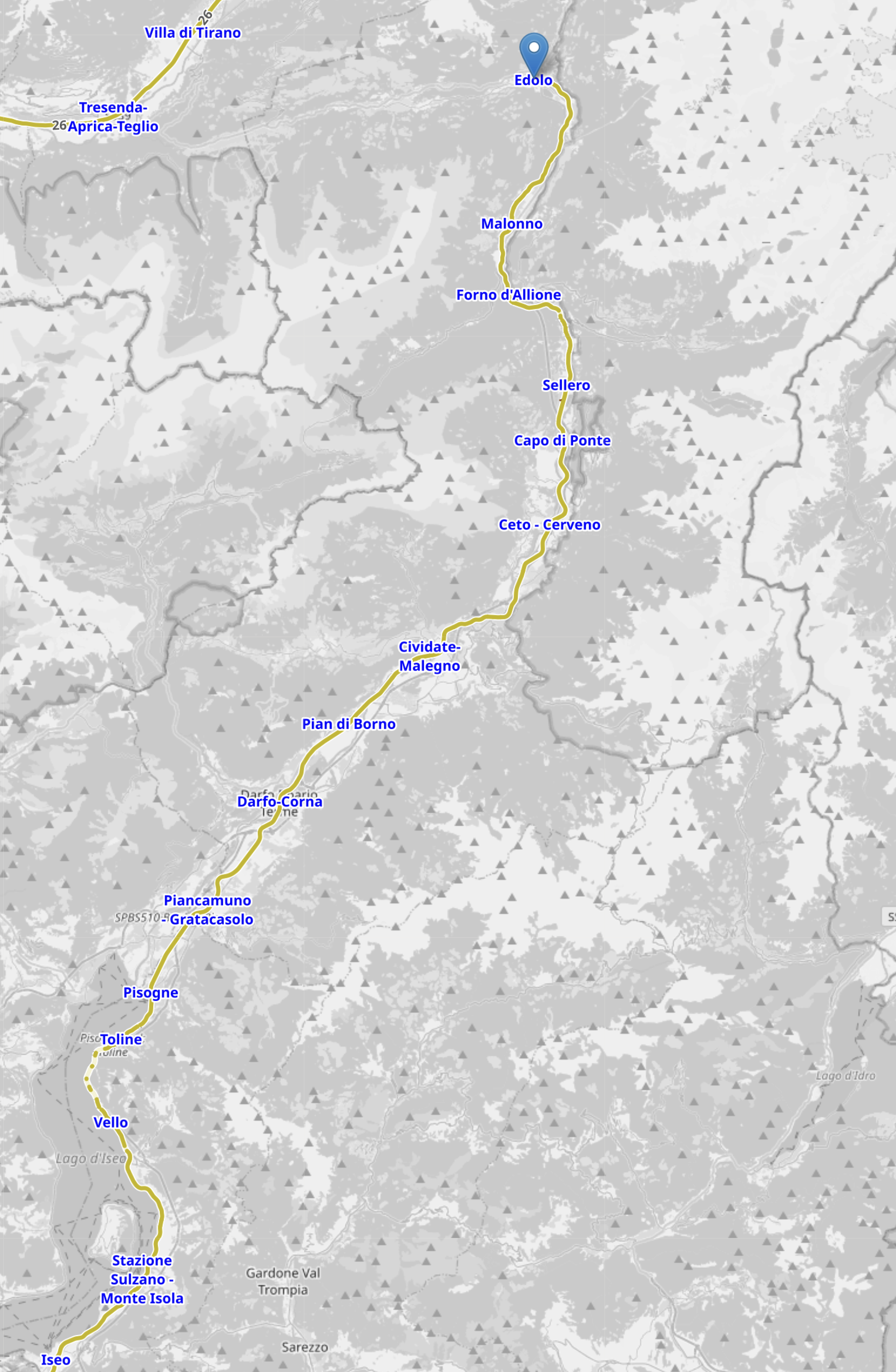
This OpenRailwayMap shows the Northern part of the railway.
Note.
- Edolo station is indicated by the blue arrow at the top of the map.
- The Brescia–Edolo railway is indicated by the yellow line.
- Stations are indicated by blue lettering.
- Iseo is the station in the South-West corner of the map.
- Click the map to show it to a larger scale.
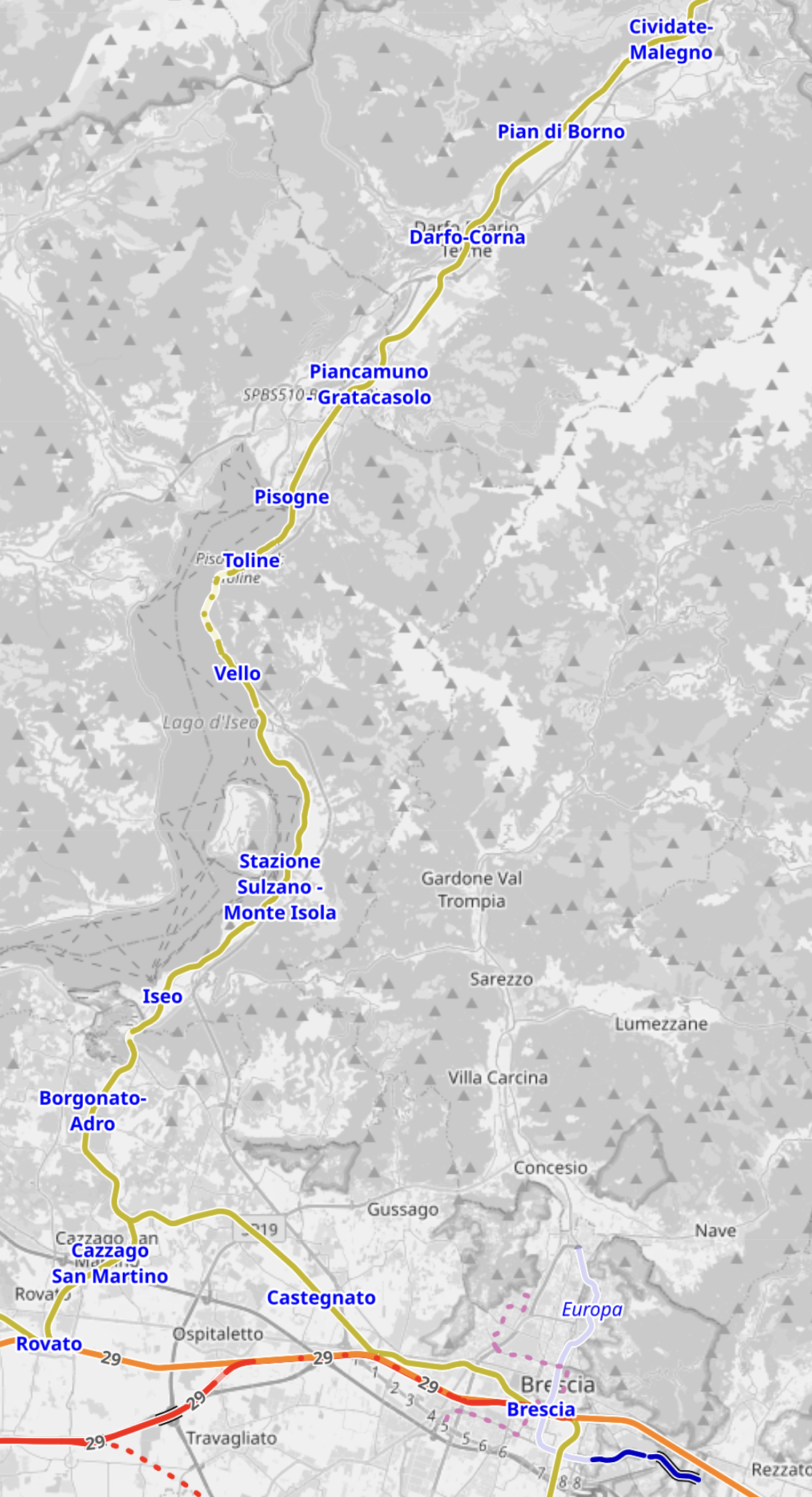
This second OpenRailwayMap shows the Southern part of the railway to the same scale.
Note.
- The Brescia–Edolo railway is indicated by the yellow line.
- The Venice-Milan railway is indiated by the orange line across the bottom of the map.
- Stations are indicated by blue lettering.
- Iseo station is in the South-West corner of the map.
- Brescia station is in the South-East corner of the map on the Venice-Milan railway.
- Click the map to show it to a larger scale.
It looks to me, that the Brescia–Edolo railway could be a day-out if you were having a holiday in Milan, Venice or Verona.
- The railway is a single track railway.
- It appears to go through the mountains.
- Currently, it is diesel powered, but I suspect running hydrogen trains on the route will turn it into a major tourist attraction.
Could other rail routes attract visitors, by going for zero-carbon traction using hydrogen?
In the UK, these are surely six of many possibilities.
- Settle and Carlisle
- Marshlink Line
- Mid-Cornwall Metro
- Norwich and Sheringham
- Sheffield and Huddersfield
- Mid-Cornwall Metro
- Uckfield Branch
Infrastructure costs would just need a hydrogen supply to be arranged.
Conclusion
You can always trust the Italians to use a stylish solution.
Backing Up The Wind With The Keadby Power Stations
I went to Cleethorpes from Doncaster by train yesterday. You pass the Keadby site, where there are two large gas–fired power stations of 734 MW and 710 MW. A third one ; Keadby 3 of 910 MW complete with carbon capture and storage should join them by 2027.
So that will be nearly 2.5 GW of reliable electricity.
I find it interesting that one of our first gas-fired power stations with carbon capture will be in Lincolnshire, which is famous for growing plants of all shapes, types and sizes. So will we be seeing lots of greenhouses on the flat lands I saw yesterday, growing plants in an atmosphere they like, so that we can generate our carbon dioxide and eat it.
The next power station at Keadby is called the Keadby Next Generation power station, which is intended to be complete by 2030. It is a bit of a puzzle in that it will run on up to 1800 MW of hydrogen and only produce up to 910 MW of electricity.
Note.
- The hydrogen will come from SSE’s hydrogen store at Aldbrough and Centrica’s store at Rough.
- Surely, the amount of hydrogen and electricity should balance.
When I worked in ICI’s hydrogen plant in the 1960s, ICI had no use for the hydrogen, so they sent it to their power station, blended it with coal gas and used it to make steam for other processes.
Could Keadby Next Generation power station be providing zero-carbon steam for the chemical and other processes on Humberside?
Adding the 910 MW of electricity to Keadby’s gas-fired total of 2.5 GW gives 3.4 GW of electricity from Keadby to back up the wind farms.
3.4 GW at Keadby is what I call backup!
It also should be noted, that one of the reasons for building the Mersey Tidal Barrage is to provide backup for all the wind farms in Liverpool Bay.
Conclusion
I believe that SSE could be supplying zero-carbon steam in addition to electricity from the Keadby Hydrogen power station.
Is This The Ultimate Tourist Bus?
This picture clipped from the Wrightbus web site, shows one of their latest products – An open-top electric tourist bus.
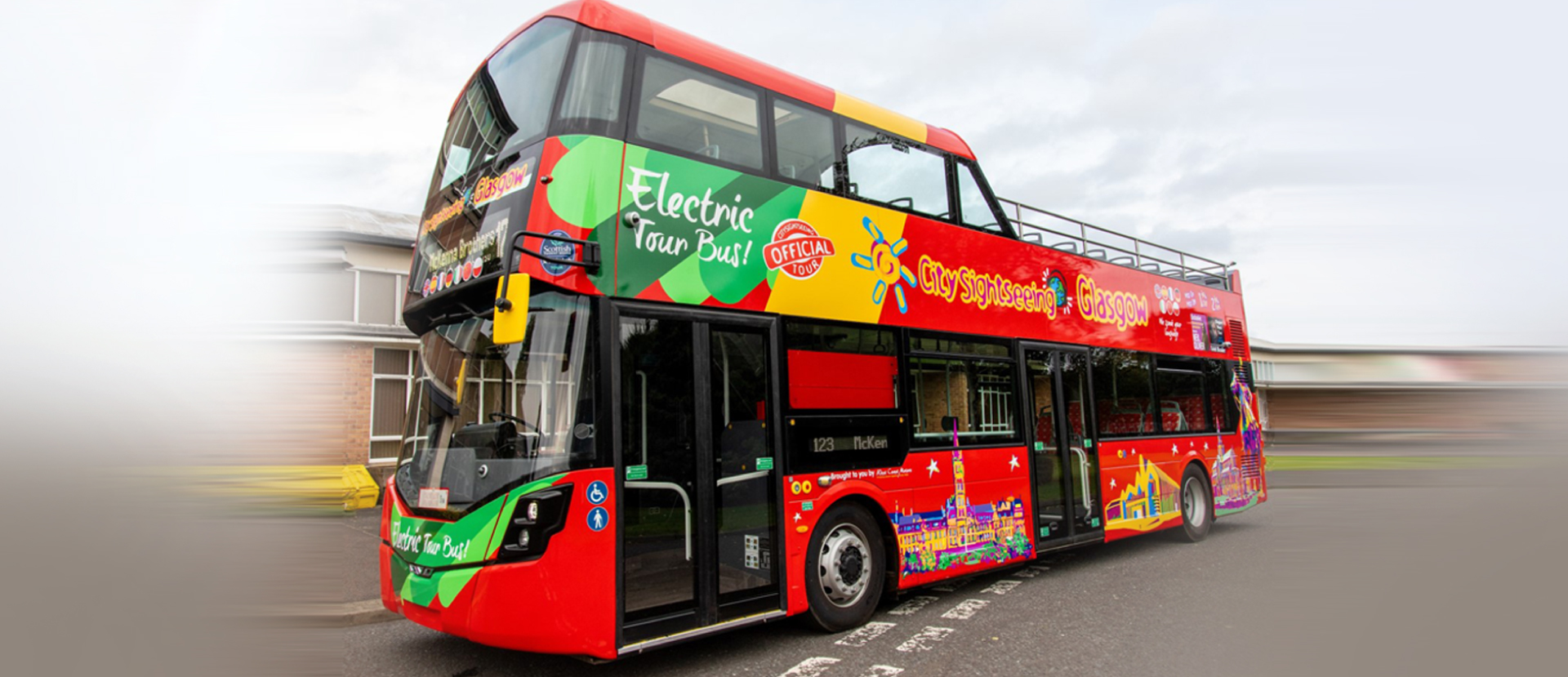
It appears to be running in Glasgow.
But if I was in charge of tourism, I’d get a hydrogen-powered version, as that would surely attract the punters.
Wrightbus Hydrogen Buses Trial Begins At Sizewell C
The title of this post, is the same as that of this article on Route One.
This is the sub-heading.
An order of 150 more StreetDeck Hydroliners, plus battery-electrics, could follow, says the manufacturer
These three paragraphs give more details.
A trial of four Wrightbus StreetDeck Hydroliner hydrogen fuel cell-electric buses at Sizewell C nuclear power plant in Suffolk was launched this week.
The three double-deckers and one single-decker are transporting workers at the under-construction site to test operational performance of the clean technology.
Wrightbus says a successful pilot scheme could lead to an order of 150 hydrogen buses from Sizewell, which would represent the UK largest fleet using that technology.
These zero-carbon buses are to ensure that transporting workers to the site for the project, has the lowest possible carbon footprint.
The Empires Strike Back
The theme of this post was suggested by this article in The Times by Gerard Baker, which is entitled Karma has come for Mark Carney — and Canada.
This is the sub-heading.
This embodiment of globalism finds himself championing national sovereignty just as Trump eyes a North American union
These are the two introductory paragraphs.
Mark Carney is the very embodiment of the globalist ideal that ruled the world for a quarter-century after the end of the Cold War. Born in the mid-1960s in the far Northwest Territories, he grew up in Alberta in the kind of place previous generations would never have left. But the brilliant kid from a large Catholic family won a scholarship to Harvard and then took a masters and doctorate at Oxford.
Marked out as a member of the intellectual elite of his generation, he followed their well-worn path and joined Goldman Sachs, working in the US, the UK and Japan. As international borders came down, goods and capital flowed around the world like water, and rootless young men and women feasted on the pot of gold at the End of History, Carney jetted from capital to capital, developing bond issuance strategies in post-apartheid South Africa and helping deal with the consequences of the Russian debt crisis of 1998.
Mark Carney has done very well!
I have a few thoughts.
Energy Production In Canada And The UK
I have just looked up how Canada produces its electricity.
- 17.5 % -Fossil fuel
- 14.6 % – Nuclear
- 8 % – Renewables
So how does Canada produce the other sixty percent?
Hydro! Wow!
As I write, the UK is producing electricity as follows.
- 10.7 % – Fossil fuel
- 37.7 % – Low-carbon
- 51.6 % – Renewables
Changes To Energy Use In The Next Ten Years
Three things will happen to energy generation and use in the next ten years.
- Our use of renewable and non-zero carbon sources will converge with Canada’s at about 75 %.
- The use of energy storage will grow dramatically in Canada and the UK.
- Green hydrogen production will increase dramatically to decarbonise difficult and expensive-to-decarbonise industries like aviation, cement, chemicals, glass, heavy transport, refining and steel.
Canada and the UK, together with a few other sun-, water- or wind-blessed countries, like Australia, Denmark, Falkland Islands, Iceland, Japan, Korea, New Zealand and Norway, who share a lot of our values, will be in the prime position to produce all this green hydrogen.
Conclusion
It does look like all the old empires of the Middle Ages are reasserting themselves.
Hence the title of this post!
Mark Carney is now in the right position to use Canada’s and a few other countries hydrogen muscles to power the world to net-zero.
British Gas Introduce Hydrogen-Powered Van Trials
The title of this post, is the same as that of this press release from Centrica.
This is the sub-heading.
British Gas is piloting the use of a hydrogen-powered van to help decarbonise their fleet, marking a significant step in their commitment to achieve net zero emissions by 2040
These two paragraphs add some details.
The partnership with Ryze Power, the suppliers of clean hydrogen and alternative fuels and energy, will provide British Gas with access to the green hydrogen to power the Vauxhall Vivaro van over the two-month trial. The van is being put through its paces by a British Gas engineer in Birmingham, accessing Ryze’s refueling station at Tyseley during their working day.
The journey to Centrica, parent company of British Gas, reaching its 2040 net zero target includes achieving a net zero fleet by 2030, which is where this initiative supports the business in its vital next steps. Water vapour is the only emissions from the hydrogen vans, which include a battery a fraction of the size of that in an EV, meaning less requirement for mining precious metals.
I have written about this van before in Vauxhall Begins UK Customer Trials Of Hydrogen Vans.
Could Wrightbus’s New Hydrogen Coach Do A London Scotland Round Trip On A Full Load Of Hydrogen?
Victoria Coach Station And Edinburgh
I have just looked up on the National Express web site and found that I can leave Victoria Coach Station at 22:00 and arrive in Edinburgh at 07:40 the following morning for a ticket price of £29.90.
The road distance would appear to be 638.1 km, which would be a 1276 km round trip. So I would expect that, there would need to be refueling in the round trip.
Victoria Coach Station And Glasgow
I have just looked up on the National Express web site and found that I can leave Victoria Coach Station at 23:00 and arrive in Glasgow at 07:40 the following morning for a ticket price of £23.90.
The road distance would appear to be 652.1 km, which would be a 1300 km round trip. So as with Edinburgh, I would expect that, there would need to be refueling in the round trip.
A Refuelling Strategy
Consider.
- I would expect that a refuelling strategy would minimise, the carrying of large amounts of hydrogen, through the centre of London or any other conurbation.
- The Southern Uplands of Scotland already host a lot of wind farms, including the UK’s largest onshore wind farm at Whitelee, which has a capacity of 539 MW.
- An electrolyser to produce hydrogen is being developed at Whitelee, which is 32.8 km South of Glasgow.
- Newport Pagnell services is 86.5 km. from the Southern end of the M1.
- Toddington services is 62 km. from the Southern end of the M1.
I wonder if two refuelling points, say 50-100 km. from each end of the route, would be a safe an efficient way to fuel the coaches?
Some Services Between London And Scotland
They are in South to North order.
Toddington Services
Toddington Services is 62 km. from the Southern end of the M1.
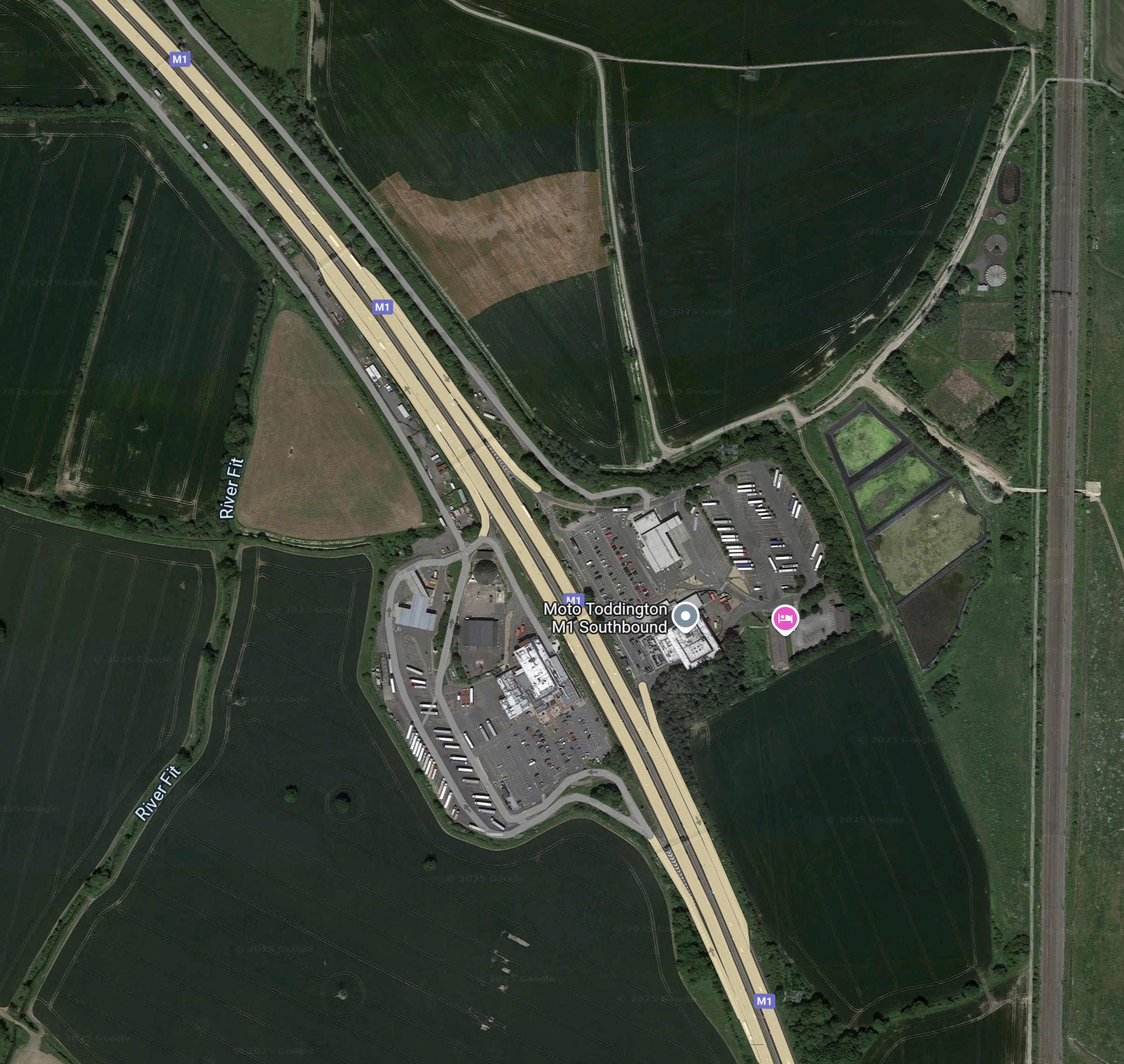
This map shows the services.
Note.
- There is land around the services that could be used to create more parking for hydrogen coaches.
- There doesn’t appear to be much space for a large wind farm to provide electricity to generate hydrogen.
- The Midland Main Line runs up the Eastern side of the map.
I wonder, if hydrogen could be brought to a refuelling site at Toddington services by the use of rail wagons.
Newport Pagnell Services
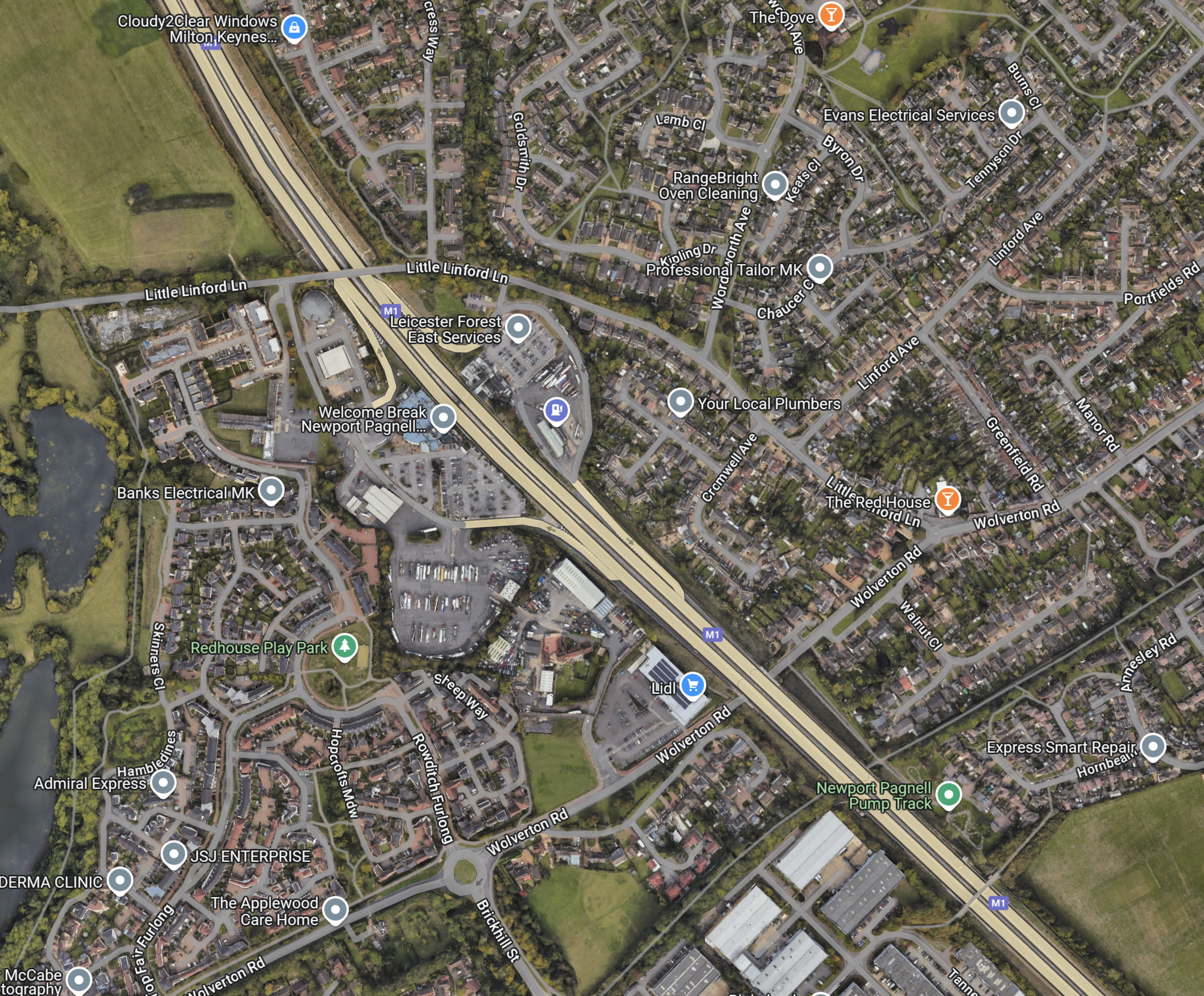
Newport PagnellServices is 86.5 km. from the Southern end of the M1.
This map shows the services.
Note.
- The services are labelled as Leicester Forest East.
- The services are tightly surrounded by houses.
I’m not sure the residents would like to have a hydrogen refuelling station in their midst.
Northampton Services
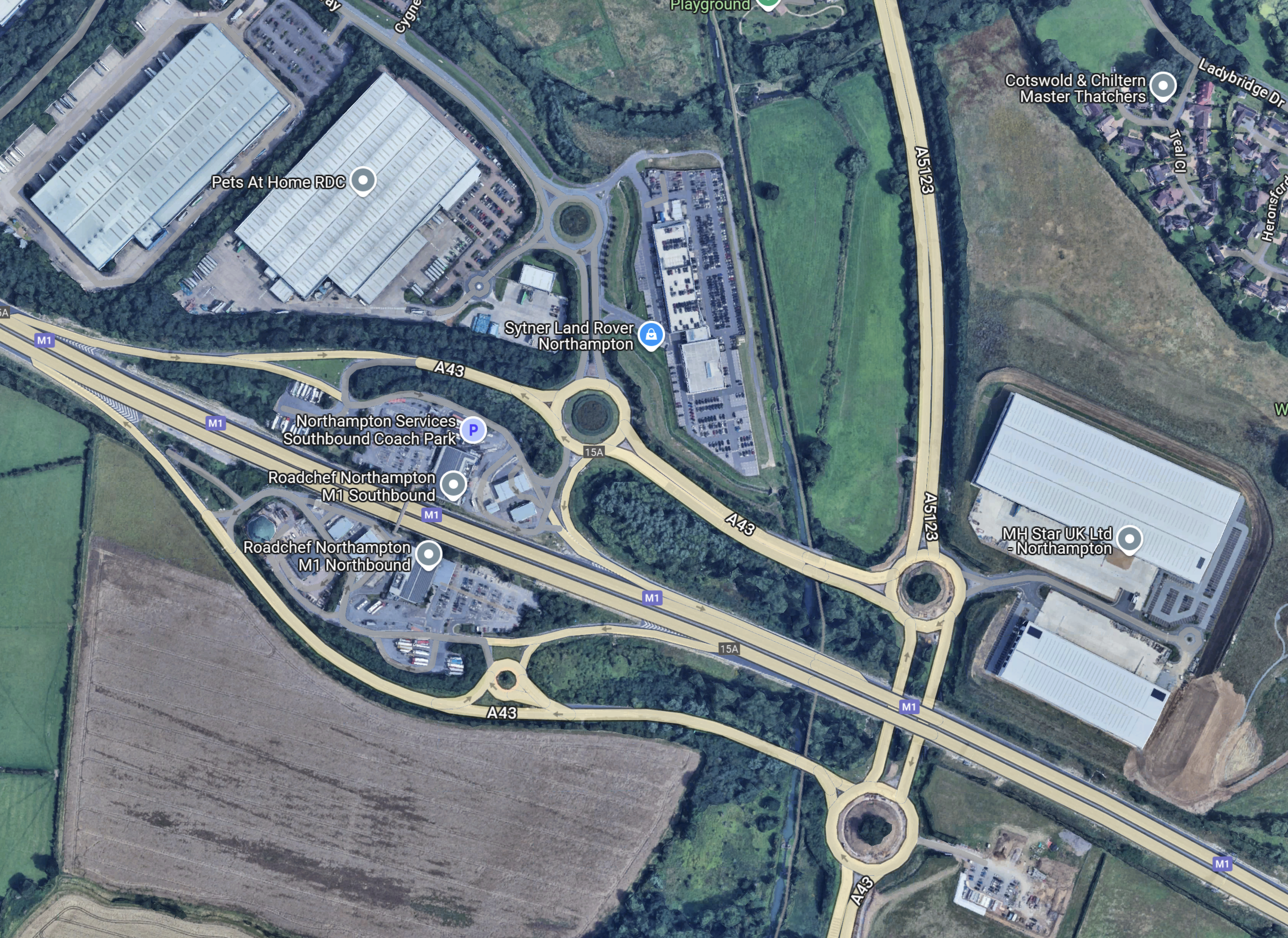
Northampton Services is 104.5 km. from the Southern end of the M1.
This map shows the services.
Note.
- It looks a rather complicated services.
- It might be too far from London.
- Provision of hydrogen might be difficult.
I think that this is another services that we can discount.
Watford Gap Services
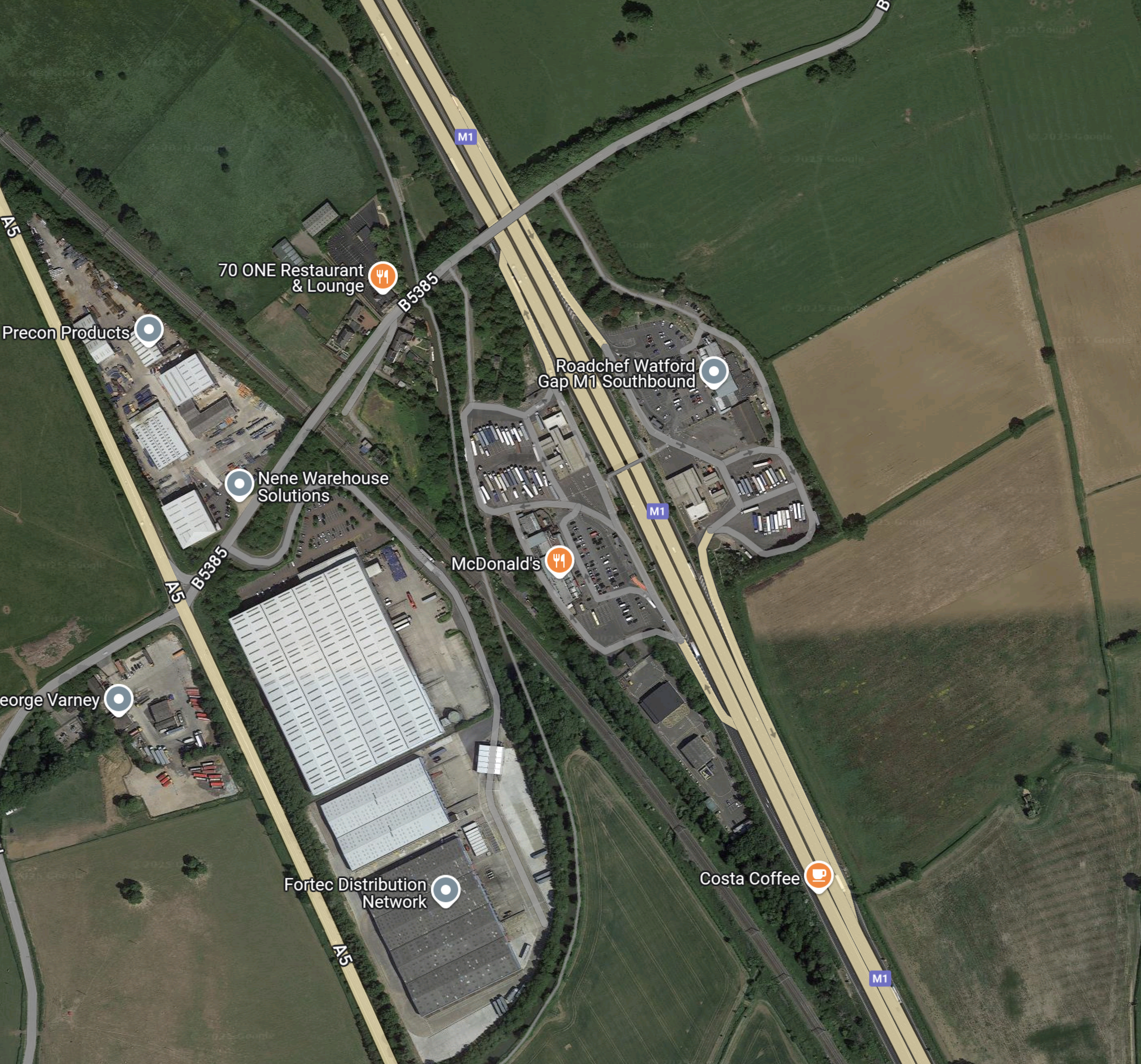
Watford Gap Services is 120.8 km. from the Southern end of the M1.
This map shows the services.
Note.
- There is land around the services that could be used to create more parking for hydrogen coaches.
- There doesn’t appear to be much space for a large wind farm to provide electricity to generate hydrogen.
- The West Coast Main Line runs through the centre of the services.
I wonder, if hydrogen could be brought to a refuelling site at Watford Gap services by the use of rail wagons.
Rugby Services
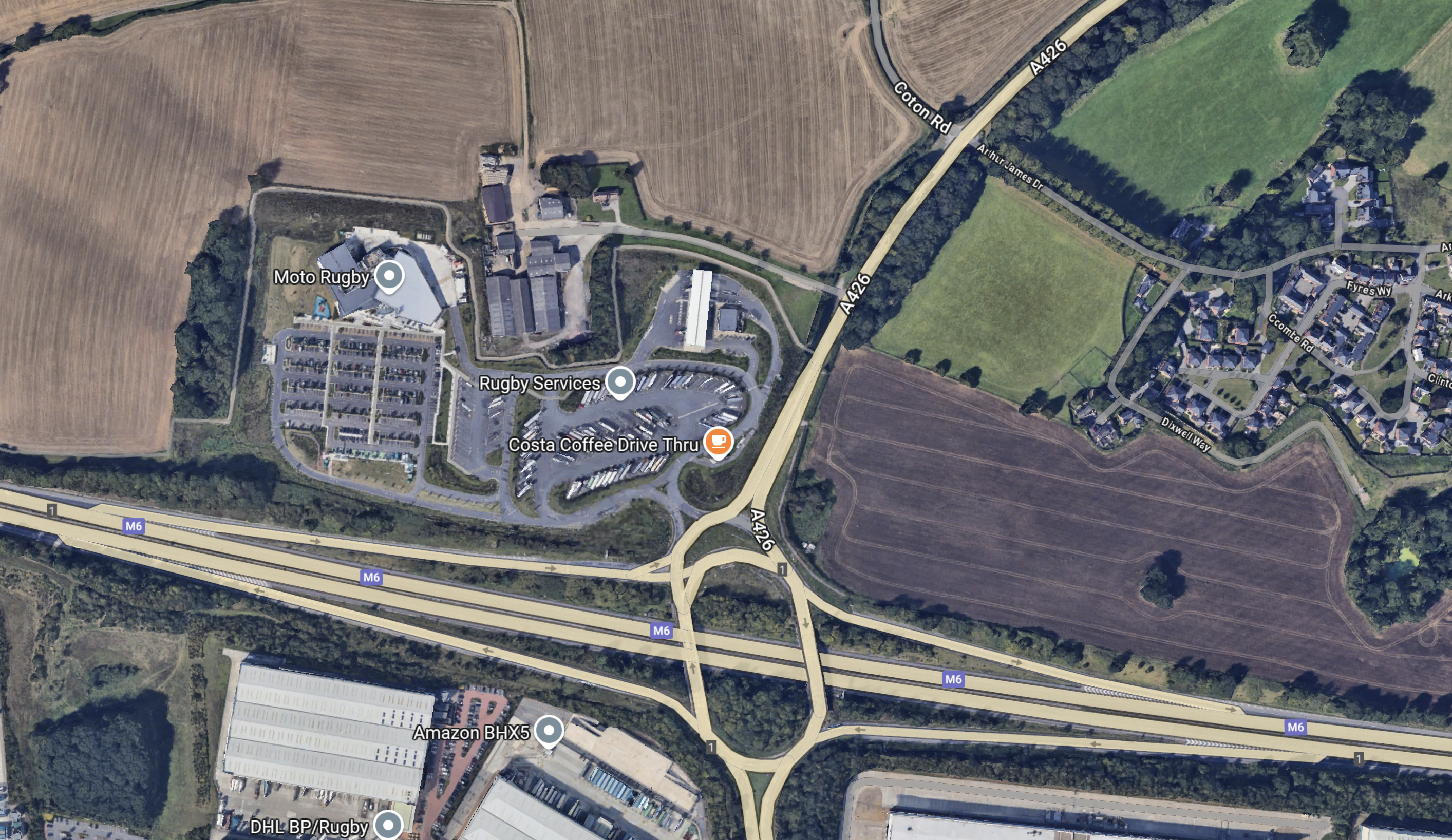
Rugby Services is 137.8 km. from the Southern end of the M1.
This map shows the services.
Note.
- There is land around the services that could be used to create more parking for hydrogen coaches.
- It is at Junction 1 of the M6.
There is also a gas compressor station nearby, so I wonder, if a HiiROC system could be located here to extract hydrogen from the natural gas.
This map shows the location of the Churchover compressor station, with relation to Rugby services.
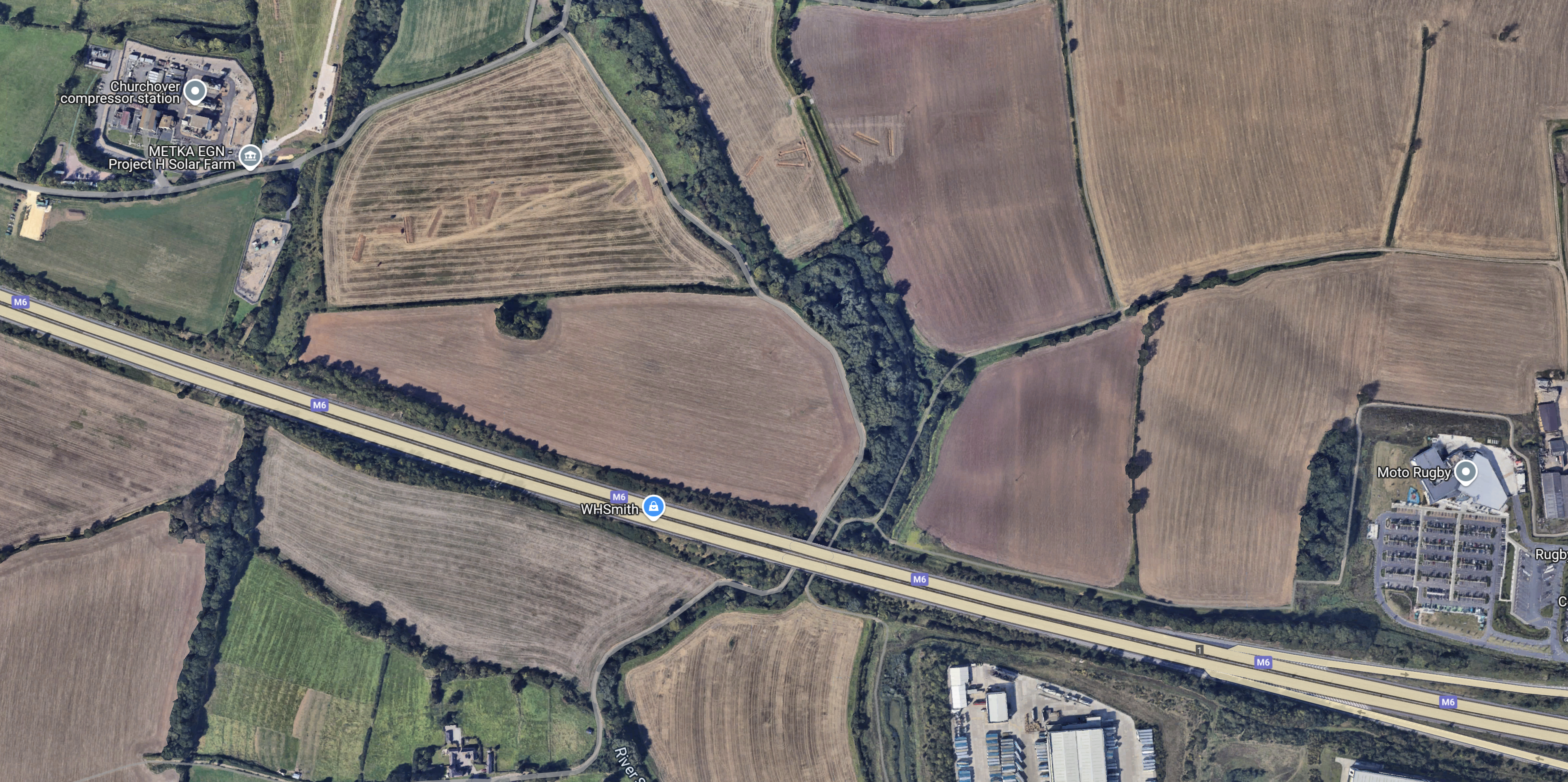
Note.
- The compressor station is in the North-West corner of the map.
- Rugby services are in the South-East corner of the map.
- From labels on the map it appears, a solar farm might be planned by the compressor station.
With a system like HiiROC creating turquoise hydrogen from natural gas, this could be a major filling station for hydrogen-powered trucks, coaches and cars.
Conclusion
It looks to me, that Toddington services would be best, but there would need to be a large increase in capacity, if a large number of hydrogen coaches, were going to fill up at Toddington for their trip into London.
The alternative would be to give the coach a large enough hydrogen tank for a complete round trip.
Wrightbus Back To Coach With Contour Diesel And Hydrogen Future
The title of this post, is the same as that of this article on Route One.
These are two introductory paragraphs.
Wrightbus has announced details of its return to the coach sector with the launch of the Contour, a new diesel-powered two-axle model built in partnership with Chinese OEM King Long.
Alongside the Contour, the company has spoken in more detail of its plans to introduce a tri-axle integral hydrogen fuel cell-electric coach, due for debut in 2026.
Specific and new product points include.
- The diesel-powered coach will be built in partnership with a Chinese OEM.
- It will be a 12.2m coach with 55 seats plus toilet.
- Left- and right-hand drive variants will be available.
- Luggage space is nine cubic metres, reducing to seven cubic metres with a passenger lift fitted.
This paragraph describes the hydrogen coach.
That vehicle will be its first fully integral coach model, developed entirely in-house. The initial variant will be a 15m overdecker capable of accommodating 69 passengers on the upper deck and up to 15 passengers and two wheelchair users on the lower deck, with 10 cubic metres of luggage space. Wrightbus has not confirmed yet whether it will carry the Contour name, nor where the body will be built.
They also say that a single-deck version is being considered for later, while the coach’s modular construction will make it suited to a number of different drivetrain options, depending on demand.
It would appear that Wrightbus have all options covered.

