Articles From The Engineer
I generally read articles from The Engineer once a week.
Here’s a few that are worth reading.
12th Feburuary 2023 – Hydrogen Ambulance Set For London
A project led by hydrogen fuel specialists ULEMCo is aiming to deliver the UK’s first zero emission hydrogen ambulance later this year
There is an interesting discussion, as to whether hydrogen or battery ambulances are better. Range and hotel power issues seem to favour hydrogen.
11th May 2023 – Bramble Energy Secures £12m For Hydrogen Bus
Bramble Energy has joined forces with Equipmake, Aeristech and Bath University to develop a new hydrogen double-deck bus integrating its printed circuit board fuel cell (PCBFC) technology
Bramble Energy can create bespoke fuel cell stacks in a ‘matter of days at scale and low-cost’.
12th May 2023 – Cornish Geothermal Project Leads Government Heat Scheme
The UK’s first deep geothermal heat network is one of seven new projects to receive funding as part of a new government programme to decarbonise buildings across England.
The full list of projects to receive support today via the Green Heat Networks Fund is detailed.
17th May 2023 – Ricardo Joins Pan-European Hydrogen Shipping Consortium
UK engineering firm Ricardo is set to play a key role in the sustainable HYdrogen powered Shipping (sHYpS) project being funded by the EU’s Horizon Europe programme.
One thing that is disclosed in the article, is that Ricardo have a new 400kW hydrogen fuel cell test chamber at the company’s UK headquarters.
Cara Delevingne Champions Fossil Free Hydrogen In Dazzling Beauty Campaign
The title of this post, is the same as that of this article on Hydrogen Fuel News.
This is the sub-heading.
The eco-conscious Delevingne teamed up with Vattenfall to raise awareness about clean energy.
This is the first paragraph.
The English model and actress is no stranger to beauty campaigns, having experience as the face of Burberry, Chanel, and Yves Saint Laurent, but her latest campaign with Swedish multinational energy company Vattenfall, aims to raise awareness of clean power using fossil free hydrogen compared to burning fossil fuels.
There is also this video.
I suppose she was paid well for it and after her BBC series; Planet Sex With Planet Sex With Cara Delevingne, we all know she’s game for many things, but you wouldn’t catch me jumping into water like that, as I can’t swim, despite endless attempts to learn.
Vauxhall-Maker Says UK Needs To Change Its Brexit Deal
The title of this post, is the same as that of this article on the BBC.
This is the sub-heading.
One of the world’s biggest carmakers has called on the government to renegotiate part of the Brexit deal or risk losing parts of its car industry
These four paragraphs explain the problem.
Stellantis, which makes Vauxhall, Peugeot, Citroen and Fiat had committed to making electric vehicles in the UK.
But it has now said it is no longer able to meet Brexit trade rules on where parts are sourced.
The government is “determined” that the UK will remain competitive in car manufacturing, a spokesperson said.
Stellantis called on the government to come to an agreement with the EU to keep rules as they are until 2027.
Because, there is not enough battery capacity in the UK and possibly the EU, everything has gone pear-shaped.
I think there are three possible solutions.
- Build more battery factories.
- Change the regulations.
- Develop hydrogen internal combustion engines.
Note.
- Could a battery factory be built fast enough? I doubt it!
- Could the regulations be changed? Possibly!
- Could hydrogen internal combustion engines be developed quickly enough? Ask Cummins, JCB, Ricardo and Toyota.
It is highly likely that there will be much higher demand for batteries, than anybody expects, as innovators develop more applications.
Chiltern Electrification Alternatives Studied
The title of this post, is the same as that of this article on Railway Gazette.
These are the first two paragraphs.
Chiltern Railways is working to present the Department for Transport with options for a fleet renewal programme, with London Marylebone being the only non-electrified London terminal and pressure for the withdrawal of diesel trains continuing to mount, particularly from local residents.
Industry insiders report that this could see at least the 39 two and three-car Class 165 diesel multiple-units replaced.
Note.
- The Class 165 trains were built in 1990-1992 and refurbished around the turn of the century.
- Chiltern Railways have 28 two-car and 11 three-car Class 165 trains.
- Chiltern Railways also have ten similar two-car, nine three-car and nine four-car Class 168 trains.
- In addition, Great Western Railway has 20 two-car and 16 three-car Class 165 trains, and 23 Class 166 trains.
- The Class 165 and Class 166 trains are 90 mph units, whereas the Class 168 trains are 100 mph units.
As Chiltern’s study would appear to rule out electrification, could all of these trains be replaced with an appropriate number of a new class of 100 mph zero-carbon independently-powered multiple units?
In Alstom And Eversholt Rail Sign An Agreement For The UK’s First Ever Brand-New Hydrogen Train Fleet, I talked about a proposed hydrogen train fleet.
These trains are described as three-car in Alstom’s press release.
- Most Aventras are 100 mph trains.
- They could easily be lengthened to four cars by the addition of an extra car.
- It may even be possible, that these trains could be fitted with a pantograph for working on electrified lines.
The only problem, I can envisage, is that a two-car version might not have enough space for the hydrogen and electrical gubbins.
Chiltern’s Locomotive-Hauled Mark III Stock
Greater Anglia have replaced locomotive-hauled Mark III stock with multiple units and it appears to have been successful.
Could Chiltern’s locomotive-hauled Mark III stock be replaced by six-car hydrogen-powered Aventras, with a long-distance interior?
Other Routes
Alstom and Eversholt Rail announced their agreement in November 2021.
Since then, I have written these posts, where the proposed Alstom Hydrogen Aventra could have an application.
- Adding Buxton And Manchester Piccadilly To The Bee Network
- ‘Castle’ HSTs To Be Withdrawn By Great Western Railway
- Proposals Submitted To Create Darlington To Dales Rail Link
- Alstom Hydrogen Aventras And Teesside
- Alstom Hydrogen Aventras And The Reopened Northumberland Line
- Alstom Hydrogen Aventras And Extension Of The Birmingham Cross-City Line
- Alstom Hydrogen Aventras And Great Western Branch Lines Between Paddington And Oxford
- Alstom Hydrogen Aventras And The Uckfield Branch
Note.
- A two-car version would surely increase the number of applications.
- A 110 mph capability would allow the trains to mix it with high speed trains on fast lines.
- Bombardier proposed a 125 mph bi-mode Aventra. Could this be achieved with hydrogen power?
I feel the eight applications, I listed, could be the start of something a lot bigger.
Conclusion
Alstom and Eversholt Rail Group appear to have done their research.
Toyota And VDL Groep To Convert Heavy-Duty Vehicles Into Hydrogen Fuel Cell Trucks
The title of this post, is the same as that of this article on Hydrogen Fuel News.
This is the first paragraph.
Toyota Motor Europe (TME) and Dutch VDL Groep have teamed up to covert VDL’s existing heavy-duty trucks into hydrogen fuel cell trucks using Toyota’s fuel cell modules, with a goal to accelerate decarbonizing the road logistics sector while also breaking into Europe’s zero-emission heavy duty H2 trucks market.
Note.
- According to their Wikipedia entry, VDL Groep seem to manufacture buses, coaches, chassis modules and vehicle components.
- In Ricardo Supports Toyota To Develop Its First UK-Based Hydrogen Light Commercial Vehicle, I wrote about conversion of the Toyota Hilux to hydrogen.
- There are a large number of companies all over the world, who will convert vehicles to hydrogen.
- It could be argued that Wrightbus and Alexander Dennis, have designed hydrogen buses, that could be conversions of existing designs.
- Cummins are selling diesel engines, that can be converted to hydrogen.
Could these points indicate, that one of the main routes to the decarbonisation of the heavier end of the commercial vehicle sector will be conversion of existing vehicles to hydrogen fuel?
And will this lead to smaller conversion kits to decarbonise vehicles like Land Rovers, Range Rovers, larger BMWs, Jaguars and Mercedes?
If you consider, that when I was growing up in the 1950s, you rarely saw a small diesel vehicle and how diesel came to grab a large market share, due to good engineering and some misguided tax changes from Gordon Brown, I don’t think it is unreasonable to believe that good engineering and perhaps well-thought out tax changes could create an affordable route to decarbonise a large proportion of vehicles.
If I was still driving and lived away from dreaded ULEZs, then I would be keeping my reliable diesel Jaguar estate.
Green Hydrogen Project Win
The title of this post, is the same as that of this news item from Nova Innovation.
These are the first two paragraphs.
Nova and consortium partners The University of Strathclyde, Shetland Islands Council and Ricardo Energy, have been awarded funding from the Scottish Government’s Emerging Energy Technologies Fund – Hydrogen Innovation Scheme for their GHOST project.
The GHOST project (Green Hydrogen and Oxygen Supply from Tidal Energy) will look at the potential of producing green hydrogen and oxygen from Nova’s tidal energy projects in Shetland.
They plan to generate hydrogen from tidal energy around the island of Yell. The oxygen, which is often just released into the air, will be used in aquaculture and possibly as rocket fuel at SaxaVord Spaceport.
This map shows Shetland.
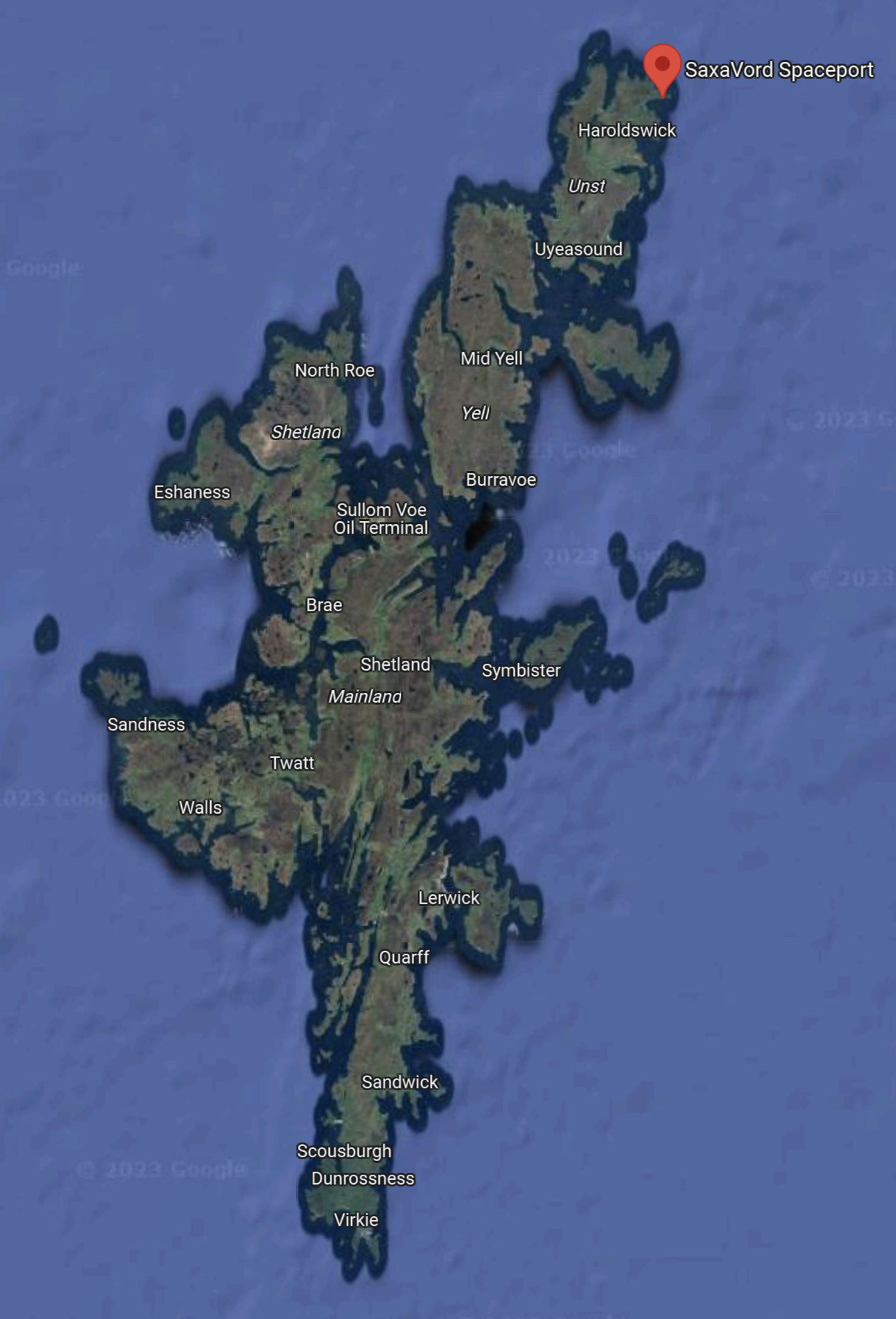
SaxaVord Spaceport is marked by the red arrow at the North end of the archipelago on the island of Unst and Yell is the next island to the South.
If GHOST is successful, it looks like they will have a ready market for their fuel.
Hydrogen Buses Start Running Across Region
The title of this post, is the same as that of this article on the BBC.
These are the main points.
-
A fleet of 20 hydrogen powered buses start running in Merseyside
-
The zero emission buses will improve air quality, Mayor Steve Rotheram said
-
He wants the Liverpool City Region to be net zero carbon by 2040
The buses will operate on the 10A route between St Helens, Knowsley and Liverpool city centre.
I wonder, if they’ll go past my old digs on Huyton Lane.
ESB, Irish Port Team Up To Make Shannon Estuary Go-To Place For Floating Wind
The title of this post, is the same as that of this article on offshoreWIND.biz.
This is the sub-heading.
Irish energy company ESB and Shannon Foynes Port, the company with statutory jurisdiction over all marine activities on the Shannon Estuary, have entered into a collaboration to develop the region into a centre for the deployment of floating offshore wind projects in both Irish and international waters.
This is the introductory paragraph.
Back in 2021, ESB and its then-partner Equinor announced the development of the 1.4 GW Moneypoint floating wind farm in Ireland, with a broader plan under its Green Atlantic @ Moneypoint project to transform the Moneypoint power station in County Clare into a green energy hub and to support wider plans of Shannon Foynes Port to help make the Shannon Estuary a focal point for the offshore wind industry in Europe.
This Google Map shows the location of Moneypoint power station with respect to the Shannon Estuary.
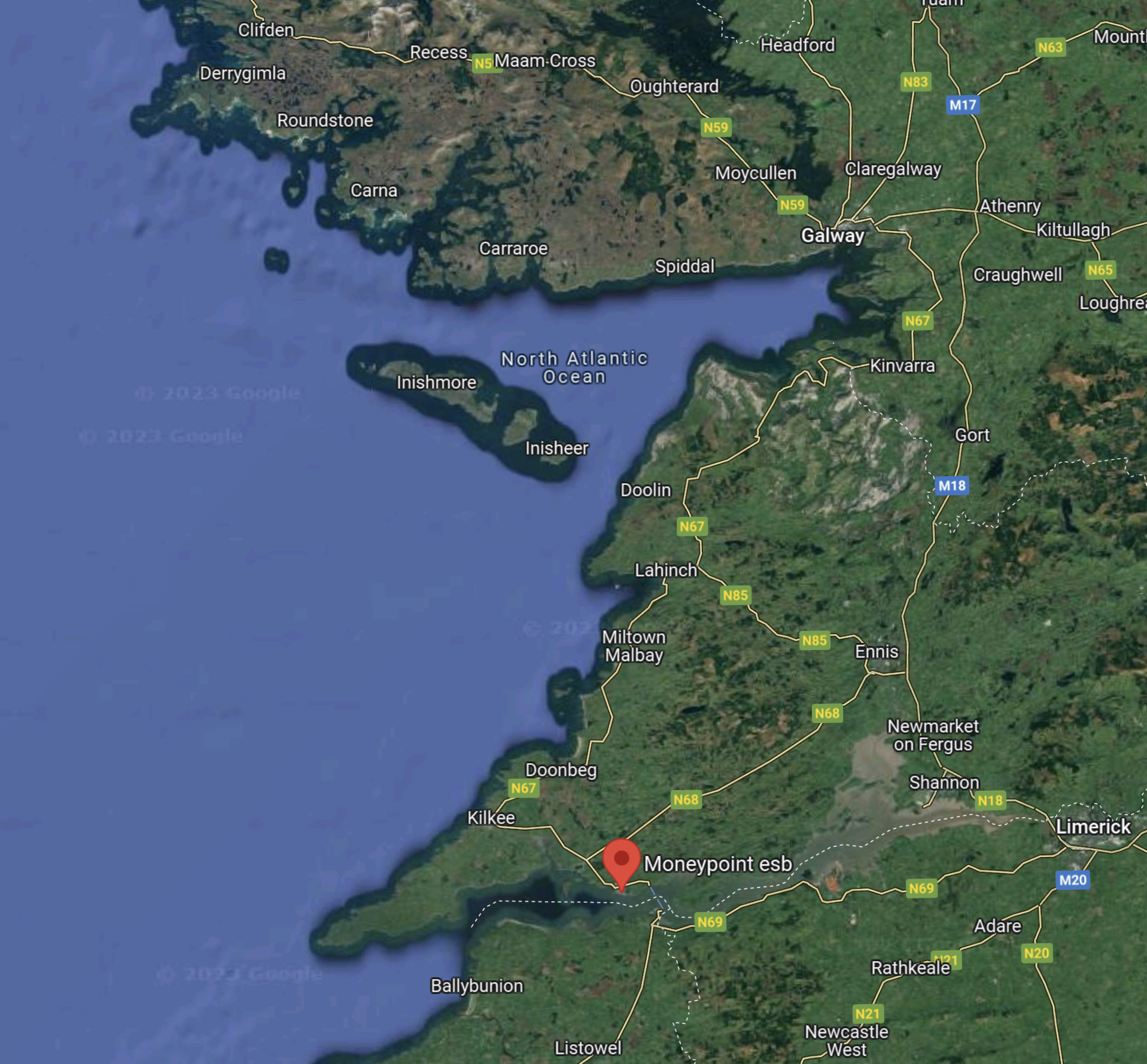
Note.
- Moneypoint power station, which is indicated by the red arrow is on the River Shannon.
- The city pf Limerick is to the East of Moneypoint.
- There’s certainly a lot of water in the West for floating wind turbines.
This second Google Map shows a close-up of the power station.
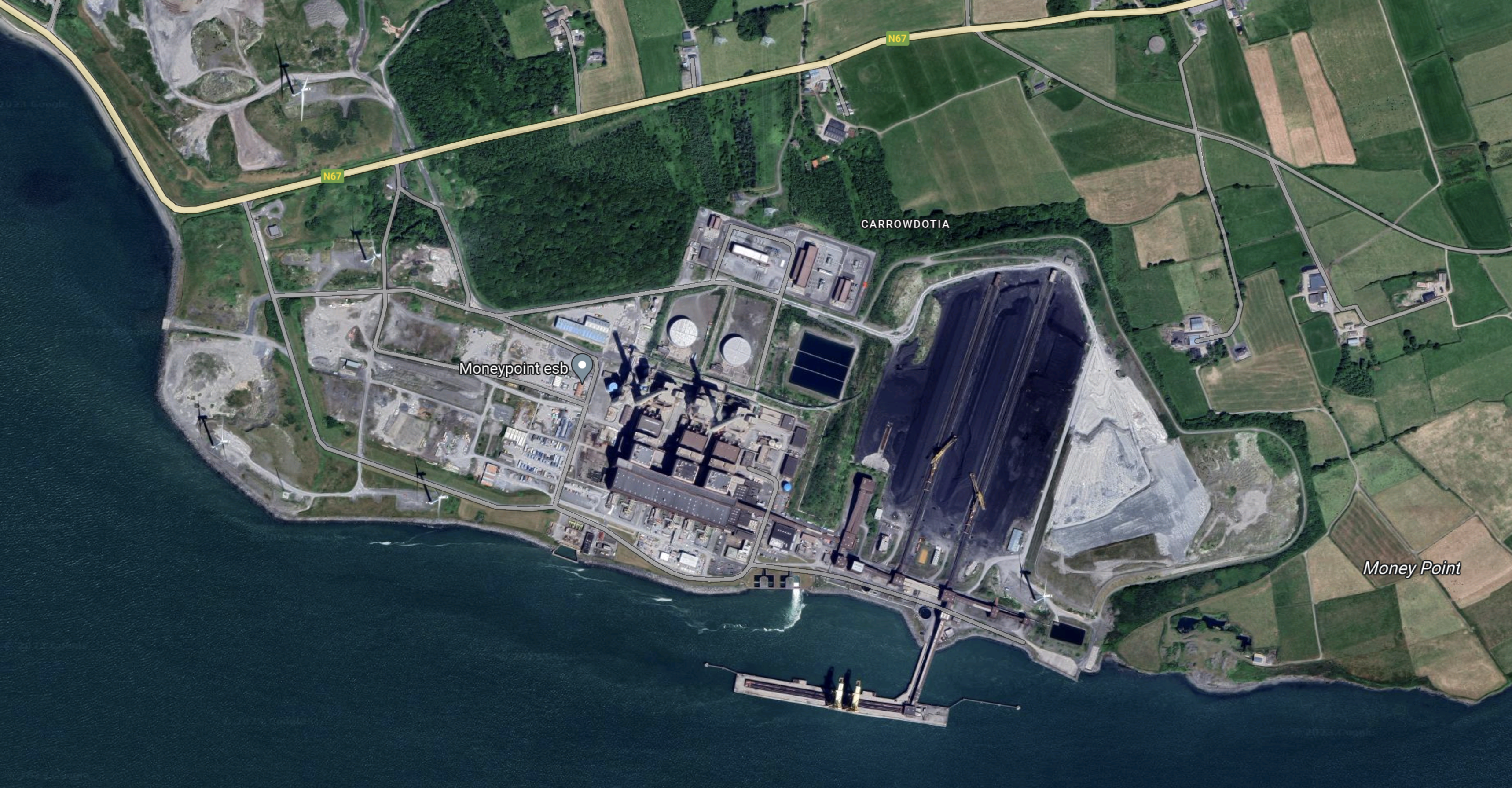
This is a shortened version of the first paragraph of the Wikipedia entry for the power station.
Moneypoint power station is Ireland’s largest electricity generation station (output 915 MW) and only coal-fired power station. Commissioned between 1985 and 1987, it is located on the River Shannon near Kilrush, County Clare. It was constructed at a cost of more than £700m in one of the largest capital projects in the history of the state. The station operates largely on coal, making it both unique in the context of Irish electricity production and the country’s single largest emitter of greenhouse gases. It is capable of meeting around 25% of customer demand across the country. It has two Heavy Fuel Oil (HFO) storage tanks with a capacity of 50,000 tonnes which can be used as a back-up fuel if required.
In some ways, the only good things about this power station are the grid connection that can handle most of a GW and the large site, which could be used for a variety of energy-related purposes, like green hydrogen generation and storage.
In Shannon Estuary Could Support Build-Out of 30 GW Of Floating Wind, House 2 GW of Electrolysis Capacity, I wrote about the potential of this area.
Those figures of 30 GW of floating wind ans 2 GW of electrolysers will certainly mean a lot of investment going into Moneypoint!
I would also feel, that Moneypoint will need a lot of energy storage to support and balance the grid.
Have Your Say About Potential New Hydrogen Facility In Aldbrough
The title of this post, is the same as that of this article on HullLive.
This is the first paragraph.
SSE Thermal is looking for input from the local community regarding its first-of-a-kind low-carbon hydrogen facility.
They are holding meetings in the Hull area as follows to discuss the project with anybody who is interested.
- Tuesday, June 6, 2:30pm – 7pm: Hedon Town Hall, 36 St Augustine’s Gate, Hedon, HU12 8EX
- Wednesday, June 7, 2:30pm – 7pm: East Village Meadows, Northfield Farm, Garton, HU11 4QB
- Thursday, June 8, 2:30pm – 7pm: Aldbrough Village Hall, Garton Rd, Aldbrough, HU11 4QA
I shall be going on the Tuesday. There are buses from Hull station, which take about 35 minutes.
This section is copied from the HullLive article.
What is the Pathfinder Project?
The Aldbrough Hydrogen Pathfinder project is an important building block in the development of a thriving Humber hydrogen economy, underpinning the region’s decarbonisation and supporting economic growth locally and nationally.
The project is proposed to be developed within its existing site at Aldbrough Gas Storage, and all visible infrastructure will be within the site boundary.
The project intends to use one of the current storage caverns and repurpose it to develop a project in the Humber that would unite hydrogen production, storage and power generation in one.
As someone, who feels strongly about the benefits of hydrogen, I feel this is a very worthwhile project.
£77 Million Investment For UK Heavy Duty And Commercial Vehicle Projects
The title of this post is the same as that of this press release from the Advanced Propulsion Centre.
These are the projects.
Ford to design, develop, and build a fleet of 8 hydrogen fuel cell powered Transit vans, with the latest advances in technology
£8 million awarded by government, matched by industry to a total £16.3 million.
This research project will design and develop a hydrogen fuel cell-powered version of the Ford Transit van, with a Ford Dagenham estate facility re-purposed for upfitting of the vehicle. By bringing the manufacturer, vehicle operator and supply chain businesses together, this project aims to establish a business case for the wider rollout of hydrogen Light Commercial Vehicles.
Project partners include: Ocado, BP, Cygnet Texkimp, Cambustion, Viritech.
Note.
- I suspect Ocado will do the road testing.
- BP will probably supply the hydrogen.
- Cygnet Texkimp are a company based in Northwich and is a leading global provider of fibre handling and converting technology. Have they developed a machine for knitting hydrogen fuel tanks?
- Cambustion‘s Engineering Services team provides powertrain development and testing services to a range of global clients from our Cambridge, UK base.
- Viritech’s web site has a mission statement of Rewiring the DNA of Hydrogen Powertrains.
Ford seem to have assembled a team of all the talents.
Wrightbus to develop a new world-leading zero-emission battery and hydrogen fuel-cell electric, multi-axle vehicles
£6.4 million awarded by government, matched by industry to a total £12.7 million.
This project will produce a new, market-leading platform for battery and fuel cell electric driven buses. Whilst demand is growing for zero-emission vehicles, there are currently few options available for heavy, multi-axle vehicles like large buses.
Project partners include: Queens University Belfast, Grayson Thermal Systems, Hutchinson Engineering, Translink.
Note.
- Grayson Thermal Systems are based in Birmingham and specialise in providing HVAC for vehicles and especially zero-carbon ones.
- Hutchinson Engineering are based in Widnes and invest in state-of-the-art machinery and technology to give our customers the most advanced, cost-effective solutions in design, fabrication and manufacturing.
- Translink provides public transport in Northern Ireland.
It looks like Wrightbus have excellent partners.
ULEMCo creating a zero-emission hydrogen fuel cell range extender for prototype ambulance, fire engine and road sweepers
£3.9 million awarded by government, matched by industry to a total £7.9 million.
This project will develop a hydrogen fuel cell range extender for electric vehicles used for special purposes, such as ambulances, fire engines and street sweepers. The zero-emissions range extender will be based on existing, proven technology from the Toyota Mirai, and demonstrate how zero emissions vehicles can be used in a wide range of specialised and challenging settings.
Project partners include: Altair Engineering, Emergency One, Technical Services Ltd, Oxon Fire & Rescue Services
Note.
- ULEMCo are based in the Liverpool City Region and it is very much in Liverpudlian DNA to repurpose something that works. Hence the use of The Toyota technology.
- Altair Engineering is a multinational engineering and technology company.
- Emergency One is a Scottish manufacturer of fire engines and emergency vehicles.
- Technical Services Ltd, who are based in Cleckheaton, supply thermal management systems and solutions.
- Oxon Fire & Rescue Services will obviously be doing the testing.
In Hydrogen-Powered Ambulance Drives Into Glasgow Ahead Of London Trial, I wrote about a prototype hydrogen-powered ambulance, that was built by ULEMCo and industry partners, that was shown at COP26.
Is this project turning the prototype into a system, that can be manufactured in large volumes?
Bramble Energy developing a hydrogen double-deck bus, using innovative, low-cost fuel cell technology
£6.3 million awarded by government, matched by industry to a total £12.7 million.
This project will demonstrate a fuel cell/battery hybrid powertrain on a double-decker bus. This novel product will be cheaper than the equivalents currently available for large vehicles like buses and uses innovative new electronics and energy recovery technologies.
Project partners include: University of Bath, Equipmake, Aeristech
Note.
- Bramble Energy‘s Printed Circuit Board Fuel Cell (PCBFC™) is a patent protected, revolutionary design which leverages existing manufacturing routes from the printed circuit board industry to offer a cost-effective, scalable hydrogen fuel cell solution.
- Equipmake are based at Snetterton in Norfolk.
- In Equipmake Hybrid To Battery Powered LT11, I describe Equipmake’s conversion of a New Routemaster to battery operation.
- Aeristech are based in Crawley and have developed a range of award-winning compressors for Tier-1, OEMs and other customers.
- Is the compressor needed to pump a mixture of hydrogen and air through the fuel cell?
I have a feeling, that this could be a very revolutionary design.
BorgWarner developing hydrogen combustion systems for heavy-duty commercial transport
£4.9 million awarded by government, matched by industry to a total £9.8 million.
This project aims to speed up the rollout of hydrogen-burning internal combustion engines, as an alternative to diesel. Hydrogen is a clean fuel, producing only water when burned. Project Cavendish will develop new fuel and air management systems, so that existing heavy duty diesel technologies can be repurposed to use hydrogen as fuel.
Project partners include: Mahle, Cambustion, Hartridge
Note.
- BorgWarner is a large American automotive supplier.
- Mahle is a large German automotive supplier.
- Cambustion‘s Engineering Services team provides powertrain development and testing services to a range of global clients from our Cambridge, UK base.
- Since the brand formation in 1930 Hartridge, who are based in Buckingham, has become a world leader in diesel fuel injection test equipment.
- Project Cavendish is obviously named after Henry Cavendish, who discovered hydrogen.
In Ricardo Supports Industry Leaders To Develop Innovative Dedicated Hydrogen Engine, I talk about another project involving BorgWarner. Is Project Cavendish a follow-on from the original project or a new one?
Leyland Trucks scaling up the production of electric trucks through innovations in automation and advanced testing
£2.6 million awarded by government, matched by industry to a total £5.1 million.
By better use of automation and advanced testing, Leyland Trucks aim to increase productivity and step up their production of battery electric trucks. A ‘digital twin’ of the Leyland production line will be set up, meaning any changes can be run in simulation before being rolled out physically.
Project partners include: Expert Tooling, HSSMI
Note.
- Leyland Trucks is one of Britain’s leading manufacturing companies. It is PACCAR’s established centre for light and medium duty truck design, development and manufacture. The company is based in Leyland.
- Expert Technologies are specialists in delivering industrial automation solutions. The company is based in Coventry.
- HSSMI is a sustainable manufacturing consultancy.
As I have done a lot of simulation in my time, I’m very much in favour of digital twins.
JLR leading a consortium research project to develop a high-efficiency and highly integrated 800V inverter designed and built in the UK
£6.3 million awarded by government, matched by industry to a total £12.6 million.
This project will explore and develop technology for inverters – a key component in electric vehicles. As well as developing a best-in-class product, this work will support the growth of a UK supply chain in components for electric vehicles.
Project partners include: University of Bristol, Custom Interconnect Ltd, API Capacitors Ltd
Note.
- JLR is Jaguar Land Rover.
- Custom Interconnect is an advanced electronics manufacturing company, which is based in Andover.
- API Capacitors is the UK’s leading designer and manufacturer of high quality power capacitors for power electronic applications. The company is based in Great Yarmouth.
I suspect this invertor will have several applications.
Conclusion
The grants seem to have been widely spread around the UK.

