South Korea Targets Over 2,000 Hydrogen Buses By 2026
The title of this post, is the same as that of this news item from Argus Media.
This is the sub-heading.
South Korea plans to convert more than 250 commuter buses intro hydrogen-fuelled buses by this year and more than 2,000 by 2026, in a concerted effort to raise the uptake of hydrogen vehicles.
It appears to be a well-thought plan.
This last paragraph gives South Korea’s long-term objective.
A higher uptake of hydrogen vehicles is in line with the hydrogen roadmap the government released in November 2022, where it envisioned the transportation sector as one of the key drivers of large-scale hydrogen demand. South Korea aims to raise its supply of high-mobility vehicles such as hydrogen buses and trucks, with a goal of producing 30,000 hydrogen commercial vehicles and building 70 liquid hydrogen refuelling stations in the country by 2030.
We need an ambitious plan like this in the United Kingdom.
As the UK population is thirty percent larger than South Korea’s we probably need one with similar but larger ambitions.
Green Hydrogen Production Facility
The title of this post is the same as this project on the Arup web site.
This is the introduction.
Green hydrogen – hydrogen produced using 100% renewable energy – holds promise as a future, low emission energy source. Across the world many players are beginning to explore or invest in its production at scale.
Statkraft are Europe’s largest renewable energy producer and are investing heavily in green hydrogen as an energy source for use in transportation and industry. Statkraft have identified a site in Pembrokeshire for a green hydrogen production facility near to the Haven Waterway Enterprise Zone, an area focusing on developing opportunities within the energy and environment sectors.
This green energy hub will be located on the former Royal Navy Armaments Depot in Trecwn, Pembrokeshire. During development, the site employed over 3,000 people, and it is hoped that this new facility can continue to support highly skilled jobs in the area, while contributing to the Welsh Government’s net zero strategy.
Statkraft have a web page for the Trecwn Green Energy Hub, where this is said about the expected production.
It is estimated that the 15MW hydrogen plant will generate up to 4 tonnes of hydrogen a day, the equivalent of powering a single bus for over 40,000 miles. The hydrogen produced could be used locally for a range of purposes including transport, as a feedstock or heat source for industry and manufacturing, as well as for heating buildings.
This Google Map shows the location of Trecwn in Pembrokeshire.

Note.
- The red arrow indicates Trecwn.
- The port of Fishguard is just to the North of Trecwn.
The site appears to be at RNAD Trecwn, which is a decommissioned Royal Navy Armaments Depot.
This second Google Map shows the remains of some of the site.
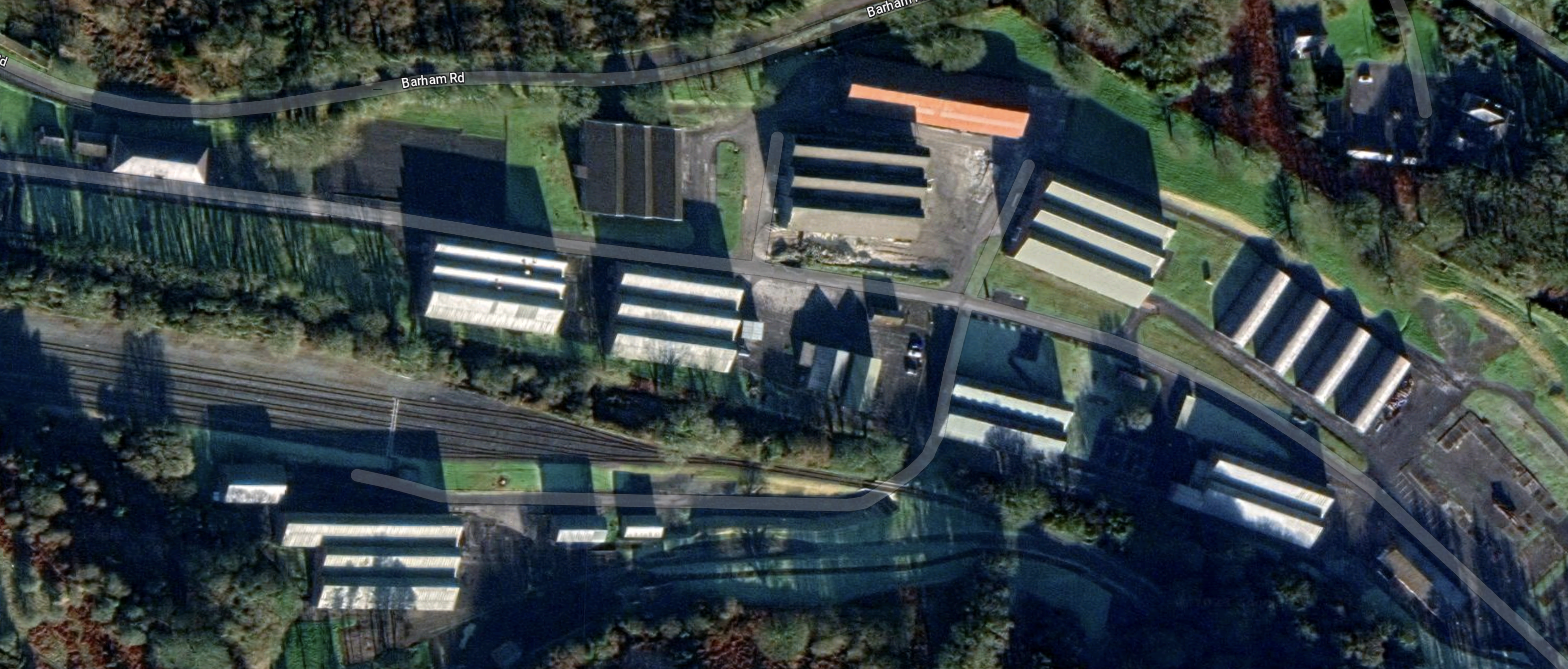
Note the railway line to the site, which is visible in West of the map, which connects to Carmarthen, Fishguard, Milford Haven and Pembroke Dock.
Wikipedia says this about its condition.
Network Rail have not only kept the railway connection operational, but refurbished it to allow the site to develop as an Intermodal freight traffic distribution site from Fishguard.
Note.
This would surely enable local trains, port operations, railway locomotives and ships to be hydrogen-powered.
- Trains and railway locomotives could be filled on the site.
- Buses and trucks could be filled on the site.
- Ports could be supplied by hydrogen trains.
- Strangely, I’ve not seen a design for a short hydrogen delivery train, which would be needed to supply the ports. But I doubt, it would be difficult to design and build.
All the Health and Safety protocols could probably easily be created, given the former use of the site.
Conclusion
Statkraft seem to have chosen an ideal site for the hydrogen electrolyser.
Retired Alaska Airlines Turboprop To Get New life As ‘World’s Largest’ Hydrogen-Powered Plane
The title of this post, is the same as that of this article on KUOW.
It’s increasingly looking like, there will be at least a couple of viable hydrogen conversions of current turboprop aircraft to hydrogen.
Cummins And Accelera Showcase Broadest Portfolio Of Decarbonizing Technologies With An Emphasis On Hydrogen
The title of this post, is the same as that of this press release from Cummins.
This is the first paragraph.
Cummins Inc. and Accelera™ by Cummins, Cummins’ zero-emissions technology brand, will showcase a variety of technologies in their booth at Advanced Clean Transportation Expo (May 2 to 4, Anaheim, California). The line-up emphasizes the role that hydrogen will play as part of Destination Zero, Cummins’ strategy to go further, faster to reduce greenhouse gas (GHG) and air quality impacts of its products and reach zero emissions by 2050. The company will showcase technologies across the hydrogen value chain, including electrolyzers to produce hydrogen that can power both a hydrogen-fueled internal combustion engine (H2-ICE) concept truck and a fuel cell electric powertrain.
The press release says this about their electrolysers for hydrogen production.
The hydrogen ecosystem is underpinned by green hydrogen production. Accelera’s electrolyzer technology is enabling the infrastructure scale-up needed to support hydrogen-powered vehicles.
They also say that they now have a 2.5 MW electrolyser module.
The press release has a section about the X15H Peterbilt Model 579 Concept Truck, which is a conversion of a standard Peterbilt Model 579 truck.
Cummins will reveal a heavy-duty concept truck featuring the X15H hydrogen internal combustion engine (H2-ICE). The proof-of-concept installation with ratings up to 500 horsepower (372 kW) features a 700-bar pressure 80 kg high-capacity hydrogen storage system. The H2-ICE conversion highlights the opportunity for heavy-duty truck applications to operate on zero-carbon hydrogen fuel with an operating range of more than 500 miles. The hydrogen conversion work is not expected to compromise truck performance, cargo capacity or payload. The substitution of the diesel engine with the 15-liter hydrogen engine and integration with the existing driveline highlights the ability of H2-ICE to offer a zero-carbon solution for fleets to deploy quickly with limited investment.
This footnote says a bit more about the X15H hydrogen internal combustion engine.
The X15H hydrogen engine with up to 1900 foot-pounds torque is an all-new engine platform featuring cutting-edge technology to enhance power density, reduce friction losses and improve thermal efficiency. As a result, performance is equivalent to that of a similar displacement diesel engine and compatible with the same transmissions, drivelines and cooling packages. A further benefit of the X15H is significantly quieter running than a diesel.
It looks to me, that Cummins will be going for both the new build and replacement market.
Werner Enterprises Signs Letter Of Intent Planning To Secure 500 X15H Engines From Cummins and Transport Enterprise Leasing To Integrate Cummins X15H Hydrogen Engine Into Heavy Duty Trucks show this sales philosophy at work.
The press release also says this about their hydrogen fuel cell engine.
Hydrogen fuel cell engines turn hydrogen stored onboard a fuel cell electric vehicle (FCEV) into electricity to power the electric powertrain. This creates efficient, zero-emissions power for demanding applications with longer ranges and harder duty cycles. On display at ACT Expo is Accelera’s FCE150 Gen 4 fuel cell engine, powered to go the distance with superior performance and reliability and zero tailpipe emissions. It features increased power density, efficiency and durability with ease of system integration. It is available in 150 kW and 300 kW configurations with the flexibility to decarbonize a range of heavy-duty applications.
This looks to be a formidable beast.
After America, The World
It will be interesting to see what plans Cummins have for the rest of the world.
These posts contain some of my thoughts.
- Air Products, Cummins To Accelerate Hydrogen Integration In Fuel Cells Trucks
- Could London’s New Routemaster Buses Be Converted To Hydrogen Power?
- Cummins Fuel Cell Technology Powers Coradia iLint Fleet In Germany
- Daimler Truck North America And Cummins Collaborate To Drive Hydrogen Fuel Cell Trucks Forward In North America
- Do Cummins And Stadler Have a Cunning Plan?
- Electrolyser System To Linde For Green Hydrogen Production In Niagara Falls, New York
- Ricardo Supports Industry Leaders To Develop Innovative Dedicated Hydrogen Engine
This must be one of the biggest conversions of a major corporation to zero-carbon thinking.
World First As HS2 Trials Dual-Fuel Piling Rig On London Site
The title of this post, is the same as that of this news item on HS2.
This is the piling rig.
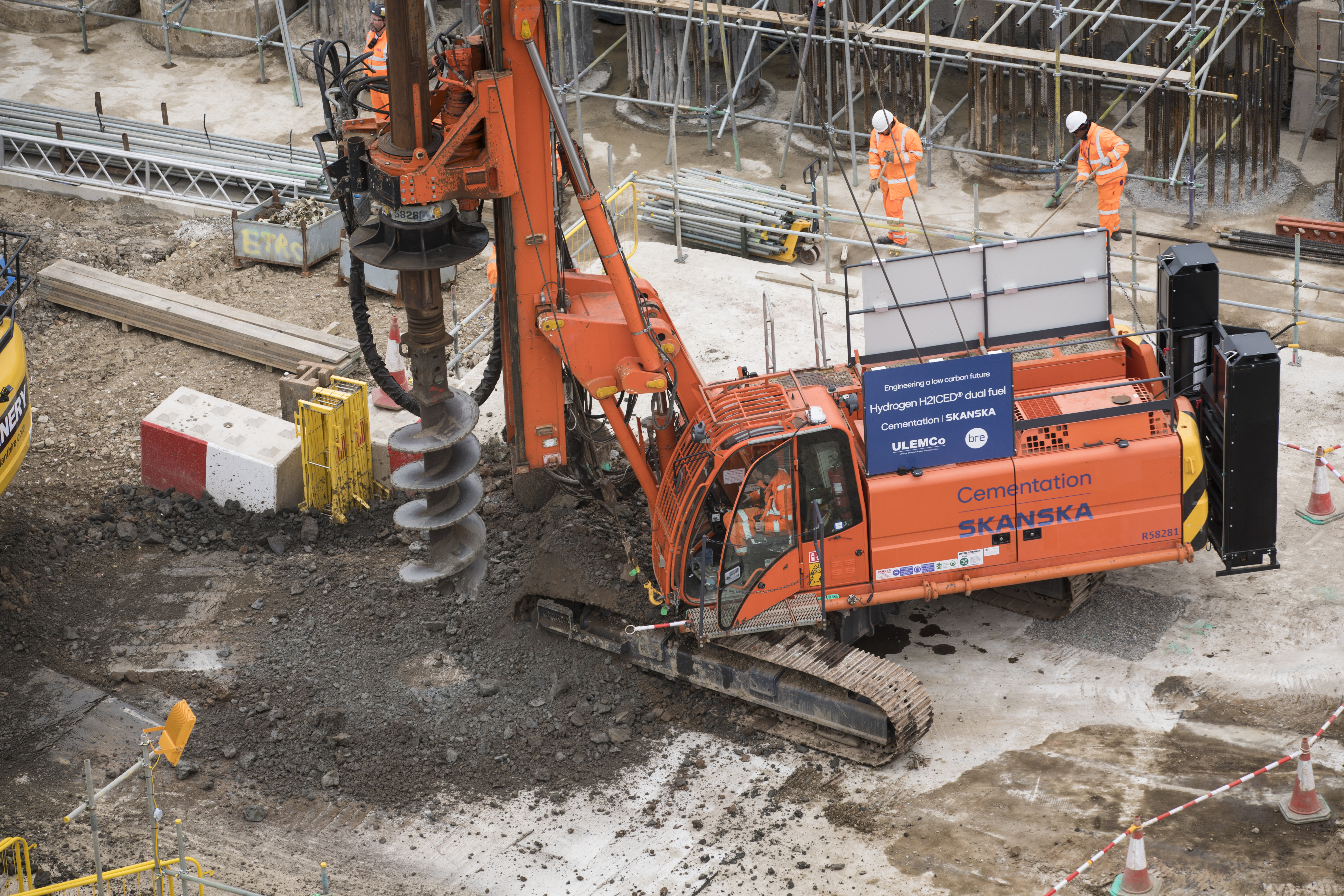
These are the two bullet points.
- Four piles installed using a hydrogen dual-fuel piling rig, cutting the use of traditional fuel by 36%.
- Trial is the first real world use of the technology on a construction site.
These three paragraphs outline the project.
HS2 has taken a further step forward in decarbonising the constructure sector, completing a world first by installing four 30-metre deep piles on a London site using a hydrogen dual-fuel piling rig.
The trial took place as part of work done in partnership by ULEMCo and Cementation Skanska, working with the world-leading Business Research Establishment (BRE), funded through the BEIS Phase 1 Red Diesel Replacement competition.
ULEMCo and Cementation Skanska successfully modified a medium sized CFA piling rig, converting it so that the machine component operated using energy from on-board hydrogen tanks. Using the dual-fuel system, both diesel and biofuels (HVO) can be mixed with hydrogen, displacing the fuel with hydrogen, resulting in a reduction in fuel use and lower CO2 emissions.
Note.
- We’re going to see a lot more large machines converted to dual-fuel and pure hydrogen.
- ULEMCo from Aintree, seem to be one of the leaders in the field of dual-fuel conversions.
You certainly see lots of these machines working around London and other big cities.
Would Zero-Carbon Trucks Have Better Fuel Security?
There’s just been a story on the BBC, about the need for better truck stops.
One truck owner, said that a truck can carry up to fifteen hundred pounds of diesel and they are always being targeted by thieves.
So would zero-carbon trucks be less of a target for thieves?
I’ve never seen this mentioned in the discussion of zero-carbon vehicles.
Ultra Safe Nuclear, Hyundai Engineering, SK Ecoplant Sign MOU For Clean Hydrogen Production
The title of this post, is the same as that of this press release from Ultra Safe Nuclear Corporation.
These are the first two paragraphs.
Ultra Safe Nuclear Corporation, the U.S.-based global leader in the deployment of fourth-generation gas-cooled microreactors, Hyundai Engineering (Representative Director Hong Hyun-sung) and SK ecoplant (Representative Director Park Kyung-il) are teaming up to conduct research and development for carbon-free hydrogen production. The three companies signed an MOU on Thursday, April 20th for the construction of a “Hydrogen Micro Hub” at the SK ecoplant headquarters in Seoul’s Jongno-gu.
The “Hydrogen Micro Hub” is a facility that produces hydrogen by applying a high-temperature electrolysis process of solid oxide electrolysis cells (SOEC) to the electricity and high-temperature steam generated by USNC’s Micro-Modular™ Reactor (MMR®). This is a carbon-free hydrogen production method that extracts hydrogen by decomposing water with electricity generated from nuclear power.
Ultra Safe Nuclear Corporation has a web site.
- Ultra Safe Nuclear Corporation, is a U.S. corporation headquartered in Seattle.
- Canada appears to be deeply involved.
- Innovate UK appears to have dished out a grant.
- They appear to have sold five of their MMRs.
The company could be a serious competitor in the market for small modular nuclear reactors.
Thor Offshore Wind Farm To Feature Siemens Gamesa’s Newly Launched GreenerTowers
The title of this post, is the same as that of this article on offshoreWIND.biz.
This is the sub-heading.
Siemens Gamesa has revealed its GreenerTower, a wind turbine tower made of more sustainable steel. The company already closed its first order with RWE to feature 36 of the GreenerTower units at the 1 GW Thor offshore wind project in Denmark.
This is the first paragraph.
Today, tower production accounts for more than one-third of all wind-turbine-related CO2 emissions, according to Siemens Gamesa.
Siemens Gamesa’s new GreenerTower will ensure a CO2 reduction of at least 63 per cent in the tower steel plates compared to conventional steel.
Siemens Gamesa also claim this.
If all towers installed by the company in one year were exchanged with GreenerTowers, it would be the same as removing more than 466,000 cars from the roads in Europe for a year.
The first supplier to be qualified is Salzgitter AG.
- I wrote about Salzgitter’s green steelmaking in WindH2 Hydrogen Project Commissioned In Germany.
- Only a maximum of 0.7 tonnes of CO2-equivalent emissions are permitted per tonne of steel while maintaining the same steel properties and quality.
- Salzgitter’s electric furnaces will be fed with green electricity produced by renewable energy sources.
- Salzgitter AG have recently signed a Power Purchase Agreement (PPA) with Iberdrola.
- It looks like Salzgitter AG are going both the electric and hydrogen route to green steel.
I suspect over the next few years, we’ll be seeing more steel products made with green steel.
In this case, I suspect that Siemens Gamesa could use the same production process with very little modification, which is a great advantage.
Lifting The Barriers To Refueling
The title of this post, is the same as that of this article on Railway Age.
It is a good summing up of Alstom’s problems of getting hydrogen for the iLint in Germany.
This paragraph from the article is puzzling.
Alstom’s task now is to clear external hurdles out of the way. Sprotte explains this using the Bremervörde project as an example: “The location is geographically favorable, almost in the middle of the regional transport network. If they were allowed to, Alstom and Linde could jointly supply several surrounding communities with ready-made hydrogen, for example for municipal commercial vehicles. But they can’t, and that’s because public funding for the project was only granted on the express condition that the filling station be used exclusively for rail transport.” This was met with incomprehension by the partners involved.
The Bremervörde project is to provide hydrogen for the Cuxhaven route that I wrote about in My First Ride In An Alstom Coradia iLint.
It strikes me that a certain amount of bureaucracy, is stopping the full deployment of the trains.
But then the London Mayor has a hydrogen policy of ignore it and it might go away.
Businesses Back Hydrogen Trials To Accelerate Net Zero Ambitions
The title of this post, is the same as that of this news item on Centrica.
These are the three main findings of a business survey, to ascertain attitudes to hydrogen.
- Three quarters (77%) of businesses back hydrogen as part of their energy improvement strategy with a quarter (27%) intending to trial or implement it in the next two years.
- Almost one in ten (8%) respondents say they have already installed hydrogen-ready combined heat and power (CHP) units.
- A third (33%) of firms say energy costs are motivating them to adopt hydrogen.
This paragraph details who were surveyed.
We surveyed 500 executives in December 2022 and January 2023 across food and beverage manufacturing, healthcare, hospitality and travel, pharmaceutical manufacturing, heavy industry, horticulture and light industry. 24% of respondents were from the UK, 16% Ireland, 20% Netherlands, 20% Italy, 20% Hungary.
It certainly looks to be a well-constructed survey, with a wide range of respondents.
I have some thoughts.
Centrica And Combined Heat And Power
I was initially surprised that eight percent of respondents had already installed hydrogen-ready combined heat and power units.
But according to Centrica Announces Hydrogen Ready Combined Heat And Power Partnership With 2G, Centrica are preparing themselves for selling systems in this area.
Businesses Are Certainly Looking At Hydrogen
A figure of 77 % of businesses are looking at hydrogen and 27 % are investing in hydrogen.
But I don’t think the average man on the Clapham Omnibus would be so enthusiastic.
Costs Are Motivating Firms To Adopt Hydrogen
I would be surprised if costs didn’t have an effect.
But if costs are driving them towards hydrogen, then hydrogen must be more affordable.
Which is one in eye for hydrogen deniers, who always tell me it is more expensive.
Are Centrica Working To Drop Their Costs?
These posts would suggest they are.
- Centrica And Ryze Agree To Develop Hydrogen Pathway
- Centrica Announces Hydrogen Ready Combined Heat And Power Partnership With 2G
- Centrica Partners With Hull-Based HiiRoc For Hydrogen Fuel Switch Trial At Humber Power Plant
- Centrica Plan Green Energy Hub At Former Gas Power Plant
- Centrica Re-Opens Rough Storage Facility
- Lhyfe And Centrica To Develop Offshore Renewable Green Hydrogen In The UK
They are doing deals with start-ups and repurposing old plants and pipelines.
Conclusion
Centrica seem to be leading the charge to hydrogen in the UK.

