Adding Southport And Stalybridge Via Atherton To The Bee Network
This article on the Railway Gazette has a list of the lines, that will be transferred between Northern Rail and the Bee Network.
Included in the list is this line.
Southport And Stalybridge Via Atherton.
I think this route could be the following.
- The Eastern terminal would be Stalybridge.
- The Northern terminal would be Southport.
- Intermediate stations would be Meols Cop, Bescar Lane, New Lane, Burscough Bridge, Parbold, Appley Bridge, Gathurst, Wigan Wallgate, Hindley, Daisy Hill, Hag Fold, Atherton, Walkden, Swinton, Salford Crescent, Salford Central, Manchester Victoria and Ashton-under-Lyne
- The route is partly electrified with 25 KVAC overhead.
- Mich of the route has a 75 mph operating speed.
Currently, this service runs hourly, by a slightly different route to that proposed.
This is my thought.
Battery-Electric Trains
Consider.
- The route could be ideal for battery-electric trains.
- Central Manchester and Stalybridge will soon be electrified.
- A charging station could be added at Southport station.
Merseyrail’s Class 777 trains or something similar would surely do nicely.
Adding Wigan And Manchester Victoria To The Bee Network
This article on the Railway Gazette has a list of the lines, that will be transferred between Northern Rail and the Bee Network.
Included in the list is this line.
Wigan and Manchester Victoria via the West Coast Main Line and a proposed station at Golborne, which could open from 2025.
I think this route could be the following.
- The Eastern terminal would be Manchester Victoria
- The Northern terminal would be Wigan North Western, as it is on the West Coast Main Line.
- Intermediate stations would be Golborne, Patricoff, Eccles and Salford Central.
- The route is fully electrified with 25 KVAC overhead.
- Most of the route has a 90 mph operating speed.
There is no comparable route in the current timetable.
These are a few thoughts.
Golborne Station
In Beeching Reversal – Reopening Golborne Railway Station, I discussed the reopening of Golborne station.
I didn’t think it would be likely, as it was a cramped site in the middle of a village, as this Google Map shows.
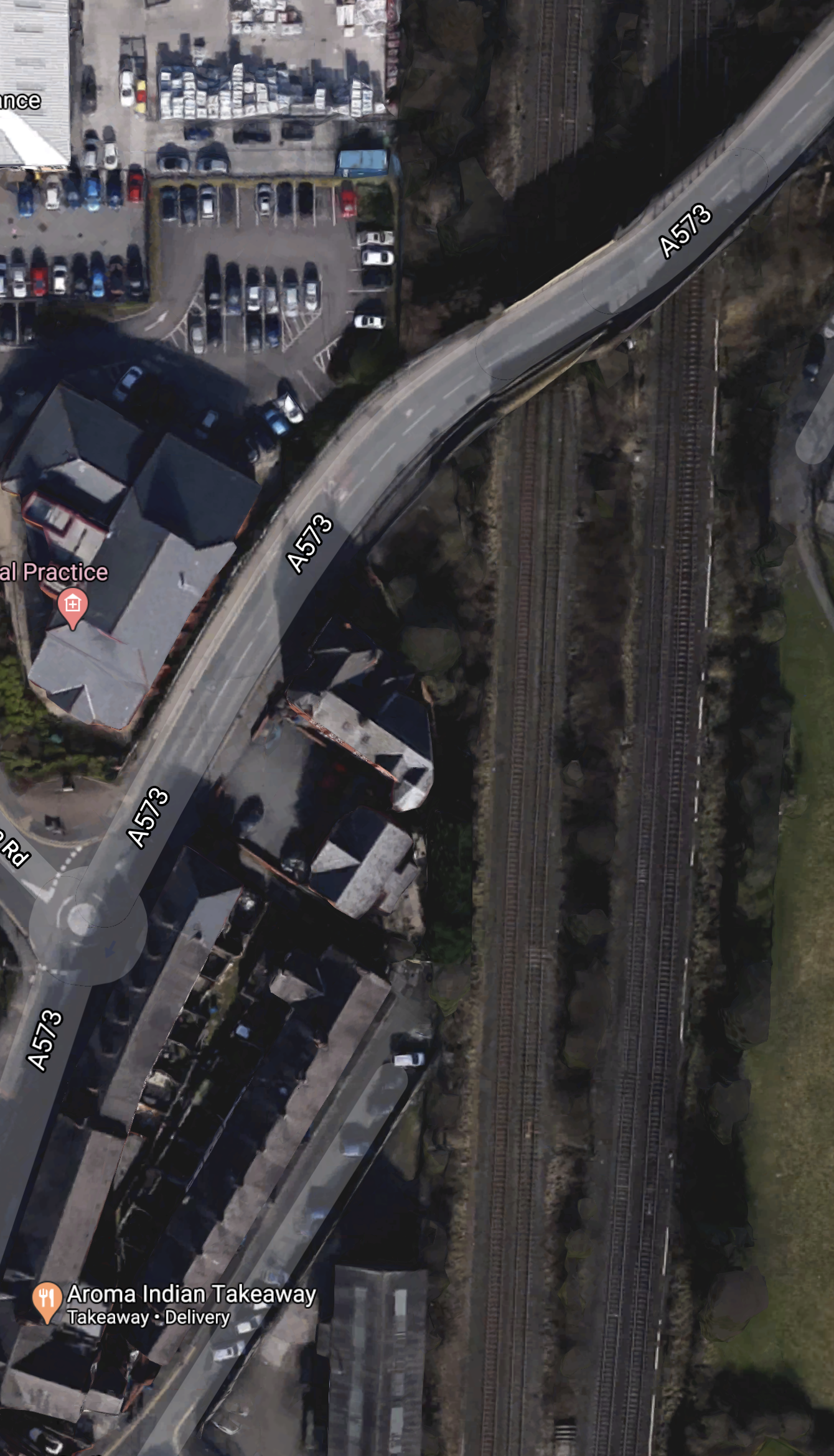
But I didn’t notice the four tracks through the site.
As the line through here, will have to be rebuilt for High Speed Two to raise the operating speed from the current 90 mph to as high as 140 mph. perhaps a high class architect could find a way to build a station at the site on the slow lines?
Improvements To Wigan North Western Station
In Wigan North Western Station Set For Platform Extension Work, I talked about work to make Wigan North Western station ready for High Speed Two.
I concluded, by saying this.
It certainly looks like Wigan North Western station is being updated to have a comprehensive network of local electric services to give a large number of stations, good access to current West Coast Main Line and future High Speed Two services.
I also added this picture of Wigan North Western station.
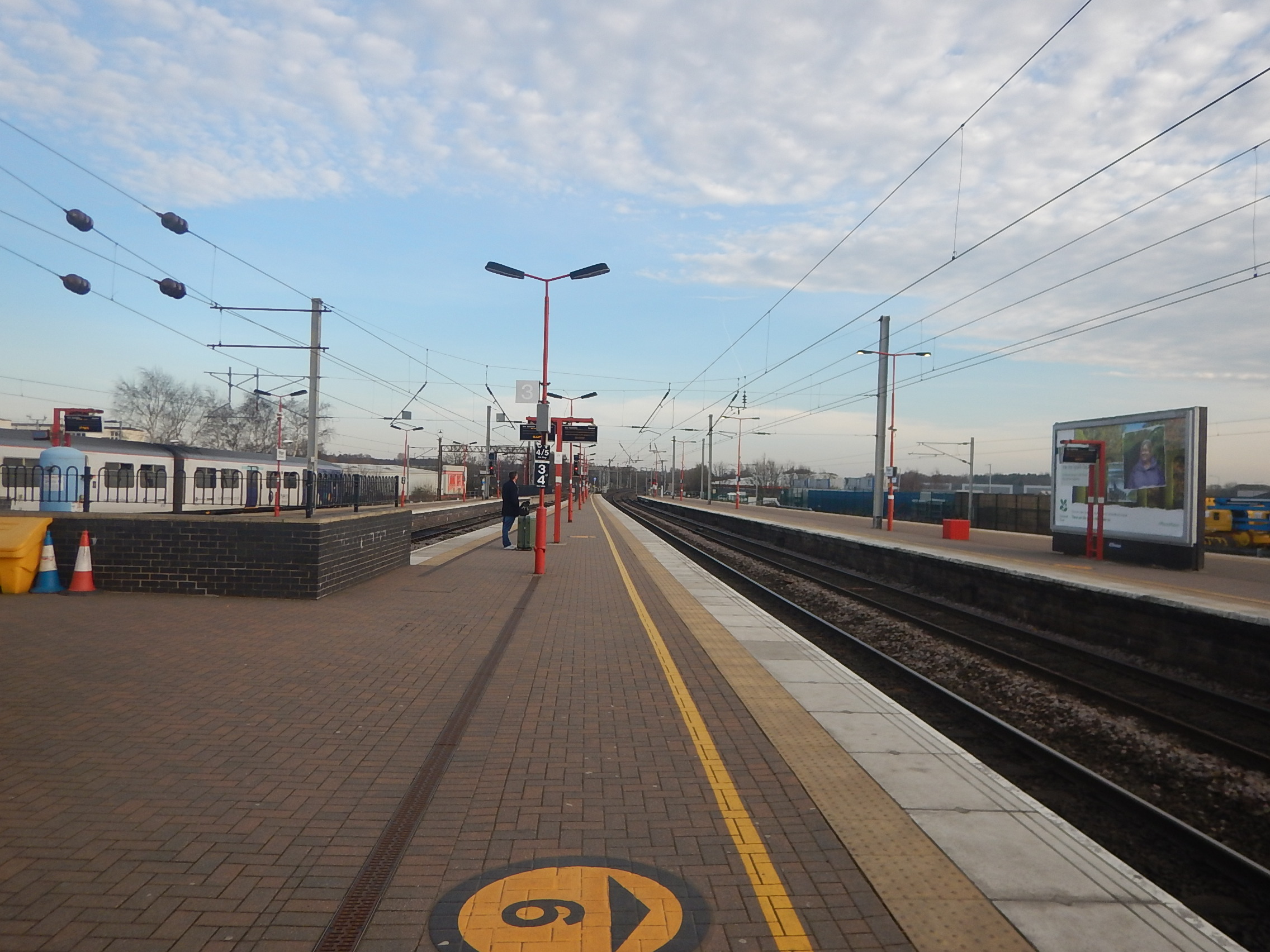
Wigan North Western station can’t be far off being able to accept pairs of High Speed Two Classic Compatible trains, that will be 400 metres long.
The Wigan North Western and Manchester Victoria service will add Golborne, Patricoff, Eccles, Salford Central and Manchester Victoria to the list.
Connecting To Scottish Services
The Internet gives these times from Wigan North Western.
- London Euston – 1 hour and 55 minutes – Current
- London Euston – 1 hour and 34 minutes – High Speed Two
- Glasgow Central – 2 hours and 35 minutes – Current
- Glasgow Central – 2 hours and 06 minutes – High Speed Two
It looks to me, that there is an awful lot of trackwork to be done to the West Coast Main Line between Wigan North Western and Glasgow Central.
But on the other hand, changing at Wigan North Western will be a reasonably fast alternative, if whilst building High Speed Two to Manchester, the current route is closed.
Manchester Buzzing To Put Rail Into Its Bee Network
The title of this post, is the same as that of this article on the Railway Gazette.
These two paragraphs introduce the article.
Locally branded stations and integrated ticketing are among the improvements to Greater Manchester’s local rail services envisaged from 2025 under a landmark devolution deal.
The deal agreed with the government on March 15 brings GM Mayor Andy Burnham and local council leaders significant additional powers in several policy areas, including transport. The single funding settlement is similar to those in place covering Scotland and Wales, but this and a similar deal for the West Midlands is the first time such a flexible grant has been granted to English regions.
Included in the deal are the following.
A London-Style Network
It is described in this paragraph.
Greater Manchester has set itself a target of rolling out so-called ‘London style’ transport across modes by 2030. While Transport for Greater Manchester already directly manages the Metrolink light rail network, buses are now being brought under tighter regulation through a franchising model, and TfGM aspires to introduce integrated smart ticketing across the city-region. Today, while paper travelcards can be bought covering buses, Metrolink trams and trains, these are poorly marketed and often more expensive than the fares offered by individual bus operators; there is also no ability for daily or weekly price capping to be introduced.
I hope that Manchester follows London’s rules.
- One card and any bank or credit card gives full access to buses, trains and trams.
- Daily, weekly and monthly caps.
- Freedom Pass or equivalent for those that need them.
- Comprehensive transport mapping.
- Visitor-oriented travel information offices in major stations.
I feel very strongly about the last two, as measures like these encourage visitors to return.
Trials of the ticketing should start by the end of the year.
The Bee Network
This is outlined in this sentence.
Together, the local transport network is to be branded ‘the Bee Network’, reflecting an enduring emblem of the area’s industrial heritage.
I like the name.
- The bee is one of the symbols of the city according to this Wikipedia entry.
- Bees are on the coat of arms of the City of Manchester.
- Bee symbols are used by Manchester and local businesses.
But perhaps most importantly, the bees were a symbol of recovery of the city after the May 2017 Manchester Arena bombing.
The Addition Of Twenty Percent Of the Local Rail Network
This is outlined in this sentence.
Under the agreement announced on March 15, around 20% of local rail services, currently operated by Northern Trains and managed under contract with the Department for Transport, will be brought into the Bee Network.
These rail services are to be added.
- Wigan – Manchester Victoria via the West Coast Main Line and a proposed station at Golborne, which could open from 2025.
- Stalybridge – Southport via Atherton
- Glossop – Hadfield – Manchester Piccadilly
- Rose Hill Marple – Manchester Piccadilly
- Buxton – Manchester Piccadilly
- Alderley Edge – Manchester Piccadilly
I shall discuss each route in detail separately.
New Trains?
Consider.
- The Wigan and Alderley Edge routes are shared with 125 mph trains.
- The diesel trains on the Buxton and Rose Hill Marple routes will need to be replaced.
- The Buxton route is a very stiff climb.
- Do the Class 323 trains to Glossop and Hadfield need to be replaced?
- The Buxton, Southport and Rose Hill Marple routes are not fully-electrified.
I would have two separate fleets.
A small number of 110 mph electric trains for the Wigan and Alderley Edge routes. Class 350, 360, 379 and 386 trains would be possibilities.
An appropriate number of electric for the other routes. Some would have a battery capability to handle the partially-electrified routes. Merseyrail’s Class 777 could be ideal.
Note.
I am fairly certain, that the Class 777 trains can run as tram-trains, which would be useful for Manchester.
A rough calculation indicates that the ideal battery sizes for Southport and Buxton, could be similar.
The battery for the Rose Hill Marple route would be smaller.
There could be advantages if Merseyrail and Manchester had similar high quality trains.
Integration Of The Various Modes Of Transport
This is outlined in this paragraph.
Meanwhile, the Greater Manchester Combined Authority is to establish a North West Regional Business Unit and GM Rail Board to improve local scrutiny of rail service performance and shape the integration with other modes in the Bee Network.
This is critical to the successful development of the Bee Network.
Conclusion
It’s now up to Manchester to first make it work and then develop it for the benefit of the people and businesses of the City, and not forgetting the visitors.
Integration Of The Various Modes Of Transport
This is outlined in this paragraph.
Meanwhile, the Greater Manchester Combined Authority is to establish a North West Regional Business Unit and GM Rail Board to improve local scrutiny of rail service performance and shape the integration with other modes in the Bee Network.
This is critical to the successful development of the Bee Network.
New Mexican Carrier Aerus To Operate Regional Routes Left By Aeromar
The title of this post, is the same as that of this article on Simple Flying.
This is the first paragraph.
The new Mexican regional startup carrier Aerus will begin flying next month, according to the company’s Chief Executive Officer, Javier Herrera. With a fleet of Cessna and Alice aircraft, Aerus is looking to replace Aeromar as the country’s leading regional airline flying point-to-point routes from its base in Monterrey International Airport (MTY).
The Rise Of Zero-Carbon Airlines
It looks like Aerus could be heading to join a list of zero- or low-carbon airlines.
Current airlines going in that direction include.
- Air New Zealand, who have released this press release, which is entitled Air New Zealand Launches Ambitious pProgramme For Zero Emissions Aircraft.
- Cape Air who have a large fleet of up to nine seat commuter airliners and 75 Eviation Alice on order.
- Evia AERO, which I wrote about in EVIA AERO Orders 25 Eviation Alice Aircraft.
- GlobalX has been reported as having 50 Eviation Alice on order.
- Harbour Air, which I wrote about in Harbour Air Set To Become The First All-Electric Airline In The World.
Some parts of aviation do seem to be decarbonising.
Ricardo Supports Industry Leaders To Develop Innovative Dedicated Hydrogen Engine
The title of this post, is the same as that of this press release from Ricardo.
This is the sub-heading.
Ricardo, a global strategic, environmental, and engineering consulting company, has delivered a hydrogen-fuelled research engine to global engine specialist Cummins and automotive supplier BorgWarner, as part of Project BRUNEL part funded by the Advanced Propulsion Centre (APC)
These four paragraphs outline the project.
Cummins is a global specialist in diesel and alternative fuel engines and generators, and related components and technology. BorgWarner is an automotive tier 1 supplier and specialist in the design and manufacture of systems for electrified and conventional propulsion types, that includes injection equipment for conventional and renewable fuels. BorgWarner recently announced the intention to spin off its Fuel Systems segment. The intended company name is PHINIA Inc. PHINIA is expected to be a product leader in fuel systems, starters, alternators and aftermarket distribution.
The project aims to support internal combustion engine (ICE) sub-system suppliers to increase their use of hydrogen as an alternative zero-emissions fuel solution across the light commercial vehicle market.
The engine is specifically designed to burn only hydrogen – with no supporting fuels that could give rise to any carbonaceous, or excessive air quality emissions.
Experts in hydrogen technology and integration, Ricardo has provided an engine based upon its world-renowned series of single cylinder research units, which can help the research teams evaluate a wide variety of fuels. The engine is designed to help engineers evaluate a variety of injector types and will support increased fuel efficiency, reduced air quality emissions and the move towards carbon-free heavy-duty propulsion.
Reports of the death of the internal combustion engine are greatly exaggerated.
The Aims Of The Project
This talks about the light commercial market, which for Cummins means, that this engine could be a replacement for their B Series engine, which is described in Wikipedia like this.
In production since 1984, the B series engine family is intended for multiple applications on and off-highway, light-duty, and medium-duty. In the automotive industry, it is best known for its use in school buses, public service buses (most commonly the Dennis Dart and the Alexander Dennis Enviro400) in the United Kingdom, and Dodge/Ram pickup trucks.
A version is also used in London’s New Routemaster buses.
Speculation About A Hydrogen-Powered Dodge Ram Pickup
This article on Mopar Insiders is entitled Next-Gen Ram Heavy Duty Could Feature Cummins Hydrogen Powerplant!
It has this sub-heading.
Fast Refuel Times, Extended Range, & Zero-Emissions…
Sounds great for wide open spaces.
I’ve also read in an interview with a retiring Cummins Executive, who said that Dodge RAM trucks are being converted to hydrogen by enthusiasts.
Could New Routemasters Be Converted To Hydrogen?
In the Wikipedia entry for the Cummins B Series engine, this is said about the engine in a New Routemaster.
The 4.5L ISB is essentially a four-cylinder, two-thirds version of the 6.7L ISB rated at 185 hp (138 kW), used in the New Routemaster, a series hybrid diesel-electric doubledecker bus in London.
Having worked in the Cummins factory at Darlington, I know they are happy to produce specials for a particular application, so I wouldn’t be surprised to see a hydrogen-powered New Routemaster created by an engine and fuel system transplant.
Conclusion
The tie-up between Cummins, BorgWarner and Ricardo could be significant.
American power with a touch of Sussex finesse.
Electric Cars Are A Dead End!
When you introduce any product to the general population, you must think of all the consequences.
I found these statistics on the RAC Foundation web site.
There were 33.2 million cars (81.3 per cent), 4.63 million LGVs (11.3 per cent), 0.54 million HGVs (1.3 per cent), 1.46 million motorcycles (3.6 per cent), 0.15 million buses & coaches (0.4 per cent) and 0.84 million other vehicles (2 per cent) licensed at the end of September 2022.
Could anybody please tell me how the average guy or gal, who owns one of those 33.2 million cars is going to be able to afford to replace it, find a convenient place to park and charge it and go and visit their mum in say Scunthorpe from Plymouth?
We are going down a massive dead end!
The only sensible alternative is internal combustion engines running on hydrogen, many of which could be converted from existing diesel engines.
But only a few councils have a hydrogen policy, with the biggest disgrace being London, where the Mayor’s hydrogen policy, is to ignore it and hope it will go away.London has an air quality problem, which is not helped by large numbers of HGVs in the centre.
The technology exists to convert HGVs to hydrogen and it would be possible to insist that all vehicles over a certain weight were zero-carbon. But as London has no plans for hydrogen, it can’t happen.
Vote Hydrogen for Mayor in May 2024, to improve London’s air quality.
Notes.
- To replace 33.2 million cars with electric ones would cost 1660 billion pounds, assuming each electric car costs fifty grand.
- As most electric cars are not made in the UK, what would happen to our balance of payments?
- On average an electric car needs 63 kilos of lithium for its battery, so 33.2 million will need over two million tonnes of lithium.
HS2 Tackles Materials Shortfall By Opening A New On-Site Rebar Components Facility
The title of this post, is the same as that of this news item from High Speed Two.
These are the three bullet points.
- A new facility on HS2’s Copthall tunnel site addresses materials shortages by making rebar products on site
- A team of 14 will make 92,000 rebar couplers needed for the Copthall tunnel in Hillingdon
- The innovative solution has created jobs, saves time and money, reduces waste and cuts lorry movements
These three paragraphs outline what was done.
HS2 has set up a rebar threading facility to address materials shortages at its Copthall tunnel construction site in Hillingdon – creating jobs, cutting waste and reducing lorry movements. The new facility will make 92,000 rebar couplers, needed to construct the Copthall tunnel.
The Skanska Costain STRABAG joint venture (SCS JV) team constructing the tunnel were faced with delays due to a shortfall of available prefabricated fatigue rated rebar couplers, after suppliers had exited the market. To address this, the team has constructed a threading facility on site to produce the required quantities of the materials themselves.
As well as addressing supply shortfall, the threading facility has resulted in a significant financial saving on the project by reducing waste, costs and lorry movements, and overall creating a more efficient way of working.
This looks like the sort of solution that could be applied more often.
There’s also an excellent video.
I have definitely been impressed with the project management of High Speed Two.
English Motorway Gantries Get New, More Secure Design
The title of this post, is the same as that of this article on The Guardian.
This is the sub-heading.
National Highways hopes design will prove more resilient to trespassers after last year’s Just Stop Oil protests
These two paragraphs outline the design.
National Highways has unveiled a new design for motorway gantries that it hopes will prove harder for protesters to mount and use to cause disruption.
The renovated structures, which are expected to become the standard design in England from 2025, will have their maintenance steps hidden inside their pillars and will be more difficult to gain access to without authorisation.
As a scientifically-correct non-driver, I wouldn’t support Just Stop Oil.
But I do remember a tale from a few years back, when a friend, who was travelling up the M1, towing two horses in a trailer behind his pick-up. A guy was on a motorway gantry, threatening to commit suicide and traffic was stopped for several hours.
At the time he was informed by the police, that increasingly, they were seeing suicide attempts from motorway gantries.
If these new gantries can stop a proportion of suicides, that must be a good thing all round.
Great Northern’s Class 717 Fleet Receives Go-Ahead From ORR To Operate With In-Cab Digital Signalling
The title of this post is the same as that of this press release from Great Northern.
These five paragraphs outline how the new signalling will be introduced.
Govia Thameslink Railway (GTR) has received authorisation from the Office of Rail and Road (ORR) to place its Class 717 fleet into passenger service using Level 2 European Train Control System (ETCS) digital signalling.
This is a key step towards the introduction of digital signalling on both the Northern City Line, between Finsbury Park and Moorgate in London, and the East Coast Main Line between London and Grantham, as part of the government-funded East Coast Digital Programme (ECDP).
The programme will see traditional lineside signals replaced by state-of-the-art in-cab signalling technology (ETCS). On the Northern City Line this will give Great Northern passengers a more reliable service.
The trains, leased to GTR by Rock Rail, will begin running in passenger service once Network Rail has completed its approval works to switch on the trackside ETCS system. Once this second milestone is achieved later this year, GTR will start training, in passenger service, two hundred and fifty of its Great Northern drivers to drive using ETCS.
The new system overlays the traditional signals, so drivers will be able to continue using ETCS alongside their untrained colleagues once they are qualified, ensuring they maintain full competency until everyone is trained and the old system can be switched off.
I used the route from Essex Road to Moorgate stations, this morning about 09:30 and Great Northern seems to be running eight trains per hour (tph) on that section.
Offshore Drone Challenge Takes Off
The title of this post, is the same as that of this article on offshoreWIND.biz.
This is the sub-heading.
German energy company EnBW and its project partner, the German Aerospace Center (DLR), have published the conditions of entry and the specific flight tasks for the Offshore Drone Challenge (ODC) for the first time.
This is the first paragraph.
As part of the Offshore Drone Challenge, drone manufacturers and service providers are invited to demonstrate their technologies for transporting maintenance equipment to offshore wind farms.
It’s an interesting idea and would make a good television program.
But I suspect, that the winner will be a Ukrainian company, as recently, they’ve had a lot of practice delivering cargoes with a high level of precision into confined and difficult places.
 The Anonymous Widower