Cockfosters Train Depot – 12th January 2023
In Would A Solar Roof With Added SeaTwirls Work?, I showed this map of Oakwood.
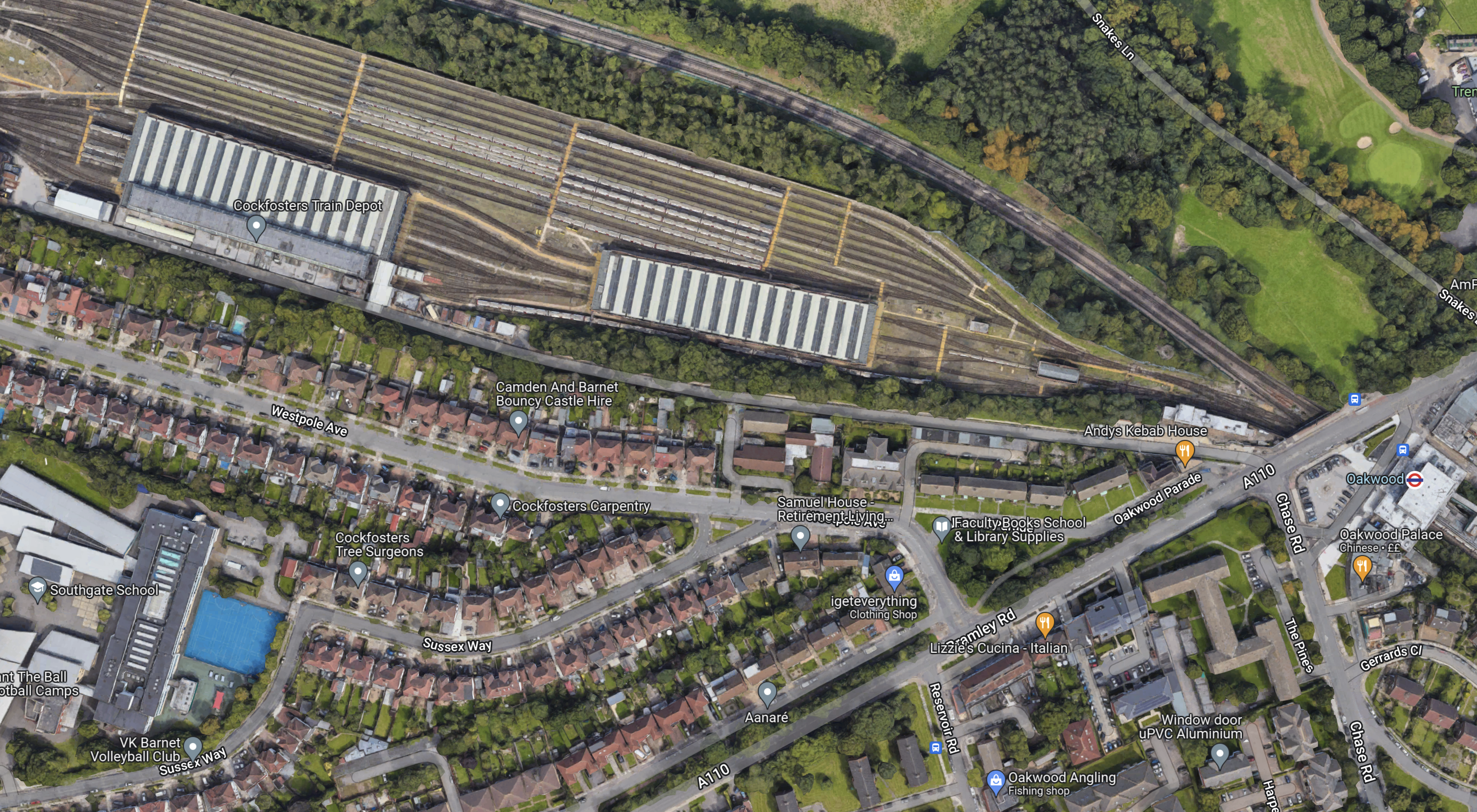
Note.
- The striped roofs at the top of the map, with sidings for trains to the North, is Cockfosters Train Depot for the Piccadilly Line.
- Cockfosters station is off the map on the West side of the map.
- Oakwood station is at the East side of the map and indicated by a London Underground roundel.
- The two tracks of the Piccadilly Line between Oakwood and Cockfosters stations, running across the map to the North of the depot.
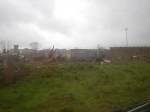
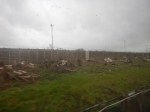
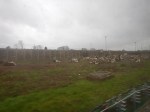
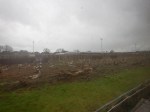
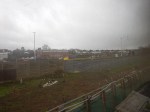
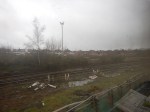
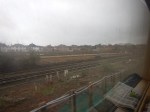
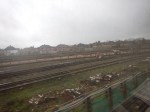
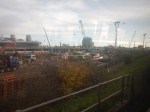
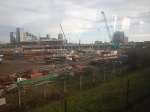
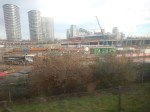
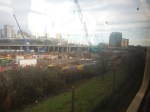
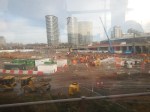
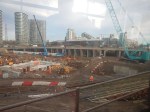
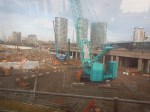
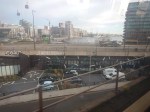
I took these pictures of the Cockfosters Train Depot as my train went between Oakwood and Cockfosters.
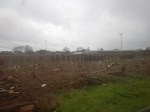
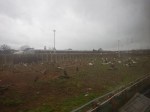

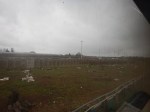
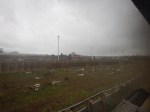
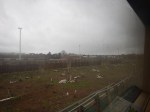
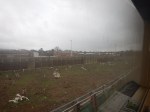
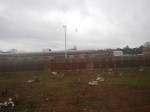

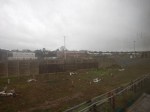


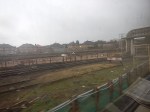
Note.
- The land between the Piccadilly Line and the depot seems to be being cleared.
- Is this to expand the depot for the new trains?
- There are some high lights mounted above the sidings.
- The depot buildings don’t look anything special.
This article on Ian Visits is entitled Depot Upgrade At Cockfosters For The Piccadilly Line’s New Trains.
- Before and after maps show a lot more sidings.
- The new siding layout reaches almost all the way to the Piccadilly Line.
- The old depot has been assessed to be utilitarian with low architectural and historic value.
- The depot will be completely rebuilt over the next two years for the new Siemens trains.
- Nothing is said as to whether the new depot will be fitted with a solar roof.
The new trains will start running in 2025. It seems that the work hasn’t progressed very far.
Bowes Park Station – 12th January 2023
I’d never used Bowes Park station until I moved back to London in 2011, despite the fact I had friends in the 1960s, who lived nearby.
Today, I was wanting to go from the Northern end of the Piccadilly Line to Moorgate station.
There are a number of ways to do this journey.
- Piccadilly Line to Bounds Green tube station and then a Great Northern train from Bowes Park station to Moorgate
- Piccadilly Line to Wood Green tube station and then a 141 bus to Moorgate.
- Piccadilly Line to Manor House tube station and then a 141 bus to Moorgate.
- Take the double cross-platform change route, I outlined in Extending The Elizabeth Line – Improving The Northern City Line.
I decided to take the first route.
I took these pictures at Bowes Park station.
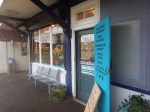
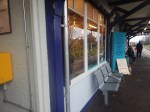
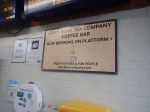
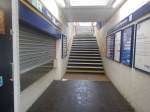
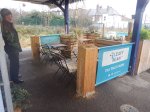
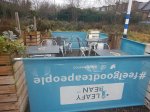
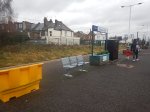
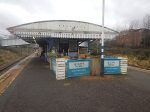
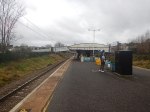
Note.
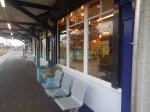
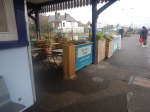
- The station has a warm well-stocked cafe, that is an asset to the station.
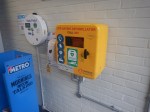
- The station has a defibrillator.
In an ideal world the station would have step-free access, as this would give a step-free route to Moorgate and the Elizabeth Line.
I returned a day later and took these pictures to see if a lift could be fitted.
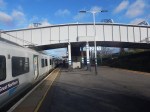
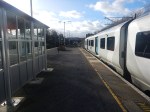
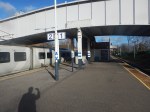
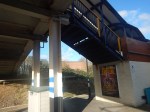
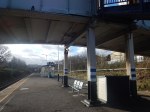
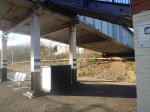
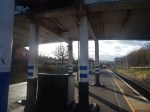
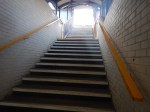
I don’t think it would be one of the most difficult or expensive jobs to fit in a lift, that took passengers between the platform and the bridge.
The existing stairs would be retained and fitted with a decent fully-compliant handrail.
If a single lift were to be placed on the opposite side to the stairs, passenger access to the station would be possible during the installation.
The Ultimate Bus Stop
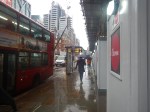
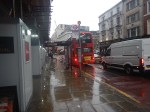
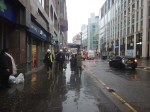
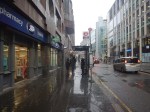
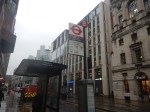
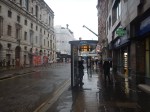
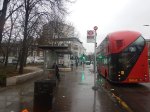
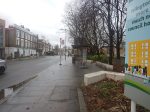
London has very comprehensive bus stops as these pictures show.
Note.
- Most bus stops have a pole mounted roundel, that can be seen from a reasonable distance. In many cases, anybody with reasonable sight can see the roundel for the next stop.
- Where space permits, bus stops have a shelter with seats, maps and instructions on ticketing.
- Some stops have been extended into the road, so that it is a level step into and out of the bus.
- As shown in the pictures, so bus stops have displays showing the next ten buses, that will be arriving.
But I do think, they could be improved, with extra features.
Internet Connectivity
I feel strongly, that all bus stops should have good internet connectivity.
This could be 4G, 5G or just wi-fi, but I believe this could help with the safety of people on the street.
Comprehensive Lighting
To contribute to safety, I also feel that all bus stops should be well lit.
CCTV Issues
I also feel that all bus stops should have provision for CCTV, so if there was a need, it could be quickly fitted. But if the bus stop had good internet connectivity, then this shouldn’t be a problem.
Phone Charging
New buses have this feature, so why not at the stops?
Power Supply Issues
If we add all these features, we could be needed an uprated power supply.
- So could we see bus stops, with solar panels on the roof.
- Perhaps even a mini wind turbine?
- I think a vertical wind turbine, which was similar to a SeaTwirl, but smaller, could be ideal!
- Could it be called a StreeTwirl?
- A self-powered bus could be created with the addition of a battery.
Self-powered bus stops might be easier to install.
Conclusion
Bus stops will have more features in the future.
Should There Be Limits To The Type Of Vehicles Allowed In The Blackwall And Silvertown Tunnels?
When the Silvertown Tunnel opens in 2025, the tunnel and the nearby Blackwall Tunnel will be tolled.
But will there be any restrictions on the vehicles that can use the tunnels, other than those that apply to the Blackwall Tunnel at the present time, which are detailed in Wikipedia.
The tunnels are no longer open to pedestrians, cyclists or other non-motorised traffic, and the northbound tunnel has a 4.0-metre (13.1 ft) height limit.
Note.
- I suspect that pedestrians, cyclists or other non-motorised traffic will also be banned from the Silverton Tunnel.
- But the height limit will be relaxed for the Silverton Tunnel to allow large trucks and double-deck buses to use the tunnel.
According to this web page, which is entitled the Silvertown Tunnel Bus Network Proposals, the planned buses through the tunnel include.
- 108 – As now, with a minor route change.
- 129 – As now, but extended from North Greenwich station to Great Eastern Quay.
- X329 – An express bus from Grove Park station to Canary Wharf, which runs non-stop through the Silvertown Tunnel.
Note.
- The 108 goes through Blackwall and is a single decker bus.
- The 129 and the X329 will go through Silvertown and could be double decker buses.
- There appears to be no mention of any provision for cycles.
- I would assume wheelchairs, buggies and cases will be accommodated as they are on current London buses.
I also think, that the buses must be zero-carbon, which would mean battery-electric or hydrogen.
In Hydrogen-Powered Vehicles And Trains In Tunnels, I looked at the feasibility of running hydrogen buses through the tunnel and came to this conclusion.
I am confident, that we will achieve a safety regime, that allows hydrogen-powered vehicles and trains to be certified to pass through tunnels.
The great advantage of hydrogen buses on the three routes would be that they would probably only need to be filled up once a day, but electric buses might need constant charging.
Provision For Cycles
I think it is essential to have provision for cycles across the river.
- Folded cycles can be taken almost anywhere on London’s transport system.
- Non-folding cycles can be taken most places on London’s transport system, but the hours are restricted.
- There’s always the Woolwich Ferry.
- Given that the 108 bus seems to weave its way through the East End, I suspect that this bus couldn’t be longer to carry cycles.
I have seen double-deck buses, with provision for cycles at the back of the lower deck in Europe.
- Perhaps buses like these, could be used on the 129 and X329 routes.
- A search of the Internet found some buses in East Yorkshire with provision for two standard cycles.
- The 129 bus could ferry bikes between North Greenwich station and a convenient stop on the North side of the river.
- The X329 bus could ferry bikes over the non-stop section of the route between the Sun in the Sands and Leamouth roundabouts.
There could be shorter routes adding extra capacity between the stops, where bikes are loaded and unloaded.
Large Trucks Through The Tunnel
If buses become zero-carbon through the Blackwall and Silverton Tunnels, then why shouldn’t large trucks be zero-carbon?
I think this could be the carrot combined with free passage for zero-carbon vehicles that could clean up Central London’s polluted air.
Smaller Vehicles
Why not gradually reduce the size of vehicles going through the tunnels that must be zero-carbon?
Conclusion
The Silvertown and Blackwall Tunnels can be used as the drivers to clean up Central London’s air.
Hydrogen-Powered Vehicles And Trains In Tunnels
In writing about the Silvertown Tunnel, I started to wonder, if hydrogen vehicles will be allowed in the tunnel.
Consider.
- I don’t think diesel-powered trains are allowed in the Channel Tunnel and the tunnels of the link to London.
- Some tunnels don’t seem to allow hydrogen-powered vehicles.
- In a few years, hydrogen-powered buses, cars, locomotives, trains, trucks and vans will be more common, than they are today.
But help is at hand, with a co-operation between UK and EU agencies called HyTunnel-CS.
It is over fifty years now, since I worked as an instrument engineer in an ICI hydrogen factory at Runcorn. Truckloads of hydrogen were filled and despatched all over the UK. I may be wrong, but in all those intervening years, I can’t remember a hydrogen emergency on the UK’s roads.
I am confident, that we will achieve a safety regime, that allows hydrogen-powered vehicles and trains to be certified to pass through tunnels.
Silvertown Tunnel Bus Network Proposals
This web page is the Silvertown Tunnel Bus Network Proposals.
These proposals are made.
- A new high frequency, limited stop service between Grove Park and Canary Wharf referred to in this consultation as route X239
- To extend route 129 (Lewisham – North Greenwich) north across the river to Great Eastern Quay via the Royal Docks development zone
- A minor change to route 108 so that it uses the new Millennium Way slip road to exit the Blackwall Tunnel southbound
- We are also seeking your views on route options for three sections of routes 129 and X239.
It looks like route 108 will continue to use the current stop.
The proposals include this map.
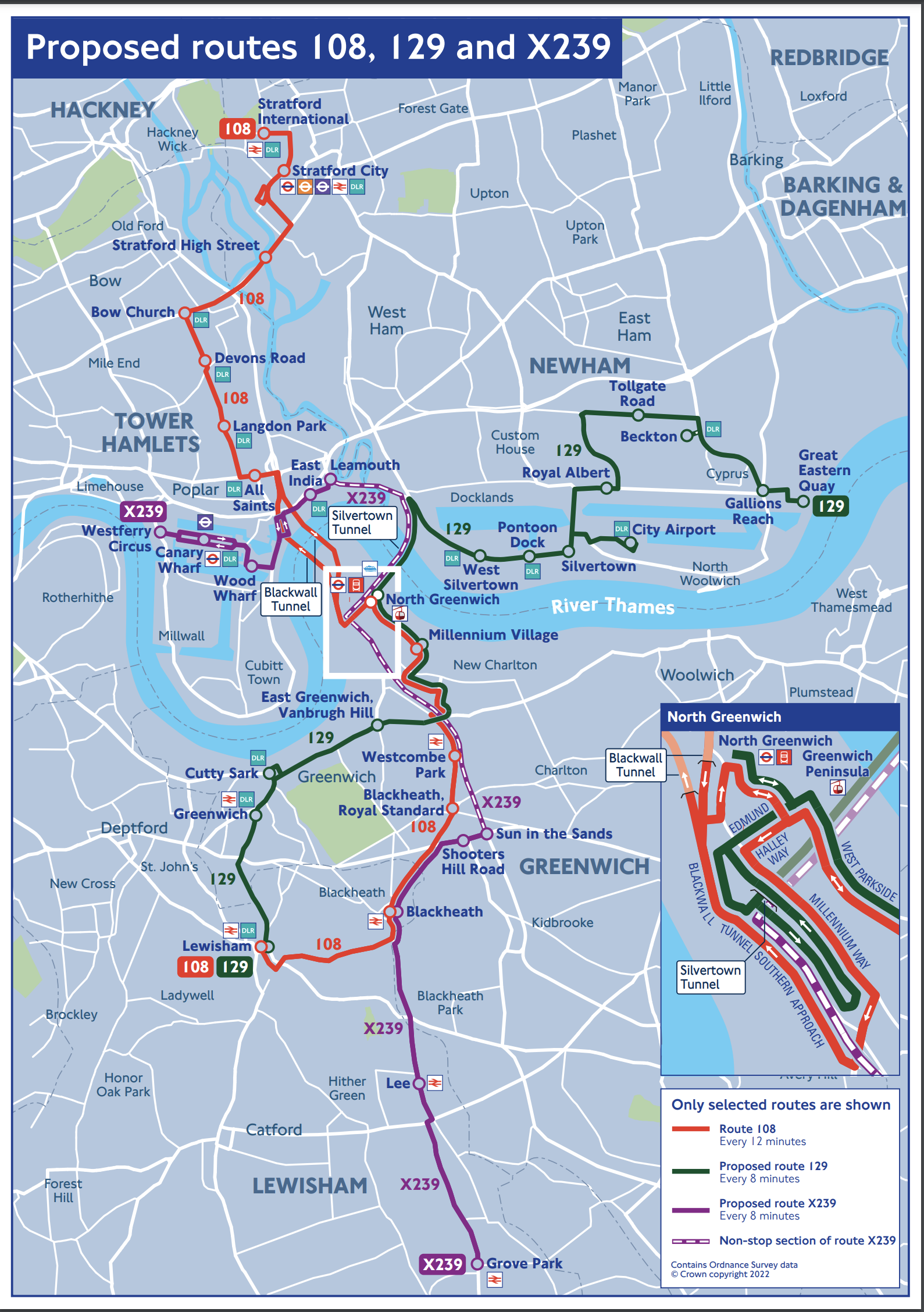
I copied this map from the TfL web site, as they don’t provide one for people who want or need to use it.
These are my observations.
The 108 Bus
The 108 seems to be more or less as now and will be continue to be run by a single-decker bus, as double-decker buses can’t use the Blackwall Tunnel.
North of the Thames, the 108 calls at these stations.
- Stratford International for DLR and National Rail.
- Stratford for DLR, Central, Elizabeth and Jubilee Lines, and National Rail.
- Bow Church for DLR
- Devons Road for DLR
- Langdon Park for the DLR
- Bazely Street (All Saints) for DLR
South of the Thames, the 108 calls at these stations.
- North Greenwich for the Jubilee Line.
- Westcombe Park for National Rail
- Blackheath for National Rail
- Lewisham for DLR and National Rail
Note.
- It is possible to go between Lewisham and Stratford on the DLR with a change at Canary Wharf.
- It is possible to go between North Greenwich and Stratford on the Jubilee Line.
- Westcombe Park station is on the Greenwich Line.
I would wonder, if many people use this bus route for long distances.
The 129 Bus
Note.
- The 129 appears to connect Lewisham and Greenwich to the City Airport and the Becton branch of the DLR.
- Many journeys on the 129 bus, might be easier using the DLR, with a change at Westferry or Poplar, which is probably what travellers do now.
- The 129 bus is shown on the map with a stop at Silvertown. Does that mean that it could connect with a Silvertown station on the Elizabeth Line?
- As the 129 bus will pass through the larger Silvertown Tunnel, it could be a double-decker route, instead of the current single-decker.
North of the Thames, the 129 calls at these stations.
- Gallions Reach for the DLR
- Beckton for the DLR
- Royal Albert for the DLR
- London City Airport for the DLR
- Silvertown
- Pontoon Dock for the DLR
- West Silvertown for the DLR
South of the Thames, the 129 calls at these stations.
- North Greenwich for the Jubilee Line.
- Cutty Sark for DLR
- Greenwich for DLR and National Rail
- Lewisham for DLR and National Rail
Would improvements and a frequency increase to the DLR and the building of Silvertown station, mean that changes to the 129 bus route, would not be so important?
The X329 Bus
Note.
- Canary Wharf must be served and starting at Westferry Circus is probably a good choice.
- But is Grove Park station, the ideal Southern terminal?
- Not stopping the X329 bus at North Greenwich is probably correct, as North Greenwich station is a large Jubilee Line and bus interchange close to the O2.
North of the Thames, the X329 calls at these stations.
- Canary Wharf for DLR and Elizabeth and Jubilee Lines
South of the Thames, the X329 calls at these stations.
- Blackheath for National Rail
- Lee for National Rail
- Grove Park for National Rail
Note.
- Blackheath station is on the Bexleyheath and North Kent Lines.
- Lee station is on the Dartford Loop Line.
- Grove Park station is on the South Eastern Man Line.
- Grove Park has a bus station, where there could be space for a battery charger for electric buses.
The X329 seems to have been partly designed on the premise, that an express bus should be run through the Silvertown Tunnel. But it does connect four of the rail lines going into London terminals to Canary Wharf.
Silvertown Station For London City Airport
Silvertown station would more than double the number of stations with easy routes to the London City Airport.
The Elizabeth Line would enable the direct connection that is needed to Canary Wharf, the City of London, Heathrow, Liverpool Street and Paddington stations and the West End.
- A single change at Abbey Wood, would give access to much of Kent.
- A single change at Farringdon, would give access to Thameslink services and Gatwick and Luton airports.
- Around 2030, a single change at Old Oak Common, would give access to High Speed Two services.
- A single change at Paddington, would give access to Wales and West services.
- A single change at Whitechapel, would give access to the great circle of the London Overground.
I believe the case for a Silvertown station with at least a good walking route to the London City Airport is strong, and the station would be a marvellous asset for Silvertown and the Airport.
The Northern End Of The Silvertown Tunnel From The DLR To Woolwich Arsenal – 6th January 2023
I took these pictures of the Northern end of the Silvertown Tunnel from DLR trains to and from Woolwich Arsenal.

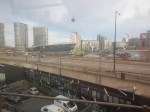
Note.
- The New London City Hall and the Cable Car in the background.
- All pictures were taken going to Woolwich.
The pictures are better than the earlier ones, which I may retire.
Is This The Worst Bus Stop In London?
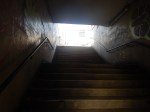
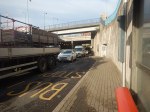
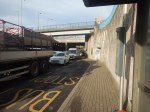
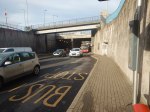
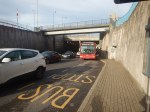
This article on MyLondon is entitled The ‘Creepiest’ London Bus Stop Hidden At The Bottom Of A Dark, Grimy Staircase In East London.
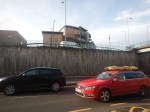
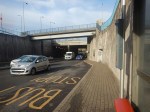
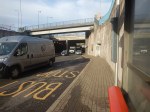
I just had to go and take a look at the bus stop.

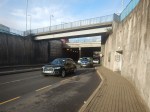
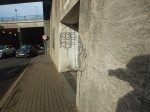
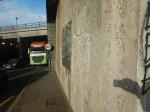

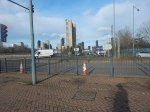
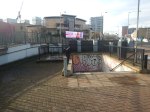
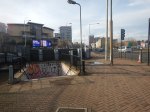
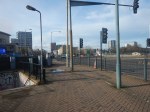
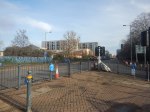
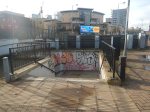
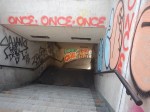
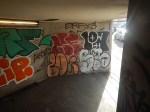

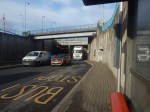

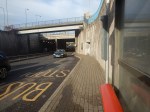
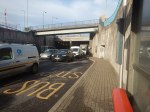
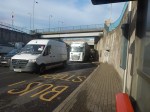
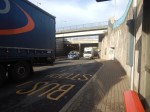
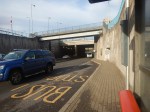
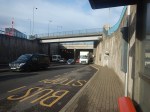
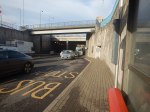

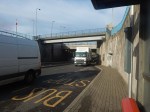
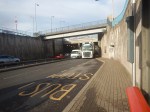
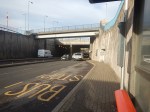
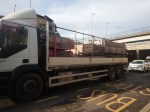
Note.
- The bus stop is on the road leading to the modern Southbound tunnel.
- There were a surprising number of full-size articulated trucks.
- The traffic was moving fairly slowly.
- The pollution was bad, but I’ve been in worse.
The stairs were covered in graffiti, but they appeared to have been swept recently, as there was only a small amount of litter and that was mainly a few leaves.
This Google Map shows the junction and the position of the bus stop.
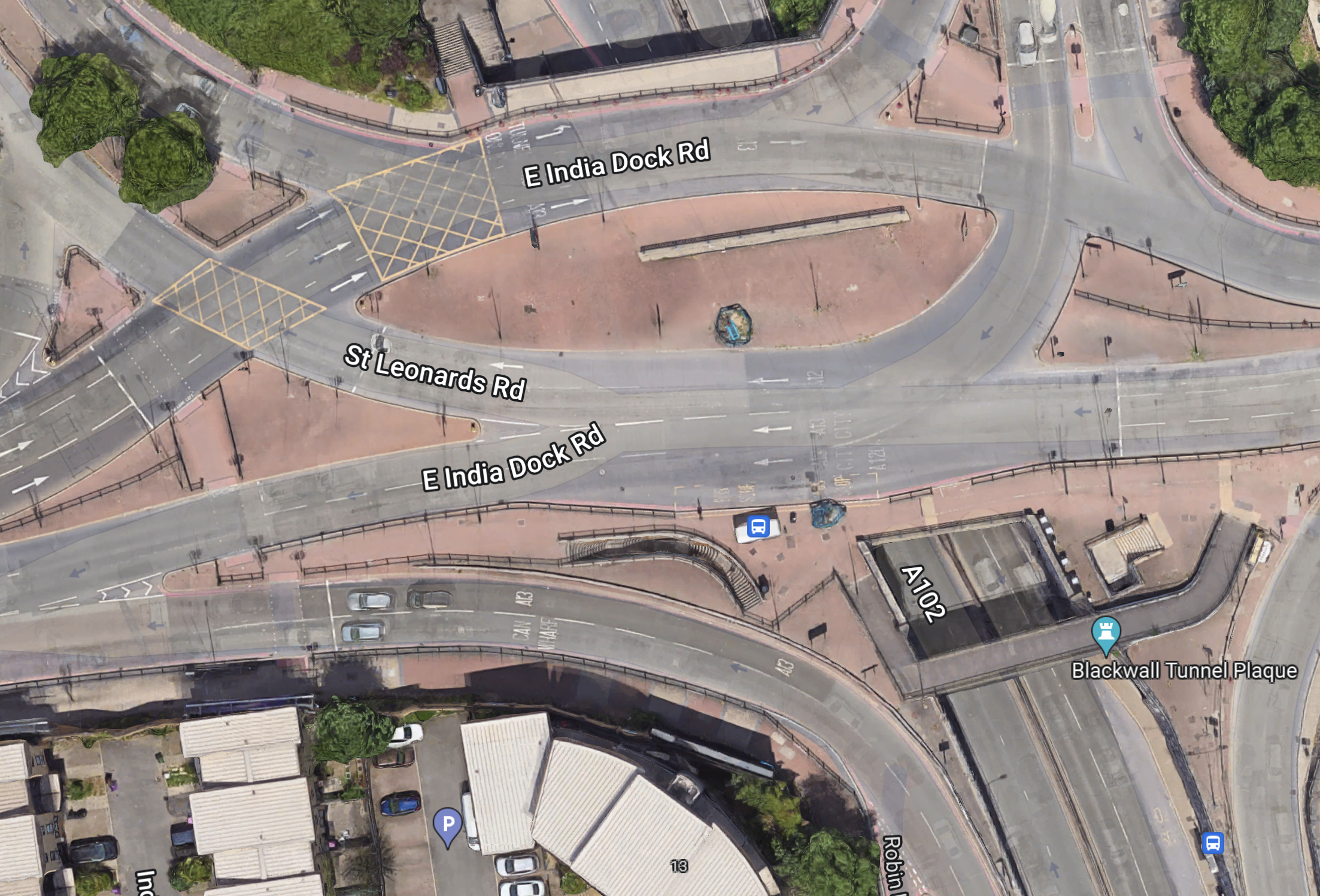
The bus stop is in the bottom-right corner of the map.
Bank Station Upgrade – 6th January 2023
I took these pictures this morning of the new Cannon Street entrance to Bank station.
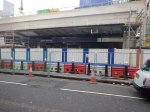
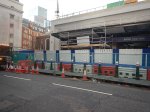
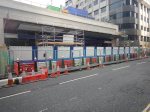

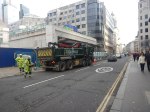
There’s certainly space above the building for a substantial oversite development.
This article on Ian Visits is entitled TfL’s Office Development At Bank Tube Station Gets Taller.
These four paragraphs describes the scheme.
Transport for London (TfL) already had permission for a 7-storey building on the site but was structurally future-proofed for the possibility of an additional floor. They’ve now received permission to add the extra floor on top, and it’s further stepped back from the front of the building so that there’s space to create a large roof terrace as well.
Commercially, the previous top floor, the sixth floor lost about a third of the floorspace to plant room equipment, but will now be a full-width open plan office space, and while the new top floor still needs space for the plant equipment, but also has the new roof terrace and some additional office space. They’ve also flipped the plant room from the western side where it blocked the view of the church steeple and a lower-rise set of buildings, to the other side, which faces an office block, so the 6th-floor office users have a rather better view from the windows.
The revised scheme provides accommodation totalling 142,310 square feet across the ground and 7 upper floors plus over 7,600 square feet of terrace space over three floors.
The new scheme also changes the roof structure, which was to be covered in solar cells. However, that’s because the attic level above the offices was for traditional water boilers. The new scheme has removed the water boilers to replace them with a lower energy air source heating network, so the roof needs to be open to the air instead.
There’s also been a requirement from the City of London to reduce the number of vehicles allowed to make deliveries to the building from 54 per day to a maximum of 42, which considering that the building is also larger, is a meaningful change. Planning policy required at least 142 cycle racks, but another recent change to the building requested by the developer allowed them to put in space for 229 cycle spaces at the basement level, which is significantly higher than the minimum required.
The building certainly appears to have good environmental credentials.
Portishead Reopening Finally Approved
The title of this post, is the same as that of a small article in the January 2023 Edition of Modern Railways.
These are the first two paragraphs.
Secretary of State for Transport Mark Harper has approved a Development Consent Order to reopen the railway to Portishead as part of the West of England Combined Authority’s MetroWest Phase 1B project.
Under the £152 million scheme, the disused railway between Portishead and Pill will be rebuilt, with the Pill to Ashton Junction freight line upgraded. It joins the Bristol & Exeter route at Parson Street Junction.
Note.
- MetroWest is going to be Bristol’s Metro.
- Portishead station is going to be one of its termini.
- It appears that a new station is going to be built at Portishead.
- There used to be other stations on the branch.
I have these thoughts.
Portishead Station
In the Wikipedia entry for Portishead station, there is a section called Future, where this is said.
In April 2019 the Department for Transport committed £31.9m to cover the shortfall in finance for MetroWest Phase 1, meaning that funding for the new station and reopened line has now been secured. In November 2019 North Somerset Council submitted a Development Consent Order (DCO) application to the Planning Inspectorate, which seeks powers to build and operate the disused section of railway from Portishead to Pill, gain environmental consent to undertake works to the existing freight railway through the Avon Gorge and obtain powers for the compulsory acquisition of land. The Secretary of State for Transport is expected to make a decision within 18 months. Subject to final business case approval, construction work is expected to start on the line in December 2021 and then take around two years to complete.
The Secretary of State for Transport gave his decision in December 2022, but I would expect two year construction time to hold.
Stations On The Branch
The original branch had five stations; Ashton Gate, Clifton Bridge, Pill, Portbury and Portishead.
How many will be reopened?
In the Wikipedia entry for Ashton Gate station, there is a section called Future, where this is said.
The line through Ashton Gate would be increased to double track. Network Rail stated that it was not feasible to reopen Ashton Gate during the initial stage of the project, but that the scheme will be future-proofed to allow the construction of a station at a later date.
The section also mentions a reopened station at Pill.
The Wikipedia entry for Pill station, there is a section called Future, where this is said.
As part of the works, Pill station will be reopened. Trains both to and from Portishead will use the southern platform, which will be resurfaced and provided with a waiting shelter, lighting, passenger information displays and audible announcements. The northern platform, adjacent to the current single track line to Royal Portbury Dock, will not be reinstated, however the track will be retained for freight trains. The two tracks will have a junction east of the station.
It is expected that reopening the station will result in reduced car usage to and from Pill and the surrounding villages. Most station users will walk to the station, with the next largest share being car drivers and car passengers being dropped off, followed by cyclists and bus users. Some parking restrictions are proposed to prevent rail users parking on the local streets, which are narrow and not suitable for widening.
Note.
- The station design appears to not need a bridge.
- There would be disabled parking and a pick up/drop off point adjacent to the entrance.
I think this station design could be able to handle two trains per hour (tph).
What Will Be The Service?
This paragraph outlines the service.
An hourly service is proposed, with journey times from Portishead to the centre of Bristol expected to be around 22 minutes, which is said to be competitive with roads in the area.
Twenty-two minutes is an interesting time, as it will mean that it should be possible to do the following in an hour.
- Go from Bristol Temple Meads to Portishead.
- The driver changes ends and gets ready to return.
- Go from Portishead to Bristol Temple Meads
- The driver changes ends and gets ready to go to Portishead again.
If the train can do the full return journey in an hour, it will be able to run the service with a single train.
The Wikipedia entry for Pill station, there is a section called Future, where this is said.
Trains along the reopened line will operate between Portishead and Bristol Temple Meads, with two trains per hour in each direction. Services would call at Pill and Parson Street, with aspirations to also call at Bedminster and a reopened Ashton Gate. Trains could also be extended on to the Severn Beach Line. The trains used will be diesel multiple units, likely three carriages long.
Note.
- Wikipedia and Modern Railways are giving different frequencies.
- Two tph could probably be run by using two trains.
I suspect that the Modern Railways figure is correct, as it is the most recent.
 The Anonymous Widower