A Trip Along The Central Line – 26th January 2023
Today, I took a trip on the Central Line from Leyton station in the East to Ealing Broadway station in the West.
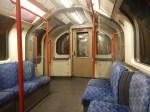
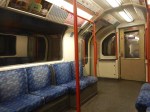
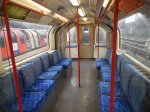

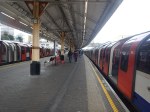
The trip was about eleven this morning and one aim was to assess how busy the line was.
For much of the journey between Leyton and Marble Arch, the train had about half the seats taken, but by the time we got to Ealing Broadway, there were only two of us in my carriage.
After arriving, I had a short chat with the cheery Scots lassie, who had driven us across London.
- She said, that passenger levels had held up on the Central Line, despite the competition from the Elizabeth Line.
- But she also said that large numbers of passengers transfer from the Elizabeth Line to the Central Line at Stratford in the Morning Peak.
- She didn’t say, but there is probably an opposite change in the Evening Peak.
With the exception of a couple of ladies with babies in buggies, most passengers were not travelling with any heavy luggage.
Elizabeth Line: Commuters Say Service ‘Not What Was Promised’
The title of this post, is the same as that of this article on the BBC.
This is the sub-heading to the article by Tom Edwards.
All of the huge modernist stations are now open and it is architecturally impressive, but what has service on the Elizabeth line been like since it opened in the summer?
These three paragraphs talk about how passengers have reported problems to Tom.
Many say it has been hit and miss, and commuters in West Ealing have been in touch with me to highlight some of the problems.
They recorded some of their journeys for BBC London, and it doesn’t look pleasant.
Many are really fed up with the delays and cancellations and above all the overcrowding.
As with many new railways, like the London Overground, the Borders Railway and the Dartmoor Line, the passenger numbers on the Elizabeth Line have exceeded projections.
The main reasons are probably.
- Convenience of the new route and its stations.
- Curiosity about the new infrastructure.
- The improved access to the trains with heavy cases.
But in the case of the Elizabeth Line two other factors also apply.
Are Passengers Changing From the Piccadilly to the Elizabeth Line?
Consider.
- The Piccadilly Line trains are smaller than the Elizabeth Line trains.
- The Piccadilly Line trains are not air-conditioned.
- Heathrow Central to Holborn is 62 minutes on the Piccadilly Line and several minutes quicker using the Elizabeth and Central Lines with a change at Bond Street or Tottenham Court Road.
Many passengers, who previously used the Piccadilly Line may swap to the Elizabeth Line for a quicker journey on a more comfortable and spacious train.
The new Piccadilly Line trains will have more space, walk-through carriages and air conditioning, so may well tempt passengers back.
Bond Street And All Stations To the East On the Elizabeth Line Are Only Five Minutes Slower By Elizabeth Line Direct
Consider.
- Heathrow Central and Bond Street is 38 minutes using Heathrow Express and the Elizabeth Line with a change at Paddington.
- Using the Elizabeth Line all the way takes 43 minutes.
- The figures for Liverpool Street are 46 and 51 minutes respectively.
- The figures for Canary Wharf are 53 and 58 minutes respectively.
Note.
- The direct route avoids the change at Paddington.
- The change at Paddington between Heathrow Express and the Elizabeth Line is not onerous.
- Routes using Heathrow Express are fifteen pounds more expensive.
- If you’re desperate for a coffee, you can pick one up, when you change at Paddington using Heathrow express.
I believe a regular traveller to Heathrow, who has easy access to an Elizabeth Line station and in the past has used Heathrow Express will give the Elizabeth Line a chance.
The Jewel In The East Is On The Elizabeth Line
In 2014, I wrote Is Whitechapel Station Going To Be A Jewel In The East?.
Consider.
- The Elizabeth Line will go through the station with a frequency of up to 24 trains per hour (tph).
- The two Eastern branches of the Elizabeth Line split to the East of Whitechapel station.
- There will be four tph between Heathrow and Whitechapel.
- The East London Line of the London Overground goes through the station with a frequency of 16 tph, that will be raised to at least 20 tph in a few years.
- The District Line goes through the station with a frequency of upwards of 12 tph.
- The Hammersmith and City Line goes through the station with a frequency of 6 tph.
- The station has large numbers of lifts and escalators.
Passengers from all over the Eastern half of London will change at Whitechapel on their journey to and from Heathrow.
Farrington station Connects Thameslink And The Elizabeth Line
Consider.
- The Elizabeth Line will go through Farringdon station with a frequency of up to 24 tph.
- The Circle, Hammersmith and City and the Metropolitan Lines will go through the station with a combined frequency of up to 24 tph.
- Thameslink will go through the station with a frequency of up to 14 tph.
Passengers from Thameslink’s catchment area will change at Farringdon on their journey to and from Heathrow.
Overcrowding On The Elizabeth Line
It is not a surprise to me, that the Western end of the Elizabeth Line is overcrowded.
I noticed it in November 3022, when I wrote So Many Cases On A Train!.
What Can Be Done To Ease The Overcrowding?
These are possible ways to ease the overcrowding.
Increase The Number Of Trains To Heathrow
I would feel the obvious way to increase the number of trains to Heathrow, would be to run direct trains between Shenfield and Heathrow.
Currently, there are these trains.
- 4 tph – Heathrow Express – Paddington and Terminal 5
- 2 tph – Elizabeth Line – Abbey Wood and Terminal 4
- 2 tph – Elizabeth Line – Abbey Wood and Terminal 5
But is there the capacity to add extra trains between Hayes & Harlington and Heathrow through the tunnel?
Run A Service Between Shenfield And Hayes & Harlington
This would add capacity in West London, where it is needed, but wouldn’t add any extra trains through the tunnel to Heathrow.
By timing this service in combination with the Elizabeth Line services to Heathrow, I suspect a very efficient service between Heathrow and both Eastern terminals could be devised.
- As four tph run between Abbey Wood and Heathrow, four tph would be run between Shenfield and Hayes & Harlington.
- Going towards Heathrow, the train from Shenfield to Hayes & Harlington would be a few minutes in front of the train from Abbey Wood to Heathrow. Passengers going from Shenfield to Heathrow would be instructed to change at any station between Whitechapel and Southall, by waiting a few minutes for the following train.
- Coming from Heathrow, passengers wanting to go to Shenfield would walk across the platform at Hayes & Harlington to catch the waiting train to Shenfield. The Shenfield train would follow a few minutes behind the Abbey Wood train.
Note.
- The two train services would run as a pair, a few minutes apart.
- No new infrastructure would be required.
Currently, there are eight tph between Whitechapel and Hayes & Harlington.
Four tph between Shenfield and Hayes & Harlington would increase the following.
- The capacity between Whitechapel and Hayes & Harlington by fifty percent.
- The train frequency in the central tunnel to twenty tph or a train every three minutes.
- The frequency between Paddington and Shenfield to twelve tph.
There would still be four tph available for more services.
ZeroAvia – Dornier228 – First Flight
Does Anyone Remember Suckling Airways?
They started by flying a Dornier 228 between Ipswich and Manchester airports.
But look at this Dornier 228 in a short flight from Cotswold Airport in Gloucestershire.
This press release from ZeroAvia is entitled ZeroAvia Makes Aviation History, Flying World’s Largest Aircraft Powered With a Hydrogen-Electric Engine.
This paragraph describes the aircraft’s engines in this testbed configuration.
The twin-engine aircraft was retrofitted to incorporate ZeroAvia’s hydrogen-electric engine on its left wing, which then operated alongside a single Honeywell TPE-331 stock engine on the right. In this testing configuration, the hydrogen-electric powertrain comprises two fuel cell stacks, with lithium-ion battery packs providing peak power support during take-off and adding additional redundancy for safe testing. In this testbed configuration, hydrogen tanks and fuel cell power generation systems were housed inside the cabin. In a commercial configuration, external storage would be used and the seats restored.
As I suspect a Dornier 228 can fly on one Honeywell engine, this must be a very safe way to prove the concept of the hydrogen-electric powertrain.
This paragraph indicates their path to full certification and entry into service in 2025.
ZeroAvia will now work towards its certifiable configuration in order to deliver commercial routes using the technology by 2025. The Dornier 228 will conduct a series of test flights from Kemble and later demonstration flights from other airports. Almost exactly two years ago, ZeroAvia conducted the first of more than 30 flights of a six-seat Piper Malibu aircraft using a 250kW hydrogen-electric powertrain.
That is an ambitious date, but, they haven’t got to develop and certify a new airframe.
Paul Newman; The Cat, Has Died
It has just been announced on BBC Breakfast that the rare felis statione at Liverpool South Parkway, who was known as Paul Newman, has died.
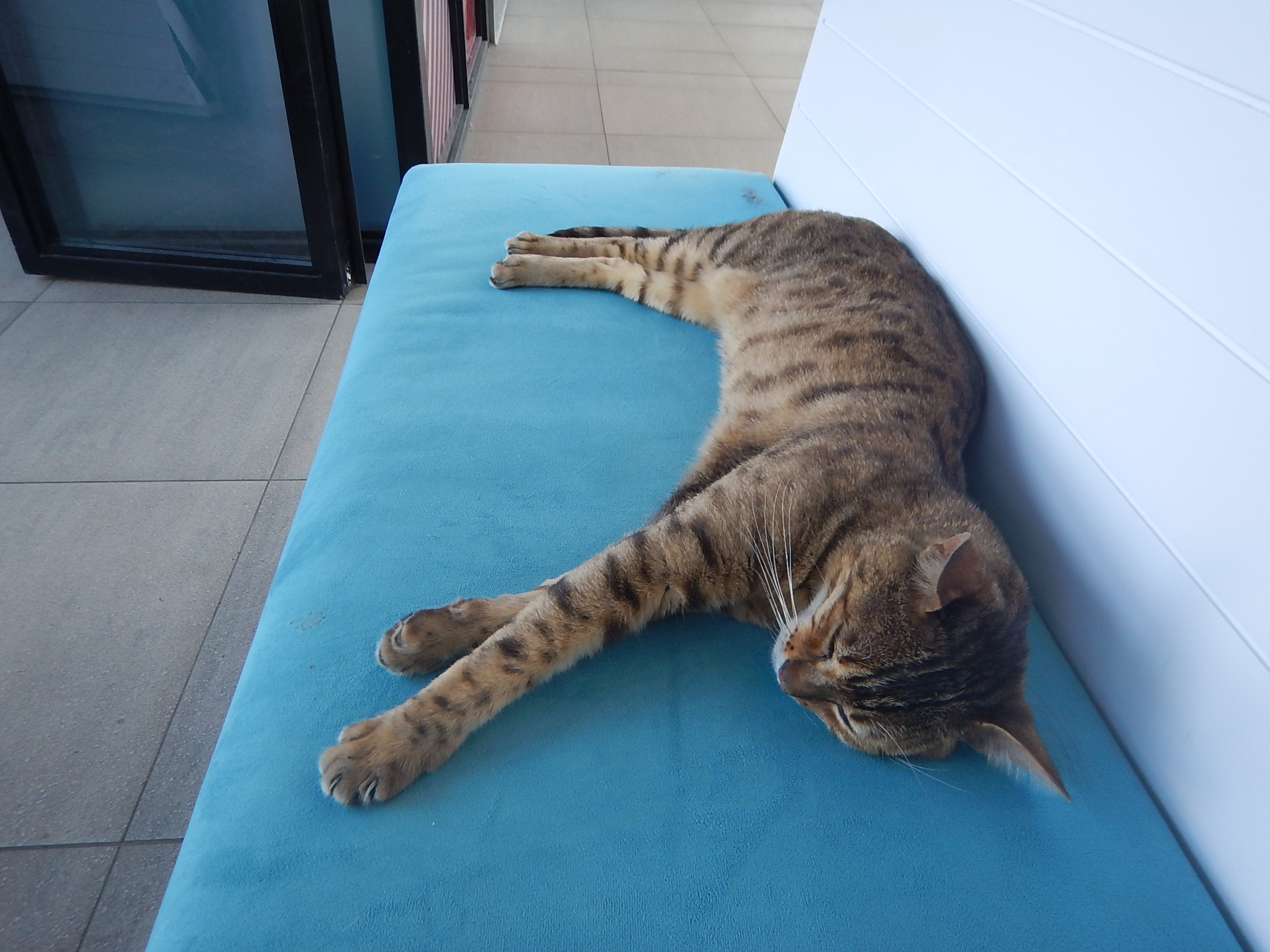
He had a five minute slot on the telly!
RIP, Paul
Construction Of New Cameron Bridge Station Begins
The title of this post, is the same as that of this press release from Network Rail.
These four paragraphs outline the work.
Network Rail has started work to build the new Cameron Bridge station
Cameron Bridge, one of two new stations which will be built on the £116m Scottish Government Levenmouth Rail Link project, will boast two platforms with a connecting footbridge and lifts.
It will serve the western end of the line connecting the communities of Cameron Bridge and Methilhill to the rail network for the first time in more than five decades as well as serving as a ‘park and ride’ facility for communities across the East Neuk of Fife.
Located southeast of Windygates just off the A915, the new station will have 125 car parking spaces with provision for EV charging, accessible spaces and cycle storage.
The Levenmouth Rail Link is planned to open in Spring 2024
An American View Of The Harrier
In The Times today there is the obituary of Ralph Hooper.
This is the sub-heading.
Aeronautical engineer who designed the revolutionary Harrier jump jet and the versatile Hawk used by the Red Arrows.
I have two tales that must be told.
An Artemis Users Conference In Denver
The project management software I wrote; Artemis, was used by both British Aerospace and McDonnell Douglas to build Harriers.
One day, soon after the end of the Falklands War, I was at an Artemis Users Conference in Denver and got chatting to three users.
- The Project Manager for the US Harrier.
- A Senior Project Manager for Long Beach Naval Shipyard.
- A banker from a famous New York Bank.
Because of the times and two project managers working on military projects, the conversation naturally turned to the recent war.
The banker, then said something like. “What you need is a big flat-top with a squadron of Tomcats, to blow the Argies out of the sky.”
Tomcats were top-of-the-range US naval fighter jets.
Whereupon, the McDonnell Douglas guy said. “We’re getting the weather reports! There’s no other aircraft, that can take-off and land in the terrible conditions!”
An A-10 Pilot’s View Of The Harrier
In the 1970s, I used to drink in the Clopton Crown pub. Sometimes, I got drinking with one of the USAF A10 Thunderbolt II pilots from Bentwaters.
As I was a pilot myself at the time, we had quite a few chats about flying.
One night he told how two A10s would fly as a pair, at a fairly low altitude.
To protect themselves from MiGs, one would break away and do a steep turn through a complete circle, scanning the horizon for any threat.
Then the other would do the movement the other way.
He felt that in hostile combat, that they would give any opposition fighter a real kicking, as the attacker would have to keep out of the way of two GAU-8 Avenger 30 mm Gatling-style autocannons, firing large numbers of heavy shells.
He also told me, that he had flown A-10s up against other aircraft on a simulator. He just said, he found AV-8As, as the US called Harriers, very difficult to beat.
New Express Bus Improves Links Between Skelmersdale And Liverpool
The title of this post, is the same as that of this news item from Lancashire County Council.
This is the sub-heading.
A new bus service launched this week makes it quicker and easier to travel between Skelmersdale and Liverpool using public transport.
And these are the first two paragraphs.
The 319 Trainlink service, operated by Stagecoach on behalf of Lancashire County Council, runs between Skelmersdale Concourse, Kirkby railway station and Kirkby bus station for onward transport links into Liverpool reducing the travel time between Skelmersdale and Liverpool Central Station to under 50 minutes.
The express service, which launched on Sunday 22 January, operates every 30 minutes throughout the day Monday to Saturday, and every hour in the evening. There is also an hourly service on Sundays. Buses are timed to connect with Merseyrail train services from early ’til late.
Note.
- Once the new Headbolt station opens, it will serve that station.
- The express bus service has started two days before Merseyrail introduce their new Class 777 trains.
- I hope the quality of the buses are up to that of the new trains.
- The service is probably the best that can be done, until a train service is built.
- There will be integrated fare options between Skelmersdale and Liverpool.
Transport planners need to do more to use buses to extend train services.
Bank Station Upgrade – 23rd January 2023
The roundels are up on the new Cannon Street entrance to Bank station.
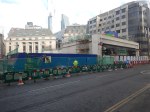
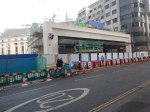
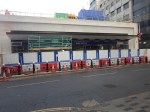

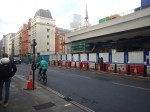
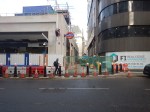
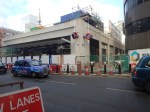
As the buses are changing on the 4th of February, could that be the opening weekend?
Mazda Europe Boss: 2035 ICE Ban Is ‘A Disgrace Of The Politicians’
The title of this post, is the same as that of this article on Car Dealer Magazine.
These are the three bullet points.
- Mazda Europe’s CEO lambasts EU’s 2035 ban and labels it a ‘big mistake’
- Martijn ten Brink says he finds new rules ‘hard to get his head around’
- Changes will stifle creativity in the automotive industry, claims Mazda boss
The article is a very interesting read.
Thoughts On Belmont Station
This press release from Sutton Council is entitled Trains Running To Belmont Set To Double As Sutton Wins £14 million Levelling Up Funding.
These four paragraphs outline the scheme.
The number of trains running to Belmont is set to double after Sutton Council secured a £14.1 million cash injection from the government’s Levelling Up Fund.
The investment has been awarded to unlock the full potential of the London Cancer Hub, the world-leading life sciences campus that is being developed in Belmont and is poised to create 13,000 jobs and £1.2 billion each year for the UK economy.
The money will be used to improve rail services at Belmont, an area which has been poorly served by public transport until now. This will enable train services to double from two to four trains an hour, with additional direct services between Belmont and London Victoria. Belmont station will also be improved with step-free access, better wayfinding signage and new walking and cycling routes to the London Cancer Hub.
Better public transport is key to delivering the huge health and employment benefits of the London Cancer Hub. The major regeneration project is set to bring unprecedented investment to Sutton and tackle health inequalities nationwide by accelerating life-saving cancer research and innovation.
I have some thoughts.
Comparison To The Cambridge Biomedical Campus
The Cambridge Biomedical Campus is a similar medical research site in Cambridge.
- The Cambridge site does more general research, than the Sutton site.
- Both sites have world class hospitals.
- Both hospitals attract lots of patients from some distance away.
- The Cambridge site already has 20,000 employees, as opposed to Sutton’s target of 12,000.
- In a few years, the Cambridge site will have a railway station; Cambridge South, connecting it to London and the wider environs of Cambridge.
- The Cambridge site has good cycle and bus connections to the Greater Cambridge area.
- The Sutton site, needs good cycle and bus connections to the local area and especially local stations, including Belmont.
In addition, I believe that if Belmont had four trains per hour (tph) connecting it to Greater London, this would be an alternative to using private cars to reach the Sutton site.
Handling Patients At Belmont Station
Going into hospital even for just a short out-patient visit can be stressful, so I feel it is important that everything is done to make the time in the station and getting between the train and bus, as stress-free as possible.
- Access between train and platform should be step-free and wheelchair-friendly.
- There should be a comfortable waiting area.
- Access between the train and bus should be step-free and wheelchair-friendly.
- Buses should be timed to meet the trains.
- There should be lots of information.
- I suspect blind people get cancer, just like most people, so there probably needs to be staff or volunteers at the station.
I see a couple of problems.
- Getting the bus next to the platform is difficult, as they’ve built flats on the space in front of the station.
- The light controlled crossing, is in the wrong place for slow travellers to get across the road to the bus station.
Some hard and possibly expensive thinking will be needed to get good access between the trains and the bus to the hospital.
How Well Would Four tph Connecting London Victoria And Belmont Serve The Hospital?
The current trains between London Victoria and Belmont call at the following stations, where there are interchange possibilities.
- Clapham Junction, which has lots of connections.
- Balham, which connects to the Northern Line.
- West Croydon, which connects to the Overground.
- Sutton, which connects to Thameslink.
There may be sensible reasons for the extra two tph from Belmont to serve another set of destinations.
The train services should be designed in partnership with the NHS cancer treatment.
 The Anonymous Widower