The New Entrance At Hackney Central Station – 2nd July 2022
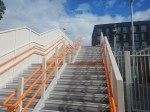
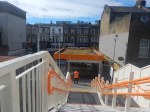
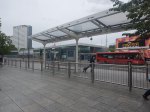
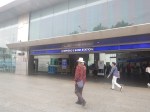
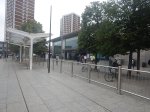
The new entrance at Hackney Central station opened yesterday.

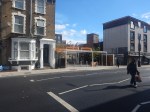
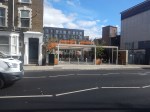
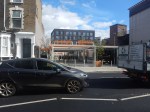
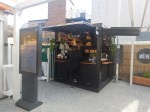
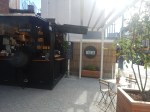
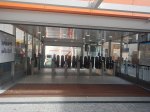
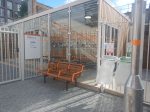

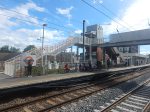

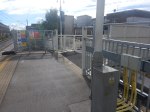

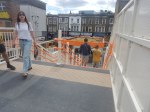
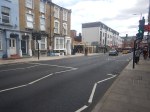
Note.
- The cafe must be fairly good, as it has two flavours of gluten-free brownies.
- I may have a touch of arthritis these days, but stairs like these are fine for me, as there are two right-handed paths.
- There is a second set of stairs down from the footbridge to speed passengers on their way to Hackney Downs station.
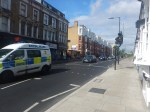
- There is a light-controlled crossing over Graham Road.
- Bus stops in both directions are only about twenty metres from the crossing.
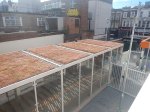
- The station buildings appear to have green roofs.
- The is plenty of bike storage, but no car parking.
- There is no lift, although the design should allow one to be added later, if it is thought one is needed.
I’ve seen bigger budgets produce worse designed station entrances than this one.
My Use Of The Graham Road Entrance At Hackney Central Station
I suspect, I will use the new entrance mainly in one of two ways.
Going West On The North London Line
If I want to go west on the North London Line, the obvious one is to get a bus to Highbury & Islington station from the closest stop to my house and get the train from there.
But that route has got more difficult in recent years.
- Our South London Mayor in his wisdom cut the 277 bus back to Dalston Junction station.
- So there is only the 30 bus left and the route uses badly-designed Egyptian-built buses. I’ve nothing against Egyptians, but these buses don’t have the flat floor, that people expect from a bus these days.
- Since the roundabout was rebuilt, it seems to be a longer and more difficult walk for pedestrians.
So I’d prefer to take another route.
- Canonbury station is probably the closest station, but it is an uphill walk from my house.
- Dalston Kingsland station is a possibility, but the steps to the platform aren’t the safest.
- Dalston Junction station is another possibility, as it is step-free, but it means more changes of mode and train.
Going via the new Graham Road entrance has advantages.
- From my house, there are frequent 38 buses to the new entrance.
- The 38 bus stop at Hackney Central is only a few metres from the station entrance.
- There is a coffee stall in the station entrance.
- The steps in the entrance are easy for me.
I will try out this route the next time, that I go to the West on the North London Line.
Coming Home From Stratford With Shopping
If I need a big Marks & Spencer or a John Lewis, it is convenient to go to Eastfield at Stratford and come home on the North London Line.
I will usually use the The Canonbury Cross-Over to double-back and get a bus home from Dalston Junction station.
It is an easy route, but sometimes the trains mean a wait of nearly ten minutes at Canonbury station.
The new entrance at Hackney Central gives an alternative route.
- You would get in the back of the train at Stratford.
- Alight at Hackney Central.
- Exit the station through the new entrance.
- Cross Graham Road on the light-controlled crossing.
- Walk about twenty metres to the 38 bus stop.
- Wait for a frequent 38 bus.
Today, I waited just a minute.
Conclusion
The entrance was first mentioned in an article on Ian Visits in October 2019 and I wrote about it in Will Hackney Central Station Get A Second Entrance?.
In May 2021, I wrote £3m Hackney Overground Station Upgrade To Begin In June.
The entrance seems to have gone from a concept to reality in under three years and once the starting pistol was fired, it was built in under a year.
How many parts of the UK rail network could be improved, by small projects like this?
Platforms 16 and 17 At Liverpool Street Station – 2nd July 2022
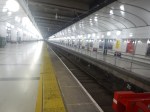
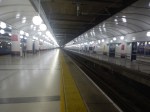
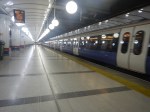
On my way to Ilford station today, I used the Elizabeth Line at a not too busy time from Liverpool Street station.


Note.
- Platform 18 has been closed.
- Platform 16 is to the left and Platform 17 is to the right.
- Platforms 16 and 17 have been lengthened.
- The can now handle the full nine-car Class 345 trains.
- There is a wide walkway on the far side of Platform 17.
I have a few thoughts.
Why Is The Access Between Train And Platform Not Level?
This picture shows level access on the central section of the Elizabeth Line at Whitechapel station.
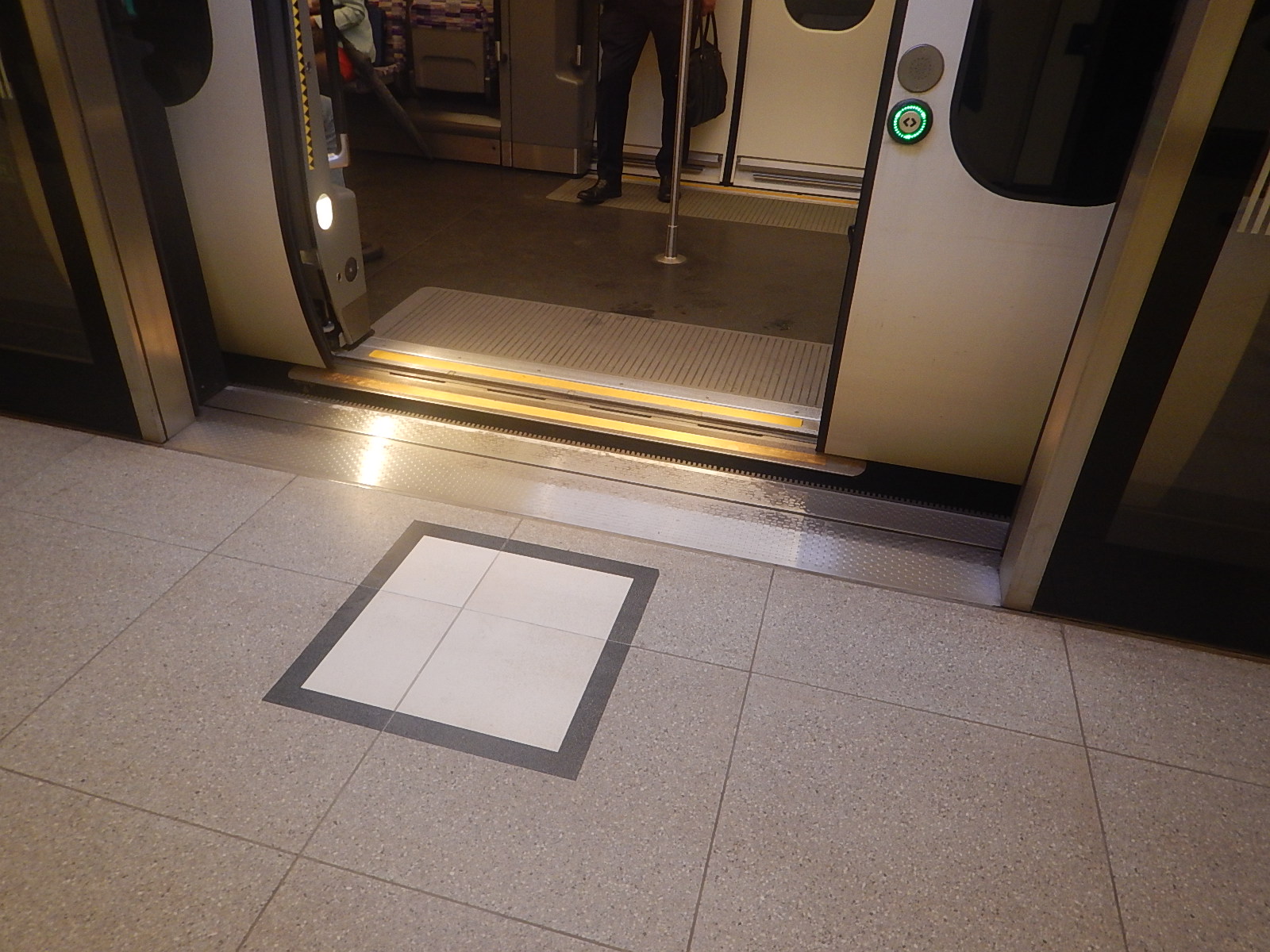
Why wasn’t the platform height adjusted to fit the trains in the rebuilt platforms 16 and 17 at Liverpool Street station?
Are There Any Plans For The Walkway Behind Platform 17?
Consider.
- At the other end of the station concourse, there is a walkway alongside Platform 1, that leads in and out of the station.
- There is also a walking route out between the two sections of the station.
A walkway behind Platform 17 could be possible.
Station Redevelopment
This article on Ian Visits is entitled Liverpool Street Station Plans For A £1.5 billion Redevelopment.
This is the first paragraph.
Initial plans have been revealed for a £1.55 billion redevelopment of Liverpool Street station that would see it become a two-level station with a much larger entrance built next to the tube station.
As the station is surrounded by a large cluster of skyscrapers, I will assume there will be another one.
Despite Brexit, Covid-19 and the War in Ukraine, there still seems to be an appetite for new office space in London.
Ilford Station – 2nd July 2022
It’s been nearly a year since I last visited Ilford station and wrote Ilford Station – 9th June 2021.
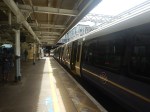
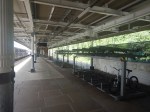
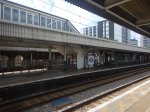
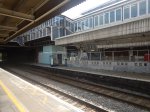
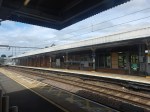
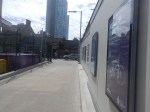
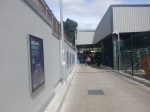


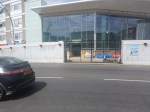

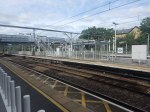
It doesn’t appear that there has been much progress in the last year!
Green Light For Major Transpennine Improvements
The title of this post, is the same as that of this article on Railnews.
These paragraphs outline the project.
Improvements on the Transpennine route in West Yorkshire have been given the green light, after a Transport and Works Act order was signed by the transport secretary on 27 June, six months earlier than planned.
The cost of the upgrades was described as ‘multi-billion’ by Network Rail, which said it was the ‘biggest milestone’ so far on the Transpennine Route Upgrade programme.
The improvements will be carried out between Huddersfield and Westtown in Dewsbury, and include quadrupling the double line and remodelling track layouts as well as major renovations at Huddersfield, Deighton and Mirfield and a new station at Ravensthorpe. In addition, there will be a flyover near Ravensthorpe to separate the Wakefield and Leeds lines and reduce conflicting movements.
Effectively, Grant Shapps fired the starting gun for this project four days ago.
I have written various posts on the upgrade and they can be read from this link.
The Transpennine Route Upgrade Web Site
The project now has its own comprehensive web site, which is named the Transpennine Route Upgrade.
A Reply To Peter Robins About Electrification
Peter Robins made this very perceptive comment.
The main point of TPU isn’t electrification, though, it’s upgrading the track to remove bottlenecks, improve lines speeds, add capacity. This is mainly what the Hudd-Dew TWA order is about. If you electrify the line while you’re doing that, then you increase the number of connecting places/lines which are within range of current batteries.
I think that Lds-CF will also have to wait for the post-IRP review, meaning the full upgrade will be a long time coming.
This Hitachi infographic shows the specification of their Regional Battery Train.

Note.
- It is a 100 mph train.
- Batteries can be charged when travelling under wires or 10-15 mins static.
- Range on batteries is 90 km. or 56 miles.
- My experience of Hitachi bi-modes is that pantographs on these trains can go up and down, with all the alacrity of a whore’s drawers.
Hitachi have stated that they will be testing a Class 802 train with batteries later this year.
Could Hitachi Battery Trains Be Charged On The Electrification Between Huddersfield And Dewsbury?
Looking at the data from RealTimeTrains for this route it appears that the fastest time I can find between Huddersfield And Dewsbury is eleven minutes.
Would this be enough time to fully-charge the battery? If not the electrification could perhaps be extended for a couple of miles.
How Many Of Transpennine Express (TPE)’s Services Could Be Decarbonised, if Huddersfield And Dewsbury Were To Be Electrified?
I’ll look at each service that uses this route.
Liverpool Lime Street And Newcastle
This is an hourly service that calls at Newton-le-Willows, Manchester Victoria, Huddersfield, Dewsbury, Leeds, York, Northallerton, Darlington and Durham.
- Liverpool Lime Street and Manchester Victoria is electrified.
- Colton Junction and Newcastle is electrified.
- Huddersfield and Dewsbury will be electrified by the Transpennine Route Upgrade.
This leaves the following sections without electrification.
- Manchester Victoria and Huddersfield – 25.8 miles
- Dewsbury and Colton Junction – 29.3 miles
Note.
- There are also stops under the wires, at Dewsbury, Huddersfield and Leeds, which could be used to top up the battery.
- The largest unelectrified section would be 29.3 miles.
It looks to me that Liverpool Lime Street And Newcastle could be served using a Hitachi Regional Battery Train or similar.
Manchester Airport And Redcar Central
This is an hourly service that calls at Gatley, Manchester Piccadilly, Manchester Oxford Road, Manchester Victoria, Huddersfield, Dewsbury, Leeds, York, Thirsk, Northallerton, Yarm, Thornaby and Middlesbrough.
- Manchester Airport and Manchester Victoria is electrified.
- Colton Junction and Northallerton is electrified.
- Huddersfield and Dewsbury will be electrified by the Transpennine Route Upgrade.
This leaves the following sections without electrification.
- Manchester Victoria and Huddersfield – 25.8 miles
- Dewsbury and Colton Junction – 29.3 miles
- Northallerton and Redcar Central – 28.8 miles
Note.
- There are also stops under the wires, at Dewsbury, Huddersfield and Leeds, which could be used to top up the battery.
- The largest unelectrified section would be 29.3 miles.
- I suspect that charging could be needed at Redcar end of the route. Middlesbrough would probably be best, as it could also charge the LNER services, if they used battery power from Northallerton.
It looks to me that Manchester Airport And Redcar Central could be served using a Hitachi Regional Battery Train or similar.
Manchester Piccadilly And Hull
This is an hourly service that calls at Stalybridge, Huddersfield, Leeds, Selby and Brough.
- Manchester Piccadilly and Manchester Victoria is electrified.
- Huddersfield and Dewsbury will be electrified by the Transpennine Route Upgrade.
- Leeds and Neville Hill Depot is electrified.
This leaves the following sections without electrification.
- Manchester Victoria and Huddersfield – 25.8 miles
- Dewsbury and Leeds – 29.3 miles
- Neville Hill Depot and Hull – 50 miles
Note.
- There are also stops under the wires, at Huddersfield and Leeds, which could be used to top up the battery.
- The largest unelectrified section would be 50 miles.
- I am sure that charging would be needed at Hull end of the route. Hull would probably be best, as it could also charge the Hull Trains, LNER and Northern Trains services, if they used battery power from the East Coast Main Line.
- Alternatively, there could be electrification between Hull and Brough. or Neville Hill and Micklefield. The latter would knock eight miles off the unelectrified section and is needed to allow electric trains to access Neville Hill Depot under electric power.
It looks to me that Manchester Piccadilly and Hull could be served using a Hitachi Regional Battery Train or similar.
Manchester Piccadilly and Huddersfield
This is an hourly service that calls at Stalybridge, Mossley, Greenfield, Marsden, and Slaithwaite.
- Manchester Piccadilly is electrified.
- Huddersfield is electrified.
This leaves the following sections without electrification.
- Manchester Piccadilly and Huddersfield – 25.5 miles
Note.
- There are also stops under the wires, at Manchester Piccadilly and Huddersfield, which would be used to top up the battery.
- The largest unelectrified section would be 25.5 miles.
- Trains would be charged at both ends of the route.
It looks to me that Manchester Piccadilly and Huddersfield could be served using a Hitachi Regional Battery Train or similar.
Huddersfield And Leeds
This is an hourly service that calls at Deighton, Mirfield, Ravensthorpe, Dewsbury, Batley, Morley and Cottingley
- Huddersfield is electrified.
- Leeds is electrified.
This leaves the following sections without electrification.
- Dewsbury and Leeds – 29.3 miles
Note.
- There are also stops under the wires, at Manchester Piccadilly and Huddersfield, Deighton, Mirfield, Ravensthorpe, Dewsbury and Leeds, which would be used to top up the battery.
- The largest unelectrified section would be 29.3 miles.
- Trains would be charged at both ends of the route.
It looks to me that Huddersfield and Leeds could be served using a Hitachi Regional Battery Train or similar.
York And Scarborough
This is an hourly service that calls at Malton and Seamer
- York is electrified.
This leaves the following sections without electrification.
- York And Scarborough – 42.1 miles
Note.
- The largest unelectrified section would be 42.1 miles.
- Trains would be charged at both ends of the route.
It looks to me that York and Scarborough could be served using a Hitachi Regional Battery Train or similar.
How Many Of Northern Trains’s Services Could Be Decarbonised, if Huddersfield And Dewsbury Were To Be Electrified?
I’ll look at each service that uses this route.
Wigan North Western And Leeds
This is an hourly service that calls at Daisy Hill, Atherton, Walkden, Salford Crescent, Salford Central, Manchester Victoria, Rochdale, Smithy Bridge, Littleborough, Walsden, Todmorden, Hebden Bridge, Mytholmroyd, Sowerby Bridge, Brighouse, Mirfield, Dewsbury, Morley and Cottingley
- Wigan North Western is electrified.
- Salford Crescent and Manchester Victoria is electrified.
- Heaton Lodge East junction and Dewsbury is electrified.
- Leeds is electrified.
This leaves the following sections without electrification.
- Wigan North Western and Salford Crescent – 16 miles
- Manchester Victoria and Heaton Lodge East junction – 37.6 miles
- Dewsbury and Leeds – 29.3 miles
Note.
- There are also stops under the wires, at Wigan North Western, Salford Crescent, Salford Central, Manchester Victoria, Mirfield, Dewsbury and Leeds, which would be used to top up the battery.
- The largest unelectrified section would be 37.6 miles.
- Trains would be charged at both ends of the route.
It looks to me that Wigan North Western and Leeds could be served using a Hitachi Regional Battery Train or similar.
Huddersfield And Castleford
This is an occasional service that calls at Deighton, Mirfield and Wakefield Kirkgate.
As it is run by buses at the moment, I can’t get the data to work out if it could be served using a Hitachi Regional Battery Train or similar.
But I suspect it can, after looking at a map.
How Many Of Grand Central’s Services Could Be Decarbonised, if Huddersfield And Dewsbury Were To Be Electrified?
I’ll look at each service that uses this route.
London King’s Cross And Bradford Interchange
This is a four trains per day service that calls at Doncaster, Pontefract Monkhill, Wakefield Kirkgate, Mirfield, Brighouse, Halifax and Low Moor.
- King’s Cross and Doncaster is electrified.
- Mirfield is electrified.
This leaves the following sections without electrification.
- Doncaster and Mirfield – 34.8 miles
- Mirfield and Bradford Interchange – 17.3 miles
Note.
- There are also stops under the wires, at Mirfield, which would be used to top up the battery.
- The largest unelectrified section would be 34.8 miles.
- Trains would need to be charged at Bradford Interchange, during the turnround of around an hour.
- It is likely, that some electrification will be erected in the Bradford area, to improve services to Leeds.
It looks to me that London King’s Cross and Bradford Interchange could be served using a Hitachi Regional Battery Train or similar.
Conclusion
It looks like electrifying between Huddersfield and Dewsbury will enable a Hitachi Regional Battery Train or similar to work all passenger routes, that run on that section of track.
Bank Station Upgrade – 1st July 2022
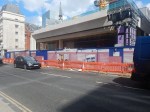
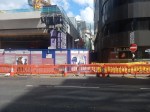
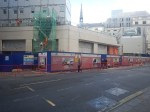
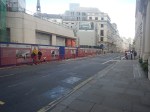
I walked past the new Southern entrance to Bank station today and took these pictures.

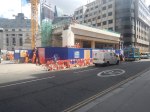
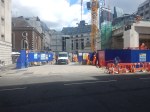
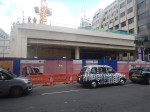


Note.
- You can see the station name inscribed in the lintel over the station entrance.
- Electricians seemed to be busy in the station entrance.
- There doesn’t appear to be a start on oversite development yet.
But at least progress seems to be consistent with a delivery in the next few months.
The Lizzie Line And Circle/District Line Interchange At Paddington – 1st July 2022
This morning I wanted to go between Moorgate and Victoria stations.
It is a journey that can be done in any number of ways.
- Circle, Hammersmith & City or Metropolitan Line to King’s Cross St. Pancras and then change to the Victoria Line.
- Northern Line to King’s Cross St. Pancras and then change to the Victoria Line.
- Northern Line to Euston and then change to the Victoria Line. This can be a cross-platform interchange.
- Northern City Line to Highbury & Islington and then change to the Victoria Line. This is not an easy interchange.
- Northern Line to Bank and the change to the Circle or District Line.
- Circle or Hammersmith & City to Paddington and then change to the Circle or District Line. This interchange involves a walk all the way across Paddington station.
- 21, 43 or 141 bus to Monument and the change to the Circle or District Line.
If you’re lucky and time it right, you can get a direct Circle Line train, which run at a frequency of six trains per hour (tph).
The Elizabeth Line has opened up another way.
The Elizabeth Line is taken to Paddington and then you walk up the side of the station to the Circle/District Line entrance on the other side of Praed Street from the National Rail station.
These pictures show my walk at Paddington station.
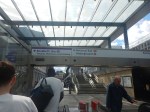
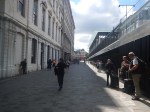



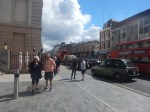
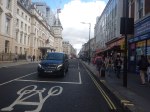
Note.
- It is an immaculate step-free climb out of the Elizabeth Line station.
- Once at station level, it is a walk up a gentle incline the the Circle/District Line station.
- There are shops; including Boots, M & S and Sainsburys, and toilets just inside Paddington station, as you walk beside the station.
- There are stairs to walk down to the Circle/District Line platforms.
I walked the transfer in under ten minutes. From Moorgate to Victoria took 38 minutes.
I feel that this route has advantages for many travellers.
- The Elizabeth Line currently has 12 tph through Paddington.
- When the Elizabeth Line is fully connected up in Autumn 2022, there will be 22 tph, through Paddington.
- The convenient shops and toilets will be welcomed by many.
- It is an easier route, than accessing the Circle/District Line station from inside the main station.
The Lawn, which has shops and cafes, would also be a good place to meet friends, family or a business colleague or client.
Moorgate And Victoria Via The Circle Line
I did this route on the 5th of July, after waiting ten minutes for a Circle Line train. It took me 23 minutes.
Moorgate Station – 1st July 2022
I took these pictures at Moorgate station today.
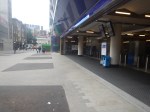
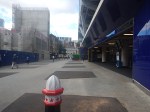
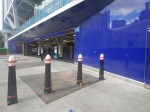
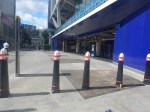
The new entrance to the station, appears to be almost complete.
- 101 Moorgate, which is the building in front of the station, needs to be built.
- The area between the buildings needs to be landscaped.
This image from JRA Architects shows the space between 11 Moorgate and the new station entrance.
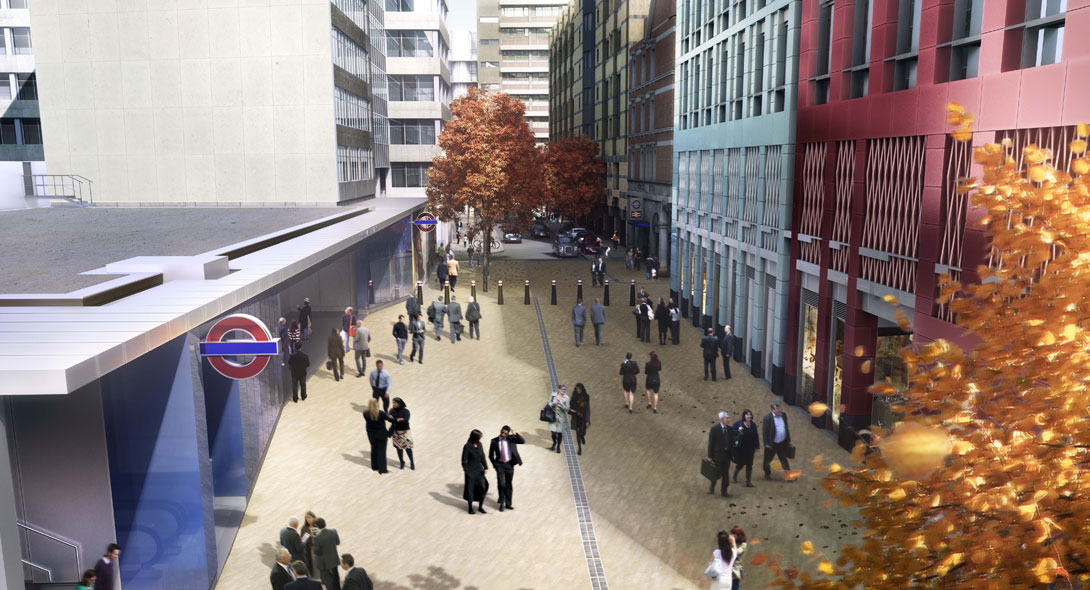
This image is from the South, whereas my pictures were taken from the North.
101 Moorgate is the white and ruby building on the right.
Essex Firm’s Hydrogen Lorry On Show In Stoneleigh
The title of this post, is the same as that of this article on the BBC.
These paragraphs describe the truck.
Tevva, the maker in Tilbury, Essex, says it is the first hydrogen fuel cell-supported truck to be designed, built and mass produced in the UK.
The company adds the vehicle has a range of up to 310 miles (500 km) via the tech, with hydrogen tanks able to be refilled in 10 minutes.
It says it wants to help the transport industry adapt to a “post-fossil fuel future”.
To that end, it developed a fuel cell to top up electric battery-powered trucks, giving them a longer range while reducing the size of the electric battery needed.
I think that this truck is a superb example of disruptive innovation.
- Tevva have looked at the 7.5 tonne truck market and have developed a truck that fits it.
- Using hydrogen as a range extender up to to 500 km. is probably a good fit for the use of these vehicles.
- So many local delivery companies will look at these trucks, so they can tell their customers, that they now offer zero-carbon deliveries.
- They will also be useful to go into cities, that charge diesel vehicles.
I also suspect, that a lot of parts follow the route pioneered by the great Colin Chapman – Borrow from other manufacturers.
I wouldn’t be surprised to see other companies following Tevva’s route all over the world.
From Moorgate To Imperial Wharf – 30th June 2022
I wanted to see the new entrance at Imperial Wharf station today, so after a full English breakfast on Moorgate, I took the Lizzie Line, Central and West London Lines across London.
I took this route.
- Lizzie Line – Moorgate to Tottenham Court Road
- Central Line – Tottenham Court Road To Shepherds Bush
- West London Line – Shepherds Bush To Imperial Wharf
I took these pictures along the route.
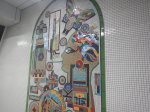
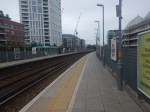
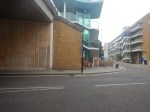
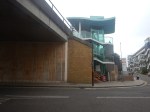
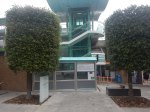
Note.
- The change at Tottenham Court Road station involves going up to the ticket hall and down again.
- The change at Shepherds Bush involves crossing the road between the Central Line and Overground station.
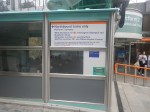
- The last few pictures show the new entrance at Imperial Wharf, which is for Northbound trains only.
When Bond Street station opens on the Lizzie Line, it should be easier to change there for the Central Line.
The Plans For A Connection Between The Lizzie And West London Lines?
This map from cartometro.com shows, where the Lizzie and West London Lines cross in the area of Old Oak Common.
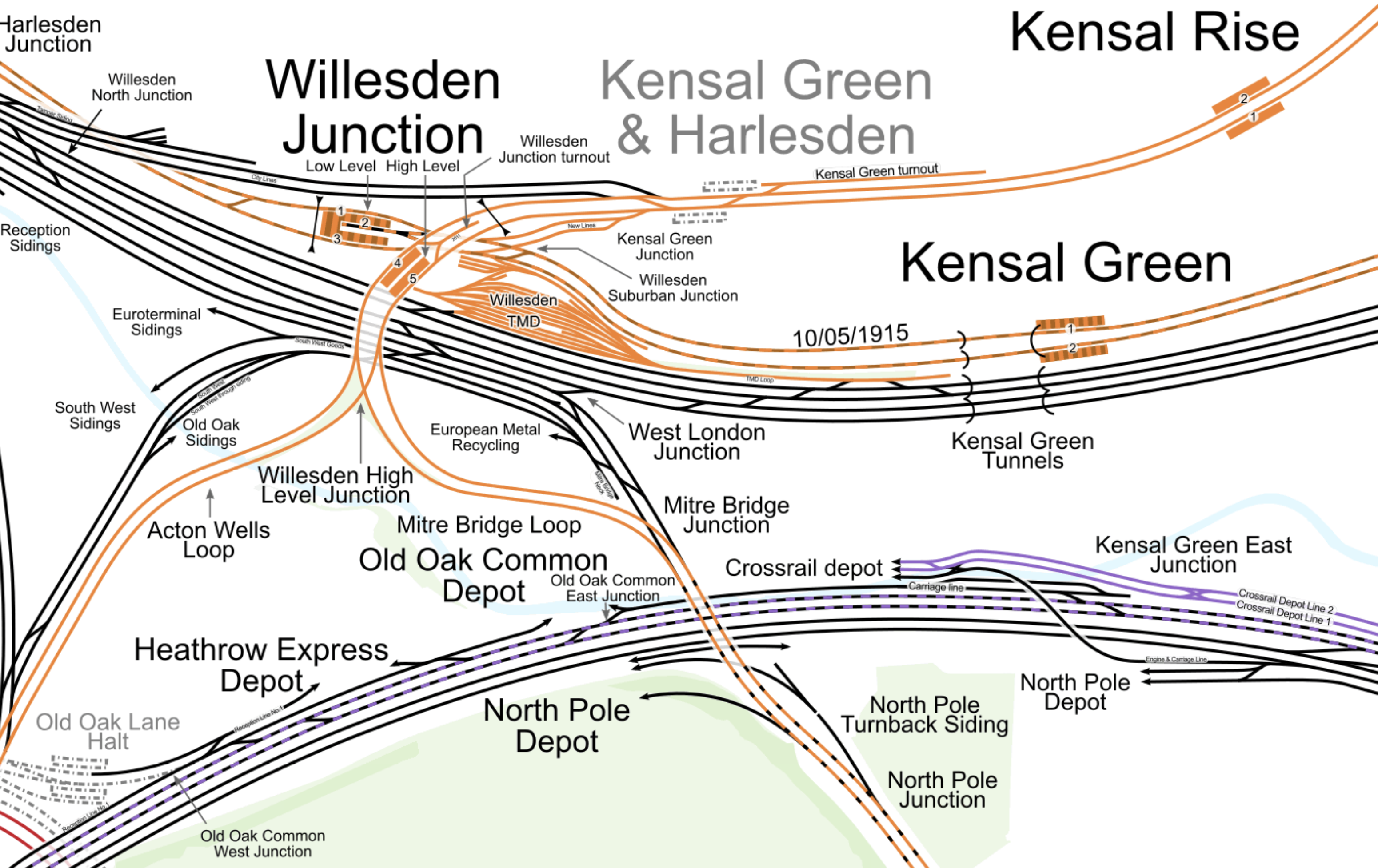
Note.
- The Overground is shown in orange and splits into the North and West London Lines South of Willesden Junction station.
- The Lizzie Line is shown in purple and black, as it goes across the map, as at this point it shares tracks with the Great Western Main Line.
This map shows how High Speed Two will change the lines.
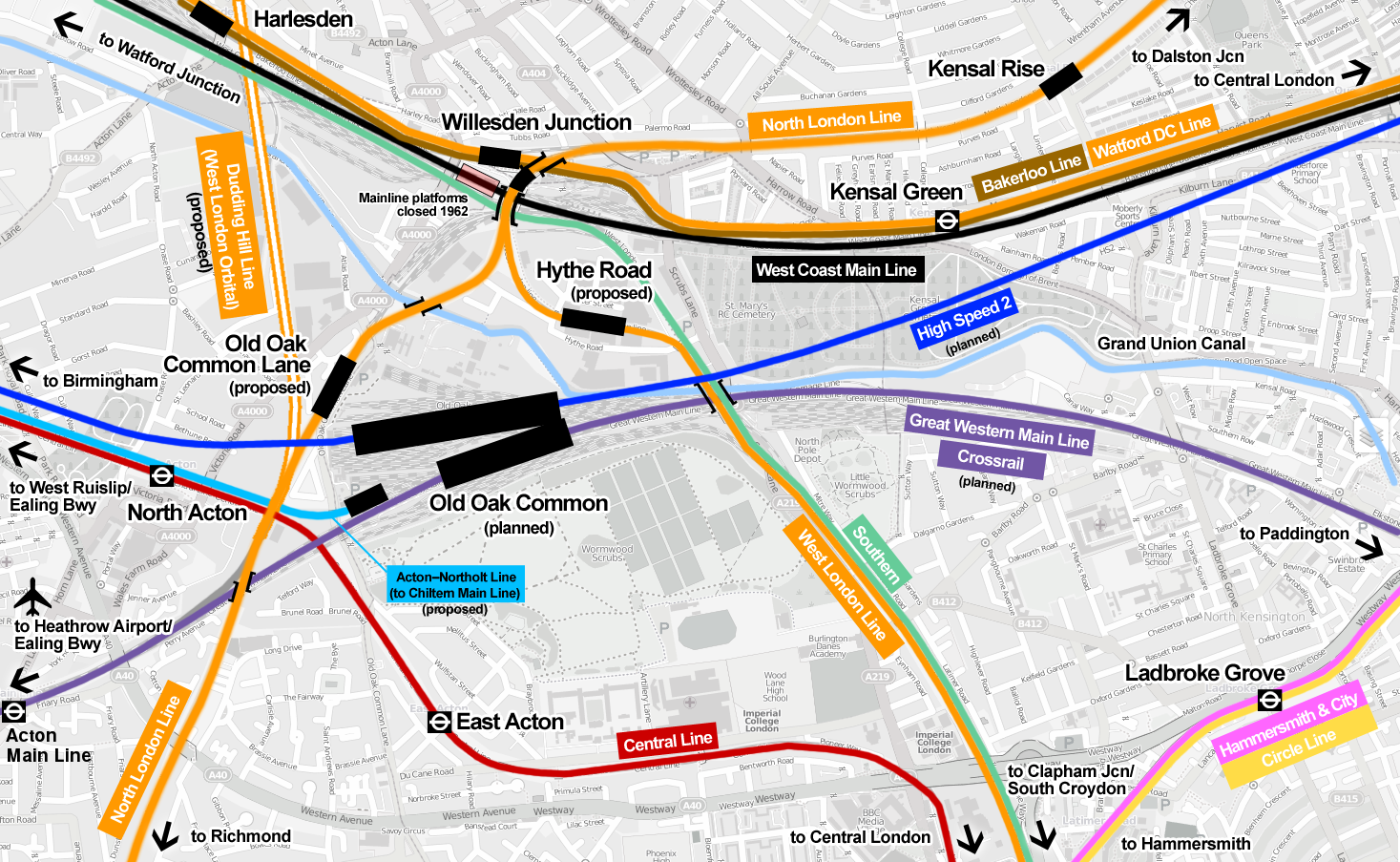
Note.
- Hythe Road station on the West London Line, which will have a walking route to High Speed Two and the Lizzie Line.
- Old Oak Common Lane station on the North London Line, which will have a walking route to High Speed Two and the Lizzie Line.
- The Dudding Hill Line, which is shown as an orange double-line and could be part of the West London Orbital passing North-South to the West of Old Oak Common Lane station.
- The Acton-Northolt Line, which is shown in blue and could give Chiltern Railways extra platforms at Old Oak Common with a walking route to High Speed Two and the Lizzie Line.
Wikipedia says that the status of the two Overground stations according to Transport for London is as follows.
Subject to funding being secured and further public consultation, we would seek permission to build and operate the proposals via a Transport and Works Act Order (TWAO). Funding remains a significant constraint in delivering these proposals. We are currently seeking to establish a package of funding that could enable the stations to be delivered by 2026 alongside the new HS2 and Elizabeth line station.
I suspect that with our current South London Mayor, we will see little progress on these connectivity schemes at Old Oak Common station, as with the possible exception of Hythe Road station, there’s little in it for South London.
Conclusion
Hythe Road station would certainly have made my journey easier yesterday.
Hopefully, though, if I do the journey again in the next year or so, Bond Street station will be open on the Lizzie Line and I’ll change to the Central Line there.
Five New Derbyshire Stations Could Be Built Under Rail Plans
The title of this post, is the same as that of this article on the BBC.
These paragraphs outline the schemes.
Up to five new railway stations could be built in Derbyshire as two projects to reopen existing lines to passengers have progressed in a government scheme.
The Barrow Hill line from Chesterfield to Sheffield could be opened to passengers as part of the government’s £500m Restoring Your Railway programme.
It would see stations built at Whittington, Barrow Hill, Eckington/Renishaw and Killamarsh.
It will now go through to the next stage of the scheme.
In addition, Derbyshire County Council said proposals to reopen the Ivanhoe line from Burton-upon-Trent to Leicester were being progressed as part of the project, which would see a new station built at Castle Gresley.
Business cases will now been drawn up to see if the cases will proceed.
Barrow Hill Line
I wrote about the Barrow Hill Line in Reinstatement Of The Barrow Hill Line Between Sheffield And Chesterfield.
Ivanhoe Line
I wrote about the Ivanhoe Line in Reinstatement Of The Ivanhoe Line.
There also is a Wikipedia entry for Gresley station, where this is said.
In the 1990s BR planned to restore passenger services between Leicester and Burton as the second phase of its Ivanhoe Line project. However, after the privatisation of British Rail in 1995 this phase of the project was discontinued. In 2009 the Association of Train Operating Companies published a £49 million proposal to restore passenger services to the line that would include reopening a station at Gresley to serve the town of Swadlincote.
This map shows the possible position of the station.
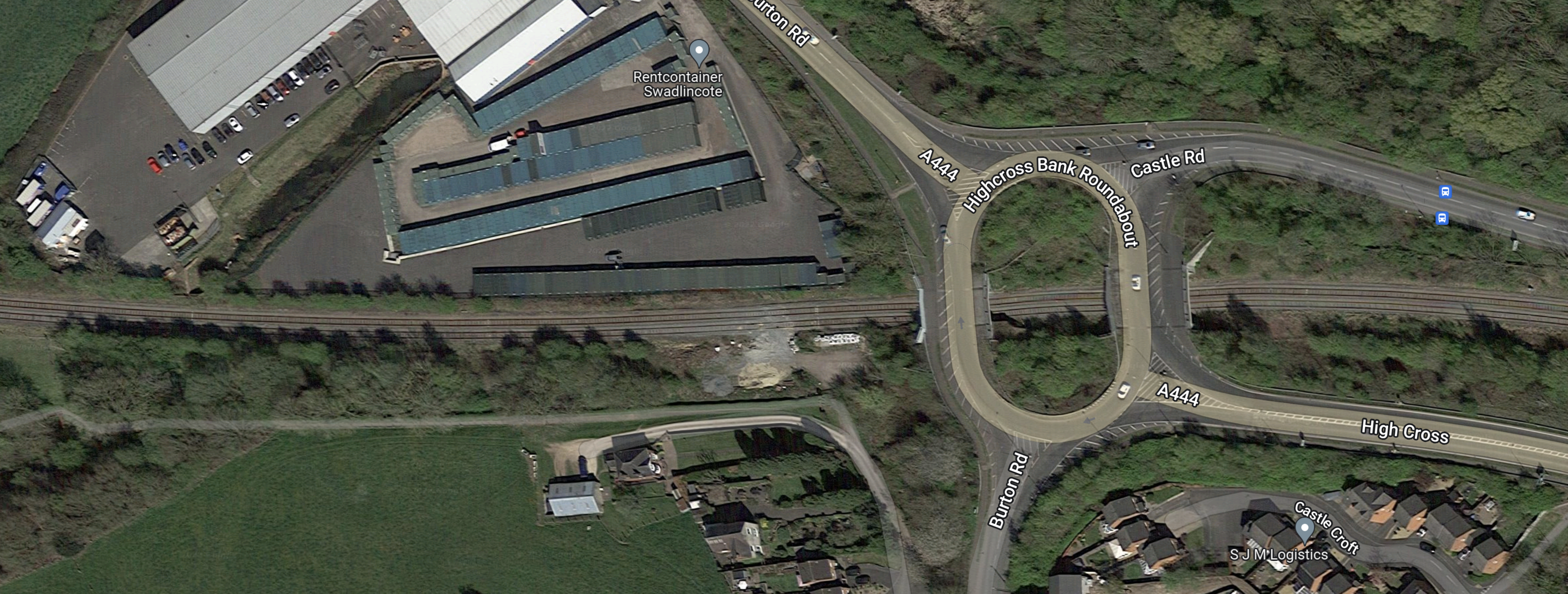
I suspect it would be to the West of the roundabout.
 The Anonymous Widower