New £157m Chelmsford Railway Station Makes Progress
The title of this post, is the same as that of this article on Rail Technology Magazine.
This is the introductory paragraph.
The submission of an environmental impact assessment application to Chelmsford City Council for the proposed £157m Beaulieu railway station marks the next step in the ambitious project.
It may not be a large step, but it moves things forward to creation of this new Beaulieu station, North of the City of Chelmsford, which should be open around 2025.
Beaulieu Station Will Have Three Platforms
Intriguingly, Wikipedia says that the station will have three platforms.
The stations on the Great Eastern Main Line between Shenfield and Colchester will have the following numbers of platforms.
- Ingatestone – 2
- Chelmsford – 2
- Beaulieu – 3
- Hatfield Peverel – 2
- Witham – 4
- Kelvedon – 2
- Marks Tey – 3
As Witham and Marks Tey have branch lines, Beaulieu will be very much the outsider.
I suspect the extra platform is very much for reasons, similar to those that result in Cambridge North station being built as a three-platform station with two through and one bay platform.
I don’t think we’ll see Crossrail extended to Beaulieu.
- The route between Shenfield and Beaulieu is only double-track.
- All passenger trains currently on the route are 100 mph electric trains.
- Crossrail’s Class 345 trains are only 90 mph trains.
The speed mismatch would slow services to and from stations to the North.
But will we see a new service between London Liverpool Street and Beaulieu, which stops at perhaps, Stratford, Romford, Shenfield, Ingatestone and Chelmsford?
I suspect we will certainly see a new service terminating at Beaulieu, even if it is only in the Peak.
How Will Current Services Call At Beaulieu?
Currently, one fast and four stopping services stop in Chelmsford station every hour.
There are actually two trains per hour (tph) between London Liverpool Street and Norwich, but only one stops at Chelmsford.
So will the second hourly fast service stop at Beaulieu?
I would certainly be logical.
The four stopping services, that stop at Chelmsford every hour are.
- London Liverpool Street and Braintree
- London Liverpool Street and Clacton-on-Sea
- London Liverpool Street and Colchester Town
- London Liverpool Street and Ipswich
As all services stop at most stations, I would expect they would stop at Beaulieu.
- This would give Beaulieu a four tph Turn-Up-And-Go service to and from Chelmsford station, which uniquely for East Anglia is in the centre of the City.
- If the third platform were to be used for a fifth service to London Liverpool Street, this would be a train every twelve minutes between Chelmsford and Beaulieu stations.
- I can see that for some journeys, the fastest and most convenient route may include a change of train at Beaulieu.
I also seem to remember, that Greater Anglia had plans to extend the Ipswich service to Norwich and this will surely be useful to travellers from Beaulieu, who would then have a fast and a stopping service to Norwich.
A Park-And-Ride For Football And Events At Ipswich And Norwich Football Grounds
Both football grounds at Ipswich and Norwich are close to the stations and I can see many attendees driving to Beaulieu to catch a train, as parking in both Ipswich and Norwich can be difficult.
If in the future, there are two tph between Beaulieu and both destinations, it could be the quickest way to the grounds.
Purfleet Station – 19th August 2021
According to this article on Ian Visits, Purfleet station is going to be transformed and renamed Purfleet-on-Thames station.
- The station will be moved Northwards
- 2850 homes will be built in the local area.
- The current level crossing will be replaced by a bridge.
So I went to the station, took a look and took these pictures.


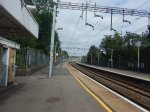


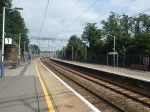
Note.
- The level crossing is at the Southern end of the station.
- Whilst I was there, I didn’t see anybody use the footbridge.
- Everybody used the level crossing.
- The bus stops could be better placed.
But the station building and the platforms weren’t in the worst of conditions.
This Google Map shows Purfleet station.

Note.
- It would appear that the only building in the way of moving the road to the North would be the station ticket office.
- As my pictures show the platforms are long and could probably be extended at the Northern end.
The article on Ian Visits has a good map of the area, showing the development and the new road layout.
It would be good if building bridges to replace level crossings was always as easy as this.
Silicon Roundabout – 18th August 2021
It’s been some time, since I took pictures of the progress of the remodelling of Silicon Roundabout and Old Street station.
I took these pictures this morning.



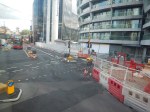








It seems to have moved on since I took the last pictures in Silicon Roundabout – 10th April 2021.
This page on the Transport for London web site, is now saying this about changes to station access.
New and permanent changes to station access at Old Street will be in place from 31 August 2021.
-
- The new entrance at Cowper Street will open and will provide direct access for customers to the station.
- Subway 1 (northeast exit) will be permanently closed. Subway 3 (southwest exit) will remain open.
- The staircase at Subway 4 (northwest exit), will re-open and the ramp at Subway 4 will permanently close. The green line leading to Moorfields Eye Hospital will be reinstated along the stairs.
That sounds like the end of Phase 1 to me!
Could London’s New Routemaster Buses Be Converted To Hydrogen Power?
There are a thousand New Routemaster buses on the roads of London.
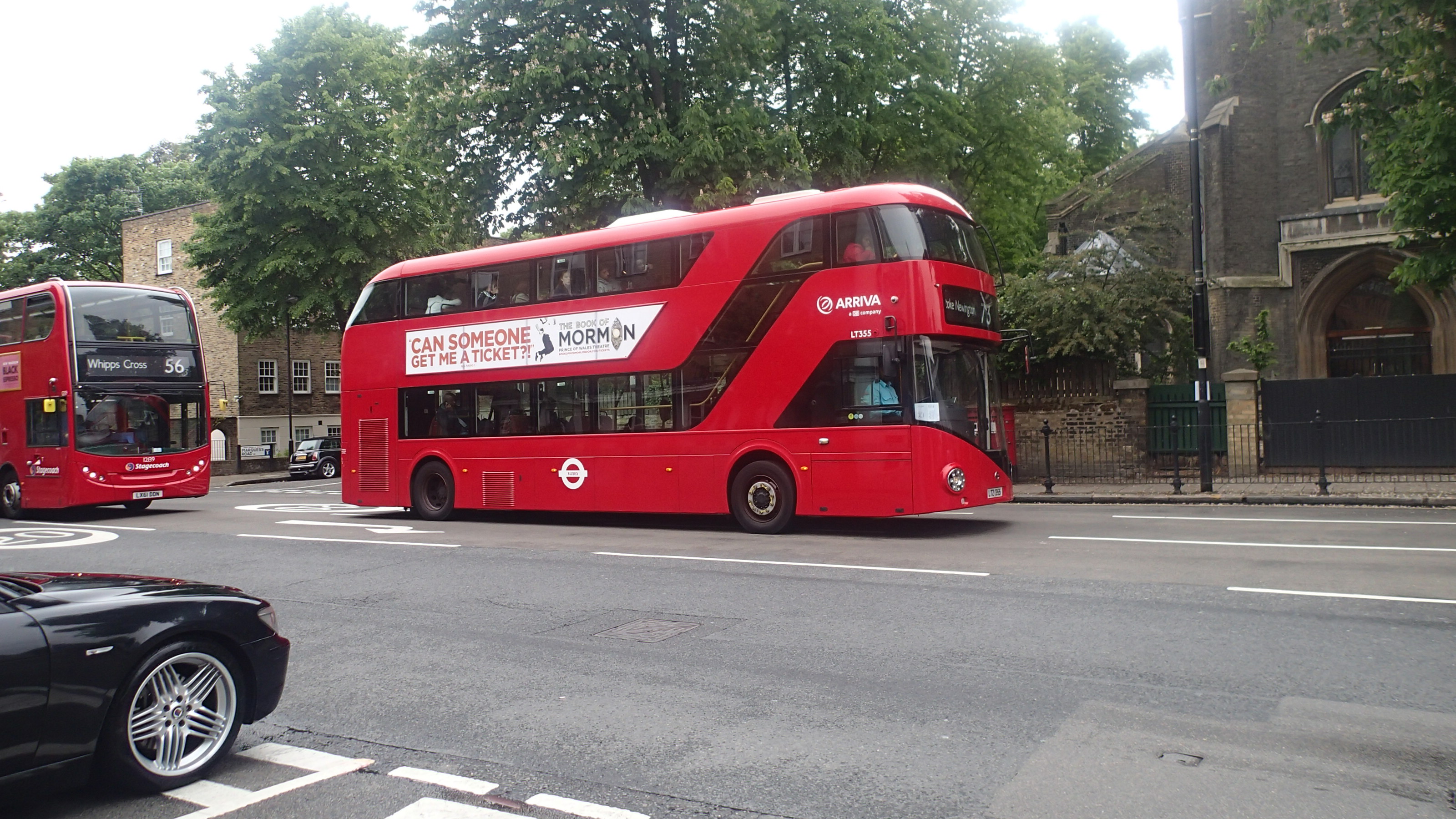
This paragraph from Wikipedia describes the transmission.
The bus is a hybrid diesel-electric driven by a battery-powered electric motor, charged by a diesel fuelled generator and recovering energy during braking by regenerative braking.
Note.
- The Cummins diesel engine is under the back stairs and is mounted high up. You can sometimes hear it start and stop if you sit or stand at the back of the bus.
- The diesel engine is part of the Cummins B Series Engine family, which is used very widely, included in vehicles like the Dodge Ram pick-up.
- The battery is mounted under the front stairs.
Cummins are embracing hydrogen in a big way and bought hydrogen company; Hydrogenics in 2019.
This press release from Cummins is entitled Cummins Begins Testing Of Hydrogen Fueled Internal Combustion Engine.
This is the first paragraph.
Cummins has taken another step forward in advancing zero carbon technology as the company began testing a hydrogen-fueled internal combustion engine. The proof-of-concept test is building on Cummins’ existing technology leadership in gaseous-fuel applications and powertrain leadership to create new power solutions that help customers meet the energy and environmental needs of the future.
Only today in Deutz Hydrogen Engine Ready For Market, I reported on how Deutz were going down a similar route.
I have done consultancy work for Cummins in Darlington, where I suspect the New Routemaster engines were built and the company prides itself in being able to provide a specially-laid out diesel engine for a niche-market application.
If they develop a hydrogen replacement for the B Series engine, I suspect that they will adopt the same sales philosophy.
For a start, it would enable all their many existing customers to convert their products from diesel to hydrogen power.
A hydrogen engine would be a direct way to enable conversion of a New Routemaster to hydrogen.
- The new hydrogen engine and generator would just replace the current diesel engine and generator.
- The chassis, body, battery and traction motor could be retained.
- I am also sure, that Wrightbus have the expertise to squeeze a hydrogen tank in somewhere.
.I believe that in a few years Cummins will be able to replace the diesel engine with a hydrogen engine of equivalent size and power.
After Ricardo announced their fuel cell approach to convert modern diesel buses to hydrogen, which I wrote about in Ricardo To Engineer Zero Emission Buses For UK’s First Hydrogen Transport Hub, I am sure we’re going to see thousands of modern buses converted to hydrogen power.
Conclusion
I believe from my knowledge of Cummins and the way they work, that they will come up with a hydrogen-based solution, that will replace the Cummins diesel in these buses with a zero-carbon engine.
If Cummins don’t then someone else will.
Whoever solves the problem of converting London’s new Routemasters to hydrogen will have one of the best adverts for their product, there has ever been.
After converting London’s thousand Routemasters, the engineers could move on to anything powered by a Cummins engine.
Ricardo To Engineer Zero Emission Buses For UK’s First Hydrogen Transport Hub
The title of this post, is the same as that of this article from Ricardo.
This is the first paragraph.
As part of its mission to support the decarbonisation of the global transport and energy sectors Ricardo, a world-class environmental, engineering and strategic consulting company, has announced that it has received Government funding to create a retrofit hydrogen fuel cell bus demonstrator for the UK’s first hydrogen transport hub in the north-east of England.
The market for refitting buses with hydrogen power is large, as this sentence from the press release shows.
There are 38,000 buses in service in the UK: 98% are diesel powered; and 50% are less than eight years old.
And that’s just the UK!
The last paragraph sums up Ricardo’s ambitions.
Ricardo will develop a scalable, modular solution, enabling it to be installed, with minimal adaption, to multiple single and double decker platforms. The modular concept may also be saleable as a ‘new fuel cell’ module to coach builders across the European Union enabling them to develop new fuel cell
buses by taking a rolling chassis and applying their coach build body alongside the fuel cell module solution.
Never underestimate Ricardo!
Deutz Hydrogen Engine Ready For Market
The title of this post, is the same as this article on H2 View.
These are the first two paragraphs
A brand-new hydrogen engine has been developed in Cologne, Germany to help accelerate the rollout of low and zero emission drive systems.
Developed by Deutz, the TCG 7.8 H2 engine has already passed initial tests on the test bench and is scheduled to go into full production in 2024.
This could be a very significant development.
Initially from the article, they seem to be concentrating on stationary applications, but it could be an easy route for large vehicle manufacturers to decarbonise their products.
Where Are All The Battery-Electric Trains?
Consider these dates and notes
February 10th, 2015
, I wrote Is The Battery Electric Multiple Unit (BEMU) A Big Innovation In Train Design?, after an excellent first ride in Bombadier’s experimental battery-electric multiple unit or BEMU based on a Class 379 train.
October 10th, 2018
I wrote Battery Class 230 Train Demonstration At Bo’ness And Kinneil Railway, after a ride on Vivarail’s Class 230 train in Scotland.
October 15th, 2018
This article on Railway Gazette, which was entitled BatteryFLEX Desiro EMU Conversion Proposed, announced Porterbrook’s plan to convert their Class 350/2 trains to battery-electric operation.
September 30th, 2019
I wrote Battery Electrostars And The Uckfield Branch.
I indicated that according to Modern Railways, battery Electrostars were on their way to replace Class 171 trains, that need to be cascaded to East Midlands Railway by September 2021.
February 28th, 2020
I wrote Northern’s Battery Plans.
This described a plan by Northern Trains and CAF to convert three-car Class 331 trains into four-car battery electric trains, by adding a battery car.
July 6th, 2020
I wrote Hyperdrive Innovation And Hitachi Rail To Develop Battery Tech For Trains, which announced Hitachi’s Regional Battery Train, which is shown in this Hitachi infographic.

Hitachi are now testing Class 803 trains, which have batteries, but only for hotel purposes and not traction.
Although, I do suspect that the batteries in Class 803 trains will be very similar to those in other Hitachi trains.
It’s just not good engineering to do the same job twice and all Hitachi trains are members of the same A-train family.
August 12, 2020
In Converting Class 456 Trains Into Two-Car Battery Electric Trains, I mused on some remarks made by Mark Hopwood, who then was the interim Managing Director of South Western Railway.
December 15th, 2020
Hitachi released a press release which was entitled Hitachi And Eversholt Rail To Develop GWR Intercity Battery Hybrid Train – Offering Fuel Savings Of More Than 20%.
This is the Hitachi Intercity Tri-Mode Battery Train, which is described in this Hitachi infographic.

Details given in the press release include.
- A five-car train will be used as the prototype.
- The objective is fuel savings of 20 %.
- Battery power will be used in stations.
I have read elsewhere that testing will start in 2022, with trains entering service a year later.
In addition, I have written many posts on this blog about the possible deployment of battery-electric trains.
There are certainly a lot of ideas and aspirations for the development and use of battery trains, but except for the Class 803 trains, which only use batteries for emergency hotel power and are now under test, no battery-electric trains have been seen on the UK rail network.
I have a few thoughts.
Existing Trains That Could Be Converted To Battery-Electric Trains
The following trains would appear to be candidates for conversion to battery-electric operation for passenger operations.
- Class 350 trains – 87 trains of four cars – 110 mph – Will be replaced by Class 730 trains.
- Class 360 trains – 21 trains of four cars – 110 mph – In service with East Midlands Railway between St. Pancras and Corby, but with batteries could extend the route to Oakham and Melton Mowbray.
- Class 379 trains – 30 trains of four cars – 100 mph – Have been replaced by Class 745 trains and now filling in for late delivery of new Class 720 trains.
- Class 385 trains – 24 trains of four cars – 100 mph – In service with Scotrail and could be upgraded to Regional Battery Trains.
- Class 385 trains – 46 trains of three cars – 100 mph – In service with Scotrail and could be upgraded to Regional Battery Trains.
- Class 387 trains – 107 trains of four cars – 110 mph – Some are being replaced with new trains and it appears that some may be available for conversion. There must also be question marks over Heathrow and Gatwick Express services.
Note.
- All trains have an operating speed of 100 or 110 mph.
- I suspect most of the 100 mph trains could be upgraded to 110 mph trains.
- There is a total of nearly three hundred four-car trains.
In addition, there are other trains like Class 377 trains, Class 444 trains, Class 450 trains and Class 707 trains. that could be converted to battery-electric operation should it be necessary or the trains were withdrawn from service due to being replaced with new trains.
We could have access to over five hundred battery-electric trains, if all were to be converted.
Does that mean that until fleets start to wear out, we will not need to buy any new electric multiple units for the standard gauge UK rail network?
A Comparison Between A Hitachi Regional Battery Train And An Existing Electric Multiple Unit With Added Batteries
If you compare an Hitachi Regional Battery train based on a four-car Class 385 train with a four-car Class 350 train you get the following with Hitachi figures first.
- Cars – 4 – 4
- Operating Speed – 100 mph – 110 mph
- Seats – 273 – 270
- Length – 92 metres – 82 metres
- Dual-voltage – Probably possible – Yes
The two trains could share a route and few passengers would complain or even notice the difference.
Will Battery-Electric Trains Have Collateral Benefits?
All these trains, that are available to conversion to battery-electric trains are modern 100 mph four-car units that meet all the regulations.
They will offer a better standard of service than say a Class 156 diesel train, but most importantly, their size will mean that most services in the UK would be run by a four-car train, which would help to ease overcrowding in a lot of places.
Where Are The Battery Electric Trains?
Could it be that someone has added up the number of trains we already have and has decided that with decarbonisation to the fore, that by using a mix of battery-electric trains and discontinuous electrification, we can create a unified electric train network in England, Scotland and Wales, without ordering large fleets of new trains.
The specification for the UK’s standard battery-electric local train may need to emerge first, but I suspect that train manufacturers and upgraders like Wabtec, want to make sure they create a battery-electric train to these standards.
- Very reliable.
- A range as long as feasibly possible.
- Long-lasting
So with this technology change from pure-electric, bi-mode and diesel trains to pure-electric and battery-electric, is everybody making sure, that it ends up as a success, rather than a disaster?
Over the last few years, there have been a lot of late train deliveries for various reasons and releasing battery-electric trains too early might not be prudent.
Mott’s £6m Plan Approved For Hammersmith Bridge
The title of this post, is the same as that of this article on Construction Index.
This is the introductory paragraph.
Hammersmith & Fulham Council has approved a new plan to stabilise Hammersmith Bridge at significantly below the original expected cost, with works completing in less than a year.
Consulting engineer, Mott MacDonald have developed a solution to the bridge that is simple in the extreme.
This sentence describes the principle at the heart of the solution.
The Mott MacDonald solution involves the use of elastomeric bearings, which allow any pressure to be applied equally to all four corners while protecting the vulnerable 134-year-old cast iron structure.
There would also appear, that some very serious computing has been applied to allow the new bearings to be inserted, by just jacking up the bridge.
In addition to the cost and the speed of installation, the Mott MacDonald plan has been welcomed by Heritage England, will require less closures and doesn’t involve diversion of the gas main.
Conclusion
This intervention will stabilise the bridge and give time for a long-term solution to be developed, that will allow the bridge to be opened to vehicles.
Northern Rail Apologises Over Disruption On Durham Coast Line
The title of this post, is the same as that of this article on the Northern Echo.
These is the first two paragraphs.
Easington MP Grahame Morris has invited Northern Rail executives and the Rail Minister to travel on the Durham Coast Line following “another weekend of rail chaos”.
As the football season kicked off and Seaham Food Festival attracted thousands of people, travellers were left angry and disappointed as they were unable to board overcrowded rail services at Horden and Seaham train stations.
The article then goes on to say that this has been an ongoing problem for several years.
I would have thought that to maximise revenue on any transport service, it is best to provide enough stagecoaches, charabancs, buses, trams or trains.
Could this business naivety be why the original Northern went bust?
What Should The Government Do?
As Northern is now run by the Government’s Operator Of Last Resort, it is up to the Government.
In Boris Johnson Backs Station Opening Which Could See Metro Link To County Durham, I report on an exchange between Boris Johnson and an MP in Prime Minister’s Questions.
These are my two main improvements.
Reopen Ferryhill Station And The Leamside and Stillington Lines To Create A New Route
Boris Johnson talked about reopening Ferryhill station, which could be key to opening up a second route between Teesside and Newcastle and Sunderland.
- Ferryhill station would be on the East Coast Main Line and electrified to handle battery-electric trains.
- Ferryhill terminal would be an ideal Southern terminal for a reopened Leamside Line, which most stakeholders seem in favour of, as it would take the pressure off the East Coast Main Line to the South of Newcastle and connect large areas to the rail network and in particular, the Tyne and Wear Metro.
- Ferryhill station would be at the Northern end of the freight-only Stillington Line, which runs South-Eastwards from the East Coast Main Line at Ferryhill to Stockton and Hartlepool or Middlesbrough.
- A combination of the Leamside and Stillington Lines would open up a second route between the two conurbations.
It might also be possible to run a semi-fast York and Newcastle service via Northallerton, Yarm, Thornaby, Stockton, Ferryhill and the Leamside Line.
- This service would only run on the East Coast Main Line, where there were four tracks to the South of Northallerton.
- It could be run by a battery-electric train.
- A battery-electric train could be charged at York, Ferryhill and Newcastle.
This article on the Northern Echo is entitled ‘Rapid’ Progress On Reopening Leamside Line, Connecting County Durham And Washington.
Things don’t seem to be standing still.
There would appear to be lots of scope for rail development between the Tyne and Wear in the North and the Tees in the South.
If the go-ahead is given by Government to develop the Leamside and Stillington Lines, the great thing is that construction of the new route will not affect anything on the important East Coast Main Line, as Network Rail would just be creating a railway by-pass around one of busiest sections of main line, that will be used by local and freight trains.
Two routes through the area, would certainly double the capacity, if both had an hourly train.
Battery-Electric Trains
I mentioned battery-electric trains as the rolling stock for a possible semi-fast service between York and Newcastle.
We are accumulating a large pile of surplus Class 350, 387 and 379 trains.
- They are being replaced by modern units.
- They were built within the last twenty years.
- They are all high-quality four car trains.
- They can all be modified for a 110 mph operating speed, so could venture on the East Coast Main Line if needed.
These trains have been mentioned several times as possibilities for conversion to battery-electric trains.
With a few strategically-placed charging systems, these would be ideal trains for services in the area.
Conclusion
It would be a great improvement for train services in the North-East.
My first step would be to convert the Hexham and Nunthorpe service via Newcastle, Sunderland, Seaham, Horden and Middlesbrough to battery-electric operation, by adding charging at Hexham and Nunthorpe stations.
Some are keen on hydrogen trains for this route, but these will have a longer gestation period.
I would also suspect that travellers in the North-East would prefer jam today, rather than possibly inferior jam sometime in the future.
Battery-electric trains based on the train classes I named would also be ideal for the Northumberland Line and the Salburn and Bishop Auckland service.
Is The TP Group Worth A Punt?
I have been following the Class 799 train for some time. It is a hydrogen train prototype being sponsored by the owner of the train; Porterbrook.
The difficult task of fitting all of the hydrogen and electrical electrical gubbins under the floor of the train has been accomplished by the combined efforts of Birmingham University and TP Group.
But TP Group according to this article on The Times, which is entitled Directors In Line Of Fire As TP Group Takeover Bid Turns Sour, seems to have turned a bit difficult for the company.
I wrote about the Class 799 train in A Class 319 Train, But Not As We Know It! and I predict that it could be one of the stars of COP26 in Glasgow later in the year.
This picture sums up why!
The prototype may have designed for publicity, but I can see pictures of Joe, Boris, Angela et all going for a ride in this zero-carbon train, that started out as a British Rail commuter train on Thameslink.
I shall be watching the TP Group share price with interest.
 The Anonymous Widower