€190m Order To Bring Hydrogen Trains To Regions In France
The title of this post, is the same as that of this article on H2 View.
This is the introductory paragraph.
What is believed to be the first order of dual mode electric-hydrogen trains has been made today (8th April) for the Auvergne-Rhône-Alpes, Bourgogne-Franche-Comté, Grand Est and Occitanie regions of France.
I very much hope that Alstom’s Class 600 trains for the UK are dual mode, as that surely is the best design option.
Khan Pledges To Name London Overground Lines If Re-Elected
The title of this post is the same as that of this article on News Shopper.
If this is Khan’s big policy for people who use the Overground, then it is very small thinking.
It is also another pointless waste of money.
The Overground needs expansion not a rebranding exercise.
It is successful and every user has their own names for the various lines.
I shall be voting for someone who has an expansive vision for London.
Mayor Sadiq Khan Plans to Ban London Underground Gambling Ads
The title of this post is the same as that of this article on Gambling News.
It’s probably the right thing to do, but as fast food ads have been banned and others are probably to be banned as well, where does the Mayor think he is going to get the money to run Transport for London from?
As he is going to have an enquiry into the legalisation of cannabis, which I am against, as it ruins your immune system, I shall be voting for someone else.
Thoughts On The Class 360 Trains On The London St. Pancras And Corby Route
In May the Class 360 electric trains will be introduced by East Midlands Railway on the service between St. Pancras and Corby stations.
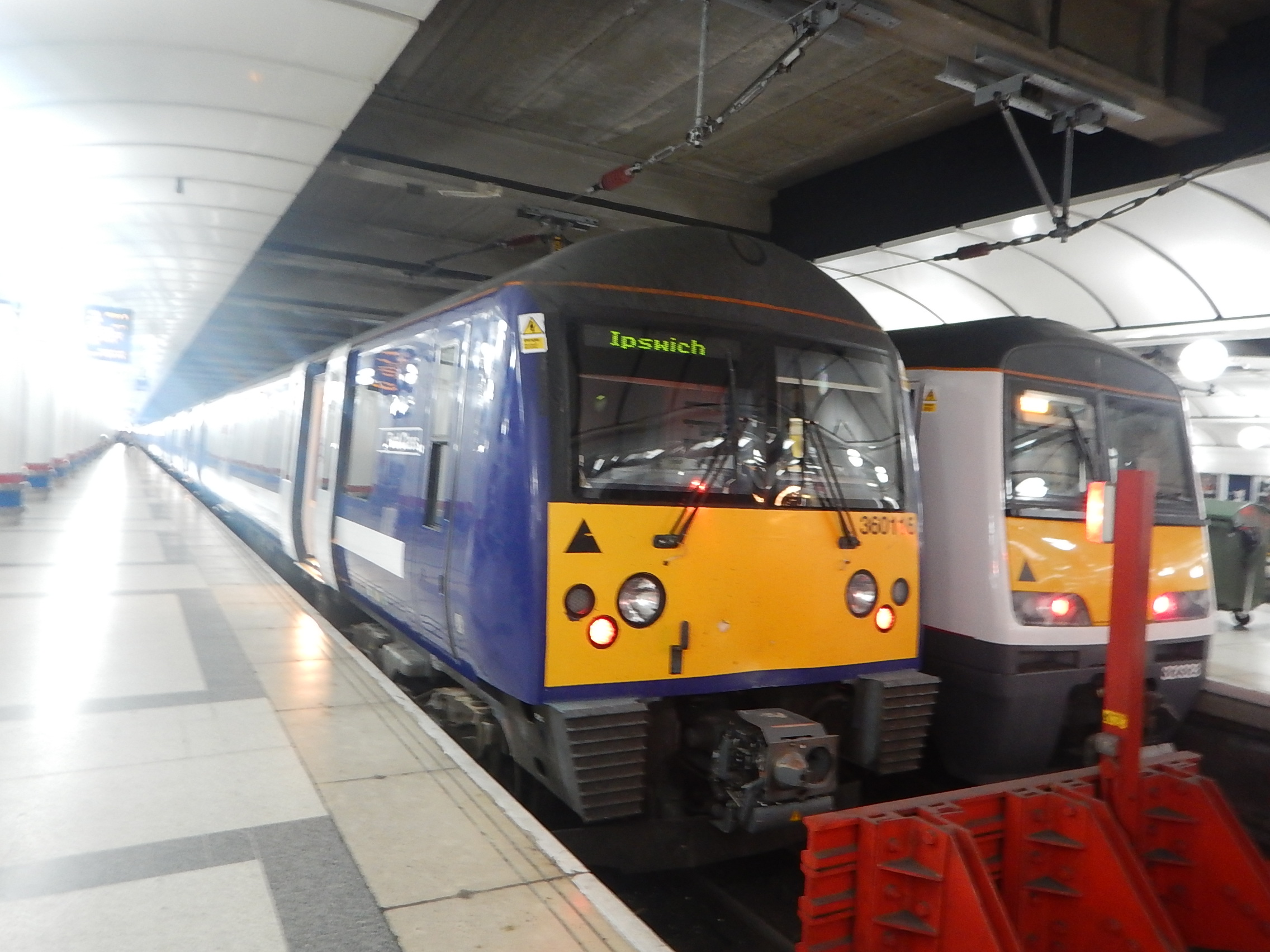
The Class 360 train is on the left.
The following data has come from Real Time Trains.
- St. Pancras and Corby are 79.3 miles apart.
- The current service stops at Kettering, Wellingborough, Bedford and Luton.
- The new electric service stops at Kettering, Wellingborough, Bedford and Luton and Luton Airport Parkway.
- Current services take between 67 and 73 minutes
- The new electric services take between 71 minutes
- Services leave St. Pancras at XX:15 and XX:45
- Services leave Corby at XX:11 and XX:40
- Turnround at St. Pancras appears to be about 23-25 minutes
- Turnround at Corby appears to be about 12-16 minutes.
- St. Albans and St. Pancras takes 14 minutes.
Note.
- The Class 222 train has a top speed of 125 mph and a maximum acceleration: of 0.80 ms-2
- The Class 360 train has a top speed of 110 mph and a maximum acceleration: of 0.98 ms-2
Looks like a case of swings and roundabouts to me!
I can deduce the following.
Average Speed
Consider.
- Assuming a trip time of seventy minutes for the Class 222 train, gives an average speed of 68 mph including stops.
- Assuming a trip time of seventy-one minutes for the Class 360 train, gives an average speed of 62 mph including stops.
These speeds don’t seem to be too difficult to achieve. Especially, as the Midland Main Line is a series of straight line between a number of stations., which are ideal for a quick dash in between.
It’s A Three Hour Round Trip
Add up the two 71 minute trips and the turnaround times and it looks to be a comfortable three hour round trip.
So for a two trains per hour (tph) service, you will need six formations of Class 360 trains.
As it looks like each formation will be twelve cars long, that will mean that eighteen of the current twenty-one trains will be needed.
The three spare trains will be very useful, whilst the trains are refurbished with new liveries and interiors.
Route Capacity
This picture shows a five-car Class 222 train at Corby station.
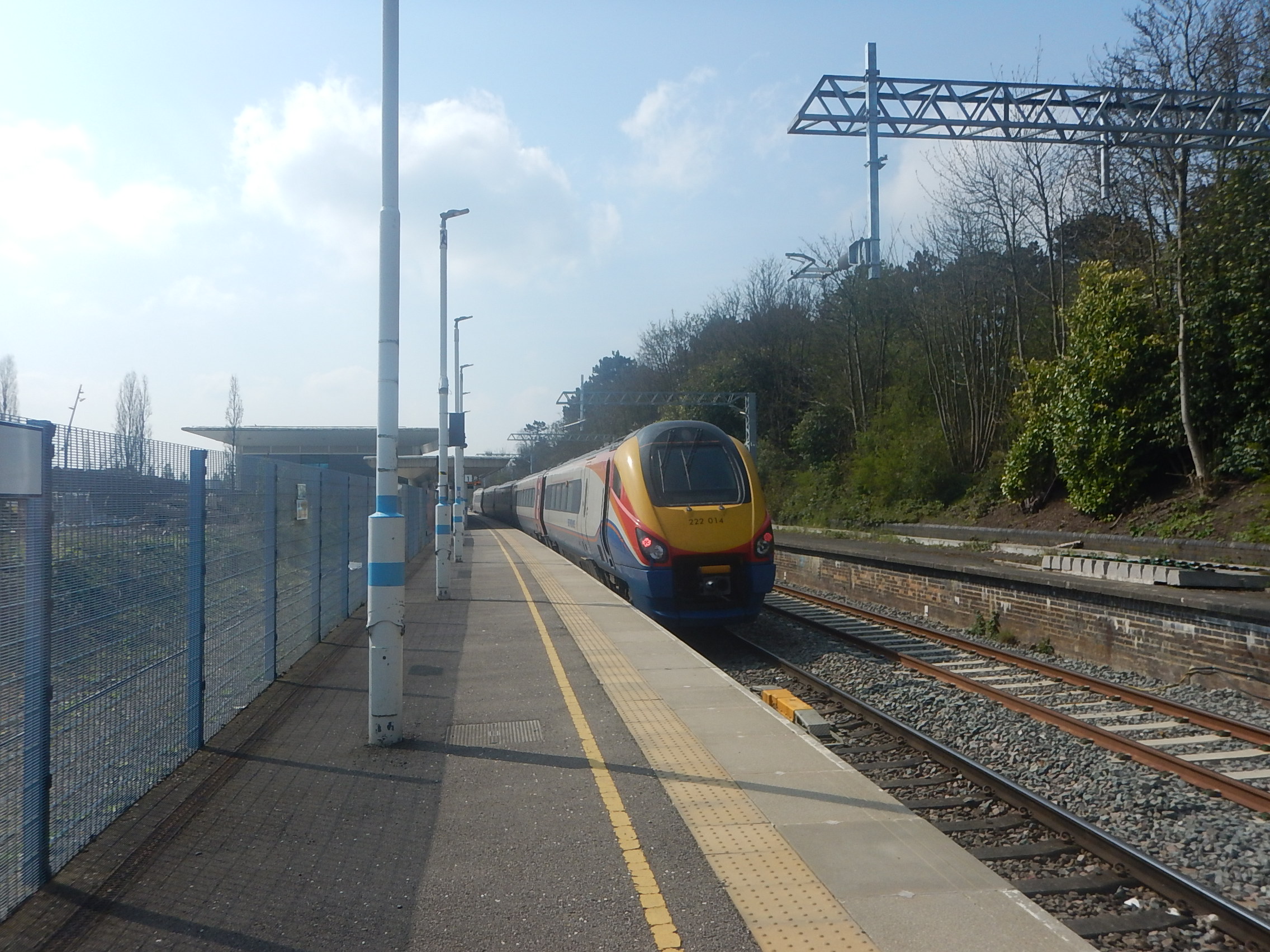
Consider.
- The current five-car Class 222 trains have a capacity of 50 First Class and 192 Standard Class seats
- Four-car Class 222 trains have a capacity of 33 First Class and 132 Standard Class seats.
- A four-car Class 360 train has a capacity of 16 First Class and 264 Standard Class seats.
I can do a simple calculation.
- The current one tph service, if run by a five-car Class 222 trains would have an hourly capacity of 50 First Class and 192 Standard Class seats.
- The planned two tph service if run by twelve-car 360 trains has an hourly capacity of 96 First Class and 1584 Standard Class seats.
First Class capacity on the route has doubled and Standard Class accommodation has gone up by a massive 8.25 times.
The latter figure will probably be reduced as some of the seats are to be removed for a more spacious interior with tables.
Serving Luton Airport
It looks like these trains will enable a quick journey to Luton Airport.
- The St. Pancras and Corby train will take 22 minutes between St. Pancras and Luton Airport Parkway stations.
- There will be the Luton DART connecting Luton Airport Parkway to the Airport from 2022.
- I suspect Luton Airport will be aiming for a thirty minute journey between St. Pancras and the Airport.
- The fast service will have a frequency of two tph.
It will not compare badly with rail times from London to Gatwick of 35 minutes and to Stansted of 50 minutes.
Services To Oakham And Melton Mowbray
Consider.
- Oakham and Melton Mowbray stations are on the route between Corby station and the Midland Main Line North of Leicester.
- Oakham and Melton Mowbray stations have a one train per day (tpd) in both directions to London via Corby.
- In Beeching Reversal – Increased Services To Nottingham And Leicester, via Syston And Loughborough From Melton Mowbray. I wrote about how the local MP wants better services at Melton Mowbray.
- Oakham is 11.5 miles from Corby.
- Melton Mowbray is 25.8 miles from Corby.
- Leicester is just over forty miles from Corby and could be covered in under an hour.
- A pair of Class 810 trains are the same length as a trio of Class 360 trains, so both trains would fit all platforms.
I think that there are a lot of possibilities for services through Corby.
- Class 810 trains could use Corby as a diversion, when the Midland Main Line is closed for engineering works.
- Class 810 trains could run a service between St. Pancras and Leicester via Corby, Oakham and Melton Mowbray.
- If the Class 360 trains could be fitted with batteries, they should be able to provide a service from St. Pancras to Melton Mowbray and perhaps Leicester.
It could even provide an alternative route to London, if Leicester station has to be substantially rebuilt for electrification..
Conclusion
This not the longest of electric services, but I can see it carrying a lot of passengers.
It will also give a boost to Luton Airport.
Thoughts On Faster Trains On Thameslink
The Class 700 trains used by Thameslink only have an operating speed of 100 mph.
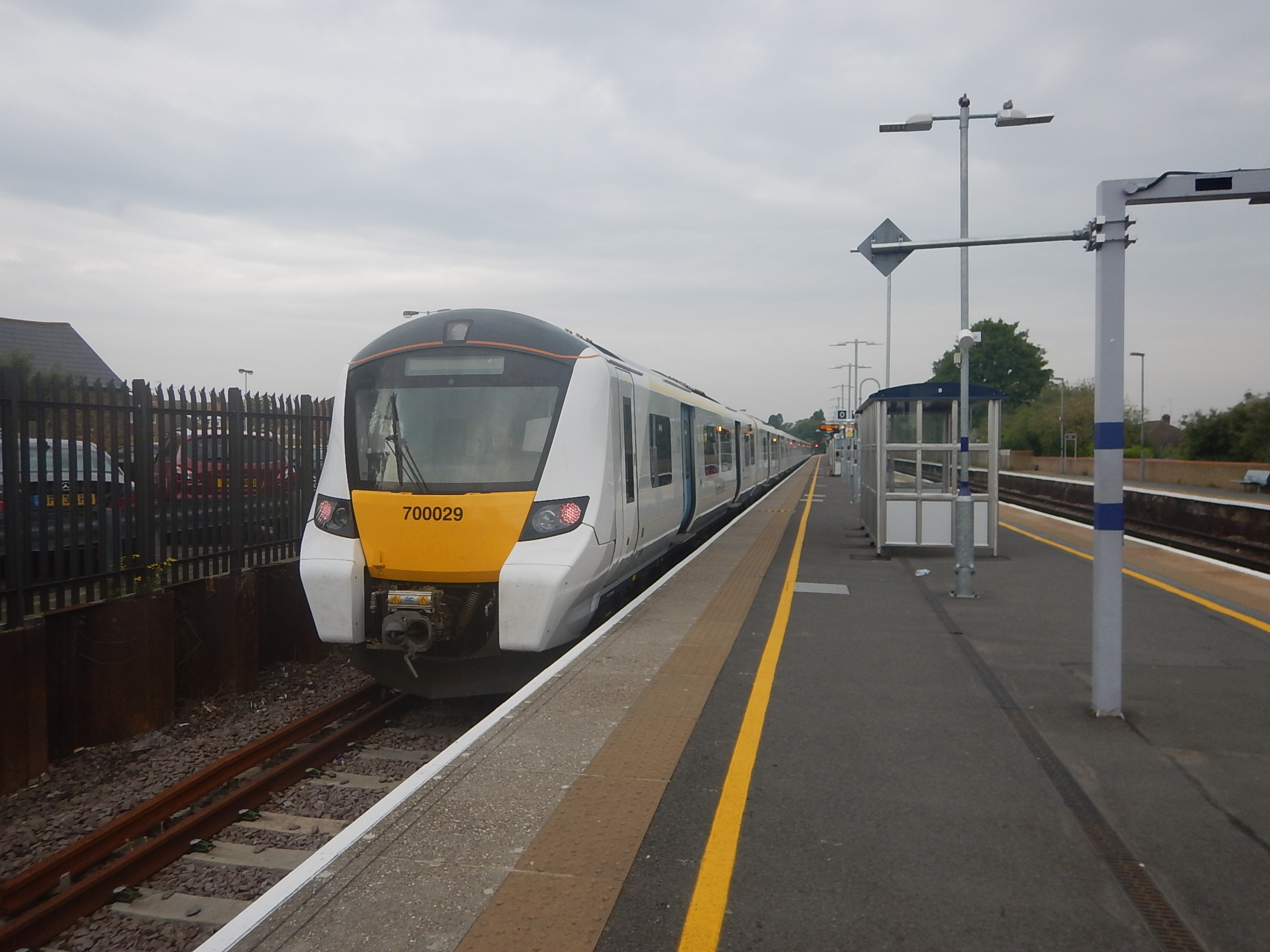
I do wonder, if that is a fast enough operating speed for all Thameslink routes.
Sharing The Midland Main Line With 125 mph Trains
A couple of years ago, I travelled back into St. Pancras with a group of East Midlands drivers in a Class 222 train.
They told me several things about the route including that the bridge at the South of Leicester station would be difficult to electrify, as it was low and the track couldn’t be lowered as one of Leicester’s main sewers was under the tracks at the bridge. Perhaps, this is one place, where discontinuous electrification could be used on the Midland Main Line.
They also told me, that sometimes the Thameslink trains were a nuisance, as because of their 100 mph operating speed, the 125 mph Class 222 trains had to slow to 100 mph.
Upgrading Of The Midland Main Line South Of Bedford
The electrification of the Midland Main Line South of Bedford is being updated, so that it is suitable for 125 mph running.
An Analysis Of Services On The Midland Main Line South Of Bedford
The current Class 222 trains are capable of 125 mph and will be replaced by Class 810 trains capable of the same speed on both diesel and electricity.
Currently, a Class 222 train is capable of doing the following on a typical non-stop run between St. Pancras and Leicester.
- Covering the 30 miles between St. Albans and Bedford in 17 minutes at an average speed of 106 mph.
- Covering the 50.3 miles between Bedford and Leicester in 30 minutes at an average speed of 100.6 mph.
- Maintaining 125 mph for long stretches of the route, once the trains is North of London commuter traffic at St. Albans
I can estimate the timings on the 79.2 miles between Leicester and St. Albans, by assuming the train runs at a constant speed.
- 100 mph – 47.5 minutes
- 110 mph – 43.2 minutes
- 125 mph – 38 minutes
- 140 mph – 34 minutes
Note.
- I have done the calculation for 140 mph, as that is the maximum operating speed of the Class 810 train with full in-cab digital signalling.
- Trains have been running at 125 mph for a couple of decades on the Midland Main Line.
- To get a St. Pancras and Leicester time add another 14 minutes, which is the current time between St. Pancras and St. Albans of a Class 222 train.
- Some Off Peak trains are timed at 62-63 minutes between St. Pancras and Leicester.
- A time of under an hour between St. Pancras and Leicester might be possible and the Marketing Department would like it.
- As Thameslink trains between Bedford and St. Albans stop regularly, they are on the slow lines of the four-track railway, to the North of St. Albans.
- South of St. Albans, Thameslink trains often run on the fast lines.
I can expect that East Midlands Railway will want to be running their new Class 810 trains as far as far South as they can at 125 mph, to speed up their services. When the signalling allows it, they’ll want to run at 140 mph.
So they won’t want to see Thameslink’s slow trains on the fast lines.
- But if you look at the Thameslink trains that do run on the fast lines between St. Albans and St. Pancras, they appear to be the four trains per hour (tph) that run to and from Bedford.
- Of these trains, two tph terminate at Brighton and two tph terminate at Gatwick Airport.
- The average speed of a Class 222 train between St. Albans and St. Pancras assuming 14 minutes for the 19.7 miles is 84.4 mph.
So it looks to me that a 100 mph Thameslink train could be able to get away without slowing the East Midland Railway expresses.
But then that is not surprising, as for many years, the Class 222 trains worked happily with 100 mph Class 319 trains.
Is There Scope For Extra And Faster Services Into St. Pancras?
I have only done a simple calculation, but I do wonder if there is scope for the following.
- Increasing the frequency of trains for both Thameslink and East Midlands Railway.
- Saving a few minutes on East Midlands Railway services.
Consider.
- The new Class 810 electric trains will probably have better acceleration and deceleration than the current Class 222 diesel trains, when working using electric power.
- East Midlands Railway is introducing Class 360 trains that were built as 100 mph trains by Siemens, who are now upgrading them to 110 mph trains.
- Can Siemens do the same for the Class 700 trains and create a sub-fleet capable of 110 mph running?
- All trains will be running under full in-cab digital signalling with a large degree of automatic train control.
I feel that if the Class 700 trains had the extra speed, they would make the planning of services South of St. Albans easier and allow the Class 810 trains to both run faster and provide more services.
Sharing The East Coast Main Line With 125 mph Trains
The following Thameslink services run up the East Coast Main Line past Stevenage.
- Cambridge And Brighton – Two tph – Stops at Royston, Ashwell and Morden (1 tph), Baldock, Letchworth Garden City, Hitchin, Stevenage, Finsbury Park, London St Pancras International, Farringdon, City Thameslink, London Blackfriars, London Bridge, East Croydon, Gatwick Airport, Three Bridges, Balcombe, Haywards Heath and Burgess Hill
- Cambridge and Kings Cross – Two tph – Stops at Foxton, Shepreth, Meldreth, Royston, Ashwell and Morden, Baldock, Letchworth Garden City, Hitchin, Stevenage, Knebworth, Welwyn North, Welwyn Garden City, Hatfield, Potters Bar and Finsbury Park
- Peterborough and Horsham – Two tph – Stops at Huntingdon, St Neots, Sandy, Biggleswade, Arlesey, Hitchin, Stevenage, Finsbury Park, London St Pancras International, Farringdon, City Thameslink, London Blackfriars, London Bridge, East Croydon, Coulsdon South, Merstham, Redhill, Horley, Gatwick Airport, Three Bridges, Crawley, Ifield, Faygate (limited) and Littlehaven
Note.
- Services are generally run by Class 700 trains, although lately the Kings Cross service seems to use Class 387 trains, which have a maximum speed of 110 mph and a more comfortable interior with tables.
- It is intended that the Cambridge and Kings Cross service will be extended to Maidstone East by 2021.
In addition there are two Cambridge Express and Fen Line services.
- Kings Cross and Ely – One tph – Stops at Cambridge and Cambridge North.
- Kings Cross and King’s Lynn – One tph – Stops at Cambridge, Cambridge North, Waterbeach, Ely, Littleport, Downham Market and Watlington
Note.
- These services are generally run by Class 387 trains.
- Cambridge and King’s Cross is timetabled at around fifty minutes.
Adding all of this together means that slower services on the East Coast Main Line are comprised of the following in both directions.
- Three tph – 110 mph – Class 387 trains
- Four tph – 100 mph – Class 700 trains
These seven trains will have to be fitted in with the 125 mph trains running services on the East Coast Main Line, for LNER, Grand Central, Hull Trains and East Coast Trains.
There are also the following problems.
- All trains must navigate the double-track section of the East Coast Main Line over the Digswell Viaduct and through Welwyn North station.
- The King’s Cross and Cambridge service stops in Welwyn North station.
- Full in-cab digital signalling is being installed on the East Coast Main Line, which could increase the speed of the expresses through the double-track section.
Could the introduction of the Class 387 trains on the Cambridge and King’s Cross service have been made, as it easier to fit in all the services if this one is run by a 110 mph train?
However, the full in-cab digital signalling with a degree of automatic train control could be the solution to this bottleneck on the East Coast Main Line.
- Trains could be controlled automatically and with great precision between perhaps Hatfield and Stevenage.
- Some expresses might be slowed to create gaps for the Cambridge and Peterborough services.
- The Hertford Loop Line is also getting full in-cab digital signalling, so will some services be sent that way?
In Call For ETCS On King’s Lynn Route, I talked about a proposal to improve services on the Fen Line. This was my first three paragraphs.
The title of this post, is the same as that on an article in Edition 849 of Rail Magazine.
The article is based on this document on the Fen Line Users Aoociation web site, which is entitled Joint Response To Draft East Coast Main Line Route Study.
In addition to ETCS, which could improve capacity on the East Coast Main Line, they would also like to see journey time reductions using trains capable of running at 125 mph or faster on the King’s Lynn to Kings Cross route.
My scheduling experience tells me that a better solution will be found, if all resources are similar.
Hence the proposal to run 125 mph trains between King’s Cross and King’s Lynn and probably Ely as well, could be a very good and logical idea.
If the Class 700 trains were increased in speed to 110 mph, the trains through the double-track section of the East Coast Main Line would be.
- One tph – 110 mph – Class 387 trains
- Four tph – 110 mph – Class 700 trains
- Two tph – 125 mph – New trains
Note.
- This would probably be an easier mix of trains to digest with the high speed services, through the double-track section.
- I like the idea of extending the Ely service to Norwich to give Thetford, Attleborough and Wymondham an improved service to London, Cambridge and Norwich.
The new trains would probably be a version of Hitachi’s Regional Battery Train.
- It would need to be capable of 125 mph on the East Coast Main Line.
- If the Ely service were to be extended to Norwich, this section would be on battery power.
There are certainly a lot of possibilities.
But as with on the Midland Main Line, it looks like for efficient operation, the operating speed of the Class 700 trains on the route needs to be increased to at least 110 mph.
Could Faster Class 700 trains Improve Services To Brighton?
These are the Thameslink services that serve Bedford, Cambridge and Peterborough, that I believe could be run more efficiently with trains capable of at running at speeds of at least 110 mph.
- Bedford and Brighton – Two tph
- Bedford and Gatwick Airport – Two tph
- Cambridge and Brighton – Two tph
- Cambridge and Maidstone East – Two tph
- Peterborough and Horsham – Two tph
Note.
- I have assumed that the Cambridge and King’s Cross service has been extended to Maidstone East as planned.
- Eight tph serve Gatwick Airport.
- Four tph serve Brighton.
The Gatwick Express services have a frequency of two tph between London Victoria and Brighton calling at Gatwick Airport is already run by 110 mph Class 387 trains.
It would appear that if the Bedford, Cambridge and Peterborough were run by uprated 110 mph Class 700 trains, then this would mean that more 110 mph trains would be running to Gatwick and Brighton and this must surely improve the service to the South Coast.
But it’s not quite as simple as that, as the Cambridge and Maidstone East services will be run by eight-car trains and all the other services by twelve-car trains.
Conclusion
There would appear to be advantages in uprating some or possibly all of the Class 700 trains, so that they can run at 110 mph, as it will increase capacity on the Brighton Main Line, East Coast Main Line and Midland Main Line.
Increase In Hate Crime Against Disabled Rail Users
The title of this post, is the same as that of this article on Rail Technology Magazine.
This is the introductory paragraph.
New figures published by the Department for Transport have shown that hate crimes toward disabled people traveling on the rail network have risen by 24% in the last three years.
I don’t think the abuse has just been on trains either.
I rarely see any friction over the use of the wheelchair bay on buses in London, but my feeling is that I see it more often than I used too!
- Perhaps six months ago, a mother was not very pleased at having to get off the bus so that a disabled guy in a wheelchair could use the space.
- Some people think possession of the space is all important.
- I’ve also heard arguments over who takes precedent.
I wonder, if it is worse in other parts of the UK, where wheelchair access to buses is not as easy,as in London and there are fewer buses.
Are Some Passengers Annoyed At Being Delayed?
I’ve certainly seen moderate annoyance on buses and trains, when there is a delay caused by a disabled passenger getting on or off a bus or train, with sometimes some very offensive words being said.
So What Should Be Done About It?
Obviously, we need to do all the usual personal things to make sure that things run smoothly and serious abusers should be prosecuted.
But I also think, that we should aim for the following.
Every train must have a level platform and train interface.

The picture was taken from literature about the South Wales Metro and shows a visualisation of one of the Flirts, that will run on the routes in South Wales.
We should ban the ordering of trains, that don’t meet this criteria.
All routes between street and platform should be step-free.
It would be an expensive program, but there would be a lot who’d benefit.
- People in wheelchairs
- Babies and toddlers in buggies and their pushers.
- People dragging large cases.
- Cyclists with bicycles
- Older people with mobility issues.
There will be collateral benefits.
- Trains would be speeded up, as they would not have to wait so long in stations.
- More people will use the trains and not just the disabled.
- If the program were properly managed, it could create work for local construction firms all over the UK.
It might even encourage inward and stay-at-home tourism from those with mobility issues.
Approaching Kings Cross – 2nd April 2021
I took these pictures approaching Kings Cross.
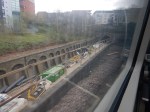
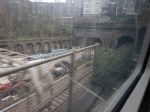
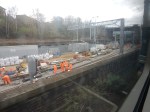
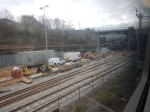
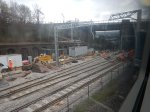
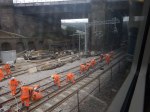
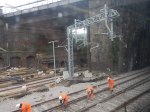

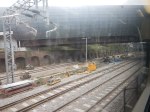
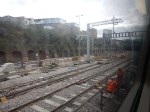
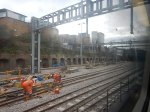
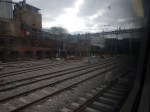

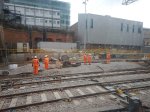
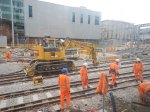
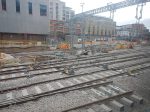
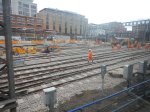
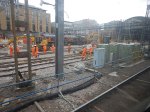
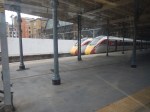
Comparing these pictures to those in Approaching Kings Cross – 19th February 2021, show that work is progressing.
It should be finished by the Summer.
Battersea Power Station’s Glass Elevator To Open Next Year
The title of this post, is the same as that of this article on Ian Visits.
It sounds like it will give a reason for some tourists to visit the area and it will be a balance to the cable-car in the London Docks.
Ian gives more details about what could be a new experience for Londoners and tourists.
Finsbury Circus Appears Fully Open
I bought my breakfast yesterday in Leon on Moorgate and ate it in the nearby Finsbury Circus Gardens.
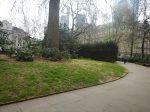



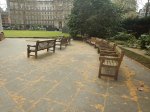
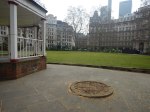
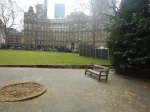
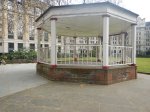
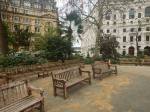
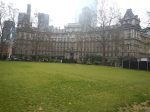


It is now fully open.
This picture shows the gardens during the construction of Crossrail.
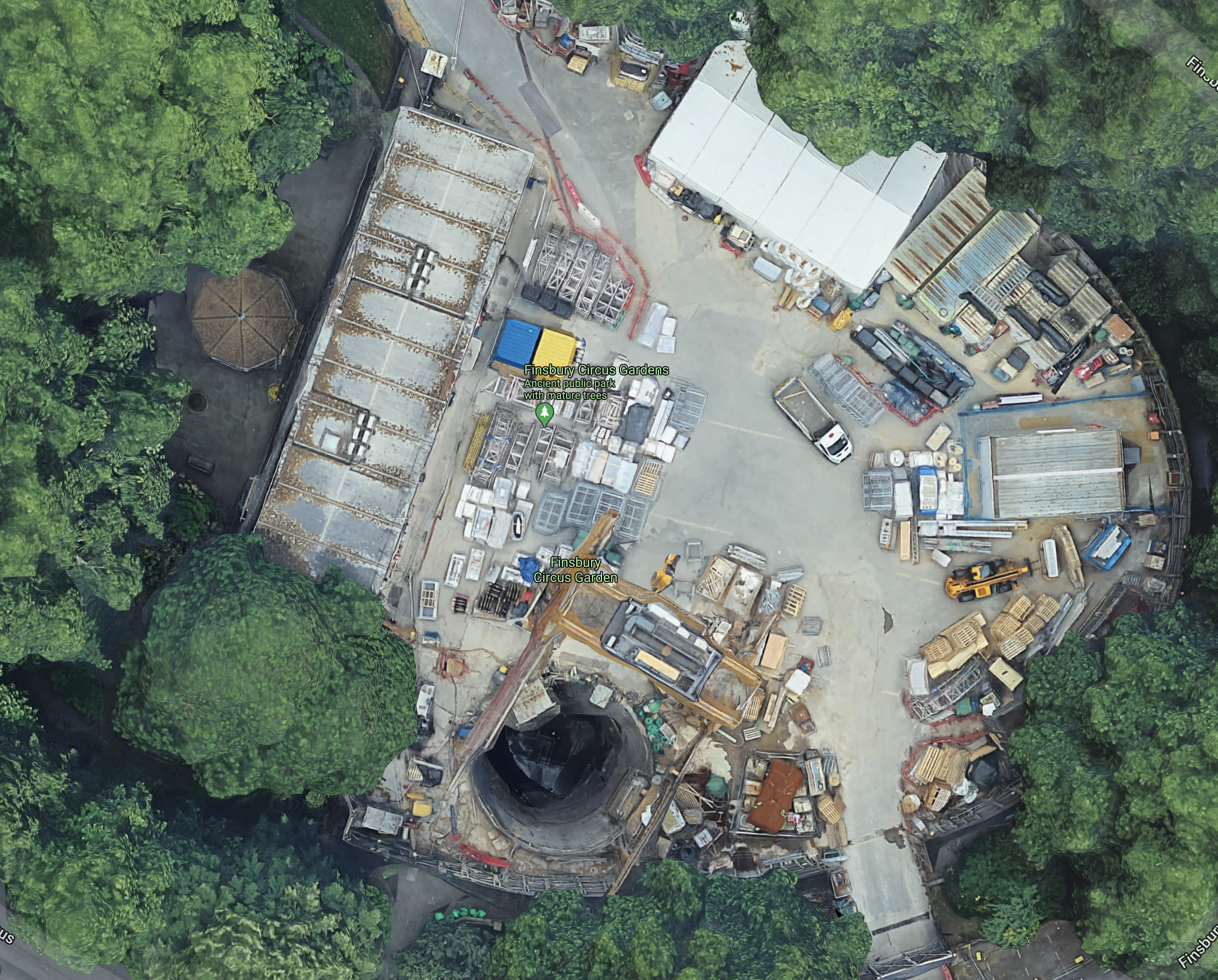
Note.
- The bandstand can be picked out amongst the trees.
- The shaft towards the bottom is forty metres deep and was used to get men and materials to the tunnels.
Comparing the pictures shows that the gardens are now able to used for their original purpose.
West Ealing Station Goes Step-Free As Part Of Crossrail Upgrades
The title of this post, is the same as that of this article on Ian Visits.
The title says it all.
These pictures, which were taken on the 31st March 2021, show West Ealing station.
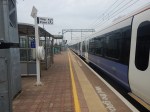
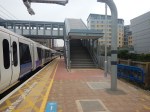
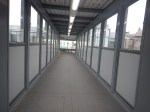
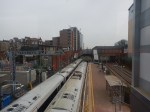
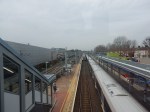
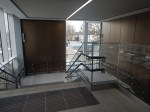
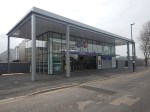
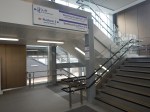
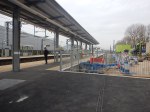
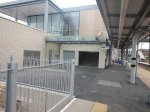

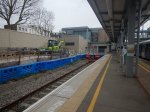
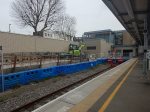
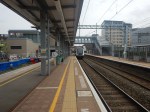
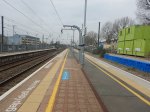
Note
- It is fully step-free.
- As at Acton Main Line station, the lifts are very disabled-friendly.
- The terrible staircases of the old station have yet to be demolished.
- There is just a small amount of work to finish.
It is a fine addition to London’s portfolio of stations.
But one thing is not covered in the article – What is going to happen to the Greenford Branch?
- Currently, it is only hourly.
- Will it be going to four trains per hour (tph) ? It certainly needs this frequency to be a feeder line for Crossrail, which could have as many as six tph stopping in the station.
- Will it be run by battery electric trains.
- Will three-car Aventras work the route, as I wrote in Could Three-Car Aventras Run Services On The Greenford Branch??
- Will it be going to an automated shuttle, as I wrote in An Automated Shuttle Train On The Greenford Branch Line?
- Will it be run by Class 230 trains, as I wrote in Will The Class 230 Trains Be Coming Home??
- Will the management of the route go to Transport for London?
I think I would favour the automated shuttle! But then I’m a trained Control Engineer.
- Two-car battery electric train.
- Option of being lengthened to three cars.
- I suspect Alstom, CAF, Stadler and Vivarail could all provide trains.
- There would be level access between train and platform to reduce station dwell times.
- Automated like the Victoria Line, where when ready to depart, the driver presses a button to close the doors and then the train moves automatically to the next station.
- The driver could sit in the middle of the train with screens to see front and rear, so they wouldn’t even have to change ends, which wastes time.
- Or they might choose to sit in the front cab or even use a sophisticated remote control, developed with gaming or military drone experience.
- Charging would be automatic at both terminals.
- One train would run a continuous service with a timetable, which just said services would be a service approximately every fifteen minutes
- Trains would have wi-fi and passengers could view front and rear camera images on their devices.
- Trains would be stabled at night in one of the two terminal platforms and could have a spruce up each night from a mobile or the station cleaning crew.
- Trains might need to have sufficient performance to run a service into and out of Paddington, at the beginning and end of the day. But if Crossrail services were reliable and six tph, this feature could be superfluous. But other services might need a main line capability at say 60 or 70 mph to relocate to and from the main depot.
- On the Greenford Branch, signallers and/or the driver would need the ability to park the train in the next terminal station, when a freight train is passing through.
Get this automated branch line right and the technology could be used in several places around the UK.
 The Anonymous Widower