Holyhead Hydrogen Hub Planned For Wales
The title of this post is the same as that of this article on H2 View.
This is the introductory paragraph.
Plans for a new hydrogen production plant, refuelling and distribution hub have been unveiled for Holyhead, North Wales.
Some other points from the article.
- Unsurprisingly, it will be called the Holyhead Hydrogen Hub.
- Holyhead is the second largest roll-on, roll-off port in the UK.
- There is plenty of potential for renewable energy in the area.
- It will support the port and large scale movements of HGVs.
- There is plenty of potential for renewable energy in the area.
- The hydrogen in future could support trains, ships, public transport and other uses.
In the last year, I’ve read about hydrogen hubs in ports, including Portsmouth and Antwerp, so Holyhead is just following a trend.
Buses Should Have Flat Floors
These pictures were taken inside the lower-deck of one of London’s New Routemaster buses.


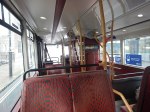

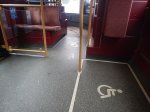
Now compare them with pictures taken on the lower deck of one of London’s other hybrid buses, similar to those you see all around the UK.
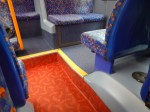

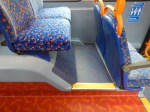


Note.
- The floor of the New Routemaster is continuous and flat. The only steps are the stairs and up into the sets of four seats.
- The floor of the hybrid bus, which was built on a standard Volvo chassis has several steps.
Recently, when carrying a full bag of shopping down the stairs on the hybrid bus, the driver accelerated away and I fell and banged my knee. Because of the flat floor, it is less likely, I’d have a similar problem on the New Routemaster.
Why Does The Routemaster Have A Flat Floor?
When Wrightbus designed the Routemaster, they had a clean sheet of paper and weren’t constrained to use a proprietary chassis.
- The 18 kWh traction battery is under the front stairs.
- The traction motor is under the floor, in the middle of the bus.
- The small diesel generator is mounted halfway up the back stairs.
- The bus has full regenerative braking to the battery.
Using a standard Volvo chassis might be cheaper, but there can’t be a flat floor.
Will The Wrightbus Hydrogen Bus Have A Flat Floor?
The Wrightbus StreetDeck FCEV is the Wrightbus hydrogen bus and it has entered service in Aberdeen.
It looks to be about half flat floor, but not as good as the Routemaster.
Hopefully, I’ll ride in one soon.
Velocys Signs Agreement For Commercial-Scale Biomass-To-Jet Fuel In Japan
The title of this post, is the same as that of this article on the Chemical Engineer.
I am very hopeful about Velocys, who are a UK public company, that were spun out of Oxford University and do clever things in the area of chemical catalysts.
Velocys’ Fischer-Tropsch technology does seem to be a good way of creating sustainable aviation fuel from household rubbish and biomass.
Are Hydrogen-Fuelled Vehicles A Waste Of Our Time And Energy?
The title of this post, is the same as that of this article on Engineering & Technology, which is the magazine of the Institution of Engineering and Technology. So it should be authoritative.
This is the concluding paragraph.
Cars account for 61 per cent of surface transport emissions, HGVs only 17 per cent, buses 3 per cent, and rail 2 per cent (CCC, December 2020) so for cost/benefit it cannot be worthwhile switching to hydrogen fuel cell buses and trains. Through any impartial lens of engineering science, hydrogen fuel cell cars do not appear to be a transport winner and the Government should revisit decisions it has made about related funding. But then there is political virtue signalling.
It is a must-read contribution to the debate, as to whether hydrogen or battery power, is best for surface transport.
I don’t believe there is a simple answer, because for some applications, battery electric power is not feasible because of reasons of power or range.
- Would a battery-electric truck, be able to haul a forty-four tonne load between the Channel Tunnel and Scotland?
- Would a battery-electric locomotive be able to haul a thousand tonne aggregate or stone train for anything but a few tens of miles?
- Is it possible to design a a battery-electric double-deck bus, that can carry seventy passengers?
I believe there are applications, where battery-electric is not a feasible alternative to the current diesel traction.
It is worth noting, that truck-maker; Daimler is planning to have both battery and hydrogen heavy trucks in its product line.
Users will choose, what is the best zero-carbon transport for their needs.
The Black Cab Driver’s Answer
It is always said, that, if you want to know the answer to a difficult question, you ask the opinion of a black cab driver.
So as the new electric black taxis, are the most common electric vehicle, that the average Londoner uses, what do the guys up-front say about their expensive vehicles.
- Regularly, cab drivers complain to me about the range and having to use the diesel engine to charge the battery or power the car.
- Some suggest to me, that hydrogen might be a better way to make the vehicles zero-carbon.
I think they may have a point about hydrogen being a better method of powering a black taxi, when you look at the pattern of journeys and the battery size and charging limitations of the vehicle.
These limitations may reduce in the future, as the technology gets better, with higher density batteries and faster charging.
We could even see a design and sales war between battery and hydrogen black cabs.
It always pays to follow the money!
Tottenham Court Road Station – 15th February 2021
These pictures show the latest exterior views of Tottenham Court Road station.




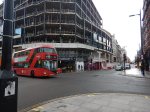



Note.
- The development on top of the station will be seven floors.
- There is a reflection of Centre Point in the glass.
It has now been handed over to Transport for London.
The London Tube Map Gets A New Line
This picture shows the latest London tube map, which now shows the Thameslink network.
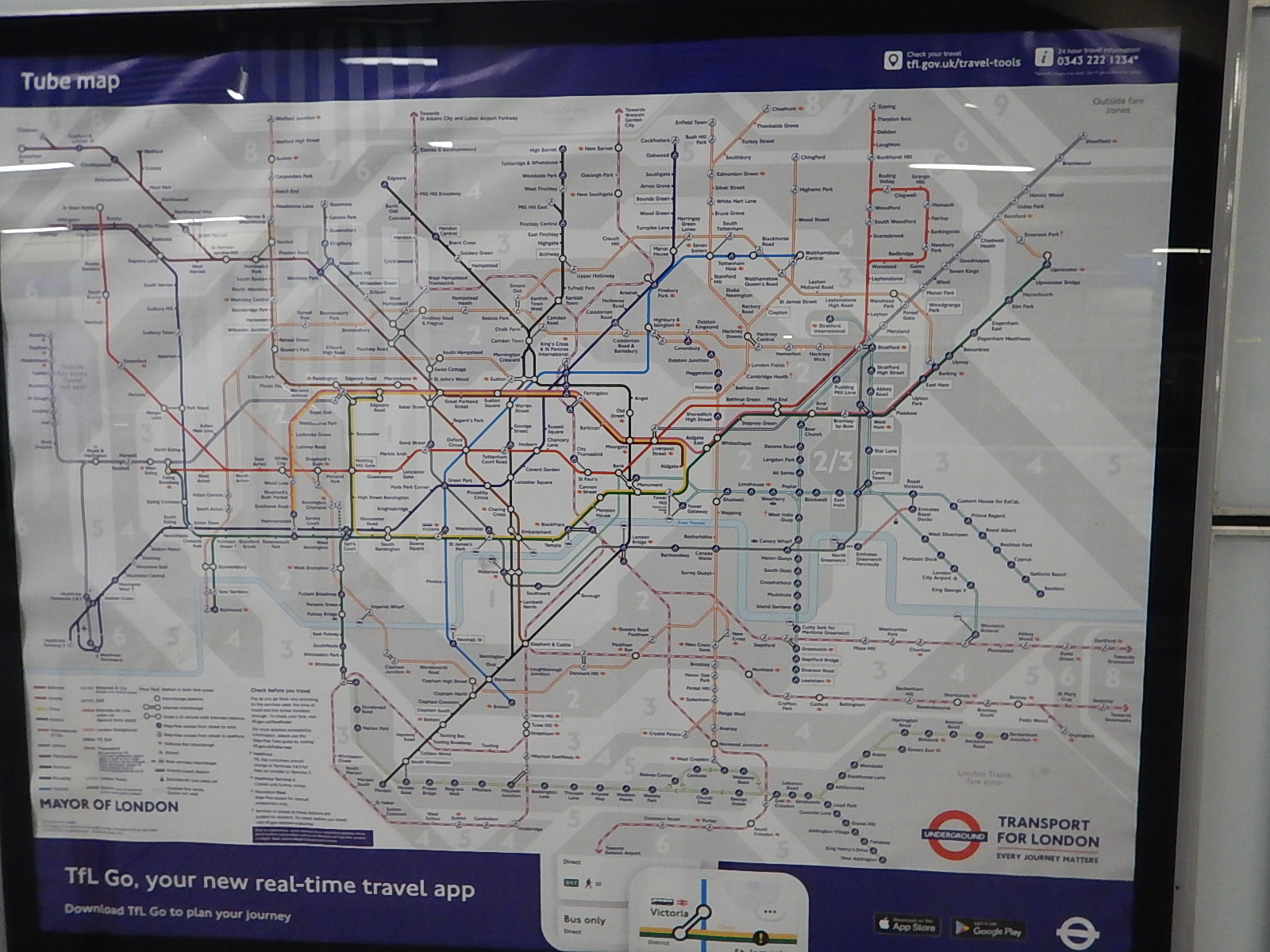
Note.
- There is a lot of new pink or red-and-white lines everywhere.
- The lines are numerous in the South-East corner of the map.
- Crossrail is not shown.
These pictures show areas in greater detail.




I am surprised that the whole of the Thameslink network has been added.
Transport Secretary Urged Not To Derail Aylesbury Spur Plans
The title of this post, is the same as that of this article on The Bucks Herald.
This is the sub-heading of the article.
Leader of Buckinghamshire Council, Martin Tett has written to Transport Secretary Grant Shapps urging him to confirm Government support and funding for the much needed Aylesbury link section of East-West rail.
I think this Aylesbury link needs very careful thinking.
There are certainly a lot of issues to consider.
The Aylesbury Link
The Great Central Main Line used to run from London Marylebone station to the East Midlands and North.
Much of the route closed in the 1960s and the only section with a regular passenger service is that that run by Chiltern Railways, between Marylebone and Aylesbury Vale Parkway station.
North of Aylesbury Vale Parkway this rail link connects to the East-West Rail Link.
It was originally proposed to run a service between Aylesbury and Milton Keynes.
High Speed Two
High Speed Two is the herd of elephants in the room and it could have multiple effects all over the country.
Is High Speed Two For London, The Midlands, The North And Scotland Or For The Whole UK?
The answer surely, is that High Speed Two is for the whole UK.
Train Services Between Wales and the West Of England And The North Of England And Scotland
Consider.
- North Wales is well served by a change at Crewe for passengers from the North and Scotland.
- Mid Wales is served by a change at Crewe or in Birmingham.
- South Wales, Bristol and the West and South-West of England are well-served by high speed trains from London Paddington and Reading.
Could South Wales, Bristol and the West and South-West of England, be better connected to the North and Scotland?
One of the ways to improve these services could be with a connection between High Speed Two and East-West Rail Link to allow trains to connect to the Great Western Railway at Didcot Junction.
Train Services Between East Anglia And The North Of England And Scotland
One of the ways to improve these services could be with a connection between High Speed Two and East-West Rail Link to allow trains to connect to and from Cambridge and East Anglia.
A High Speed Two Station At Calvert
Calvert is a village surrounded by landfill and wildlife sites to the South of where High Speed Two and East-West Rail Link cross to the North of Aylesbury.
This Google Map shows the area.
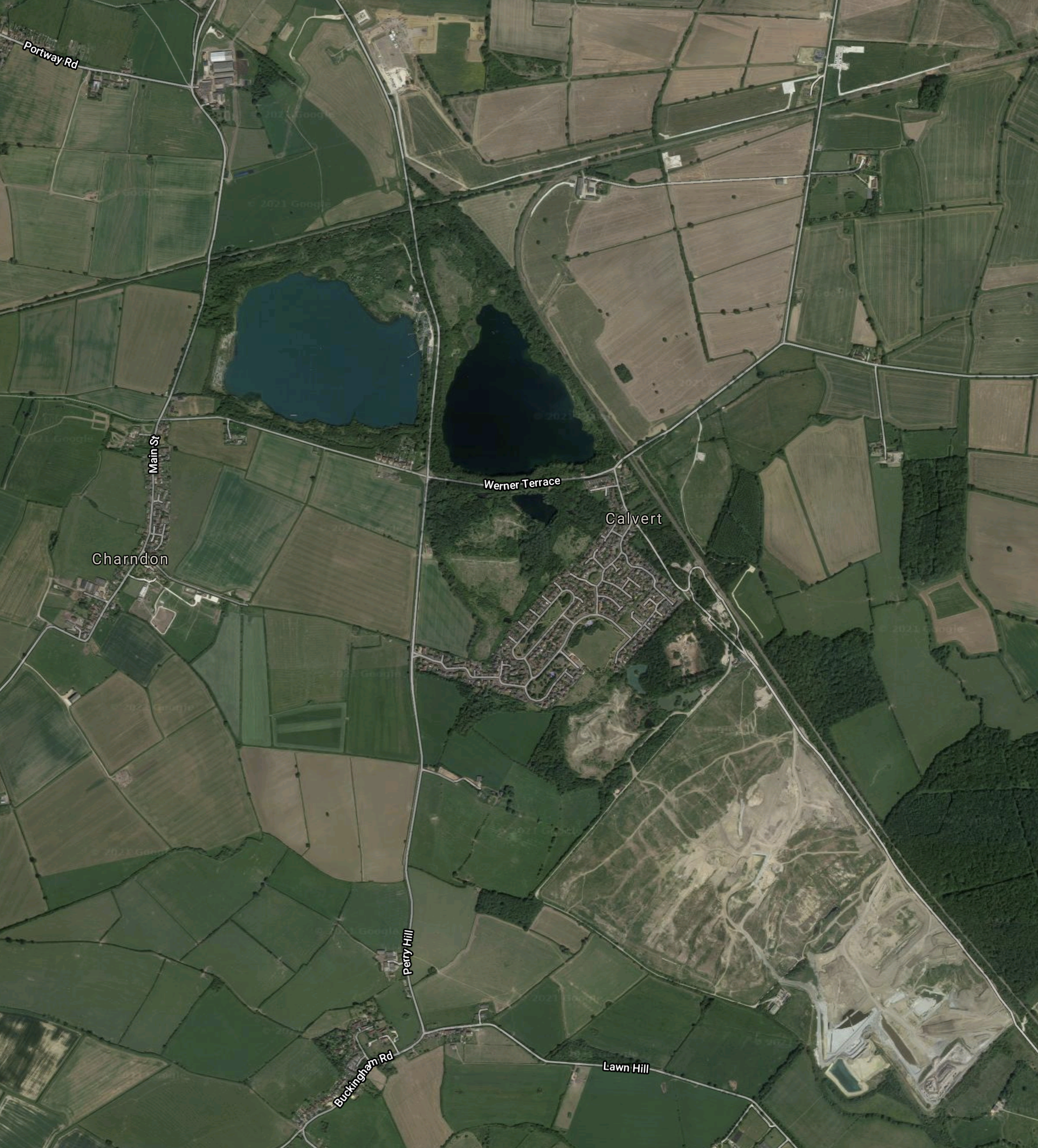
Note.
- Calvert is the village in the middle of the map.
- The light-coloured area to the South-East of the village is one of London’s biggest landfill sites.
- The single-track railway to Aylesbury runs along the North-East side of the landfill.
- To the North of the village, this railway connects to the East-West Rail Link.
This Google Map shows the junction between the two railways in greater detail.
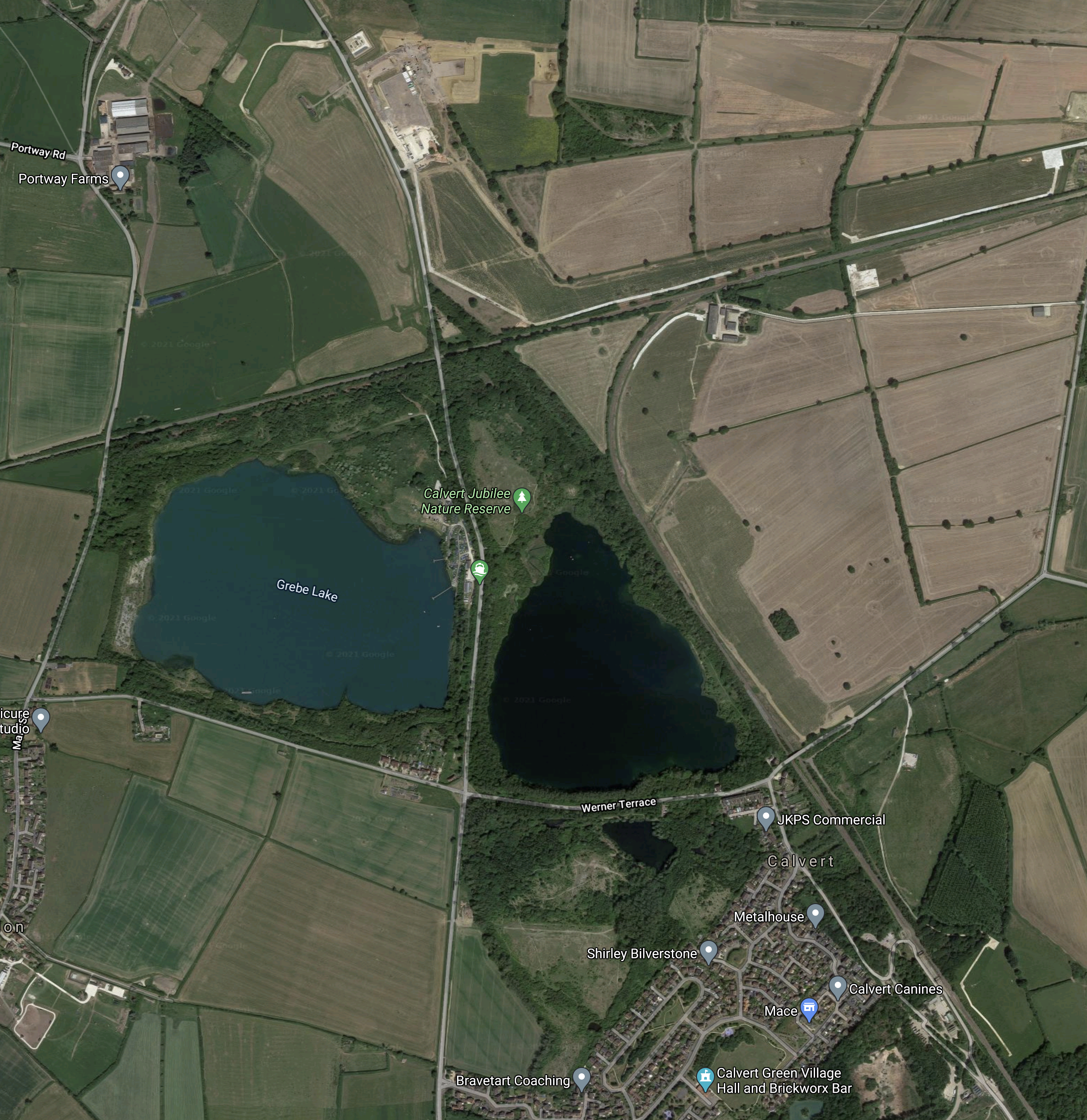
Note.
- The Northern part of Calvert is in the South-East corner of the map.
- The East-West Rail Link crossing across the North of the map
- The railway to Aylesbury running SE-NW across the map, to the East of the village of Calvert.
- The chord connecting the two railways, which allows trains to and from the South to connect to the East.
This map from High Speed Two shows the route of the new railway through the area.
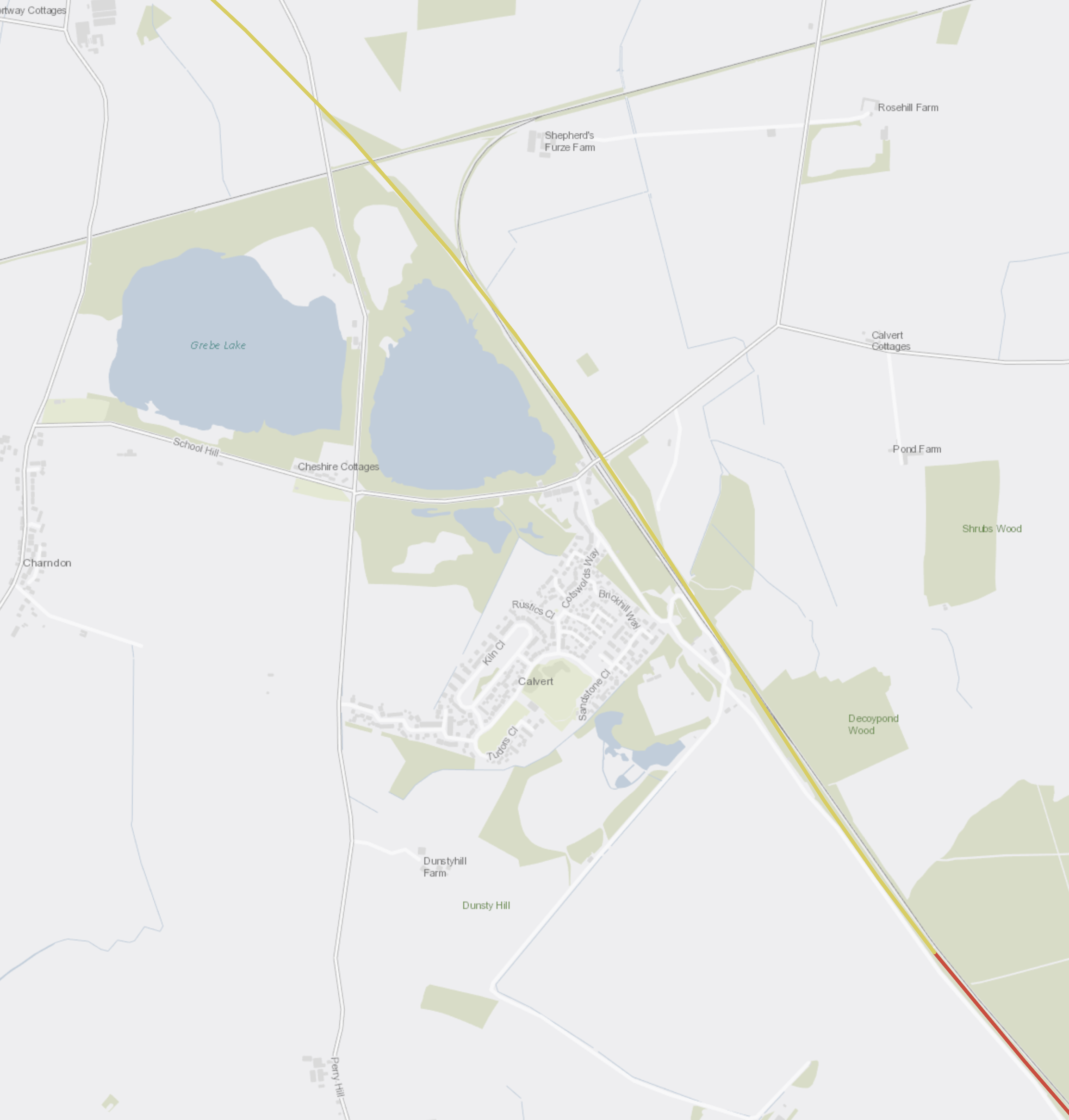
Note.
- High Speed Two is shown in yellow (cutting) and embankment (red).
- High Speed Two appears to run either on the same route or alongside the route to Aylesbury.
The Oakervee Review into High Speed Two, says this on Page 53, about a new station at Calvert in Buckinghamshire.
The Review also heard evidence from a number of informed stakeholders suggesting there should be a new station near Calvert, where HS2 would cross East-West Rail proposals to improve connectivity along the OxfordCambridge corridor. Previously, due to the impact on speed, no interim station had been planned between London and Birmingham Interchange.
The Review concluded that the DfT should consider making passive provision for a future HS2 station near to Calvert. If it is decided that a HS2 station should be built near to Calvert, passive provision will help prevent any disruption to HS2 services. There could be merit in developing an HS2 station in the future here if local plans support a significant residential and commercial development in this region, and if there is passenger demand to justify the cost of developing a station here. Without this coordinated planning, the experience of HS1 stations risks being repeated. The Review notes that the cost of developing a future station near Calvert could be shared with others including potentially the East West Rail Company.
I must admit, that I like the concept of a new station at Calvert.
- The double-track High Speed Two and the single-track Aylesbury Link run alongside each other and a station wouldn’t be a very expensive one.
- High Speed Two Trains will be very powerful and should be able to do a quick stop perhaps losing about two minutes.
- The important Milton Keynes Central station would get a good High Speed Two service, with a change at Calvert.
- Trains between Oxford and Cambridge could serve Calvert station.
It might also be possible for one of High Speed Two’s Classic Compatible trains to join High Speed Two at the station with a reverse.
This could enable a service between say Cardiff and Edinburgh.
- Intermediate stops could be Newport, Bristol Parkway, Swindon, Oxford, Bicester Village, Calvert, Birmingham Interchange, Crewe, Preston and Carlisle.
- It might even join and split at Swindon and Carlisle, with a second Classic Compatible train going between Penzance and Glasgow, which stopped at Plymouth, Exeter, Bristol Temple Meads, Bath, Swindon, Oxford, Bicester Village, Calvert, Birmingham Interchange, Crewe, Preston and Carlisle.
- It would need extra two-hundred metre long platforms at Swindon, Oxford, Bicester Village and Calvert.
If this train ran hourly, there would certainly be a need for an hourly feeder train between Aylesbury and Milton Keynes.
But as yet, it hasn’t been decided to provide provision at Calvert for a possible High Speed Two station.
Rolling Stock For The East-West Rail Link
In July 2019, I wrote Tender Set To Be Issued For East West Rail Rolling Stock.
I analysed if battery electric trains could run services on the East West Rail Link.
I said this.
Consider.
-
- All the major stations except Oxford have electrification.
- Sections of the route are electrified.
- The route is not very challenging.
- The longest section without electrification is around forty miles.
All this leads me to believe that a battery-electric train with a range of forty miles could handle the route, if there was the means to charge the train at Oxford.
Possibly the easiest way to achieve the charging station at Oxford station, would be to electrify between Didcot Junction and Oxford stations.
Since then Hitachi have released the Hitachi Regional Battery Train, whose specification is shown in this infographic.

I believe this train could work the East-West Rail Link and also between Aylesbury and Milton Keynes.
I also believe, that other manufacturers could provide battery electric trains for the route.
These or similar trains would also be suitable for the decarbonisation of Chiltern’s diesel multiple units, that run the suburban services.
Conclusion
High Speed Two could have a station at Calvert.
If it does, there will certainly be a need between Aylesbury and Milton Keynes.
To be continued…
The Welsh Find A Use For Japanese Knotweed
I had to laugh at a story, which is the secondary story in this article on Rail News, which is entitled New Station Opens Quietly – And Knotweed Is Useful At Last.
The main story is about the opening of Bow Street station to the North of Aberystwyth.
When the London Overground took over the Lea Valley Lines, I comforted a semi-distraught London Overground manager, who had just found that one station was totally overrun with this heinous invader. It was so bad, he couldn’t even check how bad it was!
But it does seem, that the Welsh have come up with a solution on the line of Make The Bugger Work.
This is the paragraph, which describes the solution.
Bow Street has also made use of a plant pest which had been growing in the area, because 5000 cubic metres of Japanese Knotweed was treated and re-used for fill at the site, saving 400 lorry loads which would otherwise have been taken to landfill.
It’s very innovation and totally appropropriate.
Station Reopening At Bow Street Brings First Trains For 56 Years
The title of this post, is the same as that of this article on the BBC.
Hopefully, I shall be able to visit this summer.
It must be around sixty years since I was last in that area. I can remember my father driving his MG Magnette (676 RME) on the beach at Borth, whilst we spent a few days at a B & B in Savage’s Garage in Aberystwyth.
Nine Elms Underground Station – 14th February 2021
Nine Elms Underground station, is now recognisable as a station.














Note.
- It certainly looks like an Autumn opening is not impossible.
- I couldn’t past the station to have a look at Arch 42, which I wrote about in Nine Elms Gateways By Projects Office.
I walked to the station from Vauxhall station this morning, through a forest of new skyscrapers.
 The Anonymous Widower