New GWR IETs Under Fire Over Lack Of Buffets
The title of this post, is the same as that of this article on Rail News.
This is the first paragraph.
The RMT has been holding demonstrations today at London, Swansea and Plymouth about the lack of buffets on GWR’s new Intercity Express Trains. Surfers have also been protesting about the simultaneous withdrawal of space to carry their boards.
As I don’t even swim, the latter doesn’t bother me and I can’t remember going to the buffet on a GWR train since, I regularly used to go to Reading to see Foster Wheeler in the 1980s. I must admit, that I’ve availed myself of the trolley service.
I have flagged up for some time, that the Class 800, 801 and 802 trains are a bit lacking in the bulky luggage department.
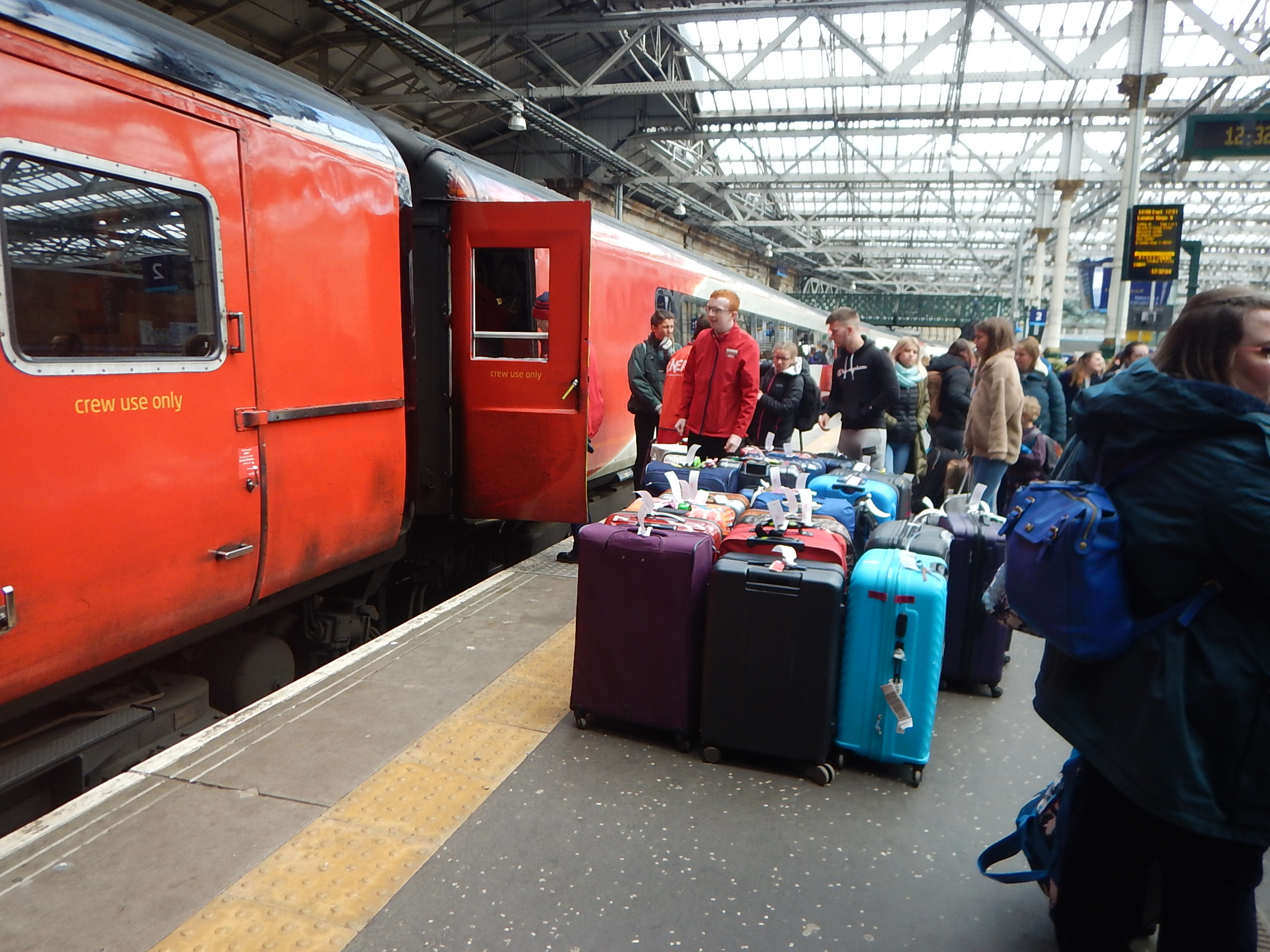
The picture shows an InterCity 125 about to make luggage disappear.
Also in Bicycles And Class 800 Trains, I said this.
I also noticed from the information displays, that all bicycles needed to be booked. That is a bit different from the days of the InterCity 125s, which had lots of space in the back of the locomotive.
On one trip to Plymouth, I saw several surfboards swallowed by the locomotive.
I got in a conversation with a station guy about bicycles and surfboards and from the knowing look on his face, I suspect it is a bit of a pain.
With the growing popularity of cycling, surely a turn up and go regime is needed.
Given that cyclists and surfers may look at the weather and decide, it’s a good time to go cycling or surfing, I suspect that GWR need to come up with a solution to this problem.
In the 1960s, I remember working with a manic surfer; John Baxendale, at ICI in Runcorn. Regularly, at the weekend in the winter, he’d strap his surfboard to the roof of his trusty Morris Minor and drive to the very North of Scotland to go surfing.
Rather him than me!
But if all surfers are like John in the 1960s, they are devoted to their sport and grab all opportunities.
The simplest solution is probably to provide a hire service in Cornwall for bicycles and surfboards.
But the design of the Class 800 trains allows up to twelve cars in a single train.
Could this lead to GWR and/or other operators, adding a tenth car to the trains to handle large luggage and perhaps bring specialist cargo like flowers and seafood up to London? GWR have done this in the past.
The Future Of The Emirates Air Line
I’ve always liked the Emirates Air Line, but I hadn’t used it for some time until today.
As I was in the area, I used it to cross the river, this morning.


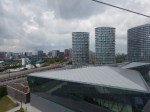


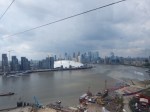
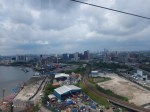
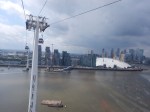

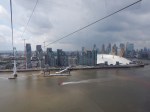
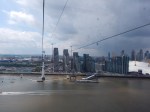
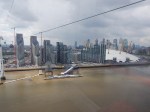
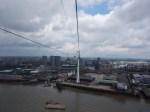
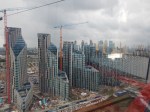


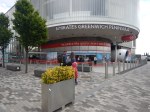
I can make these observations.
The Weather Could Have Been Better
The cable-car needs sunny weather, although I did once go across in the snow.
The Cable-Car Wasn’t Busy
Compare today’s pictures wit this one taken in February 2014.
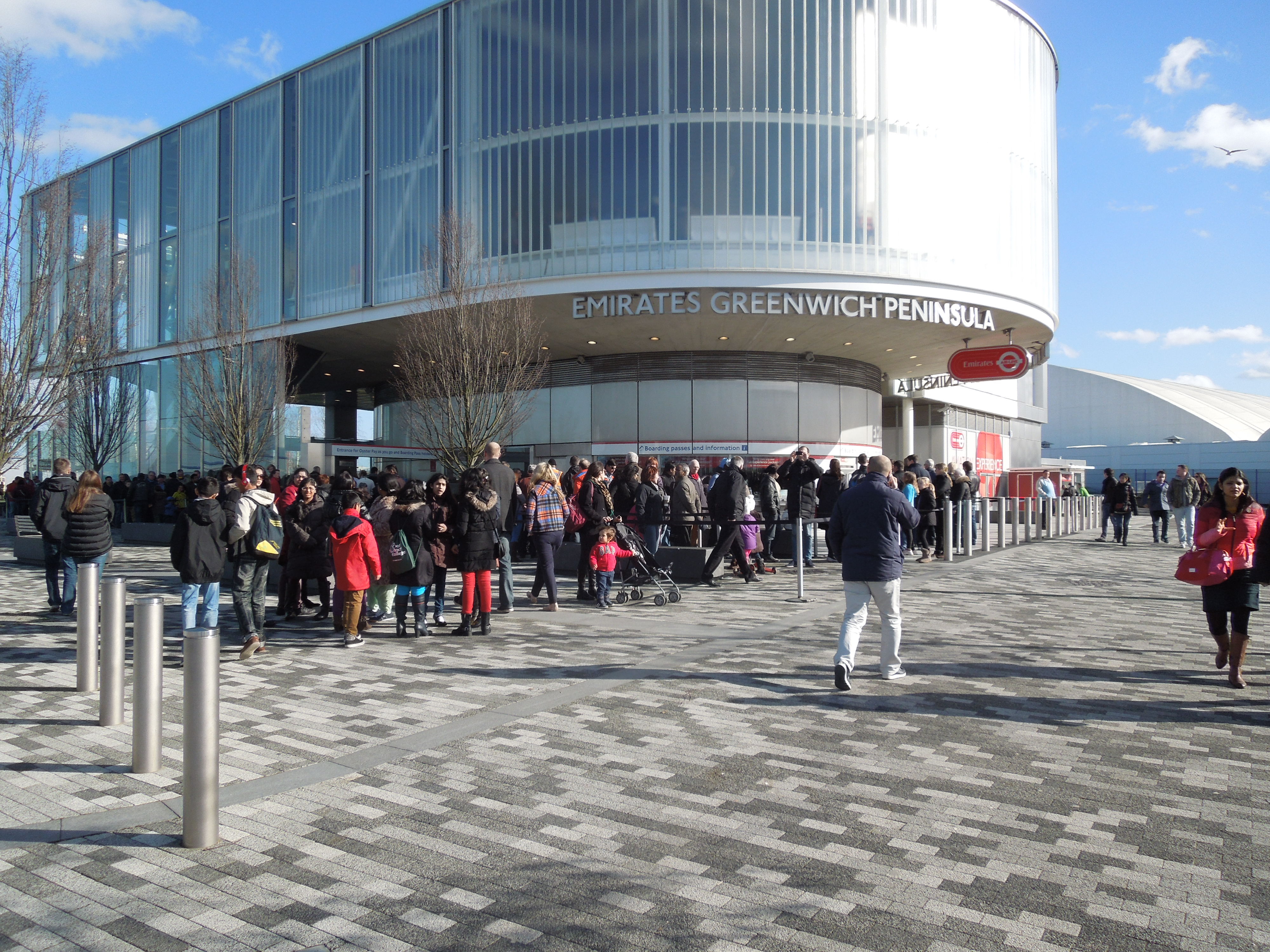
The Cable Car Was Busy
One of the attendants said it was becoming more of a tourist attraction rather than a means of transport.
This meant today, I had a car to myself and didn’t have to share it with several excited kids.
I think too, that the weather was against visitors and tourists now know the best times to use the cable car.
In my view, when the sun is setting is by far the best.
There Are A Lot More Skyscrapers
The last time I rode across was in March 2016, after which I wrote Riding The Cable Car.
There has been a lot of high rise building in the intervening years.
I suspect that as more and more skyscrapers are built, a ride between them all across the river will become more popular.
The Line
The Line is a sculpture trail, that runs from Greenwich to the Olympic Park. The cable-car has to be used by non-swimmers to cross the river.
The Line is connected OR or close to London’s railways as follows.
- Stratford – Central Line, Jubilee Line, DLR, London Overground, National Rail and in the future; Crossrail.
- Stratford High Street – DLR
- Pudding Mill Lane – DLR
- Bromley-by-Bow – District and Hammersmith & City Lines
- Star Lane – DLR
- Canning Town – Jubilee Line and DLR
- Royal Victoria – DLR
- North Greenwich – Jubilee Line
All these connections mean that it can be done in sections.
The Tide
The Tide is an partly elevated five km route, that will be linked to the cable-car, that will be fully-open in two years.
Crossrail
Crossrail will affect all travel in East London and it connects at Stratford stayion to The Line.
I don’t know the route of the Tide, but it may make walking from the O2 to Woolwich sttion for Crossrail much more relaxing.
Although it doesn’t serve Greenwich directly, I believe Crossrail will draw more tourists to the cable-car.
Docklands Light Railway
The DLR is getting new trains in the next few years and an extension to Thamesmead.
As with Crossrail it will draw more tourists to the area and the cable-car.
Thames Clippers
These are expanding and they will bring more tourists to the cable-car.
Conclusion
These and other factors, such as tourists venturing out of the centre of London, will mean that more vistors will explore the East and use the cable-car.
London To Have World-First Hydrogen-Powered Double-Decker Buses
The title of this post, is the same as that of this article in the Guardian.
This is the first three paragraphs.
London will have the world’s first hydrogen-powered doubledecker buses on its streets next year, as the capital steps up attempts to tackle its polluted air.
Transport for London (TfL) has ordered 20 of the buses, which cost around £500,000 each and only emit water as exhaust.
As well as cutting polluting exhaust emissions, the buses will run on green hydrogen produced via North Kent offshore wind farms, according to TfL.
After the announcement of the Alexander Dennis hydrogen buses for Liverpool, that I wrote about in New Facility To Power Liverpool’s Buses With Hydrogen, I wondered how long it would take Wrightbus to respond?
It appears to be less than a month.
This is also said about the buses.
The buses will also feature amenities such as USB charging points, and promise a smoother, quieter ride. They will operate first on three routes in west London and to Wembley, which served over 10 million passenger journeys last year.
I will add these comments.
USB Charging Points
I’ve only ever used USB charging points three times on the move.
- On a Vivarail Class 230 train.
- On a newly-refurbished Scotrail Class 158 train.
- In a LEVC TX electric black cab.
All installations were under a few years old and it is definitely the way passenger transport is going.
London Overground’s new Class 710 trains will be fitted with USB charging points and wi-fi.
Smoother, Quieter Ride
I have ridden in the following electric or hydrogen-powered vehicles
- A battery-electric Vivarail Class 230 train
- A battery-electric Class 379 train
- Several battery-electric and hydrogen-powered buses in London.
- A hydrogen-powered Alstom Coeadia iLint train.
- An LEVCC TX electric black cab.
With the exception of the iLint train, which has a mechanical transmission, all are smooth and quiet.
So I have no reason to disbelieve this claim in The Guardian article.
Three Routes In West London
This article in Air Quality News gives more details on the routes.
The vehicles will be introduced on routes 245, 7 and N7, with people travelling to Wembley Stadium, or from west London to the West End.
- Route 7 runs between East Acton and Oxford Circus.
- Route 245 runs between Alperton Sainsburys and Golders Green station.
Both are operated by Metroline from Perivale East garage, where they appear to be the only routes served from the garage, which has a capacity of forty buses.
This Google Map shows a 3D picture of Perivale East garage.
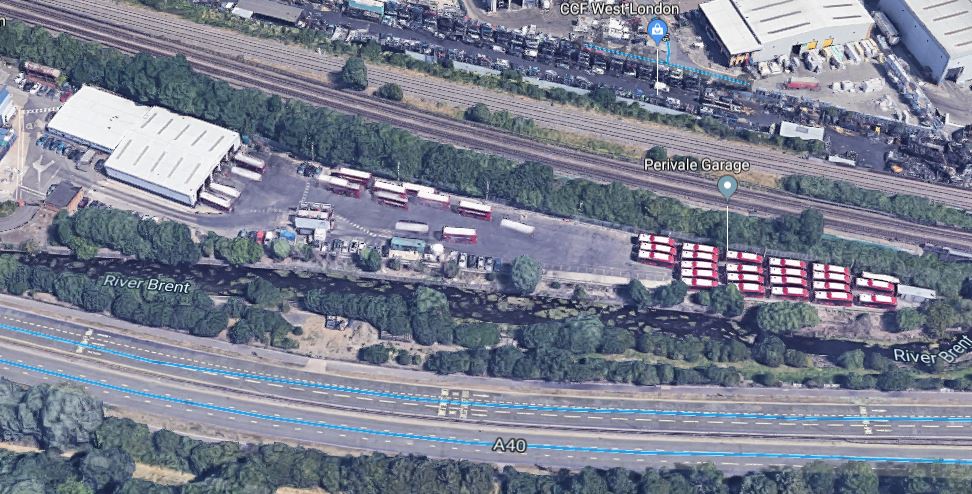
The garage is squeezed into a triangle of land between the Acton-Northolt Line, the Central Line and the six-lane A40 road.
- It’s not near any houses.
- It’s surrounded by trees and industrual units.
- Is the site large enough to generate hydrogen on site?
- Could hydrogen be brought in by rail?
- It could easily hold the twenty hydrogen buses and a few others.
I can certainly see why Transport for London have chosen to use hydrogen buses on routes 7, 245, N7, based at Periavale East garage.
Design
This is a paragraph from the Air Quality News article.
TfL says they are investing £12m in the new buses and the fuelling infrastructure with Northern Ireland firm Wrightbus as the manufacturer, which uses a fuel cell from Ballard to power a Siemens drivetrain.
Wikipedia says this about the transmission of a New Routemaster bus, that was built by Wright.
Hybrid diesel-electric in series; 18 kW] Microvast Lithium Titanate battery,Microvast LpTO, Siemens ELFA2 electric traction motor.
I should point out that it appears that originally, the New Routemaster had a larger 75 kWh battery. Has the technology improved?
Is the transmission and the chassis based on the Wright-designed New Routemaster chassis and transmission, substituting a Ballard fuel cell for the Cummins diesel engine?
The Cummins diesel engine in the New Routemaster is rated at 185 hp or 138 kW.
This page on the Ballard web site is the data sheet of Ballard’s FCveloCity family of fuel cells.
- The fuel cells come in three sizes 60, 85 and 100 kW
- The largest fuel cell would appear to be around 1.2 m x 1 m x 0.5 m and weigh around 400 Kg.
- The fuel cell has an associated cooling subsystem, that can provide heat for the bus.
It strikes me that this fuel cell is smaller and weighs less than a typical diesel engine fitted to a double-decker bus.
With a larger battery, regenerative braking and a clever transmission would a 100 kW fuel-cell provide enough power for the bus?
Wright have obviously solved the problem and found space for the hydrogen tank, otherwise they wouldn’t have received the order.
Drawing on their experience with the New Routemaster and adding the proven fuel cell technology of Ballard looks at first glance to be a low-risk route to a hydrogen-powered bus.
Conclusion
Wright Group and Transport for London appear to have designed a well-thought out solution to the problem of providing zero-emission buses for London and delivering the first buses next year!
We now have two hydrogen double-decker bus projects under way.
- London and Wright Group
- Liverpool and Alexander Dennis
Both appear to be fully-integrated projects, which include the supply of hydrogen to the buses.
When both are proven, there could be very keen competition between the two companies to sell systems all over the UK and the wider world.
It should be noted, that double-decker buses are not that common outside of the UK, Ireland, Hong Kong and Singapore.
But could these two zero-emission projects open up the rest of the world, to these most British of products?
Market Harborough Station – 10th May 2019
I stopped at Market Harborough station and took these pictures.
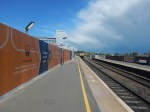
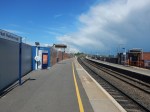
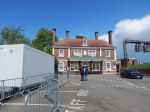
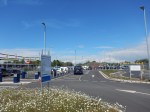
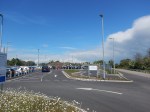
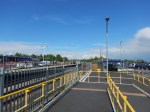
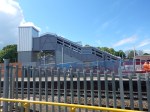
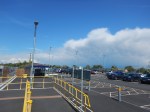
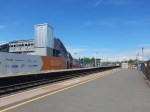
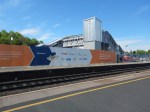
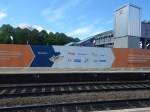
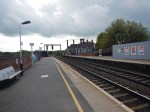
As can be seen, the works at the station are well underway.
Market Harborough Line Speed Improvement Project
This document on the Network Rail web is entitled Market Harborough Line Speed Improvement Project.
According to the document, the project will deliver.
- A line speed increase through Market Harborough enabling a reduction in journey time for passengers.
- New longer platforms that improve access and reduce stepping distances onto trains whilst also catering for longer trains with more seats.
- Station accessibility will be improved with a new footbridge featuring lifts, opening up travel opportunities for more passengers.
- A new 300 space car park has already been constructed, providing step-free access to platforms for passengers arriving by car.
Unfortunately, Network Rail don’t seem to have published a well-prepared visualisation of what passengers, will see, when the project is completed.
There isn’t even a decent visualisation on the station.
Talk about Mushroom Marketing! Keep your customers and project funders in the dark and feed them shit.
This Google Map shows the station..
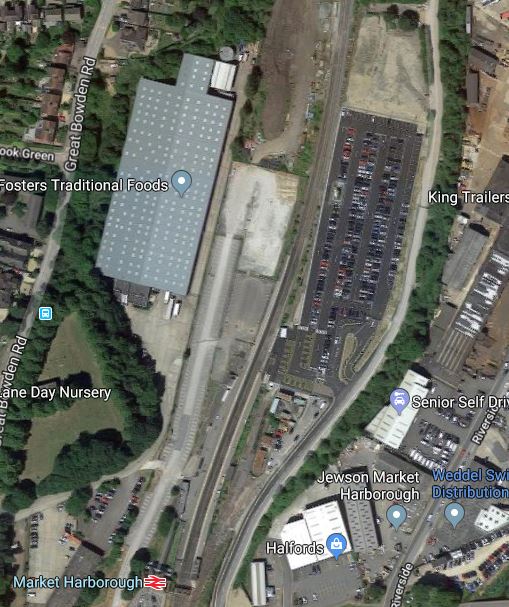
Note.
- The Midland Main Line going up the middle of the map.
- The large new car-park on the Eastern side of the line.
- The building site on the Western side of the line, where new strauighter tracks will go.
The completion date is planned to be December 2019.
Conclusion
The project looks good in the flesh, but that can’t be said for the project presentation to stakeholders.
IKEA’s New Station Opens On The 20th May 2019
Meridian Water station is now in the National Rail on-line timetable.
It appears the first train to Meridian Water leaves Stratford at 06:03 on Monday, May 20th 2019. It will be going to Hertford East station.
I wonder how this will affect visitors at the nearby IKEA.
£100m Train Test Complex Plans For Neath Valley Backed
The title of this post is the same as that of this article on the BBC.
This much-needed project, which some wag has called Project Hornby, seems to be moving on..
This brief description is from the article.
The complex would allow trains to be tested on special tracks – laid out on 4.5 mile (7.3km) and two mile (3.1km) ovals – at speeds of up to 100mph (160kph).
It will certainly test their ability to go round corners.
Hopefully, the test track will shorten the time, it takes new and updated trains into service.
The Future Of Class 378 Trains
This post is a musing on the future of the Class 378 trains.
The Thames Tunnel
The Thames Tunnel is the tail that wags the East London Line, when it comes to trains.
- For evacuation and safety purposed, trains running through the tunnel, must have an emergency exit through the driver’s cab.
- It hasn’t happened yet, as far as I know, but a version of Sod’s Law states if you ran trains without this emergency exit, you’d need to use it.
- London Overground’s Class 378 trains have this feature, but their Class 710 trains do not.
So it would appear that until Bombardier build an Aventra with an emergency exit through the driver’s cab, that the existing Class 378 trains must work all services through the Thames Tunnel.
Incidentally, I can’t think of another long tunnel, that might be served by the London Overground, so it could be that Class 378 trains will be the only trains to go through the Thames Tunnel, until they wear out and need to go to the scrapyard.
Six Car Trains On The East London Line
I covered this in Will The East London Line Ever Get Six-Car Trains? and I came to this conclusion.
I will be very surprised if Network Rail’s original plan on six-car trains on the East London Line happens in the next few years.
It might happen in the future, but it would need expensive platform extensions at Shadwell, Wapping, Rotherhithe and Canada Water and Surrey Quays stations.
Increased Frequency On The East London Line
If five-car Class 378 trains are the limit, the only way to increase capacity of the East London Line would be to increase frequency.
The current frequency of the East London Line is sixteen trains per hour (tph)
There are four tph on each of these routes.
- Dalston Junction And Clapham Junction
- Dalston Junction And New Cross
- Highbury & Islington And Crystal Palace
- Highbury & Islington And West Croydon
Two increases are planned.
- 2018 – 6 tph – Highbury & Islington And Crystal Palace
- 2019 – 6 tph – Dalston Junction And Clapham Junction
This would increase the frequency of the East London Line to twenty tph.
It will probably mean an updated digital signalling system on the East London Line.
Eventually, I think it likely, that a full ERTMS system as is fitted to Thameslink and Crossrail will be fitted to at least the East London Line, but possibly the whole Overground network.
Digital signalling would certainly allow the twenty-four tph frequency of Thameslink and CXrossrail, which could mean that the four routes all received a frequency of four tph.
But Thameslink and Crossrail are theoretically capable of handling thirty tph or a train every two minutes, through their central tunnels.
If the two modern multi-billion pound tunnels can handle 30 tph, why can’t their little brother, that started life as a half-million pound pedestrian tunnel in 1843,
The Number Of Trains Needed For The Current Service
If I go through the routes of the original Overground, I find the following.
Dalston Junction And Clapham Junction
Trains take 46 minutes to go South and 44 minutes to come North and a round trip would take two hours.
This means that the current four tph service would need eight trains.
A six tph service in the future would need twelve trains.
Dalston Junction And New Cross
Trains take 22 minutes both ways and a round trip would take an hour.
This means that the current four tph service would need four trains.
A six tph service in the future would need six trains.
Highbury & Islington And Crystal Palace
Trains take 44 minutes to go South and 43 minutes to come North and a round trip would take two hours.
This means that the current four tph service would need eight trains.
A six tph service in the future would need twelve trains.
Highbury & Islington And West Croydon
Trains take 52 minutes both ways and a round trip would take two hours.
This means that the current four tph service would need eight trains.
A six tph service in the future would need twelve trains.
This means that the current four tph on all four routes needs twenty-eight trains.
The Proposed 2020 Service
This will have two extra tph to Crystal Palace and Clapham Junction and will need thirty-six trains.
Six Trains Per Hour On All Four Routes
as each route terminates at both ends in a single platform, which can handle six tph, with the right signalling, I feel that this could be the design objective of the East London Line, when it was built in the early-2010s.
This could be achieved with forty-two trains, leaving perhaps twelve to fifteen trains for other duties, depending on how many are needed on stand-by or are in maintenance.
What Could Be Done With Twelve Trains?
As I calculated earlier, three routes need twelve trains to provide a six tph service.
- Dalston Junction And Clapham Junction
- Highbury & Islington And Crystal Palace
- Highbury & Islington And West Croydon
All three services take between 44 and 52 minutes.
So could another six tph service that takes around this time be added to the current four services?
Willesden Junction As A Northern Terminal
Trains could take the North London Line to Willesden Junction and terminate in the Bay Platform 2.
I estimate the following timings from Willesden Junction.
- Highbury & Islington – 27 mins
- Dalston Junction – 31 mins
- Whitechapel – – 41 mins
- New Cross – 49 mins
- Crystal Palace – 64 mins
- Clapham Junction – 73 mins.
- West Croydon – 74 mins
It would appear that the only possible Southern terminal of the current four, would be New Cross, as that is the only terminal within the 44-52 minute range of journey time.
So could a service between Willesden Junction and New Cross replace the current one between Dalston Junction and New Cross?
- It would need to be run using dual-voltage trains
- Voltage changeover could be at Highbury & Islington station.
- Extending the New Cross service would free up a bay platform at Dalston Junction station.
- It should be possible to have a frequency of six tph.
- Serious modifications or additions to infrastructure would probably not be required.
As running to Willesden Junction was talked about before the Overground opened, I wonder if the numerous crossovers on the North London Line, already allow trains from the East London Line to terminate at Willesden Junction.
Southern Terminals Via New Cross Station
This map from carto.metro.free.fr shows the lines at New Cross station.
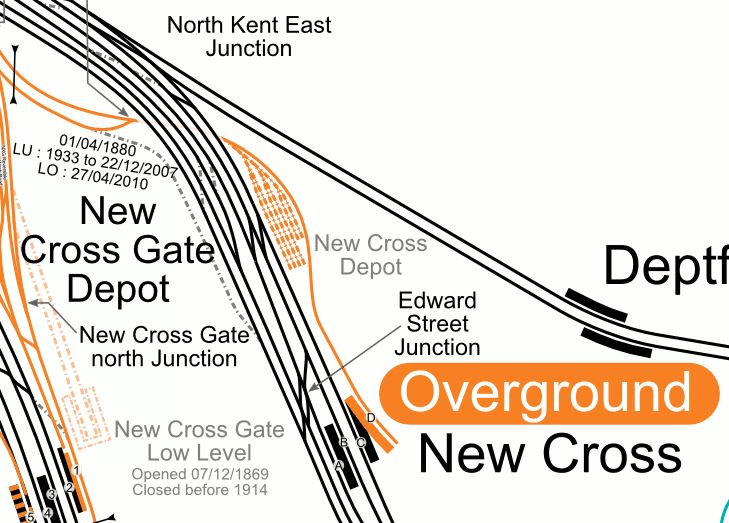
Note how the double-track East London Line, shown in orange, arrives from Surrey Quays station arrives in the North-Western corner of the map, becomes a single-track and then goes under the main lines before going into the bay platform D.
This Google Map shows the same area.
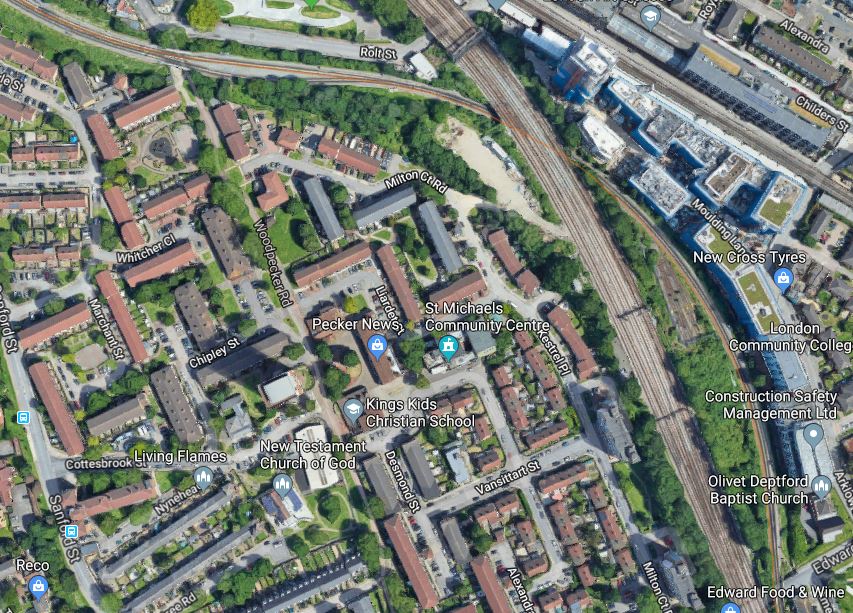
The London Overground track is clearly visible.
Could extra track be added, to enable the following?
- Southbound trains could join the main line and stop in Platform C
- Northbound could leave the main line after stopping in Platform A and go towards Surrey Quays station.
If this is possible, then trains could run between Dalston Junction and Lewisham stations.
Once at Lewisham they would have choice of Southern terminal,
Hayes As A Southern Terminal
Consider a service between Dalston Junction and Hayes stations.
- I estimate that a train could go between the two stations in 53 minutes.
- Hayes station has two terminal platforms
Six tph would probably be too many services, but 2-3 tph might be very welcome.
Orpington As A Southern Terminal
Consider a service between Dalston Junction and Orpington stations.
- I estimate that a train could go between the two stations in 47 minutes.
- Orpington station has three terminal platforms.
Six tph would probably be too many services, but 2-3 tph might be very welcome.
A Combined Hayes And Orpington Service
As a case can be made for services to both Hayes and Orpington via Lewisham, I think the ideal service could be two tph to both Hayes and Orpington.
- There would be four tph between Dalston Junction and Lewisham.
- Stations on the East London Line would have access to the important interchange station at Lewisham.
- Several stations on the routes to Hayes and Orpington would have a two tph service to Crossrail and the Jubilee Line.
Other Stations Via New Cross
Looking at rail maps, there would seem to be several possibilities including with their times from Dalston junction station.
- Beckenham Junction – 41 mins
- Bromley North – 40 mins
- Gove Park – 35 mins
There are probably others.
Southern Terminals Via Peckham Rye Station
As an example Streatham Common station is planned to be a major interchange and is 43 minutes from Dalston Junction.
Would a bay platform work here as an East london Line terminal?
Conclusion
If all fifty-seven Class 378 trains worked the East London Line, they could run six tph on the current routes.
- Dalston Junction And Clapham Junction
- Dalston Junction And New Cross
- Highbury & Islington And Crystal Palace
- Highbury & Islington And West Croydon
It would need forty-two trains.
Suppose the Dalston Junction and New Cross service was replaced with a Willesden Junction and New Cross service.
- This would provide a useful direct four tph service between East and North London.
- Changing at Highbury & Islington station would be avoided for a lot of journeys.
- The journey time wold be around 49 minutes.
- A two tph service would need four trains.
- A four tph service would need eight trains.
- A six tph service would need twelve trains.
- Many journeys between North and South London would now be possible with just a single same platform interchange.
To run the following frequencies on this route would mean these total frequencies on the East London Line and total numbers of trains.
- 2 tph – 20 tph – 40 trains
- 4 tph – 22 tph – 44 trains
- 6 tph – 24 tph – 48 trains
I think that if the figures are juggled a bit, there is enough trains to run extra services to one or more Southern destinations from Dalston Junction.
My preference would be a split service of 2 tph to both Hayes and Orpington via New Cross, where some new track would be needed.
This would do the following.
- Create a frequent connection between South-East and North-East London.
- Both areas would be connected to Crossrail and several Underground Lines, including the future Bakerloo Line Extension.
- The Hayes Line would be shared between Overground and Southeastern trains.
No more new trains or large amounts of new infrastructure would be needed.
I suspect that London Overground and the new Southeastern franchise can do better than my musings.
The Hackney Campaign To Bring The North London Line Back From The Brink In The 80s
The title of this post is the same as that of this article on the Hackney Gazette.
It is an interesting insight into life before the London Overground and how the section between Highbury & Islington and Stratford stations was created from a freight line, that hadn’t had passenger services for several decades.
It also talks about Broad Street station.
I used to use this station to travel from Ipswich to Metier’s offices at Stonebridge Park.
It was just a short walk from Liverpool Street station next door and then a train to Willesden along a very much forgotten North London Line, before taking the Bakerloo Line. It avoided the very crowded route via Baker Street station.
How Much Energy Can Extracted From A Kilogram Of Hydrogen?
This article on EnergyH, is entitled About Hydrogen Energy.
This is said.
Hydrogen has an energy density of 39 kWh/kg, which means that 1 kg of hydrogen contains 130 times more energy than 1kg of batteries. So lots of energy can be stored with hydrogen in only a small volume.
But as in most things in life, you can’t have it all as fuel cells are not 100 % efficient.
Wikipedia has a sub-section which gives the in-practice efficiency of a fuel cell, where this is said.
In a fuel-cell vehicle the tank-to-wheel efficiency is greater than 45% at low loads and shows average values of about 36% when a driving cycle like the NEDC (New European Driving Cycle) is used as test procedure. The comparable NEDC value for a Diesel vehicle is 22%. In 2008 Honda released a demonstration fuel cell electric vehicle (the Honda FCX Clarity) with fuel stack claiming a 60% tank-to-wheel efficiency.
For the purpose of this exercise, I’ll assume a conservative forty percent.
This means that a kilogram of hydrogen would generate 16 kWh
Raise that efficiency to fifty percent and 19 kWh would be generated.
Conclusion
Fuel cell efficiency will be key.
 The Anonymous Widower