The Anonymous Widower

The Debate Over Burning Dead Trees To Create Biomass Energy

The title of this post, is the same as that of this article on Wired.

This is the sub-title.

Critics worry about the risks of overcutting and wood smoke. But supporters say the practice will prevent megafires—which release even more carbon dioxide.

For those who worry about the ethics of biomass, it is a must-read.

June 28, 2020 Posted by | World | , , , | Leave a comment

South Korea Is On The Hunt For An Overseas Hydrogen Production Location

The title of this post, is the same as that of this article on Hydrogen Fuel News.

It is an interesting article, which talks about how both South Korea and Japan are looking to source hydrogen from another country and how Australia is in prime position.

This Wikipedia entry, which is entitled Energy In South Korea, has this breakdown of electricity production in South Korea.

  • Thermal – 65.3%
  • Nuclear – 31.1%
  • Hydro – 1.6%
  • Other – 2%

Note that at the time of writing the UK is producing 39.0% of electricity from renewables and 15.9% from low-carbon sources.

Consider.

  • As South Korea imports a lot of liquified natural gas and has no oil or gas resources of its own, importing hydrogen is just replacing a carbon-dioxide producing fuel with a zero-carbon one, that is produced from renewables.
  • Other than Australia, other possible sources of hydrogen mentioned include Saudi Arabia and the United States, but is their hydrogen produced from renewables or steam-reforming of methane?
  • I suspect another could be South Africa, as they can develop a lot of wind power around the Cape.

I think we’ll see more countries going down the same route as Japan and South Korea and importing large quantities of hydrogen.

  • Countries with lots of renewables like geothermal, hydro, solar and wind will benefit.
  • Countries with plenty of gas can use steam-reforming to create hydrogen.

But surely, the biggest beneficiaries will be world-class companies, like ITM Power in Rotherham, who build electrolysers.


June 25, 2020 Posted by | World | , , , | Leave a comment

Hydrogen To Become A Source Of Cleaner Power On A Massive Scale

The title of this post, is the same as that of this article on Power Technology.

This is the introductory paragraph.

Hydrogen is light, storable, energy-heavy and does not produce direct carbon emissions or greenhouse gases (GHG). Sectors such as soil refining, ammonia production, methanol production and steel production use hydrogen extensively. Hydrogen will likely play a crucial role in clean energy transition with an increase in its use in sectors such as transportation, buildings and power generation. Interest in the use of hydrogen technology is increasing in a range of niche transport market segments, besides other applications. In the short to medium term, hydrogen technology could be used to replace compressed natural gas (CNG) in some areas with minor changes to the existing infrastructure.

The article is very much a must-read.

June 24, 2020 Posted by | World | , , , | Leave a comment

Restoring Your Railway Fund Could Provide A Toolkit For Town Transformation

The title of this post, is the same as that of this article on Rail Business.

The article talks a lot of sense and is a must-read for improving a town, that is on its uppers.

It uses the Northumberland Line between Newcastle and Ashington in the North East as an example and describes how the fund can be used with the Towns Fund.

This paragraph gives a few examples of rail lines that could be improved using the fund!

Potential priorities for future rounds of funding could include the South Yorkshire Joint Line, a freight line serving 50 000 people between Doncaster and Worksop; the Leamside Line, a disused line which would serve 70 000 in Washington; March to Wisbech, a disused line which would connect 35 000 people in Wisbech to the network; and the line from Yate to Thornbury, another freight line which would connect 15 000 people in Thornbury to Bristol and beyond.

In the early sixties, I lived in the crap town of Felixstowe, with a sparse rail service to civilisation (London). Now the town has an hourly rail service to Ipswich in a smart new train and the town is more successful.

There’s a lot of chicken-and-egg syndrome at work here, but sorting the rail routes could be a good start.

In some cases, it’s not necessarily rebuilding infrastructure, as that is there for freight or an inadequate passenger service using a scrapyard special. But why not use refurbished trains powered by battery or hydrogen, on these routes to provide an hourly service. The curiosity value of the unusual propulsion, might even be a selling point to those reluctant to give up their PPVs, (Personal Protective Vehicles)!

June 24, 2020 Posted by | Transport/Travel, World | , , , , , | Leave a comment

An Untidy Railway

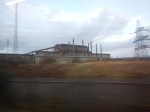
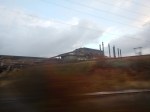
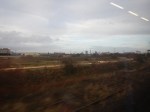
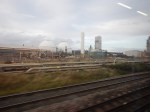
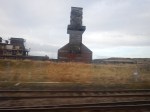
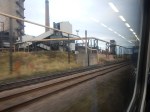
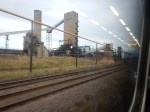
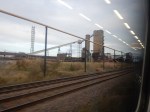
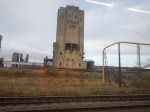
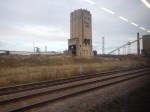
I took these pictures as I returned from Eridge.

You see it all over the railways and not just in the UK; general untidiness!

When I joined ICI in 1968, I went on a thorough and excellent induction course.

One very experienced engineer, gave a Health and Safety Lecture and one thing he said, was that a neat and tidy chemical plant was less likely to have silly accidents.

Some years later, I went to the United States to see some of Metier’s clients, of whom some were nuclear power stations. This must have been just after the Three Mile Island accident, which is described like this in Wikipedia.

The Three Mile Island accident was a partial meltdown of reactor number 2 of Three Mile Island Nuclear Generating Station (TMI-2) in Dauphin County, Pennsylvania, near Harrisburg, and subsequent radiation leak that occurred on March 28, 1979. It is the most significant accident in U.S. commercial nuclear power plant history.

Artemis was involved in maintenance at the nuclear stations I visited. I can remember at AEP Donald C Cook nuclear station being shown a database of work to do and many of the actions were referred to as TMIs and checking them had been mandated by the US regulatory authorities.

I should say, the site on the shores of Lake Michigan impressed me, but another I visited later didn’t. I won’t name it, as it is now closed and it was the most untidy industrial plant of any type I have visited.

As we left, I gave my opinion to our support engineer and he told me they had a very large number of TMIs to process. I wasn’t surprised!

So why are railways generally so untidy?


June 23, 2020 Posted by | Transport/Travel, World | , , , , , , , | 7 Comments

Two UK GDNs Considering New Fleet Of Zero-Emission Hydrogen Vehicles

This title of this post, is the same as that of this article on Hydrogen Fuel News.

This is the introductory paragraph.

Two UK gas distribution networks (GDNs) are investigating the potential of operating fleets of zero-emission hydrogen vehicles. The goal would be to use H2 fuel to shrink the carbon output from their fleet, aligning with the UK government’s Net Zero 2050 targets.

This surely is a good idea, as it says all the right things to their customers.

June 18, 2020 Posted by | Transport/Travel, World | , , | Leave a comment

Who Needs Offices? Zopa Doesn’t!

opa’s update to all their investors yesterday.

It had a sub-heading of At Zopa!

Finally, a quick update on where we’re at as a company. All of our staff are still working remotely. Our diligent preplanning for a situation in which we could lose access to our offices has meant we’ve been able to continue to serve our customers throughout the pandemic, while also implementing new solutions to adapt to this unprecedented situation. Like other businesses, we’ve been planning for what a return to our offices looks like. But as we’ve been able to keep serving your needs while operating from home, we are in no rush. Being in this position allows us to stay focused on supporting your needs during this challenging moment.

How many companies after we are through the COVID-19 pandemic will decide to downsize their office requirements considerably?

June 18, 2020 Posted by | Business, Finance & Investment, Health, World | , , | 1 Comment

A Statue Without Explanation In Islington

Every time I go between my house and the Angel, I pass this statue on Islington Green.

It is of Sir Hugh Myddelton, who was very much a hero to generations of North Londoners prior to the Second World War.

Wikipedia introduces him like this.

Sir Hugh Myddelton (or Middleton), 1st Baronet (1560 – 10 December 1631) was a Welsh clothmaker, entrepreneur, mine-owner, goldsmith, banker and self-taught engineer. The spelling of his name is inconsistently reproduced, but Myddelton appears to be the earliest, and most consistently used in place names associated with him.

So why did my parents and others, born in the early years of the twentieth century, hold Myddelton in such high esteem?

Both my parents were born close to his most famous creation; the New River. Wikipedia explains his part in the project.

Myddelton is, however, best remembered as the driving force behind the construction of the New River, an ambitious engineering project to bring clean water from the River Lea, near Ware, in Hertfordshire to New River Head in Clerkenwell, London. After the initial project encountered financial difficulties, Myddelton helped fund the project through to completion, obtaining the assistance of King James I.

I do wonder, if the generation of my parents felt affectionately about the New River because in their first few decades, it was probably the source of most of the water they drunk and used for cooking and washing.

Wikipedia doesn’t give any clue to the character of Myddelton, but I’m sure that in today’s climate, some would find him not worthy of having a statue in such a prominent place.

I do feel though, that the statue needs a display to fill out the story of a man, who did so much for London over four hundred years ago and is still benefiting from his creation.

June 15, 2020 Posted by | World | , , , , , | 1 Comment

Greater Manchester Illegal Raves: Man Dies, Woman Raped And Three Stabbed

The title of this post, is the same as that of this article on the BBC.

This is the introductory paragraph.

A 20-year-old man has died, a woman has been raped and three people have been stabbed during two illegal “quarantine raves” that attracted 6,000 people.

What the hell was going on?

There have been some exuberant parties in Hackney Marshes, but they didn’t appear to be the on the scale of the Mancunian troubles.

Last night on Stephen Nolan’s program, there was some very heated debate on what went on in Manchester. Some, who had been present, should have been arrested, if what they alleged they’d done was true.

If you look at total COVID-19 cases in London and the North West on June 15th, they are as follows.

  • London 27, 330 – 306.8
  • North-West 26,759 – 367

The second figure is a rate per 100,000 of the population. Although the Government data doesn’t give the legend on the chart! Poor presentation again from the Government statisticians!

I have been on public transport a lot in London and the behaviour of passengers seems to follow the rules. Especially, on the Overground, which seems to be busier than the buses and the Underground. Today on a trip out, everybody I saw on public transport was masked!

June 15, 2020 Posted by | Health, Transport/Travel, World | , , , , , , | Leave a comment

Grant Shapps Announcement On Friday

I listened to Grant Shapps announcement on Friday, when he gave the daily COVID-19 Press Conference.

This article on the Velocys web site is entitled Government Announces Jet Zero Council And Confirms Support For Velocys Waste-To-Jet-Fuel Project.

The article shows a video of the speech and this summary paragraph.

At this afternoon’s COVID-19 press conference, Secretary of State for Transport, Grant Shapps, announced the establishment of a new Jet Zero Council and confirmed Government support for Velocys.

So who are the company with the strange name of Velocys?

This is a quote from the Velocys CEO; Henrik Wareborn.

Today’s announcement on the formation of a Jet Zero Council shows that a new era of net zero carbon flying is on a credible path, at a time when we need it more than ever. This follows news earlier today that our Altalto waste-to-jet fuel facility – the first of its kind in the UK – has received additional funding from Government and formally received planning permission, meaning it could be producing sustainable aviation fuel in commercial scale by the middle of this decade.

Is a new era of net zero carbon flying a possibility or is this a dream too far?

The AltAlto Project

Yhe project is called AltAlto and it has its own web site.

It is backed by British Airways and Shell, and uses technology from Velocys.

This description of the project is on the home page.

Altalto turns household and commercial waste into clean-burning fuels with reduced greenhouse gas emissions for air and road transport.

A page called Technology describes how it is done.

This is the initial summary.

Our process can accept a wide variety of waste, while delivering a clean product. There are very limited emissions to atmosphere from the plant except water and carbon dioxide. Components of the waste which do not get turned into fuel, such as metals and stones, are recycled; a small amount of it (less than 3%) goes to landfill.

This diagram from the Velocys web site illustrates the process.

The then goes through the stages of the process.

  • Stage 1 – Preparation – First the waste is treceived, sorted and prepared.
  • Stage 2 – Gasification – Next the solid waste is gasified; heated to a high temperature to break it down and convert it into synthesis gas or syngas (carbon monoxide and hydrogen).
  • Stage 3 – Synthesis – After cleaning, the syngas is used to synthesis hydrocarbons using the Fischer-Tropsch technology provided by Velocys.
  • Stage 4 – Finishing – These hydrocarbons are then refined into the final products; renewable jet fuel (in the form of SPK) and naphtha.

They add this final summary.

The process is fundamentally different to incineration: instead of being burnt, the carbon in the waste is converted into a fuel for use in aircraft or vehicles.

There are many clean ways of making electricity, but it is really difficult to make sustainable jet fuel – this is one of the very few economic ways of doing so. It’s therefore a far better use of household waste than incineration, creating a much more valuable and environmentally beneficial product.

Could the process be considered a sophisticated waste incineration process, where the actual incineration is performed in the turbofan engine in the aircraft or the diesel engine in the truck to provide power?

I have a few questions.

What is Fischer-Tropsch Technology?

This is the first sentence for the Wikipedia entry for the Fischer-Tropsch Process.

The Fischer-Tropsch process is a collection of chemical reactions that converts a mixture of carbon monoxide and hydrogen into liquid hydrocarbons. These reactions occur in the presence of metal catalysts, typically at temperatures of 150-300 °C (302-572 °F) and pressures of one to several tens of atmospheres. The process was first developed by Franz Fischer and Hans Tropsch at the Kaiser-Wilhelm-Institut fur Kohlenforschung in Mulheim an der Ruhr, Germany, in 1925.

One of the companies involved in using the Fischer-Tropsch process is the South African company; Sasol. Wikipedia gives this summary about Sasol’s use of the process.

Another large scale implementation of Fischer-Tropsch technology is a series of plants operated by Sasol in South Africa, a country with large coal reserves, but little oil. The first commercial plant opened in 1952. Sasol uses coal and now natural gas as feedstocks and produces a variety of synthetic petroleum products, including most of the country’s diesel fuel.

The involvement with the apartheid regime in South Africa probably wasn’t the best of publicity for the process.

But have Oxford University and Velocys created a way of making net zero carbon aviation and diesel fuels?

What Is SPK?

SPK is Synthetic Paraffinic Kerosene and it is an aviation biofuel.

The Wikipedia entry for aviation biofuel has a sub-section called FT-SPK, where this is said.

The second route involves processing solid biomass using pyrolysis to produce pyrolysis oil or gasification to produce a syngas which is then processed into FT SPK (Fischer-Tropsch Synthetic Paraffinic Kerosene)

This sounds like the Velocys process.

What Are The Environmental Effects?

In the Wikipedia entry for aviation biofuel, there is a section called Environmental Effects. This is the first sentence.

A life cycle assessment by the Yale School of Forestry on jatropha, one source of potential biofuels, estimated using it could reduce greenhouse gas emissions by up to 85% if former agro-pastoral land is used, or increase emissions by up to 60% if natural woodland is converted to use. In addition, biofuels do not contain sulphur compounds and thus do not emit sulphur dioxide.

As Velocys produce their SPK from household waste, their fuel will have a different and more positive effect on greenhouse gas emissions.

This press release on the Velocys web site is entitled Plans Submitted For The First Waste To Jet Fuel Plant In The UK And Europe.

This is a paragraph.

The proposed plant will take hundreds of thousands of tonnes of household and commercial solid waste and turn it into clean burning sustainable aviation fuel, reducing net greenhouse gases by 70% compared to the fossil fuel equivalent – equal to taking up to 40,000 cars per year off the road.

Earlier, I quoted this about the process.

There are very limited emissions to atmosphere from the plant except water and carbon dioxide.

A lot depends on where the carbon dioxide is produced, but if it is produced by a well-designed process plant, it should be possible to capture it for storage.

There are also possibilities to reuse carbon-dioxide in the Fischer-Tropsch process.

Could Diesel Be Produced By The Process?

In the United States, Velocys are developing a project called Bayou Fuels.

This is said on the home page.

We are developing a plant in Mississippi that will create diesel fuel for road transportation in the U.S. It will process waste from the paper and lumber industries – woody biomass forest residue that would otherwise rot on the forest floor or contribute to forest fires.

It should be noted that this is said in the Wikipedia entry for the Port of Immingham.

In 2013 ABP began the development of the “Immingham Renewable Fuels Terminal” on the Humber International Terminal site, as part of a 15-year contract with Drax Power Station to supply biomass (wood pellet) to the powerplant. ABP’s total investment in biomass handling facilities, including installations at Hull and Goole was to be around £100 million.

As Velocys’s new  plant will be at Immingham, close to the biomass port, I suspect the answer is yes.

Where Is The Plant Located?

This Google Map shows Immingham Port and the area to the South.

Note.

  1. Immingham Port is towards the North West corner of the map.
  2. South Humber Bank Power Station is towards the South East corner of the map.

It would appear that the Altalto plant, will be located on an 80 acre site between the port and the power station.

There would also appear from Google Maps that the Barton Line runs through the area, which would surely be handy for bringing in the waste and taking out the fuel.

This picture from the Altalto web site, shows a visualisation of the plant, looking North East.

INote, what looks to be the railway, through the site in the foreground.

There are also a couple of informative videos, including one from the BBC, on this page of the Velocys web site.

t looks to be the ideal site.

How Much Fuel Will The Plant Produce?

According to the video on the web site, the plant will convert 500,000 tonnes of waste into 60,000,000 litres of fuel. I estimate that would be about 48,000 tonnes of jet fuel.

Could The Diesel Fuel Be Used To Decarbonise The Railways In The UK?

I believe that a substantial amount of the use of diesel on the UK’s railways will be cut by the use of battery and hydrogen power in multiple units and locomotives.

But some services like the heavy stone trains moving aggregates from the Mendips and the Peak District to London will be difficult to decarbonise, unless a locomotive manufacturer produces a hydrogen-powered locomotive with upwards of five megawatts of power. And that is a tough design challenge.

Low sulpur diesel produced from waste would be one way to reduce the carbon footprint.

Conclusion

It sounds a crazy idea to create aviation fuel and diesel from household waste!

Will It Work?

Consider.

  • It appears that most of the technology used to produce this fuel has been around for decades.
  • Sasol opened their first commercial plant in South Africa, using the Fischer-Tropsch process in 1952 and still use the technique today.
  • Oxford University have added magic ingredients to the Fischer-Tropsch process.
  • Velocys seem to have put in a lot of serious thought to get the Altalto project ticking all the right boxes.

The project could be late, but I feel it will deliver the main objective of converting household and commercial waste to jet fuel and diesel.


June 14, 2020 Posted by | Transport/Travel, World | , , , , , , , , , , | 7 Comments