Dogger Bank Wind Farm Officially Celebrates Its Operations And Maintenance Base Opening
The title of this post is the same as that of this news item on the Dogger Bank wind farm web site.
These bullet points introduce the item.
- 150 guests and employees gathered to celebrate the official opening.
- The state-of-the-art base will be the hub for operations and monitor 5% of UK electricity from its control room.
- Over 400 long-term jobs have been created locally to support Operations and Maintenance from South Tyneside for the 35-year life of the wind farm.
- The world-class facility will be operated in line with the UK Green Building Council’s (UKGBC) Net Zero Carbon Buildings Framework
This Google Map shows the location of the base.
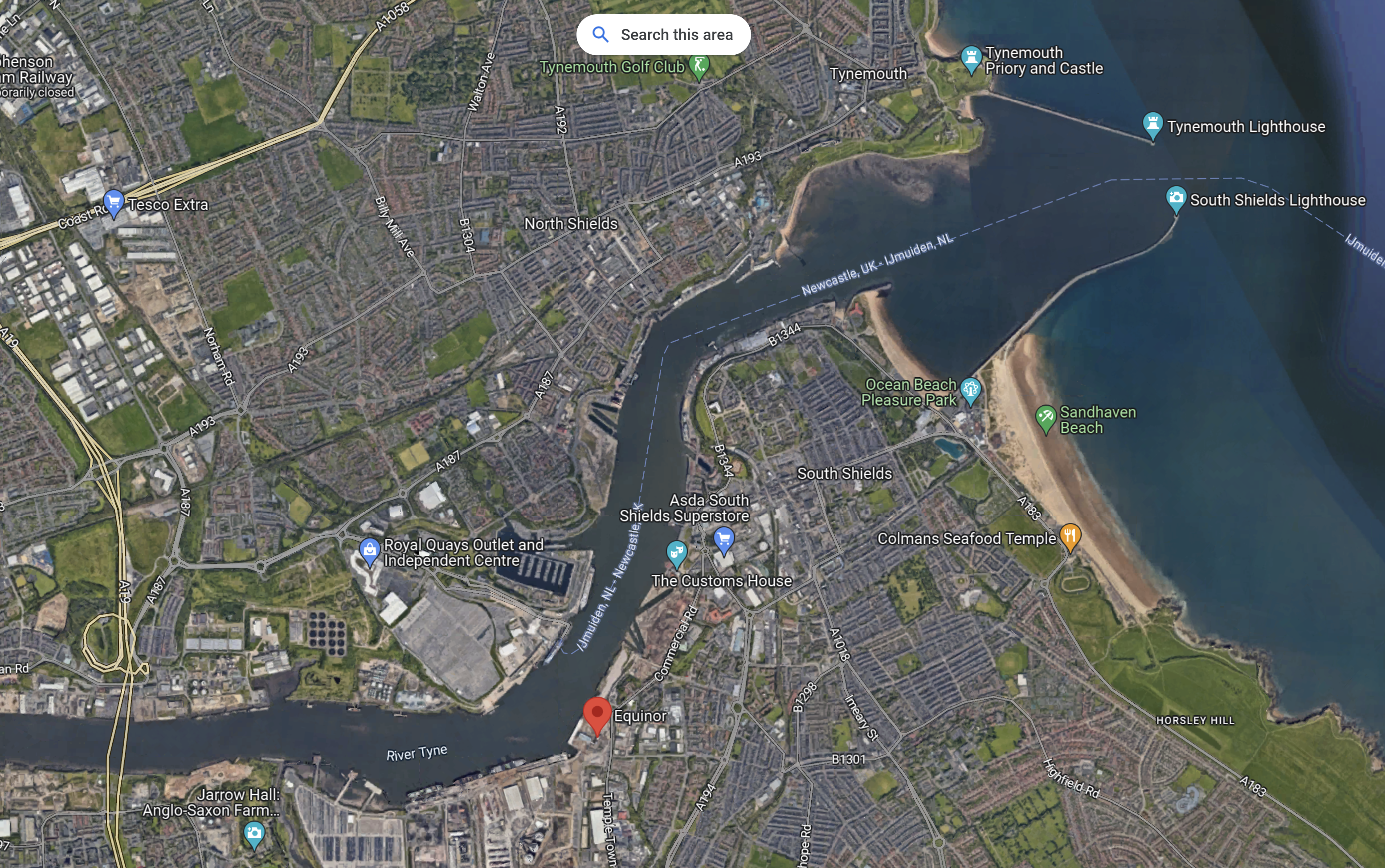
The red arrow indicates the base, which appears to be convenient for the North Sea.
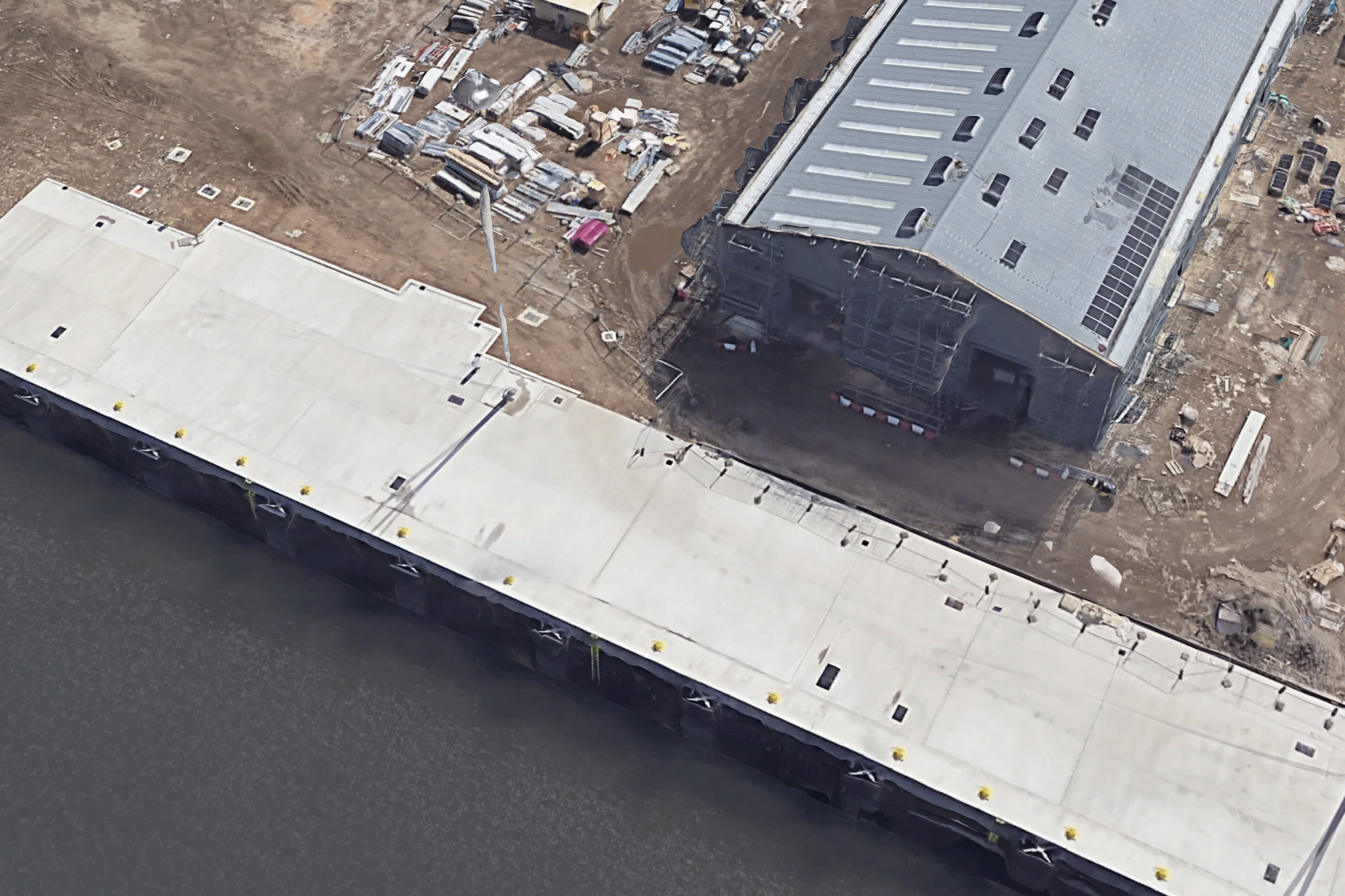
This second Google Map shows a close up if the site.

There is a nice long quayside, which in the future could be large enough to assemble floating turbines.
This third image is a Google Map 3D visualisation of the site from across the Tyne.
The news item says this about the ownership and operation of the Dogger Bank wind farm.
Dogger Bank Wind Farm is a joint venture between SSE Renewables (40%), Equinor (40%) and Vårgrønn (20%). SSE Renewables is lead operator for the development and construction of Dogger Bank Wind Farm. Equinor will be lead operator of the wind farm on completion for its expected operational life of around 35 years.
Initially, the Port of Tyne base will operate and maintain these wind farms.
- Dogger Bank A – 1235 MW
- Dogger Bank B – 1235 MW
- Dogger Bank C – 1218 MW
This gives a total of 3688 MW.
Note.
- SSE Renewables and Equinor are also developing the 1500 MW Dogger Bank D wind farm.
- This would bring the total up to 5188 MW.
- RWE are also developing the 3000 MW Dogger Bank South wind farm.
Leases were signed for both the Dogger Bank D and Dogger Bank South wind farms in January 2023.
I doubt all of these wind farms will be operated and maintained from the Port of Tyne base, due to the different ownership of Dogger Bank South.
But, I do hope that the facility can be expanded to handle Dogger Bank D.
On The Loose In North London: Flying Gazebo Causes Train Delays
The title of this post, is the same as that of this news item on Network Rail.
These paragraphs outline the story.
Residents are being urged to keep garden objects tied down and away from the railway after a flying gazebo caused 60 trains to be delayed or cancelled on Friday.
Passengers on London Overground trains running between Gospel Oak and Barking experienced disruption for around three hours. Freight trains were also affected.
The gazebo was reported to be blocking the line between Upper Holloway and Crouch Hill stations at around 0945 and trains had to be stopped while it was recovered by a Network Rail response unit.
In total, the incident caused 15 full train cancellations, 8 part cancellations and delays to 37 trains.
There is also this picture of the remains of the errant gazebo.
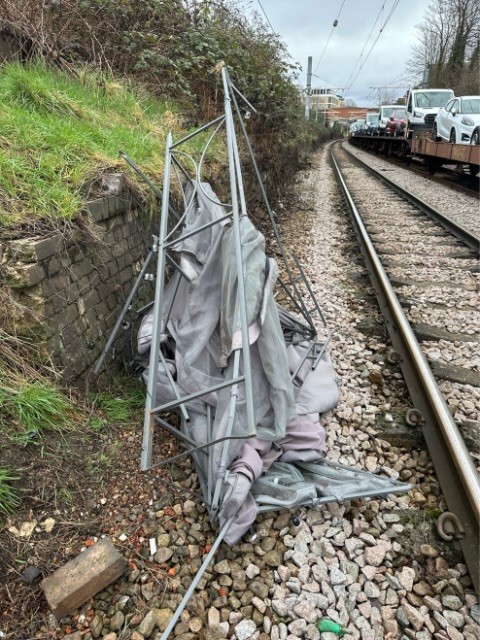
At least it appears, that the gazebo didn’t bring the wires down.
GE Developing 18 MW Haliade-X Offshore Wind Turbine
The title of this post, is the same as that of this article on offshoreWIND.biz.
This is the sub-heading.
GE could soon join the list of wind turbine manufacturers who have passed the current 15 MW “threshold” by producing and/or announcing more powerful models. According to information recently shared with investors, the US-headquartered company is likely to climb up the offshore wind turbine output ladder, currently led by Chinese OEMs, with an up to 18 MW Haliade-X turbine.
Note.
- GE’s current largest turbine is a 14.7 MW example.
- GE are supplying the 3.7 GW of turbines for the Dogger Bank wind farms.
It does look like GE intend to put the Chinese in their place.
Scottish Hydrogen Fuel Tank – SHyFT
The title of this post, is the same as that of this page on the Innovatus Technologies web site.
This is the sub-heading.
Advanced Flexible Form Factor and Lightweight Multi-Chamber Type IV & V Hydrogen Storage Vessel
These paragraphs outline the product.
SHyFT is a unique Type IV or V composite high-pressure vessel unlike conventional large, heavyweight cylindrical vessels. The unique multi-chamber composite design, aided by patented composite technology and recyclable materials, allows for SHyFT to conform to any form factor specific to our customers needs.
SHyFT’s largest model boasts the worlds highest Gravimetric Storage Density of 10%, allowing 5.4 KG of hydrogen storage. This is a significant 10% increase on current market leaders in composite storage of gaseous substances.
The core composite technology drives a 25%+ weight and 20%+ cost reduction, whilst providing superior quality and technical performance for a more efficient and economical product. With SHyFT, various market applications such as commercial, personal and industrial transport, Marine and UAV, can be easily dominated creating a higher value proposition for our customers.
As with other companies in the past, like Pilkingtons, Rolls-Royce and Skeleton Technologies, who have developed a unique product, I suspect that the key is a special purpose machine that makes the tanks. I have two friends in Cambridge, who specialise in making unusual manufacturing machines and they are very busy.
I first came across this company as they are named in the Wikipedia entry for Project Fresson, which is a part-Scottish project to create a hydrogen-powered Islander aircraft.

Innovatus Technologies are building the composite hydrogen fuel tanks. Two, which are coloured green, appear to be mounted below the wings and there could be others inside the fuselage.
This company could solve one the major problems with hydrogen applications – How to cram in enough of the gas to make the application possible!
Conclusion
I predict a big future for this company, unless the Chinese or other idea-stealers ruin the market.
Tiny Data Centre Used To Heat Public Swimming Pool
The title of this post, is the same as that of this article on the BBC.
This is the sub-heading.
The heat generated by a washing-machine-sized data centre is being used to heat a Devon public swimming pool
These three paragraphs outline the story.
The computers inside the white box are surrounded by oil to capture the heat – enough to heat the pool to about 30C 60% of the time, saving Exmouth Leisure Centre thousands of pounds.
The data centre is provided to the council-run centre free of charge.
Start-up Deep Green charges clients to use its computing power for artificial intelligence and machine learning.
Note.
I find both of these interesting applications.
This Hydrogen Combustion Engine Is The EV Alternative We’ve Been Waiting For – HotCars
The title of this post, is the same as that of this article on Hydrogen Central.
This must-read article is a reprint of an article in hotcars and it details the technology and thinking behind JCB’s new hydrogen engine.
As someone who believes, that hydrogen is the only way to go to power zero-emission vehicles in the future, I advise all hydrogen sceptics to read this article.
These two paragraphs, explain the thinking behind why JCB turned to hydrogen.
As they say, necessity is the mother of invention. JCB was struck with the problem of going zero emissions without sacrificing power and cost of purchase. In a previous Harry’s Garage episode, Lord Bamford, Chairman of JCB, mentioned that passenger cars, on average, run about 300 hours per year. In contrast, a regular heavy-duty backhoe would have running hours close to 10 times that amount. He adds that in countries like India, machines of this scale run for at least 5000 hours per year.
So, to have electricity run an industrial equipment for eight hours at the minimum requires significantly more batteries. Not only does it skyrocket the costs involved, but it will add a ton of complexity and increase the overall weight. Therefore, engineers had to think radically.
Many believe that Hydrogen engines will pump out loads of nitrogen oxides.
These two paragraphs outline JCB’s solution.
A known disadvantage of a hydrogen ICE is the production of Nitrogen oxides or NOX. The reason is high operating temperatures. JCB engineers, however, found a clever way to circumvent this by running the engine on a lean mixture of fuel. Hydrogen for a given mass has three times the energy density of its diesel equivalent.
This allowed the team to get the same torque figures without running the engine too rich. Another way to get rid of NOX is through selective catalytic reduction, a common practice in modern diesel engines.
It is my belief, that if a company or engineer solves the problem of making a small hydrogen internal combustion engine, they will make an absolute fortune, that will make Microsoft and Bill Gates look like paupers.
Engineering is the science of the possible, whereas politics is dreams of the impossible.
Welsh Government Greenlights Erebus Floating Offshore Wind Farm
The title of this post, is the same as that of this article on offshoreWIND.biz.
This is the sub-heading.
The Welsh Government has granted consent for the country’s first floating offshore wind farm located 40 kilometres off the coast of Pembrokeshire
This is the first paragraph.
Project Erebus will feature seven next-generation 14 MW turbines on floating platforms, providing enough renewable energy to power 93,000 homes.
This near 100 MW project is the first in the Celtic Sea, where there 4 GW are to be installed in the next decade.
This is another paragraph.
Future phases of the development could realise an additional 20 GW of renewable energy, according to the Government.
Wales is not going to be short of energy!
Should There Be Five-Car High Speed Two Classic-Compatible Trains?
The High Speed Two Classic-Compatible Trains have the following characteristics.
- Eight cars.
- 200 metres long.
- 550 passengers.
- Two can be coupled together to make a 16-car train, that is 400 metres long.
- Trains can join and split en route.
This graphic shows the preliminary schedule.
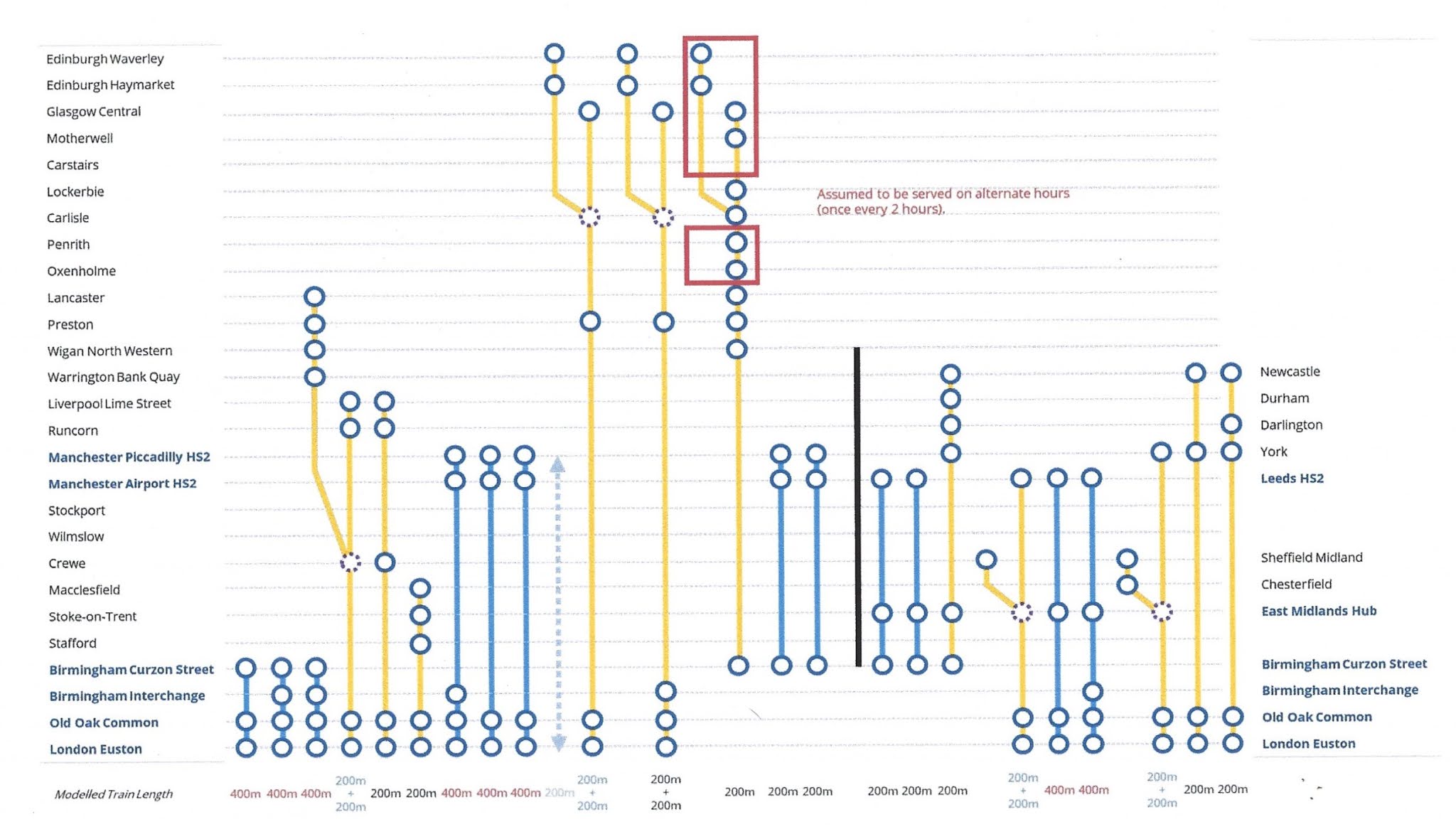
Note that Train 4, starts as a pair of trains, before splitting at Crewe, with one train going to Lancaster and the other to Liverpool Lime Street.
I wonder, if some trains were to be five-cars, would this give the operator more flexibility, by allowing three trains to be coupled together to serve three destinations.
This could be a simple example.
- A three train formation could leave Euston.
- At Crewe one train would detach and go to Liverpool Lime Street, with stops at Runcorn and Liverpool South Parkway.
- At Preston, the two remaining trains would split, with one train going to Lancaster and the other going to Blackpool with appropriate stops.
Three trains might give the operators more flexibility in providing appropriate capacity to various destinations.
Other Applications
I believe these trains would have other applications.
These are a few thoughts.
Battery-Electric High Speed Train
Battery technology is improving and I believe that a train could be designed with the following specification.
- Five cars
- High-Speed Two Classic-Compatible performance.
- A battery pack in each car.
- Up to maximum operating speed of digitally-signalled high speed lines.
- 140 mph on digitally-signalled classic high speed lines, like the East and West Coast Main Lines. the Midland Main Line and the Great Western Railway.
- Range on battery of around 120 miles at 100 mph.
- Ability to work with fully-electric versions.
Note.
- I suspect that like current Hitachi AT-300s and Bombardier Aventras, the onboard computer would know what cars have been coupled together and what the train can do.
- A battery in each car would distribute the extra weight of the batteries equally and not affect the handling too much.
- These trains would allow High Speed Two services to be extended onto non-electrified lines.
I suspect that an eight car battery-electric High-Speed Two Classic-Compatible train would also be possible for working with the standard length trains.
Is Match Of The Day Better Without The Chattering?
The BBC have just announced that last night’s Match of the Day-Lite had a million more viewers than last week’s full-fat edition.
I watched last night’s program and enjoyed it.
Perhaps, if the BBC wants to save money, they could go to a lite-format for MotD.
And whilst, they’re at it if they want more viewers, why not do MotD editions for the three other divisions?
Hydrogen Truck Can Make Garbage Day A Much Quieter Event
The title of this post in the same as that of this article on Hydrogen Fuel News.
This is the first paragraph.
Hyzon Motors has announced that it will be rolling out a 27-ton Australian-made hydrogen truck to be used for vehicle towing as well as potentially for garbage collection this year.
Less noise, less pollution\2 What more can you want?
In London, we something rather important, a hydrogen policy, rather than a Mayor, who hopes the problem will fade away.
The writer of this article finds it interesting, that Hyson, who are an American company are making the trucks in Australia.
They say this.
Hyzon opened an Australian location three years ago in order to benefit from the substantial industry talent that became available there when Ford, Toyota and Holden closed their local operations. As the country also places a considerable focus on H2 production, it has opened several doors for moving forward with various types of hydrogen truck design.
So vehicle manufacturers beware! If you close an operation in a country, you may find competitors starting up!
 The Anonymous Widower