Honda And GM To Produce Systems For Hydrogen Fuel Cell Cars And Trucks
The title of this post, is the same as that of this article on Hydrogen Fuel News.
This is the first paragraph.
A hydrogen fuel cell system co-developed by Honda Motor and General Motors (GM) will begin production this year and will gradually increase its numbers throughout this decade.
This could be a big development.
Rheenergise & University Partners Secure £1M Grant From UK Government
The title of this post, is the same as that of this press release from Reenergise.
This is the sub-heading.
The Department for Energy Security & Net Zero funded research project will identify and test minerals and discarded wastes for use in RheEnergise’s grid scale hydro energy storage system.
And these are the first three paragraphs.
In partnership with the University of Greenwich and the University of Exeter, RheEnergise, the UK company that is developing a new and advanced form of pumped hydro-energy storage, has secured a grant of £1 million funded through the Net Zero Innovation Portfolio (NZIP) as part of the UK Government’s Energy Entrepreneurs Fund. The government grant will fund work to identify and test waste materials that could be used in the high-density fluid (HDF) that is integral to RheEnergise’s grid-scale High-Density Hydro® energy storage system. The HDF is an environmentally benign alternative to water.
RheEnergise’s long duration storage system is low-cost and energy efficient. The fluid used in the system is 2½ times denser than water (similar in viscosity to cream) and is therefore able to provide 2½ times the power and 2½ times the energy when compared to conventional low-density hydro-power systems that rely on water and operate in the Scottish Highlands, Wales and across Europe. It means that RheEnergise can deploy its long duration energy storage system beneath the surface of hills rather than mountains, so opening up massive commercial opportunities in the UK, Europe and further afield.
The research project, funded by the Department for Energy Security & Net Zero’s Energy Entrepreneurs Fund, wants to identify suitable minerals and waste streams which can be recycled into the high-density fluid which can be locally sourced and are lower-cost, rather than having to rely on minerals imported from overseas.
I feel the concept of High-Density Hydro is excellent and will work.
If this research leads to lower costs, that can only help the development and deployment of High-Density Hydro.
Wind Power For 1.2m Homes Is Wasted Because Of Lack Of Storage
The title of this post, is the same as that of this article on the Daily Telegraph.
These two paragraphs outline what happened.
Enough wind power to supply 1.2m homes a day was wasted over winter because there is no capacity to store extra energy generated on gusty days, according to new research.
National Grid’s electricity system operator asked wind turbines which were expected to generate about 1.35 terawatt-hours of electricity between October and January to switch off instead because they were not needed to meet demand at the time, according to the consultancy Stonehaven.
The problem has been flagged up by Rupert Pearce of Highview Power, who in my view could have a solution with their CRYOBatteries.
Pearce is quoted as saying this.
Renewable energy storage is essential to powering a cleaner, cheaper, always-on Britain.
By capturing and storing excess renewable energy, which is now the UK’s cheapest, most secure and most abundant form of energy, we can power Britain’s homes and businesses with renewable green energy, taking millions of tonnes of carbon out of the atmosphere and ending a culture of reliance on expensive foreign imports.
He’s too bloody right! And my experience of mathematical modelling large vessels at ICI in the 1970s, says that Highview Power have one of the sensible solutions to large scale energy storage.
Multi-Turbine Windcatcher Secures More Funding
The title of this post, is the same as that of this article on offshoreWIND.biz.
This is the sub-heading.
Norway’s Wind Catching Systems AS, the developer of the Windcatcher floating offshore wind technology, has secured a pre-project grant of NOK 9.3 million (USD 0.9 Million) from ENOVA.
The Windcatcher certainly looks impressive on the home page of the Wind Catching Systems AS web site.
This image is of the over-station development at Moorgate station.
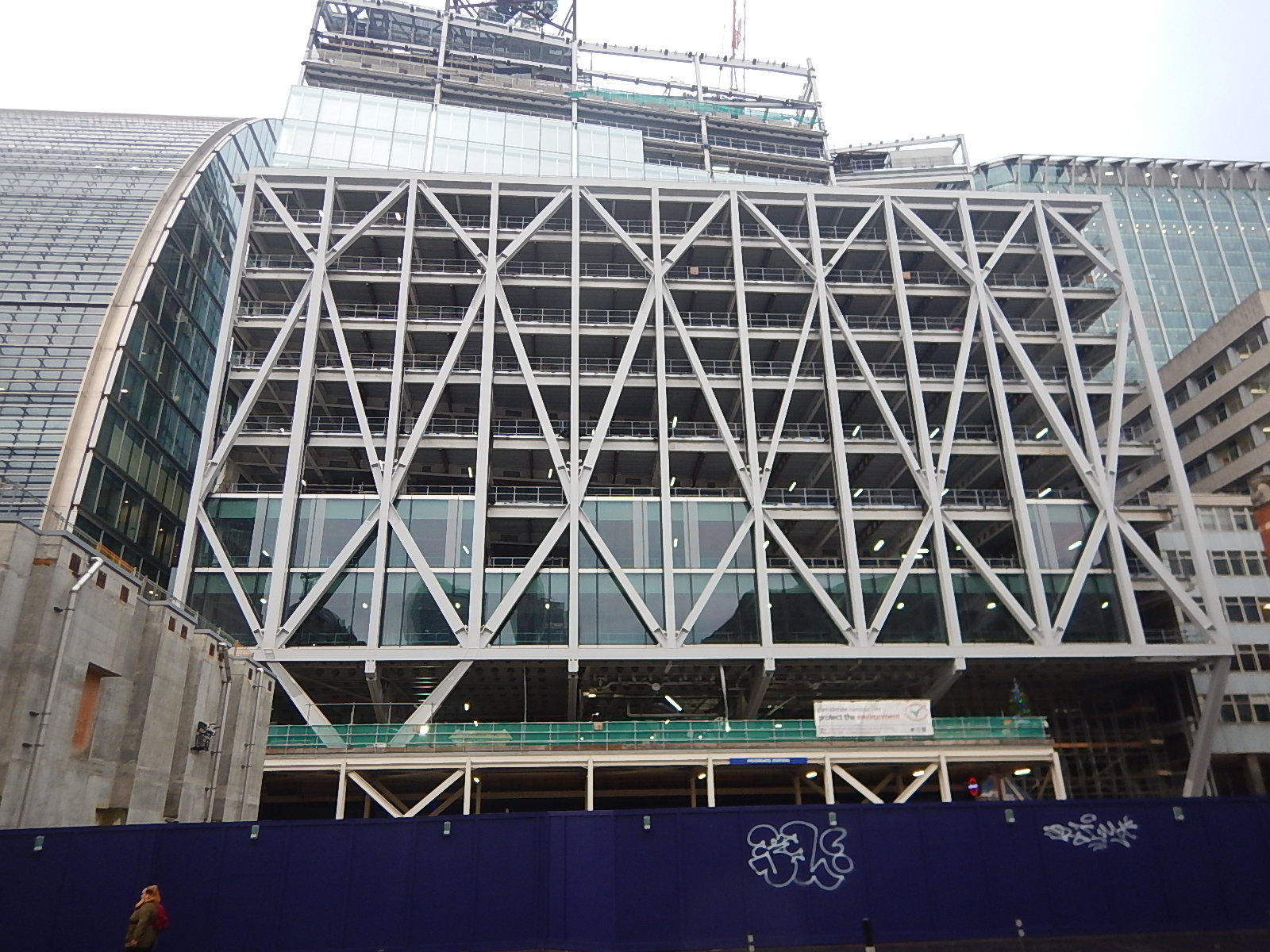
If this structure is strong enough to hold up an eight floor building, surely a system can be designed to hold up a number of small wind turbines.
But will it work well in practice or is it just something that looks good in a visualisation?
Note that aerodynamics and fluid flow are difficult subjects to model on a computer, as I say from experience of getting nowhere, when I tried to mathematically model a plastic extruder at ICI in the early 1970s.
But I did successfully invest in two guys, who went on to develop the Respimat inhaler for Boehringer Ingelheim.
So I have had mixed success in dealing with these tricky subjects.
When I look at the Windcatcher, I think there’s a fifty-percent chance, that it will be a success and a lot depends on the investors.
I do wish the company well and I feel it in my bones, that a couple of weird turbine designs will be runaway successes.
Skegness Station To Benefit From A £3.3m Improvement Package
The title of this post, is the same as that of this article on Rail Technology Magazine.
I took these pictures of Skegness station, on a visit to the town in July last year, which I wrote about in A Trip To Skegness.
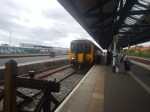







I feel that Skegness station would welcome some improvement.
The Rail Technology Magazine article says this about the project.
Upon completion of the project, customers will be able to utilise a number of enhanced facilities, including an improved accessible toilet with changing spaces, two new start-up offices, a community café and retail provisions. Upgrades will continue through improved access into the station for pedestrians and vehicles, offering integration with the surrounding community.
Work is hoped to start this year.
A Modern Zero-Carbon Train Service
If £3.3 million is going to be spent on Skegness station, would it not be a good idea to have better trains serving the station.
In A Trip To Skegness, I talked about updating the hourly Nottingham and Skegness service using Class 170 trains with Rolls-Royce MTU Hybrid PowerPacks.
I wonder if this route could be improved by fitting the Class 170 trains with Rolls-Royce MTU Hybrid PowerPacks?
- The hybrid technology would have a lower fuel consumption and allow electric operation in stations.
- The prototype hybrid is already working on Chiltern Railways in a Class 168 train.
- The Class 168 train is an earlier version of the Class 170 train and they are members of the Turbostar family.
- Rolls-Royce are developing versions of these hybrid transmissions, that will work with sustainable fuels.
- As we have a total of 207 Turbostar trainsets, these could be a convenient way of cutting carbon emissions on long rural lines.
- As Rolls-Royce MTU are also developing the technology, so their diesel engines can run on hydrogen, it is not outrageous to believe that they could be on a route to complete decarbonisation of this type of train.
I believe that we could see hydrogen-hybrid Class 170 trains, with a Rolls-Royce badge on the side.
But would it be possible to go the whole way using one of Stadler’s battery-electric trains?
Consider the service between Nottingham and Skegness.
- It is hourly.
- The route is run by 100 mph Class 170 trains.
- Nottingham and Grantham are 22.7 miles apart.
- Grantham and Skegness are 58.2 miles apart.
- Trains take four minutes to reverse at Grantham.
- Trains wait 20 minutes before returning at the two end stations.
- Trains reverse at Nottingham in a bay platform, which is numbered 2.
- Grantham is electrified.
- Nottingham station will be electrified in the next few years.
- Skegness station is next to the bus station in the middle of the town, so hopefully the electricity supply is robust enough to charge buses and trains.
Stadler make a train called an Akku.
- It is a member of the FLIRT family.
- It is a 100 mph train.
- I wrote Stadler FLIRT Akku Battery Train Demonstrates 185km Range, which means it could run between Nottingham and Skegness without intermediate charging.
This leads me to the conclusion that with charging systems at Nottingham and Skegness and taking a four-minute top-up at Grantham if needed, a FLIRT Akku could handle this route with ease.
Conclusion
Skegness is a town that needs leveling-up. A refurbished station and 100 mph electric trains to Grantham and London would be a good start.
Battery Train Pilot Project On Challenging’ Westerwald Routes
The title of this post, is the same as that of this article on Railway Gazette.
It is only a small order for three Mireo Plus B battery-electric multiple-units from Siemens Mobility, but I feel, it is significant that engineers and managers are confident that a battery-electric multiple unit can handle a challenging route.
Researchers Use Sea Water To Produce Green Hydrogen At Almost 100% Efficiency
The title of this post, is the same as that of this article on Hydrogen Fuel News.
This paragraph gives more details.
“We have split natural seawater into oxygen and hydrogen with nearly 100 percent efficiency, to produce green hydrogen by electrolysis, using a non-precious and cheap catalyst in a commercial electrolyser,” explained Professor Shi-Zhang Qiao, project leader at the School of Chemical Engineering at the University of Adelaide.
They use what is called a Lewis acid catalyst.
In the late 1960s, I worked for ICI in Runcorn.
Most of the hydrogen they needed was produced from brine by the large Castner-Kellner process, which may have been green, but was filthy, as it used a lot of mercury.
ICI also had an older and cruder process, which produced hydrogen and oxygen, by electrolysing brine, in a simple cell.
- These cells had a metal tub, with a concrete lid.
- Two electrodes passed through the lid.
- The lids quickly degraded and cells were rebuild regularly.
- But it did produce medical grade sodium hydroxide.
Legend also had it, that the salt that collected around the lid was pure enough to use in the canteen.
In Torvex Energy, I describe a company in Stockton which is also going the sea water electrolysis route.
Having seen, its Victorian ancestor in operation, I believe that sea water electrolysis has possibilities to make hydrogen efficiently.
Riding In A Train Designed To Run On Battery Power
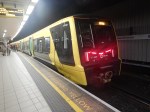
Today, I had my first ride in a train, that has been designed to be able to run on battery power.
- Merseyrail’s Class 777 trains run normally using third-rail electrification.
- But they are also designed to run on battery power.
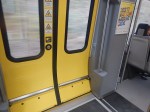
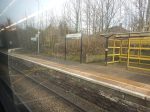
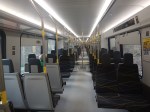
- I took these pictures of the train as it went from Liverpool Central station to Kirkby station and back to Moorfields station, from where I took a train back to Liverpool Lime Street station.
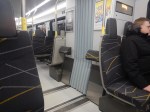
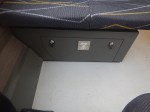
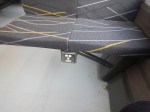
I took these pictures on the route.

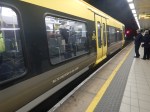
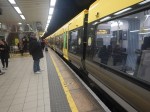

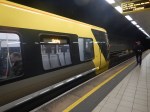





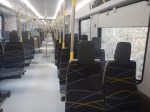
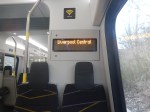
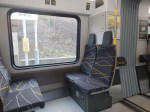





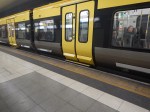



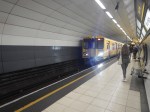
Note.
- Every seat has access to a power and USB socket.
- Every head-rest has leather facings.
- The end lights change from white for front, to red for back, when the train changes direction.
- Door lights are green when it is safe to enter.
- There is a lot of attention to detail in the design.
If there is a better suburban train in Europe, I’ve yet to see or ride in it.
Noise And Vibration
Consider.
- I have ridden in two trains converted to battery-electric operation and both were very quiet.
- This train was also very quiet, but it has been designed for battery operation.
- I suspect that the train is very frugal with electricity.
- I wonder, if the small battery, that is carried on the train for depot movements, is also used for regenerative braking.
- It might not be a traditional battery, but a supercapacitor, some of which are made from curved graphene.
This train certainly sets new standards in noise and vibration.
So Many Floating Wind Designs, So Few Test Sites – Norwegian METCentre Sold Out
The title of this post, is the same as that of this article on offshoreWIND.biz.
This is the sub-heading.
There are currently more than 80 floating wind technology concepts and designs worldwide, and testing even a certain number of these could prove to be an endeavour since there are not many test sites dedicated to floating wind technology in Europe.
It strikes me that we need more test centres.
As UK waters will in the next couple of decades be home to a lot more GW of wind farms, perhaps we should develop a test centre.
I wonder, if South Wales would be the place for a test centre.
- There is a lot of sea, which isn’t cluttered with oil and gas rigs, and wind farms.
- There are a lot of wind farms planned in the area.
- There are at least two good technology universities.
- There are some deep water ports.
- Electricity connections and power generation are good.
- There is good train connections to the rest of England and Wales.
- A train testing centre is being built at Nant Helen. Some tests needed to be done could be the same.
Some innovative designs for wind turbines are also being developed in South Wales.
Nightmare On The Buses
The title of this post, is not the title of a horror remake of the popular 1970s-sitcom’ On The Buses, but a description of my journeys on a 141 bus today.
Until, last Friday, I had two buses; the 21 and 141 to take between my house and Moorgate, which is an important destination for me.
- There is a large Marks and Spencer food store there, where I regularly buy the gluten-free food, I must have as a coeliac.
- There is a LEON there, where I regularly have my gluten-free breakfast.
- Moorgate station is a good transport interchange from which I regularly start journeys over London.
But now there is only one bus; the 141.
In November 2021, I wrote The Great Bus Robbery, where I said this.
What is TfL’s latest crime?
The 21 and 271 buses are going to be combined into a new route between Lewisham and Highgate, which will go nowhere near the Balls Pond Road.
So we’ll just have the one bus route to the City of London.
On past form, if TfL say they will increase the frequency, I wouldn’t believe them.
This was my conclusion.
We will need the 21 bus to provide us with a route to Crossrail, as the 141 buses will be full.
The 21 bus is needed where it is and mustn’t be stolen.
Note that Crossrail is now called the Elizabeth Line.
Today, I made three journeys between my house and Moorgate station and this is what happened.
Journey 1 – Southbound
I arrived at the bus stop and after five minutes a 141 bus arrived.
But it was full and didn’t open the door to let any of the waiting six passengers board.
After another three minutes, another 141 bus arrived and we squeezed on.
But there wasn’t any seats left and I stood all the way to Moorgate.
Journey 2 – Northbound
I only had my breakfast and as I had things to do at home, I returned fairly quickly after finishing my breakfast.
Partly, this was also because a 141 bus turned up with some seats available.
But it was a lot closer to capacity, than Northbound buses at about the same time last week.
Journey 3 – Northbound
My third journey started at about four in the afternoon, after I’d been out to take some pictures and buy a few food items in Marks and Spencer.
I had to wait seven minutes for a 141 bus and as there was a 76 bus a couple of minutes in front of it, I took that, with the intention of changing halfway.
I was able to get a seat.
In the end, the 76 bus got stuck in traffic and I walked to my intended change stop and waited there for the 141 bus, which was without a seat, so I stood for three stops to home.
It was one of the slowest journeys, I’d had between my house and Moorgate station.
Day 2 – February 7th – 2023
I arrived at the bus stop and found a lady, who had been waiting for an hour-and-a-quarter.
I had no problem coming home, as I went to Liverpool during the day and got a taxi back from Euston.
Day 3 – February 8th – 2023
Perhaps, they’d heard our pleas, but a bus turned up after a couple of minutes with plenty of spare space.
I even got a seat.
Going home, at about 10, there wasn’t a spare seat.
Revenue per bus, is certainly rising.
Conclusion
On the evidence of the first three day, it appears that there is not enough capacity without the 21 bus.
 The Anonymous Widower