Step-Free Provision On Elizabeth Line West Of Paddington
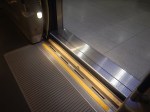
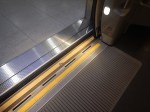
The stations may be step-free between street and platform, but West of Paddington, there does not appear to be step-free access between the platform and the train.
These pictures show a selection of stops.
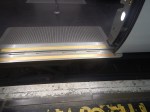


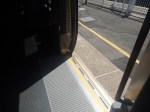
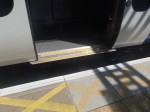
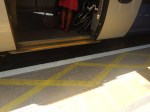


Compare these steps of a few inches, with those I showed in Step-Free Access Between Train And Platform On The Elizabeth Line.





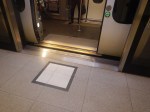
These pictures were taken between Woolwich and Paddington stations and show first class step-free access between train and platform.
The step-free access on the Western branch of the Elizabeth Line does not appear to be up to the standard expected of a world class railway.
Is The Current Arrangement Only Temporary?
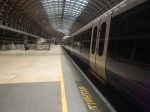
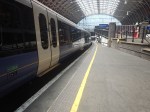
I took these pictures at Padding Station today of a Class 345 train alongside Platform 10.
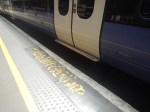

Note.
- There are large gaps.
- I had a chat with a station guy, who’d just unloaded two wheelchair passengers from the train using a ramp.
- He felt things could be improved.
- I feel that level access for the Elizabeth Line at Paddington is important.
But when the Elizabeth Line is fully connected, it will be connected to a series of Central London stations, including Paddington, that will have full step-free access between the train and the platform.
So the current arrangement will be improved dramatically in a few months.
The Visitor To London In A Wheel-Chair
The Central London section of the Elizabeth Line between Paddington and Whitechapel or Woolwich stations is step-free between street and train.
So a visitor to London in a wheel-chair might choose to stay in a hotel on this easy section of the Elizabeth Line to make the most of their stay.
But because of the lack of step-free access between train and platform outside of the Central London section, would they have trouble visiting places like Windsor, which would require a change of trains at Slough?
Would It Be Possible To Separate Elizabeth Line and Great Western Railway Services?
Consider.
- Great Western Railway services between Paddington and Didcot Parkway use the Elizabeth Line platforms at Ealing Broadway, Hayes and Harlington, West Drayton, Slough, Maidenhead, Twyford and Reading.
- In addition, some express trains stop at Slough and Ealing Broadway.
- There are also freight trains passing through.
It might be sensible to move the Paddington and Didcot Parkway service to the Elizabeth Line and adjust platform heights appropriately.
Australian Mining Billionaire Touts A Green Revolution In U.S. Coal Country — With Skepticism Trailing Close Behind
The title of this post, is the same as this article on Forbes.
It is a definite must-read about Andrew ‘Twiggy’ Forrest, making one of the most difficult hydrogen pitches in the world, to coal miners in West Virginia.
Perhaps we need Mr Forrest to convince the RMT, that their views are wrong and so nineteenth century.
Crocheting On The Lizzie Line
I saw a lady crocheting on the Lizzie Line yesterday!
Gravity—Yes, Gravity—Is the Next Frontier for Batteries
The title of this post, is the same as that of this article on Popular Mechanics.
This is the first paragraph.
When the sun isn’t shining and the wind isn’t howling, suspended weights can step in to generate power.
The article goes on to explain Energy Vault and Gravitricity.
It is certainly an endorsement of the technique from one of America’s popular magazines.
Cost Of Turning Off UK Wind Farms Reached Record High In 2021
The title of this post, is the same as that of this press release from Drax.
This is the first paragraph.
The cost of turning off wind farms in the UK has reached record levels, according to a new report.
The press release makes these points.
- Investing in more long duration electricity storage, such as expanding Drax’s Cruachan pumped storage hydro plant in Scotland, would mean more excess renewable power could be stored and made available when required, cutting costs and carbon emissions.
- The cost of turning off UK wind farms to manage the electricity system rose from almost £300m during 2020 to over £500m in 2021, contributing to higher energy bills and carbon emissions, according to a new report.
- Costs increased substantially because the system relied on expensive gas power to manage periods when wind power was curtailed, as not enough electricity storage was available to prevent the excess renewable power from wind farms going to waste.
Drax give these reasons for the problems.
This happened as a result of constraints in the transmission system and a lack of long-duration storage capacity, which is needed to manage periods when renewable power generation outstrips demand.
The problem is going to get worse as we increase the amount of wind power in the UK.
Penny Small, Drax’s Group Generation Director sums everything up.
This report underlines the need for a new regulatory framework to encourage private investment in long-duration storage technologies.
The UK is a world-leader in offshore wind, but for the country’s green energy ambitions to be realised we need the right energy storage infrastructure to support this vital technology, make the system secure and reduce costs.
Drax’s plan to expand Cruachan will strengthen UK energy security, by enabling more homegrown renewable electricity to power British homes and businesses, reducing system costs and cutting carbon emissions.
A good framework has been created for wind farms and many more are being proposed and developed.
Frameworks are needed for both transmission systems and long-duration energy storage capacity.
Volvo Trucks Showcases New Zero-Emissions Truck
The title of this post, is the same as that of this press release from Volvo Trucks.
This is the first paragraph.
Imagine a truck that only emits water vapor, produces its own electricity onboard and has a range of up to 1 000 km. It’s possible with fuel cells powered by hydrogen, and Volvo Trucks has started to test vehicles using this new technology.
This picture shows one of the trucks.
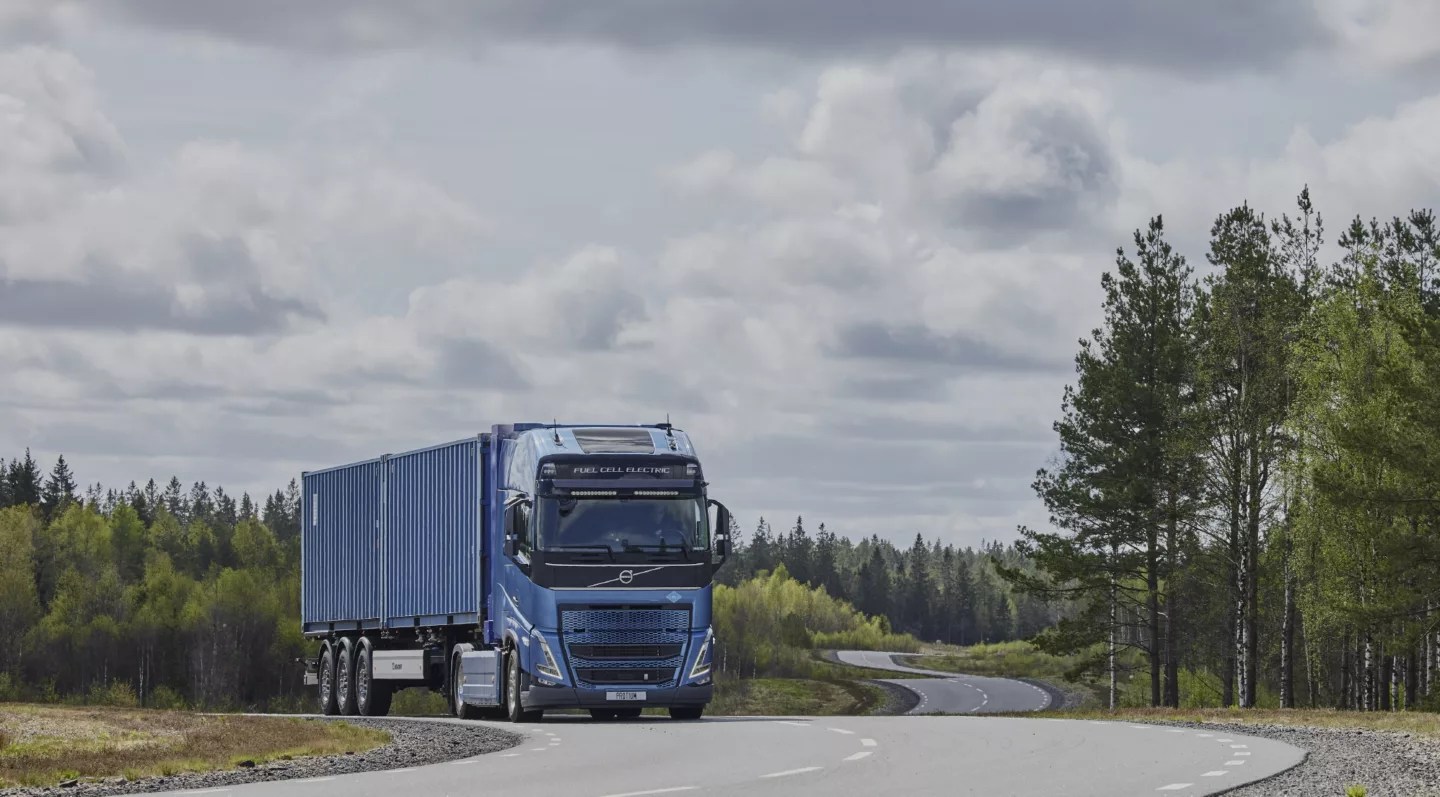
It certainly looks like a normal truck.
From the press release, it looks like Volvo Trucks are taking a conservative approach to designing, developing and launching the truck.
- Early examples will go through an extensive test program.
- It uses two fuel cells can generate up to 300 kW.
- Range is quoted at up to 1000 km.
- Fully refuelling takes 15 minutes.
- Gross weight is up to 65 tonnes.
- It looks to be a straight replacement for a current diesel truck.
Full launch is mentioned as towards the end of the decade, after there are enough hydrogen filling stations.
Conclusion
I may not have driven a large truck like this, but I’ve certainly funded a large number and talked with many experienced operators.
It looks to me that this could be the truck for an operator or company, who wants to offer zero-carbon transport for commercial, environmental, public relations or tax reasons.
Drax To Pilot More Pioneering New Carbon Capture Technology
The title of this post, is the same as that of this press release from Drax.
This is the first paragraph.
Renewable energy pioneer Drax has partnered with the University of Nottingham and Promethean Particles to trial a pioneering new bioenergy with carbon capture and storage (BECCS) process at its North Yorkshire power station.
Normally, carbon capture from the flue gas of a power station uses a liquid solvent, which dissolves the carbon dioxide.
However, the process that Drax are trialling, uses porous compounds called metal–organic frameworks (MOFs) to absorb the carbon dioxide.
This page on the Promethean Particles web site described how their carbon-capture works.
Traditional solvent-based carbon capture systems require a significant amount of energy to regenerate the carbon-capturing material. In power generation applications, estimates put this energy penalty at up to 35% of the power station’s output. Metal-organic frameworks (MOFs) capture carbon mainly through physical, not chemical means. This “trapping” process requires lower energy inputs to regenerate the MOFs and can therefore help achieve more energy-efficient carbon capture. By using MOF-based carbon capture, more of the power generated can go where it was intended, lowering the price of energy for consumers and CAPEX for the power generators.
Note.
- It is a physical rather than a chemical process.
- It is more energy efficient than traditional carbon-capture.
This Drax graphic from the press release, shows how this process can be incorporated into a power plant..
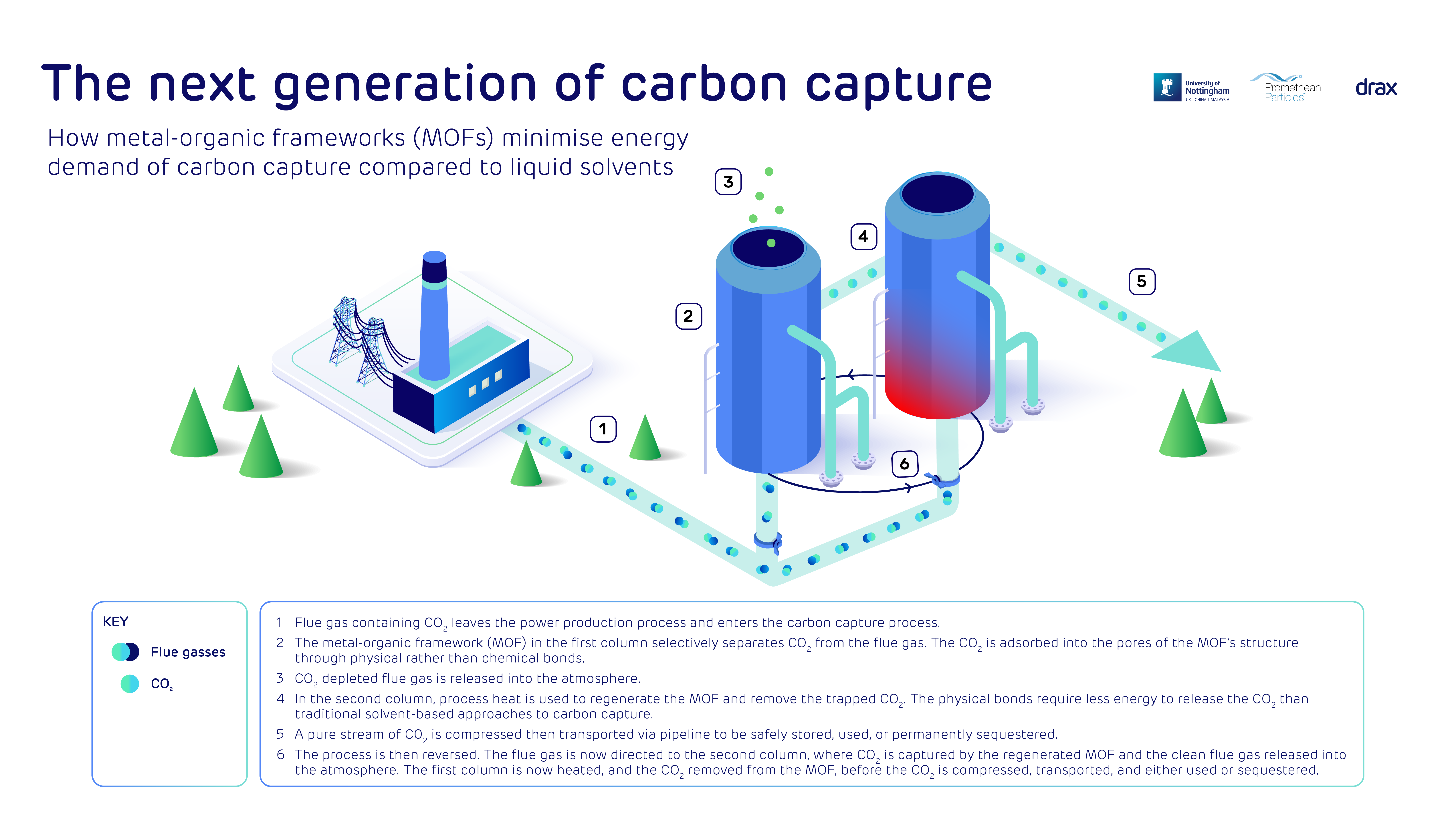
Note.
- The trial will last for two months and will be hosted within Drax’s BECCS incubation hub at its North Yorkshire Power Station.
- Metal Organic Frameworks are a unique class of solid sorbents offering lower operational costs and reducing potential environmental impacts.
Work to build BECCS at Drax could get underway as soon as 2024, with the creation of thousands of jobs.
Fifty years ago, I spent several months at ICI looking at the mathematics of different numbers and sizes of vessels of in a proposed chemical plant, to optimise the cost of the plant.
- I suspect a similar analysis could be applied to this process.
- It would surely be very suitable for Drax, whose main power station has four units fuelled by biomass and another fuelled by natural gas.
- Are two columns containing MOF, the optimum number?
- The calculation could involve a lot of permutations and combinations, which I’ve used to advantage for over fifty years.
I will follow this trial with interest.
Conclusion
This is another application of advanced physics and chemistry.
If Promethean Particles ever decide to go the crowdfunding route, I would look seriously at a small investment.
Why Can’t More Bags Be Like This?
I recently had my shoes fixed in Timpsons.
This was the bag that the company gave me with the shoes

Surely, paper bags score highly in many ways; practicality, affordability, recyclability and as advertising.
Why don’t we see bags like these more often?
Extending The Elizabeth Line – Will There Be A Need For Long Distance Class 345 Train?
I wrote Crossrail To Heathrow, Reading And Southend in August 2017.
This was a section in that post.
The Long Distance Class 345 Train
Adding Oxford and/or Southend to Crossrail services, may need a sub-class of Class 345 train to be created, due to the length of the journey. Toilets would be the obvious addition.
As an example, the safeguarded Reading and Gravesend service would be eighty-three miles.
- A Reading and Paddington service takes fifty-seven minutes for the thirty-six miles.
- At that speed Reading and Gravesend would take two hours and eleven minutes.
- Even Reading and Shenfield will will take only nine minutes less than two hours.
Will all passengers be able to hold on for these lengths of time?
100 mph Capability
Greater Anglia’s Class 720 trains are 100 mph trains, but their sisters on the Elizabeth Line are only 90 mph trains.
So if the trains are to work perhaps to Gravesend, Oxford or Southend would a 100 mph capability be needed?
Conclusion
If the Elizabeth Line is extended, there may be a need for trains to be updated.
Extending The Elizabeth Line – An Extension To Southend Airport
The Wikipedia entry for Crossrail, has a section for an extension to Southend Airport, where this is said.
Stobart Aviation, the company that operates Southend Airport in Essex, has proposed that Crossrail should be extended beyond Shenfield along the Shenfield–Southend line to serve Southend Airport and Southend Victoria. The company has suggested that a direct Heathrow-Southend link could alleviate capacity problems at Heathrow. The extension proposal has been supported by Southend-on-Sea City Council.
I have written about extending Crossrail to Southend before in Council Launches Campaign To Extend Crossrail To Southend-on-Sea.
In that post, I gave these reasons.
- Extra capacity between London and Southend
- A more intensive service to Southend Airport
- A twenty-four hour service to Southend Airport
- Enabling housing
- Taking pressure from Liverpool Street
I came to the conclusion, that extending the Elizabeth Line to Southend could have a lot going for it.
Times Change
But that post was written nearly four years ago and times change and they will change more in the next few years.
The Elizabeth Line Trains Are Shorter Than The Liverpool Street And Southend Victoria Trains
This has also happened and the pair of five-car Class 720 trains, that Greater Anglia use for Southend Victoria services are over thirty metres longer than the Elizabeth Line’s nine-car Class 345 trains.
This would mean that there would be no need for platform lengthening along the route to Southend Victoria.
Zero-Carbon Aircraft Are Under Development
Zero-carbon aircraft like the Heart Aerospace ES-19 could be in service by 2027. These aircraft will probably have a limited range of around 400 km and a charge time of 40 minutes.
- Southend Airport’s position on the East side of London would enable the creation of zero-carbon flights to places like Amsterdam, Brussels, Lille, Paris and Rotterdam.
- A quick estimate indicates that aircraft like the ES-19 could fly from Southend to Amsterdam and recharge in around two hours.
- Intensively scheduled, these electric aircraft could make several round trips per day.
- Would almost silent electric aircraft be able to fly twenty-four hours per day?
These flights could seriously increase the number of passengers to Southend Airport before the end of the decade.
More Housing
I think more housing will be built between Shenfield and Southend, which will increase the need for more services past Shenfield.
The Great Eastern Main Line Will Have Full Digital Signalling
More and more trains will be running on the Great Eastern Main Line and like other main lines in the UK, it will receive full digital signalling, which would probably be applied to the Shenfield and Southend Line.
This would give the extra capacity to Southend Victoria, that running the Elizabeth Line to Southend Airport and Southend Victoria would need.
Possible Services
I think there are two main possible options, but there may be others.
- A long Elizabeth Line extension all the way to Southend Victoria.
- A short Elizabeth Line extension only as far as Southend Airport.
My feelings are as follows.
- The Greater Anglia service should remain as it is with three trains per hour (tph) calling at all stations to Shenfield, Stratford and Liverpool Street.
- Perhaps three or four Elizabeth Line tph would extend to Southend Victoria, calling at all stations.
- All Elizabeth Line trains would call at all stations to and from London, as they do now!
Full digital signalling would handle the extra trains.
Conclusion
I think it will be unlikely that the Elizabeth Line will be extended to Southend in the next few years, but before the end of the decade, I can certainly see limited Elizabeth Line services going all the way to Southend Victoria.
 The Anonymous Widower