It’s Time We Used Cyber Dark Arts To Foil Putin
The title of this post, is the same as that of this article on The Times, which was written by Edward Lucas.
This is the first paragraph.
Breaking the Kremlin’s grip on the Russian people is the greatest national security priority of our lives. We cannot (or rather, will not) fight the Russian invaders in Ukraine. But we can fight inside Russia, using disruption and subversion to disable the war machine, ideally to the point that the country becomes ungovernable.
He suggests the following.
- Russian speakers could sow doubt about the regime’s lies and brutalities.
- Use the Russian diaspora to contact friends and relatives back home.
- Build and unleash a psychological warfare arsenal against Putin’s cocktail of crimes, lies and secrecy.
- Send condolences to family members for their losses in the war.
- Prepare Nuremberg for war crimes trials.
- Highlight the friendly treatment that Ukrainians give Russian deserters.
- Use wit as a weapon.
Edward Lucas then talks about the antics of Sefton Delmer in World War II. Wikipeda says this about him.
During the war, he led a black propaganda campaign against Hitler by radio from England. It was so successful that Delmer was named in the Nazis’ Black Book for immediate arrest after their planned invasion of Britain.
I suspect he was very good at his job. Two of his weapons were.
Aspidistra, which was a 500 kW radio station.
A daily “grey” German-language newspaper titled Nachrichten für die Truppe (“News for the Troops”). These leaflets were delivered by the USAF.
Edward Lucas says that we should all read Delmer’s autobiography, which is called Black Boomerang, which is now out of print and difficult to find.
Wikipedia gives this explanation of Black Boomerang.
When fighting entered Germany itself, black propaganda was used to create an impression of an anti-Nazi resistance movement.
At the end of the war in Europe, Delmer advised his colleagues not to publicise the work they had been involved in, lest unrepentant Nazis claim (as had been the case after the First World War), that they had been defeated by unconscionable methods, rather than on the battlefield. Consequently, former Nazis were able to claim, without contradiction, that they had assisted the fictitious resistance movement; Delmer described this unintended consequence as a “black boomerang”
Edward Lucas suggests reprinting Black Boomerang.
If someone has a good clear copy, I could possibly arrange it.
Demoralising The Russians
Edward Lucas believes, we can use similar techniques to Delmer to attack the Russians.
But instead of using a massive radio, he proposes using the Internet and its various messaging apps.
I suspect with a bit of arm-twisting Facebook, Twitter, Google, Microsoft et al, could produce a very good list of Russian Internet users.
It might be against the law, but who cares? It’s a war out there, we’re not using the information to physically hurt anybody or steal anything of value.
News For The Troops
I believe we can go one better than Sefton Delmer.
We are dealing with Russians invading and occupying Ukrainian territory, where many of the inhabitants can certainly read Russian.
So could we develop a truthful leaflet, that is delivered across Ukraine to both Russian Troops and the Ukrainian population?
Delivery would be primarily by the Internet, but why not deliver it by drone?
Delivery from say 5000 feet would distribute the leaflets over a wide area.
Could We Go Candy Bombing?
Gail Halvorsen, who died recently was known as the Candy Bomber.
This is the introduction to his Wikipedia entry.
Gail Seymour Halvorsen (October 10, 1920 – February 16, 2022) was a senior officer and command pilot in the United States Air Force. He is best known as the “Berlin Candy Bomber” or “Uncle Wiggly Wings” and gained fame for dropping candy to German children during the Berlin Airlift from 1948 to 1949.
I think, his actions could be copied in Ukraine.
Consider.
- The Ukrainian people are starving in the occupied territories.
- The Russian soldiers aren’t doing much better.
- These days, we can supply nutrition bars instead of sweets.
- Automated drones could deliver them safely from 5000 feet.
- They could be flown on behalf of the Red Cross from over the border in Hungary, Moldova, Poland and Slovakia.
Organised properly, the Russians would have a problem.
- If they let the drones through, the siege will be broken in a small way.
- If they shoot them down, their soldiers won’t get the smallest snack and the Russians will be attacking the Red Cross.
We might lose a lot of drones, but eventually we’ll get the nutrition through, each wrapped in a large dollop of propaganda.
Battery And Hydrogen Trains For ScotRail ‘Could Make Scotland A Global Leader’ In Zero-Emission Transport
The title of this post is the same as that of this article in the Scotsman.
This is the first paragraph.
New fleets of cutting-edge trains expected to include battery and hydrogen power are to be ordered for ScotRail which the rail industry believes will put Scotland at the forefront of zero-emission transport.
Other points from the article.
- Talgo appear to have passed the story to Scotland on Sunday.
- Three routes are mentioned; Borders Railway, Fife Circle and Glasgow-East Kilbride.
- The new trains could help phase out diesel trains by 2035, which is Scottish Government policy.
- The Inter7City trains might be replaced by 2030.
- Talgo hopes to win an order for its factory in Fife.
Talgo’s Managing Director is quoted as saying, they are starting testing of a hydrogen and electric train with a range of 311 miles.
Consider.
- I wrote about this train in Talgo To Begin Fuel Cell Loco Trials.
- Talgo’s hydrogen and electric train would be ideal for Scotland’s railways of which only forty percent are electrified.
- A four or five-car high specification hydrogen and electric train would be ideal for the Inter7City routes, if it were built specifically for the routes.
- The range would cover all of Scotland.
- Hydrogen hubs are being planned all over Scotland.
- Scotland have 26 Inter7City trainsets.
This could be a rather nice order to fund the factory and test all the trains close to the factory.
Is there a better place to show off your new train to a prospective buyer than the Highlands of Scotland?
In A Class 319 Train, But Not As We Know It!, I told this tale.
I am reminded of a tale, that I heard from a former GEC manager.
He was involved in selling one of GEC’s Air Traffic Control radars to a Middle Eastern country.
The only working installation of the radar was at Prestwick in Scotland, so he arranged that the dignitaries and the sales team would be flown to Prestwick in GEC’s HS 125 business jet.
As they disembarked at Prestwick and walked to the terminal, the pilot called the GEC Manager over.
The pilot told him “The Scottish Highlands at this time of the year, are one of the most beautiful places in the world! Would you and your guests like a low-level tour on the way back? I can arrange it, if you say so!”
Despite knowing GEC’s draconian attitude to cost control he said yes.
The sale was clinched!
I’m sure that Talgo will exploit the scenery and the local produce.
Talgo’s Hydrogen Trains
This page on the Talgo web site, is entitled Talgo’s Hydrogen Train Will Be Ready In 2023.
This paragraph gives an overview of Talgo’s hydrogen power system.
This system is configured as a modular solution that can be installed on all types of trains, as well as in upgrades from diesel to hydrogen. However, it has been specifically designed for the Vittal platform for Commuter and Regional trains, which Talgo has presented in the bidding process for various tenders in Spain and other countries.
And these two paragraphs describe Talgo’s hydrogen trains in more detail.
This innovative system uses hydrogen batteries that provide the energy for the train’s electric motors. It is powered by renewable energy sources, such as solar photovoltaic or wind, which produce hydrogen that is stored and then used to power fuel cell-based propulsion systems, such as the one designed by Talgo. The system is complemented by batteries that increase the speed of the train when it starts, taking advantage of the braking system to recharge it.
Unlike the extended battery systems in the automotive industry, hydrogen (H2) technology is the logical answer to the needs of heavy transport and, in particular, of those railway lines that do not have catenary electrification systems, and which today depend on trains powered by diesel engines. The hydrogen system designed by Talgo enables conventional network lines to be “electrified” without the need for costly and lengthy adaptation operations, and without the use of fossil fuels.
What do they mean by hydrogen batteries? Looking at the German and the Spanish on the page, I think Talgo means hydrogen fuel cells.
The Rebuilding Of Ukraine
It should be noted that Talgo have sold trains in the past to Russia, which has a gauge of 1.520 metres, which lies between Iberian gauge of 1.668 metres and our standard gauge of 1.435 metres.
- Talgo have also sold trains to Germany, who use standard gauge.
- Talgo have built Strizh trains for Russia, that are both standard gauge and Russian gauge for running between Berlin and Moscow.
- According to the BBC and The Times, Ukraine’s railways have been an important lifeline during the Russian invasion, but pictures show they are in need of modernisation and more electrification.
- The Strizh trains or a development would surely be ideal for running between Kviv and Berlin, Budapest, Prague and Warsaw.
- There would also appear to be a need for a hydrogen and electric regional train to reconnect the country back together.
- Other countries using Russian gauge include Mongolia, Kazakhstan, Kyrgyzstan, Tajikistan, Turkmenistan, Uzbekistan, Armenia, Azerbaijan, Georgia, Belarus, Moldova, Estonia, Latvia, Lithuania, and Finland.
So are Talgo positioning themselves to take part in the modernisation of Ukraine’s railways, once the war is over?
- Development and testing is done in Spain and Scotland.
- Manufacturing could be done in Spain and Scotland.
- Delivery from Scotland could either be by ship or if they were dual-gauge trains, they could be hauled through the Channel Tunnel and then through Germany and Poland.
As Talgo has the technology, I can certainly see them exploiting the Russian gauge market once Vlad the Mad has gone.
Bachelor Searching For Wife On Tube Billboard Ad Reading ‘Best Indian Takeaway’ Flooded With Offers
The title of this post, is the same as that of this article on ITV.
This is my picture of the poster at Oxford Circus station.

I hope he gets value from his investment.
Penge East Station – 11th March 2022
When I wrote Advance Warning Of Brixton To Beckenham Junction Rail Closure In July, I realised I’d never been to Sydenham Hill station.
So when I visited Sydenham Hill station this morning, I decided to take the train through Penge Tunnel to take some pictures of Penge East station.




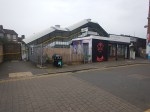
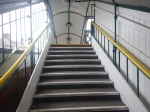

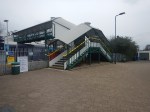
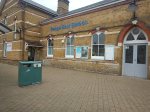
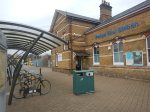
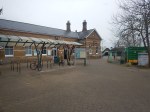

Note.
- The station is a Grade II Listed Building.
- It has been well-painted since I last visited.
- It would be very difficult to make the existing bridge step-free.
I think this station could be difficult to incorporate into a Penge Interchange station.
But it would be a shorter walk along the platforms to a lift and stairs to the high level platforms, than the current one to Penge West station.
New HS2 Pilot Project Swaps Steel For Retired Wind Turbine Blades To Reinforce Concrete
The title of this post, is the same as that of this press release from High Speed Two.
These are the first three paragraphs.
Worn-out wind turbine blades destined for the incinerator will instead be used to create carbon-friendly reinforced concrete on Britain’s new high speed rail network, HS2 Ltd has said today (12.03.21).
The innovative project will swap steel rebar, traditionally used to reinforce concrete, with sections of glass fibre reinforced polymer turbine blades that have reached the end of their operational lives generating low carbon electricity.
By 2023, around 15,000 turbine blades will have been decommissioned across the UK and EU. Until now, expired blades have either been ground down to be used as building materials or sent to energy-from-waste incinerators.
Replacing reinforcing steel with sections of retired wind turbine blades is claimed to cut up to 90 % of the carbon generated by steel reinforcement.
It would appear to me, that this is a worthwhile process.
- In 2018, 295,000 metric tons of steel reinforcing bars were produced in the UK.
- Retired blades don’t end up in landfill or incinerators.
- Could we export them as eco-friendly reinforcing bars, to countries with smaller wind industries.
As we have more wind farms, than most other countries, we will probably have more blades to recycle, so perhaps we should research other secondary uses for these blades.
A Passing Loop At Ponders End
I can’t write Ponders End without smiling, as my mother was born in that district of Enfield and used to refer to herself in light-hearted moments as a Ponders Plonker.
The West Anglia Main Line, through Ponders End station is a busy line and Enfield Council want to have four trains per hour (tph) serving their new development at Meridian Water.
This page on the CPMS Group web site is entitled The Changing Face Of Rail Investment and it describes the solution to the capacity problem at Ponders End/Meridian Water stations.
This is the introductory paragraph.
Peter George, Meridian Water Programme Director, London Borough of Enfield, and Damien Gent, Managing Director, CPMS Infrastructure, talk about the ground-breaking work undertaken by the London Borough of Enfield to deliver the rail infrastructure needed to increase passenger capacity at the newly built Meridian Water rail station and regenerate brownfield land to make space for up to 13,000 new homes and create over 6,000 new jobs in North-East London.
The Meridian Water project has been split into three phases.
- Phase 1 of the project was the construction of the new Meridian Water rail station.
- Phase 2 was building the rail infrastructure which would support the increased rail traffic.
- Phase 3 was the regeneration of the area, the procurement of new homes and creation of new jobs.
Only Phase 1 has so far been completed with Meridian Water station opening in June 2019.
This paragraph describes the complexity and solution to Phase 2.
The complexity of Phase 2 of the project was very high. The West Anglia mainline is one of the most congested routes into London. Consequently, the team had to find a way to reconcile increased capacity and trains stopping at Meridian Water station with ensuring high speed trains could still pass through the station seamlessly. This was a very challenging task. The solution which received the most support and proved the most viable was to install a new passing loop, approximately 1700 metres of new track at Ponders end, and to create a bi-directional section on the mainline heading towards London, as well as to implement broad changes to the signalling, telecoms and Overhead Line power systems to align with the new track position. This infrastructure solution provides the capacity within the rail network to then consider the timetable changes required to increase the frequency of services calling at Meridian Water.
It does seem that the web page is getting a bit ahead of reality.
But there is also this article on the Enfield Dispatch, which is entitled Boost For Rail Services At Meridian Water.
This is said.
Plans to boost rail services at Enfield Council’s £6billion Meridian Water regeneration scheme have taken a step forward.
The council has agreed a construction deal to create a passing loop at Ponders End Station, which will allow four trains per hour to serve Meridian Water Station, which was opened in June 2019.
The loop will enable fast trains on the West Anglia Main Line to overtake stopping services at Ponders End Station, allowing more trains to stop at Meridian Water, which is presently only served by two trains per hour towards Stratford.
To secure funding the works need to be completed by the end of March 2024.
A Visit To Ponders End Station
I went to Ponders End station this morning.
This Google Map shows the station.
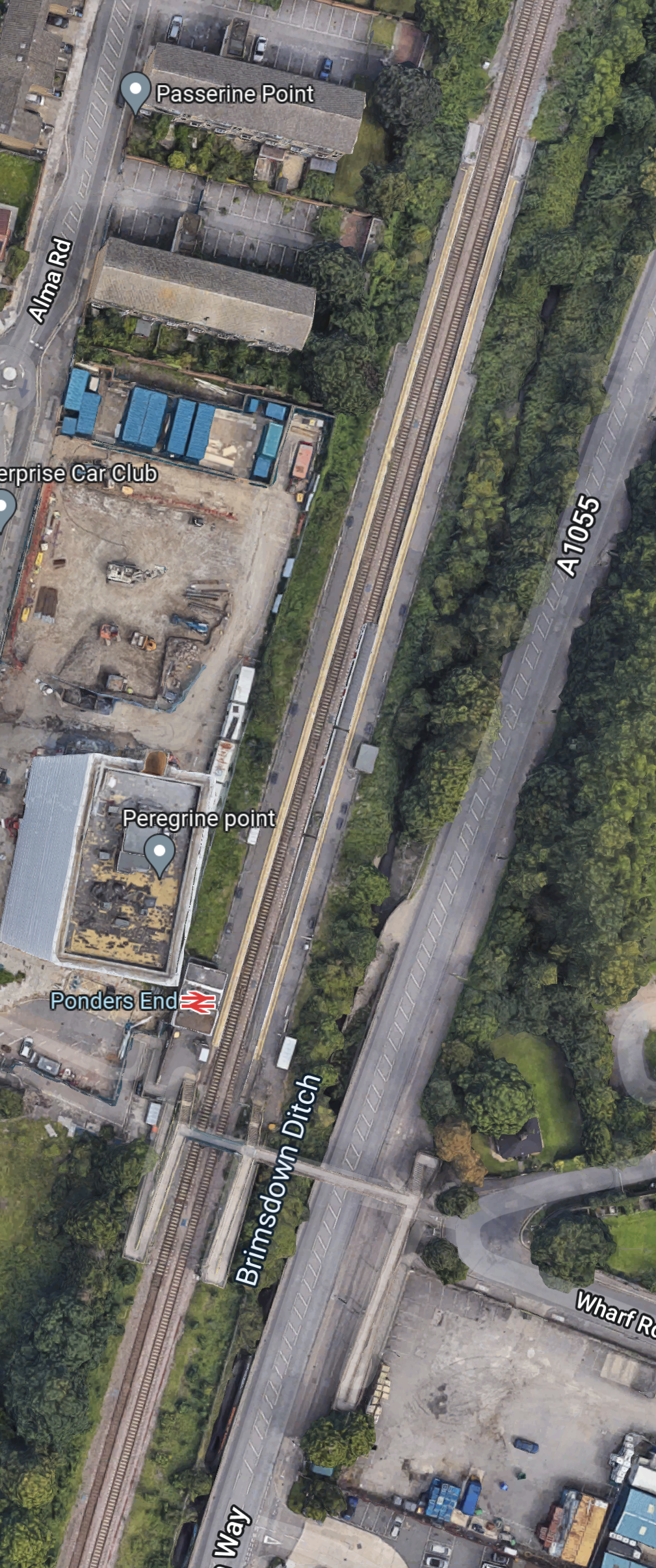
Note.
- The Brimsdown Ditch on the East side of the station.
- The footbridge spanning both the railway and the road.
- The footbridge has ramps for step-free access.
- I suspect that the platforms will take a 240 metre train.
These pictures show the station








Note.
- The station serves the Lee Valley Regional Park and the Lea Valley Athletics Centre, so it probably needs lifts in an ideal world.
- The bridge seems to be built high enough for a track or even two to pass underneath.
- There seems to be plenty of space between the railway tracks and the A1055 road.
I wonder if a very simple solution is going to be built.
Consider that the distance between the two stations either side of Ponders End station is 3.2 miles or 5150 metres. So if the loop is placed symmetrically around Ponders End station to the East of the station, that would mean that the loop started and finished around 1700 metres from Brimsdown and Meridian Water stations. The Brimsdown Ditch could be put in a culvert, if more space were needed.
A Southbound express after passing through Brimsdown station would then take the loop between the platform and the road at Ponders End station and then cross over to the main line after the station.
I could envisage the Southbound express path through the three stations, being as straight as possible for several hundred metres through Ponders End station, with very gentle curves to connect to the current Southbound track at each end.
To access the Southbound platform at Ponders End, there would be two crossovers from the loop to the track through the station at each end of the station. As the train would be stopping or accelerating away, when it crossed between the passing loop and the station track, it could be done at a much slower speed.
There will be no problem for Southbound represses overtaking a stopping train sitting in Ponders End station. The loop would be very simple and I suspect Network Rail have enough expertise to design it for perhaps 100 mph. The sharpest changes of direction would only be performed by the stopping train at a much slower speed.
But surely, a Northbound train will need to overtake a stopping one.
Could this be done at Meridian Water station by stopping the Northbound stopping train in Platform 3 at the station and allowing the Northbound expresses to overtake through Platform 4?
It would need a couple of crossovers either side of Meridian Water station and bi-directional running through Platform 3 at the station.
Conclusion
How many small rail schemes like this, that unlock housing and job opportunities could be accelerated by better design, management, planning and cooperation between stakeholders.
Aberdeen City Council And BP Sign Joint Venture Agreement To Develop City Hydrogen Hub
The title of this post, is the same as this article on Renewable Energy Magazine.
The title is a good description of the project and these are a few details.
- Production will start in 2024.
- The hub will produce 800 kilograms of green hydrogen per day.
- That will be enough for 25 buses and 25 other vehicles.
- Further investment would provide hydrogen for rail, freight and marine uses.
I don’t think this is a small project, as they are talking about potentially exporting the hydrogen.
These are a few thoughts.
Electricity Supply
In Can The UK Have A Capacity To Create Five GW Of Green Hydrogen?, I said the following.
Ryze Hydrogen are building the Herne Bay electrolyser.
- It will consume 23 MW of solar and wind power.
- It will produce ten tonnes of hydrogen per day.
The electrolyser will consume 552 MWh to produce ten tonnes of hydrogen, so creating one tonne of hydrogen needs 55.2 MWh of electricity.
Scaling those figures mean that to create 800 kilograms of hydrogen will need 44.16 MWh of electricity or if it is a 24/7 operation, the electrolyser will need a feed of 1.84 MW.
Currently, there are two offshore wind farms close to Aberdeen.
- European Offshore Wind Development Centre – 93 MW
- Hywind Scotland – 30 MW
That would provide enough electricity to provide a starter of under 2 MW.
I can see a lot more wind farms off the coasts around Aberdeen, as on all my visits to the city it has been windy and there is a lot of empty sea.
I don’t think providing enough renewable electricity for a very large electrolyser in Aberdeen will be a problem.
Hydrogen Exports
I would expect, that the hydrogen would go to Germany, as the Germans are backing BP in their wind farm ambitions and they are building a large hydrogen import terminal at Wilhelmshaven on the North-West German coast. The distance for a ship is under 500 miles.
BP’s Future Hydrogen Plans
This is a quote from Louise Kingham CBE, BP’s UK head of country and senior vice president for Europe.
Partnering with cities and corporates as they shape their paths to net zero is a core part of BP’s strategy. BP expects to partner with 10-15 cities globally by 2030 to provide innovative, integrated, and decarbonized energy solutions at scale to help them achieve their goals of net zero emissions. BP also aims to capture 10% of the low carbon hydrogen market in key geographies by 2030.
BP is investing across all the energy transition growth areas in the UK. In fact, we have committed to spend £2 in the UK for every £1 generated here out to the middle of this decade.
“Today’s announcement is evidence of that commitment in action and is supported by other ambitious plans to produce clean energy from UK offshore wind, develop carbon capture in Teesside and grow the country’s electric vehicle charging network.
BP would be in part using their expertise in providing oil and gas to the production and delivery of hydrogen to end users, be they large or small.
I can also see BP repurposing a few gas and oil production platforms into offshore hydrogen production hubs, as this could be a better financial route, rather than demolishing the platforms.
Conclusion
Birmingham is building a hydrogen hub at Tyseley Energy Park to fuel hydrogen buses and other vehicles.
Where is the plan for London’s hydrogen hubs?
Why Do More Elderly Men Die Of The Covids Than Women?
I asked this question of the Internet and found this article from The Times, which is entitled Why Are Men More Likely To Die From Covid Than Women?.
These are the first two paragraphs.
On Valentine’s Day last year, researchers at China’s Centre for Disease Control and Prevention submitted one of the first studies into who was dying of the new coronavirus that was spreading through Wuhan.
Two clear findings jumped out. Firstly, the virus appeared to hit the elderly hardest. Secondly, if you were a man, you were much more likely to die.
The article goes on to say, that men are 24 percent more likely to die.
I am coeliac and here are some facts about coeliac disease.
This page on the NHS web site is an overview of coeliac disease.
There is a sub-section called Who’s Affected?, where this is said.
Coeliac disease is a condition that affects at least 1 in every 100 people in the UK.
But some experts think this may be underestimated because milder cases may go undiagnosed or be misdiagnosed as other digestive conditions, such as irritable bowel syndrome (IBS).
Reported cases of coeliac disease are around 3 times higher in women than men.
It can develop at any age, although symptoms are most likely to develop:
during early childhood – between 8 and 12 months old, although it may take several years before a correct diagnosis is made
in later adulthood – between 40 and 60 years of age
People with certain conditions, including type 1 diabetes, autoimmune thyroid disease, Down’s syndrome and Turner syndrome, have an increased risk of getting coeliac disease.First-degree relatives (parents, brothers, sisters and children) of people with coeliac disease are also at increased risk of developing the condition.
The three most important facts in this are.
- The condition affects 1 in every 100 people in the UK.
- Reported cases are three times higher in women than men.
- First degree relatives of coeliacs are at increased risk of developing the condition.
I am sure my father was an undiagnosed coeliac.
When I was born in 1947, there was no test for coeliac disease in children, as one wasn’t developed until 1960.
Testing for many years was by the Gold Standard of endoscopy, which for a child is not an easy procedure.
I’m certain, that in 1997, I was one of the first to be diagnosed in a General Hospital by genetic testing.
At fifty, a locum had given me a blood test and I had been found to be very low on B12. Despite a course of injections, it refused to rise so I was sent to Addenbrooke’s Hospital, where I saw a consultant, who gave me a short chat and then got a nurse to take some blood samples.
Two days later, I received a letter, saying I was probably coeliac and it would be confirmed by endoscopy.
I can’t think how else it was done so quickly, unless they were using a genetic test.
I went gluten-free and the rest as they say is history.
In some ways there’s been two of me.
- BC – Before Coeliac – Frequently unwell, lots of aches and pains and weak mentally.
- AD – After Diagnosis – Healthier, few aches and pains and much stronger mentally.
My immune system appears to be much stronger now!
I believe my son was also coeliac.
Undiagnosed coeliacs tend to have poor immune systems and he died of pancreatic cancer at just 37, because he refused to get himself tested.
As there was no test for coeliac disease in children until 1960, anybody over sixty has a higher chance of being coeliac with a poor immune system and be at higher risks from both the covids and cancer.
It should be noted that according to the NHS, there are three times more female coeliacs than male.
Could this be explained by the fact that undiagnosed coeliac disease can be a cause of female infertility? So when a lady has difficulty conceiving, doctors test for it. So perhaps, by the time they get to 70 a higher proportion of female coeliacs have been diagnosed, compared to male ones, which may explain why more elderly men than women die of the covids.
More research needs to be done.
Highland Council Forges Green Hydrogen Pact
The title of this post, is the same as that of this article on renews.biz.
These are the first two paragraphs.
Getech subsidiary H2 Green has signed a memorandum of understanding (MoU) with the Highland Council in Scotland aimed at creating a regional network of green hydrogen hubs across the Scottish Highlands.
Under the terms of the MoU, H2 Green and the Highland Council will produce a regional plan to develop a network of green hydrogen hubs at optimal locations across the region.
The first hub appears to be in Inverness, as I wrote in Hydrogen Hub Plan Will Cut Transport Sector Emissions In The Highlands.
But that is only the start.
- Green hydrogen will be used in transport in the Highlands.
- By-products like oxygen and heat will be distributed.
- Delivery of Highland decarbonisation will be planned.
- SGN Commercial Services will service large-volume customers.
- Agreements are in place for Eversholt Rail to deploy their hydrogen-powered trains on the Far North and West Highland Lines of Scotland.
This statement from Jonathan Copus of Getech, sums up the objectives of the hydrogen project.
These activities combined with the Highland Council initiative are set to establish the Highlands as the leading UK-centre for decarbonisation and innovation; they will also support job creation, deliver energy security and provide a sustainable path for the region’s net zero transition.
I believe that a similar approach could be taken in other parts of the UK. Cornwall, East Anglia, Lincolnshire, much of Wales and the Borderlands between England and Scotland come to mind.
Each region will probably, decarbonise slightly differently and each will develop more and more innovative ways to use the hydrogen.
Conclusion
Hydrogen will play a large part in the decarbonisation of the UK.
Sydenham Hill Station – 11th March 2022
When I wrote Advance Warning Of Brixton To Beckenham Junction Rail Closure In July, I realised I’d never been to Sydenham Hill station.
So this morning, I went to have a look.
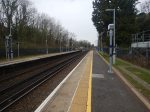

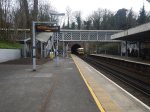
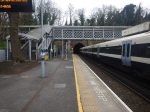

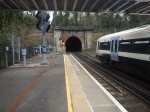
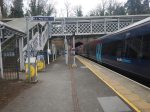
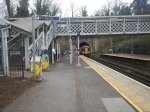
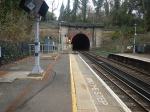



Note.
- Penge tunnel doesn’t look to be the widest of tunnels.
- Few if any freight trains, seem to use the route.
- Sydenham Hill station, certainly isn’t one of the grandest of stations.
I doubt there’s much work to do at the station, during the closure.
 The Anonymous Widower