Coventry To Leicester In A Flash? New Rail Plans Promise Faster, Greener Travel!
The title of this post, is the same as this article on Rail Technology Magazine.
This is the sub-heading.
Passengers travelling between Coventry, Leicester and Nottingham have outlined their support for proposed upgrades to reconnect the cities by direct rail for the first time in over two decades.
These first two paragraphs add some detail.
Despite being located just 23 miles apart, travelling between the cities requires passengers to change trains in Nuneaton, with wait times for the connection often exceeding 30 minutes. As a result, just 3% of trips between Coventry and Leicester are made by train; compared to 30% of journeys made between Coventry and Birmingham.
Midlands Connect recently visited Nuneaton railway station to speak with passengers travelling between the cities, waiting for their onward connection, about the proposed upgrades and how they would be impacted.
This OpenRailwayMap shows the route between Coventry and Leicester.
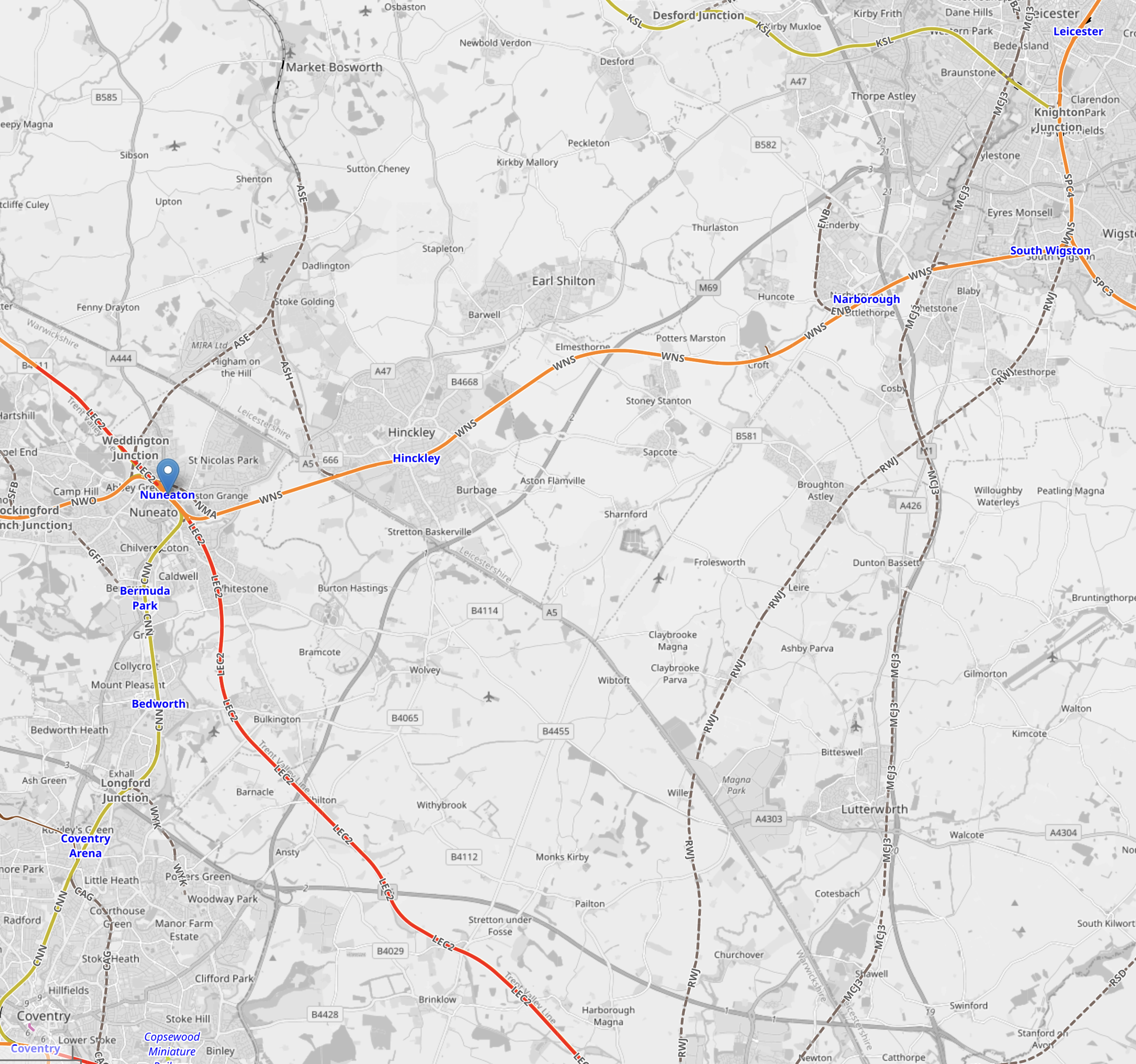
Note.
- Coventry is in the South-West corner of the map.
- Leicester is in the North-East corner of the map.
- Nuneaton, where you currently have to change trains,is marked by a blue arrow.
- The red track passing through Nuneaton station, is the Trent Valley Line.
Services between Coventry, Leicester and Nuneaton are run by two companies.
- CrossCountry run a half-hourly service between between Birmingham New Street and Leicester via Nuneaton.
- West Midlands Trains run an hourly service between Leamington Spa and Nuneaton via Coventry.
I feel ideally, that Leicester and Coventry need a half-hourly service, but an hourly service would be easy and a half-hourly service would mean a four-trains per hour (tph) service between Leicester and Nuneaton.
Probably, the easiest service would be to extend the hourly Leamington Spa and Nuneaton to Leicester, with a reverse at Nuneaton.
What Does The Article Mean By Greener Trains?
I would expect the article means battery-electric trains, but the only mention is in the title.
Could Leicester And Coventry Be Served By Battery-Electric Trains?
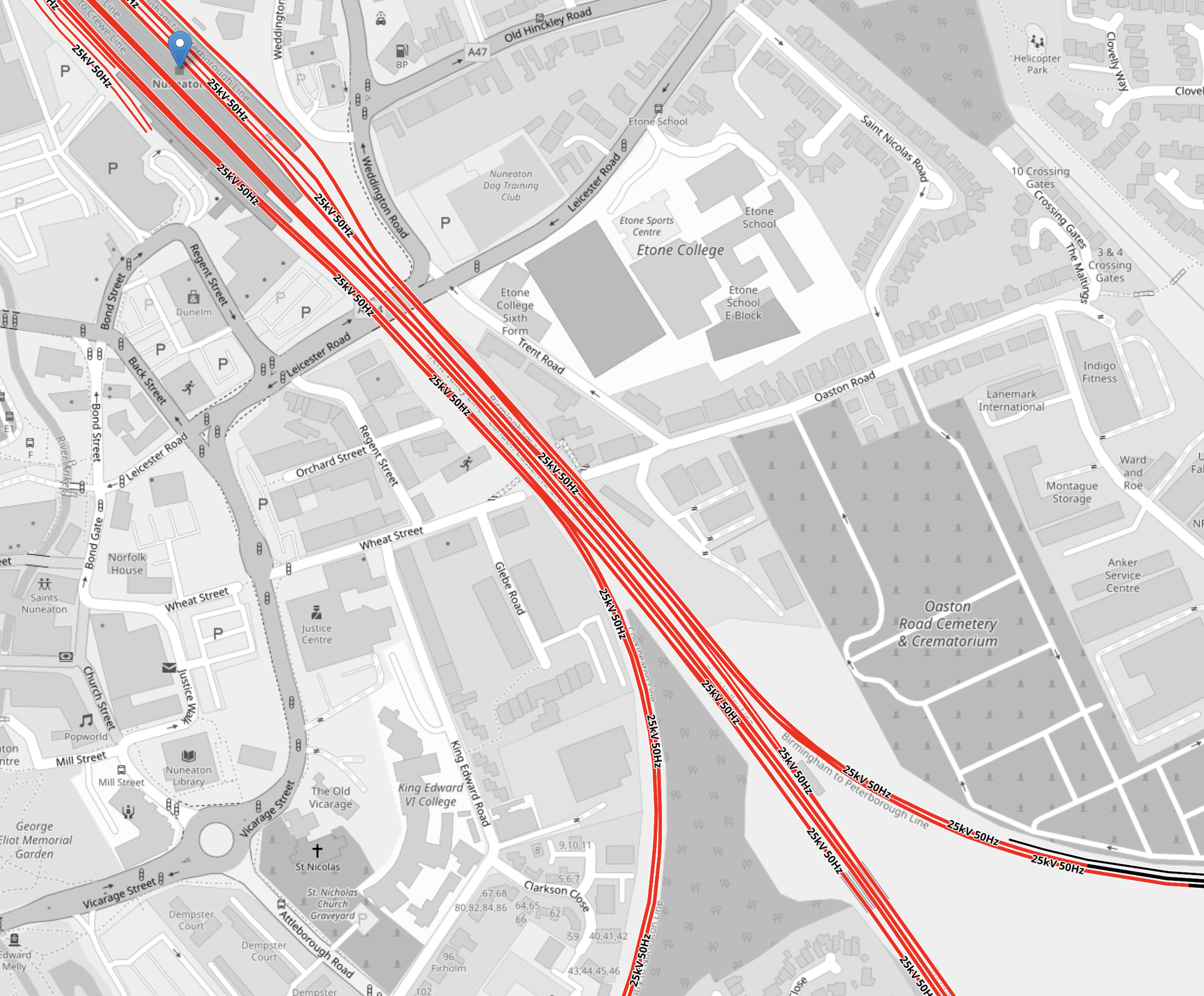
This OpenRailwayMap shows the track layout at Nuneaton station.
And this OpenRailwayMap shows the track layout at Coventry station.
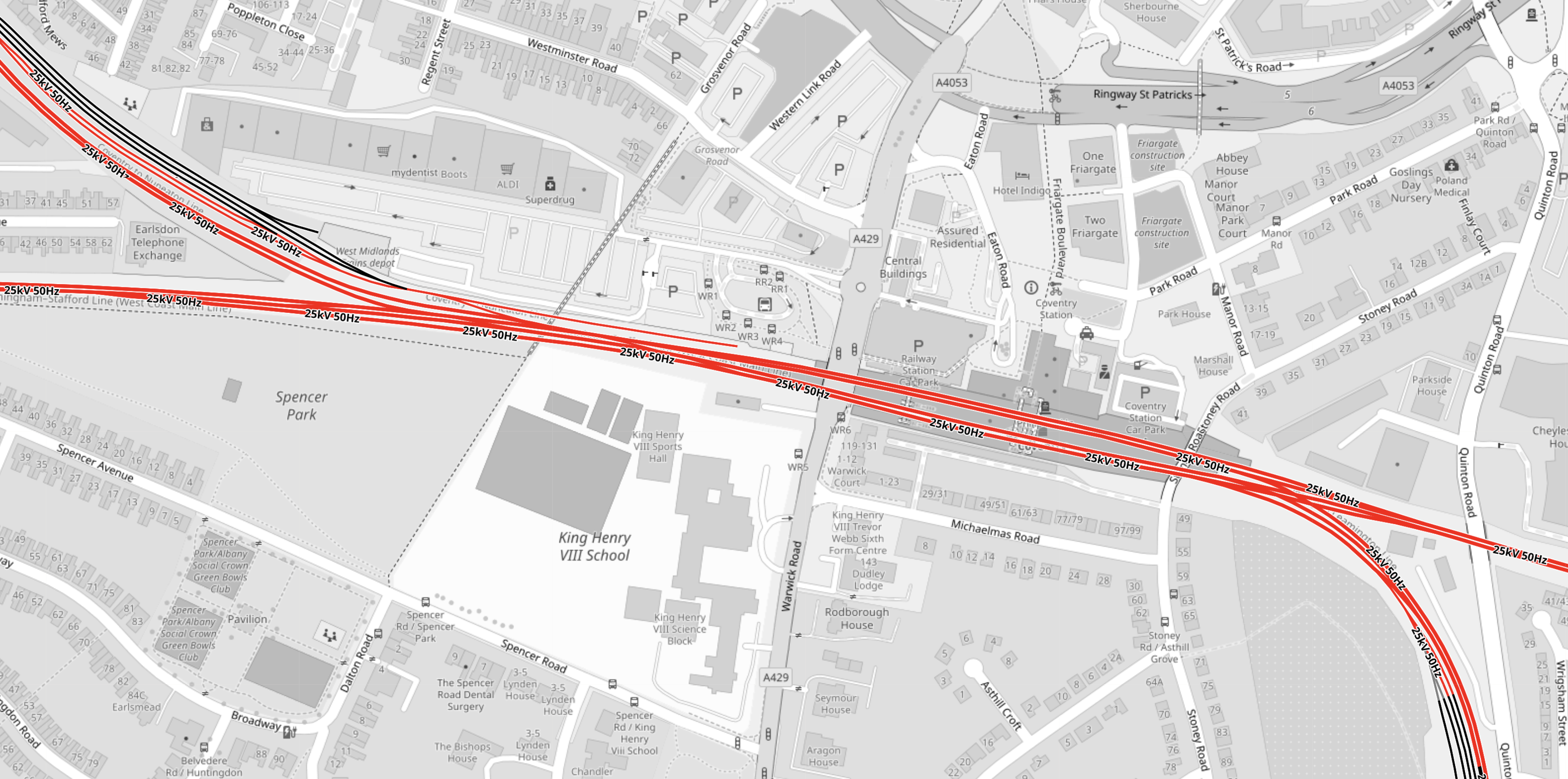
As electrified tracks are shown in red, it would appear that all tracks at both stations are electrified.
The platforms at Coventry and Nuneaton, may be good enough for a quick Splash and Dash, but trains don’t spend long enough in the stations for a full charge.
- Perhaps the solution is to install one of Siemens’s Rail Charging Converters in Leamington Spa and Leicester stations.
- The distance between Leamington Spa and Leicester stations is 48.3 miles, which is well within the range of a battery-electric train.
- Leamington Spa and Nuneaton takes 38 minutes.
- Leicester and Nuneaton takes 27 minutes.
I feel an efficient hourly service could be created between Leicester and Leamington Spa using battery-electric trains.
Onward To Nottingham
Nottingham is another 27.5 miles from Leicester and currently takes 48 minutes in a Class 170 train.
Connections To The North-West And Scotland At Coventry And Nuneaton
They are good and could be more numerous and better.
Could Hydrogen-Powered Trains Be Used?
Yes! If a UK hydrogen-powered train existed!
Cost Of The Project
As reasonably modern trains happily use the route between Leamington Spa and Leicester every day, I suspect that little needs to be done on the full route to create a new service.
So the cost of the project would be sufficient new battery-electric trains and the ability to charge them at Leamington Spa and Leicester.
Conclusion
I believe that Coventry and Leicester would be an easy route to run using an hourly battery-electric train.
It could be extended to Leamington Spa at one end and Nottingham at the other.
Electrification – The Baldrick Way
Electrification In England
There are two major electrification projects underway in England at the moment; the Midland Main Line to Sheffield and Nottingham and the TransPennine Upgrade between Church Fenton and Stalybridge via Leeds and Huddersfield.
In addition, there are other important routes, that need to be electrified around the UK.
- Edinburgh and Aberdeen
- Crewe and Holyhead
- Newbury and Taunton
- Cardiff and Fishguard
- Bristol and Penzance
- Peterborough and Birmingham
- Peterborough and Doncaster via Lincoln
- Felixstowe and Peterborough
There must be loads of other important routes.
Do We Need Electrification Or A Zero-Carbon Railway?
A zero-carbon Railway is probably sufficient, as that would include traditional electrification.
Are The Electrification On The Midland Main Line And The TransPennine Upgrade Working To Similar Objectives?
The Midland Main Line carries the following services.
- Long distance expresses between London St. Pancras and Derby, Nottingham and Sheffield, which will be run in the future, by Hitachi bi-mode express trains.
- Local suburban electrics between London St. Pancras and Bedford and Corby.
- A variety of heavy freight trains between Chesterfield and London.
- Various regional services run by diesel multiple units.
The Midland Main Line is a typical mixed railway.
It is electrified between London St. Pancras and Wigston Junction, which is a total of 95.3 miles.
Sheffield is a further 69.4 miles from Wigston and Nottingham is just 31.1 miles.
The maximum range needed by a battery-electric train is 69.4 miles.
The TransPennine Route carries the following services.
- Long distance expresses between Liverpool and Newcastle and Hull via Manchester, Huddersfield, Bradford and Leeds, which are run by Hitachi bi-mode express trains and diesel multiple units.
- Local suburban electrics around Liverpool, Manchester and Leeds
- A variety of heavy freight trains along the route.
- Various regional services run by diesel multiple units.
The TransPennine Route is another typical mixed railway and carries a similar traffic mix to the Midland Main Line.
Much of the TransPennine Route is electrified, with these exceptions.
- Cleethorpes and Doncaster 52.1 miles
- Doncaster and Manchester Piccadilly – 61.2 miles
- Manchester United FC and Liverpool South Parkway – 26.2 miles
- Hull and Leeds – 51.8 miles
- Redcar and Northallerton – 28.1 miles
- Scarborough and York – 42.1 miles
- Stalybridge and Church Fenton – 50 miles
The maximum range needed by a battery-electric train is 61.2 miles.
This brief analysis indicates to me, that Hitachi battery-electric bi-modes with a range of eighty miles on batteries and charging at selective stations like Cleethorpes, Hull, Nottingham, Redcar, Scarborough and Sheffield could run electric high speed trains on both the Midland Main Line and the TransPennine Route with very little extra infrastructure.
I asked Google AI what is the range of a Class 802 train on batteries and received this reply.
A Class 802 train converted for a battery-electric trial, known as BEMU, has demonstrated the capability to run up to 60 miles (approximately 97 km) on batteries in a trial setting, with real-world data suggesting potential future trains could achieve a range of 100 to 150 km (62 to 93 miles). This technology is intended to allow these trains to cover non-electrified sections of track, reducing the need for overhead wires and potentially saving on electrification costs for intercity routes.
In What Will Be The Range Of A Hitachi Class 800 Battery Train?, I came to this conclusion.
The first version of the battery-electric train will have a range of around a hundred miles, so that they can handle the Great Northern and Great Eastern Joint Line diversion, which is 93.7 miles, on battery power.
But fairly soon after introduction into service, I will be very surprised if they don’t claim the Guinness world record by running farther than the Stadler FLIRT Akku’s 139 miles.
No-one likes being second!
The 93.7 miles needed for the East Coast Main Line diversion via the Great Northern and Great Eastern Joint Line through Lincoln will be more than enough range for Hitachi’s battery-electric trains to run the full length of both the Midland Main Line and the TransPennine Route.
Electrifying A Route
I think that Network Rail have identified an efficient way to electrify an express route.
You start by doing these actions.
- Get the track layout right, so that trains can use the route at the optimal speed.
- Update the signalling to a high standard. I suspect digital signalling would be a good idea, to maximise the capacity of a route.
- Make sure, that the chosen battery-electric express trains can handle the route.
- Charging stations would be installed as required.
The battery-electric trains would be introduced as soon as the route is ready.
Hopefully with good project management, there would be the following benefits compared to traditional electrification.
- Difficult sections like tunnels could be left without electrification.
- Fewer bridges would need to be demolished and rebuilt.
- There would be less disruption to local residents.
- Siemens have developed a Rail Charging Converter, which connects to the domestic rather than the National Grid, so is easier to install.
But the big benefit is that new electric trains could probably be introduced earlier, which hopefully should increase ridership and revenue.
Once the expresses were working well, the best way to decarbonise the rest of the services on the route can be ascertained and actioned.
South Eastern Railway Deploys IsoMat Thermal Technology To Keep Trains On The Tonbridge To Hastings Line Running In Hot Weather
The title of this post, is the same as that of this news item on the Network Rail web site.
This is the sub-heading.
A new type of technology is being trialled on the Tonbridge to Hastings railway line to help keep trains running in hotter weather, and more reliable journeys for passengers and freight customers.
These two paragraphs add more details.
The South Eastern Railway has partnered with UK green tech start-up Flint Engineering to combat excessive heat in railway signalling cabinets that can exceed 70°C, with a new patented system that requires no power, maintenance, or internal cabinet modifications, and can be installed in under an hour.
Flint’s innovative IsoMat technology delivers peak temperature reductions of over 21%, on the hottest days, transferring thermal energy thousands of times more efficiently than copper or aluminium alone.
This is one of those ideas, that could be filed under Too Good To Be True.
This picture shows the device in operation.
I can see this device having many uses, in the most surprising places.
National Grid Has Awarded £12bn In HVDC Supply Chain Agreements
The title of this post, is the same as that of this press release from National Grid.
These are the first three paragraphs.
National Grid has completed the award of its High Voltage Direct Current (HVDC) civil works supply chain framework, with £12bn worth of agreements confirmed. This announcement marks the third and final stage of our £59bn supply chain framework awards and underlines the commitment to delivering the energy infrastructure needed to support the Great Grid Upgrade and the UK’s energy transition.
A total of six HVDC converter civil works suppliers have been awarded positions on Lot 1 of the Framework Agreement totalling approximately £9.07bn. In addition, three HVDC onshore cable civil works suppliers being awarded places on Lot 2 of the Framework, worth an estimated £3.7bn. The successful HVDC converter civils suppliers are Balfour Beatty, BAM Nuttall, Galliford Try, Laing O’Rourke, Skanska and Taylor Woodrow. The HVDC onshore cable civils Framework has been awarded to Balfour Beatty, Murphy, and VolkerFitzpatrick.
Contracts have been secured for a five-year period, with the potential to extend for a further three years. Both Frameworks cover confirmed and anticipated projects, including Eastern Green Link 4, in partnership with SP Energy Networks and LionLink in partnership with TenneT .
These are a lot of money allocated to projects, that will be delivered in the next few years.
Where’s the consolidated plan for capital expenditure from the Water Industry?
Water is also simpler, than electricity, as you are only dealing with one country. If you go through the paragraphs above, you’ll find TenneT, who do a similar job to National Grid in the Netherlands and parts of Germany.
I also found this advert from Thames Water, in a Southeastern train last week.
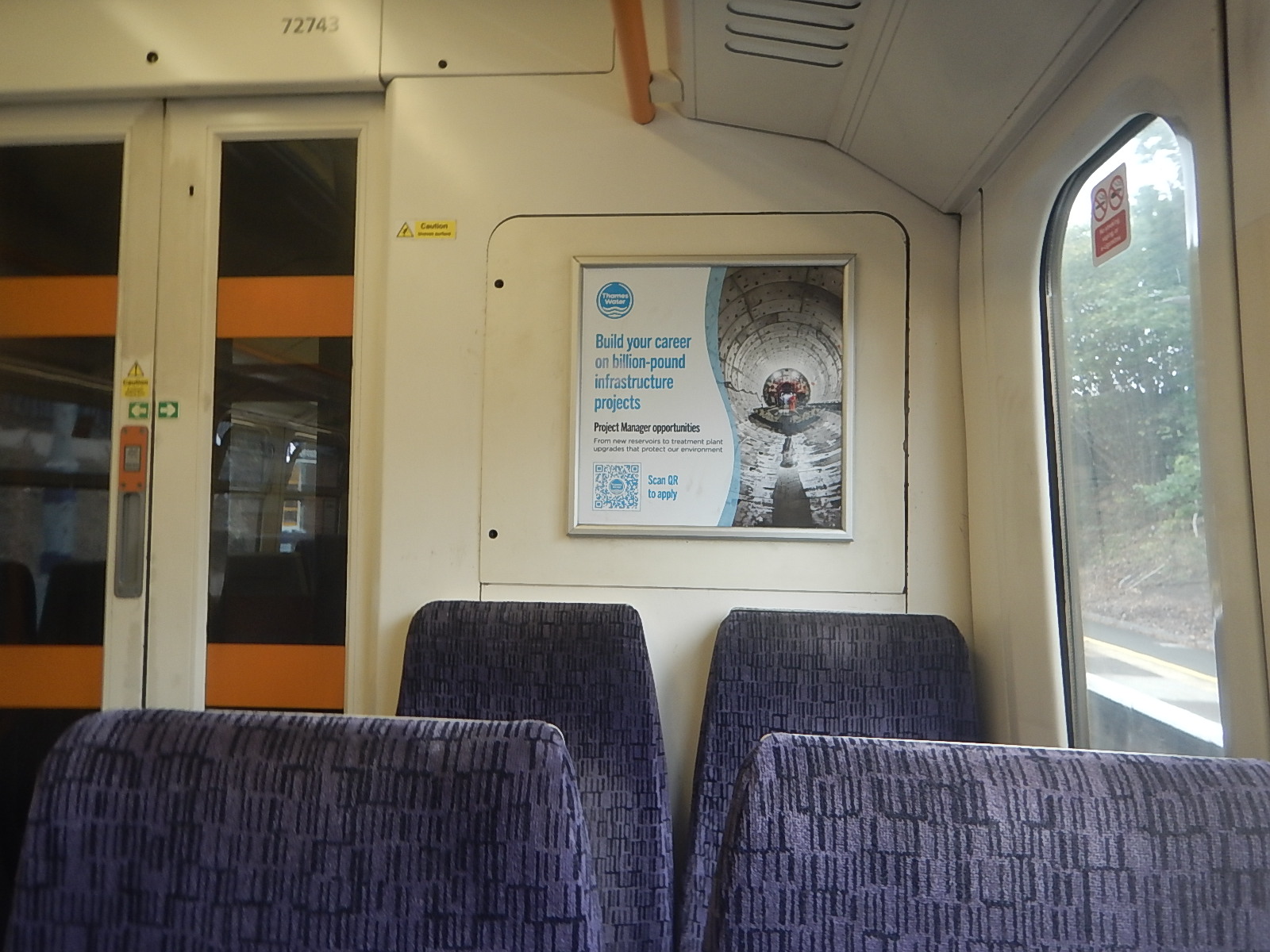
Does this indicate that Thames Water has project management problems?
I’ve Just Glimpsed The Future Of Train Travel Across The North Of England And I Like It
Yesterday, I had an appointment at Liverpool Lime Street station at four o’clock, so as I hadn’t seen the works for the TransPennine Upgrade for some time, I decided to go the long way round with a change of train from LNER to TransPennine Express at Leeds.
These sections document my day.
London King’s Cross To Leeds In An InterCity 225
I took these pictures on the journey.
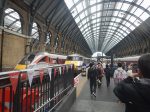
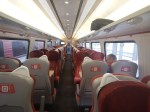
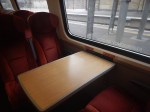

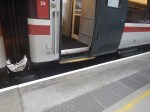

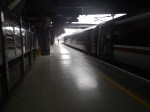
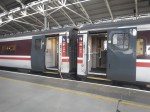
Note.
- The 31 InterCity 225 trains were built around 1990.
- They have a capacity of 535 seats, whereas the newer Hitachi Class 801 trains have a capacity of 611 seats. Both trains are nine cars with both First and Standard seats.
- There is more of a step-up and step-down when entering or leaving the trains, compared to the best of today’s trains.
- They are now being phased out in favour of ten new CAF tri-mode Class 897 trains, which should be entering service in 2027.
- No details are available of the seating capacity of these trains, but they could be between 650 and 700, so they could maximise capacity on any LNER route.
Yesterday, the InterCity 225 performed well, although the windows at the seat where I sat, were rather dirty.
Changing Trains At Leeds Station
I changed to TransPennine Exzpress at Leeds station.
- At least, Leeds station, is one of the few in the UK, with a ticket office behind the barrier. Reading station please note this.
- But, I did have to walk across the bridge from one side of the station to the other.
In the end, I caught the TransPennine Express with about thirty seconds to spare.
Between Leeds And Huddersfield Stations
I took these pictures between Leeds and Huddersfield stations.
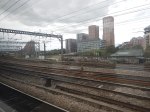

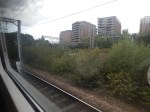
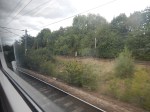
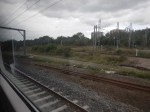
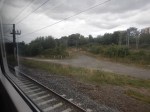
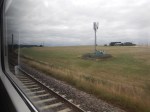


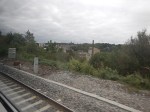
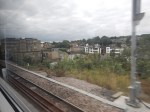
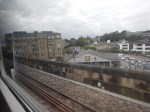

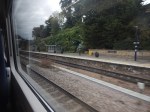
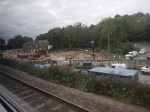
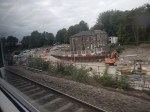


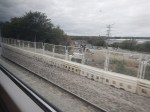
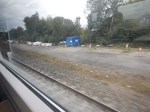





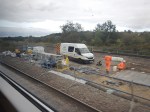
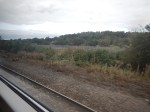
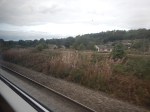
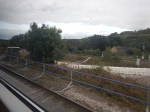
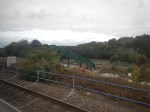




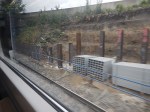
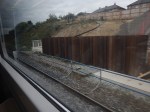
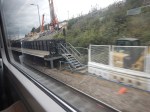
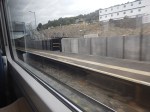
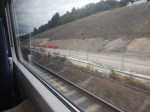
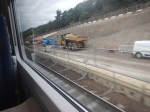
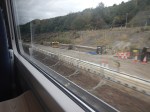
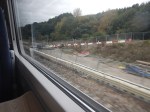
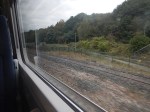
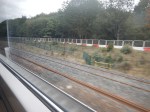
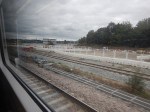
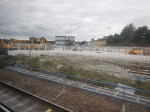

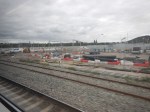
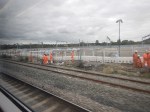
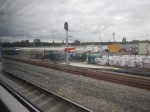
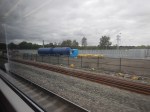
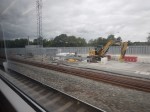
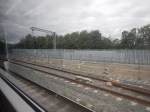
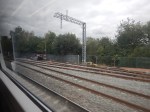
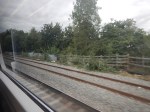
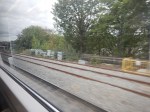


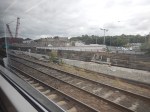
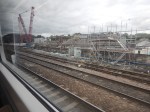
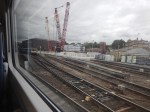
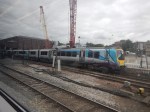
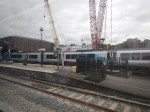
Note.
- Dewsbury and Huddersfield stations is about eight miles and takes about eight minutes.
- It is virtually a continuous building site, where extra tracks are being inserted.
- Three stations are being rebuilt.
- Overhead electrification is being installed. But except for approaching Huddersfield, there’s not much to be seen.
- OpenRailwayMap gives the maximum speed between Dewsbury and Huddersfield stations as between 60-75 mph.
The ride on my Class 803 train was very quiet and smooth. Was it on battery power or was I sitting in a coach without a diesel engine underneath?
Huddersfield Station
I took these pictures at Huddersfield station.
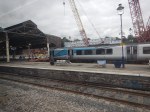
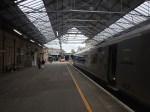
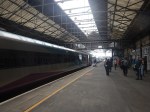

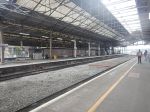
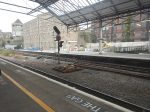
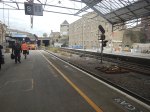












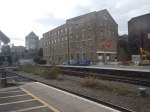
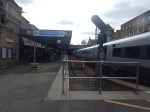
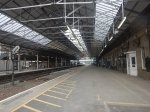
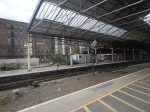
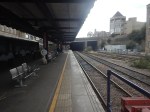
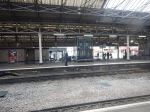

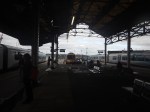
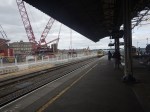
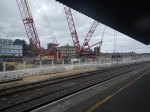


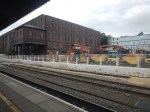
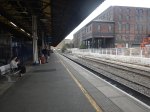
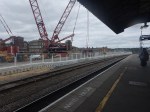

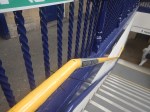
Note.
- Huddersfield station is Grade I Listed.
- There is a pub in each wing.
- I had a beer in the West Wing.
- There are currently three main through platforms and three bay platforms.
- Extensive works, which will be part of the TransPennine Upgrade, will include electrification, a new roof, a new footbridge, and two extra through platforms.
Huddersfield station will be the jewel in the Costa del Yorkshire.
The Platforms At Huddersfield Station
This OpenRailwayMap shows the platforms in Huddersfield station.
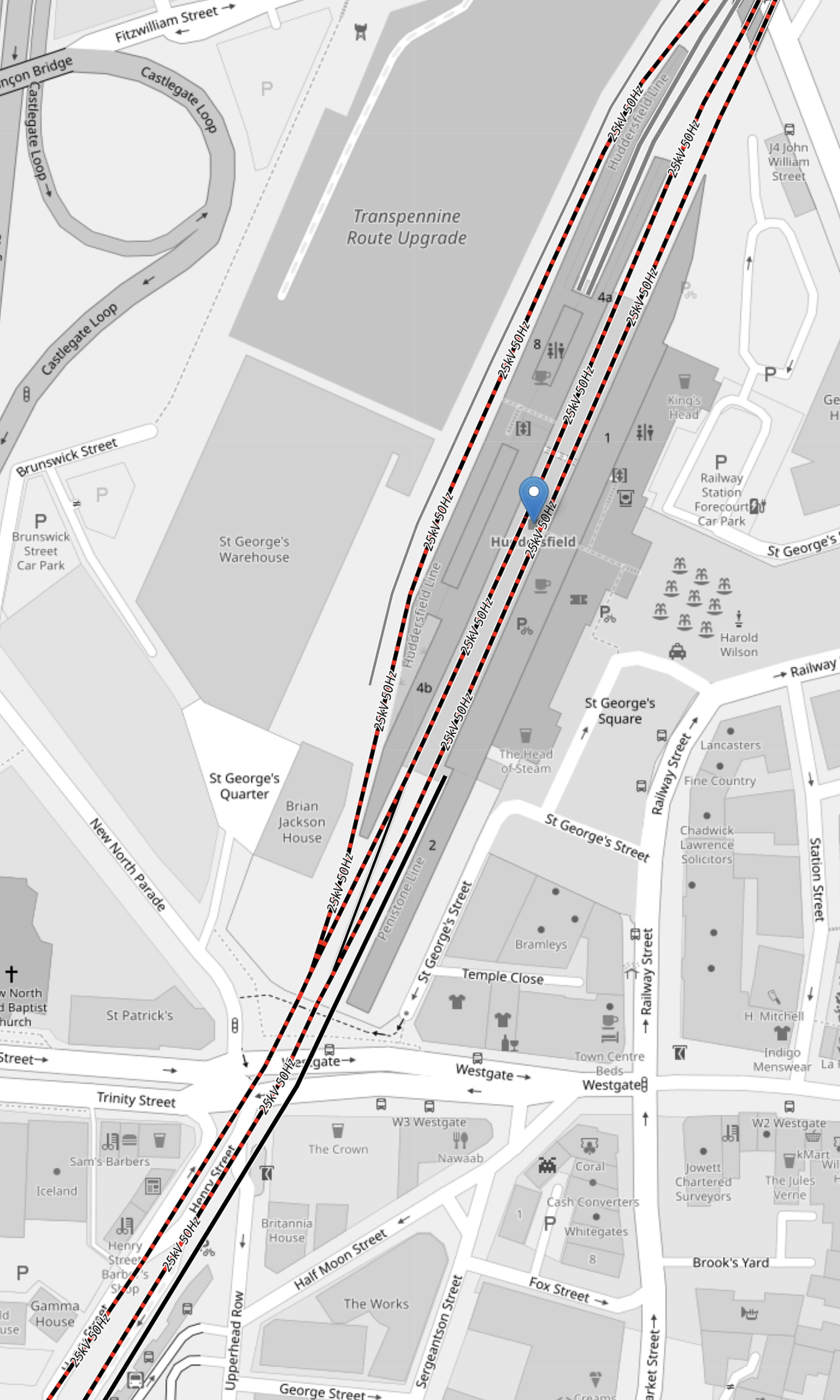
Note.
- The red and black tracks are being electrified.
- Of the current platforms, Platforms 1, 4 and 8 will be electrified.
- The two bay platforms; 5 and 6, will be converted into through platforms.
- Platform 2 is the bay platform in the South-West corner of the map, that is used by the shuttle train from Sheffield.
I am sure extra platforms could be electrified as required, as there must be a good electrical connection at Huddersfield station.
A Tram-Train Service Between Huddersfield And Sheffield Stations
This OpenRailwayMap shows platform 2 at Huddersfield station.
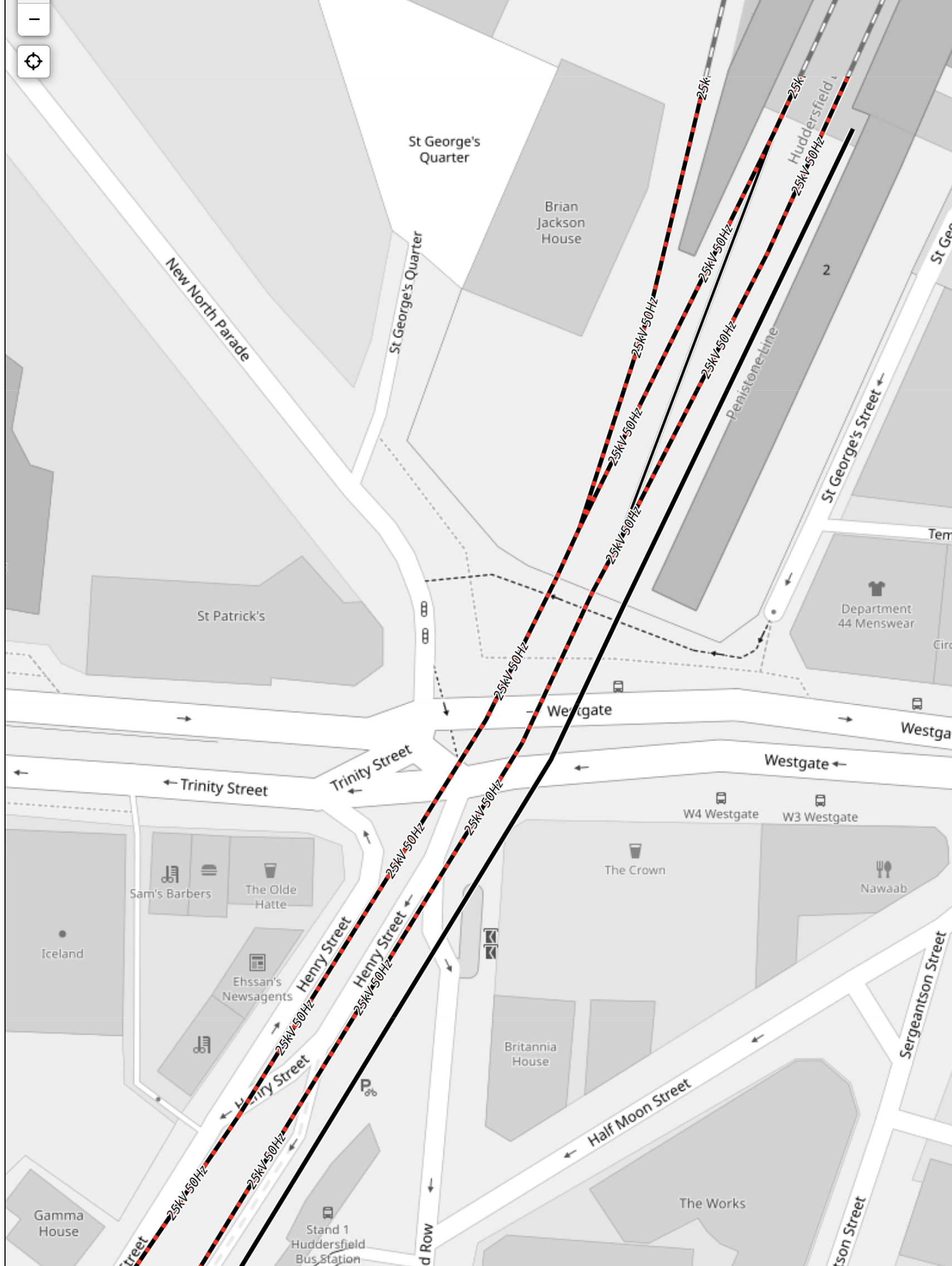
Note.
- Platform 2 is the black track at the right of the two through tracks, that are being electrified.
- Platform 2 is a bay platform close to the Head of Steam pub.
- I estimate that the platform is about 90 metres long.
- I suspect Platform 2 could be lengthened if required.
- Sheffield’s Class 399 tram/trains are 37.2 metres long, so a pair should fit in Platform 2.
- The Class 398 tram/trains can run on battery power and climb hills in South Wales.
- Platform 2 at Huddersfield station could be electrified to charge the tram/trains.
- There could be a significant height difference between Huddersfield and Sheffield stations of about 40 metres, which could be used to charge tram/trains on the way down.
- I feel with some track improvements, that a four trains per hour (tph) service could be run.
The service would call at Meadowhall, Chapeltown, Elsecar, Wombwell, Barnsley, Dodworth, Silkstone Common, Penistone, Denby Dale, Shepley, Stocksmoor, Brockholes, Honley, Berry Brow and Lockwood
The Pair Of Cranes In Huddersfield Station
These can’t be missed in the pictures. But why two massive cranes?
With an old roof to be taken down and a new roof and a footbridge to be lifted into place, I believe Network Rail have decided to bring in two of largest mobile cranes available in the UK, so that all the lifting doesn’t delay the project.
Between Huddersfield And Stalybridge Stations
I took these pictures between Huddersfield and Stalybridge stations.
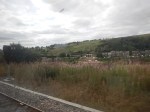
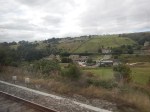
Note.
- The Class 802 train was running freely along a well-laid track.
- There are four stations between Huddersfield and Stalybridge; Slaithwaite, Marsden, Greenfield and Mossley(Manchester).
- The stations were in reasonable condition, but some needed new footbridges and a bit of refurbishment.
- There was virtually no signs of any foundations for electrification.
This map shows the route.
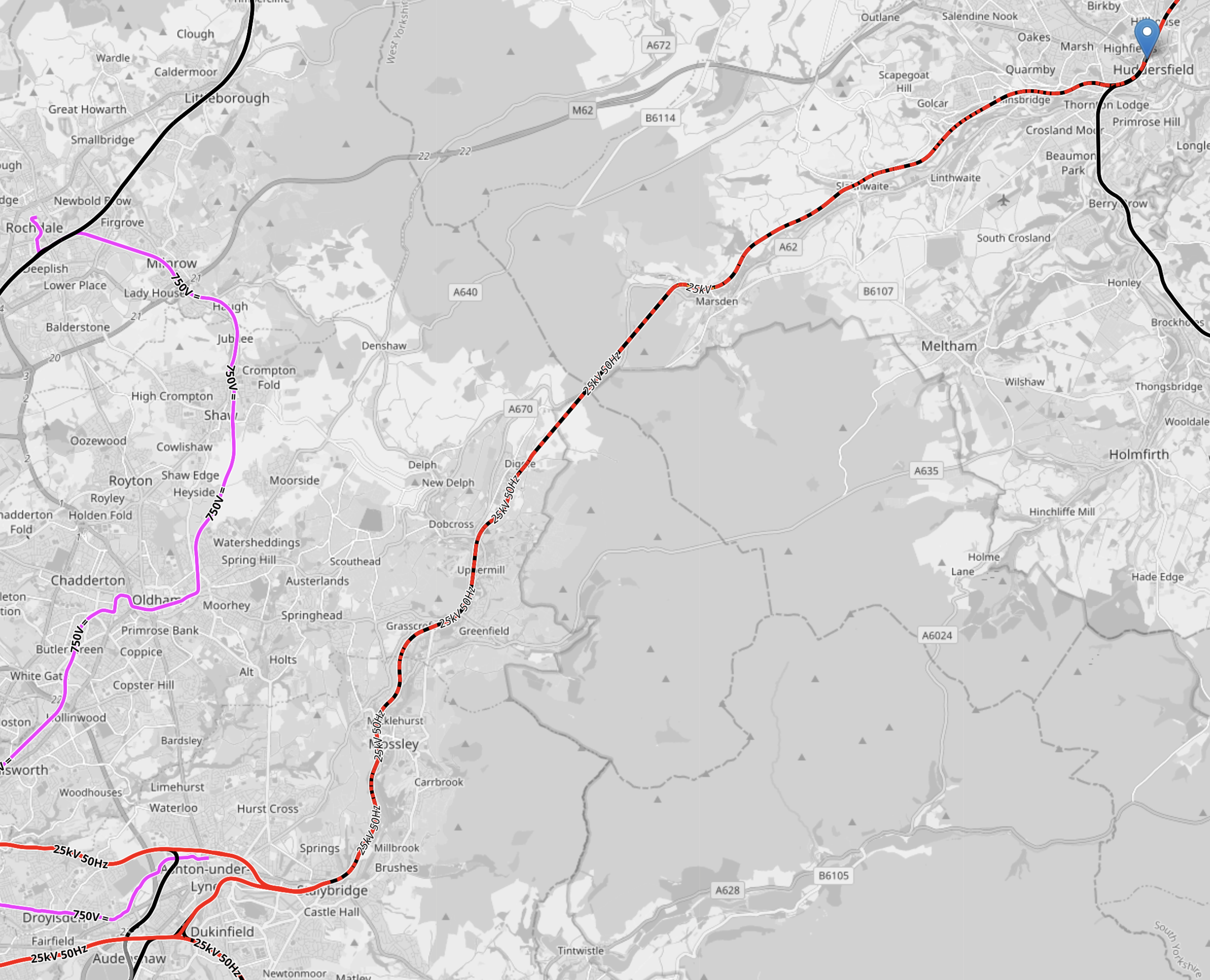
Note.
- The pink tracks are the Manchester Metrolink.
- The red tracks are electrified at 25 KVAC overhead.
- The red and black tracks are being electrified.
- Huddersfield is indicated by the blue arrow in the North-East corner of the map.
- Stalybridge station is in the South-West corner of the map.
- The pink track in the South-West corner of the map is the Manchester Metrolink branch to Ashton-under-Lyme.
- The route between Huddersfield and Stalybridge is shown as it will will be fully electrified.
- Huddersfield and Stalybridge is 18 miles.
- There are three short tunnels between Huddersfield and Stalybridge.
I wonder, if it would be more affordable to not put up wires between Huddersfield and Stalybridge and use battery-electric passenger trains and hydrogen freight locomotives?
Stalybridge Station
I took these pictures at Stalybridge station.


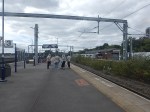

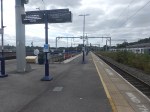
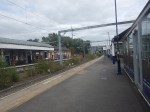
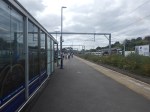
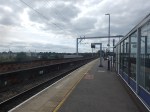
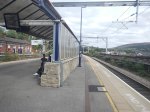
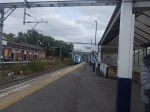
The station is fully-electrified and has direct services to Huddersfield, Hull, Leeds, Liverpool, Manchester Piccadilly, Manchester Victoria, Newcastlle, Wigan and York.
Will Liverpool Lime Street And Newcastle Be Fully Electrified?
Consider.
- Liverpool Lime Street and Newcastle stations is 180.8 miles.
- Newcastle and Church Fenton stations is 91.4 miles and is fully-electrified.
- Liverpool Lime Street and Stalybridge stations is 39.4 miles and is fully-electrified.
This means that the gap between Church Fenton and Stalybridge stations is just fifty miles.
Real Time Trains indicate that the current Class 802 trains on the route run on diesel between Stalybridge and York stations, which is 60.8 miles.
- Changing power in Stalybridge and York stations means if anything goes wrong passengers can be easily rescued.
- From what I saw on Thursday, it looks like electrification will be completed between Neville Hill depot and Huddersfield.
I wouldn’t be surprised, if they just electrified to the West of Stalybridge and the East of Huddersfield.
That would mean that the 18 miles between Stalybridge and Huddersfield would be run on batteries.
- But it would also avoid electrifying three tunnels.
- How much disruption would be saved, by not electrifying the tunnels?
- Freight trains would use something like a bi-mode Class 99 locomotive, but it would only need a range of 18 miles on diesel.
I can also see improvised bi-mode locomotives being used like this combination of a Class 66 and Class 90 locomotives.
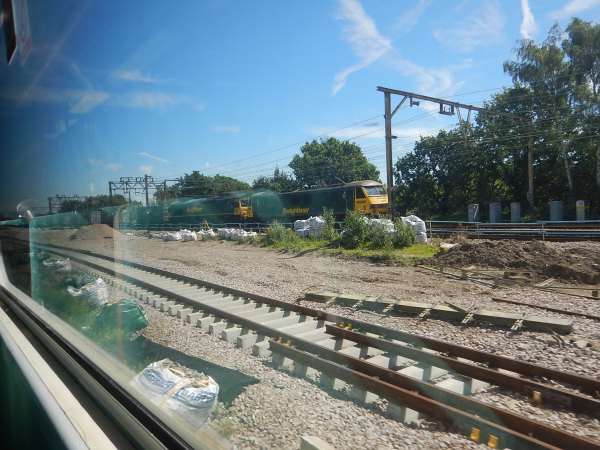
It was certainly doing its job, when I saw the combination at Shenfield.
Liverpool Lime Street Station Has A Problem With Flying Rats
Liverpool Lime Street station may have a problem with pigeons.
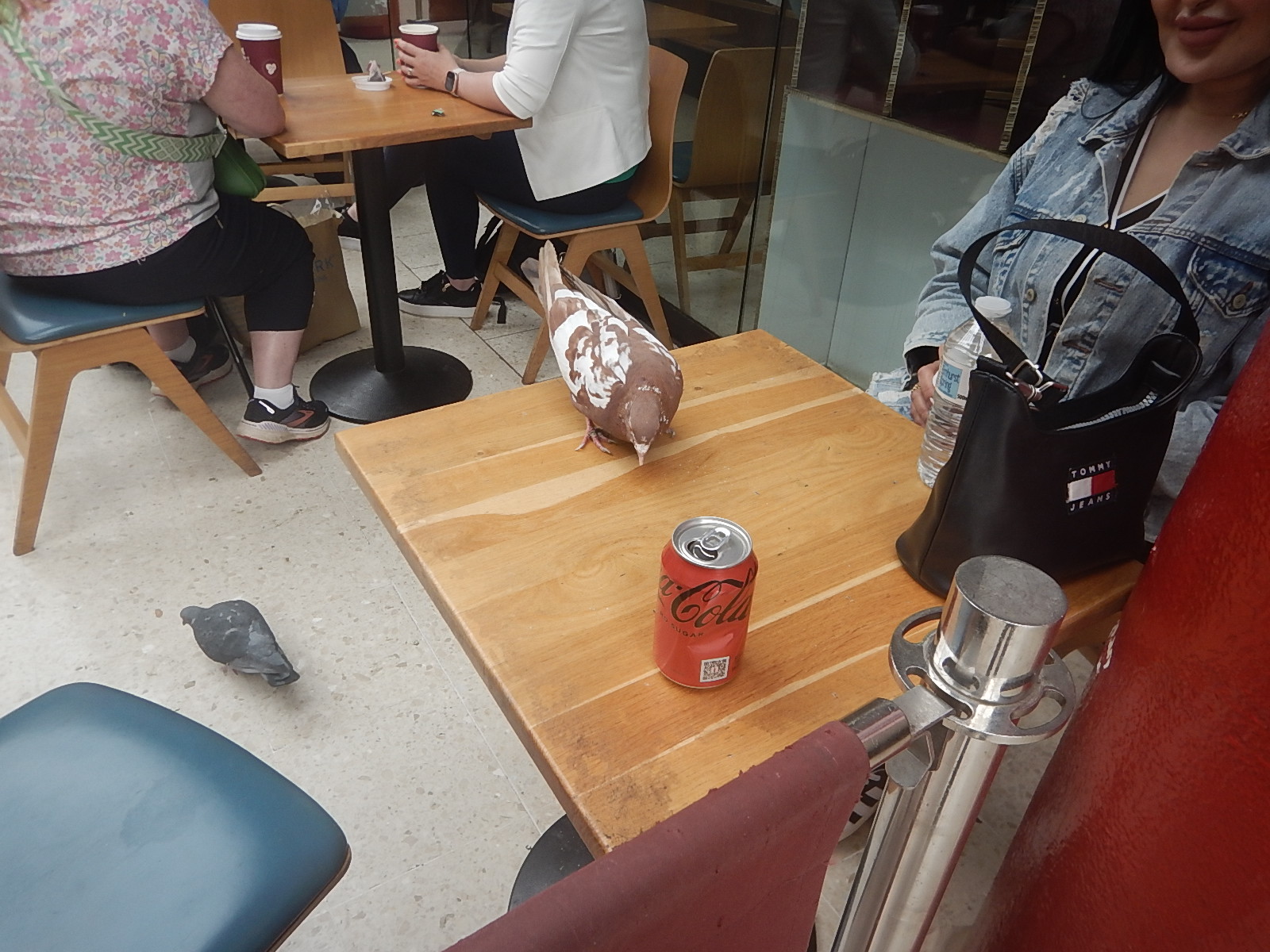
But the lady doesn’t seem to mind.
Desperate Times Call For Desperate Measures
The title for this post was inspired by this article on the BBC, which is entitled Water Scheme Kicks In To Boost Severn Amid Drought.
This is the sub-heading.
A groundwater scheme in Shropshire that pumps additional water into the River Severn has been switched on
These are the first three paragraphs, which add more detail.
It comes after the Environment Agency (EA) last month declared drought status for the West Midlands, following the driest spring in 132 years.
The scheme, owned and operated by the agency, pumps groundwater stored naturally in sandstone underneath much of north Shropshire, and delivers it through an underground network of pipes into the Severn.
The scheme pumps almost 40 Olympic-sized swimming pools of fresh water every day into the river, with a total of 49 pumps and 53km (32.9m) of underground pipes.
It looks a good scheme to me, but I suspect, those pumps and pipes didn’t come cheap.
These two further paragraphs, explain how it works.
Two reservoirs in Wales – Clywedog and Vyrnwy – are the first resources used to top up the river during dry weather.
The groundwater scheme is the last option to be brought into operation during dry conditions, because of how resource-intensive it is.
I suspect politicians like Trump and Farage would not have sanctioned a scheme like this, as it only protects a river.
This page on the Environment Agency blog gives more details of the scheme.
I looked up the title, that I’ve used for this post on Google AI and received this answer.
“Desperate times call for desperate measures” is an idiom suggesting that unusual problems or difficult circumstances may require unconventional or extreme solutions that would not normally be considered. The phrase originated from an ancient Greek physician, Hippocrates, who wrote about extreme diseases needing extreme methods of cure. The saying acknowledges that when faced with significant challenges, bold or drastic decisions may be necessary for survival or success.
As it seems the scheme is working well, I feel that the decision to build it, was the right one.
Iceland Is Calling
This was an advert in Bank station, yesterday.
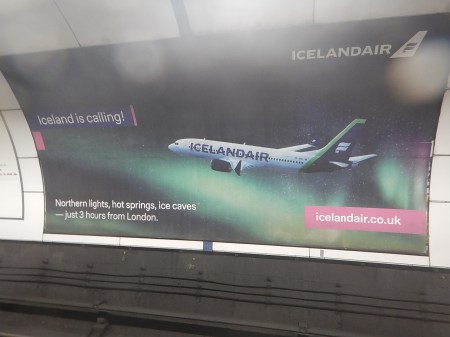
I’ve been to Iceland and it made a good break from hot weather.
There is now a Geothermal Exhibition In Iceland.
I asked Google AI, if you can have a tour of one of the geothermal projects in Cornwall and received this answer.
There are two main deep geothermal projects in Cornwall with public-facing aspects: the United Downs Deep Geothermal Project and the Eden Geothermal Project. While both are operational or nearing completion, direct public tours of the operating power plants themselves aren’t yet a standard offering. Instead, you can visit the Eden Project, which is heated by its geothermal system, and learn about the technology there, or potentially visit the United Downs project site to see the developments.
Hopefully, I’ll be able to see more in a couple of years.
East India And Blackheath Stations Through The Silvertown Tunnel – 22nd August 2025
I haven’t been through the Silvertown Tunnel for some weeks, so yesterday, as I wanted to have a look at the refurubished Blackheath station, I went and had a look.












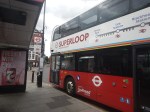
Note.
- The journey was made at about 11:00 on a Friday morning.
- The bus was more of a taxi, as only about five passengers used it.
- The tunnel wasn’t very busy with traffic.
This article on Highways Magazine is entitled Traffic Volumes Down At Blackwall And Silvertown Tolls.
This is the sub-heading.
Daily traffic volumes for both the newly opened Silvertown and Blackwall tunnels are 7.6% lower than in the same period last year for just the Blackwall tunnel, Highways can reveal.
I feel very much, that the Silvertown Tunnel is being underused and perhaps we should run more local buses or even long-distance coaches through the tunnel.
Blackheath Station – 22nd August 2025
I’d read somewhere that Blackheath station had had a refurbishment, so yesterday I went to have a look.
I took these pictures.
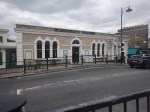
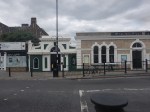
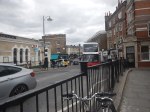
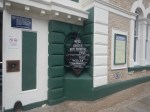

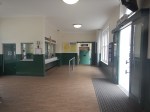
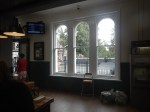

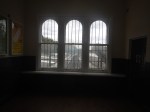
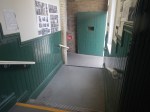

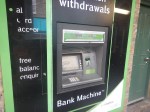


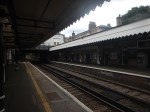
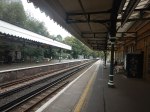
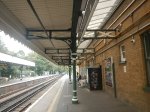
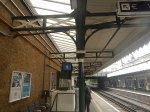
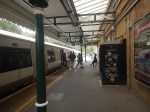
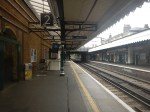
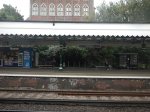
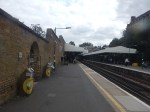
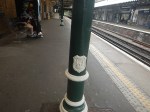
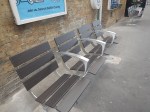
Note.
- The station has has a high-quality makeover.
- There is a delightful and very practical cafe.
- Period details like the windows have been decorated with the care, that a Grade II Listed building deserves.
More stations in the UK, need a makeover like this.
 The Anonymous Widower