Roger Ford’s Cunning Plan
In the February 2020 of Modern Railways, there is an article called LNER Procurement, which has been written by Roger Ford.
It is Roger’s reply to an article in the December 2020 Edition of Modern Railways, which was entitled LNER Seeks 10 More Bi-Modes.
He starts by describing the requirement and then says this.
Would any fleet engineer in his or her right mind want to add a unique sub-fleet of 10 high speed trains to an existing successful fleet, even if they were hydrogen-electric tri-modes from the respected Kim Chong t’ae Electric Locomotive Works?
In my analysis of the December 2020 article, I wrote this post with the same name, where I said this, under a heading of More Azumas?
Surely, It would require a very innovative train at perhaps a rock-bottom price from another manufacturer, for LNER to not acquire extra Azumas.
So it would appear that Roger and myself are vaguely in agreement on the subject of more Azumas.
The last section of the article has a title of Cunning.
Roger puts forward, the view that the procurement process, as well as being compatible with EU law, could be a warning to Hitachi, to make sure that LNER get a good deal.
It certainly could be, and I remember a similar maneuver by ICI around 1970.
The company was buying a lot of expensive IBM 360 computers.
ICI needed a new computer to do scientific calculations at their Central Instrument Research Establishment (CIRL) at Pangbourne in Berkshire.
- English Electric had just released a clone of an IBM 360 and were keen to sell it to ICI.
- As it would do everything that ICI wanted, they bought one.
- It worked well and did everything that CIRL wanted at a cheaper price.
IBM’s reaction was supposedly quick and dramatic. The salesman who dealt with ICI, was immediately fired!
But as ICI had about a dozen large IBM computers, there wasn’t much they could do to one of the most important and largest UK companies.
IBM also made sure, that ICI got their next computer at a good price.
I’m with Roger that all the shenanigans are a warning to Hitachi.
Roger finishes the article with these two paragraphs.
A genuine bluff would have been to seek bids for the long-term deployment of remanufactured IC225s. Which in these straitened times could still turn out to be a more viable option.
I rather fancy the idea of a hydrogen-electric Class 91. Owner Eversholt Rail might even have played along on the understanding that it funded the inevitable hybrid Azumas.
Note that IC225s are InterCity 225 trains.
- The 31 trains, were built for British Rail in the 1980s.
- They are hauled by a 4.83 MW Class 91 locomotive, which is usually at the Northern end of the train.
- Nine Mark 4 coaches and a driving van trailer complete the train.
- As with the Hitachi Azumas (Class 800 and Class 801 trains), they are capable of operating at 140 mph on lines where digital in-cab ERTMS signalling has been installed.
I just wonder, if a Class 91 locomotive could be to the world’s first 140 mph hydrogen-electric locomotive.
Consider the following.
Dynamics
The wheels, bogies and traction system were designed by British Rail Engineering Ltd, who were the masters of dynamics. This is a sentence from the locomotive’s Wikipedia entry.
Unusually, the motors are body mounted and drive bogie-mounted gearboxes via cardan shafts. This reduces the unsprung mass and hence track wear at high speeds.
That is a rather unique layout. But it obviously works, as otherwise these locomotives would have been scrapped decades ago.
I believe the quality dynamics are because BREL owned a PACE 231R for a start, which was an analogue computer, that was good enough for NASA to use two computers like this to calculate how to put a man on the moon.

London and Edinburgh is a slightly shorter distance, run at a somewhat slower speed.
Space
This picture shows a Class 91 locomotive.
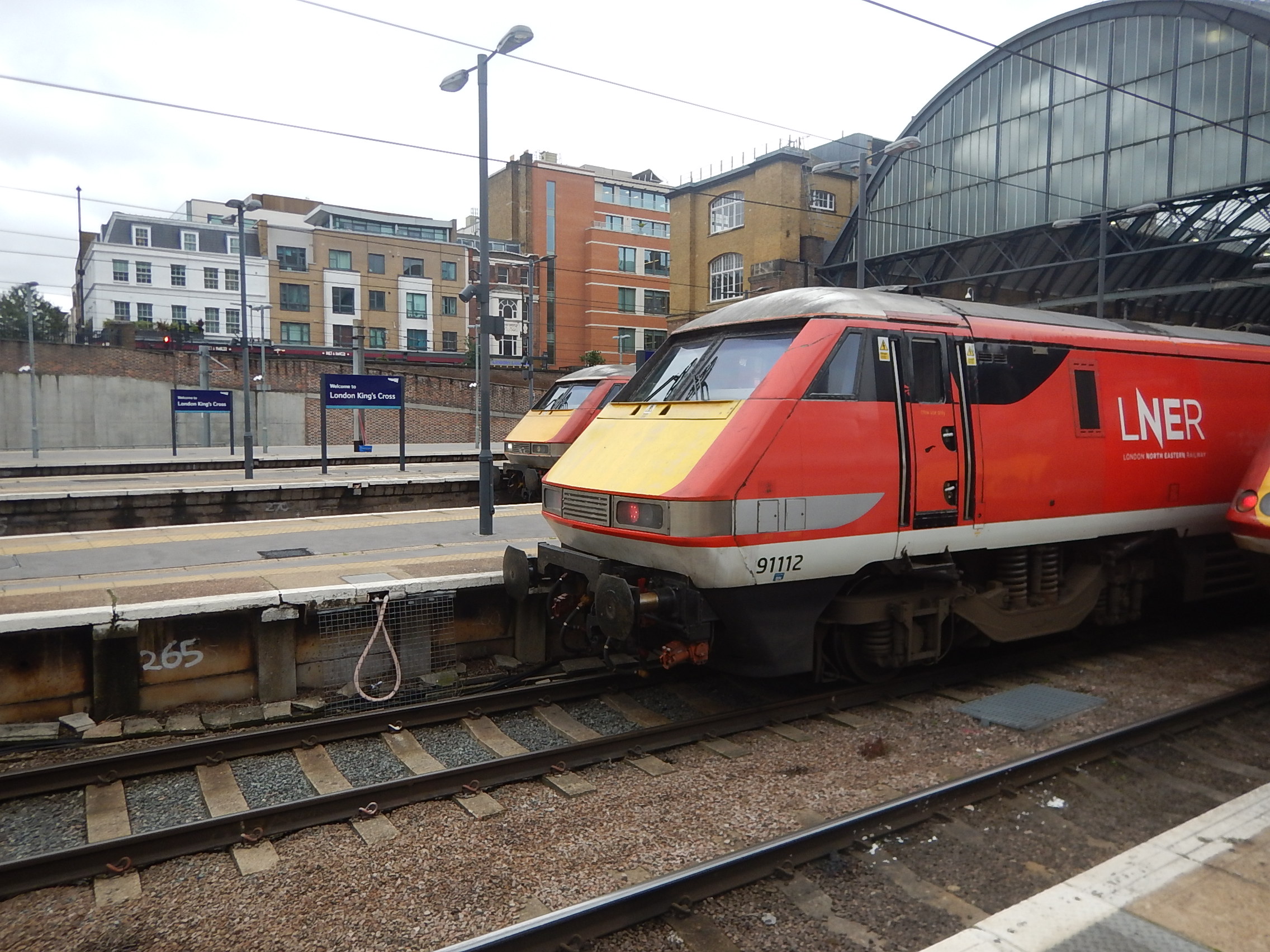
What is in the space in the rear end of the nearly twenty metre-long locomotive?
This sentence from the Wikipedia entry for the locomotive gives a clue.
The locomotive also features an underslung transformer, so that the body is relatively empty compared to contemporary electric locomotives.
It also states that much of the layout came from the APT-P, which was a version of the tilting Advanced Passenger Train.
Would the space be large enough for a tank of hydrogen and some form of generator that used the hydrogen as fuel?
It should be noted that one version of the APT used a gas-turbine engine, so was the locomotive designed for future use as a bi-mode?
Fuel Cells
I’ve ignored fuel cells, as to get the amount of power needed, the fuel cells could be too large for the locomotive.
Class 91 Locomotive Performance
The performance of a Class 91 locomotive is as follows.
- Power output – 4.83 MW
- Operating speed – 140 mph
- Record Speed – 161 mph
Not bad for a 1980s locomotive.
Required Performance Using Hydrogen Fuel
If the locomotives were only needed to use hydrogen to the North of the electrification from London, the locomotive would need to be able to haul a rake of coaches twice on the following routes.
- Aberdeen and Edinburgh Haymarket – 130 miles
- Inverness and Stirling – 146 miles
A range of three hundred miles would be sufficient.
The locomotive would need refuelling at Aberdeen and Inverness.
The operating speed of both routes is nowhere near 140 mph and I suspect that a maximum speed of 100 mph on hydrogen, pulling or pushing a full-size train, would probably be sufficient.
When you consider that a nine-car Class 800 train has five 560 kW diesel engines, that give a total power of 2.8 MW, can carry 611 passengers and an InterCity 225 can only carry 535, I don’t think that the power required under hydrogen will be as high as that needed under electricity.
Rolls-Royce
Rolls-Royce have developed a 2.5 MW generator, that is the size of a beer keg. I wrote about it in Our Sustainability Journey.
Could one of these incredibly-powerful generators provide enough power to speed an InterCity 225 train, through the Highlands of Scotland to Aberdeen and Inverness, at speeds of up to 100 mph.
I would give it a high chance of being a possible dream.
Application Of Modern Technology
I do wonder, if the locomotive’s cardan shaft drive could be improved by modern technology.
These pictures show Joseph Bazalgette’s magnificent Abbey Mills Pumping station in East London.
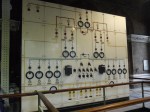
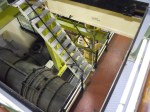


A few years ago, Thames Water had a problem. Under the pumping station are Victorian centrifugal pumps that pump raw sewage to Beckton works for treatment. These are connected to 1930s electric motors in Dalek-like structures on the ground floor, using heavy steel shafts. The motors are controlled from the control panel in the first image.
The shafts were showing signs of their age and needed replacement.
So Thames Water turned to the experts in high-power transmission at high speed – Formula One.
The pumps are now connected to the electric motors, using high-strength, lower-weight carbon-fibre shafts.
Could this and other modern technology be used to update the cardan shafts and other parts of these locomotives?
Could The Locomotives Use Regenerative Braking To Batteries?
I’ll start by calculating the kinetic energy of a full InterCity 225 train.
- The Class 91 locomotive weighs 81.5 tonnes
- Nine Mark 4 coaches weigh a total of 378 tonnes
- A driving van trailer weighs 43.7 tonnes.
- This gives a total weight of 503.2 tonnes.
Assuming that each of the 535 passengers, weighs 90 Kg with babies, baggage, bikes and buggies, this gives a passenger weight of 48.15 tonnes or a total train weight of 551.35 tonnes.
Using Omni’s Kinetic Energy Calculator, gives the following values at different speeds.
- 100 mph – 153 kWh
- 125 mph – 239 kWh
- 140 mph – 300 kWh
I think, that a 300 kWh battery could be fitted into the back of the locomotive, along with the generator and the fuel tank.
With new traction motors, that could handle regenerative braking, this would improve the energy efficiency of the trains.
Sustainable Aviation Fuel
Sustainable aviation fuel produced by companies like Altalto would surely be an alternative to hydrogen.
- It has been tested by many aerospace companies in large numbers of gas turbines.
- As it has similar properties to standard aviation fuel, the handling rules are well-known.
When produced from something like household waste, by Altalto, sustainable aviation fuel is carbon-neutral and landfill-negative.
ERTMS Signalling And Other Upgrades
Full ERTMS digital signalling will needed to be fitted to the trains to enable 140 mph running.
Conclusion
I believe it is possible to convert a Class 91 locomotive into a hydrogen-electric locomotive with the following specification.
- 4.83 MW power on electricity.
- 140 mph on electrification
- 2.5 MW on hydrogen power.
- 100 mph on hydrogen
- Regenerative braking to battery.
If it were easier to use sustainable aviation fuel, that may be a viable alternative to hydrogen, as it is easier to handle.
Oxford Vaccine Could Substantially Cut Spread
The title of this post, is the same as that of this article on the BBC.
This is the first two paragraphs.
The Oxford-AstraZeneca vaccine could lead to a “substantial” fall in the spread of the virus, say scientists.
The impact of Covid vaccines on transmission has been a crucial unknown that will dramatically shape the future of the pandemic.
The article also says you get this after one dose.
This study – on 17,000 people in the UK, South Africa and Brazil – showed protection remained at 76% during the three months after the first dose.
This rose to 82% after people were given the second dose.
It will be interesting to see, what figures drop out of the data, when millions have been vaccinated twice in the UK.
Conclusion
It looks like very good news to me!
Is Liverpool Street Getting Ready For Crossrail?
I took these pictures in front of Liverpool Street station, this morning.





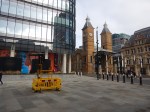
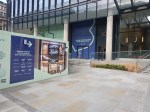



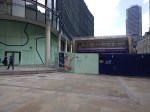


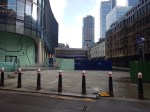
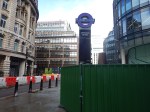
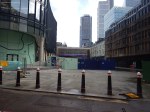
It does look that in a week or so, the area in front of the station will be ready for people to use the glass entrance to the new station.
- The whole area in front of the station and the next door building; 100 Liverpool Street has been converted into a new traffic-free square.
- The only vehicles are the taxis to the East in front of the old station and the buses using the bus station between the station and 100 Liverpool Street.
- 100 Liverpool Street will have a roof-top restaurant.
- I do like the City of London’s stylish red and black bollards.
- The station sign is in front of the station.
Obviously, we don’t know the completion state of the massive below-ground station, that reaches all the way to Moorgate.
Is This The Proof That Coeliacs On A Gluten-Free Diet Don’t Get The Covids?
I took this picture in Marks and Spencer’s food store on Finsbury Pavement this morning,

I know Easter is coming, but it did seem to me that they had over-ordered the gluten-free hot cross buns.
But have their gluten-free sales held up extremely well during the pandemic?
Are their large numbers of gluten-free customers, still well enough to be buying the good things in life?
Certainly, throughout the pandemic, there’s never been a shortage of gluten-free scones!
Or it could be a simple case of a computer saying “Let them eat loadsa buns!” in the City of London!
Is Whitechapel Station Emerging From Its Shell?
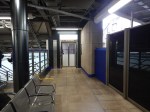
I took these pictures this morning at Whitechapel station, this morning.
I have broken them into sections.
The Overground Platforms

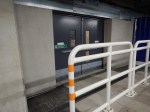
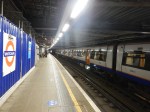
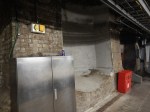
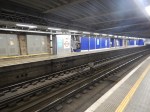
There is work to do, but they are certainly useable and safe for passengers.
Overground To Sub-Surface Lines
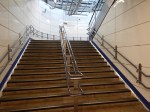
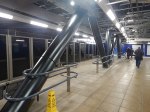
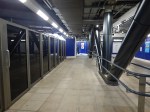
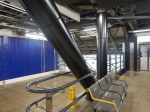
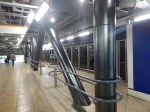
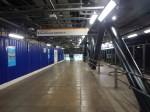
What an elegant way to hide the structure, that holds everything up!
Whitechapel Road





My granddaughter was born in the old Royal London Hospital.
Sub-Surface Platforms
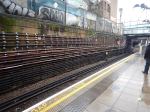
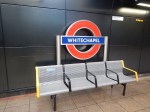
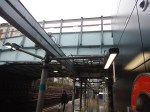
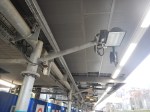
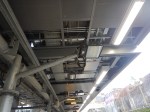
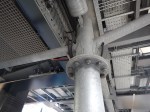
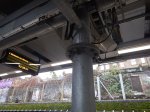

The detail of the lights and the various platform fittings looks good.
Whitechapel Station In 3D
This Google Map shows a 3D image of the station.
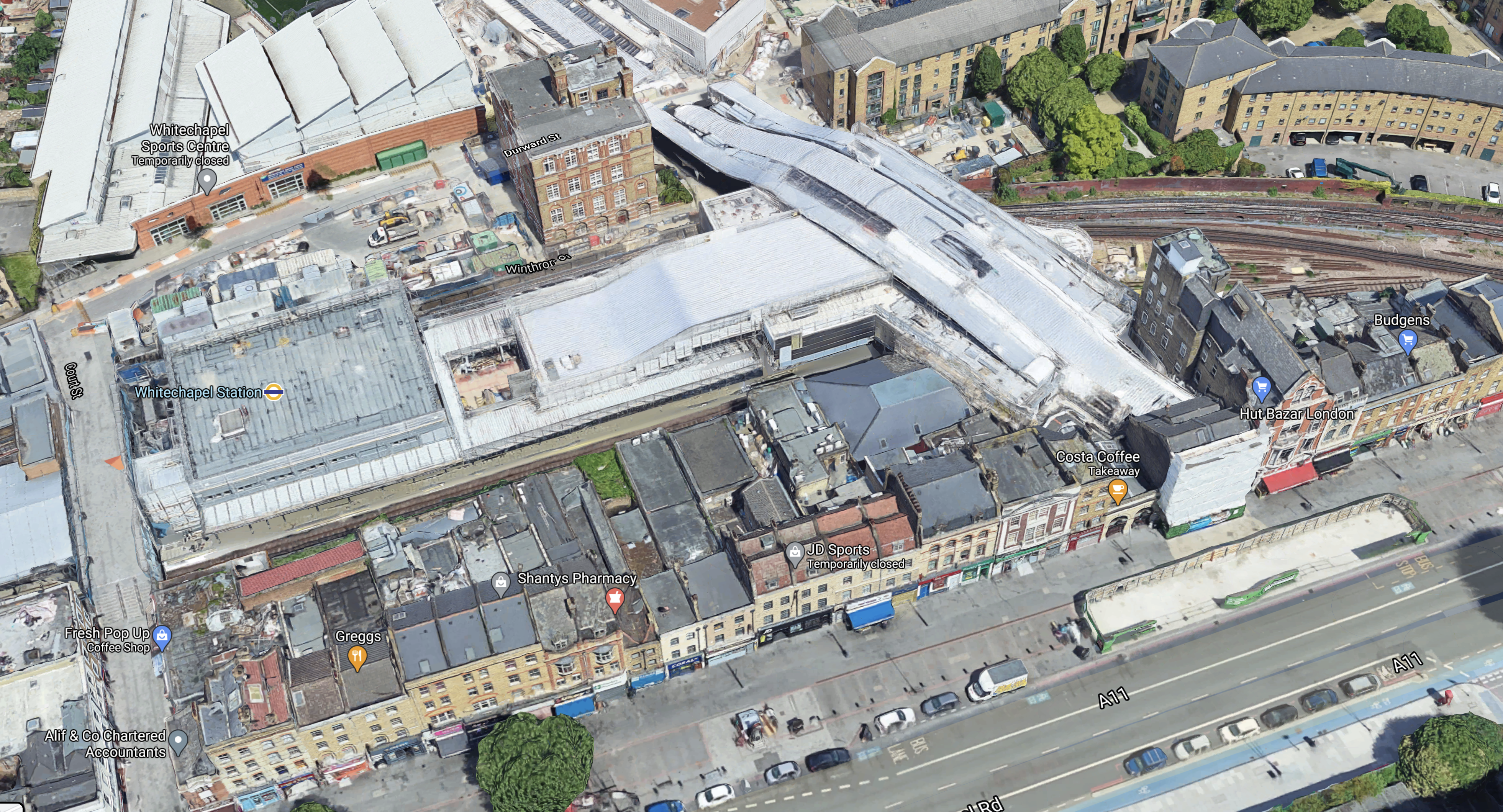
It’s one of those sites, where you’d choose somewhere else.
Crossrail’s Progress Video From February 2020
Conclusion
The builders seem to be getting towards the final stages.
As they have a lot of testing to do, I suspect the earliest day for trains to be running through with passengers, would be sometime in November 2021,
WYCA To Discuss Latest Plans For £24.2m White Rose Rail Station
The title of this post, is the same as that of this article on Rail Technology Magazine.
I briefly commented on this proposed station in Is There Going To Be Full Electrification Between Leeds And Huddersfield?, where I said this.
White Rose Station
There are plans to build a new White Rose station in the next couple of years at the White Rose Centre..
This would be between Morley and Cottingley stations.
This station will surely increase the passenger numbers on the Huddersfield Line.
This Google Map shows the White Rose Centre.
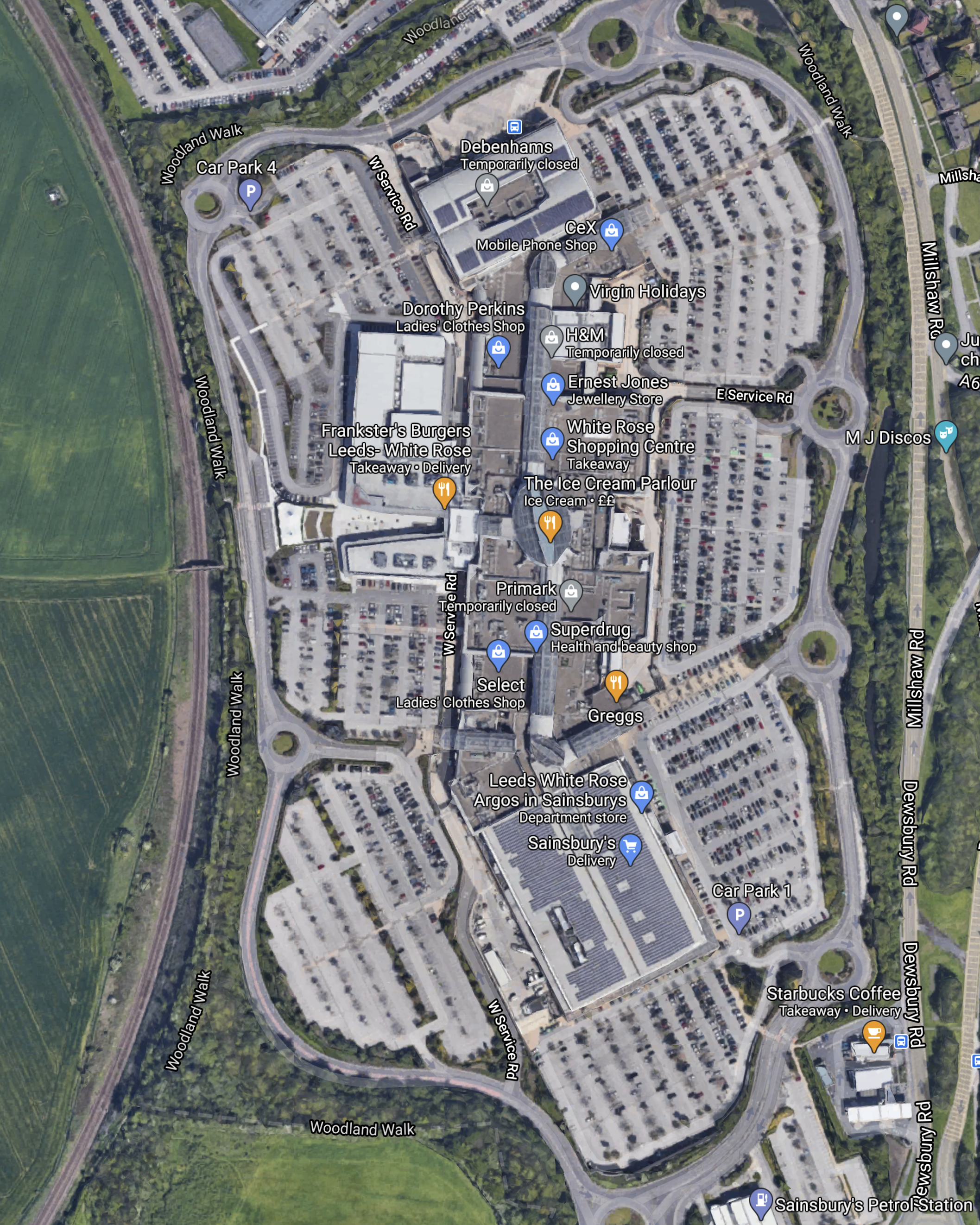
The Huddersfield Line runs North-South alongside the Centre and there must be plenty of space for a new White Rose station.
From Wikipedia and other sources, the following seems to be on the agenda for the station.
- Two platforms.
- Ability to take six-car trains, with a possibility to extend to eight-cars.
- Two trains per hour (tph) in both directions.
- Up to 340,000 passengers per year.
These are my thoughts.
Will White Rose Station Be Electrified?
The Rail Technology Magazine article has a visualisation of the new White Road station and very swish it looks too!
But it doesn’t show any electrification through the station.
This document on the Network Rail web site is entitled Overhead Line Electrification – Huddersfield to Westtown (Dewsbury).
This is the first paragraph.
We’re proposing to electrify the railway between Huddersfield and Westtown (Dewsbury) – and right through to Leeds.
This will enable train operators to use electric – or bi-mode (hybrid) trains – along this section of the route.
I am pretty certain, this paragraph can be interpreted, as saying that Leeds and Huddersfield will be connected by a fully-electrified railway.
This Google Map shows the current Ravensthorpe station, where the line to and from Wakefield joins the Huddersfield and Leeds Line.
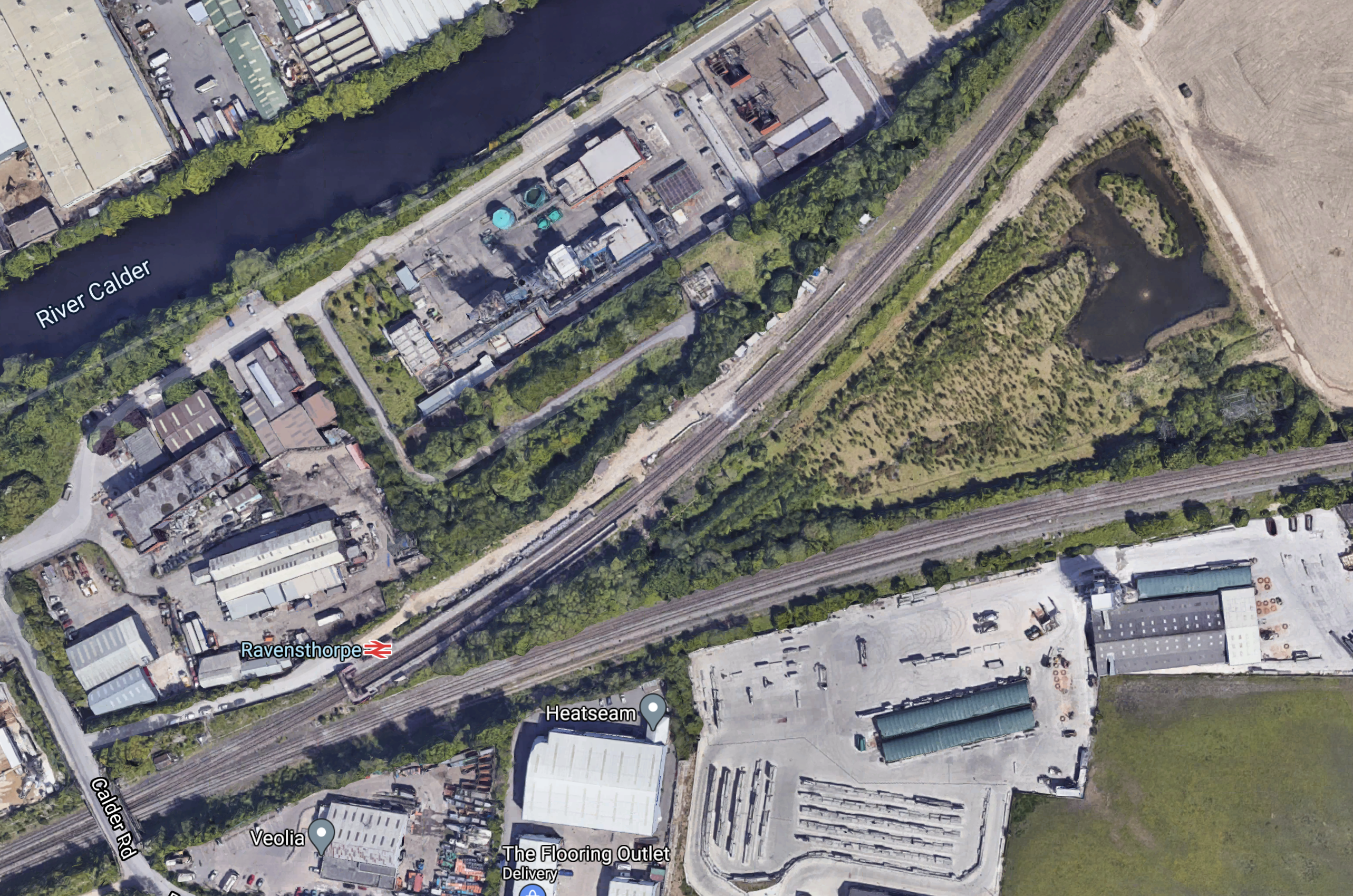
This document on the Network Rail web site is entitled Scheme Proposals – Huddersfield to Westtown (Dewsbury).
It indicates that the triangle of land between the two lines will be used for a sub-station to provide power for the electrification.
It says this.
We propose to build an electricity substation within the Ravensthorpe and Westtown area, to provide power for the electrification of the railway (known as traction power). To facilitate this work, a temporary construction compound which will provide essential welfare facilities for staff will be established in an area of land occupying the current landfill site to the east of Ravensthorpe Station. Access to the facilities will be made via Forge Lane or the existing Thornhill Power Station access road. In addition, Northern Powergrid will be undertaking extensive works to their overhead network within the Ravensthorpe area.
This looks like a convenient place to build a sub-station.
- Northern Powergrid would be able to combine one of their projects, with one for Network Rail.
- It looks like the location of the sub-station gives both good road and rail access.
It would also be ideal to provide power to the line to Wakefield Kirkgate station, which is only ten miles away.
Services At White Rose Station
Currently, the following services would appear to go through the site of White Rose station.
- Northern Trains – Wigan Wallgate and Leeds
- TransPennine Express – Huddersfield and Leeds
- TransPennine Express – Liverpool Lime Street and Edinburgh
- TransPennine Express – Liverpool Lime Street and Scarborough
- TransPennine Express – Manchester Airport and Newcastle
- TransPennine Express – Manchester Airport and Redcar Central
- TransPennine Express – Manchester Piccadilly and Hull
Note.
- All services are one tph.
- The first two services are stopping services, that stop at the two stations, that will be either side of White Rose station; Cottingley and Morley.
- Dewsbury station, which will be three stations away, has a service of three tph.
There may also be an LNER service between London and Huddersfield via Leeds, which might go through White Rose station.
When sources like Wikipedia, say the station will get two tph, they are probably basing this on the two stopping services.
Does White Rose Station Need A Direct Manchester Airport Service?
I think if the station becomes important, it will certainly need a direct service to Manchester Airport.
If one of TransPennine’s Manchester Airport services stopped at White Rose station it would give a direct fast hourly service to Manchester Airport.
- It would take about eighty minutes on current timings.
- In addition the service would call at Manchester Piccadilly, Leeds and York.
In my view it would be a very useful service.
Does White Rose Station Need A Direct London Service?
The reasoning for Manchester Airport, would probably apply to London.
Consider.
- Leeds currently has a two tph LNER service to London.
- I believe that LNER’s Leeds and London service could be uprated to three tph.
- Huddersfield should be getting a daily service or perhaps better to London.
- White Rose station is only planned to have a two tph service to Leeds.
I think there is scope to improve the service between White Rose and London.
- Stopping services between Leeds and Huddersfield should connect conveniently with the London trains at Leeds.
- If a third tph between Leeds and Huddersfield stopped at White Rose, that might help.
- Perhaps, some or all services between Huddersfield and London, should stop at White Rose.
It would all depend on the needs of passengers, once the station opened.
White Rose Station And Elland Road Stadium
This Google Map shows the distance between the White Rose Centre and Elland Road stadium.

Note.
- Elland Road stadium is in the North-East of the map
- The White Rose Shopping Centre is towards the South of the map.
- The Huddersfield Line runs down the Western side of the White Rose shopping centre.
- Cottingley station in North-West corner of the map is the nearest station to Elland Road stadium.
- I estimate it is about a mile-and-a-half walk, which is typical for many football grounds.
Would it be sensible on match days to run longer trains to White Rose station?
I also feel, that thought be given to the walking route between White Rose Station and Elland Road Stadium.
Would it also be better, if the new station was towards the North of the shopping centre?
Platform Length At White Rose Station
Platform length at White Rose station is stated that it will initially take six-car trains, with a possibility to extend to eight-cars.
Consider the lengths of trains likely to call at White Rose station.
- Three-car Class 185 trains are 71.3 metres.
- Three-car Class 195 trains are 71.4 metres.
- Three-car Class 331 trains are 71.4 metres.
- Four-car Class 331 trains are 94.5 metres.
- Five-car Class 802 trains are 130 metres.
- A Class 68 locomotive and five Mark 5 coaches are 131 metres
To handle pairs of three-car Class 185, Class 195 and Class 331 trains, it looks like 150 metre long platforms will be needed.
But to handle pairs of four-car Class 195 and Class 331 trains, it looks like 200 metre long platforms will be needed.
I suspect that because of the proximity of Elland Road and there is a lot of shopping in the build up to Christmas, that a thorough analysis of platform length should be done, before White Rose station is built.
Will A Cross-Leeds Service Serve White Rose Station?
If you look at Birmingham, Cardiff, Glasgow, Liverpool, London, Manchester and Newcastle, suburban lines fan out all around the city.
If you look at Leeds, you find the following routes.
- Bradford – West – Electrified
- Harrogate -North – No Electrification
- Dewsbury and Huddersfield – South-West – Electrification planned
- Ilkley – North – Electrified
- Skipton – North-West – Electrified
- Wakefield – South-East – Electrified
- York and Selby – North-East and East – No Electrification
It appears to me, that the suburban routes are better on the Western side of the City, with more electrification in operation or planned.
The planned electrification between Leeds and Huddersfield via White Rose station can only make matters more uneven.
The Rail Technology Magazine article also says this.
The Investment Committee will also consider plans for a new £31.9m parkway rail station at Thorpe Park on the Leeds to York section of the Transpennine route.
Wikipedia says that proposed Thorpe Park station, will be built on the Selby Line to the East of Leeds, in the Thorpe Park are of the city. Wikipedia also says this about the operation of the station.
It would be served by trains from the west of Leeds which would normally terminate at Leeds station; by continuing eastwards to this station, it is hoped that extra capacity for through trains would be created at Leeds. The station would also form the first phase of electrifying the railway line to the east of Leeds. As a parkway station (an early name was East Leeds Parkway), the intention would be to allow for a park-and-ride service and the plans include parking for 500 cars.
This Google Map shows the area where the station could be built.

Note.
- The Selby Line curving across the Northern side of the map.
- Cross Gates station is the next station to the West.
- Going East on the Selby Line, you pass through Garforth, East Garforth and Micklefield stations before the line divides for York to the North and Selby and Hull to the East.
- The M1 Motorway passing to the East of Leeds.
Other features of the proposed station and the area include.
- Wikipedia says that the station will have two island platforms and the ability to handle inter-city trains.
- The route through the station would be electrified.
- High Speed Two could be routed to go close to the station.
Currently, the following services would appear to go through the site of Thorpe Park station.
- CrossCountry – Plymouth and Edinburgh/Glasgow
- LNER – Leeds and Edinburgh
- Northern Trains – Blackpool North and York
- Northern Trains – Halifax and Hull
- Northern Trains – Leeds and York
- TransPennine Express – Liverpool Lime Street and Edinburgh
- TransPennine Express – Liverpool Lime Street and Scarborough
- TransPennine Express – Manchester Airport and Newcastle
- TransPennine Express – Manchester Airport and Redcar Central
- TransPennine Express – Manchester Piccadilly and Hull
Note.
- Most of these trains are one tph.
- I believe that LNER, when they get extra paths on the East Coast Main Line, could run a London, Leeds and Edinburgh service to increase frequency to the two Northern destinations to three tph.
- All the TransPennine Express services will pass through White Rose, Leeds and Thorpe Park stations.
I can see a high-capacity Leeds Crossrail service emerging.
These could be some example frequencies.
- Leeds and York – 6 tph
- Leeds and Thorpe Park – 10 tph
- Leeds and Hull – 2 tph
- Leeds and Huddersfield – 6 tph
- Leeds and Manchester Victoria/Piccadilly – 6 tph
- Leeds and Manchester Airport – 2 tph
- Leeds and White Rose – 4 tph
A four-track electrified route could be developed through Leeds station.
Are Two Platforms Enough At White Rose Station?
Superficially White Rose and Thorpe Park stations seem aimed at similar purposes in different parts of Leeds.
But White Rose station will only have two platforms and it appears that Thorpe Park could have four.
So does White Rose station need more platforms?
Conclusion
White Rose and Thorpe Park stations could be the start of something very big in Leeds.
Spot The Battery
RheEnergise have just released this picture, of one of how one of their pumped storage systems might look.
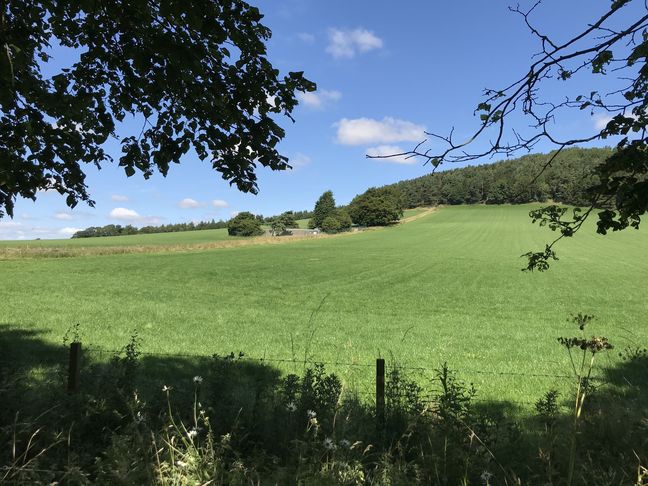
They describe it as a typical small site after landscaping.
This is their description of the image.
This is an image of a small water works in Fife Scotland, you can just see 2 small water tanks at the base of the hill. This is an example of what a small High-Density Hydro project could look like after landscaping.
How many times have you seen a scene like this in the UK, Europe and all over the world.
They didn’t disclose the storage capacity of this system.
Gresham House Unveils 45-MW Battery Storage Purchase
The title of this post, is the same as that of this article on Renewables Now.
This is the introductory paragraph.
Gresham House Energy Storage Fund plc (LON:GRID) has acquired a 45-MW portfolio of battery storage systems in England, growing its operational fleet to 395 MW.
Gresham House are certainly growing.
As a Control Engineer and mathematical modeller, I certainly like what they are doing.
Modelling the cash-flow and earnings from all these batteries are is one of the sort of multi-variable problems, that I cut my teeth on, in early 1970s.
If I was starting out on my own now, as I did in 1972, Gresham House would be one of the companies I’d approach.
Their latest purchase is interesting in that it includes a 35 MW battery with a twelve year control to load balance for the National Grid.
There must also be a business model emerging for the developers of energy storage.
- Design and build an energy storage system to satisfy a company or local area’s need.
- Show it is working successfully for a period of time.
- Add a nice lucrative contract if you can!
The whole setup is then sold to someone like Gresham House.
At present, Gresham House has a portfolio, which is all lithium-ion storage. I don’t think, it will be a long time before other types of storage are added.
The Jabbers Hit The Jabpot!
It has been announced that yesterday a total of 609,050 does of the vaccine were administered.
It is an incredible figure, made up of 598389 first and 10661 second jabs.
It really was a Super Jabba Saturday, with one report on the BBC, saying that in one vaccination centre in Newcastle, 2,000 people were vaccinated.
If the reported 1,400 vaccination centres around the UK, hit two thousand per day, that is 2.8 million jabs per day and we could vaccinate sixty million people twice in just 43 days. Probably, this is an unachievable time, as not all centres could handle 2000 jabs per day.
I think we’re in for a very statistically interesting few days, as the vaccinators find a level that is at equilibrium with the population and their determination to get vaccinated or not!
I feel, that vaccine supply permitting, the daily number for jabs will be around the psychologically important 500,000.
Your First Crossrail Service May Arrive In Time For Christmas
The title of this post, is the same as that of this article in today’s Sunday Times.
I have thought this might happen for a few months.
I wrote project management software for nearly forty years. If you ever used Artemis, that was the system, I wrote in a Suffolk attic.
Artemis helped provide the UK with North Sea oil and gas, by calculating and scheduling the labour requirements.
One problem was that there was so many projects, that there was a severe labour shortage. As a friend, who supported our systems in Aberdeen, told me, you couldn’t get some tradesmen for love or money, as they had all retrained to go offshore.
Shortage of workers is often the reason for projects being late and Crossrail is no exception.
Walk through the City and West End of London along the route of the line and you’ll see endless new office, retail and residential developments around all the stations.
These Central London developments are often luxurious and funded by Sovereign Wealth or similar funds, all of whom have bottomless pockets.
If they need more workers, they just raise wages and they have been stealing them from Crossrail. Consequently Crossrail has had to pay more and has been hemorrhaging cash and getting later.
Many of these buildings are now complete and the workers can be hired by Crossrail to speed up the finishing of the line.
Unless of course, the Mayor and the Councils allow more new buildings to be constructed.
But there is a beneficial effect of the Covids working in favour of Crossrail. It has probably badly damaged forecasts for a new development, that they are being delayed for a few years.
So Crossrail can move towards a finish, which will start to generate revenue for Transport for London.
This page on the Crossrail web site is the Crossrail Project Update for December 2020, which was published on the 14th January 14th 2021.
This video shows Mark Wild, the Chief Executive Officer of Crossrail giving the latest update.
This text accompanies the video.
Delivery of the Elizabeth line is now in its complex final stages and is being completed at a time of great uncertainty due to the risks and potential impacts of further Covid outbreaks. Our focus is on meeting the immediate challenges posed by COVID-19.
We are planning to start intensive operational testing, known as Trial Running, at the earliest opportunity in 2021. It involves multiple trains operating in the central operating section to test the timetable and build reliability, while the final works to the stations are completed. It will take a period of time to fully test the Elizabeth line before it can open for passenger service. This includes a final phase known as Trial Operations involving people being invited onto trains and stations to test real-time service scenarios to ensure the readiness of the railway.
Following the opening of the central section, full services across the Elizabeth line from Reading and Heathrow in the west to Abbey Wood and Shenfield in the east will be introduced. The introduction of full services will be aligned with the National Rail timetable change which occurs twice a year in May and December.
According to this article on Ian Visits, which is entitled An Update On The Crossrail Project Progress. Crossrail is in Systems Integration Dynamic Testing (SIDT), which is described by Ian like this.
The pre-Trial Running tests, Systems Integration Dynamic Testing (SIDT) started early last December and allowed them to increase the number of trains running through the tunnels from four to eight. That meant running trains with 5-minute gaps, close to how the service will open with its initial 12 trains per hour each way.
Crossrail have produced a video, which describes the train testing.
SIDT restarted after Christmas on the 13th January and once complete, I assume Trial Running will start at the earliest opportunity.
Further sections of the Crossrail Project Update describe Trial Running, Covid-19.
There is also this video of Farringdon station.
When Will Crossrail Open?
Predicting this is difficult, but this article on Building, which is entitled Crossrail Trial Running Set To Start By March.
These points are from the article.
- Mark Wild said that trial running will start before the end of March.
- From the start of trial running to opening will be between six and nine months,
- It looks like Crossrail will open in the last quarter of 2021.
As it would be nice to open by Christmas to give shopping centres and hospitality a lift, I think that it will open in September or October 2021.
Could Crossrail Open Earlier, If A Shorter Service Were Run?
Some people have said, that Crossrail might be able to open earlier, if it ran initially between say Farringdon and Abbey Wood.
This paragraph from the Crossrail Project Update for December 2020, could be decisive.
All central section stations including Bond Street are certified to support Trial Running. Four of the central section stations have had all of their assets assured and certified as ready for use, the last stage for stations in the Trial Running pathway. The remaining central section stations are scheduled to achieve this by the end of the month.
Does this mean that trial running will start by the end of March and serve all central stations?
Bond Street station certainly seems to have caught up with the others and there is no longer any suggestion it could open a year later.
 The Anonymous Widower