Could High Speed Two Have A Station At Ashby-de-la-Zouch?
This morning, I was listening to Andrew Bridgen, who is the Member of Parliament for North West Leicestershire, giving the reasons for a strong opposition to High Speed Two.
- High Speed Two will reduce the number of services between Leicester and London.
- His constituency does not have a rail station.
- His constituency would do better for the Ivanhoe Line to get a passenger service.
- His constituents are badly affected by the building of the line.
- His constituents will need to drive North to East Midlands Hub station to use High Speed Two.
Some points are valid, although I think no rail company would reduce the number of services between Leicester and London.
The Future Of Services Between Leicester And London
East Midlands Railway currently run four trains per hour (tph) between Leicester and London, with the fastest trains taking five minutes over the hour.
New 125 mph bi-mode Class 810 trains, will be running all main line services on the Midland Main Line from 2023, using electric power between London and Market Harborough.
It is also planned to increase the line speed between London and Market Harborough to 140 mph, so the trains can really use their design speed, by updating the electrification, signalling and track.
From these published plans, I would feel that East Midlands Railway are intending that all Leicester and London services are within the hour.
Reinstatement Of Services On The Ivanhoe Line
This has been promised off-and-on for some time and I wrote about it in Silent Hydrogen Trains On The Cards For New Line Linking Burton And Leicester, after one of my alerts picked up “hydrogen trains”.
The Association Of Train Operating Companies Plan For The Ivanhoe Line
This is taken from the Wikipedia entry for the Ivanhoe Line.
In 2009 the Association of Train Operating Companies published a £49 million proposal (Connecting Communities: Expanding Access to the Rail Network) to restore passenger services to the line that would include reopening stations at Kirby Muxloe, Bagworth and Ellistown, Coalville Town, Ashby de la Zouch, Moira, and Gresley (for Swadlincote). There is also some support in the Leicester area for the line to have new stations to serve Leicester City F.C.’s stadium and the suburb of Braunstone.
Wikipedia also says, it could be developed as a no-frills line.
Given the government’s enthusiasm for reopening lines closed by Beeching, I suspect that this line will be reopened to passenger traffic in the next few years.
Ashby-de-la-Zouch Station
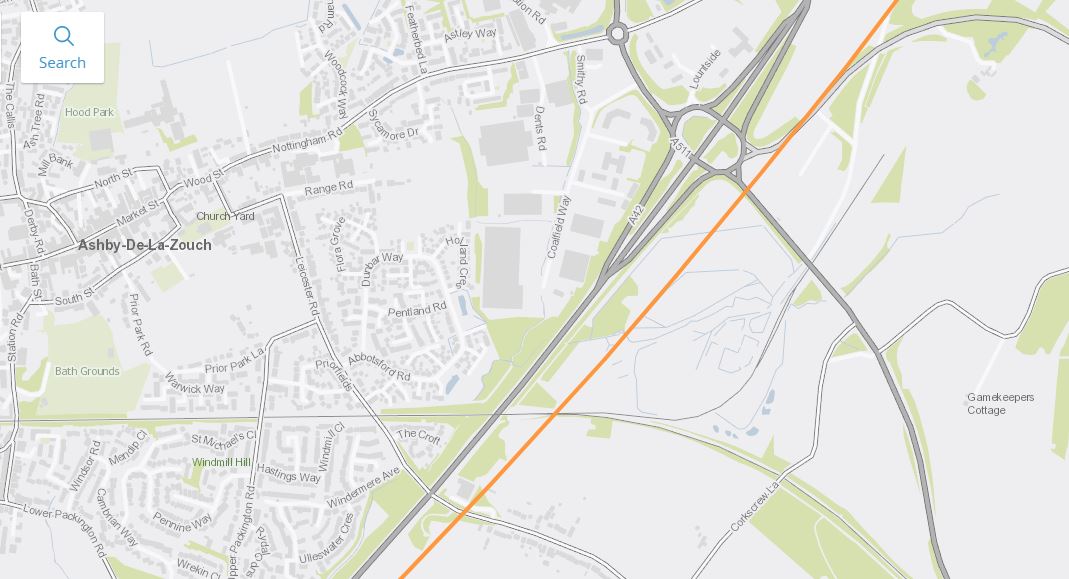
This section of the route map for High Speed Two, shows where the Ivanhoe Line crosses it, just by a major road junction outside Ashby-de-la-Zouch.
Note.
- High Speed Two is shown in orange.
- The Ivanhoe Line runs West-East from the West edge of the map and after crossing the A42 and High Speed Two it curves South-East.
Where the two lines cross would it be sensible to build a simple interchange station?
- Andrew Bridgen’s constituency has a electorate of over 72,000.
- The station would be well-connected to the road network via the the M42, A42 and A51.
- There would appear to be plenty of space for parking.
- It would ease the problems of going by train between Leicester and Birmingham.
- A bridge will have to be built at the location of the station to carry High Speed Two over the Ivanhoe Line, so why not design the bridge with simple platforms?
- As High Speed Two’s trains will be designed with fast acceleration and deceleration, the stops would be very quick
- Passengers would only be allowed on the High Speed Two platforms, when trains are in the station.
Perhaps given its location it could be called the Heart of England Parkway station?
The Station Site
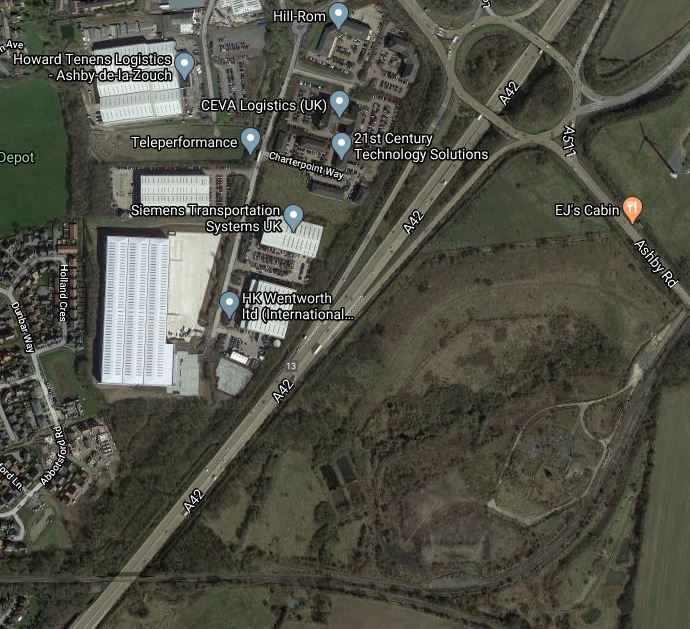
This Google Map shows the station site.
Note.
- The Ivanhoe Line is at the bottom of the map.
- There is a spur from the line into the space.
- High Speed Two will run almost North-South parallel to the A42.
It looks like an abandoned open-cast coal-mine or quarry. Does anybody else know better?
Conclusion
There has already been speculation for the building of a similar station, which I wrote about in Should High Speed Two Have A Station At Calvert?, so perhaps it’s not a totally crazy idea,
Perhaps, there are other places, where High Speed Two crosses other main lines, where parkway stations could be built?
Which Supermarket Group Will Go For Hydrogen First?
The big supermarket groups need to reduce their carbon footprints.
One area, where they can reduce the amount of carbon-dioxide they emit is in transport.
It is my view that battery-powered articulated trucks will not be seen in large numbers, without a significant improvement in battery and charging technology.
But hydrogen-powered articulated trucks have been developed by Hyundai, as I wrote about in Tesla Has A Rival In New Hyundai Hydrogen-Powered Semi-Truck Concept.
Supermarket groups are surely ideal companies to use hydrogen-powered trucks.
They use a centralised distribution system from large depots, generally using articulated trucks.
Trucks would probably fill-up at the beginning of a delivery run at the central depot, just as they probably do with diesel now.
The only problem would be on long deliveries, where they might need to refuel before returning to the depot.
Surely, the obvious thing to do, would be to install a hydrogen filling station alongside the petrol and diesel at some of the larger superstores.
- Companies like ITM Power build special hydrogen filling stations, that only need connections to electricity and tap water.
- Provided the supermarket group has a good corporate deal on green electricity, the hydrogen cost to the group should be the same .
- This filling station would also be able to fill up their hydrogen-powered vans used for local deliveries.
- Managers and those, who had a company car could be given ones powered by hydrogen.
The filling station could also be used to sell hydrogen to the supermarket’s customers.
Linked with a How Green Is Your Supermarket? advertising campaign, this could see hydrogen-powered vehicle sales take off!
Would other supermarket groups follow like greedy lemmings?
Ballard-Powered Fuel-Cell Tram-Buses From Van Hool Now In Revenue Service In France
The title of this post is the same as that of this article on Green Car Congress.
This is the introductory paragraph.
Ballard Power Systems announcedthat 8 ExquiCity tram-buses built by Van Hool NV and powered by 8 Ballard FCveloCity-HD 100-kilowatt fuel cell modules have been inaugurated at a ceremony in Pau, France and are now in revenue service in Pau’s Bus Rapid Transit System.
The Van Hool ExquiCity tram buses have the following specification.
- Two sections
- Length – 18.6 metres (New Routemaster – 11.2 metres)
- Width – 2.6 metres (New Routemaster – 2.52 metres)
- Weight – 18.5 tonnes (New Routemaster – 12.8 tonnes)
- Passengers – 125 (New Routemaster – 80-87 – More on a 21/38/73 in the Peak)
- Hydrogen Range – 300 km.
- Power – 100 kW (New Routemaster – 138 kW)
I have compared with a New Routemaster, as both vehicles are designed as hybrids with a power source charging a battery which drives the vehicle, through a Siemens traction motor.
The Glider buses in Belfast are diesel-electric hybrid versions of the ExquiCity.
Conclusion
I do wonder from looking at the comparison with a New Routemaster, that the ExquiCity could be an interesting way to get 56 % more passengers into 66 % more road space. But it may be more efficient to use two New Routemasters to carry 28 % more passengers in 29 % more road space than the ExquiCity.
It is interesting to note that the Mercedes Citaro bendy buses in London, which were so hated by motorists because they blocked junctions were also eighteen metres long like the ExquiCity.
Obviously, if buses ran on a separated bus way, the length is not a problem.
I do feel though, that a purpose-built hydrogen-powered double-deck bus, will be better for most UK towns and cities.
This article on the BBC is entitled Wrightbus Owner Jo Bamford Says Coming To NI Is Revelation.
This is a paragraph.
Mr Bamford, the son of JCB chairman Lord Bamford, told BBC News NI he has a keen interest in the use of hydrogen to power buses and that was the main reason he got involved with Wrightbus.
Consider.
- Wrightbus designed and built the chassis for the diesel-electric hybrid New Routemaster.
- Wrightbus pioneered the low-floor bus.
- In March 2015 JCB made a strategic investment of £4.9M in hydrogen company; ITM Power.
- ITM Power built the hydrogen filling station for the ExquiCity tram-buses in Pau.
It looks to me, that Jo Bamford, with some help from his father, has assembled the components for a serious assault on the hydrogen bus market.
Paddington Square – 7th February 2020
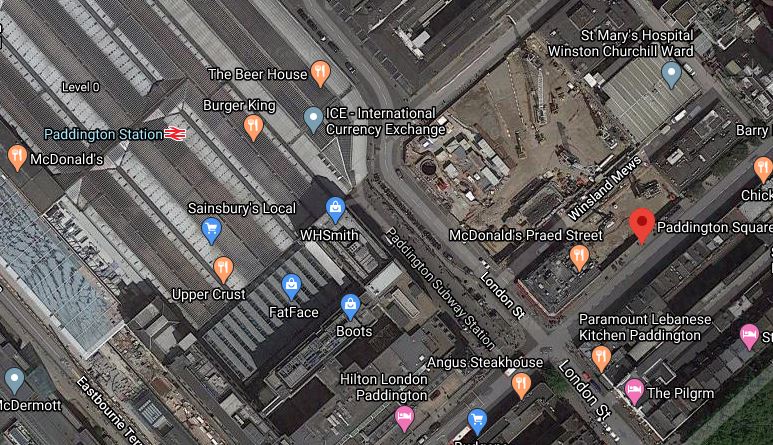
Paddington Square is a new development springing up to the East of Paddington station.
This Google Map shows the location between the station and St. Mary’s Hospital.
The development will include the following.
- A Twenty-storey tower.
- Offices
- Four floors of upmarket shops
- A rooftop restaurant.
- A new public square
- A new entry into the Bakerloo Line, which will have a step-free connection to Crossrail.
It will certainly improve, what is rather a grotty area of Central London.
There is nothing much to see at the moment.



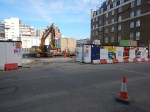
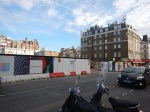

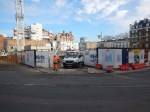
It’s just a big hole, which is surrounded by hoardings.
I’ve Gone Cashless
I have now setup my bank account, so that I can make small payments using from my phone, using the contactless facility.
These are a few short observations.
- The thirty pound limit may be a little too low.
- You can’t be cashless on the Blackpool tramway. I was allowed to go free!
- Some small shops still won’t accept them or apply a minimum spend. Obviously, they don’t want my business and didn’t get it.
- I never have any change for beggars. I follow TfL’s advice and give to the Whitechapel Mission, who look after the genuine homeless.
- Some estabishments have gone cashless only!
The only time I use cash, is for tips in restaurants and paying black cabs.
Could New Routemaster Buses Be Converted To Hydrogen Power?
London has a thousand New Routemaster buses.
They are generally liked by passengers and drivers, although some Labour politicians think they should be replaced, because of their association with Boris.
They were introduced in 2011, so with a refurbishment, I suspect that they could be in service for perhaps another ten years.
The big feature in the design is that they are genuine hybrid buses with a small Cummins engine halfway up the back stairs, a battery under the front stairs and electric drive with regenerative braking.
I do wonder though, that because of the electric transmission, that these buses could be converted to hydrogen-powered buses.
It could be a more affordable route to create a thousand new zero-carbon buses for the streets of London or any other city for that matter.
Given that Wrightbus, who built the New Routemasters, is now owned by a member of the Bamford family of JCB fame and the company is reported to be going down the hydrogen bus route, I would suspect that conversion to hydrogen is on somebody’s mind.
Channel Islands To France Tunnel Would ‘Cost £5.6bn’
The title of this post is the same as that of this article on Construction News.
The tunnel would be built as follows.
- Phase One would be a 28 km. rail tunnel between Jersey and Guernsey.
- Phase Two would be a 32 km rail tunnel between Jersey and Normandy.
- Both journey times would be around fifteen minutes.
- The tunnels would take ten years to build.
- It is claimed they would double the GDP of the islands in a decade.
- The Governments of Guernsey and Jersey are supporting the idea.
One factor driving the idea, seems to be the ageing population of the Channel Islands, which means they will need a commuting population to provide services.
There is also an article on the Jersey Evening Post, which is entitled Jersey-Guernsey-France Tunnel Proposed, that gives a few more details of the proposals.
- The tunnel will start in St Sampson’s in Guernsey and travel under Herm and Sark.
- An artificial island would also be built between Sark and Jersey which could house a combined Channel Island’s airport, hospital, prison and university.
These are a few of my thoughts.
The Route
This Google Map shows the Channel Islands.

Note.
- Herm is shown by the red arrow.
- Sark is llabelled as La Rade.
- The coast of the Cherbourg Peninsular is shown in the East.
From this map it appears that the distance of the two phases of construction would be similar.
Operating Speed
Both tunnels are proposed to be around twenty miles in length, so if the journey time is fifteen minutes, that means an average speed of eighty mph.
For comparison, the Channel Tunnel is just over thirty miles long and has a safety speed limit of 99 mph.
So it would appear that with good design, the timings are possible.
I also think that we could see speeds like these.
- 200 kph (125 mph) on the surface in France.
- At least 100 mph between France and Jersey.
- 80 mph between Jersey and Guernsey, where there are three stops.
Timings of sub-forty-five minutes would be possible.
Single Or Double Track
I feel it would be possible to build each phase of the railway as a single-track tunnel, both of which would be paired with a service tunnel. There would be a double-track section in Jersey, so that trains could pass.
This would allow a four trains per hour (tph) service between Guernsey and France, with the services passing under Jersey.
This frequency would be a Turn-Up-And-Go service.
The article doesn’t say, whether a single or double track tunnel would be built.
As the tunnel would only be built once and probably never increased in capacity, the design must be right first time.
Tunnel Loading Gauge
Would the tunnel be built to take UK-sized trains or the bigger Continental-sized trains?
Consider.
- The trains will probably terminate on the French side in a station.
- The larger the tunnel, the more costly it would be to bore.
- The tunnel would have to incorporate electrification.
I feel that the size of the tunnel will end up as a compromise between cost, convenience and compatibility with French railway standards.
Freight
Consider.
- If the tunnel was the right diameter some freight could be transferred through the tunnel.
- Parcels and smaller freight could also be carried on a shuttle train based on a passenger train.
- A larger tunnel would increase the cost.
- If freight were to be carried on the railway, then a freight terminal would be needed on the surface on Jersey and Guernsey where space is at a premium.
- As less passengers would be using the ferries, this might mean money invested in new ferries between the islands and France and the UK for freight and road vehicles, would give a better return.
I think on balance, that building the rail link, so that it could handle freight trains, other than perhaps a parcel shuttle would not be a viable idea.
Rail Link Power Supply
I think there are two possible power sources for the trains on the rail link; electrification or battery.
Electrification would certainly be possible and would probably use the French (and UK!) system of 25 KVAC overhead electrification.
As it is a tunnel, an overhead rail would probably be used as on Crossrail and other similar railways.
|As a battery range of eighty files would be needed for a round trip and hundred percent reliability would be desirable, I think it would be unlikely, that batteries would be the primary source of power.
But batteries could be fitted to handle regenerative braking and provide a back-up power source.
Connection To French Railways
The nearest French railway is the main Cherbourg and Paris railway, which is electrified using 25 KVAC overhead.
It would seem sensible to allow trains from the Channel Islands to terminate at Cherbourg.
- It is a municipality of 80,000 people.
- It is a major port.
- It has a station with what looks to be a large capacity.
- It has a rail service to Paris, where passengers can change for London.
- There is probably space in Cherbourg station to incorporate a platform with passenger, freight and Immigration and Customs facilities.
- Trains could probably run between Cherbourg and the Channel Islands Rail Link in less than thirty minutes.
- France plans to start a TGV service between Paris and Cherbourg, which would have connections to Eurostar.
- Cherbourg would probably be an ideal place for a depot.
It looks like that about thirty kilometres of new railway would be needed to connect the Channel Island tunnel to the Paris and Cherbourg Line.
Rail Link Signalling
As the trains would be running in France, the whole route would be signalled to the French standards, that are used on any shared track.
The Artificial Island
Consider.
- The artificial island would contain an airport, a hospital, a prison a university and possibly other important facilities.
- It would release land on Jersey and Guernsey for development.
- It is not far from halfway between Guernsey and France.
I like this concept and I also think, that it could ease the construction of the railway.
A fair-sized site will be needed to insert the tunnel boring machines and deal with the spoil they bring to the surface.
I believe that using modern construction techniques, that creating the perimeter of the artificial island first and then boring the tunnels from the new land would be possible.
Tunnel spoil could be used to build up the island or taken away by ship for use elsewhere.
Electricity For The Channel Islands
Much of the electricity for the Channel Islands is produced by La Collette Power Station on Jersey, which is powered by fossil fuel and waste.
If as I believe the rail link would be built with a service tunnel, then would it not be better to import zero-carbon energy from France and distribute it to other islands, using an interconnector cable in the service tunnel?
My electrical engineering is basic from over fifty years ago, but I suspect that if the rail link used 25 KVAC overhead electrification, that the electrification could be used to supply the islands with power.
Hospital Access
There is no point in building a world-class hospital on the artificial island, if patients die because they take too long to get there.
Seriously-ill patients will take forever, if they have to go in an ambulance by ferry and although a helicopter is quick, these are too expensive, especially if you have to keep enough on standby to handle every eventuality.
But the artificial island is less than fifteen minutes from Jersey and Guernsey by train. As trains could be fifteen minutes apart, that means a patient could always be in hospital thirty minutes after being picked up.
But it would need the following.
- A mini-A & E unit in all four stations, where patients could be triaged and admitted or treated, after being brought in by ambulance.
- The ability to take a hospital trolley on all trains.
- The ability to take a patient in a wheelchair on all trains.
I am pretty sure, that an efficient system can be devised.
The Stations
All the stations would be underground, including the terminal at St Sampson’s station on Guernsey.
- Surface access would be by lifts, escalators and stairs.
- Platform-edge doors would be fitted.
- Al stations would be able to handle a hospital trolley.
- Guernsey, Artificial Island and Jersey would probably have two platforms.
- Other stations would probably only need a single bi-directional platform.
- I doubt there would be a second station other than Cherbourg in France, as this would require Customs and Immigration.
I would also make the platforms long.
- Crossrail’s platforms are over two hundred metres long and even London’s suburban platforms are often this length.
- They could have separate sections for passengers and freight.
- They would be difficult to extend in the future, so make them long enough for any possible future needs.
This would enable capacity increases to be made by just lengthening the trains.
The Trains
I have left the trains to last, as I wanted to lay out everything else first, so anything effecting the train design will have been covered.
- An operating speed of 125 mph or 200 kph would be desirable to make maximum use of the infrastructure, especial in France.
- The ability to run a round trip between Cherbourg and Guernsey in under two hours.
- Trains could be either separate passenger and light freight versions or a combi version that could handle both passengers and light freight.
- Trains could be built to a lower height than a typical French train, to allow for a smaller and more affordable tunnel to be bored.
- A long-reach pantograph would be used to reach the higher French electrification.
- All access between train and platform would be level for bags, bikes, buggies and wheelchairs.
- All passenger trains must have the ability to take a hospital trolley, so urgent patients can be rushed to hospital.
My design would be based on a train like a Stadler Flirt, Bombadier Aventra or Siemens Desiro, built to a UK-loading gauge.
- The train would have an ambulance car in the middle to get the best ride quality.
- On one side of the ambulance car would be a passenger section and on the other side would be a light freight or parcel section.
- Trains and stations would be designed together to minimise loading and unloading times.
I’m certain Stadler could build a version of the Class 745 train, that would fit the application.
TGVs To Cherbourg
The French have plans to run TGVs to Cherbourg, which will link up with Eurostar in Paris.
This will improve journey times to Cherbourg and then to the islands, if the Channel Islands rail link terminates in Cherbourg.
But I doubt TGVs would ever run to the Channel Islands.
- It would need large tunnels that would cost a lot more.
- TGVs would have to be designed to work with platform-edge doors.
- It would be difficult to schedule four or more Channel Islands Rail Link trains per hour and the occasionally TGV through the tunnels.
- Two tunnels would probably be needed.
- TGVs are large trains and could need longer platforms in Jersey and Guernsey and other places they call.
- TGVs would take several minutes to rurn round in Guernsey, whereas the Channel Islands Rail Link trains would turn in under five minutes.
There would probably only be a need for a couple of trains per day and a frequent shuttle to Cherbourg would give a much more customer-friendly service. Especially if the TGV service between Paris and Cherbourg was an hourly service.
Electric Airliners
A large proportion of the flights from Jersey and Guernsey airports would be suitable for electric airliners, which I’m certain will be flying before the earliest date the new combined Channel Islands Airport opened.
This would mean that to get to the Channel Islands from say Edinburgh, Frankfurt, Geneva, London or Rotterdam can be done faster in a zero-carbon electric airliner.
The Channel Islands could provide the necessary infrastructure for electric airliners and say all airlines must use them for services to the new airport.
What would it do for Channel Islands tourism to have the world’s first zero-carbon airport?
Surely, with the Channel Islands Rail Link, the airport could be the preferred one for passengers in the area, wanting to travel to the UK and Ireland.
What’s In It For The French?
France will be a beneficiary of the project.
- The French build tunnel boring machines.
- The Channel Tunnel Rail Link will create job opportunities in the Cherbourg area.
- If economic activity increases around Cherbourg, the case for the TGV to Cherbourg gets better.
- The French get a new modern airport for the Cherbourg area.
- The French could get an increased market for their nuclear electricity.
I can see the French liking this project.
Conclusion
I think the Channel Tunnel Rail Link is a good idea and could transform the economy of the Channel Islands.
It will also be good for the surrounding area of France.
Government Probe Into How Derailed Freight Train Travelled 2.5 miles Along Overground Line
The title of this post is the same as rgis article on the Ham and High.
This is the introductory paragraph.
The government has launched an investigation into how a derailed freight train travelled 2.5 miles before the problem was flagged up to the driver.
The article gives some more details.
- The accident happened on Thursday 23rd of January.
- The train derailed near Wanstead Park station.
- The train finally stopped between Leyton Midland Road and Walthamstow Queens Road.
- The train was carrying construction from Barkingspoil to the landfill site at Calvert in Buckinghamshire.
The derailment caused a lot of damage as pictures and this paragraph in the article show.
Across the two and a half mile stretch, there are 39 new pieces of rail – each 216m long – that require replacing, as well as 5,300 concrete sleepers and 900 wooden sleepers.
Work to replace 10,000 tonnes of ballast will need to take place, as well as putting replacement timber into 10 bridges.
At least, as they have just relaid this section of railway for the Gospel Oak to Barking electrification, there will hopefully be no nasty surprises in the rebuilding process.
This map from carto.metro.free,fr shows the track layout between South Tottenham station in the West and Blackhorse Road station in the East.

Note the two crossovers either side of South Tottenham station, which are used to reverse the train between the two platforms.
I suspect that London Overground, wish there are crossovers at Blackhorse Road station, so that passengers could use the interchange with the Victoria Line.
But crossovers are expensive can cause operational problems.
At least, there are no crossovers in the section of track destroyed by the freight train.
Eurostar Confirms Start Date For Amsterdam – London Through Services
The title of this post is the same as that of this article on Railway Gazette.
Points made in the article include.
- A preview service ran on February 4th.
- Two services a day will run from Amsterdam Centraal to London from April 30th.
- Journey times will be around four hours.
- Through journeys from Rotterdam to London will be possible from May 18th.
- Tickets will be available from February 11th.
I’m fairly sure that after the success of the London to Amsterdam Centraal service, which will be four trains per day (tpd), by the end of this year and five tpd by the end of 2021, that this could be the start of something similar.
- Five tpd would mean a capacity of 4,500 passengers or about the same as eleven Ryanair 737 Max 8 aircraft.
- Four hours between city centres.
- Current prices for a trip this month are under fifty pounds or under ninety for Premium Economy.
As Paris has sixteen tpd and Brussels has seven tpd, I could see that five tpd will be increased.
- All London to Amsterdam Centraal services stop at Brussels to pick up passengers.
- I’m sure that a method will be found to allow Amsterdam Centraal to London trains to drop passengers at Brussels.
- If Rotterdam will get direct services, surely Antwerp and Schipol Airport should as well.
- Thalys between Paris and Amsterdam Centraal runs at 10 tpd.
- Thalys and Eurostar are merging and surely Eurostar between London and Amsterdam Centraal and Thalys between Paris and Amsterdam Centraal should be combined between the Belgian and Dutch capitals.
Get the Brussels and Amsterdam Centraal route right, after the merger of Thalys and Eurostar and I can see the following.
- Two trains per hour (tph) between Amsterdam Centraal and Brussels.
- One tph starting in London and the other in Paris.
- Ability to pick up and set down International and domestic passengers at the intermediate stations; Antwerp, Rotterdam and Schipol Airport.
Surely, if a two tph service works between London and Edinburgh is highly successful, two tph between Brussels and Amsterdam Centraal would be the same.
The same philosophy could then be applied to the London/Paris routes via Brussels to Cologne/Frankfurt.
- Eurostar has stated it wants to serve the two German cities.
- Thalys runs services between Paris and Dortmund via Brussels, Liege, Cologne and Essen.
- The Thalys frequency between Paris and Cologne is five tpd.
The London and Paris services could combine to run a joint service into Germany.
- Destinations could be Cologne, Dortmund and Frankfurt with stops at Liege and Aachen.
- London and Germany could probably sustain the currently proposed Amsterdam frequency of five tpd.
I’m looking forward to taking a direct train from London to Cologne.
Investors Hit The Gas On Hydrogen Producers
The title of this post is the same as that of this article on the FT.
The sub headline is.
Hydrogen producers leap on hopes of fossil fuel death.
The article then shows three share price graphs for ITM Power, PowerCell and Ballard Power Systems.
All prices are rising steeply.
A a small investor in the first company, I am pleased and I certainly got that call right!
Note that, the companies are British, Swedish and Canadian respectively.
 The Anonymous Widower