Will Crossrail Open To Reading in 2019?
The latest rather dodgy date for the opening of Crossrail’s Core Tunnel is Autumn 2019.
In the January 2019 Edition of Modern Railways, there is an article, which is entitled Crossrail Can’t Commit To Autumn Opening.
This a paragraph from the article.
TfL also says that it is exploring with DfT the possibility of beginning to operate Reading to Paddington services ahead of the completion of the Elizabeth Line to help provide a boost in revenue.
This is a very interesting possibility.
How Much Work Is Still To Be Done To The West of Hayes & Harlington?
This is the key factor as to whether Western Branch of Crossrail can be opened.
- The biggest problem is that Class 345 trains can’t run to Heathrow as there are signalling issues to eradicate.
- There are also several stations, that need to be completed.
There is no work-round to the first problem, but trains seem to be able to call at the unfinished stations.
It would appear, that for TfL’s proposal to be taken fully forward, the signalling issues to and from Heathrow, must be dealt with.
The stations can be finished later.
The Current Proposed Crossrail Service To Reading And Maidenhead
These are the proposed services shown on Wikipedia, so they could have been updated.
Reading To Paddington – Limited Stop
This service will be run at two trains per hour (tph) in the Peak with no trains in the Off-Peak.
Stops are Twyford, Maidenhead, Slough, West Drayton and Ealing Broadway.
Reading To Paddington – All Stations
This service will be run at two tph all day.
The service will call at all stations except Hanwell and Acton Main Line.
Maidenhead To Paddington
This service will be run at two tph all day.
The service will call at all stations except Hanwell and Acton Main Line.
A Summary Of Peak/Off Peak Calls
Adding these service up, gives the following numbers for Peak and Off Peak calls in trains per hour (tph)
- Reading – 4,2
- Twyford – 4,2
- Maidenhead – 6,4
- Taplow – 4.4
- Burnham 4,4
- Slough – 6,4
- Langley – 4,4
- Iver – 4,4
- West Drayton – 6,4
- Hayes & Harlington – 4.4
- Southall – 4,4
- Hanwell – None to Reading/Maidenhead
- West Ealing – 4.4
- Ealing Broadway – 6,4
- Acton Main Line – None to Reading/Maidenhead
- Paddington – 6,4
Note.
- 4,2 means 4 tph in the Peak and 2 tph in the Off Peak.
- It would appear that all stations except Reading and Twyford have at least four tph all day.
- Stations between Hayes & Harlington and Ealing Broadway will get another six tph all day going to Heathrow.
- Acton Main Line station will get another four tph all day going to Heathrow.
This gives the following frequencies.
- Reading – 4,2
- Twyford – 4,2
- Maidenhead – 6,4
- Taplow – 4.4
- Burnham 4,4
- Slough – 6,4
- Langley – 4,4
- Iver – 4,4
- West Drayton – 6,4
- Hayes & Harlington – 10,10
- Southall – 10,10
- Hanwell – 6,6
- West Ealing – 10,10
- Ealing Broadway – 12,10
- Acton Main Line – 4,4
- Paddington – 12,10
I can draw these conclusions from the figures.
- Every station has a good service from Crossrail.
- But could Reading and Twyford have another two tph in the Off-Peak to make the services four tph all day?
- Paddington station would need perhaps two or three platforms dedicated to Crossrail to handle twelve tph.
- The maximum frequency of 12 tph should be easily handled with conventional signalling and could be increased with modern digital signalling.
It looks like running the Western services of Crossrail from Paddington could be a possibility.
Consider.
- The Reading and Maidenhead services will be run on routes with mainly conventional signalling.
- The Class 345 trains, which each can hold 1,500 passengers would give a massive capacity boost to the outer Crossrail stations.
- Heathrow services can be run with Class 345 trains, when the signalling problems are solved.
- Higher frequencies to and from Paddington may enable trains to provide a better interchange with branch line services, at West Ealing, Slough, Maidenhead and Twyford.
But I think that separating these services initially from Crossrail will have substantial operational and development benefits.
- Paddington to Reading is essentially a self-contained railway, with a major branch to Heathrow and four small branch lines worked by diesel shuttle trains.
- The route, with the exception of the Heathrow branch, has conventional signalling.
- The signalling problems of the Heathrow branch can be solved independently.
- The Western branches of Crossrail could be fully debugged before trains start running through the Core Tunnel.
I also wonder, if the route could be useful for mileage accumulation, driver training and certification of newly-delivered trains.
Is It Just About The Money?
The original Modern Railways extract said that the proposal was to help provide TfL with extra revenue.
It must bring in revenue and especially when the Heathrow Branch is working reliably to plan.
Faster Journeys
Modern Class 345 trains have the following advantages over the current British Rail-era Class 156 trains.
- They are slightly faster.
- They have better acceleration.
- They are modern trains designed for short dwell times at stations.
It would be very likely, that journey times between Paddington and Reading, will improve..
Passenger Behaviour
But passengers may change their behaviour .
- Will passengers use Crossrail as a lower-cost alternative to Heathrow Express?
- Will passengers use Crossrail as a faster alternative to the Piccadilly Line?
- Will passengers, going between Heathrow and the West and Wales, use Crossrail to and from Reading, with a change at Hayes & Harlingon?
- Will passengers on branch lines find the extra capacity helpful, when travelling to London or Reading?
In addition, as I said earlier, I think opening Paddington to Reading early,, could make finishing the Crossrail project easier.
If nothing else, it shortens the to-do list!
GWR Might Object
Will GWR object to losing their local services between Reading and London to Crossrail?
Consider the following issues.
Heathrow Express
GWR have taken over the lucrative Heathrow Express.
- Heathrow Express will be run using 110 mph Class 387 trains in an Airport Express configuration.
- Will these trains be less of a block on the line, than the 100 mph Class 332 trains currently running the service?
- Currently both Class 332 and Class 800 trains take nine 9½ minutes to go between Paddington and Heathrow Airport Junction.
Perhaps GWR could squeeze in extra trains, by replacing the Class 332 trains with faster Class 387 trains?
The more trains they could squeeze into Paddington, the larger their revenue.
Reading, Bedwyn and Oxford Services
I am not sure, but it does appear that GWR services to places like Bedwyn and Oxford will in future be run using the new five-car Class 802 trains.
- The trains will surely use electric traction on the fast lines to Paddington.
- Will passengers going between Bedwyn/Oxford and stations between Reading and Paddington, be happy to change at Reading?
As it appears that Bedwyn/Oxford services might not need to use the slow lines, these will be used exclusively by Crossrail and the occasional freight.
Could Bedwyn And Oxford Services Be Combined?
There is also the possibility that to save paths on the fast lines between Reading and Paddington, that hourly Bedwyn and Oxford services could be combined and split at Reading.
- GWR already splits and joins Class 387 trains at Reading.
- Class 800/802 trains are designed to be split and joined quickly.
- Timings to the two destinations are about the same, being around 75 minutes.
Two five-car Class 802 trains with one running to Bedwyn and one to Oxford might be a good idea. Especially, as it saves one high-speed path between Paddington and Reading and possibly a few trains.
It does look, that Oxford and Bedwyn services could be moved out of the way of Crossrail services.
Will There Be Enough Class 800/802 Trains?
In Huge Increase In Capacity On GWR As Final Class 800 Enters Traffic, I wrote that there are now only fifteen trains of a total fleet of 93 trains to be delivered.
I suspect that GWR can find enough trains to run Bedwyn/Oxford services to London.
Too Many Class 387 Trains!
But it does strike me that GWR will have too many Class 387 trains, if Crossrail takes over local services to Reading and Class 802 trains take over services to Bedwyn and Oxford.
Twelve Class 387 trains are being converted to take over Heathrow Express services, but that still leaves GWR with 33 trains to find a use for.
It seems like Greater Anglia’s twenty Class 379 trains, they could become homeless orphans.
Will The Class 769 Trains Get In The Way?
Original plans talked about using 100 mph Class 769 trains to back up the Class 387 trains, whilst twelve of these were updated to Heathrow Express standard.
But it appears now from Wikipedia and other sources on the Internet, that these trains will concentrate on the following services.
- Reading To Gatwick Airport
- Reading to Oxford
I can’t find any reference of them continuing to serve Paddington, so it looks like they should keep out of the way.
Serving The Henley And Marlow Branches
Henley-on-THames station on the Henley Branch Line and Bourne End station on the Marlow Branch Line are having their Peak services to London gradually withdrawn.
If Crossrail took over services between Reading and Paddington, the frequencies in the Peak at the interchange stations would be.
- Maindenhead for the Marlow Branch Line – 6 tph,
- Twyford for the Henley Branch Line – 4 tph
Two tph at each interchange station run limited stop to and from Paddington.
The trains will each hold 1,500 passengers.
Could it be that GWR feel that the increased frequencies and reduced journey times to and from Paddington mean that there is a lesser need to run a direct diesel service.
But I could see the following.
- A four-car shuttle train, which could be a Class 769 bi-mode, at two tph on the Henley Branch Line.
- Two tph on the Marlow Branch Line.
At least GWR have the trains to provide a service to match customer demand.
I also wouldn’t be surprised to see a radical plan for these branches.
No Diesel Running Into Paddington
Every train run by GWR and Crossrail, between Paddington and Reading, would use electric traction.
- Now that large numbers of Class 800/802 trains have been delivered, it can’t be long before the last InterCity 125 runs into Paddington on a regular service.
- Class 165 and Class 166 diesel trains will be refurbished and sent to the West Country.
- Bedwyn and Oxford services will be run by Class 800/802 trains.
In addition all GWR trains running into Paddington will be 125 mph units running on electricity.
What is that worth as a marketing hook?
Conclusion
It looks to me, that running a full Western Branch service for Crossrail could be a good move.
So will it happen in 2019?
I think it all depends on solving the signalling issues on the Heathrow Branch!
But I feel, it should be possible, otherwise TfL wouldn’t have suggested it!
Do Escalators Attract Passengers?
These are passenger figures from 2016 in millions on the London Underground’s Victoria Line
- Walthamstow Central – 22.77
- Blackhorse Road – 8.45
- Tottenham Hale – 13.21
- Seven Sisters – 19.61
- Finsbury Park – 32.74
- Highbury & Islington – 20.22
- Warren Street – 20.35
- Pimlico – 11.49
- Vauxhall – 32.23
- Stockwell – 11.42
- Brixton – 33.46
Note.
- I have left out the very busy stations which are major interchanges like Kings Cross St. Pancras, Euston, Oxford Circus, Green Park and Victoria.
- Perhaps the figures for Finsbury Park, Stockwell and Warren Street, should be divided by two, as these stations have two lines.
- Most stations have connections to National Rail services.
Brixton and Vauxhall only have indirect connections to National Rail, but they have a higher number of passengers compared to say Finsbury Park, Highbury & Islington and Walthamstow Central, which all have direct connections.
But these two stations have three escalators.
Seven Sisters seems to attract more passengers, than Tottenham Hale.
But then it is double-ended!
So does more escalators at a station increase the number of passengers using the station?
It is also worth looking at single line stations with no connection to National Rail stations on both sides of the Euston Rpad.
Again the figures are for 2016 in millions.
- Angel – 20.10 – Three escalators
- Archway – 9.94 – Escalators
- Chalk Farm – 5.61 – Lifts
- Covent Garden – 17,19 – Lifts
- Euston Square – 14.40 – Stairs and a lift to one platform
- Goodge Street – 8.46 – Lifts
- Great Portland Street – 9.86 – Stairs
- Mornington Crescent – 5.04 – Lifts
- Regent’s Park 3.35 – Lifts
- Russell Square – 12.36 – Lifts
Note.
- Angel and Archway have been rebuilt to replace lifts with escalators and they show higher usage.
- I’d love to have before and after figures for these two stations.
This is only a crude analysis, but I’m certain it shows that stations with escalators have higher passenger numbers.
It could also be, that London Transport, knew where the passengers would go and built stations they felt would be busy accordingly.
They certainly put a lot of escalators on the Northern extension of the Piccadilly Line.
These are 2016 for the stations.
- Cockfosters – 2.04 – Stairs
- Oakwood – 2.88 – Stairs and Lift
- Southgate – 5.65 – Escalators
- Arnos Grove – 4.65 – Stairs
- Bounds Green – 6.62 – Escalators
- Wood Green – 13.20 – Escalators
- Turnpike Lane – 10.98 – Escalators
- Manor House – 9.12 – Escalators
Note.
- I think it can be said, that this section of the Piccadilly Line did very well to get the access right.
- The catchment areas of the five Northernmost stations overlap and many travellers will use different stations depending on how they feel.
- Southgate attracts more passengers than the two adjoining stations.
- Wood Green and Turnpike Lane are the busiest stations as they connect to the shops at Wood Green and lots of buses.
- Only Cockfosters has car parking.
I think at the end of the line, the escalators draw passengers.
Escalators And The Disabled, Elderly, Buggy Pushers and Suitcase Draggers
There’s also no doubt, that a large proportion of the many passengers in these categories can handle an escalator, even if they have problems with stairs.
Conclusion
My crude data isn’t good enough to draw a firm conclusion, but I suspect Transport for London know the answer.
If escalators do attract passengers, surely transport operators should install more of them.
Could The Abbey Wood Branch Of Crossrail Be Opened In Phases?
When the Victoria Line opened in 1968, it opened in phases.
- Highbury & Islington and Walthamstow Central – September 1968
- Highbury & Islington and Warren Street – December 1968
- Warren Street and Victoria – March 1969
I wonder why parts of Crossrail, aren’t opening in a similar way?
Crossrail’s Original Plan
Stage 3 of the original plan, called for services to start between Abbey Wood and Paddington stations in December 2018.
This date has now slipped to Autumn 2019.
Reasons stated include.
- Signalling issues.
- Non-completion of the fit-out of stations.
I discuss the various issues as I see them in Thoughts On The Lateness Of Crossrail.
If you look at Stage 3, it is effectively running an independent new railway between Abbey Wood and Paddington stations with the following characteristics.
- Turnback facilities designed to handle twelve trains per hour (tph) at both ends.
- No sharing of tracks with other rail services.
- Comprehensive intermediate stations at Woolwich, Custom House, Canary Wharf, Whitechapel, Liverpool Street, Farringdon, Tottenham Court Road and Bond Street.
- One signalling system on the whole section.
It should also be noted, that on this section, trains can go straight through the important underground junction with the Shenfield branch at Stepney Green.
I would think, that the original plan was a sensible one. provided the following had been achieved.
- Completion of all stations on the route.
- A working signalling system.
- Turnback of trains at Abbey Wood and Paddington stations.
Have all of these objectives been achieved?
Whitechapel Station
In Thoughts On The Lateness Of Crossrail, I showed several pictures, that indicated that Whitechapel station was by no means finished.
Perhaps this is the main reason, as Whitechapel is on both the two Eastern branches.
Other Stations
Are they any nearer to completion than Whitechapel?
I was surprised this Autumn, during Open House, that a couple of stations were not opened up for members of the public to walk around.
Below surface stations like Woolwich and Canary Wharf and possibly some others, which will have platform-edge doors, would surely be safe to give interested parties a tour.
There doesn’t even appear to be a recent video in the stations from a respected organisation like the BBC.
I must therefore assume that the stations are not going well.
Turnbacks And Crossovers
Looking at the detailed maps of the Victoria Line on carto.metro.free.fr, there are the following turnbacks and crossovers.
- A double crossover at Walthamstow Central station, so that trains can go into either platform.
- Links at Finsbury Park station to the Piccadilly Line. Could Walthamstow to Piccadilly Circus been a non-realised objective?
- A simple crossover North of Highbury & Islington station.
- A turnback at Kings Cross St. Pancras station, so that trains can be turned back to the South.
- A simple crossover between Euston and Warren Street station.
- A simple crossover North of Victoria station.
- A turnback at Victoria station, so that trains can be turned back to the North.
- A double crossover at Brixton station, so that trains can go into either platform.
Crossrail has the following between Abbey Wood and Paddington stations.
- A double crossover at Abbey Wood station, so that trains can go into either platform.
- Crossovers either side of Custom House station.
- A simple crossover West of Whitechapel station.
- A simple crossover between Farringdon and Tottenham Court Road stations.
Note that is no crossovers to the Eastern side of Paddington station.
Overall, Crossrail would appear to have a much simpler track layout.
Trains could probably be turned back at Custom House, Whitechapel, Farringdon or Tottenham Court Road stations.
But there is no complete turnback on the line in Central London, as there is no most of London’s Underground lines.
Turnback At Paddington
I wrote Are Crossrail’s Turnback Sidings At Westbourne Park Without Electrification? to try to answer the question in the title.
I decided they were electrified, but I also finished the post like this.
It looked to me, that there was still some work to do.
If Crossrail were to open in early December, then it looks that it could be impossible.
So were these works at Westbourne Park, the reason for the postponement?
It certainly seems that trains will not be able to turn back at Paddington at the frequency required to open the Central Tunnel.
But then they will have at least a year to complete the Paddington turnback.
Turning Trains At Whitechapel
Trackwise, this is surely possible, as there is a cross-over to the West of the station.
There are reasons why this might not be done.
The station is reportedly, a long way from completion.
Would it be worthwhile opening to serve just Abbey Wood, Woolwich, Custon House, Canary Wharf and Whitechapel?
But it would create a link between East and South-East London.
The frequency would probably be low, but a train every ten minutes should be possible.
Surely, this could be used initially for driver training and train testing, but as soon as all stations on the route were completed and all staff trained and trains certified, I can’t see any reason, why the service couldn’t be opened to passengers.
Turning Trains At Tottenham Court Road Or Farringdon
The track layout at Tottenham Court Road has a crossover to the East of the station and I would expect that a limited number of trains could be turned at Tottenham Court Road.
Turning back at Farringdon using the same crossover may be a better possibility.
- A service running every ten minutes could be possible.
- It would connect Canary Wharf to Liverpool Street and Thameslink.
If necessary, Whitechapel station could be skipped, as the sub-surface lines should be able to cope.
Conclusion
I am led to the possibility, that there is a slight chance, that portions of Abbey Wood branch of Crossrail could be opened before the predicted dates of the pessimists.
The Irony Of Brexit
According to Wikipedia, the third of Newton’s Laws of Motion, states this.
When one body exerts a force on a second body, the second body simultaneously exerts a force equal in magnitude and opposite in direction on the first body.
It doesn’t just apply to mechanics, but to life in general.
If a Government introduces a policy that the electorate don’t like, then the electorate reacts.
We have had marches against the Poll Tax, the War in Iraq and Universal Credit in recent decades.
At least in the UK, protests don’t get as violent as they do in some countries like France.
Over the last few weeks, we have seen a number of illegal immigrants arrive in this country in small boats sailing across the English Channel.
People aren’t stupid and these mainly Iranian nationals, are thinking that after the March 2019, it will be more or less impossible to get into the UK.
So their reaction is to cross the Channel now!
The smugglers react in the obvious way, by buying boats capable of making the journey.
In The Times today, there is an news story about an English smuggler buying a boat from a Frenchman called Pierre.
- All the legal details are carried out.
- Money changed hands (probably literally!)
- The Englishman removed the boat.
The Englishman also said he’d come back later for the trailer, but never did. Surprise Surprise! He wouldn’t need it would he!
We have the irony, that the electorate of the UK voted for Brexit partly to keep foreigners and especially those not like them out of the UK.
But because of the laws of action and reaction, they will actually increase the number of immigrants, as we’re seeing in the Channel.
Dwell Times And End Doors
Chris Stokes finishes his column in the January 2019 Edition of Modern Railways, with this paragraph.
Dwell times remain critical too. The new TransPennine units provide more seats, but have single end doors. For an operation with high numbers joining and alighting at many stops, dwell times are going to increase significantly at stations such as Manchester Victoria, Huddersfield, Leeds, Boltonand Preston, chewing up any savings in running times, and exacerbating the problems at platforms 13 and 14 at Manchester Piccadilly.
I haven’t seen a TransPennine Mark 5A coach in the flesh yet, but I’ve seen several pictures, which show each coach has single end doors.
This picture of the 100 mph Class 755 train shows the door layout is totally different.
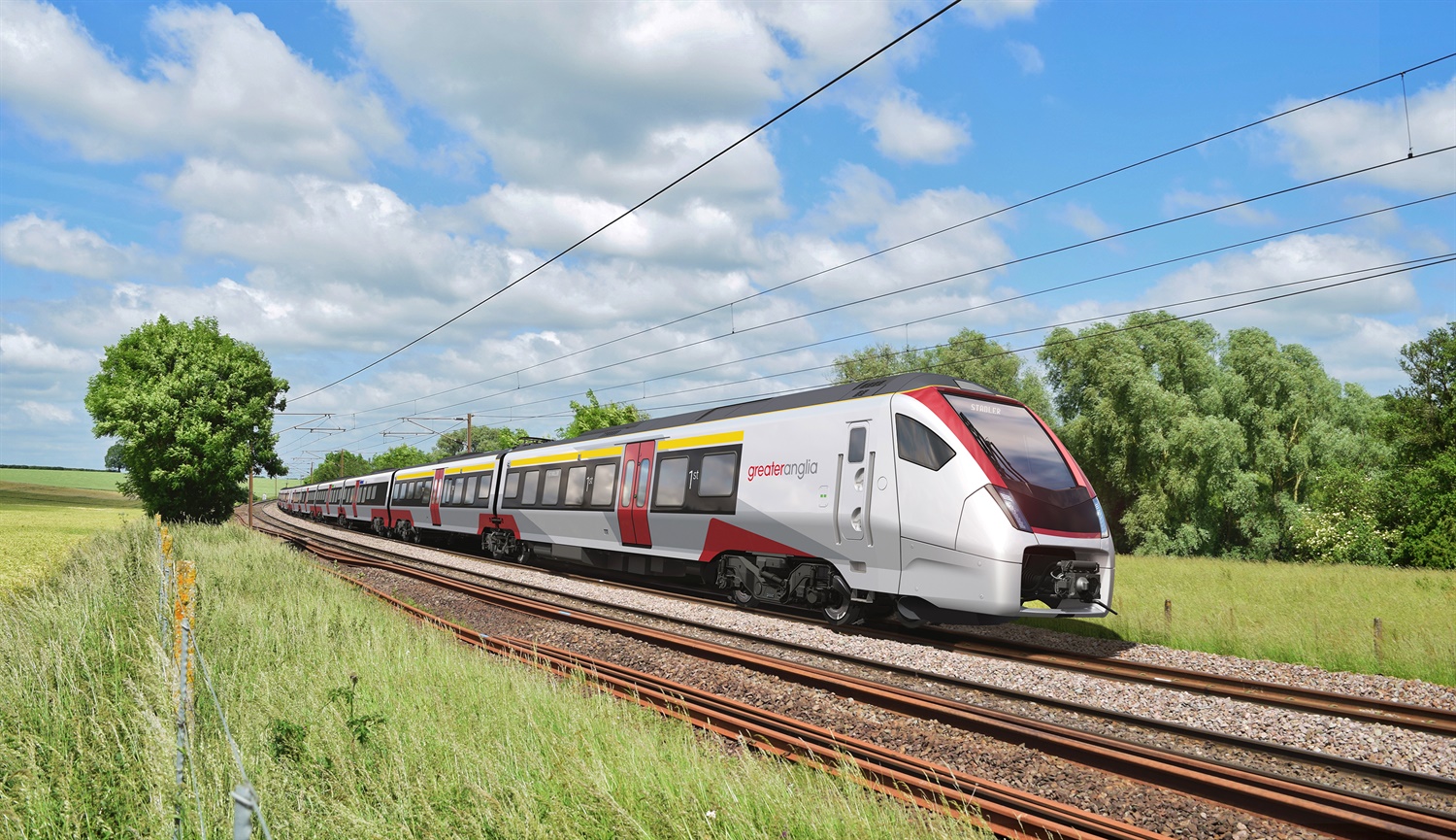
It looks like it has a single double door on each coach.
It appears that the electric Class 745 trains have more doors.
If you look at a typical Bombardier Aventra or Electrostar, Stadler Flirt or Siemens Desiro City, there are generally no end doors.
Have CAF commited a design crime of the highest order?
Or is it TransPennine’s fault?
Parking Fees Rise At Many Hospitals In 2017-18, Analysis Finds
The title of this post is the same as that of this article on the BBC.
This is the first paragraph.
Four in 10 NHS hospitals in England have increased car parking prices in the last year, new data suggests.
I don’t drive, so it doesn’t effect me and the only hospitals I’ve visited in the last few years; Addenbrooke’s, Homerton, Royal London and University College have been easily accessible by public transport.
The real scandal is that so many hospitals are not easily accessible using fully-accessible public transport.
- Addenbrooke’s has a large bus interchange, which has connections to Cambridge City Centre and at least one of the City’s large Park-and-Ride sites.
- Nottingham’s Queen’s Medical Centre has a tram connection to the large Park-and-Ride sites.
But I can think of several hospitals, where the only public transport is an expensive taxi.
I also remember a hospital administrator in London telling me, that the largest number of complaints they received was about car parking.
Iceland Crash: Three British People Including Child Killed
The title of this post is the same as this article on the BBC.
I’ve been to Iceland and thoroughly enjoyed it.
But I did all the exploring in organised tour parties, as I was advised by the tour company, that this was safer. Although, they didn’t know I couldn’t drive!
We went everywhere in large 4×4 vehicles.



So was the party involved in the tragedy in a suitable vehicle?
Axed Rail Routes May Be Reopened Under New Department for Transport Plans
The title of this post is the same as that on this article on Sky News.
This is the first two paragraphs.
The Department for Transport has confirmed it is actively working with a number of groups to explore the possibility of reopening old rail routes, axed under the so-called Beeching cuts of the 1960s.
It follows a call by Transport Secretary Chris Grayling a year ago, encouraging those in the public and private sector to submit proposals for potential projects to regenerate old lines.
It also quotes a Department of Transport spokesman.
This is on top of exploring reopening the Northumberland Line for passenger use, supporting the reinstatement of stations on the Camp Hill Line, developing new rail links to Heathrow and a new station at Cambridge South
He apparently, didn’t say more because of confidentiality.
The article then talks about the success of the Borders Railway in Scotland.
So is this just a good news story for Christmas or is there a plan to reopen old railway lines?
I feel that a several factors are coming together, that make the reopening of railway lines and the creation of new ones more likely.
Digital Signalling
Signalling is expensive, but where you have rolling stock to a high modern standard, with digital in-cab signalling, does this mean that new or reopened rail lines can be built without conventional signalling?
In addition, installing digital signalling on some routes, would probably make it easier to add a new station. Surely, it must just be a reprogramming of the route!
It could be a problem that, I would expect that on a digitally-signalled line, all trains must be capable of using it. But in many areas of the country, like East Anglia, these routes will be run by new trains.
Digital signalling must also make it easier to design more efficient single-track railways, with perhaps a passing loop to allow higher frequencies.
More Efficient Track Construction
Network Rail and their contractors and suppliers are getting better and more efficient at building track and bridges through difficult terrain and places, judging by some of their construction in recent years, such as the Acton Dive-Under and the Ordsall Chord. They have also overseen some notable successes in the refurbishment of viaducts and tunnels.
It should also be noted that the reopening of the Borders Railway was a successful project in terms of the engineering and was completed on budget and on time.
According to Wikipedia, though there was criticism of the infrastructure.
This is said.
The line’s construction has been described as resembling a “basic railway” built to a tight budget and incorporating a number of cost-saving features, such as using elderly two-carriage diesel trains and running the line as single track.
But looking back on the line from over three years since it opened, it has certainly been judged by many to be an undoubted success.
Would it have had the same level of success, if it had been built as a double-track electrified railway?
Single-Track Lines
The Borders Railway is a good example of an efficient single-track railway, that runs a half-hourly service.
Other routes like the East Suffolk Line and the Felixstowe Branch Line, show how good design can handle more than the most basic levels of traffic, with perhaps selective double track or a well-placed passing loop.
They may be dismissed by rail purists as basic railways, but when well-designed, they are able to provide the service that is needed along the route, for a construction cost that is affordable.
I would though advocate, that if a new single-track railway is built, that provision is made where possible to be able to add the second track. But not at too great an expense or to provide a service level that will never be needed.
I believe that good design of a new railway can cut the construction cost by a fair amount.
Single-Platform Stations
Several of the new stations built in recent years have been stations with only a single-platform.
- Cranbrook – A station in Devon on the West of England Main Line to serve a new housing development.
- Ebbw Vale Parkway – A parkway station in Ebbw Vale.
- Galashiels – A station, that handled 356,000 passengers last year. It is a unique station on a narrow site, that shares facilities with a large bus station on the other side of the road. It is a very functional transport interchange.
- James Cook – A basic but practical station, that serves the hospital in Middlesbrough. – It cost just over £2million in 2014.
- Newcourt – A £4million station handling over 100,000 passengers per year.
- Pye Corner – A basic station in Newport handling nearly 100,000 passengers per year.
The stations have several common characteristics.
- They can all handle at least a four-car train.
- The single-platform is used for services in both directions.
- Disabled access is either level or by a gently-sloping ramp.
Only James Cook station has a footbridge over the track.
These single-platform stations must cost less, as for instance a footbridge with lifts costs upwards of a million pounds.
Note that of the nine stations on the Borders Railway only three have two platforms.
Single-Platform Terminal Stations
There are also several terminal stations in the UK with only one platform.
- Aberdare – Handling over 500,000 passengers per year.
- Aberystwyth – Handling around 300,000 passengers per year.
- Alloa – Handling around 400,000 passengers per year.
- Aylesbury Vale Parkway – Handling over 100,000 passengers per year.
- Blackpool South – Handling over 100,000 passengers per year.
- Exmouth – Handling nearly a million passengers per year.
- Felixstowe – Handling around 200,000 passengers per year.
- Henley-on-Thames – Handling around 800,000 passengers per year.
- Marlow – Handling nearly 300,000 passengers per year.
- Merthyr Tydfil – Handling around 500,000 passengers per year.
- North Berwick – Handling around 600,000 passengers per year.
- Redditch– Handling over a million passengers per year.
- Seaford – Handling over 500,000 passengers per year.
- Shepperton – Handling around 400,000 passengers per year.
- Sheringham – Handling around 200,000 passengers per year.
- Walton-on-the-Naze – Handing around 130,000 passengers per year
- Windsor & Eton Central – Handling nearly two million passengers per year.
Many of these stations have only a single hourly train. whereas Redditch and Windsor & Eton Central stations have three trains per hour (tph).
As a single terminal platform can probably handle four tph, I suspect that most terminals for branch lines could be built with just a single platform.
No Electrification
Chris Grayling has said that the East West Rail Link will be built without electrification.
I wasn’t surprised.
- Network Rail has a very poor performance in installing electrification.
- There have been complaints about the visual intrusion of the overhead gantries.
- Electrification can cause major disruption to road traffic during installation, as bridges over the railway have to be raised.
In addition, I’ve been following alternative forms of low- or zero-carbon forms of train and feel they could offer a viable alternative
Bi-Mode, Hydrogen And Battery-Electric Trains
When the Borders Railway was reopened, unless the line had been electrified, it had to be run using diesel trains.
But in the intervening three years, rolling stock has developed and now a new or reopened railway doesn’t have to be electrified to be substantially served by electric trains.
- Bi-Mode trains are able to run on both diesel and electric power and Hitachi’s Class 800 trains are successfully in service. They will be shortly joined by Porterbrook’s innovative Class 769 trains.
- Hydrogen-powered trains have already entered service in Germany and they are being developed for the UK.
- Battery-electric trains have already been successfully demonstrated in the UK and will enter service in the next few years.
All of these types of train, will be able to run on a new railway line without electrification.
Bi-mode trains are only low-carbon on non-electrified lines, whereas the other trains are zero-carbon.
The trains on the Borders Railway must be prime candidates for replacement with hydrogen-powered or battery-electric trains.
Adding It All Up
Adding up the factors I have covered in this section leads me to conclude that rail developments over the last few years have made it possible to create a new railway line with the following characteristics.
- An efficient mainly single-track layout.
- Single-platform stations.
- A single-platform terminal station capable of handling well upwards of a million passengers per year.
- Service levels of up to four trains per hour.
- Zero-carbon operation without electrification.
- Low levels of visual and noise intrusion.
The new railway will also be delivered at a lower cost and without major disruption to surrounding road and rail routes.
The Need For More Housing And Other Developments
There is a very large demand for new housing and other developments all over the UK.
Several proposed rail projects are about connecting new developments with the rail network.
In London Overground Extension To Barking Riverside Gets Go Ahead, I listed a few developments in London, where developers and their financial backers, were prepared to put up around £20,000 for each house to fund decent rail-based transport links.
Obviously, developments in London are expensive, but with all the new developments, that have been built close to stations in the last few years, I suspect that infrastructure financiers. like Legal and General and Aviva, know how much being by a rail station is worth.
Conclusion
Both public and private infrastructure financiers will take advantage of the good railway and rolling stock engineering, which will mean the necessary rail links to new developments will be more affordable and zero-carbon.
I Don’t Wrap Christmas Presents Traditionally!
I don’t give many presents, as I only have three relatives, who I’m in contact with.
These are the presents all lined up on Christmas Day, before taking them to Christmas lunch!
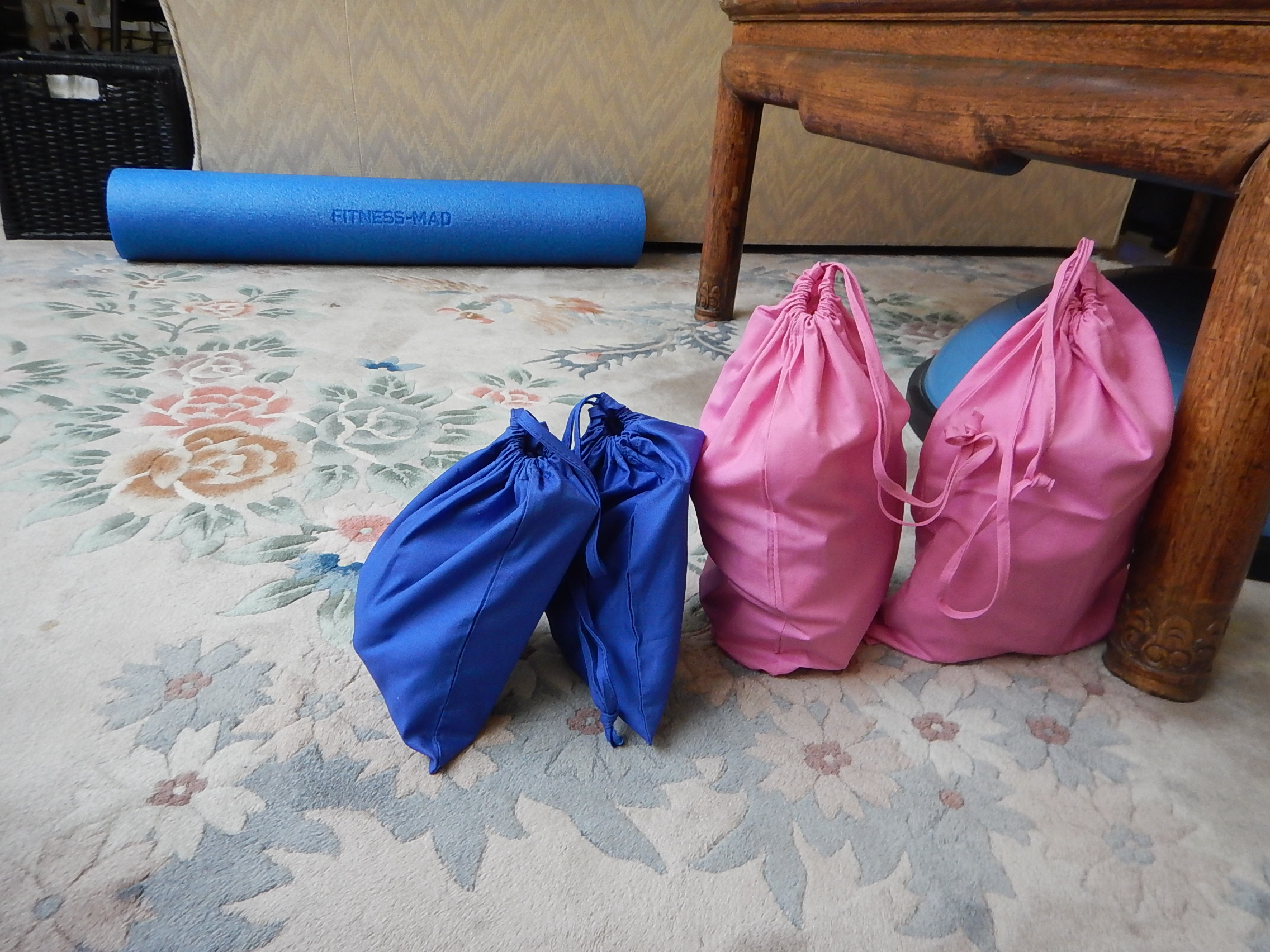
The drawstring bags are bought on-line from The Clever Baggers.
The larger pink ones are just £0.72, which is probably cheaper than traditional wrapping paper.
Putting the presents into a bag and pulling the string is probably a lot easier, especially if you have a gammy hand, as I sometimes do!
They would also be ideal in a family with lots of children, as each could have their own colour.
As I nearly ran out of bags this Christmas, I have just placed an order to replenish my stock.
 The Anonymous Widower