The title of this post is the same as that on this article on Solar Power Portal.
This is the sub-heading.
Low Carbon Hub, an Oxfordshire-based developer of community-owned renewable energy projects, is inviting investment in the 3MW/12MWh BESS.
These four paragraphs add more details.
Consumers have the opportunity to invest in the UK’s ‘first’ community-owned battery energy storage system (BESS).
Low Carbon Hub, an Oxfordshire-based developer of community-owned renewable energy projects, is inviting investment in the 3MW/12MWh BESS, which is co-located with the Ray Valley solar power plant.
At one time the largest community-owned solar development in the UK, the 19MW Ray Valley solar project came online in 2022.
Low Carbon Hub now plans to install battery energy storage at the site to “ensure more clean energy is used, and more money is generated for communities,” it said. As such, members of the public and organisations can buy shares in the Community Energy Fund through direct impact investing platform Ethex.
I think we could see more of this in the future.
March 26, 2026
Posted by AnonW |
Energy, Energy Storage, Finance & Investment | Solar Power, Battery Energy Storage Systems (BESS), Low Carbon Hub, Ray Valley Solar, Oxfordshire |
Leave a comment
The title of this post, is the same as that of this article on the BBC Future Web Site.
It is also one of the best articles, I’ve read on the economics of liquid-air energy storage.
This is the sub-heading.
An overlooked technology for nearly 50 years, the world’s largest liquid air energy storage facility is finally set to power up in 2026. It’s hoping to compete with grid-scale lithium batteries and hydro to store clean power, and reduce the need to fall back on fossil fuels.
These three introductory paragraphs add detail to the project.
As the world’s use of renewable electricity soars, surpassing coal for the first time, the need to store that energy when the Sun isn’t shining and the wind isn’t blowing is growing in step. While some turn to grid-scale lithium batteries and others to pumped hydro, a small but growing industry is convinced there’s a better solution still: batteries that rely on air.
Near the village of Carrington in north-west England, the foundations are being laid for the world’s largest commercial-scale liquid air energy storage facility, one of the first of its kind. The site will eventually become an array of industrial machinery and a number of large storage tanks, filled with air that has been compressed and cooled so much it has become a liquid, using renewable energy surplus to demand. The stored energy can be discharged later when demand exceeds supply.
If the project succeeds, more will follow. The site’s developers Highview Power are confident that liquid air energy storage will make it easier for countries to replace fossil fuels with clean renewable energy – though at present, the technology is expensive. But as the need for clean energy storage surges, they’re betting the balance will tip in favour of liquid air.
The BBC article, seems to have been written with input from Shaylin Cetegen, a chemical engineer at the Massachusetts Institute of Technology (MIT), who studies energy storage systems.
Topics discussed include.
- The intermittency problem of renewables and how this gives problems for the stability of electricity grids.
- The switchable nature of fossil-fuel power generation.
- A big part of the solution is to store the surplus energy so that it can be released when it’s needed. Think of it like an electricity deposit account!
- For decades, the main form of energy storage has been pumped hydro. In 2021, the world had 160 GW of pumped hydro capacity. The UK has a total of just 3 GW in Scotland and Wales! But more is on the way!
- Recently, large-scale battery storage systems have risen to the challenge and installed capacity has risen from 55.7 GW in 2023 to 150 GW / 348 GWh in 2025.
- The liquid air solution is then explained.
- A grid-scale stop-gap, that is the 30 MW/300 MWh Manchester hybrid liquid-air battery, is then described.
- In August 2026, the battery is set to begin operating.
- An alternative way of stabilising the grid will be provided.
- It will come online in two stages, says Highview Power CEO Richard Butland.
- Then in 2027 the liquid air storage is expected to begin fully operating.
Highview Power will make money by trading electricity, as pumped storage operators do.
The penultimate section of the article looks at the bottom line and comes to these conclusions.
Instead, she says governments could support the technology. In her study, subsidising the initial capital costs to set up the systems “could be a viable approach to achieve economic viability in the short term”, she says.
Furthermore, faster uptake of renewables would increase energy price volatility, making energy storage more economically viable.
Cetegen makes a final point in favour of liquid air energy storage: it’s cheap. Energy storage technologies are often assessed using a metric called the “levelised cost of storage”, which estimates how much each unit of stored energy costs over the lifespan of the project. For liquid air, this can be as low as $45 (£34) per megawatt-hour – compared to $120 (£89) for pumped hydro and $175 (£130) for lithium-ion batteries.
“While none of these storage methods are likely economically viable right now without policy support, liquid air energy storage stands out as a particularly cost-effective option for large-scale storage,” Cotegen says.
Ultimately, Butland expects electricity grids to rely on a mix of storage technologies. Pumped hydro is extremely effective and works for decades, but it’s location-dependent because it needs a water supply. Meanwhile, batteries are highly efficient and can be placed anywhere, but need to be replaced after about 10 years. Liquid air has the advantage that it can store energy for longer than batteries, with minimal losses.
As any country enters the green transition, its electricity grid needs to be remodelled to cope. “We’re rebuilding all grids globally, based on new generation,” says Butland. And that could well mean a lot of liquid air energy storage.
March 21, 2026
Posted by AnonW |
Energy Storage, Energy | Scotland, Coal, Wind Power, Solar Power, Highview Power, Renewable Energy, Pumped Storage Hydroelectricity, Lithium-Ion Battery, Grid Battery, Battery Energy Storage Systems (BESS), Carrington LDES, Hunterston LAES |
2 Comments
The title of this post, is the same as that of this press release from National Grid.
This is the sub-heading.
Record-breaking renewable power projects are among the 2.4GW of new generation connections we plugged into our transmission network during 2025, in another key step in the UK’s clean energy transition.
This first paragraph adds some detail to the headlines.
This year’s works build on the 3GW of connections we delivered in 2024 – which included a new interconnector between Wales and Ireland – and is part of 12.6GW of generation capacity we’ve connected in England and Wales over the past five years.
The rate of connections appear to have been fairly steady over the last five years, at about 2.5 GW/year.
Three projects are highlighted.
- In April the 373MW Cleve Hill Solar Park, Britain’s largest solar array, began exporting power across the network following work to connect it at our Cleve Hill substation in Kent.
- Over summer Statera Energy’s Thurrock Storage project, the country’s biggest battery energy storage system (BESS), connected at our Tilbury substation in Essex to add 300MW of flexible capacity across London and the south east.
- And in September we completed upgrades and commissioning activity at our Lackenby substation in North Yorkshire in readiness for RWE’s Sofia offshore wind farm – one of the world’s biggest – to complete construction.
They also completed works for more than 400MW of additional BESS connections during the year, including a 150MW scheme connecting at Ferrybridge substation in West Yorkshire, a 100MW facility plugging in at Thornton substation in North Yorkshire, and further projects at our substations in Enderby (Leicestershire), Rainhill (Merseyside) and Bredbury (Greater Manchester).
I think that adds up to ten projects in total.
It looks like National Grid had a good year.
January 5, 2026
Posted by AnonW |
Energy, Energy Storage | Battery Energy Storage Systems (BESS), Cleve Hill Solar Park, National Grid, Offshore Wind Power, Sofia Wind Farm, Wind Power |
2 Comments
The title of this post, is the same as that of this article on Solar Power Portal.
This is the sub-heading.
Bus operator First Bus has launched its largest energy storage facility yet in Hampshire.
These four paragraphs add more detail.
Located at the company’s Hoeford bus depot, the 1MW battery storage unit, with a 2-hour duration, will begin operations next month.
This will be followed by a bigger battery storage unit with 2MW/4MWh capacity at its depot in Aberdeen, which will begin work by the end of the year.
The FirstGroup division said that it will explore opportunities to build more battery sites across the UK in the future.
The new battery storage facilities will be used to store surplus electricity that will be distributed back to the grid during peak demand and help maintain power supplies. It will also be used to power the company’s more than 1,200 electric bus fleet.
Note.
- Hoeford’s 1MW/2MWh and Aberdeen’s 2MW/4MWh are big batteries.
- They will be installed, where there is a predictable need.
- Google AI says that the First Bus UK News “About Us” page lists 65 depots and outstations.
- I suspect some clever data analysis is being used to optimise the size of a battery to the route structure and number of buses at a depot.
The batteries appear to come from a company called Palmer Energy Technology, who are backed by Barclays, First Bus and the University of Oxford.
This is the Palmer Energy Technology web site, which has these two paragraphs.
Palmer Energy designs and manufactures Battery Energy Storage Systems that apply automotive‑grade principles to stationary applications. PETL specifies premium cells, uses liquid cooling as standard and focuses on intelligent control to drive down operating costs for customers in transport, industry and the grid.
Through our 100% ownership of Brill Power, a University of Oxford spin out, we incorporate Brill Power’s patented active loading BMS technology in all our BESS to increase the lifetime of systems, improve safety and remove geopolitical risks by storing all data on UK servers.
These are my further thoughts.
Electric Bus Charging Puts A Strain On The Grid
A couple of years ago, I had a drink with three bus depot managers in London. They said that some depots were having difficulty getting sufficient power from the grid.
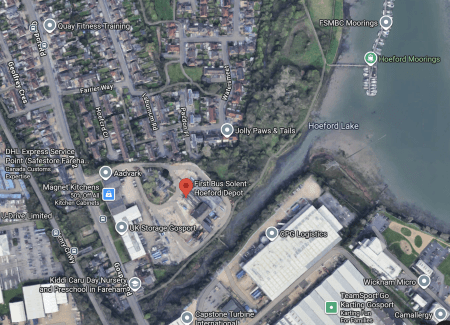
This Google Map shows Hoeford Depot where the first battery has been installed.
Note.
- Hoeford Depot is by the water at Fareham.
- The depot is indicated by the red arrow.
- The depot is surrounded by houses and other businesses.
As an electrical engineer, I would expect that a battery of the right size could sort out any charging problems.
Bus Garage Batteries Could Mop Up Surplus Electricity
Consider.
- I would expect bus garages have a predictable pattern for energy use.
- Buses will often be charged at night, when solar power is low.
- Do bus garages get a cheaper electricity rate at night?
- There will be times, when bus garages can accept excess energy from the grid and store it until they need it.
- This will mean that wind turbines won’t have to be turned off so often.
Palmer’s batteries installed in a bus garage seem to be a simple way to increase renewable energy efficiency and possibly reduce the cost of battery charging.
Would A Bank Finance The Batteries?
I am not a banker or an accountant, but I have worked with some of the very best. One banker, who sadly has now passed on, would have surely backed this company if the technology and the forecasts stacked up, just as he backed the company, that I helped to start.
It does look as if Barclays are backing the company.
November 5, 2025
Posted by AnonW |
Energy, Energy Storage, Transport/Travel | Barclays, Battery Energy Storage Systems (BESS), Battery-Electric Buses, Bus Garages, Charging Electric Vehicles, First Bus, Oxford University, Palmer Energy Technology, Solar Power, Wind Power |
1 Comment
The title of this post, is the same as that of this article on the Solar Power Portal.
This is the sub-heading.
Quinbrook Infrastructure Partners has completed construction and started commercial operations of the 373MW Cleve Hill Solar Park, now the largest operational in the UK.
Note.
- According to Quinbrook, during the commissioning phase in May, electricity exports from Cleve Hill peaked at a level equivalent to 0.7% of the UK’s national power demand.
- Construction of the 373 MW solar project began in 2023, and Quinbrook said construction is now underway on a 150 MW co-located battery energy storage system (BESS).
- The gas-fired power stations at Coolkeeragh, Corby, Enfield, Great Yarmouth and Shoreham are all around 410-420 MW for comparison.
- On completion of the BESS, Cleve Hill will go from the largest solar plant in the UK to the largest co-located solar plus storage project constructed in the UK.
- The solar and storage plant was the first solar power project to be consented as a nationally significant infrastructure project (NSIP) and is supported by the largest solar + BESS project financing undertaken in the UK.
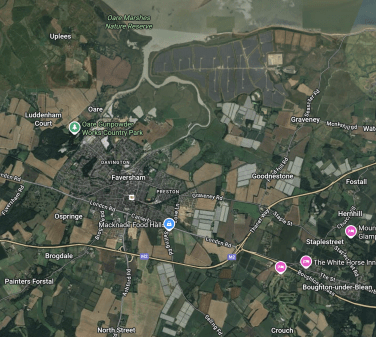
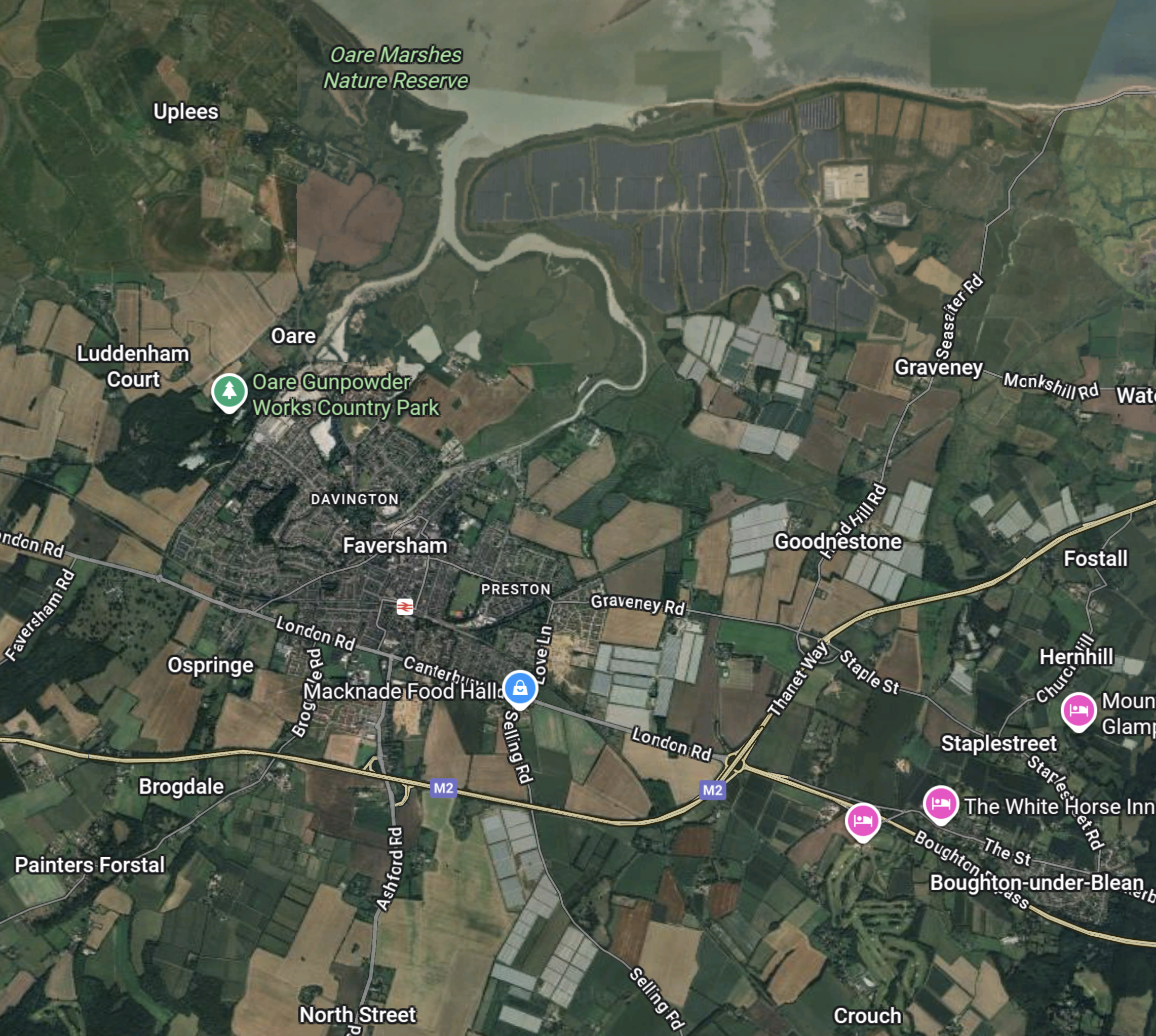
This Google Map shows the location of the solar farm with respect to Faversham.
Note.
The town of Faversham to the left of the middle of the map.
Faversham station has the usual railway station logo.
The North Kent coast is at the top of the map.
Cleve Hill Solar Park is on the coast to the East of the River Swale.
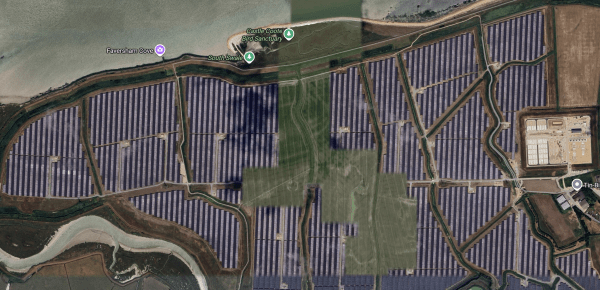
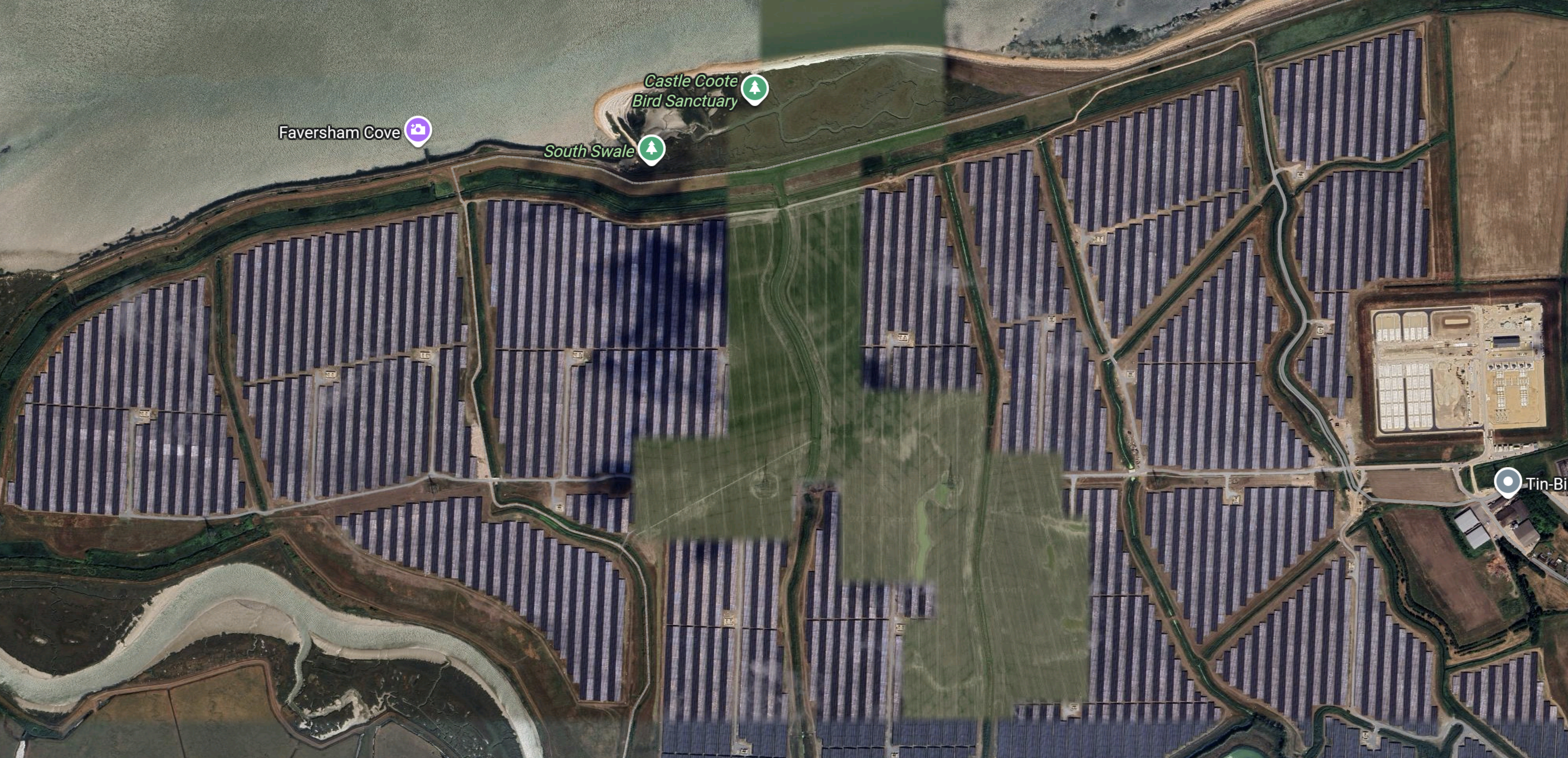
This second Google Map shows a close up of the solar farm.
Note.
- The large number of solar panels.
- The North Kent coast is at the top of the map.
- The River Swale in the South-West corner of the map.
- It appears that Cleve Hill substation is at the right edge of the map.
- The boxes at the left of the substation appear to be the batteries.
- The 630 MW London Array wind farm, which has been operational since 2013, also connects to the grid at Cleeve Hill substation.
- When completed, the London Array was the largest offshore wind farm in the world.
As a Control Engineer, I do like these Battery+Solar+Wind power stations, as they probably provide at least a reliable 500 MW electricity supply.
Could A System Like Cleeve Hill Solar Park Replace A 410 MW Gas-Fired Power Station?
The three elements of Cleeve Hill are as follows.
- Solar Farm – 373 MW
- BESS – 150 MW
- Wind Farm – 630 MW
That is a total of only 1,153 MW, which means a capacity factor of only 35.6 % would be needed.
How Much Power Does A Large Solar Roof Generate?
Some people don’t like solar panels on farmland, so how much energy do solar panels on a warehouse roof generate?
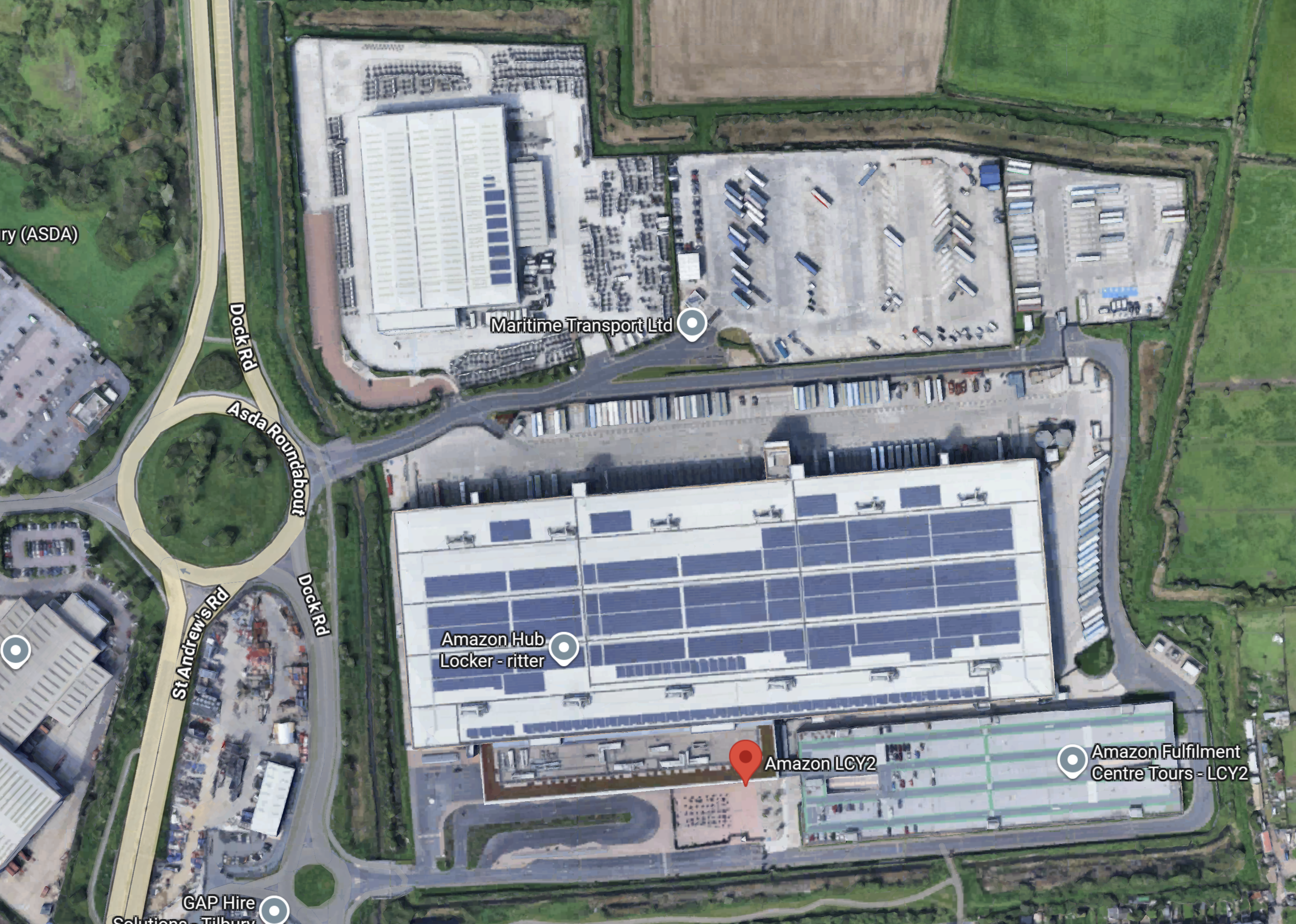
This Google Map shows Amazon’s warehouse at Tilbury.
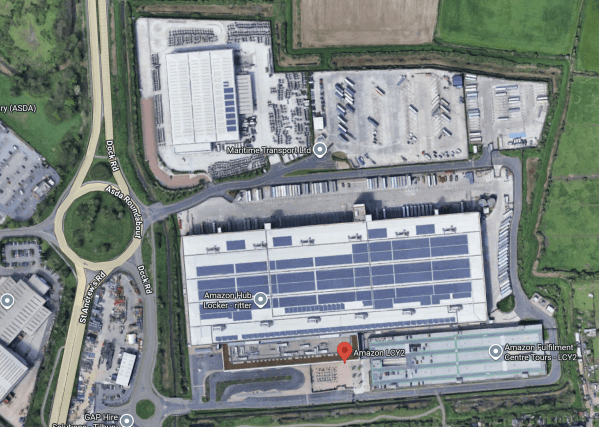
I asked Google AI to tell me about Amazon’s solar roof at Tilbury and it said this.
Amazon’s solar roof at the Tilbury fulfillment center is the largest rooftop solar installation at any Amazon site in Europe, featuring 11,500 panels across the two-million-square-foot roof. Unveiled in 2020, it is part of Amazon’s larger goal to power its operations with 100% renewable energy by 2025 and reduce its emissions, contributing to its Climate Pledge to be net-zero carbon by 2040.
It generates 3.4 MW, which is less that one percent of Cleeve Hill Solar Park.
October 27, 2025
Posted by AnonW |
Artificial Intelligence, Energy, Energy Storage | Amazon, Battery Energy Storage Systems (BESS), Cleve Hill Solar Park, Google AI, London Array Wind Farm, Solar Power, Solar Roofs, Tilbury, Wind Power |
2 Comments
The title of this post, is the same as that of this press release from SSE.
These three bullet points act as sub-headings.
- Ferrybridge Next Generation sets out plans for continuing the legacy of power generation at the site, with the potential to bring significant investment to the region.
- Statutory consultation phase launched, inviting communities and stakeholders to have their say on project proposals.
- Hydrogen-enabled project could support the security of supply and offer a clear route to decarbonisation.
These three paragraphs add more detail.
Members of the public are being invited to have their say on plans for a proposed new power station in development, Ferrybridge Next Generation Power Station.
The station is being designed so that it can run on hydrogen, as a lower-carbon alternative to natural gas. It would also be able to operate using natural gas or a blend of hydrogen and natural gas until a technically and commercially viable hydrogen supply becomes available to the site.
With a proposed capacity of up to 1.2GW, Ferrybridge Next Generation Power Station could play an important role in supporting the UK’s energy system in the short term – providing reliable flexible back-up power during periods of peak demand and balancing the system when the wind doesn’t blow or the sun doesn’t shine, while delivering a route to decarbonised power generation in the longer term.
Note.
- A 150 MW/300 MWh Battery Electric Storage System is being developed on the site, which I wrote about in SSE Renewables Announces Construction Of Second Utility-Scale Battery Storage System.
- The last Ferrybridge power station; C had a capacity of just over 2 GW.
- This will be SSE Renewable’s second hydrogen-fired power station after Keadby, which I wrote about in Consultation On Plans For Keadby Hydrogen Power Station To Begin.
- As the press releases says, Ferrybridge Hydrogen-Fired Power Station will be West Yorkshire’s backup for when the wind doesn’t blow and the sun doesn’t shine.
How similar will the two hydrogen-fired power stations be?
Will SSE Be Building Any More In The First Wave Of Hydrogen-Fired Power Station?
This is a paragraph from SSE’s press release.
The station is being designed so that it can run on hydrogen, as a lower-carbon alternative to natural gas. It would also be able to operate using natural gas or a blend of hydrogen and natural gas until a technically and commercially viable hydrogen supply becomes available to the site.
It would appear that the availability of the hydrogen fuel may be a problem.
But places like Aberdeen, Bradford, Brighton, Humberside and Merseyside, do seem to be planning for hydrogen, so all is not lost.
September 16, 2025
Posted by AnonW |
Design, Energy, Energy Storage, Hydrogen | Battery Energy Storage Systems (BESS), Ferrybridge Hydrogen Power Station, Ferrybridge Power Station, Hydrogen Blend, Hydrogen-Fired Power Station, Keadby Hydrogen Power Station, Natural Gas, SSE, SSE Renewables, SSE Thermal |
Leave a comment
The title of this post, is the same as that of this article on offshoreWIND.biz.
This is the sub-heading.
According to a new market report from the Global Wind Energy Council (GWEC), there are now 83 GW of offshore wind capacity installed globally, with 48 GW more in the construction phase worldwide as of May this year.
The first paragraph is a quote from Rebecca Williams, Deputy CEO at GWEC.
Our report finds that there is now already 83 GW of offshore wind installed worldwide, keeping the lights on for 73 million households, and powering countries’ economic development. There is currently a further 48 GW of offshore wind [under] construction worldwide. With its unique position in the marine space, and ability to produce large amounts of reliable, homegrown power, nations around the world are pushing forward the technology to enhance their energy independence and autonomy
I doubt Ms. Williams will be on the Donald Trump’s Christmas card list.
The article is worth a full read, as it contains some interesting statistics.
This is the last paragraph of the article.
Global Wind Energy Council’s 2024 global offshore wind outlook for total additions in the 2025-2029 period was 156.72 GW, which has now been downgraded to 118.56 GW.
These are my estimates for the amount of offshore wind in the UK.
- Currently Installed – 16, 035 MW
- To Be Installed in 2025 – 1,235 MW
- To Be Installed in 2026 – 4,907 MW
- To Be Installed in 2027 – 5,750 MW
- To Be Installed in 2028 – 480 MW
- To Be Installed in 2029 – 1,363 MW
The UK should be installing 13,735 MW, which would.
- Lift total offshore wind capacity to 29.8 GW.
- This is an 86 % increase in capacity from July 2025.
- As I write this, we are using 29.3 GW.
- We would be adding 11.6 % of the global additions for 2025-2029, which isn’t bad for such a small country.
All this wind will need to be backed up, for when the wind doesn’t blow.
So I asked Google AI how much electricity storage we will have by 2029 and got this AI Overview.
In 2029, the UK is expected to have a significant amount of battery energy storage capacity, with estimates ranging from 27 to 29 GW, according to the House of Commons Library and Cornwall Insight. This capacity is crucial for supporting the UK’s transition to a clean energy system and ensuring a stable electricity supply.
Obviously, Google AI isn’t that intelligent, as it made the mistake made by many electricity storage companies of just giving the output of the battery, as it sounds better, rather than both the output and the storage capacity.
Consider.
- Most Battery Energy Storage Systems (BESS) can provide two hours of output.
- Highview Power’s big batteries are 200 MW/2.5 GWh, so will provide 12.5 hours of output.
If I assume that the average storage is just two hours, that means the available storage will be at least 54 GWh.
Given that we also had 16 GW of solar power in June 2024 and if this increases at a similar rate to offshore wind power, it will certainly be able to help fill the energy storage, I think we’ll have enough renewable energy to play a big part in the next election.
About The Global Wind Energy Council (GWEC)
I asked Google AI for a summary about GWEC and got this AI Overview.
The Global Wind Energy Council (GWEC) has its global headquarters in Lisbon, Portugal. Additionally, they have offices in Brussels, Belgium; Singapore; and London, UK.
GWEC’s presence is not limited to these locations, as they have a global network of experts working across different continents, according to the organization’s website. Their flagship report, the Global Wind Report, is launched annually in London. For example, the 2025 report launch took place in London.
Unsurprisingly, it doesn’t mention an office in the United States.
The report, which forms the basis of this post, can be downloaded from the GWEC web site.
August 4, 2025
Posted by AnonW |
Energy, Energy Storage | Battery Energy Storage Systems (BESS), Donald Trump, Global Wind Energy Council, Highview Power, Offshore Wind Power, Politics, Solar Power, Wind Power |
2 Comments
The title of this post, is the same as that of this article on offshoreWIND.biz.
This is the sub-heading.
What is described as the “world’s first” offshore solar farm integrated within a wind farm has completed assembly at the Port of Amsterdam and is ready for deployment at the Hollandse Kust Noord (HKN) offshore wind farm in the North Sea.
These two paragraphs give more details about the project.
Dutch company Oceans of Energy assembled the floating solar farm in three days. The system will be towed 18.5 kilometres offshore this summer to be installed at the HKN site, operated by CrossWind, a joint venture (JV) between Shell and Eneco.
According to Oceans of Energy, the project uses prefabricated floating solar units designed for offshore conditions and is seen as a step toward scaling hybrid wind-solar developments.
There are several ways to generate renewable energy.
As wind, solar, tidal and wave power are often out of phase with each other, if you are using two together in a hybrid setup, then it is probably not a bad idea to add a BESS or other form of storage to the mix.
In Oceans of Energy To Build Offshore Solar Array At Hollandse Kust Noord Offshore Wind Park, I said that the Dutch were putting batteries in the design of Hollanse Kust Noord offshore wind farm.
June 27, 2025
Posted by AnonW |
Energy | Battery Energy Storage Systems (BESS), Floating Solar Power, Floating Wind Power, Hollandse Kust Noord Wind Farm, Oceans of Energy, Port Of Amsterdam, Solar Power, Tidal Power, Wave Power, Wind Power |
Leave a comment
The title of this post, is the same as that of this article on the Solar Power Portal.
These two introductory paragraphs outline the deal.
Energy supplier E.ON and energy storage technology firm Superdielectrics have joined forces to promote and develop a new battery technology for stationary storage applications.
The new BESS technology takes a unique approach by using a polymer-based technology, with the main component being a membrane similar to contact lens materials. According to the two companies, these polymer batteries are both more affordable and more environmentally friendly than their lithium-ion counterparts.
I believe that this battery could be a game-changer. Especially, for those like me, who have solar panels on their roofs.
Check out the Superdielectrics web site for more details.
I First Spotted Superdielectrics In 2019
I wrote about them in Is Cambridge Going To Save The World From Global Warming? in 2019.
This was my conclusion in that post.
I have been observing technology since the 1960s.
This is either one of those scientific curiosities , like cold fusion, that appear from time-to-time and then disappear into the scientific archives or become a game-changer.
I suspect we’ll know in a couple of years.
But even if it is isn’t the solution to affordable and massive energy storage,, that will save the world, I believe that one of the teams of men and women in white coats, somewhere in the world will crack the problem.
It looks like they’ve taken longer than I thought they would.
Note though, that in the linked post, they have a link-up with Rolls-Royce.
Conclusion
This is one of the great energy breakthroughs of my life-time.
April 17, 2025
Posted by AnonW |
Energy, Energy Storage | Batteries, Battery Energy Storage Systems (BESS), E.ON, Innovation, Rolls-Royce, Solar Power, Superdielectrics |
2 Comments
The title of this post, is the same as that of this article on Solar Power Portal.
This is the sub-heading.
Battery energy storage system (BESS) developer/operator Zenobē has announced that it has successfully financed its Eccles BESS project in Scotland, in one of the biggest finance rounds in European history.
These two paragraphs add more details.
The total debt raised for the 400MW/800MWh project was £220 million, which the company says is one of the largest finance raises for a standalone BESS project ever made in Europe. The funding was provided by a group of lenders organised by National Westminster Bank and KKR Capital Markets Partners LLP. Additionally, Zenobē has announced that construction on the Eccles BESS—the company’s largest battery project to date—has begun.
The Eccles BESS is the final part of the firm’s £750 million investment in Scotland. Zenobē’s Blackhillock BESS, a 200MW/400MWh project located near Inverness, recently began commercial operations, and is set to expand to 300MW/600MWh later this year.
Zenobe seem to be able to finance these projects, without too much difficulty.
Construction seems to have started. But then, I suspect there are wind turbines in the vScottish Borders already lined up to use the batteries.
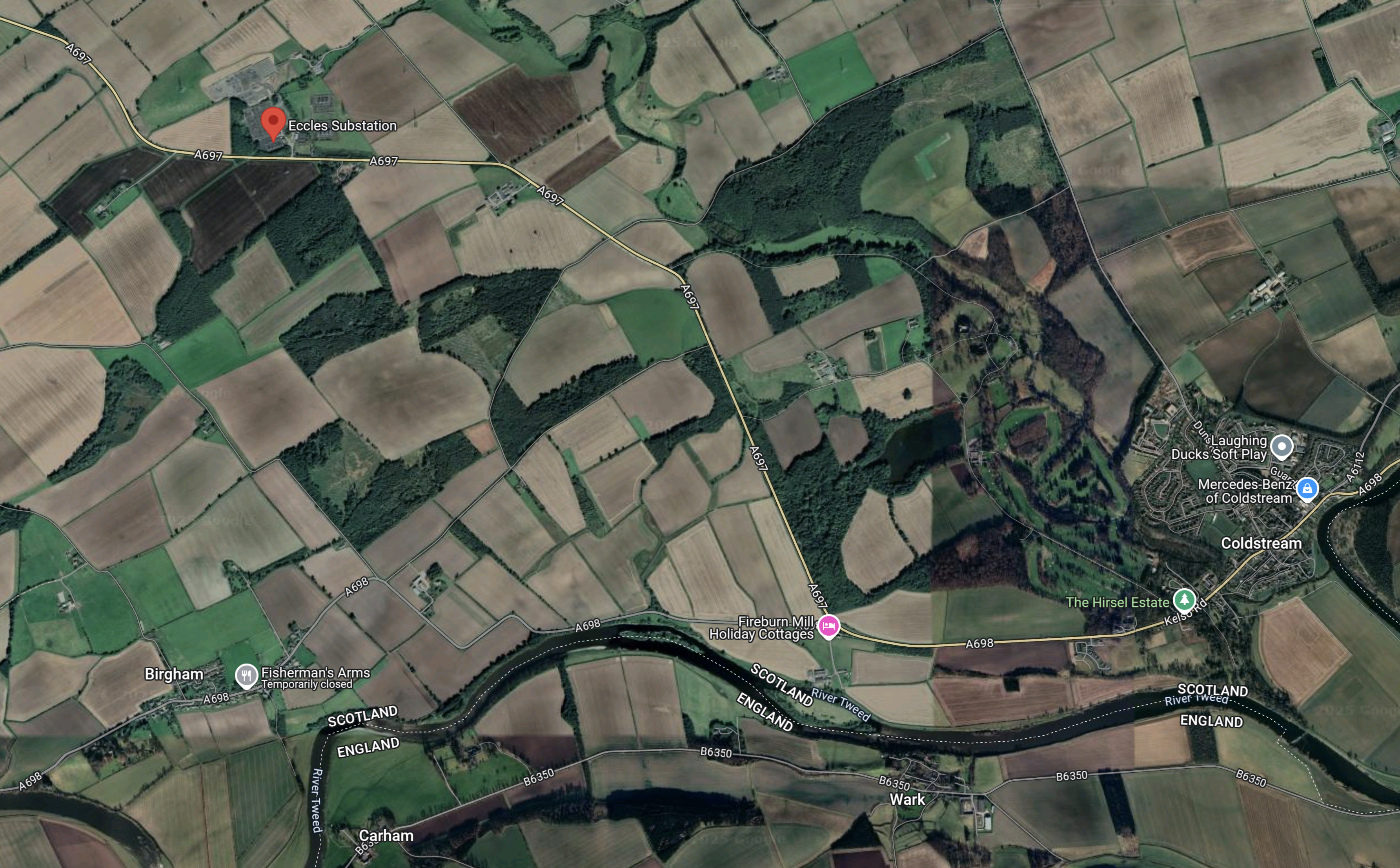
This Google Map shows an Eccles substation.
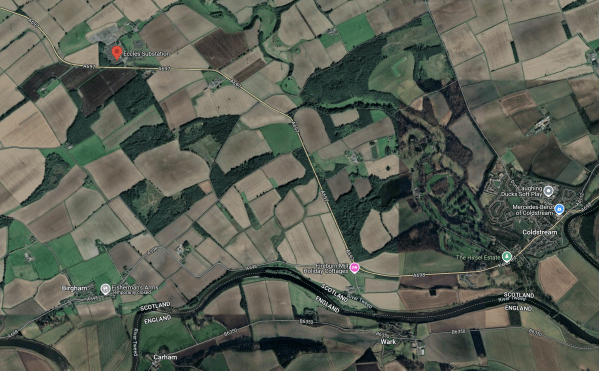
Note.
- The Eccles substation is marked by the red arrow.
- The town at the East edge of the map is Coldstream.
- The England-Scotland border is clearly marked.
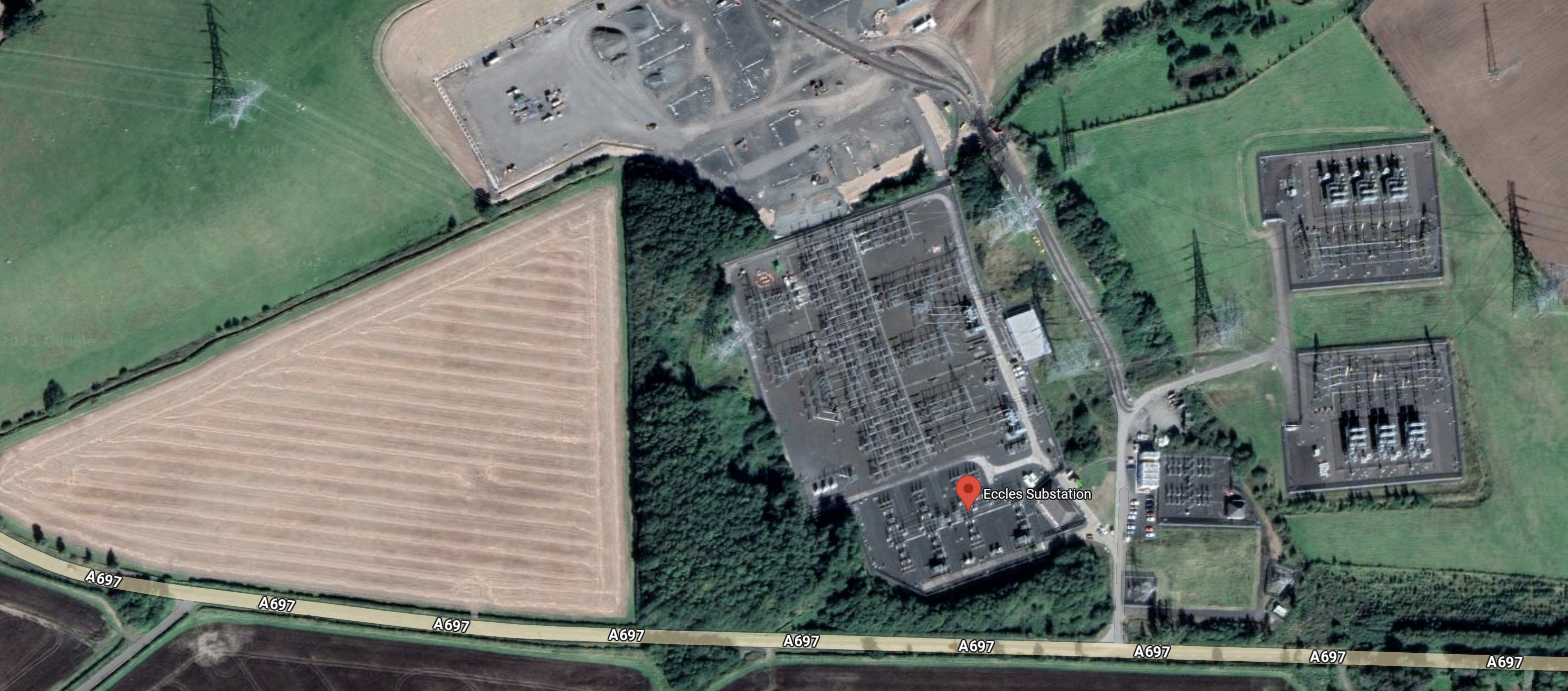
This second Google Map shows a closer view of the Eccles substation.
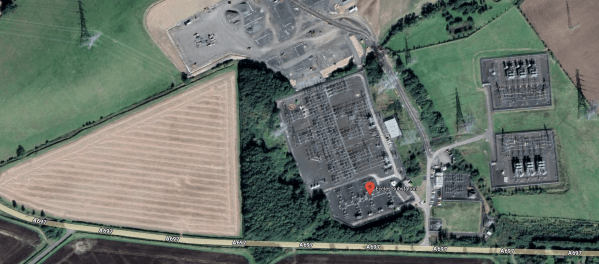
Note.
- t looks to be a substantial substation.
- There would appear to be plenty of space for a large battery.
- It is close to the A 597 road for the delivery of heavy equipment.
I suspect this substation could be the location of the battery.
It’s also right in the heart of Scottish onshore wind territory.
It is also according to the Solar Power Portal a £220 million project.
A project of this size will deliver substantial benefits in terms of work to the local community.
It will likely have a community benefit fund or something similar.
So you would expect the project would be welcomed into the local area.
But you would be wrong, if this article on the BBC, which is entitled Village ‘Heart Ripped Out’ By Battery Site Plans, is typical of the feeling about the batteries.
This is the sub-heading.
A rural community in the Borders is warning that Scotland’s renewable energy revolution is coming at a cost.
These three paragraphs add more detail.
Residents of Leitholm – a village between Coldstream and Greenlaw – claim the heart is being ripped out of their community with the arrival of battery storage facilities.
If all six proposed facilities are approved, more than 200 acres of farmland will be turned over to concreted compounds within a three-kilometre radius of their village.
Retired nursery owner Seonaid Blackie said: “This is not the place it used to be – people are worried sick.”
The residents view is balanced by industry expert Professor John Irvine, from St Andrew’s University, believes energy storage has a vital role to play in reaching net-zero targets.
My view is what is needed is an energy storage system, that can be built substantially underground.
If you look at large Battery Energy Storage Systems (BESS), they are best described as container parks.
We need energy storage systems, that fit in a single tennis court, rather than thirty football pitches.
Gravitricity is one possibility, who are also Scottish, who store energy using weights in disused mine shafts.
The French system; DELPHY is also a vertical system for storing hydrogen in a custom-built hole.
Practically, I believe the solution adopted will be to spread the batteries out and spend money on surrounding them with trees and other camouflage.
March 20, 2025
Posted by AnonW |
Energy, Energy Storage, Environment, Finance & Investment | Battery Energy Storage Systems (BESS), Coldstream, Delphy, Eccles BESS, Gravitricity, Onshore Wind Power, Scotland, Scottish Borders, Wind Power, Zenobe |
Leave a comment
 The Anonymous Widower