How Much Electricity Do You Need To Charge A Garage Full Of Electric Buses?
Consider.
- A couple of years ago, I had a long discussion and a few beers with three managers of bus garages.
- In First Bus To Launch 1MW BESS Unit In Hampshire, Aberdeen To Follow, I talk about a specialist battery to charge buses.
- In Is Sumitomo Heavy Industries Highview Power Energy Storage System On line At Hiroshima?, I talk about an efficient, renewable power supply for an LNG Terminal.
I asked Google AI the question in the title of this post and received this comprehensive answer.
Charging a full garage of electric buses requires massive amounts of electricity, with typical, non-optimized charging for a 100-bus depot capable of drawing nearly 10 megawatts (MW) of power. To put this into perspective, a 100-bus depot might require roughly 150 Megawatt-hours (MWh) of energy to recharge over an eight-hour night.
Key Factors and Energy Requirements
Energy Consumption per Bus: A typical electric bus has a battery capacity between 300-500 kWh. Energy consumption averages around 1.11 to 1.35 kWh/km, with higher consumption in winter or with heavy A/C use.
Total Depot Power: For a 100-bus depot, power requirements can reach 10 MW, equivalent to the power output of a small hydroelectric dam.
Optimal Charging: Using smart charging, a 100-bus depot can reduce its peak demand to around 4 MW.
Daily Usage: A single, large electric bus can consume up to 500 kWh per day, with daily demand ranging from 189 to 231 kWh for typical operations.
Infrastructure and Grid Considerations
Charging Infrastructure: Depots often use 40 kW to 250 kW chargers, with 100 kW common for overnight charging.
Grid Capacity: A 34-bus depot might require a new 1000kVA transformer to handle the load.
Voltage: 11,000 volts may be required to power new substations, which are then stepped down to 400 volts for charging.
Operational Factors Affecting Energy Need
Heating and Cooling: Cold weather can increase energy consumption by up to 45% (due to electric heating).
Driving Style: Inefficient driving can increase energy consumption by 0.24 kWh/km above average.
Regenerative Braking: This can recover 37–40% of energy for 40-60 ft buses.
Cost Implications
Energy Bills: A 100-bus depot can incur monthly energy bills between $112,000 and $515,000 without optimization.
Cost Savings: Electric buses are generally cheaper to fuel, costing ~£0.21/mile compared to £0.49/mile for diesel.
Could A System Based On The Sumitomo/Highview Power System At Hiroshima Charge Electric Buses?
The optimal charging figure for a 100-bus garage would appear to be in the region of 4-5 MW.
In Is Sumitomo Heavy Industries Highview Power Energy Storage System On line At Hiroshima?, I state, that it looks like Highview Power’s CRYOBattery™ at the heart of the system has a capacity of 5 MW/20 MWh.
I also state in the post, that the Hiroshima facility is designed to support grid stability and enhance renewable energy integration.
Does this all mean that if you can install enough solar panels on the roof of the garage or perhaps a wind turbine nearby, that you can have buses substantially powered by the sun and wind.
Chicago would just love wind-powered buses!
The Diesel-Hybrid 141 Buses Always Seem To Get Through
Today, I had an all-too-typical bus-rid back from Moorgate after breakfast and a bit of shopping.
My direct bus is a 141, which is a second-rate, Chinese BYD bus, which has a number of problems as I pointed out in My 78-Year-Old Legs Are More Reliable Than The New Chinese Buses On London’s 141 Bus Route.
- I just missed a 141, so I caught the next bus that was going my way.
- It was a New Routemaster on the 76 route, so I took a chance, that it might pass the previous 141 bus, as they often do.
- As we passed Moorfield’s Eye Hospital, we passed the 141, but it was stopped at the side of the road, with all its lights flashing.
- I decided to change two stops from home and left two stops from home, from where I could walk.
- I waited perhaps five minutes before an elderly Wrightbus diesel-hybrid arrived to take me home,
After today’s experience, I can’t help but remember the old joke!
- Question: What’s red and lies in the gutter?
- Answer: A dead bus!
Other colours are available.
My 78-Year-Old Legs Are More Reliable Than The New Chinese Buses On London’s 141 Bus Route
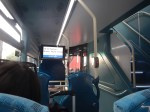
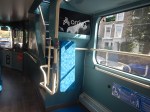
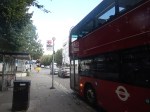
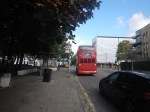
So we all know what we’re talking about, here’s a few pictures.
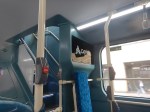
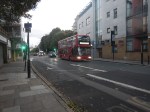
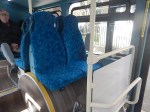
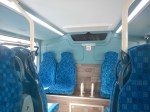
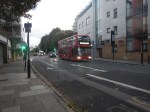
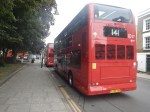
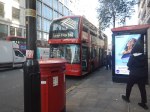
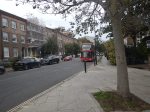
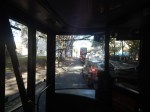
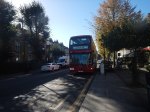
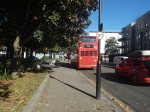
Note.
- The buses seem to have no serious faults from a passenger point of view.
- One middle-aged lady on the plump side, said she didn’t like the buses.
- The aisle between the front seats doesn’t seem to be built for large people.
- The seats are reasonably comfortable.
- One morning, I stood on a long journey and I felt the road-holding wasn’t as good as a New Routemaster.
- On several buses, the interior route display has not been working.
- As I don’t wear a watch, I find a non-working display annoying.
- I haven’t been upstairs yet.
- As picture numbers three and four show, the bus looks a bit pokey at the back downstairs.
But I am very suspicious about the buses’s reliability or ability to handle the route, which is fairly long.
Take this morning, when I was coming home from London Bridge station.
- There was only a 43 bus at the shared stop with the 141 bus.
- As the routes are identical until Old Street station, I took the 43 bus to Moorgate station.
- At Moorgate station, I took a 76 bus, which gets me within walking distance of where I live.
- Someone said, that a 141 bus would mean a wait of ten minutes.
- In the end my 78-year-old legs delivered be home.
I didn’t see a 141 bus going my way on my journey.
I have seen behaviour like this several times, since some Chinese electric buses were introduced on to the route.
As a graduate Electrical and Control Engineer, it looks to me, that there is one of two problems with these buses.
- The batteries aren’t large enough for the route.
- Not enough time is allowed for charging the batteries at the end of the route.
This page on the Wrightbus website is entitled Wrightbus Electroliner ‘Most Efficient Double-Deck Battery-Electric Bus’, and it contains this paragraph, which probably explains their philosophy and ambition.
We have already gained a strong reputation for our hydrogen double deck but we want to lead the world in zero-emissions full stop. Wrightbus has the best brains in the business when it comes to technology and our StreetDeck Electroliner puts us squarely at the front of the pack. We haven’t weighed the bus down with a high battery volume just so we can say it’s got the most power or range; instead, we’ve made it the most efficient vehicle on the road by combining optimum power with a class-leading rapid charge, meaning our electric bus spends more time on the road than any other.
It also probably sets a very high bar, which the Chinese can only achieve by adding battery volume and making their buses pokey.
To be fair to the buses, the 141 route is probably nearly 20 miles long.
In Sutton Station To Gatwick Airport By Hydrogen-Powered Bus, I wrote about what it says in the title.
In that post, I said this about hydrogen buses running on the 141 route.
Wrightbus Hydrogen Buses For My Local Bus Route 141
Consider.
- The 141 bus route is my local bus, which gets me to Moorgate, Bank, London Bridge and Manor House.
- The length of the full route is twenty miles and it takes about an hour to go from London Bridge station to Palmers Green.
- The route is currently run by older Wrightbus hybrid diesel-electric buses.
- I suspect that modern hydrogen buses could last almost all day on one fill of hydrogen, with perhaps a top-up at lunchtime.
They would have no difficulty handling the route and would greatly increase the customers current rock-bottom satisfaction.
I am sure, they would improve the horrendous reliability of the route.
I also wonder, if Wrightbus have another solution.
In UK Among Tri-Axle Zero-Emission Wrightbus StreetDeck Prospects, I talk about Wrightbus’s new Tri-Axle Zero-Emission Wrightbus StreetDeck bus and how it would be ideal for the 141 bus route.
- The 141 bus route is the old 641 trolleybus route, so all clearances are generous.
- The tri-axle design can probably carry a better-optimised battery.
- There used to be two bus routes on the route and now there is only one, so more capacity is needed.
- The 141 bus route bridges the gap between the Northern section of the Piccadilly Line and the Elizabeth Line, Bank and London Bridge.
- The new air-conditioned Piccadilly Line trains, will increase the passengers on the line.
- There will be a lot more housing built in Enfield, at the Northern end of the Piccadilly Line and more bus capacity will be needed between Manor House and the City of London.
Some of TfL’s rerouting of buses in North London, was a crime against mathematics.
East India And Blackheath Stations Through The Silvertown Tunnel – 22nd August 2025
I haven’t been through the Silvertown Tunnel for some weeks, so yesterday, as I wanted to have a look at the refurubished Blackheath station, I went and had a look.
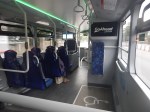
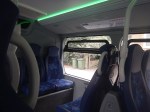
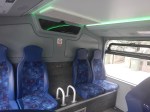
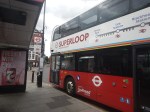
Note.
- The journey was made at about 11:00 on a Friday morning.
- The bus was more of a taxi, as only about five passengers used it.
- The tunnel wasn’t very busy with traffic.
This article on Highways Magazine is entitled Traffic Volumes Down At Blackwall And Silvertown Tolls.
This is the sub-heading.
Daily traffic volumes for both the newly opened Silvertown and Blackwall tunnels are 7.6% lower than in the same period last year for just the Blackwall tunnel, Highways can reveal.
I feel very much, that the Silvertown Tunnel is being underused and perhaps we should run more local buses or even long-distance coaches through the tunnel.
Buses On London Route 141 Now Go In Convoy
I took these pictures at the Balls Pond Road stop on the route.
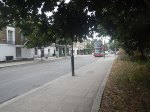
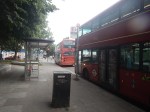
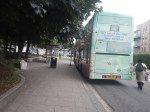
Sometimes you wait as long as twenty minutes for one to come along, but here were three in a similar number of minutes.
When I was at school, there were stories from the Second World War, when after a bus was hit by a German bomb, that buses on one route went in convoy for protection.
Perhaps, the buses are practicing for when Putin decides to attack London?
Or is it just another manifestation of the service on the worst bus route in London?
Did Plans For Crossrail Ever Include A Station At Holborn?
I have only one North-South bus route, where I live.
The 141 bus connects Palmers Green and London Bridge station.
- The 141 bus was the replacement for the 641 trolley bus, which was the main link between Wood Green, Turnpike Lane and Harringay, and the City of London, when I was a child.
- The vehicles are up to ten years old Wrightbus diesel hybrids.
- The route suffers badly from overcrowding as it connects, Bank and Moorgate stations in the City of London, with the outer reaches of the Piccadilly Line.
The overcrowding on the 141 bus route has got worse in the last couple of years because of the following.
- The rebuilding of London Bridge station brought more passengers to the 141 bus route.
- The opening of the new London Bridge bus station at London Bridge station has improved access to the buses at London Bridge station.
- The improvement of the connection of the buses to the Docklands Light Railway, Central Line and Northern Line at Bank station.
- The opening of the Battersea branch of the Northern Line, which brings more passengers to Bank station.
- The opening of the new Cannon Street entrance to Bank Underground station.
- The opening of the Elizabeth Line through Moorgate station.
- Recently, a new walking route between Moorgate and Liverpool Street was opened, which will bring more passengers to the buses on Moorgate.
- The rebuilding of Old Street station brought more passengers to the 141 bus route.
So what was the response of the Mayor and Transport for London, to all this increase of passenger numbers?
The 21 bus, which shadowed the 141 route, and doubled the number of buses through where I live, was moved to serve Holloway.
It was a big crime against mathematics and the wishes of our long-serving Labour MP; Meg Hillier.
So to handle many more passengers between London Bridge station and Newington Green through the City of London, the number of buses was halved.
I believe that the overcrowding will get worse because of the improvements, that Transport for London have planned.
- The Piccadilly Line will be getting new air-conditioned trains within a couple of years and these will inevitably attract more passengers to the line.
- On the other hand the air-conditioning may persuade passengers to use the Piccadilly Line more than they do now. Instead of changing to the 141 bus at Manor House station, passengers could change at Finsbury Park, King’s Cross St. Pancras or Holborn stations for other routes to the City of London.
- The third line to receive the new air-conditioned trains will probably be the Central Line, which would create another East-West air-conditioned line and bring more passengers to Bank station.
- The Central Line could give some relief for the buses through Bank, if an extra station was built on the Central Line to interchange with Shoreditch High Street station on the East London Line of the London Overground.
- The fourth line to receive the new air-conditioned trains will probably be the Waterloo and City Line, which would create another air-conditioned line and bring more passengers to Bank station.
- It is likely, that more services will be added to the Elizabeth Line, which will bring more passengers to Moorgate station.
- It is likely, that more services will be added to the Northern City Line, which will bring more passengers to Moorgate station.
- The Mayor is also planning to pedestrianise Oxford Street, which may fill up the Central Line with extra passengers.
It looks to me, that there will be a need for a large increase of bus capacity through the City of London on a North-South axis.
On the other hand, the City of London have stated that they will pedestrianise many of their streets.
So what can be done to avoid gridlock in the City of London?
Develop The Northern City Line At Moorgate
I use this route regularly to and from Moorgate station.
- It already has new Class 717 air-conditioned trains.
- The route is already digitally signalled in conjunction with the East Coast Digital Programme.
- It has two platforms at Moorgate station.
- Highbury & Islington station has interchanges with the Victoria Line and the North and East London Lines of the London Overground.
- Finsbury Park station has interchanges with the Victoria Line and National Rail services.
- Bowes Park station has an out of station interchange with Bounds Green station on the Piccadilly Line.
- Step-free access needs improving.
- The Victorians had plans to extend the line to Lothbury near Bank station.
If the Northern City Line could handle more passengers, would passengers get to all parts of the City of London by changing at Finsbury Park and walking from Moorgate or Old Street stations?
I regularly go between my house and Moorgate, by taking a bus to Essex Road station and using the Northern City Line.
I believe that with improvements on the Northern City Line, the line could be turned into a very valuable part of London’s rail infrastructure.
Connect The Central Line And The East London Line At Shoreditch High Street Station
I wrote about this proposal in Will Shoreditch High Street Be Connected To The Central Line?
The Elizabeth Line needed to be completed before this could be started.
Build The Western Extension Of The Docklands Light Railway
I wrote about this proposal in The Bank Station Upgrade And The Western Extension Of The DLR.
Rebuild Holborn Station
The interchange between Piccadilly and Central Line at Holborn station is difficult to say the least.
Holborn station is being extended with a new entrance. As with Euston, I suspect it has been designed with a feasible place for DLR platforms to be added.
This document on the TfL web site, gives more details of what is proposed at Holborn station.
I extracted this visualisation of the proposed station.
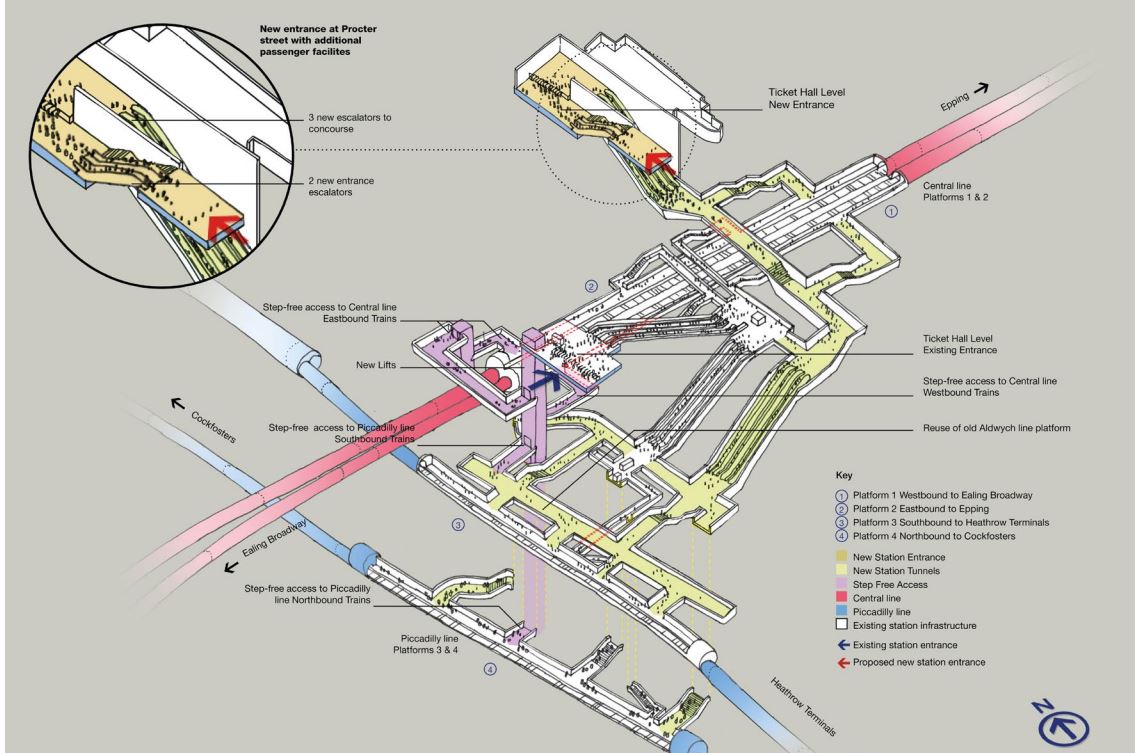
This map from carto.metro.free.fr shows the lines in the through and around the station.
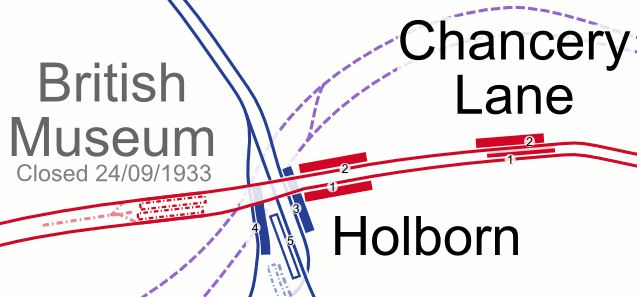
.Note, the Elizabeth Line, which is shown by dotted lines passes to the North of the station.
Conclusion
Not all these improvements need to be done, but each would improve transport in the City of London.
Silvertown Tunnel Easing Congestion, TfL Says
The title of this post, is the same as that of this article on the BBC.
This is the sub-heading.
Transport for London (TfL) has shared the first insights about the impact on traffic of the new Silvertown Tunnel, as part of commissioner Andy Lord’s latest report to the TfL Board.
These two initial paragraphs gives a summary of about three weeks traffic.
Analysis of data between 21 April and 11 May shows the Silvertown and Blackwall tunnels are being used by an average of about 88,000 vehicles on a typical weekday. Of these, about 20,000 are using the Silvertown Tunnel.
Before the tunnel opened on 7 April, about 100,000 vehicles used the Blackwall Tunnel on weekdays.
TfL are claiming that this 12,000 drop in traffic is helping to ease congestion.
Logically, a drop in traffic will ease congestion, but the BBC article also says this.
However, it said it was aware of some increased traffic volumes at other river crossings, including the Woolwich Ferry.
The only other river crossings in the area are the Rotherhithe Tunnel and the Woolwich Ferry, both of which are free to all users.
So is the drop in traffic through the Blackwall and Silvertown Tunnels, due to drivers objecting to paying a toll and taking a free route instead?
On The Buses
The BBC article says this about bus passengers.
Mr Lord’s report also provided ridership data about the three bus services that operate through both tunnels: the new Superloop SL4, the extended route 129 and the 108, which already ran through the Blackwall Tunnel before 7 April.
Across the routes there is a daily average of more than 20,000 passengers making use of these services, of which typically about 7,000 are crossing the river using one of the two tunnels. In March 2025, there were about 2,700 crossings a day made using route 108.
The increase in bus passengers is not surprising.
Before the opening of the Silvertown Tunnel, there was just this bus service through the Blackwall Tunnel.
- London Bus 108 – Stratford and Lewisham via North Greenwich.
This has now been joined by, these bus services through the Silvertown Tunnel.
- London Bus 129 – Great Eastern Quay and Lewisham via City Airport and North Greenwich.
- London Bus SL4 – Canary Wharf and Grove Park via East India, Blackheath and Lee.
Note how the buses call at rail stations, an airport and other important traffic interchanges.
In Could The Silvertown Tunnel Handle More Buses?, I asked if buses through the Silvertown Tunnel should be increased?
Given that traffic through the combined Silvertown/Blackwall complex has dropped by 12,000 vehicles per day, that must leave space for a few buses or coaches.
- Assuming, that one bus or coach takes up the space of four cars, that would be space for 3,000 buses/coaches per day.
- Also assuming the bus and coach services are run on a twenty-four hour basis, that would be 125 buses/coaches per hour.
If the bus and coach services ran every ten minutes, that would say, there is space in the tunnel for up to a dozen new bus or coach routes.
There could develop a virtuous circle and feedback loop, which drives the tunnel to a state of equilibrium, where traffic grows through the tunnels, until it is maximised.
Consider.
- Research shows a bus route from A to B through the tunnel would attract passengers.
- Drivers and their passengers decide that on balance a bus ride is more convenient, no slower and more affordable than driving.
- Congestion charges and other charges for non-electric vehicles will play their part.
- Green issues will also will play their part.
- Fewer cars will use the tunnels.
- Increasing tunnel charges will only drive more car users to the buses.
- More free space in the tunnel, will allow more bus and coach routes.
- More bus and coach routes will attract drivers from their cars.
Eventually, equilibrium will be reached.
A similar effect happens, when a new bypass is opened and as if by magic it fills up.
When it happens with train services I call it, London Overground Syndrome.
On Your Bike
The BBC article says this about cyclists.
There is also a cycle shuttle service, enabling cyclists to take their bikes free of charge on a bus through the Silvertown Tunnel. TfL said some 100-150 people were using it on a typical day.
While this is below its capacity, TfL believes usage will grow as cyclists adapt their routes to benefit from this safer crossing option.
When I used to cycle around London in the 1970s, I never cycled under the Thames, but I did generally cycle as fast as I could across the city. I wouldn’t have put my bicycle on a free bus.
So, is this why the cycle shuttle service is below capacity?
The BBC article says this.
TfL believes usage will grow as cyclists adapt their routes to benefit from this safer crossing option.
I believe, that if TfL should ever charge for the cycle shuttle service, they’d kill it.
In my opinion, they’d be better off providing secure bike parking, but even some of that seems lightly used.
Tunnel Performance
The BBC article says this about tunnel charging and performance.
TfL said it intended to publish quarterly factsheets on the operational performance of the tunnels’ toll scheme.
This will include information about how many people pay the charge, the compliance rates for vehicles using the tunnels and the number of Penalty Charge Notices that are issued.
The first of these factsheets will be published later this year, but initial data shows that compliance has steadily increased, with about 90% of motorists either paying a charge or benefiting from an exemption.
Surprisingly, so far, I haven’t met anybody who has driven through the Silvertown Tunnel, except for a couple of bus drivers.
New Routemasters As Advertising Hoardings
Increasingly, New Routemasters are appearing as advertising hoardings.
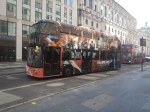
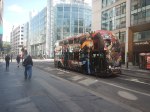


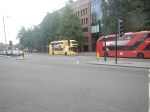
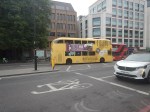
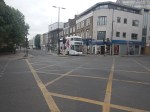
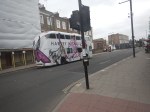
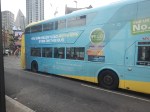
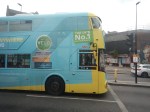
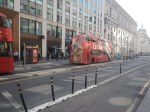
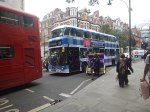
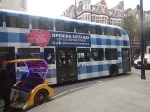
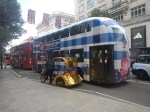


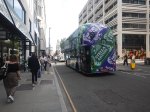

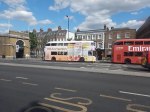

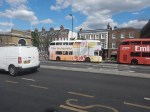
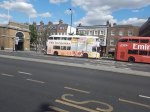
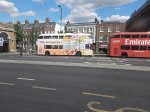
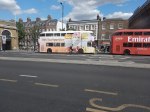

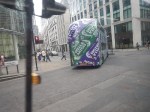
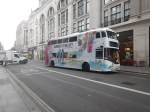
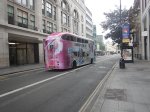
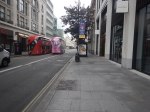
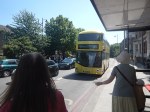
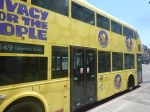


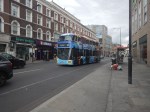
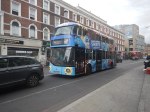

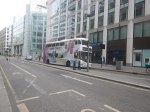
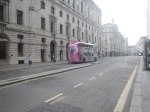
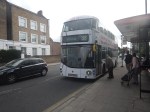

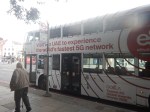
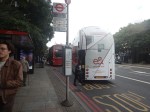
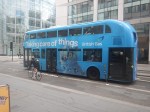
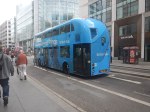
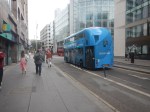
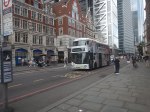
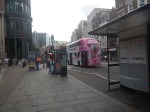
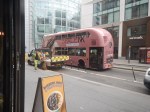
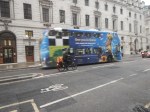
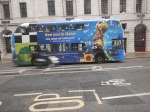
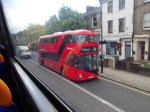
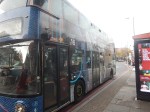
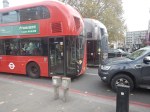
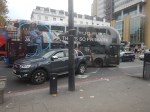
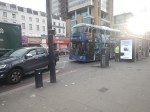
Note.
- I am unsure if some of the products should be advertised so prominently.
- The last picture is of a naked bus to fill the space.
- I shall be adding to this gallery.
In Could London’s New Routemaster Buses Be Converted To Hydrogen Power?, I came to this conclusion.
I believe from my knowledge of Cummins and the way they work, that they will come up with a hydrogen-based solution, that will replace the Cummins diesel in these buses with a zero-carbon engine.
If Cummins don’t then someone else will.
Whoever solves the problem of converting London’s new Routemasters to hydrogen will have one of the best adverts for their product, there has ever been.
After converting London’s thousand Routemasters, the engineers could move on to anything powered by a Cummins engine.
It would be a quick, easy and affordable way to create a thousand zero-carbon buses.
Minimum Age To Be A Train Driver Lowered To 18
The title of this post, is the same as that of this article on the BBC.
This is the sub-heading.
Eighteen-year-olds will be allowed to drive trains after the minimum age was lowered from 20 in a bid to tackle driver shortages.
These first three paragraphs add detail.
UK rail services are frequently disrupted due to a lack of drivers being available, and the problem is set to get worse with companies struggling to replace a growing number of people retiring with new recruits, the government said.
Transport Secretary Heidi Alexander announced the change as “bold action to improve train services and unlock thousands of jobs”.
Union Aslef said it would open up opportunities for school or college leavers, while the Rail Safety and Standards Board said its research found “18-year-olds are capable of safely becoming train drivers”.
This paragraph from Google AI, says you only have to be sixteen to join the British Army.
The minimum age to join the UK Army as a Regular Soldier is 16. However, you’ll be a Junior Soldier until you turn 18, at which point you can transition to a regular role. To join the Army Reserve, you need to be at least 18. The upper age limit for joining the Army Reserve as a soldier is the day before your 43rd birthday.
A similar age of sixteen, applies to the Royal Navy and the Royal Air Force, with eighteen applying for the Police.
How Does This Compare With Driving A Bus?
This paragraph from Google AI, gives the driving age for a bus.
The minimum age to become a bus driver in the UK is 18 years old. However, to drive a full-sized bus (Category D), you must be 24 years old, unless you are undergoing the Initial Driver CPC (Certificate of Professional Competence) qualification. For Category D1 (minibus), the minimum age is also 18.
Google AI gives this description of Category D1.
PSV (Public Service Vehicle) Class D1 licence, also known as a PCV (Passenger Carrying Vehicle) licence or a minibus licence, allows you to drive a minibus for hire or reward. This licence category applies to minibuses with up to 16 passenger seats and a maximum length of 8 meters, and can tow trailers up to 750kg. To obtain a D1 licence, you need to pass a medical check, a theory test, and a practical driving test.
I suspect that many eighteen-year-olds are capable enough to hold a PCV licence.
What sort of vehicle will someone with a PCV licence be able to drive?
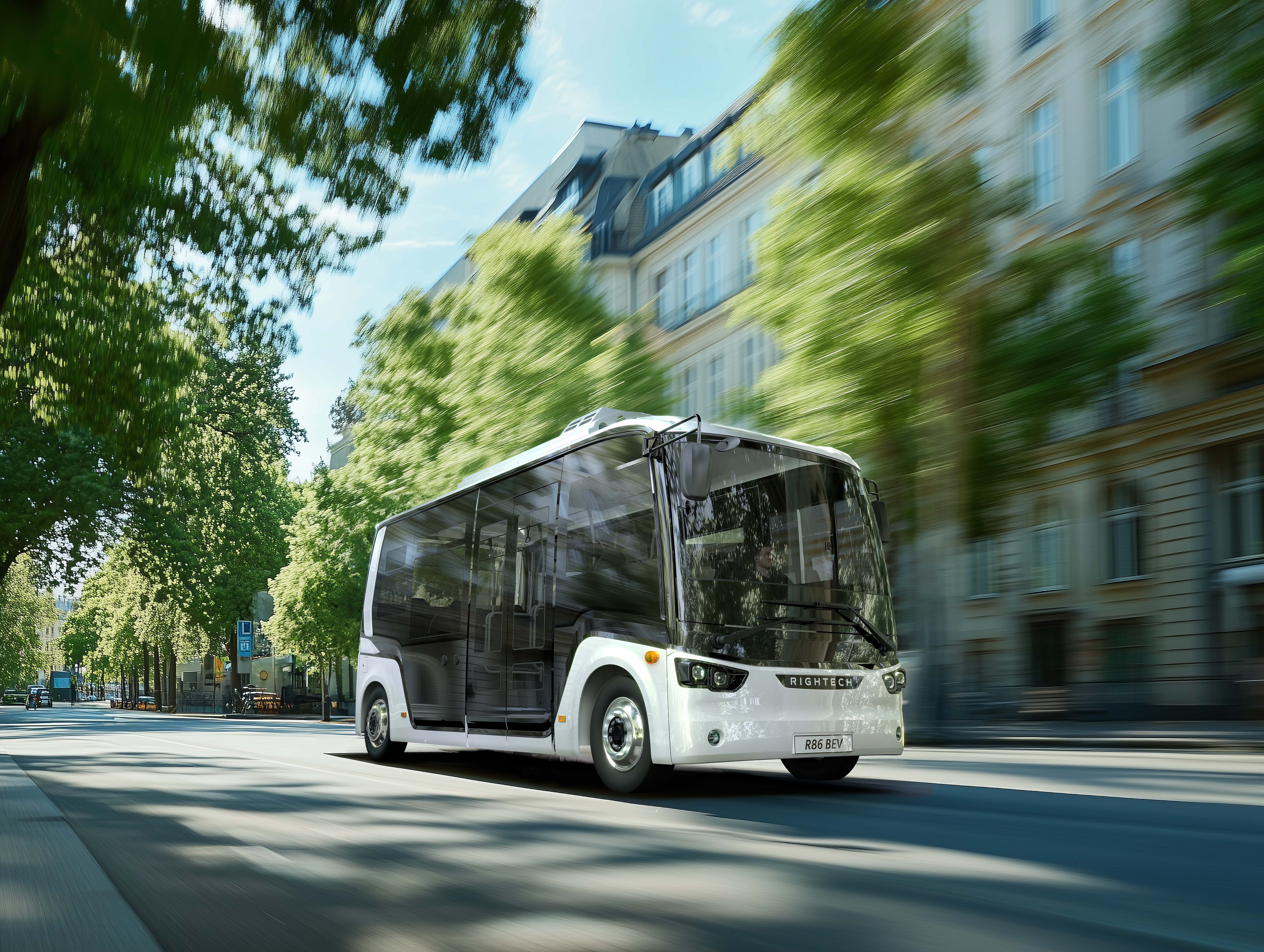
Wrightbus subsidiary ; Rightech has just released a suitable vehicle.
- It is battery-electric powered.
- It can seat up to twelve passengers.
- It is six metres long.
- It has a range of 112 miles.
It has a high-specification, which includes air-conditioning.
This image is courtesy of Rightech.
I can see bus operating companies, creating a career structure, that starts drivers on a PCV licence and progresses them upwards to the full PSV licence at 24.
Conclusion
I feel this could be a very sensible decision and like the age and competence structure for bus drivers, it creates worthwhile jobs for 18-24 year olds.
I Seemed To Have Improved My Left Knee
My left knee has always been weaker than my right.
- What really made it bad was living with C and our three children in a fourth floor walk-up flat with no lift.
- I usually carried the double-pushchair up the stairs a couple of times a day.
- It should also be born in mind, that my left humerus was broken by the school bully, when I was fifteen.
Our GP at the time, we were living in the flat, thought I should have an operation on the knee, but luckily I didn’t as another GP a few later gave me a set of exercises, that improved it to a certain extent.
Since my stroke and returning to London, I have relied on buses and trains, as I can’t drive and don’t even have a car.
My knee seemed to be getting worse and I reasoned it wasn’t being helped, by the high step in and out, you get on some trains and buses.
This picture shows the high step into a Northern Line train at Moorgate station.
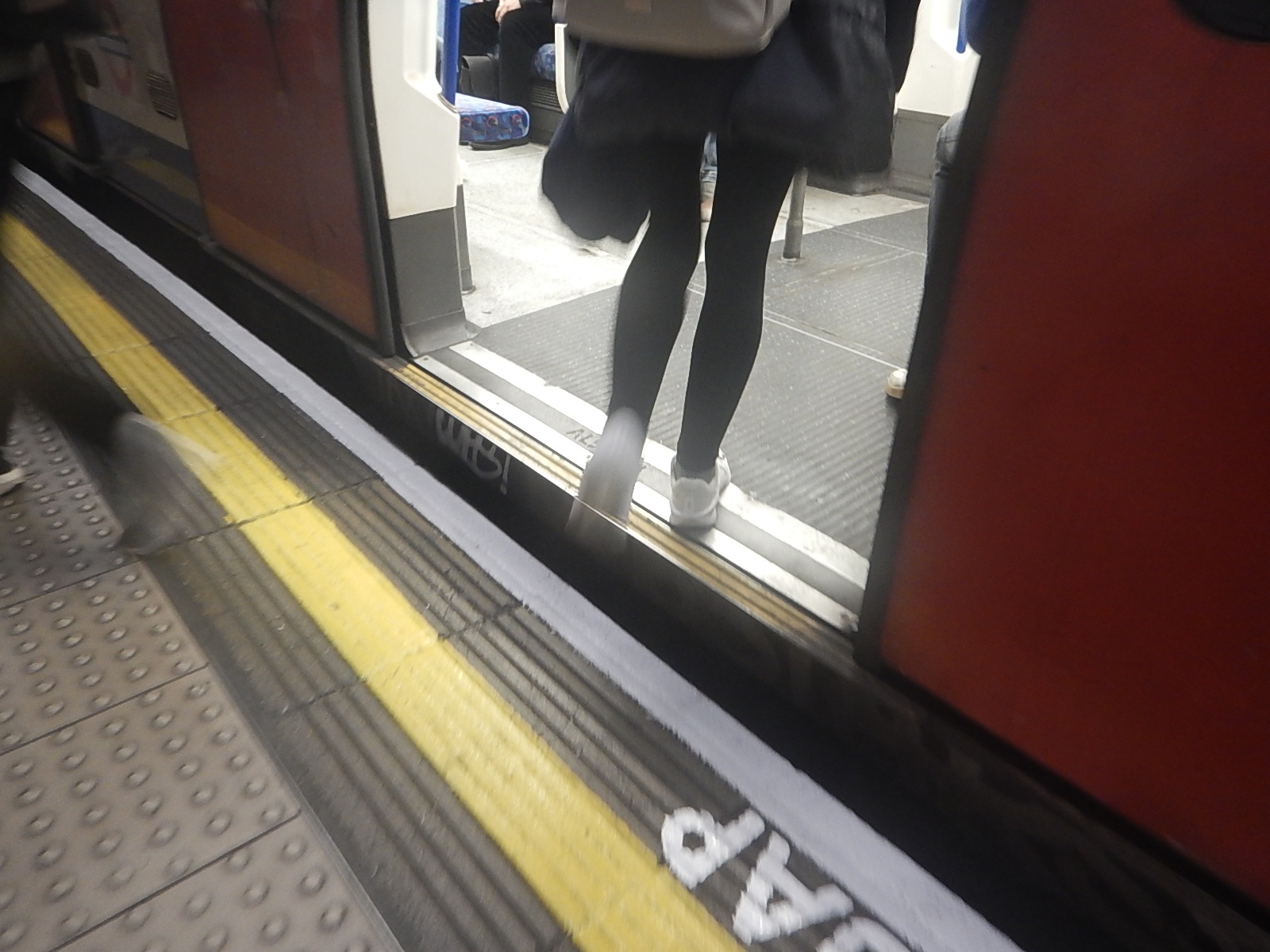
I found that the step-down here, gives a bang on my knee every time I get out of the train.
This second picture shows Bank station, which is a new platform and level.
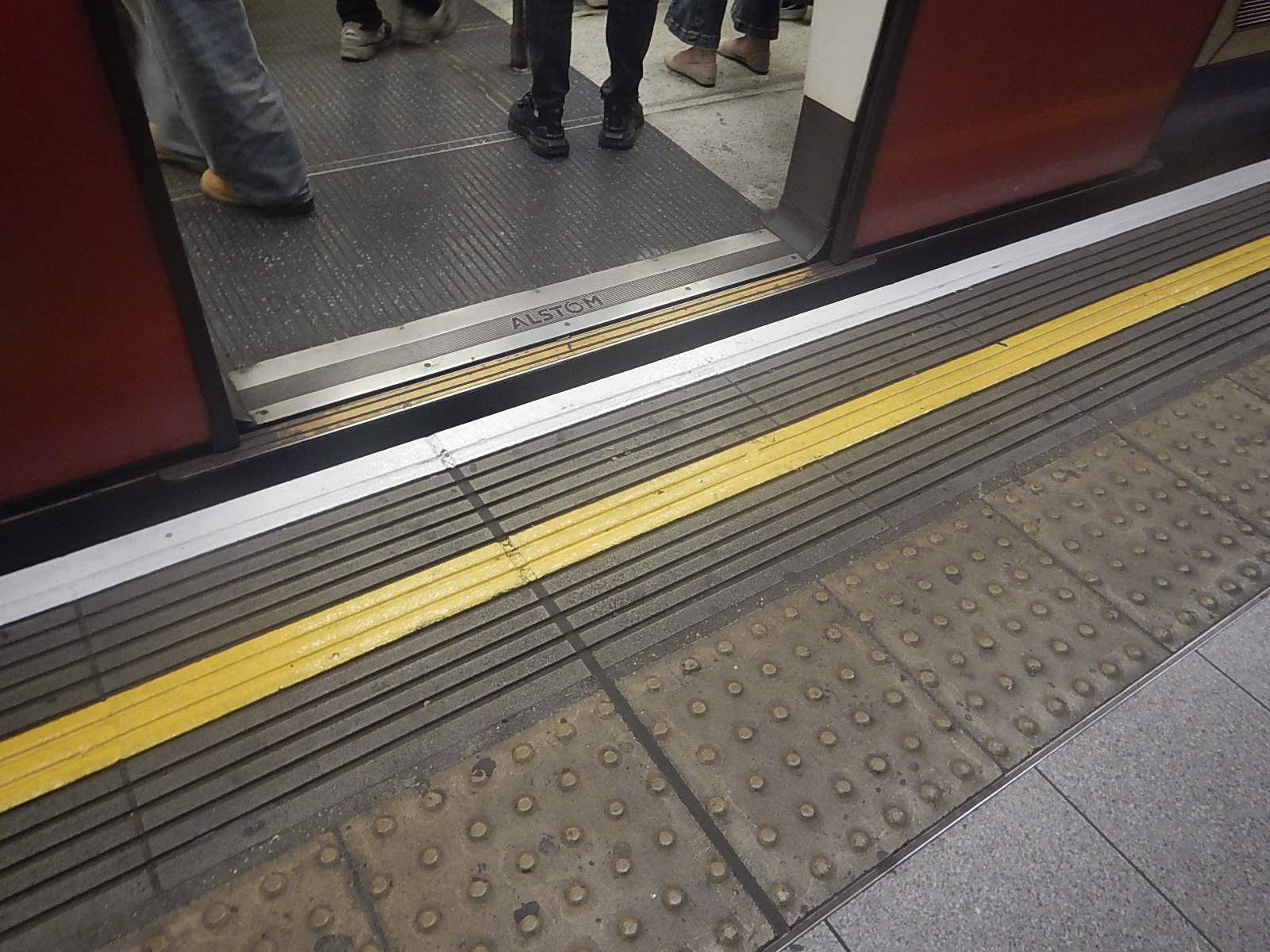
It’s surely very much a matter of GCSE mathematics and geometry, with a bit of money to get many more train and bus entries level.
So I have developed a maneuver to get out of the train or bus.
- Most doors have a vertical rail on either side. You can see one rail in the first picture.
- As I want to avoid hurting my left leg any more, I grab the rail on the left side of the door going out, with my left hand.
- I have my bag in my strong right hand. If I have two bags, one is usually My Faithful Servant, so I can hold them both in my right hand.
- I then swing around the vertical rail holding on with my left hand.
- So far, every time I’ve landed safely and lightly on my right foot.
My left knee seems to be improving.
Surprisingly, the extra pulls on my left arm don’t seem to harm it.
 The Anonymous Widower