My First Ride In A Class 195 Train
Today, I rode the ten o’clock Virgin to Manchester Piccadilly station.
I then waited for one of the new Class 195 trains going South to Manchester Aurport station.
These pictures show the Class 195 train.
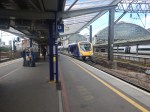
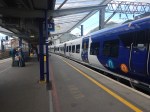
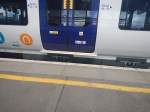

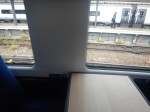
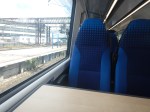
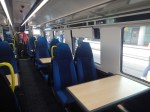
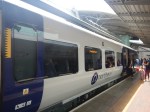
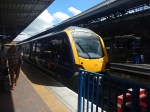
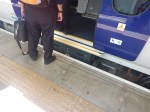
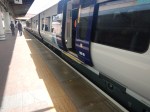
These are my views on various aspects of the train.
Noise, Vibration And Harshness
The Class 195 train is a diesel multiple unit, with an MTU engine and a ZF Ecolife transmission.
Wikipedia describes the transmission as is a 6 speed transmission for city buses. It also lists these features.
- Boosted operating economy, longer service life, and higher temperature resistance for operation with Euro 5 (1st generation) and Euro 6 (2nd generation) compatible engines.
- An integral retarder,
- Longer operational intervals between oil changes.
- Higher torque capacity.
It looks like ZF have created a sophisticated and very efficient gearbox for diesel buses and trains.
During today, I rode also rode in Class 156 and Class 175 trains, that are also diesel powered.
I would put the noise, vibration and harshness of the diesel engine and the transmission of the Class 195 trains, as worse than that of the Class 175 train and better than than that of the Class 156 train.
I am surprised that the Class 195 train doesn’t use a hybrid electric transmission, which are starting to be developed by MTU and will be retrofitted into various diesel multiple units like Porterbrook’s Class 170 trains, as I talked about in Rolls-Royce And Porterbrook Launch First Hybrid Rail Project In The UK With MTU Hybrid PowerPacks.
I said this in the linked post.
As I understand it, the current hydraulic traction system will be replaced by an electric one with a battery, that will enable.
- Regenerative braking using a battery.
- Battery electric power in urban areas, stations and depots.
- Lower noise levels
- Lower maintenance costs.
This should also reduce diesel fuel consumption and carbon emissions.
As the Class 195 train has a similar electric cousin; the Class 331 train, I would have felt that it would be possible to fit the Class 195 trains with an MTU Hybrid PowerPack or similar.
This should reduce, what to me, are unacceptable noise levels.
As the MTU Hybrid PowerPack has been developed, at the same time as the Class 195 train, which uses a traditional MTU engine, I wouldn’t be surprised if the Class 195 train has been designed to be retrofitted with the more efficient MTU Hybrid PowerPack.
Interior Design
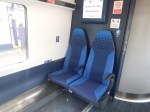
The designj of the interior is disappointing in some of the details and I would rate it inferior to the Class 385 trains, built for ScotRail by Hitachi.
The most annoying aspect is that the seats and windows are not aligned, as they are in Hitachi’s design.
This picture taken in a Chiltern Railways Mark 3 carriage, shows the alignment done in a better manner.
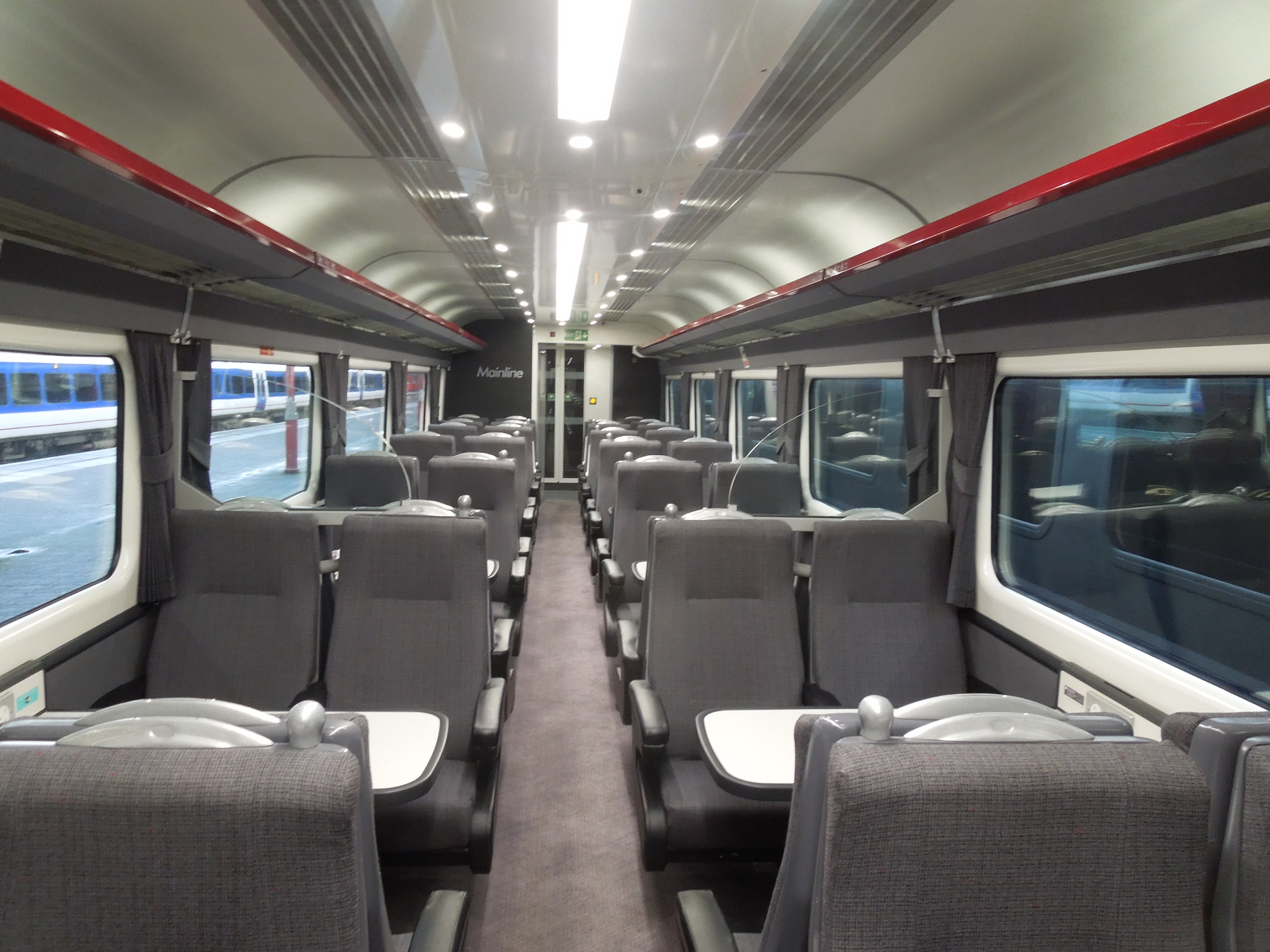
But I believe, that it can be done better still.
Entrance And Exit
As the pictures show, there is a big gap and a high step getting into the train. I know that the platform at Manchester Piccadilly is not easy, but the gap was still large on the straight platform at Manchester Airport.
With any new train, a passenger in a wheelchair, should be able to push themselves into and out of the train.
They certainly can’t in a Class 195 train.
Conclusion
I was rather disappointed with the Class 195 train.
Good points were the number of tables and build quality.
Bad points were the noise, vibration and harshness, execution of the interior design and entry and exit.
Compared to the Class 385 train, which I would score at 8/10, the Class 195 train, is no better than 6/10.
In some ways though, my biggest disappointment, is that they didn’t get the smaller points of the design right first time!
TfL Awards Contract For New DLR Fleet To Replace 30-year-old Trains
The title of this post, is the same as that of this article on Rail Technology Magazine.
I don’t think this is a surprise, as the winning design is based on CAF’s Metro train, which is in widespread use, in Europe and around the world.
The Trains
They would appear to be of a similar specification to most modern Metro trains, as would be expected.
The Possibility Of A Second Order
In Bombardier Transportation Consortium Preferred Bidder In $4.5B Cairo Monorail, I indicated that as the trains on the Tyne and Wear Metro and the trains on the Docklands Light Railway, are of a similar height and width, it might be possible to use the same same car bodies on both trains.
So now that CAF have got the first order for the Docklands Light Railway, they must be in prime position to obtain the Tyne and Wear Metro order!
Dwell Times And End Doors
Chris Stokes finishes his column in the January 2019 Edition of Modern Railways, with this paragraph.
Dwell times remain critical too. The new TransPennine units provide more seats, but have single end doors. For an operation with high numbers joining and alighting at many stops, dwell times are going to increase significantly at stations such as Manchester Victoria, Huddersfield, Leeds, Boltonand Preston, chewing up any savings in running times, and exacerbating the problems at platforms 13 and 14 at Manchester Piccadilly.
I haven’t seen a TransPennine Mark 5A coach in the flesh yet, but I’ve seen several pictures, which show each coach has single end doors.
This picture of the 100 mph Class 755 train shows the door layout is totally different.
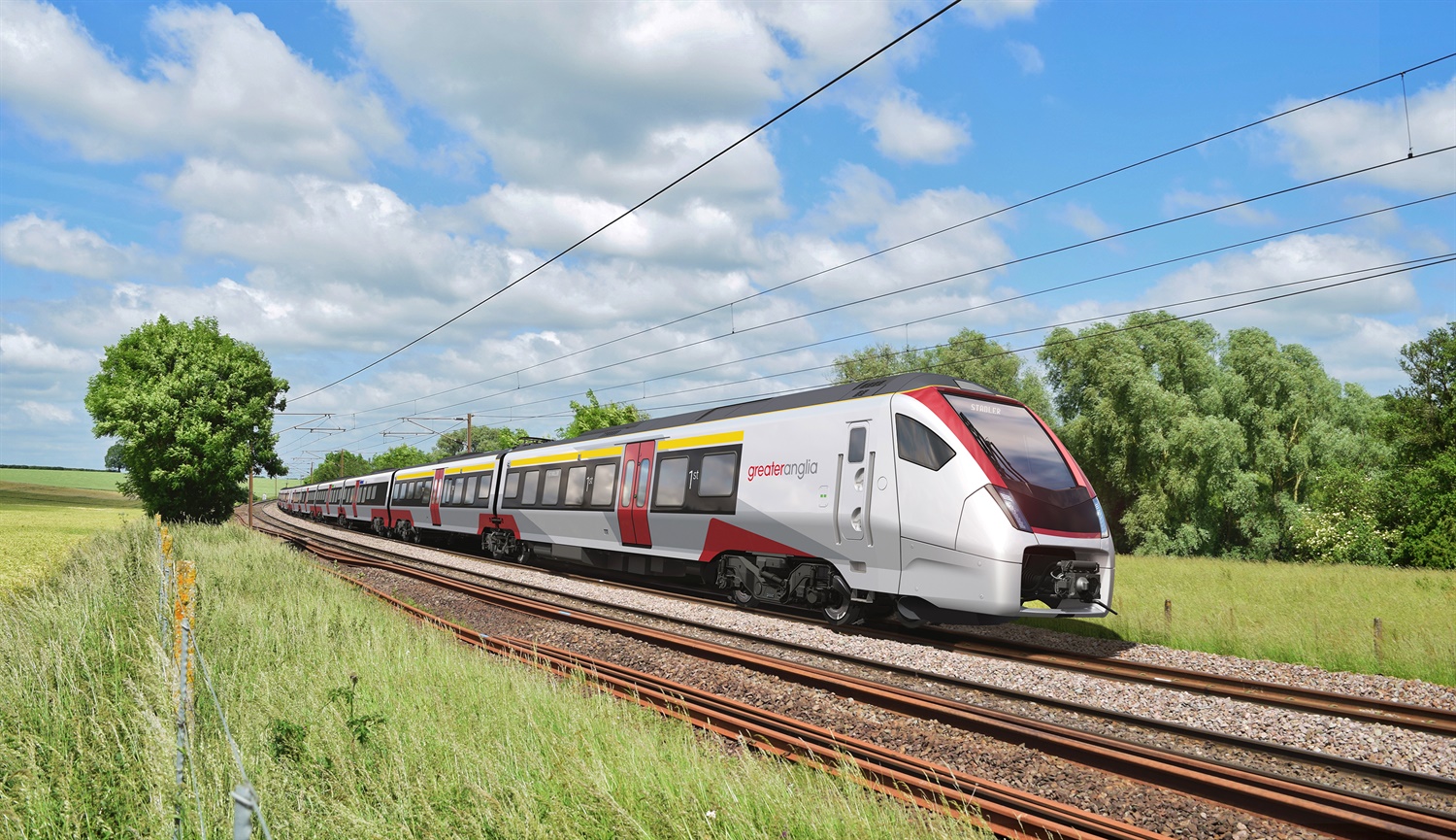
It looks like it has a single double door on each coach.
It appears that the electric Class 745 trains have more doors.
If you look at a typical Bombardier Aventra or Electrostar, Stadler Flirt or Siemens Desiro City, there are generally no end doors.
Have CAF commited a design crime of the highest order?
Or is it TransPennine’s fault?
Is Spain Looking Both Ways On Brexit?
This article on the BBC is entitled Spain Brexit: PM Sánchez Threatens To Vote No Over Gibraltar.
The title says it all.
On the other hand, Spanish rail companies seem to be very keen to invest in the UK and also create new and innovative trains for the British market.
- Amey, which is a subsidiary of the Spanish public company Ferrovial is heavily involved in big projects all over the UK, including the South Wales Metro.
- The train builder; CAF, is supplying lots of trains and coaches for UK operators and building a factory at Newport in South Wales.
- Another train builder; Talgo, is on the short list to build the trains for High Speed Two and is proposing to open a factory at Longannet in Scotland and a research centre at Chesterfield
It does appear, that big Spanish companies see the UK as a place to do business.
In connection with the Longannet factory, there is a feature article about the factory in Issue 866 of Rail Magazine.
This is the last paragraph.
As for Brexit, which is known to be a concern for other firms, Talgo said in a statement that its plans were “Brexit-free”, claiming there is a huge potential UK market as well as export opportunities.
The article also says that Talgo need more manufacturing capacity and the brownfield Longannet site, with its space and excellent access by rail and sea, fits their needs.
I also suspect that manufacturing in Scotland will help them secure sales in important English-speaking markets for their innovative high speed trains.
More Innovation From CAF
CAF are noted for innovation in the design of their trains and particularly trams. I have read somewhere, that they spend a lot of money on Research and Development and it seems to show in their products.
- In Seville’s Elegant Trams, I wrote about the MetroCentro in Seville, which is catenary-free and charges the batteries of the trams at stops, through an overhead rail.
- Zaragoza trams use a similar system.
- The Midland Metro is fitting batteries to its CAF Urbos 3 trams, to extend the system in Birmingham and Wolverhampton.
- A second line for the Midland Metro could use tram-trains, so it can share the South Staffordshire Line with freight trains.
- My engineering instinct tells me that the Midland Metro system is more advanced, than that installed in Spain.
This article on Global Rail News is entitled CAF Secures New Orders In Luxembourg, Germany and Sweden.
This is an extract from the article.
Luxtram has selected CAF to supply 12 trams for the second phase of Luxembourg City’s tram network, a catenary-free line which is currently under construction.
These Urbos 3 trams will cost €40 million and be powered through a ground-level charging system at stops.
So it looks like CAF have now added a new way of charging battery trams.
Will we be seeing this technology in the extension to the Edinburgh Tram and later extensions to the Midland Metro?
More Information From The International Railway Journal About The New Wales And Borders Franchise
In Every Pair Of Pictures Tell A Story, I said I needed more information on what was happening with the new Wales and Borders franchise.
This article on the International Railway Journal is entitled £800m fleet renewal plan for new Welsh franchise, gives a lot more serious information.
These two paragraphs outline the plans.
According to the Welsh government, around £800m will be invested in rolling stock to ensure that by 2023, 95% of journeys will be made on a new fleet of 148 trains. The average age of the fleet will drop from 25 years to seven years by 2024.
More than half of the new trains will be assembled in Wales, indicating a major order will be placed with CAF, which is currently building a new assembly plant near Newport.
The article then goes on to make specific points.
Class 769 Trains
Class 769 trains will be used as a stop-gap measure until the arrival of new bi-mode trains.
Five of these trains are on order for delivery in the next eighteen months.
Class 230 Trains
Class 230 trains will join the fleet.
Perhaps they will be used on the Conwy Valley Line.
The line is rather isolated from depots at Cardiff, Chester and Machynlleth, which would find the Class 230 trains remote servicing capabilities useful.
The Wikipedia entry for KeolisAmey Wales states that the Class 230 trains will work the Borderlands Line, which will have a two trains per hour (tph) frequency.
As the journey takes an hour each way with a round trip possible in two hours, I suspect that a two tph frequency will need four trains, with perhaps a fifth one ready to step into service.
Again the remote servicing capability of the Class 230 train will come into play, as will the train’s affordability.
Class 170 Trains
Several Class 170 trains will join the fleet.
These could be coming from Greater Anglia, who currently have twelve of the trains, that will be replaced by Class 755 trains.
This page on the Welsh Government web site, contains this sentence.
On the Heart of Wales line, introduce refurbished Class 170 two-car units by 2022.
If you want to find out more about train services in Mid and South-West Wales, the page is well-worth a read.
Mark 4 Carriages
Mark 4 Carriages released from the East Coast Main Line will replace the current Mark 3 Carriages.
Phasing Out Of Diesel Multiple Units
The article makes these two points.
- Pacers will be withdrawn by the end of 2019.
- Class 150, Class 153, Class 158 and Class 175 trains will be completely replaced by 2023.
The only ones worth keeping could be the Class 158 trains, most of which if fitted with wi-fi would be acceptable on many routes.
New Diesel Multiple Units For Long Distance Services
The article says that new diesel multiple units will be introduced on these routes.
- North Wales Coast and Cambrian lines in 2022
- Milford Haven – Manchester route by 2023
This page on the Welsh Government web site, also says a new Swansea to Manchester service will be introduced from 2024.
In Every Pair Of Pictures Tell A Story, I suggested that Class 755 trains could be used on these routes.
- They have similar performance to the Class 175 trains.
- Length and power can be tailored for each route. Greater Anglia have ordered two sizes.
- As they are bi-modes, they could take advantage of the electrification East of Cardiff and around Birmingham and Manchester.
But the biggest thing in favour of Class 755 trains, is that the thirty-eight units for Greater Anglia are scheduled to be completed by the end of 2019. So if the Welsh trains are virtually identical to those for Greater Anglia, there would not be any serious certification problems.
The Wikipedia entry for KeolisAmey Wales indicates that these trains could be diesel versions of the CAF Civity.
The South Wales Metro
The IRJ article says that £738 million will be invested in this project.
The Wikipedia entry for KeolisAmey Wales gives a few more details of train frequencies.
- A new 1 train per hour (tph) Ebbw Vale to Newport service by May 2021.
- 2 tph between Cardiff and Bridgend via the Vale of Glamorgan Line from December 2023
- 4 tph throughout on the Rhymney line from December 2023
- 4 tph to Treherbert from December 2022
- 6tph to Cardiff Bay from December 2022
- 4 tph between Merthyr Tydfil, Aberdare and Cardiff from December 2022
This is an increase in frequency.
It appears there will be two distinct sections of this network, which I’ll discuss in the next two sub-sections.
An Electric Network On The Cardiff Valley Lines
The IRJ article says this.
A new fleet of low-floor vehicles offering level boarding will be introduced on the network by December 2022.
I think we can assume this about the vehicles.
- They will be tram-trains.
- They will have batteries.
- They will be able to use 750 VDC and 25 KVAC electrification.
- There will be a proportion of street running in Cardiff.
It would also be highly likely, that these vehicles will be built by CAF, in their new Newport factory. Wikipedia mentions a tram-train version of their Urbos trams, which are used in Edinburgh and the Midlands, which is called an Urbos TT.
A Complimentary Tri-Mode Network
The article says this.
A new fleet of Stadler “tri-mode” (electric/diesel/battery) multiple units will maintain links from Penarth, Barry and Bridgend to stations north of Cardiff Central. These trains will enter service from December 2023.
It looks from the pictures that these will be a version of the Class 755 trains.
In From Novara To Aosta, I described the route, where similar Stadler trains will be used on the Chivasso-Ivrea-Aosta railway to reach the town of Aosta. I would suspect that the Italian route could be more challenging, than anything South Wales has to offer.
The Heads Of The Valleys Stations Will Be Served By CAF’s Tram-Trains And Stadler Tri-Modes
It would appear from Wikipedia, that the stations at the heads of the valleys will have the following frequencies.
- 4 tph – Aberdare
- 2 tph – Ebbw Vale
- 4 tph – Merthyr Tydfil
- 4 tph – Rhymney
- 4 tph – Treherbert
These frequencies and some single-platform terminal stations, will mean that careful design must be applied, so that all vehicles have level access from platform to vehicle.
This picture shows the access to a Stadler Flirt in Italy.
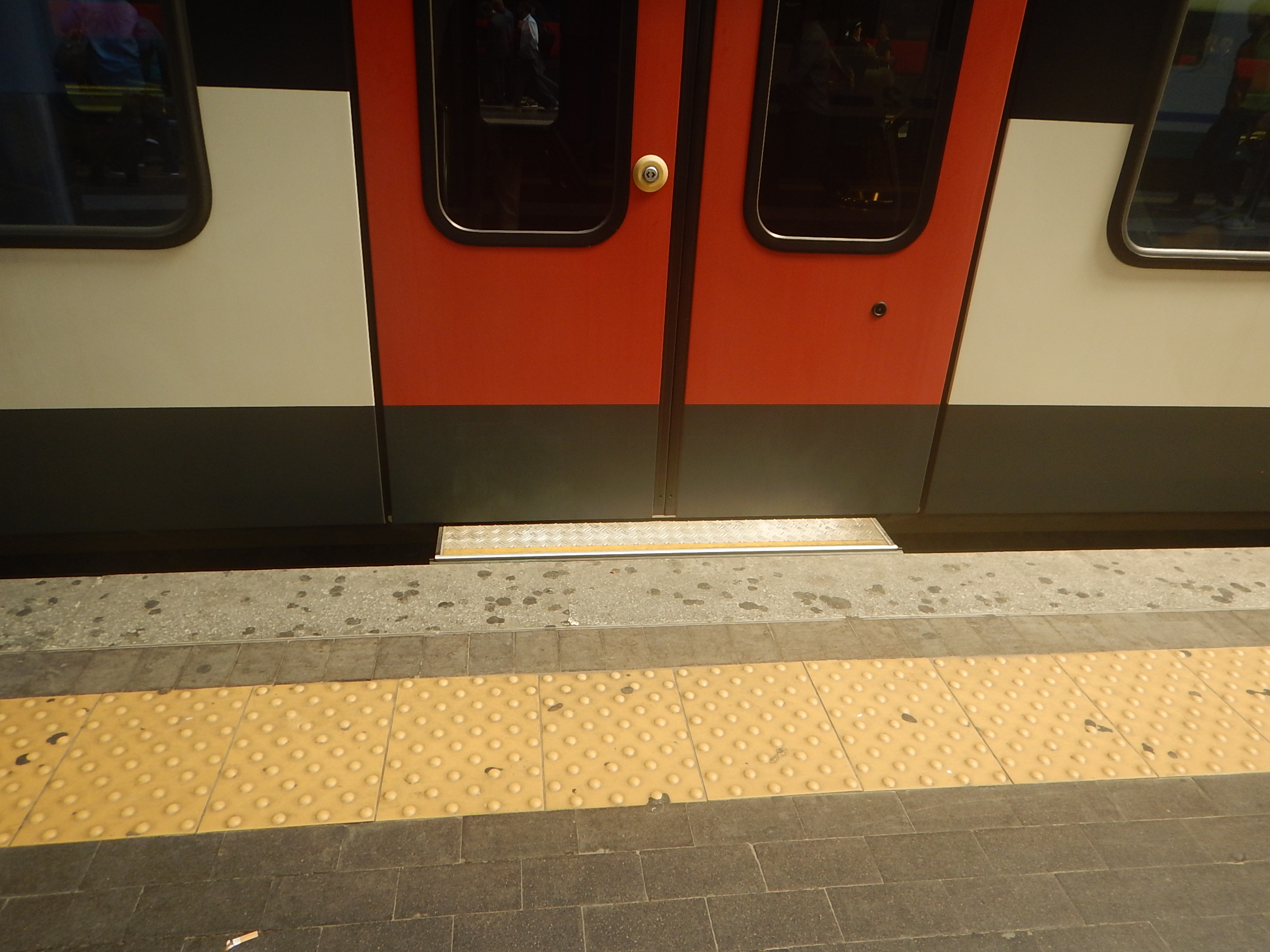
Note the gap filler, which automatically moves into place.
I’m sure engineers and designers working for KeolisAmey, CAF and Stadler can come up with a very good solution.
Will The Valley Lines Be Electrified With 25 KVAC?
I think it is highly likely that CAF’s vehicles for the tram section of the South Wales Metro will be tram-trains with a dual 750 VDC/25 KVAC capability and batteries.
Imagine one of these vehicles climbing to say Aberdare using the Merthyr Line, which is a mixture of single and double-track to Cardiff.
Going up to Aberdare, due to the gradients, the vehicles will need access to electrical power, so electrification is necessary, unless each vehicle has a massive diesel generator or ultra-large battery, which are respectively not very environmentally friendly or practical.
But I doubt it will matter if the electrification is 750 VDC or 25 KVAC.
Going down the valley to Cardiff, I believe that CAF’s vehicles will use Newtons friend; gravity and regenerative braking to control the speed. The energy generated by the braking would be stored in an onboard battery.
CAF have all the technology and it would be extremely energy efficient.
The Stadler tri-modes would have to use diesel on the way up, but given they have batteries, I suspect they’d come down in a similar way to the CAF tram-trains.
So what voltage should be used?
- The CAF tram-trains will probably be able to use either voltage.
- If batteries are used to handle regenerative braking, this works with all voltages.
- The Stadler tri-modes will probably need 25 KVAC.
- Electrifying with 25 KVAC would allow the Stadler tri-modes to avoid a lot of running on diesel.
- Any electric locomotives hauling freight would need 25 KVAC.
I wouldn’t be surprised to see the valley lines electrified with 25 KVAC.
Will Only The Uphill Tracks Be Electrified?
I believe that if trains coming down the valleys use batteries for regenerative braking and restarting at stations, it may be possible to only electrify a single-track, that is always used for uphill trains.
But only the tracks for uphill trains were electrified, this would make the works easier and reduce costs and disruption to passengers.
Conclusion
It looks like KeolisAmey have got a well thought-out plan!
Discontinuous Electrification For Valley Lines?
The title of this post, is the same as that of an article in the May 2018 Edition of Modern Railways.
The Valley Lines in question are the Cardiff Valley Lines, that fan out from Cardiff Central and Cardiff Queen Street stations in various directions.
- Some of the lines into the valleys are quite steep.
- The lines in the Cardiff area seem to be typical coastal lines and fairly flat.
- The lines are a mixture of single and double track.
- There are various plans to extend some of the branches.
According to the article, it would appear that the current diesel system would be replaced with a system, with these characteristics.
- Light rail vehicles
- Discontinuous electrification
- Use of stored energy.
- Street running is expected to be in the specification for the vehicles to be used, to allow extension in the Cardiff Bay area and perhaps other places.
The proposal would save costs against full electrification and heavy rail.
My observations follow.
Batteries
Batteries will be an integral part of the design of the new rail vehicles.
Powering The Trains
The article states that battery power will be used to power the trains on sections that are difficult to electrify, like the mile-long Caerphilly Tunnel.
Battery power could also be used on level and downhill sections of track up to a few miles, but I suspect on steep uphill sections, electrification will be needed.
Handling Regenerative Braking
I believe that regenerative braking will be employed on the rail vehicles and the energy generated will be stored in the batteries.
The main advantage of this is that it simplifies the power supply to the electrification, as it only has to handle power going to the train.
This less complex electrical system, saves construction costs.
Recovering The Train’s Potential Energy
A train travelling from Cardiff to one of the terminal stations at the heads of the valleys, will need to acquire an amount of potential energy, based on the train’s mass and the height involved. This will be provided by the train’s traction system powered by the electrification and the energy in the batteries.
Coming down the hill, the regenerative braking will control the speed of the train and store any energy generated in the batteries.
This will save on the cost of energy to operate the system.
Charging The Batteries
The batteries will be charged from both the overhead electrification and the regenerative braking.
Extensive simulations of the route on computers would be able to calculate the following, for a wide range of scenarios.
- The size of the batteries.
- The power of the traction motors.
- Where the electrification needs to be installed.
- The maximum power output of the electrification system.
These calculations could also lead to an energy-saving operating philosophy, that could be programmed into the train’s computer system.
I suspect the worst case scenario, would be a train full of the heaviest Welshmen after an important rugby match at the Millennium Stadium.
Electrification
My thoughts on how various sections of track would be electrified follow.
Tracks With A Significant Uphill Gradient
These would need to be electrified, as I doubt battery power on the steepest gradients, would be enough to take a fully-loaded train to the top of the hill.
Electrification would be lighter-weight 750 VDC overhead wires.
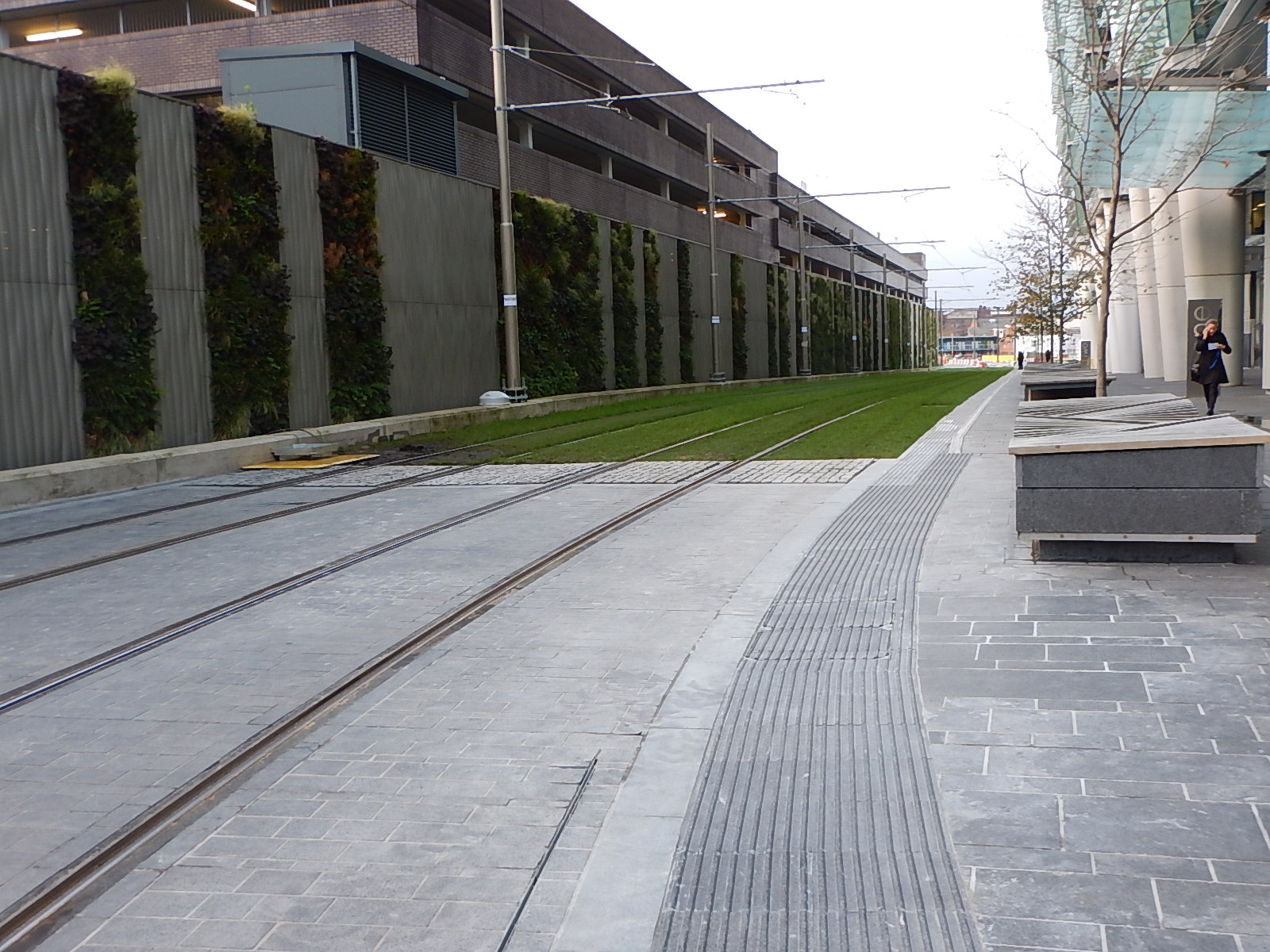
The picture shows some of the overhead wires in Birmingham, that are used by the Midland Metro’s Urbos 3 trams.
Tracks With A Downhill Gradient
These would not need to be electrified, as Newton’s friend gravity would do most of the work.
However, as batteries will be fitted, these can have three important functions on downhill stretches of track.
- Give the tram a nudge if needed.
- Restart the train after a stop at a station.
- Store any energy created by regenerative braking.
Note that we could have the unusual situation on a double-track section of line, where the uphill track was electrified and the downhill track was left without electrification.
Level Tracks
These would not need to be electrified, as battery power would be used to propel the train.
Selected Stations
Some stations could need to be electrified to ensure that the service was reliable. These might include terminal stations or those with tricky gradients on either side.
Tracks With 25 KVAC Electrification
Some of the tracks used by the trains on the Cardiff Valley Lines should be electrified with 25 KVAC, by the end of December 2018.
Class 399 tram-trains, that are used in Sheffield can use either 750 VDC and 25 KVAC overhead electrification.
it would probably be a good idea, if the new vehicles on the Cardiff Valley Lines could also use both voltages.
Automatic Pantographs
The pantographs on the vehicles would be raised and lowered automatically to access the electrification. This could even be GPS-controlled and able to be carried out at line speed.
Tram-Trains?
I very much feel, that tram-trains could be used to advantage.
- Some of the Valley Lines are also used by freight trains, so couldn’t be converted to trams-only.
- Tram-trains like the Class 399 tram-train, under test in Sheffield can work on both 750 VDC and 25 KVAC overhead wires.
- Tram-trains can use conventional railway signalling.
- Tram-trains could work on the South Wales Main Line to Newport.
- Modern tram-trains like the Class 399 tram-train have performance, that is about the same as a Class 142 train, which is a Pacer, that works the Cardiff Valley Lines, in large numbers.
- Tram-trains could run on the streets as trams, as they do in Sheffield.
Several manufacturers make tram-trains, which I believe could be suitablefor the Cardiff Valley Lines.
Stadler’s Class 399 Tram-Trains
Nothing is said about the vehicles, that would be used, but I think they need the following characteristics.
- Ability to climb the steepest section of the routes using 750 VDC overhead electrification.
- Ability to store energy.
- Regenerative braking to charge the batteries coming down the hills into Cardiff.
- A similar capacity to a Class 150 train, which is around 150 seats.
- It would be a bonus if they could use 25 KVAC overhead electrification, which will be available on part of some of the routes.
- Ability to raise and lower the pantograph quickly and automatically.
- Ability to run on the National Rail network.
- Ability to run on the street.
This specification is virtually the same as a Class 399 tram-train with the following additions.
- More seats and possibly an extra car.
- Batteries.
Class 399 tram-trains are a UK version of the Stadler Citylink tram-train. The German version is used in Karlsruhe to climb into the hills surrounding the city, on routes that are as challenging as the Cardiff Valley Lines.
So I have no worries about a version of the Class 399 train handling the Cardiff Valley Lines.
I certainly believe after my experience in Karlsruhe, and looking at other Citylink variants, that Stadler can come up with a tram-train for Cardiff based on the Class 399 tram-train.
And Then There’s CAF!
CAF have provided the Urbos 3 trams for Edinburgh Trams and the Midland Metro.
These are modern trams, that will be doing the following in a few years in the Midlands.
- Running on stored energy in the centre of Birmingham and to Wolverhampton station.
- Sharing the South Staffordshire Line with heavy freight on a new route to Merry Hill Shopping Centre.
This sounds like a tram-train with stored energy.
Wikipedia also lists a version of the Urbos family, called an Urbos TT, which is described like this.
The Urbos TT series is built with tram-train technology, connecting existing heavy rail infrastructure directly to urban tramway systems.
This document on the CAF web site, gives more details of Urbos variants, including the Urbos TT.
Looking at the modular nature of the design, you could have a custom-built tram-train tailored to the rail network.
But surely, the major factor with CAF, is that they have recently opened a factory at Newport.
If CAF get the order for the Cardiff Valley Lines, they could do a substantial part of the train building in a factory connected directly to the lines.
Converting The Valley Lines
I think that there are advantages and cost savings to be had, by good design in this area.
Could The Rail Vehicles Be Designed To Fit The Existing Platforms?
The first thing to do would be to design, build and fully test the rail vehicles.
Could the tram-trains be built, so that they fitted all the existing platforms?
- Class 150 trains are 2.82 metres wide.
- Urbos 3 trams on the Midland Metro are 2.65 wide.
If the tram-trains could run without platform modifications, this would be a big cost saving and still allow diesel units to use the lines, at the same time.
Testing The Trains
If the tram-trains were being given a 25 KVAC capability, they could even be tested on the quadruple-track the South Wales Main Line after the line is electrified through Newport.
Electrifying The Lines
It could be that the only sections of the valley lines that will need electrification, are the steep lines into the hills, as all other sections could use stored power or the 25 KVAC, where it exists.
- It would probably be possible to put up the simpler 750 VDC overhead lines during weekend and perhaps longer possessions.
- The electrification could be designed so that it doesn’t interfere with existing services.
- The lines would be converted one at a time.
- ,Note that tram-trains could share track and platform with the current diesel trains working the lines.
If CAF were to get the order surely the Ebbw Valley Line, which could be connected easily to the factory would be the first to be converted.
Conclusion
Obviously, the devil will be in the detail, but it does look like a viable plan will emerge.
I think that if CAF get the order, that they could be big winners.
The Cardiff Valley Lines could demonstrate the following.
- Running on main lines with 25 KVAC electrification.
- Running on 750 VDC electrification.
- Running on batteries.
- Running on lines with steep hills.
- Street running.
- Sharing tracks with freight trains and other passenger services.
- The tram-trains could also connect to Cardiff Airport.
It is a world-class demonstration and test track for innovative tram-trains, designed to cope with challenging rail networks.
With a factory close by at Newport, the selling of the tram-trains to other operators would be a salesman’s dream.
I think there’s more to CAF coming to Newport, than was apparent, when the deal for the factory was signed.
Hitachi Ships TransPennine Express’s First Class 802 From Japan
The title of this post is the same as that of this article on Global Rail News.
To my mind, the Japanese do some inefficient things when building trains.
- It could be sensible to build the first of each different sub-fleet in Japan and ship it to the UK by sea, but what puzzles me is that the body shells are all built and painted in Japan and then shipped half-way round the world.
- The shipping delay must make production difficult to plan and inefficient.
- I would have thought they would have built a body plant somewhere in Europe.
CAF may send their trains by ship, but that is only a short sea crossing and because the Spanish rail gauge they can’t tow them through the Channel Tunnel, as the other European manufacturers do.
Auckland Rows Back On Battery Train Plan
The title of this post is the same as this article on the International ailway Journal.
This is said.
Following approval by Auckland Council, the proposal went to the New Zealand Transport Agency (NZTA) for final sign-off. However, in the run-up to New Zealand’s general election on September 23, a political consensus emerged in favour of bringing forward electrification of the Papakura – Pukekohe line, prompting the NZTA to reject the case for battery trains.
Can we assume the reason for the change of order is political?
Certainly, CAF, who are building the trains seem to have the required battery technology. This is also said.
CAF says the contract will include an option to equip the trains with battery packs at a later date if required.
I just wonder if battery trains are just too risky for politicians, who tend to be rather conservative and badly-informed about anything technological.
 The Anonymous Widower