Electrification Between Clay Cross North Junction And Sheffield Station
Long term readers of this blog, will have noticed that I make regular references to this proposed electrification, that is part of High Speed Two’s proposals to connect Sheffield to the new high speed railway.
So I thought I would bring all my thoughts together in this post.
Connecting Sheffield To High Speed Two
Sheffield is to be accessed from a branch off the Main High Speed Two route to Leeds.
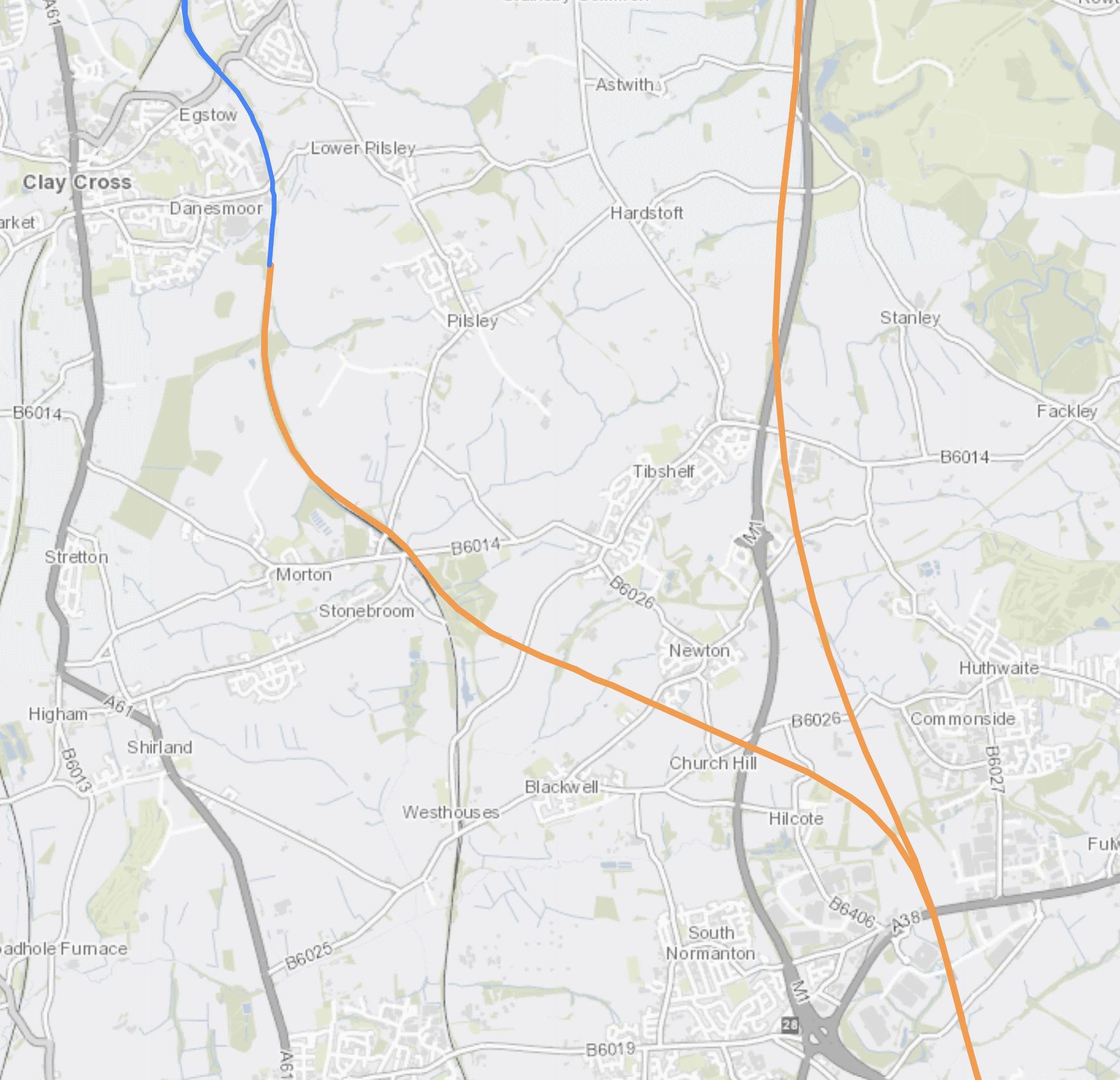
This map clipped from High Speed Two’s interactive map, shows the route of the Sheffield Branch, from where it branches North West from the main Eastern Leg of High Speed Two.
Note.
- Orange indicates new High Speed Two track.
- Blue indicates track that High Speed Two will share with other services.
- The orange route goes North to Leeds, along the M1
- The blue route goes North to Chesterfield and Sheffield, after skirting to the East of Clay Cross.
- The orange route goes South to East Midlands Hub station.
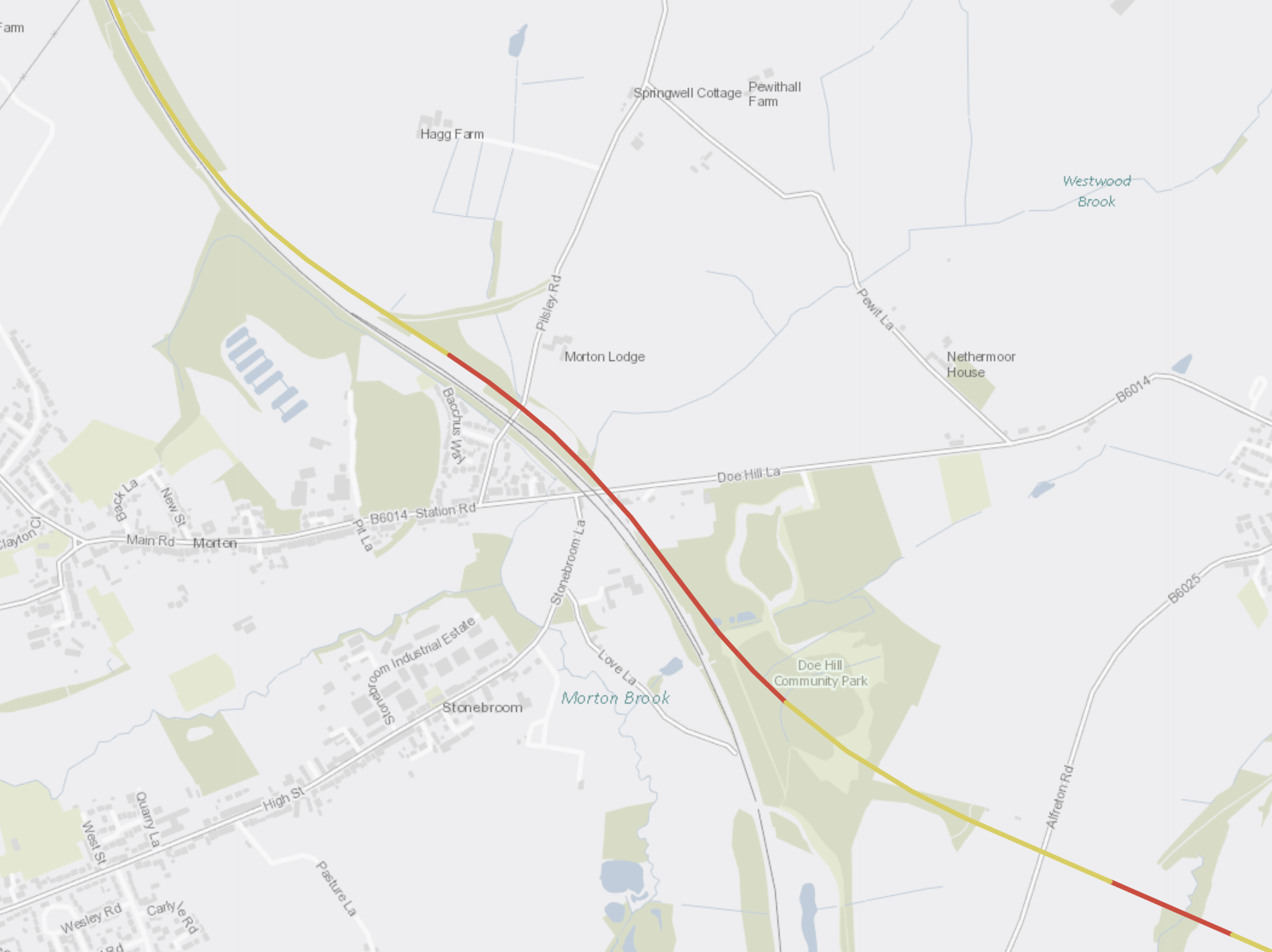
This second map, shows where the Erewash Valley Line joins the Sheffield Branch near the village of Stonebroom.
Note.
- Red is an embankment.
- Yellow is a cutting.
- The Sheffield Branch goes North-West to Clay Cross, Chesterfield and Sheffield
- The Sheffield Branch goes South-East to East Midlands Hub station.
- The Sheffield Branch goes through Doe Hill Country Park.
- The Sheffield Branch runs alongside the existing Erewash Valley Line, which goes South to Langley Mill, Ilkeston and the Derby-Nottingham area.
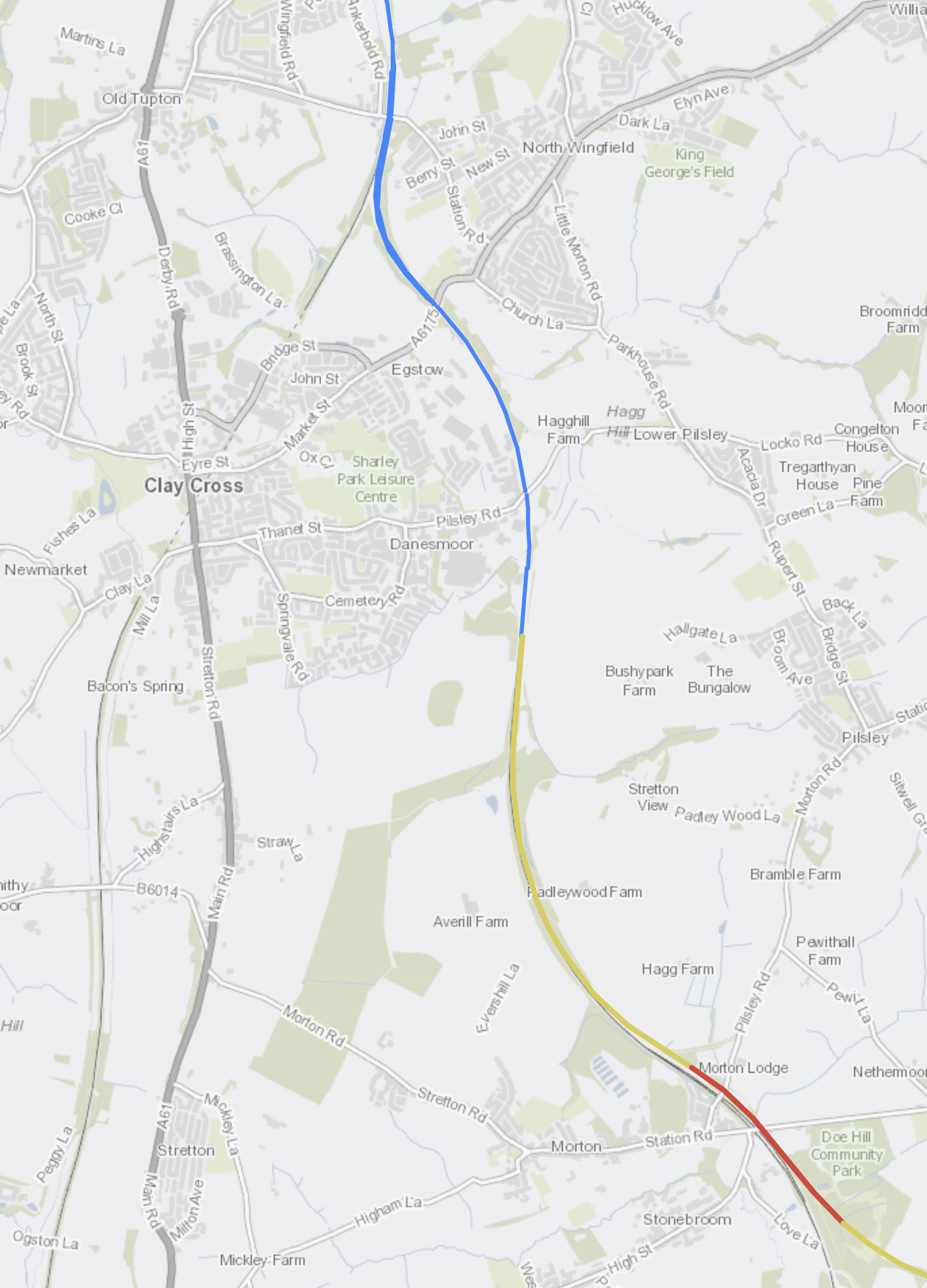
The Sheffield Branch and the Erewash Valley Line appear to share a route, which continues round Clay Cross and is shown in this third map.
Note
- Doe Hill Country Park is in the South-East corner of the map.
- The dark line running North-South is the A61.
- Running to the West of the A61 is the Midland Main Line, which currently joins the Erewash Valley Line at Clay Cross North junction.
High Speed Two and the Midland Main Line will share a route and/or tracks from Clay Cross North junction to Sheffield.
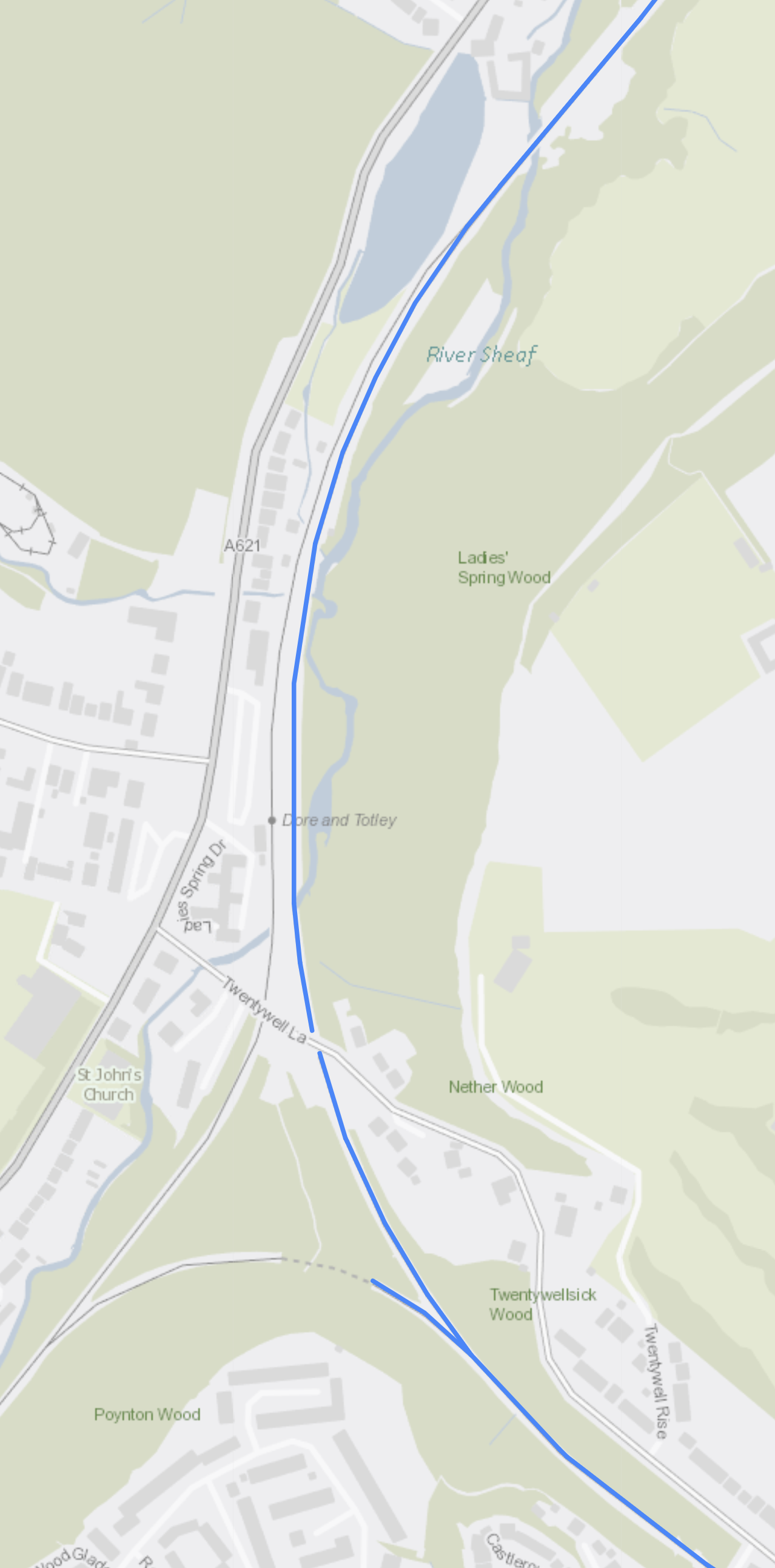
This fourth map, shows where the combined route joins the Hope Valley Line to Manchester to the South West of Sheffield.
Note.
- Sheffield is to the North East.
- Chesterfield is to the South East,
- Totley junction is a large triangular junction, that connects to the Hope Valley Line.
These are some timings for various sections of the route.
- Clay Cross North Junction and Chesterfield (current) – 4 minutes
- Clay Cross North Junction and Sheffield (current) – 17 minutes
- Chesterfield and Sheffield (current) – 13 minutes
- Chesterfield and Sheffield (High Speed Two) – 13 minutes
- East Midlands Hub and Chesterfield (High Speed Two) – 16 minutes
- East Midlands Hub and Sheffield (High Speed Two) – 27 minutes
As Class Cross North Junction and Sheffield are 15.5 miles, this means the section is run at an average speed of 53 mph.
Can I draw any conclusions from the maps and timings?
- There would appear to be similar current and High Speed Two timings between Chesterfield and Sheffield.
- The various junctions appear to be built for speed.
The Midland Main Line will be electrified between Clay Cross North Junction and Sheffield, so that High Speed Two trains can use the route.
What will be the characteristics of the tracks between Clay Cross North Junction and Sheffield?
- Will it be just two tracks as it mainly is now or will it be a multi-track railway to separate the freight trains from the high speed trains?
- Will it have a high enough maximum speed, so that East Midland Railway’s new Class 810 trains can go at their maximum speed of 140 mph?
- Will it be capable of handling a frequency of 18 tph, which is the maximum frequency of High Speed Two?
Surely, it will be built to a full High Speed Two standard to future-proof the line.
Current Passenger Services Between Clay Cross North Junction And Sheffield Station
These trains use all or part of the route between Cross North Junction And Sheffield stations.
- CrossCountry – Plymouth and Edinburgh via Derby, Chesterfield, Sheffield and Leeds – 1 tph
- East Midlands Railway – London St. Pancras and Sheffield via Derby and Chesterfield – 2 tph
- East Midlands Railway – Liverpool Lime Street and Norwich via Stockport, The Hope Valley Line, Sheffield and Chesterfield – 1 tph
- Northern Trains – Manchester Piccadilly and Sheffield via the Hope Valley Line – 1 tph
- Northern Trains – Leeds and Nottingham via Meadowhall, Sheffield and Chesterfield – 1 tph
- TransPennine Express – Manchester Airport and Cleethorpes via Stockport, the Hope Valley Line and Sheffield – 1 tph
Note.
- tph is trains per hour.
- High Speed Two is currently planning to run two tph to Sheffield, which will run between Cross North junction and Sheffield stations.
- The services on the Hope Valley Line run on electrified tracks at the Manchester end.
These services can be aggregated to show the number of trains on each section of track.
- Hope Valley Line between Manchester and Totley junction – 3 tph
- Totley junction and Sheffield station – 7 tph
- Totley junction and Clay Cross North junction via Chesterfield – 4 tph
Adding in the High Speed Two services gives these numbers.
- Hope Valley Line between Manchester and Totley junction – 3 tph
- Totley junction and Sheffield station – 9 tph
- Totley junction and Clay Cross North junction via Chesterfield – 6 tph
This report on the Transport for the North web site, is entitled At A Glance – Northern Powerhouse Rail. It states that Transport for the North’s aspirations for Manchester and Sheffield are four tph with a journey time of forty minutes.
Adding in the extra train gives these numbers.
- Hope Valley Line between Manchester and Totley junction – 4 tph
- Totley junction and Sheffield station – 10 tph
- Totley junction and Clay Cross North junction via Chesterfield – 6 tph
This level of services can be accommodated on a twin-track railway designed to the right high speed standards.
Freight Services Between Clay Cross North Junction And Sheffield Station
The route is used by freight trains, with up to two tph on each of the three routes from Totley junction.
And these are likely to increase.
Tracks Between Clay Cross North Junction And Sheffield Station
I am absolutely certain, that two tracks between Clay Cross North junction And Sheffield station will not be enough, even if they are built to High Speed Two standards to allow at least 140 mph running under digital signalling.
Battery Electric Trains
The only battery-electric train with a partly-revealed specification is Hitachi’s Regional Battery Train, which is described in this Hitachi infographic.

Note.
- The train is a 100 mph unit.
- Ninety kilometres is fifty-six miles.
I would expect that battery-electric trains from other manufacturers like Alstom, CAF and Siemens would have similar performance on battery power.
In Thoughts On CAF’s Battery-Electric Class 331 Trains, I concluded CAF’s approach could give the following ranges.
- Three-car battery-electric train with one battery pack – 46.7 miles
- Four-car battery-electric train with one battery pack – 35 miles
- Four-car battery-electric train with two battery packs – 70 miles
I was impressed.
These are my thoughts on battery-electric trains on the routes from an electrified Sheffield.
Adwick
Sheffield and Adwick is 22.7 miles without electrification
I am sure that battery-electric trains can handle this route.
If the battery range is sufficient, there may not need to be charging at Adwick.
Bridlington
Sheffield and Bridlington is 90.5 miles without electrification, except for a short section through Doncaster, where trains could top up batteries.
I am sure that battery-electric trains can handle this route.
But there would need to be a charging system at Hull, where the trains reverse.
An alternative would be to electrify Hull and Brough, which is just 10.4 miles and takes about twelve minutes.
Derby Via The Midland Main Line
Clay Cross North junction and Derby is 20.9 miles without electrification.
I am sure that battery-electric trains can handle this route.
Gainsborough Central
Sheffield and Gainsborough Central is 33.6 miles without electrification
I am sure that battery-electric trains can handle this route.
But there will need to be a charging system at Gainsborough Central.
Huddersfield Via The Penistone Line
This is a distance of 36.4 miles with electrification at both ends, after the electrification between Huddersfield and Westtown is completed.
I am sure that battery-electric trains can handle this route.
Hull
Sheffield and Hull is 59.4 miles without electrification, except for a short section through Doncaster, where trains could top up batteries.
I am sure that battery-electric trains can handle this route.
But there will probably need to be a charging system at Hull.
An alternative would be to electrify Hull and Brough, which is just 10.4 miles and takes about twelve minutes.
Leeds Via The Hallam Or Wakefield Lines
This is a distance of 40-45 miles with electrification at both ends.
I am sure that battery-electric trains can handle this route.
Lincoln
Sheffield and Lincoln Central is 48.5 miles without electrification
I am sure that battery-electric trains can handle this route.
But there will probably need to be a charging system at Lincoln Central.
Manchester Via The Hope Valley Line
This is a distance of forty-two miles with electrification at both ends.
I am sure that battery-electric trains can handle this route.
Nottingham
Clay Cross North junction and Nottingham is 25.1 miles without electrification
I am sure that battery-electric trains can handle this route.
But there may need to be a charging system at Nottingham.
York
This is a distance of 46.4 miles with electrification at both ends.
I am sure that battery-electric trains can handle this route.
Is London St. Pancras And Sheffield Within Range Of Battery-Electric Trains?
In the previous section, I showed that it would be possible to easily reach Derby, as Clay Cross North junction and Derby is 20.9 miles without electrification.
- Current plans include electrifying the Midland Main Line as far North as Market Harborough.
- Market Harborough is 82.8 miles from London St. Pancras
- Derby is 128.3 miles from London St. Pancras
So what would be the best way to cover the 45.5 miles in the middle?
One of the best ways would surely be to electrify between Derby and East Midlands Parkway stations.
- Derby and East Midlands Parkway stations are just 10.2 miles apart.
- Current services take around twelve-fourteen minutes to travel between the two stations, so it would be more than enough time to charge a battery-electric train.
- Power for the electrification should not be a problem, as Radcliffe-on-Soar power station is by East Midlands Parkway station. Although the coal-fired power station will soon be closed, it must have a high class connection to the electricity grid.
- The East Midlands Hub station of High Speed Two will be built at Toton between Derby and Nottingham and will have connections to the Midland Main Line.
- An electrified spur could connect to Nottingham station.
I have flown my virtual helicopter along the route and found the following.
- Three overbridges that are not modern and built for large containers and electrification.
- Two level crossings.
- One short tunnel.
- Two intermediate stations.
- Perhaps half-a-dozen modern footbridges designed to clear electrification.
I’ve certainly seen routes that would be much more challenging to electrify.
I wonder if gauge clearance has already been performed on this key section of the Midland Main Line.
If this section were to be electrified, the sections of the Midland Main Line between London St. Pancras and Sheffield would be as follows.
- London St. Pancras and Market Harborough – Electrified – 82.8 miles
- Market Harborough and East Midlands Parkway – Not Electrified – 35.3 miles
- East Midlands Parkway and Derby – Electrified – 10.2 miles
- Derby and Clay Cross North junction – Not Electrified – 20.9 miles
- Clay Cross North junction and Sheffield – Electrified – 15.5 miles
Note.
- The World Heritage Site of the Derwent Valley Mills is not electrified, which could ease the planning.
- Leicester station with its low bridge, which could be difficult to electrify, has not been electrified.
- Under thirty miles of electrification will allow battery-electric trains to run between London St. Pancras and Sheffield, provided they had a range on batteries of around forty miles.
Probably, the best way to electrify between East Midlands Parkway and Derby might be to develop a joint project with High Speed Two, that combines all the power and other early works for East Midlands Hub station, with the electrification between the two stations.
Will The Class 810 Trains Be Converted To Battery-Electric Operation?
Hitachi’s Class 8xx trains tend to be different, when it comes to power. These figures relate to five-car trains.
- Class 800 train – 3 x 560 kW diesel engines
- Class 801 train – 1 x 560 kW diesel engine
- Class 802 train – 3 x 700 kW diesel engines
- Class 803 train – All electric – No diesel and an emergency battery
- Class 805 train – 3 x 700 kW diesel engines (?)
- Class 807 train – All electric – No diesel or emergency battery
- Class 810 train – 4 x 700 kW diesel engines (?)
Note.
- These figures relate to five-car trains.
- Class 807 train are seven-car trains.
- Where there is a question mark (?), the power has not been disclosed.
- Hitachi use two sizes of diesel engine; 560 kW and 700 kW.
It was generally thought with the Class 810 train to be used on the Midland Main Line, will be fitted with four engines to be able to run at 125 mph on diesel.
But are they 560 kW or 700 kW engines?
- A Class 802 train has an operating speed of 110 mph on diesel, with 2100 kW of installed power.
- To increase speed, the power will probably be related to something like the square of the speed.
So crudely the power required for 125 mph would be 2100*125*125/110/110, which works out at 2712 kW.
Could this explain why four engines are fitted? And why they are 700 kW versions?
Interestingly, I suspect, Hitachi’s five-car trains have two more or less identical driver cars, except for the passenger interiors, for the efficiency of manufacturing and servicing.
So does that mean, that a fifth engine could be fitted if required?
There probably wouldn’t be a need for five diesel engines, but as I also believe that the Hyperdrive Innovation battery packs for these trains are plug-compatible with the diesel engines, does that mean that Hitachi’s trains can be fitted with five batteries?
Suppose you wanted to run a Class 810 train at 125 mph to clear an electrification gap of forty miles would mean the following.
- It would take 0.32 hours or 19.2 minutes to cross the gap.
- In that time 2800 kW of diesel engines would generate 896 kWh.
- So to do the same on batteries would need a total battery capacity of 896 kWh.
- If all diesel engines were replaced, each battery would need to be 224 kWh
A battery of this size is not impractical and probably weighs less than the at least four tonnes of the diesel engine it replaces.
Conclusions
Electrification between Clay Cross North Junction and Sheffield station is an important project that enables the following.
- A high proportion of diesel services to and from Sheffield to be converted to battery-electric power.
- With electrification between Derby and East Midlands Parkway, it enables 125 mph battery-electric trains to run between London St. Pancras and Sheffield.
- It prepares Sheffield for High Speed Two.
It should be carried out as soon as possible.
Skeleton To Supply Ultracapacitors To CAF
The title of this post, is the same as that of this article on Electrive.
These two sentences are in the last paragraph.
In its German plant in Großröhrsdorf, Skeleton Technologies is working on so-called hybrid energy storage systems. In short, the advantages of lithium-ion batteries (high energy density) are to be combined with the advantages of ultracapacitors (high performance, long service life) in such hybrid storage systems
But I suggest you read the article as it indicates how supercapacitors could be used on battery-trams and trains.
If CAF use supercapacitors on their trains it will not be their first application on heavy rail in the UK. In Brush Traction Signs Contract With Skeleton Technologies For Modules For Class 769 Trains, I describe how supercapacitors are used to start the engines.
Thoughts On CAF’s Battery-Electric Class 331 Trains
I first wrote about CAF’s battery-electric trains in Northern’s Battery Plans, where I describe how CAF and Northern are planning to convert a number of three-car Class 331 trains into four-car battery-electric trains.
- The fourth car would contain batteries.
- Batteries would also be added to the PTS (pantograph) car.
I suspect that the battery range could be arranged so that all Northern’s routes suitable for battery-electric operation could be handled.
These are my thoughts.
How Much Would The Conversion Cost?
I will first make rough estimate of what the extra car would cost.
Northern placed a £500 million order for the following trains.
- 31 x three-car Class 331 trains
- 12 x four-car Class 331 trains
- 25 x two-car Class 195 trains
- 33 x three-car Class 195 trains
This is a total of 290 trains.
So on a rough estimate, each car will cost around £1.72 million.
As batteries would also be added to the pantograph car, the cost of updating a three-car train to a four-car battery-electric train would probably be around two million.
Why Are CAF Proposing A Four-Car Train With Two Battery Cars?
When I first read about CAF’s and Northern’s plans, I wondered, why CAF were also putting batteries in the pantograph car, as surely, with their extensive experience with battery-powered trains, CAF could fit enough batteries into one battery-car for a reasonable range, as Bombardier did seven years ago.
Having done all the calculations around Wigan and Bolton in Bolton-Wigan £78m Rail Electrification Project Announced, I suspect that CAF and Northern want a trans-Pennine range, so they can compete with TransPennine Express.
Two cars with batteries is probably needed for that.
Could The Three-Car Trains Be Converted To Three-Car Battery-Electric Trains?
But there is a collateral benefit of putting batteries in the pantograph car.
I suspect that in a four-car Class 331 trains have a trans-Pennine range, which between Manchester Victoria and Leeds stations is 50.2 miles and between Carlisle and Newcastle stations is 61.5 miles. So let’s say that the four-car Class 331 train with two battery packs has a range of 70 miles.
So what would be the range of a three-car train with one battery pack.
One battery pack would only take a four-car train 35 miles, so a single battery pack would contain 140 car-miles of electricity.
If a single-battery were to be fitted to the pantograph car of a three-car train, 140 car-miles would give a range of 46.7 miles.
My conclusion about the Bolton and Wigan electrification in Bolton-Wigan £78m Rail Electrification Project Announced, was as follows.
This electrification of just 6.5 miles of double-track between Lostock junction and Wigan Wallgate station seems to be one of the smaller electrification projects.
But on closer examination, when linked to a fleet of battery-electric trains with a range of perhaps forty miles, the electrification enables battery-electric trains to run these services.
- Southport And Alderley Edge
- Southport And Stalybridge
- Kirkby And Manchester Victoria
With a charging station in Blackburn station, then the Wigan Wallgate And Blackburn service can be added.
All these four services could be run by three-car battery-electric Class 331 trains. And if the services are to be run by six-car trains, a pair can be coupled up.
What Would Be The Range Of A Four-Car Battery-Electric Train With Only One Battery?
If I’m right that a four-car battery-electric Class with two batteries has a range of seventy miles across the Pennines, then a train with one battery should be able to manage 35 miles.
Conclusion
It sounds like the Spanish might have come up with a cunning plan, that might be able to convert both three- and four-car Class 331 trains to battery-electric operation.
By adding a battery to the pantograph car, this enables a four-car battery-electric train with a trans-Pennine range.
Summing up the various options gives the following ranges.
- Three-car battery-electric train with one battery pack – 46.7 miles
- Four-car battery-electric train with one battery pack – 35 miles
- Four-car battery-electric train with two battery packs – 70 miles
I’m impressed.
Solving The Electrification Conundrum
The title of this post, is the same as an article in the July 2021 Edition of Modern Railways.
This is the introductory sub-heading.
Regional and rural railways poses a huge problem for the railway to decarbonise.
Lorna McDonald of Hitachi Rail and Jay Mehta of Hitachi ABB Power Grids tell Andy Roden why they believe they have the answer.
These are my thoughts on what is said.
Battery-Electric Trains
The article starts by giving a review of battery-electric trains and their use on routes of moderate but important length.
- Some short routes can be handled with just a charge on an electrified main line.
- Some will need a recharge at the termini.
- Other routes might need a recharge at some intermediate stations, with a possible increase in dwell times.
It was in February 2015, that I wrote Is The Battery Electric Multiple Unit (BEMU) A Big Innovation In Train Design?, after a ride in public service on Bombardier’s test battery-electric train based on a Class 379 train.

I also wrote this in the related post.
Returning from Harwich, I travelled with the train’s on-board test engineer, who was monitoring the train performance in battery mode on a laptop. He told me that acceleration in this mode was the same as a standard train, that the range was up to sixty miles and that only minimal instruction was needed to convert a driver familiar to the Class 379 to this battery variant.
It was an impressive demonstration, of how a full-size train could be run in normal service without connection to a power supply. I also suspect that the partners in the project must be very confident about the train and its technology to allow paying passengers to travel on their only test train.
A couple of years later, I met a lady on another train, who’d used the test train virtually every day during the trial and she and her fellow travellers felt that it was as good if not better than the normal service from a Class 360 train or a Class 321 train.
So why if the engineering, customer acceptance and reliability were proven six years ago, do we not have several battery electric trains in service?
- There is a proven need for battery-electric trains on the Marshlink Line and the Uckfield Branch in Sussex.
- The current Class 171 trains are needed elsewhere, so why are no plans in place for replacement trains?
- The government is pushing electric cars and buses, but why is there such little political support for battery-electric trains?
It’s almost as if, an important civil servant in the decision process has the naive belief that battery-electric trains won’t work and if they do, they will be phenomenally expensive. So the answer is an inevitable no!
Only in the South Wales Metro, are battery-electric trains considered to be part of the solution to create a more efficient and affordable electric railway.
But as I have constantly pointed out since February 2015 in this blog, battery-electric trains should be one of the innovations we use to build a better railway.
Hydrogen Powered Trains
The article says this about hydrogen powered trains.
Hybrid hydrogen fuel cells can potentially solve the range problem, but at the cost of the fuel eating up internal capacity that would ideally be used for passengers. (and as Industry and Technology Editor Roger Ford points out, at present hydrogen is a rather dirty fuel). By contrast, there is no loss of seating or capacity in a Hitachi battery train.
I suspect the article is referring to the Alstom train, which is based on the technology of the Alstom Coradia iLint.

I have ridden this train.
- It works reliably.
- It runs on a 100 km route.
- The route is partially electrified, but the train doesn’t have a pantograph.
- It has a very noisy mechanical transmission.
Having spoken to passengers at length, no-one seemed bothered by the Hindenburg possibilities.
It is certainly doing some things right, as nearly fifty trains have been ordered for train operating companies in Germany.
Alstom’s train for the UK is the Class 600 train, which will be converted from a four-car Class 321 train.
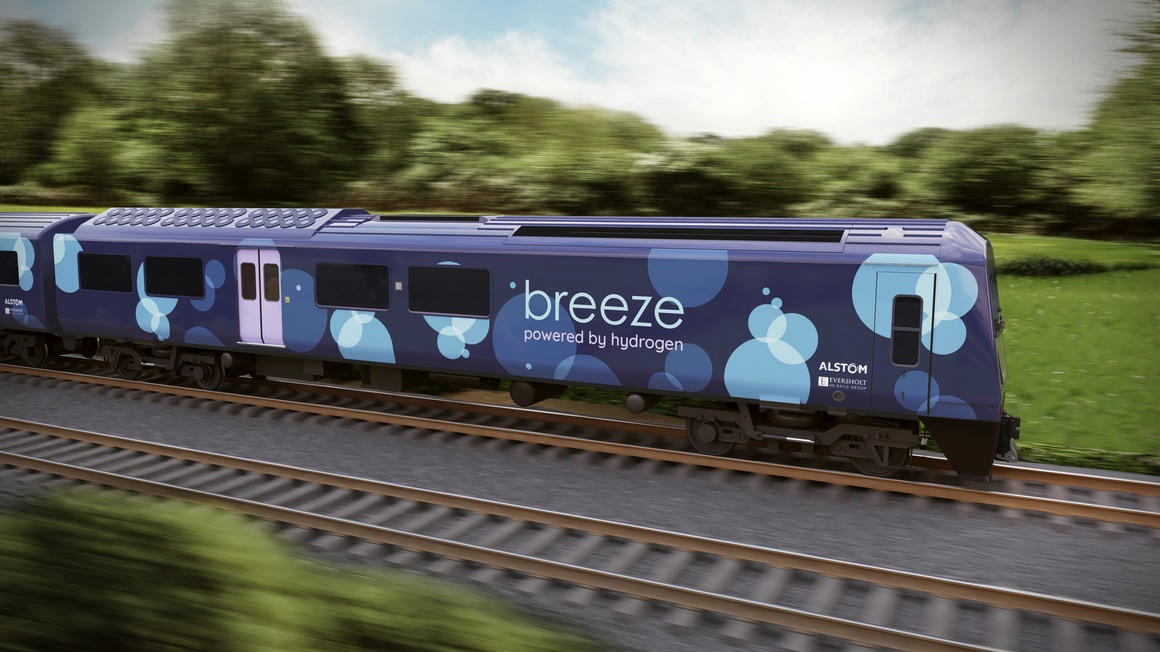
Note.
- Half of both driver cars is taken up by a hydrogen tank.
- Trains will be three-cars.
- Trains will be able to carry as many passengers as a two-car Class 156 train.
It is an inefficient design that can be improved upon.
Porterbrook and Birmingham University appear to have done that with their Class 799 train.
- It can use 25 KVAC overhead or 750 VDC third-rail electrification.
- The hydrogen tanks, fuel cell and other hydrogen gubbins are under the floor.
This picture from Network Rail shows how the train will appear at COP26 in Glasgow in November.
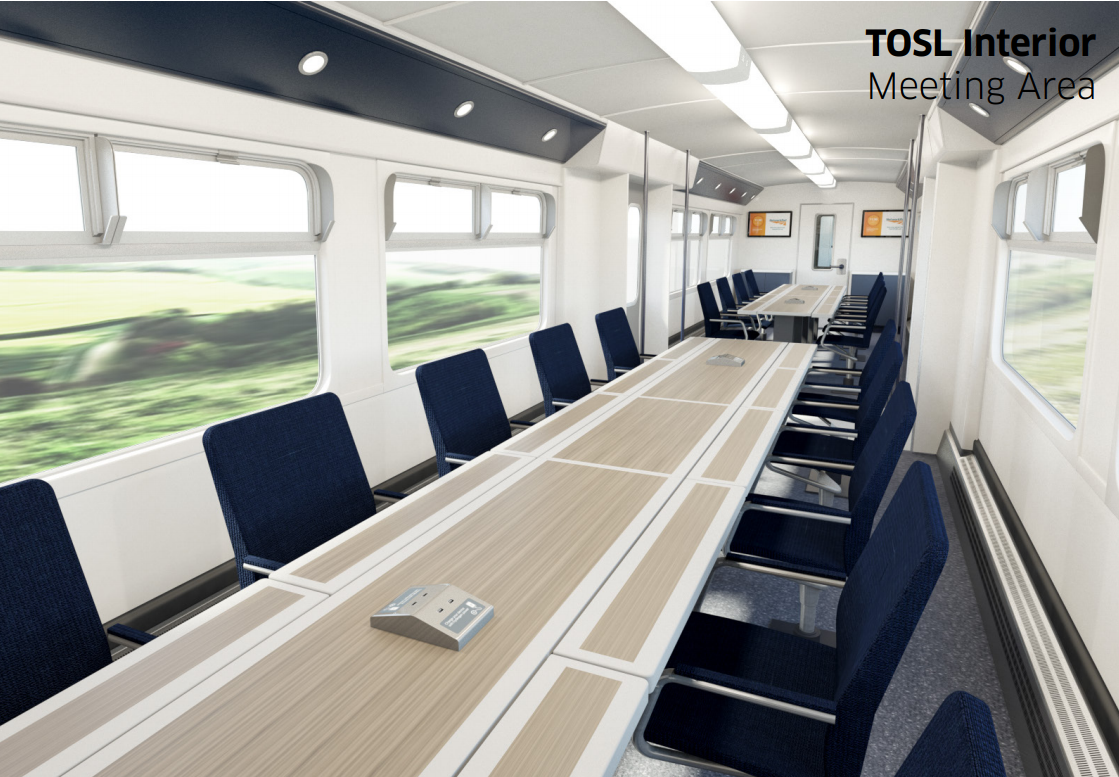
Now that’s what I call a train! Let alone a hydrogen train!
Without doubt, Porterbrook and their academic friends in Birmingham will be laying down a strong marker for hydrogen at COP26!
I know my hydrogen, as my first job on leaving Liverpool University with my Control Engineering degree in 1968 was for ICI at Runcorn, where I worked in a plant that electrolysed brine into hydrogen, sodium hydroxide and chlorine.
My life went full circle last week, when I rode this hydrogen powered bus in London.
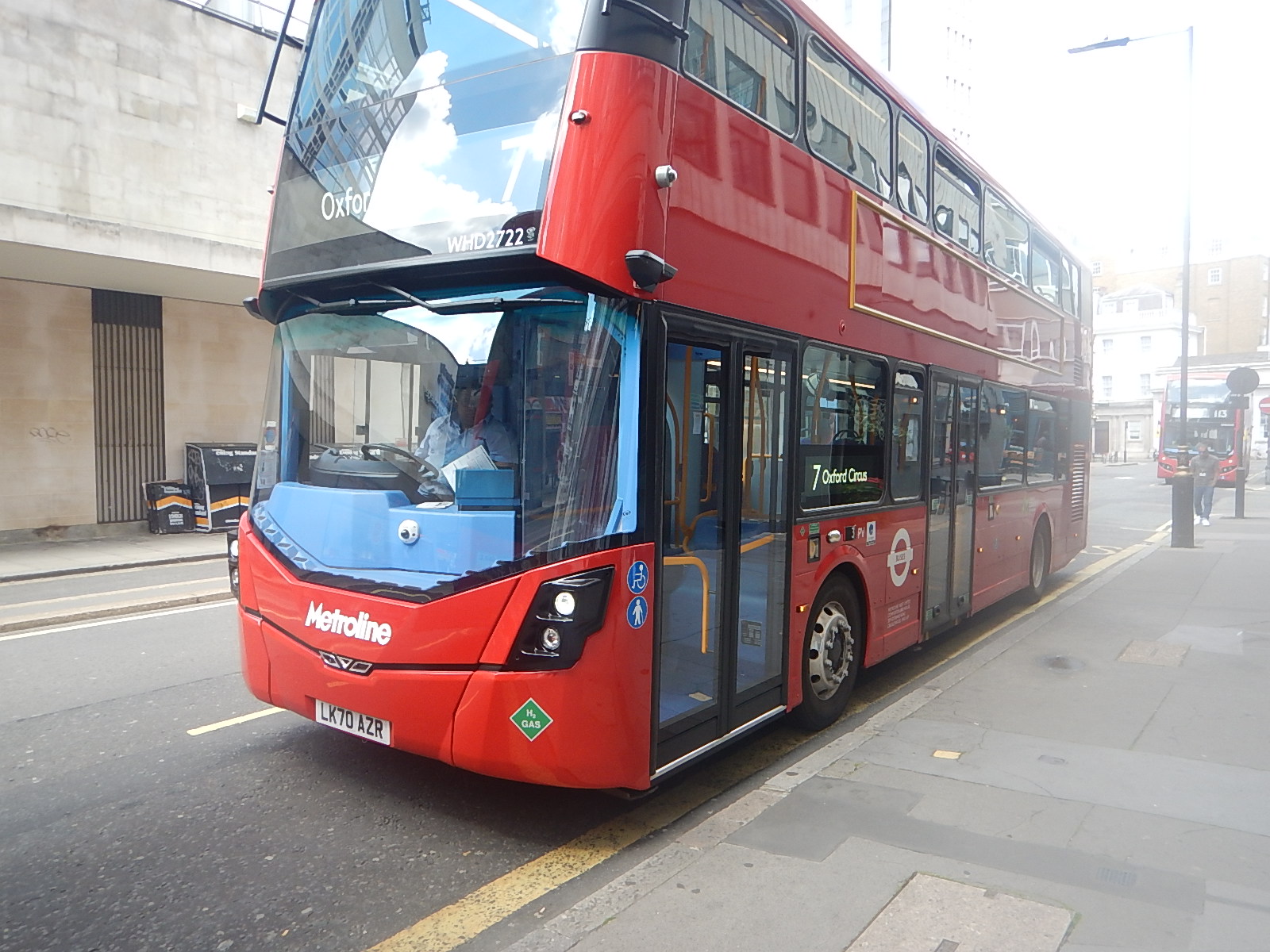
The hydrogen is currently supplied from the same chemical works in Runcorn, where I worked. But plans have been made at Runcorn, to produce the hydrogen from renewable energy, which would make the hydrogen as green hydrogen of the highest standard. So sorry Roger, but totally carbon-free hydrogen is available.
The bus is a Wightbus Hydroliner FCEV and this page on the Wrightbus web site gives the specification. The specification also gives a series of cutaway drawings, which show how they fit 86 passengers, all the hydrogen gubbins and a driver into a standard size double-deck bus.
I believe that Alstom’s current proposal is not a viable design, but I wouldn’t say that about the Porterbrook/Birmingham University design.
Any Alternative To Full Electrification Must Meet Operator And Customer Expectations
This is a paragraph from the article.
It’s essential that an alternative traction solution offers the same levels of performance and frequency, while providing an increase in capacity and being economically viable.
In performance, I would include reliability. As the on-board engineer indicated on the Bombardier test train on the Harwich branch, overhead electrification is not totally reliable, when there are winds and/or criminals about.
Easy Wins
Hitachi’s five-car Class 800 trains and Class 802 trains each have three diesel engines and run the following short routes.
- Kings Cross and Middlesbrough- 21 miles not electrified – Changeover in Northallerton station
- Kings Cross and Lincoln – 16.6 miles not electrified – Changeover in Newark Northgate station
- Paddington and Bedwyn – 13.3 miles not electrified – Changeover in Newbury station
- Paddington and Oxford – 10.3 miles not electrified – Changeover in Didcot Parkway station
Some of these routes could surely be run with a train, where one diesel engine was replaced by a battery-pack.
As I’m someone, who was designing, building and testing plug-compatible transistorised electronics in the 1960s to replace older valve-based equipment in a heavy engineering factory, I suspect that creating a plug-compatible battery-pack that does what a diesel engine does in terms of power and performance is not impossible.
What would be the reaction to passengers, once they had been told, they had run all the way to or from London without using any diesel?
Hopefully, they’d come again and tell their friends, which is what a train operator wants and needs.
Solving The Electrification Conundrum
This section is from the article.
Where electrification isn’t likely to be a viable proposition, this presents a real conundrum to train operators and rolling stock leasing companies.
This is why Hitachi Rail and Hitachi ABB Power Grids are joining together to present a combined battery train and charging solution to solve this conundrum. In 2020, Hitachi and ABB’s Power Grids business, came together in a joint venture, and an early outcome of this is confidence that bringing together their expertise in rail, power and grid management, they can work together to make electrification simpler cheaper and quicker.
I agree strongly with the second paragraph, as several times, I’ve been the mathematician and simulation expert in a large multi-disciplinary engineering project, that went on to be very successful.
The Heart Of The Proposition
This is a paragraph from the article.
The proposition is conceptually simple. Rather than have extended dwell times at stations for battery-powered trains, why not have a short stretch of 25 KVAC overhead catenary (the exact length will depend on the types of train and the route) which can charge trains at linespeed on the move via a conventional pantograph?
The article also mentions ABB’s related expertise.
- Charging buses all over Europe.
- Creating the power grid for the Great Western Electrification to Cardiff.
I like the concept, but then it’s very similar to what I wrote in The Concept Of Electrification Islands in April 2020.
But as they are electrical power engineers and I’m not, they’d know how to create the system.
Collaboration With Hyperdrive Innovation
The article has nothing negative to say about the the collaboration with Hyperdrive Innovation to produce the battery-packs.
Route Modelling
Hitachi appear to have developed a sophisticated route modelling system, so that routes and charging positions can be planned.
I would be very surprised if they hadn’t developed such a system.
Modular And Scalable
This is a paragraph from the article.
In the heart of the system is a containerised modular solution containing everything needed to power a stretch of overhead catenary to charge trains. A three-car battery train might need one of these, but the great advantage is that it is scalable to capacity and speed requirements.
This all sounds very sensible and can surely cope with a variety of lines and traffic levels.
It also has the great advantage , that if a line is eventually electrified, the equipment can be moved on to another line.
Financing Trains And Chargers
The article talks about the flexibility of the system from an operator’s point of view with respect to finance.
I’ve had some good mentors in the area of finance and I know innovative finance contributed to the success of Metier Management Systems, the project management company I started with three others in 1977.
After selling Metier, I formed an innovative finance company, which would certainly have liked the proposition put forward in the article.
No Compromise, Little Risk
I would agree with this heading of the penultimate section of the article.
In February 2015, when I rode that Class 379 train between Manningtree and Harwich, no compromise had been made by Bombardier and it charged in the electrified bay platform at Manningtree.
But why was that train not put through an extensive route-proving exercise in the UK after the successful trial at Manningtree?
- Was it the financial state of Bombardier?
- Was it a lack of belief on the part of politicians, who were too preoccupied with Brexit?
- Was it that an unnamed civil servant didn’t like the concept and stopped the project?
Whatever the reason, we have wasted several years in getting electric trains accepted on UK railways.
If no compromise needs to be made to create a battery-electric train, that is equivalent to the best-in-class diesel or electric multiple units, then what about the risk?
The beauty of Hitachi’s battery-electric train project is that it can be done in phases designed to minimise risk.
Phase 1 – Initial Battery Testing
Obviously, there will be a lot of bench testing in a laboratory.
But I also believe that if the Class 803 trains are fitted with a similar battery from Hyperdrive Innovation, then this small fleet of five trains can be used to test a lot of the functionality of the batteries initially in a test environment and later in a real service environment.
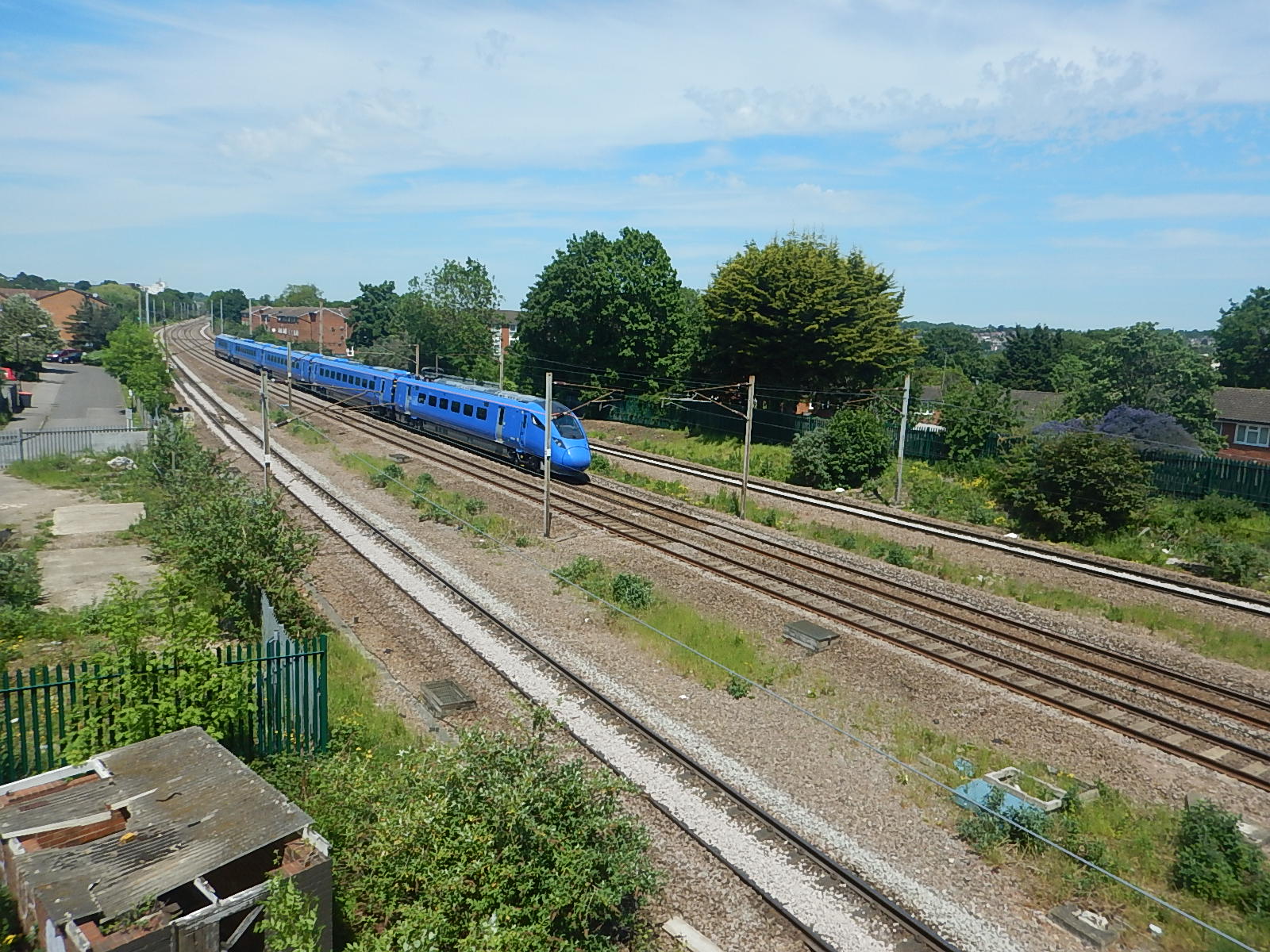
The picture shows a Class 803 train under test through Oakleigh Park station.
This phase would be very low risk, especially where passengers are concerned.
Phase 2 – Battery Traction Testing And Route Proving
I am a devious bastard, when it comes to software development. The next set of features would always be available for me to test earlier, than anybody else knew.
I doubt that the engineers at Hyperdrive Innovation will be any different.
So I wouldn’t be surprised to find out that the batteries in the Class 803 trains can also be used for traction, if you have the right authority.
We might even see Class 803 trains turning up in some unusual places to test the traction abilities of the batteries.
As East Coast Trains, Great Western Railway and Hull Trains are all First Group companies, I can’t see any problems.
I’m also sure that Hitachi could convert some Class 800 or Class 802 trains and add these to the test fleet, if East Coast Trains need their Class 803 trains to start service.
This phase would be very low risk, especially where passengers are concerned.
Possibly, the worse thing, that could happen would be a battery failure, which would need the train to be rescued.
Phase 3 – Service Testing On Short Routes
As I indicated earlier, there are some easy routes between London and places like Bedwyn, Lincoln, Middlesbrough and Oxford, that should be possible with a Class 800 or Class 802 train fitted with the appropriate number of batteries.
Once the trains have shown, the required level of performance and reliability, I can see converted Class 800, 801 and Class 802 trains entering services on these and other routes.
Another low risk phase, although passengers are involved, but they are probably subject to the same risks, as on an unmodified train.
Various combinations of diesel generators and batteries could be used to find out, what is the optimum combination for the typical diagrams that train operators use.
Hitachi didn’t commit to any dates, but I can see battery-electric trains running on the Great Western Railway earlier than anybody thinks.
Phase 4 – Service Testing On Medium Routes With A Terminal Charger System
It is my view that the ideal test route for battery-electric trains with a terminal charger system would be the Hull Trains service between London Kings Cross and Hull and Beverley.
The route is effectively in three sections.
- London Kings Cross and Temple Hirst junction – 169.2 miles – Full Electrification
- Temple Hirst junction and Hull station – 36.1 miles – No Electrification
- Hull station and Beverley station – 8.3 miles – No Electrification
Two things would be needed to run zero-carbon electric trains on this route.
- Sufficient battery capacity in Hull Trains’s Class 802 trains to reliably handle the 36.1 miles between Temple Hirst junction and Hull station.
- A charging system in Hull station.
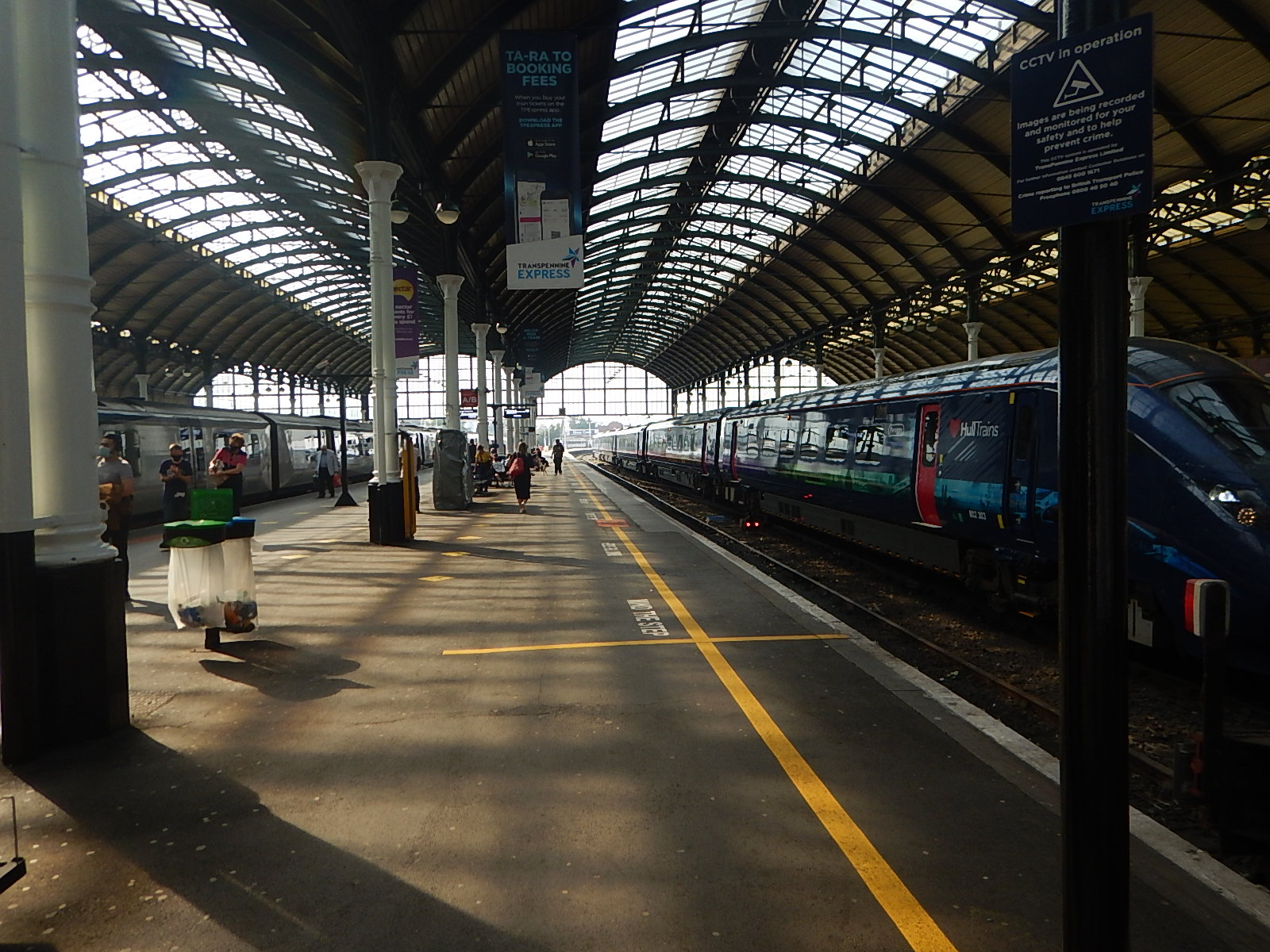
As Hull station also handles other Class 800 and Class 802 trains, there will probably be a need to put a charging system in more than one platform.
Note.
- Hull station has plenty of space.
- No other infrastructure work would be needed.
- There is a large bus interchange next door, so I suspect the power supply to Hull station is good.
Hull would be a very good first destination for a battery-electric InterCity train.
Others would include Bristol, Cheltenham, Chester, Scarborough, Sunderland and Swansea.
The risk would be very low, if the trains still had some diesel generator capacity.
Phase 5 – Service Testing On Long Routes With Multiple Charger Systems
Once the performance and reliability of the charger systems have been proven in single installations like perhaps Hull and Swansea stations, longer routes can be prepared for electric trains.
This press release from Hitachi is entitled Hitachi And Eversholt Rail To Develop GWR Intercity Battery Hybrid Train – Offering Fuel Savings Of More Than 20%.
The press release talks about Penzance and London, so would that be a suitable route for discontinuous electrification using multiple chargers?
These are the distances between major points on the route between Penzance and London Paddington.
- Penzance and Truro – 35.8 miles
- Truro and Bodmin Parkway – 26.8 miles
- Bodmin Parkway and Plymouth – 26.9 miles
- Plymouth and Newton Abbot – 31,9 miles
- Newton Abbot and Exeter – 20.2 miles
- Exeter and Taunton – 30.8 miles
- Taunton and Westbury – 47.2 miles
- Westbury and Newbury – 42.5 miles
- Newbury and Paddington – 53 miles
Note.
- Only Newbury and Paddington is electrified.
- Trains generally stop at Plymouth, Newton Abbott, Exeter and Taunton.
- Services between Paddington and Exeter, Okehampton, Paignton, Penzance, Plymouth and Torquay wouldn’t use diesel.
- Okehampton would be served by a reverse at Exeter.
- As Paignton is just 8.1 miles from Newton Abbot, it probably wouldn’t need a charger.
- Bodmin is another possible destination, as Great Western Railway have helped to finance a new platform at Bodmin General station.
It would certainly be good marketing to run zero-carbon electric trains to Devon and Cornwall.
I would class this route as medium risk, but with a high reward for the operator.
In this brief analysis, it does look that Hitachi’s proposed system is of a lower risk.
A Few Questions
I do have a few questions.
Are The Class 803 Trains Fitted With Hyperdrive Innovation Batteries?
East Coast Trains‘s new Class 803 trains are undergoing testing between London Kings Cross and Edinburgh and they can be picked up on Real Time Trains.
Wikipedia says this about the traction system for the trains.
While sharing a bodyshell with the previous UK A-train variants, the Class 803 differs in that it has no diesel engines fitted. They will however be fitted with batteries to enable the train’s on-board services to be maintained, in case the primary electrical supplies have failed.
Will these emergency batteries be made by Hyperdrive Innovation?
My experience of similar systems in other industries, points me to the conclusion, that all Class 80x trains can be fitted with similar, if not identical batteries.
This would give the big advantage of allowing battery testing to be performed on Class 803 trains under test, up and down the East Coast Main Line.
Nothing finds faults in the design and manufacture of something used in transport, than to run it up and down in real conditions.
Failure of the catenary can be simulated to check out emergency modes.
Can A Class 801 Train Be Converted Into A Class 803 Train?
If I’d designed the trains, this conversion would be possible.
Currently, the electric Class 801 trains have a single diesel generator. This is said in the Wikipedia entry for the Class 800 train about the Class 801 train.
These provide emergency power for limited traction and auxiliaries if the power supply from the overhead line fails.
So it looks like the difference between the powertrain of a Class 801 train and a Class 803 train, is that the Class 801 train has a diesel generator and the Class 803 train has batteries. But the diesel generator and batteries, would appear to serve the same purpose.
Surely removing diesel from a Class 801 train would ease the maintenance of the train!
Will The System Work With Third-Rail Electrification?
There are three routes that if they were electrified would probably be electrified with 750 DC third-rail electrification, as they have this electrification at one or both ends.
- Basingstoke and Exeter
- Marshlink Line
- Uckfield branch
Note.
- Basingstoke and Exeter would need a couple of charging systems.
- The Marshlink line would need a charging system at Rye station.
- The Uckfield branch would need a charging system at Uckfield station.
I am fairly certain as an Electrical Engineer, that the third-rails would only need to be switched on, when a train is connected and needs a charge.
I also feel that on some scenic and other routes, 750 VDC third-rail electrification may be more acceptable , than 25 KVAC overhead electrification. For example, would the heritage lobby accept overhead wires through a World Heritage Site or on top of a Grade I Listed viaduct?
I do feel that the ability to use third-rail 750 VDC third-rail electrification strategically could be a useful tool in the system.
Will The System Work With Lightweight Catenary?
I like the design of this 25 KVAC overhead electrification, that uses lightweight gantries, which use laminated wood for the overhead structure.
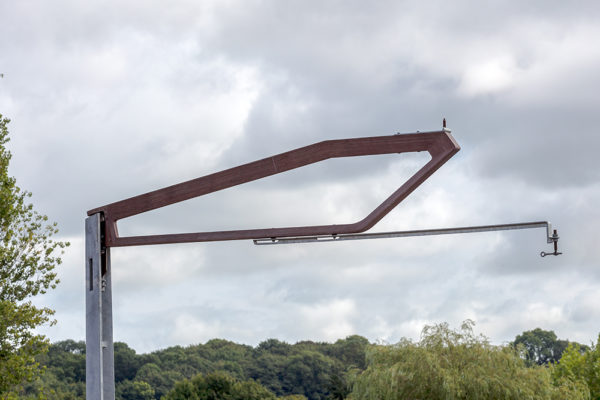
There is also a video.
Electrification doesn’t have to be ugly and out-of-character with the surroundings.
Isuspect that both systems could work together.
Would Less Bridges Need To Be Rebuilt For Electrification?
This is always a contentious issue with electrification, as rebuilding bridges causes disruption to both rail and road.
I do wonder though by the use of careful design, that it might be possible to arrange that the sections of electrification and the contentious bridges were kept apart, with the bridges arranged to be in sections, where the trains ran on batteries.
I suspect that over the years as surveyors and engineers get more experienced, better techniques will evolve to satisfy all parties.
Get this right and it could reduce the cost of electrification on some lines, that will be difficult to electrify.
How Secure Are The Containerised Systems?
Consider.
- I was delayed in East Anglia two years ago, because someone stole the overhead wires at two in the morning.
- Apparently, overhead wire stealing is getting increasingly common in France and other parts of Europe.
I suspect the containerised systems will need to be more secure than those used for buses, which are not in isolated locations.
Will The Containerised Charging Systems Use Energy Storage?
Consider.
- I’ve lived in rural locations and the power grids are not as good as in urban areas.
- Increasingly, batteries of one sort or another are being installed in rural locations to beef up local power supplies.
- A new generation of small-footprint eco-friendly energy storage systems are being developed.
In some locations, it might be prudent for a containerised charging system to share a battery with the local area.
Will The Containerised Charging Systems Accept Electricity From Local Sources Like Solar Farms?
I ask the question, as I know at least one place on the UK network, where a line without electrification runs through a succession of solar farms.
I also know of an area, where a locally-owned co-operative is planning a solar farm, which they propose would be used to power the local main line.
Will The System Work With Class 385 Trains?
Hitachi’s Class 385 trains are closely related to the Class 80x trains, as they are all members of Hitachi’s A-Train family.
Will the Charging Systems Charge Other Manufacturers Trains?
CAF and Stadler are both proposing to introduce battery-electric trains in the UK.
I also suspect that the new breed of electric parcel trains will include a battery electric variant.
As these trains will be able to use 25 KVAC overhead electrification, I would expect, that they would be able to charge their batteries on the Hitachi ABB charging systems.
Will The System Work With Freight Trains?
I believe that freight services will split into two.
Heavy freight will probably use powerful hydrogen-electric locomotives.
In Freightliner Secures Government Funding For Dual-Fuel Project, which is based on a Freightliner press release, I detail Freightliner’s decarbonisation strategy, which indicates that in the future they will use hydrogen-powered locomotives.
But not all freight is long and extremely heavy and I believe that a battery-electric freight locomotive will emerge for lighter duties.
There is no reason it could not be designed to be compatible with Hitachi’s charging system.
In Is This The Shape Of Freight To Come?, I talked about the plans for 100 mph parcel services based on redundant electric multiple units. Eversholt Rail Group have said they want a Last-Mile capability for their version of these trains.
Perhaps they need a battery-electric capability, so they can deliver parcels and shop supplies to the remoter parts of these islands?
Where Could Hitachi’s System Be Deployed?
This is the final paragraph from the article.
Hitachi is not committing to any routes yet, but a glance at the railway map shows clear potential for the battery/OLE-technology to be deployed on relatively lightly used rural and regional routes where it will be hard to make a case for electrification. The Cambrian Coast and Central Wales Lines would appear to be worthy candidates, and in Scotland, the West Highland Line and Far North routes are also logical areas for the system to be deployed.
In England, while shorter branch lines could simply be operated by battery trains, longer routes need an alternative. Network Rail’s Traction Decarbonisation Network Strategy interim business case recommends hydrogen trains for branch lines in Norfolk, as well as Par to Newquay and Exeter to Barnstaple. However, it is also entirely feasible to use the system on routes likely to be electrified much later in the programme, such as the Great Western main line West of Exeter, Swansea to Fishguard and parts of the Cumbrian Coast Line.
Everyone is entitled to their own opinion and mine would be driven by high collateral benefits and practicality.
These are my thoughts.
Long Rural Lines
The Cambrian, Central Wales (Heart Of Wales), Far North and West Highland Lines may not be connected to each other, but they form a group of rail routes with a lot of shared characteristics.
- All are rural routes of between 100 and 200 miles.
- All are mainly single track.
- They carry occasional freight trains.
- They carry quite a few tourists, who are there to sample, view or explore the countryside.
- All trains are diesel.
- Scotrail have been experimenting with attaching Class 153 trains to the trains on the West Highland Line to act as lounge cars and cycle storage.
Perhaps we need a long-distance rural train with the following characteristics.
- Four or possibly five cars
- Battery-electric power
- Space for a dozen cycles
- A lounge car
- Space for a snack trolley
- Space to provide a parcels service to remote locations.
I should also say, that I’ve used trains on routes in countries like Germany, Poland and Slovenia, where a similar train requirement exists.
Norfolk Branch Lines
Consider.
- North of the Cambridge and Ipswich, the passenger services on the branch lines and the important commuter routes between Cambridge and Norwich and Ipswich are run by Stadler Class 755 trains, which are designed to be converted to battery-electric trains.
- Using Hitachi chargers at Beccles, Bury St. Edmunds, Lowestoft, Thetford and Yarmouth and the existing electrification, battery-electric Class 755 trains could provide a zero-carbon train service for Norfolk and Suffolk.
- With chargers at Dereham and March, two important new branch lines could be added and the Ipswich and Peterborough service could go hourly and zero carbon.
- Greater Anglia have plans to use the Class 755 trains to run a London and Lowestoft service.
- Could they be planning a London and Norwich service via Cambridge?
- Would battery-electric trains running services over Norfolk bring in more visitors by train?
Hitachi may sell a few chargers to Greater Anglia, but I feel they have enough battery-electric trains.
Par And Newquay
The Par and Newquay Line or the Atlantic Coast Line, has been put forward as a Beeching Reversal project, which I wrote about in Beeching Reversal – Transforming The Newquay Line.
In that related post, I said the line needed the following.
- An improved track layout.
- An hourly service.
- An improved Par station.
- A rebuilt Newquay station with a second platform, so that more through trains can be run.
I do wonder, if after the line were to be improved, that a new three-car battery-electric train shuttling between Par and Newquay stations could be the icing on the cake.
Exeter And Barnstaple
The Tarka Line between Exeter and Barnstaple is one of several local and main lines radiating from Exeter St. David’s station.
- The Avocet Line to Exmouth
- The Great Western Main Line to Taunton, Bristol and London
- The Great Western Main Line to Newton Abbott, Plymouth and Penzance
- The Riviera Line to Paignton
- The West of England Line to Salisbury, Basingstoke and London.
Note.
- The Dartmoor Line to Okehampton is under development.
- Several new stations are planned on the routes.
- I have already stated that Exeter could host a charging station between London and Penzance, but it could also be an electrified hub for battery-electric trains running hither and thither.
Exeter could be a city with a battery-electric metro.
Exeter And Penzance
Earlier, I said that I’d trial multiple chargers between Paddington and Penzance to prove the concept worked.
I said this.
I would class this route as medium risk, but with a high reward for the operator.
But it is also an enabling route, as it would enable the following battery-electric services.
- London and Bodmin
- London and Okehampton
- London and Paignton and Torquay
It would also enable the Exeter battery-electric metro.
For these reasons, this route should be electrified using Hitachi’s discontinuous electrification.
Swansea And Fishguard
I mentioned Swansea earlier, as a station, that could be fitted with a charging system, as this would allow battery-electric trains between Paddington and Swansea via Cardiff.
Just as with Exeter, there must be scope at Swansea to add a small number of charging systems to develop a battery-electric metro based on Swansea.
Cumbrian Coast Line
This is a line that needs improvement, mainly for the tourists and employment it could and probably will bring.
These are a few distances.
- West Coast Main Line (Carnforth) and Barrow-in-Furness – 28.1 miles
- Barrow-in-Furness and Sellafield – 25 miles
- Sellafield and Workington – 18 miles
- Workington and West Coast Main Line (Carlisle) – 33 miles
Note.
- The West Coast Main Line is fully-electrified.
- I suspect that Barrow-in-Furness, Sellafield and Workington have good enough electricity supplies to support charging systems for the Cumbrian Coast Line.
- The more scenic parts of the line would be left without wires.
It certainly is a line, where a good case for running battery-electric trains can be made.
Crewe And Holyhead
In High-Speed Low-Carbon Transport Between Great Britain And Ireland, I looked at zero-carbon travel between the Great Britain and Ireland.
One of the fastest routes would be a Class 805 train between Euston and Holyhead and then a fast catamaran to either Dublin or a suitable rail-connected port in the North.
- The Class 805 trains could be made battery-electric.
- The trains could run between Euston and Crewe at speeds of up to 140 mph under digital signalling.
- Charging systems would probably be needed at Chester, Llandudno Junction and Holyhead.
- The North Wales Coast Line looks to my untrained eyes, that it could support at least some 100 mph running.
I believe that a time of under three hours could be regularly achieved between London Euston and Holyhead.
Battery-electric trains on this route, would deliver the following benefits.
- A fast low-carbon route from Birmingham, London and Manchester to the island of Ireland. if coupled with the latest fast catamarans at Holyhead.
- Substantial reductions in journey times to and from Anglesey and the North-West corner of Wales.
- Chester could become a hub for battery-electric trains to and from Birmingham, Crewe, Liverpool, Manchester and Shrewsbury.
- Battery-electric trains could be used on the Conwy Valley Line.
- It might even be possible to connect the various railways, heritage railways and tourist attractions in the area with zero-carbon shuttle buses.
- Opening up of the disused railway across Anglesey.
The economics of this corner of Wales could be transformed.
My Priority Routes
To finish this section, I will list my preferred routes for this method of discontinuous electrification.
- Exeter and Penzance
- Swansea and Fishguard
- Crewe and Holyhead
Note.
- Some of the trains needed for these routes have been delivered or are on order.
- Local battery-electric services could be developed at Chester, Exeter and Swansea by building on the initial systems.
- The collateral benefits could be high for Anglesey, West Wales and Devon and Cornwall.
I suspect too, that very little construction work not concerned with the installation of the charging systems will be needed.
Conclusion
Hitachi have come up with a feasible way to electrify Great Britain’s railways.
I would love to see detailed costings for the following.
- Adding a battery pack to a Class 800 train.
- Installing five miles of electrification supported by a containerised charging system.
They could be on the right side for the Treasury.
But whatever the costs, it does appear that the Japanese have gone native, with their version of the Great British Compromise.
Battery-Electric Class 331 Trains On The Radar
In the June 2021 Edition of Modern Railways, there is an article which is entitled Northern Looks To The Future.
This is a paragraph.
Also on the radar is the creation of hybrid Class 331 EMUs fitted with batteries. A proposal has been developed by CAF and owner Eversholt Rail to augment three-car ‘331s’ with a fourth vehicle containing batteries, which would see batteries also fitted to the existing centre car. The Manchester to Windermere route has been touted as a possible location for deployment, with trains switching to battery power on the non-electrified branch from Oxenholme, although the line’s user group still favours electrification of the branch.
I have a few thoughts.
Electrification at Oxenholme
In Surprising Electrification At Oxenholme, I detailed the electrification at Oxenholme station in May 2018.
Consider.
- Platform 3 used by the Windermere trains is fully electrified.
- The crossover South of the station used by trains going between the Windermere Branch Line and the West Coast Main Line is fully electrified.
- The electrification continues for perhaps a hundred metres along the Windermere branch.
I am fairly certain, that this electrification has been designed so that a bi-mode or battery-electric train can perform a reliable power changeover in Platform 3 at Oxenholme station.
What Will Be The Range Of A Four-Car Battery-Electric Class 331 Train?
This is very much a case of how long is a piece of string.
At least we know from the extract above that the train is designed to do a return trip between Oxenholme and Windermere stations, which is a distance of 20.4 miles and a six minute turnround.
We should also note that Hitachi are claiming a range of 56 miles for their Regional Battery Train, which is described in this Hitachi infographic.
As the Class 331 with batteries will compete with the Hitachi Reional Battery Train, I would suspect that the range on easy level ground would be at least fifty miles at a speed of over 80 mph, if not 100 mph.
A Selection Of Possible Routes
These are a selection of other Northern routes where the battery-electric Class 331 trains might be used.
Manchester Airport and Barrow-in-Furness
Consider.
- This is a sibling route to the Manchester Airport and Windermere route and currently has eleven services to Windermere’s four.
- This is a 103.7 mile route.
- All but 28.1 miles is electrified.
Battery-electric Class 331 trains with a charge at Barrow-in-Furness should be able to handle this route.
Lancaster and Barrow-in-Furness
Consider.
- This is a 34.8 mile route
- All but 28.1 miles is electrified.
- Lancaster is a fully electrified station.
Battery-electric Class 331 trains with a charge at Barrow-in-Furness should be able to handle this route.
Carlisle and Barrow-in-Furness
This is the 85.7 mile route of the Cumbrian Coast Line of which none is electrified.
Consider.
- Carnforth is a fully-electrified station.
- Barrow-in-Furness station could be electrified.
- It is a fairly level route along the coast.
- I suspect that electricity supplies are available at Barrow-in-Furness, Sellafield, Whitehaven and Workington to power electrification.
- Carlisle is a fully-electrified station.
- Barrow-in-Furness and Sellafield are only 35 miles apart.
- CAF have produced trams for Birmingham and Seville, that work with discontinuous electrification.
- There are parts of the route, where there would be those, who would object to the erection of electrification gantries.
I feel it would be possible to electrify the Cumbrian Coast Line using battery-electric Class 331 trains, with a range of at least fifty miles and some short sections of new electrification.
Surely, a battery-electric train along the Cumbrian Coast by the Lake District would be the ideal train for the area
Lancaster and Morecambe
Consider.
- This is a 4 mile route.
- None is electrified.
- Heysham is another four miles past Morecambe.
- Lancaster is a fully-electrified station.
This route might have been built for battery-electric trains.
This route might be possible with no extra infrastructure.
York and Blackpool North
Consider.
- This is a 105.5 mile route.
- In a few years about 62 miles will be without electrification.
- It goes through the picturesque Calder Valley.
As with the Cumbrian Coast Line, I believe that this service could be run using battery-electric Class 331 trains, with a range of at least fifty miles and some short sections of new electrification.
Preston and Colne
Consider.
- This is a 29 mile route.
- None is electrified.
- It is steeply uphill to Colne.
Battery-electric Class 331 trains with a charge at Colne should be able to handle this route.
Alternatively, they could use Newton’s friend to return down the hill.
This route might be possible with no extra infrastructure.
As with York and Blackpool North, this route would benefit with electrification between Preston and Blackburn.
Preston and Blackpool South
Consider.
- This is a 20 mile route.
- 7.7 miles is electrified.
Battery-electric Class 331 trains should be able to handle this route.
This route might be possible with no extra infrastructure.
In an ideal world, Preston and Blackburn would be electrified and trains would run between Colne and Blackpool South, as they used to do.
Liverpool Lime Street and Manchester Airport
Consider.
- This is a 45.5 mile route,
- 26.5 miles is not electrified.
- It is fully electrified at both ends.
Battery-electric Class 331 trains should be able to handle this route.
This route might be possible with no extra infrastructure.
Liverpool Lime Street and Manchester Oxford Road
Consider.
- This is a 34.2 mile route.
- 26.5 miles is not electrified.
- It is fully electrified at both ends.
Battery-electric Class 331 trains should be able to handle this route.
This route might be possible with no extra infrastructure.
Southport and Alderley Edge
- This is a 52 mile route,
- 27 miles is not electrified.
- It is fully electrified at the Southern end.
- There is third rail electrification at Southport.
Battery-electric Class 331 trains with a charge at Southport should be able to handle this route.
Could some Class 331 be fitted with third-rail equipment to charge on Merseyrail’s third-rail electrification?
Manchester Piccadilly and Chester
Consider.
- This is a 45 mile route.
- 38 miles is not electrified.
- It is fully electrified at Manchester end.
- There is third rail electrification at Chester.
Battery-electric Class 331 trains with a charge at Chester should be able to handle this route.
Could some Class 331 be fitted with third-rail equipment to charge on Merseyrail’s third-rail electrification?
Manchester Piccadilly and Buxton
Consider.
- This is a 25.5 mile route.
- 17.8 miles is not electrified.
- It is steeply uphill to Buxton.
Battery-electric Class 331 trains with a charge at Buxton should be able to handle this route.
Alternatively, they could use Newton’s friend to return down the hill.
This route might be possible with no extra infrastructure.
Manchester Piccadilly and Rose Hill Marple
Consider.
- This is a 13.3 mile route.
- 8.3 miles is not electrified.
- It is fully electrified at Manchester end.
Battery-electric Class 331 trains should be able to handle this route.
This route might be possible with no extra infrastructure.
Manchester Piccadilly and New Mills Central
Consider.
- This is a 13 mile route.
- Only 2 miles is electrified.
- It is fully electrified at Manchester end.
Battery-electric Class 331 trains should be able to handle this route.
This route might be possible with no extra infrastructure.
Manchester Piccadilly and Sheffield
Consider.
- This is a 42 mile route.
- Only 2 miles is electrified.
- It is fully electrified at Manchester end.
- It is a scenic route.
Battery-electric Class 331 trains with a fifty mile range and a charge at Sheffield should be able to handle this route.
Southport and Stalybridge
- This is a 45 mile route.
- 27 miles is not electrified.
- It will be fully electrified at the Southern end, when electrification between Manchester Victoria and Stalybridge is completed.
- There is third rail electrification at Southport.
Battery-electric Class 331 trains with a charge at Southport should be able to handle this route.
Could some Class 331 be fitted with third-rail equipment to charge on Merseyrail’s third-rail electrification?
Manchester Victoria And Kirkby
- The Kirkby end of this route will change to the new Headbolt Lane station in a couple of years.
- This is a 30 mile route.
- 28 miles is not electrified.
- It is fully electrified at the Southern end.
- There is third rail electrification at Kirkby or Headbolt Lane.
Battery-electric Class 331 trains with a charge at Kirkby or Headbolt Lane should be able to handle this route.
Could some Class 331 be fitted with third-rail equipment to charge on Merseyrail’s third-rail electrification?
I would hope that the new Headbolt Lane station is being designed with battery-electric trains from Manchester in mind!
Rochdale And Clitheroe
Consider.
- This is a 44.7 mile route.
- There is 10.7 miles of electrification between Bolton and Manchester Victoria.
- The Clitheroe end of the route has 23.7 miles of line without electrification.
- The Rochdale end of the route has 10.4 miles of line without electrification.
- It is steeply uphill to Clitheroe.
Battery-electric Class 331 trains should be able to handle the Rochdale end, but could struggle with the climb to Clitheroe.
But it appears that all services needing to climb the hills to Colne and Clitheroe now stop in Platform 2, which is different to Wikipedia, which says that services to Clitheroe stop in Platform 1.
- With charging in platform 2 and a fifty-mile range battery-electric Class 331 trains could reach Clitheroe (9.8 miles), Colne (17 miles), and possibly Leeds (50 miles).
- With charging in platform 4 and a fifty-mile range battery-electric Class 331 trains could reach Bolton (14 miles) and Preston (12 miles)
- Would a fully-charged train leaving Blackburn be able to go via Todmorden and reach the electrification at Manchester Victoria, which is a distance of 39.4 miles?
Note.
If necessary a few well-planned extra miles of electrification would ensure reliable battery-electric services in East Lancashire centred on Blackburn.
The closely-related Blackburn and Rochdale and Blackburn and Wigan Wallgate services would fit in well with an electrified Blackburn station, that could fully charge trains.
I certainly believe that electrifying Preston and Blackburn could give extra benefits.
- Battery-electric trains between Blackpool and Liverpool in the West and Colne, Hebden Bridge, Bradford, Leeds and York in the East.
- Direct electric services from Euston to Blackburn and Burnley.
- Fast freight paths across the Pennines.
In addition, it would probably allow battery-electric trains to run to Leeds via a reinstated Skipton and Colne link.
Wigan And Leeds
Consider.
- The route can terminate at either Wigan North Western or Wigan Wallgate station.
- This is a 68.2 mile route using Wigan North Western.
- Wigan North Western is a fully-electrified station.
- The 16 miles between Wigan North Western and Salford Crescent stations is not electrified.
- The 5 miles between Salford Crescent and Manchester Victoria stations is electrified.
- The 37.2 miles between Manchester Victoria and Mirfield stations is not electrified.
- The 12.2 miles between Mirfield and Leeds will be electrified in the next few years.
- Leeds is a fully-electrified station.
Battery-electric Class 331 trains with a fifty mile range should be able to handle this route.
Chester And Leeds
Consider.
- This is a 89.7 mile route.
- There is third rail electrification at Chester.
- The 18.1 miles between Chester and Warrington Bank Quay stations is not electrified.
- The 21.8 miles between Warrington Bank Quay and Manchester Victoria stations is electrified.
- The 40.3 miles between Manchester Victoria and Bradford Interchange stations is not electrified.
- The 9.4 miles between Bradford Interchange and Leeds stations is not electrified.
- Leeds is a fully-electrified station.
- There seems to be generous turnround times at Chester and Leeds.
It looks to me that the trains are going to need a full battery charge at Bradford Interchange or perhaps Leeds and Bradford Interchange needs to be fully electrified.
I also feel that it would help if the electrification through Manchester Victoria were to be extended towards Rochdale.
But I don’t think it will be impossible for battery-electric Class 331 trains to work the route between Leeds and Chester with some new electrification and/or charging at Bradford Interchange.
Manchester Victoria And Leeds
Consider.
- This is a shortened version of the Chester and Leeds route.
- This is a 49.8 mile route.
- Manchester Victoria is a fully-electrified station.
- The 40.3 miles between Manchester Victoria and Bradford Interchange stations is not electrified.
- The 9.4 miles between Bradford Interchange and Leeds stations is not electrified.
- Leeds is a fully-electrified station.
My comments would be similar to the Chester and Leeds route.
Leeds And York Via Harrogate And Knaresborough
Consider.
- This is a 38.8 mile route.
- Leeds is a fully-electrified station.
- The Harrogate Line is not electrified.
- York is a fully-electrified station.
Battery-electric Class 331 trains with a fifty mile range should be able to handle this route.
There are two other services on the Harrogate Line.
- Leeds and Harrogate – 18.3 miles
- Leeds and Knaresborough – 22.1 miles
I have a feeling that a fleet of battery-electric trains could electrify all services on the Harrogate Line with no extra infrastructure.
Summing Up The Possible Routes
I have assumed that the proposed battery-electric Class 331 train has a range of around fifty miles, which is not unlike that for the Hitachi Regional Battery Train.
It would appear that many of Northern’s routes can be run by a train with this range including some that are around a hundred miles.
There are also routes like the Harrogate Line, which would accept a battery-electric Class 331 train tomorrow, if it were available.
Will A Mix Of Four-Car Electric And Battery-Electric Trains Be Better Than A Mix Of Four-Car And Three-Car Electric Trains?
If the technology is right, I suspect that a four-car battery-electric Class 331 train will be able to substitute for one without batteries on a route that doesn’t need battery power.
This must surely have advantages when trains are in maintenance or otherwise unavailable, as nothing annoys passengers more than an overcrowded train.
Conclusion
The Modern Railways article also says this.
More widely, Northern has previously stated ambitions to acquire more trains, and work was underway last year to identify what this requirement might be.
From my simple analysis on some of their routes, I would look to acquire some four-car battery-electric Class 331 trains, once they have been oroven to work.
Hydrogen Fuel Cell Train To Be Developed With EU Funding
The title of this post, is the same as that of this article on Railway Gazette.
This is the introductory paragraph.
The FCH2RAIL consortium’s €14m project to design, develop and test a prototype hydrogen fuelled train has been awarded a €10m grant from the European Commission’s Fuel Cells & Hydrogen Joint Undertaking as part of the Horizon 2020 Programme.
The FCH2RAIL consortium is led by CAF, who have a factory at Newport in South Wales.
CAF are actively working on a battery electric version of their Class 331 train for the UK, which I wrote about in Northern’s Battery Plans.
The battery-electric Class 331 train will involve adding an extra car with batteries.
Will CAF be looking to apply this hydrogen technology developed from the FCH2RAIL programme on UK-sized trains?
They could add a fourth car to a Class 331 train with all the necessary hydrogen gubbins.
Beeching Reversal – Magor And Undy Walkway Station
This is one of the Beeching Reversal projects that the Government and Network Rail are proposing to reverse some of the Beeching cuts.
I actually covered this proposal before in ‘Walkway’ Rail Station Plan For Magor As M4 Relief Road Scrapped,
I’ll repeat the start of that post.
The title of this post is the same as that of this article on the BBC.
These are the introductory paragraphs.
A village heavily affected by the decision to scrap the planned M4 relief road is bidding for help to build a £7m railway station there.
Residents of Magor in Monmouthshire have the mainline rail service to London running through the village, but no station.
They want to create a “walkway” station – one with no car parking that travellers will walk or cycle to.
The original Magor station was shut in the Beeching cuts in November 1964.
The Villages Of Magor And Undy
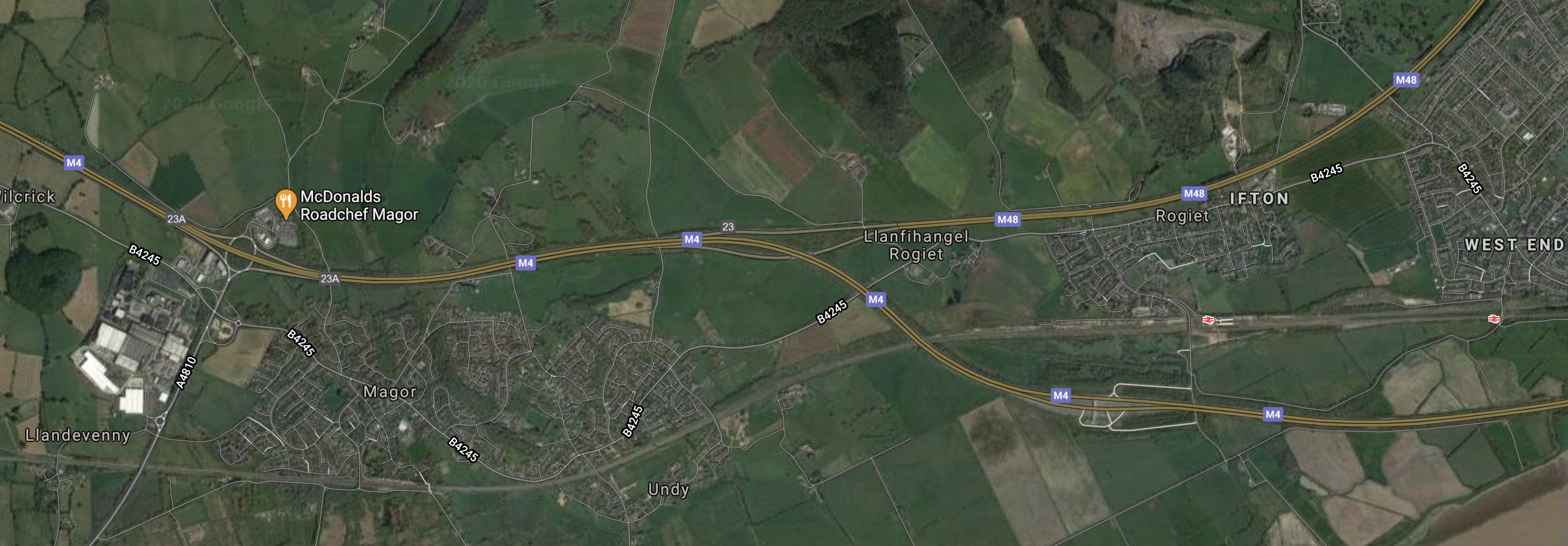
This Google Map shows the villages of Magor and Undy and their relationship to the roads and railway in the area.
Note.
- The Northern motorway is the M48, which leads to the original Severn Bridge.
- The Southern motorway is the M4, which leads to the newer Second Severn Crossing.
- Between the two lies the South Wales Main Line, with the two stations; Severn Tunnel Junction and Caldicot.
- At the Western end of the map, the railway runs between the two villages of Magor and Undy.
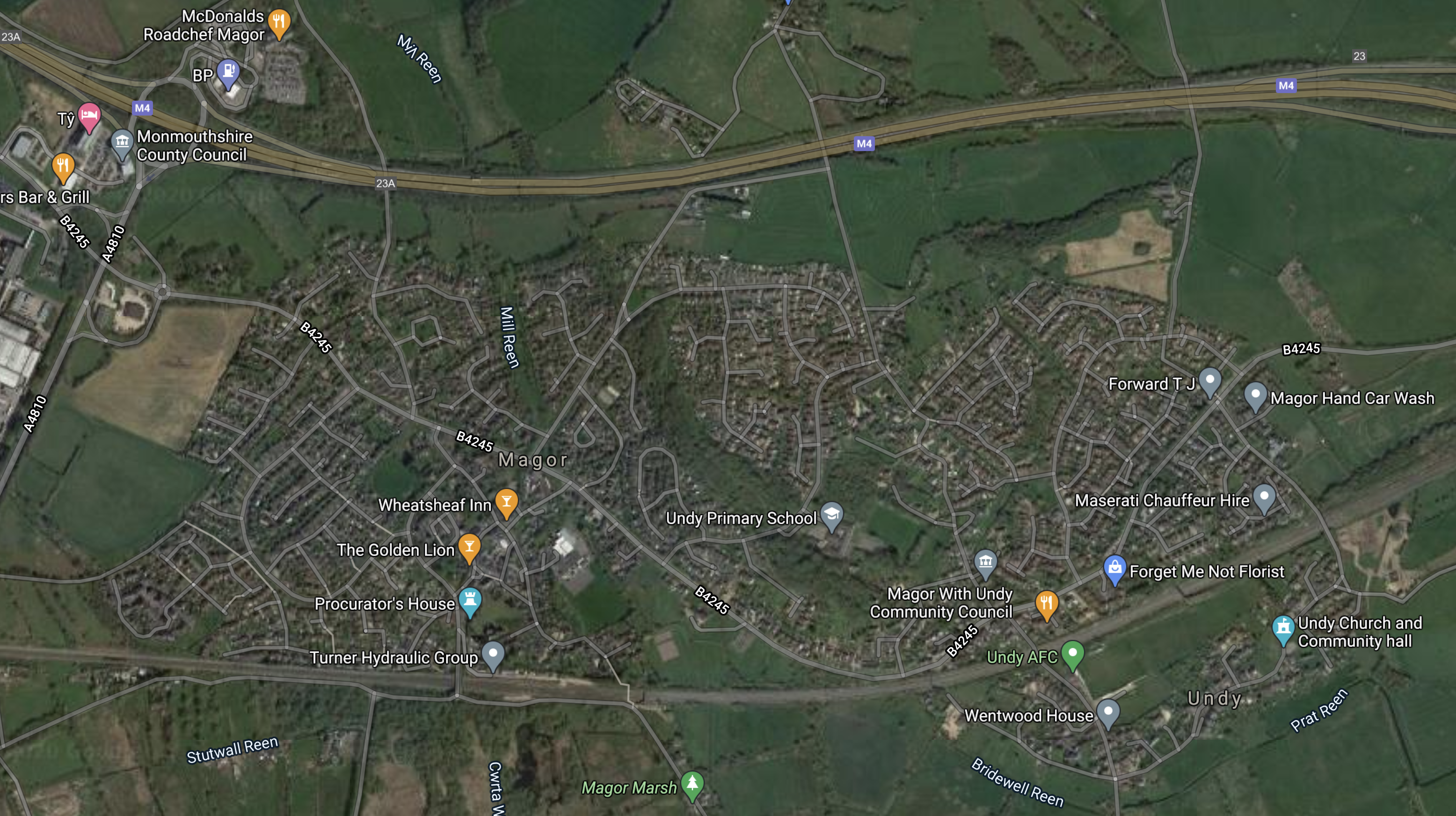
This second Google Map shows the villages.
Note.
- The M4 running East-West to the North of Magor.
- Magor services is in the North-West corner of the map.
- The South Wales Main Line running through the villages.
There certainly seems to be a lot of housing to provide passengers for the new station.
The Location Of Magor And Undy Station
On this web page on Rail Future, which is entitled Magor, this is said.
The station site is where the B4245 road passes closest to the railway line. The Monmouthshire County Council traffic survey shows that some 11 – 12,000 cars a day pass along this road through the middle of the villages. The shift from car to train use is primarily aimed at capturing those who at present are not prepared to drive the two and half miles to the east just to catch the train at Severn Tunnel Junction to travel the two and a half miles back passing their homes for the seven and a half mile journey into Newport, and hence at present use their car for the whole journey instead. The site also has the advantage of direct integration with the buses as the bus services pass the entrance to the site of the proposed Station and Community centre every half an hour.
This Google Map shows the B4245 road and the railway.
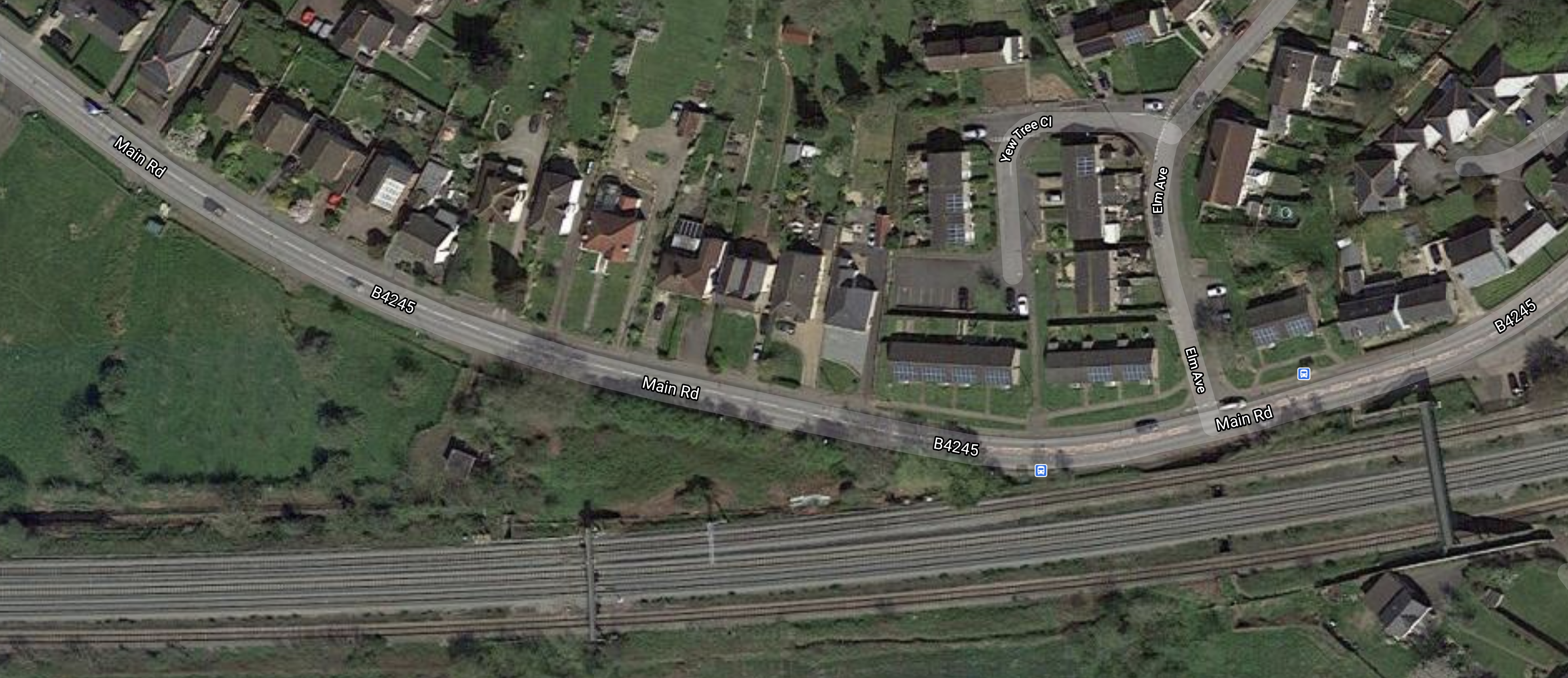
Note.
- The B4245 curving across the map.
- There are already two bus stops, which are marked by blue dots.
- There is a footbridge over the railway, which doesn’t appear to be step-free.
As Rail Future is probably correct, the position of the station is fairly obvious.
Various documents on the Internet talk about the station being built on the Three Field Site, which the local council bought for community purposes some years ago. Could the triangle of land between the B4245 and the railway, be this site?
Thoughts On The Station
Reading the web page on Rail Future, the following seems to be stated.
- The platforms will be on the two outside tracks of the four through the station. These are the Relief Lines.
- The two Fast Lines will be in the centre.
- Existing crossovers will allow trains from the Fast Lines to call in the station.
Unlike at other proposed stations to the West of Newport, the tracks will not need major works to slew them to accommodate the new platforms.
I would also do the following.
Incorporate Wide Platforms
This picture was taken of the new platform at Stevenage station.
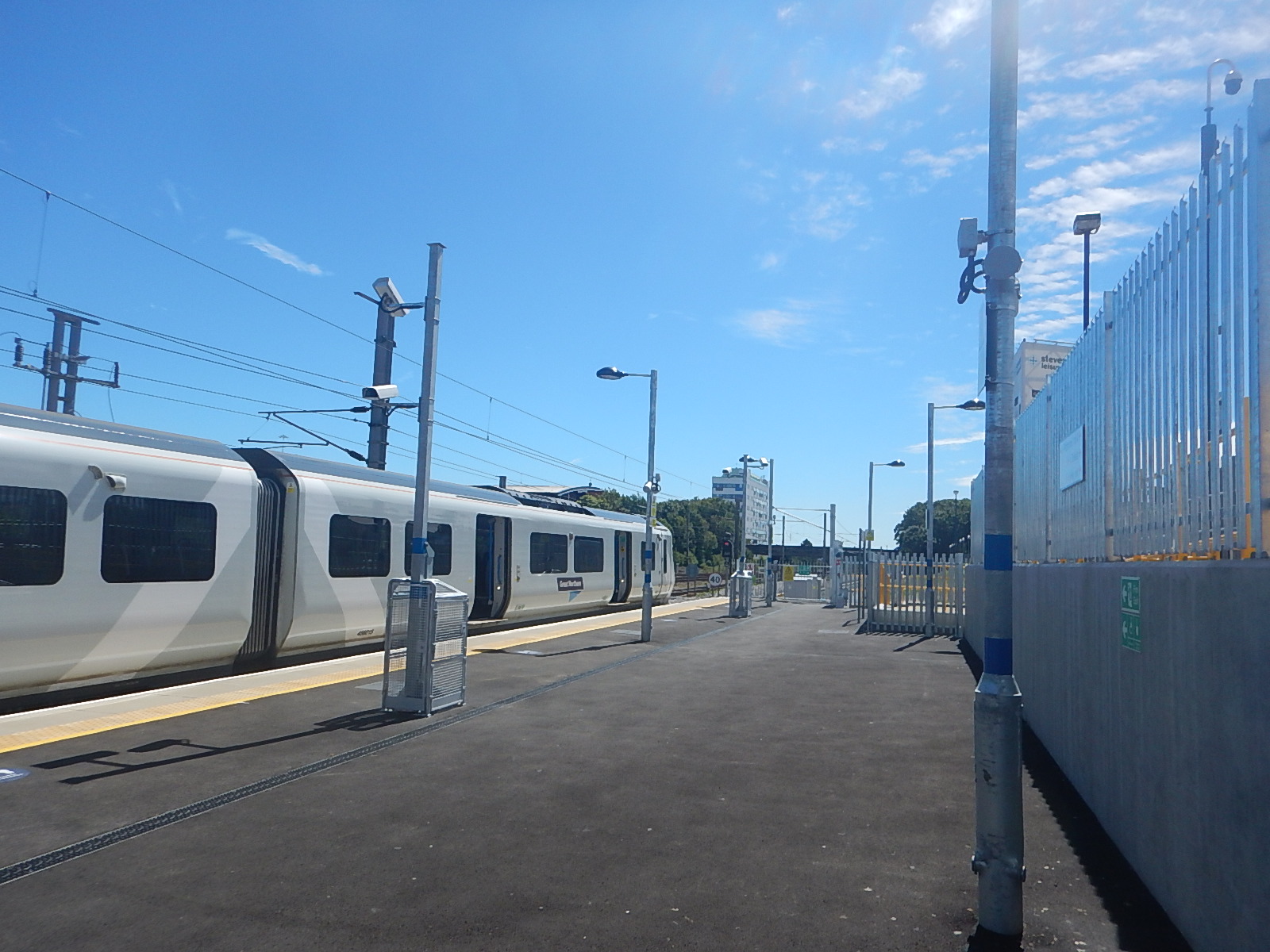
If the station gets busy, a wide platform will ease loading and unloading.
As Magor and Undy station, will be one that encourages passengers to cycle to the station, would a wide platform make it easier for passengers, who are travelling with bicycles?
Step-Free Between Train And Platform
Greater Anglia are using similar trains to South Wales and the Stadler Flirts in East Anglia offer step-free access between train and platform, as this picture shows.
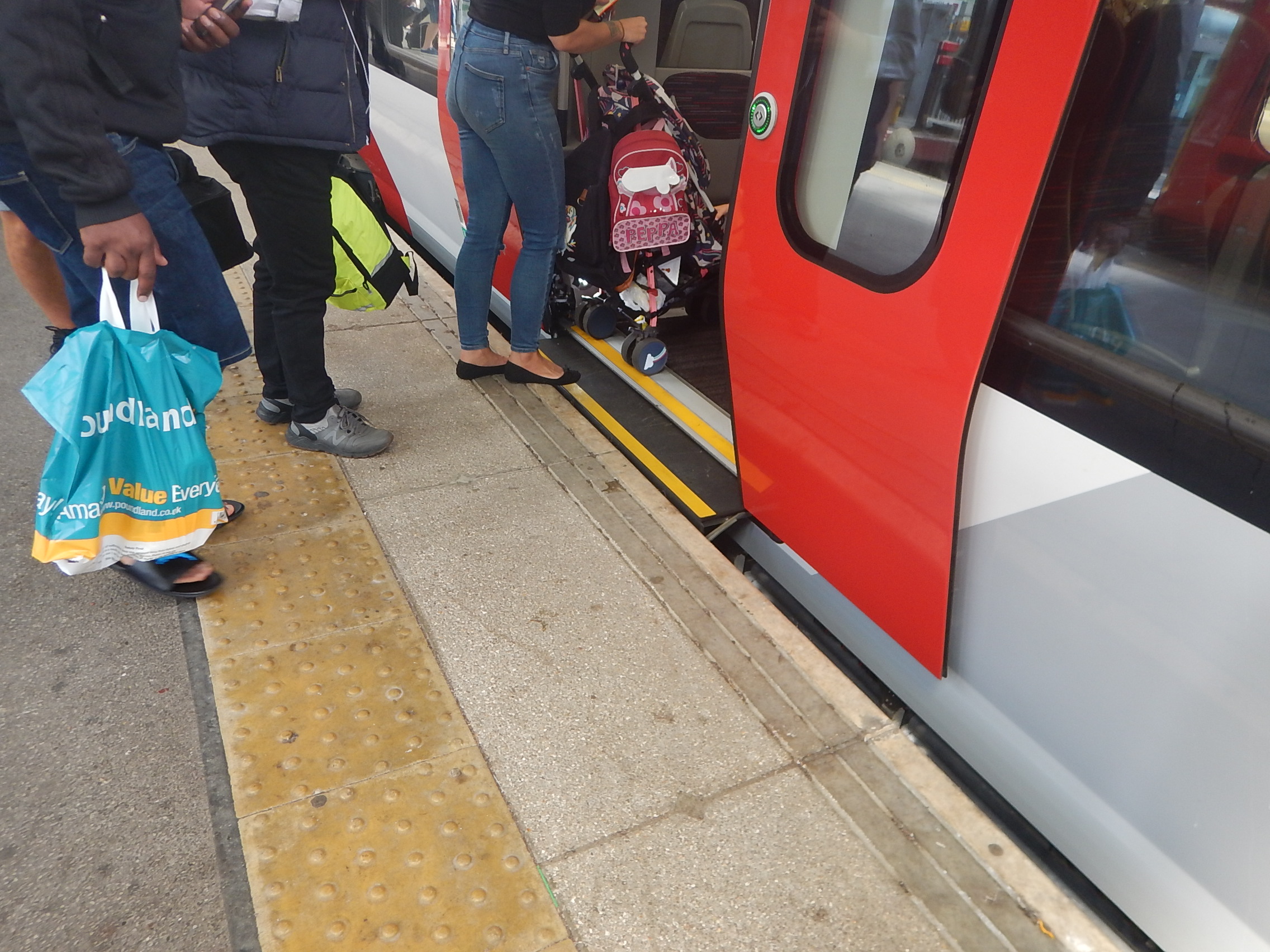
South Wales should offer a similar standard of step-free access. as it eases access and cuts train delays.
A Step-Free Footbridge
In Winner Announced In The Network Rail Footbridge Design Ideas Competition, I wrote how the competition was won by this bridge.
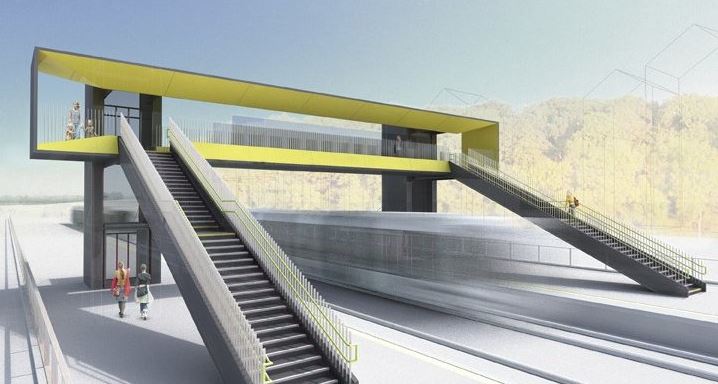
So could a factory-built bridge like this be installed at Magor and Undy station?
- The bridge can be sized to fit any gap.
- If the platforms were wide enough, I think it would be possible.
- It can have lifts that can take bicycles.
- A bridge like this would also reduce the cost.
So the station can have a stylish, affordable, fully step-free footbridge.
A Walkway Along The Railway
It strikes me that a walkway on the Southern side of the railway to connect the communities South of the railway to the station could be very useful.
Electrification
The South Wales Main Line is electrified between London and Cardiff and Great Western Railway’s Class 802 trains between London and Swansea, change between electricity and diesel at Cardiff Central station.
All four lines at Severn Tunnel Junction appear to be electrified, so will all four lines at Magor and Undy station be electrified?
They certainly should be, to improve the reliability of electric services between London and South Wales.
Train Services
I suspect that the calling pattern of train will be similar to that at Severn Tunnel Junction, which is the next station to the East. The Wikipedia entry for Severn Tunnel Junction says this about services at that station.
The station is served by two main routes – Transport for Wales’ Cheltenham Spa to Cardiff Central and Maesteg via Chepstow local service and Great Western Railway’s Cardiff to Taunton via Bristol line. Both run hourly on weekdays & Saturdays, albeit with some two-hour gaps on the Chepstow line. In the weekday peaks, certain Cardiff to Portsmouth Harbour also stop here, whilst there is a daily train to Fishguard Harbour. CrossCountry also provides very limited services to/from Manchester Piccadilly via Bristol and to Nottingham via Gloucester and Birmingham New Street.
On Sundays, the Bristol to Cardiff service is once again hourly (and runs to/from Portsmouth) whist the Cheltenham service is two-hourly.
I think that this could result in these train frequencies in trains per hour (tph), from Magor station.
- Caldicot – 2 tph
- Cardiff Central – 4 tph
- Cjeltenham – 1 tph
- Chepstow – 2 tph
- Gloucester – 1 tph
- Newport – 4 tph
- Severn Tunnel Junction – 4 tph
Note.
- I have assumed that the CrossCountry services don’t stop.
- As there seem to be proposals to add extra stations between Newport and Cardiff Central, these new stations could also get a service with a frequency of between two and four tph.
Working on rules that apply in Liverpool and London, and may apply to the South Wales Metro, I think that a Turn-Up-And-Go service of a train every fifteen minutes is needed between Magor and Undy station and the important Newport and Cardiff stations.
Battery Electric Trains Along The South Wales Main Line
The railways are being decarbonised and plans will have to be made to run all secondary services on the South Wales Main Line without diesel.
Hitachi have already played their cards, with the announcement of a Regional Battery Train, which will be created by replacing some of the numerous diesel engines on a Class 802 train with battery packs.
This is Hitachi’s infographic for the train.
The range of ninety kilometres or fifty-six miles is interesting.
- Cardiff Central and Swansea are 46 miles apart, so with a charging facility at Swansea, Great Western Railway could run diesel-free between London Paddington and Swansea.
- I suspect too, that destinations to the West of Swansea could also be served with intelligent placing of a second charging facility at perhaps Carmarthen.
But it’s not just Hitachi, who have made plans for battery electric trains.
- Transport for Wales have ordered twenty-four Stadler Class 756 trains, which are tri-mode and can run on electrification, diesel or battery power.
- Transport for Wales have also ordered eleven Stadler Class 231 trains, which are only bi-mode.
- Both these fleets seem very similar to Greater Anglia’s Class 755 trains, which Stadler have said can be converted to 100 mph tri-mode operation, with perhaps a forty mile range on battery power.
- I have ridden several times in Class 755 trains and without doubt, they are one of the best diesel-powered trains, I have used in the UK.
So I don’t think it is unreasonable to believe that Transport for Wales have the capability to run battery electric services with the fleet they have ordered given a few simple upgrades, that may already be planned for Greater Anglia.
But will the Welsh train builder; CAF, be happy with Hitachi and Stadler running their battery electric trains at high speed past their factory and onward to England and West Wales?
I doubt it and CAF have already made a response.
In Northern’s Battery Plans, I said this about CAF’s plans to create a battery electric Class 331 train for Northern.
It appears that CAF will convert some three-car Class 331 trains into four-car battery-electric trains.
- A three-car Class 331 train has a formation of DMSOL+PTS+DMSO.
- A fourth car with batteries will be inserted into the train.
- Batteries will also be added to the PTS car.
I suspect that CAF would be happy to convert some of Transport for Wales order for diesel Class 197 trains into one for suitable battery electric trains.
I believe some of the services that are planned to be run by these diesel trains into Birmingham, Liverpool and Manchester, appear to be ideal routes for battery electric trains.
These diesel trains will still be serviceable in 2060, which will be long past the cut-off date for diesel trains in the UK.
So why not replace them before they are built?
- The CAF Civity train is modular, so I doubt it would make much difference to CAF’s manufacturing process.
- The diesel version of the Civity has a noisy transmission compared to the electric version.
It would surely, be better for CAF’s marketing.
Could the various routes through Magor be operated by battery electric trains?
These are my thoughts on the various routes.
Maesteg And Cheltenham Spa
This service is hourly and run by Transport for Wales.
- Currently, the service seems to be running to Gloucester.
- Maesteg and Cardiff Central is not electrified and 28.5 miles long.
- Trains seem to take over 8-9 minutes to turn back at Maesteg.
- Cardiff Central and Severn Tunnel Junction is electrified.
- Severn Tunnel Junction and Gloucester is not electrified and is 35 miles long.
- Trains seem to take over 25 minutes to turn back at Gloucester.
It certainly looks that with charging facilities at Maesteg and Gloucester, this service could be run by a battery electric train with a range of forty miles on battery power.
Fishguard And Gloucester
This service is occasional and run by Transport for Wales.
The problem with this service will be to the West of Swansea.
But if Great Western Railway and Transport for Wales put their heads and services together, I feel there is a cunning plan to run battery electric trains to Fishguard, with perhaps charging facilities at Fishguard, Carmarthen and Swansea.
Cardiff And Bristol Temple Meads
This service is two tph and run by Great Western Railway.
On the Welsh side of the Severn Tunnel, this could be an electric service.
On the English side, there is only ten miles of line without electrification between the South Wales Main Line and Bristol Temple Meads station.
This service in wales can be considered an electric service, as it is only onwards from Bristol Temple Meads to Taunton and Portsmouth Harbour, that charging facilities will be needed.
Conclusion
I like this scheme and as it looks like the trains will be running on electric power, through Magor and Undy station, it could be a very good one.
When The New Newport Railway Line To Cater For Major Events Is Set To Open
The title of this post is the same as that of this article on Wales Online.
If you’ve ever been to a major event at the Principality Stadium in Cardiff, as I have a couple of times, you’ll know that getting your train back to England can be a long wait.
So the Welsh have come up with a cunning plan to build a staging area, where they can hold trains near the former Llanwern steelworks site at Newport.
- It will be 2.4 km. long.
- I estimate that a nine-car Class 801 train is 234 metres long and holds 611 passengers, so the siding can hold ten trains which have a capacity of over six thusand passengers.
- It is part of a £50million plan for a new Llanwern station, which is part of the South Wales Metro.
- It will also be used for the testing of trains. It is very handy for CAF’s Newport factory.
This Google Map shows the site, with CAF’s factory highlighted.
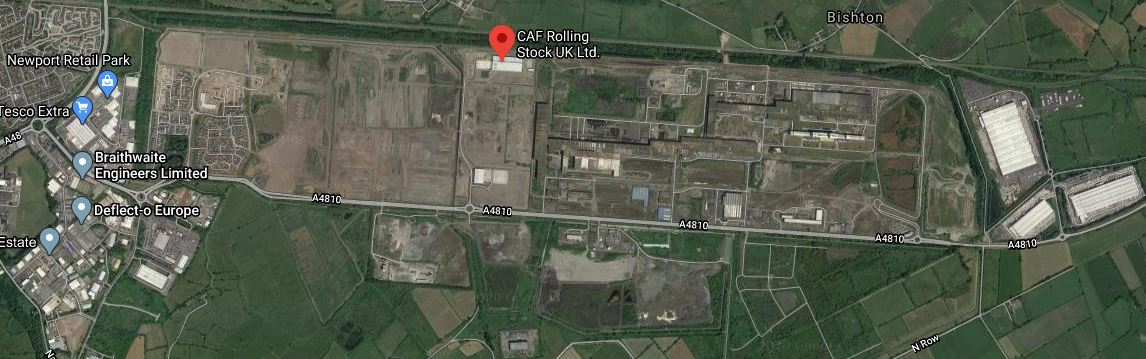
Note the South Wales Main Line running along the North of the massive steelworks site. So if the staging area, is built between the main line and the steelworks site, which contains the CAF factory, it will be convenient for both uses.
This looks to be a good plan, that will solve more multiple problems and needs.

