Macclesfield Station And High Speed Two
Today, I went to Macclesfield station.
In the latest iteration of High Speed Two, two new destinations were added to the High Speed Two Network; Macclesfield and Lancaster.
These pictures show Macclesfield station.
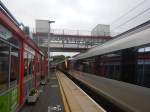
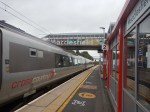

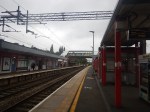
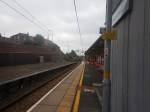
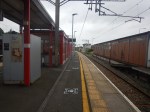
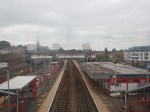
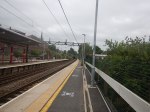
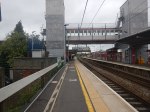
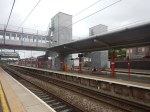
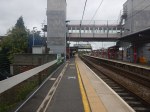
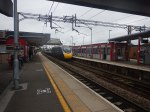
It is a modern station, with three through platforms, two bridges and some Modernist architecture from the 1970s, that could be improved.
This Google Map shows the layout of the station.
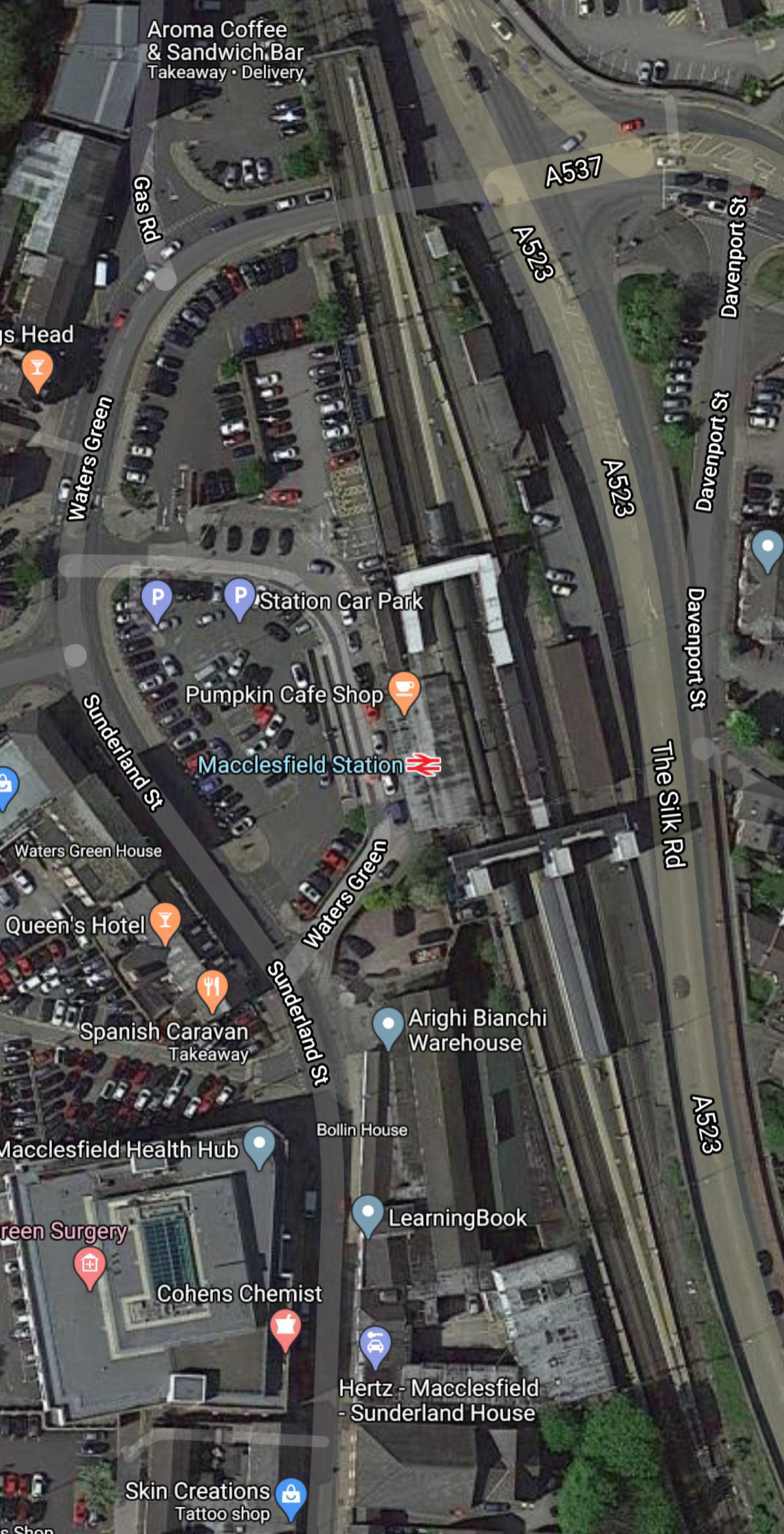
Note.
- Platform 1 is in the West and is used by trains to Stockport and Manchester Piccadilly.
- Platform 2 is in the middle and is used by trains going to Stoke, London and the South.
- Platform 3 is in the East and appears to be used a couple of times per day.
- It also appears there might have been a fourth platform.
All platforms appear capable of handling an eleven-car Class 390 train, which are over two hundred and sixty metres in length.
Is the plan to use Macclesfield as a High Speed Two terminal feasible?
Which Trains Will High Speed Two Use On Macclesfield Services?
It appears that High Speed Two will have two types of trains.
- Trains built to the European loading gauge, that will only be able to work on high lines like High Speed One and High Speed Two. Examples would be Eurostar’s Class 373 and Class 374 trains.
- Trains built to the UK loading gauge, that could also work on existing UK 125 mph routes like the East Coast, Great Western, Midland and West Coast Main Lines. Examples would be Class 800. Class 801, Class 802, Class 390 and Class 745 trains.
The second type, which are referred to, as class-compatible trains will be used to Macclesfield, as these services will share track with Class 390 and other trains, that have been or will be built to the smaller UK loading gauge.
Will Classic-Compatible High Speed Two Trains Fit Into Macclesfield Station?
Currently, every hour, one eleven-car Class 390 train calls in Macclesfield station in both directions, as they provide one of Avanti \west Coast’s three trains per hour (tph) between London Euston and Manchester Piccadilly stations.
The current trains are sixty metres longer than the proposed classic-compatible High Speed Two trains, that could be terminating in Macclesfield station.
How Would Passengers Who Started And Finished Their Journeys In Macclesfield, Connect to Manchester?
Currently, these hourly services connect Manchester Piccadilly and Stoke stations.
- Avanti West Cost – Manchester Piccadilly and London Euston.
- CrossCountry – Manchester Piccadilly and Bournemouth
- CrossCountry – Manchester Piccadilly and Bristol
- Northern – Manchester Piccadilly and Stoke, which stops at all stations.
The characteristics would be common to all these four trains.
- Services call at Stockport, Macclesfield and Stoke stations.
- As services share tracks with a High Speed Two service, they must be reasonably fast.
- All except the Northern service are 125 mph trains.
- The Northern service is run by a 90 mph Class 323 electric train.
- As Manchester Piccadilly and Stoke via Stockport is a fully-electrified route, the trains should probably be able to take advantage.
In an ideal world should the frequency be six tph or one train every ten minutes in each direction?
Which Platforms Would Be Used To Terminate High Speed Two Services?
Trains built to the UK loading gauge could probably terminate in any of the three platforms.
But it might be advantageous to terminate all services in the same platform.
Platform 3 would be the obvious choice.
- It shares an island platform with classic services going South between Manchester Piccadilly and Stoke.
- Passengers starting their journeys in Manchester Piccadilly or Stockport could just walk across from their connecting train to the High Speed Two train.
It must surely be a possibility to make Platform 2 able to operate bi-directionally, so that all trains between Manchester Piccadilly and Stoke stations in both directions, stop in Platform 2, alongside the High Speed Two train for London and the South, that is waiting in Platform 3. The combined frequency would be eight tph. All passengers would just walk across the island platform to change trains.
Could A North-Facing Bay Platform Be Fitted Into The Northern End Of The Island Platform 2/3?
If you are going to provide a High Speed Two service to and from Macclesfield station, it needs to have superb and comprehensive connections to as many places as possible.
The station currently has four tph to Manchester Piccadilly, Stockport and Stoke, but would a North-facing bay platform with level access to the High Speed Two platform make any of the following feasible?
- Run a second local stopping service between Manchester Piccadilly and Macclesfield to give all intermediate stations two tph to High Speed Two.
- Run hourly services to places that don’t have good connections to high speed services to London and the South.
- The Stockport and Stalybridge Line could be used to connect Stalybridge and Huddersfield to High Speed Two.
- There might even be a way of creating a link between Macclesfield and Manchester Airport.
Note.
- Looking at the platform layout at Macclesfield station, fitting in a bay platform would appear to be feasible.
- The important Stockport station, which seems to have been forgotten by High Speed Two would probably have at least six tph to High Speed Two at Macclesfield station.
- The local train could be timed to arrive at Macclesfield station, a convenient time before the High Speed Two train is scheduled to depart.
The bay platform could even be part of Platform 3, if it was decided that trains stopping in Platform 3, never used the platform as a through platform. It would be Macclesfield’s version of the Clapham Kiss.
I suspect more space could be found, by moving the signal box at the end of the station.
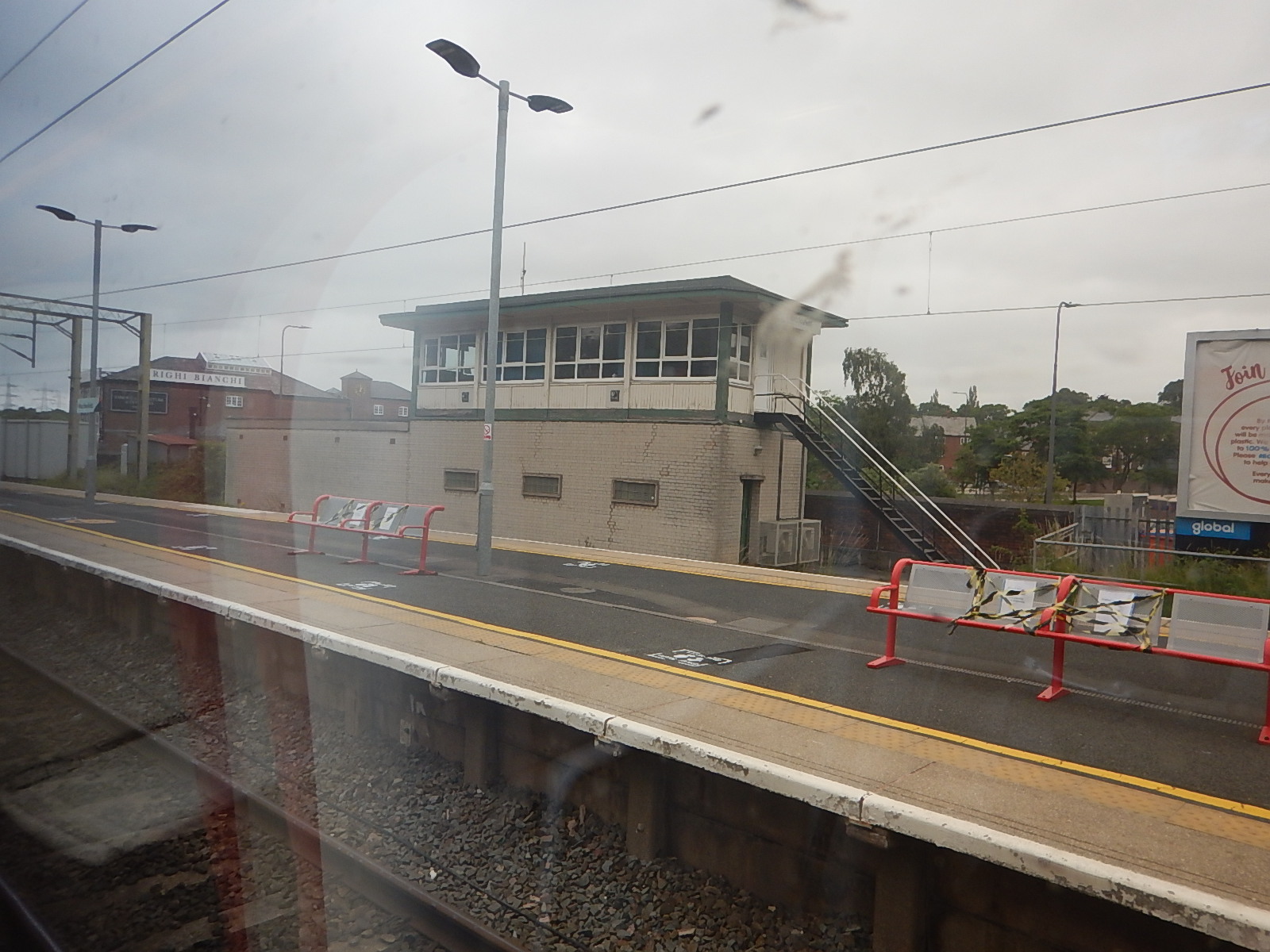
\remember that these days most signalling is controlled from centralised Rail Operation Centres.
Could High Speed Two Trains Run Between Macclesfield And Manchester Piccadilly?
As I said earlier, High Speed Two’s classic-compatible trains will be the same cross-section and shorter, than an eleven-car Class 390 train.
So the answer to my question must be yes!
- This would enable a stop at Stockport station.
- No platform lengthening would be required at Manchester Piccadilly and Stockport stations.
High Speed Two must have good reasons for using Macclesfield as a terminal.
- There are capacity issues between Macclesfield and Manchester Piccadilly stations.
- Macclesfield offers opportunities to connect to places, that are difficult to reach from Manchester Piccadilly station.
But these problems could probably be overcome by digital signalling or extension of the Manchester Metrolink.
Could More High Speed Two Services Run Between Macclesfield Station and The South?
Consider.
- I believe that Macclesfield station could handle more than an hourly High Speed Two train.
- It is a general principle, that on a metro like the London Overground or Merseyrail, that a single platform can handle up to four or even six tph.
- Four tph would surely be too high, but Macclesfield could easily handle a second classic-compatible train to and from Birmingham Curzon Street via Stoke and Stafford.
- During the inevitable works at Manchester Piccadilly station to sccomodate High Speed Two, Macclesfield could offer an alternative route, between London and Manchester.
Using Macclesfield station, as an alternative terminal for Manchester Piccadilly, builds in extra capacity for the future and offers a valuable alternative route during construction and upgrade works.
Rationalisation Between Cross Country And High Speed Two
Consider.
- In a lot of locations North of Birmingham, CrossCountry and High Speed Two seem to provide similar services between the same stations.
- Using currently proposed connections between High Speed Two and the classic network, CrossCountry’s services could run faster.
- CrossCountry’s new fleet of trains will probably be multi-mode trains, that will be very similar to the classic-compatible High Speed Two trains.
- Some of the routes used by CrossCountry’s services will have a substantial upgrade to allow higher speeds and more trains, to speed up High Speed Two services.
There must be a case for rationalisation of services.
Conclusion
The more I look at High Speed Two terminating at Macclesfield station, the more I like it.
I can see these services running from the station in the future.
- High Speed Two – Macclesfield and London Euston – One tph – This service would additionally call at Birmingham Interchange to link up with CrossCountry to the South.
- High Speed Two – Macclesfield and Birmingham Curzon Street – One tph
- CrossCountry – Macclesfield and Bournemouth, Plymouth or Reading – One tph.
- Northern and others – Macclesfield and Manchester Piccadilly via Stockport – Four-six tph
- Northern – Macclesfield and Huddersfield via Stockport and Stalybridge – Two tph
- Northern – Macclesfield and Manchester Airport – Two tph.
Obviously, this is all speculation, but Macclesfield will develop into an important rail hub to the South-East of Manchester.
High Speed Two To The North West Of England
This map clipped from the High Speed Two web site, shows High Speed Two routes in the North West of England.
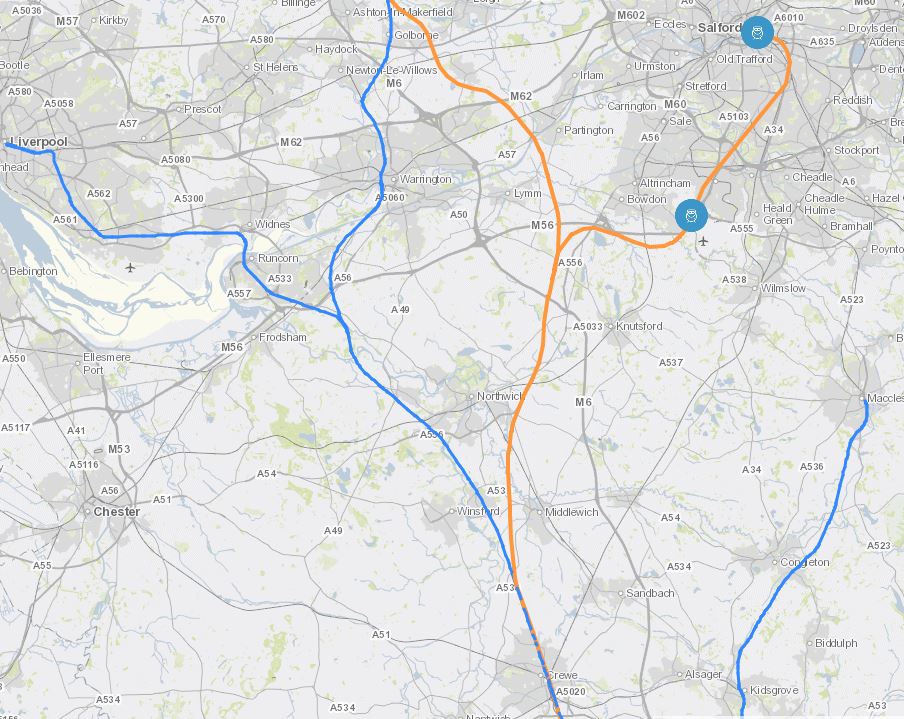
Note.
- When shown in orange, High Speed Two will use new tracks.
- When shown in blue, High Speed Two will use existing tracks.
- New stations are shown as large blue dots.
- High Speed Two and the West Coast Main Line appear to share a corridor through Crewe, before dividing near Walley’s Green.
- High Speed Two loops to the East of the West Coast Main Line and rejoins it South of Wigan between Bryn Gates and Abram Brow.
The route will or might serve the following stations in North West England.
Blackpool North
Blackpool North station is not planned to be served by High Speed Two.
But the station has been recently rebuilt.
- It has a number of platforms, that are capable of handling 200 metre long classic-compatible High Speed Two trains.
- The route to High Speed Two at Preston is fully electrified.
- In a couple of years, it will be connected to Blackpool’s expanding tramway.
- Blackpool would welcome High Speed Two with open arms.
Blackpool North would be an ideal extra destination, if more trains were to be split and joined at Crewe.
But whatever happens, I believe that high speed commuter trains will run from Blackpool North.
- Blackpool and Manchester Piccadilly via Preston, Wigan North Western, Warrington Bank Quay and Manchester Airport.
- Blackpool and Derby via Preston, Wigan North Western, Warrington Bank Quay, Crewe and Stoke-on-Trent.
Blackpool North has the platforms and electrification and it will be used.
Carlisle
Carlisle station is a through station on the current Glasgow service and can handle a nine-car Class 390 train which is over 210 metres long, which means they can handle a 200 metre long, classic-compatible High Speed Two train.
But two tph will be 400 metre London Euston and Edinburgh/Glasgow trains, so platform lengthening will probably be required.
There will be the following trains.
- Birmingham Curzon Street and Carlisle – I tph – 118 minutes
- London Euston and Carlisle – 2 tph – 154 minutes.
After any necessary platform lengthening, Carlisle will be ready and waiting for High Speed Two and will be reached in Phase 1 of the project.
The High Speed Two web site, says Carlisle will be reached in Phase 2b, but as Edinburgh and Glasgow are part of Phase 1, this must be a mistake.
Crewe
Crewe station is at the bottom of the map, just to the right of centre.
The station gets this introduction on this page of the High Speed Two web site.
HS2 services will call at Crewe, where passengers will be able to access the high speed network heading south. Journey times to London will be cut to under an hour. Macclesfield, Stafford and Stoke-on-Trent will also receive HS2 services, spreading the benefits of better connectivity.
The page also says that between five and seven trains per hour (tph) will call at Crewe.
Lancaster
Lancaster station is a through station on the current Glasgow service and can handle a nine-car Class 390 train which is over 210 metres long, which means they can handle a 200 metre long, classic-compatible High Speed Two train.
Lancaster will also be a terminus of 200 metre long classic-compatible High peed Two train from London Euston, so there may need to be refurbishment to handle the larger, if not longer train.
The use of Lancaster as a terminus, would appear to have the following advantages.
- The platform is already there.
- Using Lancaster as a terminal, may reduce the scope of works at Carlisle and Preston.
- The one tph service from London Euston is effectively a High Speed Northern stopper between Lancaster and Crewe, with calls at Warrington Bank Quay, Wigan North Western and Preston stations.
- Lancaster has connections to Barrow-in-Furness, Heysham Port and Morecambe and the scenic Cumbrian Coast and Settle-Carlisle Lines.
- Paces like Barrow-in-Furness. Morecambe and a host of other stations, should save forty-three minutes on journeys to and from London.
I think that Lancaster, is a good place to terminate a service in the North-West of England.
There will be the following trains.
- Birmingham Curzon Street and Lancaster – I tph – 65 minutes
- London Euston and Lancaster – 1 tph – 101 minutes.
After the necessary refurbishment, Lancaster will be ready and waiting for High Speed Two and will be reached in Phase 2b of the project.
But I do feel that Lancaster could be reached in Phase 1 of the project, if necessary works North of Preston and at Lancaster station were planned as an independent project.
Liverpool Lime Street
Liverpool Lime Street station is at the Western edge of the map, at the end of the Liverpool Branch of the West Coast Main Line.
Liverpool gets this headline and brief description on this page of the High Speed Two web site.
The City Region Wants To Deliver a World Class Transport Network
Its ambitious plans would integrate the existing HS2 route and builds on the Northern Powerhouse Rail proposals for high speed, east-west links directly into Liverpool City Centre.
Liverpool has made a good start to prepare for High Speed Two.
- The Grade II Listed; Lime Street station now has lengthened platforms and an improved layout so that it can handle two 200 metre long High Speed Two trains per hour.
- Merseyrail is taking delivery of a fleet of new Class 777 trains to update their suburban network.
- By the time High Speed Two arrives in the city, the suburban network will be larger.
Liverpool is ready and waiting for High Speed Two and will be reached in Phase 1 of the project.
Macclesfield
Macclesfield station is at the Eastern edge of the map, at the end of its own leg of High Speed Two.
The station was the surprise destination added, during the last iteration of High Speed Two.
- The late, great Brian Redhead, who lived in the town would be very pleased.
- The station was rebuilt in 1960 and has three platforms.
- It is planned to have one tph to London Euston via Stoke-on-Trent, Stafford and Old Oak Common.
- The visualisation on this page of the High Speed Two web site, also shows three platforms, but I wouldn’t be surprised to see a fourth added, as the extra platform would add flexibility.
The second surprise for Macclesfield, is that like Liverpool, it will be reached in Phase 1 of the project.
Manchester Airport
Manchester Airport station is the Southern large blue dot at the top of the map.
This page on the High Speed Two web site is rather sparse on information about Manchester Airport station.
I have combined train times given on the web page, with frequencies from an article in the June 2020 Edition of Modern Railways to create this table, which should be valid after the completion of High Speed Two.
- Birmingham Curzon Street and Manchester Airport – 2 tph – 32 minutes
- Birmingham Interchange and Manchester Airport – 1 tph – 29 minutes
- London Euston and Manchester Airport – 3 tph – 63 minutes
- London Old Oak Common and Manchester Airport – 3 tph – 56 minutes
- Manchester Piccadilly and Manchester Airport – 5 tph – 6 minutes
In Changes Signalled For HS2 Route In North, I stated that Northern Powerhouse Rail were proposing the following Liverpool and Manchester service.
Manchester Airport station will be reached in Phase 2b of the project.
- Six tph
- Stops at Manchester Airport and Warrington.
- An end-to-end journey time of 26 minutes.
This would do the following.
- Add a Liverpool and Manchester Airport service with a frequency of 6 tph, that will take 20 minutes.
- Add a Warrington Parkway and Manchester Airport service with a frequency of 6 tph that will take around 10 minutes.
- Increase the frequency between Manchester Piccadilly and Manchester Airport to 11 tph. Or more likely 12 tph.
How many cities have an airport connection running every five minutes using trains running at 125 mph?
As these Liverpool and Manchester services would probably start in places like Hull and Newcastle and come via varied routes that included a selection of Bradford, Doncaster Huddersfield, Leeds and Sheffield, all of the North, that lies to the East of the Pennines will be connected to Manchester Piccadilly, Manchester Airport and Liverpool by high speed trains.
Manchester Piccadilly
Manchester Piccadilly station is the Northern large blue dot at the top of the map.
This page on the High Speed Two web site is rather sparse on information about Manchester Piccadilly station.
Using the same data as before I can create a table of services from Manchester Piccadilly station, where I have included Liverpool and Manchester services, that will be run by Northern Powerhouse Rail.
- Birmingham Curzon Street – 2 tph – 40 minutes
- Birmingham Interchange – 1 tph – 37 minutes
- London Euston – 3 tph – 67 minutes
- London Old Oak Common – 3 tph – 60 minutes
- Manchester Airport – 12 tph – 6 minutes
- Liverpool – 6 tph – 26 minutes
Manchester Piccadilly station will be reached in Phase 2b of the project.
Oxenholme Lake District
Oxenholme Lake District station is a through station on the current Glasgow service and can handle a nine-car Class 390 train which is over 210 metres long, which means they can handle a 200 metre long, classic-compatible High Speed Two train.
There will be the following trains.
- Birmingham Curzon Street and Oxenholm Lake District – I tph – 79 minutes
- London Euston and Oxenholme Lake District – 115 minutes – Change at Preston
Oxenholme Lake District is ready and waiting for High Speed Two and will be reached in Phase 2b of the project.
But I do feel that Oxenholme Lake Districtcould be reached in Phase 1 of the project, if necessary works North of Preston and at Lancaster station were planned as an independent project
Penrith North Lakes
Penrith North Lakes station is a through station on the current Glasgow service and can handle a nine-car Class 390 train which is over 210 metres long, which means they can handle a 200 metre long, classic-compatible High Speed Two train.
There will be the following trains.
- Birmingham Curzon Street and Penrith North Lakes – I tph – 102 minutes
- London Euston and Penrith North Lakes – 138 minutes – Change at Preston
Penrith North Lakes is ready and waiting for High Speed Two and will be reached in Phase 2b of the project.
But I do feel that Penrith North Lakes could be reached in Phase 1 of the project, if necessary works North of Preston and at Lancaster station were planned as an independent project
Preston
Preston station is a through station on the current Glasgow service and can handle a nine-car Class 390 train which is over 210 metres long, which means they can handle a 200 metre long, classic-compatible High Speed Two train.
But two tph will be 400 metre London Euston and Edinburgh/Glasgow trains, so platform lengthening will probably be required.
There will be the following trains.
- Birmingham Curzon Street and Preston – I tph – 50 minutes
- London Euston and Preston – 3 tph – 78 minutes.
After any necessary platform lengthening, Preston will be ready and waiting for High Speed Two and will be reached in Phase 1 of the project.
Runcorn
Runcorn station is a through station on the Liverpool service and can handle a nine-car Class 390 train which is over 210 metres long, which means they can handle a 200 metre long, classic-compatible High Speed Two train.
There will be two tph between London Euston and Runcorn and trains will take 74 minutes.
Runcorn is ready and waiting for High Speed Two and will be reached in Phase 1 of the project.
Stafford
Stafford station is a through station on the Macclesfield service and can handle a nine-car Class 390 train which is over 210 metres long, which means they can handle a 200 metre long, classic-compatible High Speed Two train.
There will be one tph between London Euston and Stafford and trains will take 54 minutes.
Sfafford is ready and waiting for High Speed Two and will be reached in Phase 1 of the project.
Stoke
Stoke station is a through station on the Macclesfield service and can handle a nine-car Class 390 train which is over 210 metres long, which means they can handle a 200 metre long, classic-compatible High Speed Two train.
There will be one tph between London Euston and Stoke and trains will take 71 minutes.
Stoke is ready and waiting for High Speed Two and will be reached in Phase 1 of the project.
Warrington
Warrington Bank Quay station is a through station on the current Glasgow service and can handle a nine-car Class 390 train which is over 210 metres long, which means they can handle a 200 metre long, classic-compatible High Speed Two train.
There will be the following trains.
- Birmingham Curzon Street and Warrington Bank Quay – I tph – 25 minutes
- London Euston and Warrington Bank Quay – 1 tph – 73 minutes.
Warrington Bank Quay is ready and waiting for High Speed Two and will be reached in Phase 1 of the project.
Wigan
Wigan North Western station is a through station on the current Glasgow service and can handle a nine-car Class 390 train which is over 210 metres long, which means they can handle a 200 metre long, classic-compatible High Speed Two train.
There will be the following trains.
- Birmingham Curzon Street and Wigan North Western – I tph – 36 minutes
- London Euston and Wigan North Western – 1 tph – 84 minutes.
Wigan North Western is ready and waiting for High Speed Two and will be reached in Phase 1 of the project.
Existing Stations Where High Speed Two Trains Will Call
The June 2020 Edition Of Modern Railways has an article called HS2 Minister Backs 18 tph Frequency, which gives a detailed diagram of the route structure of High Speed Two and it is possible to summarise the stations, where High Speed Two trains will call.
- Carlisle – 3 tph – 400 metres – Split/Join
- Chesterfield – 1 tph – 200 metres
- Crewe – 2 tph – 400 metres – Split/Join
- Darlington – 2 tph – 200 metres
- Durham – 1 tph – 200 metres
- East Midlands Hub HS2 – 7 tph – 400 metres – Split/Join
- Edinburgh Haymarket – 2.5 tph – 200 metres
- Edinburgh Waverley – 2.5 tph – 200 metres – Terminal
- Glasgow Central – 2.5 tph – 200 metres – Terminal
- Lancaster – 2 tph – 200 metres – Terminal
- Leeds HS2 – 5 tph – 400 metres
- Liverpool Lime Street – 2 tph – 200 metres – Terminal
- Lockerbie – 1 tph – 200 metres
- Macclesfield – 1 tph – 200 metres – Terminal
- Manchester Airport HS2 – 5 tph – 400 metres
- Manchester Piccadilly HS2 – 5 tph – 400 metres
- Motherwell – 0.5 tph – 200 metres
- Newcastle – 3 tph – 200 metres – Terminal
- Oxenholme – 0.5 tph – 200 metres
- Penrith – 0.5n tph – 200 metres
- Preston – 4 tph – 400 metres
- Runcorn – 2 tph – 200 metres
- Sheffield – 2 tph – 200 metres
- Stafford – 1 tph – 200 metres
- Stoke-on-Trent – 1 tph – 200 metres
- Warrington Bank Quay – 1 tph – 200 metres
- Wigan North Western – 1 tph – 200 metres
- York – 4 tph – 200 metres
Note.
- HS2 after the station name indicates a new station for High Speed Two
- tph is trains per hour
- 0.5 tph is one train per two hours (tp2h).
- 200/400 metres is the maximum length of trains that will call.
- Terminal indicates that trains will terminate at these stations.
- Split/Join indicates that trains will split and join at these stations.
These are more detailed thoughts on how existing stations will need to be modified.
Train Lengths
Before, I look at the individual stations, I’ll look at the train lengths.
- High Speed Two train – Single – 200 metres
- High Speed Two train – Pair – 400 metres
- Class 390 train – 11-car – 265.3 metres
- Class 390 train – 9-car – 217.5 metres
- Class 807 train – 7-car – 182 metres
- Class 810 train – 5-car – 120 metres
- Class 810 train – Pair of 5-car – 240 metres
- InterCity 125 – 2+8 – 220 metres
- InterCity 225 – 9-car – 245 metres
- Class 222 train – 4-car – 93.34 metres
- Class 222 train – 5-car – 116.16 metres
- Class 222 train – 7-car – 161.8 metres
- Class 222 train – 4-car+5-car – 209.5 metres
- Class 222 train – 5-car+5-car – 232.32 metres
These are the thoughts on the individual stations.
Carlisle
Carlisle station will need two 400 metre through platforms, so each can accommodate a pair of 200 metre trains.
This Google Map shows the station.

I estimate the platforms are about 380 metres, but it looks like, they could be lengthened, without too much difficulty.
As High Speed Two trains to the North of Carlisle will be 200 metres long, there would probably be no need for platform lengthening North of Carlisle, as these trains are shorter than the Class 390 trains, that currently work the routes to Edinburgh and Glasgow.
Carlisle station is step-free, has good secondary rail connections and is within walking distance of the city centre.
The only thing it needs, is a connection to Edinburgh on a rebuilt Borders Railway.
Chesterfield
Consider.
- Chesterfield station will need to handle 200 metre trains.
- Chesterfield station may be rebuilt for High Speed Two.
- Chesterfield station can handle an InterCity 125, which is 220 metres.
- It will need to handle a pair of Class 810 trains, which would be 240 metres.
This Google Map shows Chesterfield station.
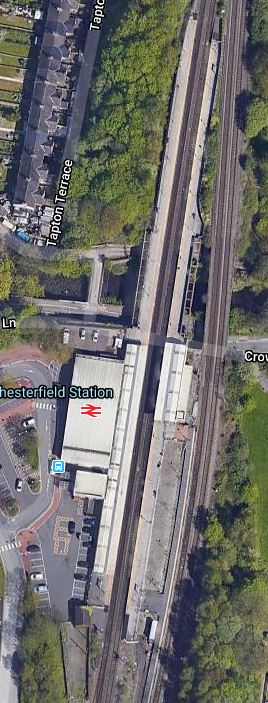
Note.
- The slow lines passing the station on the Eastern side.
- There are two long through platforms and a third bi-directional platform on the down slow line.
There is space to build two long platforms for High Speed Two, but is it worth it, when one one tph will stop?
- According to High Speed Two’s Journey Time Calculator, trains will take just twelve minutes between Sheffield and Chesterfield stations.
- This compares with 12-15 minutes for the current diesel trains.
- The distance between the two stations is 14 miles, which means that a twelve minute trip has an average speed of 70 mph.
- If there are still two tph to St. Pancras, there will be four tph, that run fast between the Sheffield and Chesterfield stations, of which three will stop at Chesterfield.
I think this could result in a simple and efficient design for the tracks between Sheffield and South of Clay Cross, where High Speed Two joins the Erewash Valley Line.
Chesterfield station is step-free.
Crewe
Crewe station will need two 400 metre through platforms, so each can accommodate a pair of 200 metre trains.
This Google Map shows the station.

There have been references to rebuilding of Crewe stations, but it does appear that some platforms are over 300 metres long.
Darlington
Darlington station will need to accommodate 200 metre trains.
As it already accommodates 245 metre InterCity 225 trains, there shouldn’t be too much of a problem.
Durham
Durham station will need to accommodate 200 metre trains.
As it already accommodates 245 metre InterCity 225 trains, there shouldn’t be too much of a problem.
Edinburgh Haymarket
Edinburgh Haymarket station will need to accommodate 200 metre trains.
As it already accommodates 245 metre InterCity 225 trains, there shouldn’t be too much of a problem.
Edinburgh Waverley
Edinburgh Waverley station will need to accommodate 200 metre trains.
As it already accommodates 245 metre InterCity 225 trains, there shouldn’t be too much of a problem.
Glasgow Central
Glasgow Central station will need to accommodate 200 metre trains.
As it already accommodates 265 metre Class 390 trains, there shouldn’t be too much of a problem.
Currently, Avanti West Coast runs the following services to Glasgow Central.
- One tph from London Euston calling at Warrington Bank Quay, Wigan North Western, Preston, Lancaster, Oxenholme Lake District (1tp2h), Penrith (1tp2h) and Carlisle.
- One tp2h from London Euston calling at Milton Keynes Central, Coventry, Birmingham International, Birmingham New Street, Sandwell and Dudley, Wolverhampton, Crewe, Warrington Bank Quay, Wigan North Western, Preston, Lancaster, Oxenholme Lake District (1tp2h), Penrith (1tp2h) and Carlisle.
High Speed Two is proposing to run the following trains to Glasgow Central.
- Two tph from London Euston calling at Old Oak Common, Preston and Carlisle.
- One tp2h from Birmingham Curzon Street calling at Wigan North Western, Preston, Lancaster, Oxenholme (1tp2h), Penrith (1tp2h), Carlisle, Lockerbie and Motherwell (1tp2h)
If the current services to Glasgow Central were to be replaced by the High Speed Two services, most travellers would get a similar or better service.
But if Avanti West Coast decide to drop their classic services to Glasgow via Birmingham, will travellers starting between Milton Keynes and Crewe, be a bit miffed to lose their direct services to Glasgow?
Glasgow Central station would appear to be ready for High Speed Two.
Lancaster
I was initially surprised, that on High Speed Two, one tph would terminate at Lancaster station.
This Google Map shows the station.
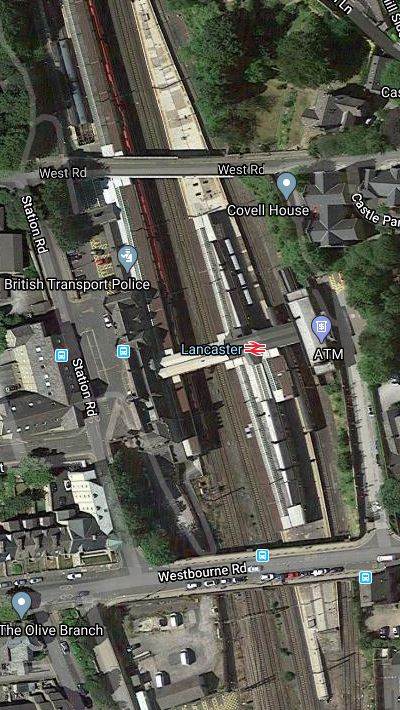
Note.
- There are two bypass lines without any platforms on the Western side of the tracks, where trains can speed through.
- The station has five platforms.
- Some Avanti West Coast services terminate at Lancaster station.
- 265 metre, eleven-car Class 390 trains, stop in Lancaster station.
As High Speed Two services will use 200 metre trains, which are shorter than all Class 390 trains, I would suspect that High Speed Two services will be able to be turned at Lancaster station, without too much difficulty.
Liverpool Lime Street
Liverpool Lime Street station will need to be able to turn two 200 metre High Speed Two tph.
- The remodelling of the station in 2018, probably allowed for two tph between London Euston and Liverpool Lime Street station.
- From 2022-2023, it will be turning two Class 807 trains per hour, which will probably be 182 metres long.
Liverpool Lime Street station may well be ready for Phase One of High Speed Two. It’s also very much step-free.
There are also alternative plans for a new High Speed station in Liverpool.
- It would be alongside the current Liverpool Lime Street station.
- The station would have a route to High Speed Two at Crewe via Warrington and a junction at High Legh.
- Northern Powerhouse Rail would start in the station and go to Manchester via Warrington, High Legh and Manchester Airport.
- It would enable six tph between Liverpool and Manchester, in a time of just 26 minutes.
I talked about this plan in Changes Signalled For HS2 Route In North, where I included this map.

High Legh Junction is numbered 5 and 6.
Nothing published about High Speed Two, would appear to rule this plan out.
Lockerbie
Lockerbie station will need to accommodate 200 metre trains.
As it already accommodates 265 metre Class 390 trains, there shouldn’t be too much of a problem.
Macclesfield
I was initially surprised, that on High Speed Two, one tph would terminal at Macclesfield station.
This Google Map shows the station.

Wikipedia says this about the platforms in the station.
There are three platforms but only two are in regular use, the up platform for services to Manchester and the down platform to Stoke-on-Trent and Birmingham. Platform 3 sees a small number of services. Evidence of a fourth platform can be seen, on which a Network Rail building now exists.
As the station has a regular Avanti West Coast service every hour, the platforms must be over 200 metres long and they will be long enough for the 200 metre High Speed Two trains.
So why would High Speed Two want to terminate a train at Macclesfield, rather than at Manchester Piccadilly as they do now?
Currently, Avanti West Coast runs these services between London Euston and Manchester Piccadilly.
- One tph via Milton Keynes Central, Stoke-on-Trent and Stockport.
- One tph via Stoke-on-Trent, Macclesfield and Stockport
- One tph via Stafford, Crewe, Wilmslow and Stockport
The diagram in the Modern Railways article shows these High Speed Two services to Manchester Piccadilly.
- One tph from London Euston via Old Oak Common, Birmingham Interchange and Manchester Airport
- Two tph from London Euston via Old Oak Common and Manchester Airport
- Two tph from Birmingham Curzon Street via Manchester Airport.
Note.
- None of these five tph serve Macclesfield, Milton Keynes Central, Stockport, Stoke-on-Trent or Wilmslow.
- All five proposed services are shown to call at Manchester Airport.
- It is likely, that a tunnel will be bored between Manchester Airport and Manchester Piccadilly stations.
- The High Speed Two station at Manchester Piccadilly might even be in a tunnel under the current Manchester Piccadilly station or central Manchester.
- A below-ground High Speed Two station for Manchester could also serve Northern Powerhouse Rail services to Leeds and the East.
- According to the plans, I talked about under Liverpool Lime Street earlier, there could also be up to six tph running between Liverpool and Manchester via Manchester Airport, as part of Northern Powerhouse Rail.
Plans need to be developed to serve the towns and cities, that will not be served by High Speed Two’s current proposals.
- It appears Stafford, Stoke-on-Trent and Macclesfield will be served by an independent High Speed Two service from London Euston.
- Terminating one tph at Macclesfield station doesn’t appear to be challenging.
- A rail route between Macclesfield and Manchester Airport to link up with the proposed tunnel could be very difficult.
- Manchester Piccadilly and Macclesfield stations have a frequent rail connection, with most trains calling at Stockport station.
- Perhaps during construction work for High Speed Two in the centre of Manchester, Macclesfield station can be used as an alternative route into the city, using the existing Manchester Piccadilly station.
The London Euston and Macclesfield service via Stafford and Stoke-on-Trent could be a pragmatic solution to part of the problem, but what about Milton Keynes, Wilmslow and Stockport?
According to the title of the Modern Railways article, High Speed Two will have a maximum frequency of 18 tph.
When fully-developed, the current proposed timetable shows the following.
- A frequency of 17 tph between London Euston and Birmingham Interchange stations.
- A frequency of 11 tph between Birmingham and Crewe.
- A frequency of 9 tph through East Midlands Hub station.
It would appear that if there is a capacity bottleneck, it is between London and Birmingham.
However if classic services to Manchester Piccadilly are replaced by the High Speed Two services to the city via the new tunnel from Manchester Airport to a new station in the City Centre, there will be spare capacity on the Crewe and Manchester Piccadilly route via Wilmslow and Stockport stations.
This could lead to a number of solutions.
- A direct High Speed Two service runs using the spare path, between London and the current Manchester Piccadilly station.
- Similar to the previous service, but the service splits and joins at Crewe, with one individual train going to Manchester Piccadilly and the other somewhere else. Blackpool?
- One service between London and Liverpool is planned to split and join at Crewe with individual trains going to Lancaster and Liverpool. The other Liverpool service could split at Crewe with individual trains going to Liverpool and Manchester Piccadilly.
- The service between London and Macclesfield is run by a pair of trains, that split at Birmingham Interchange, with individual trains going to Macclesfield and Manchester Piccadilly. The advantage of this service, is that if you got into the wrong train, you’d still be going to roughly the same destination.
- Wikipedia says “At peak times, the current Avanti West Coast services may additionally call at one or more of: Watford Junction, Rugby, Nuneaton, Tamworth, Lichfield Trent Valley.” So why not run classic services on the West Coast Main Line between Euston and Manchester Piccadilly via Milton Keynes using suitably fast trains. Perhaps, the new Class 807 trains would be ideal.
Note.
- All services serving the current Manchester Piccadilly station would call at Crewe, Wilmslow and Stockport stations.
- Passengers going to or from Manchester Airport would change at Crewe.
The more I look at Macclesfield, the more I like using it as a High Speed Two destination.
Motherwell
Motherwell station will need to accommodate 200 metre trains.
As it already accommodates 265 metre Class 390 trains, there shouldn’t be too much of a problem.
Newcastle
Newcastle station will need to accommodate 200 metre trains.
As it already accommodates 245 metre InterCity 225 trains, there shouldn’t be too much of a problem.
Oxenholme
Oxenholme station will need to accommodate 200 metre trains.
As it already accommodates 265 metre Class 390 trains, there shouldn’t be too much of a problem.
Penrith
Penrith station will need to accommodate 200 metre trains.
As it already accommodates 265 metre Class 390 trains, there shouldn’t be too much of a problem.
Preston
Preston station will need two 400 metre through platforms, so each can accommodate a pair of 200 metre trains.
This Google Map shows the station.

I estimate that the main through platforms aren’t much short of the required 400 metres.
But something must be done to make the station step-free.
Runcorn
Runcorn station will need to accommodate 200 metre trains.
As it already accommodates 217 metre Class 390 trains, there shouldn’t be too much of a problem. The station is also step-free.
Sheffield
Sheffield station will need to accommodate 200 metre trains.
This Google Map shows the station.

As the station can already handle a 220 metre InterCity 125, there shouldn’t be too much of a problem. The station is also substantially step-free.
Stafford
Stafford station will need to accommodate 200 metre trains.
This Google Map shows the station.

As it already accommodates 265 metre Class 390 trains, there shouldn’t be too much of a problem. The station is also step-free.
Wikipedia says this about Stafford station and High Speed Two.
Under current proposals, Stafford will be a part of the High Speed 2 network, via a ‘Classic Compatible’ junction, which will allow HS2 trains to operate to Stafford, and further on towards Liverpool. This would shorten journey time from Stafford to London, to an estimated 53 minutes. Under current proposals it is expected that an hourly services will operate in both directions, however it is currently unclear if these services will terminate at Stafford, or Liverpool.
This does appear to be rather out of date with High Speed Two’s latest proposals as disclosed in the Modern Railways article, which say that Stafford is served by the following service.
- One tph between London Euston and Macclesfield.
- Calls at Old Oak Common, Stafford and Stoke-on-Trent.
- A 200 metre train.
One possibility must surely be to run a pair of 200 metre trains to and from Stafford, where they would split and join.
- One could go as currently proposed to Stoke-on-Trent and Macclesfield.
- The second train could go to Liverpool via Crewe and Runcorn or Manchester Piccadilly via Crewe, Wilmslow and Stockport.
- The recent works at Norton Bridge Junction will have improved the route for the second train.
There would need to be platform lengthening at Stafford to accommodate the 400 metre pair of trains.
A split and join at Stafford does show the possibilities of the technique.
Another possibility is mentioned for Stafford in Wikipedia.
There is also been proposals to reintroduce services to Stafford to terminate on the Chase Line which was cutback to Rugeley Trent Valley in 2008. The Key Corridors states “Extension of Chase Line services to Stafford”. This is proposed to be in development.
It will surely connect a lot of people to Stafford for High Speed Two.
The extract from Wikipedia, that I used earlier, mentions a Classic Compatible junction, which will allow High Speed Two trains to reach Stafford.
This map clipped from the High Speed Two web site, shows the junction North of Lichfield, where High Speed Two connects to the Trent Valley Line through Stafford.

Note.
- High Speed Two runs North-South across the map.
- After the Junction by Fradley South,
- High Speed Two to Crewe and the North, is the branch to the East.
- The other branch connects to the Trent Valley Line, which can be picked out North of Lichfield, where it passes through Lichfield Trent Valley station.
The Trent Valley Line is no Victorian double-track slow-speed bottleneck.
- Most of the route between Rugby and Stafford is three or four tracks.
- The speed limit is generally 125 mph.
- I wouldn’t be surprised to see Avanti West Coast’s Class 390 and Class 807 trains running at 140 mph on the route.
- This speed would probably be attained by High Speed Two trains.
London Euston and Stafford would only have under twenty miles of slower line and that could be 140 mph, so High Speed Two times on the route could be very fast. High Speed Two is quoting 54 minutes on their Journey Time Calculator.
Stoke-on-Trent
Stoke-on-Trent station will need to accommodate 200 metre trains.
This Google Map shows the station.
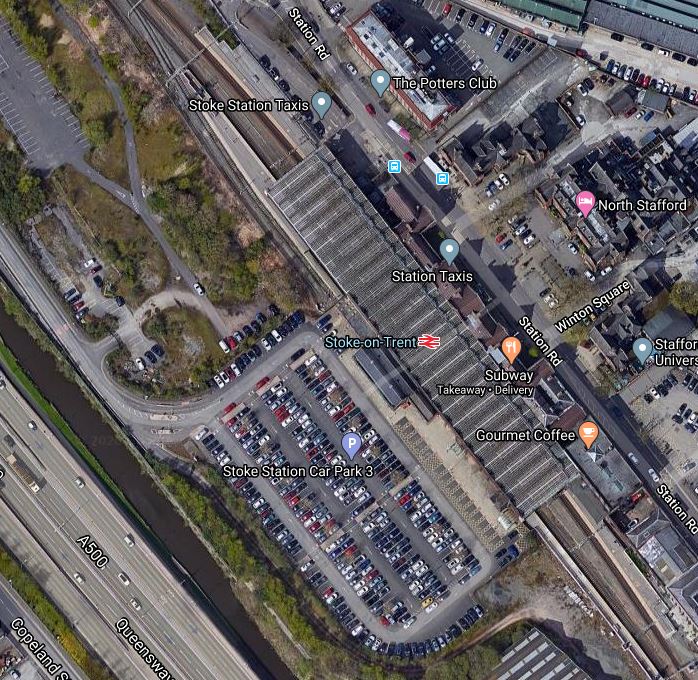
As it already accommodates 265 metre Class 390 trains, there shouldn’t be too much of a problem. The station is also step-free.
Warrington Bank Quay
Warrington Bank Quay station will need to accommodate 200 metre trains.
As it already accommodates 265 metre Class 390 trains, there shouldn’t be too much of a problem.
Wigan North Western
Wigan North Western station will need to accommodate 200 metre trains.
In Is Wigan North Western Station Ready For High Speed Two?, I said this.
Wigan North Western station would accept a single-train now, but the platforms would need lengthening to handle a double-train.
As all trains through Wigan North Western station will only be 200 metre single trains and the station is step-free, the station appears to be ready for High Speed Two.
York
York station will need to accommodate 200 metre trains.
As it already accommodates 245 metre InterCity 225 trains, there shouldn’t be too much of a problem.
Conclusion
I have come to these conclusions.
- Because most of these stations have been rebuilt in the last few decades to accommodate the 200-plus metre InterCity 125s, InterCity 225s and Class 390 trains, all the stations can handle a 200 metre High Speed Two train without significant lengthening.
- Some stations like Carlisle, Crewe, Preston and Stafford may need a small amount of platform lengthening to accommodate a pair of trains, but most of the improvements needed for a world-class High Speed railway will be more refurbishment than a complete rebuild.
- Using existing platforms at Lancaster and Macclesfield stations as terminal platforms is an elegant and a much more affordable solution than building new stations or even platforms.
- Because all five tph into the High Speed Two station at Manchester Piccadilly go via Manchester Airport, I would envisage that this will be in a tunnel, that can be part of a future Northern Powerhouse Rail.
I also think that the plan has been devised with the Project Management and minimising disruption to travellers in mind.
Could Some of Hitachi’s Existing Trains In The UK Be Converted To Battery-Electric Trains?
The last five fleets of AT-300 trains ordered for the UK have been.
- Avanti West Coast – Bi-Mode, 13 x five-car, unknown number of diesel engines, that could be replaced by batteries.
- Avanti West Coast – Electric, 10 x seven-car, no diesel engines or batteries
- East Midlands Railway – Bi-Mode, 33 x five-car, Class 810 train with four diesel engines and 125 mph on diesel.
- East Coast Trains – Electric, 5 x five-car, Class 803 train with battery for emergency hotel power.
- Hull Trains – Bi-Mode, 5 x five-car, Standard Class 802 train with three diesel engines.
Each fleet seems to be tailored to the needs of the individual operator, which is surely as it should be.
I can make some observations.
Fast Electric Trains
Both all-electric fleets on the list, will run on routes, where speed will be important.
- The Avanti West Coast Class 807 trains on the West Coast Main Line, will have to be able to keep up keep with the Class 390 trains, that have the advantage of tilt for more speed.
- The East Coast Trains Class 803 trains on the East Coast Main Line, will have to work hard to maintain a demanding schedule, as I outlined in Thoughts On East Coast Trains.
Any reduction in weight will improve the acceleration.
- The seven tonne MTU 12V 1600 R80L diesel engines can be removed to reduce the weight.
- As a five-car Class 800 train with three diesel engine weighs 243 tonnes, this could save nearly 9 % of the train’s weight.
- East Coast Trains feel they need an appropriately-sized battery for emergency hotel power. Could this be because the catenary is not as good on the East Coast Main Line as on the West?
- Perhaps, Avanti West Coast feel a battery is not needed, but they could obviously fit one later. Especially, if there was already a ready-wired position underneath the train.
The extra acceleration given by 100% electric operation, must make all the difference in obtaining the required performance for the two routes.
Why Four Diesel Engines In A Class 810 Train?
The Class 810 trains are an update of the current Class 800/Class 802 trains. Wikipedia described the differences like this.
The Class 810 is an evolution of the Class 802s with a revised nose profile and facelifted end headlight clusters, giving the units a slightly different appearance. Additionally, there will be four diesel engines per five-carriage train (versus three on the 800s and 802s), and the carriages will be 2 metres (6.6 ft) shorter due to platform length constraints at London St Pancras.
Additionally, in this article in the October 2019 Edition of Modern Railways, which is entitled EMR Kicks Off New Era, this is said.
The EMR bi-modes will be able to run at 125 mph in diesel mode, matching Meridian performance in a step-up from the capabilities of the existing Class 80x units in service with other franchises.
The four diesel engines would appear to be for more power, so that these trains will be able to run at 125 mph on diesel.
In How Much Power Is Needed To Run A Train At 125 mph?, I calculated that a Class 801 train, which is all-electric, consumes 3.42 kWh per vehicle mile.
- At 125 mph a train will in an hour travel 125 miles.
- In that hour the train will need 125 x 5 x 3.42 = 2137.5 kWh
- This means that the total power of the four diesel engines must be 2137.5,
- Divide 2137.5 by four and each diesel must be rated at 534.4 kW to provide the power needed.
The MTU 12V 1600 R80L diesel engine is described in this datasheet on the MTU web site.
Note on the datasheet, there is a smaller variant of the same engine called a 12V 1600 R70, which has a power output of 565 kW, as compared to the 700 kW of the 12V 1600 R80L.
The mass of the engines are probably at the limits of the range given on the datasheet.
- Dry – 4500-6500 Kg
- Wet – 4700-6750 Kg
It would appear that the less-powerful 12V 100 R70 is about two tonnes lighter.
So where will four engines be placed in a Class 810 train?
- The five-car Class 800 and Class 802 trains have diesel-engines in cars 2, 3 and 4.
- The nine-car Class 800 and Class 802 trains have diesel-engines in cars 2,3, 5, 7 and 8.
- It appears that diesel-engines aren’t placed under the driver cars.
- Five-car AT-300 trains generally have a formation of DPTS+MS+MS+MC+DPTF.
- The car length in the Class 810 trains are two metres shorter than those in other trains.
Could it be that the intermediate cars on Class 810 trains will be an MC car, which has both First and Standard Class seating and two identical MS cars both with two smaller diesel engines?
- The two smaller diesel engines will be about 2.6 tonnes heavier, than a single larger engine.
- Only one fuel tank and other gubbins will be needed.
- The shorter car will be lighter in weight.
- MTU may have designed a special diesel engine to power the train.
I would suspect that a twin-engined MS car is possible.
Could The Battery And The Diesel Engine Be Plug-Compatible?
I found this document on the Hitachi Rail web site, which is entitled Development of Class 800/801 High-Speed Rolling Stock For UK Intercity Express Programme.
The document may date from 2014, but it gives a deep insight into the design of Hitachi’s trains.
I will take a detailed look at the traction system as described in the document.
This schematic of the traction system is shown.

Note BC is described as battery charger.
This is said in the text, where GU is an abbreviation for generator unit.
The system can select the appropriate power source from either the main transformer or the GUs. Also, the size and weight of the system were minimized by designing the power supply converter to be able to work with both power sources. To ensure that the Class 800 and 801 are able to adapt to future changes in operating practices, they both have the same traction system and the rolling stock can be operated as either class by simply adding or removing GUs. On the Class 800, which is intended to run on both electrified and non-electrified track, each traction system has its own GU. On the other hand, the Class 801 is designed only for electrified lines and has one or two GUs depending on the length of the trainset (one GU for trainsets of five to nine cars, two GUs for trainsets of 10 to 12 cars). These GUs supply emergency traction power and auxiliary power in the event of a power outage on the catenary, and as an auxiliary power supply on non-electrified lines where the Class 801 is in service and pulled by a locomotive. This allows the Class 801 to operate on lines it would otherwise not be able to use and provides a backup in the event of a catenary power outage or other problem on the ground systems as well as non-electrified routes in loco-hauled mode.
This is all very comprehensive.
Note that the extract says, that both the Class 800 trains and Class 801 trains have the same traction control system. A section called Operation in the Wikipedia entry for the Class 802 train, outlines the differences between a Class 802 train and a Class 800 train.
The Class 802s are broadly identical to the Class 800 bi-mode trains used in the Intercity Express Programme, and are used in a similar way; they run as electric trains where possible, and are equipped with the same diesel generator engines as the Class 800. However, they utilise higher engine operating power – 700 kW (940 hp) per engine as opposed to 560 kW (750 hp) – and are fitted with larger fuel tanks to cope with the gradients and extended running in diesel mode expected on the long unelectrified stretches they will operate on.
I would assume that the differences are small enough, so that a Class 802 train, can use the same traction control system, as the other two train classes.
The Hitachi document also describes the Train Management and Control System (TCMS), the function of which is described as.
Assists the work of the train crew; a data communication function that aids maintenance work; and a traction drive system that is powered by the overhead lines (catenaries) and GUs.
Several trains have been described as computers on wheels. That could certainly be said about these trains.
There would appear to be a powerful Automatic Train Identification Function.
To simplify the rearrangement and management of train configurations, functions are provided for identifying the train (Class 800/801), for automatically determining the cars in the trainset and its total length, and for coupling and uncoupling up to 12 cars in normal and 24 cars in rescue or emergency mode.
Now that would be a sight – One nine-car train rescuing another!
I would assume that this Automatic Train Identification Function has already been updated to add the Class 802 trains and it would appear to me, as a very experienced computer programmer, that in future it could be further updated to cater for the following.
- New classes of trains like the future Class 803 and Class 810 trains.
- The fitting of batteries instead of diesel engines.
Could the Function even be future-proofed for hydrogen power?
There are two main ways for trains to operate when the diesel engine in a car has been replaced by a battery.
- A plug-compatible battery module is designed, that in terms of function looks exactly like a diesel engine to the TCMS and through that the train crew.
- The car with a battery becomes a new type of car and the TCMS is updated to control it, in an appropriate manner.
Both methods are equally valid.
I would favour the first method, as I have come across numerous instances in computer programming, engineering and automation, where the method has been used successfully.
The method used would be Hitachi’s choice.
What Size Of Battery Could Be Fitted In Place Of The Diesel Engine?
Consider.
- The wet mass of an MTU 16V 1600 R80L diesel engine commonly fitted to AT-300 trains of different types is 6750 Kg or nearly seven tonnes.
- My engineering knowledge would suggest, that it would be possible to replace the diesel engine with an inert lump of the same mass and not affect the dynamics of the train.
So could it be that a plug-compatible battery module can be fitted, so long as it doesn’t exceed the mass of the diesel engine it replaces?
For an existing Class 800 or Class 802 train, that limit could be seven tonnes.
But for East Coast Train’s Class 803 train, that size would probably be decided by the required train performance.
How much power would a one tonne battery hold?
This page on the Clean Energy institute at the University of Washington is entitled Lithium-Ion Battery.
This is a sentence from the page.
Compared to the other high-quality rechargeable battery technologies (nickel-cadmium or nickel-metal-hydride), Li-ion batteries have a number of advantages. They have one of the highest energy densities of any battery technology today (100-265 Wh/kg or 250-670 Wh/L).
Using these figures, a one-tonne battery would be between 100 and 265 kWh in capacity, depending on the energy density.
This table can be calculated of battery weight, low capacity and high capacity.
- 1 tonne – 100 kWh – 265 kWh
- 2 tonne – 200 kWh – 530 kWh
- 3 tonne – 300 kWh – 895 kWh
- 4 tonne – 400 kWh – 1060 kWh
- 5 tonne – 500 kWh – 1325 kWh
- 6 tonne – 600 kWh – 1590 kWh
- 7 tonne – 700 kWh – 1855 kWh
As energy densities are only going to improve, the high capacity figures are only going to get larger.
If you look at the design of the Class 803 trains, which could have three positions for diesel engines or batteries, the designers of the train and East Coast Trains can choose the battery size as appropriate for the following.
- Maximum performance.
- Power needs when halted in stations.
- Power needs for emergency power, when the wires come tumbling down.
I suspect, they will fit only one battery, that is as small as possible to minimise mass and increase acceleration, but large enough to provide sufficient power, when needed.
Conversion Of A Five-Car Class 800/Class 802 Train To Battery-Electric Operation
If Hitachi get their design right, this could be as simple as the following.
- Any of the three MTU 12V 1600 R80L diesel engines is removed, from the train.
- Will the other diesel related gubbins, like the fuel tank be removed? They might be left in place, in case the reverse conversion should be needed.
- The new battery-module is put in the diesel engine’s slot.
- The train’s computer system is updated.
- The train is tested.
It should be no more difficult than attaching a new device to your personal computer. Except that it’s a lot heavier.
As there are three diesel engines, one, two or three could be replaced with batteries.
Trains would probably be able to have a mixture of diesel engines and battery modules.
A Class 802 train with one diesel engine and two five-tonne batteries would have the following power sources.
- 25 KVAC overhead electrification.
- A 700 kW diesel engine.
- Two five-tonne batteries of between 500 kWh and 1325 kWh.
With intelligent software controlling the various power sources, this train could have a useful range, away from the electrification.
Conversion Of A Five-Car Class 810 Train To Battery-Electric Operation
The process would be similar to that of a Class 800/Class 802 Train, except there would be more possibilities with four engines.
It would also need to have sufficient range to bridge the gaps in the electrification.
Perhaps each train would have the following power sources.
- 25 KVAC overhead electrification.
- Two 565 kW diesel engines.
- Two four-tonne batteries of between 400 kWh and 1060 kWh.
- Batteries might also be placed under the third intermediate car.
I estimate that with 400 kWh batteries, a train like this would have a battery range of sixty-five miles.
Conclusion
The permutations and combinations would allow trains to be tailored to the best compromise for a train operating company.
Will Avanti West Coast’s New Trains Be Able To Achieve London Euston and Liverpool Lime Street In Two Hours?
Note that I have rewritten this post to take account of this information from the January 2020 and December 2022 Editions of Modern Railways, in an article, which is entitled Hitachi Trains For Avanti.
This is said about the ten all-electric AT-300 trains for Birmingham, Blackpool and Liverpool services, which have now been numbered as Class 807 trains.
The electric trains will be fully reliant on the overhead wire, with no diesel auxiliary engines or batteries.
It may go against Hitachi’s original design philosophy, but not carrying excess weight around, must improve train performance, because of better acceleration.
Currently, Avanti West Coast‘s trains between London Euston and Liverpool Lime Street stations are timetabled as follows.
- The journey takes two hours and thirteen or fourteen minutes.
- There are three stops at Stafford, Crewe and Runcorn.
- The stops with the current Class 390 trains seem to take around a minute.
- There is one train per hour (tph)
- A second hourly service with a stop at Liverpool South Parkway is planned to be introduced in December 2022.
In 2022, a new fleet of Hitachi AT-300 trains will be introduced on the route. I believe, it would be reasonable to assume, that these Class 807 trains will have similar or better performance, than the current Class 390 trains.
- Acceleration and braking are likely to be better.
- Regenerative braking energy may well be handled more efficiently.
- The trains may well be equipped with in-cab digital signalling and be able to travel in excess of 125 mph in places, where the track allows.
I would expect, that these trains could be running near to or at 125 mph for most of the journey.
London Euston and Liverpool Lime Street are 193.5 miles apart, so if a train could be running at 125 mph all the way, a train would take 93 minutes.
Extra time must be added for the following.
- Acceleration from a standing start to 125 mph at London Euston, Stafford, Crewe and Runcorn.
- Deceleration from 125 mph to a stop at Stafford, Crewe, Runcorn and Liverpool Lime Street.
- Dwell time in the platforms at Stafford, Crewe and Runcorn.
This page on the Eversholt Rail web site, has a data sheet for a Class 802 train, which is a bi-mode AT-300 train with three diesel engines.
The data sheet shows that a five-car train can accelerate to 125 mph and then decelerate to a stop in six minutes in electric mode. As Avanti West Coast’s Class 807 trains will be all-electric seven-car trains with no heavy engine or battery, I doubt they will be slower than a Class 802 train in electric mode. So four accelerations/deceleration cycles to 125 mph should take no more than twenty-four minutes.
I will assume two minutes for each of the three stops.
I can now give an estimate for the journey.
- Base journey time – 93 minutes
- Acceleration from and deceleration to stops – 24 minutes
- Station dwell time – 6 minutes
This gives a journey time between London Euston and Liverpool Lime Street of two hours and three minutes.
The journey time can probably be improved in the following ways.
- Take full advantage of the track improvements on the approach to Liverpool Lime Street station and at Norton Bridge Junction.
- Better train pathing, as has been done on London Liverpool Street and Norwich services to create the fast Norwich-in-Ninety services.
- Track and signal improvements to pinch a minute here and a minute there.
- As Runcorn now has an hourly Liverpool Lime Street and Chester service, will the Runcorn stop be dropped to save time?
- Reduction in station dwell time.
- Better driver aids.
- Better staff operating procedures at stops and whilst turning the train.
It should be born in mind, that a two hour journey between London Euston and Liverpool Lime Street would be a start-stop average speed of 97 mph on a 125 mph route. Intriguingly, this means the trains would run at 77 % of the maximum operating speed of the route, which is the same figure for Norwich-in-Ninety services.
Some of these improvements may enable the Class 390 trains to go a bit faster.
It has to be considered, that Avanti West Coast’s Marketing Department would be ecstatic, when told that London and Liverpool were less than two hours apart.
How Many Trains Would Be Needed?
Currently, this is a typical train round trip to Liverpool Lime Street.
- 07:07 – Leave London Euston
- 09:20 – Arrive Liverpool Lime Street
- 09:47 – Leave Liverpool Lime Street
- 12:02 – Arrive London Euston
The five-hour round-trip would indicate that five trains would be needed for the one tph service.
This train didn’t return to Liverpool, but went off to the Wembley Depot.
After their Liverpool trip, there is no real pattern of where the train will go next, as this table shows.
- 06:41 – 6 – 33 minutes – Wembley Depot
- 07:48 – 2 – 36 minutes – Manchester Piccadilly
- 08:47 – 1 – 40 minutes – Manchester Piccadilly
- 09:47 – 7 – 30 minutes – Wembley Depot
- 10:47 – 4 – 42 minutes – Preston
- 11:47 – 4 – 37 minutes – Preston
- 12:47 – 1 – 34 minutes – Preston
- 13:47 – 15 – 13 minutes – Birmingham New Street
- 16:47 – 6 – 16 minutes – Glasgow Central
- 17:47 – 1 – 42 minutes – Manchester Piccadilly
Note.
- The time is departure time from Liverpool Lime Street, the number is the platform and the minutes are the turnround time in Euston.
- I have left out a couple of trains as there was a very late train.
- There doesn’t seem to be any regular pattern.
- It looks like trains can be turned in under fifteen minutes.
- I think there was a time, when Liverpool couldn’t accept eleven-car trains, but the new longer platforms appear to accept them.
- Trains appear to be running services to Glasgow Central and Manchester Piccadilly, who seem to usually get eleven-car trains.
I almost think, that they’re allocating trains as they go.
With the new Class 807 trains, I suspect the following is possible.
- London Euston to Liverpool Lime Street – Two hours
- Turnround – Fifteen minutes
- Liverpool Lime Street to London Euston – Two hours
- Turnround – Fifteen minutes
This means it’s a four-and-a-half hour round trip.
- Journey times of two hours.
- Time enough for well-drilled staff to turn the trains.
- Dedicated platforms at London Euston and Liverpool Lime Street.
- It would be a very attractive customer-friendly service.
Two tph would need nine trains.
It would be everything the Marketing Department wanted!
Thoughts On The Current Class 390 Timings
As the Class 390 trains are a 125 mph train, their base timing of 93 minutes, between London and Liverpool should still be the same.
As their doors and lobbies are similar in design to those of the Hitachi AT-300 trains, I would allow the same two minutes of dwell time at each station.
Current timings of services on the route vary between 132 and 134 minutes. I’ll take the average of 133 minutes.
So the current services take thirty-four minutes to perform the four accelerate and decelerate sequences on the route.
It would appear that this sequence would take eight-and-a-half minutes in comparison with the six minutes of the new Hitachi AT-300 trains.
I have a feeling, if Class 390 trains cut out a couple of stops, given the other improvements, that they could achieve the magic two hour timing.
Plans For The Second Hourly Service From December 2023
These have been announced in the December 2022 Edition of Modern Railways.
- The Class 807 trains would take over the current service and will stop at Stafford, Crewe and Runcorn.
- There will be an additional call at Liverpool South Parkway on the Class 807 service.
- Class 390 trains will run the second hourly service to Euston.
- This service will stop at Lichfield Trent Valley and Tamworth.
The Class 807 service will stop four times and the Class 390 service will stop twice. I suspect the lesser number of stops from the Class 390 train, is to allow the train to match the timing of the Class 807 train.
I wouldn’t be surprised to see both trains take two hours.
An Improved London Euston and Blackpool North Service
The new AT-300 trains will also be running to Blackpool.
- London Euston and Blackpool North takes between two hours and forty-four minutes and two hours and fifty-nine minutes.
- Journey times are not very consistent, probably due to timetabling difficulties.
- Trains stop between four and five times on the West Coast Main Line.
Would the faster stops of the new AT-300 trains mean that Avanti West Coast could run a more regular timetable, with all services under three hours?
It should also be noted, that Grand Central will start a London Euston and Blackpool North service in Spring 2020.
As the rolling stock for this new service will be Class 90 locomotives hauling rakes of Mark 4 coaches, that will be limited to 110 mph, are Avanti West Coast making sure, that they have the fastest trains on the route?
Would AT-300 Trains Save Time To Other Avanti West Coast Destinations?
If we assume that AT-300 trains can save two-and-a-half minutes per accelerate and decelerate sequence times could change as follow.
- Birmingham New Street – One hour and twenty-two minutes – Three stops – One hour and twelve minutes
- Coventry – One hour – Two stops – Fifty-five minutes
- Crewe – One hour and thirty-four minutes – One stop – One hour and thirty minutes
- Glasgow – As services stop six or thirteen times, there may be substantial savings to be achieved.
- Manchester – Between two hours and seven minutes and two hours and thirteen minutes – Three stops – Between one hour and fifty-seven minutes and two hours and three minutes.
Note.
- The number of accelerate and decelerate sequences is one more than the number of stops.
- Coventry services would be under an hour.
- Two out of three Manchester services would be under two hours.
This analysis illustrates how fast train performance is important in more customer-friendly services.
Conclusion
I believe the following will be possible.
- A two hour service between London Euston and Liverpool Lime Street will be possible with Avanti West Coast’s new Class 807 trains.
- The current Class 390 trains could go a bit faster and if they cut out a couple of stops could probably break two hours.
- I estimate that a Class 807 train could save as much as two-and-a-half-minutes at each stop.
- Blackpool North and London times will be comfortably under three hours.
- Coventry and London times will be comfortably under an hour.
The performance of these Class 807 trains will improve the West Coast Main Line.
Hitachi Trains For Avanti
The title of this post is the same as that of an article in the January 2020 Edition of Modern Railways.
The Bi-Mode Trains
Some more details of the thirteen bi-mode and ten electric Hitachi AT 300 trains are given.
Engine Size and Batteries
This is an extract from the article.
Hitachi told Modern Railways it was unable to confirm the rating of the diesel engines on the bi-modes, but said these would be replaceable by batteries in future if specified.
I do wonder if my speculation in Will Future Hitachi AT-300 Trains Have MTU Hybrid PowerPacks? is possible.
After all, why do all the hard work to develop a hybrid drive system, when your engine supplier has done it for you?
Would Avanti West Coast need a train that will do 125 mph on diesel?
- The North Wales Coast Line has a maximum line speed of just 90 mph.
- Wikipedia is uncertain of the maximum speed of the Chester and Shrewbury Line, but it is extremely unlikely to be more than 80-90 mph.
The only place, they will be able to run at 125 mph or even higher will be on the West Coast Main Line, where they will be running under electric power from the pantograph.
If I were designing a bi-mode for 90 mph on diesel and 125 mph on electric, I would have batteries on the train for the following purposes.
- Handle regenerative braking.
- Provide hotel power in stations or when stationery.
- Provide an acceleration boost, if required, when running on diesel.
- Provide emergency power, if the wires go down in electric mode.
I’m sure MTU could work out a suitable size of diesel engine and batteries in an MTU PowerPack, that would meet the required performance.
Or maybe a smaller diesel could be used. An LNER Class 800 train has 1680 kW of installed power to maintain 125 mph. But the Great Western Railway versions have 2100 kW or twenty-five percent more, as their routes are more challenging with steeper gradients.
For the less challenging routes at a maximum of 90 mph between Crewe, Chester, Shrewsbury and North Wales, I wonder what level of power is needed.
A very rough estimate based on the speed required could put the power requirement as low as 1200-1500 kW.
As the diesel engines are only electrical generators, it would not effect the ability of the train to do 125 mph between Crewe and London.
There looks to be a virtuous circle at work here.
- Lower maximum speed on diesel means smaller diesel engines.
- Smaller diesel engines means lighter diesel engines and less fuel to carry.
- Less weight to accelerate needs less installed power.
- Less power probably means a more affordable train, that uses less diesel.
It looks to me, that Hitachi have designed a train, that will work Avanti West Coast’s routes efficiently.
The Asymmetric Bi-Mode Train
It looks to me that the bi-mode train that Avanti West Coast are buying has very different performance depending on the power source and signalling
- 90 mph or perhaps up to 100 mph on diesel.
- 125 mph on electric power.with current signalling.
- Up to 140 mph on electric power with in-cab digital signalling.
This compares with the current Class 221 trains, which can do 125 mph on all tracks, with a high enough operating speed.
The new trains’ different performance on diesel and electric power means they could be called asymmetric bi-modes.
Surely, creating an asymmetric bi-mode train, with on-board power; battery, diesel or hydrogen, sized to the route, means less weight, greater efficiency, less cost and in the case of diesel, higher carbon efficiency.
Carbon Emissions
Does the improvement in powertrain efficiency with smaller engines running the train at slower speeds help to explain this statement from the Modern Railways article?
Significant emissions reduction are promised from the elimination of diesel operation on electrified sections as currently seen with the Voyagers, with an expected reduction in CO2 emissions across the franchise of around two-thirds.
That is a large reduction, which is why I feel, that efficiency and batteries must play a part.
Battery-Electric Conversion
In my quote earlier from the Modern Railways article, I said this.
These (the diesel engines) would be replaceable by batteries in future if specified.
In Thoughts On The Next Generation Of Hitachi High Speed Trains, I looked at routes that could be run by a battery-electric version of Hitachi AT-300 trains.
I first estimated how far an AT-300 train could go on batteries.
How far will an AT-300 train go on battery power?
- I don’t think it is unreasonable to be able to have 150 kWh of batteries per car, especially if the train only has one diesel engine, rather than the current three in a five-car train.
- I feel with better aerodynamics and other improvements based on experience with the current trains, that an energy consumption of 2.5 kWh per vehicle mile is possible, as compared to the 3.5 kWh per vehicle mile of the current trains.
Doing the calculation gives a range of sixty miles for an AT-300 train with batteries.
As train efficiency improves and batteries are able to store more energy for a given volume, this range can only get better.
I then said this about routes that will be part of Avanti West Coast’s network.
With a range of sixty miles on batteries, the following is possible.
- Chester, Gobowen, Shrewsbury And Wrexham Central stations could be reached on battery power from the nearest electrification.
- Charging would only be needed at Shrewsbury to ensure a return to Crewe.
Gobowen is probably at the limit of battery range, so was it chosen as a destination for this reason.
The original post was based on trains running faster than the 90 mph that is the maximum possible on the lines without electrification, so my sixty mile battery range could be an underestimate.
These distances should be noted.
- Crewe and Chester – 21 miles
- Chester and Shrewsbury – 42 miles
- Chester and Llandudno – 47 miles
- Chester and Holyhead – 84 miles
Could electrification between Crewe and Chester make it possible for Avanti West Coast’s new trains to go all the way between Chester and Holyhead on battery power in a few years?
I feel that trains with a sixty mile battery range would make operations easier for Avanti West Coast.
Eighty miles would almost get them all the way to Holyhead, where they could recharge!
Rlectrification Between Chester And Crewe
I feel that this twenty-odd miles of electrification could be key to enabling battery-electric trains for the routes to the West of Chester to Shrewsbury, Llandudno and Holyhead.
How difficult would it be to electrify between Chester and Crewe?
- It is not a long distance to electrify.
- There doesn’t appear to be difficult viaducts or cuttings.
- It is electrified at Crewe, so power is not a problem.
- There are no intermediate stations.
But there does seem to be a very large number of bridges. I counted forty-four overbridges and six underbridges. At least some of the bridges are new and appear to have been built with the correct clearance.
Perhaps it would be simpler to develop fast charging for the trains and install it at Chester station.
Conclusion On The Bi-Mode Trains
It appears to me that Avanti West Coast, Hitachi and Rock Rail, who are financing the trains have done a very good job in devising the specification for a fleet of trains that will offer a good service and gradually move towards being able to deliver that service in a carbon-free manner.
- The initial bi-mode trains will give a big improvement in performance and reduction in emission on the current Voyagers, as they will be able to make use of the existing electrification between Crewe and London.
- The trains could be designed for 125 mph on electric power and only 90-100 mph on diesel, as no route requires over 100 mph on diesel. This must save operating costs and reduce carbon emissions.
- They could use MTU Hybrid PowerPacks instead of conventional diesel engines to further reduce emissions and save energy
- It also appears that Hitachi might be able to convert the trains to battery operation in a few years.
- The only new infrastructure would be a few charging stations for the batteries and possible electrification between Chester and Crewe.
I don’t think Avanti West Coast’s ambition of a two-thirds reduction in CO2 is unreasonable and feel it could even be exceeded.
Other Routes For Asymetric Bi-Mode Trains
I like the concept of an asymetric bi-mode train, where the train has the following performance.
- Up to 100 mph on battery, diesel or hydrogen.
- Up to 100 mph on electrified slower-speed lines.
- 125 mph on electrified high-speed lines, with current signalling.
- Up to 140 mph on electrified high-speed lines, with in-cab digital signalling.
I am very sure that Hitachi can now tailor an AT-300 train to a particular company’s needs. Certainly, in the case of Avanti West Coast, this seems to have happened, when Avanti West Coast, Hitachi, Network Rail and Rock Rail had some serious negotiation.
LNER At Leeds
As an example consider the rumoured splitting and joining of trains at Leeds to provide direct services between London and Bradford, Harrogate, Huddersfield, Ilkley, Skipton and other places, that I wrote about in Dancing Azumas At Leeds.
In the related post, I gave some possible destinations.
- Bradford – 13 miles – 25 minutes – Electrified
- Harrogate – 18 miles – 30 minutes
- Huddersfield – 17 miles – 35 minutes
- Hull – 20 miles – 60 minutes
- Ilkley – 16 miles – 26 minutes – Electrified
- Skipton – 26 miles – 43 minutes – Electrified
- York – 25 miles – 30 minutes
Note, that the extended services would have the following characteristics.
They would be run by one five-car train.
- Services to Bradford, Ilkley and Skipton would be electric
- Electrification is planned from Leeds to Huddersfield and York, so these services could be electric in a few years.
- All other services would need independent power; battery, diesel or hydrogen to and from Leeds.
- Two trains would join at Leeds and run fast to London on the electrified line.
- Services would probably have a frequency of six trains per day, which works out at a around a train every two hours and makes London and back very possible in a day.
- They would stop at most intermediate stations to boost services to and from Leeds and give a direct service to and from London.
As there are thirty trains per day between London and Leeds in each direction, there are a lot of possible services that could be provided.
Currently, LNER are only serving Harrogate via Leeds.
- LNER are using either a nine-car train or a pair of five-car trains.
- The trains reverse in Platforms 6 or 8 at Leeds, both of which can handle full-length trains.
- LNER allow for a generous time for the reverse, which would allow the required splitting and joining.
- All trains going to Harrogate are Class 800 bi-mode trains.
Note that the Class 800 trains are capable of 125 mph on diesel, whereas the average speed between Harrogate and Leeds is just 35 mph. Obviously, some of this slow speed is due to the route, but surely a train with a maximum speed of 90-100 mph, with an appropriate total amount of diesel power, would be the following.
- Lighter in weight.
- More efficient.
- Emit less pollution.
- Still capable of high speed on electrified lines.
- Bi-mode and electric versions could run in pairs between Leeds and London.
LNER would probably save on track access charges and diesel fuel.
LNER To Other Places
Could LNER split and join in a similar way to other places?
- Doncaster for Hull and Sheffield
- Edinburgh for Aberdeen and Inverness
- Newark for Lincoln and Nottingham
- York for Middlesbrough and Scarborough.
It should be noted that many of the extended routes are quite short, so I suspect some train diagrams will be arranged, so that trains are only filled up with diesel overnight,
GWR
Great Western Railway are another First Group company and I’m sure some of their routes could benefit, from similar planning to that of Avanti West Coast.
Splitting and joining might take place at Reading, Swindon, Bristol and Swansea.
South Western Railway
South Western Railway will need to replace the three-car Class 159 trains to Exeter, that generally work in pairs with a total number of around 400 seats, in the next few years.
These could be replaced with a fleet of third-rail Hitachi trains of appropriate length.
- Seven cars sating 420 passengers?
- They would remove diesel trains from Waterloo station.
- All South Western Railway Trains running between Waterloo and Basingstoke would be 100 mph trains.
I wonder, if in-cab digital signalling on the route, would increase the capacity? It is sorely needed!
Southeastern
Southeastern need bi-mode trains to run the promised service to Hastings.
- Trains would need a third-rail capability.
- Trains need to be capable of 140 mph for High Speed One.
- Trains need to be able to travel the 25 miles between Ashford International and Ore stations.
- Trains would preferably be battery-electric for working into St. Pancras International station.
Would the trains be made up from six twenty-metre cars, like the Class 395 trains?
The Simple All-Electric Train
The Modern Railways article, also says this about the ten all-electric AT-300 trains for Birmingham, Blackpool and Liverpool services.
The electric trains will be fully reliant on the overhead wire, with no diesel auxiliary engines or batteries.
It strikes me as strange, that Hitachi are throwing out one of their design criteria, which is the ability of the train to rescue itself, when the overhead wires fail.
In Do Class 800/801/802 Trains Use Batteries For Regenerative Braking?, I published this extract from this document on the Hitachi Rail web site.
The system can select the appropriate power source from either the main transformer or the GUs. Also, the size and weight of the system were minimized by designing the power supply converter to be able to work with both power sources. To ensure that the Class 800 and 801 are able to adapt to future changes in operating practices, they both have the same traction system and the rolling stock can be operated as either class by simply adding or removing GUs. On the Class 800, which is intended to run on both electrified and non-electrified track, each traction system has its own GU. On the other hand, the Class 801 is designed only for electrified lines and has one or two GUs depending on the length of the trainset (one GU for trainsets of five to nine cars, two GUs for trainsets of 10 to 12 cars). These GUs supply emergency traction power and auxiliary power in the event of a power outage on the catenary, and as an auxiliary power supply on non-electrified lines where the Class 801 is in service and pulled by a locomotive. This allows the Class 801 to operate on lines it would otherwise not be able to use and provides a backup in the event of a catenary power outage or other problem on the ground systems as well as non-electrified routes in loco-hauled mode.
This is a very comprehensive power system, with a backup in case of power or catenary failure.
So why does it look like Hitachi are throwing that capability out on the trains for Avanti West Coast.
There are several possibilities.
- The reliability of the trains and the overhead wire is such, that the ability of a train to rescue itself is not needed.
- The auxiliary generator has never been used for rescuing the train.
- The West Coast Main Line is well-provided with Thunderbird locomotives for rescuing Pendelinos, as these trains have no auxiliary generator or batteries.
- Removal of the excess weight of the auxiliary engine and batteries, enables the Hitachi AT-300 trains to match the performance of the Pendelinos, when they are using tilt.
Obviously, Hitachi have a lot of train performance statistics, from the what must be around a hundred trains in service.
It looks like Hitachi are creating a lightweight all-electric train, that has the performance or better of a Pendelino, that it achieves without using tilt.
- No tilt means less weight and more interior space.
- No auxiliary generator or batteries means less weight.
- Wikipedia indicates, that Hitachi coaches are around 41 tonnes and Pendelino coaches are perhaps up to ten tonnes heavier.
- Less weight means fast acceleration and deceleration.
- Less weight means less electricity generated under regenerative braking.
- Pendelinos use regenerative braking, through the catenary.
- Will the new Hitachi trains do the same instead of the complex system they now use?
If the train fails and needs to be rescued, it uses the same Thunderbird system, that the Pendelinos use when they fail.
Will The New Hitachi Trains Be Less Costly To Run?
These trains will be lighter in weight than the Pendelinos and will not require the track to allow tilting.
Does this mean, that Avanti West Coast will pay lower track access charges for their new trains?
They should also pay less on a particular trip for the electricity, as the lighter trains will need less electricity to accelerate them to line speed.
Are Avanti West Coast Going To Keep The Fleets Apart?
Under a heading of Only South Of Preston, the Modern Railways article says this.
Unlike the current West Coast fleet, the Hitachi trains will not be able to tilt. Bid Director Caroline Donaldson told Modern Railways this will be compensated for by their improved acceleration and deceleration characteristics and that the operator is also working with Network Rail to look at opportunities to improve the linespeed for non-tilting trains.
The routes on which the Hitachi trains will operate have been chosen with the lack of tilt capability in mind, with this having the greatest impact north of Preston, where only Class 390 Pendelinos, which continue to make use of their tilting capability will be used.
Avanti West Coast have said that the Hitachi trains will run from London to Birmingham, Blackpool and Liverpool.
All of these places are on fully-electrified branches running West from the West Coast Main Line, so it looks like there will be separation.
Will The New Hitachi Trains Be Faster To Birmingham, Blackpool And Liverpool?
Using data from Real Time Trains, I find the following data about the current services.
- Birmingham and Coventry is 19 miles and takes 20 minutes at an average speed of 57 mph
- Blackpool and Preston is 16.5 miles and takes 21 minutes at an average speed of 47 mph
- Liverpool and Runcorn is 3.15 miles and takes 15 minutes at an average speed of 52 mph
All the final legs when approaching the terminus seem to be at similar speeds, so I doubt there are much savings to be made away from the West Coast Main Line.
Most savings will be on the West Coast Main Line, where hopefully modern in-cab digital signalling will allow faster running at up to the design speed of both the Hitachi and Pendelino trains of 140 mph.
As an illustration of what might be possible, London to Liverpool takes two hours and thirteen minutes.
The distance is 203 miles, which means that including stops the average speed is 91.6 mph.
If the average speed could be raised to 100 mph, this would mean a journey time of two hours and two minutes.
As much of the journey between London and Liverpool is spent at 125 mph, which is the limit set by the signalling, raising that to 135 mph could bring substantial benefits.
To achieve the journey in two hours would require an overall average speed of 101.5 mph.
As the proportion of track on which faster speeds, than the current 125 mph increase over the next few years, I can see Hitachi’s lightweight all-electric expresses breaking the two hour barrier between London and Liverpool.
What About The Pendelinos And Digital Signalling?
The January 2020 Edition of Modern Railways also has an article entitled Pendolino Refurb Planned.
These improvements are mentioned.
- Better standard class seats! (Hallelujah!)
- Refreshed First Class.
- Revamped shop.
Nothing is mentioned about any preparation for the installation of the equipment to enable faster running using digital in-cab signalling, when it is installed on the West Coast Main Line.
Surely, the trains will be updated to be ready to use digital signalling, as soon as they can.
Just as the new Hitachi trains will be able to take advantage of the digital signalling, when it is installed, the Pendellinos will be able to as well.
Looking at London and Glasgow, the distance is 400 miles and it takes four hours and thirty minutes.
This is an average speed of 89 mph, which compares well with the 91.6 mph between London and Liverpool.
Raise the average speed to 100 mph with the installation of digital in-cab signalling on the route, that will allow running at over 125 mph for long sections and the journey time will be around four hours.
This is a table of average speeds and journey times.
- 100 mph – four hours
- 105 mph – three hours and forty-eight minutes
- 110 mph – three hours and thirty-eight minutes
- 115 mph – three hours and twenty-eight minutes
- 120 mph – three hours and twenty minutes
- 125 mph – three hours and twelve minutes
- 130 mph – three hours and four minutes
I think that I’m still young enough at 72 to be able to see Pendelinos running regularly between London and Glasgow in three hours twenty minutes.
The paragraph is from the Wikipedia entry for the Advanced Passenger Train.
The APT is acknowledged as a milestone in the development of the current generation of tilting high speed trains. 25 years later on an upgraded infrastructure the Class 390 Pendolinos now match the APT’s scheduled timings. The London to Glasgow route by APT (1980/81 timetable) was 4hrs 10min, the same time as the fastest Pendolino timing (December 2008 timetable). In 2006, on a one off non-stop run for charity, a Pendolino completed the Glasgow to London journey in 3hrs 55min, whereas the APT completed the opposite London to Glasgow journey in 3hrs 52min in 1984.
I think it’s a case of give the Pendelinos the modern digital in-cab signalling they need and let them see what they can do.
It is also possible to give an estimate for a possible time to and from Manchester.
An average speed of 120 mph on the route would deliver a time of under one hour and forty minutes.
Is it possible? I suspect someone is working on it!
Conclusion
I certainly think, that Avanti West Coast, Hitachi and Network Rail, have been seriously thinking how to maximise capacity and speed on the West Coast Main Line.
I also think, that they have an ultimate objective to make Avanti West Coast an operator, that only uses diesel fuel in an emergency.
Does One Of Baldrick’s Descendents Work For Avanti West Coast?
I have been looking at the problems of maximising traffic and reducing journey times on the West Coast Main Line to the North of Crewe.
I think that what Avanti West Coast intend to do has a touch of the Baldricks about it.
Trains that go North from Crewe include the following Avanti West Coast services.
- Blackpool, which branches off at Preston.
- Glasgow, which goes up the West Coast Main Line via Preston, Lancaster, Oxenholme and Carlisle.
- Liverpool, which branches off at Weaver Junction, between Crewe and Warrington.
- Manchester, which branches off at Crewe.
I find it interesting that according to Wikipedia, Avanti West Coast will be running their new Hitachi electric trains to Blackpool and Liverpool, but not Manchester.
Could it be that as these trains will be sharing tracks to the North of Crewe in the future with High Speed Two services to Preston, Carlisle and Scotland, that these trains will be built to have the same operating speed on the West Coast Main Line, as the classic-compatible High Speed Two trains, that will serve the route?
The Manchester Branch is slower, so will remain 125 mph Pendelino territory.
The Number Of Electric Trains Ordered
Doing a rough estimate< I reckon the following.
- One train per hour (tph) to Liverpool needs five 125 mph Pendelinos.
- One tph to Blackpool needs six 125 mph Pendelinos.
- .Two tph to Liverpool needs ten 125 mph Pendelinos.
- If the new Hitachi trains, are capable of 140 mph, I reckon two tph to Liverpool might need eight 140 mph trains.
The order of new Hitachi trains is not large enough to run both Blackpool and Liverpool services.
Will The New Hitachi Trains Be Used On London and Liverpool?
Consider.
- It would probably the best policy to run each route with one class of train.
- A two tph London and Liverpool service is much needed.
- Running the new Hitachi trains on London and Liverpool, would release extra trains for London and Blackpool and London and Birmingham.
- Two tph to Liverpool needs eight 125 mph Pendelinos or eight 140 mph Hitachi trains.
But it would also mean installing ERTMS signalling on the London and Liverpool route to enable 140 mph running.
It does appear that ten new Hitachi trains, able to run at 140 mph could service the London and Liverpool route and release five Pendelinos for other routes.
Could The Pendelinos Run At 140 mph?
They were designed for this speed, as were the InterCity 225 trains and only don’t run at this speed because of the lack of digital signalling on the West Coast Main Line.
The Wikipedia entry for the Class 390 Pendelino train says this about the speed of the train.
The Class 390 Pendolino is one of the fastest domestic electric multiple units operating in Britain, with a design speed of 140 mph (225 km/h); however, limitations to track signalling systems restrict the trains to a maximum speed of 125 mph (200 km/h) in service. In September 2006, the Pendolino set a new speed record, completing the 401 mi (645 km) length of the West Coast Main Line from Glasgow Central to London Euston in 3 hours, 55 minutes.
Perhaps it is time to unleash the Pendelinos?
Could the planned refurbishment of the Pendelinos install the required equipment, allow the trains to run using digital signalling at 140 mph?
What Is The Cunning Plan?
These are the possible objectives of adding the extra ten trains.
- One tph between London and Glasgow in around four hours.
- Two tph between London and Liverpool in around two hours.
Would this be one possible way to achieve these objectives?
- Install digital signalling on the West Coast Main Line to allow 140 mph in places, where the track allows.
- Improve the track of the West Coast Main Line, where necessary.
- Run new Hitachi trains between London and Liverpool.
- Release the current Pendelinos to other routes.
- Upgrade the Pendelinos with digital signalling to allow 140 mph running, where possible.
- Run 140 mph Pendelinos between London and Blackpool, Edinburgh and Glasgow.
The real plan will probably be a lot better and more comprehensive, but it does show how the two objectives can be met.
Conclusion
To improve services between London and Birmingham, Blackpool, Liverpool and Scotland, appears to need the following.
- Ten new Hitachi trains.
- Full digital signalling on the West Coast Main Line.
- Track improvements on the West Coast Main Line
- Upgrading of the Pendelinos to allow 140 mph running.
This should reduce London and Glasgow to around four hours and London and Liverpool to around two hours.
New Trains For West Coast Will Be Built By Hitachi
The title of this post, is the same as that of this article on Railnews.
With the new Franchise; Avanti West Coast, starting services in a few days, more detail is starting to be added to their plans.
New Trains
This is said about the new trains to be added to the fleet.
Hitachi is to build 23 new trains for the West Coast Partnership, with the aim of having them in service by 2022.
The fleet will consist of 10 seven-car electric units and 13 five-car bi-mode units, and will be based on Hitachi’s existing Intercity Express models.
These are my thoughts about the trains.
Routes
According to Wikipedia, the bi-mode trains will be used from Euston to Chester, Gobowen, Holyhead, Llandudno and Shrewsbury and the electric trains will be used from Euston to Birmingham New Street, Blackpool North and Liverpool.
In Service Date
The Railnews article and a very similar one in Rail Magazine say that the trains will enter service by or around 2022.
This probably means that they will be built after the Class 804 trains for East Midlands Railway.
Comparison With Class 804 Trains
It has been stated that the Class 804 trains will have the following. characteristics.
- Twenty-four metre long cars, as opposed to twenty-six metres of a Class 802 train.
- Four diesel engines in a five-car train, instead of three in a Class 802 train.
- They will have a reprofiled nose.
They can be considered to be the Mark 2 version of Hitachi’s Intercity Express.
The car length for the Avanti West Coast trains has been specified at twenty-six metres, which is two metres longer than that of the current Class 390 trains on the West Coast Main Line,
So will Avanti West Coast’s trains be based on the Mark 2 version?. It’s logical, that they will.
Performance
The trains for Avanti West Coast will need to keep up with the Class 390 trains, which have the advantage of tilt.
The Railnews article says this about performance.
Although the new trains will not have tilt equipment, their superior acceleration should compensate for slightly slower speeds on some sections of line.
I think that the removal of tilt equipment could be a good thing.
- Removal could reduce the weight of the train, which would result in increased acceleration.
- Does tilting reduce the ride quality?
- Of all the express trains on the UK network, the Class 390 trains, are the ones I avoid because the trains are cramped and so many seats have a bad view.. Is this caused by incorporating tilting or by crap design?
I also wonder if the reprofiled nose will improve the aerodynamics of the new trains for both the East Midlands Railway and Avanti West Coast.
Better aerodynamics would help during a high-speed cruise.
Train Length
Class 390 trains have two car lengths.
- An intermediate car is 23.9 metres
- A driving car is 25.1 metres
This means the following.
- A nine-car Class 390/0 train is 217.5 metres long.
- An eleven-car Class 390/1 train is 265.3 metres long.
If the Hitachi trains have seven twenty-six metre cars, then they are 182 metres long or 35.5 metres shorter.
I find that surprising, but it does mean they fit shorter platforms. Is this needed for new destinations like Walsall?
Seating Capacity
The Railnews says this about seating.
There will more seats, because a seven-car train will have 453 and five-car sets will have 301. First said the seven-car version will have about the same number of seats as a nine-car Pendolino, because each IET vehicle is longer, at 26m
Seating on current trains is as follows.
- A nine-car Class 390 train seats 463 passengers.
- A five-car Class 221 train seats 250 passengers.
It would appear that the bi-mode trains seat another fifty-one passengers, than the trains they are replacing, which must be good for the routes to Chester, Shrewsbury and North Wales.
As the seven car trains are not replacing any other trains, Aventi West Coast will have n increase in capacity.
Adding up the numbers, it appears that the Avanti West Coast fleet will have three more trains and 3443 more seats.
If they should need more cars or trains, Avanti West Coast should be able to buy them easily.
Out of curiosity, how many passengers could be seated in an Hitachi train, that is the same length as an eleven-car Class 390/1 train.
As this train is 265 metres, a ten-car Hitachi train would be almost the same length.
Assuming the same passenger density as the seven-car trains, a ten-car train would have 647 seats. The current Class 390/1 train has 589 seats, so there would be an increase of sixty seats.
Train Finance
The trains are financed by Rock Rail West Coast; a joint venture between Rock Rail and Aberdeen Standard Investments.
If your pension is with Aberdeen Standard, you may ultimately own a seat or a door handle on these trains, as pension funds find trains a good way of turning pension contributions into the long-term pension, we’ll hopefully all need.
Nationalisation of the trains themselves would probably blow a hole in a lot of pension pots.
Food Offering
The Railnews article says this about food.
The details of catering on board have yet to be finalised, but Railnews has learned that there will be a buffet counter as well as trolley services, and that one of the main food suppliers will be Marks and Spencer.
Over the last couple of years, a food war seems to have developed between Virgin and LNER and as a coeliac, I’ve noticed an improvement in gluten-free food.
Marks and Spencer have done a deal with British Airways, so surely a deal with a train company must fit that model.
- M & S already deliver to shops in most of Avanti West Coast’s destinations.
- M & S are one of the best on getting allergies correct.
- M & S are one of the UK’s most trusted brands.
FirstGroup, who are a seventy percent sharewholder in Avanti West Coast, might like to roll this food model out in their other rail franchises; Great Western Railway, Hull Trains, South Western Railway, TransPennine Express and the future East Coast Trains.
Hull
Hull station is an interesting case, although it has nothing to do with Avanti West Coast.
- It is a major terminus for Hull Trains and TransPennine Express.
- Hull Trains market themselves as a quality local train service to and from London.
- Hull station does not have a M & S Simply Food.
- M & S are closing their main store in Hull.
- There are reportedly spare units in the large Hull station.
A well-designed M & S food hub in Hull station could be of great benefit to both FirstGroup and M & S.
Conclusion
Hitachi seem to be able to manipulate the train length to give customers the capacity they want.
But that is good design.
First Trenitalia Awarded West Coast Partnership
The title of this post is the same as this article on Railway Gazette.
There is all the usual good things about more seats and services, but little of the plans for the trains except these two paragraphs.
A new fleet of 13 electro-diesel and 10 electric trainsets will be introduced from 2022. These would replace the Bombardier-built Class 221 Super Voyager tilting DEMUs used by Virgin Trains, which will get an intermediate ‘refresh’ by the end of 2020. The new bimode units would be used on services between London and North Wales, while the electric sets would provide capacity for the additional services to Liverpool. Eliminating diesel operation on the electrified sections of the route is expected to reduce CO2 emissions by 61%
First Trenitalia will invest £117m to refurbish the current fleet of 56 Alstom Class 390 Pendolino trainsets, providing ‘more comfortable’ standard class seats and additional luggage space, along with improved passenger information systems and enhanced toilets. More than £70m has been committed to providing free on train wi-fi and 5G capability.
This is all to be expected, as the replacement of the Class 221 trains has been indicated and the Pendelinos or Class 390 trains are now
I will look at what this train order means.
West Coast Rail
There is now a Wikipedia entry for West Coast Rail, which will be the operating name of the new company.
The New Fleet
West Coast Rail are introducing a new fleet of thirteen electro-diesel and ten electric trains will be introduced from 2022.
I would suspect the following.
- Both types of trains will be the same length and will appear identical.
- Performance of both types of train will be identical.
- Electro-diesel trains can probably stand in for the electric versions.
- The trains could be faster, have better acceleration and braking and be able to make faster station stops, than the current Class 390 trains.
- The trains will be ready for digital signalling.
Hitachi must be the front-runner to supply the trains, as they have sold lots of trains to First Group and some of the trains are built in Italy.
The lengths and seating capacity of the various trains are as follows.
- Nine-car Pendelino – 217.5 metres with 469 seats.
- Elrven-car Pendelino – 265.3 metres with 589 seats.
- LNER Nine-car Class 801 – 234 metres with 637 seats
Note
- The Hitachi Class 801 train is only seventeen metres longer than a nine-car Pendelino, but has 36% more seats.
- The Class 801 train is also shorter than an eleven-car Pendelino, but has 8% more seats.
From personal experience, the LNER Class 801 trains appear less cramped than a Pendelino.
London and Liverpool Services
I will look at the direct Virgin services between Euston and Liverpool Lime Street stations
- Northbound trains leave at XX:07 and take two hours and 12-14 minutes for the journey.
- Trains wait for 26-28 minutes in the platform at Liverpool Lime Street station.
- Sorthbound trains leave at XX:47 and take two hours and 12-16 minutes for the journey.
- Trains wait for 4-8 minutes in the platform at Euston station.
It looks to me, that Virgin are using the platform at Lime Street station to balance the service. It does mean that trains probably keep more reliably to the timetable, but it hogs the platform at Liverpool Lime Street
The round trip time is five hours, so for an hourly service five trains are needed.
This frequency could need a second platform at Liverpool Lime Street station, but the station has now been remodelled and at least one extra platform has been added.
A second train to Liverpool in an hour, will need another five trains or a total of ten trains.
So does this mean that Euston and Liverpool service gets a dedicated fleet of new trains?
- Liverpool Lime Street station used to have length issues, so are the trains the maximum length for the station.
- Will the trains have better performance that the Pendelinos?
- Will the trains be able to run at 140 mph on in-cab signalling?
- The current journey times, probably date from before Norton Bridge Junction was improved.
- The current journey time is two hours and twelve minutes.
A new timetable is coming in December 2022! Will this timetable and the new trains and improvements enable a Euston and Liverpool round trip of four hours?
This would mean.
- A time between London and Liverpool of around one hour and fifty minutes, with a ten minute turnround time.
- Two tph would need just eight trains, or only three more trains than the present.hourly service.
- A clockface timetable.
- A more than doubling of capacity between London and Liverpool.
- It might also be possible to run all services into the same platforms at both ends of the route!
If the last point is is correct, West Coast Rail will need one less platform at both Euston and Liverpool Lime Street stations. It should be noted that platform space at Euston is at a premium.
It would also mean that passengers will always go to the same platform at Euston and Lime Street, so this should reduce the scrum at Euston.
Will All The New Electric Trains Be Assigned To London And Liverpool Services?
The new electric trains will probably be faster, have better acceleration and shorter station dwell times than the Pendelinos, so will be able to go between London and Liverpool in a shorter time.
- In a mixed fleet of new trains and Pendelinos, some trains would be slower.
- The new trains have more capacity than the Pendelinos.
- If a Pendelino had to replace a new electric train, it would most likely be late and would cause problems for the booking system.
- A mixed fleet on a route, would probably increase the cost of staff and their training.
- If eight trains are needed for the two tph service, a fleet of ten new trains would allow for one in maintenance and a spare.
For these reasons, I feel that the London and Liverpool services will get the whole fleet of new electric trains, thus releasing the five current bog-standard Pendelinos on the route, to strength other services.
London and Manchester Services
If the London and Liverpool services could be speeded up, I suspect that the same could happen to London and Manchester services.
- At the present time trains can do the round trip in four hours and forty minutes, so fourteen trains are needed for the current three tph.
- The current Class 390 trains are probably capable of doing a round trip in four hours and thirty minutes, but this doesn’t fit a three tph timetable very well.
- But it does fit a four tph service and it would need eighteen trains to run the service.
- Manchester would get a thirty-three percent increase in capacity to and from London.
So if the five Class 390 trains released by the new trains on London and Liverpool services are moved to London and Manchester services, these services can be increased to four tph.
There is nothing to say it will happen, but it is pathetically possible and West Coast Rail will have enough Class 390 trains.
The addition of a fourth service will be driven by passenger numbers and perhaps a need to introduce a better service to and from the intermediate stops of Milton Keynes Central, Stoke-on-Trent, Crewe, Macclesfield, Wilmslow and Stockport
London And Blackpool Services
Currently, Virgin Trains run four trains per day between Euston and Blackpool North stations, with two Class 390 trains used for the service.
The Wikipedia entry for West Coast Rail, says that some of the new trains will be used on the Blackpool service.
This may happen, but the new trains will certainly release some Class 390 trains from the London and Liverpool service to reinforce the Blackpool service.
Alternatively, better performance of the new trains, may enable two trains on the Blackpool route to run to a much more passenger-friendly timetable.
London And Birmingham Services
The Wikipedia entry for West Coast Rail, says that some of the new trains will be used on the Birmingham service.
I can’t see this happening, although all current diesel services, through Birmingham will be replaced by Class 390 trains or the new bi-mode trains.
Class 221 Train Replacement
The Railway Gazette article says this about the replacement of theClass 221 trains.
These would replace the Bombardier-built Class 221 Super Voyager tilting DEMUs used by Virgin Trains, which will get an intermediate ‘refresh’ by the end of 2020. The new bimode units would be used on services between London and North Wales. Eliminating diesel operation on the electrified sections of the route is expected to reduce CO2 emissions by 61%.
Currently, there are twenty Class 221 trains.
- They are five-car trains
- They are 116 metres long
- They can operate at 125 mph
- They have a tilting capability.
These paragraphs from Wikipedia describe their Operation.
Virgin Trains (West Coast) uses the Class 221 units primarily from London Euston to Scotland via Birmingham New Street (despite the route being electrified throughout) and, from London Euston to Shrewsbury and, London Euston to Chester and North Wales. They are also used by a few London Euston to West Midland services.
The trains to and from Scotland often operate as double units and alternate between Glasgow Central and Edinburgh Waverley (in turn alternating with TransPennine Express trains to and from Manchester Airport). When longer trains are needed for some of the busier services, a Pendolino will run through from and to London Euston, and the Super Voyager then fills in for it on the London to West Midlands route.
The trains on the North Wales route sometimes operate as double units. They run from London Euston and Chester and terminate at any of Chester, Holyhead, Bangor or Wrexham.
Note that they normally run as double units, which are 232 metres long.
As a nine-car Hitachi Class 800/801/802 train is 234 metres long, they would probably be able to call at any station, where a pair of Class 221 trains can operate.
If the trains are always assumed to run in pairs, then this means that there are ten operational ten-car trains.
So it looks like West Coast Rail will be ordering three additional bi-mode trains, as cover or to develop new routes.
London And Chester Services
I doubt there will be a major improvement in train timings between Euston and Chester, unless the new trains will be able to run at 140 mph using in-cab signalling between Euston and Crewe on the West Coast Main Line.
I also think, that as the new trains will be bi-modes and will run between Euston and Crewe using the electrification, that the chances of electrifying between Crewe and Chester will have decreased.
Extra Services
The Wikipedia entry for West Coast Rail does give some details on extra services under Services.
Conclusion
With some rigorous mathematics and the addition of ten new electric trains, I believe West Coast Rail will be able to offer the following improved services.
- London and Liverpool – two tph in perhaps one hour and fifty minutes.
- London and Manchester – four tph in under two hours.
Will there be any other service improvements on this scale?
Is Wigan North Western Station Ready For High Speed Two?
Wigan North Western station will be a stop used by High Speed Two and according to the Proposed Service Pattern in the Wikipedia entry, it will have at least one train per hour (tph).
I took these pictures at the station during my overnight stay.



A few thoughts about the station.
Platform Lengths
According to a stationman, they can handle eleven-car Class 390 trains in the following platforms.
- The Northbound platforms 5 and 6.
- The Southbound platform 4.
As I arrived from Euston in an eleven-car train in Platform 5, I feel that he was correct. These eleven-car trains are over two hundred and fifty metres long.
Wikipedia says this about trains for High Speed Two.
Both types of train would have a maximum speed of at least 350 km/h (220 mph) and length of 200 metres (660 ft). Two units could be joined together for a 400-metre (1,300 ft) train.
Wigan North Western station would accept a single-train now, but the platforms would need lengthening to handle a double-train.
 The Anonymous Widower