NextEnergy Solar Fund To Shift To Energy Storage And Divest Solar in Strategic Overhaul
The title of this post is the same as that of this article on the Solar Power Portal.
This is the sub-heading.
As part of the reset, NextEnergy said it will increase its energy storage exposure up to 30% of its gross asset value, a significant increase on its current rate of 10%.
These two paragraphs give more of their reasoning.
NextEnergy Solar Fund has completed a “strategic reset” of its investment strategy which will see it focus on energy storage assets and increase project sales.
As part of the reset, NextEnergy said it will increase its energy storage exposure up to 30% of its gross asset value, a significant increase on its current rate of 10%. The company said the shift would “enhance the Company’s existing stable revenues generated by its operational solar assets and support future revenues”.
In Is Sumitomo Heavy Industries Highview Power Energy Storage System On Line At Hiroshima?, I describe a power supply system developed by Sumitomo Heavy Industries to supply a stable 5 MW to a LNG Terminal, using these components.
- A Cold Source
- Solar Panels
- A 5 MW/20 MWh Highview Power liquid-air CRYObattery.
Do Sumitomo Heavy Industries believe that a combination of energy and/or battery sources working together gives the quality of stable power, that is needed by today’s modern factories, facilities and buildings?
As a Graduate Control Engineer, I very much believe stable power supplies are a good thing and Sumitomo Heavy Industries obviously feel that Highview Power’s liquid air CRYObatteries are a good way to provide them.
The adding of a battery into a solar-powered renewable power supply, would surely, increase the amount of batteries that NextEnergy were financing.
Centrica Energy And Exodus Sign Landmark LNG Agreement
The title of this post, is the same as that of this press release from Centrica.
This is the sub-heading.
Centrica Energy has announced the signing of a long-term Sale and Purchase Agreement (SPA) to supply liquefied natural gas (LNG) to Exodus for Honduras, marking a new milestone in the country’s energy development.
These two paragraphs add more details.
Under the terms of the agreement, Centrica will deliver approximately six LNG cargoes per year to Exodus through a ship-to-ship operation into the Floating Storage Unit (FSU) Bilbao Knutsen, located in Puerto Cortes. The 15-year contract is expected to commence in 2026.
“This agreement reflects Centrica Energy’s commitment to expanding global LNG access through strategic partnerships,” said Arturo Gallego, Global Head of LNG at Centrica Energy. “By leveraging our global reach and operational expertise, we’re proud to support Exodus and Honduras in its journey toward a more sustainable and resilient energy future.”
It looks a good deal for Centrica, that has been snatched from under the American’s noses.
I also asked Google AI, if Honduras produced any natural gas and received this reply.
No, Honduras does not produce natural gas, but it is importing it through a new liquefied natural gas (LNG) agreement that begins in 2026. The country relies on imports to meet its energy needs, and this new deal aims to diversify its energy mix and provide cleaner energy for power generation.
That’s clear and it’s interesting that Honduras are looking to provide cleaner energy.
These two paragraphs from Centrica’s press release add details on power generation in Honduras.
The LNG will be transported to the Brassavola Combined Cycle Power Plant, an operating 150 MW thermal facility with its combined cycle under construction and set to reach 240 MW of power capacity, marking the first-ever import of natural gas for power generation in Honduras. This initiative represents a significant step toward diversifying the nation’s energy mix and reducing its reliance on less environmentally friendly fossil fuels.
Once operational, the FSU will serve as the backbone of LNG storage at a new terminal currently under construction on Honduras’ Caribbean coast. The project is designed to enhance energy security, improve generation efficiency, and support industrial growth.
This article on Riviera is entitled Honduras Turns To LNG To Meet Energy Needs and provides these points.
- Honduras is grappling with a 250 MW power shortage.
- Genesis Energías is spearheading efforts to introduce a reliable and cost-effective energy source by importing liquefied natural gas (LNG).
- Hyundai, who are one of Centrica’s partners in HiiROC, are converting the Bilbao Knutsen for its new role as a Floating Storage Unit (FSU).
It would certainly help Honduras’s economy, if they had more power generation.
I asked Google AI, if Honduras was developing offshore wind power and received this reply.
While Honduras has been actively developing onshore wind power for over a decade, there is currently no information to suggest it is developing offshore wind power projects. The country’s wind energy development has focused exclusively on land-based projects, with a number of operational farms and more in the pipeline.
I also asked Google AI if Honduras was developing solar power and received this reply.
Yes, Honduras is actively and significantly developing its solar power capacity as a cornerstone of its national energy strategy. The country has been a regional leader in solar energy penetration and continues to invest heavily in new projects to reduce its dependence on fossil fuels.
But, whether its offshore wind, onshore wind or solar power, these renewals will need backup and the 240 MW Brassavola Combined Cycle Power Plant, will be a good start.
I have some further thoughts.
Does HiiROC Have A Part To Play?
If would be good, if the 240 MW Brassavola Combined Cycle Power Plant could be zero-carbon, so that Honduras could be more zero-carbon.
Consider.
- Centrica own part of HiiROC, who can generate turquoise hydrogen efficiently from natural gas.
- Honduras will from 2026, have plenty of natural gas.
- In Hydrogen Milestone: UK’s First Hydrogen-to-Power Trial At Brigg Energy Park, I talked about how Centrica powered Brigg power station with a hydrogen blend.
- If the Brassavola Combined Cycle Power Plant was reasonably-modern like Brigg, I suspect it could be run on hydrogen or a hydrogen-blend.
- A reliable supply of hydrogen in Honduras would have its uses.
I wouldn’t be surprised to see a HiiROC plant in Honduras to help decarbonise the country.
HiiROC Creates A Lot Of Carbon Black
When a HiiROC system produces turquoise hydrogen, it produces carbon black as a by-product.
I asked Google AI, if Honduras has a use for carbon black, and received this reply.
Honduras likely has a use for carbon black because the material is a vital component in the production of many common industrial and consumer goods that are used globally. The primary applications are universal across most countries, including those in Central America.
But carbon black can also be used to improve poor agricultural land.
So I asked, Google AI, if Honduras has a lot of land to improve and received this reply.
Yes, Honduras has significant land to improve, but this is complicated by issues like deforestation, land degradation, and a lack of clear land rights for many communities. There is a need to balance economic activities like coffee plantations with conservation, improve sustainable agriculture practices, and address illegal land occupation.
It seems to me, that a sensible hollistic approach could use some of the carbon black.
I also believe, that there are many universities, who could advise Honduras on land restoration.
Does Highview Power Have A Part To Play?
Consider.
- Centrica are one of the backers of Highview Power, who are building their first two environmentally-friendly liquid air batteries in the UK.
- Their flagship battery is a 300 MW/3.2 GWh monster that can incorporate a stability island, that controls the grid.
- Highview Power’s batteries are zero-carbon, with a 40-50 year life.
As a Control Engineer, I believe that one of these batteries would be superb backup for the Brassavola Combined Cycle Power Plant and all those renewables.
Where Will Centrica Get Their LNG For Honduras?
I have already reported on two deals, where Centrica is purchasing LNG.
- Centrica Enters Into Long Term Natural Gas Sale & Purchase Agreement
- Centrica And PTT Sign Heads Of Agreement For Long-Term LNG Supply
I can expect more deals like this around the world.
Also, as the Grain LNG Terminal has the ability to export LNG could we be seeing UK natural gas being exported by Centrica to Honduras and the other countries hinted at in the PTT purchase?
Are Centrica Proposing A Comprehensive Solution To A Nation’s Power Problem?
It certainly looks like they are.
And Honduras would be getting a zero-carbon energy system.
This could be repeated all around the world.
Conclusion
This certainly looks like a good deal for Centrica, that can be repeated in other places.
I See My First Driverless Car
The pictures show the first driverless car, that I’ve seen.




It was happily going along the Balls Pond Road, where it stopped immaculately at the lights, at the junction with Southgate Road.
Recently, a pedestrian was killed at those lights by a truck. It looks like he didn’t understand the sequence of the lights and stepped out, when he shouldn’t.
As a Control Engineer, I have a feeling, that driverless cars will never live up to the hype.
The Future Of HS2 Could Lie In Its Original Vision
The title of this post, is the same as that of this article on Railway Gazette.
This is the sub-heading.
High Speed 2 should be rescoped to run from London Euston to Crewe, taking advantage of the lessons learned and supply chain foundations established during Phase 1, says Dyan Perry, Chair of the High Speed Rail Group.
The article has been written by Dyan Perry, who knows her railways and especially high speed ones well.
These two first paragraphs introduce her arguments.
High Speed 2 stands at a defining crossroads. Phase 1 from Old Oak Common to Birmingham has the green light, and under the new leadership of HS2 Ltd CEO Mark Wild the project is undergoing a positive and much needed ’reset’. With around 31 000 jobs currently supported, more than 75% of tunnelling completed and construction underway on two-thirds of HS2’s viaducts, momentum is building again.
This fresh injection of energy is welcome after years of shifting goalposts and cuts to the project’s scope. However, while Phase I pushes ahead, the handbrake has been pulled on the next critical phases of the project: the route from the West Midlands to Crewe and Old Oak Common to London Euston.
In the short term, this may appear fiscally sensible. However, as with all infrastructure investments, the project and potential returns must be viewed through a long-term lens. After all, a half-built railway moulded by short-term decision-making risks squandering investment to date and losing billions of pounds of taxpayers’ money.
The High Speed Rail Group (HSRG) has these recommendations.
- A “Euston to Crewe” Core.
- West Midlands to Crewe must be given the go-ahead before the powers to do so run out. This would provide much needed capacity on the West Coast Main Line.
- Use the lessons learned on Phase 1 to build West Midlands to Crewe more effectively.
- Build a streamlined, cost effective station at Euston.
- HSRG believes a concession let for a London to Birmingham and Crewe railway line, one that takes learning from the High Speed One financing model, could generate between £7·5bn and £10bn in concession value, a significant return for taxpayers.
High Speed Two needs a cohesive long term plan.
I very much agree with what Dyan and the HSRG are saying.
I also have some related thoughts.
High Speed East Coast
I am a Control Engineer by training and I’ve felt for some time, that the some of the bottlenecks on the East Coast Main Line to the South of Doncaster could be solved by intelligent digital signalling.
I believe that the major cities of the North-East of England and Eastern Scotland would be best served by direct high speed trains from London on the East Coast Main Line. I also think, that such an approach would deliver similar times to High Speed Two via Birmingham.
North of York
Just as stations on the West Coast to the North of Crewe will be served by High Speed Two and the West Coast Main Line, stations North of York will be served by trains going up the East Coast Main Line.
The Element Of Competition
I said earlier, that if a 30-year concession were to be sold for the West Coast Main Line, it could raise between £7.5bn and £10bn.
So why not sell a concession for the East Coast Main Line?
A further benefit, is that competition between the two concessions and the budget airlines, might bring down timings and prices, just as competition did in the Railway Races of 1888 and 1895.
High Speed North Wales
I have believed for some time, that there is a need for a zero-carbon (green) route between London and Dublin and ultimately between the Channel Tunnel and Dublin.
The last Conservative government promised to electrify Crewe and Holyhead along the North Wales Coast.
This route could deliver passengers to Holyhead for a zero-carbon high speed catamaran to Dublin.
The EU would be a beneficiary and might like to help fund the route.
UK Government Sets 8-Hour Minimum For LDES Cap-And-Floor Sheme
The title of this post, is the sa,e as that of this article on Energy Storage News.
This is the sub-heading.
The UK government has published a Technical Decision Document confirming crucial aspects of its long duration electricity storage (LDES) cap-and-floor scheme, which includes increasing the minimum duration required from six hours to eight
These paragraphs give full details.
The document, released by regulator Ofgem on 11 March, details the final overarching rules and requirements for the scheme as well as how it will be implemented, though significant detail still remains to be worked out.
The scheme will provide a cap-and-floor revenue protection for 20-25 years that will allow all capital costs to be recoverable, and is effectively a subsidy for LDES projects that may not be commercially viable without it. Most energy storage projects being deployed in the UK today are lithium-ion battery energy storage systems (BESS) of somewhere between 1-hour and 3-hour in duration (very occasionally higher).
One of the most significant new details of the scheme is that, following industry feedback, the minimum duration for projects to qualify has been increased from six hours to eight hours of continuous rated power.
The ‘continuous rated power’ aspect prevents shorter duration projects from bidding in a smaller section of their MW capacity in order to act like an 8-hour system.
Another interesting detail pointed out by several commentators is that the cap is a ‘soft’ one, meaning it will allow extra revenue to be shared between developers and consumers. Exact details on the ratio are yet to be determined.
As a Graduate Control Engineer from Liverpool University in the 1960s, I hope that the move from a six to eight hours minimum duration is feasible.
I wasn’t dealing with power systems, but with multi-vessel chemical plants.
These are my thoughts.
The biggest project, I was dealing with a few years later in the 1970s, was the modeling of all the the reservoirs and pipelines by the Water Resoures Board.
As the supply side of the water industry hasn’t had too many issues with the volume of water supplied, I feel that the main modelers must have done a reasonable job.
Six To Eight Hours Of Continuous Operation
The article says this about uprating from six to eight hours of continuous operations.
All the systems that have been proposed for cap-and-floor operation, seem to have some form of physical storage.
- Energy Dome appears to have tents of carbon dioxide.
- Energy Vault uses stacks of heavy weights.
- Form Energy has tanks of rust.
- Gravitricity has huge weights in disued mine shafts.
- Highview Power has large tanks of liquid air.
- Pumped storage hydro has two lakes, that hold water.
- Rheenergise has two large tanks, of a water-based slurry.
So to go from six to eight hours will hopefully just need some more storage.
Highview Power appears to use similar gas tanks to those used to store natural gas or hydrogen.
This image clipped from Highview’s web site, shows large tanks for liquified gas storage.
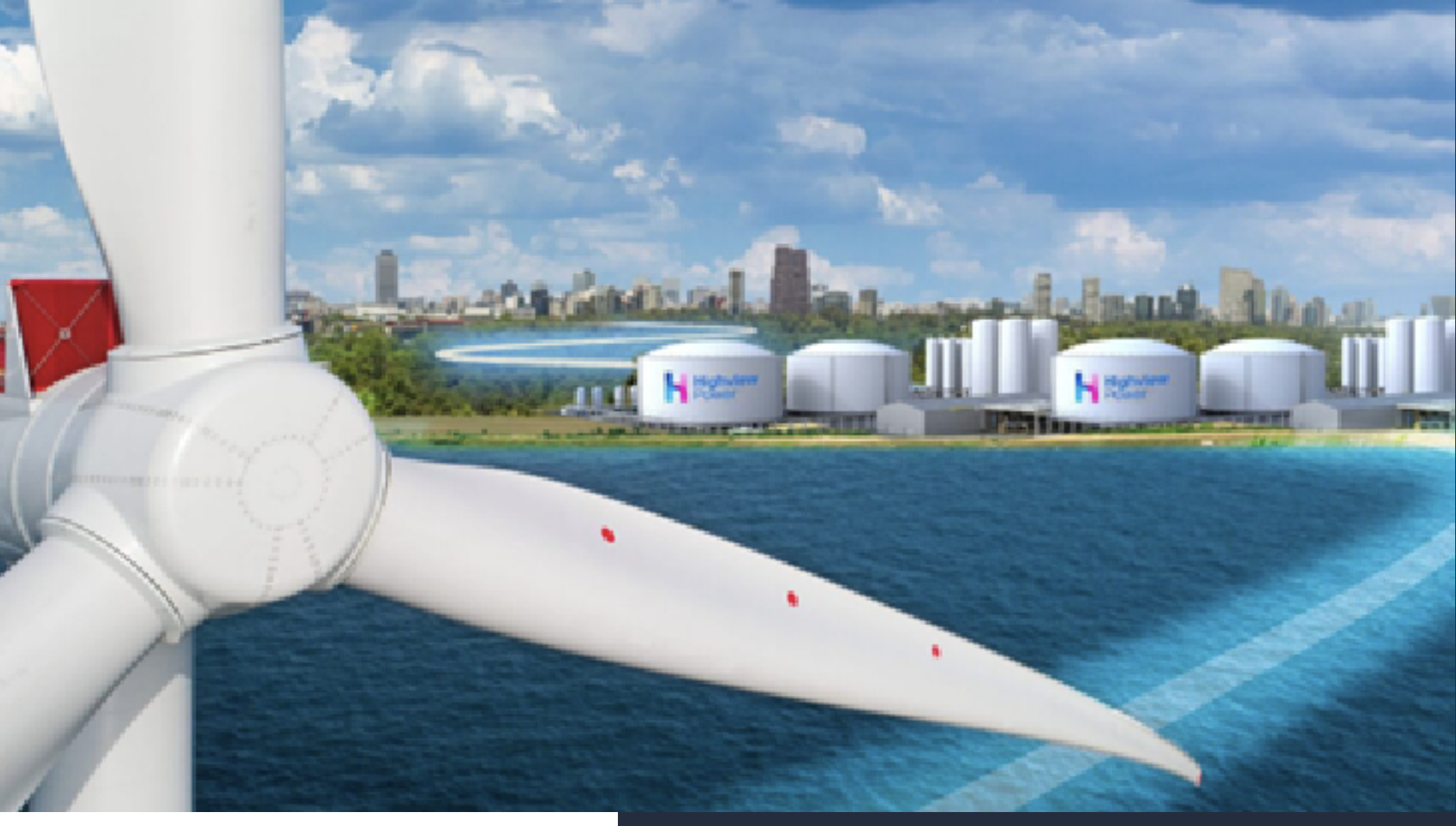
With tanks like these, which can hold GW-equivalents of liquid air, Highview could be building batteries with storage to rival the smaller pumped storage hydroelectric power stations. They are already talking of 200 MW/2.5 GWh systems, which would have a 12.5 hour continuous rating and would probably need two to three tanks.
Coire Glas Pumped Storage
I’ll use Coire Glas pumped storage hydro electric power station as an example.
As currently planned SSE’s Cioire Glas pumped storage hydroelectric power station is 1.5 GW/30 GWh, so it has a a 20 hour continuous rating.
In The UK’s Pumped Storage Hydroelectricity, I gave a rough estimate of the pumped storage hydroelectricity systems in operation or planed as nearly 11 GW/224GWh.
The Soft Cap
The article says this about a soft cap.
Another interesting detail pointed out by several commentators is that the cap is a ‘soft’ one, meaning it will allow extra revenue to be shared between developers and consumers. Exact details on the ratio are yet to be determined.
I seem to remember that when I was modeling a larger multi-vessel chemical plant at ICI, I was using sharing between vessels, to get the system to operate on a PACE-231R analog computer.
So I suspect a soft cap is possible.
British Gas Partners With Strata And Daikin To Launch Eco-Tech Low Bill Homes
The title of this post, is the same as that of this press release from Centrica.
This is the sub-heading.
British Gas is set to supercharge sustainable living across the UK with the launch of Low Carbon Homes – a ground-breaking pilot in partnership with Strata and heat pump manufacturer, Daikin.
These are the first four paragraphs, which fill out a bit of detail.
In anticipation of The Future Homes Standard, customers will move into new build homes which have been fitted with a full range of the latest low-carbon technology at no extra cost to the housebuilder or owner. The homes will be equipped with a 6-8 kWh Daikin air source heat pump, 4 kWh solar panels, 5 kWh battery storage, Hive electric vehicle charger and thermostat. These items will be integrated into Hive’s award-winning app, providing customers with one-stop visibility and control of their energy usage.
The first trial phase will launch at a Strata’s “Breathe” development site in Kiveton, Rotherham. As a thank you for participating in the pilot, British Gas is giving homeowners access to a fixed rate tailored British Gas tariff. Participants in the trial will also have access to a dedicated British Gas energy manager to help them optimise the technology and keep bills as low as possible, while still meeting their desired comfort levels.
Each home will be fitted with a Hive hub, which connects to the WIFI network and acts as the home’s operating system, integrating all the sustainable technology. The customers energy and heat schedules and budget will be optimised by the Hive Hub for further savings.
When the customer connects to Hive’s app they will be able to control and maximise efficiency by setting schedules and spending budgets and allowing the Hub to help them reduce their bills.
Note.
- As a Control Engineer, this to me is a good start.
- I suspect that a 6-8 kWh Daikin air source heat pump, 4 kWh solar panels and 5 kWh battery storage will keep the average house warm.
- I would expect that the three companies have optimised the ratios between the sizes of the components to give the best performance.
It is amazing to think that it was in the early seventies, that in the two sections, where I worked at ICI, engineers had just started controlling and optimising flows, pressures and temperatures in complex chemical plants.
If you’d asked any of us, when our houses heating systems would be as fully controlled, we’d have given twenty years at most.
What kept the world so long?
I have a few thoughts.
Could The Housing Have Gas For Cooking??
Yes! Centrica owns a big share with Hyundai, Kia and others of a start-up company called HiiROC.
- This is the HiiROC web site.
- HiiROC can take any hydocarbon gas and split it into green hydrogen and carbon black.
- Green hydrogen is obviously useful and the carbon black can be used for making tyres for vehicles, anodes for lithium-ion batteries and in agriculture for soil improvement.
- Waste off-gas from a chemical plant can be split into green hydrogen and carbon black.
- Biomethane from a sewage plant can be split into hydrogen and carbon black. Could a sewage plant on an estate be used to create biomethane for cooking and feeding to the HiiROC plant? Yes!
- Could green hydrogen produced on the estate be used to drive vehicles like cars, vans and ride-on-mowers. Yes! If the manufacturer of the vehicle allows it!
- How convenient would it be to have Hydrogen-at-Home?
How Much Does A British Gas Hive Save On My Energy Bill?
I asked Google and I got this answer from Home Hive.
£119. A smaller carbon footprint and a smaller bill – our award-winning smart thermostat could cut your energy bills by up to £170 a year. Join Hive Plus to boost your thermostat’s savings – and get exclusive access to £60 bill credit with any fixed British Gas dual fuel tariff.
At present, I have no intention of changing my energy supplier, but come the summer or if my health or energy circumstances change, I might see what is available.
Will British Gas Develop A Hive For a Smaller Dwelling?
I suspect in ten years, if I’m still of this world, I shall be living in the following circumstances.
- Alone.
- In a two bedroom house, cottage or flat.
- Some form of probably electric central heating or perhaps even hydrogen.
- No car.
- A short walk to the bus stop and/or train station.
- Communal gardens to sit in.
- An Ocado style delivery for food, groceries and other essentials.
- A local gluten-free cafe.
- Full Wi-Fi
Perhaps, British Gas and others will develop a community for people like me?
Buccleuch Group Submits Plans For 39MW Solar, 10MW Storage Development
These are the two introductory paragraphs.
Solar and storage developer Buccleuch Group has submitted a planning application for a new solar plus storage development near Kettering, Northamptonshire.
The Oakley Bush solar and battery energy storage system (BESS) project is a proposed 39MW solar development, with a 10MW BESS proposed for the site. The application area, which covers 150 hectares of land on the Boughton Estate, could play host to as many as 130,000 ground-mounted solar modules, positioned around 3.5 metres above the ground.
The development is interesting for two reasons.
It Is Being Built With Both Solar Panels And A BESS
As a Control Engineer, I believe renewable power systems should have a battery, to even out the power.
The Batteries Could Be Vanadian Flow Batteries
The article says this about, the use of vanadium flow batteries.
According to the application documentation provided to Kettering District Council, two BESS technologies are being considered for use on-site: lithium-ion batteries or vanadium flow batteries. If vanadium flow batteries are used, the site could have an energy capacity of up to 50MWh, although this will be lower if lithium-ion batteries are used.
In a presentation given at a public information event for the project earlier this year, the developers noted that vanadium flow battery technology is being considered due to its significantly lower fire risk and longer lifespan than lithium-ion batteries. An operational lifespan of 40 years is expected for the site, with construction expected to take 18 months if planning consent is granted.
Note.
- Vanadium flow batteries appear to be larger.
- Vanadium flow batteries have a lower fire risk.
- Vanadium flow batteries have a longer life span, than lithium-ion.
With other batterers coming through, I wouldn’t be surprised to see costs, performance and reliability of batteries improve.
UK To Fund Hydro Energy Storage Projects
The title of this post, is the same as that of this article on The Times.
This is the sub-heading.
New infrastructure aims to help balance the electricity system after the rapid growth in renewables
These three paragraphs infrastructure the article.
Projects that use water to store and release energy are to be given government support, in an attempt to help manage the volatility in supply and demand as more green power enters the grid.
From next year, pumped hydro storage projects will be able to apply for government subsidies, which will be provided via a “cap and floor” mechanism. These would guarantee revenues if prices drop below a certain floor but prevent providers from charging above a ceiling when power prices are high.
Like other government support schemes, any cost will be levied on energy bills, while consumers will be paid back any money generated above the cap. It is yet to be decided precisely how the cap and floor will be set.
I feel it is reasonable to expect the system to be a success, as a similar system is used for interconnectors and this article on Offshore Energy is entitled Over $86 million To Be Split Between UK and Belgium Consumers As 1 GW Subsea Interconnector’s ‘Remarkable’ Revenues Exceed Ofgem’s Cap.
It looks like Ofgem played this right for interconnectors and the Nemo Link is making a substantial payment.
It will be interesting to see what happens when “cap and floor” contracts are assigned.
This move by Ofgem will probably have effects in two areas.
- SSE, Statera and Statkraft, who are typically developing systems at the high end with a size of about 1.5 GW/25 GWh could find money is easier to come by.
- At the lower end, companies like Highview Power, who have systems of 50 MW/300 MWh and 200 MW/2.5 GWh under development, will also benefit.
My Control Engineering thoughts are leaning towards the 200 MW/2.5 GWh systems being the popular ones. Especially as they would appear to be close to the right size to support a 1 GW wind farm for two hours.
A Highview Power Two-Hour Liquid Air Battery could fit nearly with a fleet of Two-Hour BESS.
It should be noted that CAF use a little-and-large approach to theit battery-electric trams in the West Midlands.
A large lithium-ion battery is the main storage device.
A supercapacitor handles the high-frequency response and keeps the power steady.
Pairing a Highview Power Two-Hour Liquid Air Battery and a Two-Hour BESS could achieve the same performance and possibly result in some cost savings.
How To Protect The UK Population From Future Pandemics
The Times today has an article, which is entitled Flu Jab: Single-Shot Vaccine ‘Within Five Years’ Could Stop Future Pandemic.
This is the introductory paragraph of The Times article.
A single-shot vaccine against flu that would provide a lifetime of protection even against future mutations could be available in “five years or less”, scientists have said after making a breakthrough.
The article is very much a must-read, but I believe if used alongside a simple proven medical test, it could be even more effective.
Since 1997, when I was diagnosed as coeliac and started eating gluten-free food exclusively, I have never had a dose of flu.
I may have had one very mild dose of Covid-19, but I have never had a serious dose.
Research At The University Of Padua
This partial immunity to Covid-19 has been shown in a peer-reviewed scientific paper, by the University of Padua in Italy.
I discuss the Padua research in Risk Of COVID-19 In Celiac Disease Patients.
Mathematical Modelling Of Pandemics
As a control engineer, mathematical modeller and statistician, I believe that our herd immunity to future pandemics could be increased, if all new entries to the UK population, like babies and migrants, were tested for coeliac disease.
These days the coeliac test is just a blood test, that costs just a few pounds and I believe that a high percentage of gluten-free coeliacs in the UK population, because of their low susceptibility to flu pandemics, would slow the spread of the pandemic.
In a nuclear reactor non-radioactive carbon rods are often used to control the speed of the reaction.
I believe that non-susceptible coeliacs on gluten-free diets would perform the same function in the UK population.
Should Diagnosed Coeliacs Be Forced To Be Gluten-Free?
I would not force coeliacs to go gluten-free.
They would have to face up to the consequences, if they didn’t.
My son was an undiagnosed coeliac, who refused to get tested.
He died at 37 of pancreatic cancer, as his immune system was useless.
Coeliac disease and a gluten-free diet is a good wingman, but undiagnosed it can kill you!
Why Should Migrants Be Tested?
I hope they are, as some might have something nasty.
But if everyone was tested for a wide range of health and genetic conditions, could it act as a deterrent to come to the UK?
Oxford And Cambridge Compared On COVID-19
In Oxford And Cambridge Compared On COVID-19, I compared the COVID-19 rates of the two University cities.
- Oxford and Cambridge are very similar-sized cities and both ae surrounded by similar counties and countryside.
- During the pandemic, Oxford had a much higher COVID-19 rate than Cambridge.
From my experiences and observations in Cambridge, I believe that the city has a high level of coeliacs.
Why Does Cambridge Have A High Level Of Coeliacs?
I doubt, it is due to the genetics of the local population, as if it was, my coeliac disease would have been picked up earlier.
The two most likely causes are.
- Someone in the Health Authority decided to have a Whack-a-Coeliac policy.
- Addenbrooke’s Hospital, in conjunction with Cambridge University and the Sanger Centre were testing the accuracy of the newly-develop genetic test for coeliac disease.
Note.
- Both routes would have needed a streamlined endoscopy unit to test all those thought to be coeliac.
- I was tested twice in such a unit to prove that I was coeliac, after the genetic test showed, I probably was.
- Fit, younger patients were pushed to have the endoscopy without a sedative, which cut the number and cost of recovery beds and staff.
- My endoscopies were performed without a sedative, by a doctor working alone.
- I was able to drive home, a few minutes after the procedure.
It was a classic case of applying good old-fashioned time-and-motion to a test that would have to be applied to a large number of patients.
If Cambridge’s army of coeliacs helped the city take the edge of the pandemic, what would a Whack-a-Coeliac policy, do for other cities?
Are Bodies Cleverer Than We Think?
Because, I had a serious stroke thirteen years ago, I am on Warfarin for life to thin my blood, so that I don’t have another stroke.
INR is short for International Normalized Ratio, which diverts on Wikipedia to the Wikipedia entry for Prothrombin Time, where these is the first two paragraphs.
The prothrombin time (PT) – along with its derived measures of prothrombin ratio (PR) and international normalized ratio (INR) – is an assay for evaluating the extrinsic pathway and common pathway of coagulation. This blood test is also called protime INR and PT/INR. They are used to determine the clotting tendency of blood, in such things as the measure of warfarin dosage, liver damage, and vitamin K status. PT measures the following coagulation factors: I (fibrinogen), II (prothrombin), V (proaccelerin), VII (proconvertin), and X (Stuart–Prower factor).
PT is often used in conjunction with the activated partial thromboplastin time (aPTT) which measures the intrinsic pathway and common pathway of coagulation.
That is very technical and complicated, but what does it mean practically?
Those on Warfarin to thin their blood are generally supposed to keep their INR between 2 and 3.
I test the INR myself with a Coaguchek meter from Roche and have done so for nearly ten years.
Every, so often, I discuss the level of Warfarin with my GP and we adjust the level accordingly.
Typically, NHS patients on Warfarin have their INR checked every few weeks.
But as I am a Graduate Control Engineer, who has written control strategies for chemical plants, I feel this checking every few weeks, is not enough.
At times, I have checked at a higher frequency.
Four times, I have had minor operations.With the first operation, I agreed with the surgeon, that I would lower my INR to 2.1 for the operation and raise it back to 2.5 after the operation.
It all went well and I repeated the exercise for the three other minor operations.
I have checked daily since about the beginning of April, before which, I generally tested on Mondays and Thursdays.
There were two reasons for the change of frequency.
- Regular storms seemed to roll in and for some reason, they tended to lower my INR.
- I also wrote Do Thunderstorms Cause Strokes?, after reading a paper from the United States about the relationship between thunderstorms and strokes.
So I took the prudent decision to test my INR daily.
Then on the 30th May, disaster struck.
My Coaguchek meter found out it had the wrong firmware and Roche implored me to change it.
But I am not a hardware person, so I was left unable to check my INR.
Luckily, I remembered a story from the 1960s about one of ICI’s chemical plants.
This plant was one of the first fully-digitally controlled plants controlled by an IBM 1800 computer.
It also ran 24 hours a day, seven days week.
So in the middle of the night, the plant operators got out all the computer printouts, which showed how the computer had set all the valves and controllers.
One-by-one they reset all the controls on the plant to the settings that the computer had used for the last few days.
Using, this computer-assisted mode the plant was kept running, until engineers could fix the computer.
On the 30th May, my INR was a little bit high at 2.9 and I was using a dosage of Warfarin of 4 mg. one day and 3.5 mg. the next.
The strange dosage was one, that I know from experiment over time produces an INR of 2.5.
My actual average Warfarin dose was 3.73 over the last thirty days and my INR, as measured most days was 2.6 over the same period.
So, I did what the engineers did on the chemical plant, kept calm and carried on.
Yesterday my son fixed the Coaguchek meter and I was able to take my first reading for 17 days. It was 2.7 and only 0.1 higher than the 30-day average on the 30th May.
I had successfully jumped the gap in the readings.
Conclusion
Most systems have an equilibrium. Make sure you know it.
 The Anonymous Widower