Could A Highview Power CRYOBattery Provide Backup Power For A Large Data Centre?
I asked Google AI how much power does a data centre need and got this answer.
The power requirements for an average data center vary greatly depending on its size and purpose, ranging from 1-5 MW for small facilities to 20-100 MW or more for large hyperscale centers. Small data centers, typically with 500-2,000 servers, might need 1-5 MW of power, while large or hyperscale data centers, housing tens of thousands of servers, can consume 20-100 MW or even more.
As Highview Power are currently building four 200 MW/2.5 GWh CRYOBatteries for the UK, I am fairly sure the answer is in the affirmative.
AI Forecast To Fuel Doubling In Data Centre Electricity Demand By 2030
The title of this post, is the same as that as this article in The Times.
This is the sub-heading.
International Energy Agency predicts that artificial intelligence could help reduce total greenhouse gas emissions
These are the first two paragraphs.
Data centres will use more than twice as much electricity by 2030 than they do today as artificial intelligence drives demand, the International Energy Agency predicts.
The agency forecast that all data centres globally will use about 945 terawatt-hours of electricity each year by 2030, roughly three times as much as the UK’s total annual demand of 317 terawatt-hours in 2023.
I am very much an optimist, that here in the UK, we will be able to satisfy demand for the generation and distribution of electricity.
- Our seas can accommodate enough wind turbines to provide the baseload of electricity we will need.
- Roofs and fields will be covered in solar panels.
- SSE seem to be getting their act together with pumped storage hydro in Scotland.
- I am confident, that new energy storage technologies like Highview Power with the packing of companies like Centrica, Goldman Sachs, Rio Tinto and others will come good, in providing power, when the wind doesn’t blow and the sun doesn’t shine.
- Hopefully, Hinckley Point C and Sizewell C will be online and soon to be joined by the first of the new small modular nuclear reactors.
- Hopefully, Mersey Tidal Power will be operating.
- There will be innovative ideas like heata from Centrica’s research. The economical water heater even made BBC’s One Show last week.
The only problem will be the Nimbies.
Sunset Studios Pivots From Plan To Develop Major Soundstage Complex Outside US
The title of this post, is the same as that of this article on the Hollywood Reporter.
This is the sub-heading.
Operator Hudson Pacific and investment giant Blackstone had envisioned a 91-acre site in North London to have 21 soundstages totaling 470,000 square feet.
These two paragraphs give more details.
Plans have been formally put on hold for a 91-acre film and TV soundstage complex outside of London that had been billed as a major foray for the Sunset Studios brand outside the United States.
Sunset Studios, owned by operator Hudson Pacific along with significant investor Blackstone, had announced the project in 2021 during what may have been the height of the streaming content spending boom on film and TV projects.
This Google Map shows the site today.
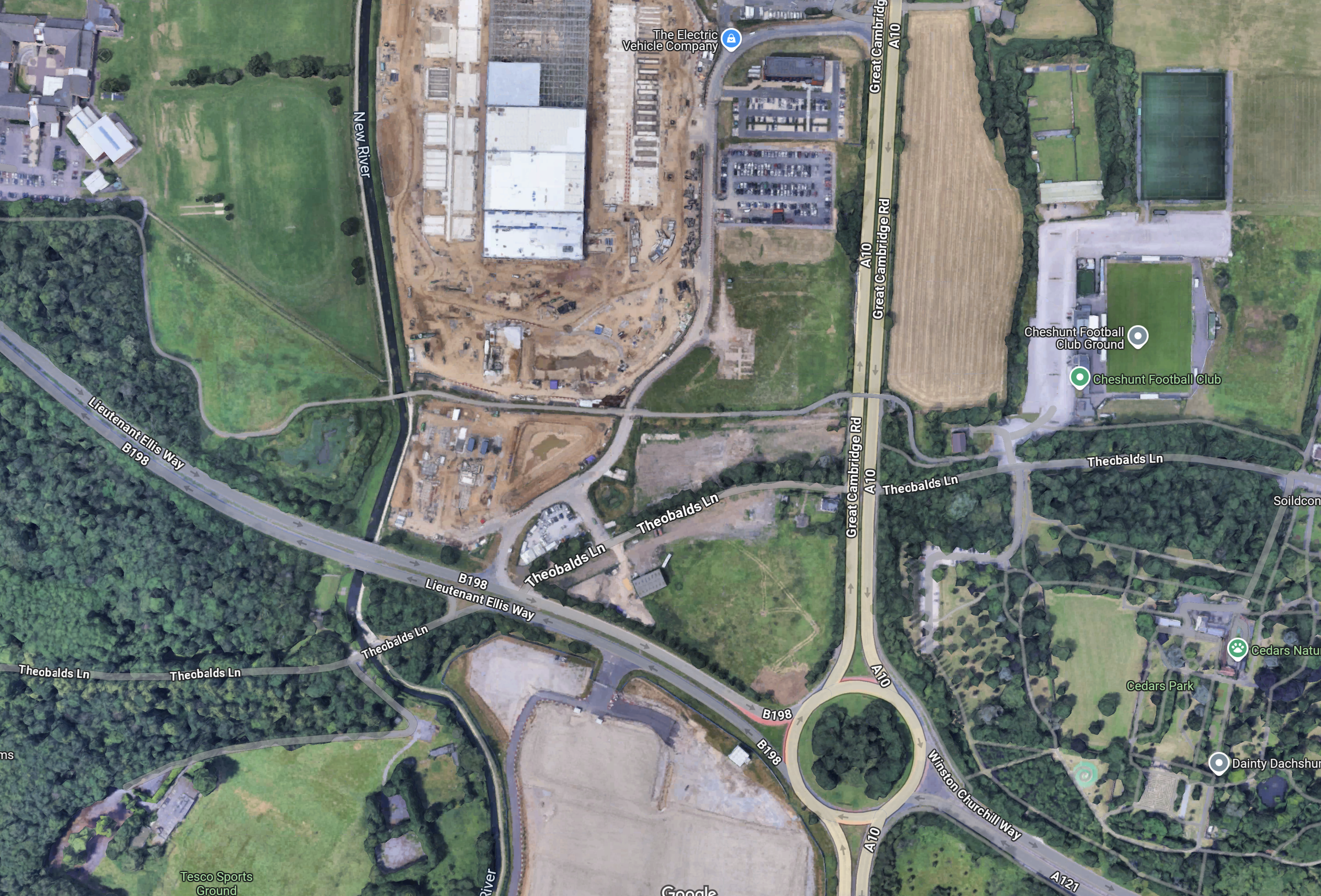
Note.
- The North-South road is the A10.
- The roundabout , is where Winston Churchill Way meets the A10.
- The dual-carriageway going West from the roundabout is Lieutenant Ellis Way.
- Construction of a data centre for Google seems to have started to the North-West of the roundabout.
- Lieutenant Ellis Way would have separated the data centre from the studios.
In Google Starts Building £790m Site In Hertfordshire, I say more about building the data centre.
This Google Map shows the area South of the roundabout, where Winston Churchill Way meets the A10.
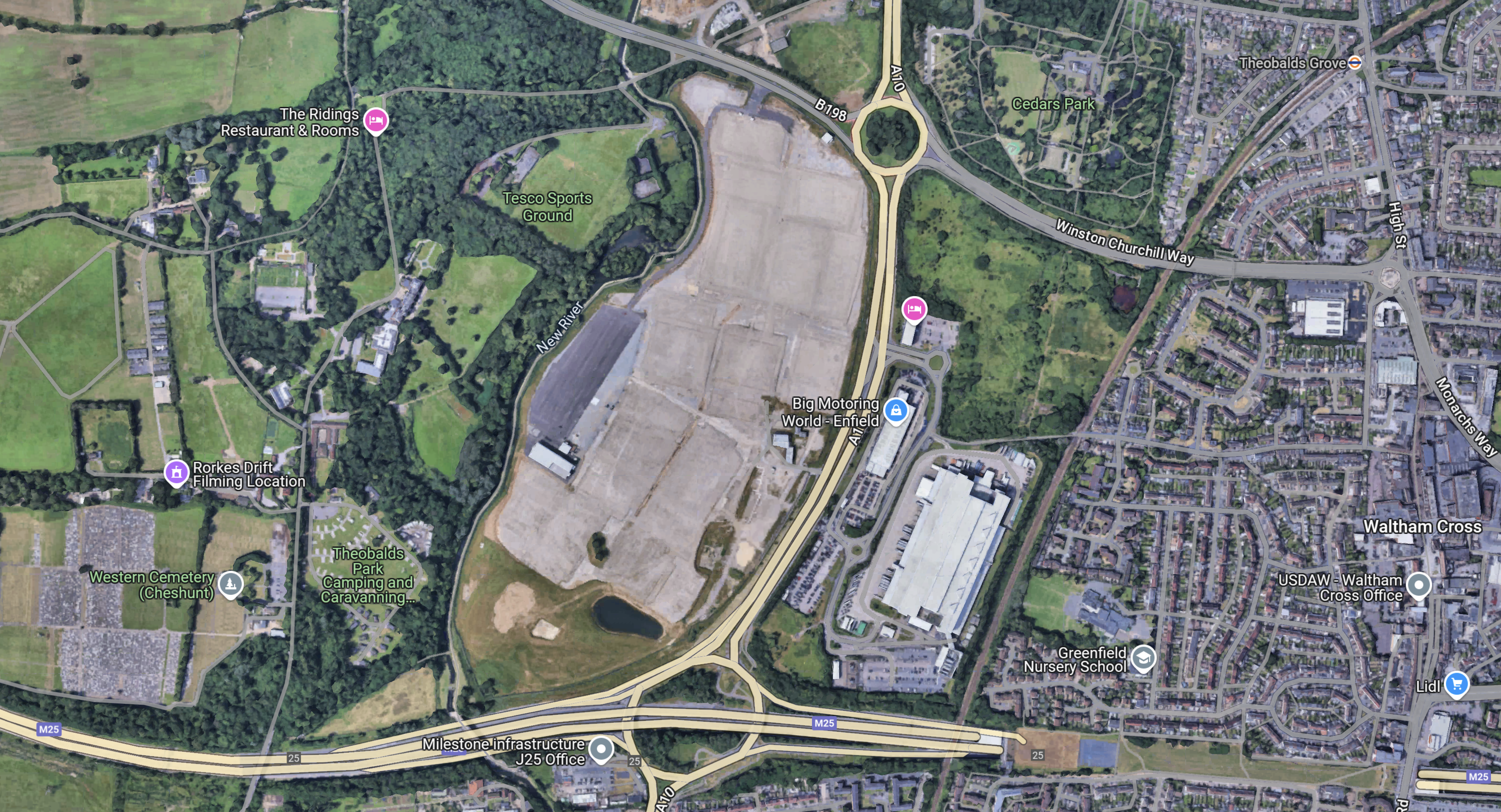
Note.
- The North-South road is the A10.
- The green patch of land to the South-East of the roundabout where Winston Churchill Way meets the A10 appears to be ripe for development.
- Looking at the green patch with a higher resolution, the land is little more than high class scrub beloved of newts.
- The London Overground line to Cheshunt runs down the East side of the site.
- To the North, the London Overground crosses Winston Churchill Way to get to Theobalds Grove station.
- To the South, the London Overground crosses the M25 to get to Turkey Street station.
- The M25 runs across the bottom of the map, through junction 25.
- The site to the West of the A10 between the two roundabouts, was the site reserved for Sunset Studios.
- The site appears to have been concreted.
What is going to happen to the Sunset Studios site now?
Blackstone Secures Approval For $13bn Hyperscale Data Centre In UK
The title of this post, is the same as that of this article in Private Equity Insights.
This is the sub-heading.
Blackstone has received approval from Northumberland County Council to move forward with its $13bn hyperscale data centre project in North East England.
These three paragraphs add detail.
The investment marks a major push by the private equity giant into the fast-expanding digital infrastructure sector, as demand for data storage and cloud computing surges.
The project, covering 540,000 square metres, represents one of the largest data centre developments in Europe. It is expected to bring significant economic benefits to the region, creating 1,200 long-term construction jobs, hundreds of permanent operational roles, and up to 2,700 indirect positions.As part of its commitment to the local economy, Blackstone has pledged £110m to support job creation and economic growth along the Northumberland Line, a newly launched railway corridor. Find out more and meet Blackstone at the Italy Private Equity Conference in Milan.
The Northumberland Line cost £300 million to build. Adding £110 million for job creation and economic growth looks to be a good return for the North-East.
Conclusion
As we have the power, perhaps we should add a few more hyperscale data centres around our coasts.
British Gas Partners With heata On Trial To Reuse Waste Heat From Data Processing
The title of this post, is the same as that of this news item from Centrica.
This is the sub-heading.
British Gas has partnered with sustainable cloud computing provider, heata, on an innovative trial to explore how harnessing waste heat generated by computer servers can save households money on their bills.
These two paragraphs describe heata’s system.
heata’s innovative model distributes cloud computing workloads to servers in homes. In a data centre, the heat generated during processing is a waste product, and energy-intensive cooling systems are required to stop the servers from overheating.
To overcome this, heata has created a ‘virtual data centre’ – a network of servers distributed in people’s homes. Each server is attached to the home’s hot water cylinder, and as they process data, the heat they generate is transferred into the water. This reduces the energy needed to heat water in the home, and as this is typically provided by gas boilers, it reduces the amount of gas used, lowering the carbon impact as a result. heata pays for the electricity the heata unit uses, which means the household pays less to heat their hot water.
Note.
- I would expect that future systems would also heat the house.
- I would be an ideal system for my house, as I have an unusual skin, that is better with a daily bath.
- I also wash my eyes most days with clean warm water, as they are often full of sleep.
- heata has a web site.
- heata has an about page, which describes the company and the technology.
- heata is supported by British Gas, Innovate UK and Sustainable Futures.
- Thermify is a similar system.
These three paragraphs describe the trial.
As part of a three-month trial, 10 heata units will be installed in the homes of British Gas employees, and the energy provider’s computing workloads will be processed on these units. As a result British Gas will be providing free hot water for its own employees as a byproduct of their own cloud compute.
The trial will provide feedback around performance and customer experience, as well as demonstrating the associated CO2 and energy cost savings to further co-develop customer propositions in 2025.
According to heata, the devices can provide up to 4kWh of hot water per day, with the technology expected to save households up to £340 per year when offsetting electrically heated hot water, and up to £120 when offsetting gas heated hot water.
I shall certainly think about fitting one.
£10bn Investment In AI Data Centre Confirmed
The title of this post, is the same as that of this article on the BBC.
This was the sub-heading.
A £10bn investment in a new artificial intelligence data centre will create about 4,000 jobs, the government has said.
These two paragraphs add more details.
The site in Cambois, near Blyth, Northumberland, will become one of Europe’s biggest AI data centres.
The land was bought by private equity giant Blackstone earlier this year, after the collapse of Britishvolt which had planned to build an electric car battery factory on the site.
In My First Trip On The Northumberland Line – 18th December 2024, I said this after my first trip to the line.
The Blyth Valley Is Well Supplied With Electricity
Several high-capacity connections to wind farms and Norway are planned to come ashore at Blyth and it appears from the pictures that the area is well connected to the grid.
This must have nudged Britishvolt to put their battery plant at Blyth.
But no matter for those jobs, as with a rail service to Greater Geordieland and lots of electricity, there must be other energy-hungry businesses like datacentres or small modular reactor factories, who would want the site.
The Long Platforms
I am fairly sure that some of the platforms have been sized to take a five-car Hitachi Class 80x train, which are only 130 metres long and can carry around 400 passengers.
This must enable the ability to use the Northumberland Line as a diversion for the East Coast Main Line.
Some services could perhaps stop at Blyth for the large factories and/or Northumberland Park for the Metro.
It looks to me, that the Northumberland line was designed for large factories or businesses with lots of workers, that needed lots of electricity.
My First Trip On The Northumberland Line – 18th December 2024
Yesterday, I took Lumo to Newcastle and took my first ride to Ashington on the Northumberland Line.
These are some of the pictures I took.






































































































Note.
- Much of the route is double-track.
- Bridges over the tracks indicate, that some stations will have two platforms.
- I suspect some stations could take a five-car train.
- One guy said that there is a lot of landscaping to do.
- The standard is very similar to the Borders Railway.
I have some other thoughts.
The Blyth Valley Is Well Supplied With Electricity
Several high-capacity connections to wind farms and Norway are planned to come ashore at Blyth and it appears from the pictures that the area is well connected to the grid.
This must have nudged Britishvolt to put their battery plant at Blyth.
But no matter for those jobs, as with a rail service to Greater Geordieland and lots of electricity, there must be other energy-hungry businesses like datacentres or small modular reactor factories, who would want the site.
The Long Platforms
I am fairly sure that some of the platforms have been sized to take a five-car Hitachi Class 80x train, which are only 130 metres long and can carry around 400 passengers.
This must enable the ability to use the Northumberland Line as a diversion for the East Coast Main Line.
Some services could perhaps stop at Blyth for the large factories and/or Northumberland Park for the Metro.
It looks to me, that the Northumberland line was designed for large factories or businesses with lots of workers, that needed lots of electricity.
Development North Of Ashington
This OpenRailwayMap shows the area North of Ashington.
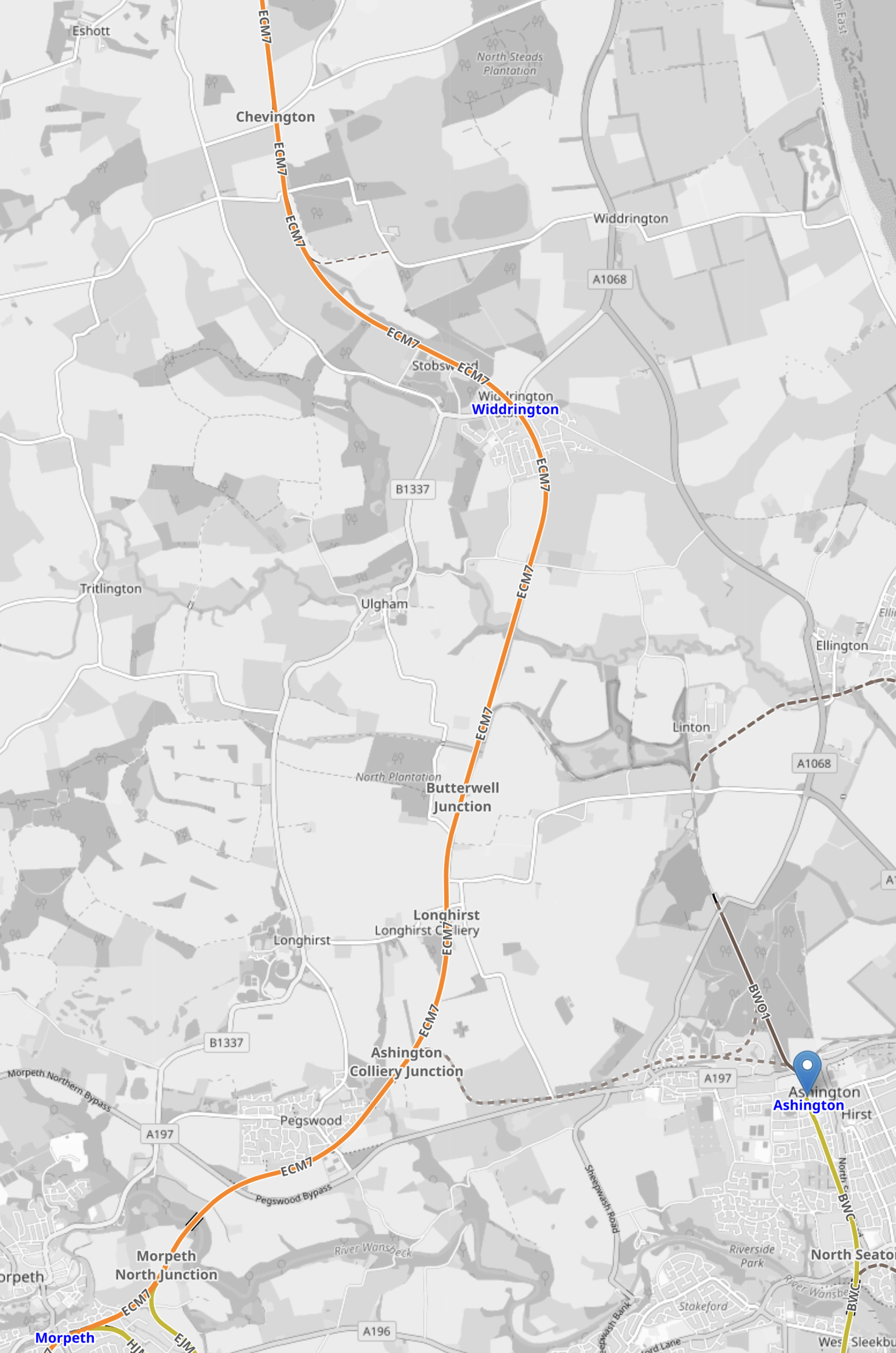
Note.
- The orange line going up and down the map is the East Coast Main Line.
- Morpeth station is in the South-West corner of the map.
- Ashington station is in the South-East corner of the map.
I think there might be scope to develop this area to make the heavy components needed for wind farms and small modular reactors,
Why Artemis Was Fast
Some of you will know, that I wrote Artemis; the project management software system in the 1970s.
It was generally accepted, that Artemis could do project management calculations, quicker than other software and this obviously helped it gain a high market share.
Here’s why!
In the 1950s and 1960s, computers were much smaller and very efficient algorithms were developed to handle large amounts of information in a small amount of memory.
Nowadays, I suspect obvious and very inefficient algorithms are used because programmers are very lazy.
When I was writing Artemis; the project management system in the 1970s, I spent many hours finding these old algorithms in IBM’s library, so consequently the software was faster, than its competitors.
Modern Data Centres
I wouldn’t be surprised to find, that data centres use so much electricity and get so hot, because they use stupid algorithms, that would have been rejected by IBM in the 1950s.
Could Liverpool Develop A Massive Zero-Carbon Data Centre?
There is an article in The Sunday Times today, which is entitled Google Signs Nuclear Deal To Power AI Data Centres.
These are the first three paragraphs of the article.
Google has struck a deal with a nuclear power start-up to provide low-carbon energy for its data centres and AI operations, marking a world-first in the tech industry.
The California-based company said the agreement to buy energy from multiple small modular reactors developed by Kairos Power could help spur a nuclear revival in America.
The first reactor is scheduled to come online in America by 2030, followed by additional deployments through 2035.
I am not against nuclear-powered data centres, but could Liverpool build a massive zero-carbon data centre?
This Google Map shows Liverpool Bay, which is a vast expanse of water that stretches along the North Wales coast to Anglesey and all the way to the Isle of Man.
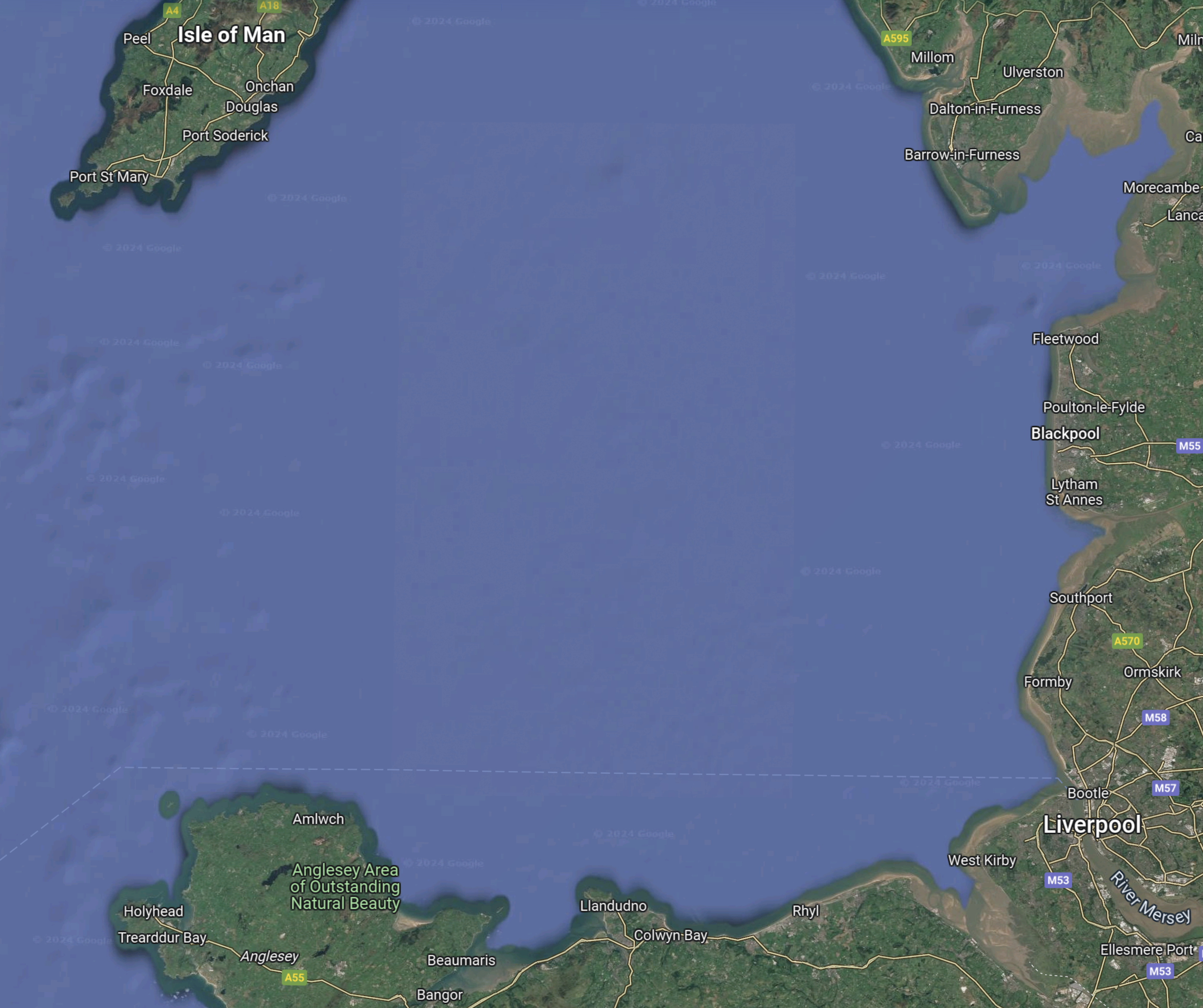
Note.
- The Isle of Man in the North-West corner.
- Liverpool, Birkenhead and the River Mersey in the South-East corner.
- Anglesey in the South-West corner.
- Blackpool with Morecambe Bay to its North in the North-East corner.
Liverpool Bay could be one of Europe’s zero-carbon energy powerhouses.
Wind Farms In Liverpool Bay
At the present time, these wind farms are producing electricity or planned in Liverpool Bay.
- Barrow – 90 MW – Commissioned in 2006
- Burbo Bank – 90 MW – Commissioned in 2007
- Burbo Bank Extension – 258 MW – Commissioned in 2017
- Gwynt y Môr – 576 MW – Commissioned in 2015
- North Hoyle – 60 MW – Commissioned in 2003
- Ormonde – 150 MW – Commissioned in 2012
- Rhyl Flats – 90 MW – Commissioned in 2009
- Walney – 367 MW – Commissioned in 2010
- Walney Extension – 659 MW – Commissioned in 2018
- West if Duddon Sands – 389 MW – Commissioned in 2014
- Awel y Môr – 500 MW – Planned
- Morecambe – 480 MW – Planned
- Mona – 1500 MW – Planned
- Morgan – 1500 MW – Planned
Note.
- 2509 MW has been commissioned.
- 3980 MW is being planned.
- That is a total of 6489 MW
I suspect more space in Liverpool Bay could be developed with wind farms.
Mersey Tidal Power
The Mersey Tidal Power project has a web site.
If it is built, it will probably be built by the South Korean company; K-Water and use some of the design principles of the Sihwa Lake Tidal Power Station.
It will likely have an output of around 1 GW and take ten years to build.
In the 1970s, I did some project management consultancy for Frederick Snow and Partners, and they showed me their plans for a Severn Barrage.
Their futuristic vision for the Severn Estuary was never built, as the Prime Minister of the time; Harold Wilson, felt coal was the future. See Last Of The Many!
I suspect that the Mersey Tidal Power project will be another variation on a proven theme.
Morecambe Bay Bridge And Tidal Barrage Proposal
In the Wikipedia entry for Morecambe Bay, there is a proposal for a bridge and tidal barrage across the bay, where this is said.
In 2004, a proposal was made to build a bridge across the bay flanked by wind turbines and using tidal power. Proposals from Northern Tidal Power Gateways in 2019 outlined a tidal barrage with a road running along on top.
If the Mersey Tidal Power project is a success, then why wouldn’t one across Morecambe Bay, be one too?
500 MW of zero-carbon tidal power would do nicely!
Nuclear Sites At Calder Hall, Heysham And Wylfa
These three nuclear stations have supplied electricity to the North-West of England.
- Calder Hall was the original Magnox site, which the Wikipedia entry says had a nameplate capacity of 240 MW and was decommissioned in 2003, after running for 47 years.
- Heysham is a powerful site which the Wikipedia entry says has a nameplate capacity of 2452 MW and will be decommissioned in 2028.
- Wylfa is an older, smaller Magnox site which the Wikipedia entry says had a nameplate capacity of 1190MW and was decommissioned in 2015.
As the sites are cleared, I am sure that we’ll see more nuclear power stations built on the sites.
How Much Electricity Does A Data Centre Use?
I found this paragraph in an NESO document.
Regardless of this, if we were to use existing market data and modelling projections, this could point to annual data centre electricity consumptions of between 3.6 TWh in 2020 to as much as 35 TWh by 2050.
Dividing by the hours in a year, indicates that an individual data centre could use between 0.4 and 4 GW of electricity.
Using my rough figures here from wind, tidal and nuclear, I suspect that the power on the Mersey will generate enough power for at least one data centre.
Liverpool Is On The Right Side Of The Country For Cables To North America
Cables will go straight out of Liverpool Bay, pass to the North of Ireland and across the Atlantic to somewhere like Puget Sound.
Liverpool has a superb location for a Transatlantic data centre, that connects to networks on both sides of the pond.
Could Underwater Data Centres Be Developed In Liverpool Bay?
This page on the Microsoft web site is entitled Microsoft Finds Underwater Datacenters Are Reliable, Practical And Use Energy Sustainably
These three paragraphs detail the research.
Earlier this summer, marine specialists reeled up a shipping-container-size datacenter coated in algae, barnacles and sea anemones from the seafloor off Scotland’s Orkney Islands.
The retrieval launched the final phase of a years-long effort that proved the concept of underwater datacenters is feasible, as well as logistically, environmentally and economically practical.
Microsoft’s Project Natick team deployed the Northern Isles datacenter 117 feet deep to the seafloor in spring 2018. For the next two years, team members tested and monitored the performance and reliability of the datacenter’s servers.
I would assume that Microsoft have continued the research, as with something like this you can’t be too careful.
But it would appear, that data centres and their servers could be submerged under the waters of Liverpool Bay.
London And Liverpool Will Be Under Two Hours By Train Within A Year
New Class 807 trains, which will be delivered within a year, will improve the train service between the two cities.
- Train times will be brought to around or even below two hours.
- , The extra trains will allow a second hourly service to be added.
- The extra service will additionally stop at Liverpool South Parkway station, for the airport.
- High Speed Two is claiming one hour and fifty minutes, between London and Liverpool.
Liverpool already has one of the best rail terminals in the North of England, as these pictures show.




































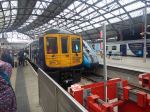



























With these service improvements, it will have a service to London and the South, that will be second to no other Northern station.
Liverpool Has A Refurbished Partly-Underground Suburban Railway With New Trains
Liverpool’s Metro is one of the best in Europe for a medium-sized city.
The Metro is also expanding with new routes and stations.

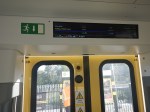














These pictures show the new Headbolt Lane station, which is swerved by the UK’s first battery-electric trains.
Liverpool Has Easy Access To Two International Airports
There are two international airports close by; Liverpool John Lennon and Manchester International.
- For Liverpool Airport, it’s a bus from Liverpool South Parkway station or an express bus from Liverpool city centre.
- For Manchester Airport, it’s a train from Lime Street station.
I am fairly sure, that a hydrofoil could connect Liverpool’s Waterfront and the Tidal Barrier to the airport.
North-West England Has A Rich University Tradition
Liverpool, Manchester and the surrounding area has several world-class universities and research establishments.
Some like The Pandemic Institute would be able to find uses for all the computing power and artificial intelligence on offer at a powerful data centre.
Liverpool Is A World City
Liverpool is a World City, where there is plenty of sport, entertainment and things to do.
Conclusion
Liverpool is installing the power infrastructure for a very large data centre, that will be able to handle the world’s largest and most difficult problems.
Schneider Electric: Vertical Farming – The Next Yield In Data Centre Sustainability
The title of this post, is the same as that of this article on Intelligent Data Centres.
This is the sub-heading.
David Abrahams, Key Client Manager, Cloud and Service Partners at Schneider Electric UK and Ireland, discusses vertical farming and the next yield in data centre sustainability. He outlines new data centre sustainability strategies, vertical farming solutions and how data centres can apply already existent models which will allow plants and crops to thrive in unique Growth Towers.
These are the first two paragraphs.
As data centres begin to reach their physical sustainability limits without redefining the laws of physics, vertical farming could provide a new solution to the decarbonisation challenge, creating a symbiotic environment for both data and nature to benefit one another.
Coined by some as the fourth revolution in agriculture, vertical farms today provide closed conditions which deliver major sustainability benefits including limited or zero use of pesticides, while ensuring the farm is safe from extreme weather-related events such as high temperatures, humidity, floods and fires.
The last section is called Making The Concept A Reality, where these are the first three paragraphs.
Equinix has already taken the leap and has become the first global operator to develop a fully functioning vertical farm at its PA10 Paris data centre, creating a 4600 sq.ft greenhouse which is surrounded by 61,000 sq.ft of garden space.
The vertical farm is kept at an ideal growing temperature, using heat exchangers linked to the data centre’s chilled water-cooling system with sensors that monitor internal and external temperatures and humidity levels. With such available technology, farmers will be able to make real-time changes to their growing conditions to achieve higher yields at lower energy. This could be a game changer considering the greater strain on the global food supply chain and the general cost of energy.
With increased demands for efficiency and sustainability, both data centre and agricultural sectors are under the greatest scrutiny. The idea of data centre and farming worlds collaborating to create a circular economy to help futureproof both industries is not only exciting but unveils a world of new decarbonisation opportunities.
It strikes me that combining a data centre and a vertical farm could be a marriage made in eco-heaven.
I suggest you read all the original article.

