Fortescue Making Plans To Test ‘Green’ Locomotives At Rail Operations In 2022
The title of this post, is the same as that of this article on International Mining.
This is the first two paragraphs.
The decarbonisation of Fortescue Metals Group’s (Fortescue) locomotive fleet is ramping up with the arrival of two additional locomotives at Fortescue Future Industries’ (FFI) research and development facility in Perth, Western Australia.
The two four-stroke locomotives will undergo further testing on the new fuel system, joining the first two-stroke locomotive which underwent testing earlier this year.
FFI aim to test the locomotives in 2022.
Reading the International Mining article reveals an interesting philosophy for decarbonisation.
FFI have set up a Green Team and it appears that they have a free rein to stick their noses into any decarbonisation issue in Fortescue Metals Group’s business.
I know it is a technique that works from personal experience.
When I worked for ICI Plastics Division in the early 1970s, I was in their Computer Techniques Section. The section had been setup by the Divisional Board to see if these new-fangled computers had a use in the running and development of the business outside of the company’s billing and accountancy.
We had a right to stick our noses anywhere.
It certainly gave me a wonderful apprenticeship into how to apply computers to diverse and difficult problems.
First In-flight 100% Sustainable-Fuels Emissions Study Of Passenger Jet Shows Early Promise
The title of this post, is the same as that of this press release from Rolls-Royce.
This is the introductory paragraph.
Initial findings from a world-first study of the impact of 100% sustainable aviation fuel (SAF) on both engines of a commercial jet have provided promising early results.
The study was performed using an Airbus A350, which is powered by Rolls-Royce Trent XWB engines.
This paragraph describes the tests.
In April, the A350 flew three flights over the Mediterranean Sea pursued by a DLR Falcon chaser plane to compare in-flight emissions of both kerosene and Neste’s hydro-processed esters and fatty acids (HEFA) sustainable fuel. The team also carried out compliance tests using 100% SAF and no operational issues were experienced.
I was surprised, when I first read this, that they used a chase plane to measure emissions, as I thought they’d simulate that in a test cell on the ground.
But this is probably, the best way to test the engines, whilst running on sustainable aviation fuel, in real-world conditions.
Conclusion
I believe that sustainable aviation fuel (SAF) will be the interim solution to flying until hydrogen-powered aircraft are developed.
With Southwest Airlines Deal, Velocys Presells 100% Of The Output From Its US Biobased Jet Fuel Project
The title of this post, is the same as that of this article on the American Chemical Society.
This is the first paragraph.
The biofuel maker Velocys has signed jet fuel purchase agreements with Southwest Airlines and International Airlines Group. Velocys says it now has agreements for the entire output of the facility it plans to open in Mississippi in 2026. The plant, known as Bayou Fuels, will use gasification and Fischer-Tropsch chemistry to make the fuel from wood waste. It will be fitted with carbon-capture equipment from Oxy Low Carbon Ventures, making its fuel net-negative in CO2 emissions. The two airlines have also agreed to buy the resulting greenhouse gas.
Note that the technology is net-negative in carbon dioxide emissions.
This must be a short-term route to decarbonise existing aviation.
Upcycling A Truck
Whilst walking through the City of London this morning, I came across this truck.
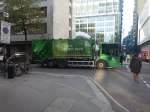
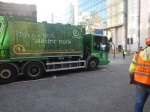


It’s even got its own web page on the Refuse Vehicle Solutions web site.
This is the first paragraph.
Paper Round, part of BPR Group, has received its very own fully electric-conversion vehicle from Refuse Vehicle Solution (RVS) this week. The company is committed to transforming the future of resource management and the switch to electric is a major step in achieving this goal.
And this paragraph describes the conversion.
We have converted a Mercedes Econic 2630, 6×2 RS with a MOL VDK body and bin lift into a fully electric truck. It was being used by Paper Round as part of their commercial waste and recycling collection services in London. The RCV was converted from a diesel euro 5 engine to electric at RVS’s headquarters in Berkeley using the innovative EMOSS technology. With zero emissions, this new addition will contribute towards reducing Paper Round’s carbon footprint.
The performance seems impressive with a top speed of 56 mph and a range of around 250 km.
The economics of the truck indicate, that it is cheaper to go electric by converting an existing vehicle, rather than buying a new one.
Hence the title of this post.
Freightliner Continue Trials On New Low Carbon Fuel
The title of this post, is the same as that of this article on Rail Technology Magazine.
This is the first paragraph.
As part of their commitment to carbon reduction Freightliner will conduct operational trials of a new low carbon fuel supplied by Green Biofuels Ltd (GBF).
And this paragraph described the fuel.
GBF are the UK’s leading provider of Hydrogenated Vegetable Oil (HVO) and the new fuel consists of 55% Shell GTL (gas to liquids) Fuel and 45% Gd+ HVO.
It does appear that hydrotreated vegetable oil or HVO, could be becoming an intermediate step on the route to decarbonisation, as I’ve posted about the fuel before in Powered By HVO.
The other promising route to decarbonisation must surely be that of producing fuel from waste, as pioneered by Velocys and others.
But they are only intermediate steps before hydrogen becomes the preferred zero-carbon fuel for rail freight services.
Alstom Hydrogen Aventras And Great Western Branch Lines Between Paddington And Oxford
In Alstom And Eversholt Rail Sign An Agreement For The UK’s First Ever Brand-New Hydrogen Train Fleet, I give my thoughts on Alstom’s new hydrogen train, which I have called the Alstom Hydrogen Aventra.
One reader suggested these lines in a comment, as they are all run by diesel Class 165 trains.
These are the lines, that could be converted to Hydrogen operation.
Greenford Branch
The branch runs between West Ealing and Greenford via Drayton Green, Castle Bar Park and South Greenford.
- It has a frequency of two trains per hour (tph).
- The branch is 2.5 miles long.
- Services take eleven minutes.
- It needs a single train to run the service.
Note.
- In GWR To Test Battery Train On Branch Line, I wrote about Great Western Railway’s plans to test battery-eclectic trains on this line.
- The platform at Greenford station may need lengthening to accommodate the Alstom Hydrogen Aventra.
- It is my view that the branch needs four tph.
- It might also be possible to run Peak hour services to and from Paddington.
I do think that if the train length issue is solved that a single Alstom Hydrogen Aventra could work this branch.
A two-car Class 230 train would certainly fit.
Windsor Branch
The branch runs between Slough and Windsor & Eton Central.
- It has a frequency of three tph
- The branch is 2.8 miles long.
- Services take six minutes.
- It needs a single train to run the service.
Note.
- The extra capacity of the Alstom Hydrogen Aventra could be welcome.
- Prince Charles would like it.
I do think that a single Alstom Hydrogen Aventra could work this branch.
Marlow Branch
The branch runs between Maidenhead and Marlow via Furze Platt, Cookham and Bourne End.
- It has a frequency of one tph
- The branch is 7.1 miles long.
- Services take twenty-three minutes.
- The service reverses at Bourne End.
- It needs a single train to run the service.
Note that the three-car Alstom Hydrogen Aventra may be too long to execute the reverse at Bourne End.
I do think that if the Bourne End problem can be solved that a single Alstom Hydrogen Aventra could work this branch.
The two-car Class 165 train, that currently works the branch is 46 metres long, so a two-car battery-electric train may be needed for this branch. A two-car Class 230 train would certainly fit.
Regatta Line
The branch runs between Twyford and Henley-on-Thames via Wargrave and Shiplake.
- It has a frequency of two tph
- The branch is 4.6 miles long.
- Services take twelve minutes.
- It needs a single train to run the service.
Note.
- If this line needed more capacity trains could be doubled up, as there are no length issues.
- It might also be possible to run Peak hour services to and from Paddington.
I do think that a single Alstom Hydrogen Aventra could work this branch.
North Downs Line
The line runs between Reading and Gatwick Airport via Wokingham, Crowthorne, Sandhurst, Blackwater, Farnborough North, North Camp, Ash, Guildford, Shalford, Chilworth, Gomshall, Dorking West, Dorking Deepdene, Betchworth, Reigate and Redhill
- It has a frequency of two tph
- The route is 53.1 miles long.
- The route is partially-electrified with 750 VDC third-rail electrification.
- The route has been planned for 100 mph trains.
- Services take eighty-two minutes.
- It needs six trains to run the service.
Note.
- The route is proposed to be run by four-car Class 769 bi-mode trains.
- Would a three-car train be sufficient for this route?
- The Alstom Hydrogen Aventras are only 90 mph trains and would they be fast enough?
I do think that Alstom Hydrogen Aventras could work this route, but given the number of trains and possible capacity and speed issues, a four-car battery-electric train could be better suited to the route.
Reading And Basingstoke Line
This line runs between Reading and Basingstoke via Reading West, Mortimer and Bramley
- It has a frequency of two tph
- The route is 15.4 miles long.
- There is 25 KVAC overhead electrification at Reading.
- There is 750 VDC third-rail electrification at Basingstoke, but the platform used by the service is unelectrified.
- The route has been planned for 100 mph trains.
- Services take twenty-eight minutes.
- It needs two trains to run the service.
Note.
- For a battery-electric train to work this route, it might need a charging system at Basingstoke.
- The Alstom Hydrogen Aventras are only 90 mph trains and would they be fast enough?
I do think that a pair of Alstom Hydrogen Aventras could work this service.
Oxford Canal Line
This route runs between Didcot Psrkway and Banbury via Appleford, Culham, Radley, Oxford, Tackley, Heyford and Kings Sutton.
- It is effectively two routes with a combined frequency of two tph between Didcot Junction and Oxford and half that between Oxford and Banbury.
- The full route is 33 miles long.
- There is 25 KVAC overhead electrification at Didcot Parkway.
- Services take forty-one minutes.
- It probably needs four trains to run the service.
I do think that a small fleet of Alstom Hydrogen Aventras could work this service.
Some General Thoughts
These are a few general points.
Stabling And Hydrogen Fuelling
Reading Train Care Facility is a large depot to the west of Reading.
- It is ideally placed for all the lines, that I’ve mentioned.
- It is connected to all the lines by electrified lines.
I am sure that it would be possible to build a hydrogen fuelling facility at the depot.
Two-Car Battery-Electric Trains
It looks like the Greenford and Marlow Branches might need to be served by two-car battery-electric trains.
Four-Car Trains
Some of the services might be run by four-car trains, as these would be more suitable for the number of passengers.
Total Number Of Trains
My rough estimates of numbers of trains are as follows.
- Greenford Branch – 1 train
- Windsor Branch – 1 train
- Marlow Line – 1 train
- Regatta Line – 1 train
- North Downs Line – 6 trains
- Reading And Basingstoke Line – 2 trains
- Oxford Canal Line – 4 trains
This would be a total of sixteen trains or ten, if the Class 769 trains were used on the North Downs Line.
Additional Routes
There may be other routes, where the trains could be used, that are handy for Reading Train Care Facility.
Hydrogen or battery power may give advantages in opening new routes.
Would Hydrogen Trains Attract Passengers And Tourists?
I think they could, as if nothing there is a curiosity value.
Conclusion
This collection of routes surround Reading Train Care Facility and would be a nice package to run with hydrogen or battery-electric trains.
Will JCB Dig The Whole World Out Of A Hole?
JCB and the Bamford family in general have form, where hydrogen is concerned.
- JCB have developed internal combustion engines, that will run on hydrogen.
- Jo Bamford owns Wrightbus and they are building hydrogen-fuelled buses in Northern Ireland.
- JCB were an early investor in hydrogen electrolyser company; ITM Power.
- JCB have signed a large contract for the delivery of hydrogen with Fortescue Future Industries.
I have just watched this amazing video, where Lord Bamford explains his philosophy on hydrogen.
Carbon Emissions Cut With The New Trains In East Anglia
The title of this post, is the same as that of this article on Rail Advent.
The article explains the various ways Greater Anglia’s new trains cut carbon emissions.
The picture shows a PowerPack car of a Class 755 train.

The article indicates that these cars are more intelligent than I thought.
- Regenerative braking can be used to power the trains systems.
- The trains have a coast mode to cut emissions.
- The article also confirms, that with time some diesel engines will be replaced with batteries.
It will be interesting to see how much carbon emissions are saved, when the trains have batteries and software developments are complete.
The picture sh
Is Thermify The Ultimate Zero-Carbon Boiler?
In The Sunday Times today, there is an article, which is entitled Tech Is Putting Net Zero Within Reach, which lists several ideas to help us achieve net zero.
The first is the best idea, that I’ve seen this year.
When you talk using a phone, tablet or computer to your family, preferred social network, bank or company, you are probably talking to or through a server somewhere on the Internet.
These servers are often a bank of computers and they use a lot of electricity and give out a lot of heat. So they are often located in unusual places like Iceland. Someone has even suggested putting them deep under the sea.
Under a section entitled Computer Power, the article in The Times introduces Thermify.
The Welsh company has combined a computer server with a heat exchanger to replace your gas-fired boiler.
I suspect all of these servers fit together just like data centres do all over the world.
It would be ideal for my house, as I only use gas for heating and hot water and I have solar panels on the roof and under-floor heating using hot water.
I shall be contacting the company next week.
Fortescue Future Industries As A First Mover In Global Green Hydrogen And Next Generation Mining Equipment
The title of this post, is the same as that of this article on International Mining.
This is the most significant sentence in the article.
Fortescue has set an industry leading target to be carbon neutral by 2030.
The article details how Andrew Forrest’s company intends to do it.
I found the article a fascinating read.
 The Anonymous Widower