Bristol Temple Meads Station – 28th July 2020
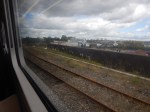
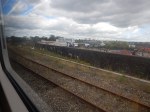
I took these pictures of Bristol Temple Meads station, when I visited.


















Note.
- The station is Listed to the highest level of Grade 1.
- London services seem to use Platforms 15 and 16.
- There is quite a fair bit of space between the tracks.
.Do Network Rail need all the hassle of full electrification of one of Brunel’s most famous creations?
Bristol Temple Meads Station And Trains With a Battery Capability
Hitachi’s Class 800 train with a battery electric capability or Regional Battery Train, is described in this infographic from the company.

The proposed 90 km or 56 mile range would even be sufficient take a train between Chippenham and Bristol Temple Meads stations on a return trip. So this means that one of these trains could work the London Paddington and Bristol Temple Meads stations service via Bath Spa using the electrification between London Paddington and Chippenham stations.
But where could trains reach, if they were able to leave Bristol Temple Meads station with a fully-charged battery?
- Bristol Parkway – 6 miles
- Cardiff Central – 5 miles to the electrified Great Western Main Line.
- Cheltenham Spa – 41 miles
- Filton Abbey Wood – 4 miles
- Gloucester – 39 miles
- Newport – 5 miles to the electrified Great Western Main Line.
- Severn Beach – 13.5 miles
- Taunton – 45 miles
- Westbury – 28.5 miles
- Weston-super-Mare – 19 miles
Note.
- Return trips to Bristol Parkway, Filton Abbey Wood, Severn Beach and Western-super-Mare would be possible.
- The other destinations will need charging facilities.
Other local destinations could be added as the Bristol Metro develops.
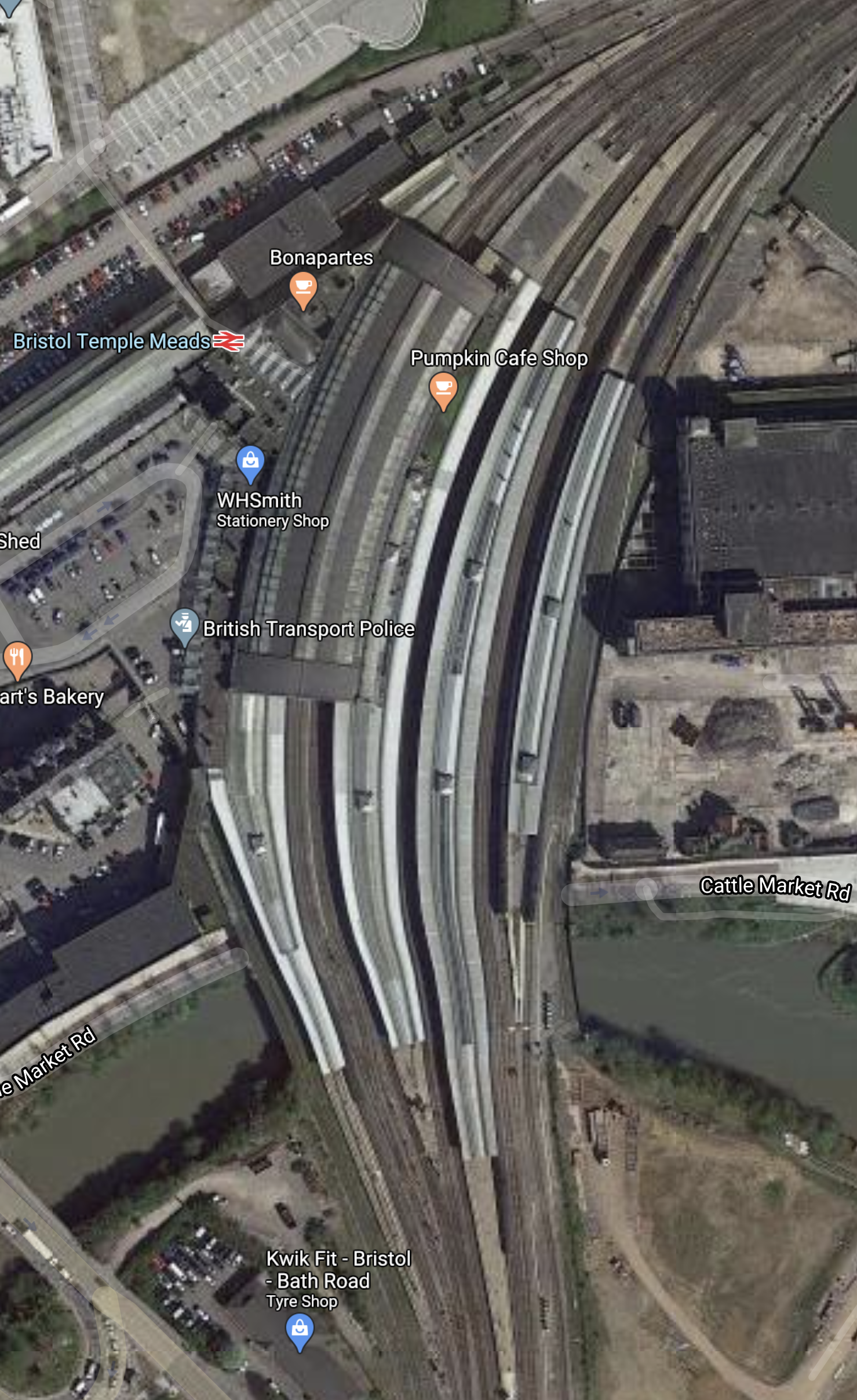
This Google Map shows the station.
Note.
- The curving nature of the platforms doesn’t make 25 KVAC overhead electrification easy.
- Trains to and from London appear to use the two Eastern platforms 13 and 15.
- It might be possible to increase platform lengths to run longer trains to and from places like London.
I believe that there are three possible ways of charging the trains in Bristol Temple Meads station.
25 KVAC Overhead Electrification
This could be short length of standard 25 KVAC overhead electrification in platforms, that would be served by trains with pantographs like the Class 800 trains.
The driver would stop in the correct place in the platform and connect the pantograph, whilst waiting in the station.
Note that the Class 800 trains to and from London typically take 35-20 minutes to turn round, which is time enough for a full charge.
750 VDC Third-Rail Electrification
This could be short lengths of standard 750 VDC third-rail electrification in platforms, that would be used by standard third-rail shoes on trains.
The train would connect automatically and charging would take place, whilst waiting in the station.
A Specialist Charging Facility Like Vivarail’s Fast Charge System
Vivarail’s Fast Charge system is described in Vivarail Unveils Fast Charging System For Class 230 Battery Trains.
This extract from this Vivarail press release explains how the system works.
he concept is simple – at the terminus 4 short sections of 3rd and 4th rail are installed and connected to the electronic control unit and the battery bank. Whilst the train is in service the battery bank trickle charges itself from the national grid – the benefit of this is that there is a continuous low-level draw such as an EMU would use rather than a one-off huge demand for power.
The train pulls into the station as normal and the shoe-gear connects with the sections of charging rail. The driver need do nothing other than stop in the correct place as per normal and the rail is not live until the train is in place.
That’s it!
I believe that this system or something like it could be adapted to work with all trains with a battery capability in the UK.
I also believe that this system can be designed so that it is ultra-safe and doesn’t disrupt, the visual impact of the station.
Conclusion
Bristol Temple Meads station could be converted into a station, where a high proportion of trains ran solely on electricity.
VDE Study Finds Battery Trains 35% Cheaper Than Hydrogen
The title of this post, is the same as that of this article on the International Railway Journal.

This is the introductory paragraph.
A study of the cost-effectiveness of battery electric multiple units (BEMU) and hydrogen electric multiple units (HEMU) as alternatives to diesel found that BEMUs could be up to €59m (35%) less expensive to buy and operate compared with their hydrogen fuel cell equivalents.
It also says that they are more expensive than the diesels they replace over thirty years.
As it is a professional German study, we should take note of what is said.
How Would This Apply To The UK?
There will be differences between the UK and Continental Europe, which will affect costs!
- Our small loading gauge seems to be making the design of hydrogen-powered trains difficult.
- Passenger capacity in a UK train, will probably be reduced when compared to the diesel equivalent.
- Our hydrogen technology is world-class.
- More affordable batteries would benefit both types of trains.
- I believe that companies like Vivarail, will come up with very fast and efficient chargers for battery trains using our third-rail technology, which may not be suitable outside the UK.
On balance though, I suspect that the cost difference worldwide, will be similar.
Conclusion
Companies, developers and engineers will fight a keen battle for supremacy.
There will be some suprising winners and some big losers.
‘Build Greener’ You Say Boris? Got It. Just Say The Word, We’re Ready Here In North West England
The title of this post, is the same as that of this article on H2 View.
The article is written by Cadent‘s Network Director for the North West and what she says is a must-read.
61GW Renewables And Storage Pipeline Could Bring In £125bn To Economy
I did think about calling this post something like.
- Do You Like Large Numbers?
- My Calculator Just Blew Up!
- I Don’t Believe It!
- No Wonder Rishi Sunak Has A Smile On His Face!
But I’ll use my normal introduction for this type of post!
The title of this post, is the same as that on this article of Current News.
This is the introductory paragraph.
The UK currently has a pipeline of 61GW of renewables and storage that if developed could bring in £125 billion to the UK economy.
The article also says that this pipeline could provide 200,000 jobs.
So where will this massive 61 GW of electricity come from?
- Off-shore Wind – 31.7 GW
- On-shore Wind – 11.9 GW
- Solar PV – 8.6 GW
- Storage – 8.5 GW
Where is the Nuclear Option?
iThe article also says that 18 GW of these projects are Shovel-Ready.
The figures come from UK trade association; Regen, whose Chief |Executive is the appropriately named; Merlin Hyman.
The page on the Regen web site, which is entitled Unlock Renewables For A Green Recovery, is the original document on which the Current News article is based.
Regen want three things from the Government, in return for creating all this renewable electricity capacity.
- Publish an Energy White Paper putting the UK on course for a flexible power system based on renewables and storage.
Commit to annual Contracts for Difference auctions to give investors confidence.
End the anti onshore wind policies in the English planning regime.
Some will not like the third condition.
I must go now, as I must go down the Chinese-owned Lucky Electronics Shop on Dalston Kingsland High Street to get a calculator with more digits to replace the one that blew up!
Yara Launches Green Hydrogen Trial To Reduce Food Production Carbon Emissions
The title of this post, is the same as that of this article on Hydrogen Fuel News.
This is the introductory paragraph.
Norwegian fertilizer manufacturing giant Yara is launching a landmark green hydrogen trial. The purpose is to separate the current connection between producing food and generating carbon emissions.
Read the article and then ask yourself, how much carbon dioxide was created to make the fertiliser you use on your lawn or allotment?
Vivarail And Hitachi Seem To Be Following Similar Philosophies
This press release on the Vivarail web site, is entitled Battery Trains And Decarbonisation Of The National Network.
This is the two paragraphs.
Vivarail welcomes the recent announcements regarding new technologies for rail, and the growing understanding that battery trains will be a key part of the decarbonisation agenda.
Battery trains have been much misunderstood until now – the assumption has been that they can’t run very far and take ages to recharge. Neither of these are true! Vivarail’s trains:
To disprove the assumptions, they then make these points.
- Have a range of up to 100 miles between charges
- Recharge in only 10 minutes
They also make this mission statement.
Vivarail’s battery train, Fast Charge and power storage system is a complete package that can drop into place with minimal cost and effort to deliver a totally emission-free independently powered train, ideally designed for metro shuttles, branch lines and discrete routes across the country.
They add these points.
- Batteries can be charged from 750 VDC third-rail or 25 KVAC overhead electrification or hydrogen fuel cells.
- A daily range of 650 miles can be achieved on hydrogen.
- Vivarail seem very positive about hydrogen.
- The company uses modern high-performance lithium Ion pouch batteries from Intilion.
- It also appears that Vivarail are happy to install their traction package on other trains.
The press release finishes with this paragraph.
The rail industry needs to move now to hit its own decarbonisation targets and assist with the national effort. Battery trains are the quick win to achieve that.
Following on from Hitachi’s announcement on Monday, that I wrote about in Hyperdrive Innovation And Hitachi Rail To Develop Battery Tech For Trains, it does appear that battery trains will be arriving soon in a station near you!
Beeching Reversal – South Yorkshire Joint Railway
This is one of the Beeching Reversal projects that the Government and Network Rail are proposing to reverse some of the Beeching cuts.
This railway seems to have been forgotten, as even Wikipedia only has a rather thin entry for the South Yorkshire Joint Railway.
The best description of the railway, that I’ve found is from this article in the Doncaster Free Press, which is entitled South Yorkshire Railway Line, Which Last Carried Passengers 100 Years Ago Could Be Reopened.
This is said.
The line remains intact, and recently maintained, runs from Worksop through to Doncaster, via North and South Anston, Laughton Common/Dinnington and Maltby.
I jave got my helicopter out and navigating with the help of Wikipedia, I have traced the route of the South Yorkshire Joint Railway (SYJR) between Worksop and Doncaster.
Shireoaks Station
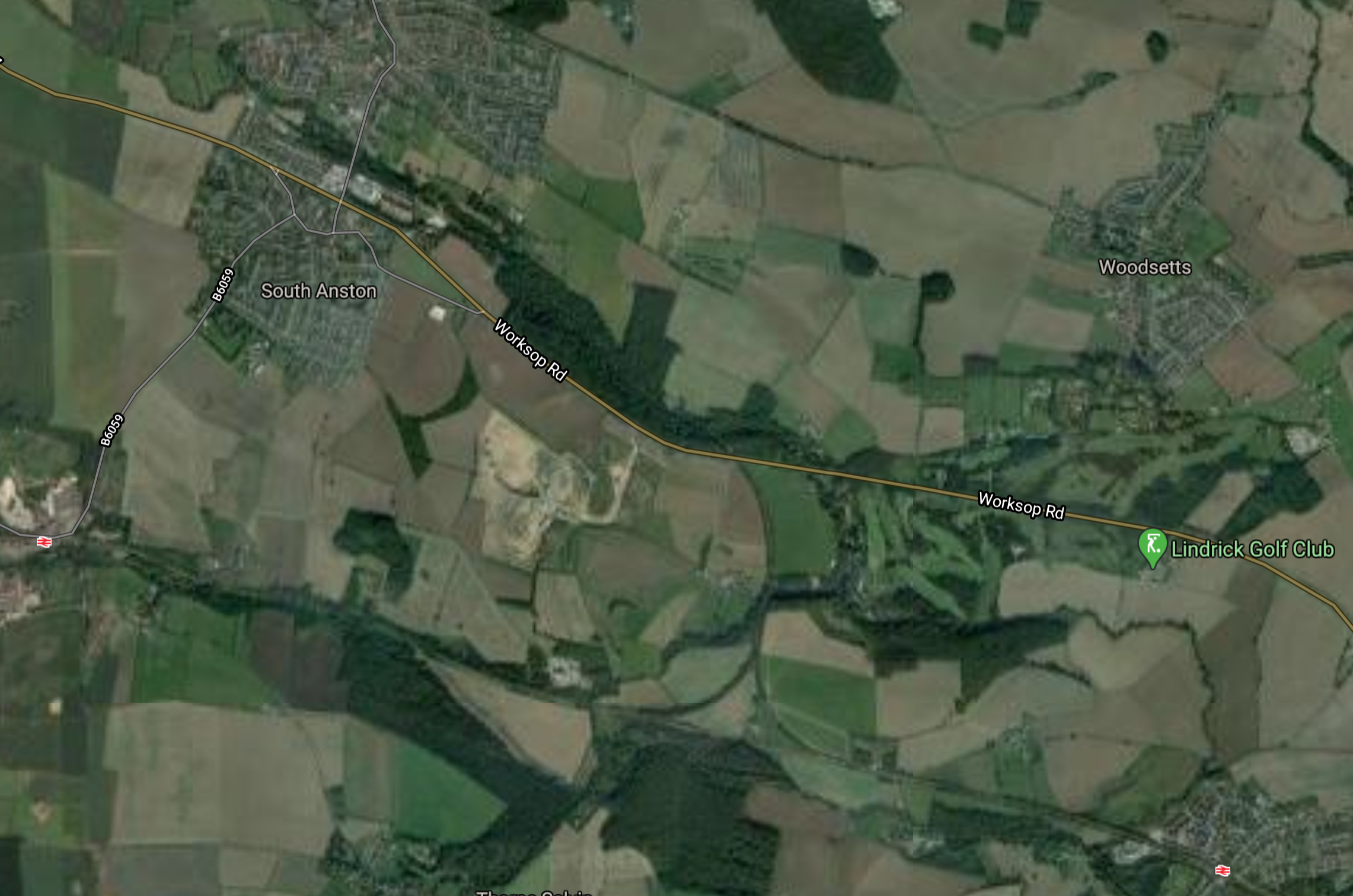
This Google Map shows the Southern end of the SYJR on the Sheffield and Gainsborough Central Line between Shireoaks and Kiveton Park stations.
Note.
- Shireoaks station is in the East.
- Kiveton Park station is in the West.
- The SYJR starts at the triangular junction in the middle of the map.
- Lindrick Golf Club, where GB & NI, won the Ryder Cup in 1957 is shown by a green arrow to the North of Shireoaks station.
- The original passenger service on the SYJR, which closed in the 1920s, appears to have terminated at Shireoaks station.
The line immediately turns West and then appears to run between the villages of North and South Anston.
Anston Station
This Google Map shows the location of Anston station.
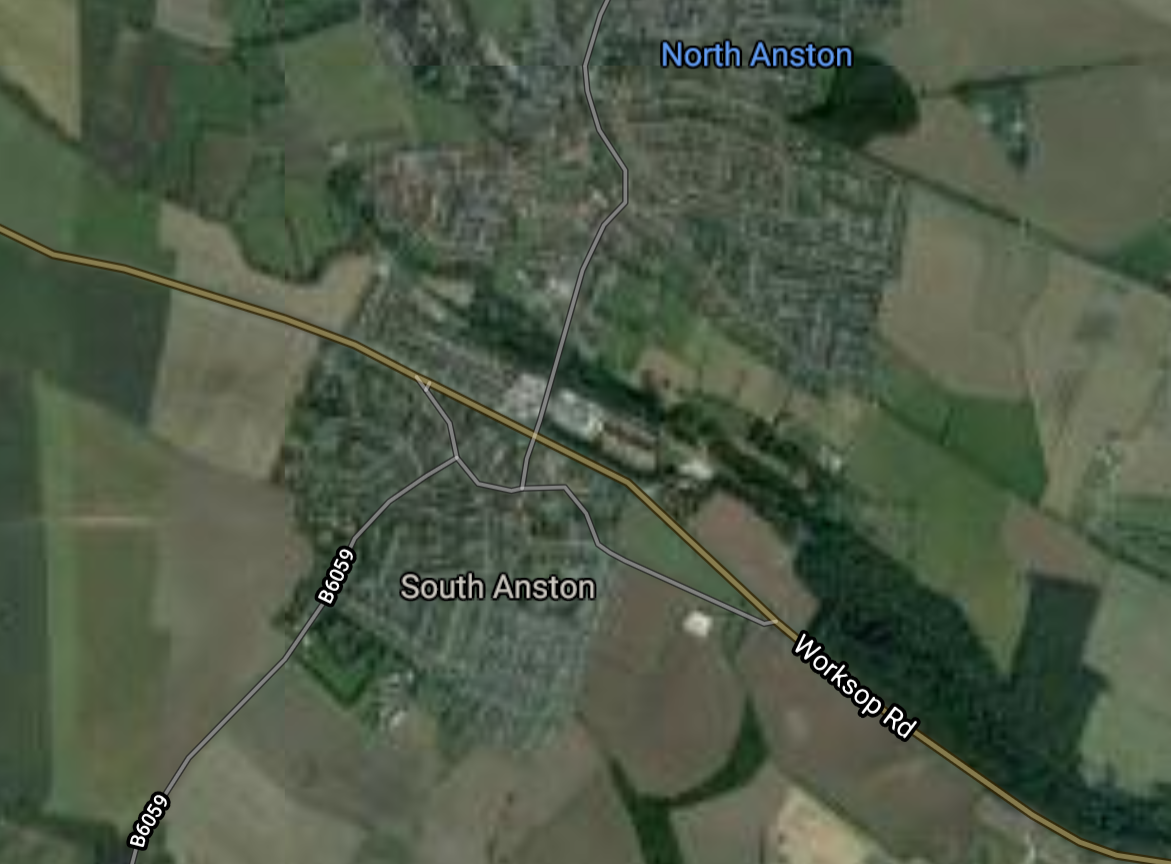
Note that the SYJR goes between the two villages and runs along the North side of the wood, that is to the North of Worksop Road.
Dinnington & Laughton Station
This Google Map shows the location of the former Dinnington & Laughton station.
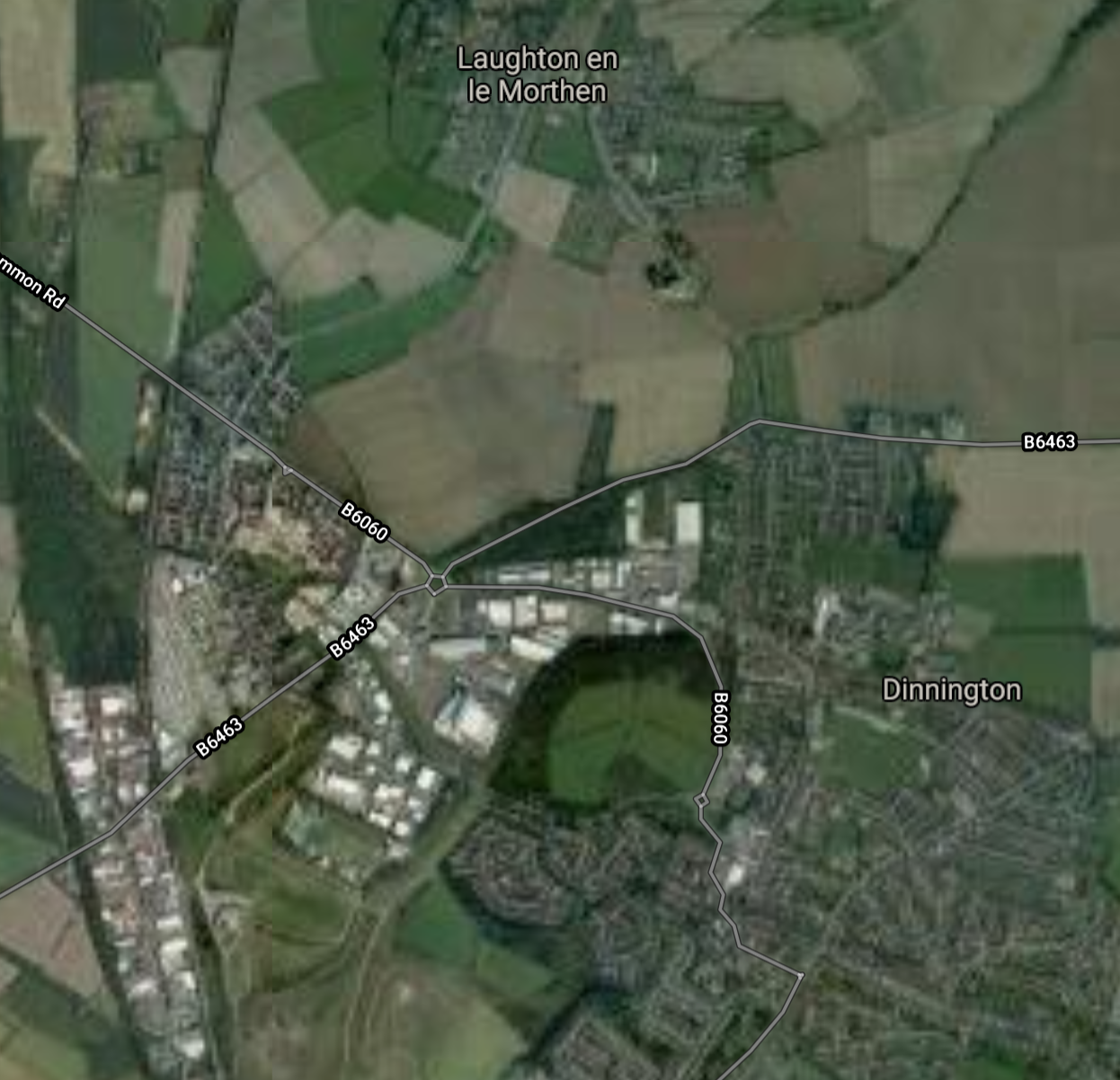
Note that the SYJR goes to the west side of both villages, so it would have been quite a walk to the train.
Maltby Station
This Google Map shows the location of the former Maltby station.
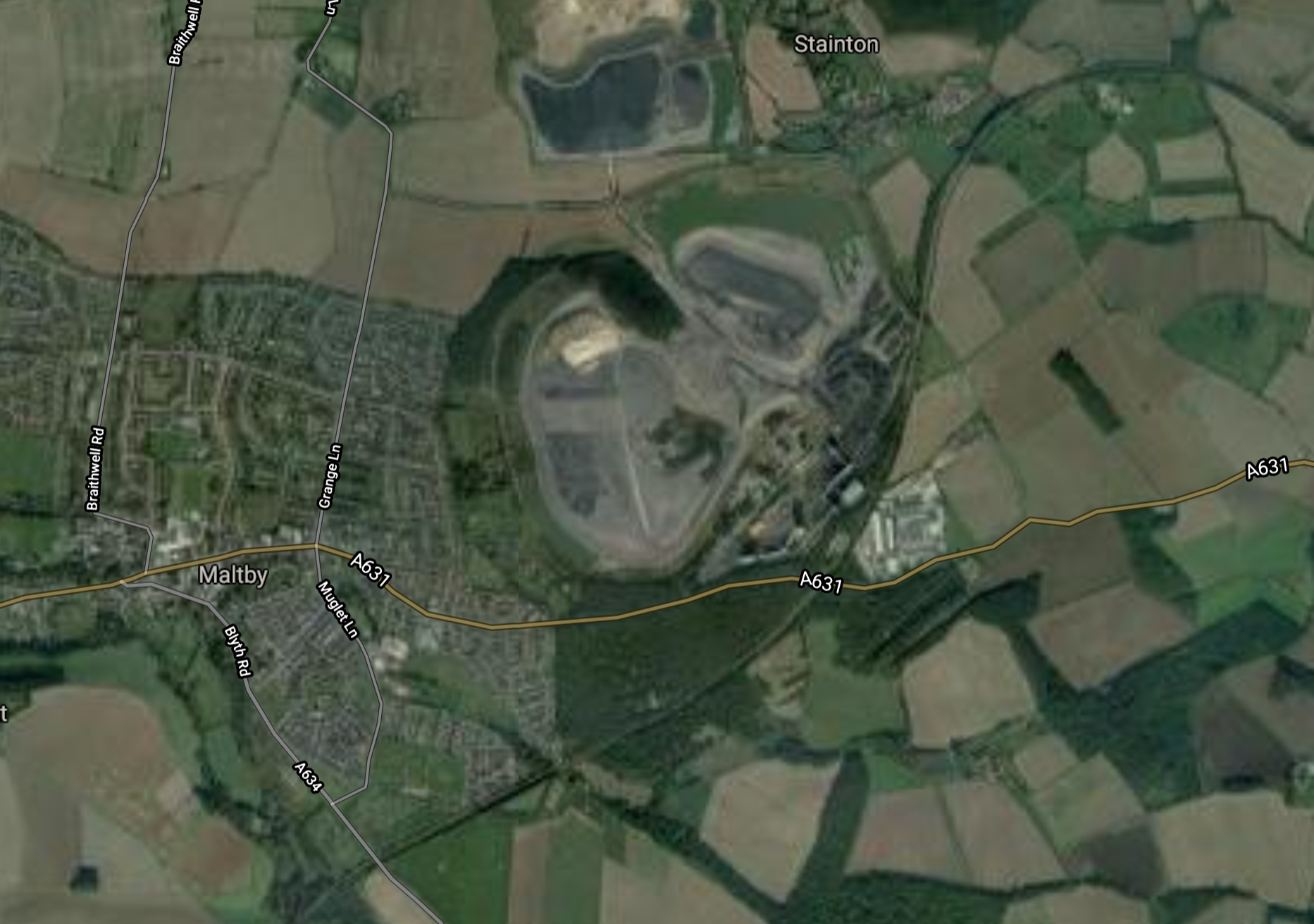
Note.
- The SYJR goes around the South side of the village.
- The remains of the massive Maltby Main Colliery, which closed several years ago.
I wonder if they fill the shafts of old mines like this. if they don’t and just cap them, they could be used by Gravitricity to store energy. In Explaining Gravitricity, I do a rough calculation of the energy storage with a practical thousand tonne weight. Maltby Main’s two shafts were 984 and 991 metres deep. They would store 2.68 and 2.70 MWh respectively.
It should be noted that Gravitricity are serious about 5.000 tonnes weights.
Tickhill & Wadworth Station
This Google Map shows the location of the former Tickhill & Wadworth station.
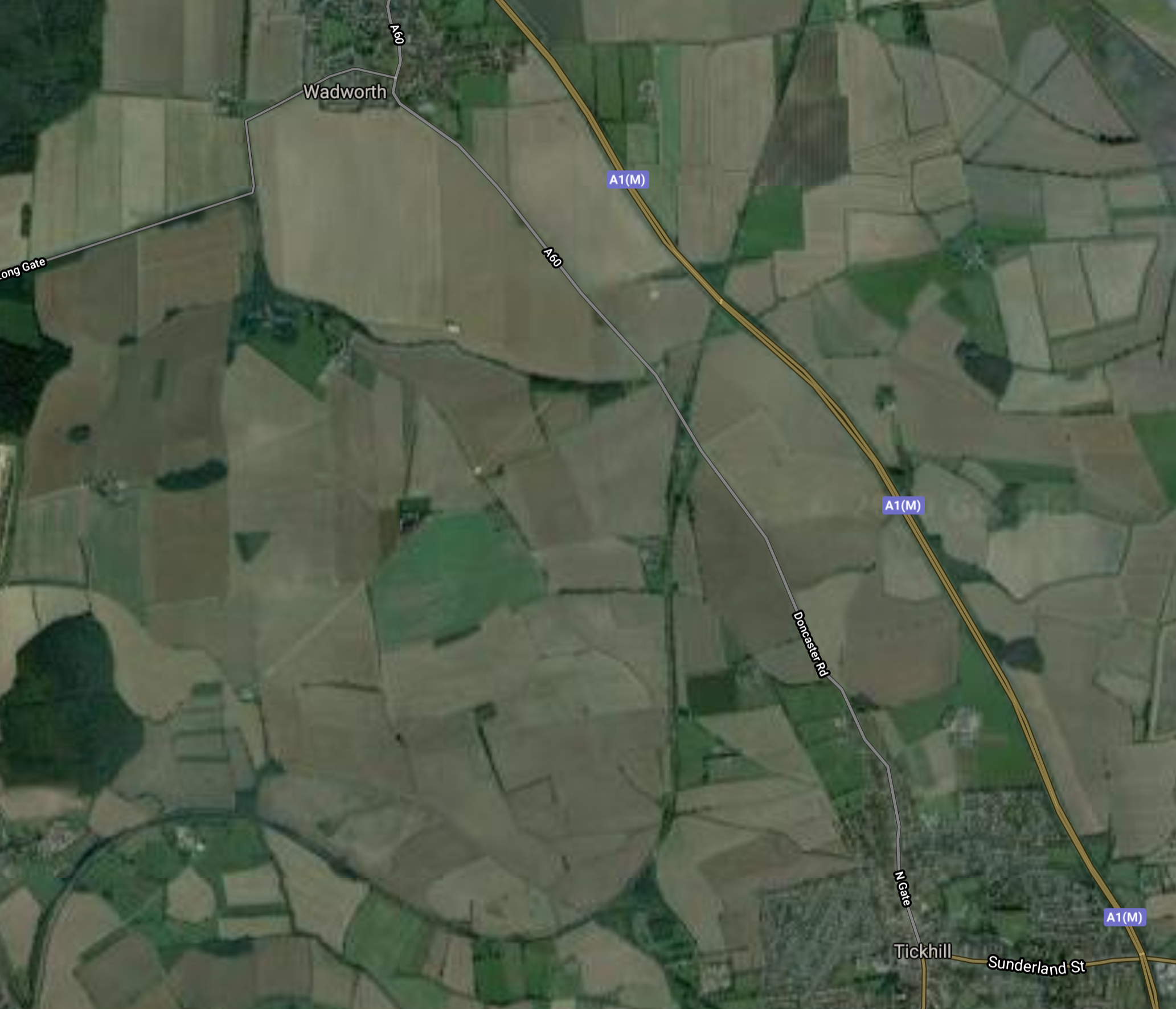
Note.
- Tickhill is in the South and Wadworth is in the North.
- Both villages are to the West of the A1 (M)
- The SYJR runs in a North-Easterly direction between the villages.
The station appears to have been, where the minor road and the railway cross.
Doncaster iPort
The SYJR then passes through Doncaster iPort.

Note.
- The iPort seems to be doing a lot of work for Amazon.
- The motorway junction is Junction 3 on the M18.
- The SYJR runs North-South on the Western side of the centre block of warehouses.
This is Wikipedia’s introductory description of the iPort.
Doncaster iPort or Doncaster Inland Port is an intermodal rail terminal; a Strategic Rail Freight Interchange, under construction in Rossington, Doncaster at junction 3 of the M18 motorway in England. It is to be connected to the rail network via the line of the former South Yorkshire Joint Railway, and from an extension of the former Rossington Colliery branch from the East Coast Main Line.
The development includes a 171-hectare (420-acre) intermodal rail terminal to be built on green belt land, of which over 50 hectares (120 acres) was to be developed into warehousing, making it the largest rail terminal in Yorkshire; the development also included over 150 hectares (370 acres) of countryside, the majority of which was to remain in agricultural use, with other parts used for landscaping, and habitat creation as part of environment mitigation measures.
It ;looks like the SYJR will be integrated with the warehouses, so goods can be handled by rail.
Onward To Doncaster
After the iPort, the trains can take a variety of routes, some of which go through Doncaster station.
I have some thoughts on the South Yorkshire Joint Railway (SYJR).
Should The Line Be Electrified?
This is always a tricky one, but as there could be a string of freight trains running between Doncaster iPort and Felixstowe, something should be done to cut the carbon emissions and pollution of large diesel locomotives.
Obviously, one way to sort out Felixstowe’s problem, would be to fill in the gaps of East Anglian electrification and to electrify the Great Northern and Great Eastern Joint Line between Peterborough and Doncaster via Lincoln. But I suspect Lincolnshire might object to up to fifteen freight trains per hour rushing through. Even, if they were electric!
I am coming round to the believe that Steamology Motion may have a technology, that could haul a freight train for a couple of hours.
These proposed locomotives, which are fuelled by hydrogen and oxygen, will have an electric transmission and could benefit from sections of electrification, which could power the locomotives directly.
So sections of electrification along the route, might enable the freight trains to go between Felixstowe and Doncaster iPort without using diesel.
It should be said, that Steamology Motion is the only technology, that I’ve seen, that has a chance of converting a 3-4 MW diesel locomotive to zero carbon emissions.
Many think it is so far-fetched, that they’ll never make it work!
Electrification of the line would also enable the service between Doncaster and Worksop to be run by Class 399 tram-trains, which are pencilled in to be used to the nearby Doncaster Sheffield Airport.
What Rolling Stock Should Be Used?
As I said in the previous section, I feel that Class 399 tram-trains would be ideal, if the line were to be electrified.
Also, if the line between Shireoaks and Kiveton Park stations were to be electrified to Sheffield, this would connect the South Yorkshire Joint Line to Sheffield’s Supertram network.
Surely, one compatible tram-train type across South Yorkshire, would speed up development of a quality public transport system.
A service could also be run using Vivarail’s Pop-up Metro concept, with fast charging at one or two, of any number of the stations.
Conclusion
This seems to be a worthwhile scheme, but I would like to see more thought on electrification of the important routes from Felixstowe and a unified and very extensive tram-train network around Sheffield.
Can A Green Revolution Really Save Britain’s Crisis-Stricken Aerospace Industry?
The title of this post, is the same as that of this article on the Telegraph.
This is the sub-title.
The Prime Minister has set a challenging target of green flights within a generation, but is it a sustainable plan?
I have read the whole article, which is mainly about Velocys and their project at Immingham to create aviation biofuel from household rubbish.
They say the main problem is scaling up the process to get enough jet fuel. When I was working at ICI in the early 1970s, modelling chemical processes, scale-up always loomed-large as a problem.
Nothing changes!
I think we’ll get to our carbon-neutral objective, for aviation, but it will be a mixture of things.
- Aviation biofuel.
- All-electric airports.
- Efficient aerodynamics and engines.
- Electric short-haul aircraft.
- Rail substitution for short flights.
Traditional aerospace must reform itself or die!
As to Velocys, they must solve their scaleup problem, so that all suitable household and industrial rubbish ends up doing something more useful, than beinmg incinerated or nuried in landfill.
Beeching Reversal: Fifty Disused Rail Lines On Track To Reopen
The title of this post, is the same as that of this article in The Times
This is the introductory paragraph.
The reopening of up to 50 disused railway lines or stations will be considered as part of a reversal of the infamous Beeching cuts, it was announced yesterday.
The Possible Projects
These are the various projects, shown as an index by area, so you can click to find out more.
Yorkshire and Humberside
Reinstatement of the Beverley to York Rail Line
Restoration Of A Daily Train Service On The Keighley & Worth Valley Railway
Upper Wensleydale Railway
Restoring Passenger Rail to the Sheaf Valley
Restoring a South Humber Link
South Yorkshire Joint Railway
New Station At Waverley
East Midlands
West Midlands
Reopening Stratford-upon-Avon to Honeybourne-Worcester/Oxford (SWO) Railway Line
More Stopping Services At Radcliffe-on-Trent And Bottesford Stations On The Poacher Line Between Grantham And Nottingham
Increased Services To Nottingham And Leicester, via Syston And Loughborough From Melton Mowbray
Reconnecting Ashfield Communities through the Maid Marian Line
Wales
Magor And Undy Walkway Station
Restoring services on the Anglesey Central Railway between Gaerwen and Amlych
South West
Shepton Mallet (Mendip Vale)
Radstock railway reinstatement
St Anne’s Park station
Primrose Line
Transforming the Newquay Line
Mid Cornwall Metro
Restoring secondary services on the Great Western Main Line
Goodrington and Churston Stations
New station for Langport and Somerton Area
Charfield Station
Reinstatement of Bodmin-Wadebridge Railway and associated works
Increased service provision Bodmin General-Bodmin Parkway
Ashburton & Buckfastleigh junction railway
Bristol West capacity enhancement
Light railway extension to the Barnstaple Branch (Chivenor Braunton) “TawLink”
Cirencester Community Rail Project
Project Wareham – Complete The Link
South East
Arundel Chord
Re-Opening of Camberwell Station
Unlocking Capacity And Services Through Bramley (Hants)
Aston Rowant Extension Of The Chinnor Railway
Carshalton Beeches Step-Free Access
North West
South Fylde Line Passing Loop
Kenyon Junction Station
Reopening Golborne Railway Station
Reinstatement of Bolton-Radcliffe / Bolton – Bury
Reinstating Beeston Castle and Tarporley Railway Station
Reopen Midge Hall Station
Re-Doubling Of The Mid Cheshire Line Between Stockport And Altrincham And Associated Station Reopenings
Stockport and Ashton Line
Glazebrook Junction And Skelton Junction
East Didsbury – Stockport
North East
Consett-Newcastle Connection
Ferryhill restoration
East
Reopening Wymondham-Dereham Line
King’s Lynn to Hunstanton Railway
Reopening Harston Station
Reopening Sawston Station
A Few Rules
I think we should apply a few rules to the bids and the subsequent projects, that will be developed.
Schemes Should Not Use Diesel Trains Long Term
We are aiming to decarbonise trains by 2040. So let’s not make that more difficult.
All New Stations Should Be Step-Free
This one is obvious.
OVO Energy To Lead Major Zero-Carbon Heat Trial
The title of this post, is the same as that of this article on Current News.
These initial three paragraphs explain the project.
OVO Energy is to lead one of the UK’s largest ever zero-carbon heating trails, thanks to a £4.2 million grant from the government.
Kaluza, Sunamp, Retrofit Works and Parity Projects will work together with OVO Energy to install and operate zero-carbon heating systems worth up to £15,000 in 250 homes.
Mitusbishi’s Ecodan air source heat pump and Sunamp’s thermal batteries will be installed in the homes, creating electric, zero-carbon heating systems. Additionally, the homes involved will have up to £5,000 worth of energy efficiency improvements made.
That sounds like a sensible project to me, as we need to be zero-carbon in everything we do and heating is the largest source of emissions in the UK with twenty percent.
 The Anonymous Widower