TransPennine Express Explores Further Fleet And Capacity Expansion Options
The title of this post, is the same as that of this article on Railway Gazette.
This is the first paragraph.
First TransPennine Express is hopeful that it will be able to issue a call for expressions of interest in the provision of additional bi-mode trains before the end of March. This follows ‘a healthy level of interest’ in its existing call for expressions of interest in the supply of bi-mode locomotives to replace the Class 68s which work with its MkVa coaches.
I wrote about the expressions of interest to replace the Class 68 locomotives with new bi-mode locomotives in Suppliers Sought For New Bi-Mode Locomotives For TransPennine Express And Great Western Railway.
This was my conclusion in the related post.
When I saw First Group’s proposals, I thought that they were over ambitious.
But after doing a few simple calculations, I think they can decarbonise some, but not all of the TransPennine Express services and the Night Riviera.
So do First Group want to complete the decarbonisation of TransPennine Express services?
These are my thoughts.
The Train Fleet Specification
The Railway Gazette article makes these points about the new bi-mode trains.
- The trains could be existing or new bi-modes.
- It would be desirable for the trains to have a long-term electric-only option.
- Options for this would include removing the diesel engines or converting the trains to battery-electric operation.
- Hydrogen is not mentioned.
- A fleet size of twenty-five trains is mentioned.
- The possibility of electric-only trains in the future is mentioned..
- Five-cars, with the ability to lengthen to six- or seven-cars.
- 200 km/h operation.
There is nothing unusual in the specification.
Will They Be Existing Or New Trains?
I doubt that there are any existing 200 km/h bi-modes in the UK, that are not wanted by their current operators.
I am very certain they will be new trains.
Could The Trains Be Hitachi Class 802 Trains?
The trains sound very much like Hitachi Class 802 trains, that are in service with TransPennine Express, Great Western Railway and Hull Trains, all of whom are First Group companies.
- Long-term, the diesel engines can be removed or replaced with batteries.
- The battery option is under development and should be on test this year.
- The trains can be lengthened to as long as twelve cars, so six- and seven-car trains would be possible.
Hitachi will obviously show interest in this possible order.
Will These Trains Replace the Class 185 Trains?
Consider.
- TransPennine Express have 51 three-car Class 185 trains.
- This is a total of 153 cars.
- On some routes they work singly and on others they work in pairs.
- A three-car Class 185 train has 167 Standard Class and 15 First Class seats or 60.7 seats per car.
- A pair of Class 185 trains have 334 Standard Class and 30 First Class seats.
- A five-car TransPennine Express Class 802 train has 318 Standard Class and 24 First Class seats or 68.4 seats per car.
- It would appear that a Class 802 train is not that far short of the capacity of a pair of Class 185 trains.
- Some of the TransPennine services are very crowded.
I suspect that twenty-five five-car trains be able to handle the the workload of the Class 185 trains.
If a small amount of extra capacity were needed, some of the new trains could be six-cars.
In this section, I have assumed the new trains will be Class 802 trains, but any train manufacturer pitching for this order would adjust the capacity to the needs of TransPennine Express.
The Railway Gazette article says this.
TPE continues to explore opportunities for new services in the north of England, and the move could also feed into government plans for the removal of older and more costly to operate diesel trains elsewhere on the network, should any rolling stock become surplus to requirements at TPE.
So where could the Class 185 trains be used in the future?
Recently, MTU Hybrid PowerPacks have replaced the transmission on a Class 168 train, which reduces carbon emissions and fuel consumption and makes the train quieter and more passenger-friendly, as it doesn’t use diesel in stations.
The Class 185 trains are only fifteen years old and I suspect that MTU have designed the Hybrid PowerPack, so that it can replace the Cummins engine in trains like these.
The conversion could be done as a rolling program, so that any future operator would start with diesel and go hybrid a train at a time.
There has been speculation, that the trains may end up on the East West Railway and I wrote about this in East West Railway Company To Start Second Phase Of Rolling Stock Procurement.
But the East West Railway may prefer to use zero-carbon trains on a route, where there is electrification in places on the route.
Alternatively, South Western Railway run 10 two-car Class 158 trains and 30 three-car Class 159 trains between London Waterloo and Exeter.
- South Western Railway is another First Group company.
- The Class 185 trains could provide a capacity increase.
- The Class 185 trains are 100 mph trains, whereas the Class 158/159 trains are only capable of 90 mph.
The London Waterloo and Exeter Route could be electrified in the future and I am pretty sure, that the Class 185 trains with a hybrid transmission could be a good stand-in until this happens.
Other Train Manufacturers
I believe that Hitachi are in pole position for this order, just because they are an established supplier to both TransPennine Express and First Group.
But twenty-five five-car trains would be a very worthwhile order, so I suspect that companies like Alstom, CAF, Siemens, Stadler and Talgo will also express interest.
Conclusion
Buying extra bi-mode trains will take TransPennine Express further along the route to full decarbonisation.
Battery Train And Fast Charger To Be Tested In London
The title of this post is the same as that of this article on Railway Gazette.
This is the first paragraph.
Great Western Railway has signed an agreement to test Vivarail’s Class 230 battery multiple-unit and fast charging technology under real-world conditions on the 4 km non-electrified branch between West Ealing and Greenford in West London.
As an engineer, who started designing control systems for rolling mills in the mid-1960s and went on to get a Degree in Control and Electrical Engineering from Liverpool University, before working for ICI applying computers to a variety of problems, I can’t look at a railway line like the Greenford Branch without wanting to automate it.
I had one amateurish attempt in An Automated Shuttle Train On The Greenford Branch Line. I was trying to get four trains per hour (tph) on the branch and I don’t think that is possible, with the Class 230 trains.
Now we know the train we are dealing with, I could plan an automated system, that would drive the train.
- Each journey on the branch takes around 11-12 minutes.
- Two tph would take between 44 and 48 minutes shuttling between the two stations in an hour.
- The article states that recharging takes ten minutes.
- If the train charged the batteries once per hour, that would leave between two and six minutes for the other three stops.
- Any freight train using the branch seems to take about six minutes, so they could sneak through, when the shuttle is having a fast charge.
- I would also use a similar system to that originally used on the Victoria Line. After the driver has closed the doors and ascertained that there were no problems, they would press a button to move the train to the next station and then automatically open the doors.
From this rough calculation to run a two tph service, I suspect that the train needs to be able to go between West Ealing and Greenford stations in ten minutes. Assuming one ten minute Fast Charge per hour, this would give three minutes and twenty seconds to turn the train, at the three terminal station stops.
I certainly feel, that an automatic shuttle would be possible.
The Future Of The Class 387 And Class 379 Trains
This post is to try to get some logic into everybody’s comments on UK’s First 100mph Battery-Diesel Hybrid Train Enters Passenger Service, which are about the Class 379 trains.
Here are my thoughts about the current situation.
Class 379 Trains
I regularly use Hackney Downs and Liverpool Street stations.
A few months ago, you would see Class 379 trains on services to Cambridge and Hertford North.
At the present time, you rarely see them, as these services now seem to be run by new Class 720 trains, with the Stansted services being run by Class 745 trains.
There are also articles like this one on Rail Technology Magazine, which is entitled Greater Anglia’s New Rolling Stock Helps To Drive Record Autumn Results.
These are the first three paragraphs.
Greater Anglia’s new rolling stock has helped drive the operators record-beating autumn performance results over the challenging autumn months.
During autumn 2021 Greater Anglia recorded an overall punctuality score of 94.48% from 19th September 2021 – 8th January 2022.
This was the best autumn performance ever recorded by the train company.
It would appear that Greater Anglia are pleased with their new stock, which surely means that the thirty Class 379 trains can be moved on, stored or converted to battery-electric operation.
c2c’s Class 387 Trains
c2c has six Class 387 trains, which are similar to the Class 379 trains.
Currently, because of cracks in Class 800 trains, three of them are on loan to GWR.
But in the next year or so, these six trains will be moved on or stored as c2c have ordered twelve Class 720 trains to replace the Class 387 trains.
Southern’s Class 387 Trains
Southern has twenty-seven Class 387 trains for the Gatwick Express, of which three are used by Great Northern, who are a sister company of Southern, and six are on loan to GWR
Great Northern’s Class 387 Trains
Great Northern has twenty-nine Class 387 trains of its own and three on loan from Southern.
These trains are used mainly on Cambridge, Ely and Kings Lynn services out of King’s Cross.
Great Western Railway (GWR)’s Class 387 Trains
Great Western Railway has forty-five Class 387 trains of its own, three on loan from c2c and six on loan from Southern.
The Battery-Electric Class 379 Train
I rode this prototype train in 2015.

An Outwardly Normal Class 379 Train
I think it is reasonable to assume, that as battery technology has improved in the seven years since I rode this train, that converting Class 379 trains to battery-electric operation would not be a challenging project.
Creating A Battery-Electric Class 387 Train
If the Class 387 train is as internally similar to the Class 379 train as it outwardly looks, I couldn’t believe that converting them to battery-electric operation would be that difficult.
Conclusion
I feel the way to proceed is to create a small fleet of both battery-electric Class 379 and Class 387 trains and assess their performance, reliability and customer acceptance.
SWR Says Farewell To ‘456’s
The title of this post, is the same as a section heading in the February 2022 Edition of Modern Railways.
South Western Railways are reducing services because of the pandemic and they are retiring their Class 456 trains, which have been returned to their leasing company; Porterbrook.
- The Class 456 trains are thirty-years old.
- They are two-car third-rail electric trains.
- They have an operating speed of 75 mph.
- They are due to be replaced by new Class 701 trains.
According to the Modern Railways article, they have been put in store by Porterbrook.
But they are not trains in bad condition, as these pictures show.
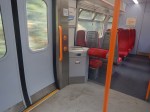
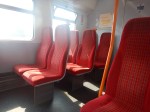
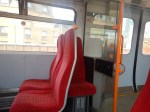
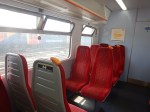
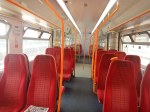
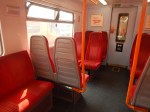
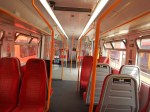
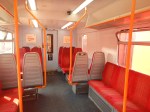
The trains had a high-class refurbishment in 2014.
In Special Train Offers A Strong Case For Reopening Fawley Line, I discussed the reopening of the Fawley Line.
This is an extract from that post about the rolling stock to use on the line.
South Western Railway’s Innovative Train Plan
This is another quote from the original Rail Magazine article.
However, SWR’s Mark Hopwood favours a much bolder plan. “We’d have to take a decision, once we knew the line was going ahead. But my personal belief is that we should be looking for a modern environmentally-friendly train that can use third-rail electricity between Southampton and Totton and maybe operate on batteries down the branch line.”
Pressed on whether that would mean Vivarail-converted former-London Underground stock, Hopwood adds. “It could be. Or it could be a conversion of our own Class 456, which will be replaced by new rolling stock very shortly. But I don’t think this is the time to use old diesels.
Note.
- Mark Hopwood is now Managing Director of Great Western Railway.
- Great Western Railway and South Western Railway are both First Group companies.
- There are twenty-four Class 456 trains.
I wonder, if the plan that Mark Hopwood hinted at a couple of years ago, is being carried out.
Two dozen, two-car zero-carbon battery-electric trains would do nicely for some of the routes of GWR and SWR.
Converting Class 456 Trains Into Two-Car Battery Electric Trains discusses this possible conversion in detail.
Are First Group Moving Towards Zero-Carbon?
My post, which was entitled Suppliers Sought For New Bi-Mode Locomotives For TransPennine Express And Great Western Railway, prompted me to ask the question in the title of this post.
This factsheet for First Bus says that all their buses will be zero-carbon by 2035.
This factsheet for First Rail says this about Decarbonising Rail Travel.
FirstGroup’s ambition is to be the partner of choice for low or zero emission transport. We recently became the first UK rail and bus operator to formally commit to setting an ambitious science-based target for reaching net zero emissions by 2050 or earlier.
First Rail leads the sector in decarbonisation, including the introduction of bi-mode diesel and electric powered trains which allow us to make best use of electrified networks. We have signed up to the Government’s challenge to take all diesel-only trains out of service by 2040.
GWR has recently taken delivery of the UK’s first tri-mode train which can use overhead wires, third rail or diesel power. Sustainability is at the heart of the NRCs and both SWR and TPE will develop a decarbonisation policy and roadmap towards net zero emissions in accordance with this goal. New all-electric and bi-mode trains will be introduced by Avanti to replace diesel only trains in the current fleet.
Both these factsheets appear to have been written in 2021.
The zero-carbon status of each of First Group’s rail companies is as follows.
Avanti West Coast
The mainstay of Avanti West Coast are fifty-six Class 390 electric trains.
Twenty Class 221 diesel trains are being replaced by ten new Class 807 electric trains and thirteen new Class 805 bi-mode trains.
Great Western Railway
The mainstay of Great Western Railway are a mixture of ninety-three Class 800 and Class 802 bi-mode trains.
They also have thirty-three Class 387 electric trains working London commuter routes.
There are a large assortment of ninety-four diesel trains of various classes working rural routes and local services in Bristol, Exeter, Oxford and Plymouth. There are a lot of these trains in the UK and I suspect that a nationwide solution will be developed.
There are thirty-five Class 43 diesel locomotives, that power the shortened InterCity 125 trains in the South-West. I wrote about converting these to hydrogen in Will We See Class 43 Power Cars Converted To Hydrogen?
Four Class 57 diesel locomotives that haul the Night Riviera are covered by the request for suppliers, that prompted me to write this post.
South Western Railway
The mainstay of South Western Railway are a mixture of around three hundred electric trains.
There are also ten Class 158 diesel trains and thirty Class 159 diesel trains. There are a lot of these trains in the UK and I suspect that a nationwide solution will be developed.
TransPennine Express
The mainstay of TransPennine Express are nineteen Class 802 bi-mode trains and twelve Class 397 electric trains.
There are also fifty-one Class 185 diesel trains.
Fourteen Class 68 diesel locomotives that haul coaches are covered by the request for suppliers, that prompted me to write this post.
Hull Trains
Hull Trains have a fleet of five Class 802 bi-mode trains.
Lumo
Lumo have a fleet of five Class 803 electric trains.
The service is also sold on the basis of its low-carbon footprint.
Conclusion
First Group would appear top have a fair way to go towards full decarbonisation.
- They have around a hundred-and-thirty Hitachi bi-mode trains. Research is ongoing to replace some diesel engines with batteries.
- They have a lot of diesel trains and locomotives, that are still in front-line service.
- They have the tricky problem of the Class 43 locomotives, which I suspect will result in a nationwide solution.
But at least they have started by requesting proposals to replace the other diesel locomotives.
Suppliers Sought For New Bi-Mode Locomotives For TransPennine Express And Great Western Railway
The title of this post, is the same as that of this article on Rail Advent.
These three paragraphs give a summary of the proposed fleet of locomotives required by First Group for their two operations.
TransPennine Express is looking for expressions of interest from suppliers for a fleet of at least 15 bi-mode locomotives for use on with its Mk5 carriages.
The provision released by First Group is for up to 30 bi-mode locomotives, with an additional 5 for use on Great Western Railway’s Sleeper Service.
The operators say that the new locomotives must have the capability to be powered by overhead wires as well as being able to operate with an alternate traction mode, IE Diesel or Battery, where routes are not yet electrified or for use as a contingency.
I have also read the detailed proposal, which can be downloaded from this page of the First Group web site.
- The locomotives must be capable of hauling a train at 100 mph.
- First Group are putting a high emphasis on environmental impact of the locomotives.
- The locomotives must be compatible with the latest emission regulations.
- The locomotives must be low-noise.
- The locomotives must be capable of hauling seven coaches, including a driving van trailer.
Nothing in the request for proposals would appear to be too challenging.
I have some thoughts.
The Number Of Locomotives For TransPennine Express
Currently, TransPennine Express has a fleet of fourteen Class 68 locomotives and enough coaches and driving van trailers to create thirteen rakes of Mark 5A coaches.
So why do TransPennine Express talk of up to thirty locomotives?
- Fifteen locomotives would handle the current services, so thirty could cover new services or more services on the current locomotive-hauled routes.
- Manchester Airport and Cleethorpes and Manchester Piccadilly and Hull are run by Class 185 diesel trains, which will need replacing at some future time.
- First Group probably know the costs of running Class 802 trains and locomotives with rakes of coaches better than anyone , so are they thinking about swapping some Class 802 trains for locomotives with rakes of coaches?
The last point would be one for the accountants.
But I am led to the conclusion, that TransPennine Express could be expanding and also decarbonising the long routes still operated by Class 185 trains.
The Number Of Locomotives For Great Western Railway
Currently, Great Western Railway has a fleet of four Class 57 locomotives to haul the Night Riviera.
Five replacement locomotives would probably be enough.
Could A Battery-Electric Locomotive Handle The TransPennine Express Requirement?
Currently, there are gaps in the electrification of the TransPennine network.
- Manchester Victoria and Stalybridge – 7.7 miles – Electrification in progress
- Stalybridge and Huddersfield – 18 miles
- Huddersfield and Dewsbury – 8 miles – Electrification in progress
- Dewsbury and Leeds – 9.1 miles
- Leeds and York – 25.6 – Electrification in progress
- Northallerton and Redcar – 28.8 miles
- Manchester Piccadilly and Stalybridge – 7.5 miles
- Leeds and Hull – 51.8 miles
- Doncaster and Cleethorpes – 72.1 miles
- Scarborough and York – 42 miles
- Doncaster and Sheffield – 18.7 miles
- Sheffield and Stockport – 36.8 miles – Rumoured to be electrified
Note.
- Many gaps are quite small.
- The longest gaps are on easy routes.
- Sheffield will be electrified for the Midland Main Line.
- A length of electrification at Scunthorpe could ease Doncaster and Cleethorpes.
I feel that a battery-electric locomotive with a range of a hundred miles hauling seven coaches, would be able to handle all the TransPennine routes.
If the train could run the routes with an electricity consumption of 4 kWh per vehicle-mile, seven coaches would need 4 * 8 * 100 = 3.2 MWh of battery storage.
Note.
- A 3.2 MWh battery would weigh around 3.2 tonnes, which would be less than the diesel engine in a Class 68 locomotive.
- Regenerative braking to batteries could be used to improve range.
- In How Much Power Is Needed To Run A Train At 125 Or 100 mph?, I calculated that an InterCity 125 needs 1.81 kWh per vehicle mile to maintain 100 mph.
I am fairly certain, that a well-designed efficient battery-electric locomotive would be able to handle all of the routes for TransPennine Express.
Could A Battery-Electric Locomotive Handle The Night Riviera?
I have just looked up the Southbound Night Riviera on Real Time Trains.
- It leaves Paddington at 23:50.
- It is typically eight coaches and a Class 57 locomotive.
- The train is planned to run at 75 mph.
- The first 53 miles between Paddington and Newbury are electrified.
- There is a stop of one hour and 39 minutes at Exeter.
- Newbury and Exeter is 120.4 miles
- Exeter and Penzance is 130.8 miles
The Northbound Night Riviera only has a five minute stop at Exeter and two minutes stops at Totnes, Newton Abbott and Taunton.
A battery-electric locomotive would need a range of 140 miles hauling eight coaches.
- Some stops like Plymouth may need to be lengthened by a few minutes to charge the batteries.
- Extra stops of perhaps five minutes could be added to top-up the batteries.
- The train would be limited to 75 mph, which would improve efficiency.
- It might even be prudent to electrify the uphill track of some of the steeper parts of the route.
But think of the marketing advantages of a zero-carbon sleeper train!
Conclusion
When I saw First Group’s proposals, I thought that they were over ambitious.
But after doing a few simple calculations, I think they can decarbonise some, but not all of the TransPennine Express services and the Night Riviera.
The Proposed Mid-Cornwall Metro
In the January 2022 Edition of Modern Railways, there is this description of the Mid-Cornwall Metro.
This would see an hourly service shuttling between the north and south coasts of the county and linking the main population centres at Newquay, St Austell, Truro and Falmouth. This would become the main service on the Newquay branch, and it would take over one of the twice-hourly services on the Falmouth branch, with the other service being a Truro to Falmouth shuttle as now.
Facilitating the Metro idea will be the latest phase of the modernisation of signalling in Cornwall, which will see the upgrade of a level crossing near Truro. Other infrastructure work required is a new passing loop on the Newquay branch at Tregoss Moor and restoration of a second platform face at the terminus at Newquay.
A business case was due to be submitted to the Department for Transport before Christmas 2021.
These are a few thoughts.
The Current Timings
If you look at the distances and timings of the various sections they are as follows.
- Newquay and Par – Five stops – 20.8 miles – 49-52 minutes
- Par and Truro – One stop – 19 miles – 22 minutes
- Truro and Falmouth Docks – Four stops – 11.8 miles – 24 minutes
Note.
- It appears that the Newquay to Par service is three minutes quicker than the other way.
- There will be a reverse at Par, which could take three minutes.
- The Par and Truro times were either GWR Castles or Class 802 trains.
The total time is 98-101 minutes and the total distance is 51.6 miles
Possible Timing
Consider.
- For the ease of timetabling and operation, it is probably best that a round trip between the two Newquay and Falmouth Docks takes an exact number of hours.
- The operating speed between Par and Truro is 75 mph and it is only 50 mph elsewhere.
- Turnround time at Newquay is five minutes.
- Turnround time at Falmouth Docks is 4-6 minutes
For these reasons, I doubt that much improvement could be made on the fastest time of 98 minutes. Certainly, a round trip of three hours would appear impossible.
But a round trip time of four hours would be very sensible.
However, there would be a turnround time of between 19-22 minutes at each end of the route.
This time might seem overly long, but it would be ideal for charging a battery-electric train.
How Many Trains Would Be Needed?
As the round trip will be four hours and an hourly service is needed, there will be a need for four trains to run the service, with the addition of probably two extra trains to allow for one in maintenance and one covering for any breakdowns.
Could The Mid-Cornwall Metro Use Battery-Electric Trains?
This Hitachi infographic shows the specification of the Hitachi Regional Battery Train.

Note
- The range of ninety kilometres is fifty-six miles and a longer distance than Newquay and Falmouth Docks.
- The operating speed of 90-100 mph is ideal.
- The time needed for a full charge at either end is within the timetable, I calculated earlier.
Hitachi Regional Battery Trains would be ideal for working the Mid-Cornwall Metro with a full charge at both ends of the route.
I have used my virtual helicopter to explore the Cornish Main Line between Par and Truro.
If it was decided to electrify the Cornish Main Line between Truro and Par, this could be an alternative way to charge the trains.
- The Mid-Cornish Metro trains should be able to do a return trip to Newquay and Falmouth Docks from the main line without charging at the two terminal stations.
- The electrification would be able to charge battery-electric Class 802 trains between Plymouth and Penzance.
But the extra infrastructure works to raise nine road bridges and several footbridges might blow the budget.
Where Would The Trains Be Serviced?
Great Western Railway has depots at both Penzance and Plymouth and with perhaps a charger at Truro and/or Par stations, the trains should be able to get to either depot at the end of the day.
Trains To Newquay
Wikipedia says this about the services to Newquay station.
The service is irregular with typically one train around every two hours.
As well as the local service, the station handles a number of long-distance trains in the summer. These services include Great Western Railway trains from London Paddington and CrossCountry trains from the North of England and the Scottish Lowlands, which do not stop at intermediate stations between Par and Newquay. On Sundays, there are some local trains and a small number of intercity services. As well as the weekend through trains, in peak summer months there is also a Monday-Friday through Great Western Railway intercity service to and from London, but local trains continue on these days too. Traditionally, there was no Sunday service in the winter, even in the ‘golden age’ between both of the 20th century’s world wars, but the line has a service of three trains each way on Sundays from 11 December 2011.
The Mid-Cornwall Metro will at least come with an hourly service.
But this will mean, that to run other services to the station with the hourly Metro will mean that a second platform will be needed.
I discuss the improvements needed in Beeching Reversal – Transforming The Newquay Line.
This is a quirky video, which describes an architect’s plans for the station.
It is the sort of simple solution, that I like.
Conclusion
I believe that a small fleet of Hitachi Regional Battery Trains could create an iconic Metro for Cornwall, that would appeal to both visitors and tourists alike.
More Train Companies Are Advertising Now
At the end of October, I posted Hull Trains Are Mounting A Big Advertising Campaign.
Today LNER are also advertising in The Times and these follow other companies like Avanti West Coast, East Midlands Railway, Grand Central and Great Western Railway.
It looks like the Hull Trains campaign must have been successful.
Over 10,000 People Use Reopened Dartmoor Line In First Two Weeks
The title of this post, is the same as that of this press release from the Dartmoor Line.
These are the first three paragraphs of the press release.
More than 10,000 people have travelled on the Dartmoor Line in the first two weeks since its reopening.
The line reopened for regular year-round, all-week passenger services on Saturday 20 November and demand for the trains linking Okehampton and Exeter has continued to remain high.
The reopening of the Dartmoor Line is the first of the Government’s Restoring Your Railway schemes, made possible thanks to over £40 million Government investment.
All concerned must be very pleased, especially as it was delivered £10 million under budget and within nine months, ahead of time.
I described my first use of the new route to Okehampton in A Few Hours In Okehampton, where I came to this conclusion.
Exeter and Okehampton is a well-thought out reopening, that will be welcomed in the South West of England.
It would appear the passenger numbers confirm my conclusion.
Since my visit to Okehampton, I have wondered, whether the apparent success of the Okehampton reopening, would have any other effects.
In the December 2021 Edition of Modern Railways, there is an article, which is entitled South West Seeks More Reopenings, with a sub-title of Okehampton Service Could Be A Precursor.
The article details a number of projects.
Marsh Barton Station
A new Marsh Barton station is under construction and has a December 2022 opening date.
Edginswell Station
A new Edginswell station is being planned to serve Torbay Hospital on the Riviera Line, with a possible opening of 2025.
Collumpton And Wellington Stations
The last budget chipped in five million, so that preferred options and a full business case can be developed for these two new stations.
- Collumpton station will probably be developed at the site of the old station, which is close to Collumpton Services on the M5.
- Wellington station will probably be on a new site at Longworth Farm, where five hundred houses are being developed.
The Modern Railways article also says this about housing.
Thousands of houses are expected to be built in both towns in the next decade, making provision of railway stations highly desirable to avoid soaring road congestion.
Network Rail and Great Western Railway also seem to be experimenting with different service patterns through the two stations.
- Both hourly and two-hourly services have been tested.
- In the December 2021 timetable there is now a two-hourly GWR Castle service over the Taunton and Exeter stretch, that will call at the two new stations, when they open.
- To have an hourly service there will also be a Taunton and Exeter shuttle.
This service would provide access to education and employment in Exeter, Taunton and Bristol.
The cost benefit ratio is above the Government’s limit for backing of two.
Opening of the two new stations is pencilled in for 2025.
Barnstaple And Axminster
The Modern Railways article also says this.
As part of the Devon Metro concept, Devon County Council aspires to extend further eastwards the hourly Barnstaple services that currently terminate at Exeter Central, perhaps as far as Axminster.
This would need track improvements East of Pinhoe station.
The current timings of the two sections are as follows.
- Exeter Central and Axminster – 37 minutes
- Exeter Central and Barnstaple – 74 minutes
These timings probably mean that a round trip between Axminster and Barnstaple can be done in a convenient four hours, so an hourly service would need four trains.
From sometime next year, when the frequency of the Exeter Central and Okehampton service becomes hourly, the services along the route will be as follows.
- Exeter St. Davids and Axminster – Hourly
- Exeter Central and Barnstaple – Hourly
- Exeter Central and Okehampton – Hourly
There is also a service, that runs every thirty minutes between Exmouth and Paignton via Exeter Central and Exeter St. Davids, Newton Abbot and Torquay.
The frequencies on the various sections would be as follows.
- Barnstaple and Crediton – One tph
- Okehampton and Crediton – One tph
- Crediton and Exeter St. Davids – Two tph
- Paignton and Exeter St. Davids – At least two tph
- Exeter St. Davids and Exeter Central – Five tph
- Exeter Central and Axminster – One tph
- Exeter Central and Exmouth – Two tph
Note.
- tph is trains per hour.
- Other services run between Exeter St. Davids and Paignton stations.
- In recent years a new station at Cranbrook has opened between Exeter Central and Axminster.
Extending the Barnstaple and Exeter Central service to Axminster would double the frequency on the Exeter Central and Axminster section.
Axminster station is shown in this Google Map.
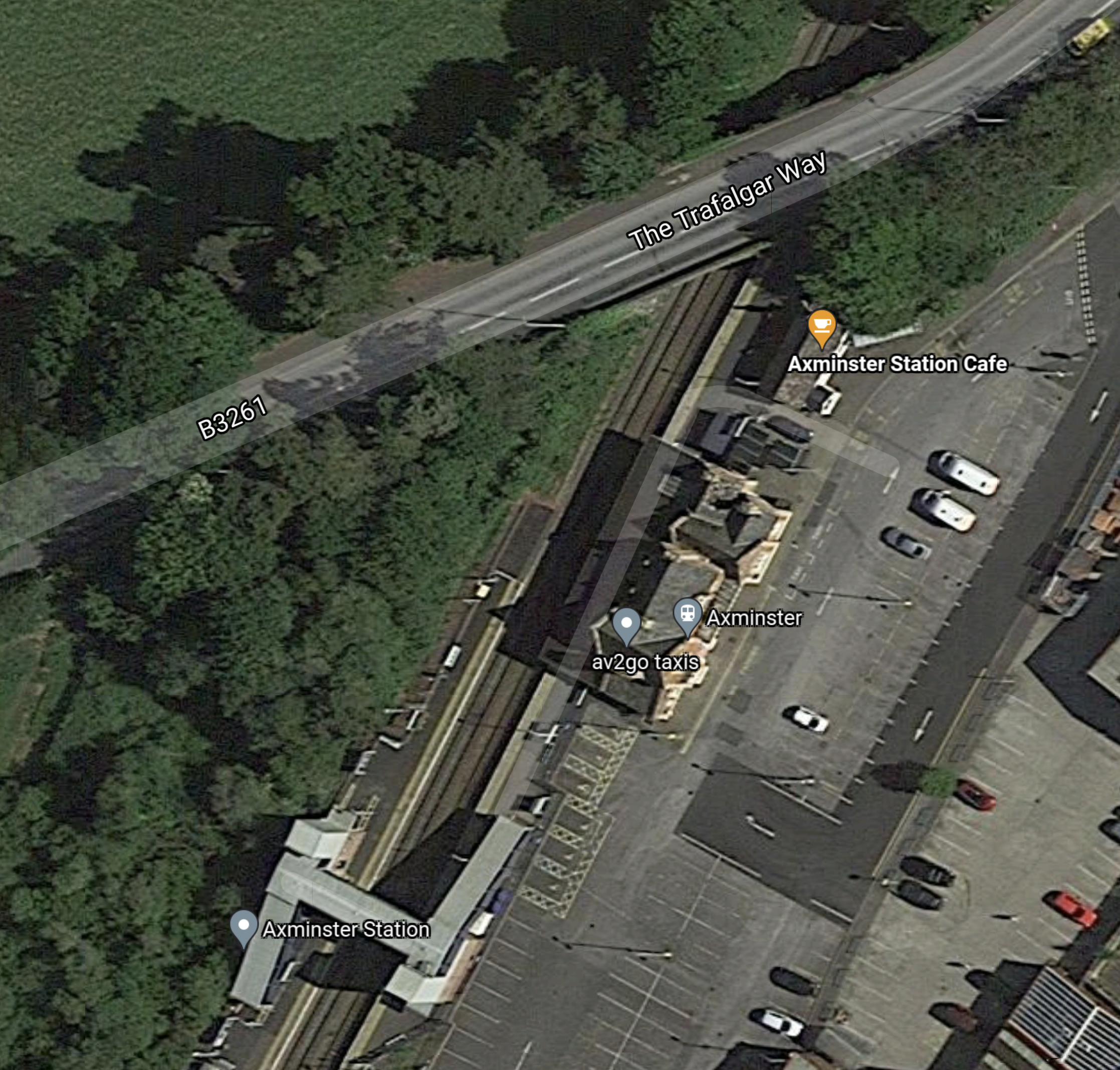
Note.
- The station has two platforms.
- The station appears to have a bridge with lifts.
- The station has a good road connection and the parking could probably be extended.
Axminster station could certainly handle a fast train between London and Exeter, a stopping train to Barnstaple and all the passengers.
Devon Metro
It does appear that the services of the Devon Metro are coming together.
- Paignton and Exmouth is already running.
- Barnstaple and Exeter Central is already running.
- Okehampton and Exeter Central has just started.
- Exeter St. Davids and Taunton via new stations at Collumpton and Wellington is being planned.
- Barnstaple and Exeter Central needs to be extended to Axminster.
How many other cities in the UK could benefit from a metro of this quality?
Bere Alston And Tavistock
The Modern Railways article also says this.
Meanwhile, further west on the former Southern network, restoration of services from Bere Alston to Tavistock has long been proposed, giving Tavistock a rail link to Plymouth. Christian Irwin, Network Rail’s Industry Programme Manager (South West), who oversaw the Okehampton reopening that came in early and underbudget, says he is keen to repeat the trick on the Tavistock route.
It is probably more difficult than at Okehampton.
- The trackbed is mainly intact, but the track has been lifted.
- The track to be laid is shorter than at Okehampton.
- Two structures at the Southern end need to be replaced.
- A new station needs to be built at Tavistock.
Devon County Council seems to be in control of the land needed.
Proposed services seem to be as follows.
- Plymouth and Gunnislake via Bere Alston – One train per two hours (tp2h)
- Plymouth and Tavistock via Bere Alston – One tph
Overall it looks like the Tavistock project will be more expensive than that at Okehampton, but there would appear to be more contributions from developers.
Devon County Council are hoping that the Tavistock link could be build in the next decade.
Tavistock And Okehampton
After the reconnection of Tavistock to the National Rail network, the council would hope to complete the link between Tavistock and Okehampton.
This would give the following benefits.
- Improved public transport connectivity in West Devon and North Cornwall.
- Improve revenue potential at Okehampton and Tavistock stations.
- Create an easier freight route.
- Create an alternative route, if the coastal route is closed.
It is a challenging project, but I feel it will be possible by perhaps 2035.
More On Batteries On Class 802 Trains
In the December 2021 Edition of Modern Railways, there’s an article called Battery Trial For TPE ‘802’.
Class 802 trains are now involved in two battery trials.
- One involves Great Western Railway (GWR) trains, which I wrote about in Hitachi And Eversholt Rail To Develop GWR Intercity Battery Hybrid Train – Offering Fuel Savings Of More Than 20%.
- A second involves TransPennine Express (TPE), which I wrote about in Hitachi Rail And Angel Trains To Create Intercity Battery Hybrid Train On TransPennine Express.
This article puts some flesh of the bones of the two trials.
It is hoped that replacing one diesel engine (generator unit) with a battery pack will enable the following.
- Reduction of carbon emissions by at least 20 %.
- Reduction of fuel consumption.
- The ability to rely on battery power when entering and leaving stations to reduce noise pollution and emissions.
This paragraph explains a possible way the trains will be operated.
Another option is to use the battery to provide ‘classic’ hybridisation efficiency, allowing most diesel running to be done fuel-efficiently under two engines rather than three. In this case, the battery module would provide top-up power for peak demand and give regenerative braking capability when operating in diesel mode, which the trains currently do not have.
This is one of the aims of the GWR trial and I suspect anybody, who has owned and/or driven a hybrid car will understand Hitachi’s thinking.
The next paragraph is very revealing.
To fully test the 6m-long, 2.2m-wide battery module, the intention is for it to be flexibly programmable in order for different approaches to charging, including from the overhead line power supply, diesel engines and during braking , to be evaluated.
It looks to me that Hyperdrive Innovation will earn their fees for the battery design and manufacture.
This picture shows the underneath of a Class 802 train.
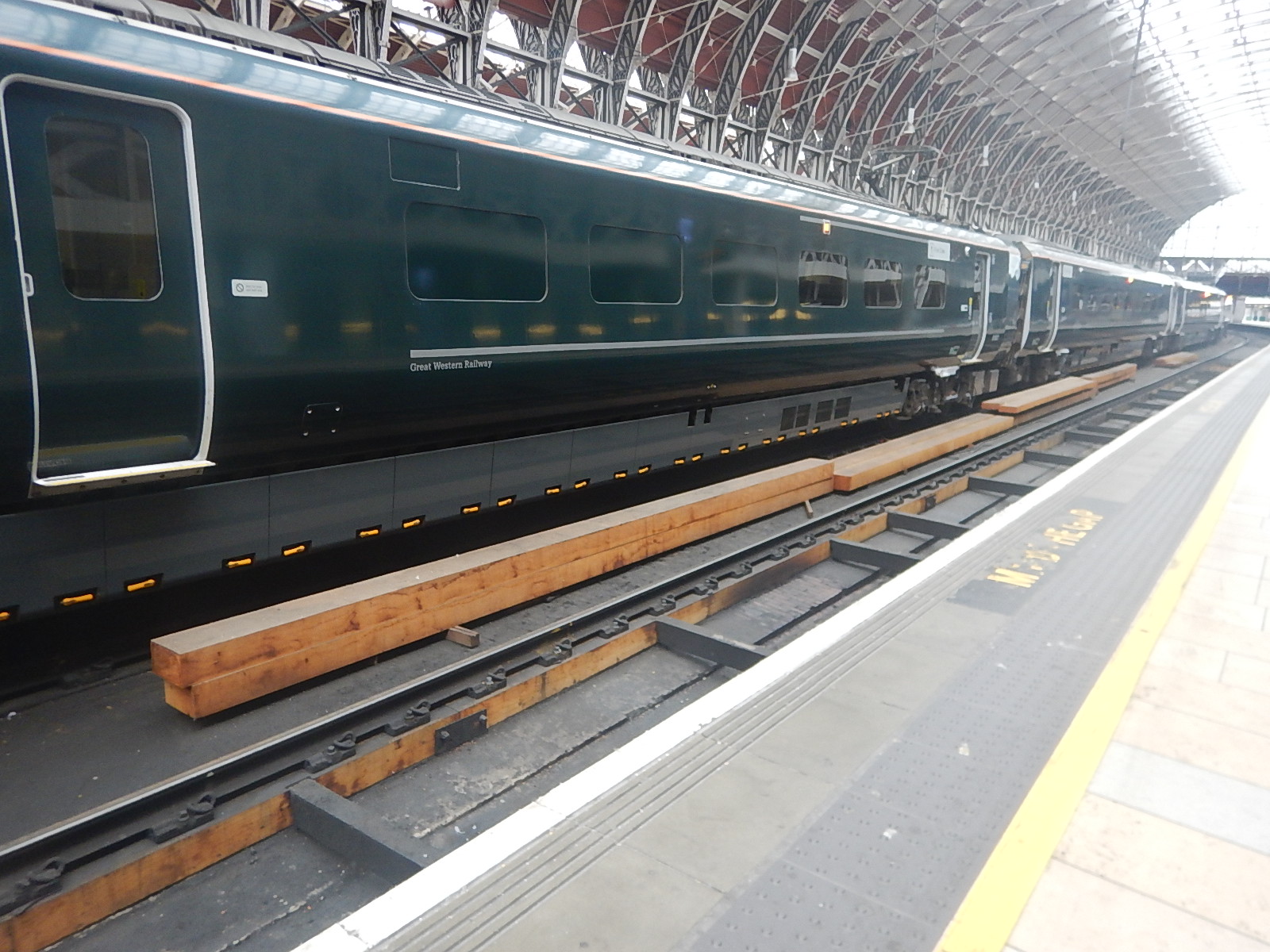
Note.
- The car is 26 metres long
- The car is 2.75 metres wide.
- The MTU 12V 1600 diesel engines, fitted to a Class 802 train, each weigh around two tonnes.
- The engines have a power output of 700 kW
I would think that the 6 x 2.2 m battery would fit under the car easily.
As an engineer, who has evaluated all sorts of weight and balance problems, I would make the battery similar in weight to the diesel engine. This would mean that the existing mountings for the diesel engine should be able to support the battery pack. It would also probably mean that the handling of a car with a diesel engine and one with a battery pack should be nearer to being identical.
Tesla claim an energy density of 250 Wh/Kg for their batteries, which would mean a battery with the weight of one of the diesel engines could have a capacity of around 500 kWh.
As a Control Engineer, I believe that Hitachi and Hyperdrive Innovation have a tricky problem to get the algorithm right, so that the trains perform equally well under all conditions. But with a good simulation and lots of physical testing, getting the algorithm right is very much a solvable problem.
The article says this about the reliability of the diesel engines or generator units (GU) as Hitachi call them.
Whilst reliability of the generator units (GU) has improved, operators of the bi-mode sets still report frequent issues which see sets ending their daily diagram with one out of use.
I wonder, if battery packs will improve reliability.
From statements in the article, it looks like Hitachi, MTU and the train operating companies are being cautious.
The article also says this about the design of the battery packs.
The battery pack has been designed so it is a like-for-like replacement for a GU, which can maintain or improve performance, without compromising on seats or capacity.
I have always said it would be plug-and-play and this would appear to confirm it.
How Will The Batteries Be Charged?
I showed this paragraph earlier.
To fully test the 6m-long, 2.2m-wide battery module, the intention is for it to be flexibly programmable in order for different approaches to charging, including from the overhead line power supply, diesel engines and during braking , to be evaluated.
GWR and TPE run their Class 802 trains to several stations without electrification. and they will probably need some method of charging the battery before leaving the station.
This is Hitachi’s infographic for the Hitachi Intercity Tri-Mode Battery Train.

Note.
- This infographic was published with the Hitachi press release announcing the development of the tri-mode train for GWR.
- One diesel engine has been replaced by a battery pack.
- Charging the battery can be under wires or 10-15 minutes whilst static.
- At some stations like Exeter St. Davids, Penzance, Plymouth or Swansea, heavily-laden services might need the assistance of batteries to get up to operating speed.
The infographic released with the Hitachi press release announcing the trials for TPE.
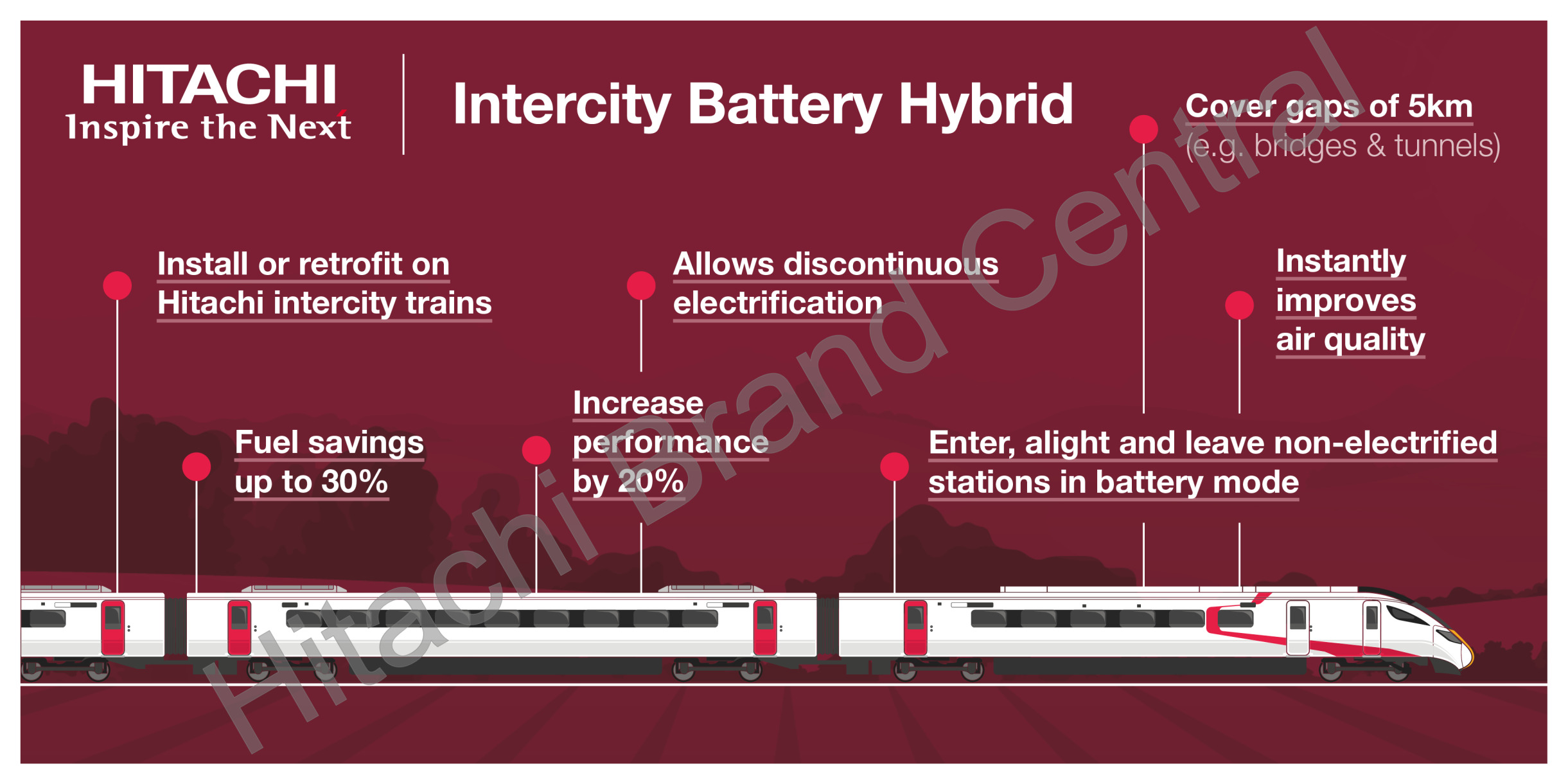
It is similar, but it says nothing about charging.
So how will these trains be charged in stations like Hull, Middlesbrough. Penzance, Scarborough and Swansea, so they leave on their return journey with a full battery?
Consider.
- The formation of a five-car Class 802 train is DPTS-MS-MS-MC-DPTF.
- Pantographs appear to be on both driver cars.
- The middle three cars have diesel engines.
- Only the middle three cars have traction motors.
- There is probably a high-capacity electrical bus running the length of the train, to enable electricity to power all the cars from either or both paragraphs, when running on an electrified line.
The simplest way to charge the batteries would probably be to install a short lengthy of 25 KVAC overhead electrification in the station and then to charge the batteries the driver would just raise the pantograph and energise the electrical bus, which would then feed electricity to the batteries.
I wrote about Furrer + Frey’s Voltap charging system in Battery Train Fast Charging Station Tested. This charging system would surely work with Hitachi’s designs as batteries can be charged from overhead electrification.
Conclusion
I suspect that Hitachi will achieve their objectives of saving fuel and cutting emissions.
But there is more than this project to just replacing one diesel engine with a battery pack and seeing what the savings are.
It appears that the battery packs could have an effect on train reliability.
If the battery packs are truly like-for-like with the diesel engines, then what will be effect of replacing two and three diesel engines in a five-car Class 802 train with battery packs.
Will it be possible to develop an ability to setup the train according to the route? It’s only similar to the way Mercedes probably set up Lewis Hamilton’s car for each circuit.
But then the speed Formula One cars lap Silverstone is not that different to the maximum speed of a Hitachi Class 802 train.

