Does London Need High Capacity Bus Routes To Extend Crossrail?
If Crossrail has a major problem, it is that some areas of the capital will find it difficult to access the new line.
Up to the age of sixteen, I used to live half-way between Oakwood and Cockfosters stations on the Piccadilly Line.
There are a large number of people who live along the Northern reaches of the Piccadilly Line, who might want to use Crossrail to perhaps go to Heathrow or places in East London.
But the journey will need a double change as there is no interchange between the Piccadilly Line and Crossrail.
I suspect that many will link to Crossrail by taking the Piccadilly Line to Wood Green, Turnpike Lane or Manor House and then get a 141 bus to Moorgate. It is a route, I use if I want to go to Southgate or Cockfosters from my house, which has a 141 stop opposite.
But then as a child to go to Harringay, where my father had an uncle, my mother would use a 641 trolley bus from Wood Green or Turnpike Lane.
Do people follow the public transport habits of their parents?
I know I do!
My father never went on a deep tube. As he several times mentioned the terrible Bank station bombing in the Blitz, which killed 56 people, I always thought that was his problem. But now living as I do along the Northern and Northern City Lines, I suspect it was more to do with air quality, as we were or are both bad breathers.
I suspect that when Crossrail opens, the 141 bus will be heavily used by travellers going between the Northern reaches of the Piccadilly Line and Crossrail at Moorgate.
The 141 bus goes between London Bridge station and Palmers Green and it has a route length of about nine miles.
Currently, buses run every fifteen minutes or so, but I doubt it will be enough in future as Transport for London are rerouting the closely-related 21 bus.
I suspect any route seen as an extension of Crossrail needs to have the following characteristics.
- High frequency of perhaps a bus every ten minutes.
- Interior finish on a par with the Class 345 trains.
- Wi-fi and phone charging.
I would also hope the buses were carbon-free. Given that some of these routes could be quite long, I would suspect hydrogen with its longer range could be better.
Other Routes
According to me, the 141 bus route needs improvement!
But how many other routes could need similar improvement?
Aberdeen’s Hydrogen Buses Taken Off The Road Due To Technical Issue
The title of this post, is the same as that of this article on the BBC.
This is the introductory paragraph.
Aberdeen’s fleet of hydrogen buses has been taken off the road due to a “technical issue”.
The technical issue appears not to be hydrogen-related, but with a mounting bracket.
Strange coming after CAF had bracket trouble with their trams and Hitachi had a similar problem with their trains.
Wrightbus, CAF and Hitachi haven’t been using the save dodgy Chinese supplier called El Cheapo Brackets have they?
French City Cancels Purchase Of 51 Hydrogen Buses After Realising Electric Ones Would Be Six Times Cheaper To Run
The title of this post, is the same as that as this article on Recharge Magazine.
The city is Montpelier and it’s their decision, but I do find it strange, that the French city of Pau have chosen the hydrogen version of the the Van Hool ExquiCity bus.
But Pau have chosen a British hydrogen system from ITM Power, rather than a French one.
Catalyst Capital Makes First Move In GBP 300m Battery Storage Strategy
The title of this post, is the same as that of this article on Renewables Now.
This is the first paragraph.
Fund manager Catalyst Capital has acquired a site to build a 100-MW battery in Yorkshire, northern England, in the first of a series of planned deals under a GBP-300-million (USD 406.1m/EUR 358.9m) strategy to develop diversified UK battery energy storage systems (BESS) facilities.
£300 million, says to me that the finance industry, now finds battery storage to be a worthwhile investment.
Skelton Grange Power Station
This Google Map shows the location of the Skelton Grange power station site, where the battery will be developed.
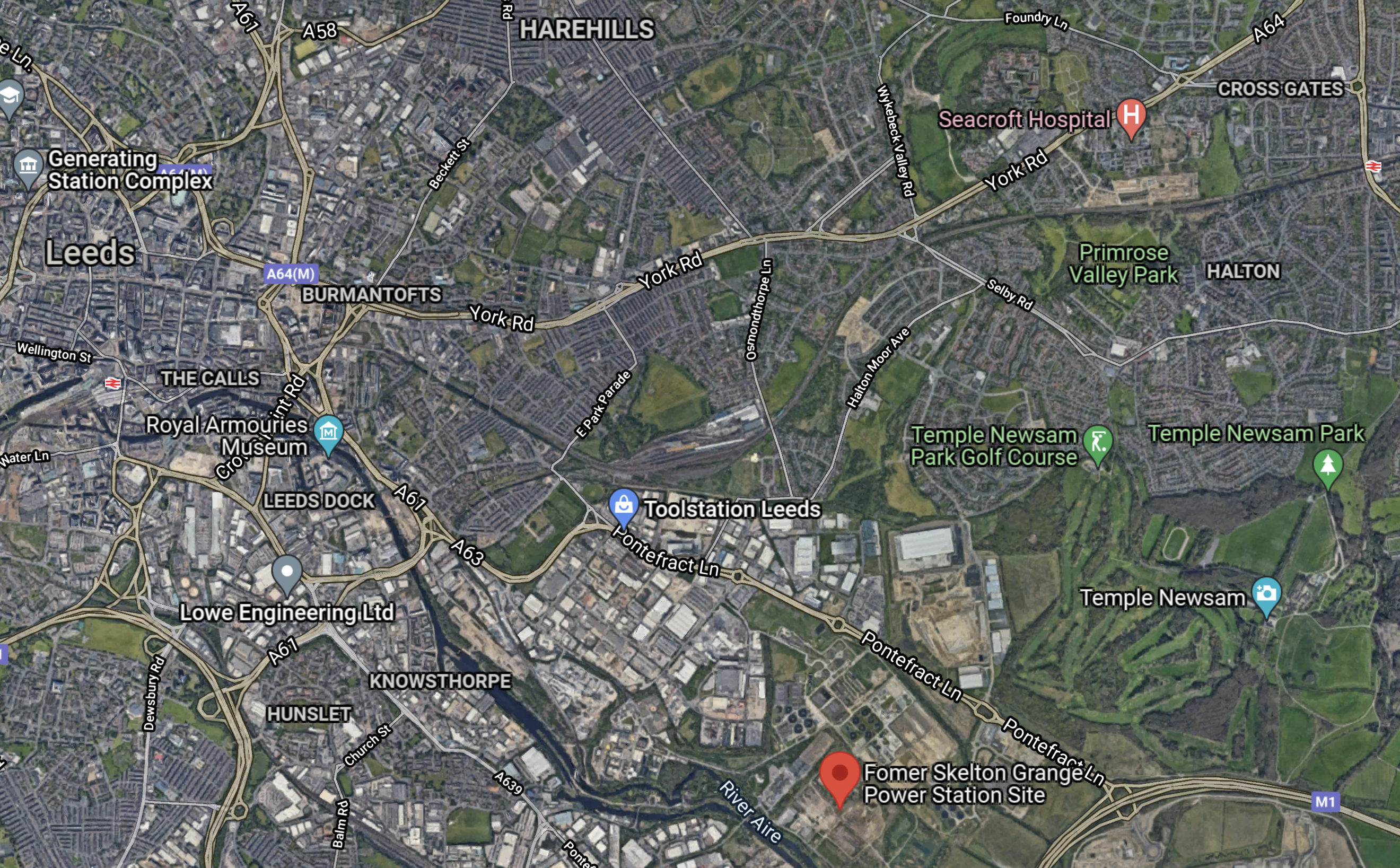
And this second Google Map shows the site in more detail.

Note that there is still a sub-station on the site.
The article states that planning permission was received in 2021 and they hope to have the facility on-line in the first quarter of this year.
That appears quick to me. Is it because the electrical connection already in situ?
It should also be noted, that the battery output of 100 MW is much less than that of the former coal-fired power station in the mid-1980s, which was at last 480 MW.
I also wonder, if the site could host a hydrogen fuelling station for buses.
- It is not far from the centre of Leeds.
- It has a good connection to the National Grid.
- An electrolyser like the one built by ITM Power at Tyseley Energy Park uses 3 MW of electricity to produce around 1.5 tonnes of hydrogen per day.
I also feel that the site could host a wind turbine up to about 10 MW.
Conclusion
Catalyst Capital seems to have made a big entry into the market. They won’t be the last to do this, as the returns are there and the battery storage is needed.
Riding Birmingham’s New Hydrogen-Powered Buses
I went to Birmingham today and took one of their new hydrogen buses on route 51 to Perry Barr and another one back.





























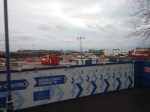



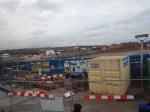




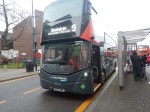
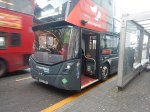
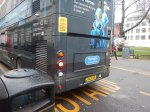
Note.
- As the pictures show Perry Barr is a bit of traffic bottleneck because of the reconstruction of Perry Barr station an other developments in the area, because of the Commonwealth Games, which are going to e held in Birmingham in 2022.
- The route goes past the High Speed Two site.
- Birmingham is a city of highways, flyovers, underpasses and roundabouts.
- The buses have wi-fi and charging points for phones.
I very much feel that the buses are the best hydrogen-powered vehicles, that I’ve travelled in, as they are smooth, comfortable, quiet and seem to have excellent performance.
Birmingham Buses Have Their Own Hydrogen Electrolyser
London bring their hydrogen in by truck from Runcorn, where it is created by electrolysis, for their hydrogen-powered buses.
On the other hand, Birmingham Buses have their own electrolyser at the Tyseley Energy Park.
This Google Map shows Tyseley Energy Park.

Note.
- The Birmingham Bus Refueler hadn’t opened, when this map was last updated.
- Tyseley Energy Park is only a few miles from the City Centre and route 51.
- I estimate that the Tyseley Energy Park occupies around four hectares.
This page on the Tyseley Energy Park web site described the refuelling options that are available.
- Fuels available include hydrogen, biomethane, compressed natural gas, diesel, gas oil and AdBlue.
- There are a range of charging options for electric vehicles.
The 3 MW electrolyser was built by ITM Power of Sheffield, which I estimate will produce nearly 1.5 tonnes of hydrogen per day.
According to this page on the Wrightbus website, a hydrogen-powered double-deck bus needs 27 Kg of hydrogen to give it a range of 250 miles. The refuelling of each bus takes eight minutes.
So the current fleet of twenty buses will need 540 Kg of hydrogen per day and this will give them a combined range of 5000 miles.
It would appear that the capacity of the electrolyser can more than handle Birmingham’s current fleet of twenty buses and leave plenty of hydrogen for other vehicles.
Could Other Towns And Cities Build Similar Energy Parks?
I don’t see why not and it looks like ITM Power are involved in a proposal to build an electrolyser at Barking.
Some would feel that London ought to follow Birmingham and create its own hydrogen.
.
National Express Deploys Hydrogen Double-Deckers In The West Midlands
The title of this post, is the same as that of this article on Renewable Energy Magazine.
This is the first paragraph.
National Express has deployed 20 hydrogen double-decker buses purchased by Birmingham City Council, serving West Midlands route 51 to Walsall via Perry Barr from 6th December 2021– the only hydrogen buses operating in England outside London.
The buses are from Wrightbus.
The article also says this about the source of the hydrogen.
The council are also collaborating with ITM, who are producing and dispensing the hydrogen fuel from the new re-fuelling hub at Tyseley Energy Park.
This is surely the way to do it. Hydrogen buses with a local source of freshly-picked hydrogen.
Cummins To Build H2 Fuel Cell Innovation Center In West Sacramento
The title of this post, is the same as that of this article on Hydrogen Fuel News.
Cummins are one of the companies with a lot to lose, if they don’t replace their diesel products with a zero-carbon alternative.
They took over Hydrogenics and now they seem to be putting money into improving and developing hydrogen fuel cells and probably all the other gubbins to make them work.
I have worked as a consultant for the company and they are very happy to tailor their products to a customer’s needs.
This philosophy would work well with hydrogen-powered vehicles and stationary applications.
I wouldn’t be surprised to see Cummins grow to one of the largest companies in the field of hydrogen.
When It Comes To Buses, Will Hydrogen Or Electric Win?
The title of this post, is the same as that of this evcellent article on WIRED.
The WIRED article is a serious comparison between the merits of battery and hydrogen-powered buses.
The writer of the article talked to two people, who should know.
- James Dixon, who is a Research Fellow in the Transport Studies Unit and Environmental Change Institute at Oxford University
- Neil Collins, who is Managing Director of Wrightbus.
I think the philosophy of Wrightbus with four basic zero-carbon buses could be right.
- Streetdeck Hydroliner FCEV – A hydrogen-powered double-deck bus.
- Streetdeck Electroliner BEV – A battery-powered double-deck bus.
- GB Kite Hydroliner FCEV – A hydrogen-powered single-deck bus.
- GB Kite Electroliner BEV – A battery-powered single-deck bus.
This surely is a basis for satisfying customers, who like to buy what they feel is best for their networks and passengers.
This paragraph from the Wired article, illustrates how terrain and climate might favour one bus or the other.
Still, hydrogen may be a better option in a city with lots of hills, like Hong Kong, where it’s also very warm and humid, says Collins. “That’s going to be a problem for electric buses, because the cooling and the hills are just going to drain the batteries,” he says. “But if the city is relatively flat, and the journey times are relatively short, and it’s not either significantly warm or significantly cold, battery electric can do a very good job.”
In addition, you wouldn’t choose hydrogen buses, if supply of hydrogen was difficult.
Could this be why Jo Bamford, who is the owner of Wightbus, has established a company to help bus operators with the transition to hydrogen. I wrote about it in New Company Established To Help Transition Bus Fleets To Hydrogen.
I have also heard stories of garages in city centres, where it is not possible to get enough power to charge a garage full of battery buses. Some of these garages are in residential areas, which perhaps may not welcome tankers of hydrogen going through to supply the buses with hydrogen.
Perhaps, the solution for garages like this is to relocate the garage to a site, which fulfils one of these conditions.
- Good connections to the motorway and trunk road network, so that hydrogen can be brought in by truck.
- A high-capacity electricity supply to either charge battery electric buses or generate hydrogen using an electrolyser.
Buses would operate according to this daily cycle.
- Buses would either be charged or refuelled with hydrogen overnight.
- They would position to a convenient place to start their daily diagrams.
- At the end of the day, they would return to the garage.
Note.
- Battery-electric buses may need to be topped-up during the day.
- Hydrogen buses with their longer range should be able to service routes further away.
- Routes would be arranged, so that hydrogen buses would not need to be topped up.
The big advantage of a remote bus garage is that the city centre site could be redeveloped to pay for the new buses and garage.
Whitelee Green Hydrogen Facility To Power Public Transport
The title of this post, is the same as that of this article on the BBC.
Some points from the article.
- It will be the country’s largest electrolyser. Is that Scotland or the UK?
- The facility is being built by Scottish Power, ITM Power and BOC.
- Friends of the Earth think it’s wrong and the electricity should be used immediately.
In ScottishPower’s Green Hydrogen Project Looks To Build UK’s Largest Electrolyser, the title says that the Whitelee project will be the UK’s largest electrolyser.
Order! Order! It’s A Bus-y Time For Wrightbus
The title of this post, is the same as that of this article on Ballymena Times.
This is the first paragraph.
The Wrightbus order book continues to be busy. The Go-Ahead Group has signed a contract to buy its first hydrogen powered buses, as part of a deal which could become the largest of its kind in Europe.
Let’s hope that this is the start of something big!
 The Anonymous Widower