T-Pylons To The West Of Yatton Station
I talked about National Grid’s first T-pylons in National Grid Energise World’s First T-Pylons.
Today, I went and had a look for them and found where they cross the Bristol-Exeter Line between Yatton and Worle stations.
I took these pictures.
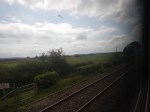




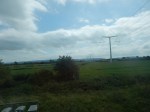
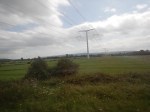
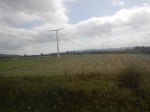




Note.
- The first nine pictures were taken going West between Yatton and Worle and the last eleven were taken going East.
- Some of the mature trees seem to hide the pylons, as the train passes.
T-pylons are deliberately smaller than traditional pylons, as these pictures show.

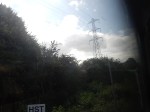


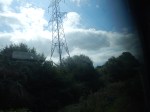
It is certainly a good attempt at producing a less noticeable electricity transmission line.
It’s T-time! All T-Pylons Now Erected On Hinkley Connection Project
The title of this post, is the same as that as this press release from National Grid.
These are the three bullet points.
- All 116 world-first T-structures now complete as part of the Hinkley Connection Project
- Last of 232 diamond ‘earrings’ lifted onto a T-pylon between Yatton and Kenn in North Somerset
- 36 of the new T-pylons between Woolavington and Loxton were energised in March
This is the first paragraph.
National Grid’s Hinkley Connection Project reached another milestone with the completion of all 116 of its iconic new T-pylons, which will connect six million homes and businesses in the South West to home grown, low-carbon energy.
There is a video in the press release, which is well worth a view.
Vattenfall Stops Developing Major Wind Farm Offshore UK, Will Review Entire 4.2 GW Zone
The title of this post, is the same as that of this article on offshoreWIND.biz.
This is the sub-heading.
Vattenfall has stopped the development of the Norfolk Boreas offshore wind power project in the UK and will review the way forward for the entire 4.2 GW Norfolk Zone, the Swedish energy company revealed in its interim report.
This is the first paragraph.
The developer said that the decision to stop the project was made due to ”challenging market conditions”, adding that ”financial frameworks have not adapted to reflect the current market conditions” so far.
Vattenfall are also complaining about inflation and cost increases if up to 40 %.
I have my thoughts.
Great Yarmouth Support Base
In some ways, I find this decision to pull out strange, as it was only in March this year that Vattenfall signed a contract with Peel Ports to build a support base for their Norfolk wind farms at Great Yarmouth.
I don’t think that Peel Ports will be too bothered, as they are a well-funded company and there are plenty of wind farm proposals in the sea around Norfolk, who could use a base at Great Yarmuth.
Cable Routes And Nimbys
These Norfolk wind farms have suffered opposition from Nimbys to the cable route, that will be taking the electricity away from the coast. This may have increased the cost of delivery of the electricity to market.
An Offshore Cable Route
In January 2022, I wrote Is There A Need For A Norfolk-Suffolk Interconnector?, where I analysed the amount of energy, that will be produce in Norfolk and Suffolk.
This was my conclusion.
I believe there are a lot of possibilities, that would meet the three objectives, I stated earlier.
-
- Avoid as much disruption on the land as possible.
- Create the capacity to deliver all the energy generated to customers, either as electricity or hydrogen.
- Create an expandable framework, that would support all the wind farms that could be built in the future.
In addition, simple mathematics says to me, that either there will need to be extra capacity at both Bicker Fen and Bullen Lane substations and onward to the rest of the country, or a large electrolyser to convert several gigawatts of electricity into hydrogen for distribution, through the gas network.
Note.
- An offshore Multiple Purpose Interconnector (MPI) could be built between Bicker Fen in Lincolnshire and the Isle of Grain.
- An electrolyser could be built offshore, joined to the MPI and connected to the Bacton gas terminal.
- There could be local offshore hydrogen storage.
- Bicker Fen is connected to the Viking Link to Denmark.
- An offshore link could have its Southern end at the Isle of Grain, from where the electricity can be exported to Germany, by the NeuConnect interconnector, that is under construction.
There must be sufficient capacity, so that all energy is delivered to customers, as either electricity or hydrogen.
I’ve always favoured delivering electricity from these and other East Anglian wind farms with an offshore cable route away from the coast between perhaps Bicker Fen in Lincolnshire and the the Isle of Grain, from where the electricity can be exported to Germany, by an interconnector, that is being built.
Competition From Scotland
National Grid are improving the offshore grid between Scotland and Humberside, so perhaps Vattenfall might have a competition problem, when it comes to selling their electricity.
If you have no market for a product, then the price drops.
Is East Anglia A Bad Place To Have Surplus Electricity?
Consider.
- It should also be remembered that East Anglia has no heavy electricity users.
- There are also no substantial mountains for building large pumped-storage hydro schemes, as Scotland is proposing to do.
- The construction of Sizewell C will add more electricity to the area.
In my view the best thing to do would be to build a giant electrolyser near the Bacton gas terminal.
Was It A Mistake For Vattenfall To Make A Bid?
Looking at the delivery problems for the Norfolk wind farms, I think that Vattenfall made a bad decision to bid for them.
- The wind farms are too far North to serve London and the South-East and to export the electricity to the Continent.
- They are also too far South to serve the industry in the North around the Humber and the Tees.
It looks an obvious case of wrong Location, Location and Location.
Could Norfolk Boreas And Norfolk Viking Work Economically?
I suspect these ideas could help.
- A Multiple Purpose Interconnector (MPI) would be built between Bicker Fen in Lincolnshire and the Isle of Grain.
- The MPI would connect to any wind farms on the route.
- An offshore electrolyser opposite Bacton would be connected to the MPI to use surplus electricity to generate hydrogen, which would be distributed through the gas grid.
The whole network of wind farms, interconnectors, electrolysers and storage needs to be comprehensively designed, so that it provides the South-East corner of England, with enough reliable electricity and hydrogen.
National Grid And SSEN Transmission Agree Joint Venture For UK’s Largest Ever Electricity Transmission Project
The title of this post is the same as that of this press release from National Grid.
This is the sub-heading.
Joint Venture Agreement Important Milestone In Subsea Electricity Superhighway – Eastern Green Link 2
These four paragraphs outline the project.
National Grid Electricity Transmission (NGET) and SSEN Transmission have taken a big step forward in the development of a new subsea electricity superhighway project along the east coast of Scotland after reaching agreement on the terms of their joint venture (JV).
The ‘Eastern Green Link 2’ (EGL2) project will see the creation of a 525kW, 2GW high-voltage direct current (HVDC) subsea transmission cable from Peterhead in Scotland to Drax in England. The UK’s single largest electricity transmission project ever.
The subsea HVDC cable system is approximately 436km in length with new converter stations at either end to connect it into the existing transmission network infrastructure. HVDC technology provides the most efficient and reliable means of transmitting large amounts of power over long distances subsea.
The EGL2 link will support the growth of new renewable electricity generation, creating jobs and delivering a pathway to net zero emissions targets, as well as helping to alleviate existing constraints on the electricity network.
The Wikipedia entry for Eastern HVDC has a detailed description of the two 2GW Scotland-England interconnectors, that are planned.
This is the first section.
Eastern HVDC and Eastern HVDC projects are the names used by Ofgem for two planned HVDC submarine power cables from the East coast of Scotland to Northeast England to strengthen the National Grid. The two links combined will deliver 4 GW of renewable energy from Scottish wind farms to England.
Ofgem state that “At an estimated cost of £3.4 billion for the two links, the Eastern HVDC projects would be the largest electricity transmission investment project in the recent history of Great Britain.
The Project Background Document for SEGL1 can be viewed here.
EGL2 also has its own web site.
Grain LNG Launches Market Consultation For Existing Capacity
The title of this post is the same as that of this press release from National Grid.
This is the sub-heading.
Grain LNG, the largest liquefied natural gas (LNG) terminal in Europe, is pleased to announce the launch of a market consultation for the auction of 375 Gwh/d (approx. 9 mtpa) of existing capacity. The initial consultation phase for the Auction of Existing Capacity will commence on 14 June and run until 26 July.
These paragraphs detail what Grain LNG, which is a subsidiary of National Grid are offering.
GLNG has used the positive feedback received from the recent ‘Expression of Interest’ exercise and subsequent market engagement to offer three lots of capacity:
- Each lot will be entitled to 42 berthing slots, 200,000 m3 of storage and 125GWh/d (approx. 3 mtpa) of regasification capacity from as early as January 2029.
- This product is specifically designed for parties who wish to acquire a substantial stake in a major terminal in Northwest Europe, at a reduced cost and with shorter contract lengths when compared to new-build projects.
- As the terminal’s capacity already exists, parties involved will not be subjected to the FID approvals or potential delays that can arise from construction issues commonly associated with new build terminals.
Simon Culkin, Importation Terminal Manager at Grain LNG, said: “We are really pleased with the high level of interest shown by the market at a time of significant geo-political influence on our energy markets. It has allowed us to engage with potential customers and shape our offering to best meet their needs, whilst optimising access to this strategic asset. “
Reading the Wikipedia entry for the Grain LNG Terminal, it looks like it gets used as a handy store for natural gas.
About Phase 1 (2002–05), Wikipedia says this.
The new facilities enabled the Grain terminal to become a base supply to the NTS, with the ability to deliver gas continuously when required. The cost of the Phase 1 project was £130m. A 20-year contract with BP / Sonatrach enabled Grain LNG to import LNG on a long-term basis from July 2005.
About Phase 2 (2005–08), Wikipedia says this.
The development provided an additional five million tonnes of capacity per annum. All this capacity was contracted out from December 2010. Customers included BP, Iberdrola, Sonatrach, Centrica, E.ON and GDF Suez.
Under Current Facilities, Wikipedia says this.
Grain LNG Ltd does not own the LNG or the gas that it handles but charges for gasifying it. Current (2016) users include BP, Centrica (British Gas Trading), Iberdrola (Spain), Sonatrach (Algeria), Engie (France), and Uniper (Germany).
National Grid must be pleased that some customers seem loyal.
I feel that National Grid’s basic plan is to carry on with more of the same.
But will they develop more storage and other facilities on the site.
There are certainly other projects and interconnectors, that make the Isle of Grain and energy hub connecting the UK, Netherlands and Germany.
- In Did I See The UK’s Hydrogen-Powered Future In Hull Today?, I mentioned, that I thought that the Isle of Grain could be a location for an electrolyser and a hydrogen store.
- In EuroLink, Nautilus And Sea Link, I talk about new interconnectors, if which Nautilus might come to the Isle of Grain.
- In UK-German Energy Link Reaches Financial Close, I talk about NeuConnect, which will be an interconnector between the Isle of Grain ans Wilhelmshaven in Germany.
- The Isle of Grain is the landing point for the BritNed undersea power cable between The Netherlands and the UK.
I could also see National Grid building an East Coast interconnector to bring power from the wind farms off the East Coast of England to the Isle of Grain for distribution.
These are major wind farms South of the Humber.
- Dudgeon – 402 MW
- East Anglia 1 – 714 MW
- East Anglia 1 North – 800 MW
- East Anglia 2 – 900 MW
- Galloper – 504 MW – RWE
- Greater Gabbard – 504 MW
- Gunfleet Sands – 174 MW
- Hornsea 1 – 1218 MW
- Hornsea 2 – 1386 MW
- Hornsea 3 – 2852 MW
- Humber Gateway – 219 MW
- Lincs – 270 MW
- London Array – 630 MW
- Lynn and Inner Dowsing – 194 MW
- Race Bank – 580 MW
- Scroby Sands – 60 MW
- Sheringham Shoal – 317 MW
- Triton Knoll – 857 MW – RWE
- Dogger Bank A – 1235 MW
- Dogger Bank B – 1235 MW
- Dogger Bank C – 1218 MW
- Dogger Bank D – 1320 MW
- Dogger Bank South – 3000 MW RWE
- East Anglia 3 – 1372 MW
- Norfolk Boreas – 1396 MW
- Norfolk Vanguard – 1800 MW
- Outer Dowsing – 1500 MW
- North Falls – 504 MW – RWE
- Sheringham Shoal and Dudgeon Extensions – 719 MW
- Five Estuaries – 353 MW – RWE
Note.
- These figures give a total capacity of 28,333 MW.
- Five wind farms marked RWE are owned by that company.
- These five wind farms have a total capacity of 5618 MW.
- Will RWE export, their electricity to Germany through NeuConnect?
I can certainly see National Grid building one of the world’s largest electrolysers and some energy storage on the Isle of Grain, if an East Coast Interconnector is built.
Gresham House Energy Storage Sets GBP80 Million Fundraise
Gresham House Energy Storage Fund must be doing something right, as similar headlines are used in half-a-dozen places on the Internet and they regularly seem to be raising more money.
But then, as a Graduate Control Engineer and a previous owner of half a finance company, I’ve always thought raising money to build batteries was a good idea.
My only niggle with Gresham House, is that I would have thought by now, they would have put some money into building one of the excellent new technology batteries that are coming through.
The storage fund or some of its employees, may of course have contributed to some of the crowdfunding for these new technologies, all of which I feel have a good chance of being a success.
Note.
- Energy Dome is Italian and all the others are at least fifty percent British.
- Most of the British batteries have had backing from the UK government.
- All these batteries are environmentally-friendly.
- None of these batteries use large quantities of rare and expensive materials.
- Energy Dome even uses carbon dioxide as the energy storage medium.
In addition, in Scotland, there is traditional pumped storage hydro-electricity.
Project Iliad
This article on renews.biz has a slightly different headline of Gresham House To Raise £80m For US Battery Buildout.
This is the first two paragraphs.
Gresham House Energy Storage Fund is seeking to raise £80m through a share placing.
The new equity raised will primarily be used to finance 160MW of solar with co-located four-hour battery projects in California, US, known as Project Iliad.
The article then gives a lot of financial details of Project Iliad and Gresham House.
Will Gresham House be backing co-located solar/battery projects in the UK?
- In Cleve Hill Solar Park, I write about a co-located solar/battery project in Kent.
- This press release from National Grid is entitled UK’s First Transmission-Connected Solar Farm Goes Live, which also describes a co-located solar/battery project, being built near Bristol.
These two projects are certainly serious and could be pathfinders for a whole host of co-located solar/battery projects.
WillGresham House back some of this new generation?
Ireland To Develop National Industrial Strategy For Offshore Wind
The title of this post, is the same as that of this article on offshoreWIND.biz.
This is the sub-heading.
Ireland’s Minister for Enterprise, Trade and Employment, Simon Coveney, has announced plans to develop a National Industrial Strategy for Offshore Wind which will set out how Ireland can maximise the economic opportunity arising from the production of offshore wind energy
Ireland’s current objectives for offshore wind are.
- To deliver 5 GW of offshore wind by 2030.
- A further 2 GW of floating wind to be in development by 2030.
- The target for offshore wind could rise to at least 37 GW by 2050.
- There is a target to provide 80 per cent of the country’s electricity to be from renewable sources by 2030.
The government appears to recognise collaborative approach between state and industry is needed.
Nothing is said about co-operation with Northern Ireland or the UK.
This is despite.
- UK and Irish companies like ESB, Flotation Energy, Simply Blue Group and SSE have projects in both countries.
- Irish company; ESB is developing the Malin Sea Wind wind farm in Scottish waters and landing the electricity near Derry City.
- Scottish company; SSE is building biomass power stations in Ireland.
- Some promising waters for wind power are shared between the two countries.
- There are three interconnectors between the two main islands.
I would expect that there could be some multi-purpose interconnectors across the Irish and Celtic Seas.
These would connect windfarms between the islands to both the UK and Ireland. National Grid and TenneT are building the LionLink between England and The Netherlands, which I wrote about in World’s Largest-Of-Its-Kind Power Line To Deliver Clean Power To 1.8m UK Homes And Boost Energy Security.
I very much feel, that there will be a lot of co-operation between the UK and Irish governments as if they work together, the development of Ireland’s offshore wind and that of the West Coast of the UK could be more efficient.
World’s Largest-Of-Its-Kind Power Line To Deliver Clean Power To 1.8m UK Homes And Boost Energy Security
The title of this post, is the same as that as this press release from the UK Government.
These are the three bullet points of the press release.
- LionLink power line between UK and Netherlands will deliver enough electricity to power more homes than Manchester and Birmingham combined.
- Agreement made as Grant Shapps leads delegation of leading businesses to key North Sea Summit.
- Part of renewed Government drive to work with business to help grow the economy.
These three paragraphs outline the project.
The world’s largest multi-use electricity power line will be built under the North Sea, boosting UK energy supplies with enough to power 1.8 million homes – more than Birmingham and Manchester combined.
The new LionLink will connect the UK and the Netherlands with offshore wind farms, providing clean affordable and secure energy to Britain which will help cut household bills and drive Putin’s Russia further out of the energy market.
The cross-border electricity line will be only the second of its kind in the world, with the first having been built by Germany and Denmark. However, it will be able to carry more than four times the amount of electricity as its predecessor – making it the largest of its kind in terms of capacity anywhere in the world.
Note.
- I suspect the LionLink will go via the Dogger Bank, where Danish, Dutch, German and UK territorial waters meet an we are already building 8 GW of fixed foundation offshore wind. The other countries are also active in the area.
- The press release doesn’t mention, where the LionLink will make landfall in the UK.
- Much of the connection will probably use the cables being laid for the Dogger Bank wind farms.
- There is also no mention of the North Sea Wind Power Hub, which could be an artificial island on the Dogger Bank.
There is also a press release on the National Grid web site, which is entitled National Grid And TenneT Collaborate On Proposed First-Of-A-Kind Anglo-Dutch Electricity Link, which gives more details.
- The capacity is stated to be 2 GW.
- Like the current BritNed interconnector, the project will be a cooperation between National Grid And TenneT.
- TenneT is a limited liability company owned by the Dutch government, that is a transmission system operator in the Netherlands and in a large part of Germany.
There is also a diagram, showing how the LionLink will work, which includes these components.
- On the Dutch side, there is an offshore AC>DC Converter Station, which is connected to the Dutch electricity grid and one or more offshore wind farms.
- Across the border between the Dutch and UK Exclusive Economic Zones, there will be a HVDC cable.
- The HVDC cable will terminate in an onshore DC>AC Converter Station in the UK, which will be connected to the UK electricity grid.
No details of the two landfalls have been given.
More information is given in this article on offshoreWIND.biz, which is entitled UK And Netherlands Unveil Multi-Purpose Interconnector Plans.
- This shows a map of the North Sea with an interconnector running in a straight line between possibly Rotterdam and Bacton in Norfolk.
- A wind farm is shown connected to this interconnector.
This paragraph describes the windfarm and the interconnector.
LionLink, a multi-purpose interconnector that was announced today at the North Sea summit, could connect a Dutch offshore wind farm with a capacity of 2 GW to both countries via subsea interconnectors.
If the wind farm has a capacity of 2 GW, I would assume it can supply up to 2 GW to the UK and The Netherlands.
This is a classic system, that can be optimised by the application of sound principles.
All electricity generated by the wind farm must be used, stored or converted into green hydrogen.
Electricity will be distributed as to need.
Energy storage or electrolysers could be sited at either end or even in the wind farm.
I would suspect that more wind farms could be connected to the interconnector.
The team, that write the control system for the grid will have a lot of fun!
BritNed
I have a feeling that National Grid and TenneT have taken a long hard commercial look at the electrical and financial performance of BritNed over the last year and decided, that a second connection would be to the mutual benefit of both companies, their customers and the UK and The Netherlands in general.
It would also be twice as difficult for terrorists sponsored by Putin to cut two cables.
Conclusion
This is a great leap forward for wind power in the North Sea and Europe.
National Grid Energise World’s First T-Pylons
The title of this post, is the same as that of this press release from National Grid.
These are the four bullet points.
- Electricity is flowing to homes and businesses through the first new pylon design in the UK for nearly 100 years.
- Major milestone in National Grid’s Hinkley Connection project to connect 6 million homes and businesses in the South West to home grown, low carbon energy.
- The T-design, with a single pole and cross shaped arms, is around a third shorter than the traditional design with a smaller ground footprint.
- The T-pylons, along with a new substation and underground cabling, are now incorporated into National Grid’s electricity transmission network delivering electricity in Somerset and across England and Wales.
This is the first paragraph.
National Grid has successfully energised 36 of the world’s first T-pylons between Bridgwater and Loxton in Somerset. The new shaped pylons have been constructed as part of the £900 million Hinkley Connection Project, a new 57 km high-voltage electricity line that will connect six million homes and businesses to new sources of home grown, low carbon energy and help the UK to meet its net zero by 2050 target.
There is a video in the press release, which is well worth a view.
- The size of the pylons certainly reduces their visibility.
- It appears there are seven cables on either side.
These pictures show the transmission lines to the Sizewell power station site.
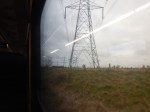



Note.
- The lower height is very noticeable.
- There seem’s to be a lot more wires.
- I would assume, that the reduced number of components, reduces the cost of installation and maintenance.
The installation proved that even in the most mundane of applications, innovation can bring positive results.
The T-pylons are a design by Danish company; Bystrup.
This is the specification from their comprehensive web-page.
- Power – 2 x 400 kV
- Height – 35 metres / 114 feet
- Units/km – 3 (5 units/mile)
- Material – Hot-dip galvanised steel, painted
- Assembly – On-site and quick – less than 10 parts
- Installation – Simple monopile foundation
- Production possible anywhere in the world
- Developed – 2011-2014
They’ve also won several awards.
- 1st prize in int. competition for RIBA
- Nominated for the IET Innovation Award 2014
- Gold Prize, CIGRE Seoul 2017
- Award winner, UK Steel Awards (SSDA) 2017
I would hope to see more in the UK.

