Could The New Northumberland Line Be Used As A Diversion For The East Coast Main Line?
This question was asked by a friend, so I thought I’d investigate.
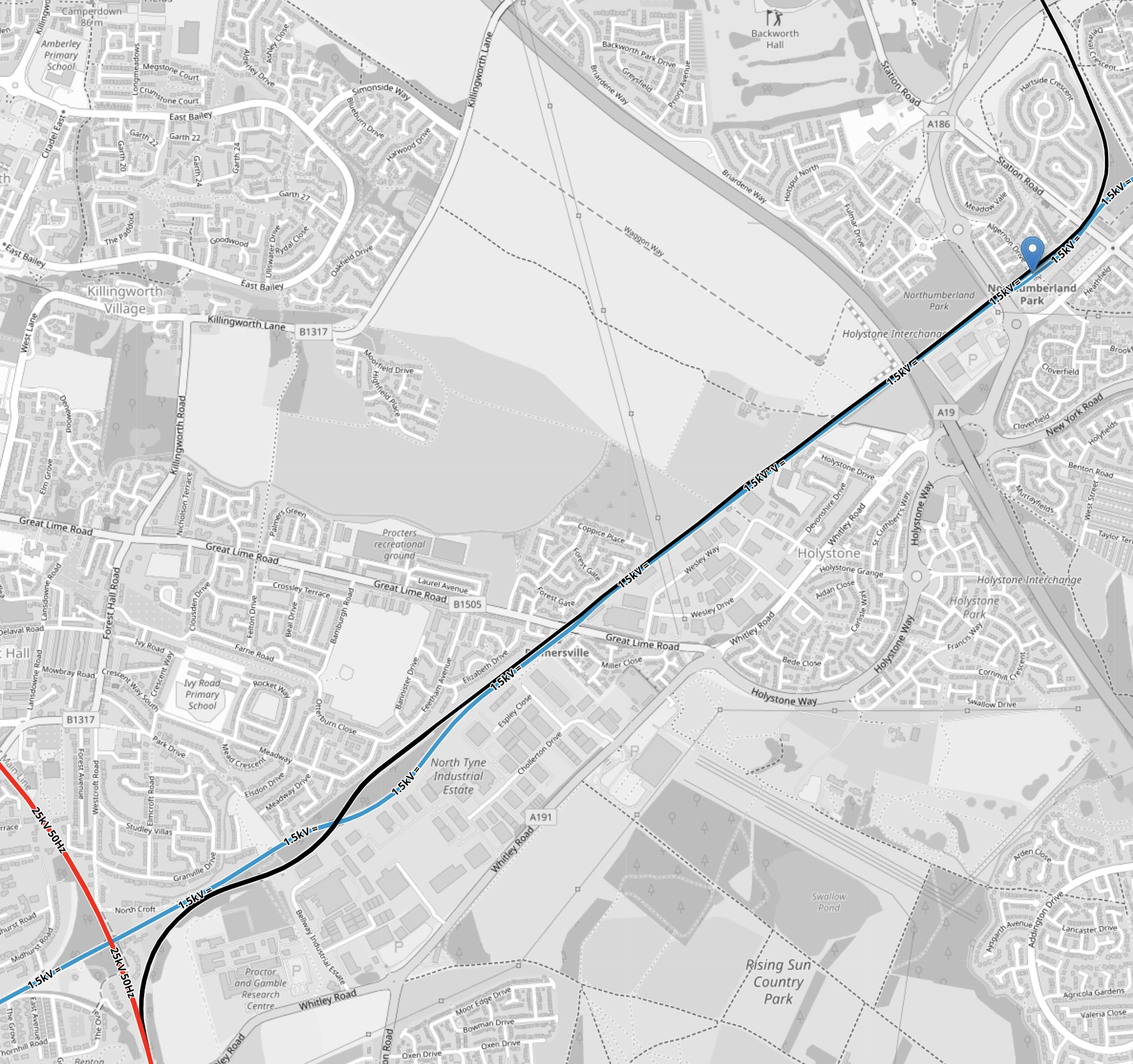
This OpenRailwayMap shows the Southern end of the Northumberland Line.
Note.
- Tracks in red are the 25 KVAC overhead electrified East Coast Main Line.
- Tracks in blue are the 1.5 kV overhead electrified Tyne and Wear Metro.
- The track in black running alongside the Metro and then turning North is the Northumberland Line.
- The Northumberland Line is mainly double track, with some single-track sections.
- The blue arrow indicates Northumberland Park station.
At Benton Junction junction in the South-West corner of the map, trains can be handled in the following directions.
- Trains going North on the East Coast Main Line can go North on the Northumberland Line.
- Trains going South on the Northumberland Line can go South on the East Coast Main Line.
Currently, only the occasional freight train uses the junction.
When the Northumberland Line opens, there will be two trains per hour (tph) in each direction.
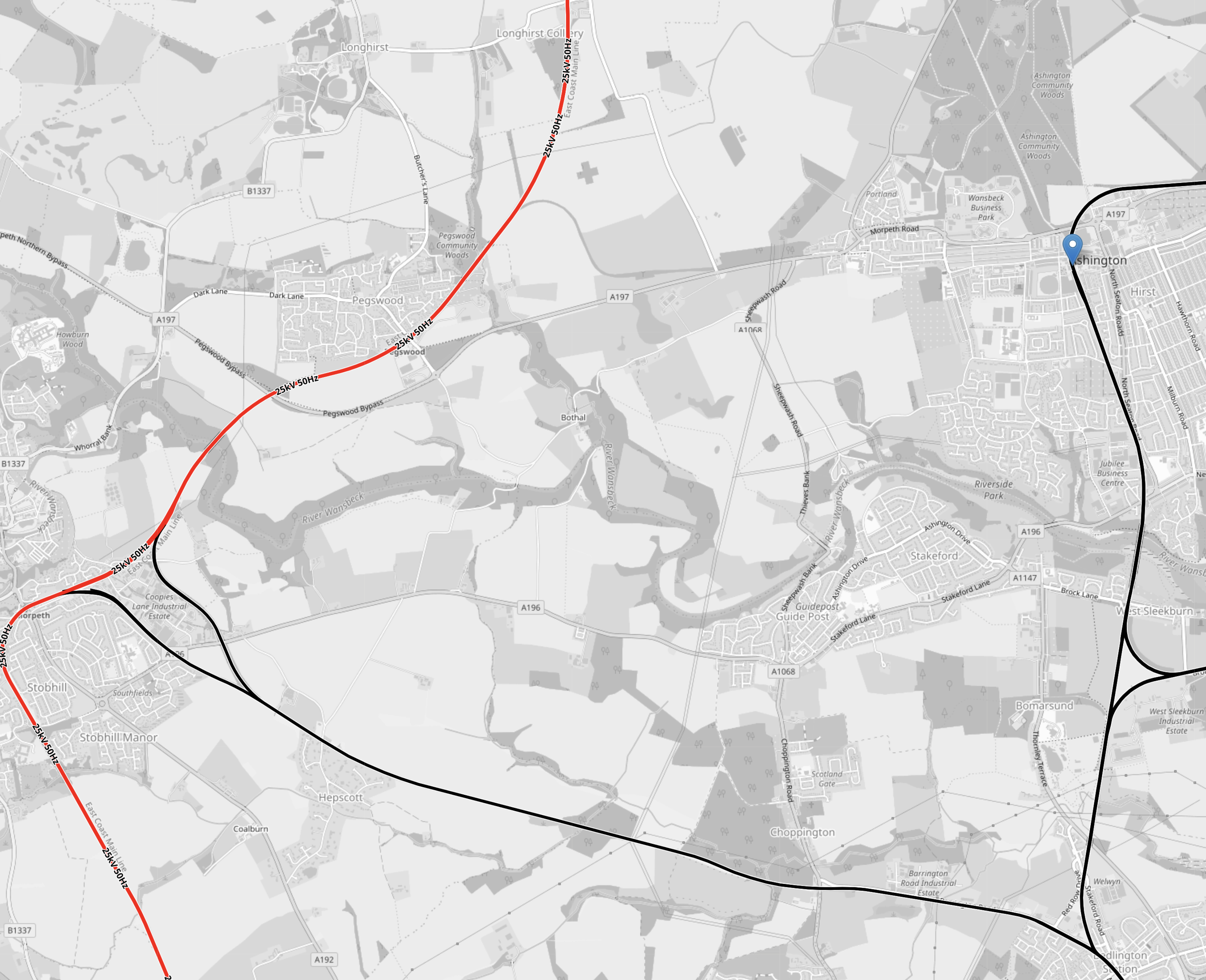
This second OpenRailwayMap shows the Northern end of the Northumberland Line.
Note.
- Tracks in red are the 25 KVAC overhead electrified East Coast Main Line.
- The blue arrow indicates the Ashington station, which will be the Northern terminus of Northumberland Line services.
- The Northumberland Line runs down the Eastern side of the map.
- The village of Bedlington, which will have a station on the Northumberland Line is in the South-East corner of the map.
- A second track connects Bedlington on the Northumberland Line to the East Coast Main Line, where trains can go North or South.
It does appear that because of the track layout at both ends of the Northumberland Line, the following is possible.
A train going in either direction on the East Coast Main Line can use the Northumberland Line as a diversion.
Passenger services between Newcastle and Morpeth could use the Northumberland Line.
Passenger services between Newcastle and North of Morpeth could use the Northumberland Line.
Note.
- Although High Speed Two through Newcastle is probably dead, there is still a need to increase capacity through the area.
- I suspect diversions could be useful, when there were problems between Newcastle and Morpeth.
- Could the Northumberland Line be used for freight trains to increase capacity through Newcastle?
- We shouldn’t ignored the possibilities offered by a reopened Leamside Line.
But I suspect that as housing and other developments get proposed in Northumberland, that more passenger services will be developed.
Conclusion
The Northumberland Line will have limited use for diversions, but could general other services.
Derby Alstom Train Factory Jobs Fear As Orders Dry Up
The title of this post, is the same as that of this article on the BBC.
This is the sub-heading.
Derby City Council is seeking talks with train builder Alstom over reports it could be about to lay off workers.
These two paragraphs introduce the story.
The firm’s Litchurch Lane site is the only UK train factory able to design, build, engineer and test trains for domestic and export markets.
About 2,000 people work at the factory but the firm says its current order book only runs until early 2024.
This could be another serious problem for High Speed Two.
Could LNER Use High Speed Two Classic-Compatible Trains?
In LNER Seeks 10 More Bi-Modes, I discuss how LNER are needing ten more bi-mode trains to expand their services.
Consider.
- One of LNER’s predecessors used to run Eurostar trains between Kings Cross and Leeds
- A High Speed Two Classic-Compatible trains are 200 metres long, as against the 233.7 metres of a nine-car Class 801 train.
- High Speed Two Classic-Compatible trains will run on the East Coast Main Line, when High Speed Two fully opens.
- London to Doncaster, Edinburgh, Leeds, Newcastle and York are all fully electrified routes.
So if all these fully-electric routes, were to be run using High Speed Two Classic-Compatible trains, this would release a number of Class 800 and Class 801 trains, which could be converted to bi-modes or battery-electric variants.
London and Edinburgh In Three-And-A-Half Hours
This is a paragraph from the Wikipedia entry for the InterCity 225 train.
The InterCity 225 was designed to achieve a peak service speed of 140 mph (225 km/h); during a test run in 1989 on Stoke Bank between Peterborough and Grantham, an InterCity 225 was recorded at a speed of 162 mph (260.7 km/h). Its high speed capabilities were again demonstrated via a 3hr 29mins non-stop run between London and Edinburgh on 26 September 1991. British regulations have since required in-cab signalling on any train running at speeds above 125 mph (201 km/h) preventing such speeds from being legally attained in regular service. Thus, except on High Speed 1, which is equipped with cab signalling, British signalling does not allow any train, including the InterCity 225, to exceed 125 mph (201 km/h) in regular service, due to the impracticality of correctly observing lineside signals at high speed.
If in-cab digital signalling were to be installed between London and Edinburgh, I believe that the three-and-a-half hour timing can be regularly achieved by a High Speed Two Classic-Compatible train.
I also believe that at least one train per hour (tph) between London and Edinburgh could achieve the three-and-a-half hour timing.
High Speed Two are promising a 3:48 time between London and Edinburgh.
It could be a Lumo-squasher!
A one tph service would need eight trains, but would release eight nine-car Class 801 trains.
Euston and Glasgow
This might be another route, where High Speed Two Classic-Compatible trains could be used.
Conclusion
LNER gets some more trains and Derby gets more work.
But the biggest benefits would be that, the trains would get a thorough testing before High Speed Two opens and passengers would get a view of the shape of things to come.
Liverpool Lime Street And Newcastle By Battery-Electric Class 802 Train
After my visit to Morley station, which I wrote about in Morley Station – 17th August 2023, in this post, I look at how a battery-electric Class 802 train might run between Liverpool Lime Street And Newcastle stations.
These are the various sections of the route.
- Liverpool Lime Street and Manchester Victoria – 31.6 miles – 36 minutes – Electrified
- Manchester Victoria and Huddersfield – 25.7 miles – 30 minutes – Not Electrified
- Huddersfield and Dewsbury – 8 miles – 7 minutes – Currently Being Electrified
- Dewsbury and Leeds – 9.1 miles – 14 minutes – Not Electrified
- Leeds and York – 25.8 miles – 30 minutes – Currently Being Electrified
- York and Newcastle – 80.2 miles – 58 minutes – Electrified
Note.
- Liverpool Lime Street and Manchester Victoria, Leeds and York and York and Newcastle are all long enough to fully charge a battery-electric train.
- There is electrification of both ends of the route.
- Manchester Victoria and York is a distance of 68.6 miles.
- The total route length is a distance of 180.4 miles.
In the August 2023 Edition of Modern Railways, there is an article, which is entitled GWR Seeks Opportunities To Grow.
This is the sub-heading.
Managing Director Mark Hopwood tells Philip Sherratt there is plenty of potential to increase rail’s economic contribution.
This is a paragraph.
Meanwhile, GWR had announced plans with Eversholt Rail to trial the replacement of a diesel generator unit with batteries on a Class 802 IET. However, Mr. Hopwood says this would not be useful for GWR and so the trial is not proceeding; instead, a TransPennine Express Class 802 will be the subject of a battery trial.
Could the trial be conducted on TransPennine Express’s Liverpool Lime Street And Newcastle route?
- The total route length is a distance of 180.4 miles.
- The two electrified sections at the ends of the route; Liverpool Lime Street and Manchester Victoria and York and Newcastle are both long enough to fully charge a battery-electric train.
- The central section between Manchester Victoria and York is not overly long at 68.6 miles.
- The route is convenient for Hitachi’s headquarters at Newton Aycliffe.
It looks like, the Liverpool Lime Street And Newcastle route would make an ideal test route for battery-electric Class 802 trains.
Manchester Piccadilly And Newcastle By Battery-Electric Class 802 Train
This is a very similar route to the Liverpool Lime Street And Newcastle route with a different Western terminal.
These are the various sections of the route.
- Manchester Piccadilly and Huddersfield – 25.5 miles – 42 minutes – Not Electrified
- Huddersfield and Dewsbury – 8 miles – 10 minutes – Currently Being Electrified
- Dewsbury and Leeds – 9.1 miles – 14 minutes – Not Electrified
- Leeds and York – 25.8 miles – 30 minutes – Currently Being Electrified
- York and Newcastle – 80.2 miles – 58 minutes – Electrified
Note.
- Turnround time at Manchester Piccadilly and York and Newcastle are all long enough to fully charge a battery-electric train.
- There is electrification of both ends of the route.
- Manchester Piccadilly and York is a distance of 68.4 miles.
- The total route length is a distance of 148.5 miles.
Like the Liverpool Lime Street And Newcastle route, I believe the Manchester Piccadilly And Newcastle route would make an ideal test route for battery-electric Class 802 trains.
The Integrated Rail Plan For The North And Midlands And The East Coast Main Line
Note that this is not a finished post.
To read the The Integrated Rail Plan For The North And Midlands (IRP), click this link.
There is a section in the IRP called Serving Leeds, York and North East England.
It is a section of six paragraphs and I shall describe their contents in detail separately.
Paragraph 3.41
This is said in the IRP.
Under the original plans, HS2 trains would have served Leeds, York and North East England via the West Midlands, with the Eastern Leg branching off from the Phase One line just north of Birmingham Interchange.
This is a significantly longer route than the current East Coast Main Line from King’s Cross, which goes directly up the eastern side of the country.
Due to capacity constraints north of Doncaster HS2 trains to Newcastle and York could also only be accommodated at the expense of existing services, potentially reducing or removing connections between the North East and Doncaster, Newark and Peterborough.
Unlike the West Coast Main Line, there is also potential to lengthen existing trains by up to three carriages, increasing the number of seats on those trains by around 40%.
Geography wins and I’ll discuss the train lengthening later.
Paragraph 3.42
This is said in the IRP.
The IRP has concluded in favour of a significant package of upgrades to the East Coast Main Line which could deliver similar journey times to London and capacity improvements for York and the North East as the original proposals – but many years sooner, and with operational carbon savings because trains will be taking a shorter route.
Speed is important in both project delivery and running of the trains.
Paragraph 3.43
This is said in the IRP.
We are therefore taking forward a substantial package of investment for the East Coast Main Line between London and Leeds and the North East, subject to future business case. Development work will consider interventions from both NPR designs undertaken by Network Rail, mainly focussed on York and northwards, and work undertaken by Mott MacDonald for the Department for Transport focused on the line south of York. North of York we will look to increase the number of paths for long distance high speed trains from 6 to 7 or 8 per hour. In addition to the already planned roll-out of digital signalling, work is expected to include looking at opportunities to improve rolling stock performance; power supply upgrades to allow longer and faster trains; route upgrades to allow higher speeds, including of up to 140mph on some sections; measures to tackle bottlenecks, for example south of Peterborough and at stations and junctions such as Newark, Doncaster, York, Northallerton, Darlington and Newcastle all of which limit speed and capacity; and to replace level crossings where needed.
We will ask Network Rail to now take forward these proposals, including considering any alternatives which may deliver better outputs and/or more cost-effective solutions.
I’ll discuss a lot of this later in more detail.
Paragraph 3.44
This is said in the IRP.
This package is intended to:
-
- Cut journey times from London to a range of destinations, including Leeds, Darlington, Northallerton, Durham, and Newcastle by up to 28 minutes, bringing journey times closer to those proposed by HS2, much earlier than previously planned;
- Allow the introduction of longer trains, increasing the number of seats;
- Provide 7–8 long distance high speed paths per hour north of York to Newcastle, compared to the current 6 paths (and so allowing a minimum of two fast Manchester to Newcastle services each hour alongside other ambitions);
- Improve performance and reliability, enabling faster and more reliable services for passengers.
I’ll discuss a lot of this later in more detail.
Paragraph 3.45
This is said in the IRP.
Journey times from London to Newcastle under this plan could be as little as 2 hrs 25-28 minutes (subject to stopping pattern), about 21-24 minutes faster than now and 8 minutes slower than under the full HS2 plans.
Journey times to York and Darlington under this plan would be about 15 minutes faster than now and 12-14 minutes slower than under the full HS2 plans.
Journey times from London to Leeds, at around 1 hour 53, would be about 20 minutes faster than now, but 32 minutes slower than under the full HS2 plans.
I’ll discuss a lot of this later in more detail.
Paragraph 3.46
This is said in the IRP.
Journey times from Birmingham to Leeds would be around 30 minutes faster than the current typical time, and, subject
to further analysis, York and the North East could be would be around 30 minutes faster than the current typical time,
via HS2 Western Leg, Manchester and NPR (based on indicative train service).
I’ll discuss a lot of this later in more detail.
My Thoughts
These are my thoughts.
Longer Trains
This is said in Paragraph 3.41
Unlike the West Coast Main Line, there is also potential to lengthen existing trains by up to three carriages, increasing the number of seats on those trains by around 40%.
The Hitachi Class 800, Class 801, Class 802 and Class 803 trains, that run the routes out of King’s Cross come in lengths of five, nine and ten coaches.
- The maximum length of an individual train is twelve cars according to this Hitachi document.
- All destinations with the possible exception of Harrogate, Lincoln and Middlesbrough can handle the current nine-car trains.
- Lengthening a five-car train by three cars would increase capacity by 60 %. You’d just run a current nine-car train.
- Lengthening a nine-car train by three cars would increase capacity by 33.3 %. Poor maths but possible.
- Lengthening a ten-car train by three cars would increase capacity by 30 %. Two trains would have to be lengthened, as ten-car trains are a pair of five-car trains.
It looks to me that the IRP is talking about running twelve-car trains.
- The Hitachi trains are all plug-and-play.
- The main stations on the route are Doncaster, Edinburgh, King’s Cross, Leeds, Newcastle and York.
- Some platforms would need to be lengthened, but some like Edinburgh, Leeds and York are probably already long enough.
But what about the important London terminus at King’s Cross?
These pictures show the Northern ends of the platforms at King’s Cross station.
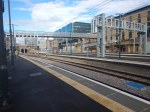
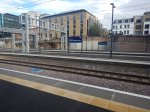
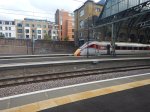
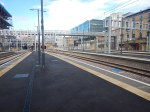
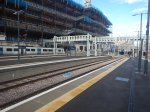
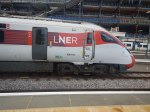
The two trains are both nine-car Hitachi Class 800 or Class 801 trains and I was standing in line with their noses.
I wonder what is the maximum length of trains that can be handled in these platforms.
- They can certainly handle ten-car trains, as LNER run these to Leeds.
- Looking at maps, I suspect that eleven-car trains could be the largest that can be handled.
I suspect it will be tight, but I suspect with a simple platform extension, twelve car trains could be accommodated in King’s Cross station.
Journey Times
These times come from High Speed Two’s Journey Planner and the IRP.
- London and Edinburgh – Three hours and forty-eight minutes – Four hours and nineteen minutes – Three hours and fifty-eight minutes – My estimate based on IRP figures
- London and Newcastle – Two hours and seventeen minutes – Two hours and forty-nine minutes – Two hours and 25-28 minutes
- London and Durham – Two hours and sixteen minutes – Two hours and fifty-five minutes – Two hours and forty minutes
- London and Darlington – One hour and fifty minutes – Two hours and twenty-two minutes – Two hours and seven minutes
- London and York – One hour and twenty-four minutes – Two hours and ten minutes – One hour and fifty-five minutes – My estimate based on IRP figures
- London and Leeds – One hour and twenty-one minutes – Two hours and thirteen minutes – One hour and fifty-three minutes
Note.
- The first time is that from High Speed Two, which assumes the Eastern Leg of High Speed Two has been built.
- The second time is the current best time via the East Coast Main Line.
- The third time is the IRP’s estimate via an upgraded East Coast Main Line.
- Where the estimates are mine it is noted.
London and York and London and Leeds are under two hours, London and Newcastle is under three hours and London and Edinburgh is under four hours.
Are these times fast enough for modal shift from the Air and Roads to Rail?
Project Delivery
Rail projects in the UK have a variable record in the delivering of projects on time and on budget.
I haven’t done the full analysis, but I do believe that smaller projects have a better record of delivery, based on media reports.
In Railway Restored: Regular Trains To Run On Dartmoor Line For First Time In 50 Years, Network Rail have delivered an important smaller project, for which I said.
Network Rail have set themselves a good precedent to open the line in nine months and £10 million under budget.
As the improvement of the East Coast Main Line is more of a succession of smaller projects, rather than one large project does this mean it is more likely to be delivered on time and on budget?
Extra Paths
This is said in Paragraph 3.43
North of York we will look to increase the number of paths for long distance high speed trains from 6 to 7 or 8 per hour.
One of the min reasons for building High Speed Two, but here we have extra capacity being created on the East Coast Main Line.
One extra path would be very good, but two would be excellent.
Power Supply Upgrades
In the last eighteen months, I’ve written two articles about updating of the power supply on the East Coast Main Line.
- East Coast Main Line Northern Power Supply Works Funded
- East Coast Main Line Electrification Research Agreement
The second article talks about the involvement of the University of Leeds to get the power supply to a high standard.
It does appear that Network Rail are doing all they can to enable the East Coast Main Line to handle the eight electric trains per hour
140 mph Running
There are several elements to the successful achievement of 140 mph running on a railway.
- The trains must be capable of running safely at 140 mph.
- The track must be able to support trains at that speed.
- The signalling must be in-cab and fully tested.
- The electrification must be designed for running at the required speed.
- The drivers must be fully trained.
Note.
- There are certainly 140 mph trains in service and there are tracks in the UK, where they can be tested at that speed.
- I wouldn’t be surprised as we have been running 140 mph InterCity 225 trains on the East Coast Main Line for thirty years, that a lot of the track is already profiled for 140 mph running.
- The digital signalling is being installed.
- The electrification on the East Coast Main Line has been dodgy for years, but is now being upgraded.
- Drivers are probably the least to worry about, as they probably know the route well and are honing their skills in simulators.
I can see 140 mph running being delivered in stages and on time.
Darlington Improvements
In First Phase Of ‘Transformational’ Darlington Rail Station Upgrade Approved, I said this about the improvements at Darlington station.
This upgrade is on the Eastern side of the current station and will include a new entrance, station building, concourse and three new platforms.
This design should allow the following.
-
- LNER, High Speed Two and other expresses not stopping at the Darlington station to pass through at speeds of up to 125 mph or more.
- Expresses stopping in the station will slow and accelerate in less time than they do now.
- It will probably allow more local trains to Bishops Auckland, Middlesbrough and Saltburn
A seventy-five percent increase in platforms probably offers other advantages.
This could knock several minutes off journey times.
York Improvements
I describe this problem and my solution in Improving The North Throat Of York Station Including Skelton Bridge Junction.
My solution won’t happen, as I advocate replacing the historic Skelton Bridge with a modern four-track bridge.
Effects On Lincoln Service
It will be interesting to see how the improvements to the East Coast Main Line effect LNER’s service between King’s Cross and Lincoln.
Any time improvements South of Newatk will surely be reflected in the time between King’s Cross and Lincoln.
Conclusion
The plan seems feasible to me.
London To Edinburgh On Lumo
Yesterday, I took the 10:45 Lumo service from King’s Cross to Edinburgh.
I took some pictures on the way.
I have split them into sepate topics.
Lumo’s Class 803 Train Arrives
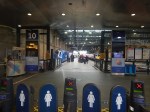

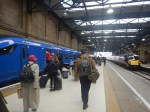
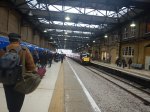
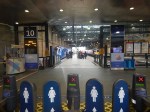
Note.
- The train is in Platform 10 in the old suburban station.
- This has now been reduced to just two platforms.
- In the other platform is a Grand Central service to Bradford Interchange station.
At least it appears, that there could be space to reinstate a third platform, if it should prove necessary.
Seating On Lumo
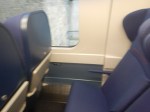

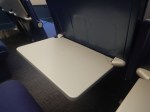
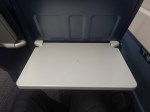

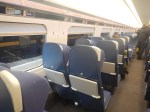

Note.
- I didn’t get a seat with a proper window.
- The seat-back table is generously-sized.
- There is a light over the table.
- The luggage racks were well used.
- There is more than normal leg-room. My neighbour, who was taller than my 1.70 metres, also liked the leg-room.
Both of us, thought the seats were more comfortable than LNER.
I have a spine that curves outwards at the bottom and it often objects to train and car seats. But after four-and-a-half hours on Lumo, it wasn’t protesting.
York to Church Fenton Improvement Scheme
When the York To Church Fenton Improvement Scheme and the closely related Huddersfield To Westtown (Dewsbury) Upgrade are completed, the TransPennine route between Huddersfield and York will be fully-electrified.
These pictures show the electrification is underway.





York to Huddersfield will be over forty miles of electrified line, with a remaining gap of just eighteen miles to the electrification being installed between Stalybridge and Manchester Victoria.
Work At Reston Station
Reston station is being built North of Berwick-on-Tweed. I took these pictures as we passed through.


I describe the station in a post called A New Reston Station.
Arrival In Edinburgh
I took these pictures when we arrived in Edinburgh.
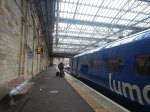

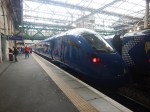
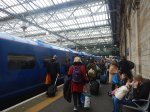
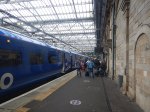
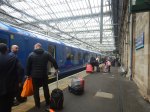
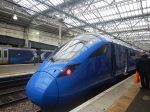
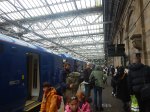
Note Edinburgh is not short of platforms that can take five- and ten-car trains.
These are a few other thoughts about the journey.
Non-Stop Between King’s Cross And Newcastle
It seemed to me, that a lot of passengers left the train at Newcastle.
- Times between King’s Cross And Newcastle are comparable betyween LNER and Lumo.
- Lumo is non-stop until Newcastle.
- Lumo is probably more affordable.
I can see Lumo picking up a lot of business on this leg.
Football At Newcastle
I have come across several Newcastle United season ticket holders in London.
Looking at Lumo’s full timetable, there are these two trains on a Saturday.
- A train leaves King’s Cross at 10:25 and arrives in Newcastle at 13:25.
- A train leaves Newcastle at 19:35 and arrives in King’s Cross at 22:29.
These could be ideal to see the match and get back to London.
Food
The full food service isn’t in operation yet, but we the trolley did come through twice.
Passenger Loading
Most seats were taken, as we left King’s Cross, but due to high number, who left at Newcastle, there were a few gaps as we ran between Newcastle and Edinburgh.
But then this is a shorter leg and perhaps travellers are more likely to drive.
I suspect that Lumo can’t wait to build up their service to the full five trains per day, as it does look like the demand is there.
Morpeth Station
There wasn’t many boarders and leavers at Morpeth station, but as services build up and travellers realise the system is there, will business increase?
Conclusion
I shall take another trip in the New Year, when the full service is implemented.
Planning Permission Granted For The First New Railway Station On The Northumberland Line
The title of this post, is the same as that of this article on ITV.
The station concerned is Ashington station.
One of the reasons, I wrote this post, is that the ITV article has a very good map of the railway being reopened.
These two paragraphs describe the station’s features.
The new platform will be approximately 100 metres long, with a range of facilities including waiting shelters, CCTV, help points and lighting.
Plans also include car park providing up to 270 spaces including 17 accessible spaces and 18 electric vehicle charging bays.
It also gives the reopening date of the railway as 2024, when the service will be a half-hourly one between Newcastle and Ashington stations that should take thirty-five minutes.
New Rail Service From Newcastle To Edinburgh To Stop At These Northumberland Stations
The title of this post, is the same as that of this article on the Chronicle Live.
Details of the service are as follows.
- It will be run by TransPennine Express.
- It starts in December 2021.
- It will run five times per day (tpd)
- It will call at Cramlington, Morpeth, Widdrington, Alnmouth, Berwick-upon-Tweed, Reston and Dunbar.
It is planned to run at least until May 2023.
These are my thoughts.
What Trains Will TransPennine Express Use?
The service will probably need a single train, if it was run by a dedicated fleet of trains, that just shuttled between Edinburgh and Newcastle. TransPennine could use either an electric Class 802 train or a diesel Class 185 train.
The diesel train might not be a good idea for operational reasons as TransPennine’s current services to Newcastle and Edinburgh use Class 802 trains.
But this service wouldn’t need a Class 802 train, as the route is fully electrified, so TransPennine might use a Class 800 train, if one were available from another company in the First Group.
TransPennine could also extend selected Manchester Airport and Newcastle services to Edinburgh, which might be the most efficient ways of using both trains and platforms in Newcastle.
This would give those using the intermediate stations between Edinburgh and Newcastle a service to and from Manchester Airport and the intervening stations, with a change at Newcastle, which would involve staying on the same train.
I’d organise the service as five tpd between Manchester Airport and Edinburgh with calls at Manchester Piccadilly, Manchester Oxford Road, Manchester Victoria, Huddersfield, Dewsbury, Leeds, York, Northallerton, Darlington, Durham, Chester-le-Street, Newcastle, Cramlington, Morpeth, Widdrington, Alnmouth, Berwick-upon-Tweed, Reston and Dunbar.
The big advantage of this, is that TransPennine could use the existing Class 802 trains, although they may need one more.
Reston Station
It looks like it will be a much needed service, that will get the new Reston station up and running.
I suspect that, passenger numbers at Reston station will determine the calling pattern after May 2023.
Will Other Services Continue?
TransPennine Express only has one service that stops between Newcastle and Edinburgh and that is the hourly service between Liverpool Lime Street and Edinburgh stations and that only stops at Morpeth.
I doubt this service will be changed, although after May 2023, it may make some extra stops depending on passenger numbers on the new service.
It should be noted that CrossCountry and LNER call irregularly at Alnmouth, Berwick-upon-Tweed and Dunbar.
As LNER are in rather a mess over their new timetable, I suspect that after May 2023, there could be a bit of a sort out of services.
How Will The New Service Fit With The Reopened Northumberland Line?
Initially the Northumberland Line will run as far as Ashington and won’t open until 2023 at the earliest.
But plans exist to extend the Northumberland Line to Morpeth.
The new service would fit well with an extended Northumberland Line service.
How Will The New Service Fit With East Coast Trains New London And Edinburgh Service?
East Coast Trains will be running a new Open Access service between London and Edinburgh from this autumn.
- It will have a frequency of 5 tpd.
- It will stop at Newcastle, Morpeth and Stevenage.
- It will offer one way fares of £25.
East Coast Trains are another First Group company.
As both services are five tpd in both directions, will the two services co-ordinate stops, so that passengers between say London and Reston can take advantage?
Going North, the stopping train could follow the East Coast Trains express and going South the stopping train would be a few minutes in front of the express.
This would also help with maximising capacity between Edinburgh and Newcastle on the busy East Coast Main Line.
Conclusion
This new stopping service between Edinburgh and Newcastle looks to be a simple solution to improve passenger services for intermediate stations between the two important cities.
Should All High Speed Long Distance Services To Newcastle Extend To Edinburgh?
Look at this Google Map of Newcastle station.
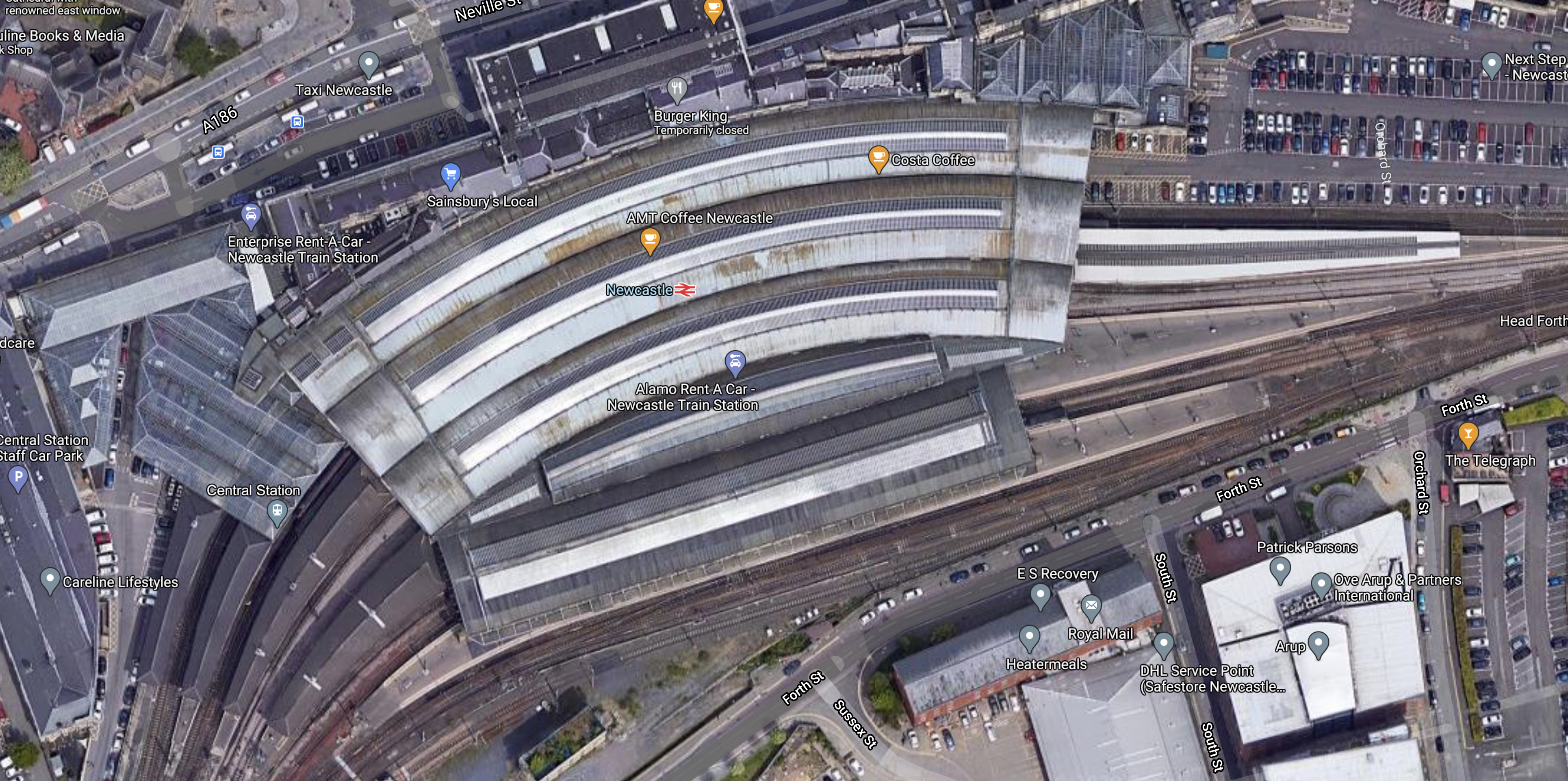
Note.
- It is built on a curve.
- It is on a cramped site.
- Platforms are numbered from 1 at the top to 8 at the bottom.
- Platform 2 seems to be used for all express services going North.
- Platforms 3 and 4 seem to be used for all express services going South.
- Not all platforms would appear to be long enough for nine-car Class 80x trains.
I am certain, that any nation with a sophisticated railway system wouldn’t build a station on a curve with no avoiding lines like Newcastle these days.
Network Rail have a plan to sort out Darlington station and I’m sure they’d like to sort out Newcastle as well!
Current Long Distance Trains Through And To Newcastle
These include.
- CrossCountry – Plymouth and Edinburgh or Glasgow via Alnmouth, Berwick-upon-Tweed and Dunbar.
- CrossCountry – Southampton Central or Reading and Newcastle.
- LNER – King’s Cross and Edinburgh via Berwick-upon-Tweed
- LNER – King’s Cross and Edinburgh via Alnmouth
- TransPennine Express – Liverpool Lime Street and Edinburgh via Morpeth
- TransPennine Express – Manchester Airport and Newcastle.
Note.
- All have a frequency of one train per hour (tph)
- All trains call at Newcastle.
- Two tph terminate at Newcastle and four tph terminate at Edinburgh or beyond.
There is also a new and Edinburgh service from East Coast Trains, that will start this year.
- It will run five trains per day (tpd).
- It will call at Newcastle.
- It will stop at Morpeth between Newcastle and Edinburgh.
There will also be High Speed Two services to Newcastle in a few years.
- There will be two tph between Euston and Newcastle
- There will be one tph between Birmingham Curzon Street and Newcastle.
Note.
- All services will be run by 200 metre long High Speed Two Classic-Compatible trains.
- There is no High Speed Two service to Newcastle, that calls at Leeds.
- Only one High Speed Two service to Newcastle calls at East Midlands Hub.
I suspect High Speed Two services need a dedicated platform at Newcastle, especially, if another High Speed Two service were to be added.
Extra Paths For LNER
In the December 2020 Edition of Modern Railways, there is an article, which is entitled LNER Seeks 10 More Bi-Modes.
This is the last paragraph.
Infrastructure upgrades are due to prompt a timetable recast in May 2022 (delayed from December 2021), from which point LNER will operate 6.5 trains per hour out of King’s Cross, compared to five today. As an interim measure LNER is retaining seven rakes of Mk. 4 coaches hauled by 12 Class 91 locomotives to supplement the Azuma fleet and support its timetable ambitions until new trains are delivered.
There would certainly appear to be a path available if LNER wanted to increase the frequency of trains between King’s Cross and Edinburgh from the current two trains per hour (tph) to three.
I laid out how I would use this third path to Edinburgh in A New Elizabethan.
The Possible Long Distance Trains Through And To Newcastle
These trains can be summed up as follows.
- 1 tph – CrossCountry – Plymouth and Edinburgh or Glasgow via Alnmouth, Berwick-upon-Tweed and Dunbar.
- 1 tph – CrossCountry – Southampton Central or Reading and Newcastle.
- 1 tph – LNER – King’s Cross and Edinburgh via Berwick-upon-Tweed
- 1 tph – LNER – King’s Cross and Edinburgh via Alnmouth
- 1 tph – TransPennine Express – Liverpool Lime Street and Edinburgh via Morpeth
- 1 tph – TransPennine Express – Manchester Airport and Newcastle.
- 5 tpd – East Coast Trains – King’s Cross and Edinburgh via Morpeth
- 2 tph – High Speed Two – Euston and Newcastle
- 1 tph – High Speed Two – Birmingham Curzon Street and Newcastle
- 1 tph – LNER – King’s Cross and Edinburgh – Extra service
This is ten tph and the five tpd of East Coast Trains.
Capacity Between Newcastle And Edinburgh
I wonder what capacity and linespeed would be possible on the East Coast Main Line between Newcastle and Edinburgh.
There are a few freight trains and some suburban electrics at the Northern end, but I suspect that the route could handle ten tph with some upgrades.
Edinburgh As A Terminal
Consider.
- Not all trains terminate at Edinburgh, but several tpd go through to places like Aberdeen, Glasgow, Inverness and Stirling.
- Edinburgh has several shorter East-facing bay platforms, that can take five-car Class 802 trains.
- Edinburgh has undergone a lot of reconstruction in recent years, so that it can turn more trains.
I very much feel that Edinburgh could handle, at least ten tph from the South.
Conclusion
I think it would be possible to extend all trains to Newcastle to at least Edinburgh.
Would it increase passenger capacity between the two capitals?
It would certainly avoid the difficult and expensive rebuilding at Newcastle station.
A New Reston Station
This page on the Scotland’s Railway web site, gives an overview of the project to build a new Reston station on the East Coast Main line about 3.5 miles North of Berwick-upon-Tweed station.
This is the project summary given on the web page.
Network Rail has developed proposals to create a new station at Reston in the Scottish Borders.
We worked with local partners and stakeholders to develop plans for the station and liaised with the local community in advance of submitting a planning application to Scottish Borders Council.
Planning consent was granted in February 2021 and the team are gearing up to deliver a challenging programme of work to create the new station.
The page also says that work on the station started in March 2021. Certainly, by May 2021, there was quite a bit happening.
This Google Map shows the village of Reston.
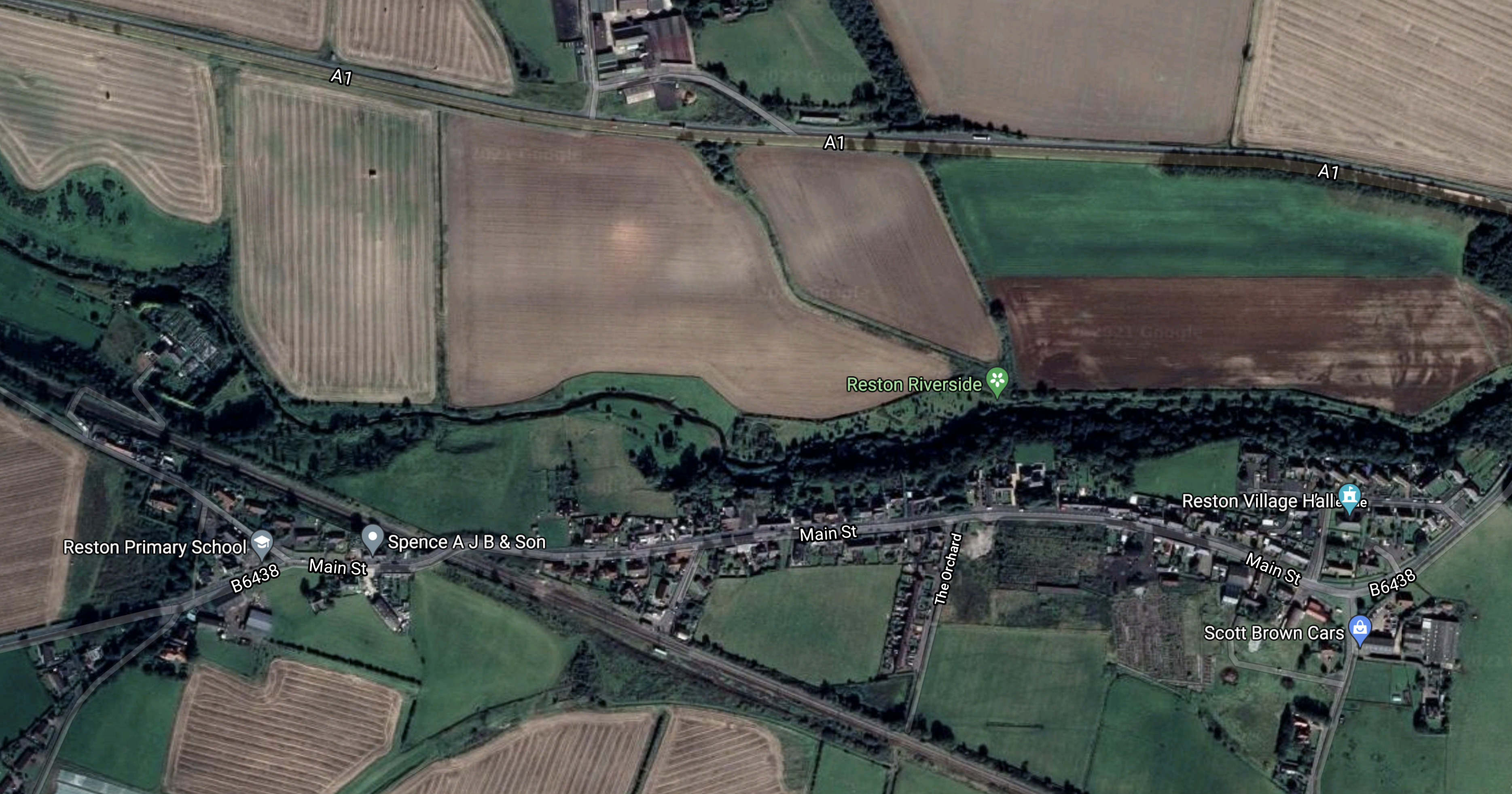
Note.
- The A1 running East-West at the top of the map.
- Main Street running East-West across the middle of the map.
- The East Coast Main Line runs North West-South East across the South-West corner of the map.
The station would appear to be East of the road called The Orchard.
Station Facilities
Looking at the video the station appears to have the following facilities.
- Two platforms.
- About seventy car-parking spaces, which is designed to be expanded
- Five disabled car-parking spaces.
- Electric car charging.
- Bicycle storage
- Full step-free access, at the South-Eastern end of the station.
There does not appear to be any avoiding line for freight trains or a bay platform to reverse trains.
But there appear to be a pair of crossovers to the North of the station site.
Distances Between Reston Station And Selected Towns
This are road distances between Reston station and selected towns.
- Duns – 10 miles
- Galashiels – 38 miles
- Hawick – 47 miles
- Kelso – 26 miles
Are there plans for new housing in the area?
Services Between Newcastle And Edinburgh
The following services run between Edinburgh and Newcastle.
- CrossCountry – 1 tph – Plymouth and Edinburgh/Glasgow – Stops at Alnmouth (irregular), Berwick-upon-Tweed (irregular), Dunbar (1tp2h)
- East Coast Trains – 5 tpd – London Kings Cross and Edinburgh – Stops at Morpeth
- LNER – 1 tph – London Kings Cross and Edinburgh – Stops at Berwick-upon-Tweed
- LNER – 1 tph – London Kings Cross and Edinburgh – Stops at Alnmouth (1tp2h)
- TransPennine Express – 1 tph – Liverpool Lime Street and Edinburgh – Stops at Morpeth
Note.
- tpd is trains per day.
- tph is trains per hour.
- tp2h is trains per two hours.
- All services are run by 125 mph trains
- All services stop at Edinburgh and Newcastle.
- A typical service averages around 88.9 mph between Edinburgh and Newcastle.
The timetable appears to be arranged to ensure at least 4 tph between Edinburgh and Newcastle.
I have a few thoughts.
How Many Services Should Call At Reston?
On an urban line, stopping frequencies of services of up to four or even six tph are common, which would probably be in excess of what is needed at Reston.
Most rural main or secondary lines have frequencies of one or two tph.
I would suggest that if you’re designing and building a station, that will cost several million pounds, then the station must have at least an hourly service, but that two tph would be much more preferable.
In an ideal world, there might be two tph.
- A slow train that stopped at all the larger stations, which could include East Linton, Dunbar, Berwick-upon-Tweed, Almouth and Morpeth.
- A fast train that stopped just once at Reston station between Edinburgh and Newcastle.
Note.
- Like Reston station, East Linton station is also under construction.
- Reston station, is likely to have a selection of buses to Galashiels and other towns in the Borders.
- Reston station has space for a sensible amount of parking.
I would also expect bus and train services to obey these conditions.
- Be timetabled to arrive and leave at the same time each hour.
- Run from early until late.
- Provide an easy interchange, so that travellers don’t have to endure too much unfriendly weather.
- Have a comprehensive ticketing system to attract passengers.
I also think that a warm waiting room and cafe should be provided.
Will Reston Station Have A Direct Service To London And The South?
Both of LNER’s services between Edinburgh and London call at York, Darlington and Newcastle, with only one service calling at Berwick-upon-Tweed.
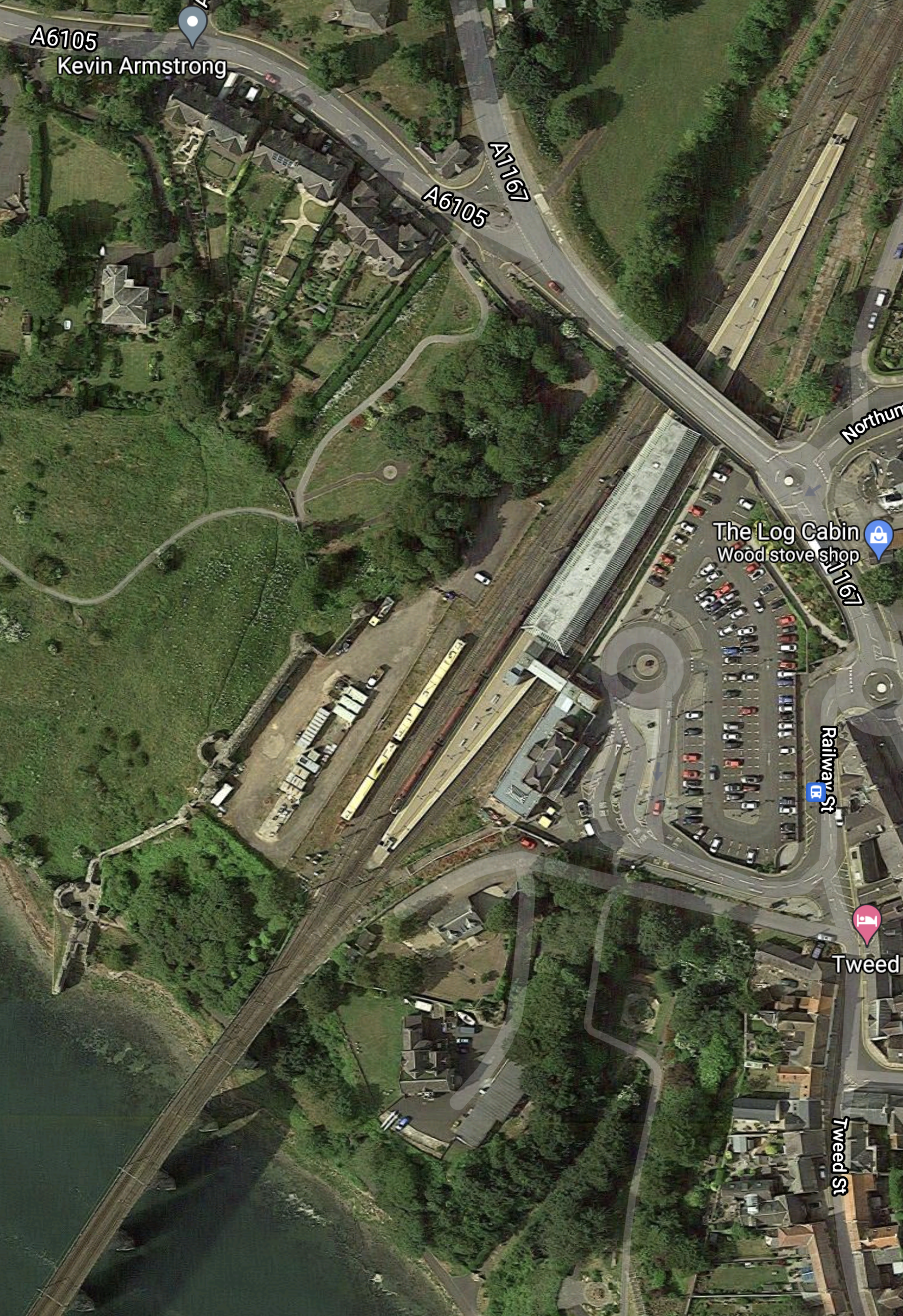
This Google Map shows the location of Berwick-upon-Tweed station.
Note.
- The long island platform between the tracks.
- There are 124 parking spaces.
- The A1 is some distance away to the West.
It all looks very cramped.
So if, one of LNER’s London services stopped at Reston, would it be better for all travellers and operators.
I would suggest that it would probably be ideal if one of LNER’s two services stopped at Berwick-on-Tweed and the other stopped at Reston.
It would also probably be a good idea for ticketing to consider Reston as a Berwick-on-Tweed station.
Will ERTMS Signalling Be Used Between Edinburgh and Newcastle?
I don’t think this is a question of will, but more one of when.
- It will enable trains to run at up to 140 mph.
- It will handle trains efficiently, when they are running at different speeds.
- It will allow the increasing of the frequency of trains on the double-track route.
- All trains on the route will probably be fitted with equipment to run under in-cab digital ERTMS signalling in a few years.
I would expect that ERTMS signalling could be used to run an increasingly complex pattern of trains between Edinburgh and Newcastle.
Will There Be 140 mph Running Between Edinburgh and Newcastle?
I have flown my helicopter along the route between Edinburgh and Newcastle and ridden it in a 125 mph train many times.
Given how Network Rail have squeezed increased speeds out of routes like the Midland Main and Great Eastern Main Line, I have no doubt that some 140 mph running will be possible between Edinburgh and Newcastle.
I estimate that with a substantial amount of 140 mph running between Edinburgh and Berwick-on-Tweed could save as much as fifteen minutes on current timings.
What Trains Will Be Used Between Edinburgh and Newcastle?
Consider.
- It is a fully-electrified double-track railway.
- There will be 125 mph and possibly 140 mph express trains passing through.
I suspect that to avoid getting in the way of the expresses, trains with at least a 110 mph capability would be needed.
Some of the redundant Class 350 trains would probably do fine.
How Will LNER’s Extra Paths Affect Trains Between Edinburgh and Newcastle?
In the December 2020 Edition of Modern Railways, there is an article, which is entitled LNER Seeks 10 More Bi-Modes.
This is the last paragraph.
Infrastructure upgrades are due to prompt a timetable recast in May 2022 (delayed from December 2022), from which point LNER will operate 6.5 trains per hour out of King’s Cross, compared to five today. As an interim measure LNER is retaining seven rakes of Mk. 4 coaches hauled by 12 Class 91 locomotives to supplement the Azuma fleet and support its timetable ambitions until new trains are delivered.
In A New Elizabethan, I suggest that one of these extra paths could be used to run a third hourly service between London King’s Cross and Edinburgh.
I would think it likely, that it only would only stop at Newcastle, if it provided a fast service between the two capitals.
Is Reston Station About Borders Unemployment?
This post has been up for a few days now and there have been comments about the cost of this station and the more-than-adequate car-parking provision for the small villages.
This article on the Southern Reporter is entitled Unemployment In Borders Up Almost 120% Year On Year.
Could it be that one of the purposes with its expandable car-parking is to allow people to get to jobs in Edinburgh and Newcastle?
- It should also be noted that Britishvolt are planning to build a £4 billion battery factory at Blyth, which according to reports will employ between three and five thousand people.
- It is a distance of seventy miles and Google says it will take nearly an hour-and-a-half.
- I suspect a 110 mph train between Reston and Bebside stations on the Northumberland Line would take about forty-five minutes.
- Bebside station is on the Northumberland Line and will have a shuttle bus to the Britishvolt factory.
- Porterbrook are developing a battery/FLEX version of their 110 mph Class 350 trains.
By choosing to build a station will the possibility of large amounts of parking are the Scottish Government doing the best for the unemployed in the Borders?
You can imagine a scenario in the employment office at Britishvolt.
- They are getting a lot of letters and e-mails asking about jobs.
- Someone does a bit of counting and realises their planned car-park is too small.
- Problems are outlined to ministers in the UK and Scottish Governments.
- The reopening of the Northumberland Line and the building of Reston station do appear to have been accelerated.
Perhaps the rail developments are a small price for both governments to pay to secure a £4 billion investment,
Conclusion
There’s a lot more to Reston station, than first appears.
Beeching Reversal – Ferryhill Station Reopening
This is one of the Beeching Reversal projects that the Government and Network Rail are proposing to reverse some of the Beeching cuts. There used to be a Ferryhill station on the East Coast Main Line. It closed in 1967 and burnt down in 1969, before being demolished.
I first noted the station in Boris Johnson Backs Station Opening Which Could See Metro Link To County Durham, after Boris promised it would be built in PMQs.
I then mentioned the station in Northern Powerhouse Rail – Significant Upgrades Of The East Coast Main Line From Leeds To Newcastle (Via York And Darlington) And Restoration Of The Leamside Line.
Last night, I read this document from Railfuture, which talks about rail improvements in the North East and on the East Coast Main Line.
In the document, Ferryhill station is mentioned eighteen times.
Reopening Ferryhill station would appear to have support at all levels.
The Location Of Ferryhill Station
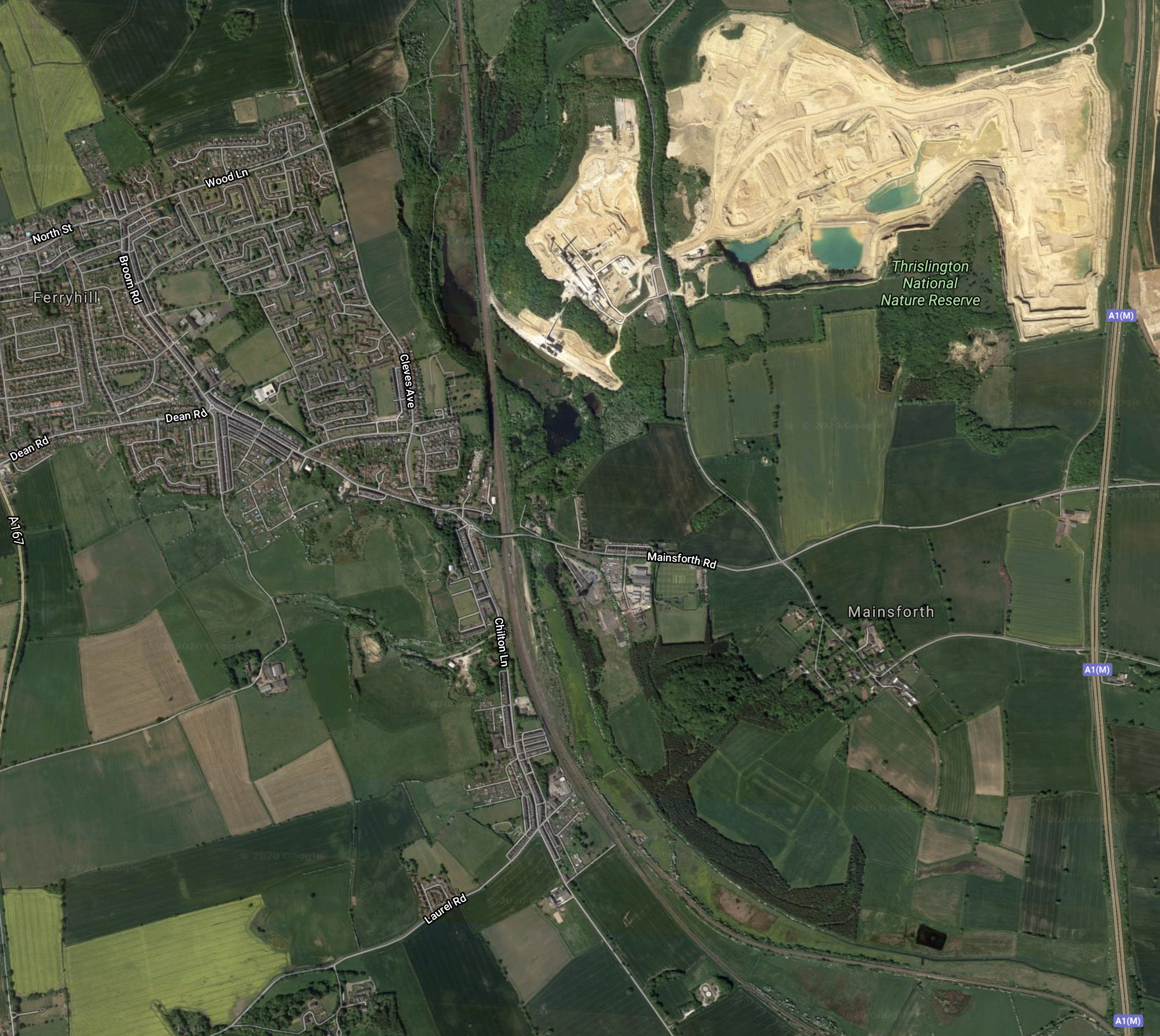
This Google Map shows the general area of the proposed Ferryhill station.
Note.
- Ferryhill is the village in the North-West corner of the map.
- The lion-shaped quarry in the North-East is destined to become a landfill site.
- Below this is Thrislington Plantation, which is a National Nature Reserve.
- The East Coast Main Line runs North-South between the village and the quarry.
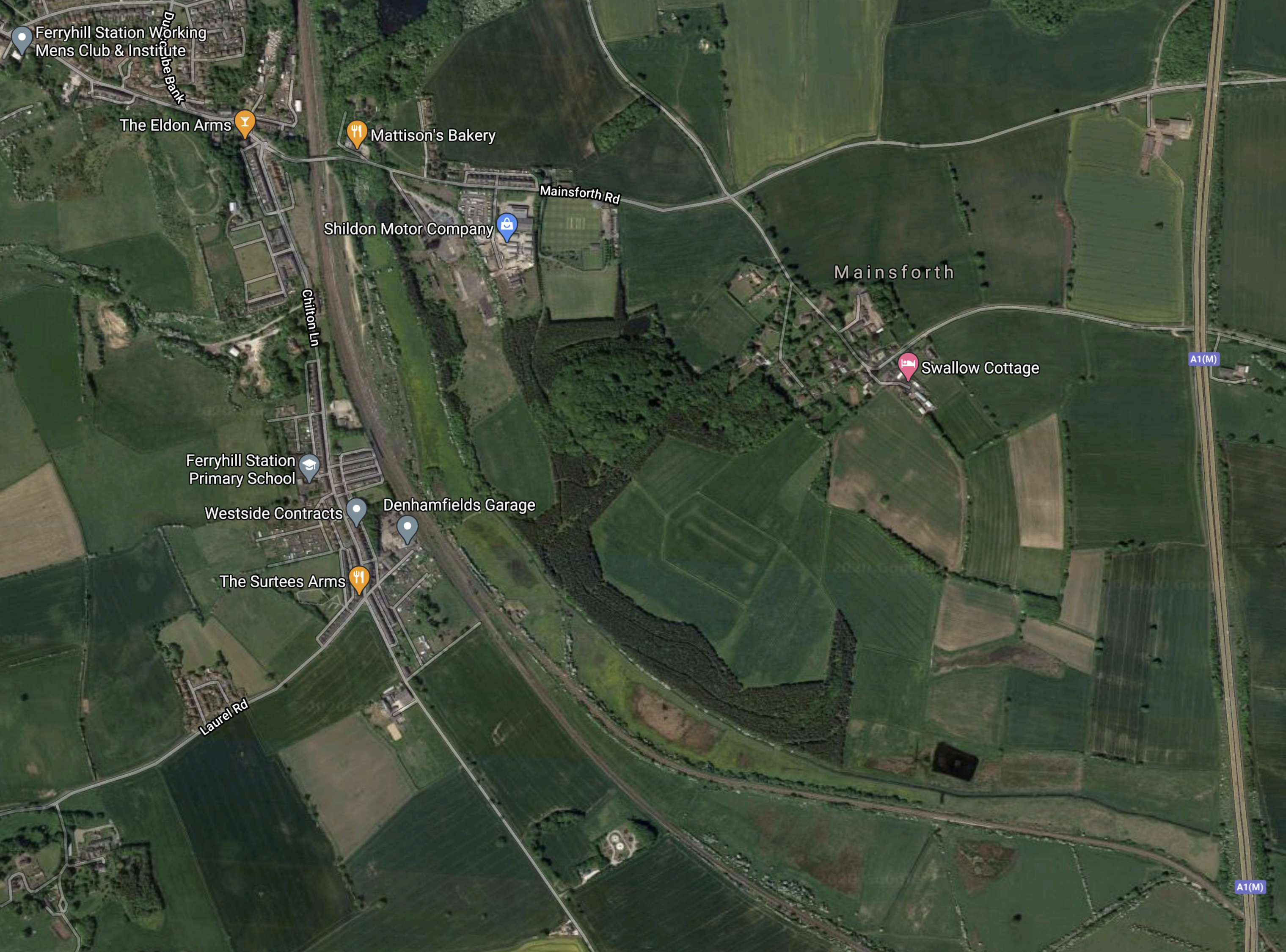
South of the village the line splits, as is shown in detail in this second Google Map.
Note.
- Ferryhill South junction by Denhamfields Garage, with the nearby Ferryhill Station Primary School
- The line going South-East is the Stillington freight line to Teesside.
- The other line going in a more Southerly direction is the electrified East Coast Main Line to Darlington and the South.
- Between Ferryhill South junction and Tursdale Junction with the Leamside Line is a 2.5 mile four-track electrified railway.
I suspect the station could be any convenient location, to the North of the junction.
Railfuture have strong opinions on the station and feel it should be a Park-and-Ride station for the settlements in the former North Durham coalfield, with frequent services to Newcastle.
Current Passenger Train Services Through Ferryhill
These services currently pass the location of the proposed Ferryhill station.
- LNER – London Kings Cross and Edinburgh via York, Darlington. Newcastle and Berwick-upon-Tweed
- LNER – London Kings Cross and Edinburgh via Peterborough, Newark North Gate, Doncaster, York, Darlington, Durham and Newcastle
- CrossCountry – Plymouth and Edinburgh via Totnes, Newton Abbot, Exeter St Davids, Tiverton Parkway, Taunton, Bristol Temple Meads, Bristol Parkway, Cheltenham Spa, Birmingham New Street, Derby, Chesterfield, Sheffield, Wakefield Westgate, Leeds, York, Darlington, Durham and Newcastle
- CrossCountry – Southampton and Newcastle via Birmingham New Street, Derby, Sheffield, Doncaster, York, Darlington and Durham
- TransPennine Express – Liverpool Lime Street and Edinburgh via Newton-le-Willows, Manchester Victoria, Huddersfield, Leeds, York, Darlington, Durham, Newcastle and Morpeth
- TransPennine Express – Manchester Airport and Newcastle via Manchester Piccadilly, Manchester Oxford Road, Manchester Victoria, Huddersfield, Dewsbury, Leeds, York, Northallerton, Darlington and Durham
Note.
- All trains have a frequency of one train per hour (tph)
- All trains call at York, Darlington and Newcastle.
- I have missed out some of the intermediate stations, where trains don’t call at least hourly.
- I have missed out stations South of Birmingham New Street.
- A few Northern Trains services pass through at Peak times or to go to and from depots.
I suspect some of these services could stop and to encourage commuters to Newcastle, Durham and Darlington to swap from car to train,
I also suspect that Ferryhill station needs a frequency of at least two tph and if possible four! Four tph would give a Turn-up-and-Go service to Darlington, Newcastle and York.
Planned And Possible Future Passenger Train Services Through Ferryhill
From various sources, these services are either planned or possible.
High Speed Two
High Speed Two are planning the following services, that will pass through.
- Birmingham Curzon Street and Newcastle via East Midlands Hub, York, Darlington and Durham.
- London Euston and Newcastle via Old Oak Common, East Midlands Hub and York.
- London Euston and Newcastle via Old Oak Common, East Midlands Hub, York and Darlington.
Note.
- All trains have a frequency of one tph.
- All trains call at York, East Midlands Hub, York and Newcastle.
- All trains will be 200 metres long.
I feel that Ferryhill station should have platforms long enough to accommodate these trains and other long trains, to future-proof the design and to cater for possible emergencies.
The longest trains on the route would probably be one of the following.
- A pair of five-car Class 800 trains or similar, which would be 260 metres long.
- A High Speed Two Classic-Compatible train, which would be 200 metres long.
Unless provision needed to be made for pairs of High Speed Two Classic-Compatible trains.
East Coast Trains
From next year, East Coast Trains, intend to run a five trains per day (tpd) service between London and Edinburgh via Stevenage, Newcastle and Morpeth.
Note that in Thoughts On East Coast Trains, I said this service would stop at Durham, as that was said in Wikipedia at the time.
Northern Powerhouse Rail
Northern Powerhouse Rail has an objective to to run four tph between Leeds and Newcastle in 58 minutes.
At present there are only three tph on this route, two tph from TransPennine Express and one tph from CrossCountry. All three services stop at Leeds, York, Darlington, Durham and Newcastle.
I believe that the best way to provide the fourth service between Leeds and Newcastle would be to run a third LNER service between London Kings Cross and Edinburgh, when upgrades to the East Coast Main Line give the train operating company another path.
- The service would only stop en route at Leeds and Newcastle.
- It would increase the frequency between London Kings Cross and Leeds to three tph
- It would increase the frequency between London Kings Cross and Newcastle to three tph
- It would increase the frequency between London Kings Cross and Edinburgh to three tph
- It would increase the frequency between London Leeds and Newcastle to four tph
- It would run non-stop between London Kings Cross and Leeds, in under two hours.
I believe that, when all the upgrades to the East Coast Main Line are complete, that such a service could match or even better High Speed Two’s time of three hours and forty-eight minutes between London and Edinburgh.
Ferryhill And Teesside Via The Stillington Freight Line
The Clarence Railway is described in this paragraph in its Wikipedia entry.
The Clarence Railway was an early railway company that operated in north-east England between 1833 and 1853. The railway was built to take coal from mines in County Durham to ports on the River Tees and was a competitor to the Stockton and Darlington Railway (S&DR). It suffered financial difficulty soon after it opened because traffic was low and the S&DR charged a high rate for transporting coal to the Clarence, and the company was managed by the Exchequer Loan Commissioners after July 1834.
But it has left behind a legacy of useful rail lines, that connect important factories, ports, towns, works on other railways on Teesside.
- It forms the link between the Durham Coast Line and Middlesbrough station.
- It forms the link between Northallerton and Middlesbrough stations.
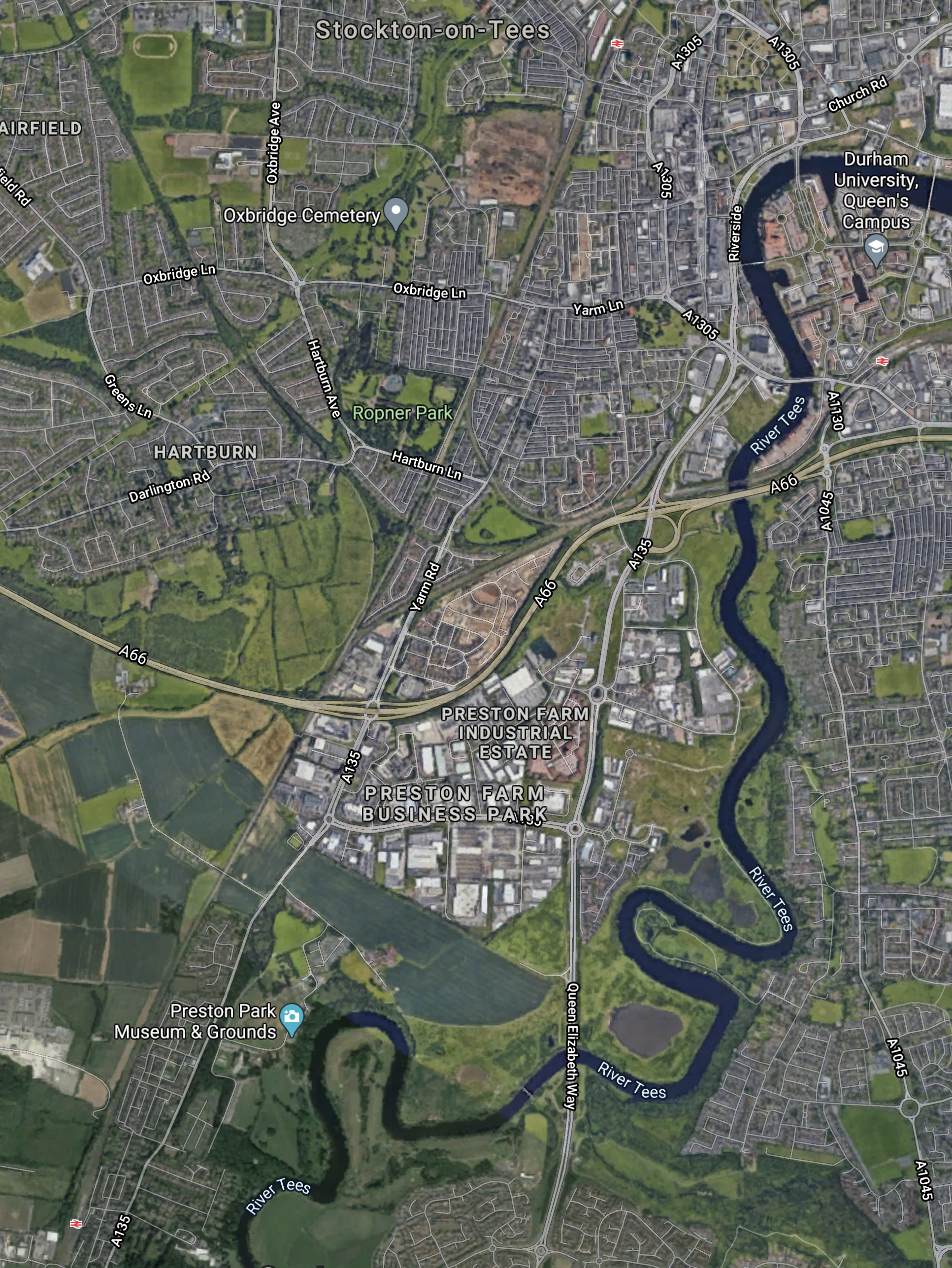
This Google Map shows the triangle between Eaglescliffe, Stockton-on-Tees and Thornaby stations.
Note.
- Eaglescliffe station is in the South-West corner of the map and lines from the station lead to Darlington and Northallerton stations.
- Thornaby station is in the North-East corner of the map and connects to Middlesbrough station.
- Stockton station is at the North of the map.
Tracks connect the three stations.
This Google Map shows the connection between Thornaby and Stockton stations.
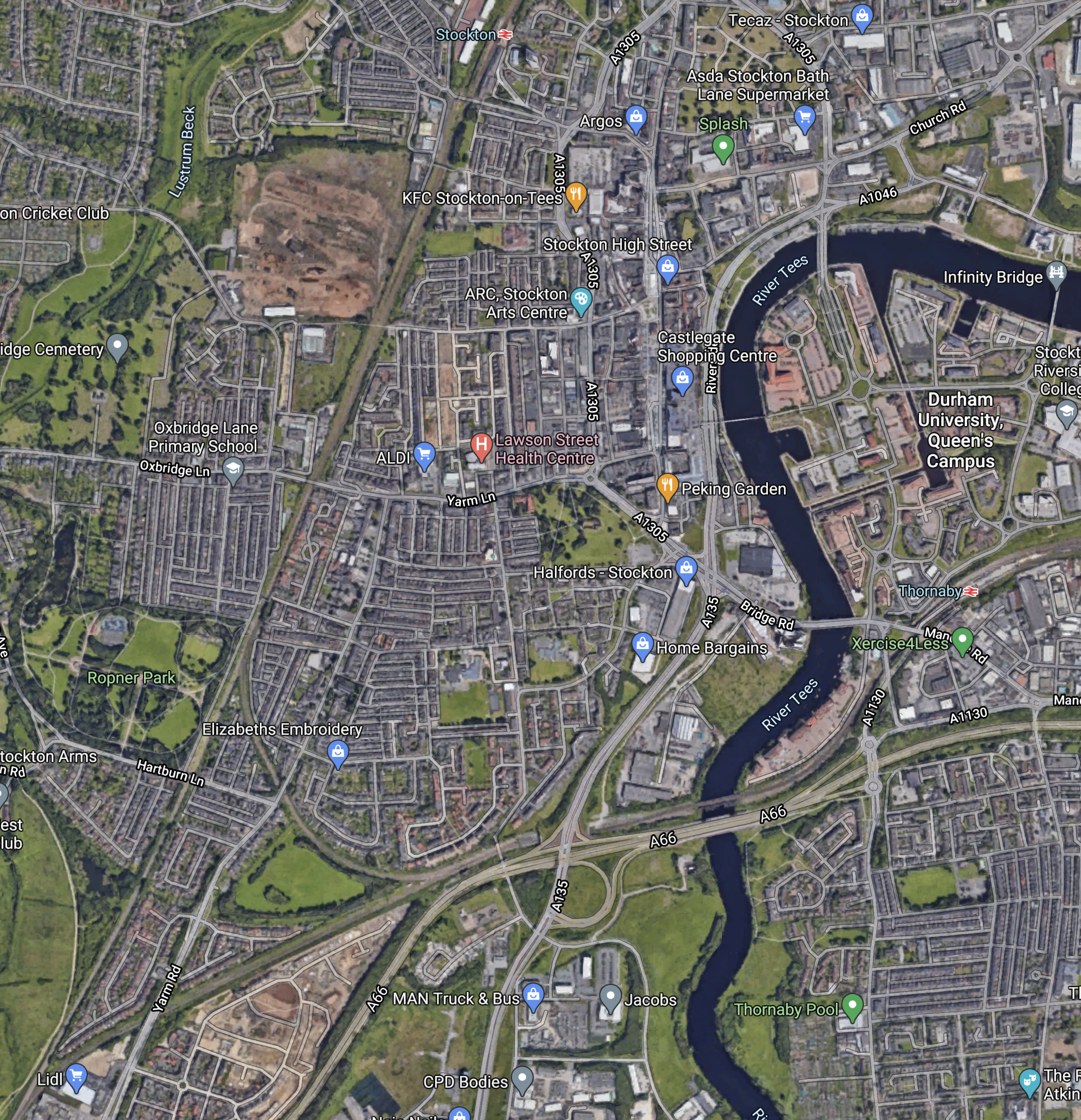
Note.
- Stockton station is at the North of the map.
- Thornaby station is at the East of the map.
- In the South-Western corner of the map is a triangular junction, that links Eaglescliffe, Stockton-on-Tees and Thornaby stations.
Currently, this triangular junction, allows trains to go between.
- Middlesbrough and Newcastle via Thornaby, Stockton, Hartlepool and Sunderland.
- Middlesbrough and Darlington via Thornaby and Eaglescliffe.
- Middlesbrough and Northallerton via Thornaby and Eaglescliffe.
But it could be even better.
This Google Map shows another triangular junction to the North of Stockton station.
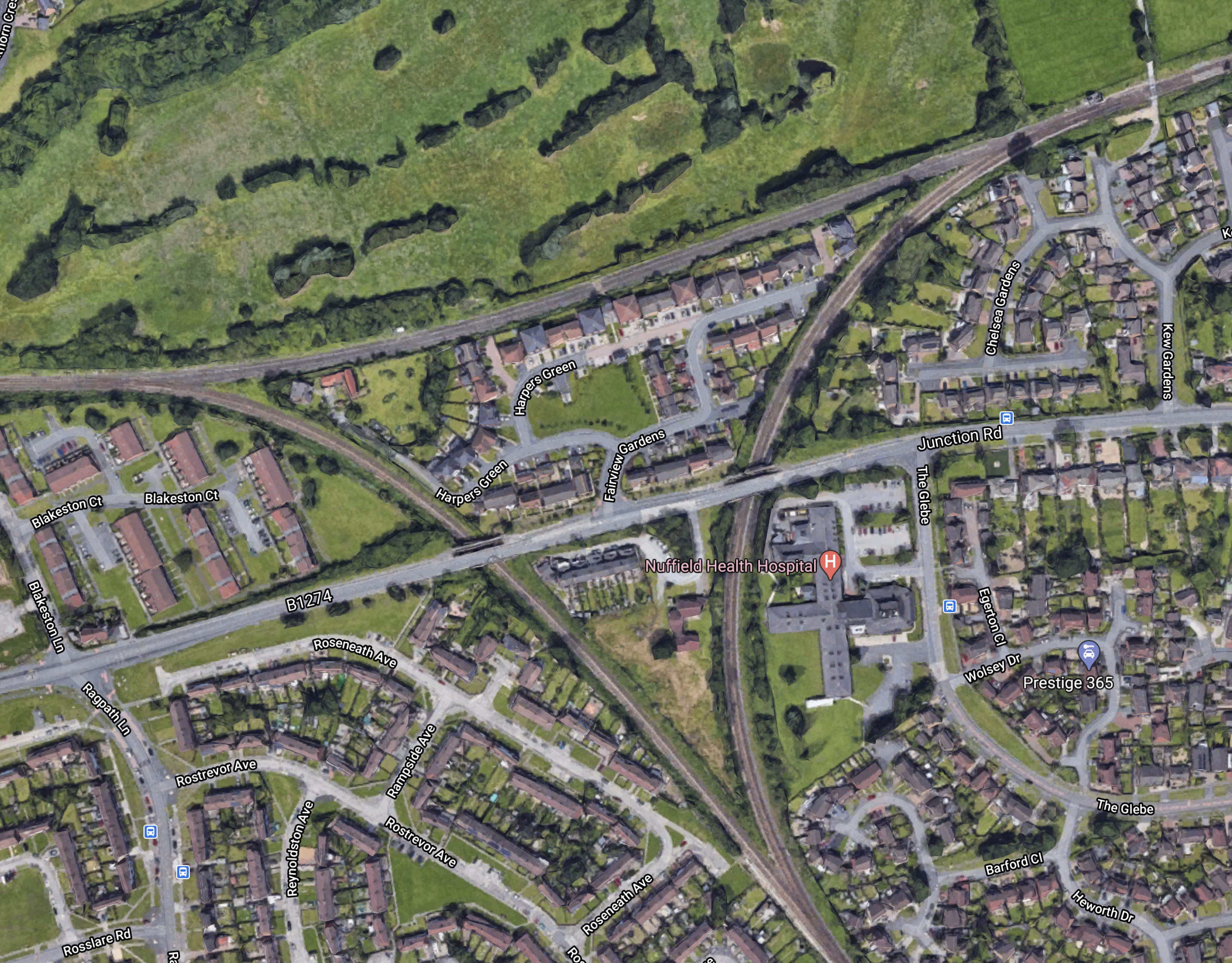
Note.
- The Southern junction of the triangle leads to Stockton station and ultimately to Darlington, Eaglescliffe, Middlesbrough, Northallerton and Thornaby.
- The Eastern junction leads to Hartlepool, Sunderland and Newcastle.
So where does the Western Junction lead to?
The railway is the Stillington Branch Line.
- It leads to Ferryhill.
- It is about ten miles long.
- It is double-track.
- There used to be intermediate stations at Radmarshall, Stillington and Sedgefield.
Looking at timings for trains on the various sections of the route gives.
- Middlesbrough and Stockton – 11 minutes
- Stockton and Ferryhill South Junction – 23 minutes
- Ferryhill South Junction and Newcastle – 20 minutes
This gives a timing of 54 minutes compared with up to 78 minutes for the current service on the Durham Coast Line.
In their document, Railfuture gives this as one of their campaigns.
Providing Faster Journeys Teesside to Tyneside by running passenger services from
Middlesbrough, Thornaby and Stockton via the 10 mile Stillington freight only line and then via the
East Coast Main Line to Newcastle. Our aim is to reduce overall journey time on direct train
between Middlesbrough to Newcastle from 1 hour 15 minutes to 55 minutes and so open up many
additional job opportunities to the residents of both areas.
My calculations say that it should be possible, to run a useful service between Middlesbrough and Newcastle, via the Stillington freight line.
- The route is used regularly for freight trains and by LNER for what look to be testing or empty stock movements.
- Will any station be built at Radmarshall, Stillington or Sedgefield?
- I estimate that between Ferryhill South Junction and Middlesbrough, is about fifteen miles, so it might be possible to run a Middlesbrough and Newcastle service using battery electric trains, like Hitachi’s Regional Battery Trains, which would be charged on the East Coast Main Line.
Activating the route, doesn’t look to be the most expensive passenger reopening on the cards.
I suspect though, that if passenger services were to be run on the Stillington Line, that Ferryhill station, will need platforms on both the East Coast Main Line and the Stillington Line.
Services could include.
- Newcastle and Middlesbrough via Ferryhill
- Newcastle and Hartlepool via Ferryhill
- Newcastle and York via Eaglescliffe and Ferryhill, with a reverse at Middlesbrough.
Note.
- The Northern terminus could be Ferryhill for some trains.
- Two tph between Stockton and Ferryhill would be a useful service.
- Would a Newcastle and Middlesbrough service call at the poorly-served Chester-le-Street station to improve services?
I also feel that as some of these services will be running on the East Coast Main Line between Ferryhill and Newcastle, it probably would be desirable for these services to be run by Hitachi’s Regional Battery Trains, which would be capable of maintaining the maximum speed for the route, as all the other passenger services can at present!
Ferryhill And Tyneside Via The Leamside Line
The reopening of the Leamside Line is a high priority of Northern Powerhouse Rail, which I wrote about in Northern Powerhouse Rail – Significant Upgrades Of The East Coast Main Line From Leeds To Newcastle (Via York And Darlington) And Restoration Of The Leamside Line.
In their document, Railfuture gives this as one of their campaigns.
Reopening the rail line from Ferryhill to Pelaw (the Leamside Line) with the aim of providing
services that will improve local connections and open new opportunities to people living in this part
of County Durham, as well as providing relief for congestion on the existing line through Durham.
This reopening has been talked about for years, so I suspect that Network Rail know the problems and at least have a rough estimate for what needs to be done and how much it will cost.
The Wikipedia entry for the Leamside Line has a section, which is entitled Proposed Re-Opening, Upgrade and Development, where this is the first paragraph.
Since the line’s closure in the early 1990s, a number of proposals to re-open the Leamside Line were put forward, including plans by AECOM, ATOC, Durham County Council, Railtrack and Tyne and Wear PTE. The line has been considered for a number of potential uses, including a regional suburban rail service linking Tyneside and Teesside, a diversionary freight route for the East Coast Main Line, and an extension to the Tyne and Wear Metro network.
Wikipedia also states that an application to the Restoring Your Railway Fund for money for a feasibility study was unsuccessful.
All that could change with the developments needed between Leeds and Newcastle for High Speed Two and Northern Powerhouse Rail.
- High Speed Two are planning to run at least three tph to and from Newcastle.
- Northern Powerhouse Rail are planning to run an extra service between Leeds and Newcastle.
- LNER will have an extra path on the East Coast Main Line, that could be used through the area.
Using the Leamside Line as a diversion for freight and slower passenger trains would appear to be a possibility.
It could also be combined with the Stillington Line and Northallerton and Stockton to create a double-track diversion, alongside the double-track section of the East Coast Main Line between Northallerton and Newcastle.
Extending The Tyne And Wear Metro Along The Leamside Line
This has been talked about for some time.
In the Wikipedia entry for the Tyne and Wear Metro. there is a section, which is entitled Extension To Washington IAMP, where this is said.
There have been a number of proposals looking in to the possibility of re-opening the former Leamside Line to Washington, including a 2009 report from the Association of Train Operating Companies (ATOC), and a 2016 proposal from the North East Combined Authority (NECA), as well as the abandoned Project Orpheus programme, from the early 2000s. Most recently, proposals are being put forward to link the current network at Pelaw and South Hylton, with the International Advanced Manufacturing Park in Washington, using part of the alignment of the former Leamside Line.
If the Tyne and Wear Metro were to be extended to the Southern end of the Leamside Line, Ferryhill station could be a Southern terminal.
- There is space to create a line alongside the East Coast Main Line between Tursdale Junction, where it connects with the Leamside Line and Ferryhill station.
- The new Tyne and Wear trains have been designed to share tracks with other trains on Network Rail tracks.
- This would enable interchange between East Coast Main Line, Stillington Line and Metro services, without going North to Newcastle.
At the present time, all that would be needed would be for the Metro connection to be safeguarded.
Railfuture’s Campaigns In The North East
This is a tidying up of several improvements, which are campaigns of Railfuture, that are outlined in this document.
- New Station At Team Valley
- New Station At Gilsland
- New Rail Service From Newcastle To Ashington
- North Of Morpeth Local Service
They will be covered in separate posts.
Conclusions
I can separate conclusions into sections.
The Design Of Ferryhill Station
These are my conclusions about the design of Ferryhill station.
- It should be built as a Park-and-Ride station.
- It should have platforms long enough for any train that might stop at the station. I suspect this would be a pair of Class 800 trains, which would be 260 metres long.
- Platforms should be on both the East Coast Main Line and the Stillington Line.
- There should be safeguarding of a route, so that Metro trains could access the station from the Leamside Line.
As the station could be a Park-and-Ride station, I will assume the station will need good road access.
Train Services At Ferryhill Station
These are my conclusions about the services calling at Ferryhill station.
There should be four tph between Leeds and Newcastle, all of which would stop at York, Darlington, Ferryhill and Durham, with some services calling at Northallerton and Chester-le-Street.
There should also be less frequent services at Ferryhill to Scotland and London. Perhaps a frequency of around six tpd would be sufficient, as changes could be made at Leeds, Newcastle of York.
Two tph would probably be ideal for services on the Stillington Line to Hartlepool, Middlesbrough and Redcar.
It would certainly be a busy and well-connected station.
 The Anonymous Widower