Environmentally-Friendly InterCity 125 Trains
InterCity 125 trains are not the most environmentally-friendly of beasts.
- They do not meet the modern emission regulations.
- They still emit a lot of carbon dioxide.
- They is also a deadline of 2040, when UK railways will be net-carbon-free.
There might also be individuals and groups, who feel that these elderly trains with so much history, should be replaced by modern zero-carbon trains.
- Would the same groups accept electrification with all the wires?
- Would the train operating companies, accept battery power with long waits for charging?
- Would hydrogen be viable on the numerous branch lines in Devon and Cornwall, with some difficult access to depots by road. Especially, if the hydrogen had to be brought from say Bristol or Southampton!
But various engineering solutions are emerging.
Biodiesel
This is probably the simplest solution and I suspect most modern engines can run on biodiesel with simple modifications. InterCity 125s have modern engines from German firm and Rolls-Royce subsidiary; MTU, so they probably have a solution in their tool-box.
Computerisation
I have never built a computer control system for anything, but I did work with the first engineers in the world, who computerised a chemical plant.
They always emphasised, if you could nudge the plant into the best area of operation, you’d have a much more efficient plant, that produced more product from the same amount of feedstock.
At about the same time, aircraft engine manufacturers were developing FADEC or Full Authority Digital Engine Control, which effectively let the engine’s control system take over the engine and do what the pilot had requested. The pilot can take back control, but if FADEC fails, the engine is dead.
But judging by the numbers of jet aircraft, that have engine failures, this scenario can’t be very common, as otherwise the tabloids would be screaming as they did recently over the 737 MAX.
Now, I don’t know whether the MTU 16V4000 R41R engines fitted to the InterCity 125, have an intelligent FADEC to improve their performance or whether they are of an older design.
If you worry about FADEC, when you fly, then read or note these points.
- Read the FADEC’s Wikipedia entry.
- Your car is likely to be heavily computerised.
- If you took a modern train or bus to the airport, that certainly will have been heavily computerised.
You could be more likely to meet someone with COVID-19 on a flight, than suffer an air-crash, depending on where you travel.
Rolls-Royce’s Staggering Development
Staggering is not my word, but that of Paul Stein, who is Rolls-Royce’s Chief Technology Officer.
He used the word in a press release, which I discuss in Our Sustainability Journey.
To electrify aviation, Rolls-Royce has developed a 2.5 MW generator, based on a small gas-turbine engine, which Paul Stein describes like this.
Amongst the many great achievements from E-Fan X has been the generator – about the same size as a beer keg – but producing a staggering 2.5 MW. That’s enough power to supply 2,500 homes and fully represents the pioneering spirit on this project.
This generator is designed for flight and the data sheet for the gas-turbine engine is available on the Internet.
- It has a weight of under a couple of tonnes compared to the thirteen tonnes of the diesel engine and generator in a Class 68 locomotive.
- It is also more powerful than the diesel.
- It looks to be as frugal, if not more so!
- Rolls-Royce haven’t said if this gas-turbine can run on aviation biofuel, but as many of Rolls-Royce’s large engines can, I would be very surprised if it couldn’t!
Rolls-Royce’s German subsidiary is a large producer of rail and maritime diesel engines, so the company has the expertise to customise the generator for rail applications.
Conclusion
I think it is possible, that the Class 43 power-cars can be re-engined to make them carbon-neutral.
ZEROe – Towards The World’s First Zero-Emission Commercial Aircraft
The title of this post, is the same as that of this Press Release from Airbus.
This is the introductory paragraph.
At Airbus, we have the ambition to develop the world’s first zero-emission commercial aircraft by 2035. Hydrogen propulsion will help us to deliver on this ambition. Our ZEROe concept aircraft enable us to explore a variety of configurations and hydrogen technologies that will shape the development of our future zero-emission aircraft.
Overall, the Press Release discloses a lot and gives details of three different aircraft, which are shown in this Airbus infographic.
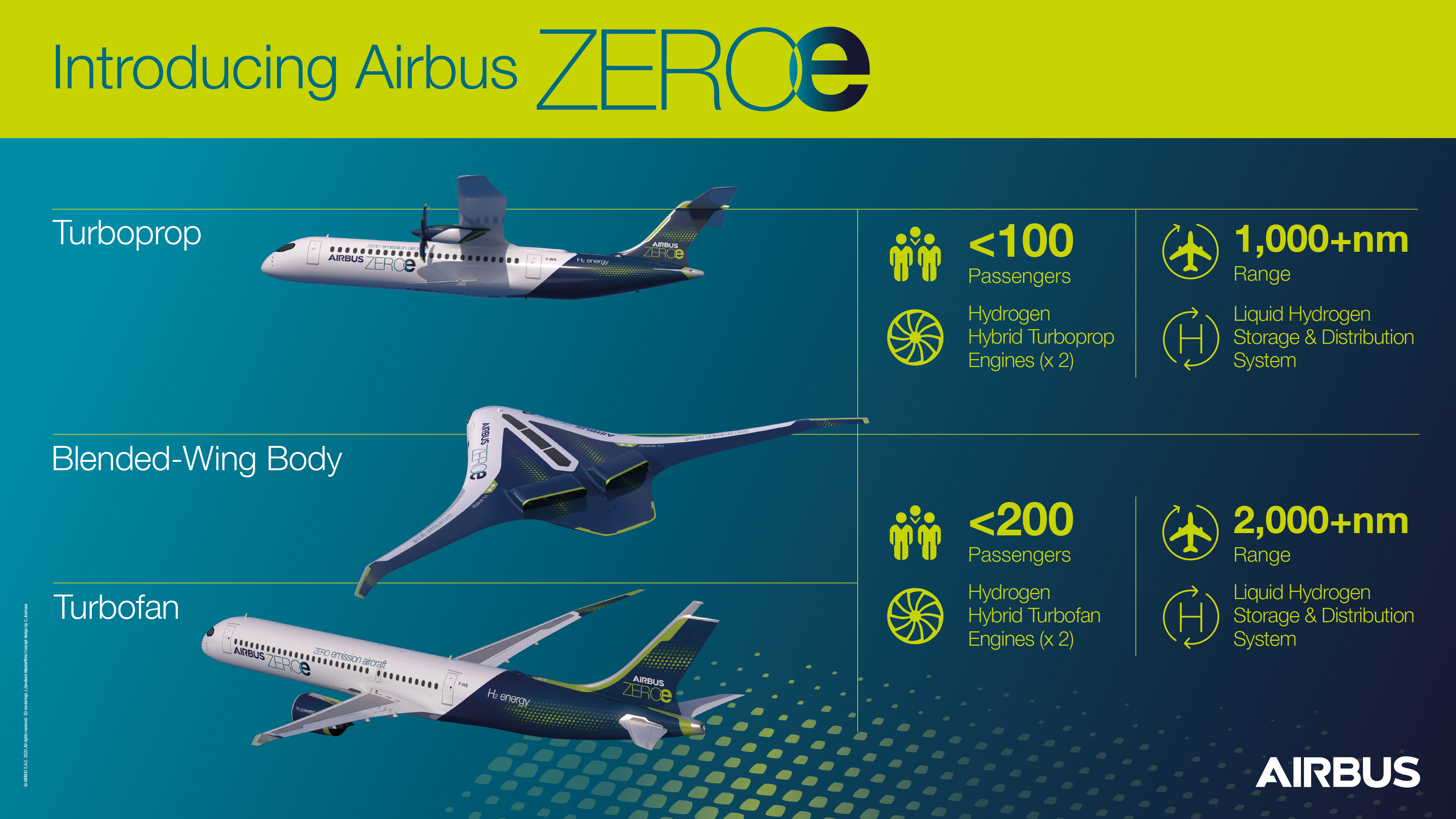
Discover the three zero-emission concept aircraft known as ZEROe in this infographic. These turbofan, turboprop, and blended-wing-body configurations are all hydrogen hybrid aircraft.
I have some thoughts that apply to all three concepts.
Hydrogen Hybrid Power
The Press Release says this about the propulsion systems for the three aircraft.
All three ZEROe concepts are hydrogen hybrid aircraft. They are powered by hydrogen combustion through modified gas-turbine engines. Liquid hydrogen is used as fuel for combustion with oxygen.
In addition, hydrogen fuel cells create electrical power that complements the gas turbine, resulting in a highly efficient hybrid-electric propulsion system. All of these technologies are complementary, and the benefits are additive.
There is a Wikipedia entry which is entitled Hydrogen Fuel, where this is said.
Once produced, hydrogen can be used in much the same way as natural gas – it can be delivered to fuel cells to generate electricity and heat, used in a combined cycle gas turbine to produce larger quantities of centrally produced electricity or burned to run a combustion engine; all methods producing no carbon or methane emissions.
It looks like the aircraft will be powered by engines that are not too different to the current engines in today’s aircraft.
This must be a big advantage, in that much of the research done to improve the current gas-turbine powered by aviation fuel will apply.
Liquid Hydrogen
It appears all three aircraft will use liquid hydrogen.
Liquid Hydrogen Storage
I believe the major uses for hydrogen will be aircraft, buses, cars, rail locomotives and multiple units and heavy trucks.
All will need efficient storage of the hydrogen.
Some applications, will use it in liquid form, as it is a more dense form, but it will need to be kept cold.
As aviation will probably be the most demanding application, will it drive the storage technology?
Oxygen
This will be atmospheric oxygen, which is used by any combustion engine.
Fuel Cells
Will the fuel cells be used to provide power for the plane’s systems, rather than to power the aircraft?
Most airlines do this with an auxiliary power unit or APU, which is just a small gas-turbine engine with a generator. The A 320 family use one made by Pratt & Whitney, which is described on this page of their web site. It is the third one on the page and is called a APS3200. This is said about its function.
Pratt & Whitney APS3200 is the Airbus baseline APU of choice for the Airbus A320 family of aircraft. It is designed to meet performance and environmental requirements for modern day, single-aisle aircraft. The APU comprises a single-shaft, fixedspeed, high-pressure ratio core driving a load compressor that provides bleed air for cabin conditioning and main engine starting, concurrent with 90kVA of electrical power.
The APU is usually located in the tail.
In the ZEROe family will there be a fuel-cell powered compressor to provide bleed air for cabin airconditioning and main engine starting?
Slippery Aerodynamics
Airbus seem to be the masters of slippery aerodynamics, which will help make the planes very fuel efficient.
Lightweight Composite Structures
Like the latest Airbus airliners, these planes will be made from lightweight composite structures and I wouldn’t be surprised to see weight saving in other parts of the aircraft.
Carbon Emissions And Pollution
There will be no carbon dioxide produced, as where’s the carbon in the fuel?
But there could be small amounts of the oxides of nitrogen produced, by the combustion, as nitrogen will be present from the air.
Noise
As the aircraft are powered by gas-turbine engines, there will be some noise.
The Mathematics Of Hydrogen-Powered Aviation
The mathematics for these three aircraft must say, that the designs are feasible.
Otherwise Airbus wouldn’t have published a detailed Press Release, only for it to be torn to pieces.
Pressures Driving Aviation In The Next Ten Years
Aviation will change in the text ten years and it will be driven by various competing forces.
Environmental Issues
Pollution, Carbon Emissions and Noise will be the big environmental issues.
Hydrogen will go a long way to reducing the first two issues, but progress with noise will generally be made by better engineering.
COVID-19 And Future Pandemics
These could have a bigger effect, as to make flying safe in these troubled times, passengers will need to be given more space.
But I do wonder, if there is an administrative solution, backed up, by innovative engineering.
Could a very quick test for COVID-19, that would stop infected passengers boarding, coupled with high quality automatic cleaning and air purification, ensure that passengers didn’t get infected?
Entry Into Service
Airbus are quoting 2035 in the Press Release and this YouTube video.
Is that ambitious?
Thoughts On The Three Designs
My thoughts on the three designs, follow in the next three sections.
The ZEROe Turboprop
This is Airbus’s summary of the design for the ZEROe Turboprop.
Two hybrid hydrogen turboprop engines, which drive the six bladed propellers, provide thrust. The liquid hydrogen storage and distribution system is located behind the rear pressure bulkhead.
This screen capture taken from the video, shows the plane.
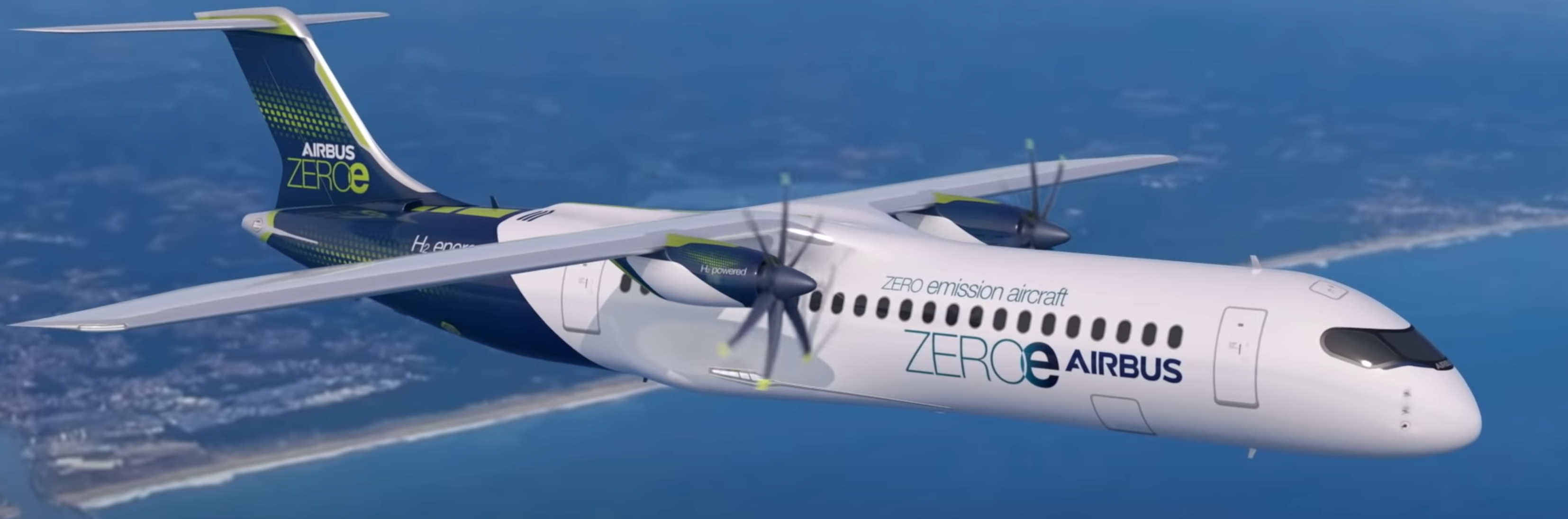
It certainly is a layout that has been used successfully, by many conventionally-powered aircraft in the past. The De Havilland Canada Dash 8 and ATR 72 are still in production.
The Turboprop Engines
If you look at the Lockheed-Martin C 130J Super Hercules, you will see it is powered by four Rolls-Royce AE 2100D3 turboprop engines, that drive 6-bladed Dowty R391 composite constant-speed fully-feathering reversible-pitch propellers.
These Rolls-Royce engines are a development of an Allison design, but they also form the heart of Rolls-Royce’s 2.5 MW Generator, that I wrote about in Our Sustainability Journey. The generator was developed for use in Airbus’s electric flight research program.
I wouldn’t be surprised to find the following.
- , The propulsion system for this aircraft is under test with hydrogen at Derby and Toulouse.
- Dowty are testing propellers suitable for the aircraft.
- Serious research is ongoing to store enough liquid hydrogen in a small tank that fits the design.
Why develop something new, when Rolls-Royce, Dowty and Lockheed have done all the basic design and testing?
The Fuselage
This screen capture taken from the video, shows the front view of the plane.
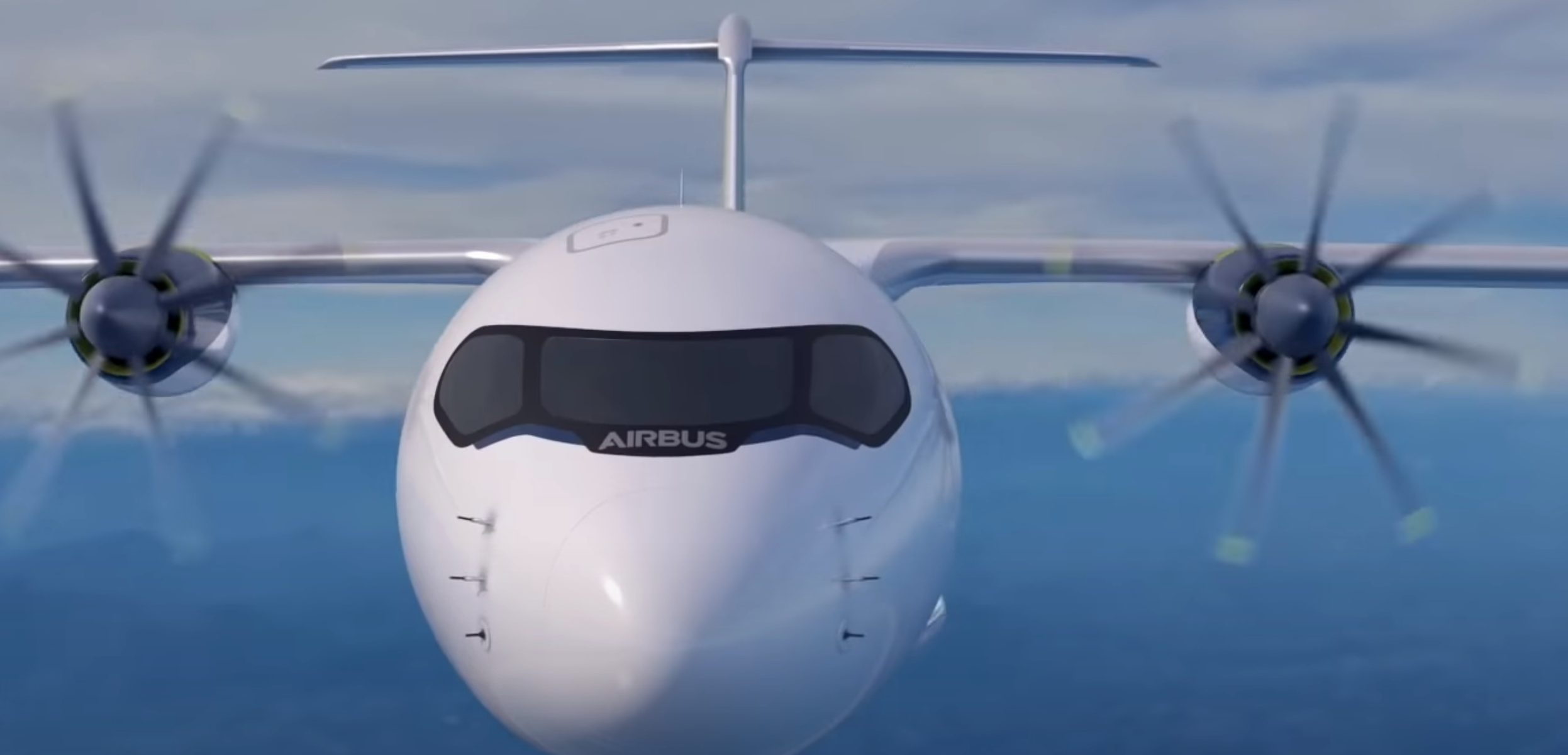
From clues in the picture, I estimate that the fuselage diameter is around four metres. Which is not surprising, as the Airbus A320 has a height of 4.14 metres and a with of 3.95 metres.
So is the ZEROe Turboprop based on a shortened Airbus A 320 fuselage?
As the aircraft has a capacity of less than a hundred passengers and an Airbus A320 has six-abreast seating, could the aircraft have sixteen rows of seats.
With the seat pitch of an Airbus A 320, which is 81 centimetres, this means just under thirteen metres for the passengers.
The Technical Challenge
I don’t feel there are any great technical challenges in building this aircraft.
- The engines appear to be conventional and could even have been more-or-less fully developed.
- The fuselage could be a development of an existing design.
- The wings and tail-plane are not large and given the company’s experience with large composite structures, they shouldn’t be too challenging.
- The hydrogen storage and distributing system will have to be designed, but as hydrogen is being used in increasing numbers of applications, I doubt the expertise will be difficult to find.
- The avionics and other important systems could probably be borrowed from other Airbus products.
Given that the much larger and more complicated Airbus A380 was launched in 2000 and first flew in 2005, I think that a prototype of this aircraft could fly around the middle of this decade.
The Market Segment
It may seem small at less than a hundred seats, but it does have a range of greater than a 1000 nautical miles or 1150 miles.
Consider.
- It compares closely in passenger capacity, speed and range, with the De Havilland Canada Dash 8/400 and the ATR 72/600.
- The ATR 72 is part produced by Airbus.
- The aircraft is forty percent slower than an Airbus A 320.
- It is a genuine zero-carbon aircraft.
- It looks like it could be designed to have a Short-Takeoff-And Landing (STOL) capability.
On the other hand, a lot of busy routes, like London and Edinburgh and Berlin and Munich are less than or around 400 miles.
These short routes are being challenged aggressively by the rail industry, as over this sort of distance, which typically takes four hours by train, rail has enough advantages, that passengers may choose not to fly.
Examples of cities with a range of between 400 and 1000 miles from London include.
- Berlin – 571 miles
- Cork – 354 miles
- Inverness – 445 miles
- Lisbon – 991 miles
- Madrid – 781 miles
- Palma – 835 miles
- Rome – 893 miles
- Stockholm – 892 miles
- Warsaw – 900 miles
This aircraft would appear to be sized as an aircraft, that can fly further than passengers are happy to travel by train. But because of its cruising speed, the routes, where it will be viable would probably be limited in duration.
But important routes to, from and between secondary locations, like those that used to be flown by FlyBe, would surely be naturals for this aircraft.
It looks to be an aircraft that could have a big future.
The ZEROe Turbofan
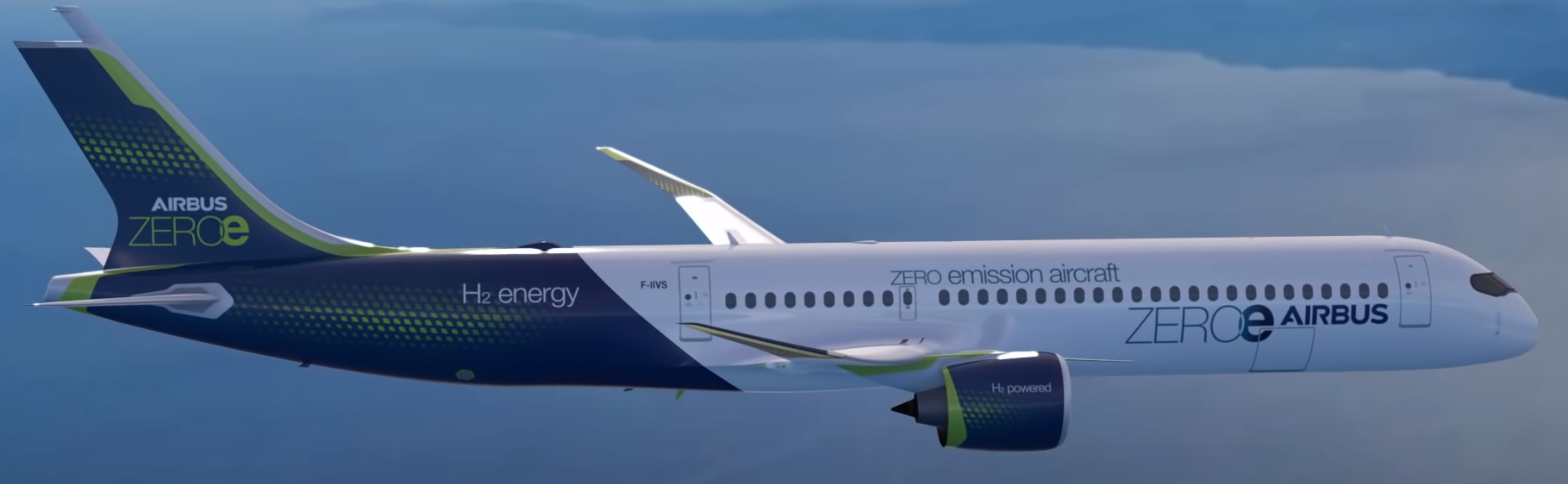
This is Airbus’s summary of the design.
Two hybrid hydrogen turbofan engines provide thrust. The liquid hydrogen storage and distribution system is located behind the rear pressure bulkhead.
This screen capture taken from the video, shows the plane.
This screen capture taken from the video, shows the front view of the plane.
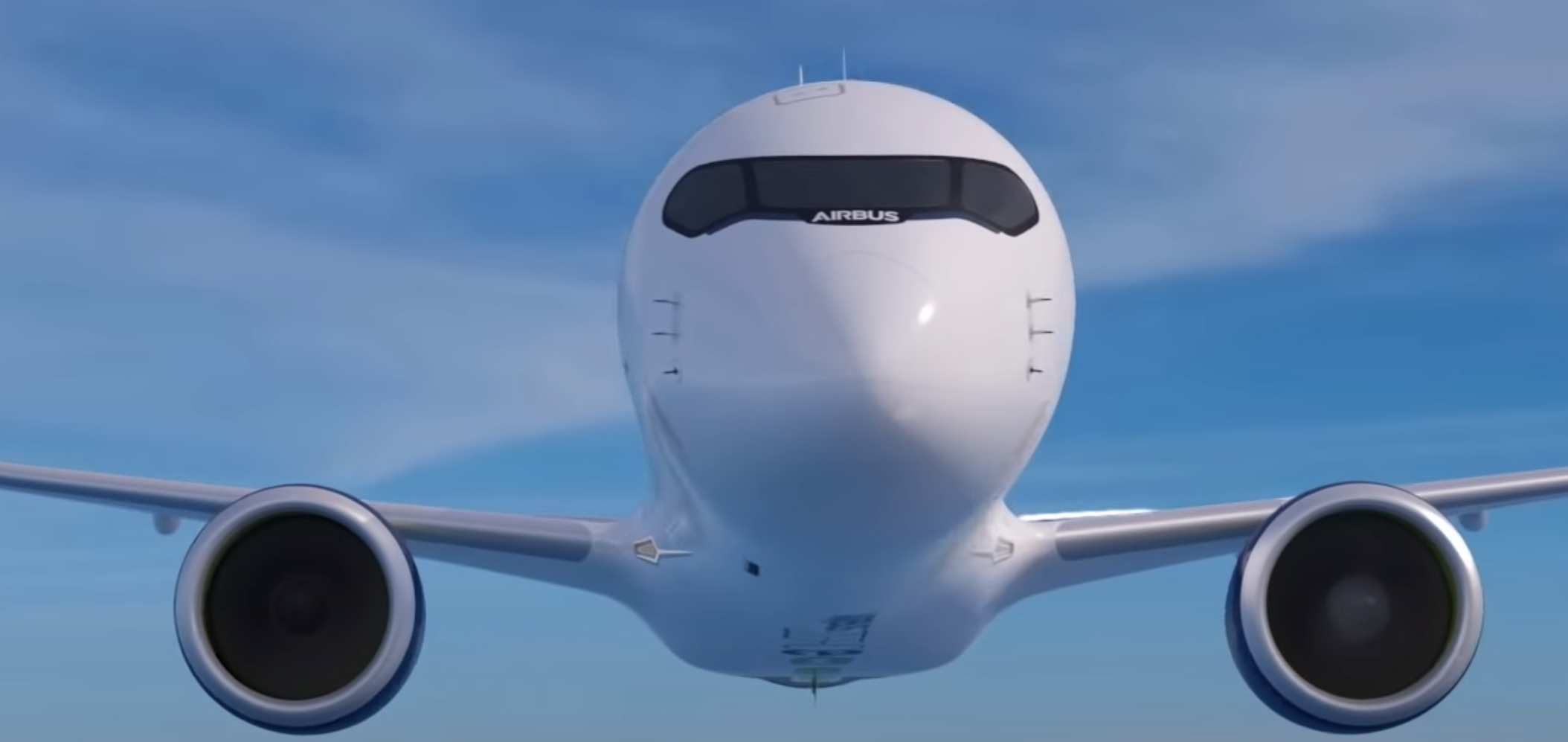
The aircraft doesn’t look very different different to an Airbus A320 and appears to be fairly conventional. It does appear to have the characteristic tall winglets of the A 320 neo.
The Turbofan Engines
These would be standard turbofan engines modified to run on hydrogen, fuelled from a liquid hydrogen tank behind the rear pressure bulkhead of the fuselage.
If you want to learn more about gas turbine engines and hydrogen, read this article on the General Electric web site, which is entitled The Hydrogen Generation: These Gas Turbines Can Run On The Most Abundant Element In the Universe,
Range And Performance
I will compare range, performance and capacity with the latest Airbus A 320.
ZEROe Turbofan
- Range – 2300 miles
- Cruising Speed – Mach 0.78
- Capacity – < 200 passengers
Airbus A 320
- Range – 3800 miles
- Cruising Speed – Mach 0.82
- Capacity – 190 passengers
There is not too much difference, except that the A 320 has a longer range.
The Cockpits Of The ZEROe Turboprop And The ZEROe Turbofan
This gallery puts the two cockpit images together.
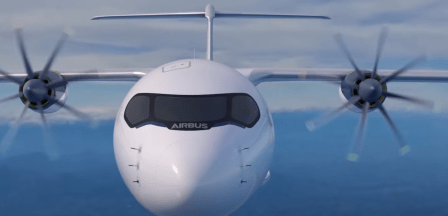

Are they by any chance related?
Could the controls and avionics in both aircraft be the same?
A quick look says that like the Boeing 757 and 767, the two planes have a lot in common, which may enable a pilot trained on one aircraft to fly the other, with only minimal extra instruction.
And would it be a simple process to upgrade a pilot from an A 320 to a ZEROe Turbofan?
The Fuselages Of The ZEROe Turboprop And The ZEROe Turbofan
I estimated earlier that the fuselage of the Turboprop was based on the cross-section of the A320.
Looking at the pair of front views, I wouldn’t be surprised to find, that both aircraft are based on an updated A 320 fuselage design.
Passengers and flightcrew would certainly feel at home in the ZEROe Turbofan, if internally, it was the same size, layout and equipment as a standard A 320 or more likely an A 320 neo.
The Market Segment
These are my thoughts of the marketing objectives of the ZEROe Turbofan.
- The cruising speed and the number of passengers are surprisingly close, so has this aircraft been designed as an A 320 or Boeing 737 replacement?
- I suspect too, that it has been designed to be used at any airport, that could handle an Airbus A 320 or Boeing 737.
- It would be able to fly point-to-point flights between most pairs of European or North American cities.
It would certainly fit the zero-carbon shorter range airliner market!
In fact it would more than fit the market, it would define it!
The ZEROe Blended-Wing Body
This is Airbus’s summary of the design.
The exceptionally wide interior opens up multiple options for hydrogen storage and distribution. Here, the liquid hydrogen storage tanks are stored underneath the wings. Two hybrid hydrogen turbofan engines provide thrust.
This screen capture taken from the video, shows the plane.

This aircraft is proposed to have the same performance and capacity as the ZEROe Turbofan, which includes a 2000 nautical mile plus range.
The only other aircraft with a similar shape is the Northrop Grumman B-2 Spirit or Stealth Bomber. This is not a fast aircraft, but it is able to fly at an altitude of 50,000 ft, which compares to the 60,000 ft of Concorde and the 43,000 ft of an Airbus A 380.
I wonder, if the blended-wing body is designed to fly very high at around the 60,000 ft, which was Concorde territory.
It would only be doing 515 mph and would be well below the speed of sound.
So what is the point on going so high?
The air is very thin and there is a lot less drag.
It is also worth reading Wikipedia on the design of flying wings.
It might be possible to fly much further than 2000 nautical miles. After all Airbus did put in a plus sign!
Is this aircraft the long-distance aircraft of the three?
Extending The Range
I do wonder, if the engines in these aircraft could be capable of running on both hydrogen and aviation biofuel.
As the ZEROe Turboprop and the ZEROe Turbofan planes have empty wings, which in a conventional aircraft would hold fuel, could the space be used to hold aviation biofuel to extend the range?
Certification Of The Planes
The ZEROe Turboprop and ZEROe Turbofan are aircraft, where a lot of the design will already have been proven in previous aircraft, so will probably be much less onerous to approve, than the blended-wing body design.
Conclusion
It looks to me, that Airbus have designed three aircraft to cover the airline market.
I also feel that as the ZEROe Turboprop and ZEROe Turbofan, appear to have conventional airframes, that they could be delivered before 2035.
If I’m right, that the blended-wing body is a high flyer, it will be a ride to experience, travelling at that height all the way to New York.
GWR Buys Vehicles Outright In HST Fleet Expansion
The title of this post is the same as that of this article on Railway Gazette.
This is the introductory paragraph.
Despite concerns over future passenger numbers, the Department for Transport has given permission for Great Western Railway to procure three more shortened HST diesel trainsets, branded as the Castle Class by the franchisee.
These pictures show some of the Castle Class trains.
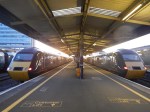

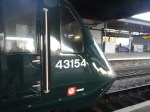
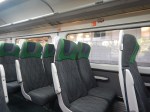


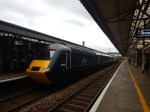
They must be profitable and/or popular with passengers.
If I have a problem with these trains, it is with the Class 43 diesel power cars.
- Each train has two power cars.
- It would appear that there are about 150 of the Class 43 power cars in regular service.
- Each is powered by a modern MTU 16V4000 R41R diesel engine, that is rated at 1678 kW.
- The engines are generally less than a dozen years old.
- They will be emitting a lot of carbon dioxide.
As the trains are now only half as long as they used to be, I would suspect, that the engines won’t be working as hard, as they can.
Hopefully, this will mean less emissions.
The article says this about use of the fleet.
With its fleet now increasing to 14, GWR expects to use 12 each day on services across the west of England. Currently the fleet is deployed on the Cardiff – Bristol – Penzance corridor, but the company is still evaluating how the additional sets will be used.
It also says, that they are acquiring rolling stock from other sources. Some of which will be cannibalised for spares.
Are First Rail Holdings Cutting Carbon Emissions?
First Rail Holdings, who are GWR’s parent, have announced in recent months three innovative and lower-carbon fleets from Hitachi, for their subsidiary companies.
- The Class 807 trains for Avanti West Coast will not have any diesel engines.
- The Class 805 trains for Avanti West Coast will initially have diesel engines, but these may be changedin a few years for battery power packs.
- The Class 803 trains for East Coast Trains will not have any diesel engines.
Hitachi have also announced a collaboration with Hyperdrive Innovation to provide battery packs to replace diesel engines, that could be used on Class 800 and Class 802 trains.
First Rail Holdings have these Class 800/802 fleets.
- GWR – 36 x five-car Class 800 trains
- GWR – 21 x nine-car Class 800 trains
- GWR – 22 x five-car Class 802 trains
- GWR – 14 x nine-car Class 802 trains
- TransPennine Express – 19 x five-car Class 802 trains
- Hull Trains – 5 x five-car Class 802 trains
Note.
- That is a total of 117 trains.
- As five-car trains have three diesel engines and nine-car trains have five diesel engines, that is a total of 357 engines.
- In Could Battery-Electric Hitachi Trains Work Hull Trains’s Services?, I showed that Hull Trains could run their services with a Fast Charging system in Hull station.
- In Could Battery-Electric Hitachi Trains Work TransPennine Express’s Services?, I concluded that Class 802 trains equipped with batteries could handle all their routes without diesel and some strategically-placed charging stations.
In the Wikipedia entry for the Class 800 train, there is a section called Powertrain, where this is said.
According to Modern Railways magazine, the limited space available for the GUs has made them prone to overheating. It claims that, on one day in summer 2018, “half the diagrammed units were out of action as engines shut down through overheating.
So would replacing some diesel engines with battery packs, also reduce this problem, in addition to cutting carbon emissions?
It does appear to me, that First Rail Holdings could be cutting carbon emissions in their large fleet of Hitachi Class 800 and Class 802 trains.
The Class 43 power cars could become a marketing nightmare for the company?
Could Class 43 Power Cars Be Decarbonised?
Consider.
- Class 43 power cars are forty-five years old.
- They have been rebuilt with new MTU engines in the last dozen years or so.
- I suspect MTU and GWR know everything there is to know about the traction system of a Class 43 power car.
- There is bags of space in the rear section of the power car.
- MTU are part of Rolls-Royce, who because of the downturn in aviation aren’t performing very well!
But perhaps more importantly, the power cars are iconic, so anybody, who decarbonises these fabulous beasts, gets the right sort of high-class publicity.
I would also feel, if you could decarbonise these power cars, the hundreds of diesel locomotives around the world powered by similar diesel engines could be a useful market.
What methods could be used?
Biodiesel
Running the trains on biodiesel would be a simple solution.
- It could be used short-term or long-term.
- MTU has probably run the engines on biodiesel to see how they perform.
- Biodiesel could also be used in GWR’s smaller diesel multiple units, like Class 150, 158, 165 and 166 trains.
Some environmentalists think biodiesel is cheating as it isn’t zero-carbon.
But it’s my view, that for a lot of applications it is a good interim solution, especially, as companies like Altalto, will be making biodiesel and aviation biofuel from household and industrial waste, which would otherwise be incinerated or go to landfill.
The Addition Of Batteries
This page on the Hitachi Rail Ltd web site shows this image of the V-Train 2.
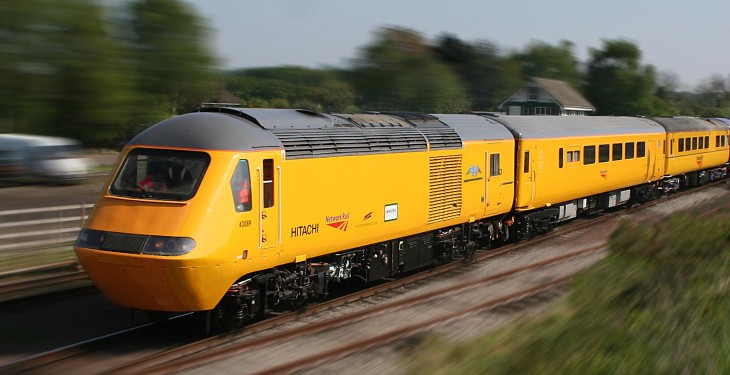
This is the introduction to the research program, which was based on a High Speed Train, fotmed of two Class 43 power cars and four Mark 3 carriages.
The V-Train 2 was a demonstration train designed in order to demonstrate our skills and expertise while bidding for the Intercity Express Programme project.
The page is claiming, that a 20 % fuel saving could be possible.
This paragraph talks about performance.
The V-Train 2 looked to power the train away from the platform using batteries – which would in turn be topped up by regenerative braking when a train slowed down to stop at a station. Acceleration would be quicker and diesel saved for the cruising part of the journey.
A similar arrangement to that Hitachi produced in 2005 could be ideal.
- Technology has moved on significantly in the intervening years.
- The performance would be adequate for a train that just trundles around the West Country at 90 mph.
- The space in the rear of the power car could hold a lot of batteries.
- The power car would be quiet and emission-free in stations.
- There would be nothing to stop the diesel engine running on biodiesel.
This might be the sort of project, that Hitachi’s partner in the Regional Battery Train; Hyperdrive Innovation. would probably be capable of undertaking.
MTU Hybrid PowerPack
I wouldn’t be surprised to find, that MTU have a drop-in solution for the current 6V4000 R41R diesel engine, that includes a significant amount of batteries.
This must be a serious possibility.
Rolls-Royce’s 2.5 MW Generator
In Our Sustainability Journey, I talk about rail applications of Rolls-Royce’s 2.5 MW generator, that has been developed to provide power for electric flight.
In the post, I discuss fitting the generator into a Class 43 power car and running it on aviation biofuel.
I conclude the section with this.
It should also be noted, that more-efficient and less-polluting MTU engines were fitted in Class 43s from 2005, so as MTU is now part of Rolls-Royce, I suspect that Rolls-Royce have access to all the drawings and engineers notes, if not the engineers themselves
But it would be more about publicity for future sales around the world, with headlines like.
Iconic UK Diesel Passenger Trains To Receive Green Roll-Royce Jet Power!
COVID-19 has given Rolls-Royce’s aviation business a real hammering, so perhaps they can open up a new revenue stream by replacing the engines of diesel locomotives,
I find this an intriguing possibility. Especially, if it were to be fitted with a battery pack.
Answering My Original Question
In answering my original question, I feel that there could be several ways to reduce the carbon footprint of a Class 43 power car.
It should also be noted that other operators are users of Class 43 power cars.
- ScotRail – 56
- CrossCountry – 12
- East Midlands Railway – 39
- Network Rail – 3
Note.
- ScotRail’s use of the power cars, is very similar to that of GWR.
- CrossCountry’s routes would need a lot of reorganisation to be run by say Hitachi’s Regional Battery Train.
- East Midlands Railway are replacing their Inter-City 125s with new Class 810 trains.
The picture shows the power car of Network Rail’s New Measurement Train.

These may well be the most difficult to decarbonise, as I suspect they need to run at 125 mph on some routes, which do not have electrification and there are no 125 mph self-powered locomotives. After the Stonehaven crash, there may be more tests to do and a second train may be needed by Network Rail.
Why Are GWR Increasing Their Castle Class Fleet?
These are possible reasons.
GWR Want To Increase Services
This is the obvious explanation, as more services will need more trains.
GWR Want To Update The Fleet
There may be something that they need to do to all the fleet, so having a few extra trains would enable them to update the trains without cutting services.
GWR Want To Partially Or Fully Decarbonise The Power Cars
As with updating the fleet, extra power cars would help, as they could be modified first and then given a thorough testing before entering passenger service.
GWR Have Been Made An Offer They Can’t Refuse
Suppose Rolls-Royce, MTU or another locomotive power plant manufacturer has a novel idea, they want to test.
Over the years, train operating companies have often tested modified trains and locomotives for manufacturers.
So has a manufacturer, asked GWR to test something in main line service?
Are Other Train Operators Thinking Of Using Introducing More Short-Formed InterCity 125 Trains?
This question has to be asked, as I feel there could be routes, that would be suitable for a net-zero carbon version of a train, like a GWR Castle or a ScotRail Inter7City.
Northern Trains
Northern Trains is now run by the Department for Transport and has surely the most suitable route in the UK for a shorted-formed InterCity 125 train – Leeds and Carlisle via the Settle and Carlisle Line.
Northern Trains may have other routes.
Transport for Wales Rail Services
Transport for Wales Rail Services already run services between Cardiff Central and Holyhead using diesel locomotive hauled services and long distance services between South Wales and Manchester using diesel multiple units.
Would an iconic lower-carbon train be a better way of providing some services and attract more visitors to the Principality?
Conclusion
GWR must have a plan, but there are few clues to what it is.
The fact that the trains have been purchased rather than leased could be significant and suggests to me that because there is no leasing company involved to consult, GWR are going to do major experimental modifications to the trains.
They may be being paid, by someone like an established or new locomotive engine manufacturer.
It could also be part of a large government innovation and decarbonisation project.
My hunch says that as First Rail Holdings appear to be going for a lower-carbon fleet, that it is about decarbonising the Class 43 power cars.
The plan would be something like this.
- Update the three new trains to the new specification.
- Give them a good testing, before certifying them for service.
- Check them out in passenger service.
- Update all the trains.
The three extra trains would give flexibility and mean that there would always be enough trains for a full service.
Which Methods Could Be Used To Reduce The Carbon Footprint Of The Class 43 Power Cars?
These must be the front runners.
- A Hitachi/Hyperdrive Innovation specialist battery pack.
- An MTU Hybrid PowerPack.
- A Rolls-Royce MTU solution based on the Rolls-Royce 2.5 MW generator with batteries.
All would appear to be viable solutions.
Westbury Station – 30th July 2020
I went to Westbury station today and took these pictures.
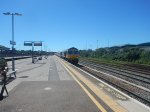
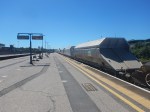
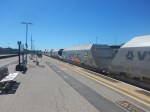
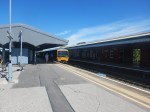


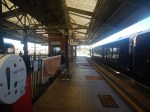

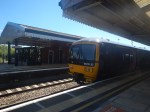

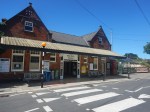




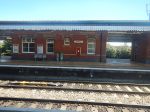
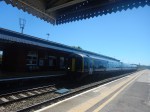
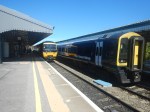
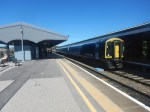

I found Westbury station to be a station in extremely good condition.
It also had a buffet, where I was able to purchase a delicious ice cream.
Passenger Services Through Westbury Station
I was at the station for about an hour and several trains passed through.
Great Western Railway services through the station include.
- One train per two hour (tp2h) – London Paddington and Exeter St. Davids – Stops
- One tp2h – London Paddington and Penzance – Passes through
- One tp2h – London Paddington and Plymouth – Passes through
- One train per hour (tph) – Cardiff Central and Portsmouth Harbour – Stops
- One tp2h – Great Malvern and Westbury
- One tp2h – Gloucester and Weymouth – Stops
- One tp2h – Swindon and Westbury
Train classes included Class 800 trains and Class 166 trains.
South Western Railway services through the station include.
- Five trains per day – Salisbury and Bristol Temple Meads – Stops
Train classes include Class 159 trains.
Battery Trains Through Westbury
Hitachi’s Class 800 train with a battery electric capability or Regional Battery Train, is described in this infographic from the company.

The proposed 90 km or 56 mile range could even be sufficient take a train between Westbury and Bristol Temple Meads stations on a return trip.
Many of the trains through Westbury go to the same stations.
Distances are as follows.
- Bristol Temple Meads – 28 miles
- Newbury – 42 miles
- Salisbury – 24 miles
- Swindon – 32.5 miles
- Taunton – 47 miles
It looks like all of these places should be in range of an electric train with a battery capability, providing there is a charging facility at the other end.
An Electrification Island At Westbury Station
I have been advocating an island of electrification around Westbury station for some time and feel about a dozen miles of electrification through the station would be sufficient for Class 800 trains with a battery capability to bridge the gap.
- At Newbury, trains would access the current electrification into London Paddington.
- Between Exeter and Taunton, the rail route runs alongside the M5, so why not electrify this stretch, as the wires will not be so noticeable?
Looking at Westbury, to my untrained eye, it would appear that a short section of electrification around the station, would not be the most challenging of projects.
I believe that discontinuous electrification between Newbury and Exeter would be possible and could gradually be extended across Devon and Cornwall.
It should also be noted that one of Hitachi’s Regional Battery Trains has a range of 56 miles, so that these places from Westbury could be an return trip on batteries, with a well-driven train with excellent energy management.
- Bath Spa – 17 miles
- Bradford-on-Avon – 7 miles
- Bristol Temple Meads – 28 miles
- Chippenham – 16 miles
- Frome – 6 miles
- Salisbury – 24 miles
- Trowbridge – 4 miles
- Warminster – 9 miles
Obviously, the number of stops and the terrain will play a part.
Freight Might Drive Full Electrification Through Westbury Station
As the pictures show, there are heavy freight trains going through the area, which bring long and weighty loads of stone from the Mendips to London.
- There are regularly two or three stone trains in an average hour of the day.
- Like in the picture, I suspect they are usually hauled by a noisy, smelly, polluting and carbon-dioxide emitting Class 66 Locomotive. Not all of these, are as clean and well-maintained, as the one in the picture.
- Some trains start at Merehead Quarry, which is about fifteen miles from Westbury station.
I believe that we must decarbonise freight trains.
But freight and electric haulage is not a simple subject.
- I once had extensive talks with a Senior Crane Driver at the Port of Felixstowe during an Ipswich Town Away match. Ports don’t like overhead wires, as containers do get dropped and fall off rail wagons.
- Suppose a historic line without electrification, like the Settle and Carlisle has a serious land-slip, which it did a couple of years ago. How do you haul in the materials for repair?
- Because freight can be of a random and unpredictable nature, to electrify freight, you probably need to electrify the whole rail network.
For these and other reasons, we need independently-powered freight locomotives and I feel that a new freight locomotive will develop, that will be needed by the rail industry all over the world.
There are several solutions.
Biodiesel
Biodiesel is the simplest solution and would mean that the current diesel locomotives could be used.
In Grant Shapps Announcement On Friday, I talked about Government support for an industrial process, that has been developed by Oxford University and their spin-off company; Velocys, from the the Fischer-Tropsch Process, which can produce, the following fuels from household and industrial waste.
- Aviation biofuel.
- Biodiesel.
A plant to process 500,000 tonnes per year of Lincolnshire finest waste is now being built at Immingham to create 50,000,000 litres of fuel, by Altalto, which is a partnership between Velocys, British Airways and Shell.
If nothing else, waste-to-fuel is the interim solution to the decarbonisation of tricky sectors like heavy rail freight, rail construction, large diesel-powered machines, ships or long-distance aviation.
This fuel could be ideal to haul the heavy stone trains from the Mendips.
Hydrogen
I did think, it would be hydrogen powered, but I’m not so sure now, as hydrogen trains and locomotives seem to have a slow development cycle.
Although, there is one factor, that might influence the use of hydrogen as a fuel, which I wrote about in Thirsty High-Rollers … Mining’s Heavy Haulers Prime Candidates For Hydrogen Conversion.
Mining and quarrying don’t have a good green image, but converting mines and quarries to hydrogen power, would surely have operational and good public relational advantages.
It would also ensure a plentiful and convenient supply of hydrogen, for any hydrogen-powered locomotives.
Hydrogen-powered locomotives, with their electric transmissions, would probably be able to use electrification for traction power, so they would put pressure on the Government to electrify between Westbury and Newbury stations, so that there was a fully-electrified route between the Mendips and London.
Rolls-Royce’s Staggering Development
Staggering is not my word, but that of Paul Stein, who is Rolls-Royce’s Chief Technology Officer.
He used the word in a press release, which I discuss in Our Sustainability Journey.
To electrify aviation, Rolls-Royce has developed a 2.5 MW generator, based on a small gas-turbine engine, which Paul Stein describes like this.
Amongst the many great achievements from E-Fan X has been the generator – about the same size as a beer keg – but producing a staggering 2.5 MW. That’s enough power to supply 2,500 homes and fully represents the pioneering spirit on this project.
This generator is designed for flight and the data sheet for the gas-turbine engine is available on the Internet.
- It has a weight of under a couple of tonnes compared to the thirteen tonnes of the diesel engine and generator in a Class 68 locomotive.
- It is also more powerful than the diesel.
- It looks to be as frugal, if not more so!
- Rolls-Royce haven’t said if this gas-turbine can run on aviation biofuel, but as many of Rolls-Royce’s large engines can, I would be very surprised if it couldn’t!
Rolls-Royce’s German subsidiary is a large producer of rail and maritime diesel engines, so the company has the expertise to customise the generator for rail applications.
I can see this generator ending up in a high-powered heavy independently-powered electric locomotive for hauling stone and inter-modal container trains.
As with hydrogen-powered locomotives, this new breed of gas-turbine locomotive with its electric transmission, will be able to use electrification, where it exists.
So would locomotive developments drive the electrification through Westbury and especially between Westbury and Newbury?
I would rate is likely, that in the future, increasingly rail locomotives will have sophisticated electric transmissions, between their prime motive power of diesel, hydrogen, gas-turbine or whatever and their traction system. All of these locomotives will have pantographs and/or third-rail shoes to access electrification, where it exists.
These locomotives will surely add to pressure to electrify between Westbury and Newbury.
Biodiesel is surely the interim freight solution, if one is needed.
Future Zero-Carbon Passenger Services
Passenger services through Westbury can be divided into three groups.
Great Western Railway’s Services Between London Paddington And Devon And Cornwall
From Beeching Reversal projects put forward over the last few months, it looks like these services will increase and stop at several new and refurbished stations.
I can see discontinuous electrification being used to create a series of electrification islands to allow Class 800 trains, with a battery capability reach the Far South West of Cornwall.
Electrification islands could be at places like
- Around Westbury station.
- Between Taunton and Exeter St. Davids stations alongside the M5.
- Between Plymouth station and the Royal Albert bridge.
- Around Bodmin Parkway station
- Around Truro station
- At Newquay station
- At Penzance station
Obviously, the number and type of the various installations will depend on the methods used and the engineering required.
I do believe that with Hitachi trains, that meet their specification, that trains will be able to travel between Paddington and Penzance without touching a drop of diesel.
Great Western Railway’s Cardiff Central And Portsmouth Harbour Service
The service can be split into the following legs.
- Cardiff Central and Filton Junction – 33 miles – Electrified
- Filton Junction and Bristol Temple Meads – 5 miles – Not Electrified
- Bristol Temple Meads and Westbury – 28 miles – Not Electrified
- Westbury and Salisbury – 24 miles – Not Electrified
- Salisbury and Southampton Central – 15 miles – Not Electrified
- Southampton Central and Portsmouth Harbour – 26 miles – Electrified
It would appear that a train with the performance and range on batteries of Hitachi’s Regional Battery Train should be able to handle the route, provided the following conditions are met.
- It can leave the Great Western Main Line at Filton Junction with a full battery.
- It can leave the electrification at Westbury station with a full battery.
- It can leave Southampton Central station with a full battery.
- Third-rail shoes are fitted for working between Southampton Central and Portsmouth Harbour stations.
Recharging batteries at Bristol Temple Meads and Salisbury stations, although probably welcome, are not necessary.
I can envisage Hitachi Class 800 and Class 385 trains being able to fulfil this role, along with Bombardier Electrostars and Aventras and Siemens Desiros.
As Great Western Railway have forty-five Class 387 trains, conversion of some of these to battery electric operation must be a possibility.
Great Western Railway’s Gloucester and Weymouth Service
The service can be split into the following legs.
- Gloucester and Bristol Temple Meads – 39 miles – Not Electrified
- Bristol Temple Meads and Westbury – 28 miles – Not Electrifield
- Westbury and Dorchester Junction – 52 miles – Not Electrified
- Dorchester Junction and Weymouth – 4 miles – Electrified
It would appear that a train with the performance and range on batteries of Hitachi’s Regional Battery Train should be able to handle the route, provided the following conditions are met.
- It can leave Gloucester station with a full battery.
- It can leave Bristol Temple Meads with a full battery.
- It can leave Westbury with a full battery.
- It can leave the South Western Main Line at Dorchester Junction with a full battery.
It would be a tight trip for a battery electric train and I suspect, that there would be some extra electrification between Westbury and Dorchester Junction or perhaps charging facilities at Frome or Yeovil Pen Mill stations.
The alternative would be to fit larger batteries on the train.
As to the train to be used, a Class 387 train with a battery capability would surely be ideal.
Great Western Railway’s Swindon and Westbury Service
The service can be split into the following legs.
- Swindon and Chippenham – 16 miles – Electrified
- Chippenham and Westbury- 16 miles – Not Electrified
It would appear that a train with the performance and range on batteries of Hitachi’s Regional Battery Train should be able to handle the route, provided the following conditions are met.
- It can leave Chippenham station with a full battery.
This would have sufficient charge to do the thirty-two mile round trip from Chippenham to Westbury and back.
As to the train to be used, a Class 387 train with a battery capability would surely be ideal.
South Western Railway’s Bristol Temple Meads and Salisbury Service
The service can be split into the following legs.
- Bristol Temple Meads and Westbury – 28 miles – Not Electrified
- Westbury and Salisbury- 24 miles – Not Electrified
t would appear that a train with the performance and range on batteries of Hitachi’s Regional Battery Train should be able to handle the route, provided the following conditions are met.
- It can leave Bristol Temple Meads station with a full battery.
- It can leave Westbury with a full battery.
- It can leave Salisbury with a full battery.
But, I do wonder, if with a slightly larger battery, a well-driven train could work the route with only charging the battery at Westbury station?
Conclusion
Could Westbury station develop into a zero-carbon rail transport hub for Wiltshire?
- It has an hourly train service between London Paddington and Exeter St. Davids.
- It has an hourly service between Bristol Temple Meads and Weymouth.
- There are hourly services to stations like Bath Spa, Bradford-on-Avon, Bristol Temple Meads, Chippenham, Dorchester, Frome, Swindon, Taunton, Trowbridge and Yeovil
It could be electrified to charge battery electric trains as they pass through.
Our Sustainability Journey
The title of this post, is the same as that of this press release on the Rolls-Royce web site.
It is sub-titled.
Paul Stein’s Thoughts On Sustainability And Electrification
Paul Stein is Rolls-Royce’s Chief Technology Officer, so what he says is important.
This press release was the source of the information behind Distributed Propulsion ‘Maybe The Only Means’ For Small Electric Flight Progress, which I wrote about Rolls-Royce’s beer keg-sized 2.5 MW generator.
This is the third paragraph.
We’ve taken great steps at Rolls-Royce with our three-pillar sustainability approach of developing the gas turbine to even greater efficiency, supporting the introduction of Sustainable Aviation Fuel and creating new, disruptive technologies such as electrification.
These are definitely, the three pillars of wisdom, when it comes to sustainable aviation.
E-Fan X
This paragraph is Paul Stein’s view of the E-Fan X.
One of the great endeavours in the latter category has been our E-Fan X programme in partnership with Airbus. From our side, this has involved creating a hybrid-electric power generation system at a scale never previously seen in our industry, comprised of an embedded AE2100 gas turbine driving a 2.5MW generator and 3000V power electronics and an electric propulsion unit. What has been particularly encouraging has been the amount of industry interest and support for this programme, and I know everyone at Rolls-Royce and Airbus has been truly grateful for that.
He states that the E-Fan has now concluded, but a several valuable lessons have been learned.
2.5 MW Generator
He describes the generator like this.
Amongst the many great achievements from E-Fan X has been the generator – about the same size as a beer keg – but producing a staggering 2.5 MW. That’s enough power to supply 2,500 homes and fully represents the pioneering spirit on this project.
The press release discloses that the heart of this staggering generator is a Rolls-Royce AE2100 gas turbine, which powers the latest version of the legendary Lockheed Hercules; the C-130J Super Hercules.
Wikipedia gives this data for the AE2100D2 version of the engine.
- Length – three metres
- Diameter – 0.73 metres
- Weight – 783 kilograms
- Maximum Power Output – 3458 kW
- Fuel Consumption – 0.25/kW/h
It looks like in the E-Fan X application, the engine is not at full power.
Use With Aviation Biofuel
Aviation Biofuel is described like this in the first sentences of its Wikipedia entry.
Aviation biofuel is a biofuel used for aircraft. It is considered by some to be the primary means by which the aviation industry can reduce its carbon footprint. After a multi-year technical review from aircraft makers, engine manufacturers and oil companies, biofuels were approved for commercial use in July 2011.
But it doesn’t necessarily mean growing large amounts of crops and converting it to the fuel. Altalto, who are backed by British Airways, Shell, Oxford University and the British Government are building a plant at Immingham to convert household and industrial waste into aviation biofuel.
I would expect that Rolls-Royce have made sure that the generator will work with aviation biofuel.
A Memory Of Emergency Power Generation
About twenty-five years, there was a major power failure after a thunder storm, where I lived in Suffolk and C and myself went to bed in the dark. We awoke to full power in the morning, after a good night’s sleep with no disturbance.
Imagine my surprise, when I let the dogs out to find parked in the field in front of the house, a very large articulated truck.
I was greeted by an engineer, who asked if I minded, his generator in my field. I seem to remember my response was to offer him a cup of tea, which he refused, as he said he had everything he needed in the truck.
It turned out that the main sub-station for the area had received a direct lightning strike and had been destroyed. So to supply power to all the nearby villages, as my farm was at the end of the supply, it was the most convenient place to plug in a transportable gas-turbine generator. The generator was in the field for about ten days and the whole operation impressed me with its professionalism.
But with this new 2.5 MW generator from Rolls-Royce, there would only need to be a small 3.5 tonne four-wheeled truck, to include the generator, fuel and living quarters for the engineer
We have made a lot of progress in twenty-five years.
A Modern Railway Locomotive
The power of this new Class 68 diesel locomotive, that was built in Spain, by Swiss company Stadler is a very healthy 2,800 kW.
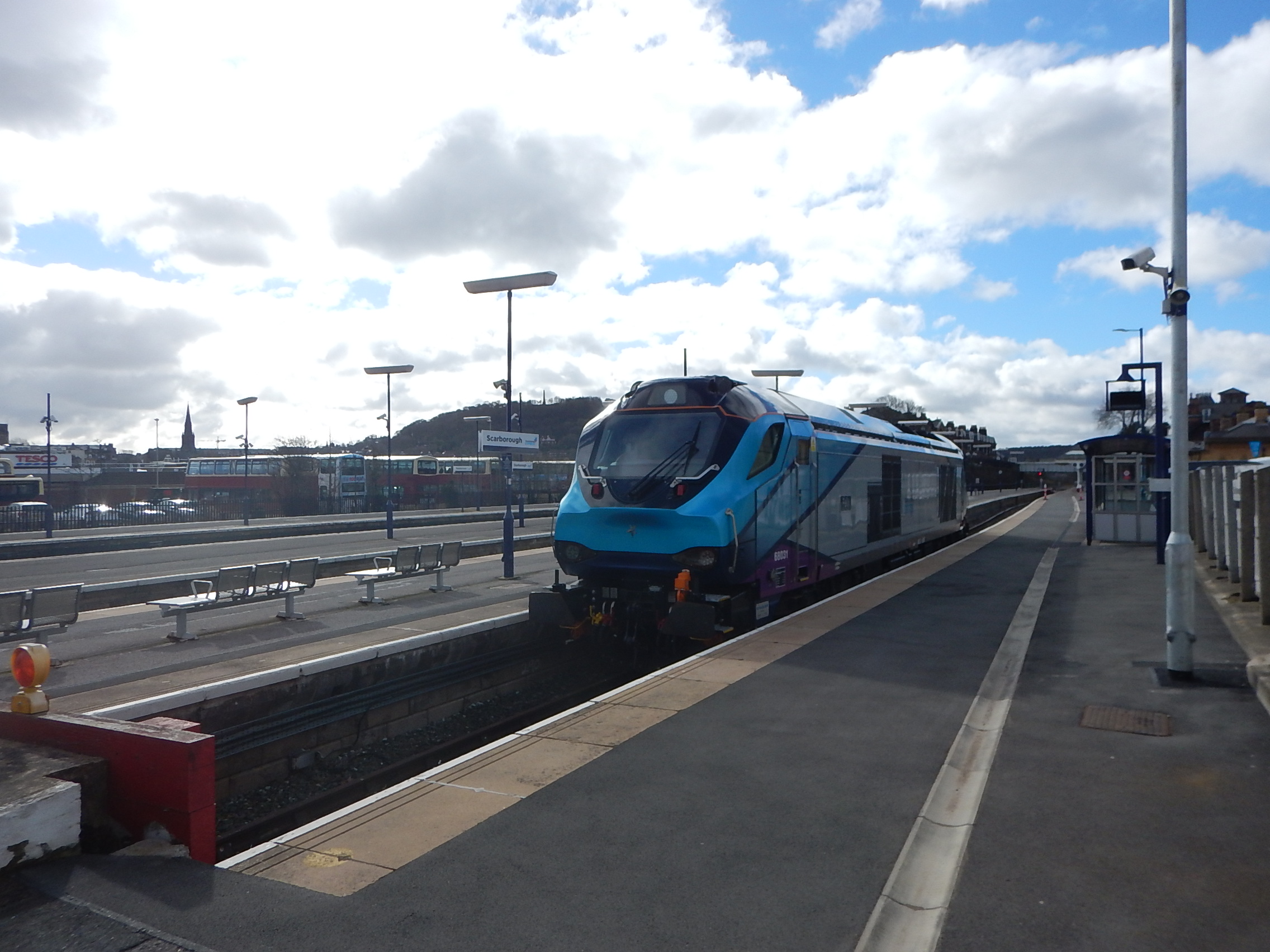
Consider these facts about a Class 68 locomotive.
- Thirty-four of these locomotives have been produced for the UK.
- They are powered by a Caterpillar C175-16 engine, which weighs thirteen tonnes.
- The transmission of these locomotives is electric, which means that the diesel engine drives a generator and the train is driven by electric traction motors.
- The locomotive is equally at home hauling intermodal freight trains and passenger trains for Chiltern Railways or TransPennine Express.
- According to Wikipedia, Class 68 locomotives comply with Stage III A of the European emission standards but not Stage III B. But that is much better than most of our noisy, smelly and polluting diesel locomotives.
Class 68 locomotives are members of the UKLight family of locomotives, which contains, these two other locomotives.
- Already in service is the Class 88 locomotive, which is a bi-mode locomotive, which is capable of running on electrification or the on-board 0.7 MW diesel engine.
- Under development is the Class 93 locomotive, which is a tri-mode 110 mph locomotive, which is capable of running on electrification, the on-board 0.7 MW diesel engine or battery power.
Stadler seem to be able to mix-and-match various power sources to provide versatile and highly-desirable locomotives.
I feel it would be feasible to design a railway locomotive with the following power sources.
- 25 KVAC overhead or 750 VDC third-rail electrification, providing up to perhaps the four MW of a Class 88 locomotive.
- A Rolls-Royce gas-turbine generator running on aviation biofuel, providing up to perhaps three MW.
- Batteries up to a weight of perhaps ten tonnes.
I am sure that it could handle many of the routes still run with diesel locomotives in the UK.
- It would handle all locomotive-hauled passenger services and would be electric-only in stations.
- It certainly solves the problem of hauling long intermodal freight trains between Felixstowe and the Midlands and the North.
- To handle the heaviest stone and aggregate trains, it might need a more powerful generator, but I’m sure Rolls-Royce would oblige.
In Thoughts On A Battery/Electric Replacement For A Class 66 Locomotive, I gave a list of routes, that would need to be handled by a battery electric locomotive.
- Didcot and Birmingham – Around two-and-a-half hours
- Didcot and Coventry – Just under two hours
- Felixstowe and Ipswich – Around an hour
- Haughley Junction and Peterborough – Around two hours
- Southampton and Reading – Around one-and-a-half hours
- Werrington Junction and Doncaster via Lincoln – Around two hours
- Werrington Junction and Nuneaton – Just under two hours
Will Rolls-Royce’s generator be able to supply 2.5 MW for up to four hours?
This would need two-and-a-half tonnes of aviation biofuel, which would be around 3,200 litres, which could be carried in the 5,000 litre tank of a Class 68 locomotive.
It certainly seems feasible to replace diesel locomotives with gas-turbine locomotives running on aviation biofuel, to reduce net carbon emissions and reduce noise and pollution.
But this is not just a UK problem and many countries, who rely on diesel-hauled rail freight, would look seriously at such a locomotive.
Underfloor Mounting In Passenger Trains
These pictures show the space underneath a Hitachi Class 800 train.
The red cap visible in some pictures is the filler for the oil or diesel for the MTU 12V 1600 R 80L diesel engine used to power the trains away from electrification.
This diesel engine has this specification.
- It produces 560 kW of power.
- It weighs around six tonnes.
- Its is about 4 x 2.5 x 1 metres in size.
The diesel engine produces about a fifth of the power as the gas-turbine generator, which is also smaller and very much lighter in weight.
It should also be noted, that a nine-car Class 800 train has five of these MTU diesel engines.
At a first glance, it would appear Hitachi could find one of Rolls-Royce’s gas-turbine generators very useful.
- It might even enable self-powered high speed trains to run on lines without electrification at speeds well in excess of 140 mph.
- I can certainly see, High Speed Two’s classic-compatible trains having one or possibly two of these generators, so they can extend services on lines without electrification.
We shouldn’t forget that one version of British Rail’s Advanced Passenger Train was to be gas-turbine powered.
A Class 43 Diesel Power-Car
Rolls-Royce would need a test-bed for a trial rail application of their 2.5 MW generator and there is probably no better trial vehicle, than one of the numerous Class 43 power-cars waiting to be scrapped. They could probably obtain a complete InterCity 125, if they wanted one for a realistic weight, test equipment and a second power-car for comparison and rescue.
But seriously, if we are going to remove diesel from UK railways by 2040, a solution needs to be found for the GWR Castles, ScotRail’s Inter7Citys and NetworkRail’s New Measurement Train.
One of the great advantages of these staggering (Rolls-Royce’s Chief Technology Officer’s word, not mine!) generators is that they are controlled by Full Authority Digital Engine Control or FADEC.
FADEC will give the pilots in a Hercules or other aircraft, all the precise control they need and I doubt Rolls-Royce will leave FADEC out of their gas turbine generator, as it would give the operator or driver extremely precise control.
A driver of a GWR Castle equipped with two gas-turbine power-cars, would be able to do the following.
- Adjust the power to the load and terrain, with much more accuracy, than at present.
- Shut the engines down and start them quickly, when passing through sensitive areas.
- Cut carbon-dioxide emissions, by simply using a minimum amount of fuel.
I would put a battery in the back of the Class 43, to provide hotel power for the passenger coaches.
Running current MTU engines in the Class 43s, on biodiesel is surely a possibility, but that not an elegant engineering solution. It also doesn’t cut carbon emissions.
As there are still over a hundred Class 43s in service, it could even be a substantial order.
It should also be noted, that more-efficient and less-polluting MTU engines were fitted in Class 43s from 2005, so as MTU is now part of Rolls-Royce, I suspect that Rolls-Royce have access to all the drawings and engineers notes, if not the engineers themselves
But it would be more about publicity for future sales around the world, with headlines like.
Iconic UK Diesel Passenger Trains To Receive Green Roll-Royce Jet Power!
COVID-19 has given Rolls-Royce’s aviation business a real hammering, so perhaps they can open up a new revenue stream by replacing the engines of diesel locomotives,
A Class 55 Locomotive
Why Not?
A Class 55 locomotive is diesel electric and there are thousands of diesel locomotives in the world, built to similar basic designs, that need a more-efficient and more environmentally-friendly replacement for a dirty, smelly, noisy and polluting diesel power-plant.
Marine Applications
The Wikipedia entry for the Cat C175, says this.
The Cat C175 is often used in locomotives and passenger-class ships.
I suspect there will be marine applications for the gas-turbine generator.
Conclusion
I’m very certain that Rolls-Royce’s pocket power station has a big future.
Who said that dynamite comes in small parcels?
 The Anonymous Widower