Could Rolls-Royce SMRs Be The Solution To Europe’s Gas Shortage?
Of all the offshore wind farms, that I’ve looked at recently, I find Magnora’s ScotWind N3 wind farm the most interesting.
I wrote about it in ScotWind N3 Offshore Wind Farm.
I said this.
In any design competition, there is usually at least one design, that is not look like any of the others.
In the successful bids for the ScotWind leases, the bid from Magnora ASA stands out.
- The company has an unusual home page on its offshore wind web site.
- This page on their web site outlines their project.
- It will be technology agnostic, with 15MW turbines and a total capacity of 500MW
- It will use floating offshore wind with a concrete floater
- It is estimated, that it will have a capacity factor of 56 %.
- The water depth will be an astonishing 106-125m
- The construction and operation will use local facilities at Stornoway and Kishorn Ports.
- The floater will have local and Scottish content.
- The project will use UK operated vessels.
- Hydrogen is mentioned.
- Consent is planned for 2026, with construction starting in 2028 and completion in 2030.
This project could serve as a model for wind farms all round the world with a 500 MW power station, hydrogen production and local involvement and construction.
I very much like the idea of a concrete floater, which contains a huge electrolyser and gas storage, that is surrounded by an armada of giant floating wind turbines.
These are my thoughts.
Floating Concrete Structures
To many, they may have appear to have all the buoyancy of a lead balloon, but semi-submersible platforms made from concrete have been used in the oil and gas industry for several decades.
Kishorn Yard in Scotland was used to build the 600,000-tonne concrete Ninian Central Platform,in 1978. The Ninian Central Platform still holds the record as the largest movable object ever created by man.
The Ninian Central Platform sits on the sea floor, but there is no reason why a semi-submersible structure can’t be used.
Electrolysers
There is no reason, why a large electrolyser, such as those made by Cummins, ITM Power or others can’t be used, but others are on the way.
- Bloom Energy are working on high temperature electrolysis, which promises to be more efficient.
- Torvex Energy are developing electrolysis technology that used sea water, rather than more expensive purified water.
High Temperature Electrolysis
High temperature electrolysis needs a heat source to work efficiently and in Westinghouse And Bloom Energy To Team Up For Pink Hydrogen, I described how Bloom Energy propose to use steam from a large nuclear power station.
Offshore Nuclear Power
I’ve never heard of offshore nuclear power, but it is not a new idea.
In 1970, a company called Offshore Power Systems was created and it is introduced in its Wikipedia entry like this.
Offshore Power Systems (OPS) was a 1970 joint venture between Westinghouse Electric Company, which constructed nuclear generating plants, and Newport News Shipbuilding and Drydock, which had recently merged with Tenneco, to create floating nuclear power plants at Jacksonville, Florida.
Westinghouse’s reactor was a 1.150 MW unit, which was typical of the time, and is very similar in size to Sizewell B.
The project was cancelled before the reactors were towed into position.
Nuclear Knowledge Has Improved
Consider.
- In the fifty years since Offshore Power Systems dabbed their toes in the water of offshore nuclear power, our knowledge of nuclear systems and engineering has improved greatly.
- The offshore oil and gas industry has also shown what works impeccably.
- The floating offshore wind industry looks like it might push the envelop further.
- There has been only one nuclear accident at Fukushima, where the sea was part of the problem and that disaster taught us a lot.
- There have been a large number of nuclear submarines built and most reached the planned end of their lives.
- Would a small modular nuclear reactor, be safer than a large nuclear power plant of several GW?
I would suggest we now have the knowledge to safely build and operate a nuclear reactor on a proven semi-submersible platform, built from non-rusting concrete.
An Offshore Wind Farm/Small Modular Reactor Combination Producing Hydrogen
Consider.
- A typical floating offshore wind farm is between one and two gigawatts.
- A Rolls-Royce small modular reactor is sized to produce nearly 0.5 GW.
- The high temperature electrolyser will need some heat to achieve an optimum working temperature.
- Spare electricity can be used to produce hydrogen.
- Hydrogen can be stored platform.
- Hydrogen can be sent ashore using existing gas pipes.
- Hydrogen could even be blended with natural gas produced offshore to create a lower-carbon fuel.
- It would also be possible to decarbonise nearby offshore infrastructure.
A balance between wind and nuclear power can be obtained, which would provide a steady output of energy.
Conclusion
There are a large numbers of possibilities, to locate a Rolls-Royce small modular reactor close to a wind farm to use high temperature electrolysis to create green hydrogen, which can be used in the UK or exported through the gas network.
News Of The Day From Rolls-Royce
This press release from Rolls-Royce is entitled Rolls-Royce Advances Hybrid-Electric Flight With New Technology To Lead The Way In Advanced Air Mobility.
This is the introductory paragraph.
Rolls-Royce is officially announcing the development of turbogenerator technology, which includes a new small engine designed for hybrid-electric applications. The system will be an on-board power source with scalable power offerings and will complement the Rolls-Royce Electrical propulsion portfolio, enabling extended range on sustainable aviation fuels and later as it comes available through hydrogen combustion.
This paragraph outlines the use of the new small engine.
Current battery technology means all-electric propulsion will enable eVTOL and fixed wing commuter aircraft for short flights in and between cities and island-hopping in locations like Norway and the Scottish Isles. By developing turbogenerator technology, that will be scaled to serve a power range between 500 kW and 1200 kW, we can open up new longer routes that our electric battery powered aircraft can also support.
There is also a video in the press release, which gives more information.
- The turbogenerator is compatible to their electric power and propulsion offering.
- The turbogenerator has a power of 500-1200 kW to serve different aircraft platforms.
- The system is modular and can be tailored to different applications.
- The turbogenerator can either power the aircraft directly or charge the batteries.
- The system can be configured to provide primary power for other applications.
- Rolls-Royce are designing all the components; the turbogenerator, the gas turbine, the generator, the power electronics, so they all fit together in a compact and lightweight solution.
- Rolls-Royce intend to manufacture all components themselves and not rely on bought-in modules.
- Every gram of weight saved is important.
I suspect that one of the keys to making this all work is a very comprehensive and clever control system.
I have a few thoughts.
Weight Is Key
Rolls-Royce emphasise weight saving in the video. Obviously, this is important with any form of flying machine.
An Example System
Let’s suppose you want an electric power system to power a railway locomotive or one of those large mining trucks.
- The locomotive or truck has an electric transmission.
- Power of 2 MW is needed.
- A battery is needed.
- Fuel will be Sustainable Aviation Fuel (SAF) or hydrogen.
A series hybrid-electric power unit will be created from available modules, which could be very fuel efficient.
What Will Rolls-Royce’s System Be Able to Power?
Although the system is aimed at the next generation of electric flying machines, these systems will be used in any application that wants an efficient zero- or low-carbon power source.
Consider.
- Some large trucks have diesel engines with a power of almost 500 kW.
- A Class 68 bi-mode locomotive has a 700 kW diesel engine.
- A Class 802 train has three 700 kW diesel engines.
- Rolls-Royce subsidiary MTU are a large supplier of diesel engines for rail, road and water.
It looks to me that Rolls-Royce have sized the system to hoover up applications and they have MTU’s experience to engineer the applications.
Class 43 Power Cars
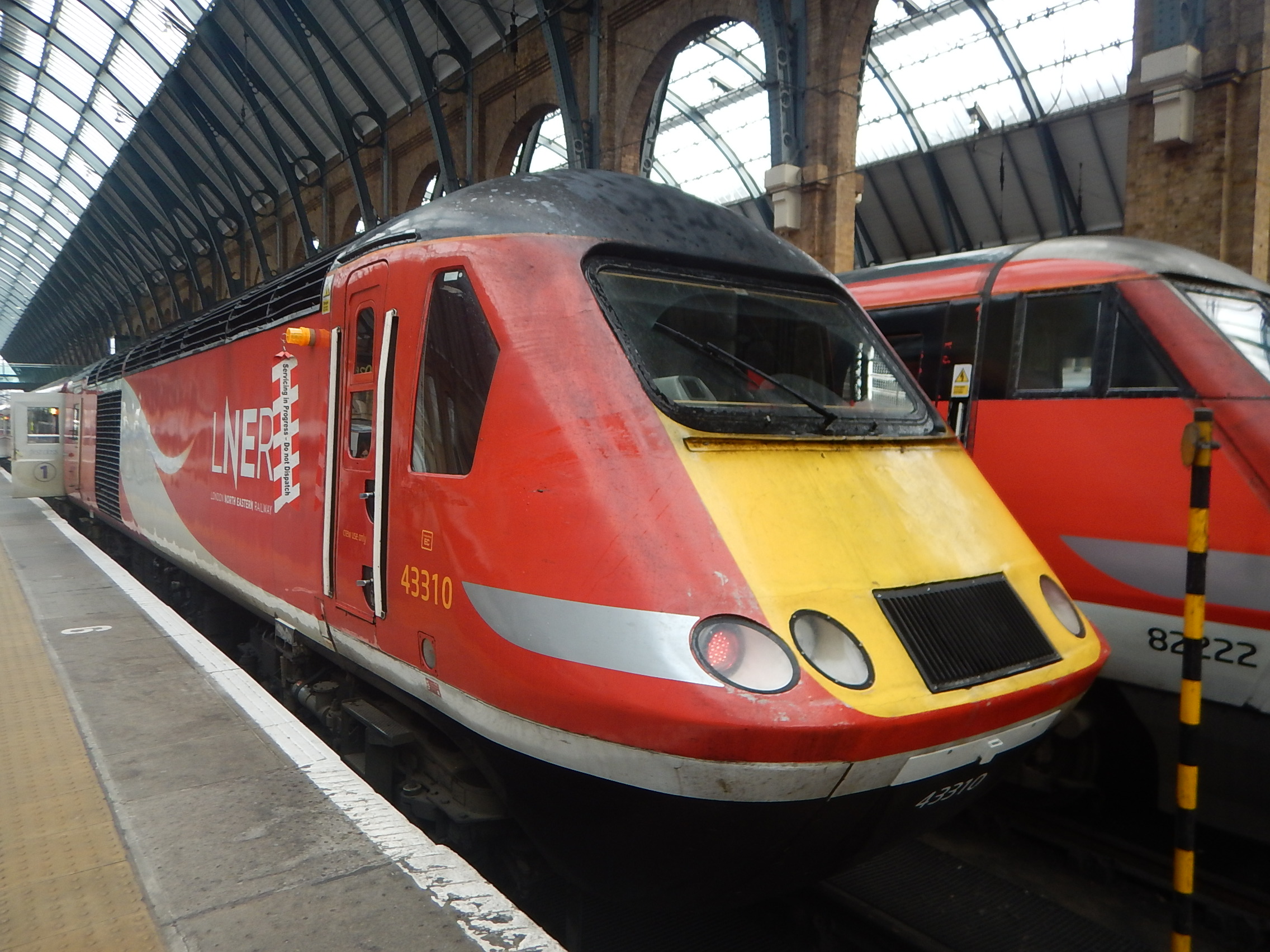
The iconic Class 43 power cars running on UK railways are an interesting possibility for powering with Rolls-Royce’s new system.
- Despite being over forty-years old, there are over a hundred and twenty still in service.
- They were upgraded with new 1.7 MW MTU diesel engines in the early part of this century.
- Rolls-Royce is based in Derby.
- The Class 43 power cars were developed in Derby.
- Hydrogen-powered Class 43 power cars, hauling GWR Castles or ScotRail Inter7Cities would be tourist attractions.
- The Class 43 power cars need to be either decarbonised or replaced in the next few years.
Decarbonisation using Rolls-Royce’s new system would probably be more affordable.
This all sounds like a project designed in a pub in Derby, with large amounts of real ale involved.
But I wouldn’t be surprised if it happened.
Will The System Be Upgradable From Sustainable Aviation Fuel To Hydrogen?
This is an except from the introductory paragraph.
The system will be an on-board power source with scalable power offerings and will complement the Rolls-Royce Electrical propulsion portfolio, enabling extended range on sustainable aviation fuels and later as it comes available through hydrogen combustion.
This would appear that if used in aviation, it will be possible to upgrade the system from sustainable aviation fuel to hydrogen, when a suitable hydrogen supply becomes available.
But all applications could be upgraded.

A truck, like the one shown in the picture could be delivered as one running on sustainable aviation fuel and converted to hydrogen later.
Conclusion
Rolls-Royce have put together a modular system, that will have lots of applications.
Plan For New Nuclear Reactors At Wylfa And Trawsfynydd A Step Closer As Natural Resource Wales Looks At Designs
The title of this post, is the same as that of this article on nation.cymru.
These are the first two paragraphs.
Plans for new nuclear power stations at Trawsfynydd and Wylfa have taken a step closer after the UK Government asked government regulators to assess designs for the reactors.
Natural Resources Wales will be among those assessing the designs by Rolls-Royce, with both Wylfa and Trawsfynydd have been named as potential sites for housing them within the UK.
These are points about the reactors.
- They will cost £1.8 billion each.
- They are capable of powering a city the size of Cardiff, which has a population of about half-a-million.
- I’ve read elsewhere that the reactors are planned to have a nameplate capacity of 470 MW.
The article did mention, that the Nimbys were lining up.
The Wylfa Site
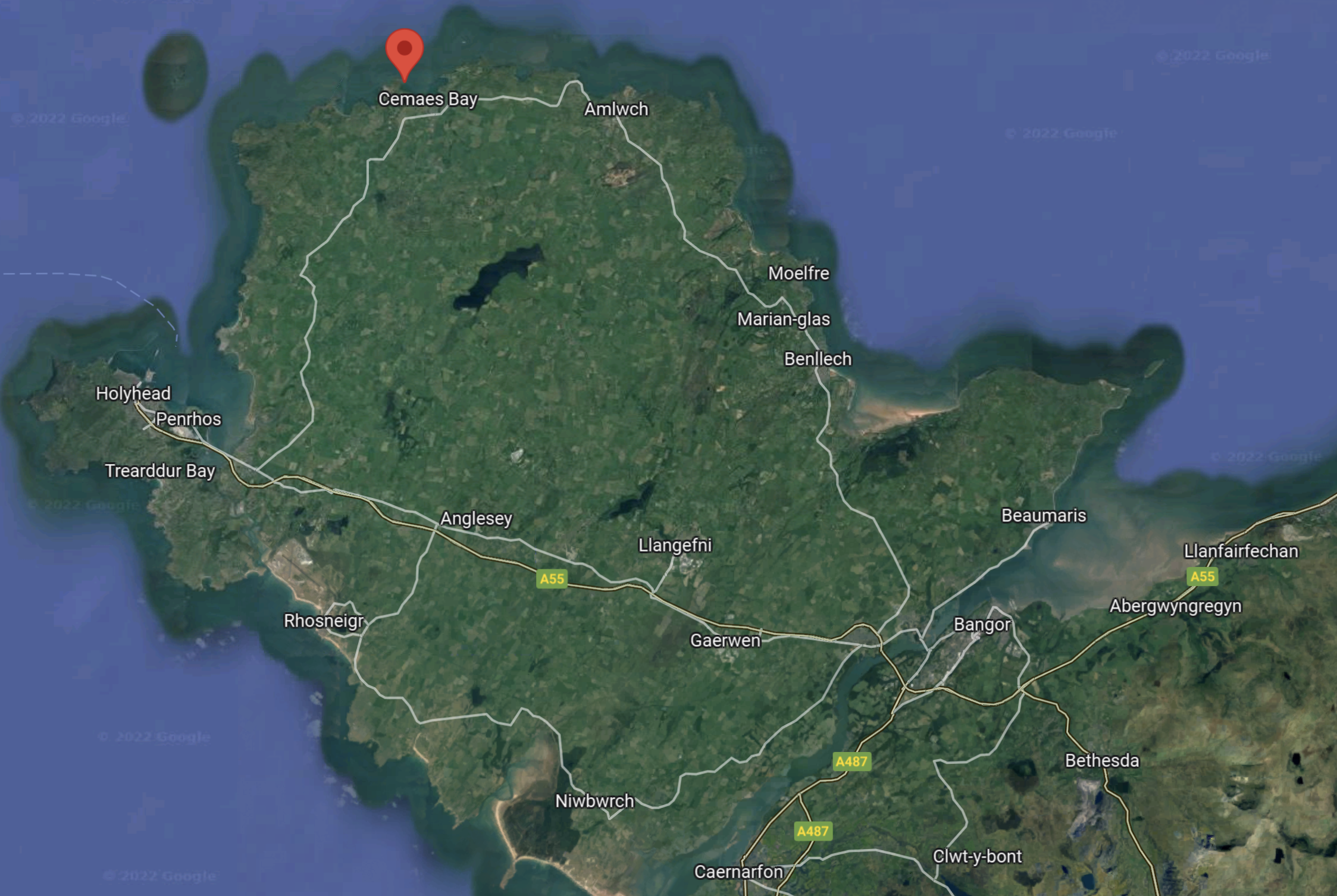
The original Wylfa power station was a Magnox nuclear station generating 980 MW, that was decommissioned in 2015.
This Google Map shows the location of the site on Anglesey.
This second Google Map shows the site in more detail.
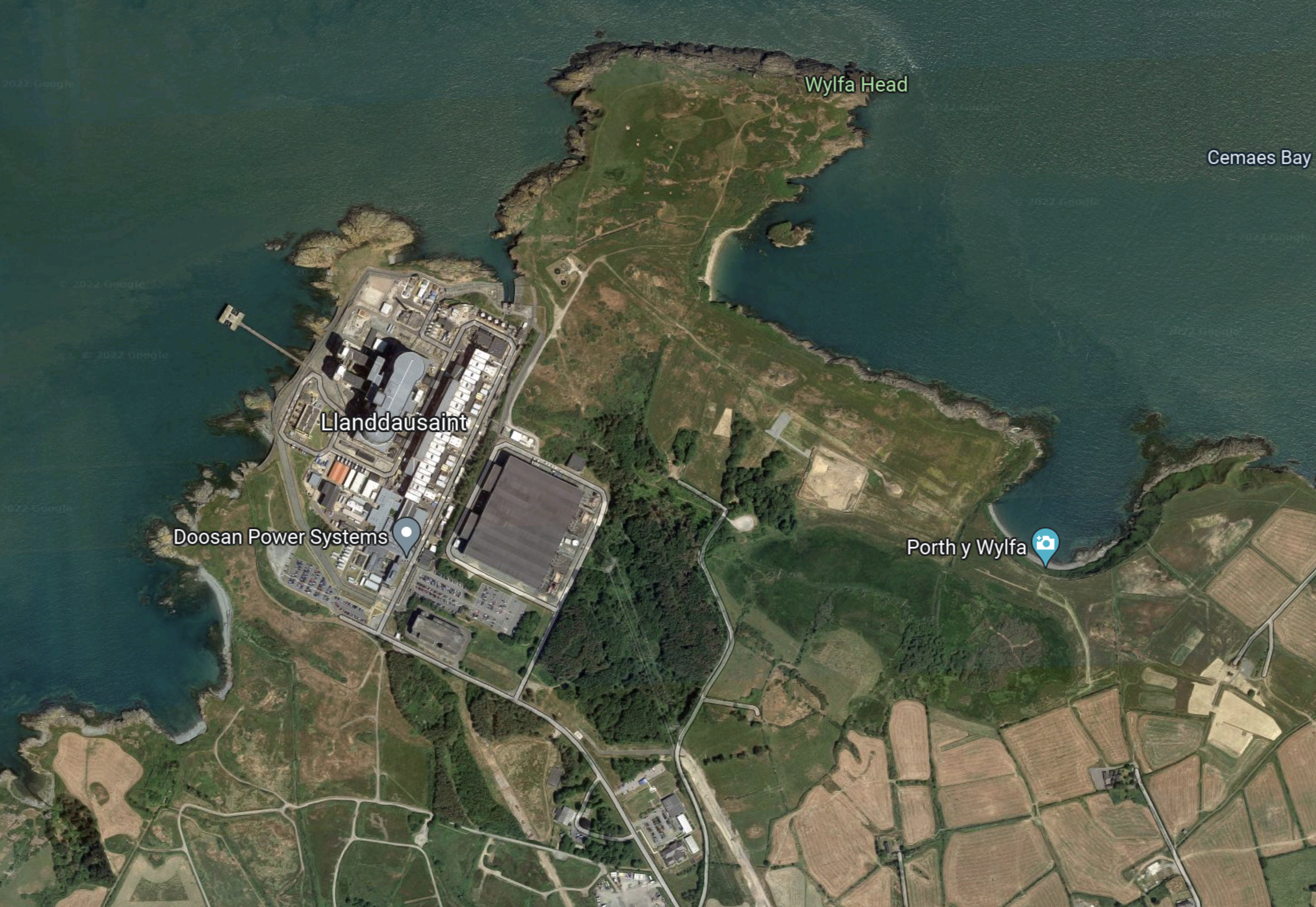
The power station doesn’t appear to have had a rail link, but there is a railway line a few miles away, with sidings that might have been used to handle fuel flasks.
There has been a proposal for a hybrid plant consisting of a wind farm and small modular nuclear reactors, which is described in this Wikipedia section, where this is said.
In January 2021, Shearwater Energy presented plans for a hybrid plant, to consist of a wind farm and small modular reactors (SMRs), to be installed adjacent to the existing Wylfa power station but separate from the proposed Wylfa Newydd site. Shearwater has signed a memorandum of understanding with NuScale Power for the SMRs. The plant could start generation as early as 2027 and would ultimately produce up to 3 GW of electricity and power a hydrogen generation unit producing up to 3 million kg of hydrogen per year.
Note.
- Wylfa Newydd was a proposal by Hitachi to build a nuclear station on the site.
- Shearwater Energy is a UK developer of energy opportunities.
- NuScale Power is an American company with its own design of small modular nuclear reactor.
In Holyhead Hydrogen Hub Planned For Wales, I talked about hydrogen and the port of Holyhead.
The Trawsfynydd Site
The original Trawsfynydd power station was a Magnox nuclear station generating 470 MW, that was decommissioned in 1991.
This Google Map shows the location of the site in North Wales.
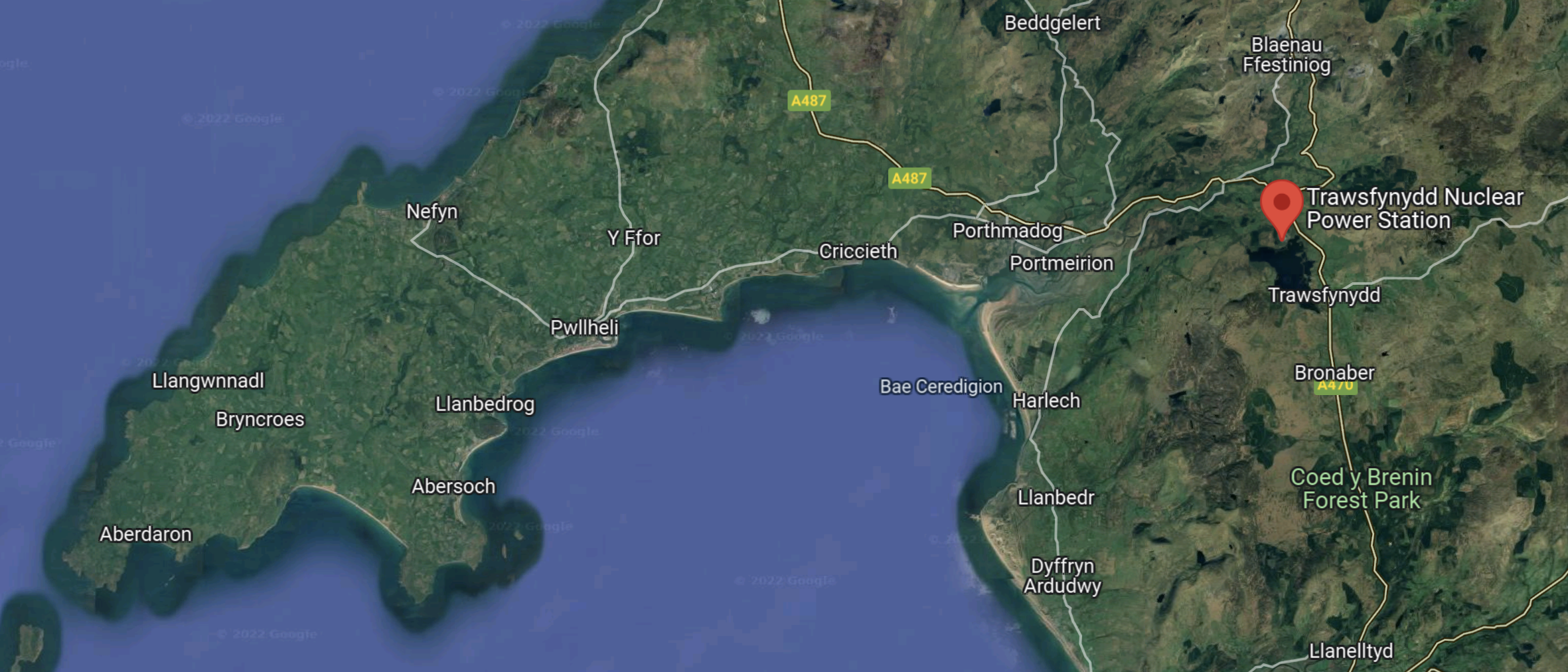
This second Google Map shows the site in more detail.
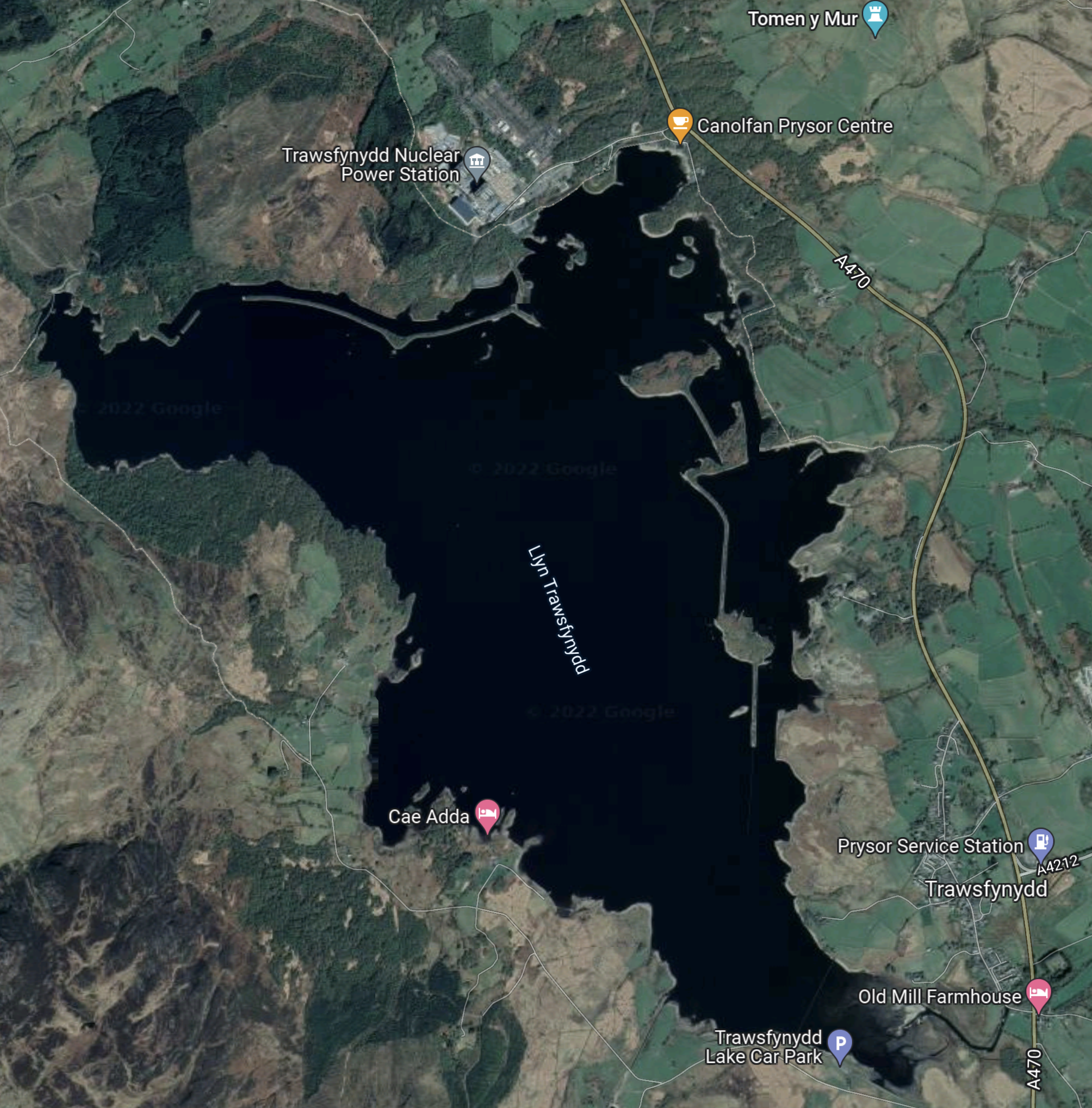
Note.
- The power station was built on the Northern shore of Llyn Trawsfynydd.
- Llyn Trawsfynydd is a man-made lake, that was built in the 1920s to supply water to the 24 MW Maentwrog hydro electric power station.
- There is a railway from near the site, that connects to the Conwy Valley Line at Blaenau Ffestiniog.
The Trawsfynydd site is a lot more than just a decommissioned Magnox power station.
Pumped Energy Storage In Snowdonia
Currently, there are two existing pumped storage in Snowdonia.
- Dinorwig power station, which is often called Electric Mountain, which has a capacity of 9.1 GWh.
- Ffestiniog power station, which has a capacity of around 1 GWh. If anybody has a better figure let me know!
A third scheme is under development at Glyn Rhonwy, which could have a capacity of 700 MWh.
Looking at the size of Llyn Trawsfynydd, I do wonder, if it could be the top lake of a future pumped storage scheme.
- Llyn Trawsfynydd, contains 40 million tonnes of water.
- There is a head of 190 metres.
That could give energy storage of 20 GWh. That sounds a lot of GWhs! But with two possible small modular nuclear reactors at possibly 500 MW each nearby and some help from windfarms, it could be filled within a day, if there is a suitable low-level reservoir.
Rolls-Royce And The Duisburg Container Terminal
In Rolls-Royce Makes Duisburg Container Terminal Climate Neutral With MTU Hydrogen Technology, I showed how Rolls-Royce and its subsidiary were providing an innovative climate neutral solution for Duisburg Container Terminal in Germany.
A North West Wales Powerhouse
Could Rolls-Royce be planning a Duisburg-style solution for North West Wales.
- Small modular nuclear reactors at Wylfa and Trawsfynydd.
- Hydrogen electrolysers to create hydrogen for the Port of Holyhead and heavy transport.
- Adequate pumped hydro storage for surplus energy.
But there could be little serious above-ground construction.
Conclusion
Something is awakening in North West Wales.
Embraer, Widerøe And Rolls-Royce Announce Partnership To Research Innovative Technologies For Sustainable Regional Aircraft
The title of this post, is the same as that of this press release from Rolls-Royce.
This is the body of the press release.
Embraer, Widerøe and Rolls-Royce have today announced plans to study a conceptual zero-emission regional aircraft.
The 12-month cooperation study – in the context of pre-competitive research and development – will address passenger requirements to stay connected in a post Covid-19 world, but do so sustainably, and seeks to accelerate the knowledge of the technologies necessary for this transition. Such technologies will allow national governments to continue to support passenger mobility while reusing most of the existing infrastructure in a more sustainable way.
Advances in scientific research can make clean and renewable energy a major enabler of a new era of regional aviation and the three companies will share their combined in-depth knowledge of aircraft design, market demand, operations and propulsion solutions to further develop their understanding of zero-emission technologies and how they can be matured and applied to future regional aircraft.
Among other topics, the study will cover a wide range of applications for new propulsion technologies to examine a range of potential solutions – including all-electric, hydrogen fuel cell or hydrogen fueled gas turbine powered aircraft.
These are my thoughts.
An Aircraft For Existing Infrastructure
This is an extract from the press release.
Such technologies will allow national governments to continue to support passenger mobility while reusing most of the existing infrastructure in a more sustainable way.
If I was the CEO of an airline, I’d want an aircraft that fitted the airports and their facilities, where I wanted to fly.
No Propulsion System Is Ruled Out
This is an extract from the press release.
Among other topics, the study will cover a wide range of applications for new propulsion technologies to examine a range of potential solutions – including all-electric, hydrogen fuel cell or hydrogen fueled gas turbine powered aircraft.
It would appear no propulsion system is ruled out.
In LNER Seeks 10 More Bi-Modes, where I talked about LNER ordering ten new trains, they also said they would accept any type of power, that was suitable.
Embraer
Embraer are a successful Brazilian aerospace company, who according to Wikipedia, are the third largest producer of civil aircraft, after Boeing and Airbus.
I first flew in one of their EMB 110 Bandeirantes in the 1970s from Norwich to Stavanger and I’ve flown on several of their aircraft since.
Embraer’s current jet aircraft line-up includes.
- Embraer E-Jet – Twin-jet regional airliner – 66-124 passengers – 1596 produced
- Embraer E-Jet E2 – Twin-jet regional airliner – 88-146 passengers – 50 produced
Note.
- The E-Jet E2 is the successor to the E-Jet with new engines, new avionic, fly-by-wire controls and other improvements.
- Production numbers are as of 31st March 2021.
- Embraer don’t seem to produce turboprop aircraft any more, although a lot of their former products are still flying.
I certainly wouldn’t avoid flying in Embraer products, as I would in other aircraft and on some airlines.
Have Embraer identified a market for a smaller sustainable or even zero-carbon aircraft that could extend their product range below the jets?
Widerøe
Widerøe are a long-established and well-respected Norwegian airline.
Their fleet consists of forty De Havilland Canada Dash 8 turboprop aircraft of various variants and three Embraer E-Jet E2 jet airliners.
Wikipedia says this about their fleet.
Widerøe plans to replace most of its Dash-8 by 2030.
Given that the Dash 8 seats between 40 and 80 passengers, I wonder if a sustainable or even zero-carbon aircraft with an appropriate number of seats and the STOL performance of the Dash 8, would suit Widerøe’s route network, which includes many small airfields.
Rolls-Royce
In What Does 2.5 MW Look Like?, I talked about Rolls-Royce’s development of a 2.5 MW Generator.
I am inserting the start of the linked post.
This press release on the Rolls-Royce web site is entitled Rolls-Royce Generator Delivered For Most Powerful Hybrid-Electric Propulsion System In Aerospace.
This Rolls-Royce picture shows the generator installed on a test bed.
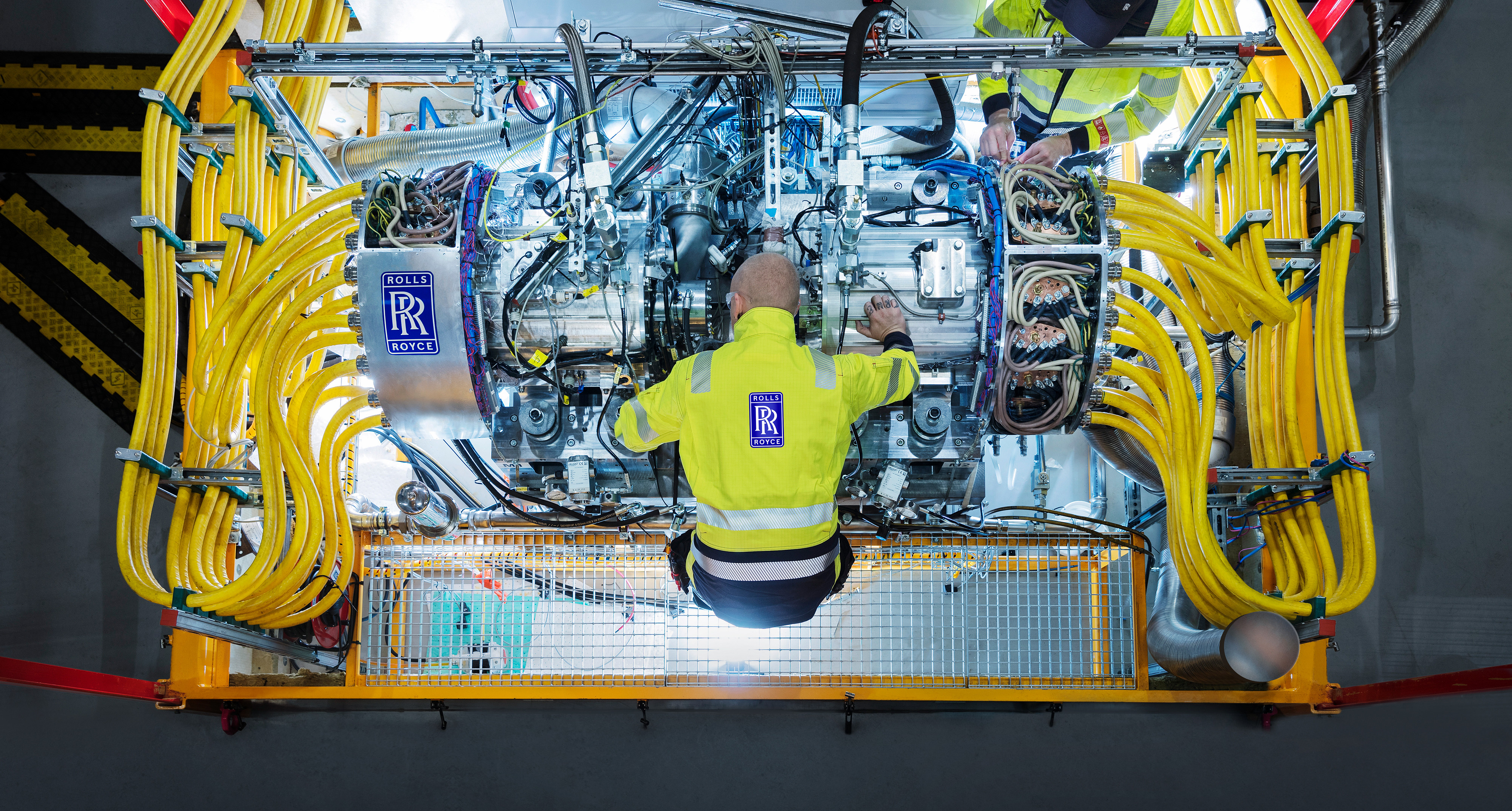
These are the first three paragraphs of the press release.
The generator that will be at the heart of the most powerful hybrid-electric aero power and propulsion system in aerospace has arrived for installation at our specialist testbed.
The generator, and related power electronics, was delivered to the newly-renovated Testbed 108 in Bristol, UK, from the Rolls-Royce facility in Trondheim, Norway, having completed an extensive development test programme. It will form part of the 2.5 megawatt (MW) Power Generation System 1 (PGS1) demonstrator programme, for future regional aircraft. In addition to hybrid-electric propulsion, the generator could also be used as part of a “more-electric” system for larger aircraft or within future ground or marine applications.
PGS1 forms an important element of our sustainability strategy, which includes developing innovative electrical power and propulsion systems.
I must say that as an engineer this 2.5 MW generator really excites me, as I see so many possibilities.
Could this engine become the power unit of a hydrogen-powered regional airliner?
Rolls-Royce, Tecnam And Widerøe
In Rolls-Royce And Tecnam Join Forces With Widerøe To Deliver An All-Electric Passenger Aircraft Ready For Service In 2026, a similar deal to the Embraer, Widerøe and Rolls-Royce deal is discussed.
I am inserting the start of the linked post.
The title of this post, is the same as that of this press release from Rolls-Royce.
This is the first paragraph.
Rolls-Royce and airframer Tecnam are joining forces with Widerøe – the largest regional airline in Scandinavia, to deliver an all-electric passenger aircraft for the commuter market, ready for revenue service in 2026. The project expands on the successful research programme between Rolls-Royce and Widerøe on sustainable aviation and the existing partnership between Rolls-Royce and Tecnam on powering the all-electric P-Volt aircraft.
This picture from Rolls-Royce shows the proposed aircraft.

The P-Volt aircraft is based on the Tecnam P2012 Traveller.
Conclusion
Perhaps, the first deal is progressing so well, Rolls-Royce and Widerøe decided to repeat the exercise.
Rolls-Royce And Hydrogen
This page on the Rolls-Royce web site given their view on hydrogen.
This is the first paragraph.
We see an important role for hydrogen in helping to lower emissions; fuelling buses and lorries as well as for energy storage and home heating. Interest in its use in aviation is growing too, especially to power smaller aircraft using fuel cells. Hydrogen has the potential to power larger aircraft as a direct gas turbine engine fuel, and is being investigated with significant technical and operational challenges needing to be overcome.
Good to see the company confirm later in the page, that hydrogen can be used as fuel in a gas-turbine.
Rolls-Royce And Porterbrook Agreement Will Drive Rail Decarbonisation
The title of this post, is the same as that of this press release from Porterbrook.
This is the important part of the press release.
Rolls-Royce is teaming up with Porterbrook to identify and develop technological innovations to reduce carbon emissions and improve air quality across the rail network. The two companies, who have signed a memorandum of understanding, will investigate the potential for the use of synthetic and net zero fuels, including hydrogen, both in fuel cells and internal combustion engines. Building on their recent success of jointly introducing hybrid battery-diesel railcars into passenger service, the two companies will also explore the potential for advanced hybridisation.
The relationship also includes considering the role of the wider rail ecosystem in decarbonisation, including fuel chain supply, infrastructure and operational models that can aid innovation and the transition to net zero.
The UK’s railway accounts for approximately 1% of all domestic greenhouse gas (GHG) emissions* and the Government’s ambition is to remove all diesel-only trains – both passenger and freight – from the network by 2040 and achieve a net zero rail network by 2050. The UK Government has identified a number of different routes to this target including alternative forms of power such as hydrogen, fuel cells, batteries, hybrid-electric and sustainable fuels.
Rolls-Royce have issued a similar press release.
I believe this agreement could result in significant benefits to the UK rail industry, in respect to reduction in diesel consumption, noise and carbon emissions.
Examples could include.
- Conversion of Bombardier Turbostars to hybrid operation. I covered this in UK’s First 100mph Battery-Diesel Hybrid Train Enters Passenger Service.
- Conversion of Class 66 locomotives to hydrogen power.
- Conversion of Class 43 power-cars to hydrogen power.
Unfortunately, I can’t add more examples as there is no Porterbrook fleet list on their web site.
UK’s First 100mph Battery-Diesel Hybrid Train Enters Passenger Service
The title of this post, is the same as that of this article on ITV.
These are the first three paragraphs.
The UK’s first 100mph battery-diesel hybrid train is entering passenger service to cut carbon emissions and boost air quality.
It was developed by adding a powerful battery to a 20-year-old diesel train to reduce fuel consumption and CO2 emissions by 25%, according to owner Porterbrook.
The firm added that the two-carriage train, named HybridFLEX, also provides a 75% decrease in noise and a 70% decrease in nitrogen oxide.
The battery-diesel hybrid transmission is from MTU, who are a Rolls-Royce company and they go further with this press release which is entitled World Premiere: MTU Hybrid PowerPack From Rolls-Royce Enters Passenger Service.
This is the first paragraph.
Rolls-Royce, Porterbrook and Chiltern Railways are making rail history together with a climate-friendly world premiere: A hybrid diesel-battery-electric train that reduces CO2 emissions by up to 25% entered passenger service in the UK today for the first time. The so-called HybridFLEX train is powered by two mtu Hybrid PowerPacks and is operated by Chiltern Railways on the route between London Marylebone and Aylesbury. Together with the leasing company Porterbrook and Chiltern Railways, Rolls-Royce has converted a Class 168 DMU into the HybridFLEX train. The partners are proving that existing rail vehicles can be used in a climate-friendly way without the need to install complex and expensive new infrastructure. It is the world’s first regular passenger operation with mtu Hybrid PowerPacks, of which 13 have already been ordered.
This is significant for the railways of the UK.
The train that has been converted is a Class 168 train, which itself had been converted from a Class 170 train, when it transferred to Chiltern Railways in 2016.
I think this means that all Bombardier Turbostars in Classes 168, 170, 171 and 172 can probably be fitted with MTU Hybrid PowerPacks.
That is the following numbers of trains and cars.
- Class 168 – 28 trains – 86 cars
- Class 170 – 139 trains – 372 cars
- Class 171 – 20 trains – 56 cars
- Class 172 – 39 trains – 93 cars
Note.
- This totals to 226 trains and 607 cars.
- As each car has an engine, this will be an order of 607 PowerPacks, if all trains were to be converted.
This could certainly help to meet the Government’s aim of getting rid of all diesel only trains by 2040.
Can The CAF Civities Be Converted?
There are three Classes of CAF Civity diesel multiple units; 195, 196 and 197, all of which have Rolls-Royce MTU engines.
Could these be converted to hybrid operation by the swapping of the current diesel engines for MTU Hybrid PowerPacks?
I would suspect they could, as the CAF Civity trains might have been designed after MTU disclosed plans of the MTU Hybrid PowerPack to train builders prior to its announcement in September 2018.
Conclusion
MTU Hybrid PowerPacks could go a long way to eliminating diesel-only trains on UK railways. They could even run the diesels on Hydrotreated Vegetable Oil (HVO) to lower their carbon-footprint further.
Quiet, Clean And Fast – MTU Hybrid Drive From Rolls-Royce For Lake Constance Belt Railway
The title of this post, is the same as that of this press release from Rolls-Royce.
It is the earliest press release from the company, about the MTU Hybrid PowerPack that I can find.
It dates from May 2018.
The press release opens with these bullet points.
- Successful simulation of hybrid train operation on Lake Constance Belt Railway
- MTU Hybrid PowerPack reduces emissions, noise levels and operating costs on the existing infrastructure
- Development is part of the Rolls-Royce electrification strategy.
It looks to me, that the press release was produced as marketing material for the launch of the MTU Hybrid PowerPack, which took place in 2018.
These are my thoughts.
Lake Constance Belt Railway
The Lake Constance Belt Railway is introduced like this by Wikipedia.
The Lake Constance Belt Railway (German: Bodenseegürtelbahn) is a continuous, single-track railway from Stahringen to Lindau-Aeschach in the German states of Baden-Württemberg and Bavaria. It runs mainly along the northern shore of Lake Constance (Bodensee).
Note.
It was originally built by three different railway companies in what were then three different countries that are all now states in Germany; Bavaria, Baden and Wurttemberg.
- It is a 74 kilometre or 46 mile line.
- It is a standard gauge railway.
- The line has lots of curves.
- It appears to have about a dozen stations.
The railway also passes through Friedrichshafen, where MTU Friedrichshafen is based.
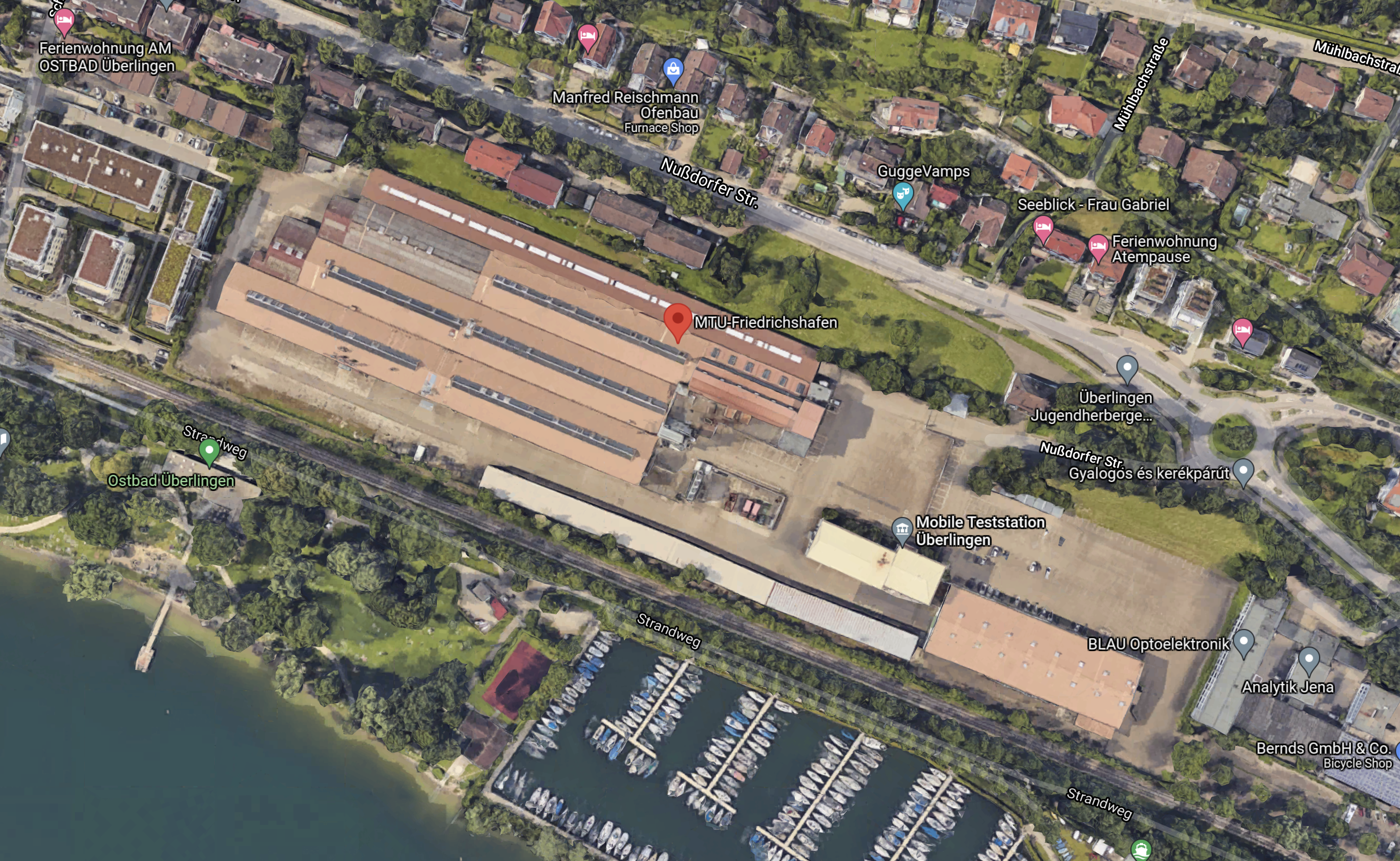
Note.
- MTU Friedrichshafen factory is indicated by a red arrow.
- The Lake Constance Belt Railway running between the factory and marina.
It’s all very handy for the factory.
Railway Operations
Services on the railway appear to be run using DB Class 611 trains.
- They are two-car tilting, diesel multiple units.
- They have a top speed of 160 kph or 99 mph.
- They have two MTU engines of 540 kW.
- Forty are still in service.
These trains were replaced with similar but more modern DB Class 612 trains.
- These have similar performance, but are fitted with Cummins engines.
- There have also been problems with the tilting mechanism with these trains
Forty of the earlier trains are are still in service on the Lake Constance Belt Railway and other routes.
It would appear that electrification could be the solution for this single track railway, which is only forty-six miles long.
But it appears some of the locals have objected.
Could it be that MTU Friedrichshafen felt they could provide a better solution?
Simulation Of The Route
The press release describes how the route was simulated.
The operation of the current VT 612 railcar was simulated – it had been retrofitted in virtual reality with MTU Hybrid PowerPacks. That such a retrofit is also possible in a real-world environment has also been demonstrated by a feasibility study carried out by the Deutsche Bahn subsidiary, DB Systemtechnik. This is particularly relevant because these are vehicles that travel fast on curving track. Only these trains, which are fitted with “tilt technology“, are able to negotiate the numerous curves encountered on the Lake Constance Belt Railway track at high speed and thus provide a fast service between Basel and Ulm.
It looks to be an interesting solution to maintain a fast service on a difficult route, that has a twisty bit in the middle.
The press release also describes the MTU Hybrid PowerPack to provide an efficient solution.
The MTU Hybrid PowerPack is a high-tech product from Friedrichshafen and the result of collaboration between the local companies Rolls-Royce Power Systems and ZF Friedrichshafen. It combines the following components to produce an intelligent drive system: a modern MTU diesel engine with exhaust gas aftertreatment, which meets current emission regulations in addition to the future EU Stage V that will come into force as of 2021, an innovative ZF automatic transmission, an electric motor that recovers energy in braking mode and also serves as a drive unit, and an advanced battery system to store the recovered brake energy. The Hybrid PowerPack has demonstrated its reliability, for example, in real-life test runs with a length of around 15,000 kilometres.
Certainly, MTU have done their research and where better, than with a local problem?
Rolls-Royce Provide mtu Trigeneration Plant For Largest Data Centre In Romania
The title of this post, is the same as that of this press release on the Rolls Royce web site.
- mtu Series 4000 gas generator sets to provide electricity, heat and cooling for ClusterPower’s Technology Campus in Craiova
The completed campus will feature five data centers and provide a significant boost to the region’s global IT infrastructure competitiveness - Rolls-Royce, along with its distributor partner Knopf & Wallisch (K&W), has supplied three mtu customized and containerized combined cooling, heat and power plant (CCHP) trigeneration units to Romanian cloud service provider ClusterPower. They will be used for the efficient and sustainable energy supply at its new technology campus near the southern Romanian city of Craiova, where the IT company will open the largest data center in Romania.
The press release also says that trigeneration plants are hydrogen-ready.
The engines are gas engines, that can be converted to running on a mix of 25 % hydrogen and natural gas or eventually to pure hydrogen.
Conclusion
This would appear to be a neat way to sell the end customer an engine that can handle natural gas now and convert it over time to hydrogen.
Will We See Class 43 Power Cars Converted To Hydrogen?
To say that the Class 43 power cars of the InterCity 125 trains are iconic is rather an understatement.


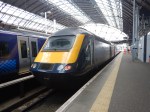
Note.
They were built by British Rail in the late 1970s and early 1980s.
- They have an operating speed of 125 mph.
- They are now powered by a modern MTU 16V4000 R41R diesel engine after being re-engined earlier this century.
- They have an electric transmission.
According to Wikipedia, there are over a hundred and twenty in service.
At the back of the power car there is a lot of space, as this picture shows.
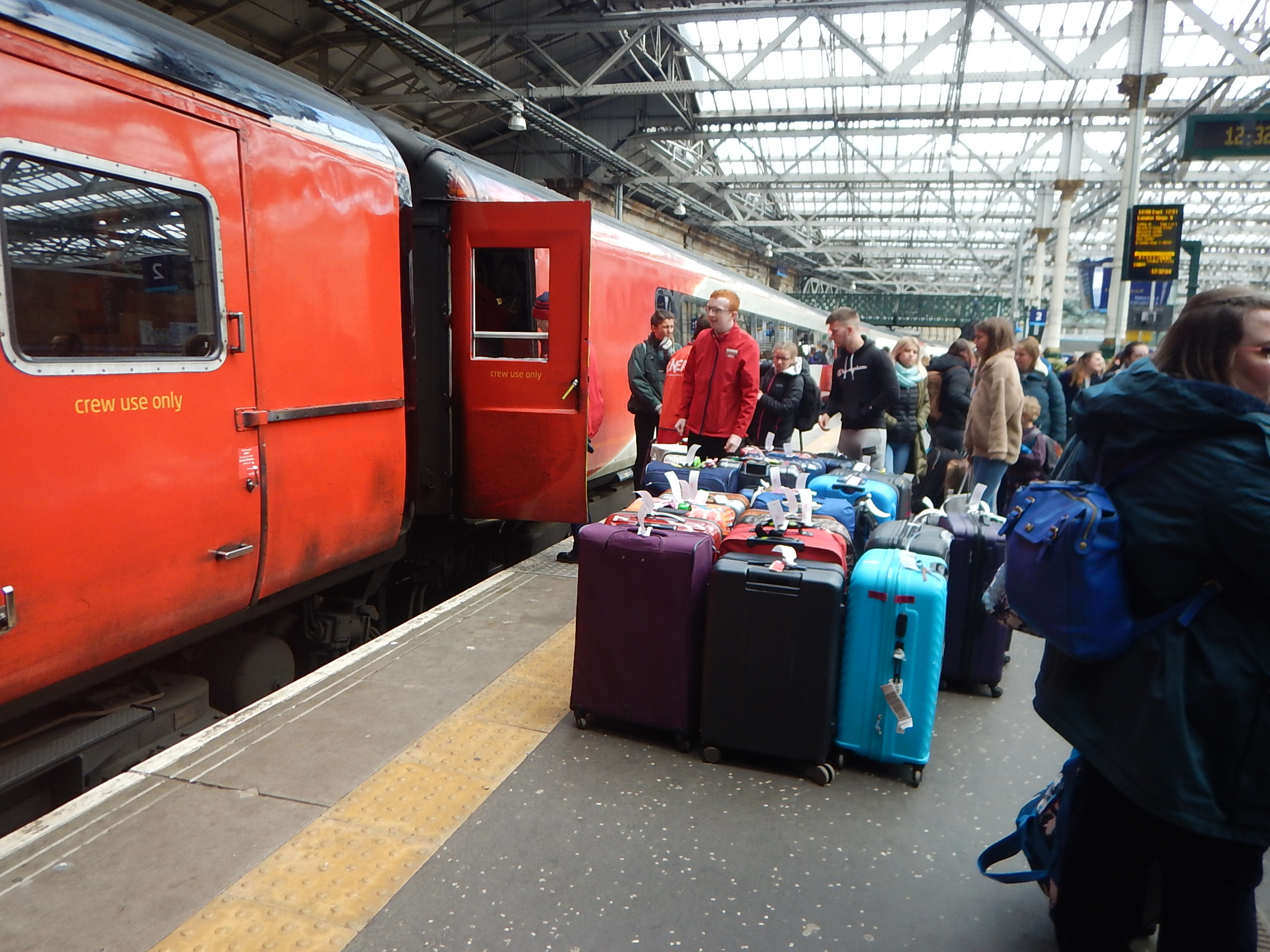
This press release from Rolls-Royce is entitled Rolls-Royce Launches mtu Hydrogen Solutions For Power Generation.
These are the introductory bullet points to the press release.
- From 2022 mtu Series 500 and Series 4000 ready for 25% hydrogen
- From 2023 mtu engines and conversion kits available for 100% hydrogen
And what engine is there in a Class 43 power car? – It’s an MTU 16V4000 R41R diesel engine.
Is it an mtu Series 4000 engine?
If it is, there is space in the back of the power car for the hydrogen tank and the diesel engine can be converted to run on hydrogen, Rolls-Royce have everything they need break the speed record for hydrogen-powered trains. After all power cars; 43102 and 43159 hold the diesel-train speed record at 148 mph.
It would be the ultimate Roller.
 The Anonymous Widower