Has London Done Its Best To Organise Friday’s England and Scotland Match?
Scotland are coming to play England on Friday, with the match starting at 20:00.
These are my thoughts.
Travelling To Wembley On The Day
This article on The Times is entitled England v Scotland: Ticketless Fans Urged To Stay Away From Wembley.
These are the first two paragraphs.
Thousands of ticketless Scotland fans are set to descend on London for the England game on Friday amid growing concern about the lack of a Covid-secure fan zone.
Nearly 3,000 Scottish fans have tickets for the clash at Wembley but the Scottish Football Supporters Association expects that twice as many will travel south. Some estimate that the number could be as high as 20,000.
The article also says the following about trains on Friday, that would get you to London in time for the match.
- Fifteen trains from Glasgow are full.
- Most of the seventeen trains from Edinburgh are full.
Using the capacity of the trains, I wouldn’t be surprised to see 20,000 Scottish fans coming by train.
But there are other ways to come.
- Scotland now has a good rail services to places like Doncaster, Leeds, Liverpool, Manchester, Peterborough and York. All of these places have lots of hotels and a good train service to London.
- Some will fly.
- How many will come by coach?
- Personally, I’ve driven between London and Edinburgh and Glasgow several times and with two nominated drivers, who didn’t drink, it’s an easy drive and can be done in under six hours.
- London also has a large expatriate Scottish population. How many will go or want to go to the match?
- Plenty of hotel rooms in London are available for Thursday and Friday night at a reasonable price.
Wembley stadium is also well-served by public transport and you could park at somewhere like Milton Keynes and get the train to the stadium.
Getting Home
I suspect many will need a hotel room, but it does look that there are plenty available.
Those who’ve driven down, would just pick up their car and drive home through the night.
But will many be intending to sleep rough somewhere?
It’s Been A Long Time!
It’s been a long time since Scotland reached a major finals and it was 1996, when they last played England in the finals of a major tournament.
Surely, this will increase the number of fans, who will turn-up in London without tickets!
Scots Always Travel If They Can!
I am old enough to have watched Celtic with the 1967 European Cup in Lisbon in on a black-and-white television.
They certainly travelled then and amused everybody with their drunken antics after the match.
The last time England played Scotland at Wembley was a friendly in 2013.
This report on the BBC, which is entitled Trafalgar Square Scots Party Leaves 10,000 Beer Cans, describes the antics in Trafalgar Square.
This is a paragraph from the BBC report.
Westminster City Council’s Leith Penny said: “Our crews worked hard round the clock to get London back to normal for our residents and businesses this morning.”
That was mild compared to what a spokesman for Westminster City Council said on the BBC.
I remember he compared the drunken Scots to the well-behaved Dortmund and Bayern Munich fans, who had taken over the square in May. I wrote about that in Trafalgar Square In Yellow.
Everybody is Demob-Happy!
After nearly two years of the pandemic, many are demob-happy and football supporters on both sides will be looking to get to or near the match.
How Many Scots Will Turn Up?
I quoted earlier that 20,000 could turn up!
As my mother would say! “And the rest!”
There Will Be No Fan Zone
This press release from the Mayor of London is entitled EURO 2020 Fan Zone To Host Key Workers For England’s Group Games.
- All England games, semi-finals and final to be screened
- Exclusive key worker access for first two, socially-distanced, Fan Zone matches as mark of gratitude from Mayor for their work during pandemic
- Plan for up to 9,500 fans for Czech Republic group clash if Covid restrictions lifted on June 21
- Renowned artist JR will transform the city with his epic black and white portraits to celebrate competition.
- The Fan Zone will operate a zero tolerance, ‘one strike and you’re out’ policy towards racism and other forms of discrimination
I predict there will be tens of thousands of angry Scotsmen.
So What Has Sadiq Khan Got To Say?
The Times has these two paragraphs.
The mayor’s office urged Scottish fans without tickets to stay at home. A spokesman for Khan said: “It is not possible to hold a fan zone for Scottish fans in London due to the Covid restrictions . . . fans should only travel to the capital if they have a ticket or a safe place to watch the match.”
A source close to the mayor added: “We would have liked to put up a zone for Scottish fans and increased capacity at Trafalgar Square but the licence from Westminster [council] required social distancing so we could not do more. Central government would also have needed to make an exemption to allow it to happen but they have not.”
Typically, Khan seems to be blaming everybody except himself.
Did These Strawberries Have Road- Or Rail-Miles?
These strawberries were grown my M Porter in Perthshire and I bought them in the M & S Simply Food store in Waterloo station.


So did they travel between Perthshire and London, by truck or train?
I think the strawberries came from East Seaton Farm, owned by Lochart and Debbie Porter.

If the strawberries were to be grown any further East, they’d be grown in the middle of the North Sea.
But did they come South, by road or rail?
I suspect it was the former, but there is change in the air! Or do I mean on the rails?
In My First Ride In A Class 769 Train, I talked about Rail Operations Group and their proposed Orion parcels service, that will use Class 769 trains.
This service would surely be ideal to bring strawberries and Arbroath smokies to the South.
A Class 319 Train, But Not As We Know It!
This article on Rail Advent is entitled COP26 To Showcase Britain’s Sustainable Trains Of The Future Thanks To Network Rail And Porterbrook Partnership.
The article talks about and shows pictures of Porterbrook’s HydroFLEX or Class 799 train, which has been developed by the University of Birmingham, fitted out for COP26.
I have downloaded this picture of the interior from Network Rail’s media centre.

Who’d have thought a Class 319 train could look so grand?
But then some Class 319 trains used by commuters don’t look their age of over thirty years.


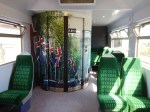


These pictures were taken on the Abbey Line in 2018.
There’s also this BBC Profile and video of the technology behind the HydroFLEX train.
Conclusion
It looks like Network Rail and Porterbrook are doing their best to showcase the best that Britain and Scotland can offer.
I am reminded of a tale, that I heard from a former GEC manager.
He was involved in selling one of GEC’s Air Traffic Control radars to a Middle Eastern country.
The only working installation of the radar was at Prestwick in Scotland, so he arranged that the dignitaries and the sales team would be flown to Prestwick in GEC’s HS 125 business jet.
As they disembarked at Prestwick and walked to the terminal, the pilot called the GEC Manager over.
The pilot told him “The Scottish Highlands at this time of the year, are one of the most beautiful places in the world! Would you and your guests like a low-level tour on the way back? I can arrange it, if you say so!”
Despite knowing GEC’s draconian attitude to cost control he said yes.
The sale was clinched!
Are Network Rail, Porterbrook, the UK and Scottish Governments, setting up the same Scottish treatment to all the delegates to COP26?
Albannach Island: Multi-Million Pound Green Energy Plans Would Create 300 Construction Jobs
The title of this post, is the same as that of this article on the Aberdeen Press and Journal.
This is the introductory paragraphs.
A multi-million pound green energy power venture – called Albannach Island – would give a much-needed jobs boost to Caithness.
Highview Power is behind the plans to build a liquid air energy storage plant in a disused part of a quarry in Spittal, adjoining the most northerly stretch of the A9.
The plant appears to be a 50MW/250 MWh CRYOBattery, that is probably similar in size to the one currently being built by Highview Power at Carrington, near Manchester.
This Google map of the North-East corner of Scotland, shows the location.
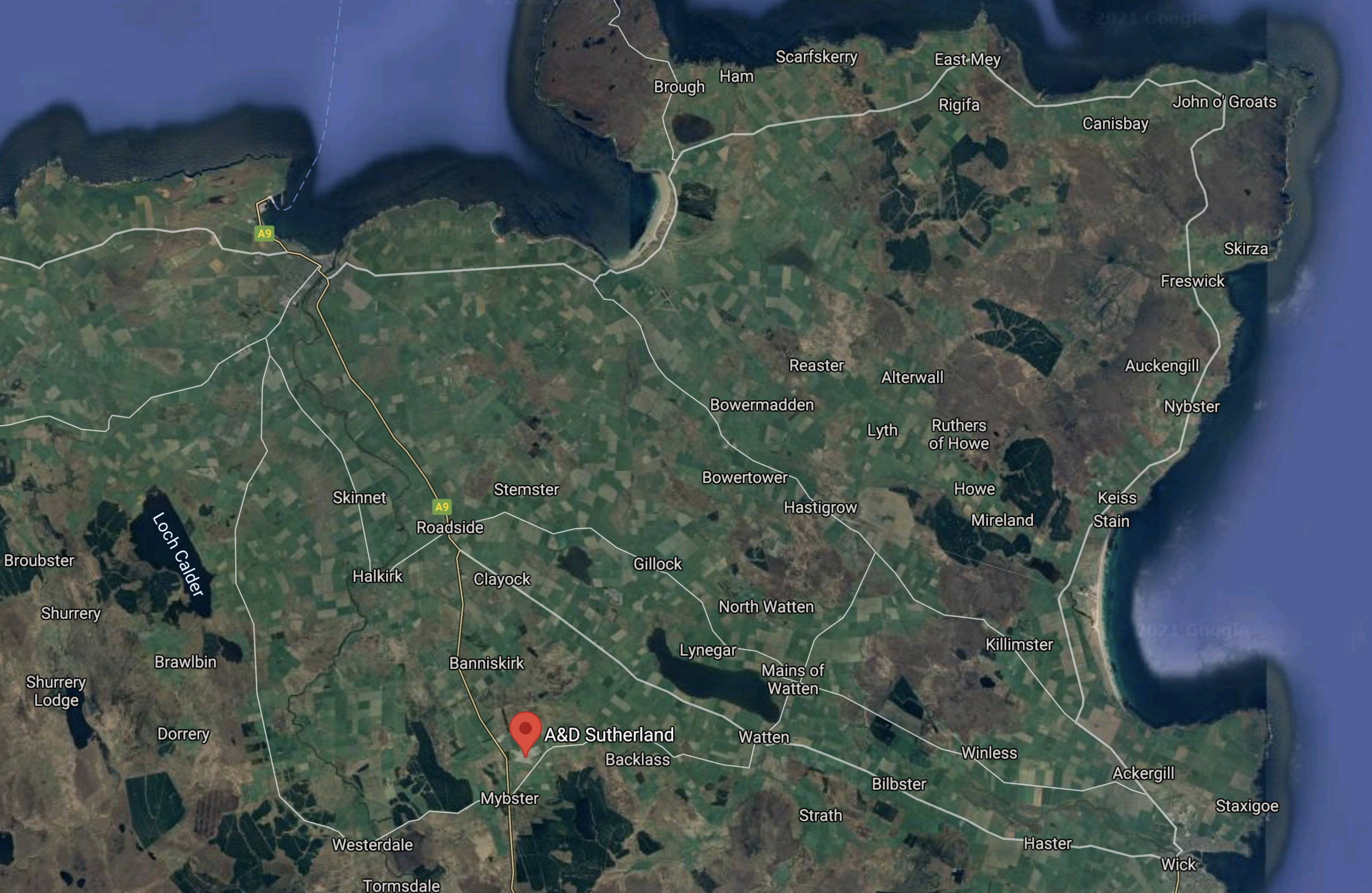
Note.
- John O’Groats is in the North-East corner of the map.
- The red arrow shows the location of the A & D Sutherland quarry, where the Highview Power’s CRYOBattery will be located.
This second Google map shows the location in more detail.
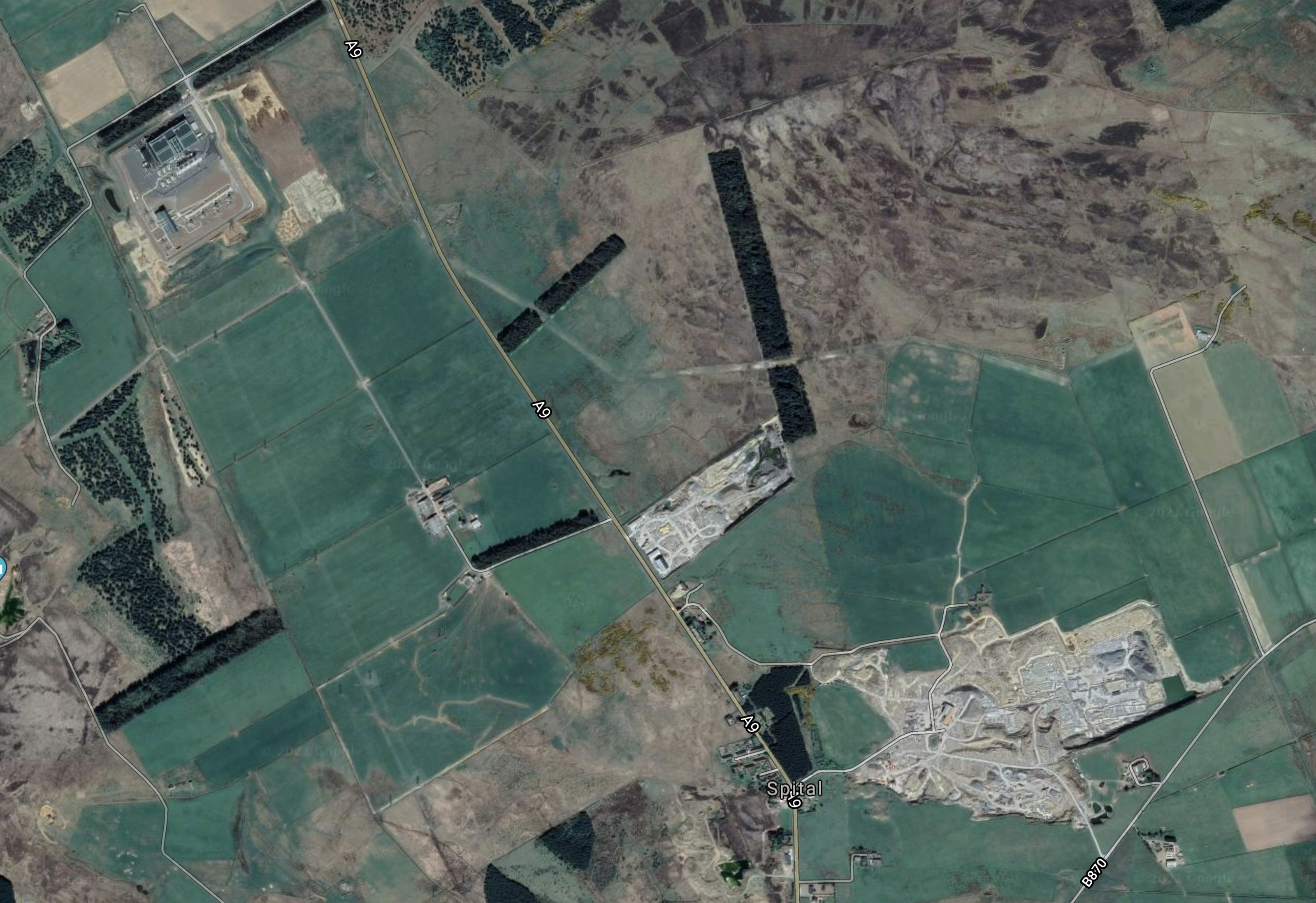
Note.
- The A & D Sutherland quarry is in the South-East corner of the map.
- The CRYOBattery will use five acres at the North of the quarry site.
- In the North-West corner of the map is the Spittal sub-station.
The Spital sub-station is described like this on the Scottish and Southern Electricity Networks web site.
Spittal is a new electricity convertor station and is part of the £1.1bn Caithness-Moray project which represents the largest investment in the north of Scotland’s electricity network since the hydro development era of the 1950s and is the largest capital investment project undertaken by the SSE Group to date. It is also the largest Living Wage contract ever awarded in the UK, demonstrating SSEN’s strong commitment to ensure all employees working on its sites get a fair day’s pay for a fair day’s work.
It looks like the CRYOBattery will be the cherry on top of the very billion pound cake of the Caithness-Moray Link.
Conclusion
We’ll be seeing more battery installations like this to stabilise power.
Nothing is said in the article, about who is paying for the battery. The only clue is it talks about Highview as a London-based conglomerate.
I wonder, if the company has formed a partnership with one of the energy trusts or a battery site developer.
ScottishPower’s Green Hydrogen Project Looks To Build UK’s Largest Electrolyser
The title of this post, is the same as that of this article on Current News.
This is the first paragraph.
ScottishPower has submitted a planning application for the UK’s largest electrolyser as part of the Green Hydrogen for Scotland project.
Other points from the article include, these about the electrolyser.
- It will be built close to the Whitelee wind farm.
- It will be 20 MW.
- It will produce eight tonnes of green hydrogen per day.
- The electrolyser will be built by ITM Power in Rotherham.
- It is hoped that green hydrogen will be produced by 2030.
Other points include.
- The windfarm will be backed up by 40MW of solar panels and a battery capable of supplying 50 MW.
- The capacity and type of the battery is not stated.
The article finishes with a must-read section, about how hydrogen will help the UK meet its decarbonisation targets.
Aberdeen-Based Energy Storage Firm Aims To Raise £300 Million
The title of this post, is the same as that of this article on insider.
I like the Carbon Neutral Energy’s concept.
- It will provide small energy storage systems with an output of between 1 MW an 5 MW
- The energy storage systems appear to be mobile.
- It will create 200 Scottish jobs.
The company has signed an agreement with Muirden Energy, who are a wind energy developer. This is Muirden’s mission statement, from their web site.
Muirden Energy is a successful renewable energy developer specialising in onshore wind energy. We deliver sensitively designed wind projects across Scotland and forge strong working relationships with local communities. We are committed to contributing to Scotland’s renewable energy needs and supporting the economic development of surrounding communities.
They have installed 60 MW of generating capacity across 30 sites in seven years.
Conclusion
This looks like a company and a concept to follow.
How many villages, factories and stations, could be powered partly by one or more wind turbines and a battery?
Scotland Factory To Produce Valneva Covid Vaccine
The title of this post is the same as that of this article on The Times.
This is the first two paragraphs.
A French-Austrian pharmaceutical company is to start manufacturing millions of doses of what it hopes could be Britain’s fourth vaccine at a plant in Scotland.
Valneva hopes that the serum could be in use in Britain by September. The company has agreed to provide Britain with 60 million doses of its vaccine, compared with 100 million doses of the shot from Oxford University and Astrazeneca.
The vaccine is only in first and second phase trials at present, but the number of does should mean that with other vaccines, we could get everybody vaccinated by the end of the year.
Faraday Battery Challenge Funded Project “Li4UK” Announces The First Domestic Production Of Lithium Carbonate From UK Sources
The title of this post, is the same as that of this press release from Li4UK.
This is the introductory paragraph.
Li4UK (Securing a Domestic Lithium Supply Chain for the UK), the Faraday Battery Challenge-funded project under the patronage of UKRI (UK Research and Innovation), is pleased to announce that the project Consortium, comprising Wardell Armstrong International Limited (WAI), The Natural History Museum (NHM) and Cornish Lithium Ltd (CLL), has successfully produced lithium carbonate from two UK sources – one from Cornish Lithium’s Trelavour project site in Cornwall and another from Scotland. High purity lithium carbonate is a raw material for lithium-ion battery cells, such as those used in electric vehicles.
When I first heard of this project, I wrote How To Go Mining In A Museum and felt that this project deserved to succeed, given the diligence of the founder.
You never know what you will find in the dusty vaults of a museum.
Arcola Energy, Consortium Of Rail Industry Leaders To Deliver First Scottish Hydrogen-Powered Train
The title of this post, is the same as that of this article on seanews.
The article describes the project to create a demonstrator hydrogen train for Scotland out of an old Class 314 train.


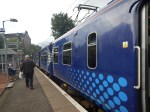

Note.
- Work will be needed on the interior.
- Is a three-car train long enough?
- Will the train still be able to use its pantograph?
The trains may be over forty years old, but they can probably made to look good, as they are closely related to these Class 508 trains, that are in superb condition on Merseyrail.





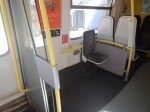

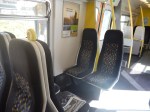
These trains were built in 1979 and are one of the oldest trains on the UK’s mainland network.
Wikipedia says this about the conversion to hydrogen.
In February 2020, ScotRail announced plans to convert one of the two remaining units, 314209, to run on hydrogen. This is a feasibility study running alongside ScotRail’s commitment to run no diesel trains by 2035.
The train will be displayed at the COP26 Climate Change Summit in Glasgow in 2021.
 The Anonymous Widower