From Doncaster To Cleethorpes
These pictures were taken on my journey between Doncaster and Cleethorpes.






















































































The area is best summed up as flat and decorated with these features.
- A few hedges.
- Some trees and some woodland.
- dozens of wind turbines.
- Lots of pylons carrying electricity.
- Scunthorpe steelworks
- A few stations and railway sidings.
- A couple of waterways.
- Estates of new housing as you approach Grimsby.
When I returned there was more of the same on the other side of the tracks.

















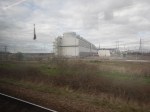
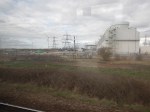
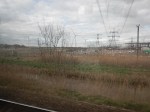
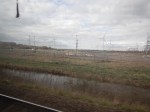













With the addition of all the power stations at Keadby and a couple of wind farms.
These are my thoughts on how this landscape will look at some time after 2030.
More Onshore Wind Farms
There will be a lot more wind farms lining the Doncaster and Cleethorpes railway.
The government has said it might pay for turbines and transmission lines to spoil views.
I feel they will have to, to meet their net-zero targets.
There Will Be Massive Hydrogen Storage On The Other Side Of The Humber
SSE are developing Albrough and Centrica are developing Rough into two of the largest hydrogen stores in the world.
The wind farms of the North Sea will provide them with hydrogen.
More Housing
If the government has its wish there will be a lot more new housing.
And as the newer houses show in my pictures, many of them will have solar panels.
More Power Stations At Keadby
Consider.
- The main purpose of the power stations at Keadby will be to provide backup to the wind and solar power in the area and far out to sea.
- The power stations will use hydrogen stored at Albrough and Rough.
- Some of the gas-fired power stations at Keadby will be fitted with carbon capture.
- One hydrogen-fired power station is already being planned.
The power stations at Keadby will probably be capable of supplying several GW of zero-carbon energy.
There Will Be Energy-Hungry Industries Along The South Bank Of The Humber
Just as in the Victorian era, coal attracted steel-making, chemicals and refining to the area, a South Humberside with large amounts of energy will attract heavy industry again.
Already, Siemens have built a train factory at Goole.
There Will Also Be Large Greenhouses In Lincolnshire
Greenhouses are a wonderful green way of absorbing waste heat and carbon dioxide.
Where Have I Seen This Blend Of Offshore Energy, Hydrogen, Heavy Industry And Agriculture Before?
After I visited Eemshaven in the Northern Netherlands, I wrote The Dutch Plan For Hydrogen.
We are not doing something similar, but something much bigger, based on the hydrogen stores at Aldbrough and Brough, the massive offshore wind farms and Lincolnshire’s traditional heavy industry and agriculture.
The Railway Between Doncaster and Cleethorpes Will Be Developed
Just as the Dutch have developed the railways between Groningen and Eemshaven.
Is There A Virtuous Circle In The Installation Of Wind Farms?
Because we are developing so much offshore wind turbine capacity, this will result in two things.
- A big demand for steel for the foundations and floats for wind turbines.
- A large amount of electricity at a good price.
In my view the UK would be the ideal country to develop an integrated steel and wind turbine foundation/float capability.
There will also be a strong demand for deep water ports and sea lochs to assemble the floating turbines.
Our geography helps in this one. We also have Milford Haven, which is just around the corner from Port Talbot. Scunthorpe is on the River Trent, so could we assemble floats and foundations and take them by barge for assembly or installation.
We probably need an integrated capability in Scotland.
Conclusion
It looks to me, that there is a virtuous circle.
- The more offshore wind turbine capacity we install, the more affordable electricity we will have.
- This will in turn allow us to make more steel.
- If this steel was produced in an integrated factory producing foundations and floats for wind farms, this would complete the circle.
- It would also be inefficient to make the foundations thousands of miles away and tow them to UK waters.
Any improvements in costs and methods, would make the system more efficient and we would have more wind turbines installed.
It looks to be a good idea.
New Electricity ‘Superhighways’ Needed To Cope With Surge In Wind Power
The title of this post, is the same as that of this article on the Telegraph.
This is the first two paragraphs.
Energy companies are pushing for the rapid approval of new electricity “superhighways” between Scotland and England amid fears that a lack of capacity will set back the country’s wind power revolution.
Businesses including SSE and Scottish Power are calling on the industry regulator Ofgem to approve a series of major new north-south power cables in a bid to ease congestion on the existing electricity network.
These points are mentioned in the article.
- Current capacity is 6 GW, which even now is not enough.
- Another 17 GW of capacity will be needed by 2033.
- Wind farms in Scotland have been switched off and replaced by gas-fired power stations because of a lack of grid capacity.
- Another 25 GW of wind farms could be built after leases were awarded last month.
Two North-South interconnectors are being planned.
Peterhead And Drax
This is being proposed by SSE and National Grid.
- It will be an undersea cable.
- It will be two cables, each with a capacity of 2 GW.
- Peterhead and Drax power station are four hundred miles apart by road and 279 miles as the seagull flies, as a lot of the route would be over the sea. So an undersea connection would appear to be sensible.
- Peterhead is on the coast, so connecting an undersea interconnector shouldn’t be too challenging or disruptive to the locals.
- Drax power station is a 4 GW power station and the largest in the UK, so it must have good grid connections.
This Google Map shows the location of Drax power station in relation to Hull, Scunthorpe and the rivers in the area.
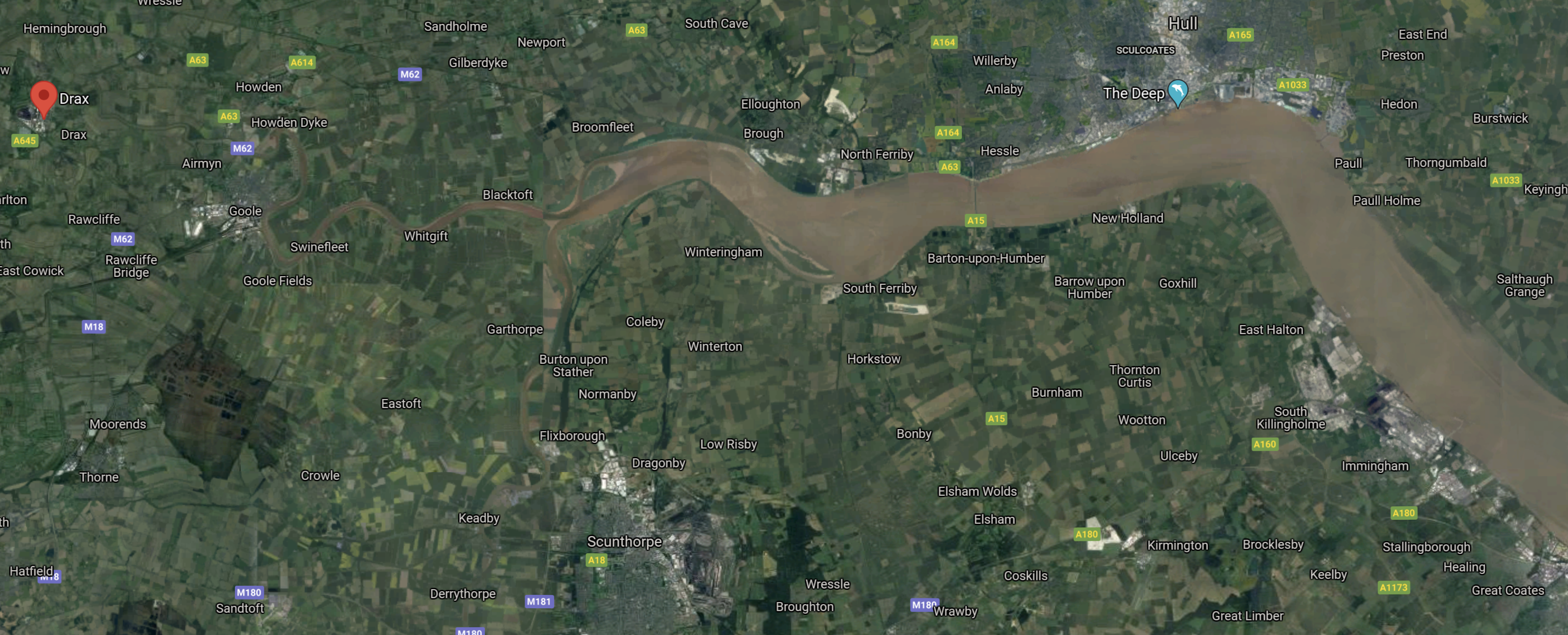
Note.
- Drax is marked by the red arrow in the West of the map.
- The large body of water in the East is the Humber Estuary.
- Hull is on the North Bank of the Humber.
- Scunthorpe, which is famous for its steel industry is South of the Humber in the middle of the map.
- To the West of Scunthorpe the Humber splits into the Trent and the Ouse.
- The Ouse leads all the way to Drax power station.
I suspect an undersea cable could go up the Humber and Ouse to Drax power station.
Is it a coincidence that both Drax power station and the proposed link to Peterhead are both around 4 GW?
Consider.
- Drax is a biomass power station, so it is not a zero carbon power station.
- Drax produces around six percent of the UK’s electricity.
- Most of the biomass comes by ship from North America.
- Protest groups regularly have protests at Drax because of its carbon emissions.
- Drax Group are experimenting with carbon capture.
- Drax is a big site and a large energy storage system could be built there.
- Wind is often criticised by opponents, saying wind is useless when the wind doesn’t blow.
- The Scots would be unlikely to send power to England, if they were short.
This is also said about Drax in Wikipedia.
Despite this intent for baseload operation, it was designed with a reasonable ability for load-following, being able to ramp up or down by 5% of full power per minute within the range of 50–100% of full power.
I take this it means it can be used to top up electricity generation to meet demand. Add in energy storage and it could be a superb load-follower.
So could the similar size of the interconnector and Drax power station be deliberate to guarantee England a 4 GW feed at all states of the wind?
I don’t think it is a coincidence.
Torness And Hawthorn Pit And Torness and South Humberside
These two cables are being proposed by Scottish Power.
- Each will be two GW.
- Torness is the site of the 1.36 GW Torness nuclear power station, which is likely to be decommissioned before 2030.
- Torness will have good grid connections and it is close to the sea.
- Hawthorn Pit is a large closed coal mine to the North of Newcastle, with a large substation close to the site. I suspect it will be an ideal place to feed power into the grid for Newcastle and it is close to the sea.
- Just South of Hawthorn Pit are the 1.32 GW Hartlepool nuclear power station, which will be decommissioned in 2024 and the landfall of the cables to the massive Dogger Bank wind farm.
- As I showed earlier with Drax, the Humber would be an ideal estuary to bring underwater power cables into the surrounding area. So perhaps the cable will go to Scunthorpe for the steelworks.
- As at Drax, there is backup in South Humberside, but here it is from the two Keadby gas-fired power stations.
The article in the Telegraph only gives the briefest of details of Scottish Power’s plans, but I suspect, that given the locations of the ends of the interconnectors, I suspect the cables will be underwater.
Conclusion
It strikes me that all three interconnectors have been well thought thought and they serve a variety of objectives.
- Bring Scottish wind power, South to England.
- Connect wind farms to the two nuclear power station sites at Hartlepool and Torness, that will close at the end of the decade.
- Allow the big 4 GW biomass-fired station at Drax to back up wind farms and step in when needed.
- Cut carbon emissions at Drax.
- Use underwater cables as much as possible to transfer the power, to avoid the disruption of digging in underground cables.
It looks to be a good plan.
H2 Green Steel Plans 800 MW Hydrogen Plant In Sweden
The title of this post, is the same as that of this article on montel.
The title says it all.
In Can The UK Have A Capacity To Create Five GW Of Green Hydrogen?, I said the following.
Ryze Hydrogen are building the Herne Bay electrolyser.
- It will consume 23 MW of solar and wind power.
- It will produce ten tonnes of hydrogen per day.
The electrolyser will consume 552 MWh to produce ten tonnes of hydrogen, so creating one tonne of hydrogen needs 55.2 MWh of electricity.
This would mean that H2 Green Steel’s electrolyser could be producing around one hundred and forty thousand tonnes of hydrogen per year or 380 tonnes per day.
What About Scunthorpe?
I very much believe that Scunthorpe in Lincolnshire, would be the ideal place for hydrogen steelmaking in the UK as I outlined in Green Hydrogen To Power First Zero Carbon Steel Plant.
So could 800 MW of electricity be available to produce the hydrogen in the area.
Currently, the world’s largest offshore wind farm is Hornsea One with a capacity of 1218 MW, which feeds into the National Grid at Killingholme.
This Google Map shows the distance between Scunthorpe and Killingholme.
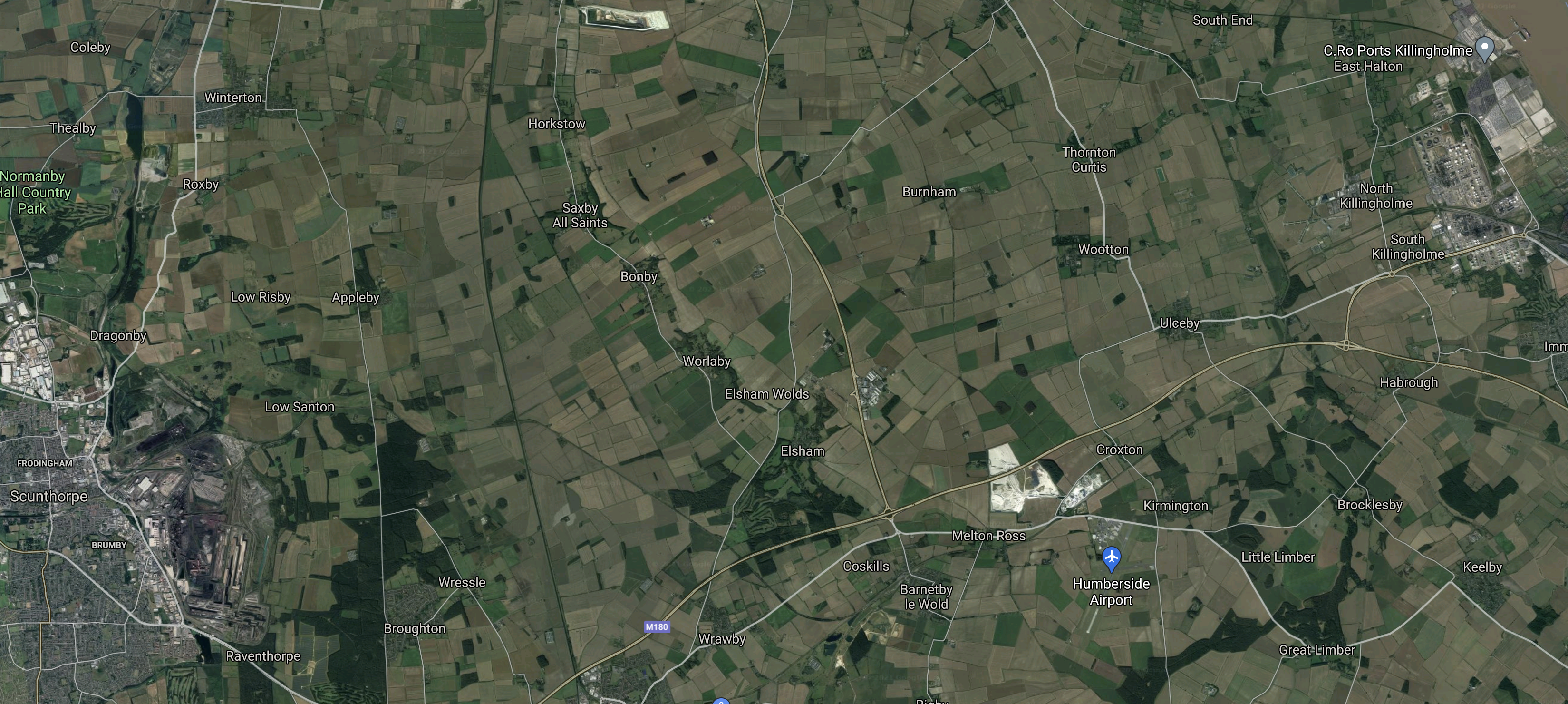
Note.
- Scunthorpe is in the South-West corner of the map.
- Killingholme is in the North-East corner of the map.
The distance is about twenty miles.
When fully developed, the Hornsea Wind Farm is planned to have a capacity of 6 GW or 6000 MW, so there should be enough renewable energy.
Could The Hydrogen Be Created Offshore?
In ITM Power and Ørsted: Wind Turbine Electrolyser Integration, I wrote about combining wind turbines and electrolysers to create an offshore wind turbine, that generates hydrogen, rather than electricity.
This approach may be ideal for the later phases of the Hornsea Wind Farm.
- Redundant gas pipes can be used to bring the hydrogen ashore.
- Worked-out offshore gas fields can be used to store hydrogen.
- Worked-out gas fields in the area, are already being used to store natural gas from Norway.
- The hydrogen can be fed directly into the HumberZero hydrogen network.
But the main reason, is that some serious commentators feel it is more affordable approach in terms of capital and maintenance costs.
It is also easy to convert hydrogen back to zero-carbon electricity, if you have a handy gas-fired power station. There could be as many of three of these at Keadby.
Conclusion
It’s all coming together on Humberside.
Anything the Swedes can do, we can do better!
Green Hydrogen To Power First Zero Carbon Steel Plant
The title of this post, is the same as that of this article on renews.biz.
This is the two introductory paragraphs.
A new industrial initiative, backed by EIT InnoEnergy, will build the world’s first large-scale steel production plant powered by green hydrogen, in north Sweden.
The H2 Green Steel industrial initiative, which will mobilise €2.5bn of investment, aims to deliver a project that will create a new green steel producer from inception.
These further points are made.
- There will be downstream steel products manufacture.
- The initiative will create 10,000 direct and indirect jobs.
- Production could start in 2024.
- Up to five million tonnes of steel could be produced by 2030.
The plant will be built in the Boden-Lulea area of Northern Sweden.
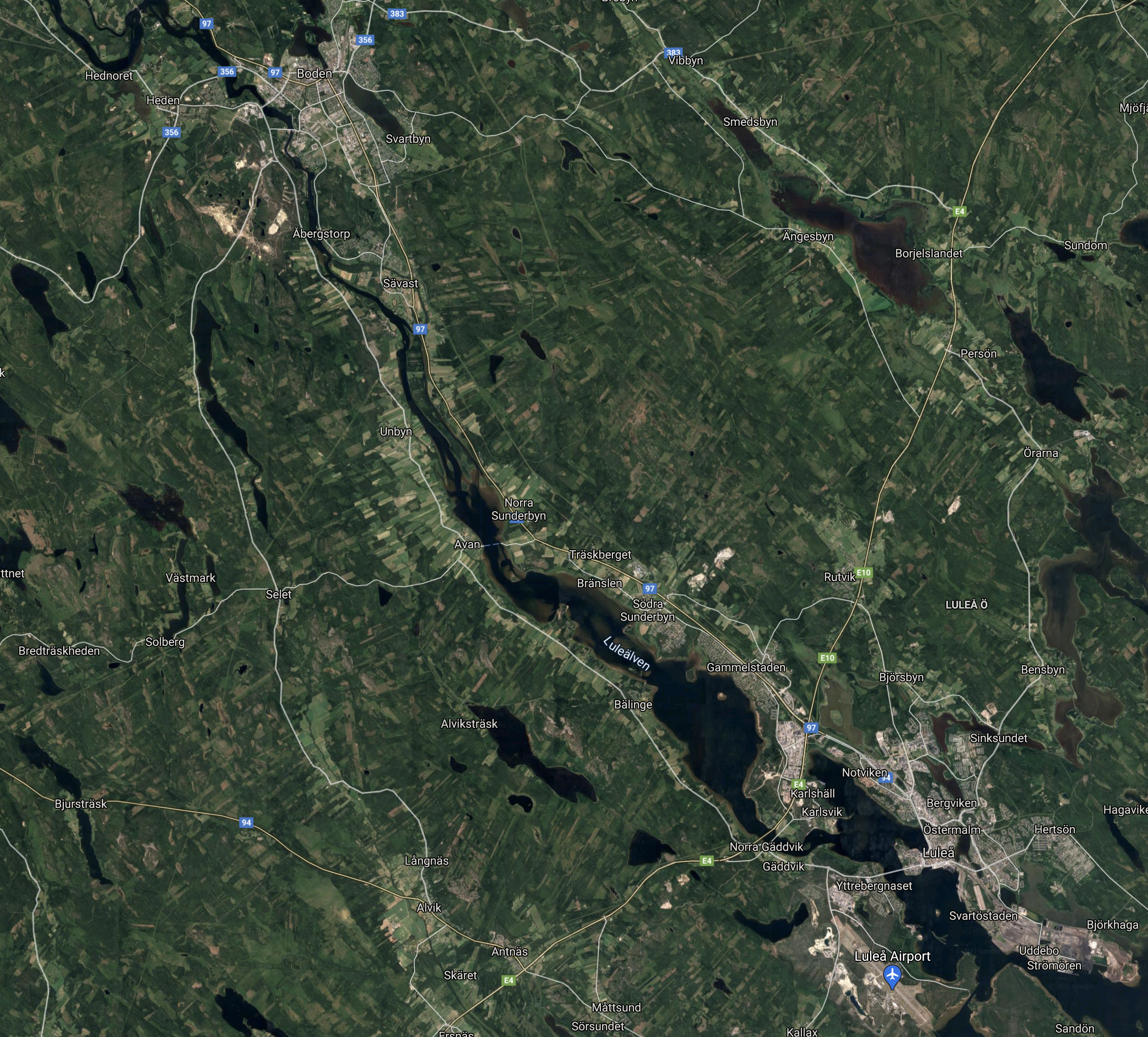
Note.
H2 Green Steel has a web site, which explains more.
What About Scunthorpe?
Surely, the obvious location for green steel production plant in the UK would be Scunthorpe.
- The HumberZero network can bring in hydrogen and take away any carbon dioxide.
- The steelworks makes world-class products like railway rails.
- It is a massive site.
- The site has good rail access.
But there don’t seem to be any plans for hydrogen steelmaking at Scunthorpe.
Conclusion
I hope we’ve not missed the boat for hydrogen steelmaking.
- We’ve certainly got the sites, the renewable energy and the hydrogen technology.
- On the other hand, I can remember sensible arguments for lots of much smaller steel plants from fifty years ago, as an alternative to nationalisation of the steel industry by the Wilson Government in 1967.
- I can also remember proposals for nuclear steelmaking.
I just wonder, if a design of hydrogen steelmaking plant could be developed, perhaps even using a small modular nuclear reactor to generate the hydrogen.
If we are going to have a steel industry in the future, we must do something radical.
Scunthorpe Steelworks
On my way back from Cleethorpes, I passed Scunthorpe Steelworks.


It did seem rather quiet, although I did pass a train-load of new rails on their way to somewhere.
The Future Of Steel-Making
Steel-Making is on its uppers in the UK and it has a bad carbon footprint.
However, various processes are in development that could make the industry fit for the Twenty-First Century.
HIsarna Steelmaking
In Whitehaven Deep Coal Mine Plan Moves Step Closer, I said this.
In Wikipedia, there is an entry for the HIsarna ironmaking process.
This process is being developed by the Ultra-Low Carbon Dioxide Steelmaking (ULCOS) consortium, which includes Tata Steel and the Rio Tinto Group. Reduction in carbon-dioxide produced by the process compared to traditional steel-making are claimed to be as high as fifty percent.
This figure does not include carbon-capture to reduce the carbon-dioxide still further.
However, looking at descriptions of the process, I feel that applying carbon-capture to the HIsarna steelmaking process might be a lot easier, than with traditional steelmaking.
As Scunthorpe is close to Theddlethorpe Gas Terminal, the captured carbon-dioxide could probably be stored in wells connected to the terminal.
Hydrogen Steelmaking
North-East Lincolnshire is becoming the new Aberdeen, but instead of being based solely on oil and gas, there is a large proportion of wind energy being reaped.
In the future, I believe that a lot of this wind energy will be turned into hydrogen gas both onshore and increasing off-shore scores of miles out in the North Sea. There is talk of upwards of 70 GW of wind turbines being installed and much of it will be turned into hydrogen in North-East Lincolnshire.
In Funding Award to Supply An 8MW Electrolyser, I wrote about hydrogen steelmaking and the HYBRIT process in particular.
Will some of this massive amount of hydrogen be piped to Scunthorpe to make steel?
Conclusion
The future of steelmaking in Scunthorpe, doesn’t have to be all doom and gloom.
 The Anonymous Widower