Could Extra Passenger-Handling Capacity Be Added At St. Pancras International Station?
This article in Railway Gazette International, which is entitled Start-Up Announces Amsterdam To London And Paris High Speed Train Ambitions, has this opening paragraph.
A proposal to launch high speed train services from Amsterdam to London and from Groningen to Paris has been announced by Dutch start-up Heuro, while Virgin founder Sir Richard Branson is also reported to be looking at competing with Eurostar on cross-Channel routes.
This other paragraph also gives more details of Branson’s plans.
Heuro’s announcement comes after Spanish start-up Evolyn announced plans in October for a Paris – London service, while on November 11 British newspaper The Daily Telegraph reported that Sir Richard Branson and Phil Whittingham, former head of Virgin Trains and Avanti West Coast, were also drawing up plans to compete with Eurostar and had held discussions with infrastructure managers.
As in the past, German and Italian rail companies have expressed interest in running services to London, I don’t think it will be long before capacity at St. Pancras International will need to be increased.
There are six International platforms at St. Pancras International station and as it generally accepted that one well-managed platform can handle four trains per hour (tph), this means that the station has a theoretical limit of twenty-four tph.
Currently, services into St. Pancras International include.
- Up to 19 trains per day between London and Paris.
- Up to 10 trains per day between London and Brussels.
- One train per day between London and Amsterdam.
If we assume that trains can leave between 05:00 and 20:00, that is only about two trains per hour (tph).
There would appear to be plenty of space for the proposed 16 trains per day, that Heuro have said they will run.
My worry is will Customs and Immigration be able to handle all the extra passengers?
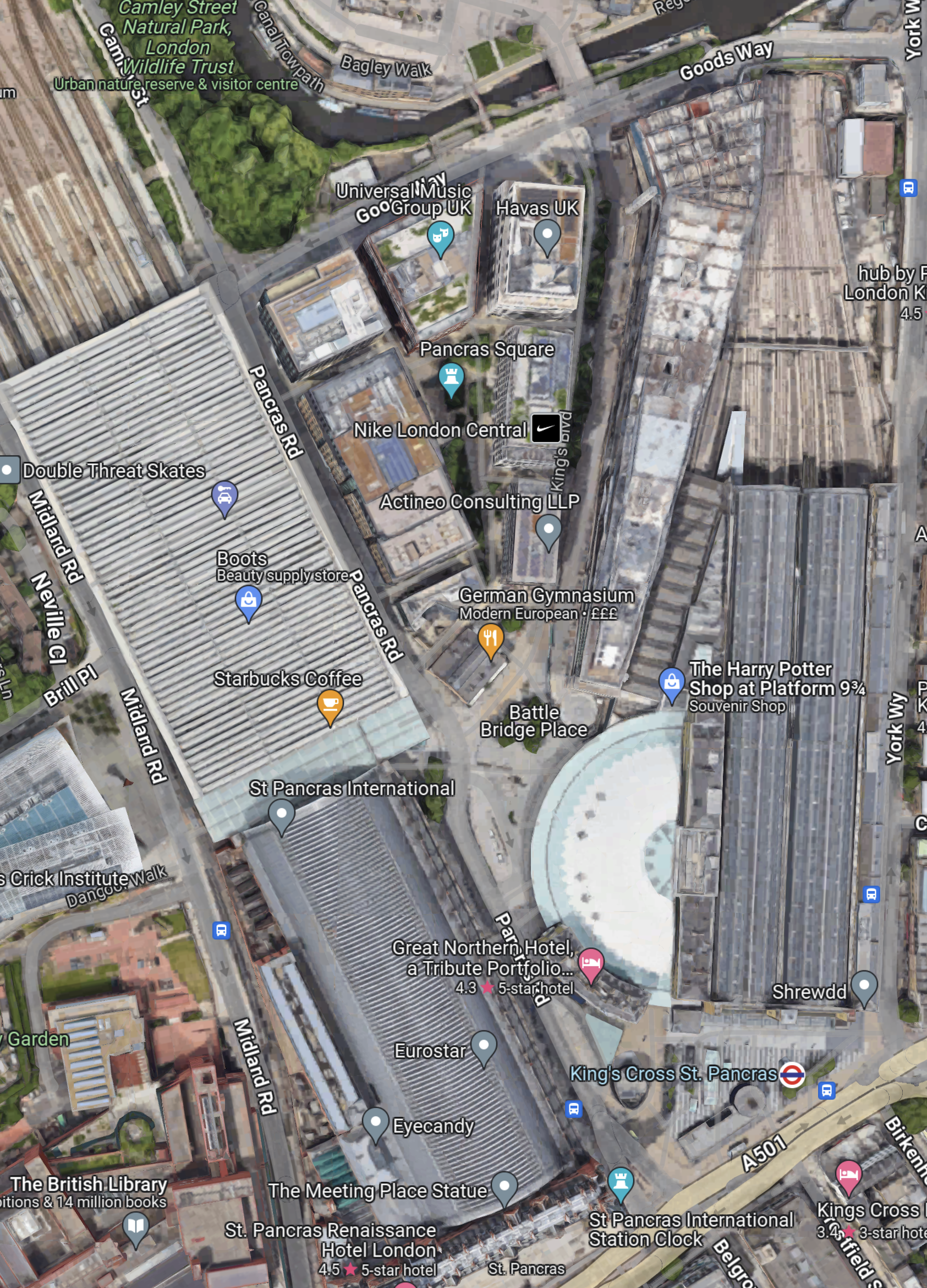
This Google Map shows King’s Cross and St. Pancras International stations.
Note.
- St. Pancras International is the station on the left of the V.
- King’s Cross is the station on the right of the V.
- The new corrugated roof covers the Northern ends of the trains in the platforms at St. Pancras.
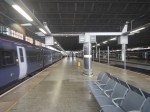
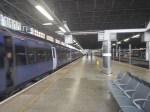
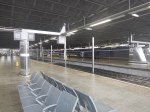
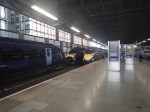
These pictures show the Northern end of the International and domestic HighSpeed platforms.
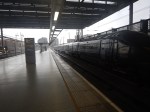


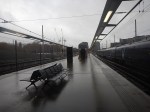
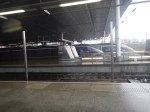
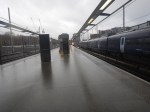
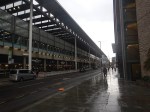


Note.
The pictures taken on the platforms were taken from the Southeastern HighSpeed platforms.
The Continental trains appear to be wholly in the dry either under the classic or the new roof.
The noses of the Continental trains appear to peek out from under the new roof by a few inches.
The air space above the platforms to the North of the new roof appears to be unobstructed.
This Google Map shows the Northern ends of the platforms at St. Pancras.
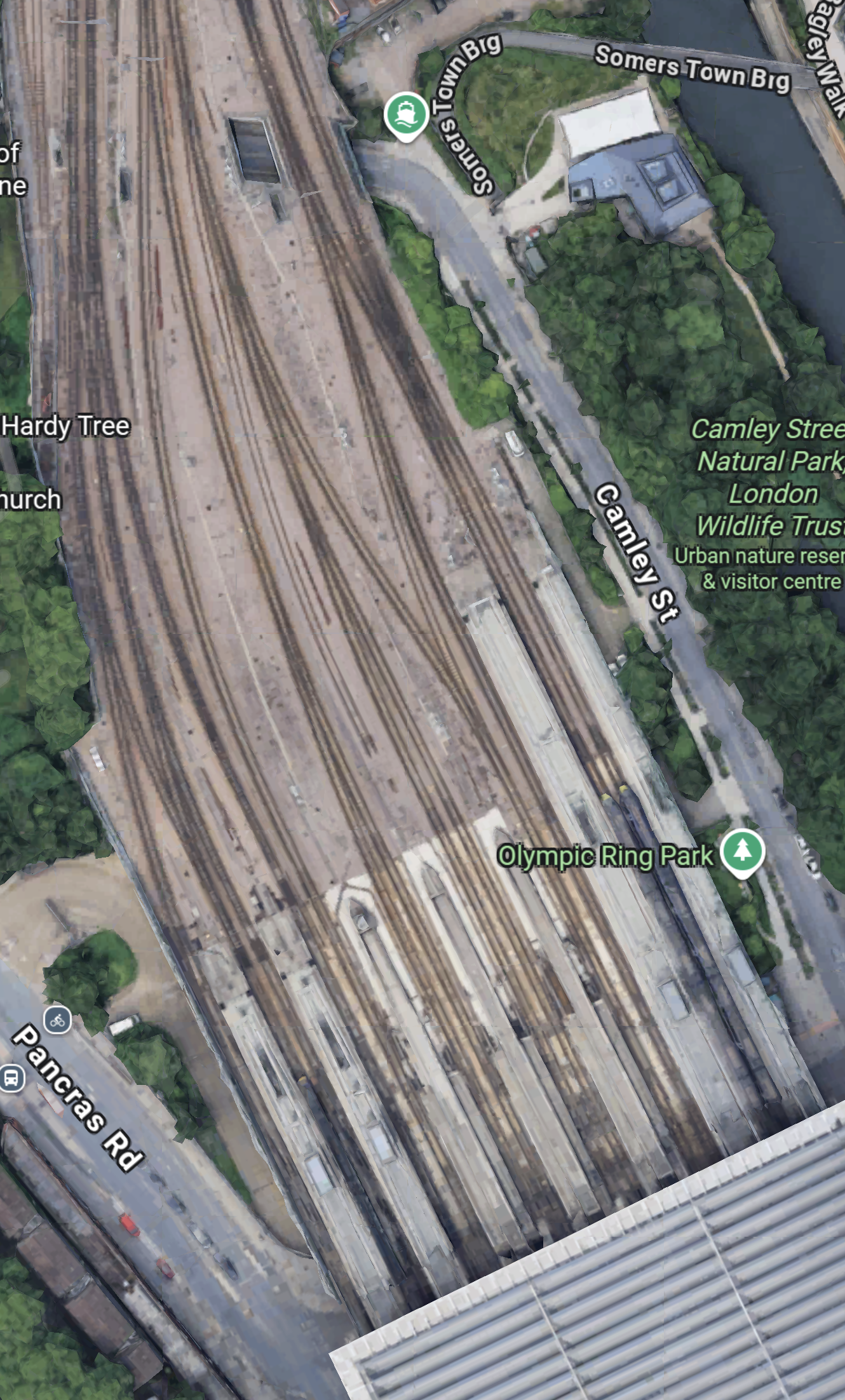
Note.
- The new roof is in the bottom-right of the picture.
- The platforms are numbered 1-13 from left to right.
- Platforms 1-4 are for East Midlands services, which are arranged in a 1-2-1 formation.
- Platforms 5-10 are for Continental services, which are arranged in a 1-2-2-1 formation.
- Platforms 11-13 are for Southeastern HighSpeed services, which are arranges in a 1-1-1 formation.
- Any trains in the station seem to be mainly under cover, although I think a couple of noses are just about visible.
- I am fairly certain, if more passenger-handling capacity were to be needed in the distant future, it could be built above the platforms.
I’ve never seen it said, but did the architects and structural engineers leave this space for future expansion of the station?
- The foundations could have even been designed to support a future vertical extension.
- But at least there is nothing of importance in the space above the exposed Northern ends of the station except a few pigeons.
- With two passenger-handling areas, one could be for departures and the other for arrivals.
- Escalators and lifts could give access to the three wide island platforms for Continental traffic.
Was this station designed to be expanded if required?
I also believe that that much of the work to add any new floors above the platforms could be carried out whilst train services were still running.
Alistair Lansley
According to his Wikipedia entry, the architect of the station was Alistair Lansley, who is not a well-known name or a celebrity architect, but an architect from British Rail’s Architect’s Department, who was also lead architect for Stratford and Ebbsfleet International stations.
So did he leave a space for the extension, that he knew from former experience would be needed?
Could A Mega-Station Be Built For The Channel Tunnel?
This article on Railway Gazette International, is entitled Start-Up Announces Amsterdam To London And Paris High Speed Train Ambitions.
It talks about how Dutch start-up; Heuro wants to run fifteen trains per day (tpg) between London and Amsterdam.
The article then has this paragraph, which details other operators, who are wanting to run services between London and the near Continent.
Heuro’s announcement comes after Spanish start-up Evolyn announced plans in October for a Paris – London service, while on November 11 British newspaper The Daily Telegraph reported that Sir Richard Branson and Phil Whittingham, former head of Virgin Trains and Avanti West Coast, were also drawing up plans to compete with Eurostar and had held discussions with infrastructure managers.
This leads me to the conclusion, that there will be a need for more capacity for trains and/or passengers at some time in the future.
- There are six International platforms at St. Panvcras International station, which can each probably handle four trains per hour (tph), so I suspect the station could handle 24 International tph.
- As a modern high speed train can carry over 500 passengers, that is 12000 passengers per hour.
- Visit St. Pancras station in the morning and it is often crammed with travellers coming from and going to Europe.
I suspect that the number of trains may not be a problem, but the number of passengers will.
We could always join Shengen, but then that would be an open door to all the would-be migrants to the UK.
This Google Map shows Stratford International station.
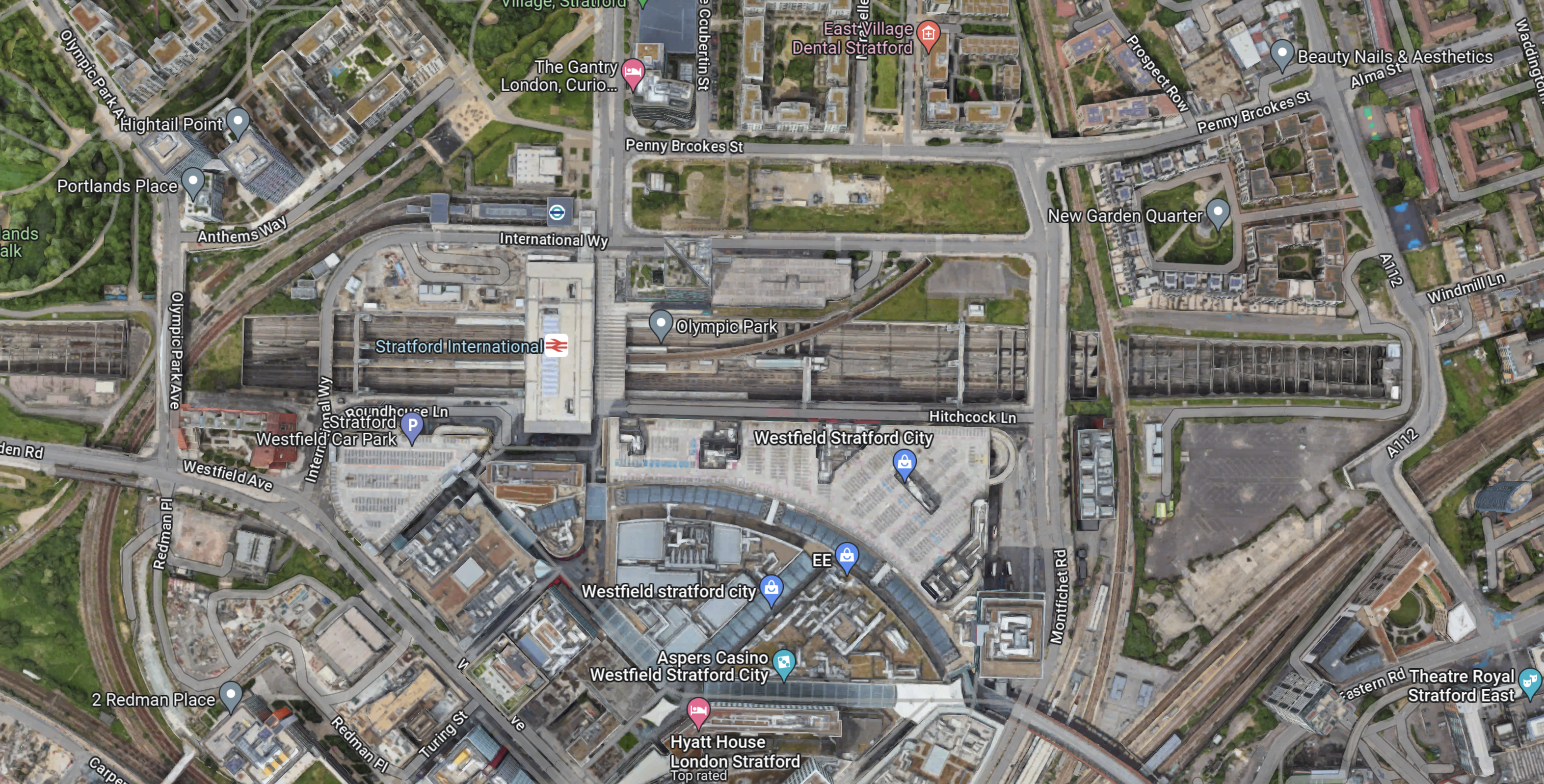
Stratford International station is in a soulless concrete cavern, that lies across the middle of the map.
In Platforms 1 And 4 At Stratford International Station, there are a lot of pictures of the station.
I think it would be extremely difficult to add extra platforms and passenger facilities to the station.
This Google Map shows Ebbsfleet International station.
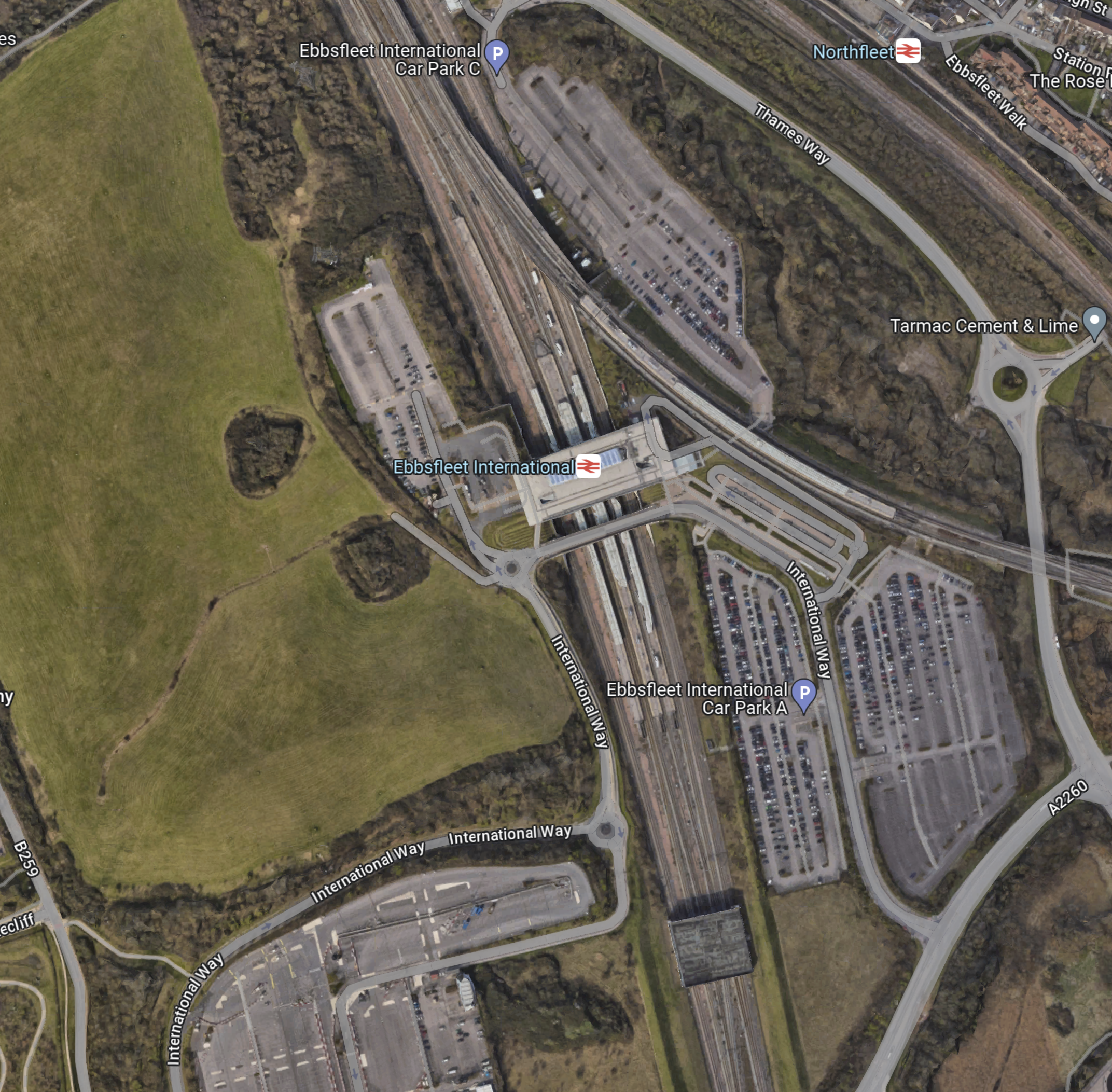
Note.
- Ebbsfleet International station, with its two International and four domestic platforms is in the middle of the map.
- The station is surrounded by car parks with a total of 5,000 spaces.
- Northfleet station is in the North-East corner of the map.
There is a lot of land, without any buildings on it.
These are my thoughts.
Enough Extra Bay Platforms To Handle The Additional Trains
There would appear to be space for perhaps two bay platforms to terminate trains.
But would passengers we happy being dumped outside Central London?
Would An Elizabeth Line Extension To Ebbsfleet Be Needed?
There are various plans to link the Elizabeth Line tp Ebbsfleet International.
In Elizabeth Line To Ebbsfleet Extension Could Cost £3.2 Billion, I showed this map from the Abbeywood2Ebbsfleet consultation.
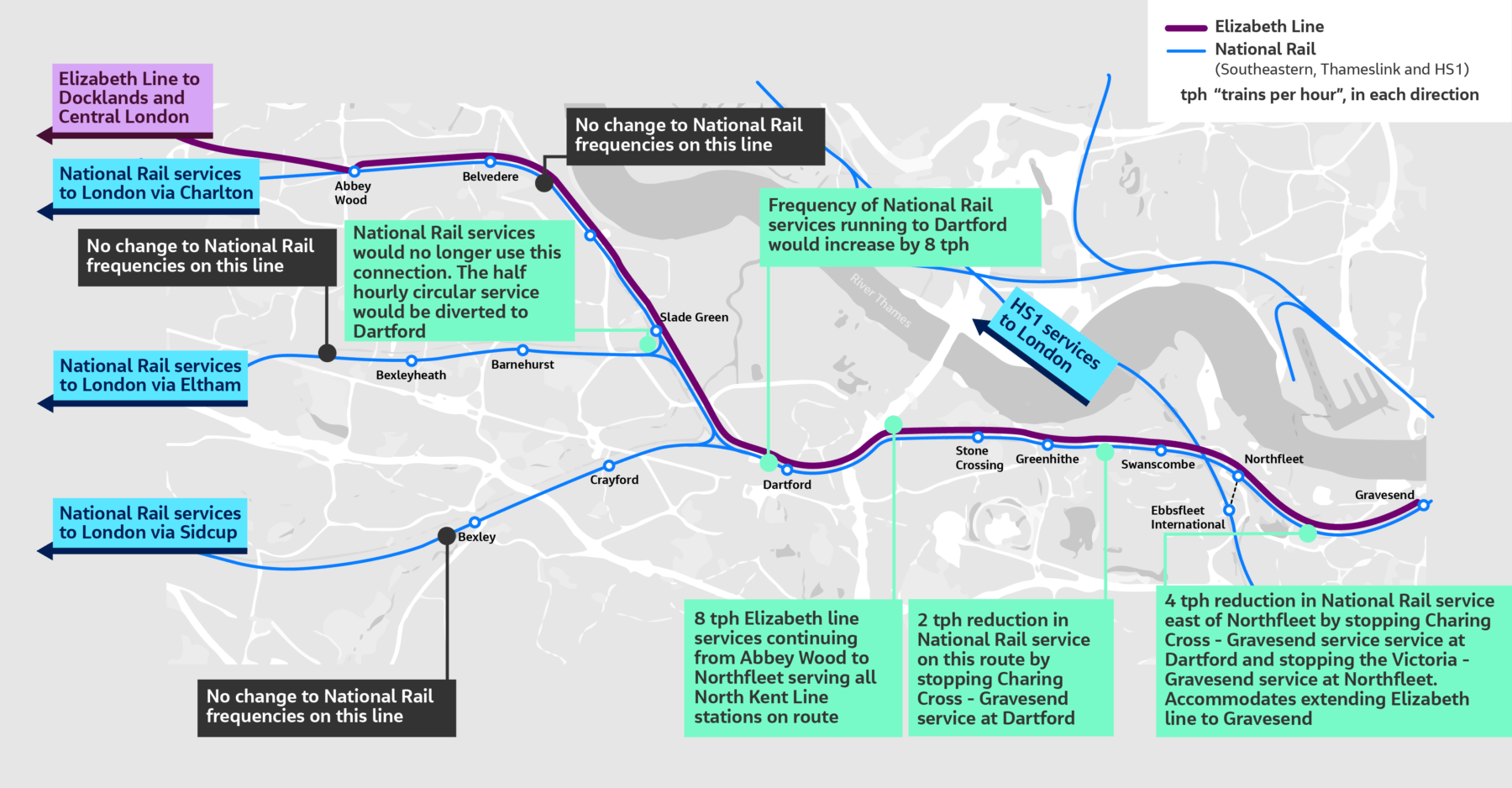
There doesn’t appear to be too much new infrastructure, except for a proper connection between Northfleet and Ebbsfleet stations. References on the Internet, say that the similar-sized Luton DART connection at Luton Airport, cost around £225 million.
The Elizabeth Line connects to the following.
- Bond Street
- Canary Wharf
- City of London
- Farringdon for Thameslink
- Heathrow Airport
- Old Oak Common for High Speed Two
- Liverpool Street station
- Oxford Street
- Paddington station
- Slough for Windsor
- Tottenham Court Road for the British Museum, Oxford Street, Soho, Theatreland and the Underground.
- West End of London
- Whitechapel for the Overground and Underground
For many people like me, the Elizabeth Line at Ebbsfleet will provide one of the quickest ways to get to and from European trains.
Ebbsfleet Has Space For A Bus Station
A bus station with comprehensive routes could be built at Ebbsfleet station, which I don’t think will be possible at St. Pancras.
It would also be possible to provide an easy route to Gatwick Airport along the M25.
Hotel Accommodation
This is surely necessary.
It would make an ideal base for tourists and business people, who wanted to visit several of the large cities connected to Ebbsfleet.
A Very Large Car Park
Consider.
- Heathrow Airport is looking at providing upwards of 50,000 car parking spaces.
- Some travellers are seriously allergic to public transport and will always use their car.
- Many travellers these days want to take a severely outside case with them, when they’re only having a weekend in Paris.
I feel that a mega-station for Europe will need upwards of 10,000 car parking spaces. All of them with vehicle-to-grid chargers.
A Very Large Storage Battery
According to this page on the E-on web site, the average size of the battery in an electric vehicle is 40 kWh.
If 5,000 car parking spaces were to be fitted with vehicle-to-grid charging (V2G), that would be 2 MWh of energy storage, that could be used by National Grid, to store surplus electricity.
Get V2G right and it could make a serious contribution to your parking costs.
Pictures Of Ebbsfleet Station
These are some pictures I took at Ebbsfleet station today.
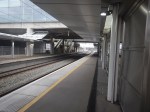
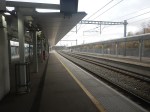
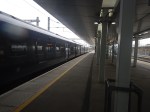
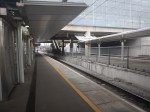

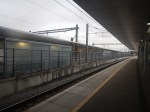
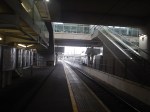

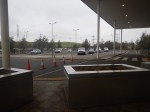


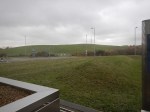

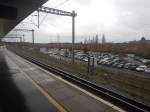
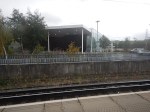
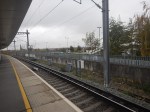
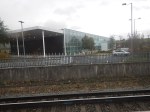
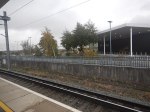
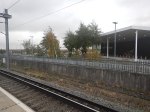
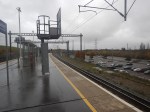
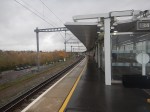
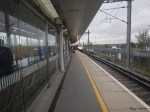
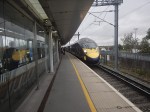
Note.
- The station is a fairly boring concrete, glass and steel construction.
- The SouthEastern HighSpeed services also go to St. Pancras, so they don’t offer any different connectivity towards the capital.
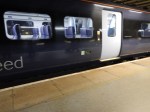
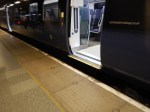
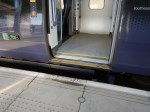
In addition, the SouthEastern HighSpeed Class 395 trains aren’t step-free at the platforms, as these pictures shows.
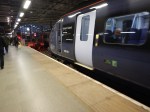
As I came back into St. Pancras International station, staff were struggling to load a wheelchair onto a train using a ramp.
Would A Two-Station Solution Increase Capacity?
High Speed Rail lines have high capacity trains and there are examples of more than one station at the end of a route.
- The London end of High Speed Two will have stations at Old Oak Common and Euston.
- The Manchester end of High Speed Two will have stations at Manchester Airport and Manchester Piccadilly.
- The Edinburgh end of the East Coast Main Line has stations at Waverley and Haymarket.
- The Amsterdam end of Eurostar and Thalys has stations at Rotterdam, Schipol Airport and Amsterdam.
A selection of stations gives choice and convenience for travellers.
Conclusion
I believe that selective development of Ebbsfleet International station could be used to take the pressure away from St. Pancras International station.
These developments could include.
- A comprehensive bus station
- Elizabeth Line to Northfleet
- Hotel Accommodation
- Lots Of Car Parking
Thanet Parkway Station – 31st July 2023
Thanet Parkway station opened yesterday, so I went to have a look.
I took these pictures.
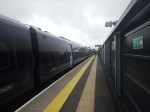
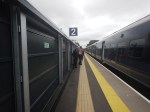
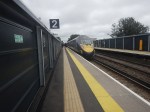
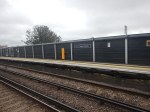
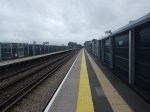
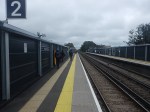
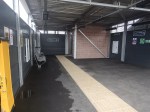
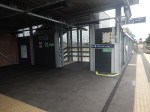
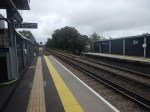
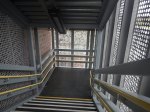

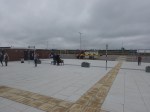

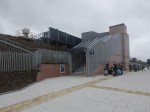
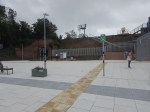

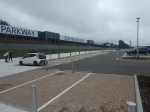

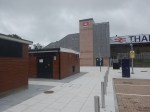
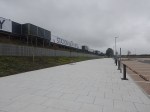
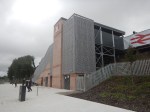
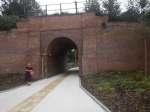
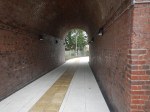
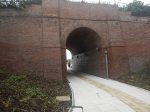
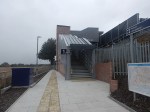


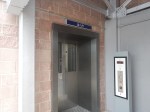
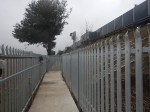
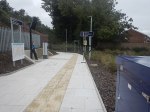
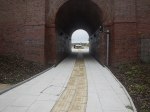



Note.
- I arrived in a twelve-car Class 395 train and the platforms handled it with ease.
- Both platforms are served by steep stairs and a lift.
- There seems to be 293 car parking spaces and 16 accessible spaces according to the National Rail information page.
- The only worthwhile architectural feature is the use of the existing tunnel to cross under the tracks.
But this station seems to be defined more by what it doesn’t have.
- No cafe or pub within walking distance.
- No convenience store to pick up a few supplies on the way home.
- No chargers for electric vehicles.
- No toilets.
- No staff.
It is a rather underwhelming station.
I have some further thoughts.
Last Train Home
In the early years of this century, C and myself would often spend a day in London, shopping, watching a show and probably having a meal.
- We generally used to drive up from Suffolk and would park near King’s Cross.
- Although, sometimes we would take the train from Whittlesford Parkway station to the South of Cambridge.
So out of curiosity, I looked at the last train to Thanet Parkway yesterday.
It had these times.
- St. Pancras International – 22:37
- Stratford International – 22:44
- Thanet Parkway – 23:50
- Ramsgate – 23:57
- Broadstairs – 00:02
- Margate – 00:07
It could enable long days out or late working in London.
Not Enough Trains
I believe that one train per hour (tph) is not a frequent enough service to London for this station.
Other nearby stations have the following HighSpeed services to St. Pancras International.
- Ramsgate – 3 tph
- Broadstairs – 2 tph
- Margate – 2 tph
In addition, these three stations get a 1 tph stopping service to Victoria.
Perhaps there could be a Thanet Loop service from St. Pancras International.
- It would run via Stratford International, Ebbsfleet International, Gravesend, Strood, Rochester, Chatham, Gillingham, Rainham, Sittingbourne, Faversham, Whitstable, Herne Bay, Birchington-on-Sea, Margate, Broadstairs. Ramsgate, Thanet Parkway, Canterbury West, Ashford International, Ebbsfleet International and Stratford International.
- It would also run both ways at a frequency of 1 tph.
- I estimate that a train to go round the loop would take three hours and thirteen minutes.
This would probably mean fourteen trains would be needed to run the service.
I don’t think they probably have enough.
Platforms 1 And 4 At Stratford International Station
This map from OpenRailwayMap shows the tracks through Stratford International station.

The tracks starting from the North side of the station are as follows.
- Platform 1 – Not used by normal services – Shown in black
- Fast Line for Eastbound through trains – Shown in red
- Platform 2 – Used by Eastbound stopping services – Shown in black
- Platform 3 – Used by Westbound stopping services – Shown in black
- Fast Line for Westbound through trains – Shown in red
- Platform 4 – Not used by normal services – Shown in black
Note.
- There are three Eastbound tracks, that connect together into a single track from St. Pancras and a single track to Ebbsfleet International station.
- An Eastbound train can use any of the three Northernmost tracks to pass though Stratford International station.
- There are three Westbound tracks, that connect together into a single track to St. Pancras and a single track from Ebbsfleet International station.
- A Westbound train can use any of the three Southernmost tracks to pass though Stratford International station.
- As Eurostar trains aren’t scheduled to stop at Stratford International station, they would normally take the fast lines through the station.
- Southeastern HighSpeed services usually stop in Platforms 2 or 3, as they pass through the station.
- There is a diamond crossover at the eastern end of the station.
It would appear that under normal circumstances Platforms 1 and 4 are not used.
These pictures show Platforms 1 and 4 at Stratford International station.
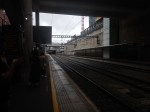
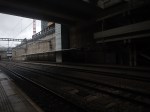
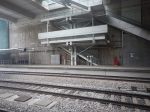
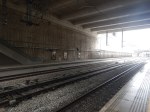
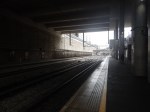
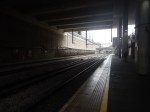
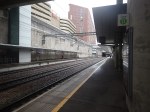
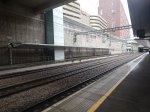
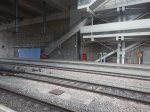
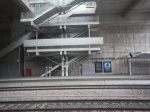
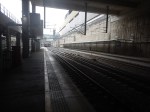
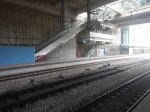
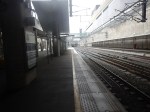
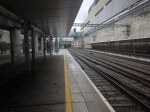
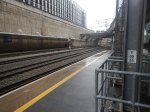
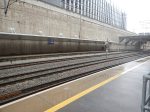
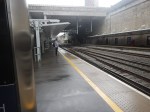
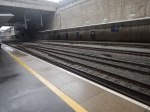
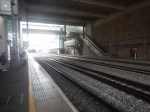
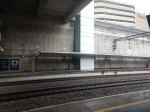
Note.
- Both Platforms 1 and 4 appear to have stairs, an escalator and a lift.
- I left from Platform 2, in a pair of Class 395 trains, which would have been 244 metres long.
- From the OpenRailwayMap, Platforms 1 and 4, appear to be longer than Platforms 2 and 3.
As Eurostar’s Class 374 trains are 390 metres long, it looks like Platforms 1 and 4 are designed to be able to handle these trains.
The Diamond Crossover At Stratford International Station
The diamond crossover at the Eastern end of the station could be used for unusual or occasional train movements.
- It could allow services to use St. Pancras station, when there was an inconvenient points failure.
- It might also allow a train to terminate before returning to the East in either Platform 1 or 4.
It could even allow Stratford International station to be used as a terminus during emergencies or engineering works.
An Escalator Problem At Stratford International Station
There was an escalator problem At Stratford International station today, which meant I had to walk down to the platform.
I took these pictures.
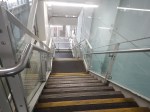
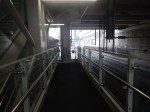
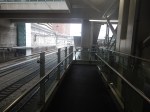
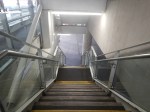
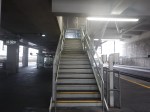
After walking down, I am fairly sure, that these stairs, which appear to be identical to those on Platforms 1 and 4, are for occasional use only.
Conclusion
I have come to these conclusions about Platforms 1 And 4 at Stratford International station.
- The platforms are designed to take the longest Eurostar trains.
- The access to Platforms 1 And 4, doesn’t appear to be designed for continuous heavy use.
- The diamond crossover at the Eastern end of the station would allow Stratford International station to be used as an emergency terminus.
The track layout at the London end of High Speed One appears to have been designed for all eventualities.
Could There Be An Elizabeth Line Extension To Grays?
This article on My London is entitled London Underground Tube Map: The Towns That Could Be Added To The Elizabeth Line As New Giant Loop Through London, Essex And Kent Is Proposed.
This paragraph described the proposal.
The proposal, which is part of its Vision 2050 local transport plan, would see the current Elizabeth line service from Romford take over the Overground branch to Emerson Park and Upminster, then join c2c services continuing via Chafford Hundred Lakeside to Tilbury. It would then head under a new tunnel beneath the Thames to Gravesend, connecting with the reintroduced Eurostar at Ebbsfleet International/Northfleet.
It’s certainly a bold idea and you can view the report to Thurrock Council here.
These are my thoughts.
The Frequency Of Trains
Currently, these services have a frequency of two trains per hour (tph) in both directions.
- Romford and Upminster.
- Upminster and Tilbury Town.
It would seem sensible that this frequency is preserved, thus giving every station on the loop four tph to and from the Eastern End of the Central Tunnel at Whitechapel station. Two tph would go via Romford and Stratford and two tph would go via Ebbsfleet and Abbey Wood.
What Would Be The Western Terminal?
It would probably be the two busiest terminals in the West.
I suspect that these will be Heathrow Terminal 4 and Heathrow Terminal 5
- Two tph would go between Heathrow Terminal 4 and Heathrow Terminal 5 via the loop.
- Two tph would go between Heathrow Terminal 5 and Heathrow Terminal4 via the loop.
- Two tph would go clockwise.
- Two tph would go anticlockwise.
I suspect the digital signalling can sort it out, just as it does the loop in Thameslink.
The Connection At Romford To The Romford and Upminster Line
Consider.
- The Romford and Upminster Line is single-track.
- A well-signalled single-track railway can handle two tph in both directions in an hour.
- Trains take five minutes to go between Romford and Emerson Park stations.
- Trains between Romford and Upminster will use Platform 5 at Romford station.
- Trains between Upminster and Romford will use Platform 4 at Romford station.
This map from cartometro shows the track layout at Romford station.
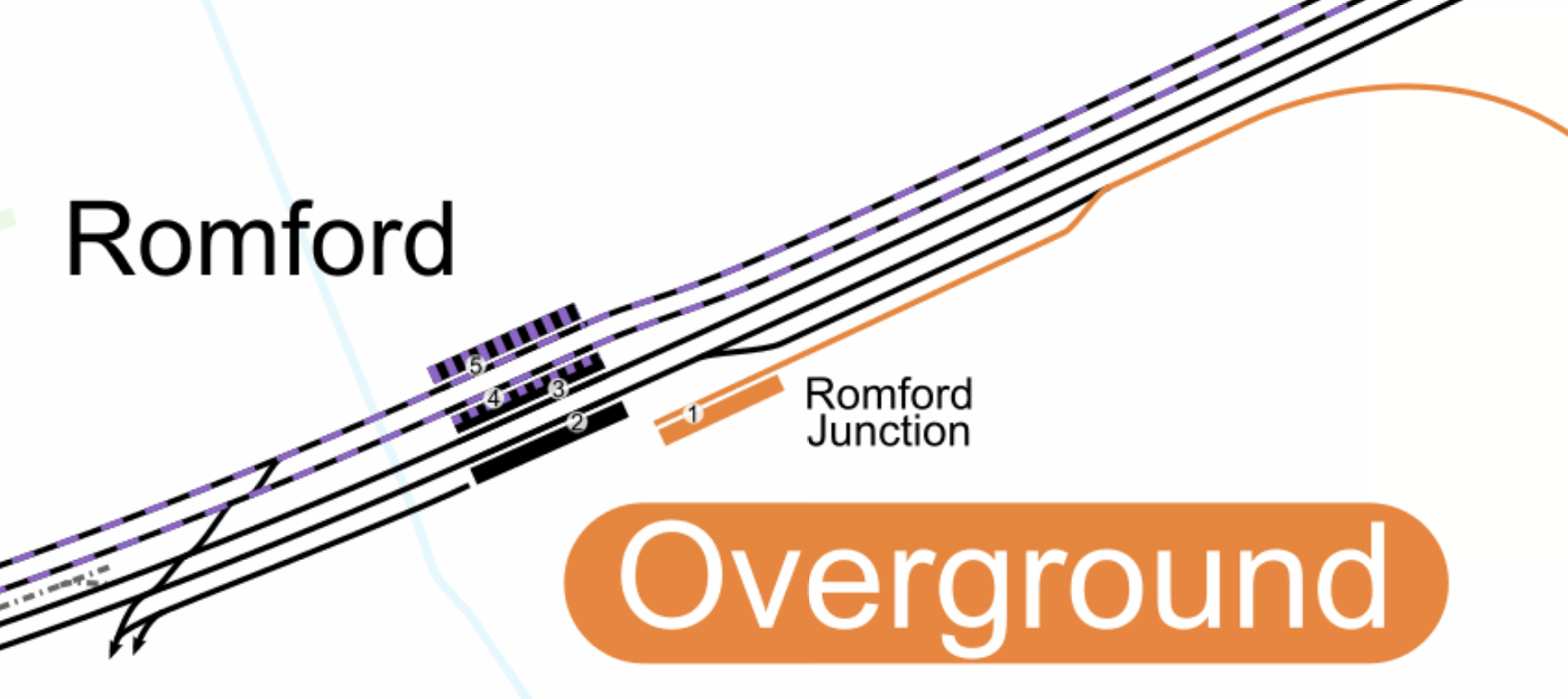
Note.
- The orange lines are the Overground tracks of the Romford and Upminster Line, which connects to Platform 1 in Romford station.
- The black and purple lines are the Elizabeth Line, which go through Platforms 4 and 5 at Romford station.
- The black lines are the fast lines of the Great Eastern Main Line, which go through Platforms 2 and 3 at Romford station.
- There is no connection between the Elizabeth Line and the Romford and Upminster Line.
I believe it is possible to build a single-track flyover or dive-under that connects both Platforms 4 and 5 at Romford station to the Romford and Upminster Line.
A similar double track flyover was built to connect the Barking Riverside branch to the main lines through Barking.
- But this track layout would only need to be single-track.
- I also suspect that there may not be enough space to put in a full double-track flyover.
- It would avoid the inconvenience and danger of using flat junctions to cross the fast lines of the Great Eastern Main Line.
As it only takes five minutes to go between Romford and Emerson Park stations, there is plenty of time to fit two tph in both directions in an hour.
Platform Extension In Platform 1 At Romford Station
Platforms 4 and 5 at Romford regularly take nine-car Class 345 trains, but I think that Platform 1 should be lengthened, to provide a bay platform on the route to help out when the service needs to recover.
Platform Extension At Emerson Park Station
The platform at Emerson Park station will need to be lengthened to take nine-car Class 345 trains.
Some commentators claim, that the passing loop at the station needs to be rebuilt. But I suspect, this isn’t needed as the expanded layout at Romford station effectively creates a passing loop.
The Connection At Upminster Between The Romford and Upminster Line And The Upminster And Tilbury Town Line
Consider.
- Both lines are single-track.
- But there is a passing loop at Ockenden station.
- There are three tracks between West Thurrock junction and Grays.
- Trains take five minutes to go between Emerson Park and Upminster stations.
- Trains take ten minutes to go between Upminster and Chafford Hundred stations.
- Trains take four minutes to go between Chafford Hundred and Grays stations.
- Trains take thirteen minutes to go between Upminster station and West Thurrock junction.
This map from cartometro shows the track layout at Upminster station.

Note.
- The orange lines are the Overground tracks of the Romford and Upminster Line, which connects to Platform 6 in Upminster station.
- The green lines are the District Line tracks that handle the services that terminate at Upminster station.
- The black lines are the c2c tracks between Fenchurch Street and Southend Central stations go through Platforms 1 and 2 at Upminster station.
- The Upminster and Tilbury Town Line leaves Upminster station in a South-Easterly direction.
- The Upminster and Tilbury Town Line connects to Platforms 1 and 2 at Upminster station.
I believe it is possible to build a single-track flyover or dive-under that connects both Platforms 1 and 2 at Upminster station to the Romford and Upminster Line.
This would connect the following.
- The Romford and Upminster Line to the the Upminster and Tilbury Town Line.
- The Romford and Upminster Line to the the Fenchurch Street and Southend Central Line.
Upminster station would be a much improved interchange.
Two tph Between Tilbury Town and Romford Stations
Consider.
- The route is fully electrified.
- The route is a mixture of single and double-track.
- There is a passing loop at Ockendon station.
- The platform at Emerson Park and possibly others may need to be extended to take nine-car Class 345 trains.
I believe single-track flyovers or dive-unders at Romford and Upminster stations would enable two tph on the route.
The only downside I can see, is that passengers going between Fenchurch Street and Chafford Hundred or Ockendon stations would need to change at Grays or Upminster stations.
Alternatively, they could take the Elizabeth Line, which would have a 4 tph direct service between the Central Tunnel of the line and Chafford Hundred and Ockendon stations.
Under The Thames
This map from OpenRailwayMap shows the lines on the North bank of the Thames.
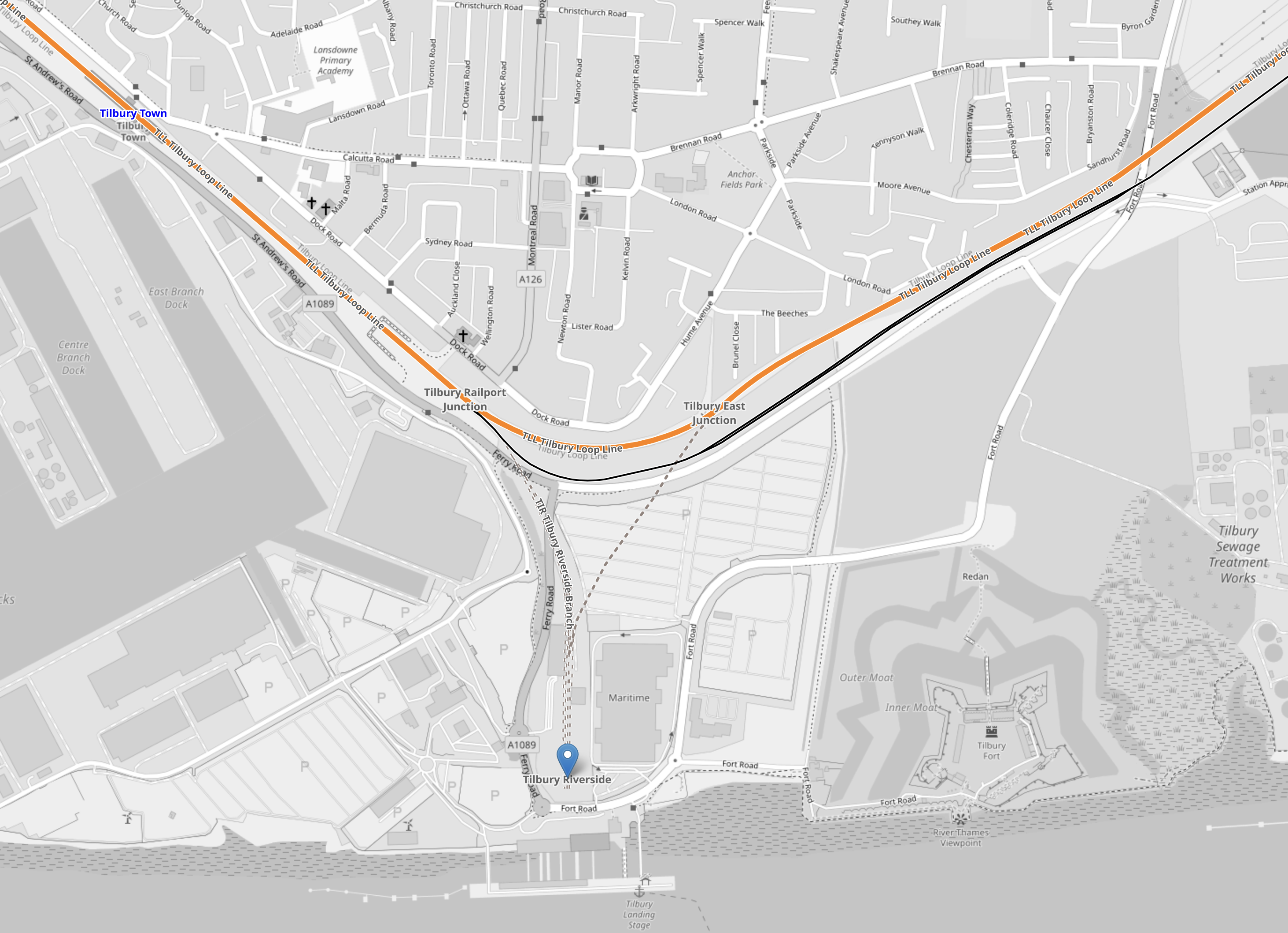
Note.
- The orange line is the double-track Tilbury Loop Line between Fenchurch Street and Southend Central stations.
- Tilbury Town station is in the North-West corner of the map.
- There is a proposal for a Tilbury Fort station in the North-East corner of the map.
- The blue arrow at the bottom of the map indicates the former Tilbury Riverside station, which is next to the London International Cruise Terminal.
I believe the North portal of the tunnel under the river could be at the site of the former Tilbury Riverside station.
Would it be an idea to rebuild the station and connect it to the cruise terminal, so that passengers on the cruise ships would have excellent access to Central London, Ebbsfleet International station for High Speed One and Heathrow Airport?
This map from OpenRailwayMap shows the lines on the South bank of the Thames.
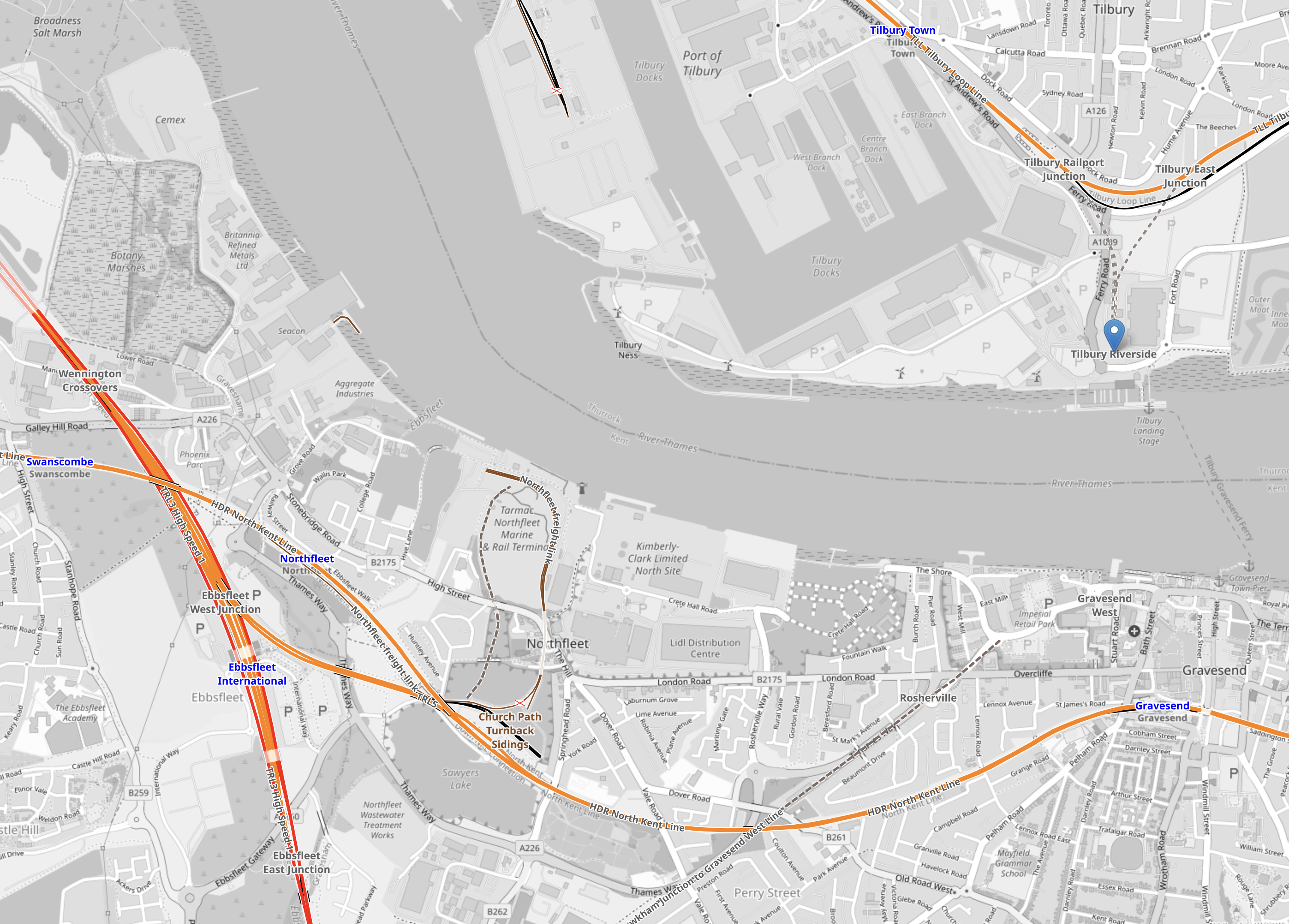
Note.
- Tilbury Town station, the former Tilbury Riverside Riverside station and the Tilbury Loop Line are in the North-East corner of the map.
- Gravesend station is in the South-East corner of the map.
- The wide orange line going vaguely North-South at the Western side of the map is High Speed One going through Ebbsfleet International station.
- Connecting Gravesend and Ebbsfleet International stations is the North Kent Line.
I suspect it would be possible to bore a tunnel from Tilbury Riverside, that passed under Gravesend station and joined the North Kent Line to the West of the station.
How Would The River Crossing Connect To Gravesend Station?
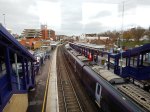
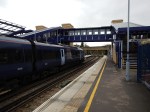
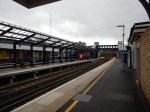
The platform or platforms on the Elizabeth Line Loop would have to be underground, as there is not much space at Gravesend station as these pictures show.
Note.
- Gravesend has SouthEastern HighSpeed services to St. Pancras International station and North-East Kent.
- The route to Gravesend has been safeguarded for the Elizabeth Line.
- The railway under the Thames could replace the Tilbury and Gravesend Ferry.
There also could be operational advantages in not terminating Elizabeth Line services at Gravesend.
Abbey Wood And Gravesend
In Elizabeth Line To Ebbsfleet Extension Could Cost £3.2 Billion, I looked at the Transport for the South East proposal for extending the Elizabeth Line to Kent.
This image from the Abbeywood2Ebbsfleet consultation, shows the proposal.
Note, that there doesn’t appear to be too much new infrastructure, except for a proper connection between Northfleet and Ebbsfleet stations. References on the Internet, say that the similar-sized Luton DART connection at Luton Airport, cost around £225 million, but we now know it was well upwards of that.
The TfSE proposal says that trains would terminate as follows.
- Abbey Wood – 4 tph
- Northfleet – 4 tph
- Gravesend – 4 tph
As space is limited at Gravesend and there is money for extending a railway service to a new Hoo station, I feel that proposing a two tph service to Hoo station would be a prudent action to take.
This would leave a handy two tph to take the loop back to Central London.
Could A Large Parkway Station Be Built Between Romford and Tilbury Riverside Stations?
Ebbsfleet International station, which is to the South-East of London, has 5,000 parking spaces and is the only large Park-and-Ride site around the capital.
Could another large Park-and-Ride site be opened on the Elizabeth Line North of the Thames?
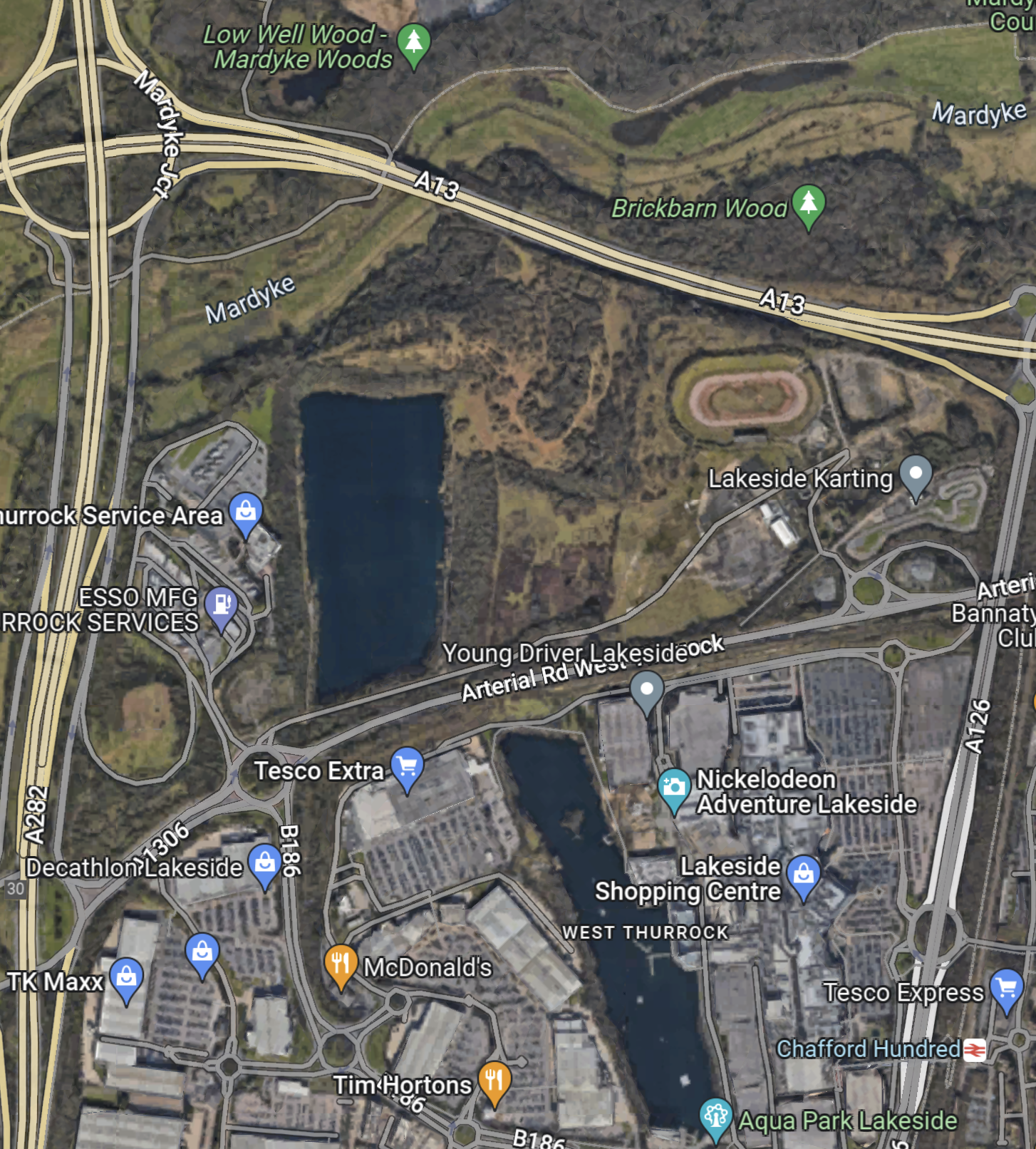
One place could be at Chafford Hundred station and the nearby Lakeside Shopping Centre.
This Google Map shows the area.
Note.
- The M25 runs North-South up the Western side of the map.
- Chafford Hundred station is in the South-East corner of the map.
- The shopping centre is next to the station.
Last time I went, Lakeside was looking tired.
Timings To And From Whitechapel
These are estimated timings to and from Whitechapel.
- Romford – 26 mins – 81 mins
- Emerson Park – 31 mins – 76 mins
- Upminster – 35 mins – 72 mins
- Ockendon – 41 mins – 66 mins
- Chafford Hundred – 45 mins – 62 mins
- Grays – 49 mins – 58 mins
- Tilbury Town – 52 mins – 55 mins
- Tilbury Riverside – 58 mins – 49 mins
- Gravesend – 62 mins – 45 mins
- Northfleet – 65 mins – 42 mins
- Swanscombe – 68 mins – 39 mins
- Greenhithe for Bluewater – 71 mins – 36 mins
- Stone Crossing – 73 mins – 34 mins
- Dartford – 81 mins – 26 mins
- Slade Green – 86 mins – 21 mins
- Erith – 88 mins – 19 mins
- Belvedere – 89 mins – 18 mins
- Abbey Wood – 92 mins – 15 mins
Note.
- The times between Tilbury Town and Gravesend are my best estimates.
- All other times are taken from current services.
- The first time is the time to Whitechapel via Romford.
- The second time is the time to Whitechapel via Abbey Wood.
It does appear that the best times from all stations are under an hour.
Extending The Elizabeth Line – Connection To Southeastern High Speed One Services
The Two Stratford Stations
In this post, Stratford station is the station handling Greater Anglia and London Overground, Underground and Docklands Light Railway services, with Stratford International station handles High Speed services.
The Elizabeth Line And The Great Western Railway Services
One of the most important stations on the Elizabeth Line is Paddington, where it connects to the London terminus of the Great Western Railway.
I would expect that quite a few passengers going to the West and Wales on the Great Western Railway, will be transported to Paddington by the Elizabeth Line.
The Elizabeth Line And Greater Anglia Services
Another of the important stations on the Elizabeth Line is Liverpool Street, where the station is the London terminus of the Greater Anglia.
I would expect that quite a few passengers going to East Anglia on the Greater Anglia, will be transported to Liverpool Street by the Elizabeth Line.
Southeastern High Speed One Services
Southeastern runs some High Speed services on High Speed One to provide Kent with an improved service to London.
Current services are
- London St Pancras International to Ramsgate via Faversham.
- London St Pancras International to Ramsgate via Dover Priory.
- London St Pancras International to Margate via Canterbury West.
Note
- All trains are one train per hour (tph).
- All trains stop at Stratford International and Ebbsfleet International.
- All trains are run by 140 mph Class 395 trains.
There has also been talk of running a fourth service to Hastings and Eastbourne via Stratford International, Ebbsfleet International and Ashford International.
St. Pancras Station
All of these trains terminate in three platforms; 11 to 13 at St. Pancras International station.
St. Pancras is not the ideal terminal for the Southeastern High Speed services.
- St. Pancras is not on the Elizabeth Line.
- St.Pancras doesn’t have good connections to Heathrow.
- All connections to the Underground are a long walk.
- Eurostar services are a longer walk.
- East Midland services are also a longer route, with stairs and escalators for good measure.
St. Pancras station was designed by a committee, as a museum to Victorian architecture, rather than as a working station.
Ebbsfleet International Station Must Be The Largest Parkway Station In The UK
It holds nearly five thousand cars and it is served by Southeastern High Speed Services.
Thanet Parkway Station Will Open This Year
Thanet Parkway station is under construction.
- It will have nearly three hundred parking spaces.
- It will be served by Southeastern High Speed Services.
- It should open in May 2023.
This station will need a good connection to London.
Could An Interchange Between The Elizabeth Line And Southeastern High Speed Services Be Provided At Stratford?
Such an alternative interchange would be popular with passengers.
- The Elizabeth Line from Stratford currently serves the West End, the Northern section of the City of London, East London, Liverpool Street, Paddington and the West End directly.
- The Elizabeth Line from Stratford currently serves Canary Wharf, Cannon Street, Charing Cross, Euston, Heathrow, King’s Cross. Reading, St. Pancras and Victoria with a change at Whitechapel.
- The Central Line, which shares platforms with the Elizabeth Line serves Bank and the West End directly.
- The Overground is easily accessed for travel across North London to Richmond.
- The Jubilee Line is easily accessed for travel to London Bridge, Waterloo and Westminster.
It would be connected to two large parkway stations and lots of parking all over Kent.
I believe that Stratford must be promoted as an alternative terminus for Southeastern High Speed Services.
Today, I walked both ways between two Stratford stations.
These pictures show the route I took between Stratford and Stratford International stations, through the Eastfield Shopping Centre.
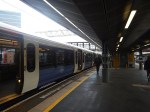
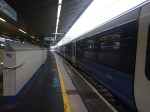
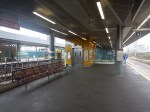
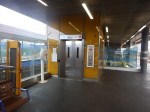
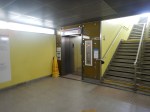
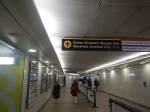
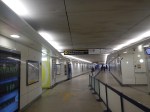

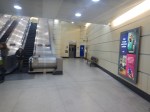



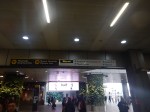










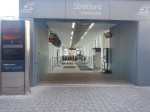

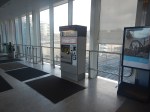
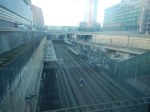
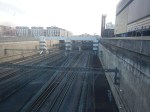
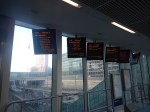

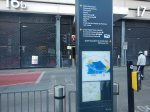
Note.
- I went through the Shopping Centre.
- I passed Marks & Spencer’s large food hall, excellent toilets and a Food Court.
- By the Food Court is an exit that leads to an entrance to Stratford International station.
- The walk took about 10 minutes.
- It was vaguely level.
- Lifts by-passed the escalators.
- One thing that makes the journey to London easier, is to travel in the Eastern end of the train, as the lifts and escalators at Stratford International station, are at that end.
It does need some better signage, but they were doing a bit of refurbishment, so that may already be underway.
It could be a very high quality interchange and it is already better than St. Pancras.
Coming back I took the longer route outside the Shopping Centre.


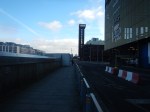





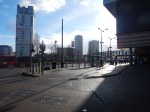
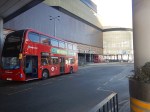


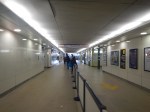
Note.
- I just turned left out of the entrance, walked along the road and turned right past the bus station.
- If the weather had been colder or wetter, I’d have gone back via the Shopping Centre.
- The walk took about 12 minutes.
I think normally, I’d go back through the Shopping Centre, as there’s a Marks and Spencer Food Hall on the route and it’s slightly quicker and often warmer.
Could Stratford Station Be A London Superhub Station?
When you consider the stations connected to Stratford in London, East Anglia and Kent, it has an excellent collection.
- Airports – Gatwick, Heathrow, Luton, Southend and Stansted
- Cities – Cambridge, Canterbury, Chelmsford, Colchester, Ipswich, Norwich and Southend-on-Sea
- London Main and Terminal Stations – Cannon Street, Charing Cross, Clapham Junction, Euston, Farringdon, King’s Cross, London Bridge, Liverpool Street, Marylebone, Moorgate, Paddington, Victoria and Waterloo
- Major Areas – Canary Wharf, City of London, Hampstead, Olympic Park and West End
- Ports – Dover, Felixstowe, Folkestone and Harwich
You can even get a train to Slough, with a change at Whitechapel.
I would think it already is a London Superhub Station.
Extending The Elizabeth Line – Serving South-East London
The Inadequacies Of Abbey Wood Station
Abbey Wood station is the Elizabeth Line’s main terminus in South-East London.
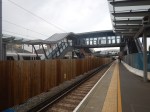

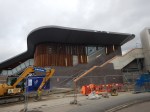
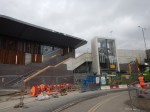

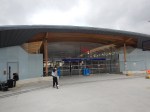
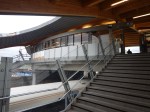
The architecture is impressive, as the pictures taken before the station was finished show.
But other things are less than impressive.
- There is no station parking.
- Central London rail terminals served by Elizabeth Line services are only Liverpool Street/Moorgate and Paddington.
- Central London rail terminals served by National Rail services are Cannon Street, London Bridge, King’s Cross and St. Pancras.
In my view, Abbey Wood is a lost cause, as a commuter station, unless substantial parking is built at the station.
Parking At Stations In West Kent
This list shows the number of car parking spaces at stations in West Kent and South East London.
- Barnehurst – 162 *
- Belvedere – None *
- Bexleyheath – 83 *
- Chatham – 276 *
- Dartford – 186 *
- Ebbsfleet International – 4945 #
- Erith – None *
- Eynsford – 15
- Farningham Road – None
- Gillingham – 152 *
- Gravesend – 94 *
- Greenhithe – 8 *
- Longfield – 88
- Meopham – 167
- Northfleet – None *
- Plumstead – None *
- Rochester – None *
- St. Mary Cray – 31
- Slade Green – 25
- Sole Street – 61
- Stone Crossing – None *
- Strood – 112 *
- Swanley – 106
- Swanscombe – None *
- Welling – 117
Note.
- An asterisk (*) indicates direct trains to and from Abbey Wood station for the Elizabeth Line.
- An hash(#) indicates direct trains to and from Stratford International for the Elizabeth Line.
These figures are according to the National Rail web site.
It looks like unless you can walk to your nearest station and that has an easy connection to Abbey Wood, you’re probably better off going to Ebbsfleet and parking there.
Travelling Between Ebbsfleet International And The Elizabeth Line At Stratford International
Consider.
- Southeastern’s Highspeed service between Ebbsfleet International and Stratford International has a frequency of three trains per hour (tph)
- It takes less than twelve minutes between the two stations.
- It takes ten minutes to walk between Stratford International and Stratford Station for the Elizabeth Line and Greater Anglia services.
- There are eight Elizabeth Line tph to Paddington, calling at all stations. For Heathrow change at Whitechapel station.
Note.
- From these points, it should be possible to estimate the time you should park at Ebbsfleet to get to an event in London or East Anglia, if you live in Kent and are parking at Ebbsfleet International.
- I think four tph between Ebbsfleet International and Stratford International would make the route more attractive.
- If you’re going to Norwich or Ipswich be careful, as only one of the two tph stop at Stratford.
I catch the 12:30 from Liverpool Street for matches at Ipswich on Saturdays. This is the 12:38 from Stratford, so I suspect if you parked at parked at Ebbsfleet before 12:00, you’d make it.
Who’d have thought, that when they built the massive car parks at Ebbsfleet international, that they would be a Park-and-Ride for football at Ipswich. And Norwich too!
Changing Trains At Stratford
This map from Cartometro shows the two Stratford stations.
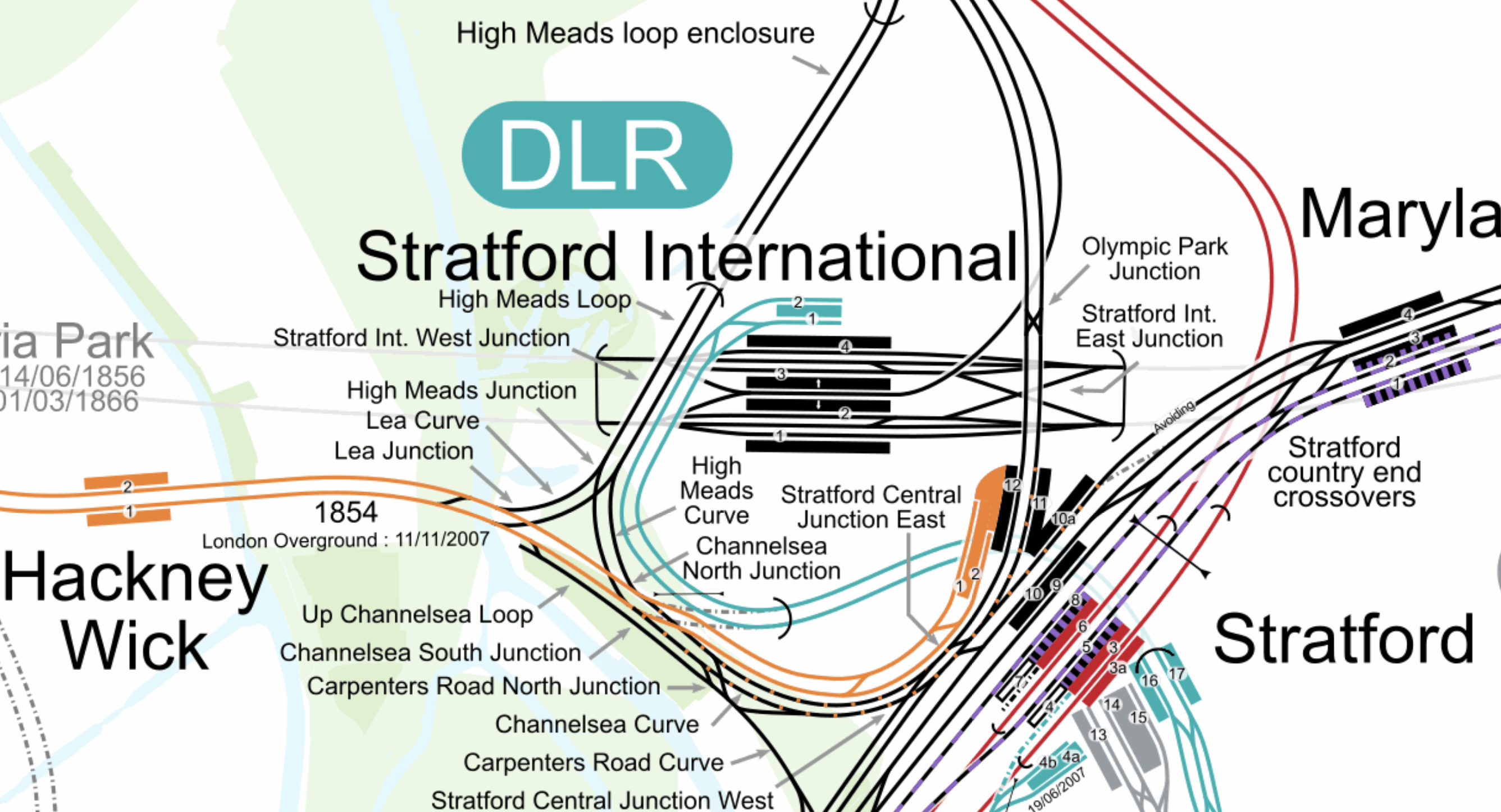
Note.
- The Elizabeth Line is shown in purple.
- The Central Line is shown in red.
- The Jubilee Line is shown in silver.
- The Overground is shown in orange.
- Lifts and escalators take passengers to and from the surface from between platforms 2 and 3 at Stratford International station.
Two pedestrian tunnels connect all the platforms in Stratford station.
- Elizabeth Line trains use platforms 5 and 8.
- Central Line trains use platforms 3, 3a and 6.
- Great Eastern Main Line trains use platforms 9, 9a and 10.
- Overground trains use platforms 1 and 2.
All platforms have lifts.
I suspect, that when you get to know the Stratford complex well, it’s easier than it looks.
But it does need better signage.
Full Step-Free Route Between Ebbsfleet And Heathrow Central
I have just used Transport for London’s Journey Planner, as if I was in a wheelchair and need full step-free access to go from Ebbsfleet to Heathrow Central.
This was the route.
- Southeastern to Stratford International station – 10 mins
- Walk to Stratford station – 21 mins
- Jubilee Line to Bond Street – 24 mins
- Bond Street to Heathrow Central – 32 mins
Note.
- The times are slower than say myself.
- I think it is possible to pick up the Elizabeth Line at Stratford.
But the route is certainly possible in a wheel-chair.
The Penge Interchange
This map from Cartometro shows where the East London Line of the London Overground and the Chatham Main Line between Victoria and Chatham cross in Penge.
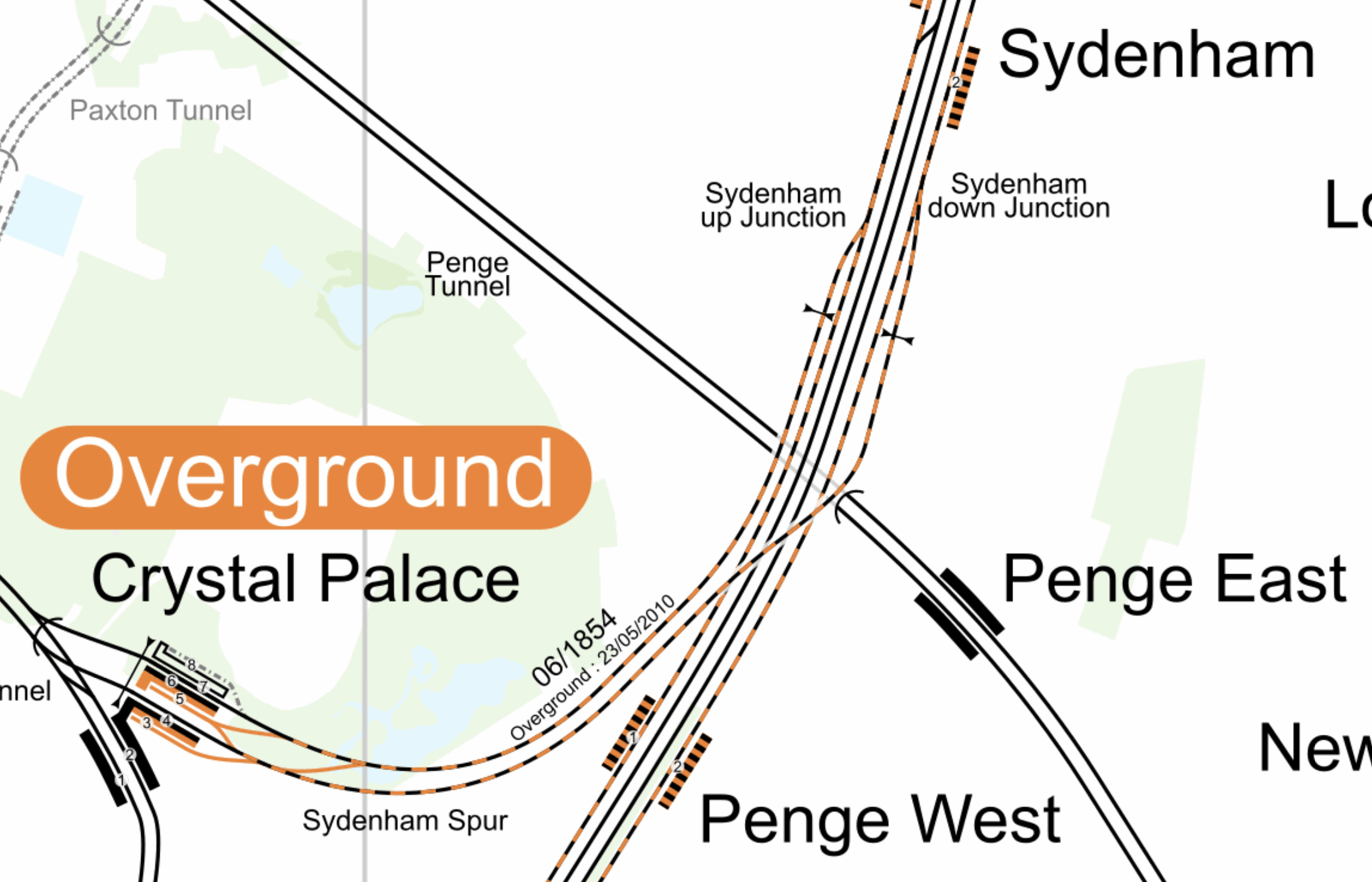
Note.
- The East London Line runs North-South through Sydenham and Penge West stations.
- The Chatham Main Line runs through Penge East station.
There is a plan by Transport for London to create a Penge Interchange station on railway land, where the two lines cross.
- The station could replace Penge West and Penge East stations.
- It would be fully step-free.
- Interchange would be allowed between the East London Line and the Chatham Main Line.
This would increase connectivity for those travelling to and from South-East London and West Kent.
I brlieve that this one interchange could help level-up a large area of South-East London.
Extending The Elizabeth Line – Linking To The Chatham Main Line
Preamble
I believe that everybody in the South East of England needs the best access possible to the Elizabeth Line, by train from where they live.
- The Elizabeth Line serves the important places like Brick Lane, Canary Wharf, the City of London, Heathrow Airport, Liverpool Street station, the Olympic Park, Oxford Street and Paddington station directly.
- Because of its connection to Thameslink, the Elizabeth Line also serves important places like Bedford, Brighton, Cambridge, Gatwick Airport, Luton Airport and Tate Modern with a single change at Farringdon station.
- Using the Elizabeth Line, Thameslink and perhaps a bus, it is possible to get to most important places in Central London.
- The more passengers that use the Elizabeth Line and Thameslink, the more London’s businesses will thrive creating employment and tax revenues.
- It should also be remembered, that using a train to visit central London, probably cuts your carbon footprint.
- The Elizabeth Line also cost a fortune, so perhaps by using it, you will be getting some of your portion of what it cost you back.
This post is one of several, where I discuss how to bring more passengers into the Elizabeth Line network.
The Chatham Main Line
This is the introduction to the Wikipedia entry for the Chatham Main Line.
The Chatham Main Line is a railway line in England that links London Victoria and Dover Priory / Ramsgate, travelling via Medway (of which the town of Chatham is part, hence the name).
Services to Cannon Street follow the route as far as St Mary Cray Junction where they diverge onto the South Eastern Main Line near Chislehurst.
Thameslink services to Luton run in parallel from Rainham to Rochester, diverging once across the River Medway at Rochester Bridge Junction onto the North Kent Line via Gravesend and Dartford.
A shuttle service operates on the Sheerness Line which starts at Sittingbourne.
Note.
- The main London terminals for trains to London on the Chatham Main Line are Cannon Street (Peak only), St. Pancras and Victoria.
- Services stop at Rainham station, so passengers can change to the two trains per hour (tph) Thameslink service to Luton.
- St. Pancras has one tph from Strood, Rochester, Chatham, Gillingham, Rainham, Sittingbourne and Faversham stations.
- Victoria has two tph from Strood, Rochester, Chatham, Gillingham, Rainham, Sittingbourne and Faversham stations.
- Rochester, Gillingham, Rainham and Faversham can turnback trains to London.
The only connections to the Elizabeth Line are.
- The HighSpeed service to St. Pancras calls at Stratford International, where the connection is tortuous.
- The Thameslink service calls at Farringdon, where the connection is easy.
As an example say you were going from Chatham to Heathrow Terminal 4.
The National Rail timetable suggests this route.
- Southeastern HighSpeed – Chatham to St. Pancras
- Thameslink – St. Pancras to Farringdon
- Elizabeth Line – Farringdon to Heathrow
Note that the change at St. Pancras is not the easiest.
Extending The Elizabeth Line To The Chatham Main Line
In Elizabeth Line To Ebbsfleet Extension Could Cost £3.2 Billion, I talk about this proposal as described in this article on Ian Visits.
One of the key features of Crossrail To Ebbsfleet (C2E) project is that instead of all trains terminating at Abbey Wood, trains will terminate as follows.
- Abbey Wood – 4 tph
- Northfleet – 4 tph
- Gravesend – 4 tph
This will mean that 8 tph would pass through Abbey Wood station.
Gravesend is not the best place to turn trains, so why not turn two tph at somewhere like Rochester, Gillingham, Rainham or Faversham?
If two tph to Rainham is good enough for Thameslink, surely two tph to Faversham could be good enough?
Extending The Elizabeth Line To A New Hoo Station
In Effort To Contain Costs For Hoo Reopening, I discussed opening the new Hoo station.
Consider.
- Hoo junction to Hoo station is no more than five or six miles.
- Aventras have been designed to run on battery power, so I suspect Lizzie’s Class 345 trains could be so fitted.
- Range would be sufficient for one return trip from Hoo junction to Hoo station
- Two tph at Hoo station could be handled by a single platform.
It looks to me, that of the four tph to Gravesend if C2E is built, two tph could go to both of Hoo and Faversham.
This assumes of course that digital signalling can fit all the trains on the North Kent Line between Abbey Wood and Faversham.
Chatham And London Main Line Stations
In these routes, I am assuming that there are two tph on the Lizzie Line between Faversham and Heathrow.
- Chatham and Cannon Street – Lizzie Line to Whitechapel and then District Line
- Chatham and Charing Cross – Lizzie Line to Whitechapel and then District Line
- Chatham and Euston – Lizzie Line to Whitechapel and then Hammersmith & City Line
- Chatham and Farringdon – Lizzie Line direct – Thameslink direct
- Chatham and Fenchurch Street – Lizzie Line to Whitechapel and then District Line
- Chatham and Liverpool Street – Lizzie Line direct
- Chatham and Marylebone – Lizzie Line to Paddington and then Bakerloo Line
- Chatham and Paddington – Lizzie Line direct
- Chatham and Kings Cross – Thameslink direct – Lizzie Line to Whitechapel and then Hammersmith & City Line
- Chatham and St. Pancras – Thameslink direct – Southeastern HighSpeed direct
- Chatham and Victoria – Southeastern direct – Lizzie Line to Whitechapel and then District Line
- Chatham and Waterloo – Lizzie Line to Paddington and then Bakerloo Line
Note how Whitechapel is an important interchange, as I said in Whitechapel Station Is The Preferred Interchange.
Conclusion
I do believe that the Elizabeth Line could be successfully extended to Kent.
Battery EMUs Envisaged In Southeastern Fleet Procurement
The title of this post, is the same as that of this article on Railway Gazette.
This is the first paragraph.
Southeastern has invited expressions of interest for the supply of new electric multiple-units with an optional battery capability for operation away from the 750 V DC third-rail network.
This article on bidstats is entitled Supply Of And Maintenance Support For New Rolling Stock For Southeastern, and gives more details.
These are my thoughts.
Southeastern HighSpeed Services
There would appear to be no changes in this contract to the Class 395 trains, that work on High Speed One, as this is said in the bidstats article.
Full compatibility with Southeastern infrastructure (excluding High Speed 1 infrastructure)
which appears to rule out running on High Speed One.
In addition, this article on Rail Magazine is entitled Southeastern’s Class 395 Javelin Train Sets Are To Receive A £27 million Facelift.
Southeastern Have Both 75 and 100 mph Trains
In addition to their Class 395 trains, Southeastern have the following trains in their fleet.
- Class 375 trains – 100 mph – 10 x 3 cars
- Class 375 trains – 100 mph – 102 x 4 cars
- Class 376 trains – 75 mph – 36 x 5 cars
- Class 465 trains – 75 mph – 129 x 4 cars
- Class 466 trains – 75 mph – 36 x 2 cars
- Class 707 trains – 100 mph – 18 x 5 cars
Note.
- Running a mixed fleet of 75 and 100 mph trains can’t be very efficient.
- The Class 465 and 466 trains are the oldest trains and date from 1991-1994.
- They are often to be seen in ten-car formations of 2 x 465 trains and a Class 466 train.
- Another twelve Class 707 trains are planned to join Southeastern.
I would expect the Class 465 and Class 466 trains to be replaced first.
What Length Will The New Trains Be?
If you look at the new suburban electric trains, they have the following lengths.
- c2c – Class 720 trains – 5 cars
- Greater Anglia – Class 720 trains – 5 cars
- Northern – Class 331 trains – 3 and 4 cars
- Southeastern – Class 707 trains – 5 cars
- South Western Railway – Class 701 trains – 5 and 10 cars
- West Midlands Trains – Class 730 trains – 3 and 5 cars
Note.
- Southeastern already run five-car trains as pairs.
- A significant proportion of existing suburban trains are five-car trains.
- Great Western, Hull Trains, LNER, Lumo and TransPennine Express run five-car Hitachi trains, with more companies to follow.
- A pair of five-car trains make a pair of a convenient length for most platforms.
I would be fairly confident, that the new trains will be five-car trains, with the ability to run as pairs.
What Will Be The Operating Speed Of The New Trains?
To match the speed of the Class 375 and Class 707 trains, I would expect them to be 100 mph trains.
The Quietness Of Battery-Electric Trains
All of the battery-electric trains I have ridden, have been mouse-quiet, with none of the clunking you get for a lot of electric trains.
This is said in the bidstats article says this about the interiors
Interiors suitable for metro & mainline operation.
I wouldn’t be surprised to see a lot of these trains on commuter routes to attract passengers.
Battery Power
This is said in the bidstats article about battery power.
Inclusion of options for traction batteries with capability for operation in depots and sidings without the need for external power supply, and with the capability to operate on the main line where power supply is not available due to isolations or incidents, or for non-electrified line sections of up to 20 miles.
Although Merseyrail’s new Class 777 trains are not in service yet, I find it interesting that the proposed Southeastern trains will be similarly-fitted with a small battery for depot and siding operation.
The twenty mile battery range is specific and I wonder if it will be used innovatively. I suspect it could be a bit longer in the future, as battery technology improves.
Possible Electrified Routes Using Battery Power
These are a few possibilities.
The Hoo Branch
In Effort To Contain Costs For Hoo Reopening, I discussed running electric trains to a proposed Hoo station.
I made these two points.
- Hoo junction to Hoo station is no more than five or six miles.
- There are also half-a-dozen level crossings on the route, which I doubt the anti-third rail brigade would not want to be electrified.
It would appear that a battery-electric train with a range of twenty miles would handle this route easily.
- Charging would be on the nearly thirty miles between Hoo junction and Charing Cross station.
- No charging would be needed at Hoo station.
There may be other possibilities for new routes locally to open up new housing developments.
The Sheerness Line
The Sheerness Line has the following characteristics.
- It is double-track
- It is electrified
- It is less than eight miles long.
- For most of the day, the service is one train per hour (tph)
- There are two tph in the Peak.
- Would two tph attract more passengers to the line?
- Does the power supply on the Sheerness Line limit the size and power of trains that can be run on the line?
- Is there a need for one train per day to London in the morning and a return in the evening?
- Could the Sheerness Line be run more economically with battery trains. providing a two tph service all day?
The Isle of Sheppey needs levelling up, perhaps 100 mph trains to London using battery power on the Sheerness Line, might just make a difference.
The Medway Valley Line
The Medway Valley Line has the following characteristics.
- It is double-track
- It is electrified
- It is less than twenty-six and a half miles long.
- For most of the day, the service is two tph.
- In the Peak there are HighSpeed services between Maidstone West and St.Pancras International stations.
If electrification was removed between Paddock Wood and Maidstone West stations, the HighSpeed services could still be run and battery-electric trains with a twenty mile range could still run the Tonbridge and Strood service.
The Marshlink Line
The Marshlink Line has the following characteristics.
- It is mainly single-track with a passing loop at Rye station.
- It is not electrified
- It is 25.4 miles between the electrified Ashford International and Ore stations.
- Services are irregular and less than one tph.
If the proposed battery-electric train had a range of thirty miles, it should be able to handle the Marshlink Line.
The service between Eastbourne and Ashford International stations would need to be moved between the Southern and Southeastern operations.
The Uckfield Branch
The Uckfield Branch has the following characteristics.
- It is a mixture of single- and double-track.
- It is not electrified South of Hurst Green Junction.
- It is 24.7 miles between the electrified Hurst Green Junction and Uckfield station
- Services are one tph.
If the proposed battery-electric train had a range of thirty-miles, it should be able to handle the Uckfield Branch, with a charging system at Uckfield station.
Will Battery-Electric Trains Allow Some Lines To Have Their Electrification Removed?
There are several reasons, why electrification might be removed.
- It is on a line, where the electrification needs upgrading.
- It is on a line, where there are lots of trespassers.
- Possibly at a level-crossing or a stretch of track with several.
- Possibly in a tunnel, with a large inflow if water.
- It is a depot or siding, where safety is important to protect the workforce.
Obviously, the electrification would not be removed unless battery-electric trains can handle all possible services.
These are surely some possibilities for electrification removal.
The Hayes Line
The Hayes Line has the following characteristics.
- It is double-track
- It is electrified
- It is less than eight miles to Ladywell Junction, where the branch joins the main line at Lewisham.
- It is currently run by Class 465 and Class 466 trains, which will likely be changed for the new trains with a battery capability.
- Services are four tph.
If the proposed battery-electric train had a range of twenty-miles, it would be able to handle the route between Ladywell junction and Hayes station.
Erith Loop, Crayford Spur and Slade Green Depot
This map from Cartometro.com shows the Erith Loop, the Crayford Spur and the Slade Green Depot.

Note.
Not many trains take the Erith Loop or the Crayford Spur.
- The distance between Slade Green and Barnehurst is less than a mile-and-a-half.
- Dartford station is off the South-East corner of the map.
- The distance between Barnehurst and Dartford is less than three miles.
- The distance between Slade Green and Crayford is less than two miles-and-a-half.
- The distance between Crayford and Dartford is less than two miles.
- The main line through Slade Green would need to remain electrified, as electric freight trains use the line.
I suspect, that quite a lot of electrification could be removed here, much to the disgust of the copper thieves.
It might even be possible to build on top of the depot.
A Trip To Northfleet
Yesterday, I went to Northfleet station.
Partly, it was to have a drink with my old friend; Ian, but mainly it was to take some pictures to add to Elizabeth Line To Ebbsfleet Extension Could Cost £3.2 Billion.
Normally, when I go to see Ian I take the HighSpeed service out of St. Pancras.
But this service is expensive and as I was leaving from Moorgate, I decided to take the Elizabeth Line to Abbey Wood and get a train to Northfleet station instead.
I have a few thoughts on my journey.
Cost
I used my Freedom Pass to Abbey Wood and then bought an Off Peak Day Return between Abbey Wood and Northfleet for just £4.95 with a Senior Railcard.
Convenience
As you have to use one of the bridges at Abbey Wood to change to and from the Elizabeth Line, I used the one at the station end and popped through the barrier to buy my onward ticket from a machine.
Surely, Freedom Passes should be linked to a bank account, so if you want to stray outside Zone 6, you are automatically charged.
Elizabeth Line Messages On Southeastern
At Swanscombe station today, whilst waiting for my Thameslink train to take me back to Abbey Wood, I noticed that the displays were telling passengers to change at Abbey Wood for the Elizabeth Line.
You certainly wouldn’t use the dreadful Swanscombe station with heavy cases, but stations like Abbey Wood, Dartford, Gravesend and others would enable granny or grandpa to take a sensible-size wheeled case to Heathrow Airport with reasonable ease, once the Elizabeth Line becomes a fully-connected railway between Abbey Wood and Heathrow.
Onward Trains At Abbey Wood
There are two easy onward Thameslink tph at Abbey Wood, that run at sixteen and forty-six minutes past the hour.
You can also take the first Dartford train and then take the first train from there.
If you get the Thameslink train from Abbey Wood timings are as follows.
- Slade Green – 6 minutes
- Dartford – 11 minutes
- Stone Crossing – 16 minutes
- Greenhithe – 18 minutes
- Swanscombe – 21 minutes
- Northfleet – 23 minutes
- Gravesend – 27 minutes
- Higham – 33 minutes
- Strood – 39 minutes
- Rochester – 42 minutes
- Chatham – 45 minutes
- Gillingham – 50 minutes
- Rainham – 55 minutes
Note.
- There are also two Southeastern tph between Charing Cross and Gravesend, but they don’t serve Abbey Wood.
- The timings appeared sensible in my two trips; yesterday and today.
- Travellers also have a choice in that they can use the more expensive HighSpeed services to selected stations.
After just missing a Thameslink train today by a few seconds, and then had to wait thirty minutes for the next train, I am convinced that there needs to be a four tph service between Abbey Wood and Rainham.
Four tph Between Rainham And Abbey Wood
In Crossrail Ltd Outlines Plan To Complete The Elizabeth Line, I said this about Western branch services.
When Crossrail is fully open, the Western Branch frequencies are planned to be as follows.
- Reading and Abbey Wood – 4 tph in the Peak and 2 tph in the Off Peak
- Maidenhead and Abbey Wood – 2 tph all day
- Heathrow Terminal 4 and Abbey Wood – 4 tph all day.
- Heathrow Terminal 5 and Abbey Wood – 2 tph all day.
This includes 6 tph between Heathrow and Abbey Wood all day.
Crossrail To Ebbsfleet is proposing that the South-Eastern branch will terminate as follows.
- 4 tph – Abbey Wood
- 4 tph – Northfleet
- 4 tph – Gravesend
So will this mean that the six tph to Heathrow will be split equally between Abbey Wood, Northfleet and Gravesend, with two Heathrow tph terminating at each terminal?
The North Kent Metro
My naive mind thinks, why don’t the two Heathrow and Gravesend services terminate at Rainham?
This would give the following.
- The minimum four tph between Abbey Wood and Rainham.
- Rainham should be able to turnback for tph.
- Services would call at Belvedere, Erith, Slade Green, Dartford, Stone Crossing, Greenhithe, Swanscombe, Northfleet, Gravesend, Higham, Strood, Rochester, Chatham and Gillingham.
North Kent would have its own metro running under London Overground rules.
It could even start as soon as Class 345 trains are allowed to run to Rainham.
Airport Connect
Consider
- The Elizabeth Line service between Abbey Wood and Rainham could serve Heathrow at its Western end.
- The Thameslink service would serve Luton Airport Parkway.
- Both services would serve Liverpool Street for the Stansted Express and services to and from Southend Airport.
- Both services would serve Farringdon for services to and from Gatwick Airport.
- An extra station at Silvertown could serve London City Airport.
- In future, there could even be a connection to High Speed Two at Old Oak Common.
One service on the Elizabeth Line would connect all these together.
 The Anonymous Widower