Hydrogen: Can The Lightest Gas Turn Heavy Industry Green?
The title of this post, is the same as that as this article on the FT.
It is an excellent summary of how we will decarbonise heavy industries like steel, cement and chemicals using hydrogen.
If you don’t read anything else this morning, then read this article.
Dartmoor Rail Service Reopens This Year In Reversal Of Beeching Cuts
The title of this post is the same as that of this article on The Times.
This is the introductory paragraph.
A largely redundant Victorian railway line will be reopened this year as part of plans to resurrect routes closed in the infamous Beeching cuts.
This line was always likely to be one of the first to reopen, as there is a terminal station at Okehampton, with a bus interchange and other facilities, that has been hosting a service from Exeter on summer Sundays for some years.
The BBC have a reporter there this morning and the station looks in better condition, than some I could name.
This paragraph from The Times describes works to be done.
Network Rail said engineers would start a range of works including improvements to drainage, fencing by the trackside, rebuilding embankments and upgrading Okehampton station. Some 11 miles of track will also be replaced. It is envisaged that test trains will run later this year before it fully reopens to passengers.
Some of the BBC footage, showed a great pile of new track by the station, so it looks like Network Rail are starting to relay the track.
It is hoped to run a one train per two hour service by the end of the year, which could go hourly next year.
In Okehampton Railway Return ‘Clear Reality’ After £40m Commitment In Budget, I said more about this reopening project and I speculated that both Okehampton and Barnstaple services will terminate at Exmouth Junction, as the Barnstaple services do now.
Barnstaple has roughly an hourly service from Exeter and to run two hourly services between Exeter and Coleford Junction, where the two routes divide, may need extra work to be done, so that trains can pass each other at convenient points.
This extra work probably explains, why the service won’t be hourly until next year.
I do wonder, if this reopening also enables other improvement and possibilities.
Meldon Quarry
Meldon Quarry used to be an important source of track ballast for British Rail and it is situated a few miles past Okehampton.
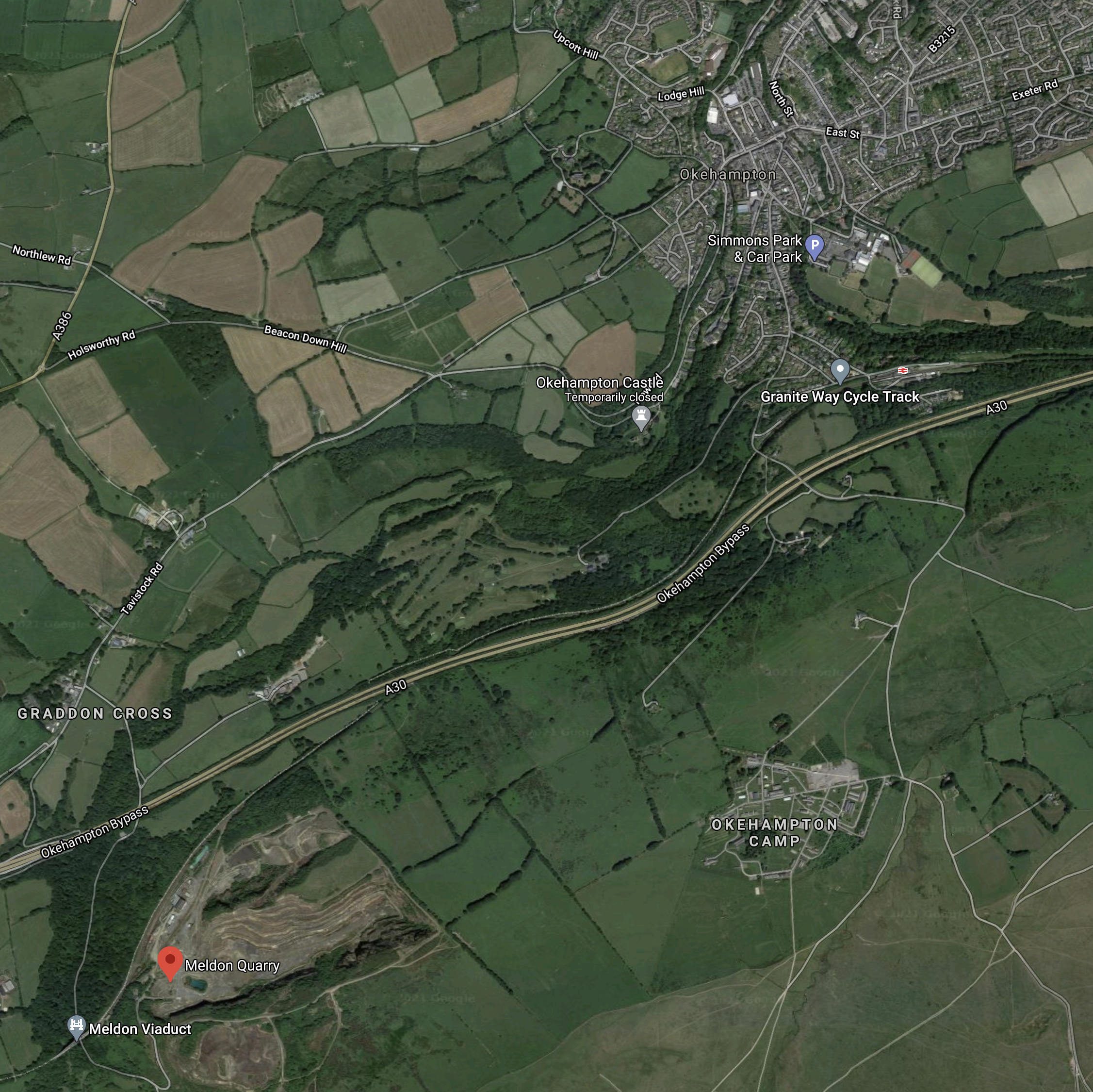
This Google Map shows Meldon Quarry and Okehampton.
Note.
- Meldon Quarry is in the South-West corner of the map marked by a red marker.
- To its West is Meldon Viaduct, which is part of the old railway line between Okehampton and Plymouth, which is now a walking and cycling route.
- The town of Okehampton is in the North-East of the map.
- Okehampton station is in the South-East of the town close to the A 30.
I wouldn’t be surprised to find, that Network Rail are upgrading the line to Okehampton, so that if they need to obtain quality track ballast from Meldon Quarry, it would not require upgrades to the track East of Okehampton.
Okehampton Camp
Note Okehampton Camp to the South of Okehampton.
Many Army bases like this one need heavy vehicles to be transported to and from the base.
Have Network Rail future-proofed the design of the route to Okehampton, so that heavy vehicles can be transported to the area?
A Railhead For North Devon And North Cornwall
There are two main roads between Exeter and Cornwall.
- The A30 goes to the North of Dartmoor and via Launceston
- The A38 goes to the South of Dartmoor and then via Plymouth
In the past, I’ve always driven to and from Cornwall via the Northern route and I describe one journey in Dancing with Hippopotami.
This Google Map shows the A30, as it passes Okehampton.
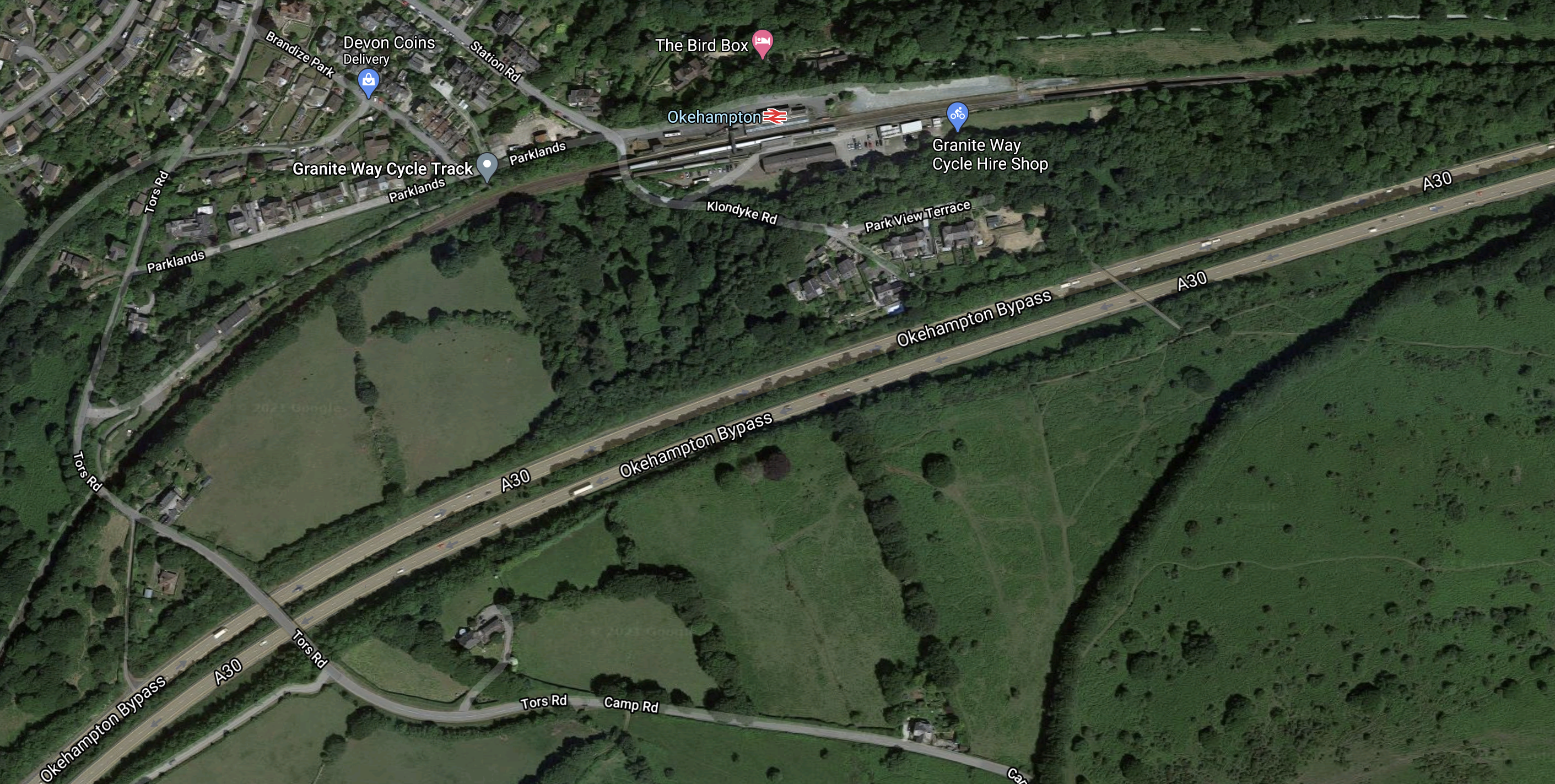
Note that although the station and the A30 are physically close, there would be a few minutes to drive between the two.
But I do feel there is scope to create an appropriate transport interchange between.
- Trains to and from Exeter.
- Buses and coaches to North Cornwall and North Devon.
- Cars on the A30.
It could effectively become a parkway station.
An Alternative Route In Case Of Trouble Or Engineering Works At Dawlish
Bodmin Parkway and Okehampton stations are about 43 miles apart and I suspect a coach could do the journey in around fifty minutes.
Would this be a sensible alternative route in times of disruption?
- It is dual-carriageway all the way.
- Okehampton station can certainly handle a five-car Class 802 train and could probably be improved to handle a nine- or even ten-car train.
- Trains from London could get to Okehampton with a reverse at Exeter St. Davids.
I don’t know the area well, but it must be a possibility.
Could Okehampton Have A London Service?
As I said in the previous section, it looks like Okehampton station can handle five-, nine- and possibly ten-car Class 802 trains and there are many pictures of Great Western Railway’s InterCity 125s or HSTs at Okehampton station in years gone by.
I think it would be feasible to run a small number of services between Okehampton and London.
- The service would have to reverse at Exeter St. Davids station.
- As one service every two hours runs between London Paddington and Exeter St. Davids stations, a service to Okehampton could be run as an extension to the current Exeter service.
- It could also stop at Crediton station.
There must also be the possibility of running a pair of five car trains from Paddington, that split at Exeter St. Davids, with one service going to Okehampton and the second one to Paignton.
- Exeter St. Davids and Paignton are 26.3 miles apart and a fast train takes 34 minutes
- Exeter St. Davids and Okehampton are probably a slightly shorter distance.
I suspect that a sensible timetable could be devised.
The specification of the Hitachi InterCity Tri-Mode Train is given in this Hitachi infographic.

Note.
- It is intended to run these trains to Exeter, Plymouth and Penzance.
- The range of the train on batteries is not given.
These trains could use a mixture of diesel and battery power to travel to and from Okehampton and Paignton.
But I also believe that as Hitachi develop this train and batteries have an increased capacity, that it will be possible for the trin to do a round trip from Exeter to Okehampton or Paignton without using diesel, provided the train can leave Exeter with a full battery.
According to Hitachi’s infographic, the train will take 10-15 minutes to fully charge at a station like Exeter. But that would add up to fifteen minutes to the timetable.
I feel if the roughly thirty-five miles of track between Exeter St Davids station and Cogload Junction, which is to the North of Taunton, were to be electrified, then this would mean.
- Trains would be fully charged for their excursions round Devon.
- Trains would be fully charged for onward travel to Plymouth and Penzance.
- Trains going to London would leave Taunton with full batteries to help them on their way on the ninety mile stretch without electrification to Newbury.
- Trains going between Exeter and Bristol could take advantage of the electrification.
Eventually, this section of electrification might even help to enable trains to run between London and Exeter without using diesel.
As the railway runs alongside the M5 Motorway, this might ease planning for the electrification.
The gap in the electrification between Cogload Junction and Newbury could be difficult to bridge without using diesel.
- Cogload Junction and Newbury are 85 miles apart.
- I’ve never seen so many bridges over a railway.
- I actually counted twenty-one bridges on the twenty miles between Westbury and Pewsey stations.
- I suspect some will object, if some of the bridges are replaced with modern ones.
- There would be a lot of disruption and expense, if a large proportion of these bridges were to be replaced.
- Currently, Great Western Railway run expresses to Exeter, Plymouth and Penzance via Taunton and Newbury.
I think, there needs to be some very radical thinking and low cunning to solve the problem.
- Battery technology and the best efforts of engineers from Hitachi and Hyperdrive Innovation may stretch the battery range sufficiently.
- It might be possible to extend the electrification at the Newbury end to perhaps Bedwyn, as there are only a few bridges. This would shorten the distance by up to thirteen miles.
- It may also be possible to extend the electrification at the Taunton end.
- I would expect some bridges could be dealt with using discontinuous electrification techniques.
But I believe that full electrification between Newbury and Cogload junction might be an extremely challenging project.
There must also be the possibility of using lightweight overhead line structures, where challenges are made about inappropriate overhead gantries.
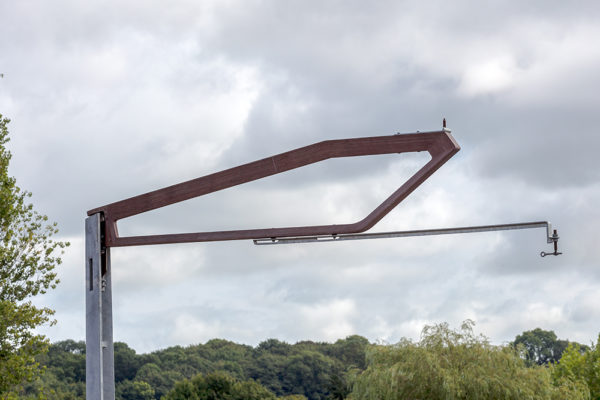
There is also a video.
Note.
- Electrification doesn’t have to be ugly and out-of-character with the surroundings.
- The main overhead structure of this gantry is laminated wood.
These gantries would surely be very suitable for the following.
- Electrifying secondary routes and especially scenic ones.
- Electrifying single lines and sidings.
- Electrifying a bay platform, so that battery electric trains could be charged.
Innovative design could be one of the keys to more electrification.
Will A British Bioelectric Hybrid Plane Really Take Off?
The title of this post, is the same as that of this article on The Guardian.
The article is a serious look from a serious newspaper at the Faradair BEHA.
- It will have a capacity of 18 passengers.
- It will have a cruising speed of 230 mph
- It will have a service ceiling of 14,000 feet.
The aircraft is a tri-plane based on a lightweight carbon-composite structure like many current Airbus designs and the Boeing 787 Dreamliner.
This image is copyright Faradair.

Note.
- The triple wing with the winglets.
- The conventional fuselage.
- The pusher fans at the rear of the fuselage.
It is not conventional.
Power
Power comes from a hybrid power unit consisting of a battery and the auxiliary power unit (APU) of an Airbus A 350 XWB. I wrote about the hybrid power unit in Honeywell Introduces Power Source For Hybrid-Electric Aircraft.
The power unit will run on sustainable aviation fuel produced from something like food, household or industrial waste.
As an experienced pilot and an experienced engineer and taking a few clues from the Guardian article, I believe the aircraft will fly a unique, but very sensible flight profile.
Many years ago, I wanted to fly my Cessna 340 A from Southend Airport to Naples Airport.
- I loaded as much fuel, as the tanks would take.
- I taxied to the runway,
- A fuel bowser followed me down and added extra fuel to make up what I’d used in taxiing.
- Take-off was on full power and I climbed at maximum rate to as high as I was allowed.
- Once over France, I climbed to Flight Level 195 (19,500 ft), which was the highest level allowed in a light aircraft in full visibility without a full instrument rating.
- The French Air Traffic Control handed me over to Italian Air Traffic Control at the same height.
- I flew down the West coast of Italy at around 200 mph.
- North of Naples, I descended slowly, trading height for speed and turned to come straight in to Naples airport.
Note.
- It had taken me six hours and forty minutes to fly around 1350 miles.
- What I had done in UK and French airspace was totally legal, but I suspect I broke the law in Italy.
- But the French ATC felt I was competent, so they just handed me over.
Sadly, I didn’t have a camera with me, as the views of Rome and the Italian coast were spectacular.
I believe that the Faradair BEHA will use a similar flight profile to that, which I used between Southend and Naples.
- The plane will leave the terminal or apron with a full battery.
- Before take-off, the hybrid power unit will make sure that the battery is full.
- Take-off will be on full power and the lift of three wings will be used to lift off quickly and climb at maximum rate to the service ceiling of 14,000 feet.
- The aircraft will build up speed to 230 mph using power in the battery or some extra power from the hybrid power unit.
- The aircraft would execute a low power approach at the destination.
Note.
- Unlike in my flight to Naples, an autopilot will probably fly the aircraft to the maximum range profile.
- The plane will be very aerodynamically efficient and I suspect fuel consumption will be very low in the cruise.
- The higher you go, the less the air resistance.
- Fuel consumption would be almost nothing in the descent, as just as I did in my Cessna potential energy would be converted into kinetic energy to keep the plane at the necessary flying speed.
Faradair have not disclosed the range, but I feel with development, it could be a thousand miles.
Conclusion
By 2030, many of us will be flying around a thousand miles in weird looking airliners with up to twenty-five seats.
The 317 miles between Stansted and Edinburgh will be a piece of cake!
Everybody should read the excellent Guardian article.
Swift Express Freight Demonstrator To Be Tested
The title of this post, is the same as that of this article on Railway Gazette.
This is the first paragraph.
Leasing company Eversholt Rail and Ricardo have teamed up to develop an electric multiple-unit intended to demonstrate a cost-effective and low carbon way of transporting parcels.
Other points include.
- A Class 321 train will be converted.
- The trains have a top speed of 100 mph.
- Each vehicle will handle up to twelve tonnes of freight.
Eversholt are talking to possible operators.
Conclusion
There are various train leasing companies and operators looking at similar concepts.
I’m sure one will create a viable model.
3,000 Homes To Be Built Next To Dagenham Dock Railway Station
The title of this post, is the same as that of this article on Ian Visits.
These are the first two paragraphs.
A sleepy railway station in East London is due to get a lot busier as a large housing development is to be built next to it.
The former Dagenham Stamping Plant car works site has been cleared, and has now been bought by Peabody housing association for development. The initial phase will see 1,550 affordable homes built, supported by an £80 million grant from the Mayor’s Affordable Housing Programme.
There is a lot of housing under construction the area and the c2c lines and the London Overground are being expanded to cope.
- The Gospel Oak and Barking Line is being extended to Barking Riverside station.
- Renwick Road station may be added to this route, where it joins the c2c lines.
- Dagenham Dock station is now fully step-free.
- A new station is to be built at Beam Park to provide a link to housing development.
But there is still only two trains per hour (tph) through Dagenham Dock and Beam Park, as opposed to the four tph, that will run to Barking Riverside.
The simple solution would be to improve the Fenchurch Street and Grays service.
- Currently it is two tph.
- The service calls at Limehouse, West Ham, Barking, Dagenham Dock, Rainham and Purfleet.
- Renwick Road and Beam Park will be added to this service, when and if, they are built.
It needs to have the same frequency as Gospel Oak to Barking which is four tph.
So how could this frequency increase be provided?
For a start, the bay platform at Grays could probably handle four tph with improvement and the route possibly with some signalling improvements could probably cope.

The bay platform at Grays station would probably need lengthening.
It’s just where do you terminate the trains at the Western end?
Fenchurch Street is probably at capacity, as it handles 8 tph in the Off Peak.
- 4 tph – Shoeburyness
- 2 tph – Southend Central
- 2 tph – Grays
But the station handles up to 20 tph in the Peak.
Could it be that with the installation of full digital ERTMS signalling on this route, that four tph between Fenchurch Street and Grays could run all day?
A Possible Crossrail Branch
Crossrail is a herd of testosterone-loaded elephants in the room, that have been locked up by some very poor decision making from the Mayor and Transport for London.
- If ERTMS signalling is one of the keys to unlocking capacity on the tunnels for Crossrail and Thameslink, could its application to c2c services open up possibilities for serious new services in East London.
- As I said, ERTMS signaling could open up the capacity into Fenchurch Street, but would it also allow Grays to be a terminal for Crossrail?
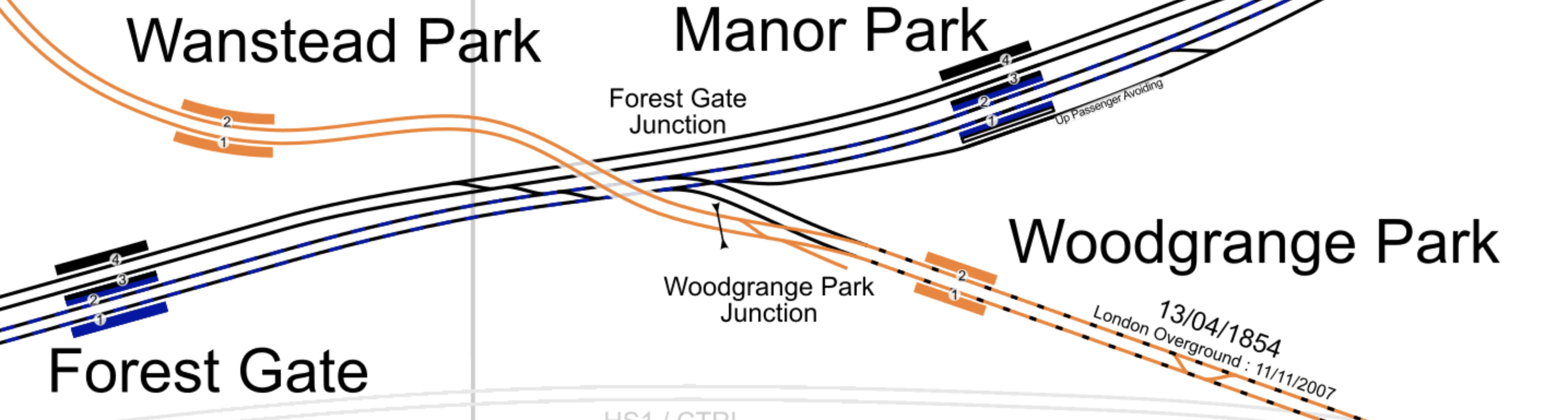
This map from cartometro.com shows Forest Gate Junction, where the Gospel Oak to Barking Line connects to the lines into Stratford and Liverpool Street.
Note.
- The orange tracks are the Gospel Oak to Barking Line (GOBLin).
- Gospel Oak is to the North West and Barking is to the South East.
- The mauve-blue tracks are Crossrail, through Manor Park and Forest Gate stations.
- The black track are the fast lines into Liverpool Street station.
- Forest Gate Junction in the middle is regularly used by c2c trains accessing Liverpool Street, when there are engineering works.
I believe that with ERTMS signalling four or possibly six Crossrail tph could travel between Stratford and Barking stations via Maryland, Forest Gate and Woodgrange Park stations.
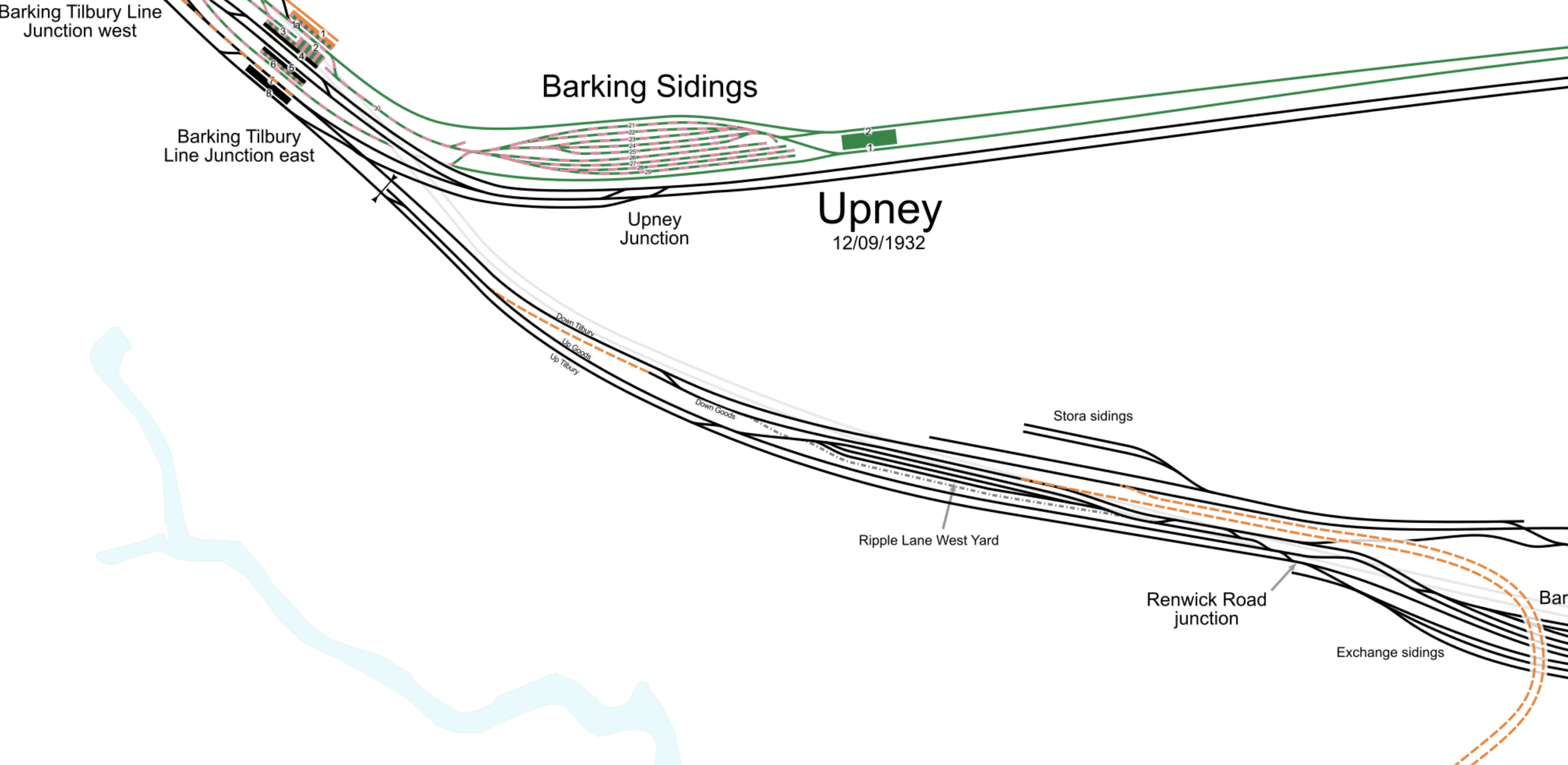
This second map from cartometro.com shows the lines through Barking station.
Note.
- Barking station is in the North-West corner of the map.
- The orange platform on the North side of Barking station is Platform 1, which is the current terminal of the GOBLin.
- After the Goblin is extended to Barking Riverside, the GOBLin services will share Platforms 7 and 8 with the Fenchurch Street to Grays services.
- Platforms 7 and 8 are on the South side of the station and they are connect to the GOBLin lines by a flyover.
- To the East of the station, the GOBLin route is shown in orange.
- The GOBLin turns South to Barking Riverside station, which is by the Thames.
I suspect that there is capacity for more trains.
- There will only be six tph through Platforms 7 and 8 at Barking station.
- There will be four tph over the flyover and through Woodgrange Park station.
I believe that terminating four Crossrail tph at Grays could be an interesting possibility.
What Is The £150m Global Centre For Rail Excellence Scheme In South Wales?
The title of this post, is the same as that of this article on Business Live.
This sub-title is a good summary.
The Welsh Government project aims to create a world first in testing trains and rail infrastructure at the same facility
It looks like it will be very comprehensive and is a classic example of the sort of things we should do to attract world class companies to the UK.
This paragraph talks about one of the site’s uses.
Rail infrastructure cannot be tested on a live railway because there isn’t a safe way of doing it. The internal track will have a wagon travelling around at 40mph putting new infrastructure through its paces with rigorous assessment. When owner of the UK rail network Network Rail, which is committed to using the facility, want to test equipment it has to use the Pueblo testing centre in Colorado, as do equivalent organisations in Europe.
It’s surely easier to go from anywhere in Western Europe to Wales than Colorado. Especially, if you want to take some equipmement that might weigh several tonnes.
Conclusion
The Welsh seem to have done their homework and also come up with an innovative use for a worked-out open cast coal mine.
Why I Will Never Use DPD
I keep getting messages from DPD say they have missed me. I’ve had about six.
I know they are scams as the sending e-mail is xxxx.xxxx@hotmail.it. I have the real address.
So I thought I should report this idiot, to DPD, as perhaps it might help find the scammer, so he can be arrested.
But there is no information on their web site, let alone a place to report them.
I don’t deal with companies who don’t look after their customers.
I reported the message to report@phishing.gov.uk.
Highview Power Introduces Revolutionary Cryogenic Energy Storage Technology To The African Market
The title of this post, is the same as that of this article on the African Review.
This is the first paragraph.
Javier Cavada, CEO and President of Highview Power spoke to African Review about the company’s cryogenic (air liquefaction) battery storage solutions and why they are a perfect fit for the continent
It appears to me, that the story, which started in a garage in Bishops Stortford, is going to have a happy ending for the world.
The article is a must read and I particularly liked this paragraph.
Cavada also noted how cryogenic technology complemented this transition. He added, “The main energy companies call our technology ‘pumped hydro in a box’ and that is how we have been making it. You can deploy over 1GWh without geographical constraints. There is no combustion, no emissions and no rare materials needed. All it comprises is some piping work, compressors and a generator, so it is pretty simple. Our mission is to enable a world that is grid powered by solar and wind, not fossil fuels, and this technology will help us achieve this.”
This is the brightest shade of green!
Beeching Reversal – Firsby And Louth
This is one of the Round 3 bids of Beeching Reversal projects that the Government and Network Rail are proposing to reverse some of the Beeching cuts.
The Proposed Route
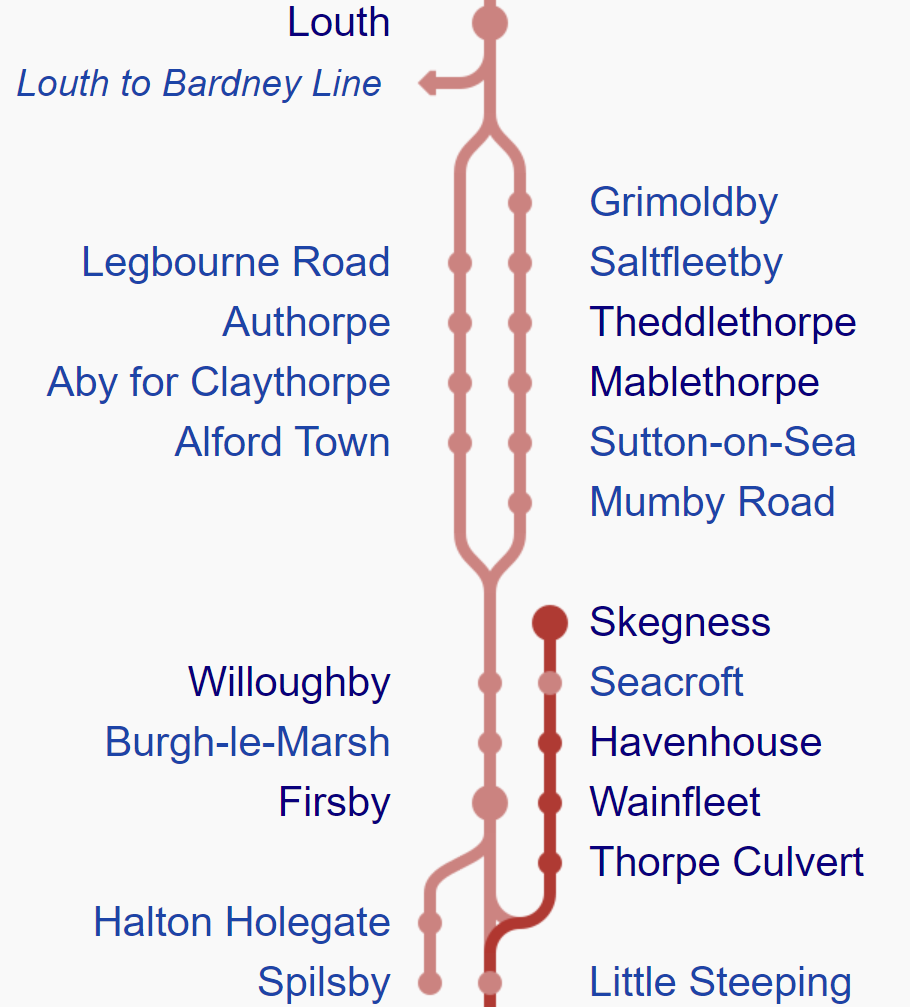
This route was part of the historic East Lincolnshire Railway, which is shown in this diagram from Wikipedia.
Note.
- North of Louth, the line used to connect to Grimsby Town, Immingham and Cleethorpes.
- The loop that goes through Mablethorpe.
- Boston is to the South.
- The Poacher Line between Boston and Skegness is the only section that is still open.
These Google Maps show sections and features of the route.
North From Spilsby Road Level Crossing
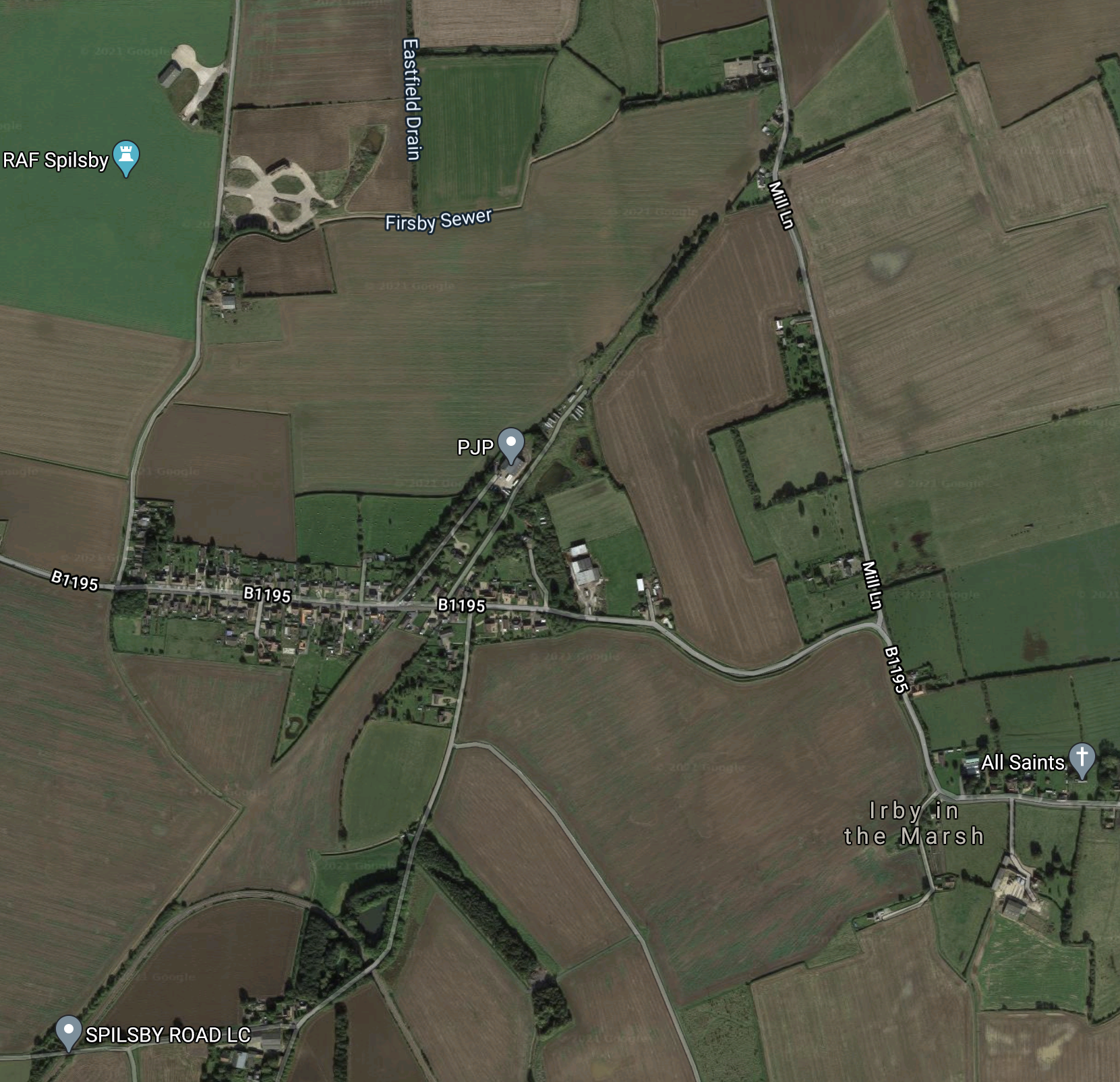
The Spilsby Road level crossing is in the South-West corner, with the track of the old railway between Firsby and Louth going to the North-East.
Junction With The Poacher Line
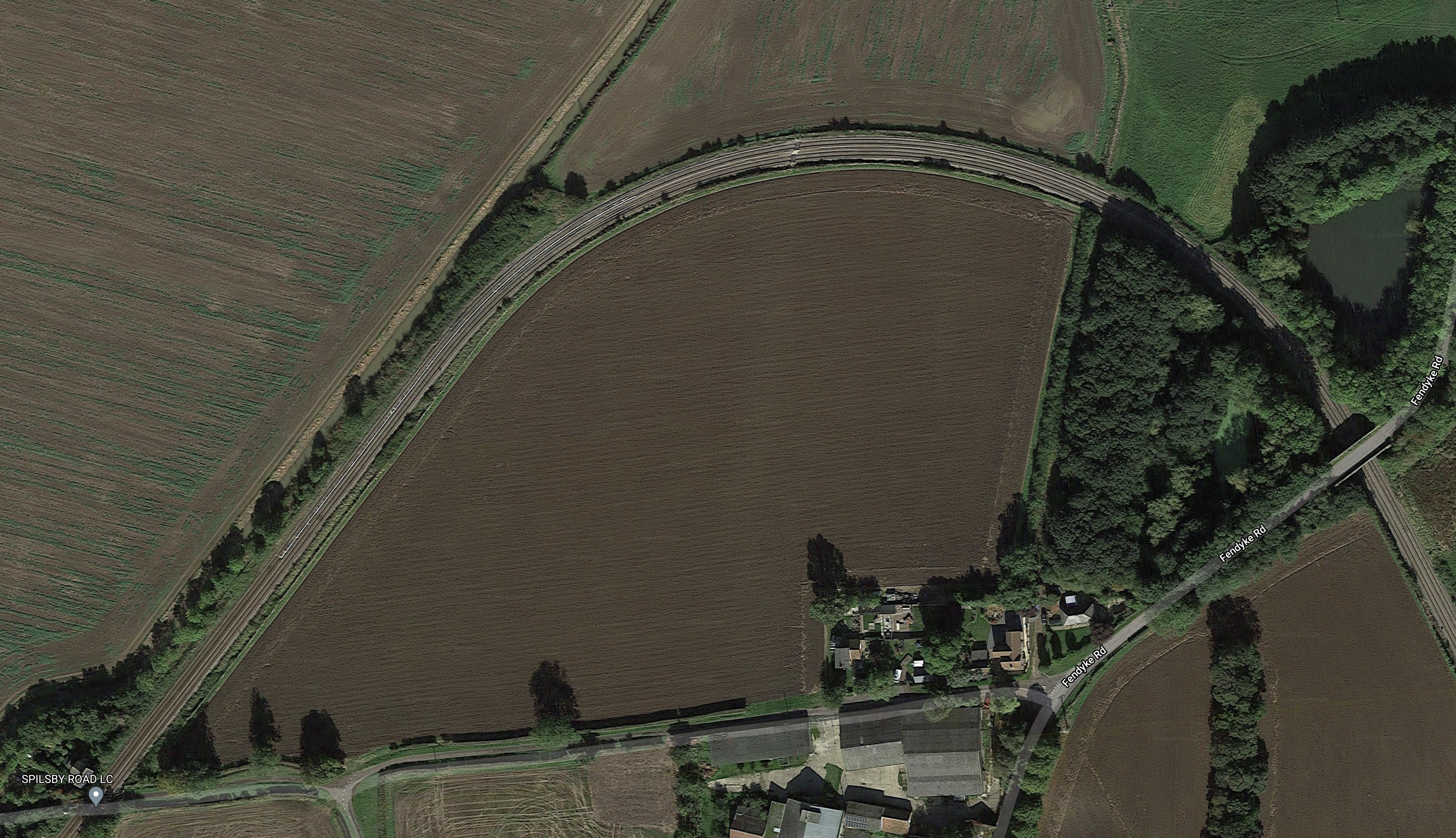
This is an enlargement of the South-West corner of the map.
- The Spilsby Road level crossing can be seen.
- The Poacher Line does a loop and goes South-East on its way to Skegness.
- It looks like Firsby station was quite important, with three platforms and lots of facilities.
A junction could be built here to connect the Firsby and Louth line to the Poacher Line.
Would a station built between the lines, be possible to provide interchange between the Louth and Skegness trains?
Willoughby Station
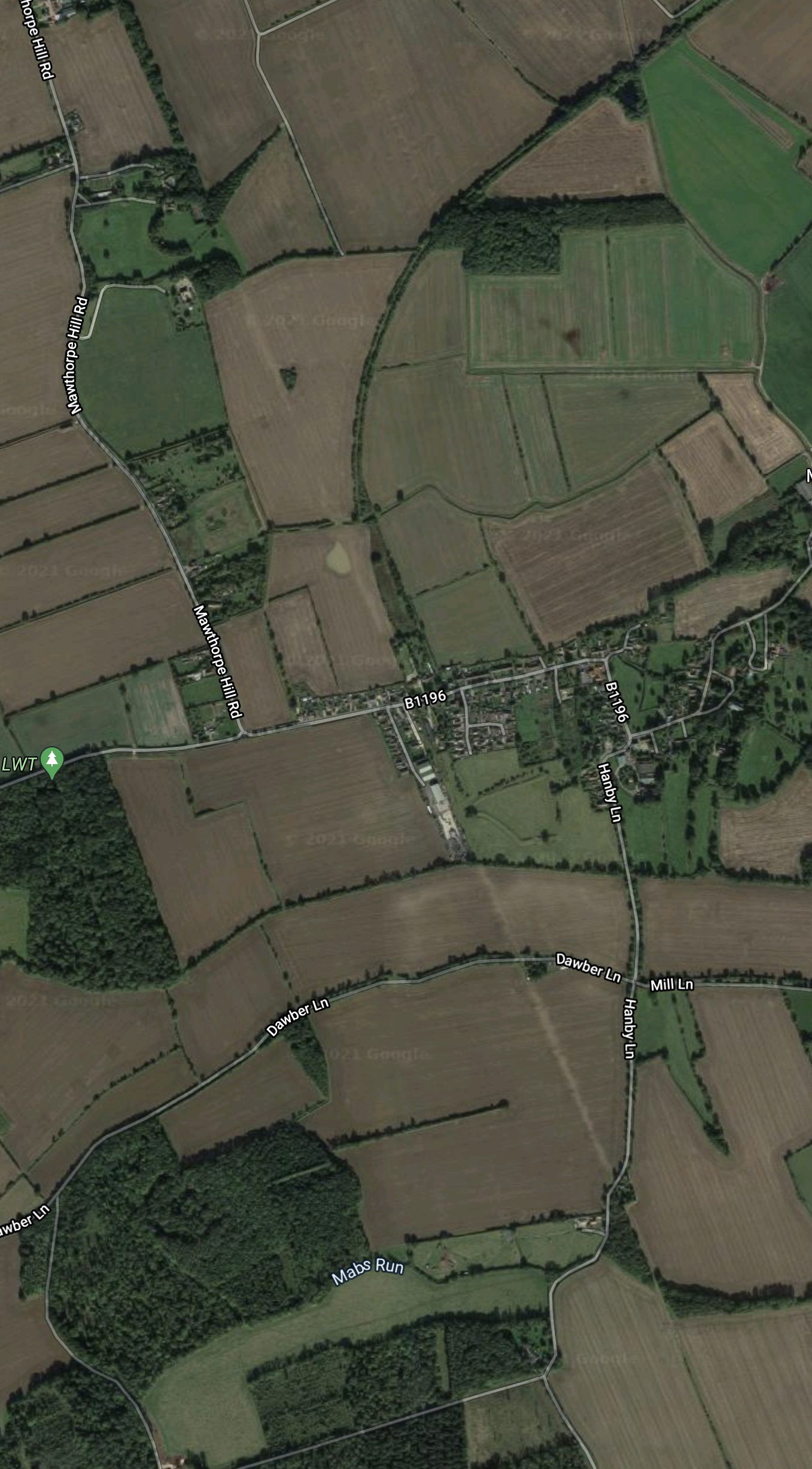
Note.
- The scar of the East Lincolnshire Railway can be followed from the South-East corner to the North-West corner of the map.
- The green scar of the Mablethorpe loop can be seen branching off from the East Lincolnshire Railway to the North-East corner of the map.
Could a station be rebuilt at Willoughby?
Alford And Alford Town Station

Note.
- The green scar of the East Lincolnshire Railway can be can be followed from the South-East corner to the North-West corner of the map.
- The town is Alford
- If you click on the map to enlarge it, you can see Station Road, which must have been the location of Alford Town station.
I would have thought a station would be needed.
Straight Between Alford And Louth
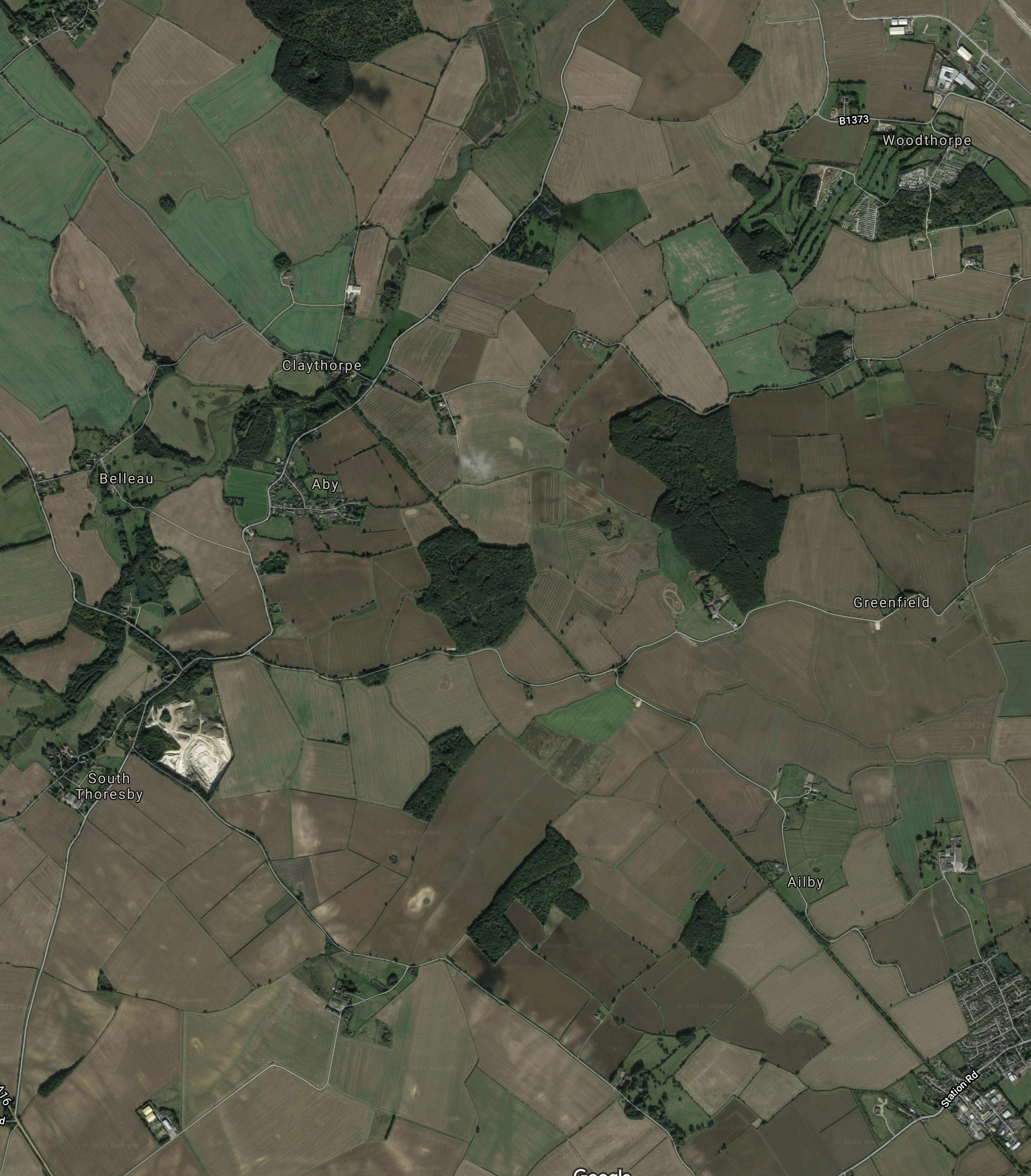
Note.
- The green scar of the East Lincolnshire Railway can be can be followed from the South-East corner to the North-West corner of the map.
- There are three stations on this section; Aby for Claythorpe, Authorpe and Legbourne Road.
This section would appear to be a rail engineer’s dream.
How many stations would be needed?
Louth

Note.
- The green scar of the East Lincolnshire Railway can be can be followed from the South-East corner to the North edge of the map.
- Louth is the largest town in Lincolnshire without a station.
It could be difficult to thread the line through the town.
Onward To Grimsby
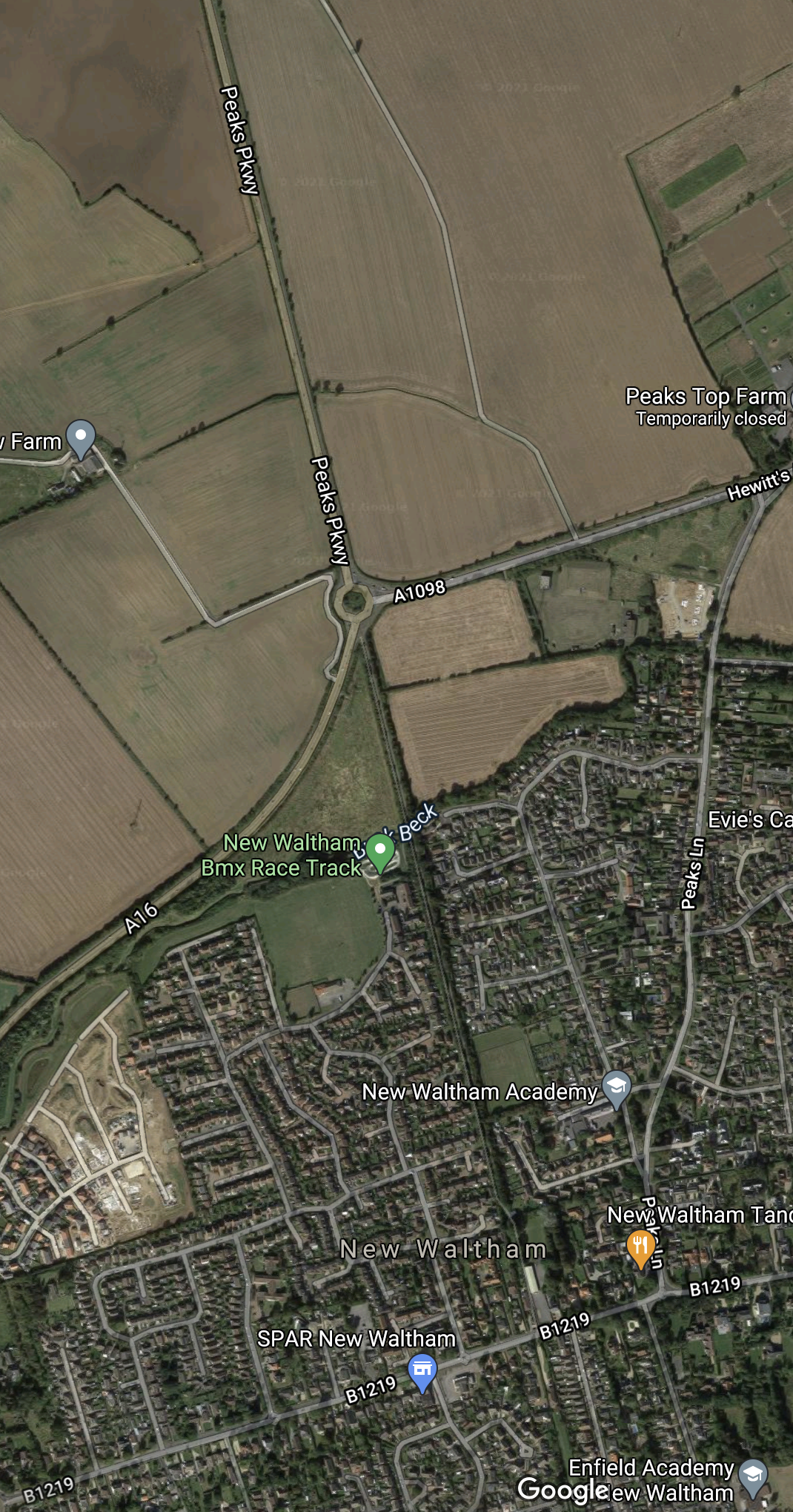
The map shows the final section of the route between Louth and Grimsby.
Note that from North of New Waltham, the track bed has been used for Peeks Parkway.
Does this mean that any reopened rail line between Firsby and Louth must end at New Waltham or Louth?
Grimsby Town Station And Centre
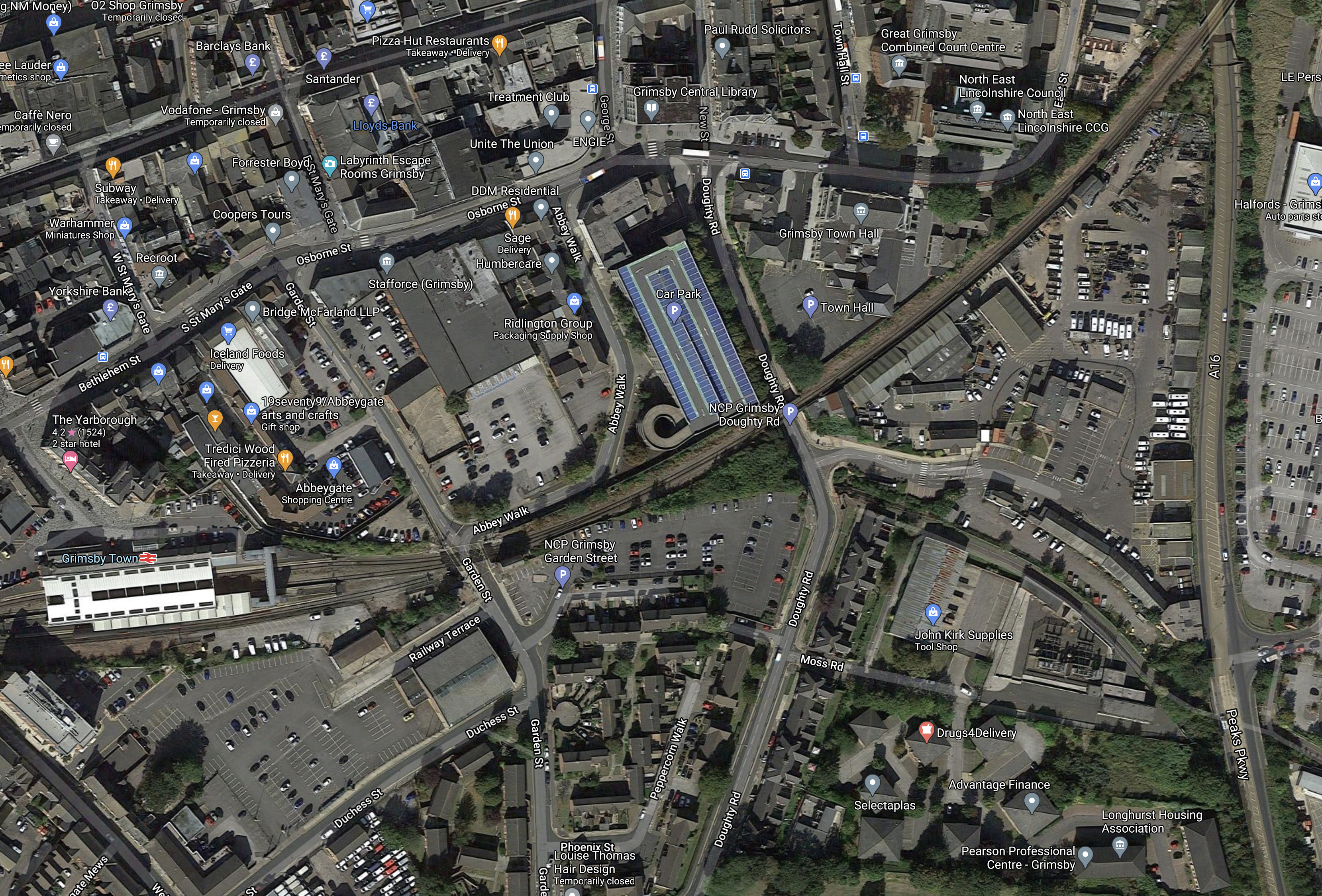
Note.
- Grimsby Town station is in the West.
- The rail line between Grimsby Town and Cleethorpes stations runs across the map.
- Peeks Parkway runs up the East side of the map.
- It looks to me, that this was once a large triangular junction, that also allowed trains to go between Grimsby Town an Louth stations.
Grimsby town centre seems to have been planned for cars and losers without cars can go elsewhere.
Thoughts On The Firsby And Louth Rail Link
I have a few thoughts on the possible design of a rail link between Firsby and Louth.
Should The Line Allow Freight Trains?
It might be a future need that freight trains will need to go between say Peterborough and Immingham, but I don’t think any use that route at present.
So other than the occasional maintenance train, I think the route could be freight-free at present.
Should The Line Terminate at Grimsby?
Consider.
- Grimsby is a town of 88,000
- It is a large centre for food processing, which needs large numbers of people.
- Grimsby is becoming an increasing important centre for the development of renewable energy.
- Grimsby and Boston are nearly fifty miles apart, which illustrates that Lincolnshire is not a small county.
I believe in a perfect world, Grimsby would have an hourly train service to Boston via Louth and several other stops.
Terminating at Louth rather than Grimsby would be like terminating all trans pennine services at Leeds.
So how would a line terminate at Grimsby?
- The missing side of the triangular junction could be rebuilt, so that traIns could run between Grimsby Town and Louth stations.
- Trains could terminate at a new Grimsby South station on the outskirts of the town.
- Trains could continue through Grimsby Docks station and terminate at Cleethorpes. with possibly an additional station in Grimsby town centre.
There is always an innovative tram-train solution, where with a small amount of street running, they sneaked into the town centre and called at Grimsby Town station and the major places people needed to visit.
This solution has been proposed for Ipswich and Felixstowe by East West Rail to increase the capacity on the Felixstowe Branch. I wrote about this scheme in Could There Be A Tram-Train Between Ipswich And Felixstowe?.
It would be challenging, but I think that it might be possible.
Failing that, I believe that a single-track could be sneaked along Peeks Parkway and go through the town centre to Grimsby Docks and Cleethorpes. stations.
The distance between Cleethorpes and New Waltham is about 7 miles.
A train would probably take about ten minutes.
Any town centre station could be a single platform.
Would An Hourly Service Be Enough?
An hourly service between Boston and Louth would probably be enough, but in an ideal world two trains per hour (tph) would probably be better.
- A single-track section between New Waltham and Cleethorpes could probably handle four tph working bi-directionally.
- Two tph is also regularly handled on single platform stations, like Galashiels and Newcourt.
- The long straight sections of the route offer lots of scope for loops.
My feeling, is the service should start hourly, but that it can be designed to be upgraded to two tph. Or it could even work at two tph at certain times of the day.
Could Boston and Cleethorpes Be Run In Fifty Minutes?
Consider.
- This time would be ideal for a service as it would give ten minutes to turn the trains at both ends.
- Boston and Cleethorpes would be the longest service that would be run and it is 50 miles.
- Fifty minutes would need an average speed including stops of 60 mph.
- Ipswich and Cambridge is run at an average of 43.2 mph with seven stops.
- The straight and flat Breckland Line has an operating speed of between 75 and 90 mph.
- Trains between Cambridge and Norwich average 53 mph with six stops.
I believe that the Firsby and Louth line could be built with an operating speed of up to 90 mph and fifty minutes between Boston and Cleethorpes could be possible.
Will Firsby And Louth Be Single Track?
I believe that the route can be single track with one platform stations.
This will save both space and costs and would probably allow two tph with careful design.
As there are long straight sections to the North of Alford, I suspect it wouldn’t be difficult to add passing loops, if they were required.
What Rolling Stock Would Be Used?
Lincolnshire is a renewable energy-rich county and because of offshore wind and the HumberZero project, Lincolnshire will probably have more wind power and green hydrogen per head of population, than any other area of the UK.
So undoubtedly, the trains will be zero carbon, which means, electrification, battery electric or hydrogen trains.
If new trains are in the budget, then the obvious candidate is the Hitachi Regional Battery Train.
The specification is given in this Hitachi infographic.

Note that it is a 100 mph train with a range of 56 miles.
It would need to be charged at both ends of the route.
In Cleethorpes Station – 16th September 2020, I suggested that electrification be added between Cleethorpes and Habrough stations should be electrified, so Cleethorpes and Manchester services could be run by Hitachi Regional Battery Trains.
This electrification could be used to charge the trains at Cleethorpes or a charging system could be installed.
This Google Map shows Boston station.
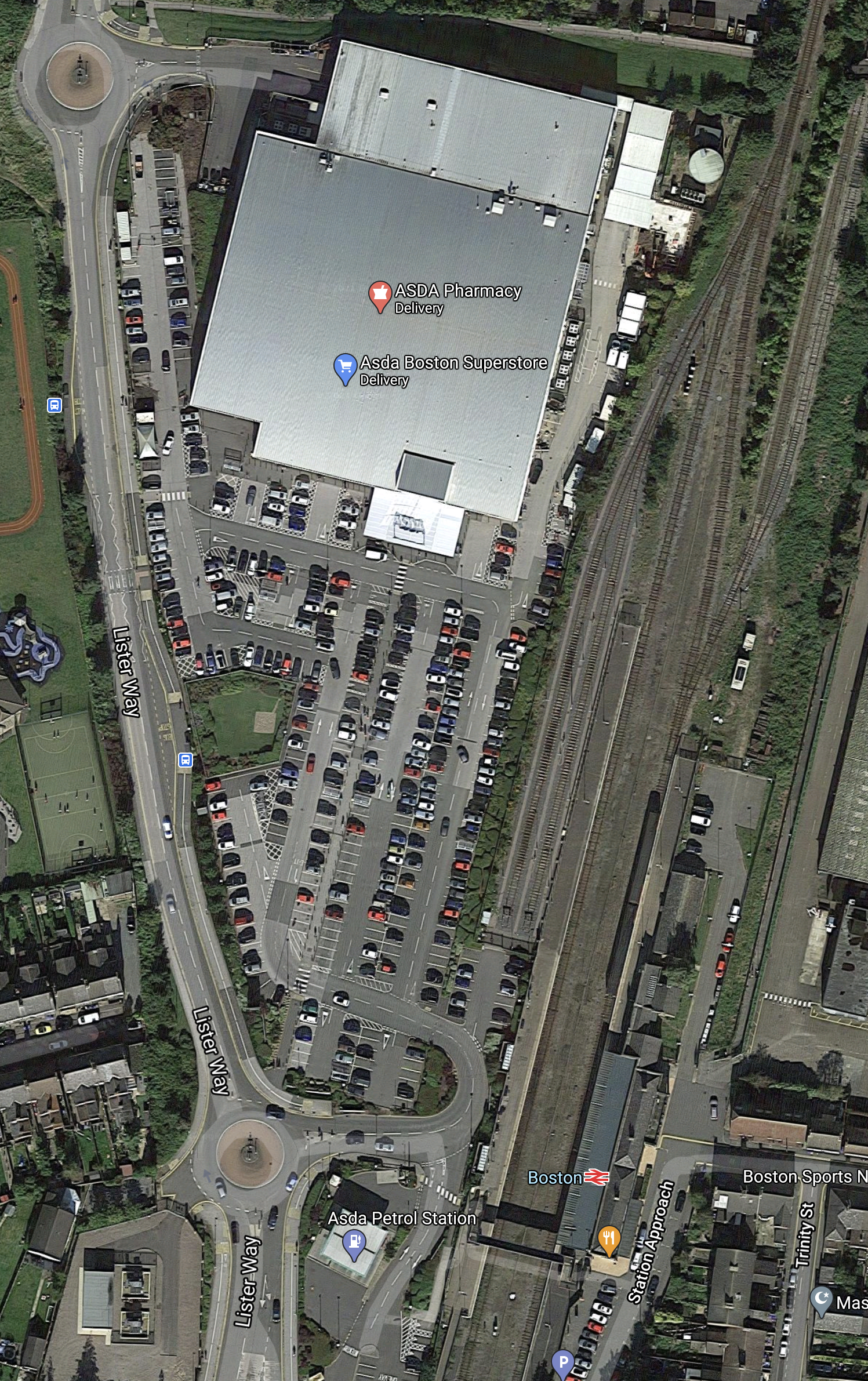
Note.
- The station has only two platforms.
- It looks like there were two North-facing bay platforms.
A charging system would be added to charge the trains.
The other obvious train for the route, would be Alstom’s Class 600 train, which is powered by hydrogen.
This is a visualisation of the train.
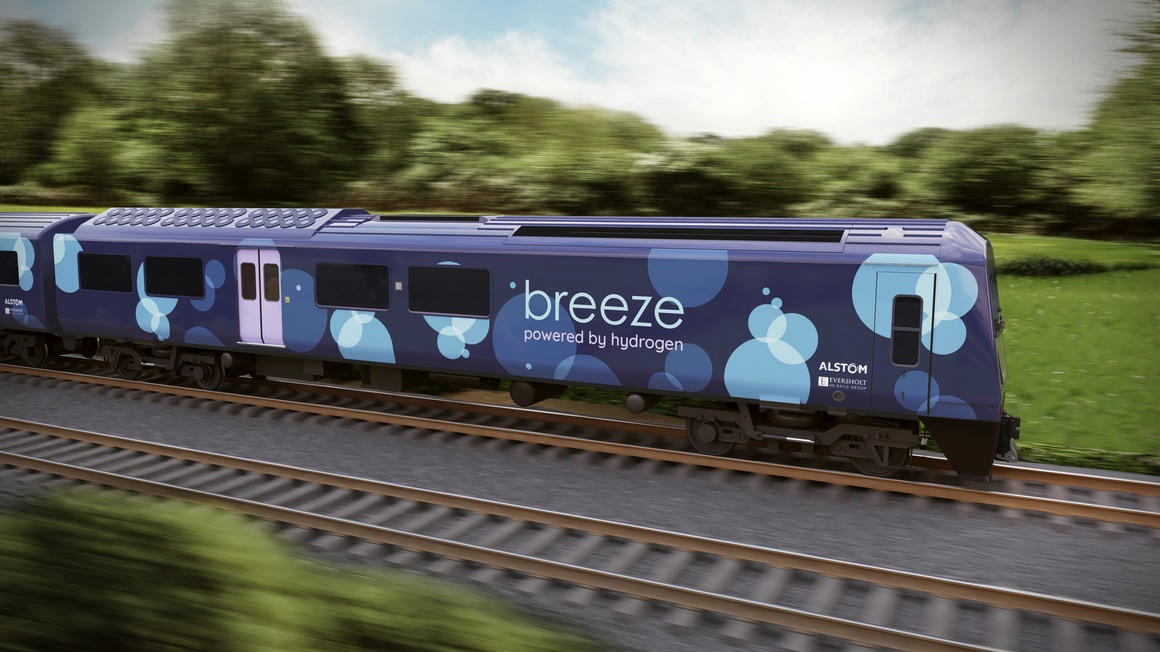
The specification has not been published yet, so there is no idea of the operating speed, although the range will be several hundred miles.
I speculated about the train in Breeze Hydrogen Multiple-Unit Order Expected Soon.
- There will be plenty of hydrogen available in Lincolnshire if the Humber Zero project goes to plan.
- Trains may be able to do several trips between refuelling.
- Trains will not need any infrastructure at Boston.
The forsby and Louth route would be an ideal route for both trains.
The Hitachi product will probably be slightly larger, faster and new!
Rolls-Royce And Tecnam Join Forces With Widerøe To Deliver An All-Electric Passenger Aircraft Ready For Service In 2026
The title of this post, is the same as that of this press release from Rolls-Royce.
This is the first paragraph.
Rolls-Royce and airframer Tecnam are joining forces with Widerøe – the largest regional airline in Scandinavia, to deliver an all-electric passenger aircraft for the commuter market, ready for revenue service in 2026. The project expands on the successful research programme between Rolls-Royce and Widerøe on sustainable aviation and the existing partnership between Rolls-Royce and Tecnam on powering the all-electric P-Volt aircraft.
This picture from Rolls-Royce shows the proposed aircraft.

The P-Volt aircraft is based on the Tecnam P2012 Traveller.
The specification of this aircraft is as follows.
- Crew – 1 or 2
- Capacity – 9 passengers
- Powerplant – 2 x 280 jW piston engines.
- Cruise speed – 200 mph
- Range – 1090 miles
- Service ceiling – 19,500 ft.
The aim is to have an aircraft in service by 2026.
Use By Widerøe
This paragraph from the press release, outlines Widerøe‘s planned use of the aircraft.
The collaboration offers an opportunity to develop an exciting solution to the commuter aircraft market. Before the pandemic, Widerøe offered around 400 flights per day using a network of 44 airports, where 74% of the flights have distances less than 275 km. The shortest flight durations are between seven and fifteen minutes. Developing all-electric aircraft will enable people to be connected in a sustainable way and will fulfill Wideroe’s ambition to make its first all-electric flight by 2026. The all-electric P-Volt aircraft, which is based on the 11-seat Tecnam P2012 Traveller aircraft is ideal for the short take-off and landing as well as for routes in the North and the West Coast of Norway.
Conclusion
There are now five electric or low-carbon aircraft in the sub-nineteen passenger segment.
- The Cessna eCaravan, which I wrote about in Watch First Electric Caravan Fly.
- The Eviation Alice, which I wrote about in Orders For A New All-Electric Airplane Now Top 150.
- The Faradair BEHA, which I wrote about in Faradair’s BEHA Hybrid Aircraft Boosted By Partnerships.
- Project Fresson, which is an electric version of a Britten-Norman Islander.
Note.
- The Slice and the Faradair are new designs.
- The Faradair is hybrid and all the others are fully electric.
- The Faradair can carry eighteen passengers and all the others are smaller.
- I suspect there are others under development.
Conclusion
The Tecnam P-Volt must have a high chance of success.
- It’s designed for a purpose in a particular airline.
- The Widerøe model would apply to large number of small feeder and commuter airlines.
- Rolls-Royce are well-respected in aviation.
- An existing airframe is being used, which shortens certification.
- Norway is not short of a few bob.
- Cape Air have ordered 93 of the piston engined variant.
I will look forward to flying this aircraft.
 The Anonymous Widower