Extending The Elizabeth Line – Piccadilly Line To Ealing Broadway
Transport for London have proposed a reorganisation of the Piccadilly and District Lines in the Ealing area.
I first wrote about this in Is There Going To Be More Change At Ealing Broadway Station?, but now the Elizabeth Line is on the verge of being connected across London, I feel that this post needs to be replaced.
A Possible Proposal
Ealing Broadway station is being upgraded for Crossrail.
In the November 2017 Edition of Modern Railways, there is a Capital Connection supplement, which discusses London’s railways.
On Page 7 in a section about the sub-surface lines, this is said.
One possibility being discussed is that the Piccadilly should take over the District’s Ealing Broadway service. This would free up space on the South side of the inner-London circle for more City trains off the Wimbledon branch, one of the sub-surface network’s most-crowded routes.
On Page 15 in a section about the Mayor’s plans, this is said.
It is suggested Piccadilly Line services run to Ealing Broadway instead of the District Line, enabling increased frequencies on the latter’s Richmond and Wimbledon branches.
As the plan is mentioned twice, certainly the proposal is being thought about.
The Lines At Ealing Broadway Station
This map from carto.metro.free.fr shows the lines at Ealing Broadway station.
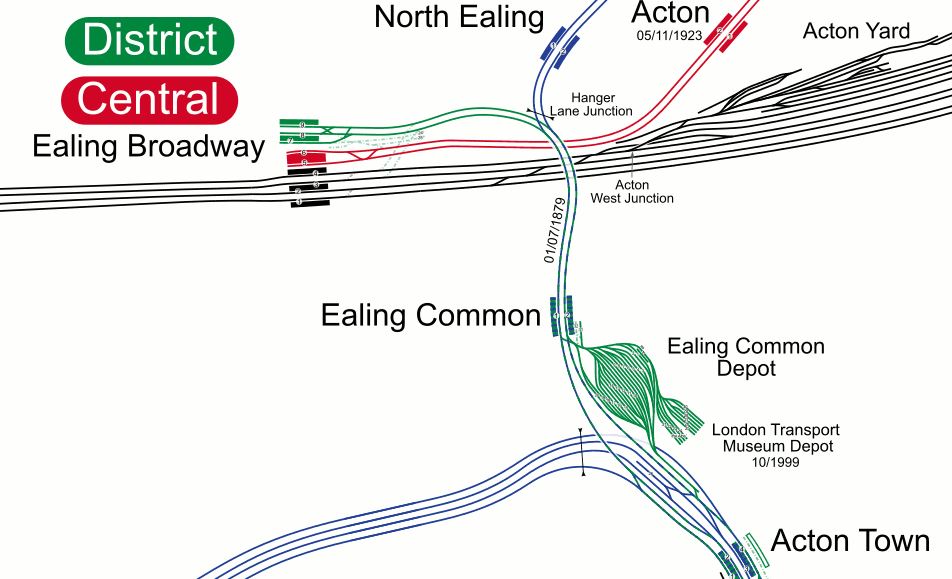
Note how the Piccadilly and District Lines share tracks from Ealing Common station, which then split with District Line trains going to Ealing Broadway station and Piccadilly Line trains going to Rayners Lane and Uxbridge stations.
If the change happened and Ealing Broadway station was only served by the Piccadilly and Central Lines of the Underground, then there might be opportunities to improve the efficiency of the Underground side of the station.
Capacities And Lengths Of London Underground Trains Serving Ealing Broadway Station
I’ll express these as a table.
- Central Line – 1992 Stock – 930 passengers – 130 metres – 7.15 pass/m.
- District Line – S7 Stock – 1209 passengers – 117.45 metres – 10.29 pass/m.
- Piccadilly Line – 1973 Stock – 684 passengers – 106.8 metres – 6.40 pass/m.
- New Tube for London – 1076 passengers – 113.7 metres – 9.46 pass/m.
Note.
- The New Tube for London is the shortest train, with the second highest capacity and the highest passenger density.
- The New Tube for London will be replacing the Piccadilly Line trains first.
- The New Tube for London will be replacing the Central Line trains second.
It looks like there will be no platform-length problems running the New Tube for London to Ealing Broadway station.
The District Line Platforms At Ealing Broadway Station
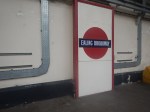
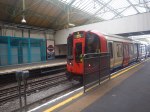
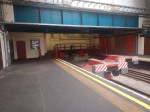
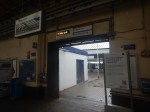
These pictures show the District Line at Ealing Broadway station.
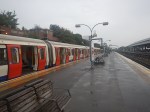
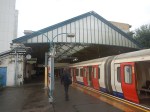
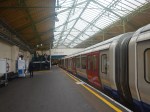

Note.
- There are three platforms for terminating District Line trains, which are numbered 7 to 9.
- The service frequency is six trains per hour (tph).
- The bridge to the far platform 9, is not step-free.
- It appears to be possible to walk between platforms 8 and 9 behind the buffer stops, but it wasn’t signed.
- As a comparison the Central Line runs 9 tph to East London from two platforms, that are numbered 5 and 6.
- There was also a 3 tph Night Tube service before the pandemic, which appears to be running again.
- Platforms 8 and 9 seem to be covered by a building of very little architectural merit.
This map from OpenRailwayMap shows the detailed platform layout.
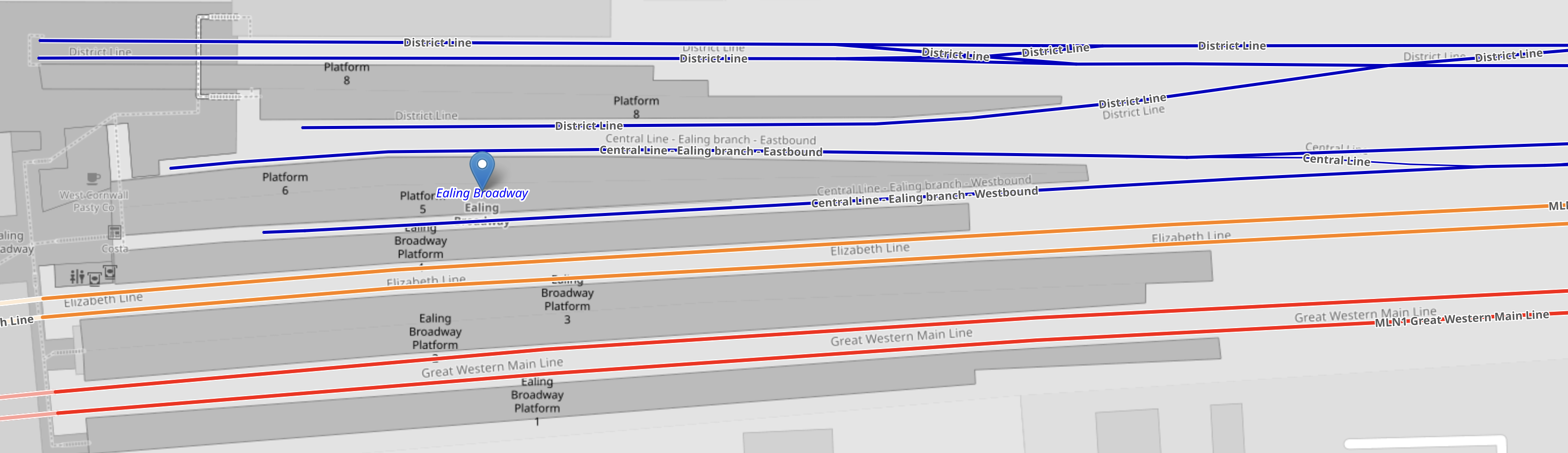
Note.
- Platforms are numbered from 1 to 9 from the South.
- Underground tracks are shown in blue.
- Elizabeth Line tracks are shown in orange.
- Great Western ~Main Line tracks are shown in red.
I believe that the three District Line platforms could be upgraded into an excellent terminus for another branch of the Piccadilly Line.
Consider.
- Two platforms would probably be enough, but a third would be useful for service recovery.
- As the Piccadilly and Central Line trains are the same size, could Platform 7 be a platform be available to both Underground services when needed?
- The New Tubes for London are a few metres shorter than the current District Line trains, so would this help in creating a step-free level walkway between Platforms 8 and 9, behind the buffer stops?
- Platforms 8 and 9 may need to be lengthened.
- Is there any scope for any appropriate oversite development?
I certainly believe that a much better replacement could be created.
Changing Between The Underground Lines And The Elizabeth Line At Ealing Broadway Station
Ealing Broadway station is now step-free and changes between the Eastbound Elizabeth Line and the Underground are a walk on the level.
Only when changing to or from the Westbound Elizabeth Line do you need to use stairs and/or a lift.
Elizabeth Line Effects On Access To Heathrow
The Elizabeth Line will change the way a lot of passengers go to and from Heathrow Airport.
Elizabeth Line To Heathrow
At present, the service will be.
- 4 trains per hour (tph) between Paddington and Heathrow Central and Heathrow Terminal 4 or Heathrow Terminal 5 via Ealing Broadway.
After November 6th, 2022, the service will be.
- 4 tph between Abbey Wood and Heathrow Central and Heathrow Terminal 4
- 2 tph between Abbey Wood and Heathrow Central and Heathrow Terminal 5
In addition these services will serve all station including Canary Wharf, Liverpool Street, Bond Street, Paddington and Ealing Broadway.
Effect On Heathrow Express
It will be difficult to predict what will happen to Heathrow Express, but I suspect several groups of passengers will desert it.
- Passengers wanting to go anywhere East of Paddington without changing trains.
- Passengers wanting any Elizabeth Line station.
- Passengers, who don’t like the prices of Heathrow Express.
- Passengers using Oyster or contactless cards.
- Passengers who want to ride on London’s spectacular new Elizabeth Line.
- After Old Oak Common station is opened for High Speed Two, the numbers could further decrease.
Will Heathrow Express survive?
Effect On Piccadilly Line
The current Piccadilly Line route to the Airport will not be closed, as for many it will still be a convenient route to the Airport
- Passengers who live on the Piccadilly Line and don’t want to change trains. Think Southgate, Knightsbridge, Hammersmith and Osterley!
- Passengers to the West of Acton Town station.
- Passengers, workers and others needing to go to Hatton Cross station.
If the Elizabeth Line connected with the Piccadilly Line at say Holborn, it would be all so different.
Effect On District Line
When Crossrail opens, the District Line will become a loop from Crossrail, between Ealing Broadway and Whitechapel running along the North Bank of the Thames via Earls Court, Victoria, Charing Cross and Monument.
The step-free interchange at Ealing Broadway could become busy with passengers travelling to and from the Airport.
Effect On Piccadilly Line Overcrowding
Heathrow trains on the Piccadilly Line can get very overcrowded with so many passengers with heavy cases.
It must sometimes be very difficult to get on a Piccadilly Line train between Heathrow and South Kensington stations.
The Elizabeth Line should take the pressure from these trains, by allowing passengers to use the District Line with a change at Ealing Broadway.
The New Tube for London will also help to reduce the overcrowding.
Effect On My Personal Route
My personal route to the airport is to take a 141 bus to Manor House station and then get the Piccadilly Line. It takes 94 minutes.
After the Elizabeth Line fully opens, if I take the East London Line from Dalston Junction to Whitechapel and then used Crossrail, I’d take 57 minutes.
Conclusion
The Elizabeth Line will affect the way many get to and from Heathrow Airport.
But there are large areas of London, who still will need to change trains twice to get to the airport. But for many, one of those changes will be a step-free one at Ealing Broadway, Paddington or Whitechapel stations.
Piccadilly Line To Ealing Broadway Effects
Adding Ealing Broadway station as a fourth Western terminus to the Piccadilly Line will have effects, but not as important as the opening of the Elizabeth Line.
Some Improved Journey Times To Heathrow
Some Piccadilly Line stations will see improved journey times to Heathrow.
Hammersmith to Heathrow currently takes 37 minutes by the Piccadilly Line.
Taking a Piccadilly Line train to Ealing Broadway and then using the Elizabeth Line could save a dozen minutes.
The District Line Connection To The Elizabeth Line At Ealing Broadway Is Lost
Passengers along the District Line from Monument to Hammersmith will lose their direct access to the Elizabeth Line at Ealing Broadway.
Cross-platform access to the Piccadilly Line at Hammersmith and other stations will probably be provided or improved, but it will be a second change.
Note that until the Piccadilly Line gets upgraded and new trains arrive around 2023, the District Line with new trains and the soon to be installed new signalling may well be a better passenger experience.
More Trains To Richmond
This will certainly be possible, if some Ealing Broadway trains are diverted to Richmond.
But the Elizabeth Line has another delight in its cupboard for Richmond.
Old Oak Common station is scheduled to open in 2026 and will offer an interchange between the Elizabeth Line and the North London Line.
Richmond will certainly be getting a better train service to Central and East London.
More Trains To Wimbledon
This will certainly be possible, if some Ealing Broadway trains are diverted to Wimbledon.
The Ealing Common Problem
At Ealing Common station, the Piccadilly and District Line share the same tracks and platforms.
Some commentators have suggested that the new trains on the Piccadilly Line will be designed to work with platform-edge doors for improved safety and dwell times.
So if platform-edge doors were to be fitted to all stations on the Piccadilly Line as has been suggested, there would be no way the doors would fit the new S7 Stock of the District Line.
Swapping Ealing Broadway from the District to Piccadilly Lines would solve this problem and give more flexibility, but it might give London Underground other problems with regard to access for District Line trains to Ealing Common depot.
These pictures show Ealing Common station.
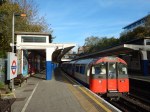
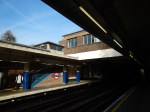

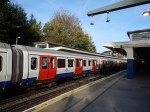
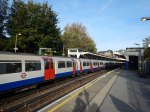
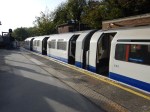
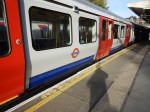
Note the difference in levels between the Piccadilly and District Line trains.
There would be no way to provide level access for both types of train using a Harrington Hump.
So is making a station that serves both deep-level and sub-surface lines, step-free, a problem that is still to be cracked?
This Google Map shows Ealing Common station.
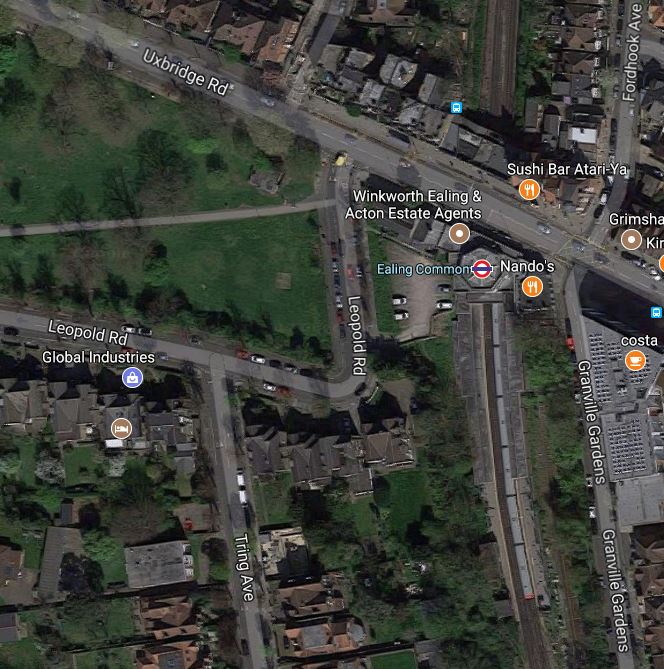
It doesn’t look that it is a station, where two extra platforms could be squeezed in, so both lines could have their own platforms.
Could Ealing Common station be one of the main reasons to serve Ealing Broadway station with the Piccadilly Line?
Acton Town Station
These pictures show Acton Town station.
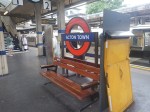
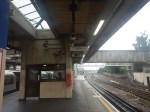
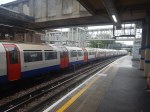
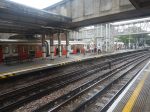

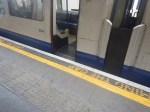
Note.
- The two central tracks appear to be Piccadilly Line trains only.
- The two outer tracks appear to be able to be used by both District and Piccadilly Line trains.
- There is quite a step-down to Piccadilly Line trains on some platforms.
Making Acton Town station, a Piccadilly Line-only station, would ease making the station step-free, as it would only be served by one type of train.
Chiswick Park And Ravenscourt Park
This section is shown in this map from cartmetro.com.
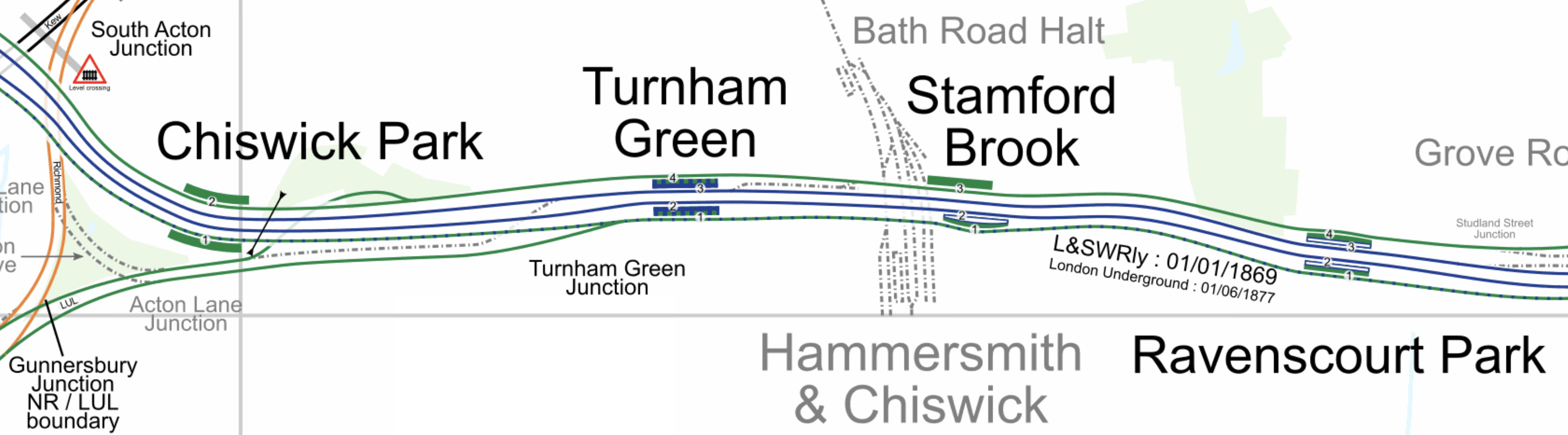
Note.
- The District Line is shown in green.
- The Piccadilly Line is shown in blue.
- The two Piccadilly Line tracks are in the middle and generally trains go straight through the four stations.
- The two District Line tracks are on the outside and trains stop at most stations.
It appears that the tracks have been laid out so that Piccadilly Line trains can get a real shift on between Acton Town and Hammersmith.
This could save a few minutes on some Piccadilly Line journeys.
But there is a problem!
- District Line trains serve all stations.
- Piccadilly Line trains serve none.
- How is Chiswick Park station going to be served, as there are no District Line trains passing?
- Passengers for intermediate stations, would need to get on the District Line trains before entering the Acton Town and Hammersmith section.
- Passengers may want to change between Ealing Broadway and Chiswick Park.
There will also be no trains running on the current District Line tracks between Acton Town and Turnham Green Junction. The only ones that do now, go to Ealing Broadway and they’re being changed to Piccadilly Line trains.
Serving Chiswick Park Station
Chiswick Park station only has platforms on the District Line, which will not see any passing trains if the District Line doesn’t go to Ealing Broadway.
One suggestion I found was to add two new District Line platforms to the Richmond branch.
This Google Map shows the station.
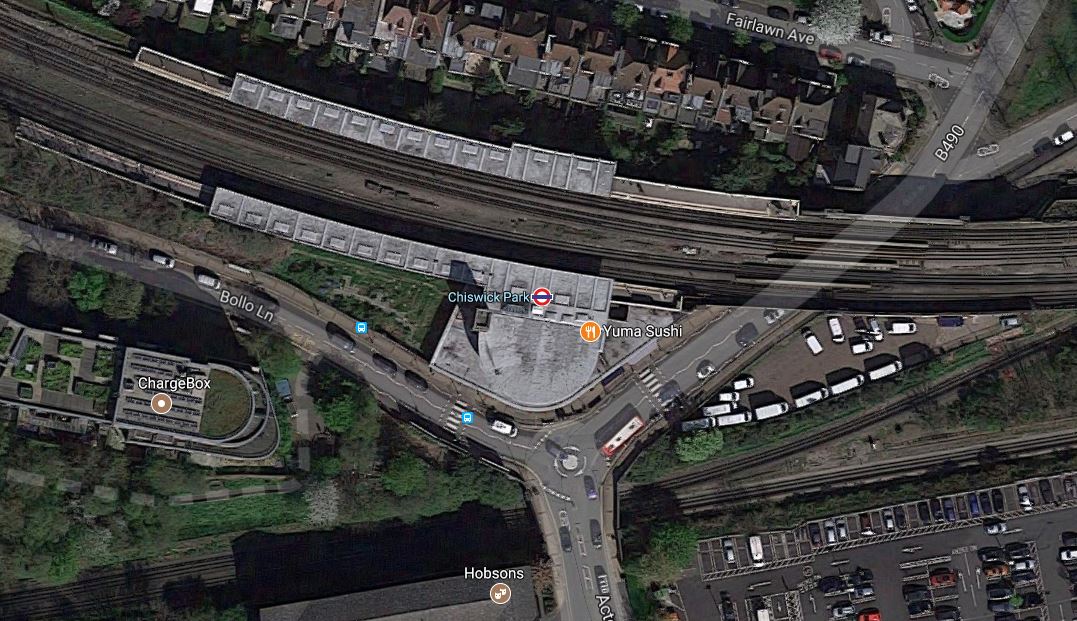
Note the Richmond branch passing South of the station.
This second Google Map shows the tracks between Chiswick Park station and Turnham Green junction.
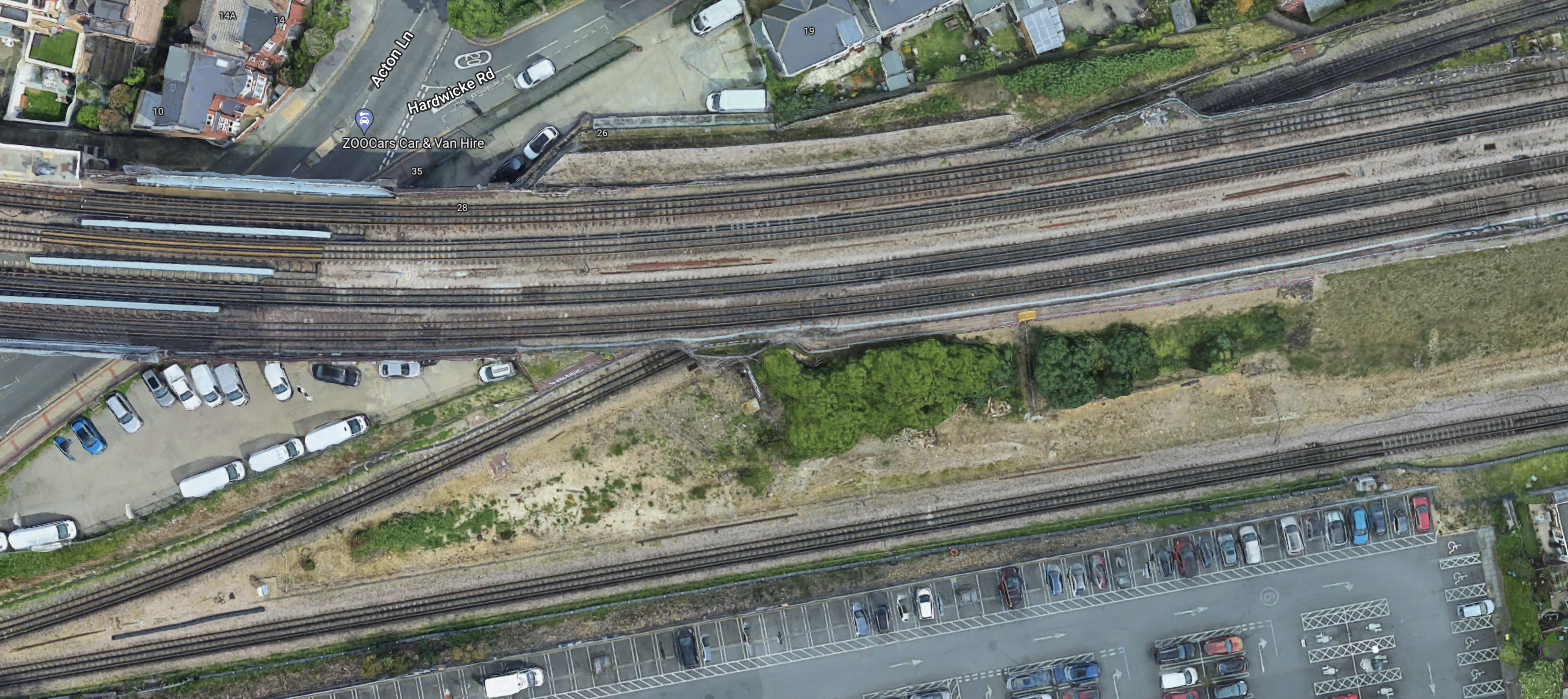
Note.
- The four tracks between Acton Town and Hammersmith stations.
- The current District Line tracks are the outside two of the four tracks.
- The Piccadilly Line tracks are the middle two.
- The two tracks at the South-West corner go to Richmond station.
- The Eastbound track from Richmond goes under the four-track railway, before joining the current Eastbound District Line track.
- The Westbound track to Richmond runs along the South side of the four-track railway, before joining the current Westbound District Line track.
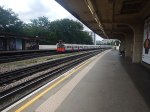
These pictures were taken from a train approaching Chiswick Park station from the East.

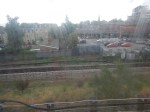
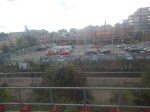
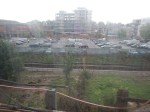
Note, that there is enough space for a platform along the single track.
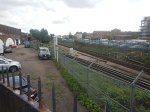
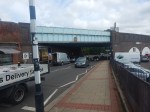
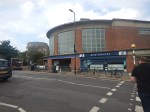
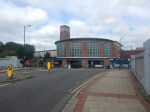
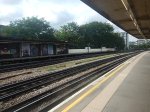
These pictures are of Chiswick Park station.


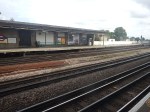


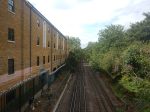
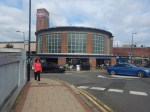
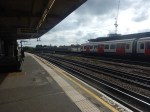
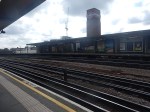

Note.
- The distinctive architecture of London Transport stations of the period.
- The two fast lines in the middle, with Piccadilly Line trains speeding through.
- The two District Line trains on the outside with platforms.
- The Richmond Branch passing to the South of the station and between the station and Sainsburys.
I would suspect that a pair of platforms could be built on the two tracks of the Richmond branch.
- District Line trains to and from Richmond would stop at the new platforms at Chiswick Park stations and Turnham Green, Stamford Brook, Ravenscroft Park, Hammersmith, Baron’s Court and Earl’s Court stations.
- Passengers between Ealing Broadway and Victoria stations would change at Hammersmith, Baron’s Court or Earl’s Court stations.
- The car park at the bottom of the map is for a large Sainsbury’s. Perhaps, they would like a station entrance?
- Chiswick Park station is Grade II Listed.
I’m sure that a good architect can find a more than acceptable solution.
Turnham Green Station
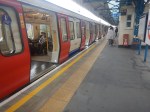
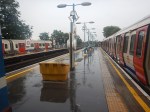
As I passed through Turnham Green station, I got off and took a few pictures, before catching the next train to Ealing Broadway.

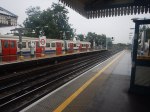
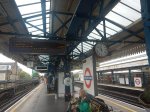
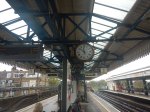

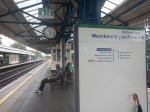
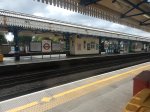
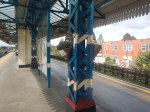
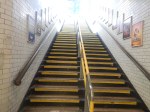
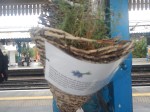
Note.
- Piccadilly Line trains don’t generally stop, although they do at times to provide a service when the District Line is not running.
- The station is not step-free, with stairs to the entrance.
- It has some nice features.
- Herbs are provided for passengers
If required a step-free interchange between District and Piccadilly Lines could be arranged.
Hammersmith Station
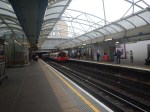
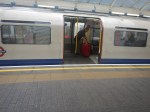
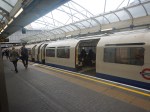
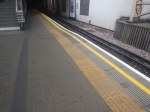
I arrived at Hammersmith station on a Piccadilly Line train and left on a District Line train, after taking these pictures.
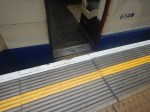
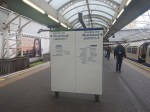

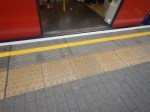
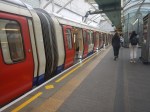

Note.
- The change is on the same island platform.
- There is plenty of space on the platform.
- The District Line trains are level with the platform.
- The Piccadilly Line trains require a step-down from the platform.
- The District Line trains run at a frequency of 12 tph.
- The Piccadilly Line trains run at a frequency of 21 tph.
- Hammersmith is also a big bus interchange and shopping centre.
There should be no problem changing between Piccadilly and District Lines at Hammersmith, with a wait of no more than five minutes.
Baron’s Court Station
In a brief stop at Baron’s Court station, I took these pictures.
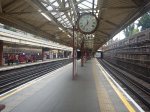
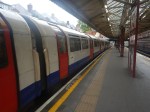
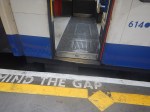
Note.
- The change is on the same island platform.
- There is less space on the platform, than at Hammersmith station.
- The District Line trains are a step-up from the platform.
- The Piccadilly Line trains require a step-up from the platform.
- The District Line trains run at a frequency of 12 tph.
- The Piccadilly Line trains run at a frequency of 21 tph.
There should be no problem changing between Piccadilly and District Lines at Baron’s Court, with a wait of no more than five minutes.
Earl’s Court Station
I arrived at Earl’s Court station on a Piccadilly Line train and left on a District Line train, after taking these pictures.

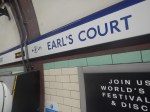
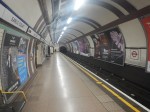

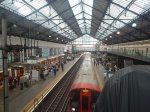
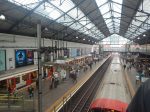
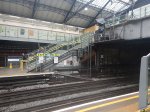
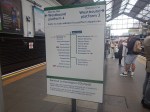
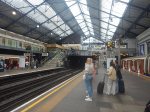
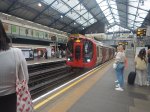
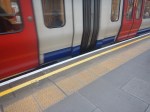
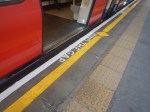
Note.
- The change means that platforms have to be changed
- The District Line trains are a step-up from the platform.
- The Piccadilly Line trains require a step-up from the platform.
- The District Line trains run at a frequency of 12 tph.
- The Piccadilly Line trains run at a frequency of 21 tph.
There should be no problem changing between Piccadilly and District Lines at Earl’s Court, but Hammersmith and Baron’Court don’t need a change of platform.
What Is The Best Station To Change Between Piccadilly And District Lines?
It appears that the best place to change would be Hammersmith, or failing that Baron’s Court.
- Earl’s Court requires a change of platform.
- Turnham Green requires a change of platform and two sets of steps.
- Hammersmith has a shopping centre and a lot of buses.
- I’ve used Hammersmith before to get home from Heathrow, with a change to a 141 bus at Monument station.
I would always for preference use Hammersmith.
Conclusion
It appears to me, there are three opposite forces on either side of a possible proposal to serve Ealing Broadway station with the Piccadilly Line, rather than the District Line.
- The District Line will form a loop South of Crossrail between Ealing Broadway and Whitechapel stations.
- The loop of the District Line serves Victoria, Embankment, Blackfriars, Cannon Street and Tower Hill stations for access to National Rail services.
- Making a station step-free that handles both deep-level and sub-surface lines, is not an easy undertaking.
Running the Piccadilly Line to Ealing Broadway means that a change is required at Hammersmith or Barons Court stations to use the loop described in point 1.
But this change would enable the step-free access to be created in all stations in the area.
I think that the change of terminus will go ahead, with the following additions.
- Improved access to Ealing Common depot.
- Improved cross-platform access at Hammersmith or Barons Court stations.
- Possibly two extra platforms on the District Line at Chiswick Park station.
What started out as a simple change could end up as a substantial project.
But overall, because it sorts out step-free access in the area, I think it is a good proposal.
Hydrogen Tourist Transport Network Trialled In The Peak District
The title of this post, is the same as that of this article on Fleet News.
This paragraph outlines the trial.
A trial is taking place in the Peak District National Park where hydrogen fuel cell electric vehicles (FCEVs) and electric vehicles (EVs) will run together between multiple destinations and attractions.
Note.
- Toyota will provide the buses.
- Air Products is providing hydrogen.
- The services appear to be centred on Chesterfield station.
It looks like one of the objectives is to test the two types of buses against the terrain.
I can see hydrogen-powered buses being used extensively in tourist areas all over the world.
Is Twelve The Answer To Carbon Emissions?
Everybody knows that The Answer to the Ultimate Question of Life, the Universe, and Everything is 42.
I’ve just been digging around the Internet, where I started in the Wikipedia entry for the Electrochemical Reduction Of Carbon Dioxide, which says this about the process.
The electrochemical reduction of carbon dioxide, also known as electrolysis of carbon dioxide, is the conversion of carbon dioxide (CO2) to more reduced chemical species using electrical energy. It is one possible step in the broad scheme of carbon capture and utilization, nevertheless it is deemed to be one of the most promising approaches.
This led me to the Wikipedia entry for a company called Twelve.
I then looked at the Twelve web site.
The Mission Statement
Most companies have them and their’s is.
We Are The Carbon Transformation Company
Which is backed up by the following.
We make the world’s most critical chemicals, materials and fuels from air, not oil with our revolutionary carbon transformation technology.
We’re reinventing what it means to be a chemical company in the climate era, on a mission to eliminate global emissions and build a fossil-free future.
I have explored the web site and it looks good for me.
See what you think!
The Queen Was Well-Briefed
Lord Lloyd-Webber has just said this on the BBC. But he has not been the first, in the last few days.
Some years ago, I had lunch with a Hewlett-Packard engineer, who had done some work in Buckingham Palace.
It was probably in the mid-1980s, as the lunch was just after the Queen and Prince Philip had visited San Francisco in 1983, which is reported in this article on NBC.
He told a fascinating tale about how the Queen was well-briefed.
In those days, there was a detailed card index of everybody she had ever met.
So say, she was going to meet the Mayor of Norwich, her staff might brief her with the knowledge that they had met in 1975, when his father had been the Lord Lieutenant of Norfolk.
The purpose, was so that the Queen could start a conversation, with an appropriate topic.
Will The Queen Enable One Last Important Result?
Would it be too much to hope, that the world leaders coming to the Queen’s funeral, might find that swapping their uplifting memories creates goodwill that helps to solve at least one of the pressing problems of the world?
RCAM Technologies
Wouldn’t it be a good idea to have a wind turbine with built-in energy storage?
This article on Power Engineering, is entitled Five Long-Duration Energy Storage Projects Get Funding In New York.
One of the projects, from RCAM Technologies is described like this.
To develop a 3D concrete-printed marine pumped hydroelectric storage system that integrates directly with offshore wind development in support of grid resiliency and reduced reliance on fossil fuel plants to meet periods of peak electric demand.
That sounds like an offshore wind turbine with built-in energy storage, that is 3D-printed in concrete.
The RCAM Technologies web site is all about 3D-printed concrete.
- It looks like they can build taller wind farm towers, than you can make with steel.
- It appears offshore wind turbine tower with integrated foundations can be built on-site.
- Material can be 100 % locally-sourced.
- The next step could be to build some form of pumped storage into the tower.
- They are experimenting with storing energy as pressure in 3D-printed concrete spheres. The New York grant will help fund this.
- High Speed Two is using 3D-printing of concrete, as I wrote about in HS2 Utilising UK-First Pioneering 3D Concrete Printing On Project.
The company has offices in Colorado, California and Edinburgh.
Conclusion
This technology could be on the right track. Read their web site.
Five Long-Duration Energy Storage Projects Get Funding In New York
The title of this post, is the same as that of this article on Power Engineering.
These are the two opening paragraphs, which outline the state’s ambitions.
New York awarded $16.6 million in funding for five long-duration energy storage projects and made another $17 million available for projects that advance development of long-duration energy storage technologies, including hydrogen.
The state’s larger goal is to install 3,000 MW of energy storage by 2030 to help integrate renewables. New York wants to eventually develop 6,000 MW.
The article then lists the projects, which I will look at in separate posts.
A Design Crime – Platform-To-Train Access On The Northern Line At Bank Station
These four pictures show the platform-to-train access on the Northern Line at Bank station.

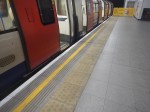
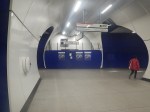
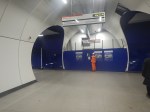
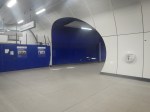
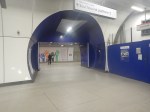
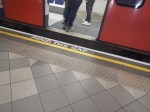
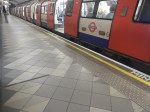
Note.
- The first two pictures are the new Southbound platform.
- The last two pictures are the Northbound platform.
- The other pictures show the wide and level walkways between the two platforms.
The Southbound platform has level platform-to-train access, but the old Northbound platform does not!
That constitutes a design crime in my book.
Old Street Station – 9th September 2022
I took these pictures this morning, as my bus passed Old Street roundabout.

The Queen was also being shown on this bus-stop in Moorgate.
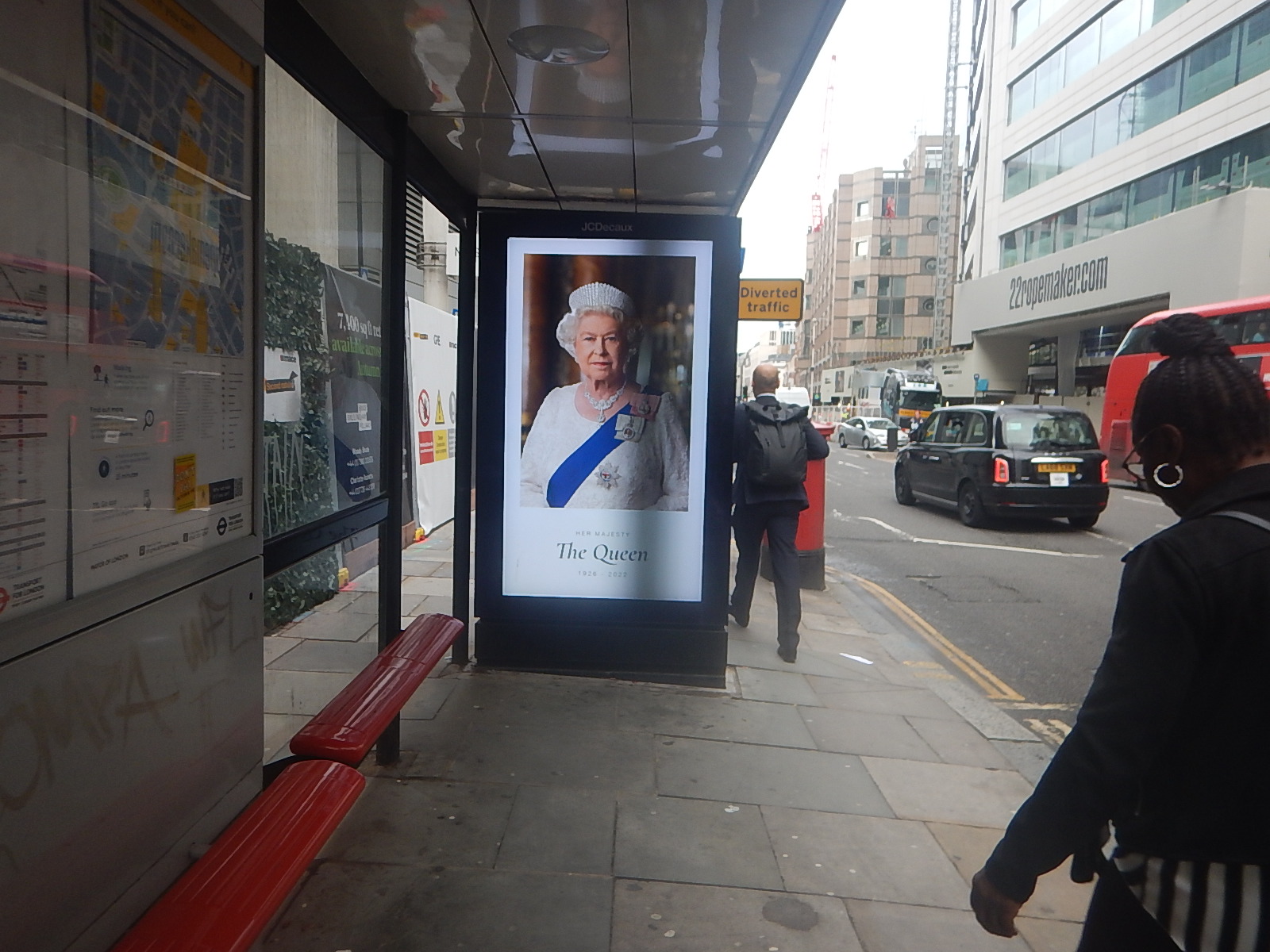
How many pictures like these are being displayed?
 The Anonymous Widower