National Grid Energise World’s First T-Pylons
The title of this post, is the same as that of this press release from National Grid.
These are the four bullet points.
- Electricity is flowing to homes and businesses through the first new pylon design in the UK for nearly 100 years.
- Major milestone in National Grid’s Hinkley Connection project to connect 6 million homes and businesses in the South West to home grown, low carbon energy.
- The T-design, with a single pole and cross shaped arms, is around a third shorter than the traditional design with a smaller ground footprint.
- The T-pylons, along with a new substation and underground cabling, are now incorporated into National Grid’s electricity transmission network delivering electricity in Somerset and across England and Wales.
This is the first paragraph.
National Grid has successfully energised 36 of the world’s first T-pylons between Bridgwater and Loxton in Somerset. The new shaped pylons have been constructed as part of the £900 million Hinkley Connection Project, a new 57 km high-voltage electricity line that will connect six million homes and businesses to new sources of home grown, low carbon energy and help the UK to meet its net zero by 2050 target.
There is a video in the press release, which is well worth a view.
- The size of the pylons certainly reduces their visibility.
- It appears there are seven cables on either side.
These pictures show the transmission lines to the Sizewell power station site.
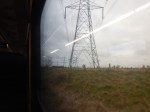
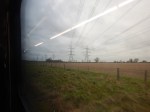






Note.
- The lower height is very noticeable.
- There seem’s to be a lot more wires.
- I would assume, that the reduced number of components, reduces the cost of installation and maintenance.
The installation proved that even in the most mundane of applications, innovation can bring positive results.
The T-pylons are a design by Danish company; Bystrup.
This is the specification from their comprehensive web-page.
- Power – 2 x 400 kV
- Height – 35 metres / 114 feet
- Units/km – 3 (5 units/mile)
- Material – Hot-dip galvanised steel, painted
- Assembly – On-site and quick – less than 10 parts
- Installation – Simple monopile foundation
- Production possible anywhere in the world
- Developed – 2011-2014
They’ve also won several awards.
- 1st prize in int. competition for RIBA
- Nominated for the IET Innovation Award 2014
- Gold Prize, CIGRE Seoul 2017
- Award winner, UK Steel Awards (SSDA) 2017
I would hope to see more in the UK.
Platform Canopies To Be Renovated For Passengers At Lancaster Station
The title of this post is the same as that of this press release from Network Rail.
These are the first two paragraphs.
Station platform canopies are being renovated at Lancaster to improve passenger journeys on the West Coast Main Line.
Network Rail is investing £9.5m to restore and upgrade the station building for the future.
This picture from Network Rail shows an aerial view of the station.
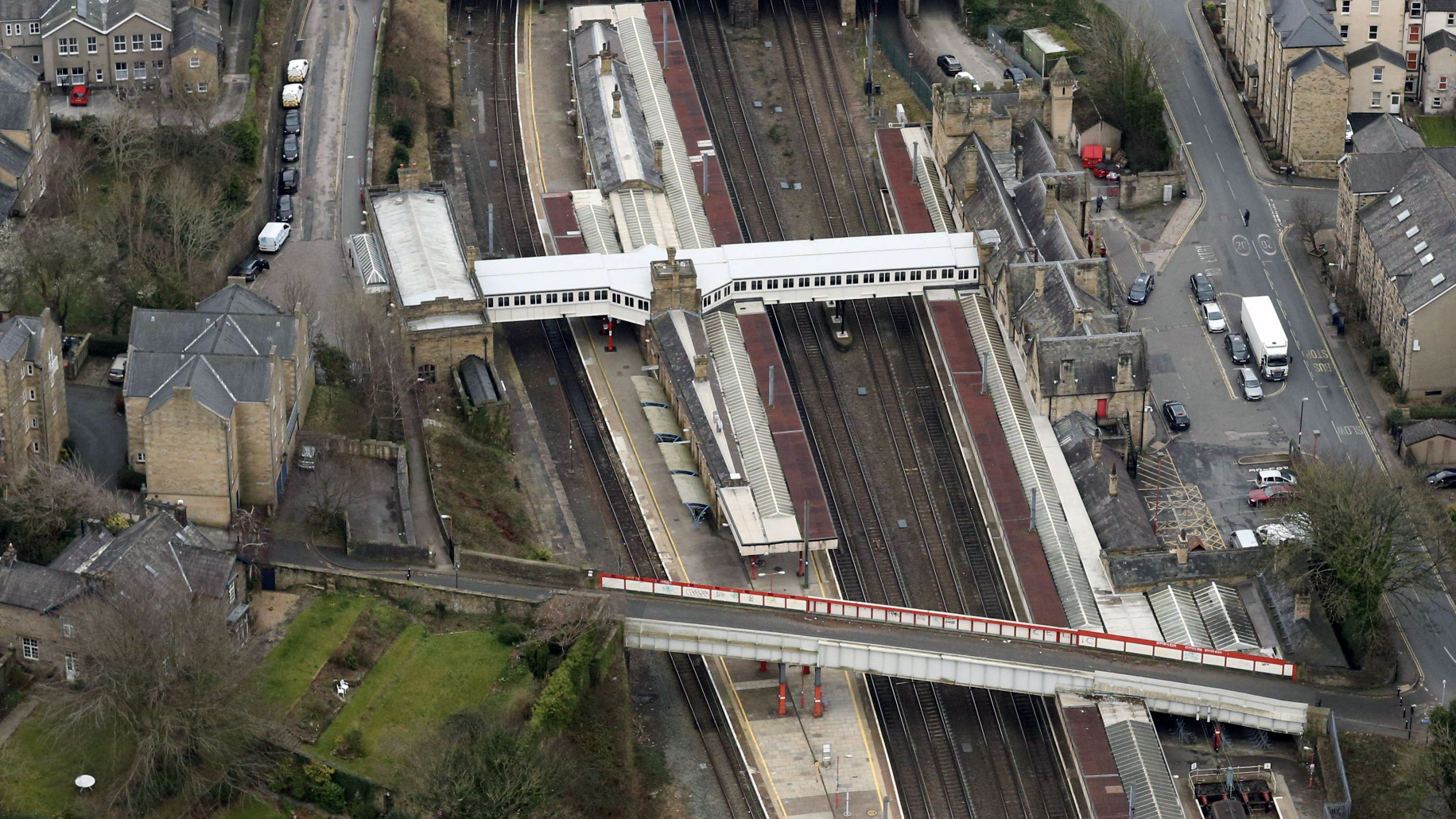
Note that the camera is looking South.
This picture shows the current canopies.
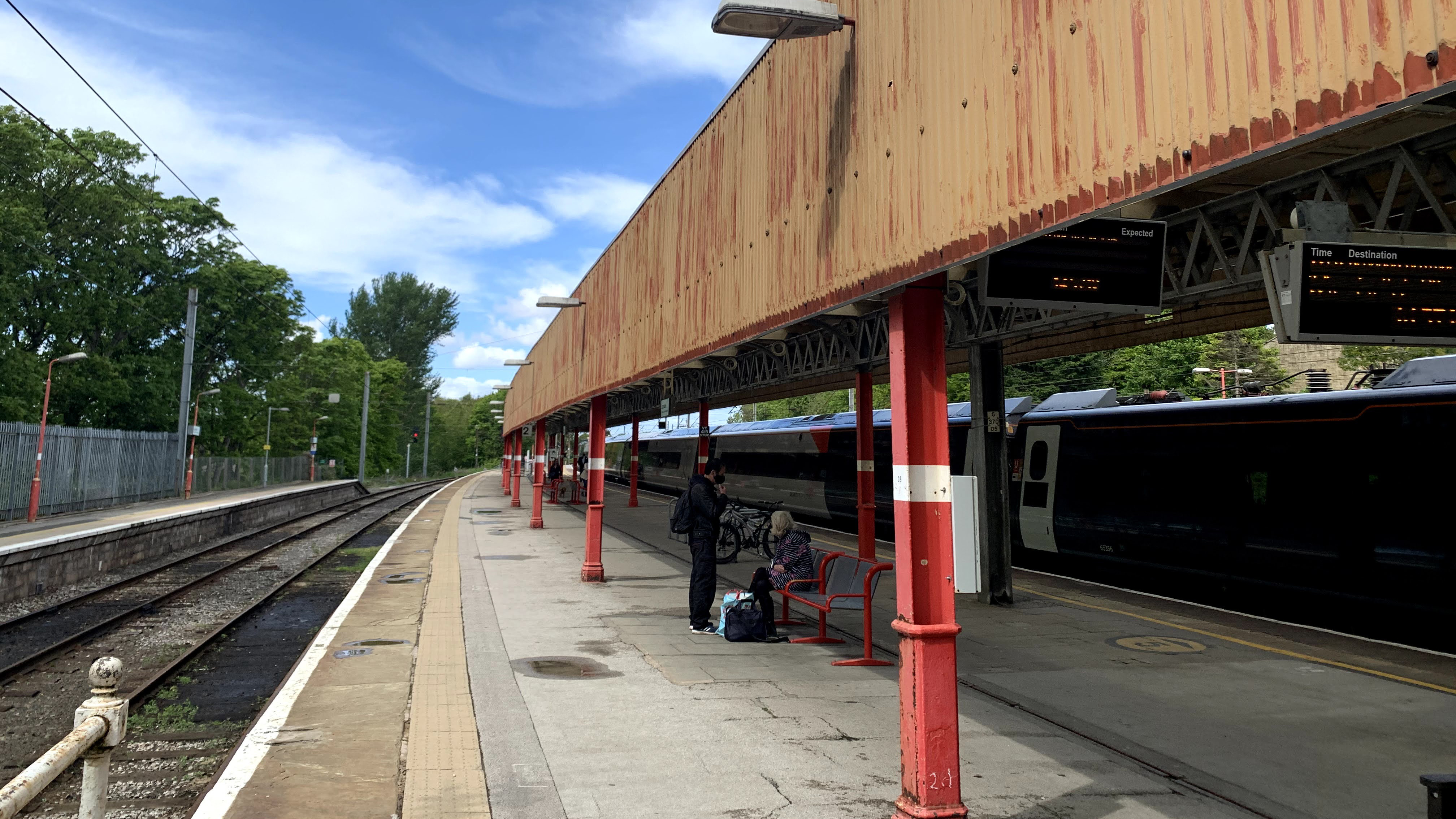
Network Rail can surely do better on a Grade II Listed Building.
The press release lists that this work will be done.
- Replacing all glazing in the platform canopies
- Repairing and strengthening the structure of the canopy structures
- Repainting across the station
The press release says the work won’t affect train services, but will be done when trains aren’t running.
These are my thoughts.
Lancaster Station and High Speed Two
Lancaster station will be a terminus on the High Speed Two Network.
Note.
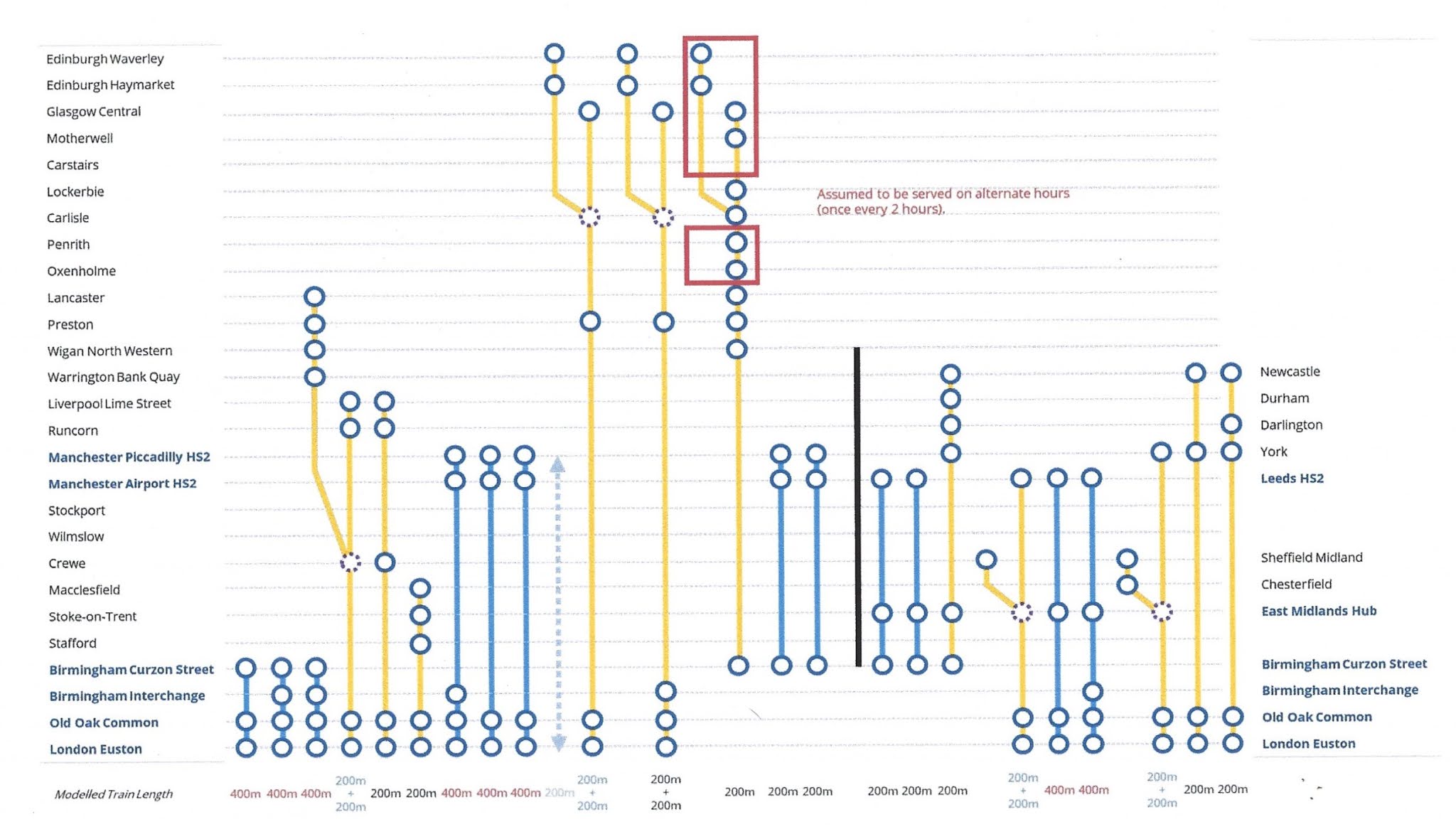
- Train 4 , which is a pair of 200 metre High Speed Classic Compatible trains, leaves London Euston and splits at Crewe, with one train going to Liverpool Lime Street and the other to Lancaster.
- Train 12, which runs between Birmingham Curzon Street and Scotland, also calls at Lancaster.
Both trains will be single 200 metre High Speed Classic Compatible trains at Lancaster station and platforms 3, 4 and 5 can handle them.
But how will the Lancaster train terminate?
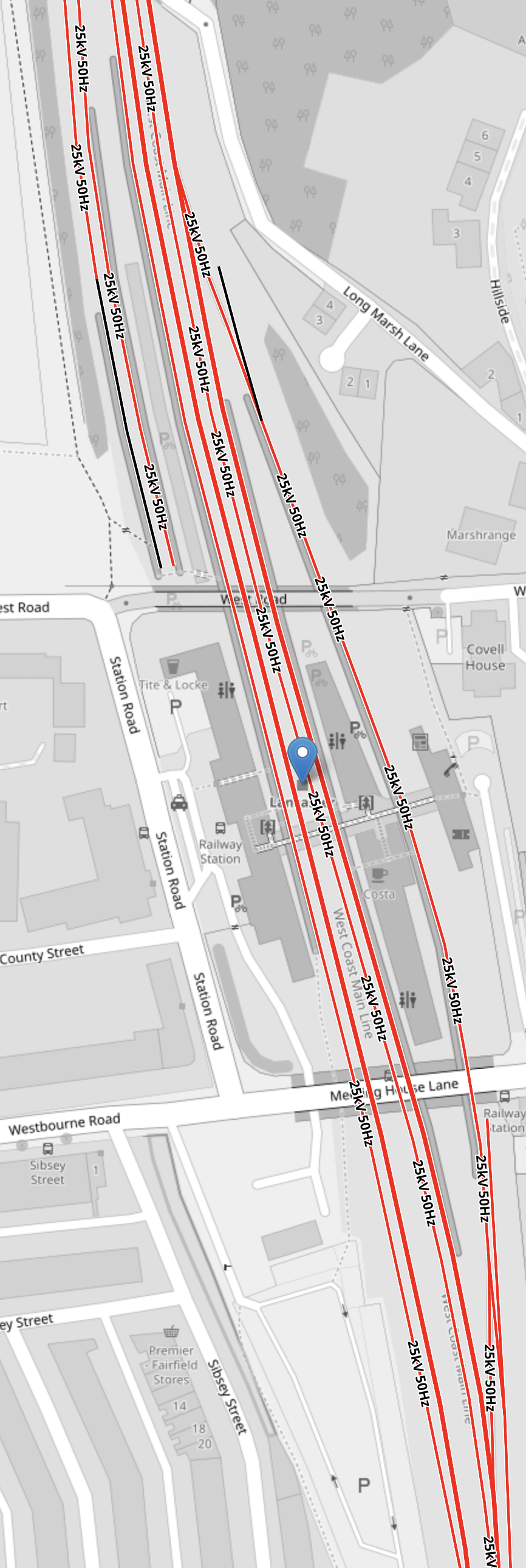
This map from OpenRailwayMap shows the lines through Lancaster station.
Note.
- The red lines are electrified with 25 KVAC overhead wires.
- In the North-West corner of the station are the bay platforms 1 and 2, which handle Morecambe services.
- West Coast Main Line services between London Euston and Scotland, go through platforms 3 and 4 in the middle of the station.
- On the East side of the station is platform 5 which is on a loop off the West Coast Main Line.
I would expect that the London Euston and Lancaster service will generally terminate in platform 5.
Wikipedia says this about platform 5 and the signalling.
Platform 5, which can be used by both northbound and southbound trains or by terminating services.
All platforms are signalled for arrivals and departures in either direction.
That all sounds very convenient.
There may be some minor changes for the longer High Speed Two trains, but I doubt it would be too challenging.
Onward To Morecambe
The Eden Project North at Morecambe could attract a lot of traffic.
- Lancaster will be just two hours and three minutes from London by High Speed Two.
- There are numerous rail connections from Lancaster to all over the North of England and Scotland.
- Would you drive for two hours to the Eden Project North, if there was a convenient and quicker train?
- Train companies may offer combined tickets for the attraction with rail tickets.
Wikipedia says this about the development and opening of the attraction.
Having been granted planning permission in January 2022 and with £50 million of levelling-up funding granted in January 2023, it is due to open in 2024 and predicted to benefit the North West economy by £200 million per year.
I’ve always wanted to go to the Eden Project in Cornwall, but it’s difficult if you don’t drive.
However, I might manage to get to Eden Project North.
Trains between Morecambe and Lancaster are at least hourly.
- I think they can use any platform at Lancaster.
- Morecambe station has two platforms.
- Morecambe and Lancaster stations are four miles apart, with probably half electrified.
- A battery-electric train could work between Morecambe and Lancaster.
I can envisage two main ways to arrange the connection between Morecambe and Lancaster.
- Trains arrive in Lancaster and passengers for Morecambe catch the next Morecambe train for two stops, that take ten minutes.
- When High Speed Two serves Lancaster from Euston, the shuttle train can wait in the Northern end of Platform 5 and when the High Speed Two train arrives passengers can just walk up the platform to the shuttle.
But if the Eden Project North is as successful as the Cornish original, there is going to be a need for more trains between Morecambe and Lancaster.
This Google Map shows Morecambe station.
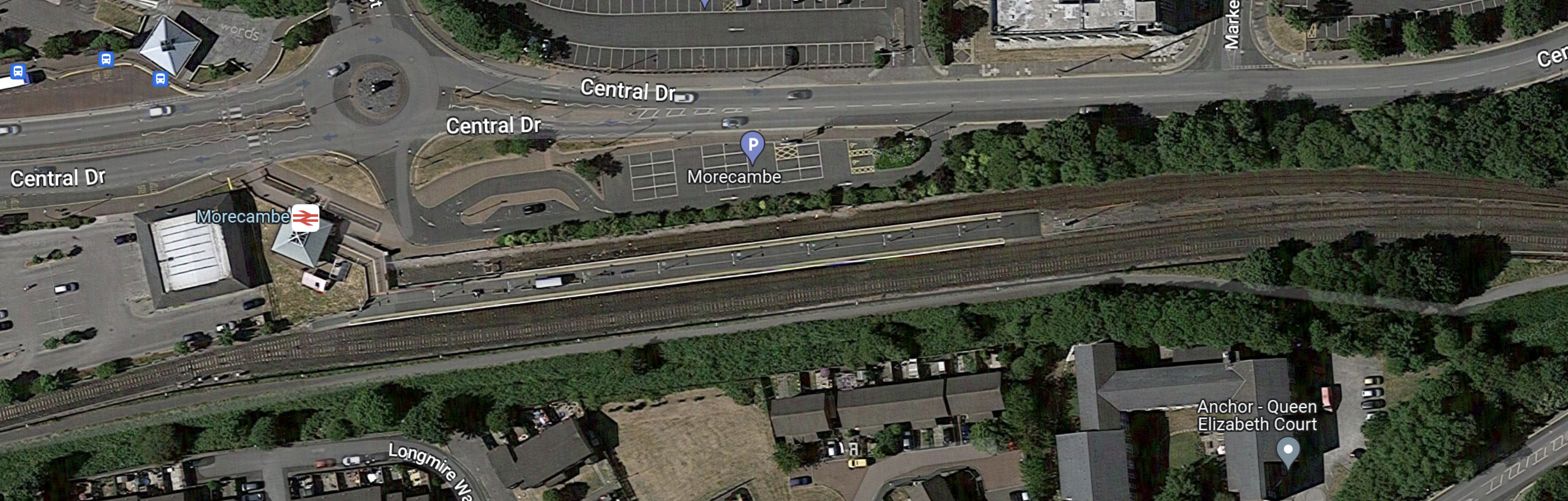
Note that the island platform is probably about 160 metres long.
This would accommodate.
- A five-car Class 802 or Class 805 train.
- A pair of four-car Class 319, Class 321 trains.
- A pair of three-car Class 331 trains.
But why not be bold and lengthen at least one platform to the full two hundred metres, so that it can accommodate a High Speed Classic Compatible train?
This would also accommodate.
- A seven-car Class 807 train.
- A pair of four-car Class 331 trains.
All of these electric trains would need the Morecambe branch line to be electrified to Morecambe station.
But the Eden Project North would get the public transport access it needs.
Electrifying To Morecambe
This map from OpenRailwayMap, shows the Morecambe Branch Line between the West Coast Main Line and Morecambe station.

Note.
- The tracks shown in red on the Eastern side of the map are the West Coast Main Line.
- The black lines are the unelectrified tracks of the Morecambe branch line.
- Morecambe station is marked by the blue arrow.
- Much of the Morecambe branch line is single track, with some sections of double track.
- The distance between the West Coast Main Line and Morecambe station is around 2.1 miles.
I don’t think it would be the most challenging of electrifications.
A Green Route To The Isle Of Man And Ireland
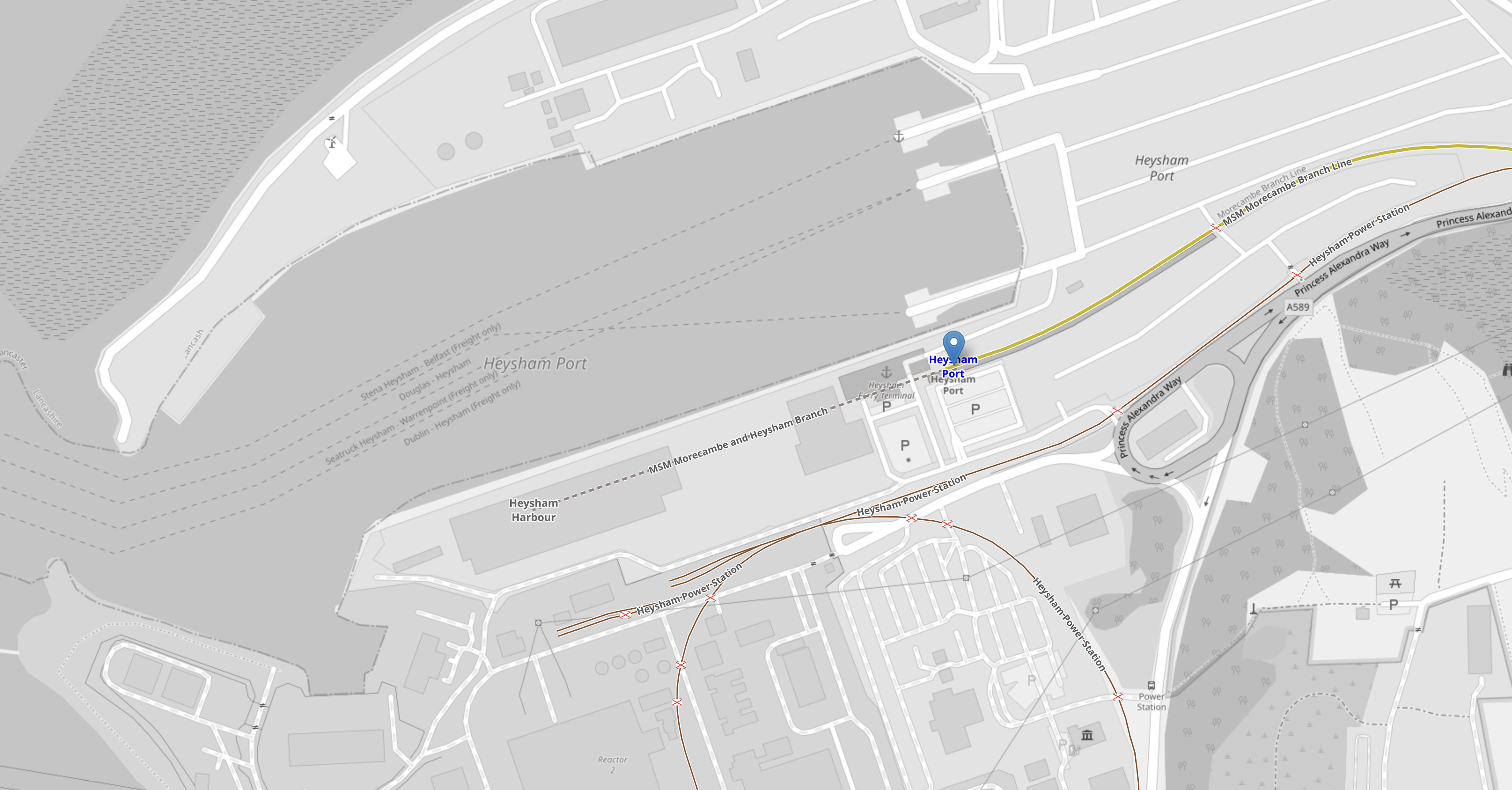
This map from OpenRailwayMap, shows the terminal of the Morecambe Branch Line at Heysham Port.
Note.
- There is a rail connection to the West Coast Main Line via Morecambe, which is shown in yellow.
- The port appears to have three berths for ferries.
- There are only a couple of train services per day.
- South of the port is the Heysham nuclear power station, which has a capacity of 2.5 GW.
At a first glance, it would appear, that a rail-served passenger terminal could be built close to the port.
I suspect most passengers using Heysham are travelling with a vehicle.
The problem is also that the ferry crossing to Belfast takes around eight hours and there are faster and more convenient routes.
The ferries could be decarbonised by using ammonia or hydrogen fuel, but I doubt that they would be any faster.
I suspect that getting more passengers to use Heysham for the Isle of Man or Ireland will be a difficult proposition to sell to passengers.
And it is made even more difficult with such an infrequent train service.
Before High Speed Two
Avanti West Coast might like to run a train between Euston and Morecambe for the Eden Project North.
Are National Rail Promoting Theme Parks?
I found this page on the National Rail web site, which is entitled Theme Parks.
It gives a list of most theme parks and their nearest stations.
Does such a page exist for hospitals, cathedrals and other similar groups.
Thistle Wind Partners Rename 2 GW ScotWind Offshore Wind Projects
The title of this post, is the same as that of this article on offshoreWIND.biz.
This is the sub-heading.
Thistle Wind Partners (TWP), a consortium founded by DEME Concession, Qair, and Aspiravi, has announced the final names for its two ScotWind offshore wind projects
This is the first paragraph.
TWP won the seabed leasing rights for two offshore wind projects in the ScotWind auction last year, in which 25 GW of capacity was awarded.
These paragraphs give details of the new names and an update on the sizes of the turbines.
The consortium plans to build the 1 GW Bowdun offshore wind project, originally named Cluaran Deas Ear, located off the coast of Stonehaven and lying 44 kilometres out from the landmark of Bowdun Head.
The site covers an area of 187 square kilometres (in the E3 leasing zone). The project is planned to feature between 50 and 60 wind turbines with an individual capacity of 18-25 MW each, depending upon the final design choice.
The second wind farm, located 33 kilometres from the East Mainland of Orkney in the NE2 leasing zone, is named the Ayre Offshore Wind Farm, originally called Clearan Ear-Thuath. This will be a 1 GW floating wind project following a similar base case for turbine numbers and capacity as Bowdun.
Note.
- They appear to be using 18-25 MW turbines.
- These are the first wind farms, that have talked about using such large turbines.
- 18 MW turbines would need 55 turbines for a GW.
- 25 MW turbines would need 40 turbines for a GW.
- Ayre wind farm has a web page, which says that it will have 56 x 18 MW turbines.
- Bowden wind farm has a web page, which says that it will have 56 x 18 MW turbines.
- The web site does say that the size and number of turbines is provisional.
Construction of both farms should start in 2029, with commissioning in 2033.
A Worthwhile Tailpiece
The article has a good tailpiece in the last paragraph.
TWP is one of the founders of a new initiative from the University of Highlands & Islands to deliver a STEM (Science, Technology, Engineering, and Mathematics) outreach programme for primary schools in Scotland, providing materials and teacher training.
TWP obviously intend to catch the next generation of technologists young.
Conclusion
Thistle Wind Partners have gone for the bold option.
The Netherlands Chooses Site For World’s Largest Offshore Wind-to-Hydrogen Project
The title of this post, is the same as that of this article on offshoreWIND.biz.
This is the sub-heading.
The Dutch government has designated an area for what will become the world’s largest offshore hydrogen production project. That area is Ten noorden van de Waddeneilanden (the North of the Wadden Islands), identified earlier for offshore wind development and deemed most suitable for providing 500 MW of electrolysis capacity and for the transport of hydrogen to land.
This Google Map shows the Wadden Islands.
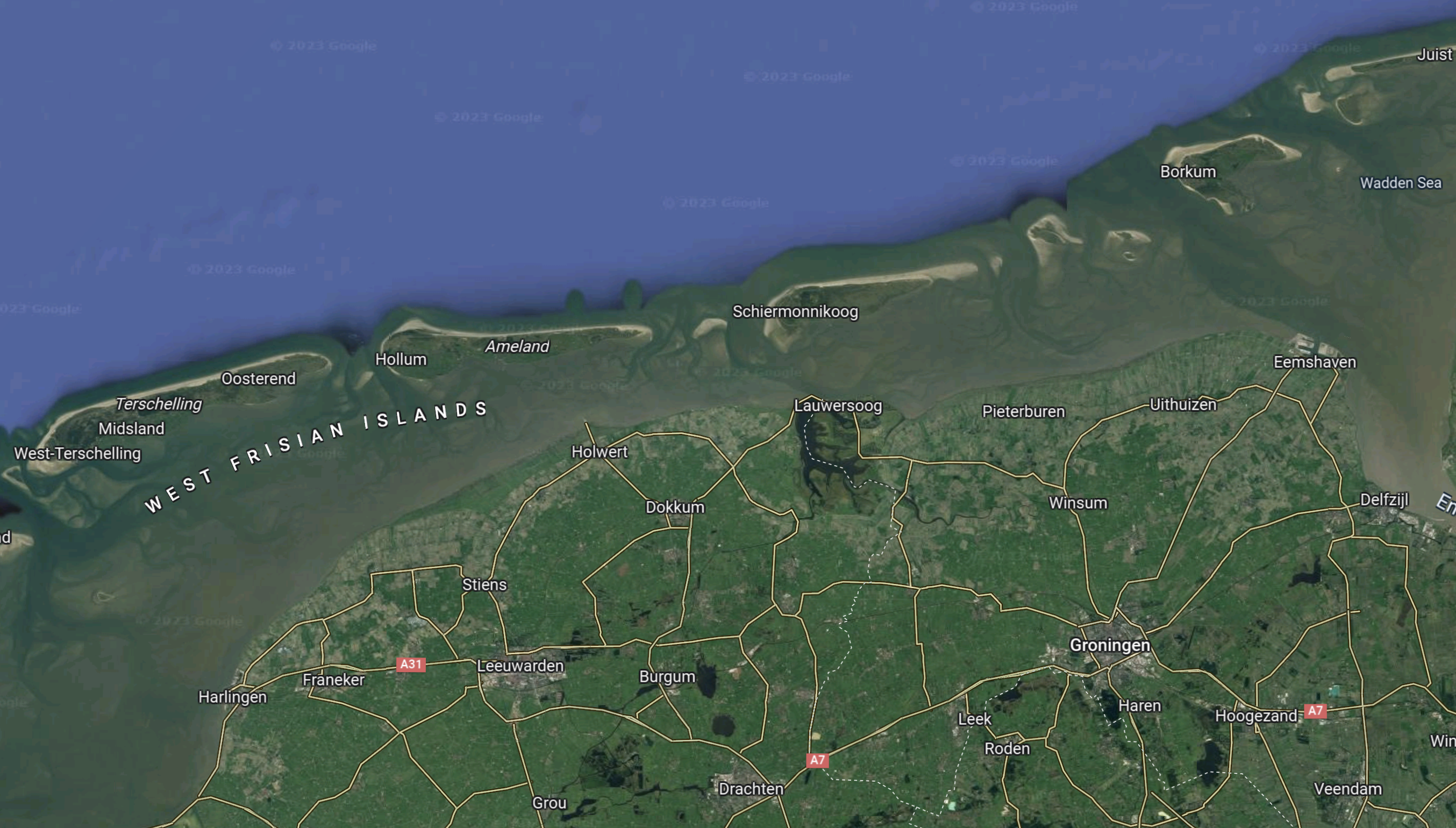
Note.
- Groningen is in the South-East corner of the map.
- I wrote about Eemshaven, which is to the North-East of Groningen in The Train Station At The Northern End Of The Netherlands.
- The Wadden or Frisian Islands are along the coast.
The Wadden Islands of the Netherlands, Germany and Denmark are a World Heritage Site.
In Can The UK Have A Capacity To Create Five GW Of Green Hydrogen?, I said the following.
Ryze Hydrogen are building the Herne Bay electrolyser.
- It will consume 23 MW of solar and wind power.
- It will produce ten tonnes of hydrogen per day.
The electrolyser will consume 552 MWh to produce ten tonnes of hydrogen, so creating one tonne of hydrogen needs 55.2 MWh of electricity.
If the Dutch build a 500 MW electrolyser it will produce 217 tonnes of hydrogen per day.
The Dutch Plan For Hydrogen
This 500 MW electrolyser fits well with the The Dutch Plan For Hydrogen.
Lhyfe And Centrica To Develop Offshore Renewable Green Hydrogen In The UK
The title of his post is the same as that of this news item from Centrica.
These are the bullet points.
- Memorandum of Understanding will pave the way for green hydrogen pilot production site at sea
- Energy firms explore large scale partnership in drive to net zero
- Aim for UK to become a global leader in the hydrogen sector
This is the third paragraph, that outlines the objectives of the project.
The pilot will aim to combine Lhyfe’s expertise on green hydrogen production and Centrica’s experience of gas storage and infrastructure to ensure that the hydrogen produced can be safely stored and utilised in the UK. The end result would be proof that an end-to-end hydrogen production, storage, and distribution system is possible in the country.
I have a couple of thoughts.
Offshore Production Of Hydrogen
I remember from the 1960s, when I told friends and my mother, that I worked in a hydrogen factory, some of them asked if it was dangerous.
The Hindenburg and the R 101 had a lot to answer for even forty years later.
But does that fear of hydrogen still exist? If it does, surely building hydrogen electrolysers offshore could be a way of reducing that fear?
There are also other reasons to produce hydrogen offshore.
- The latest electrolysers will work with sea water, which means the water doesn’t need to be desalinated first.
- The hydrogen can be brought ashore and stored using redundant gas infrastructure.
- Using redundant gas infrastructure may be a more affordable way of bringing energy onshore.
- A severe hydrogen leak may be much less dangerous 50 km. offshore. It will quickly disperse and rise into the atmosphere.
The accountants will probably decide.
Do Centrica Have Big Ambitions For Hydrogen?
This is said about Centrica in the news item.
- Centrica is a leading international services and solutions company with ambitious plans across the business to reach net zero by 2045. Centrica have identified hydrogen as playing an essential part in company and UK targets to achieve net zero.
- Centrica Storage are a 100% owned subsidiary of Centrica and own and operate the Rough gas field storage facility, located off the coast of Humberside.
- Centrica has a long-term ambition to turn Rough into the world’s largest hydrogen storage facility in Europe.
Centrica appear to have big ambitions for hydrogen.
The Ways First Group, Hitachi, Hyperdrive Innovation and Turntide Technologies Can Enable Electric Trains To Run Between Basingstoke And Exeter
Who Are Turntide Technologies?
The Wikipedia entry for the company starts with this paragraph.
Turntide Technologies is a US-based business that makes intelligent, sustainable motor systems. Turntide applies its Technology for Sustainable Operations across buildings, agriculture, and transportation segments. It maintains operations in the USA, Canada, the United Kingdom, and India.
These three paragraphs from the Technology section of the Wikipedia entry outline their technology.
Turntide’s core product is its Technology for Sustainable Operations, a cloud-based open platform that monitors and automates building and vehicle systems. The platform is powered by its Smart Motor System, a connected hardware-software machine built around a high rotor pole switched reluctance motor.
Southern California Edison utility certified in 2018 that the V01 Smart Motor System reduced energy consumption by 23%-57% compared with a standard AC induction motor, and 11% compared with an induction motor controlled by a variable frequency drive.
In 2019, National Renewable Energy Laboratory certified that Turntide’s motor reduced energy consumption in refrigerator condenser fans by 29%-71%.
Note.
- Turntide’s efficiencies, which appear to have been verified by reputable organisations, if they can be reproduced in traction systems for battery-powered transport could improve range substantially.
- There are also other more efficient electric motors being developed.
- I wrote about Norfolk-based advanced traction motor company; Equipmake in Equipmake Hybrid To Battery Powered LT11.
- Motors like these, are the engineer’s cure for range anxiety.
I have to ask, if Hitachi (, and Stadler) are using more efficient motors to stretch the range of their battery-electric trains.
Initially, Hitachi asked Hyperdrive Innovation to design battery packs for Class 802 and other similar trains.
These three posts give some details about the battery project involving the two companies.
- Hitachi And Eversholt Rail To Develop GWR Intercity Battery Hybrid Train – Offering Fuel Savings Of More Than 20%
- Hitachi Rail And Angel Trains To Create Intercity Battery Hybrid Train On TransPennine Express
- More On Batteries On Class 802 Trains
Consider.
- In June 2021, Turntide acquired Hyperdrive Innovation.
- So did this effectively invite Turntide to the project?
- According to the Internet, Hitachi are one of the largest manufacturers of electric motors.
- Turntide are very-well funded by the likes of Bill Gates, Robert Downey Junior and some big funds.
Has there been some intense design meetings, which have been beneficial to all parties?
In my experience, these groupings don’t often work out how they should!
But this relationship seems to be doing fine.
One of Hitachi’s managers from the battery-train project even appears in the video on Turntide’s home page.
Electrifying Basingstoke And Exeter
Consider these facts about the route.
- Basingstoke and Salisbury is 35.8 miles.
- Salisbury and Exeter is 88.5 miles.
- Basingstoke and Exeter is 124.3 miles.
- There is no electrification.
- There are 14 stops between Salisbury and Exeter.
- There are 4 stops between Basingstoke and Salisbury.
- Trains are up to nine car Class 159 trains.
- Average speeds are not much better than 50 mph.
- Maximum speeds vary between 75 and 90 mph.
To get an estimate of how much energy, a Basingstoke and Exeter train will use, I’ll start with a figure from How Much Power Is Needed To Run A Train At 125 Or 100 mph?.
At 125 mph, a Class 801 train has a usage figure of 3.42 kWh per vehicle mile.
As drag is proportional to the square of the speed, which gives
- At 100 mph, a Class 801 train has a usage figure of 2.19 kWh per vehicle mile.
- At 80 mph, a Class 801 train has a usage figure of 1.40 kWh per vehicle mile.
For this calculation I’ll take the 80 mph figure of 1.40 kWh per vehicle mile.
Assuming a five-car train travelling between Basingstoke and Exeter, which is 124.3 miles gives a figure of 870 kWh.
But this is only one use of energy on the train.
- Every time, the train accelerates it will need power, but it will charge itself using regenerative braking.
- An all-electric Class 803 train has a mass of 228.5 tonnes and carries 400 passengers.
- If I assume that each passenger is 80 Kg including baggage, bikes and buggies, that gives a mass of 32 tonnes or a total mass of 260.5 tonnes.
- Putting these figures into Omni’s Kinetic Energy calculator gives a figure of 46.3 kWh at 80 mph.
As there are eighteen stops along the route and at each stop it could lose up to twenty percent of its energy, this means that the eighteen stops will cost 166.7 KWh.
Adding this to the 870 KWh it takes to maintain speed, it looks like a trip between Basingstoke and Exeter will take 1036.7 kWh.
Could this be a 200 kWh battery in each coach?
Obviously, this is only a rough calculation and with the better figures Hitachi would have, I would suspect much better answers.
But I do believe that it would be possible to run between Basingstoke and Exeter on battery power, if the train was efficient.
Charging The Train
The train would be charged on the third-rail electrification between Waterloo and Basingstoke.
But what would happen at Exeter?
The trains could be bi-modes like Hitachi’s Class 395 trains for Southeastern,
One of Vivarail’s third-rail charging systems, that First Group, acquired from the Receiver of Vivarail could be used.
Getting The Order Right
Would between Basingstoke and Exeter, be a sensible route to convert to battery-electric trains early, as it would release a useful fleet of diesel trains, that might be able to fill in for a couple of years by replacing the Castles!
‘Lift-off’ – Project To Provide Step-Free Access At Bexley Station In Kent Kicked Off In February
The title of this post is the same as that of this press release from Network Rail.
This is the sub-heading.
Network Rail has kicked off construction of a new footbridge and lifts at Bexley station which will provide passengers with a fully accessible station.
These four paragraphs outline the scheme.
This project, which is funded through the Department of Transport’s (DfT) ‘Access for All’ scheme, is expected to be completed in late spring 2024 and will ensure there is step-free access to all of the station’s platforms.
Network Rail will be working with contractors BAM Nuttall to install two 16-person capacity lifts which will be located behind the existing subway and help passengers with impaired mobility or those travelling with luggage, children, or cycles to access the platforms.
Platform one will be widened to create space for the lifts and allow passengers to navigate through the station a lot easier.
Alongside this, a new footbridge will be built to allow passengers easily get from one side of the platform to the other.
I’m surprised that lifts are being added to the existing subway, rather than being added to the new footbridge.
Looking at the statistics for Bexley and nearby stations, I suspect that Bexley station has more traffic.
This Google Map shows Bexley station.
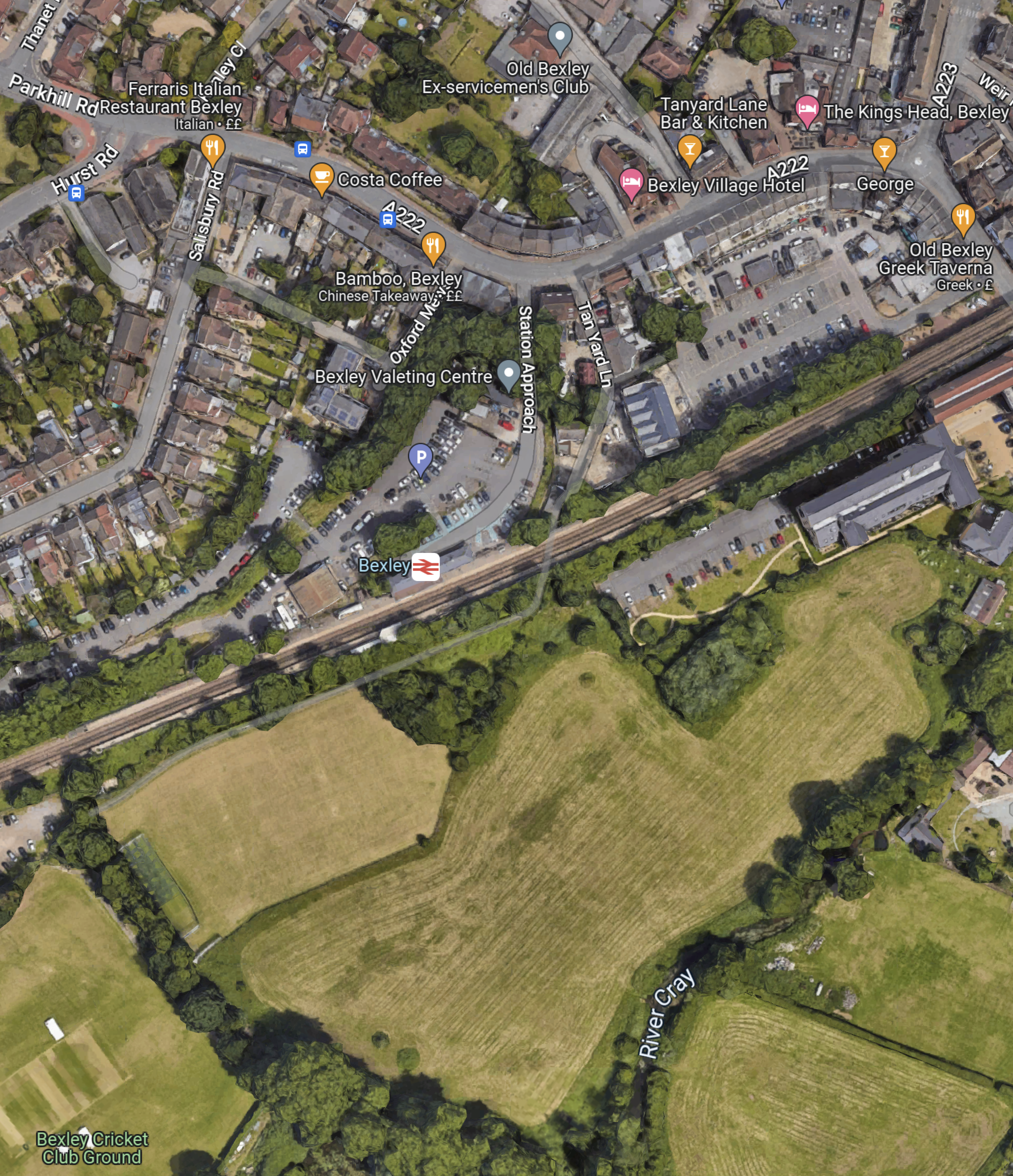
As there appears to be a lot more housing and the car park to the North of the railway, I suspect there’s a lot of crossing of the railway by passengers.
So it does seem that Network Rail have designed scheme for the number of passengers, which is something Transport for London haven’t done with the buses, where I live.
On a visit to the station on the 14th of March, I took these pictures.

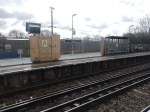




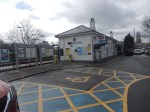





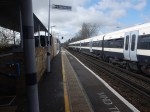

This is a Network Rail visualisation of how it will look.
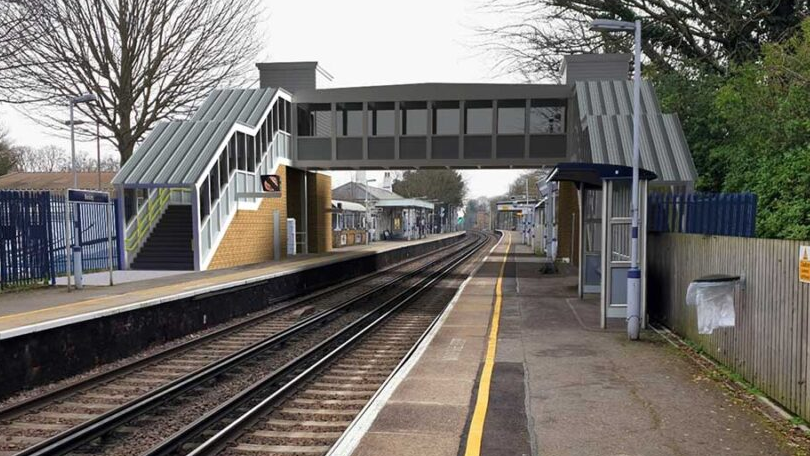
The visualisation is looking towards the East.
Ricardo – The Role Of Hydrogen In The Green Aviation Revolution
The title of this post, is the same as that of this article on Hydrogen Central.
This is the third paragraph.
The introduction of zero-emission aircraft will enable us to re-think our approach to regional connectivity and the way we currently fly. A recent report by Project NAPKIN stated that zero-carbon emission flight is entirely possible from the middle of this decade on sub-regional routes, on aircraft ranging in size from seven to 19 seats.
It makes a bold statement.
The article is a must read.
DHL Express Determinedly On Course To Achieve Net-Zero Emissions
The title if this post is the same as that of this article on The Lodestar.
This was the introductory paragraph.
DHL Express chief executive John Pearson came out with all guns firing when detailing the firm’s efforts to hit net-zero by 2050, during a press junket this week.
The rest of the article is basically in three sections.
The Use Of Sustainable Aviation Fuel (SAF)
Summed up by three sentences.
“When it comes to sustainable aviation fuel (SAF), we know this is expensive, but we have also put a big chunk of change into this,” he said.
By the end of the year, we want 2% of flights fuelled by SAF.
DHL has bought 15% of all globally available SAF
DHL seem to have a comprehensive policy on the use of SAF.
This reinforces my view that SAF will be important.
Alternative Approaches
This paragraph sums up some of the more alternative approaches DHL are looking at.
SAF use forms only one part of the migration to net-zero: fleet renewal; decarbonising ground handling; a fuel optimisation programme; and the use of electric aircraft, following the successful September trial over Seattle of the Alice e-cargo plane, are all critical.
I suspect there are other alternative approaches.
Fleet Renewal
The last two paragraphs talk about fleet renewal.
Fleet renewal comes after a particularly pronounced moment of growth for the company: it added 10 widebody and 70 small- and medium-body planes during the pandemic.
Described by Boeing as one of the most “fuel-efficient” aircraft on the market, thanks to its twin-engine design, the 777 freighter forms a central part of DHL Express’ renewal plans, said Mr Pearson, adding that 28 were on order.
With 28 777 freighters on order, DHL will need a lot of SAF.
A Last Thought
Given the size of DHL’s fleet, which in their Wikipedia entry is given as 197, seventy-three of which are narrow bodies, I am surprised that no dedicated zero-carbon small or medium-sized cargo aircraft, except for the Alice is under development.
Perhaps, in areas like Europe, this niche is being taken by rail or perhaps by Airbus’s proposed hydrogen-powered ZEROe Turbofan.

I wrote in detail about this hydrogen-powered aircraft in Could An A320 neo Be Rebuilt As A ZEROe Turbofan?.
Airbus say that the passenger version of the ZEROe Turbofan could handle up to 200 passengers, despite having a large hydrogen tank in the rear fuselage.
The cargo capacity of a ZEROe Turbofan would probably be a bit smaller than say the latest Airbus A321 or Boeing 737, but if the hydrogen-powered aircraft was built to accept a stretch, I wouldn’t be surprised to find it was a viable aircraft for DHL, with a fuselage stretch!
It would surely help passengers of future hydrogen-powered aircraft, overcome their fear of an aircraft fueled by hydrogen.
The ZEROe Turbofan is quoted as having a range in excess of two thousand nautical miles, so it would have Europe and North America fairly well covered.
I also wouldn’t rule out use of Airbus’s proposed hydrogen-powered ZEROe Turboprop for flying cargo.
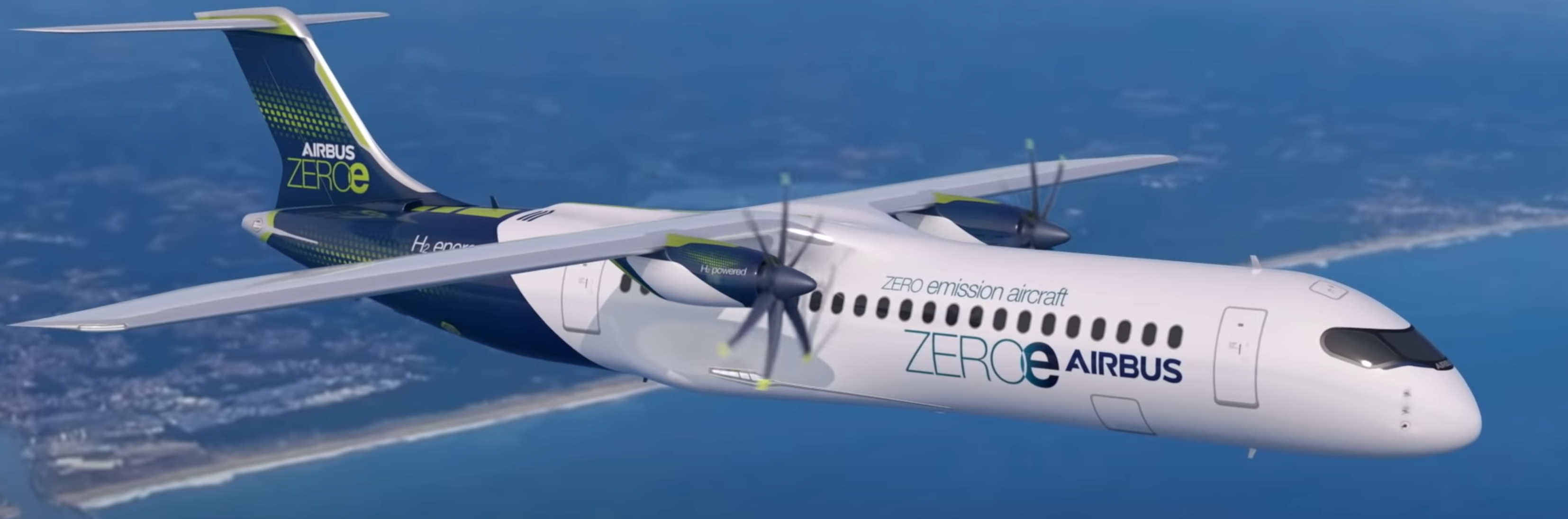
It would have a smaller capacity than the ZEROe Turbofan.
- It would have a useful range of over a thousand nautical miles.
- I feel that both ZEROe aircraft have the same fuselage cross-section, which could ease cargo handling, by using the same equipment for both aircraft.
- I also feel that both ZEROe aircraft will have the same cockpit, which should reduce crew costs.
I feel that smaller cargo aircraft will play a large part in the development of hydrogen-powered aircraft.
If the plans of some companies and individuals work out, hydrogen might be a better alternative financially to SAF.
Budweiser To Convert Second UK Brewery To Hydrogen
The title of this post, is the same as that of this article on The Engineer.
This is the sub-heading.
Samlesbury Brewery in Lancashire is set to be powered by green hydrogen from 2025, according to new plans announced by owner Budweiser Brewing Group.
This paragraph outlines what will be done at Salmesbury.
The Samlesbury Net Zero project will see the brewery paired with a new hydrogen production facility (HPF), delivered by UK hydrogen services company Protium. Situated adjacent to the brewery, the HPF will provide green hydrogen to meet the thermal demand of the brewing processes, as well as the building’s other heating requirements.
Note.
- A refuelling station for hydrogen-ready HGVs will also be developed as part of the project.
- Heat from the HPF will be recovered and used in Budweiser’s bottling process.
- This is the second project involving Budweiser and Protium, after one at Magor in South Wales.
- Beers produced at the facility include Budweiser, Stella Artois and Corona.
I may have had the odd bottle of Corona in the States, but I’ve generally drunk real ale only since, I started having halves of Adnams with my father at the age of thirteen.
Now, because I’m on Warfarin, I more or less exclusively drink zero-alcohol beers, most of which is Adnams, straight from the brewery.
I’ve yet to find any beer which is less than 0.5 % alcohol, has contained enough gluten to have an effect on my gut.
I have discussed this with experienced brewers and they are not surprised, as the brewing process for zero-alcohol beers doesn’t use much barley.
Conclusion
We need more integrated projects like this, that both decarbonise industrial processes and provide filling stations for hydrogen-powered vehicles.
 The Anonymous Widower