Who Needs Offices? Zopa Doesn’t!
opa’s update to all their investors yesterday.
It had a sub-heading of At Zopa!
Finally, a quick update on where we’re at as a company. All of our staff are still working remotely. Our diligent preplanning for a situation in which we could lose access to our offices has meant we’ve been able to continue to serve our customers throughout the pandemic, while also implementing new solutions to adapt to this unprecedented situation. Like other businesses, we’ve been planning for what a return to our offices looks like. But as we’ve been able to keep serving your needs while operating from home, we are in no rush. Being in this position allows us to stay focused on supporting your needs during this challenging moment.
How many companies after we are through the COVID-19 pandemic will decide to downsize their office requirements considerably?
The World’s First Bi-Mode Hydrogen-Electric Train
This news page on the University of Birmingham web site is entitled HydroFLEX Secures Funding For Hydrogen-Powered Train Design.
The page is mainly about the new funding from Innovate UK, that I wrote about in First Of A Kind Funding Awarded For 25 Rail Innovation Projects, but it also includes this significant paragraph.
As well as being the UK’s first hydrogen-powered train, HydroFLEX is also the world’s first bi-mode electric hydrogen train. It will be undergoing mainline testing on the UK railway in the next few weeks.
One of my disappointments in the design of the Alstom Coradia iLint, is that, it is designed as a hydrogen-power only train, where it could surely have had a pantograph fitted, for more efficient working.
Consider.
- I suspect many hydrogen-powered trains will only be doing short distances, where electrification is not available, so daily distances under hydrogen power could be quite short.
- In the UK, a smaller hydrogen tank would certainly ease the design problems caused by a large fuel tank.
- There have been improvements in hydrogen storage in recent years.
The funding award to the project talks about raft production, so are the engineers, aiming to design a hydrogen power-pack on rafts, that could be fitted underneath the large fleets of retired electric multiple units, that are owned by Porterbrook.
Now that would be a game changer.
- Porterbrook have thirty-seven Class 350 trains, that will be replaced in the next few years by new trains. The electric trains are less than a dozen years old and Porterbrook have been talking about fitting batteries to these trains and creating a battery/FLEX train. Would making these trains bi-mode hydrogen-electric trains be better?
- Birmingham wants to open up new rail routes in the city on lines without electrification. What would be better than a hydrogen powered train, designed in the city’s premier university?
- Routes from Birmingham to Burton-on-Trent, Hereford, Leicester, Shrewsbury, Stratford-on-Avon and Worcester would be prime candidates for the deployment of a fleet of bi-mode hydrogen-electric trains.
- Birmingham have already asked ITM Power to build a hydrogen filling station in the city for hydrogen buses.
First Of A Kind Funding Awarded For 25 Rail Innovation Projects
The title of this post, is the same as that of this article on Railway Gazette.
This is the introductory paragraph.
The Department for Transport and Innovate UK have announced the 25 projects which are to share £9·4m of funding under the 2020 round of the First of a Kind rail industry innovation programme.
It appears to be a longer list, than I’ve seen previously awarded.
Project 1 Train Swap From Seatfrog Ops
Seatfrog is an app, that enables passengers to quickly and remotely update their seat reservation to a different service.
It already appears to be in use with Avanti West Coast, CrossCountry, GWR and LNER.
This application could have legs, as it looks a bit like eBay for First Class seats.
Project 2 Dynamic Capacity Management From Esoterix Systems Ltd
It is described as follows.
Ticketing that adjusts to travel patterns and rewards particular choices, using a monthly subscription that will help customers to save money on a large upfront fee.
Their web site doesn’t give much specific detail, as I write this.
Project 3 Next Generation Composite Poles For A 5G Enabled Railway From Hive Composites
It is descrtibed as follows.
Installation of lightweight composite poles along railways to improve wi-fi speed, consistency and connectivity.
Their web site doesn’t give more specific detail, as I write this.
Project 4 Illumin Heated Concrete Platform Coper Slabs From Sheffield Hallam University
It is described as follows.
Illuminated and heated low-energy concrete slabs for station platforms, which automatically switch on in freezing conditions to help prevent passengers from slipping on ice.
The Sheffield Hallam University doesn’t give more specific detail, as I write this.
Project 5 LAMINAR From iProov
It is described as follows.
iProov, WorldReach Software and Eurostar are to establish a walk-through ’facial biometric corridor’ at London St Pancras International to allow passengers to complete ticket checks and border exit processes without needing to come into contact with people or hardware.
There is more on the iProov web site.
I think, this could be the way to ensure safe train travel in these pandemic times.
It would certainly cut queues.
Project 6 Track-To-Train Communications To Transport for Wales From Ingram Networks
It is described as follows.
Lab-based study into cost-effective 10 Gbps+ trackside to train communications infrastructure, to be tested on an 8 km heritage railway in Leicestershire.
Their web site doesn’t give more specific detail, as I write this.
Project 7 Prototype Zero Emissions Trac Rail Transposer (TRT-e) From Unipart Rail
This is described as follows.
A zero-emissions machine which removes and replaces rails.
The Unipart Rail web site, doesn’t give more specific details as I write this
Will it be battery or hydrogen-powered?
Project 8 LoCe: Less Oil, Cleaner Exhaust From Porterbrook Leasing
This is described as follows.
£400 000 to support Porterbook, Eminox, Bosch Rexroth and DG8 in retrofitting a Bombardier Class 170 Turbostar DMUs leased to East Midlands Railway with with Eminox SCRT technology to evaluate whether this can reduce CO, particulate, hydrocarbon and NOx emissions to make mid-life diesel engines more environmentally sustainable.
There is more on Porterbrook’s web site.
Project 9 Zero Emission Rail Freight Power From Steamology Motion
This is described as follows.
Hydrogen-based steam turbine system to provide zero emission power for existing freight locomotives.
In Steam, But Not As You Know It…, I give more details of their technology.
Could Steamology Motion really be on the verge of reengining a Class 66 locomotive with a zero-carbon steam technology that uses hydrogen and oxygen as a fuel?
Project 10 Daybreak From Riding Sunbeams
This is described as follows.
A direct connection between renewable energy generation and overhead electrifcation systems.
There is more on this page on the Riding Sunbeams web site.
Project 11 Resi-Glaze From FAR-UK
This is described as follows.
Resilient glazing solution to ensure passenger safety on trains and a potential CO2 emissions saving.
I can’t find anything more about this.
Project 12 HydroFLEX Raft Production From BCRRE
This is described as follows.
£400 000 grant to support final production design and testing by the University of Birmingham and Porterbrook of a hydrogen power pack intended to minimise the loss of passenger saloon space.
Just reading the extract, it seems that the University of Birmingham have found a solution to the big problem of hydrogen-powered trains in the UK; the small loading gauge.
Project 13 Low Environmental Impact Composite Footbridge From Associated Utility Supplies
This is described as follows.
A footbridge made entirely from fibre reinforced polymer, which is designed to be significantly easier to install than an equivalent steel bridge to help reduce network disruption and local environmental damage.
Could their share of the £9.4 million, almost build the first footbridge?
Looking at the Associated Utility Supplies web site, amongst the wide range of equipment, that they source for various industries, where danger is ever present, there are no footbridges.
So did their expertise and that of some Network Rail engineers, all come together in a convivial meeting to produce an innovative design of footbridge?
Project 14 Integrated Optical Fibre Sensing (OptRail-PRO) From rcm2
This is described as follows.
Optic fibre sensors to monitor the condition of switches and crossings.
The rcm2 web site doesn’t give more specific details, as I write this.
Project 15 Train Axle Crack Monitoring From TAMON – Perpetuum
This is described as follows.
Using sensors and pattern-recognition technologies to identify cracks in axles, helping to reduce returns to depot.
Perpetuum seem a very capable company.
Project 16 High Speed Cryogenic Blasting For Rail Cleaning To Alleviate Low Adhesion From Sheffield University
This is described as follows.
High speed cryogenic cleaning system for tracks to prevent low adhesion and slow running of trains.
This article on the BBC, which is entitled Dry ice ‘could stop leaves on line rail delays’, explains the technology.
Dry Ice Blasting is also explained on this page on the IceTech Technologies web site.
As the dry ice is carbon dioxide, will the Green Movement object?
The Wikipedia entry for dry ice blasting says this about its environmental effects.
Dry ice blasting is an environmentally responsible cleaning method. Dry ice is made of reclaimed carbon dioxide that is produced from other industrial processes, and is an approved media by the EPA, FDA and USDA. It also reduces or eliminates employee exposure to the use of chemical cleaning agents.
Compared to other media blasting methods, dry ice blasting does not create secondary waste or chemical residues as dry ice sublimates, or converts back to a gaseous state, when it hits the surface that is being cleaned. Dry ice blasting does not require clean-up of a blasting medium. The waste products, which includes just the dislodged media, can be swept up, vacuumed or washed away depending on the containment.
It appears it could be one of those processes, that when it replaces a traditional method, has more benefits than disadvantages.
Project 17 InnoTamp From Fugro
This is described as follows.
Data gathering to ensure the maintenance of optimum rail alignment.
The project is described on this page of the Fugro web site.
Prokject 18 Thermal Radiometry For The Remote Condition Monitoring Of Railway Vehicles From Rail Innovations
This is described as follows.
Using thermal radiometry camera technology to measure temperatures of mechanical systems on moving trains, sending automatic alarms in the event of over heating.
I can’t find any more information on this project.
Project 19 Minimising Disruption Of Overhead Line Renewals Via Novel Headspan Assemblies From Associated Utility Supplies
This is described as follows.
Span wire clamping system to enable rapid, low-cost overhead line equipment headspan renewals with minimum network disruption.
This is a second project from the same company.
Project 20 Trainserv Software User Trial And Preparation For Commercialisation From Cogitaire
This is described as follows.
Integrating multiple sources of real-time data for use by rail workers to help them improve services and respond to incidents.
Cogitare seem a very capable company.
Project 21 Cleartrak On-Train Testing From Garrandale
This is described as follows.
Innovative and efficient system for processing toilet waste, reducing cost and maintenance requirements.
Ptoject 22 IRIS: Information System For Railway Station Staff From Liverpool John Moores University
This is described as follows.
An information system for frontline station staff to enhance communication and enable them to help passengers in making travel decisions and planning more effectively.
Another project from a University.
Project 23 Railway Optical Detection & Obstructions – Tunnel & Station Monitoring From Vortex IoT
This is described as follows.
Sensors and data analysis tools to detect and identify intrusion and obstructions on the track, and send real-time situational alerts to the rail control centre to prompt further investigation.
This page on the Vortex IoT web site shows some of the technology they will use.
Project 24 Improving Resilience Through A Surface Water Flooding Decision Support System from IBA Consulting
This is described as follows.
This project seeks to develop a first of a kind surface water flood forecasting and early warning system for Network Rail using technology and data to map the surface water flood likelihood in real time, ahead of the event and forecast rainfall intensity.
I can’t find the company or this project.
Project 25 Improved Railway Operations Through Train-Mounted Water Addition From CoCatalyst
This is described as follows.
Spraying a small amount of water from the train when slippery rails are detected to improve traction and braking, and prevent subsequent services from being affected.
There’s a detailed description on this page on the Water=Trak web site.
This looks to be a simple idea, that may be significant, to stop wheel slippage.
Conclusion
The ideas are more numerous than usual and they are a very wide-ranging bunch.
In Grants To Support Low-Carbon Technology Demonstrators, which were a similar group in 2019, that were also funded by Innovate UK, there were only five projects.
I also feel, some could have significant export opportunities.
Steam, But Not As You Know It…
The title of this post, is the same as that of a sub-section of this news article on the IMechE web site.
This is the introductory paragraph.
Burning vast amounts of coal, wood or oil, traditional steam locomotives are hardly environmentally friendly. Steamology Motion hopes to give steam a modern makeover with its W2W Zero Emissions Power System, a range extender for Vivarail Class 320 rolling stock.
This paragraph gives an outline of the technology.
Few details are available, but the project aims to boost air quality at stations and reduce noise and pollution. W2W stands for water-to-water, and the system has a compact energy dense steam generator at its heart. “Steam is generated using energy stored as compressed hydrogen and oxygen gas in tanks,” the project summary says. “High pressure, superheated steam is used to drive a turbine to do useful work by generating electricity.”
There is only a fine line between madness and genius.
A Walk Around Bletchley Viaduct – 16th June 2020
Today, I donned my mask and took a train to Bletchley station, where I took a walk around the Bletchley Viaduct.


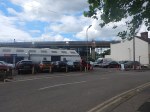


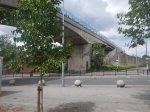


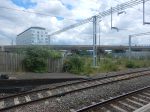


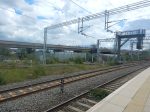
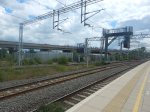
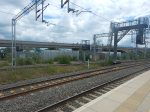
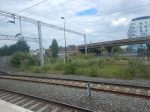


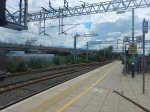
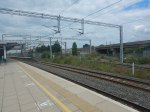

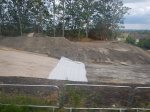

Note.
- How the section of the viaduct over the West Coast Main Line has been removed.
- The viaduct seems to be mainly flat sections, with three arches, where it crossed the road.
Judging by the noise of concrete being attacked by pneumatic drills, it would appear to be a tough piece of concrete to partially demolish. This could be a good thing, as a station guy told me. that the latest plan was to build the new viaduct and the two platforms on the foundations of the old viaduct.
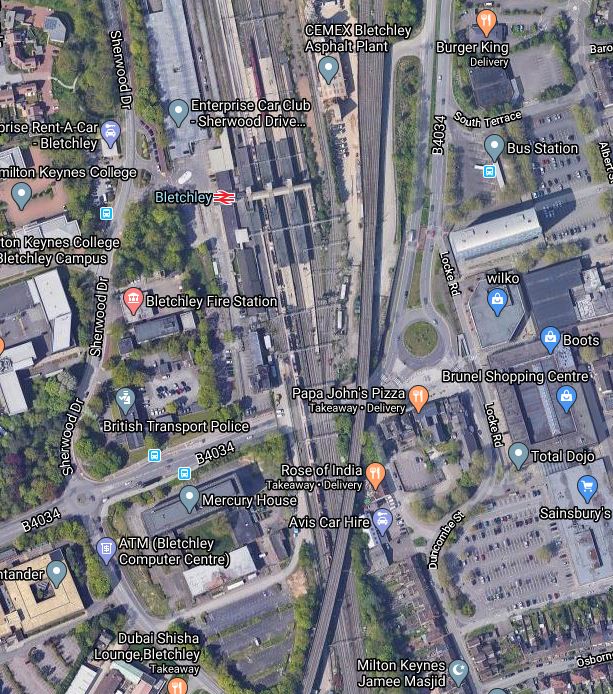
This Google Map shows the station.
Note.
- Bletchley station with its six platforms.
- The viaduct running diagonally across the West Coast Main Line and then past the East side of the station.
This visualisation from East West Rail shows an idea for the new station.
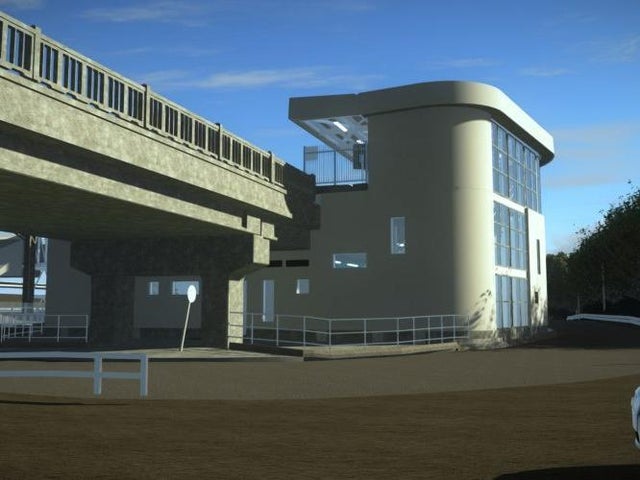
It would appear the visualisation was taken from somewhere near the roundabout on the East side of the viaduct.
I took this picture from the zebra crossing outside the pub, by the roundabout.
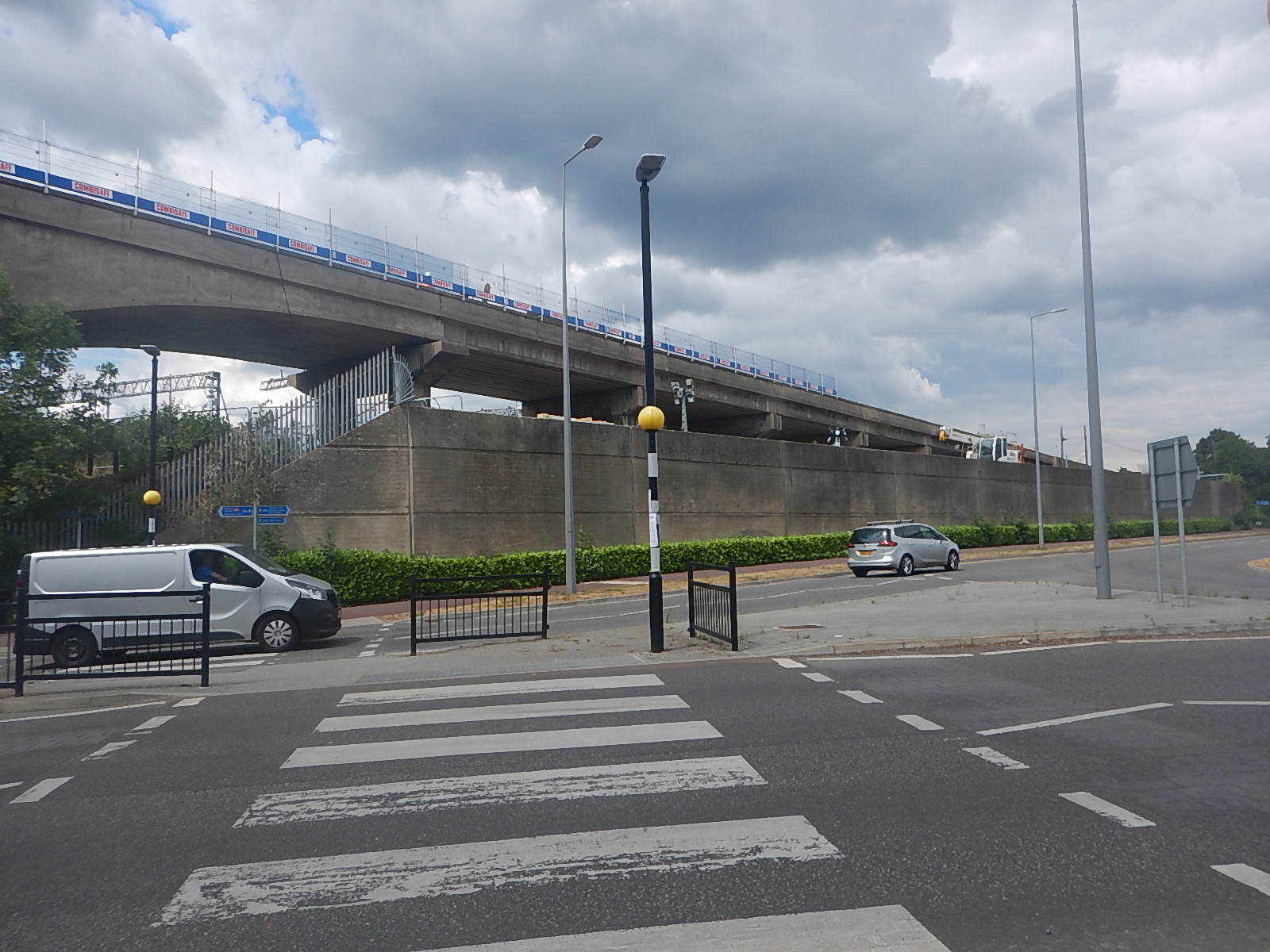
It looks to me, that the retaining wall on the other side of the crossing will be removed and the station entrance will go somewhere along the straight part of the viaduct.
- It could be about the place where a heavy digger or crane is working.
- An entrance here, would give access to the bus station and the Brunel Shopping Centre on the other side of the roundabout.
- If you look at the wider maps of the area, it can be seen that the stadium, where Milton Keynes Dons play their home matches is not that far away. So the new entrance, will ease getting to one of the least accessible football grounds in the country.
This Google Map shows an enlargement of the roundabout and the surrounding area.
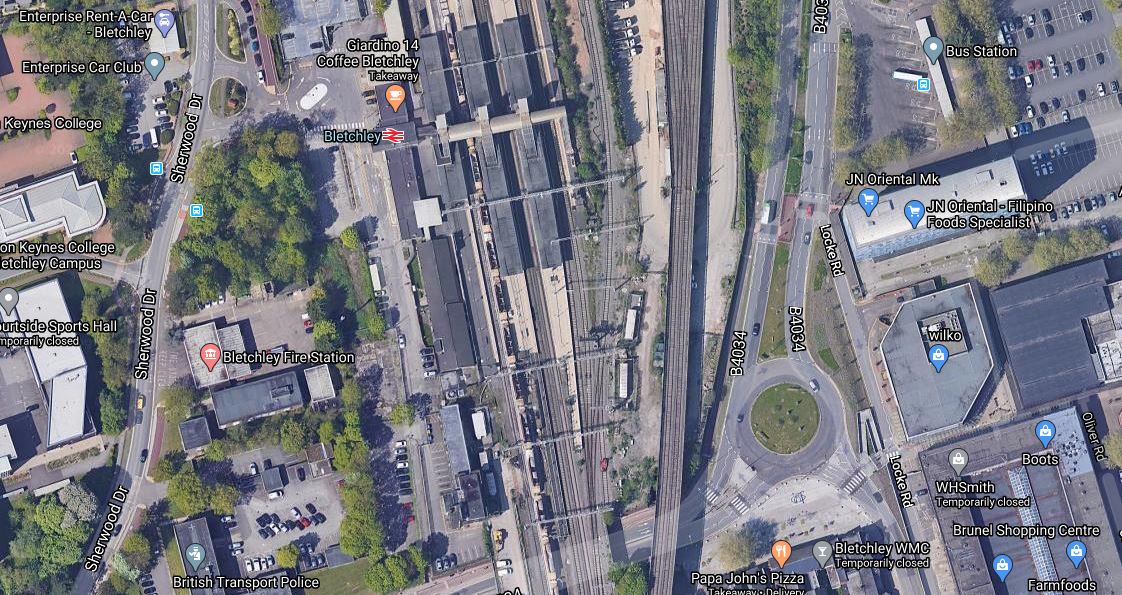
Note.
- The Bus Station in the North-East corner of the map.
- The Brunel Shopping Centre in the South East corner of the map.
- The roundabout, where I took the picture on the zebra crossing, of the retaining wall.
- The step-free footbridge in Bletchley station can be clearly seen
It would appear, that there is space behind the retaining wall to build the station entrance alongside the viaduct and link it to the existing footbridge to give access to the rest of the station.
It appears that Network Rail are using the reinstatement of the East West Railway, as an opportunity to sort out important transport needs in Bletchley.
Dexamethasone Declared First Drug To Save Lives Of Coronavirus Patients
The title of this post, is the same, as that of this article in The Times.
These are the introductory paragraphs.
British scientists have hailed a “huge breakthrough” in the fight against Covid-19 after a cheap drug was declared the first to save lives.
Dexamethasone, a decades-old steroid that costs about 50p per day, was found to reduce deaths by up to one third for the sickest patients. NHS hospitals were advised to begin using it immediately.
According to a retired Senior Hospital Pharmacist friend, Dexamethasone has been around a long time and is used in shock. She added “So don’t know why not tried before.”
The Times article says this about previous use.
While it had been administered to Covid patients in China and elsewhere its use was controversial, with no definitive proof that it worked.
Could it be that the research was discounted on ageist grounds against the drug?
Wikipedia also says this about the drug?
it was the 259th most prescribed medication in the United States, with more than a million prescriptions.
That is about 1-in-327 of the US population.
Dexamethasone And Coeliac Disease
Out of curiosity, I typed “Dexamethasone and coeliac disease” into Google.
I found this page on SpringerLink, which is entitled The Role of Corticosteroids In Celiac Disease.
This is the first sentence.
Since Dickie first described the benefits of a gluten-free diet in the 1940s and 1950s, this diet is the standard of care for all patients with celiac disease. For patients with a new diagnosis, dietary compliance can be difficult to achieve, possibly resulting in a clinical course marked by delayed recovery and persistent symptoms. This is of particular concern for patients in the developing world, where gluten-free food items may be difficult to obtain or to identify. While dietary modifications are likely to remain the treatment of choice in celiac disease, the use of adjuvant corticosteroids in newly diagnosed patients is a topic that has been addressed previously.
I’m no medic, so what follows in the scientific report is beyond my limited medical knowledge.
However in A Thought On Deaths Of The Elderly From Covid-19, I estimated that there are around 120,000 undiagnosed coeliacs in the UK, who are over 65. I used data from Age UK and Coeliac-UK.
According to Joe West of Nottingham University, diagnosed coeliacs on a gluten-free diet have less chance of getting cancer!
Could it be that this group of people, of which I am one, have a strong immune system?
So could the reverse be true and that undiagnosed coeliacs on a typical gluten-rich diet have a compromised immune system?
My son was an undiagnosed coeliac, with a poor diet who smoked. He died at just thirty-seven from pancreatic cancer!
Could some of the patients, who recovered from COVID-19, when given dexamethasone, have been undiagnosed coeliacs?
I, of course don’t know.
But the role of coeliac disease in the recovery from COVID-19 must be investigated.
A quick way to test my theory would be to survey the catering departments of all hospitals and see how much gluten-free food was being sent to wards, where COVID-19 is being treated.
Coeliacs, whether diagnosed by doctors or self-diagnosed, will probably be vociferous in their need for gluten-free food. I certainly was, when I had my stroke in Hong Kong.
Give me the data and I’ll analyse it!
I would also like to hear from any coeliacs, who have been given dexamethasone!
Coronavirus: How Realistic Is Crossrail Opening Next Year?
The title of thispost, is the same as that of this article on the BBC.
The article takes the form of the BBC’s Transport Correspondent; Tom Edwards interviewing Crossrail’s Chief Executive; Mark Wild.
This is an extract.
But the big challenge is the 40% of work left to do on the safety checks known as “assurances”.
The management team say it is working to the opening date of the summer 2021 for the Paddington to Abbey Wood section under central London.
To make up for lost time, Crossrail wants to carry out blitz testing in August and September.
I asked Mr Wild if he could guarantee 100% if Crossrail will open in summer 2021.
He said: “I guarantee that this project team and myself, will do everything humanly possible to do it.
“I must say we are working pretty effectively – 2,500 people working off-site and we are making great progress on the assurance work.
“Clearly we have to do that safely but there’s no doubt Covid has had an effect and we are working now on a plan to recover lost ground.”
Having watched many projects, that were in dire straits, being recovered by top class project management, I feel that there is a good chance that if Mark Wild and his team, are up to scratch that Summer 2021 could be a realistic possibility.
I remember the tale of British Leyland’s MiniMetro plant, that was recalled in Michael Ewardes‘s book.
- The complicated machine, that assembled the bodies wasn’t working.
- It was then found out, that it had hit a motorway bridge on the journey from Germany.
- Good project management saved the day, by reorganising and accelerating the commissioning of the second line, so that it came into production early enough to save the day.
As British Leyland were Artemis customers, I do wonder how much the software, I wrote in a Suffolk attic, played a part in that episode.
Let’s hope that Mark Wild and his team have some good project management software on their team.
Developer 8minute Says More Than 24GWh Of Batteries Included In Its US Solar-Plus-Storage Pipeline
The title of this post, is the same as that of this article on Energy Storage News.
What caught my eye was the 24 GWh!
When you consider that the biggest battery in the UK is Electric Mountain, which has a capacity of 9 GWh, 24 GWh of batteries is a large number!
It will need a lot of solar panels to keep that amount of batteries brim-full.
This is a sentence from the article.
The company’s projects include the Eland Solar & Storage Center, which will comprise 400MWac of PV and 300MW / 1,200MWh of battery energy storage, currently under construction in California’s Mojave Desert.
Those are big numbers against the UK’s largest solar park at Shotwick in Wales, which is just 72.2 MW.
Transport for London Are Driving Me Mad
Because of COVID-19, a lot of Underground station entrance and exits have been closed.


I can understand, why it needs to be done, but I keep falling foul of their closures.
- I wanted to go from the Angel to Paddington and my usual route is to change between Northern and Circle Lines at Kings Cross. But you had to walk all the way round Kings Cross station for the change.
- Coming back from Paddington, I often take the Bakerloo Line to Regents Park station, but the train went straight through.
- I wanted to go from Wlathamstow Central to Dalston. Normally, I would use the Overground and a bus, changing at Hackney Downs. But the Overground wasn’t working, so I used the alternative route changing at Seven Sisters and I got another long walk.
What is needed is better information at all station entrances, as once you’re in the labyrinth it’s too late.
 The Anonymous Widower