Alzheimer’s Expert Was Treated Like A Heretic Until Now
The title of this post, is the same as that of this article in The Times.
This is the sub-heading.
For decades Professor Ruth Itzhaki believed there was a link between Alzheimer’s and the virus that causes shingles, and has just been vindicated
These two paragraphs outline an amazing story.
Ruth Itzhaki does not, she says, refer to it as her time “in the wilderness”. When she reflects on the decades investigating — often almost alone — whether Alzheimer’s could be triggered by viruses, she prefers a different term. “I’d call it, ‘repeated burning as a heretic at the stake’. ” For much of her career she was treated “contemptuously”.
Today, as yet another study finds that the shingles vaccine appears to cut dementia risk, that has changed. At a stage in life when most researchers are retired, Itzhaki, an emeritus professor at Manchester University, finds herself reviewing studies from around the world. She is treated with contempt no more. But, she says, it has not been fun. “I just have to stop myself from being bitter.”
Sad to say, it is not an unusual story.
This was the comment, I appended to the Times web site.
There was a wonderful BBC Panorama about a Glasgow Veterinary professor, who believed the messenger of the body was an oxide of nitrogen, at least twenty years ago.
He was ostrasised for being a heretic.
Eventually, he was proved to be right.
I might have exposed how a simple treatment for stroke is ignored in the UK.
I was found to be coeliac at fifty and Addenbrooke’s hospital said that I should have B12 injections every three months.
In my sixties, I had a serious stroke and if I lived in the States, I would have been given B12 injections to aid my recovery. But that simple treatment is not used here, as it is considered American quackery.
However, several doctors have said, I have made a remarkable recovery. Was that because of the B12 injections, I still have?
More research needs to be done and I’ll travel anywhere to help any doctor, who is doing serious research.
It could just be, that as a London Mongrel, I have more survival genes, than a small field of Japanese Knotweed.
I should add, that as the date of my next B12 injection approaches, I can almost feel, the various parts of my body fighting for what little I have left.
But what do I know? I’m just a slightly crazy engineer/scientist and mathematician, with no medical training, who has been given an unusual body to investigate.
Moorgate’s New Light-Controlled Crossing – 5th April 2025
I was on Moorgate this morning and took these extra pictures of the new pedestrian crossing.








It will certainly make it easier to cross the road.
Council’s Boost To Aln Valley Railway Expansion Plan
The title of this post is the same as that of this news item from Northumberland County Council.
This is the body of the news item.
Northumberland County Council has agreed to assist the Aln Valley Railway in Alnwick to extend its rail line and expand its tourism offer in the town.
The county council has agreed to repair and adopt a bridge which is crucial to the expansion plans of the Aln Valley Railway Trust which is working towards the ultimate aim of extending the track from Alnwick to Alnmouth Station.
The Trust is wanting to continue laying track past Eden Hill Bridge which is currently owned by The Historic Railways Estate (part of Highways England). However, the Estate won’t allow the passage of trains under the bridge as it would impose maintenance obligations and costs onto them.
To overcome this hurdle and assist the popular tourist attraction , the county council, as the highways authority, has agreed adopt the bridge which has an unclassified road (U3203) running over it and to repair the bridge so that it can then give consent to the railway to lay track and ultimately operate trains under the bridge.
To bring this masonry arch bridge up to adoptable standards will cost in the region of £255k. One of the main areas of work that is needed is to install a waterproofing concrete overslab to eliminate the current water ingress. Extensive repointing together with masonry repair works are also needed on the bridge arch.
There is a Wikipedia entry for the Alnwick Branch Line, where this is the first paragraph.
The Alnwick branch line is a partly closed railway line in Northumberland, northern England. A heritage railway currently operates along one mile of the line, which originally ran from Alnmouth railway station, on the East Coast Main Line, to the town of Alnwick, a distance of 2+3⁄4 miles (4.4 km).
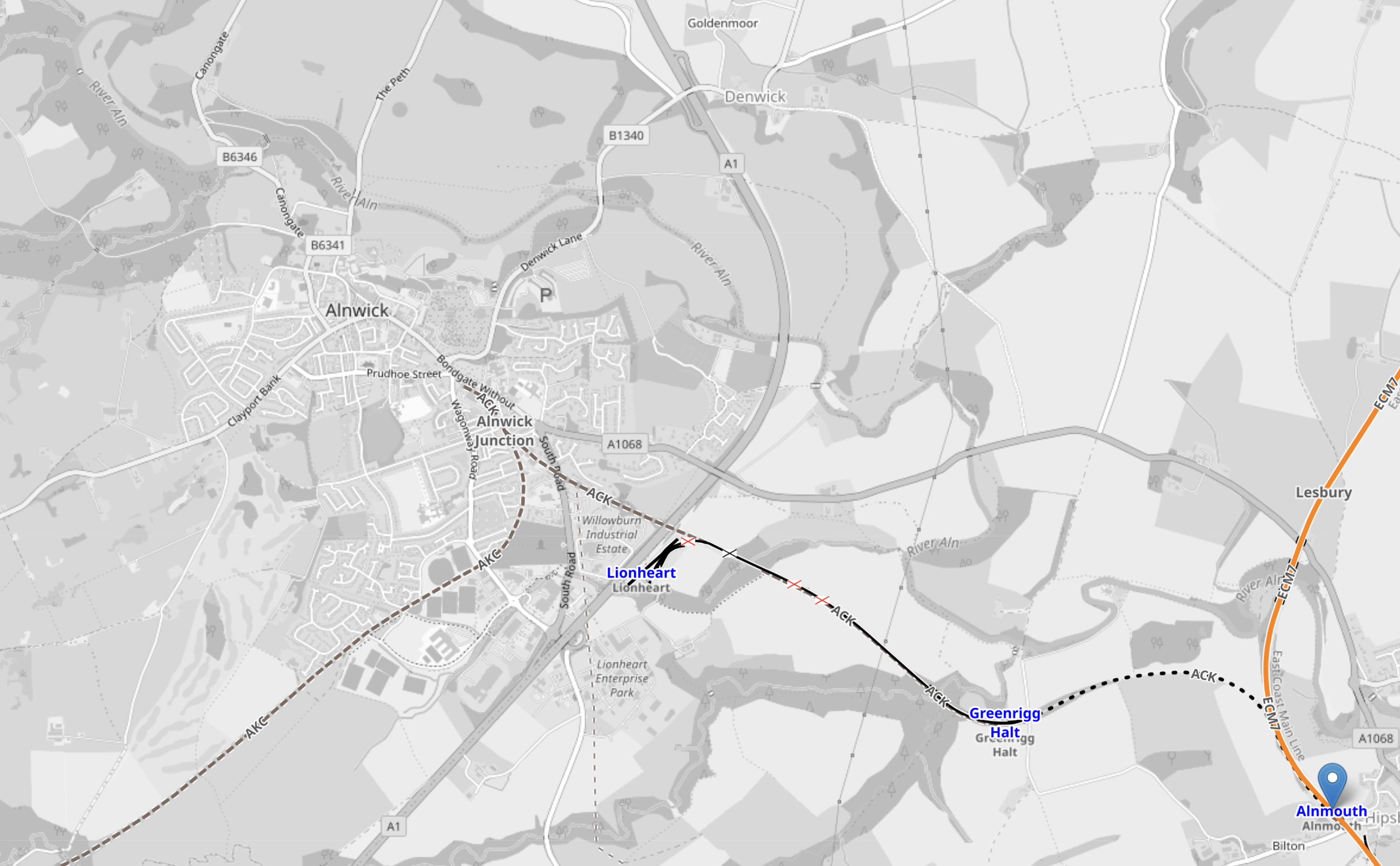
This OpenRailwayMap shows the route of the Alnwick Branch Line between Alnmouth and Alnwick.
Note.
The blue arrow in the South-East corner of the map indicates Alnmouth station.
The orange line curving through Alnmouth station is the electrified East Coast Main Line between Newcastle and Scotland.
The dotted line curving away North-West from the East Coast Main Line is the route of the AlnwickBranch Line, which leads to Alnwick in the North-West of the map.
The blue text indicates the the two stations of the Aln Valley Railway.
Greenrigg Halt is nearest to the East Coast Main Line and Lionheart is nearest to the town.
The road encircling the town of Alnwick is the A1 Alnwick By-Pass.
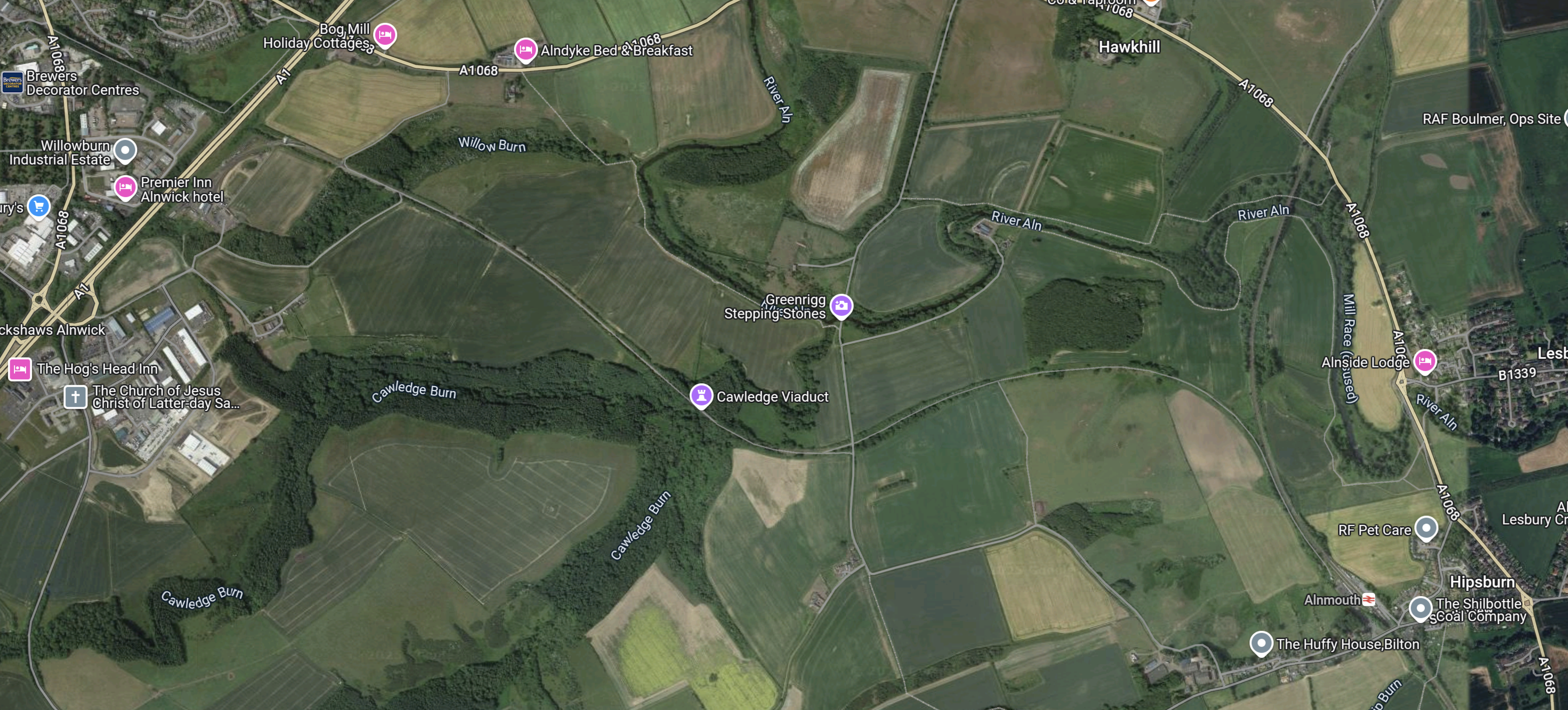
This Google Map shows the area between Alnmouth station and Alnwick.
Note.
- Alnmouth and its station is in the South-East corner of the map.
- Alnwick is in the North-West corner of the map.
- The A1 crosses the North-West corner of the map.
- The line of the Alnwick Branch Line can be picked out crossing the map diagonally.
Click on the map to show it to a larger scale.
The Wikipedia entry for Alnmouth station says this about the ambitions of the Aln Valley Railway to connect to the East Coast Main Line.
The Aln Valley heritage railway has long-term ambitions of extending its running line to Alnmouth station[10] from its current terminus at Greenrigg Halt.
This picture shows a Stadler RS-ZERO.
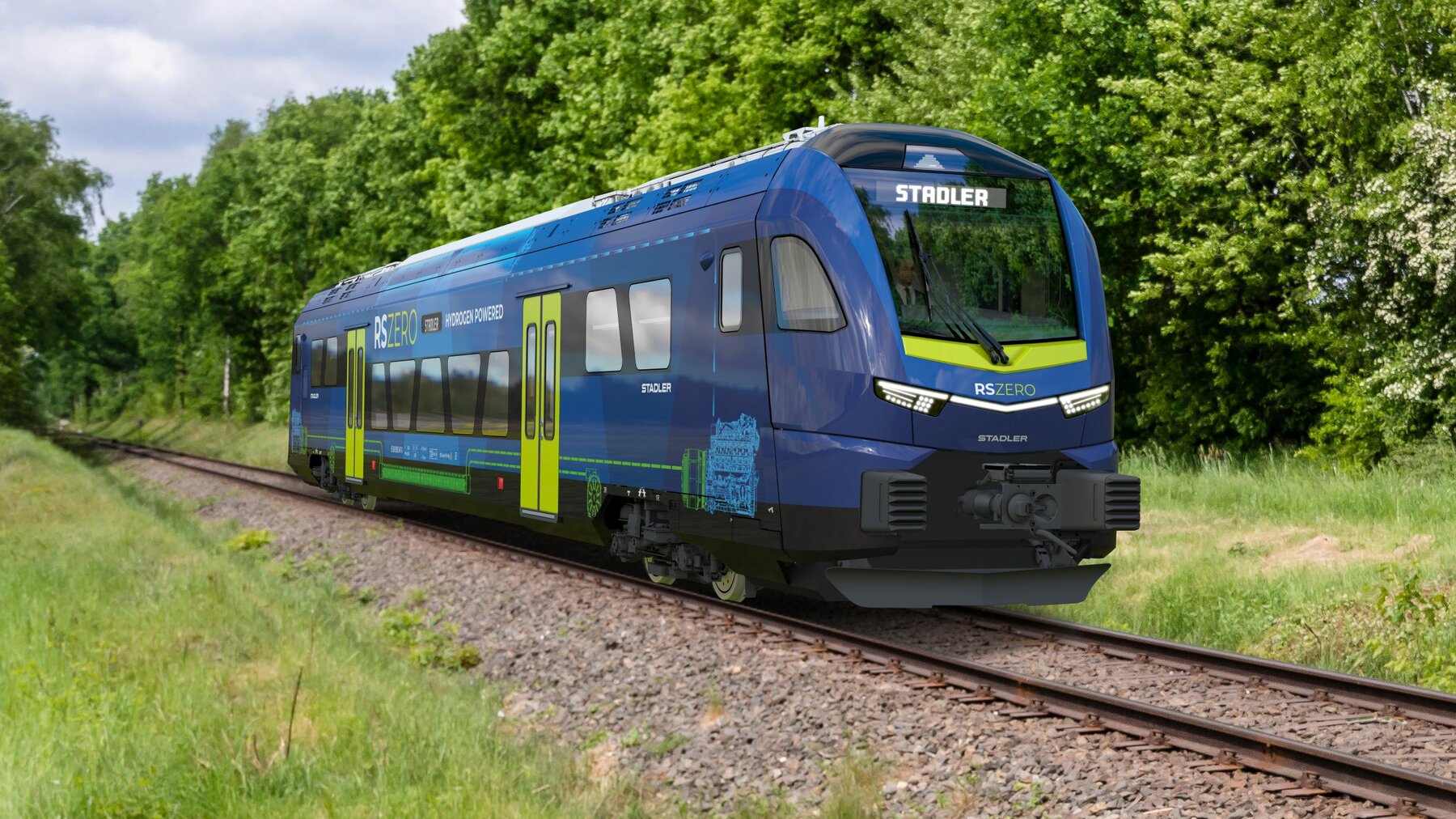
Could one of these powered by hydrogen shuttle between Alnmouth station and Alnwick? Probably, but it’s not powered by steam!
An Orange Pig
I found this on the Internet.
The Tamworth pig breed is known for its distinctive ginger or red-gold coat, making it a pig breed that can indeed be orange.
Where are the Tamworth Two these days?
SSE Files Plans For 100 MW Pumped Hydro Scheme
The title of this post is the same as that of this article on reNews.biz.
This is the sub-heading.
Proposal aims to convert iconic Sloy Power Station into storage facility by end of 2030
These three paragraphs outline the proposals.
SSE has submitted plans to the Scottish Government for the 100MW Sloy pumped storage hydro scheme.
The plans would see the existing Sloy Power Station – a conventional hydro power station – on the banks of Loch Lomond converted into a pumped storage hydro scheme with a pumping capacity of up to 100MW.
If given the green light, the converted Sloy scheme would be capable of delivering up to 16GWh of long-duration electricity storage capacity.
SSE intend to make an investment decision by late 2027 and this is said about increasing capacity.
As part of the planning application, SSE Renewables is also proposing to upgrade the existing 32.5MW G4 turbine to match its sister units, which would increase the station’s generating output by 7.5MW to 160MW.
This appears to be a world-class example of canny Scottish engineering.
The project would turn the current 152.5 MW hydroelectric power station into a 160 MW/16 GWh pumped storage hydroelectric power station.
Not a bad transformation, that was opened three years after I was born.
Arriva Group Invests In New Battery Hybrid Train Fleet In Boost To UK Rail Industry
The title of this post, is the same as that of this news item from Arriva Group.
These four bullet points act as sub-headings.
- Order worth around £300 million for fleet of new trains, which will increase seats by 20 per cent, improving capacity and connectivity.
- 45 rail cars to be manufactured at Hitachi Rail in the North East and financed by Angel Trains, helping secure highly skilled jobs and unlocking a new advanced manufacturing opportunity for rail.
- State-of-the-art ‘tri-mode’ train technology has proven its ability to cut emissions and fuel costs by around 30 per cent to support UK Government’s decarbonisation agenda.
- Announcement is made from Hitachi’s Newton Aycliffe factory and attended by the Secretary of State for Transport, Heidi Alexander MP.
These three paragraphs give more details.
Arriva Group announced today an order for nine cutting-edge battery hybrid trains to replace its entire Grand Central fleet, providing a major boost to regional economies and offering passengers more comfortable, greener travel options.
The order for 45 Hitachi Rail ‘tri-mode’ cars, which have the flexibility to run on electrified and non-electrified tracks, along with a 10-year maintenance contract, represents an investment of around £300 million. Tri-mode means the trains can be powered using electricity, battery or diesel.
It follows approval by the rail regulator for extended track access rights for Grand Central’s existing services through to 2038, with the investment underpinning Arriva’s long-term commitment to UK rail and to delivering sustainable public transport solutions to communities up and down the country and across Europe.
The trains will be built by Hitachi at Newton Aycliffe.
I have some further thoughts and questions.
What Distances Will The Trains Run Away From Electrification?
The distances that the various services will run away from electrification are as follows.
- King’s Cross and Bradford Interchange – Doncaster and Bradford Interchange – 52.1 miles.
- King’s Cross and Cleethorpes – Doncaster and Cleethorpes – 52.1 miles.
- King’s Cross and Sunderland – Longlands junction and Sunderland – 48.5 miles.
It would appear that a train with a range away from electrification of 55 miles would be enough, if there were to be charging at all the destinations.
Will The Trains Be Able To Take The Great Northern And Great Eastern Joint Line (GNGE) Diversion Via Lincoln On The East Coast Main Line?
I discussed using this diversion in detail in London And Edinburgh By Lumo Using the Joint Line Diversion.
In that post, I said this.
The January 2024 Edition of Modern Railways says that the diversion is approximately 90 miles or 145 kilometers.
If the trains have a 90 mile capability on batteries and/or diesel, they will be able to use the diversion.
As Hull Trains, LNER and Lumo all need this ability to take the GNGE Diversion, I suspect, it will be a tick-box on the order form for the trains.
When Will The Trains Be In Service?
The news item says this.
The trains will be delivered in 2028 under a 10-year leasing arrangement, in partnership and financed by Angel Trains.
Will The New Trains Be Faster?
They might save a couple of minutes, if Doncaster is the first stop.
Will The New Trains Be Quieter?
The news item says this about noise and emissions.
State-of-the-art ‘tri-mode’ train technology has proven its ability to cut emissions and fuel costs by around 30 per cent to support UK Government’s decarbonisation agenda.
Hitachi have said that the diesel engines will not run in stations.
Could The Trains Run Grand Central’s Routes Carbon-Free?
In The Data Sheet For Hitachi Battery Electric Trains, I came to these conclusions
- The battery pack has a capacity of 750 kWh.
- A five-car train needs three battery-packs to travel 100 miles.
- A nine-car train needs five battery-packs to travel 100 miles.
- The maximum range of a five-car train with three batteries is 117 miles.
- The maximum range of a nine-car train with five batteries is 121 miles.
As battery technology gets better, these distances will increase.
If I was choosing the trains for Grand Central, the trains would be able to operate these routes without using diesel.
- Doncaster and Bradford Interchange and return.
- Doncaster and Cleethorpes and return.
- Longlands junction and Sunderland and return.
Passengers might not like to have noisy passengers.
Probably, the best insurance policy to avoid running out of battery power, would be to have perhaps fifty metres of electrification at terminal stations. Hitachi claim they can offer a nice line in short lengths of electrification.
Quiet Trains Should Attract Passengers
I’ve seen it before and also with buses.
The Number Of Trains Ordered
The basic order is for nine trains, but Railway Gazette says this.
Arriva welcomed the ‘swift decision-making’ by ORR and the backing of the Department for Transport and Network Rail. It has also submitted applications to run more trains to Bradford and introduce services to Cleethorpes, and has an option to buy more trains if these are approved.
I’ve read somewhere that the option is for three extra trains.
So that’s a total of twelve, which would replace the ten Class 180 trains and two Class 221 trains, that Grand Central Trains currently run.
What About Chiltern Railways And CrossCountry?
Train operating companies Chiltern Railways, CrossCountry and Grand Central Trains are all wholly owned subsidiaries of Arriva Trains UK, who are described like this in the first paragraph of their Wikipedia entry.
Arriva UK Trains Limited is the company that oversees Arriva’s train operating companies in the United Kingdom. It gained its first franchises in February 2000. These were later lost, though several others were gained. In January 2010, with the take-over of Arriva by Deutsche Bahn, Arriva UK Trains also took over the running of those formerly overseen by DB Regio UK Limited
Arriva is ultimately owned by American infrastructure investment company; I Squared Capital.
Both Chiltern Railways and CrossCountry have trains, that are coming to the date, when they will need to be replaced and similar trains to those ordered by Grand Central could be suitable. to replace some.
Chiltern Railways have six rakes of Mark 3 coaches, that are hauled by diesel locomotives between London Marylebone and Birmingham Moor Street stations, These rakes of coaches could be replaced by Hitachi tri-mode trains, of perhaps five or six cars.
Chiltern Railways also have about sixty assorted diesel multiple units totalling up to about 150 carriages.
CrossCountry Trains have twenty-nine two- or three-car Class 170 trains and sixty-one four- or five car Class 220 or 221 trains. All these ninety trains were built this century and are diesel-powered.
The Government’s policy of net-zero by 2050, would probably mean a significant number of these smaller diesel multiple units need to be replaced by 2030.
If the Grand Central Trains new Hitachi trains are a success, then changing the longer four-, five- and six-car trains for similar Hitachi trains, would be a low-risk replacement strategy for I Squared Capital, that could be applied at Chiltern Railways and CrossCountry.
I can also see a need for a two-, three- or four-car tri-mode train for Chiltern Railways and CrossCountry.
Was The Date Of The Announcement Significant?
In October 2020, I wrote Hitachi Targets Export Opportunities From Newton Aycliffe and I believe that tri-mode trains like these that Grand Central have ordered could have export opportunities.
One country for exports has possibilities and that is the United States.
- Hitachi AT-300 trains like these don’t need expensive high-speed tracks and there are probably many lines in the United States, where these trains could fit existing tracks.
- This page on the Hitachi Rail web site is entitled Hitachi Rail in the USA and Canada.
- In the UK, companies like GWR, LNER, Southeastern and TransPennine Express effectively use theHitachi trains as fast commuter trains on some routes.
- Trump’s tariffs would only be 10 % on these trains.
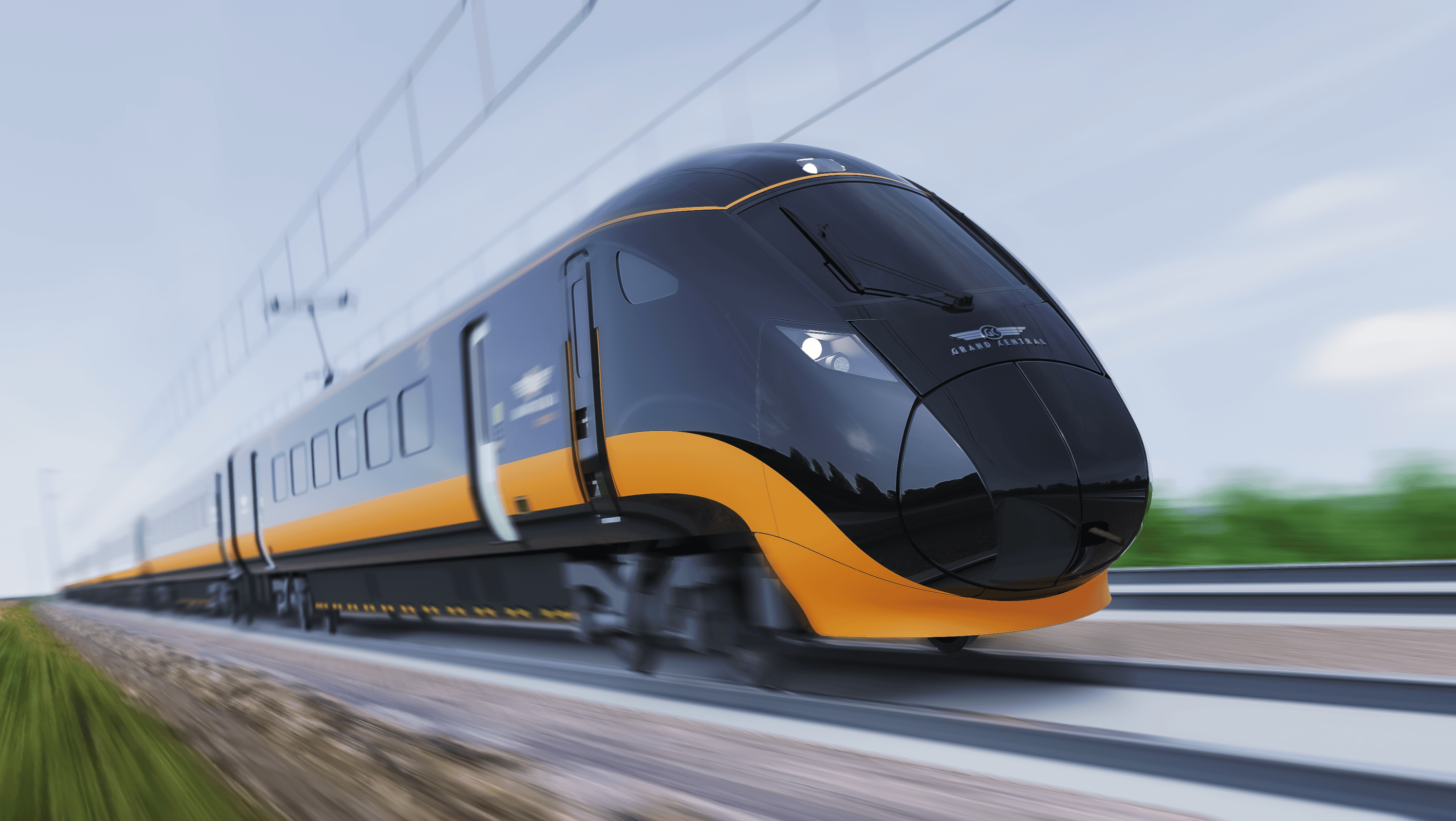
- The Grand Central version looks very stylish!
- Hitachi’s battery technology is owned by Turntide Technology, who are a US company.
- For some routes, the trains would probably only need to be battery-electric.
Has the experience of running Chiltern Railways, CrossCountry and Grand Central Trains convinced I Squared Capital, that running railways is a good investment?
Have I Squared Capital identified some railroads in the United States, that could follow a similar upgrade path to Chiltern Railways?
Was it significant that the order was announced the day after Trump’s tariffs?
.
Doncaster-Sheffield Airport And Hydrogen
I believe that the airport of the future will need a lot of hydrogen.
I am probably more optimistic than most, that we will see hydrogen-powered aircraft by around 2035, as my calculations say it is probably the only way to move a hundred people by air at a time, without using fossil fuels.
Airports also have a large number of larger vehicles, that will I believe be ideal for hydrogen power.
Hydrogen buses and coaches will be more common, than they are now.
Heavy goods vehicles are likely to turn to hydrogen power.
Humberside has a large hydrogen network, which is fed by two massive hydrogen stores at AldBrough and Brough.
I suspect that Nimbys will object to hydrogen around airports on safety grounds.
But Doncaster Sheffield Airport could be an ideal location for an airport for hydrogen-powered aircraft.
Octopus Energy Takes Stake In 714 MW East Anglia One Offshore Wind Farm In UK
The title of this post, is the same as that of this article on offshoreWIND.biz.
This is the sub-heading.
Octopus Energy has acquired a 10 per cent stake in the 714 MW East Anglia One offshore wind farm in the UK, which was fully commissioned in 2020.
These two introductory paragraphs add more details.
Octopus acquired this latest wind farm stake from Macquarie Asset Management on behalf of Vector, Octopus’ offshore wind fund, which invests in fixed and floating offshore wind and pioneering tech to reduce costs.
Owned by ScottishPower Renewables and Macquarie’s Green Investment Group(GIG), the 714 MW wind farm is located 43 kilometers off the coast of Suffolk in the east of England and has been powering Britain with green energy since 2021.
East Anglia One has a web site, that gives a lot more details of the wind farm.
Between Dore & Totley And Bamford Stations – 1st April 2025
I wanted to see the newly-built passing loop between Heathersage and Bamford stations, so the easiest way was to go to Bamford station and return from Bamford station to Sheffield station.
I took these pictures along the outward route.









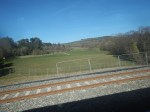
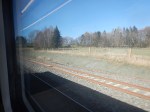
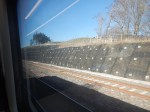
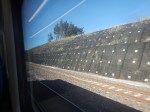
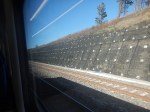
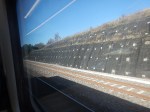
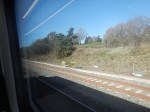
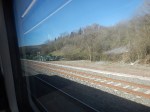
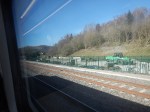
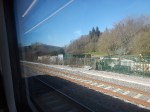

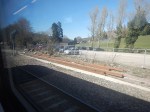
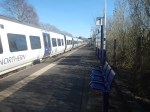
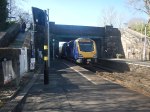



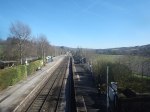
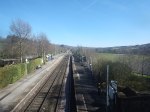
Note.
- Hathersage seems a tidy and attractive village.
- All the stations I visited, seem to be long on information.
- The last three pictures show the passing loop from the bridge at Bamford station.
- eathersage and Bamford stations are not step-free.
- The piling is of a similar quality to a larger scale of a surgeon sewing up a patient after a serious operation.
This OpenRailwayMap shows the loop.
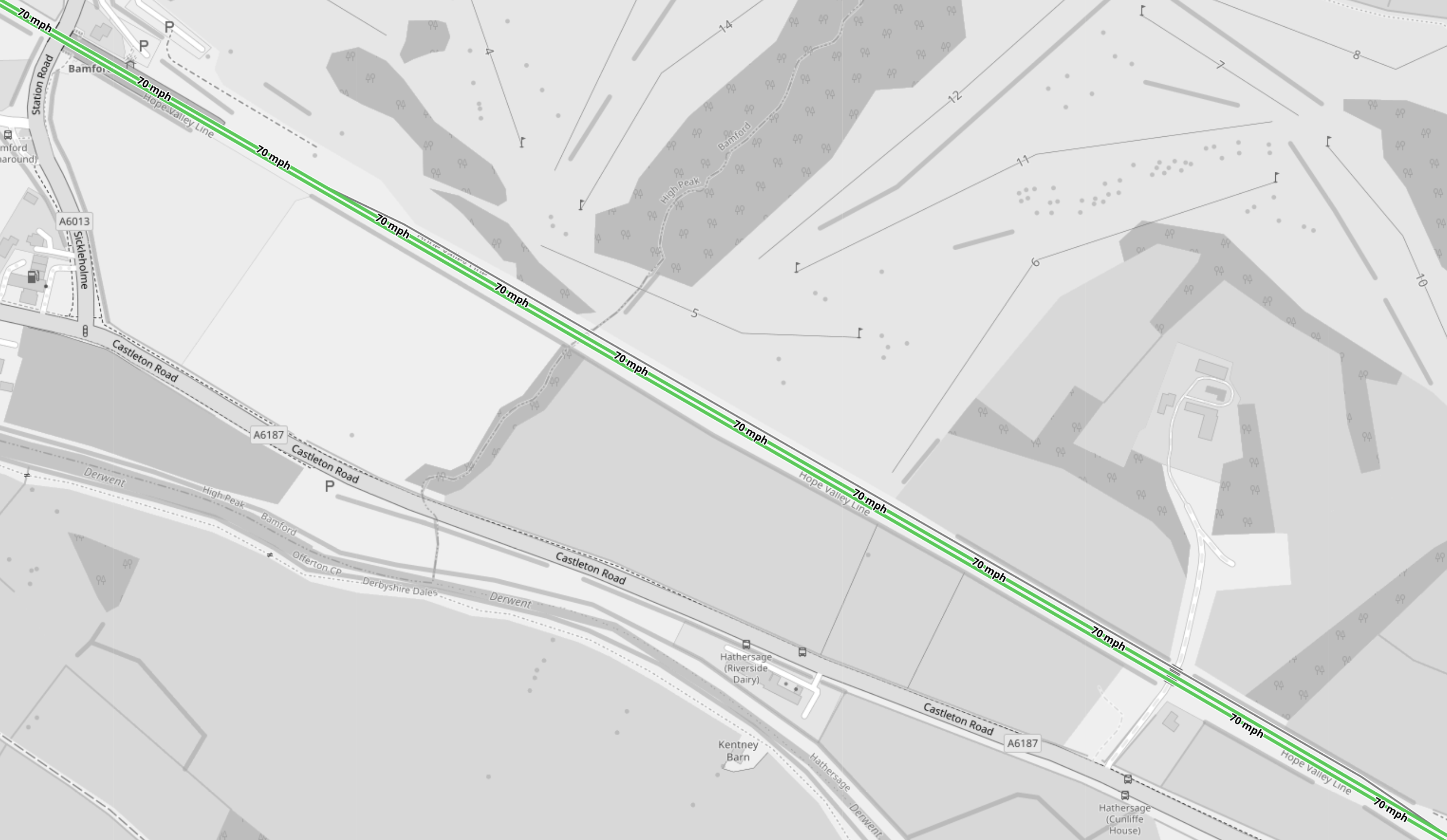
Note.
- The three tracks of the passing loop appear almost straight.
- Are they level I wonder?
- The loop looks level from my pictures.
- Bamford station is 83.9 miles from Cleethorpes according to Real Time Trains.
- Dore & Totley station is 75 miles from Cleethorpes according to Real Time Trains.
- Dore & Totley and Bamford stations are 8.9 miles apart and TransPennine Express Class 195 trains take eight minutes to go between the two stations.
I’ll take an average speed of just under 70 mph on a straight and level track.
What speed would a battery-electric Class 802 train, be able to achieve?
This track seems to have been built for battery-electric InterCity Trains and their drivers to have fun.
If the engineers had wanted to make it better they could have used concrete slab track, but to my camera and my eyes, it looks to be extremely level.
I took these pictures along the return route.




Only by looking at all pictures and the map in detail in this post, can you get a feeling for what has been done.
The Wikipedia entry for the Hope Valley Line says this.
The work includes creating a 3,600 feet (1,100 m) passing loop between Bamford and Hathersage.
But this is no passing loop, as it’s much more of a passing straight!
It will be very interesting to see how many minutes can be saved between Dore & Totley And Bamford stations.
My Only Worry
This OpenRailwayMap shows the Eastern section of the Hope Valley Line.
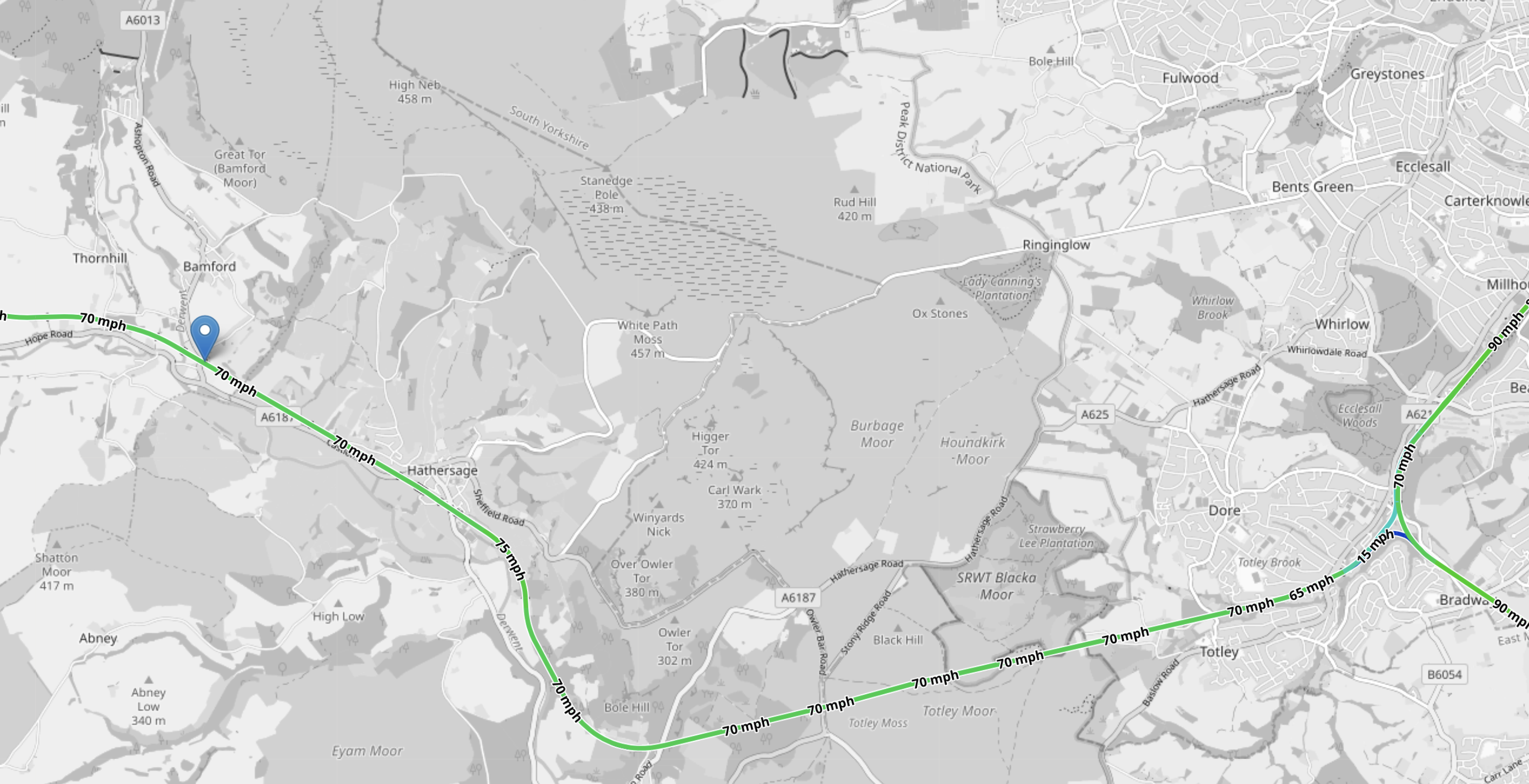
Note.
- The triangular junction at Dore is at the East of the map.
- The blue arrow indicates Bamford station.
- The straight and level passing loop to the East of Bamford station.
- Click the map to show it to a larger scale.
Will this section of track, with trains going through at seventy mph, every few minutes be too dangerous for some people on the four stations on the route?
Dore & Totley Station – 1st April 2025
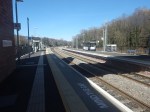
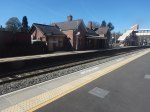
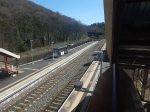
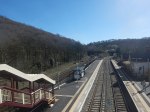
It seems like only yesterday, when I visisited Dore and Totley station and wrote Dore And Totley Station – 13th July 2020, when I took these pictures.




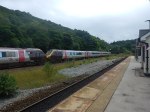
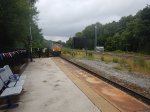


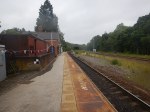

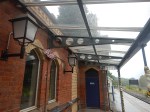
But it was yesterday, when I visited the station again and look at the station now.

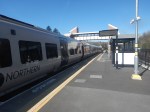





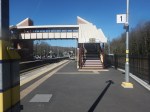



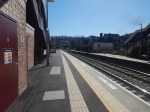



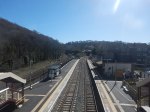




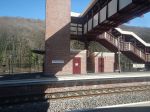
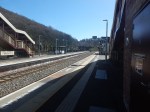
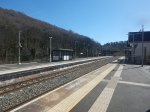
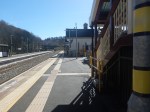
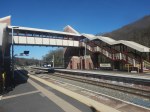
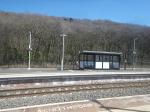


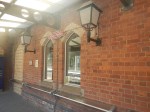
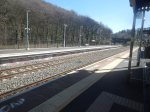





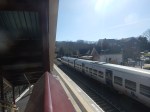
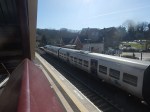
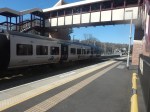
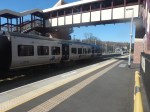
Note.
- The footbridge is in keeping with the original station building.
- The only changes to the original station building, is a small amount of tasteful restoration.
- The footbridge is high enough for future electrification.
- There are one shelter on the entry/car park and two on the far side.
- As I watched several Class 158, Class 195 and Class 222 trains pass through, it appears that the curve has been profiled for speed.
- I am pretty sure, that the station has been designed so that if required, at least one extra platform can be added to the Chesterfield Lines.
- The Rajdhani Restaurant in the original station building is rated 4.2 on Trip Advisor, which says they do gluten-free options.
- The maximum speed through the station appears to be 50 mph, with 70 mph on the Chesterfield Lines.
From my brief visit, it appears to be another station, that has been superbly updates.
Let’s bring on a few more.
 The Anonymous Widower