What Does 2.5 MW Look Like?
This press release on the Rolls-Royce web site is entitled Rolls-Royce Generator Delivered For Most Powerful Hybrid-Electric Propulsion System In Aerospace.
This Rolls-Royce picture shows the generator installed on a test bed.
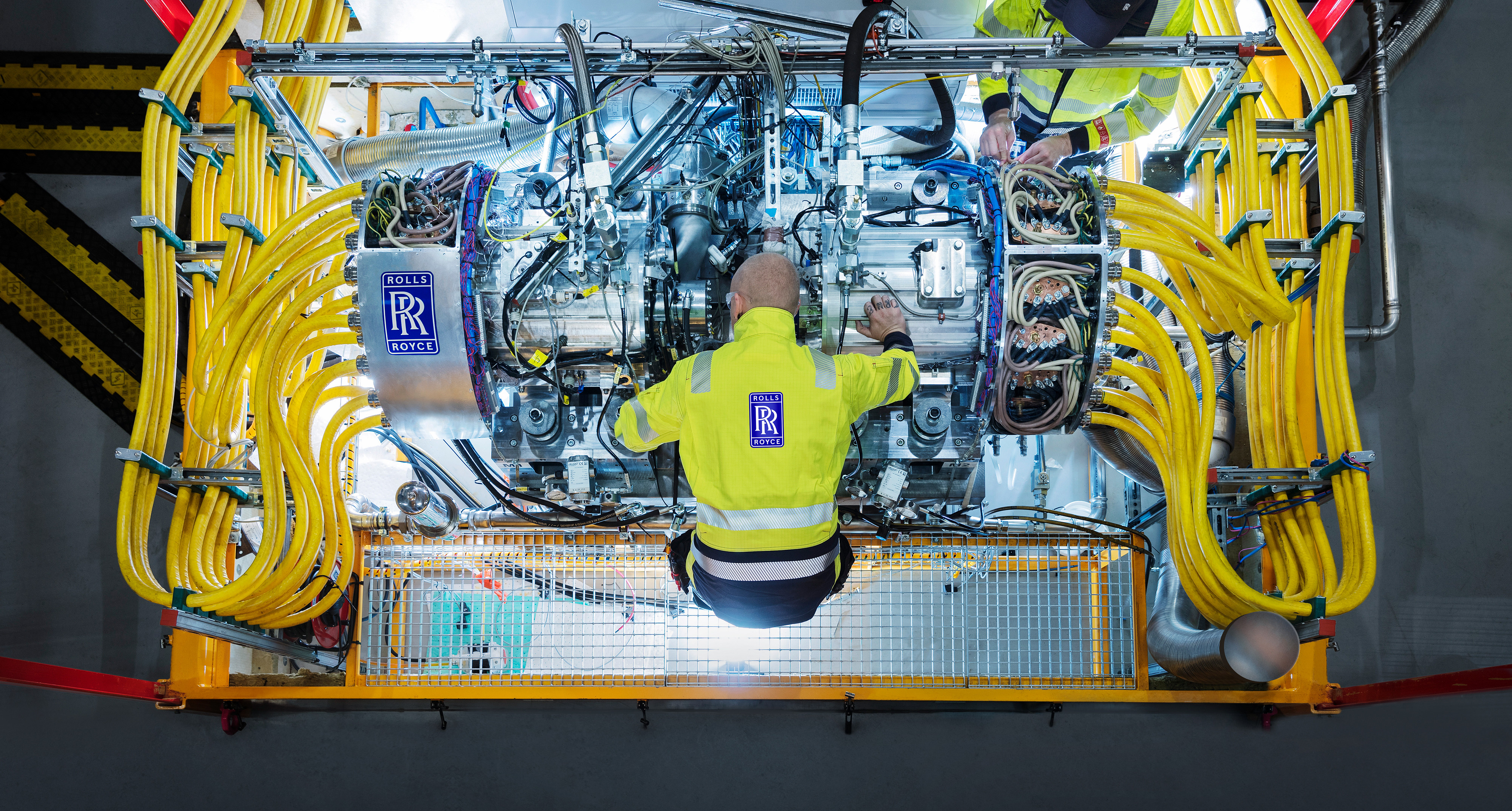
These are the first three paragraphs of the press release.
The generator that will be at the heart of the most powerful hybrid-electric aero power and propulsion system in aerospace has arrived for installation at our specialist testbed.
The generator, and related power electronics, was delivered to the newly-renovated Testbed 108 in Bristol, UK, from the Rolls-Royce facility in Trondheim, Norway, having completed an extensive development test programme. It will form part of the 2.5 megawatt (MW) Power Generation System 1 (PGS1) demonstrator programme, for future regional aircraft. In addition to hybrid-electric propulsion, the generator could also be used as part of a “more-electric” system for larger aircraft or within future ground or marine applications.
PGS1 forms an important element of our sustainability strategy, which includes developing innovative electrical power and propulsion systems.
I must say that as an engineer this 2.5 MW generator really excites me, as I see so many possibilities.
- I am fairly certain, that the generator can be powered by hydrogen, to create a true zero-carbon power generator.
- Rolls-Royce mention aerospace, ground and marine applications.
- The physical size must be an advantage, when it comes to some applications.
- The gas-turbine technology at the heart of the generator has been well-proven in the Lockheed Super Hercules.
But I do note in the press release that there is no mention of hydrogen or rail for which the generator must be eminently suitable.
- Rolls-Royce subsidiary; mtu are one of the leading companies, who power large rail locomotives.
- 2.5 MW is ideal for many rail locomotives.
- The small size must help integration into a rail locomotive.
- My calculations show that the generator and a hydrogen tank could be fitted into a typical modern rail locomotive.
- As electric transmissions can be used, the locomotive could also use electrification.
A lot of these arguments would also apply to the very large trucks used in the mining industries and ships of various sizes.
Conclusion
This Rolls-Royce 2.5 MW Generator will have lots of applications.
Air Products, Cummins To Accelerate Hydrogen Integration In Fuel Cells Trucks
The title of this post, is the same as that of this article on H2 View.
This is the first two paragraphs of the article.
Air Products and Cummins jointly announced the signing of a memorandum of understanding today (July 26) to work together to accelerate the integration of hydrogen fuel cell trucks around the world.
Cummins is expected to provide hydrogen fuel cell electric powertrains integrated into selected OEM partners’ heavy-duty trucks for Air Products, as the company begins the conversion of its global fleet of distribution vehicles to hydrogen.
Note.
- In 2020, Air Products had a turnover of nearly $9 billion.
- Air Products used to provide the liquid hydrogen and liquid oxygen for the Space Shuttle.
- According to Wikipedia, Air Products have a good Environmental Record.
- In 2020, Cummins had a turnover of nearly $20 billion.
- Cummins have been reported to be testing hydrogen-fueled internal combustion engines.
Have two of the biggest beasts joined together to exploit they technology, by initially developing hydrogen-powered trucks for Air Products global distribution?
To my mind, this could be a deal to watch.
- Cummins have both the fuel cell development and manufacture. under their control.
- Air Products have the production of the hydrogen under their own control.
- Hydrogenics, who Cummins took over in 2019, are manufacturers of both fuel cells and electrolysers.
Wrapped round it all are two of America’s largest companies, who trade globally.
But what better way is there to demonstrate hydrogen-powered trucks is there, than to use them to distribute your own products?
Liverpool’s Vision For Rail
This document on the Liverpool City Region web site is entitled Metro Mayor’s Vision Of A Merseyrail for All Takes Vital Step Forward With Successful Trial Of New Battery-Powered Trains.
It makes these points in the first part of the document.
- Game-changing technology paves way for Merseyrail network expansion across the Liverpool City Region and beyond
- Merseyrail services could reach as far as Wrexham and Preston
- City Region is at the forefront of the introduction of pioneering energy efficient technology.
The new battery-powered trains would certainly go a long way to enable, these objectives.
- Battery-powered trains would need a range of 26.9 miles to go between Bidston and Wrexham stations.
- Battery-powered trains would need a range of 15.3 miles to go between Ormskirk and Preston stations.
This link is to the North Cheshire Rail User Group’s Newsletter for Spring 2021.
This is said about battery range of the new Class 777 trains.
Later model Class 777’s have the ability to leave the 3rd rail and operate under battery power for 20 miles or more with a full load thus
permitting expansion of the Merseyrail network beyond its current limits.
I suspect they will also have regenerative braking to batteries, which will increase the range and allow Preston and Wrexham stations to be achieved without charge.
It certainly sounds like Preston and Wrexham and all the intermediate stations, will be added to the Merseyrail network.
As to the third point above about the introduction of pioneering energy efficient technology, I suspect this is mainly regenerative braking to batteries and replacement of elderly worn-out power supply equipment.
There is more in the Liverpool City Region document.
Expanding Merseyrail
This is said.
The game-changing technology could allow the Merseyrail network to extend across all six city region boroughs to places like Rainhill in St Helens, Woodchurch on the Wirral and Widnes in Halton.
It could also allow the new fleet to operate as far afield as Skelmersdale, Wrexham, Warrington and Runcorn.
Note.
- A 25 KVAC capability could well be needed. But that is built into the Class 777 trains.
- Chargers could be needed at some of these stations. I suspect Stadler have a Swiss manufacturer in mind.
In the run-up to May’s elections, the Mayor pledged to deliver ‘Merseyrail for All, a commitment to connecting under-served communities to the Merseyrail network.
New Stations
Initially the battery-powered trains, which are considerably greener, using up to 30% less energy than the existing fleet, are set to run on services to a planned new station at Headbolt Lane, Kirkby.
The wider Merseyrail for All programme could ensure every community is well served by an integrated public transport network and new and refurbished train stations are also high on the agenda.
They could include:
- The Baltic Triangle in Liverpool
- Carr Mill in St Helens
- Woodchurch on the Wirral
Note.
- The Baltic Triangle station will be built on the site of the former Liverpool St. James station.
- The Carr Mill station will probably be built on the site of the former Carr Mill station.
- Woodchurch station is likely to be built on the Borderlands Line between Upton and Heswall stations.
Tram-Trains And Trackless Trams
The document says this.
Tram-Train technology and trackless trams will also be looked at as potential means of extending the Merseyrail network into hard-to-reach places. The technology could benefit areas such as Liverpool John Lennon Airport and Speke, Kirkby Town Centre, Southport Town Centre, Wirral Waters and the Knowledge Quarter.
Tram-trains built by Stadler in Valencia are already running in Sheffield and in the next few years they should be deployed on the South Wales Metro.

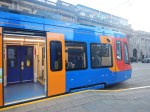
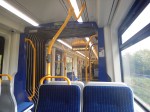
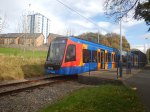
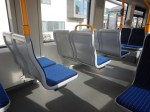
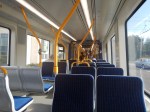
TStadler are also building Merseyrail’s new Class 777 trains, so I suspect they’ll go together like peaches and cream.
The Belgian firm; Van Hool have a product called Exquicity. This video shows them working in Pau in France.
These tram buses run on rubber types and are powered by hydrogen.
Similar buses running in Belfast are diesel-electric.
Could these be what the document refers to as trackless trams?
Battery Train Trials
The article finishes with this summary of the battery train trials. This is said.
Under the battery trials, financed by the Transforming Cities Fund, one of the new class 777 trains fitted with the battery technology was tested on the Northern line.
The batteries exceeded expectations with the trains travelling up to 20 miles per run without the need for re-charging.
The battery trains would remove the need for the third ‘electric’ rail, enabling the trains to travel beyond the existing network without major track investment.
The units passed all tests during four weeks of trials on the City Region’s rail network in May and June.
The Combined Authority and partners are still assessing the full impact of the Coronavirus pandemic on the programme and will provide more information regarding the roll out as soon as it has been agreed.
It looks to me, if all these plans get implemented successfully, Liverpool City Region will have one of the best public transport systems of any similar-sized cities in the world.
The Full Plan As A Map
This article on the BBC is entitled Battery-Powered Trains Part Of Merseyrail Expansion Plan.
The article contains this map.

There is no key or explanation, but it appears that the pink lines are new routes, where Merseyrail will run trains.
Before I discuss each of the possible routes, I will discuss two big factors, that will affect a lot of my thinking.
The West Coast Main Line
Avanti West Coast have the following stops in trains per hour (tph) at these stations on the West Coast Main Line as its trains pass the East of Merseyside to and from London Euston.
- Crewe – At least 5 tph
- Warrington Bank Quay – At least 2 tph
- Preston – At least 1 tph
These frequencies are in addition to these direct trains from London Euston.
- 1 tph to Liverpool Lime Street, which will rise to 2 tph in the December 2022, with a call at Liverpool South Parkway station.
- Occasional services to Chester throughout the day.
Passengers do not have to go via Liverpool Lime Street to travel to London.
In addition. there are useful services run by TransPennine Express between Liverpool Lime Street and Scotland, that call at Preston.
In Future; High Speed Two
This will call at Crewe, Liverpool Lime Street, Liverpool South Parkway, Preston and Warrington.
Northern Trains
Northern Trains were in all sorts of troubles and the service is now run directly by the Government’s Operator of Last Resort. I suspect that any reasonable offer to takeover over a service will be looked at favourably.
I will now look at Merseyrail’s new routes.
Ormskirk And Southport Via The Burscough Curve
Consider.
- This route has been a long term aspiration of Merseyrail.
- A curve between Burscough Bridge and Burscough Junction will have to be rebuilt on a former alignment.
- Southport and Ormskirk are about 13 miles apart.
- Southport and Ormskirk have third-rail electrified lines to Liverpool and the South.
It would be an ideal route for battery-electric trains with a range of 20 miles.
What would it do for passengers?
- It gives those living near five stations a direct link to Liverpool.
- It gives Southport a town of over 91,000 people more capacity to the city of Liverpool for jobs, leisure and shopping.
- Will it open up more opportunities for new housing in villages like Burscough?
It will certainly give Merseyrail operational advantages to Southport.
Ormskirk And Preston
Consider.
- Takeover of this Northern Trains route has been a long term aspiration of Merseyrail.
- Preston and Ormskirk are about 15.3 miles and 32 minutes apart.
- Omskirk has 750 VDC third-rail electrification and Preston has 25 KVAC overhead electrification.
- The Class 777 trains have been built so they can be updated to dual voltage.
It certainly looks to be a route that could be handled by a battery-electric Class 777 train.
What would it do for passengers?
- It gives those living near the Ormskirk and Preston Line a direct link to Liverpool.
- It creates a direct link in modern electric trains between North Liverpool and Preston, for onward travel on West Coast Main Line services and High Speed Two in the future.
- The journey time could be reduced to under thirty minutes.
As football is so important to the Liverpool economy, would a time around forty-five minutes between Preston and Sandhills station tempt football supporters going to Anfield and Goodison Park to use the train and then perhaps a trackless tram to the stadium?
This Google map shows the location of Anfield, Goodison Park and Sandhills station.
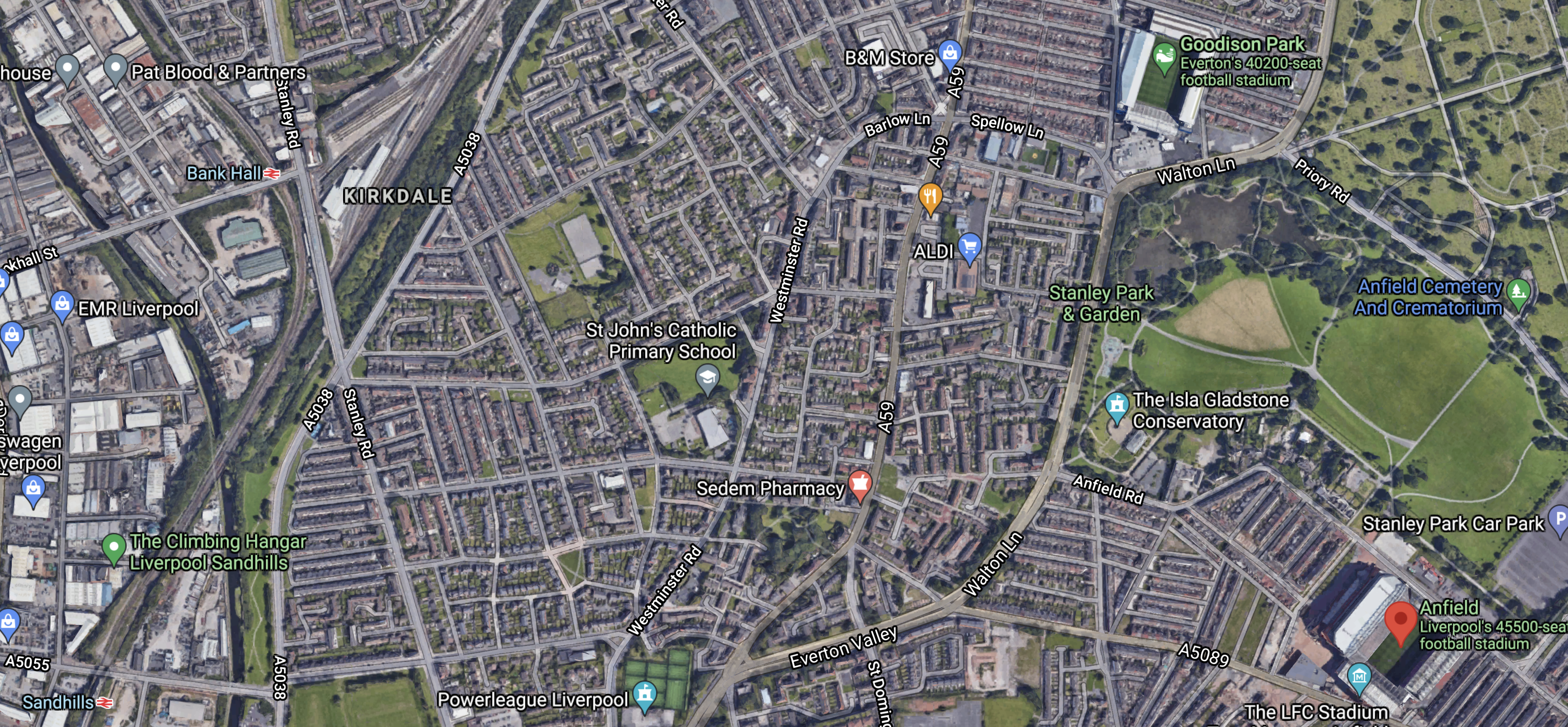
Note.
- Anfield is in the bottom-right corner of the map and is marked by a red arrow.
- Goodison is in the top-right corner of the map, slightly to the West of Anfield.
- Sandhills station is in the bottom-left corner of the map.
Both stadia are around a mile and a half from the station.
Southport And Preston
Once the Ormskirk and Southport and Ormskirk and Preston services are up and running, it would surely be possible to run a Southport and Preston service.
- There would be a reverse at Ormskirk.
- The two sections of Ormskirk and Southport and Ormskirk and Preston would both need battery power.
- Whilst the driver changed ends at Ormskirk, the train would be recharged using a fast and efficient charger.
- Times between Southport and Preston would be under an hour.
It certainly looks to be a route that could be handled by a battery-electric Class 777 train.
What would it do for passengers?
- It gives those living in Southport, a direct link to Preston.
- It creates a direct link in modern electric trains between Southport and Preston, for onward travel on West Coast Main Line services and High Speed Two in the future.
This service could be very valuable for passengers, but I suspect the route could be implemented with minimal infrastructure changes at Ormskirk station.
Ormskirk Station
This picture shows Ormskirk’s single platform from the Merseyrail end.
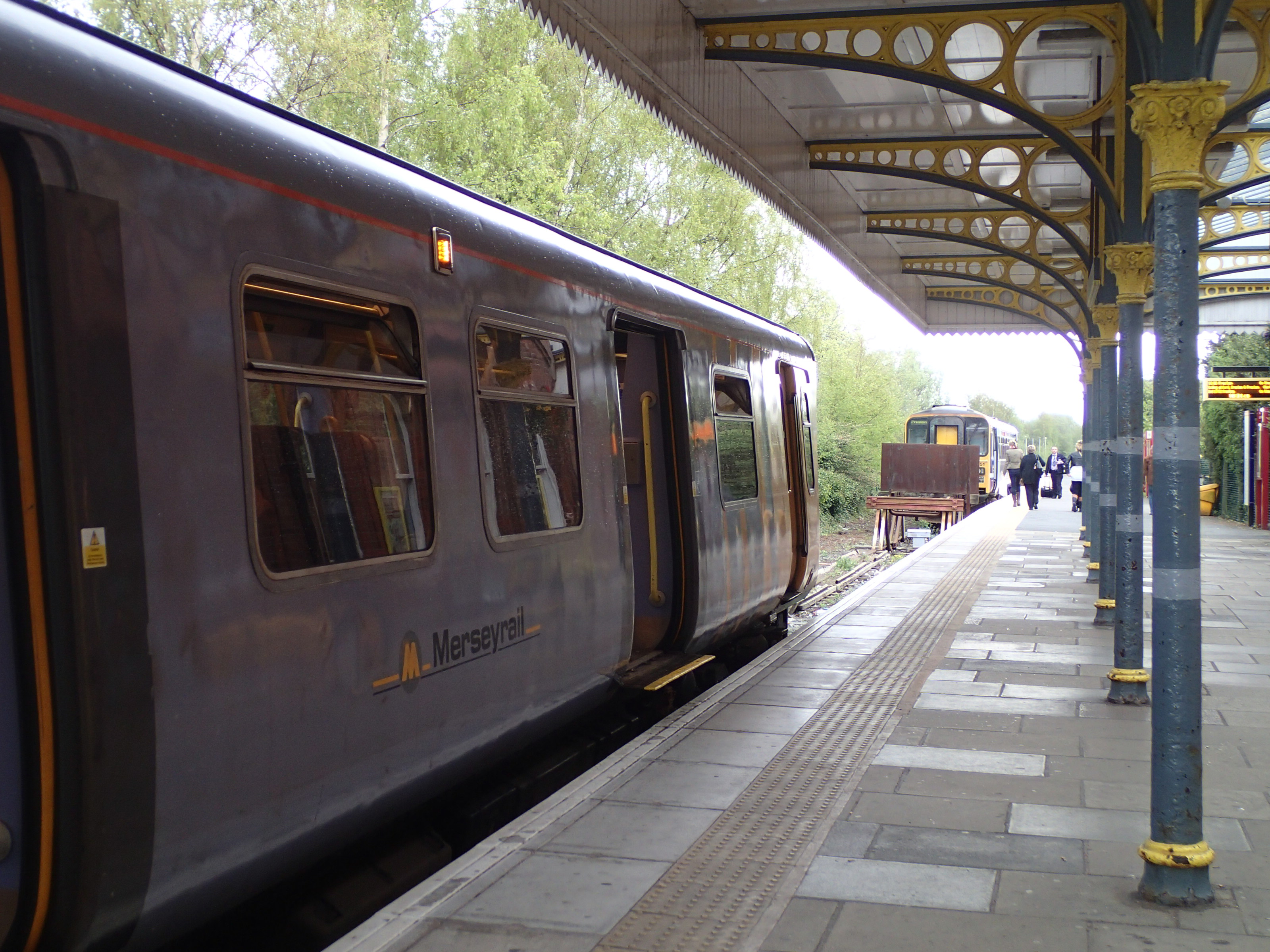
Note.
- The Liverpool train in the foreground.
- The Preston train in the background.
- The solid barrier between the trains.
I wonder if the following would be possible with the barrier removed.
- The long platform would be treated as one platform divided into two.
- Perhaps they will be the Liverpool and Preston/Southport platform,
- Trains that will leave the station for Liverpool will stop in the Liverpool platform.
- Trains that will leave the station for Preston or Southport will stop in the Preston/Southport platform.
- Through trains between Liverpool and Preston or Southport would be possible.
- A train between Preston and Southport could reverse in the Preston/Southport platform, whilst trains for Liverpool used the Liverpool platform.
It looks like it’s an efficient layout borrowed from somewhere else. and Stadler have probably seen it before.
Headbolt Lane Station
In Headbolt Lane Station Fly-Through, I described the new Headbolt Lane station.
This screen capture is from the video in that post,
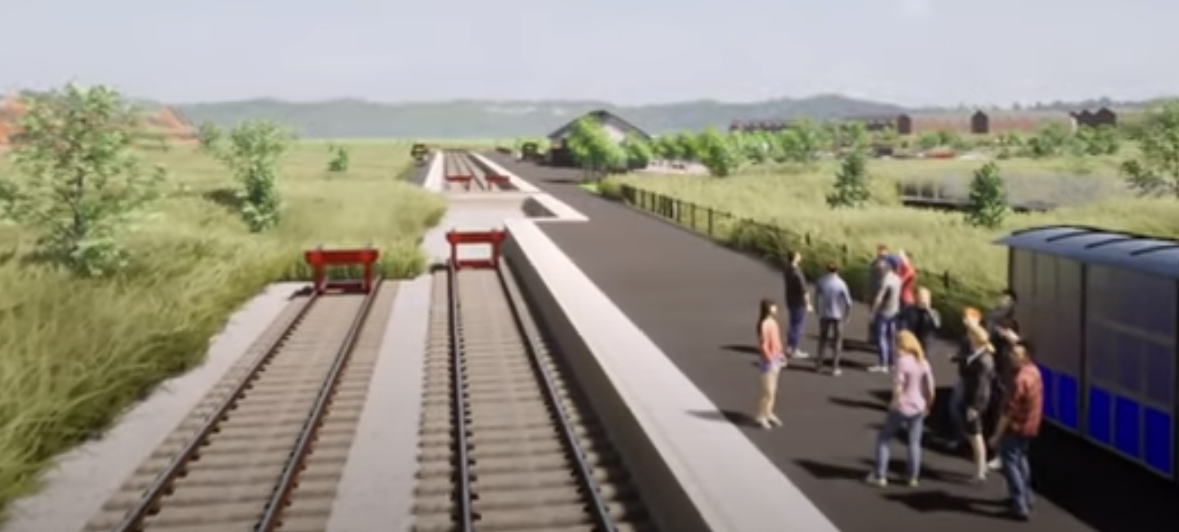
Note.
- Two platforms going away from the camera and one platform and what looks to be a siding going towards the camera.
- There appears to be no direct connection between the two different sets of tracks.
Until proven wrong, I believe that the camera is looking towards Liverpool, as it would mean that Liverpool services had two platforms. But they currently make do with one at Kirkby.
There is a walk through between the tracks, which
- Enables passengers to access the second platform.
- Allows passengers to enter the station from the other side.
- Allows non-passengers to cross the tracks on the level.
- Avoids the need to build a bridge.
It is certainly an innovative design.
If occasional trains need to go through, could there be a lift-out section of the walk-through?
But as there are buffer stops on the tracks in the three platforms, that are either side of the walk-through, I suspect it will never happen, as it’s too much hassle.
In the Wikipedia entry for Headbolt Lane station this is said.
The Liverpool City Region Combined Authority announced in July 2021 that a trial of a battery electric multiple unit (BEMU) version of the new Class 777 will serve the new station, when it opens. This will not require all of the line extension to Headbolt Lane to be electrified.
Merseyrail would appear to have neatly side-stepped, the Office of Road and Rail’s policy of no more third-rail electrification.
But I’m sure Merseyrail could put an approved train-charging system in the station.
- They would need one if a Class 777 train arrived with a flat battery.
- They would need one to charge trains on the Headbolt Lane and Skelmersdale service, if the service were to be run by battery-electric trains.
- They would need one to charge trains on the Headbolt Lane and Wigan Wallgate service, if the service were to be run by battery-electric trains.
The system could be based on a short length of overhead wire and a slim pantograph or a system like Railbaar from Furrer + Frey.
But does it give any clues as to the orientation of the station in the video?
- As there are three platforms and a siding, that meet at Headbolt Lane station, all could be fitted with chargers. to make sure the services are reliable.
- Liverpool services could be handled at either end, as it only needs one platform.
- Skelmersdale and Wigan services could probably share a platform, but they would be better surely using two platforms.
- The siding could be created into a platform for extra services to be added to the Merseyrail network
So there is no pressing reason, why the station cannot be North or South of the railway.
I suspect road layout and land use issues will eventually decide, the orientation of the station.
Headbolt Lane And Skelmersdale
Consider.
- This has been a long term aspiration of Merseyrail and Lancashire County Council.
- Headbolt Lane and Skelmersdale are just a few miles apart.
- Direct running between Liverpool and Skelmersdale will not be possible, but it will be a step-free change between trains.
The Wikipedia entry for Headbolt Lane station seems to indicate a proposed extension of the Northern Line with the next stop being the existing Rainford station. This would surely not add greatly to costs and bring Merseyrail to more fare-paying customers.
It certainly looks to be a route that could be handled by a battery-electric Class 777 train.
What would it do for passengers?
- Skelmersdale is a town of nearly 39,000 and is said to be one of the largest towns in England without a rail connection.
- At Headbolt Lane passengers will be able to change for Liverpool or Manchester.
A lot of passengers will have received a modern train service.
Headbolt Lane And Wigan
Consider.
- This service is currently run by Northern trains.
- Kirkby and Wigan Wallgate stations are just over twelve miles apart.
- Someone, who should know told me that by the time High Speed Two starts running through Wigan at a frequency of two tph, the two Wigan stations will have been combined.
- Headbolt Lane station could be the drop-off point for those needing to go to Birmingham, Edinburgh, Glasgow and London on both the current West Coast Main Line and the future High Speed Two.
What better way to start that journey than on one of Merseyrail’s battery-electric Class 777 trains.
What would it do for passengers?
With modern battery-electric trains linking Headbolt Lane station to the combined Wigan station complex, this route could be the zero-carbon route between large parts of Liverpool and cantres of tourism and employment along and to the East of the M6 and the West Coast Main Line.
Liverpool South Parkway And Warrington Central
Consider.
- This would be takeover of part of the current Liverpool Lime Street and Manchester Oxford Road service.
- The map shows the service going at least as far as Warrington Central station.
- Stations between Hunts Cross and Warrington Central include Halewood, Hough Green, Widnes, Sankey and the new Warrington West stations.
Distances are as follows.
- Liverpool South Parkway and Liverpool Lime Street – 5.5 miles
- Liverpool South Parkway and Warrington Central – 12.7 miles
- Liverpool South Parkway and Trafford Park – 25.4 miles
- Liverpool South Parkway and Manchester Oxford Road – 28.7 miles
The following sections of the route have 25 KVAC overhead electrification.
- Liverpool South Parkway and Liverpool Lime Street
- East of Trafford Park.
With a bit more electrification at either end, the whole route should be in range of a battery-electric Class 777 train.
Or the Class 777 trains could be fitted with bigger batteries!
It certainly looks to be a route that could be handled by a battery-electric Class 777 train.
What would it do for passengers?
- This is a route that has needed decent trains for years and has finally got new Class 195 trains.
- But, in addition, the battery-electric Class 777 trains would decarbonise the route.
The major problem, though is not infrastructure or trains, but surely Andy Burnham, who is the outspoken Mayor of Greater Manchester and could object to Merseyrail invading his patch.
Merseyrail’s Cheshire Ambitions
This is a section of the map shown on the BBC article, showing Cheshire.
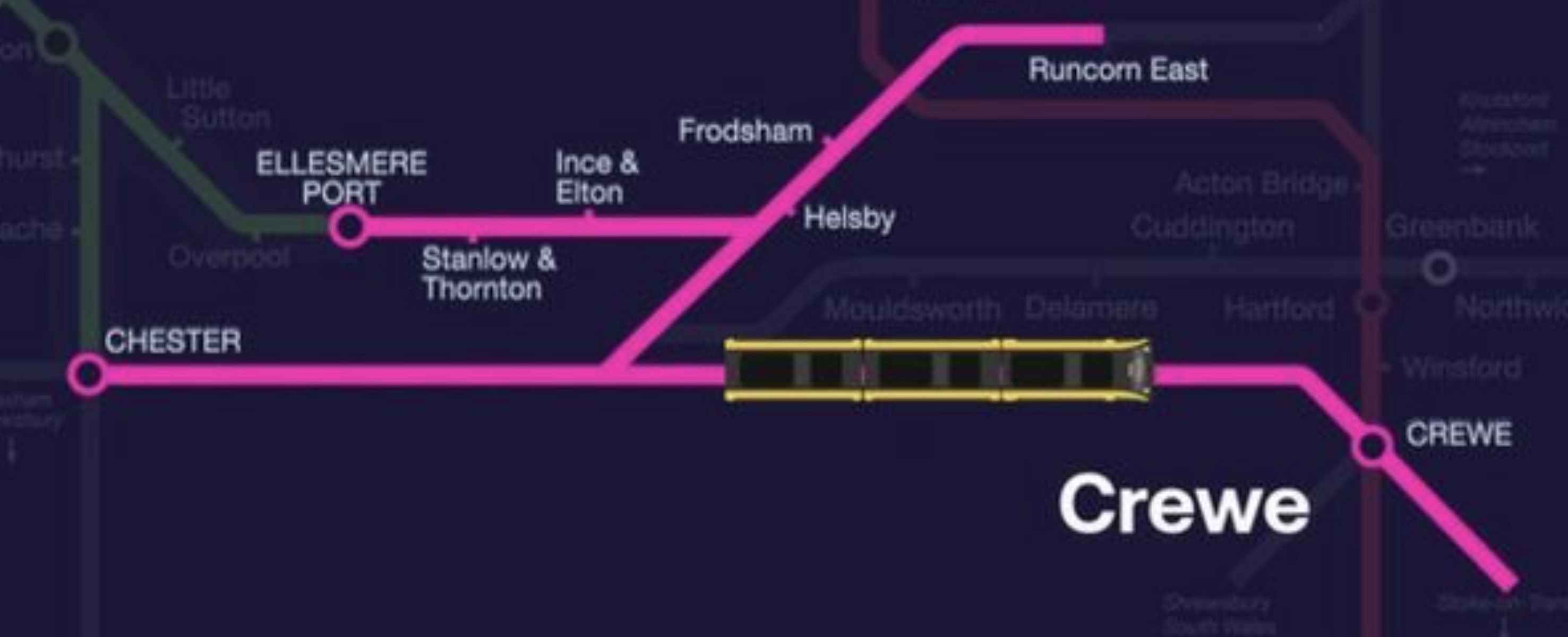
It looks like there could be as many as three routes.
- Chester and Crewe
- Chester and Runcorn East
- Ellesmere Port and Runcorn East
I’ll now cover the routes in detail.
Chester And Crewe
Consider.
- This would be a takeover by Merseyrail of the existing Trains for Wales service.
- Chester And Crewe are about 21,2 miles and 25 minutes apart.
- Chester has 750 VDC third-rail electrification and Crewe has 25 KVAC overhead electrification.
- The Class 777 trains have been built so they can be updated to dual voltage.
- There is a proposal, that Beeston Castle and Tarporley station be re-opened.
It certainly looks to be a route that could be handled by a battery-electric Class 777 train.
What would it do for passengers?
- If trains will run between Crewe and Liverpool, this creates a second route between the two major stations.
- It creates a direct link in modern electric trains between The Wirral and Crewe, for onward travel on West Coast Main Line services and High Speed Two in the future.
- The journey time could be reduced by enough to increase service frequency on the route.
I This would be a very useful extension of the Merseyrail network.
Chester And Runcorn East
Consider.
- This would be a takeover by Merseyrail of the existing Trains for Wales service.
- Chester And Runcorn East are about 13.1 miles apart.
- Two stations and five miles further on is Warrington Bank Quay station.
- Chester has 750 VDC third-rail electrification and Warrington Bank Quay has 25 KVAC overhead electrification.
- The Class 777 trains have been built so they can be updated to dual voltage.
It certainly looks to be a route that could be handled by a battery-electric Class 777 train.
What would it do for passengers?
- It would enable a Merseyrail circular route from Liverpool Lime Street to Chester via Edge Hill, Wavertree Technology Park, Broad Green, Roby, Huyton, Whiston, Rainhill, Lea Green, St Helens Junction, Warrington Bank Quay, Frodsham, Runcorn East and Helsby.
- After Chester, it could take the Wirral Line back to Liverpool to make it a true Mersey Circular service.
Would a Mersey Circular service be a good idea?
Ellesmere Port And Runcorn East
Consider.
- This been a long term aspiration of Merseyrail.
- This would be a takeover by Merseyrail of the infrequent Northern Rail service.
- Ellesmere Port And Runcorn East are about 10.8 miles apart.
- Two stations and five miles further on is Warrington Bank Quay station.
- Ellesmere Port has 750 VDC third-rail electrification and Warrington Bank Quay has 25 KVAC overhead electrification.
- The Class 777 trains have been built so they can be updated to dual voltage.
It certainly looks to be a route that could be handled by a battery-electric Class 777 train.
What would it do for passengers?
- It would certainly improve rail transport along the South Bank of the Mersey from Ellesmere Port to Warrington Bank Quay or Runcorn East depending on the Eastern terminus.
- If the terminal were to be Warrington Bank Quay that would sort out the charging.
- It could create a direct link in modern electric trains between Ellesmere Port and Warrington Bank Quay, for onward travel on West Coast Main Line services and High Speed Two in the future.
I feel that an Ellesmere Port and Warrington Bank Quay service would be good for the area.
The Borderlands Line
I’ve left the Borderlands Line to last, as I feel it will be a lot more than commuter and leisure line between Liverpool and Wrexham.
- It crosses the border between England and Wales
- The line is 26.9 miles of double track, with a single-track extension of under two miles between the two Wrexham stations.
- It has over twenty stations with more planned in both countries
- It crosses a couple of rivers on long steel bridges.
- It brings commuters to Liverpool and takes workers to the high-tech factories of companies like Airbus and Toyota on Deeside.
- It connects to a lot of golf courses, one of which is the Open Championship course at Royal Liverpool.
- Once in Wales it has two connections to the North Wales Coast Line, which runs between Chester and holyhead.
It is no ordinary railway and is ripe for improvement to bridge passengers to employment sites and leisure areas along its route.
The line has one big problem in that passengers need to change trains at Bidston between Liverpool and Wrexham stations.
- Between Bidston and Liverpool the Merseyrail electric trains to and from Hoylake are used and they turn in the Liverpool Loop under Liverpool City Centre calling at four stations before returning.
- Between Bidston and Wrexham, diesel multiple units are used.
It is a route design straight out of the 1970s of men with minds without imagination. Even British Rail were designing battery-electric trains in the 1950s, which I wrote about in Did The Queen Ever Ride In This Train?.
Merseyrail intend to right the wrongs of the past using battery-electric Class 777 trains.
- As electric versions of these trains will be used on the Liverpool and Hoylake service, there would be no need to change trains at Bidston if the Liverpool and Wrexham trains were just a battery-electric version of the same train.
- The Wrexham trains would drive round the Liverpool Loop tunnel as hundreds of trains do every day.
- The trains would be charged on the existing third-rail electrification at the Liverpool end.
- I’m fairly certain that a frequency of two tph would be possible on the route, if the Liverpool Loop tunnel signalling could cope,
- Trains would need to be charged at the Wexham end of the route and I’m sure Stadler have a solution.
It would be an efficient and cost effective way to decarbonise a tricky but useful branch line.
Conclusion
Stadler are playing their full orchestra of ideas on Merseyrail.
When completed, it will be one of the best metros of any urban areas up to a million people in the world.
This metro could do for Liverpool, what the Beatles did for the city in the 1960s.
Three Hydrogen Double Decker Buses Set For Dublin
The title of this post, is the same as that of this article on H2 View.
This article is different to other hydrogen bus stories.
These buses are being used on a Dublin commuter service; 105X between Dublin and Ratoath.
- The shortest distance is 16 miles by the M2 Motorway.
- The current service between Ratoath and O’Connell Street takes around an hour, but doesn’t appear to use the Motorway.
- There seem to be three services into Dublin in the morning and three services out in the evening.
Could it be, that if this service is run on the Motorway with a faster hydrogen bus, allowed to go faster than the 65 kph limit for buses in Ireland, that would knock significant time from the journey?
My rough estimate says that times of the order of under forty minutes are possible.
Conclusion
Hydrogen buses have been chosen for this route for various reasons.
- One overnight refuelling will last all day.
- No time will be wasted during the day in charging batteries.
- The bus probably carries a large fuel reserve to cope with traffic delays.
- As the buses are the latest design with lots of modern features, they could attract passengers.
- The buses are probably certified for higher speeds than older buses.
- The three commuter services will each be hydrogen buses, but if there is a minor failure, I suspect a diesel bus can substitute.
- Surely, if the buses did the journey faster, extra services could be phased in throughout the day.
I think we could be seeing hydrogen buses on commuter routes into our major towns and cities.
The Dublin purchase of hydrogen buses for one specific route could be significant.
I shall be watching it with interest.
Will Zero-Carbon Freight Trains Be Powered By Battery, Electric Or Hydrogen Locomotives?
These are a few initial thoughts.
We Will Not Have A One-Size-Fits-All Solution
If you consider the various freight and other duties, where diesel locomotives are used, you get a long list.
- Light freight, where perhaps a Class 66 locomotive moves a few wagons full of stone to support track maintenance.
- Intermodal freight, where a Class 66 locomotive moves a long train of containers across the country.
- Stone trains, where a Class 59 or Class 70 locomotive moves a very heavy train of aggregate across the country.
- Empty stock movements, where a diesel locomotive moves an electrical multiple unit.
- Supporting Network Rail with trains like the New Measurement Train, which is hauled by two diesel Class 43 power cars.
- Passenger trains at up to and over 100 mph.
I can see a need for several types of zero-carbon locomotive.
- A light freight locomotive.
- A medium freight locomotive, that is capable of hauling many intermodal trains across the country and would also be capable of hauling passenger services.
- A heavy freight locomotive, capable of hauling the heaviest freight trains.
- A Class 43 power car replacement, which would probably be a conversion of the existing power cars. Everybody loves InterCity 125s and there are over a hundred power cars in regular service on railways in the UK.
There are probably others.
The UK Hydrogen Network Is Growing
Regularly, there are news items about companies in the UK, who will be providing green hydrogen to fuel cars, vans, buses, trucks and trains.
Hydrogen is becoming a fuel with a much higher availability.
The UK Electricity Network Is Growing And Getting More Resilient
We are seeing more wind and solar farms and energy storage being added to the UK electricity network.
The ability to support large numbers of battery-electric buses, cars, trucks and trains in a reliable manner, is getting more resilient and much more comprehensive.
There Will Be More Railway Electrification
This will happen and installation will be more innovative. But predicting where electrification will be installed, will be very difficult.
Hydrogen Fuel Cells Now Have Rivals
Hydrogen fuel cells are normally used to convert hydrogen gas to electricity.
But over the last few years, alternative technology has evolved, which may offer better methods of generating electricity from hydrogen.
- Rolls Royce have developed a beer keg-sized 2.5 MW generator, that could run on hydrogen, which I wrote about in Our Sustainability Journey.
- Honeywell are possibly going the same route, which I wrote about in Honeywell Introduces Power Source For Hybrid-Electric Aircraft.
- JCB have converted diesel engines to run on hydrogen, which I wrote about in JCB Finds Cheap Way To Run Digger Using Hydrogen.
- Caterpiller, Cummins and Rolls-Royce mtu are showing signs of taking a similar route to JCB.
Fuel cells will not be having it all their own way.
Batteries Are Improving Their Energy Density
This is inevitable. and you are starting to see improvements in the fabrication of the battery packs to get more kWh into the space available.
In Wrightbus Presents Their First Battery-Electric Bus, I said this about the Forsee batteries used in the new buses from Wrightbus.
The Forsee brochure for the ZEN SLIM batteries gives an energy density of 166 Wh per Kg. This means that the weight of the 454 kWh battery is around 3.7 tonnes.
A one-tonne battery would have a capacity of 166 kWh.
- It is the highest value I’ve so far found.
- Technology is likely to improve.
- Other battery manufacturers will be striving to match it.
For these reasons, in the rest of this post, I will use this figure.
Some Example Locomotives
In this section, I shall look at some possible locomotives.
Conversion Of A Class 43 Power Car
There are two Class 43 power cars in each InterCity 125 train.
- The diesel engine is rated at 1678 kW.
- The transmission is fully electric.
- These days, they generally don’t haul more than five or six intermediate Mark 3 coaches.
I would see that the biggest problem in converting to battery power being providing the means to charge the batteries.
I suspect that these power cars would be converted to hydrogen, if they are converted to zero-carbon.
- I would estimate that there is space for hydrogen tanks and a small gas-turbine generator in the back of the power car.
- Much of the existing transmission could be retained.
- A zero-carbon power car would certainly fit their main use in Scotland and the South-West of England.
- I doubt hydrogen refuelling would be a problem.
They may even attract other operators to use the locomotives.
A Battery-Electric Locomotive Based on A Stadler Class 88 Locomotive
I am using this Class 88 locomotive as a starting point, as the locomotive is powerful, reliable and was built specifically for UK railways. There are also ten already in service in the UK.
In Thoughts On A Battery Electric Class 88 Locomotive On TransPennine Routes, I started the article like this.
In Issue 864 of Rail Magazine, there is an article, which is entitled Johnson Targets A Bi-Mode Future.
As someone, who has examined the mathematics of battery-powered trains for several years, I wonder if the Age of the Hybrid Battery/Electric Locomotive is closer than we think.
A Battery/Electric Class 88 Locomotive
After reading Dual Mode Delight (RM Issue 863), it would appear that a Class 88 locomotive is a powerful and reliable locomotive.
-
- It is a Bo-Bo locomotive with a weight of 86.1 tonnes and an axle load of 21.5 tonnes.
- It has a rating on electricity of 4,000 kW.
- It is a genuine 100 mph locomotive when working from 25 KVAC overhead electrification.
- The locomotive has regenerative braking, when working using electrification.
- It would appear the weight of the diesel engine is around seven tonnes
- The closely-related Class 68 locomotive has a 5,600 litre fuel tank and full of diesel would weight nearly five tonnes.
The locomotive would appear to be carrying between 7 and 12 tonnes of diesel-related gubbins.
Suppose that the diesel-related gubbins of the Class 88 locomotive were to be replaced with a ten tonne battery.
Using the Forsee figures, that I quoted earlier, this battery would hold 1660 kWh.
At the power level of the 700 kW of the Caterpillar C27 diesel engine in the Class 88 locomotive, that would give more than two hours power.
It looks to me, that a battery-electric Class 88 locomotive could be a very useful locomotive.
It might even be able to haul freight trains in and out of the Port of Felixstowe, which would be a big advantage in decarbonising the port.
Certainly, methods to charge battery trains on the move, are being developed like the system from Hitachi ABB Power Grids, that put up short sections of 25 KVAC overhead electrification, which would be driven by a containerised power system.
These systems and others like them, may enable some battery-electric freight trains to work routes like.
- Felixstowe and Ipswich.
- Ipswich and Peterborough
- Peterborough and Nuneaton.
- Peterborough and Doncaster via Lincoln
- Birmingham and Oxford
None of these routes are fully-electrified.
But because of the power limit imposed by the batteries, these locomotives will need to be recharged at points on the route.
This Google Map shows the Ipswich and Peterborough route crossing the Fen Line at Ely station.
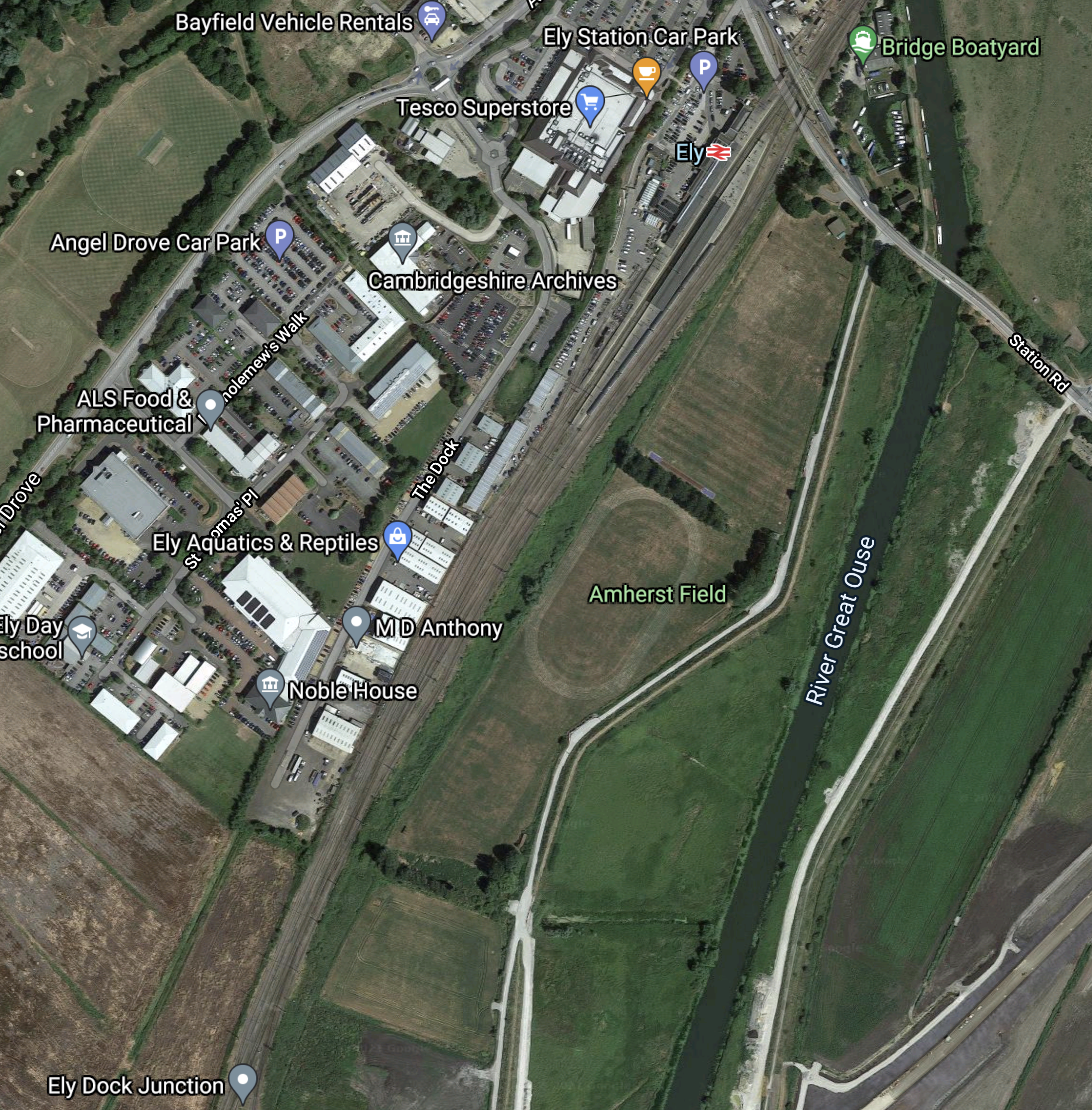
Note.
- Ely Dock junction in the South-West corner, where the line from Ipswich and Bury St. Edmunds joins the lines through Ely.
- Ely station towards the North-East corner of the map.
- Passenger trains run through the station.
But freight trains can take a route on the Eastern side of the station, which is not electrified.
At Ely station, a loop like this can be electrified using the existing electrification power supply, but at other places, systems like that from Hitachi ABB Power Grids can be used to electrify the loop or an appropriate section of the route.
These short sections of electrification will allow the train to progress on either electric or battery power.
A Hydrogen-Electric Locomotive Based on A Stadler Class 88 Locomotive
In The Mathematics Of A Hydrogen-Powered Freight Locomotive, I looked at creating a hydrogen-powered locomotive from a Class 68 locomotive.
I decided it was totally feasible to use readily available technology from companies like Rolls-Royce and Cummins to create a powerful hydrogen-powered locomotive.
The Class 68 locomotive is the diesel-only cousin of the electro-diesel Class 88 locomotive and they share a lot of components including the body-shell, the bogies and the traction system.
I suspect Stadler could create a Class 88 locomotive with these characteristics.
- 4 MW using electric power
- At least 2.5 MW using hydrogen power.
- Hydrogen power could come from Rolls-Royce’s 2.5 MW generator based on a small gas-turbine engine.
- 100 mph on both electricity and hydrogen.
- It would have power output on hydrogen roughly equal to a Class 66 locomotive on diesel.
- It would have a range comparable to a Class 68 locomotive on diesel.
This locomotive would be a zero-carbon Class 66 locomotive replacement for all duties.
A Larger And More Powerful Hydrogen-Electric Locomotive
I feel that for the largest intermodal and stone trains, that a larger hydrogen-electric locomotive will be needed.
With the way Wabtec are going in the United States, I wouldn’t be surprised to see a suitable locomotive cross the pond.
Conclusion
In the title of this post, I asked if freight locomotives of the future would be battery, electric or hydrogen.
I am sure of one thing, which is that all freight locomotives must be able to use electrification and if possible, that means both 25 KVAC overhead and 750 VDC third rail. Electrification will only increase in the future, making it necessary for most if not all locomotives in the future to be able to use it.
I feel there will be both battery-electric and hydrogen-electric locomotives, with the battery-electric locomotives towards the less powerful end.
Hydrogen-electric will certainly dominate at the heavy end.
Was This The Most Significant Statement On Freight Locomotives Last Week?
This press release from Freightliner, is entitled Freightliner Secures Government Funding For Dual-Fuel Project.
The dual-fuel project is important and will cut carbon emissions in the short term.
But it is only a quick fix, made possible by good technology.
It is also not zero-carbon.
This sixth paragraph from the press release is very significant.
This sustainable solution will support a programme to decarbonise freight operating companies’ diesel fleets in a cost-efficient manner that does not require significant short-term investment and facilitates operational learning in support of a longer-term fleet replacement programme, potentially using 100% hydrogen fuel.
I believe the paragraph indicates, that Freightliner and possibly the other companies involved in the building and operation of heavy freight locomotives have concluded, that the technology is now such, that a zero-carbon rail locomotive powered by 100 % hydrogen is now possible.
- Rolls-Royce and possibly other gas-turbine companies have the technology to build small gas-turbine powered generators that can produce several megawatts of reliable electrical zero-carbon power, when fuelled by hydrogen.
- We are seeing companies developing strategies for the safe supply of hydrogen in large industrial quantities.
- Hydrogen has been successfully deployed on buses, trains and other large vehicles.
- The technology has been proven that will allow dual-mode hydrogen-electric locomotives, that can use electrification, where it exists.
- Some big companies like Cummins, JCB and Shell are backing hydrogen.
There are thousands of large diesel-powered locomotives all over the world and locomotive builders that can successfully replace these with hydrogen-powered locomotives will not go financially unrewarded!
Solving The Electrification Conundrum
The title of this post, is the same as an article in the July 2021 Edition of Modern Railways.
This is the introductory sub-heading.
Regional and rural railways poses a huge problem for the railway to decarbonise.
Lorna McDonald of Hitachi Rail and Jay Mehta of Hitachi ABB Power Grids tell Andy Roden why they believe they have the answer.
These are my thoughts on what is said.
Battery-Electric Trains
The article starts by giving a review of battery-electric trains and their use on routes of moderate but important length.
- Some short routes can be handled with just a charge on an electrified main line.
- Some will need a recharge at the termini.
- Other routes might need a recharge at some intermediate stations, with a possible increase in dwell times.
It was in February 2015, that I wrote Is The Battery Electric Multiple Unit (BEMU) A Big Innovation In Train Design?, after a ride in public service on Bombardier’s test battery-electric train based on a Class 379 train.

I also wrote this in the related post.
Returning from Harwich, I travelled with the train’s on-board test engineer, who was monitoring the train performance in battery mode on a laptop. He told me that acceleration in this mode was the same as a standard train, that the range was up to sixty miles and that only minimal instruction was needed to convert a driver familiar to the Class 379 to this battery variant.
It was an impressive demonstration, of how a full-size train could be run in normal service without connection to a power supply. I also suspect that the partners in the project must be very confident about the train and its technology to allow paying passengers to travel on their only test train.
A couple of years later, I met a lady on another train, who’d used the test train virtually every day during the trial and she and her fellow travellers felt that it was as good if not better than the normal service from a Class 360 train or a Class 321 train.
So why if the engineering, customer acceptance and reliability were proven six years ago, do we not have several battery electric trains in service?
- There is a proven need for battery-electric trains on the Marshlink Line and the Uckfield Branch in Sussex.
- The current Class 171 trains are needed elsewhere, so why are no plans in place for replacement trains?
- The government is pushing electric cars and buses, but why is there such little political support for battery-electric trains?
It’s almost as if, an important civil servant in the decision process has the naive belief that battery-electric trains won’t work and if they do, they will be phenomenally expensive. So the answer is an inevitable no!
Only in the South Wales Metro, are battery-electric trains considered to be part of the solution to create a more efficient and affordable electric railway.
But as I have constantly pointed out since February 2015 in this blog, battery-electric trains should be one of the innovations we use to build a better railway.
Hydrogen Powered Trains
The article says this about hydrogen powered trains.
Hybrid hydrogen fuel cells can potentially solve the range problem, but at the cost of the fuel eating up internal capacity that would ideally be used for passengers. (and as Industry and Technology Editor Roger Ford points out, at present hydrogen is a rather dirty fuel). By contrast, there is no loss of seating or capacity in a Hitachi battery train.
I suspect the article is referring to the Alstom train, which is based on the technology of the Alstom Coradia iLint.

I have ridden this train.
- It works reliably.
- It runs on a 100 km route.
- The route is partially electrified, but the train doesn’t have a pantograph.
- It has a very noisy mechanical transmission.
Having spoken to passengers at length, no-one seemed bothered by the Hindenburg possibilities.
It is certainly doing some things right, as nearly fifty trains have been ordered for train operating companies in Germany.
Alstom’s train for the UK is the Class 600 train, which will be converted from a four-car Class 321 train.
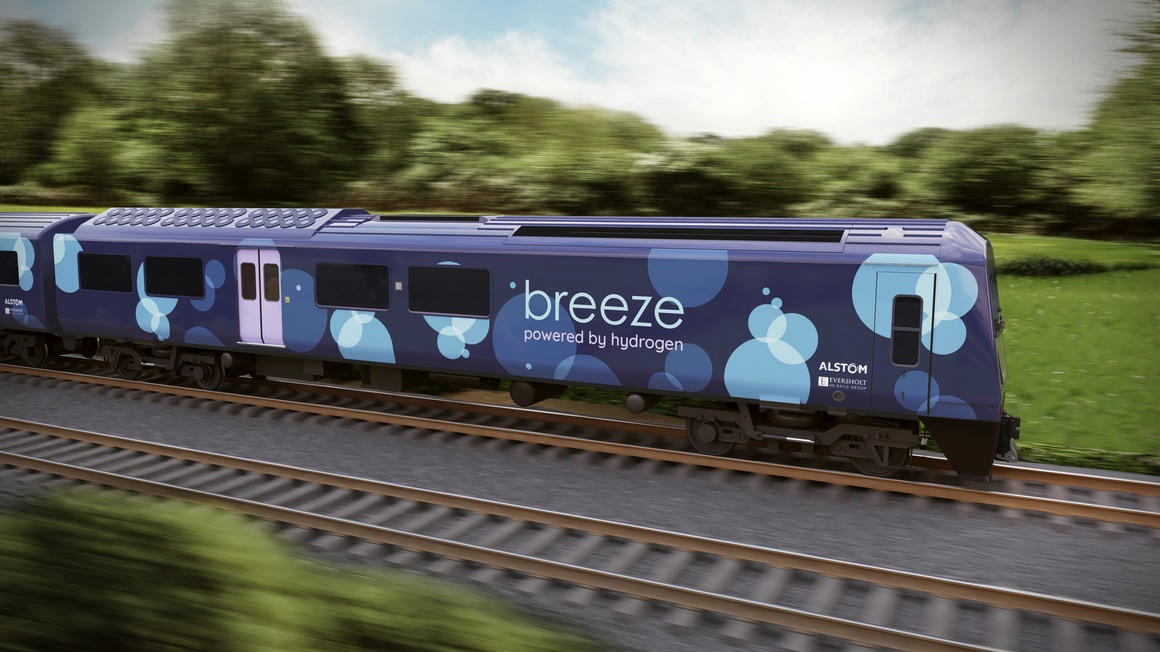
Note.
- Half of both driver cars is taken up by a hydrogen tank.
- Trains will be three-cars.
- Trains will be able to carry as many passengers as a two-car Class 156 train.
It is an inefficient design that can be improved upon.
Porterbrook and Birmingham University appear to have done that with their Class 799 train.
- It can use 25 KVAC overhead or 750 VDC third-rail electrification.
- The hydrogen tanks, fuel cell and other hydrogen gubbins are under the floor.
This picture from Network Rail shows how the train will appear at COP26 in Glasgow in November.
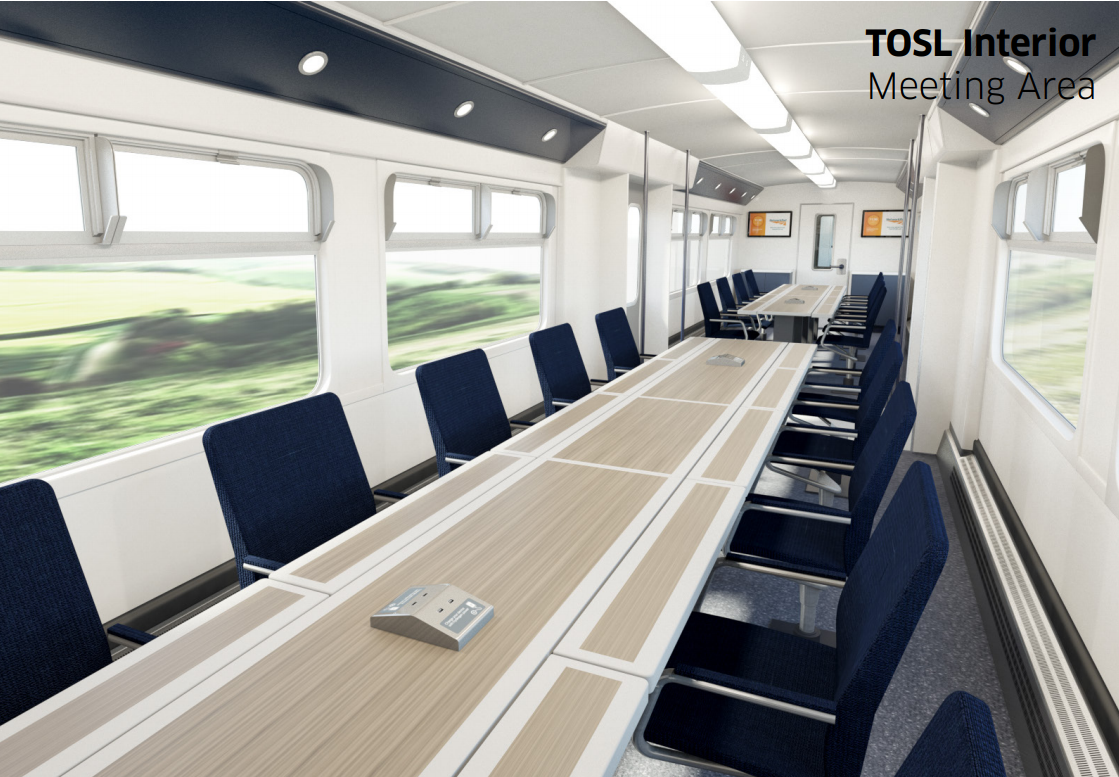
Now that’s what I call a train! Let alone a hydrogen train!
Without doubt, Porterbrook and their academic friends in Birmingham will be laying down a strong marker for hydrogen at COP26!
I know my hydrogen, as my first job on leaving Liverpool University with my Control Engineering degree in 1968 was for ICI at Runcorn, where I worked in a plant that electrolysed brine into hydrogen, sodium hydroxide and chlorine.
My life went full circle last week, when I rode this hydrogen powered bus in London.
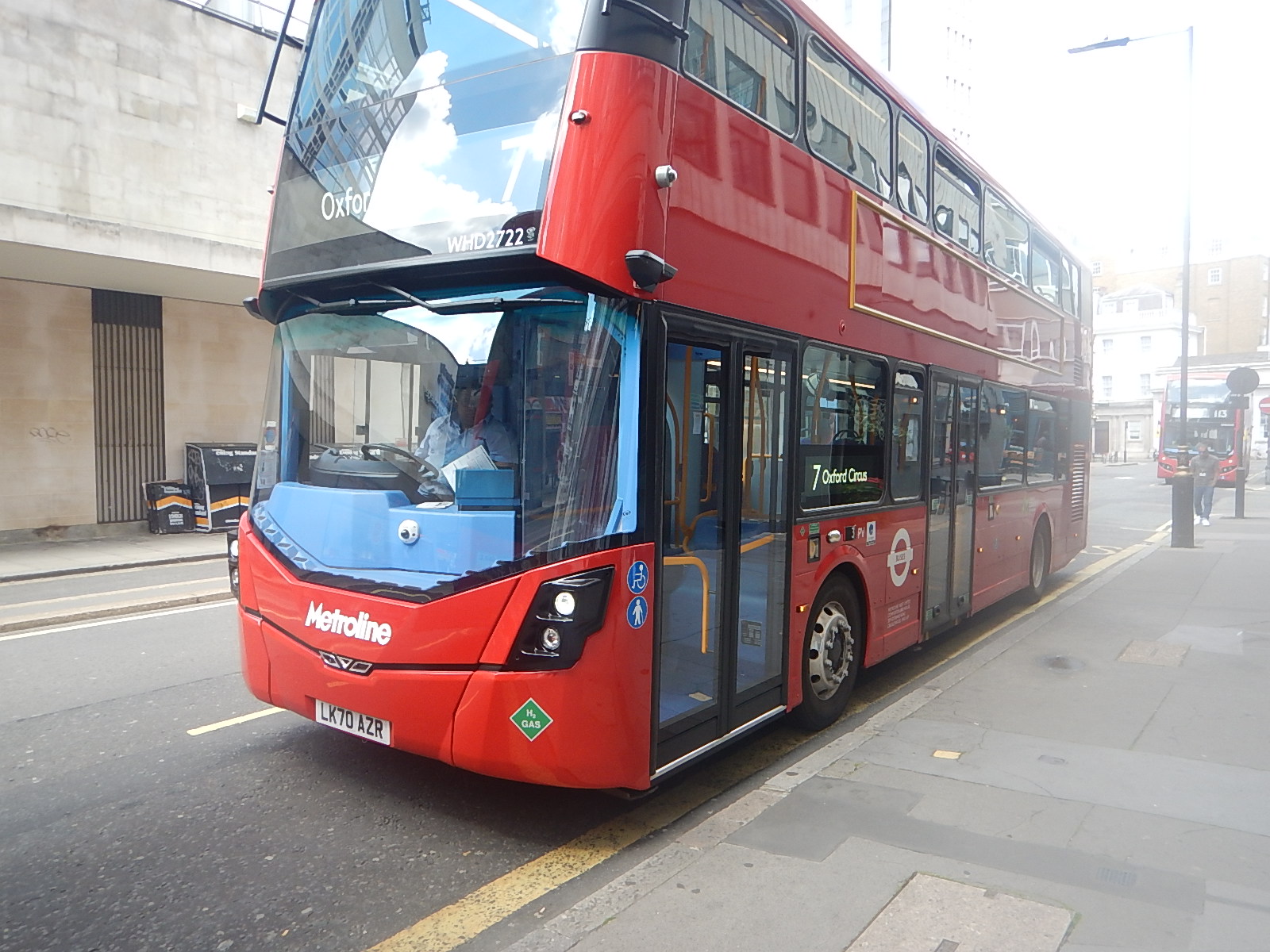
The hydrogen is currently supplied from the same chemical works in Runcorn, where I worked. But plans have been made at Runcorn, to produce the hydrogen from renewable energy, which would make the hydrogen as green hydrogen of the highest standard. So sorry Roger, but totally carbon-free hydrogen is available.
The bus is a Wightbus Hydroliner FCEV and this page on the Wrightbus web site gives the specification. The specification also gives a series of cutaway drawings, which show how they fit 86 passengers, all the hydrogen gubbins and a driver into a standard size double-deck bus.
I believe that Alstom’s current proposal is not a viable design, but I wouldn’t say that about the Porterbrook/Birmingham University design.
Any Alternative To Full Electrification Must Meet Operator And Customer Expectations
This is a paragraph from the article.
It’s essential that an alternative traction solution offers the same levels of performance and frequency, while providing an increase in capacity and being economically viable.
In performance, I would include reliability. As the on-board engineer indicated on the Bombardier test train on the Harwich branch, overhead electrification is not totally reliable, when there are winds and/or criminals about.
Easy Wins
Hitachi’s five-car Class 800 trains and Class 802 trains each have three diesel engines and run the following short routes.
- Kings Cross and Middlesbrough- 21 miles not electrified – Changeover in Northallerton station
- Kings Cross and Lincoln – 16.6 miles not electrified – Changeover in Newark Northgate station
- Paddington and Bedwyn – 13.3 miles not electrified – Changeover in Newbury station
- Paddington and Oxford – 10.3 miles not electrified – Changeover in Didcot Parkway station
Some of these routes could surely be run with a train, where one diesel engine was replaced by a battery-pack.
As I’m someone, who was designing, building and testing plug-compatible transistorised electronics in the 1960s to replace older valve-based equipment in a heavy engineering factory, I suspect that creating a plug-compatible battery-pack that does what a diesel engine does in terms of power and performance is not impossible.
What would be the reaction to passengers, once they had been told, they had run all the way to or from London without using any diesel?
Hopefully, they’d come again and tell their friends, which is what a train operator wants and needs.
Solving The Electrification Conundrum
This section is from the article.
Where electrification isn’t likely to be a viable proposition, this presents a real conundrum to train operators and rolling stock leasing companies.
This is why Hitachi Rail and Hitachi ABB Power Grids are joining together to present a combined battery train and charging solution to solve this conundrum. In 2020, Hitachi and ABB’s Power Grids business, came together in a joint venture, and an early outcome of this is confidence that bringing together their expertise in rail, power and grid management, they can work together to make electrification simpler cheaper and quicker.
I agree strongly with the second paragraph, as several times, I’ve been the mathematician and simulation expert in a large multi-disciplinary engineering project, that went on to be very successful.
The Heart Of The Proposition
This is a paragraph from the article.
The proposition is conceptually simple. Rather than have extended dwell times at stations for battery-powered trains, why not have a short stretch of 25 KVAC overhead catenary (the exact length will depend on the types of train and the route) which can charge trains at linespeed on the move via a conventional pantograph?
The article also mentions ABB’s related expertise.
- Charging buses all over Europe.
- Creating the power grid for the Great Western Electrification to Cardiff.
I like the concept, but then it’s very similar to what I wrote in The Concept Of Electrification Islands in April 2020.
But as they are electrical power engineers and I’m not, they’d know how to create the system.
Collaboration With Hyperdrive Innovation
The article has nothing negative to say about the the collaboration with Hyperdrive Innovation to produce the battery-packs.
Route Modelling
Hitachi appear to have developed a sophisticated route modelling system, so that routes and charging positions can be planned.
I would be very surprised if they hadn’t developed such a system.
Modular And Scalable
This is a paragraph from the article.
In the heart of the system is a containerised modular solution containing everything needed to power a stretch of overhead catenary to charge trains. A three-car battery train might need one of these, but the great advantage is that it is scalable to capacity and speed requirements.
This all sounds very sensible and can surely cope with a variety of lines and traffic levels.
It also has the great advantage , that if a line is eventually electrified, the equipment can be moved on to another line.
Financing Trains And Chargers
The article talks about the flexibility of the system from an operator’s point of view with respect to finance.
I’ve had some good mentors in the area of finance and I know innovative finance contributed to the success of Metier Management Systems, the project management company I started with three others in 1977.
After selling Metier, I formed an innovative finance company, which would certainly have liked the proposition put forward in the article.
No Compromise, Little Risk
I would agree with this heading of the penultimate section of the article.
In February 2015, when I rode that Class 379 train between Manningtree and Harwich, no compromise had been made by Bombardier and it charged in the electrified bay platform at Manningtree.
But why was that train not put through an extensive route-proving exercise in the UK after the successful trial at Manningtree?
- Was it the financial state of Bombardier?
- Was it a lack of belief on the part of politicians, who were too preoccupied with Brexit?
- Was it that an unnamed civil servant didn’t like the concept and stopped the project?
Whatever the reason, we have wasted several years in getting electric trains accepted on UK railways.
If no compromise needs to be made to create a battery-electric train, that is equivalent to the best-in-class diesel or electric multiple units, then what about the risk?
The beauty of Hitachi’s battery-electric train project is that it can be done in phases designed to minimise risk.
Phase 1 – Initial Battery Testing
Obviously, there will be a lot of bench testing in a laboratory.
But I also believe that if the Class 803 trains are fitted with a similar battery from Hyperdrive Innovation, then this small fleet of five trains can be used to test a lot of the functionality of the batteries initially in a test environment and later in a real service environment.
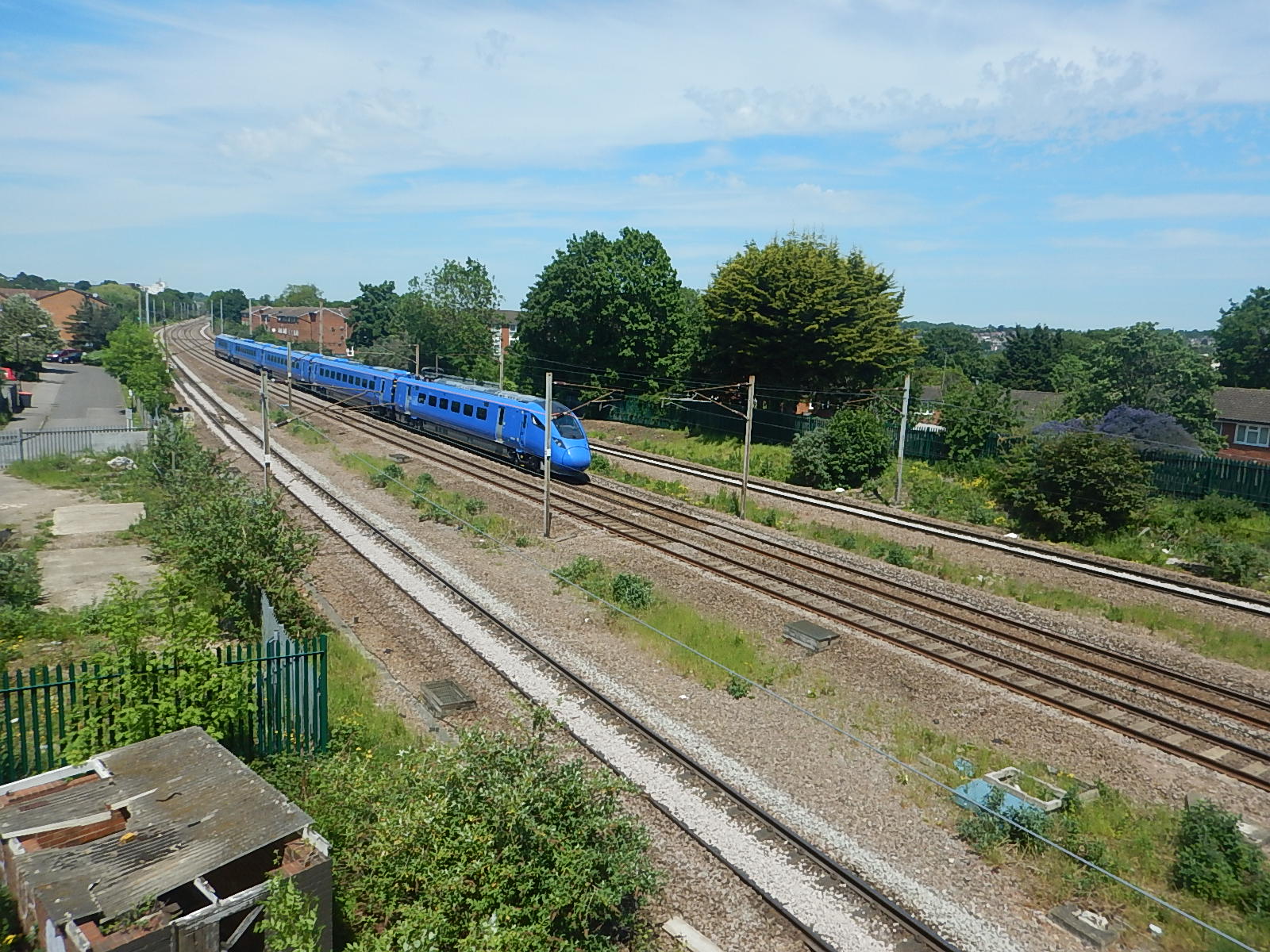
The picture shows a Class 803 train under test through Oakleigh Park station.
This phase would be very low risk, especially where passengers are concerned.
Phase 2 – Battery Traction Testing And Route Proving
I am a devious bastard, when it comes to software development. The next set of features would always be available for me to test earlier, than anybody else knew.
I doubt that the engineers at Hyperdrive Innovation will be any different.
So I wouldn’t be surprised to find out that the batteries in the Class 803 trains can also be used for traction, if you have the right authority.
We might even see Class 803 trains turning up in some unusual places to test the traction abilities of the batteries.
As East Coast Trains, Great Western Railway and Hull Trains are all First Group companies, I can’t see any problems.
I’m also sure that Hitachi could convert some Class 800 or Class 802 trains and add these to the test fleet, if East Coast Trains need their Class 803 trains to start service.
This phase would be very low risk, especially where passengers are concerned.
Possibly, the worse thing, that could happen would be a battery failure, which would need the train to be rescued.
Phase 3 – Service Testing On Short Routes
As I indicated earlier, there are some easy routes between London and places like Bedwyn, Lincoln, Middlesbrough and Oxford, that should be possible with a Class 800 or Class 802 train fitted with the appropriate number of batteries.
Once the trains have shown, the required level of performance and reliability, I can see converted Class 800, 801 and Class 802 trains entering services on these and other routes.
Another low risk phase, although passengers are involved, but they are probably subject to the same risks, as on an unmodified train.
Various combinations of diesel generators and batteries could be used to find out, what is the optimum combination for the typical diagrams that train operators use.
Hitachi didn’t commit to any dates, but I can see battery-electric trains running on the Great Western Railway earlier than anybody thinks.
Phase 4 – Service Testing On Medium Routes With A Terminal Charger System
It is my view that the ideal test route for battery-electric trains with a terminal charger system would be the Hull Trains service between London Kings Cross and Hull and Beverley.
The route is effectively in three sections.
- London Kings Cross and Temple Hirst junction – 169.2 miles – Full Electrification
- Temple Hirst junction and Hull station – 36.1 miles – No Electrification
- Hull station and Beverley station – 8.3 miles – No Electrification
Two things would be needed to run zero-carbon electric trains on this route.
- Sufficient battery capacity in Hull Trains’s Class 802 trains to reliably handle the 36.1 miles between Temple Hirst junction and Hull station.
- A charging system in Hull station.
As Hull station also handles other Class 800 and Class 802 trains, there will probably be a need to put a charging system in more than one platform.
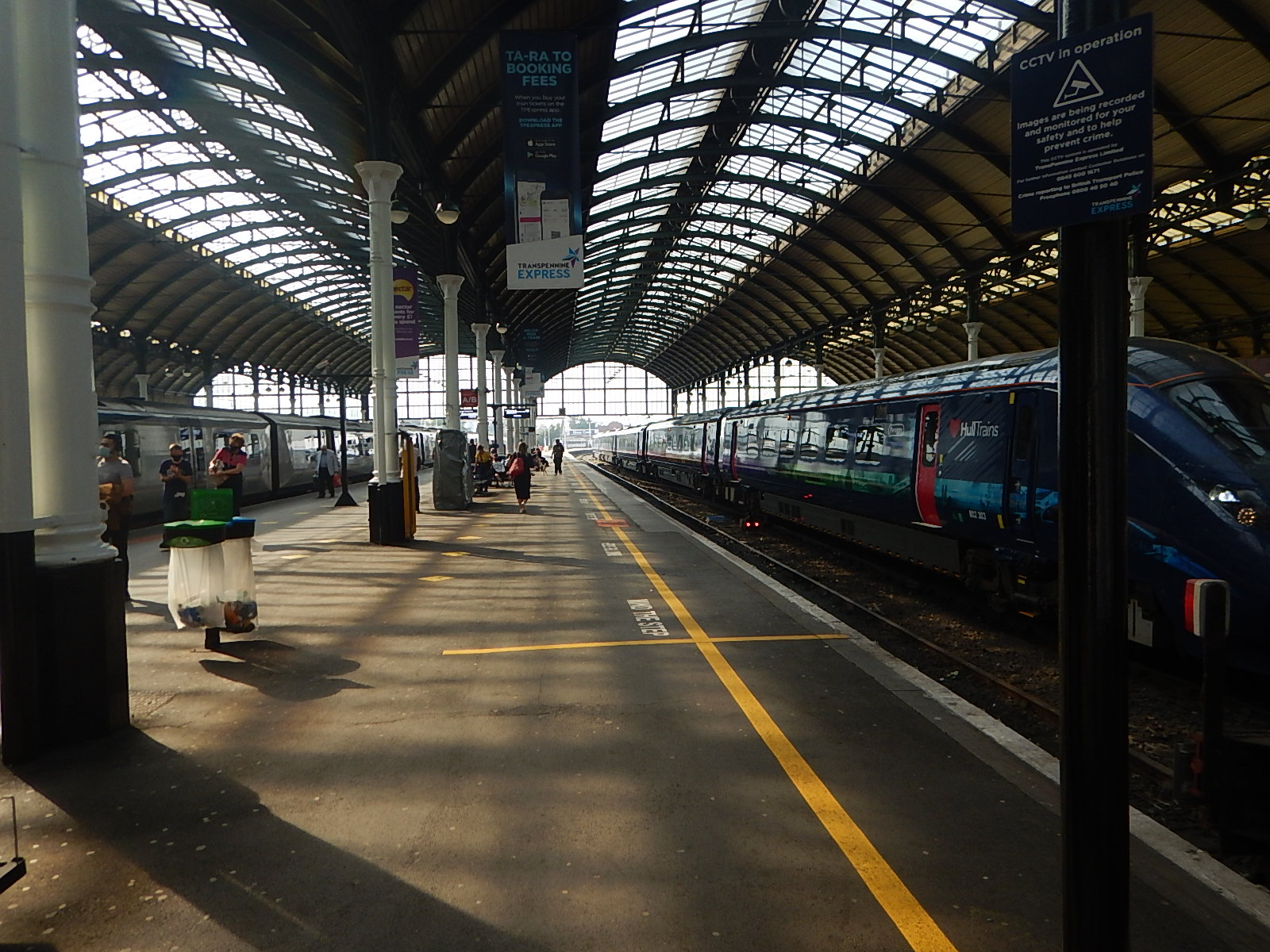
Note.
- Hull station has plenty of space.
- No other infrastructure work would be needed.
- There is a large bus interchange next door, so I suspect the power supply to Hull station is good.
Hull would be a very good first destination for a battery-electric InterCity train.
Others would include Bristol, Cheltenham, Chester, Scarborough, Sunderland and Swansea.
The risk would be very low, if the trains still had some diesel generator capacity.
Phase 5 – Service Testing On Long Routes With Multiple Charger Systems
Once the performance and reliability of the charger systems have been proven in single installations like perhaps Hull and Swansea stations, longer routes can be prepared for electric trains.
This press release from Hitachi is entitled Hitachi And Eversholt Rail To Develop GWR Intercity Battery Hybrid Train – Offering Fuel Savings Of More Than 20%.
The press release talks about Penzance and London, so would that be a suitable route for discontinuous electrification using multiple chargers?
These are the distances between major points on the route between Penzance and London Paddington.
- Penzance and Truro – 35.8 miles
- Truro and Bodmin Parkway – 26.8 miles
- Bodmin Parkway and Plymouth – 26.9 miles
- Plymouth and Newton Abbot – 31,9 miles
- Newton Abbot and Exeter – 20.2 miles
- Exeter and Taunton – 30.8 miles
- Taunton and Westbury – 47.2 miles
- Westbury and Newbury – 42.5 miles
- Newbury and Paddington – 53 miles
Note.
- Only Newbury and Paddington is electrified.
- Trains generally stop at Plymouth, Newton Abbott, Exeter and Taunton.
- Services between Paddington and Exeter, Okehampton, Paignton, Penzance, Plymouth and Torquay wouldn’t use diesel.
- Okehampton would be served by a reverse at Exeter.
- As Paignton is just 8.1 miles from Newton Abbot, it probably wouldn’t need a charger.
- Bodmin is another possible destination, as Great Western Railway have helped to finance a new platform at Bodmin General station.
It would certainly be good marketing to run zero-carbon electric trains to Devon and Cornwall.
I would class this route as medium risk, but with a high reward for the operator.
In this brief analysis, it does look that Hitachi’s proposed system is of a lower risk.
A Few Questions
I do have a few questions.
Are The Class 803 Trains Fitted With Hyperdrive Innovation Batteries?
East Coast Trains‘s new Class 803 trains are undergoing testing between London Kings Cross and Edinburgh and they can be picked up on Real Time Trains.
Wikipedia says this about the traction system for the trains.
While sharing a bodyshell with the previous UK A-train variants, the Class 803 differs in that it has no diesel engines fitted. They will however be fitted with batteries to enable the train’s on-board services to be maintained, in case the primary electrical supplies have failed.
Will these emergency batteries be made by Hyperdrive Innovation?
My experience of similar systems in other industries, points me to the conclusion, that all Class 80x trains can be fitted with similar, if not identical batteries.
This would give the big advantage of allowing battery testing to be performed on Class 803 trains under test, up and down the East Coast Main Line.
Nothing finds faults in the design and manufacture of something used in transport, than to run it up and down in real conditions.
Failure of the catenary can be simulated to check out emergency modes.
Can A Class 801 Train Be Converted Into A Class 803 Train?
If I’d designed the trains, this conversion would be possible.
Currently, the electric Class 801 trains have a single diesel generator. This is said in the Wikipedia entry for the Class 800 train about the Class 801 train.
These provide emergency power for limited traction and auxiliaries if the power supply from the overhead line fails.
So it looks like the difference between the powertrain of a Class 801 train and a Class 803 train, is that the Class 801 train has a diesel generator and the Class 803 train has batteries. But the diesel generator and batteries, would appear to serve the same purpose.
Surely removing diesel from a Class 801 train would ease the maintenance of the train!
Will The System Work With Third-Rail Electrification?
There are three routes that if they were electrified would probably be electrified with 750 DC third-rail electrification, as they have this electrification at one or both ends.
- Basingstoke and Exeter
- Marshlink Line
- Uckfield branch
Note.
- Basingstoke and Exeter would need a couple of charging systems.
- The Marshlink line would need a charging system at Rye station.
- The Uckfield branch would need a charging system at Uckfield station.
I am fairly certain as an Electrical Engineer, that the third-rails would only need to be switched on, when a train is connected and needs a charge.
I also feel that on some scenic and other routes, 750 VDC third-rail electrification may be more acceptable , than 25 KVAC overhead electrification. For example, would the heritage lobby accept overhead wires through a World Heritage Site or on top of a Grade I Listed viaduct?
I do feel that the ability to use third-rail 750 VDC third-rail electrification strategically could be a useful tool in the system.
Will The System Work With Lightweight Catenary?
I like the design of this 25 KVAC overhead electrification, that uses lightweight gantries, which use laminated wood for the overhead structure.
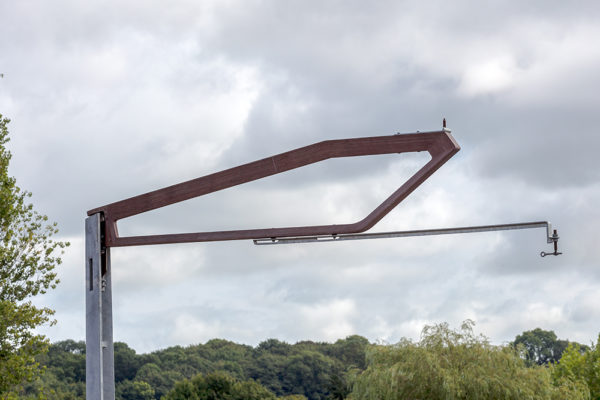
There is also a video.
Electrification doesn’t have to be ugly and out-of-character with the surroundings.
Isuspect that both systems could work together.
Would Less Bridges Need To Be Rebuilt For Electrification?
This is always a contentious issue with electrification, as rebuilding bridges causes disruption to both rail and road.
I do wonder though by the use of careful design, that it might be possible to arrange that the sections of electrification and the contentious bridges were kept apart, with the bridges arranged to be in sections, where the trains ran on batteries.
I suspect that over the years as surveyors and engineers get more experienced, better techniques will evolve to satisfy all parties.
Get this right and it could reduce the cost of electrification on some lines, that will be difficult to electrify.
How Secure Are The Containerised Systems?
Consider.
- I was delayed in East Anglia two years ago, because someone stole the overhead wires at two in the morning.
- Apparently, overhead wire stealing is getting increasingly common in France and other parts of Europe.
I suspect the containerised systems will need to be more secure than those used for buses, which are not in isolated locations.
Will The Containerised Charging Systems Use Energy Storage?
Consider.
- I’ve lived in rural locations and the power grids are not as good as in urban areas.
- Increasingly, batteries of one sort or another are being installed in rural locations to beef up local power supplies.
- A new generation of small-footprint eco-friendly energy storage systems are being developed.
In some locations, it might be prudent for a containerised charging system to share a battery with the local area.
Will The Containerised Charging Systems Accept Electricity From Local Sources Like Solar Farms?
I ask the question, as I know at least one place on the UK network, where a line without electrification runs through a succession of solar farms.
I also know of an area, where a locally-owned co-operative is planning a solar farm, which they propose would be used to power the local main line.
Will The System Work With Class 385 Trains?
Hitachi’s Class 385 trains are closely related to the Class 80x trains, as they are all members of Hitachi’s A-Train family.
Will the Charging Systems Charge Other Manufacturers Trains?
CAF and Stadler are both proposing to introduce battery-electric trains in the UK.
I also suspect that the new breed of electric parcel trains will include a battery electric variant.
As these trains will be able to use 25 KVAC overhead electrification, I would expect, that they would be able to charge their batteries on the Hitachi ABB charging systems.
Will The System Work With Freight Trains?
I believe that freight services will split into two.
Heavy freight will probably use powerful hydrogen-electric locomotives.
In Freightliner Secures Government Funding For Dual-Fuel Project, which is based on a Freightliner press release, I detail Freightliner’s decarbonisation strategy, which indicates that in the future they will use hydrogen-powered locomotives.
But not all freight is long and extremely heavy and I believe that a battery-electric freight locomotive will emerge for lighter duties.
There is no reason it could not be designed to be compatible with Hitachi’s charging system.
In Is This The Shape Of Freight To Come?, I talked about the plans for 100 mph parcel services based on redundant electric multiple units. Eversholt Rail Group have said they want a Last-Mile capability for their version of these trains.
Perhaps they need a battery-electric capability, so they can deliver parcels and shop supplies to the remoter parts of these islands?
Where Could Hitachi’s System Be Deployed?
This is the final paragraph from the article.
Hitachi is not committing to any routes yet, but a glance at the railway map shows clear potential for the battery/OLE-technology to be deployed on relatively lightly used rural and regional routes where it will be hard to make a case for electrification. The Cambrian Coast and Central Wales Lines would appear to be worthy candidates, and in Scotland, the West Highland Line and Far North routes are also logical areas for the system to be deployed.
In England, while shorter branch lines could simply be operated by battery trains, longer routes need an alternative. Network Rail’s Traction Decarbonisation Network Strategy interim business case recommends hydrogen trains for branch lines in Norfolk, as well as Par to Newquay and Exeter to Barnstaple. However, it is also entirely feasible to use the system on routes likely to be electrified much later in the programme, such as the Great Western main line West of Exeter, Swansea to Fishguard and parts of the Cumbrian Coast Line.
Everyone is entitled to their own opinion and mine would be driven by high collateral benefits and practicality.
These are my thoughts.
Long Rural Lines
The Cambrian, Central Wales (Heart Of Wales), Far North and West Highland Lines may not be connected to each other, but they form a group of rail routes with a lot of shared characteristics.
- All are rural routes of between 100 and 200 miles.
- All are mainly single track.
- They carry occasional freight trains.
- They carry quite a few tourists, who are there to sample, view or explore the countryside.
- All trains are diesel.
- Scotrail have been experimenting with attaching Class 153 trains to the trains on the West Highland Line to act as lounge cars and cycle storage.
Perhaps we need a long-distance rural train with the following characteristics.
- Four or possibly five cars
- Battery-electric power
- Space for a dozen cycles
- A lounge car
- Space for a snack trolley
- Space to provide a parcels service to remote locations.
I should also say, that I’ve used trains on routes in countries like Germany, Poland and Slovenia, where a similar train requirement exists.
Norfolk Branch Lines
Consider.
- North of the Cambridge and Ipswich, the passenger services on the branch lines and the important commuter routes between Cambridge and Norwich and Ipswich are run by Stadler Class 755 trains, which are designed to be converted to battery-electric trains.
- Using Hitachi chargers at Beccles, Bury St. Edmunds, Lowestoft, Thetford and Yarmouth and the existing electrification, battery-electric Class 755 trains could provide a zero-carbon train service for Norfolk and Suffolk.
- With chargers at Dereham and March, two important new branch lines could be added and the Ipswich and Peterborough service could go hourly and zero carbon.
- Greater Anglia have plans to use the Class 755 trains to run a London and Lowestoft service.
- Could they be planning a London and Norwich service via Cambridge?
- Would battery-electric trains running services over Norfolk bring in more visitors by train?
Hitachi may sell a few chargers to Greater Anglia, but I feel they have enough battery-electric trains.
Par And Newquay
The Par and Newquay Line or the Atlantic Coast Line, has been put forward as a Beeching Reversal project, which I wrote about in Beeching Reversal – Transforming The Newquay Line.
In that related post, I said the line needed the following.
- An improved track layout.
- An hourly service.
- An improved Par station.
- A rebuilt Newquay station with a second platform, so that more through trains can be run.
I do wonder, if after the line were to be improved, that a new three-car battery-electric train shuttling between Par and Newquay stations could be the icing on the cake.
Exeter And Barnstaple
The Tarka Line between Exeter and Barnstaple is one of several local and main lines radiating from Exeter St. David’s station.
- The Avocet Line to Exmouth
- The Great Western Main Line to Taunton, Bristol and London
- The Great Western Main Line to Newton Abbott, Plymouth and Penzance
- The Riviera Line to Paignton
- The West of England Line to Salisbury, Basingstoke and London.
Note.
- The Dartmoor Line to Okehampton is under development.
- Several new stations are planned on the routes.
- I have already stated that Exeter could host a charging station between London and Penzance, but it could also be an electrified hub for battery-electric trains running hither and thither.
Exeter could be a city with a battery-electric metro.
Exeter And Penzance
Earlier, I said that I’d trial multiple chargers between Paddington and Penzance to prove the concept worked.
I said this.
I would class this route as medium risk, but with a high reward for the operator.
But it is also an enabling route, as it would enable the following battery-electric services.
- London and Bodmin
- London and Okehampton
- London and Paignton and Torquay
It would also enable the Exeter battery-electric metro.
For these reasons, this route should be electrified using Hitachi’s discontinuous electrification.
Swansea And Fishguard
I mentioned Swansea earlier, as a station, that could be fitted with a charging system, as this would allow battery-electric trains between Paddington and Swansea via Cardiff.
Just as with Exeter, there must be scope at Swansea to add a small number of charging systems to develop a battery-electric metro based on Swansea.
Cumbrian Coast Line
This is a line that needs improvement, mainly for the tourists and employment it could and probably will bring.
These are a few distances.
- West Coast Main Line (Carnforth) and Barrow-in-Furness – 28.1 miles
- Barrow-in-Furness and Sellafield – 25 miles
- Sellafield and Workington – 18 miles
- Workington and West Coast Main Line (Carlisle) – 33 miles
Note.
- The West Coast Main Line is fully-electrified.
- I suspect that Barrow-in-Furness, Sellafield and Workington have good enough electricity supplies to support charging systems for the Cumbrian Coast Line.
- The more scenic parts of the line would be left without wires.
It certainly is a line, where a good case for running battery-electric trains can be made.
Crewe And Holyhead
In High-Speed Low-Carbon Transport Between Great Britain And Ireland, I looked at zero-carbon travel between the Great Britain and Ireland.
One of the fastest routes would be a Class 805 train between Euston and Holyhead and then a fast catamaran to either Dublin or a suitable rail-connected port in the North.
- The Class 805 trains could be made battery-electric.
- The trains could run between Euston and Crewe at speeds of up to 140 mph under digital signalling.
- Charging systems would probably be needed at Chester, Llandudno Junction and Holyhead.
- The North Wales Coast Line looks to my untrained eyes, that it could support at least some 100 mph running.
I believe that a time of under three hours could be regularly achieved between London Euston and Holyhead.
Battery-electric trains on this route, would deliver the following benefits.
- A fast low-carbon route from Birmingham, London and Manchester to the island of Ireland. if coupled with the latest fast catamarans at Holyhead.
- Substantial reductions in journey times to and from Anglesey and the North-West corner of Wales.
- Chester could become a hub for battery-electric trains to and from Birmingham, Crewe, Liverpool, Manchester and Shrewsbury.
- Battery-electric trains could be used on the Conwy Valley Line.
- It might even be possible to connect the various railways, heritage railways and tourist attractions in the area with zero-carbon shuttle buses.
- Opening up of the disused railway across Anglesey.
The economics of this corner of Wales could be transformed.
My Priority Routes
To finish this section, I will list my preferred routes for this method of discontinuous electrification.
- Exeter and Penzance
- Swansea and Fishguard
- Crewe and Holyhead
Note.
- Some of the trains needed for these routes have been delivered or are on order.
- Local battery-electric services could be developed at Chester, Exeter and Swansea by building on the initial systems.
- The collateral benefits could be high for Anglesey, West Wales and Devon and Cornwall.
I suspect too, that very little construction work not concerned with the installation of the charging systems will be needed.
Conclusion
Hitachi have come up with a feasible way to electrify Great Britain’s railways.
I would love to see detailed costings for the following.
- Adding a battery pack to a Class 800 train.
- Installing five miles of electrification supported by a containerised charging system.
They could be on the right side for the Treasury.
But whatever the costs, it does appear that the Japanese have gone native, with their version of the Great British Compromise.
Shell Starts Up Europe’s Largest PEM Green Hydrogen Electrolyser
The title of this post, is the same as that of this press release from Refhyne.
These are the first three paragraphs.
Europe’s largest PEM hydrogen electrolyser*, today began operations at Shell’s Energy and Chemicals Park Rheinland, producing green hydrogen.
As part of the Refhyne European consortium and with European Commission funding through the Fuel Cells and Hydrogen Joint Undertaking (FCH JU), the fully operational plant is the first to use this technology at such a large scale in a refinery.
Plans are under way to expand capacity of the electrolyser from 10 megawatts to 100 megawatts at the Rheinland site, near Cologne, where Shell also intends to produce sustainable aviation fuel (SAF) using renewable power and biomass in the future. A plant for liquefied renewable natural gas (bio-LNG) is also in development.
It certainly seems a comprehensive green development.
- It will be based on a massive 100 MW electrolyser.
- I estimate that the electrolyser will produce just under 45 tonnes of hydrogen per day.
As ITM Power is part of the Refhyne consortium, the electrolyser is being built in their factory in Sheffield.
This paragraph quotes Shell’s Downstream Director, Huibert Vigeveno .
“Shell wants to become a leading supplier of green hydrogen for industrial and transport customers in Germany,” he added. “We will be involved in the whole process — from power generation, using offshore wind, to hydrogen production and distribution across sectors. We want to be the partner of choice for our customers as we help them decarbonise.”
Shell certainly have green ambitions.
H2 Green, Eversholt Rail To Jointly Develop Hydrogen Supply Solutions In The UK
The title of this post, is the same as that of this article on H2 View.
Their co-operation will be for the rail industry and based on green hydrogen, produced by electrolysis.
- H2 Green is a Scottish company, that were recently taken over by Getech,
- Eversholt Rail Group is a rolling stock leasing company, who are also backing hydrogen trains, that will be manufactured by Alstom.
This could be the kick up the backside, that hydrogen trains need in the UK.
Freightliner Secures Government Funding For Dual-Fuel Project
The title of this post, is the same as that of this press release from Freightliner.
This is the first two paragraphs.
Freightliner, a subsidiary of Genesee & Wyoming Inc. (G&W), in partnership with a consortium of specialist suppliers, has been successful in securing government funding to develop a dual-fuel solution for the Class 66 locomotive.
The technology is one of the 30 winners of the latest round of the First of a Kind (FOAK) competition announced today by the Transport Secretary. Already the safest and greenest mode of ground-freight transportation, the competition has been aimed at making the railways even cleaner, greener and more passenger friendly.
These are my thoughts.
A Big Opportunity
Freightliner have a total of 113 Class 66 locomotives, out of a UK total of well over 400.
If the project succeeds, this could cut a large amount of carbon emissions from UK rail freight.
Who Are The Partners?
The press release gives these project partners.
The key project partners are Freightliner, which operates over 113 Class-66s in the UK, and Clean Air Power, providers of innovative clean air solutions for freight. The project is also supported by Network Rail, Tarmac, Rail Safety Standards Board (RSSB), Flogas, Carrickarory and the University of Birmingham.
It is a comprehensive group of partners, which probably covers all aspects.
- From their web site, Clean Air Power would appear to have the expertise for the project, with back-up from the University of Birmingham, who seem to be involved in several high-profile rail projects.
- The early involvement of standards must be a good thing.
- Flogas are a gas company
- Carrickarory would appear to be consultants specialising in rail.
Getting the team right is important in having a successful project.
What Are The Objectives Of The Project?
The press release gives these project objectives.
The project will investigate the ability to substitute diesel with both hydrogen and biogas on the Class-66 locomotive which hauls over 80% of freight on the UK rail network and, in doing so, reduce carbon emissions on one of the industry’s most challenging two-stroke locomotives.
This will be achieved by retrofitting the Class 66 with Clean Air Power’s precision injection technology, creating a Class 66 that can run on a combination of diesel, biogas and hydrogen.
Sounds a good set of reduced carbon objectives!
Would The Technology Be Applicable To Other Operators And Locomotives?
The press release says this.
This sustainable solution will support a programme to decarbonise freight operating companies’ diesel fleets in a cost-efficient manner that does not require significant short-term investment and facilitates operational learning in support of a longer-term fleet replacement programme, potentially using 100% hydrogen fuel.
Does this mean that the eventual Class 66 replacement will be a locomotive, that runs exclusively on hydrogen?
I suspect it does!
How very sensible!
Conclusion
This could be a big step in the battle to decarbonise.

