Innovative Composite Masts Look To Reduce Cost And Increase Efficiency Of Rail Electrification
The title of this post is the same as that of this article on New Civil Engineer.
This is the sub-title.
Engineering consultancy Furrer+Frey will this week unveil its innovative composite masts for rail electrification, which could revolutionise the way that rail electrification is undertaken.
Other points from the article include.
- Development has been undertaken with Cranfield, Southampton and Newcastle Universities and Prodrive and TruckTrain.
- The project was part funded by the Department for Transport and Innovate UK through the First Of A Kind competition.
- The first composite masts have been created and tested at St Bride’s feeder station, just outside Newport in Wales.
This Google Map shows the area, where the test will take place.
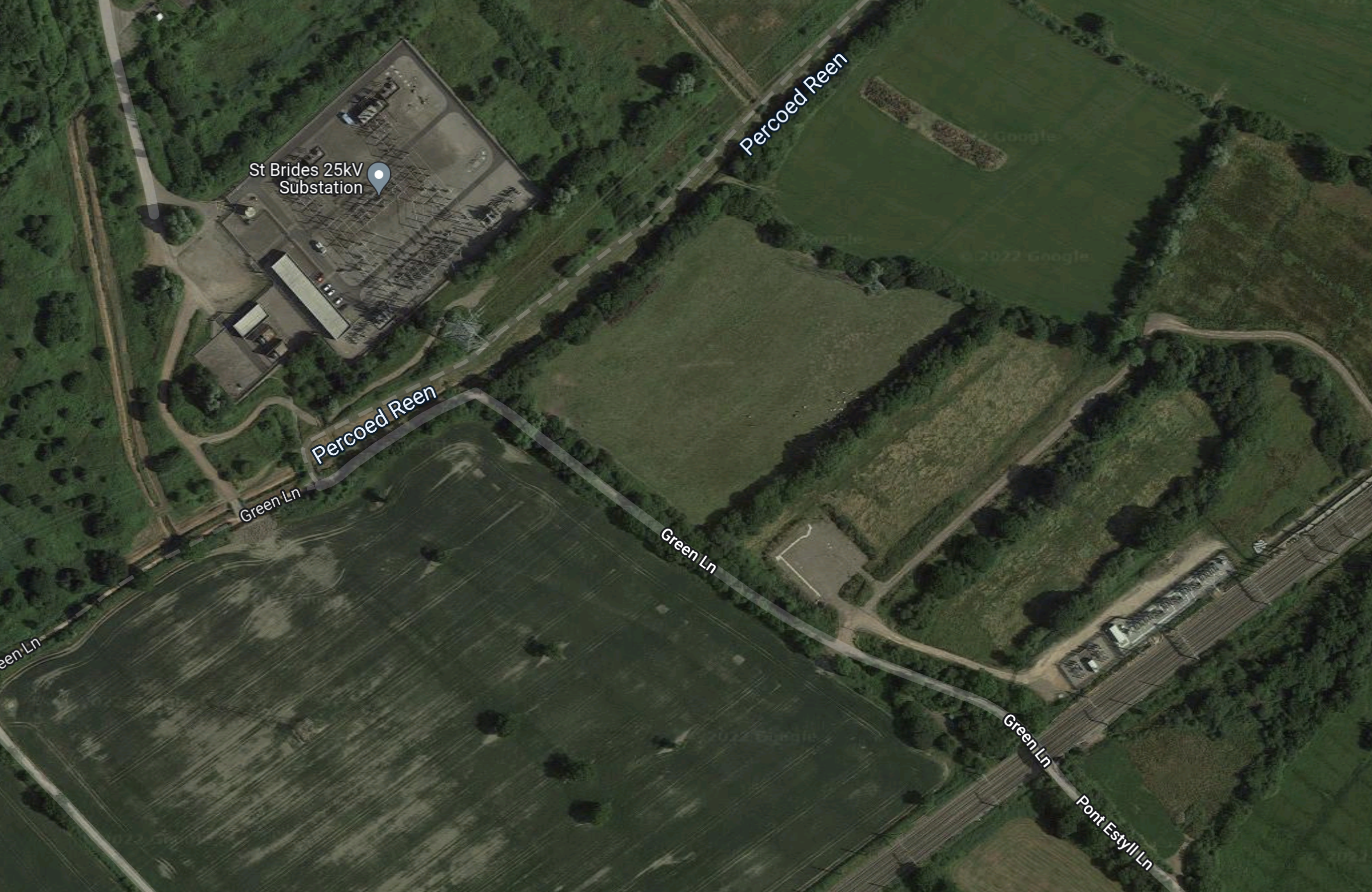
Note.
- The South Wales Main Line crossing the South-East corner of the map.
- Newport station is to the East and Cardiff station is to the West.
- The St. Brides feeder station alongside the railway, by the Green Lane bridge.
I would assume that the connection to the National Grid is via the St. Brides 25 kV Substation in the North-West corner of the map.
The article lists the features of the design.
- A typical steel mast weighs 750 Kg., whereas a composite mast weight just 80 Kg.
- I suspect that these masts can be lifted around by a couple of average workers.
- They have lower wind resistance.
- Piles can be less deep. The prototype piles are 1.25 m., as against many that are over four metres on recent schemes.
- The piles have sensors to detect, when they are out of kilter and need replacing.
- Currently, wonky masts need to be identified by hands-on measurement or observant drivers.
- Two masts have been tested to destruction, to see if they match the theory.
But this to me as an Electrical Engineer is the clincher.
Furrer+Frey GB head of UK projects Noel Dolphin says this about the new design.
When they do take it to a mass manufacturing stage, it will be without carbon fibre inside, which presents another opportunity. The other ultimate goal is that the structure is insulating in itself. It’s another big saving if you can remove the insulators on the electrification cantilevers, as they’re expensive in themselves.
It’s all going the way of much more affordable electrification.
I have a few further thoughts.
The Involvement Of Prodrive
Prodrive are best known for their involvement in motorsport, as the home page of their web site indicates.
But as their site also indicates they get involved in other forms of high-performance disruptive engineering, where their experience is relevant.
Prodrive build the prototypes, but won’t build the production masts, although I suspect, their expertise will be used.
The TruckTrain
TruckTrain is a concept with roots in Coventry University that could be off-beam enough to be the new normal.
I have updated my thoughts on the TruckTrain and it is now in a post called The TruckTrain.
My Conclusion About TruckTrains
I like the concept and I can’t see why it would not be successful worldwide.
The Involvement Of TruckTrain With Furrer+Frey
This puzzled me for a time, as undoubtedly, the TruckTrain will be able to use standard electrification.
But in the TruckTrain leaflet, they mention that the TruckTrain has been designed to use single-track short-terminals.
So did they approach Furrer+Frey to find out about electrifying short terminals and the Swiss company felt TruckTrain was a concept they could support?
Obviously, if the TruckTrain is developed to be a battery-electric train, some mini freight terminals will need the ability to charge the TruckTrain.
Could A TruckTrain Be Used to Support Electrification?
Would a TruckTrain be the ideal support vehicle to erect or repair electrification?
If you take the problem, when the wires have been damaged, a TruckTrain could get to the site at 100 mph, much faster than a truck on the road. It could also have a platform to lift the engineers for inspection and repair.
A TruckTrain could be more than just a transport system.
Conclusion
Furrer + Frey’s lightweight composite electrification masts are a good idea.
Teamed with TruckTrains, they could prove a very powerful freight concept, where new mini freight terminals are needed.
Essex And Network Rail Get Planning For Beaulieu Station
This page on the Network Rail website is entitled Network Rail And Essex County Council Are Working Together To Develop Proposals For The First Railway Station To Be Built On The Great Eastern Main Line For Over 100 Years.
These are the first two paragraphs.
The new station is part of a wider regeneration of the Beaulieu Park estate in Chelmsford with new road infrastructure and up to 14,000 homes.
Essex County Council, in partnership with Chelmsford City Council and the South East Local Enterprise Partnership (LEP), successfully secured £218m of funding from the Government’s Housing and Infrastructure (HIF) fund together with £34m contributions the South East Local Enterprise Partnership and developer Countryside Zest to deliver the wider scheme.
These are some more points from the page.
- There will be three platforms with a central loop line and new tracks to enable stopping services to call at the station while allowing fast trains to pass through unimpeded.
- The station will have lifts.
- There will be a large number of parking spaces and secure cycle storage.
- There will be taxis and buses.
There is a comprehensive video that describes the new station, the new roads and the housing developments.
Finally, Chelmsford is getting the transport system it needs.
Russia Destroys Ukraine’s Dream
The Antonov An-225 Mriya was a unique aircraft.
It was the biggest aircraft in the world and was regularly used to move heavy or awkward cargoes around the world, as a reading of its Wikipedia entry will disclose.
Mriya is Ukrainian for dream.
But all that useful work has come to an end.
This article on CNN is entitled World’s Largest Plane Destroyed In Ukraine.
These are the first two paragraphs.
The world’s largest plane, the Antonov AN-225, has been destroyed during the Russian invasion of Ukraine, according to Ukrainian officials, generating alarm and sadness among the aviation world in which it occupies almost cult status.
The enormous aircraft, named “Mriya,” or “dream” in Ukrainian, was parked at an airfield near Kyiv when it was attacked by “Russian occupants,” Ukrainian authorities said, adding that they would rebuild the plane.
I know it’s only a plane and in the current scheme of things, that is a minor loss, but the Mriya has proved itself to be so uniquely useful in moving awkward cargoes, that the plane would surely have played a major part in the humanitarian relief and the rebuilding of Ukraine.
Given, that the plane would have surely been of use to the Russians, it just shows how utterly stupid, they have been in this war.
Lithuania To Germany Intermodal Service To Launch In April
duiThe title of this post, is the same as that of this article on Railway Gazette.
These are the first two paragraphs.
Lithuanian national railway’s freight business LTG Cargo is to launch a service carrying containers and semi-trailers from the Kaunas Intermodal Terminal to Duisburg in Germany on April 4.
Trains with a capacity of up to 36 semi-trailers and containers will run thrice-weekly on the 1 500 km route. This will be LTG Cargo’s first westward service operating in three countries, with operations in Poland and Germany handled by its LTG Cargo Polska subsidiary.tail
These are more information and my thoughts.
The Route
The route appears to follow a route from Kaunas to Warsaw via
- Marijampolė
- Šeštokai
- Mockava
- Suwalki
- Buchwalowo
- Bialystok
Note.
- The links on the names are to the town’s Wikipedia entry.
- The border between Lithuania and Poland is between Mockava ans Suwalki.
- There are freight yards and change of gauge facilities at Šeštokai and Mockava.
Some of these towns are probably worth a visit, especially if like me, you have Jewish ancestors from the area.
My father’s great-great-grandfather possibly came from Konigsberg in East Prussia and arrived in the UK around 1800.
The Russian And Standard Gauge Solution
Consider.
- Estonia, Latvia and Lithuania have Russian gauge railways which is 1520 mm.
- Poland, Germany, France, Italy and the UK have standard gauge railways, which is 1435 mm.
The solution has been to build between Kaunus and Šeštokai, to build Russian gauge and standard gauge tracks side by side.
Kaunas Intermodal Terminal
This Google Map may show the Kaunas Intermodal Terminal.
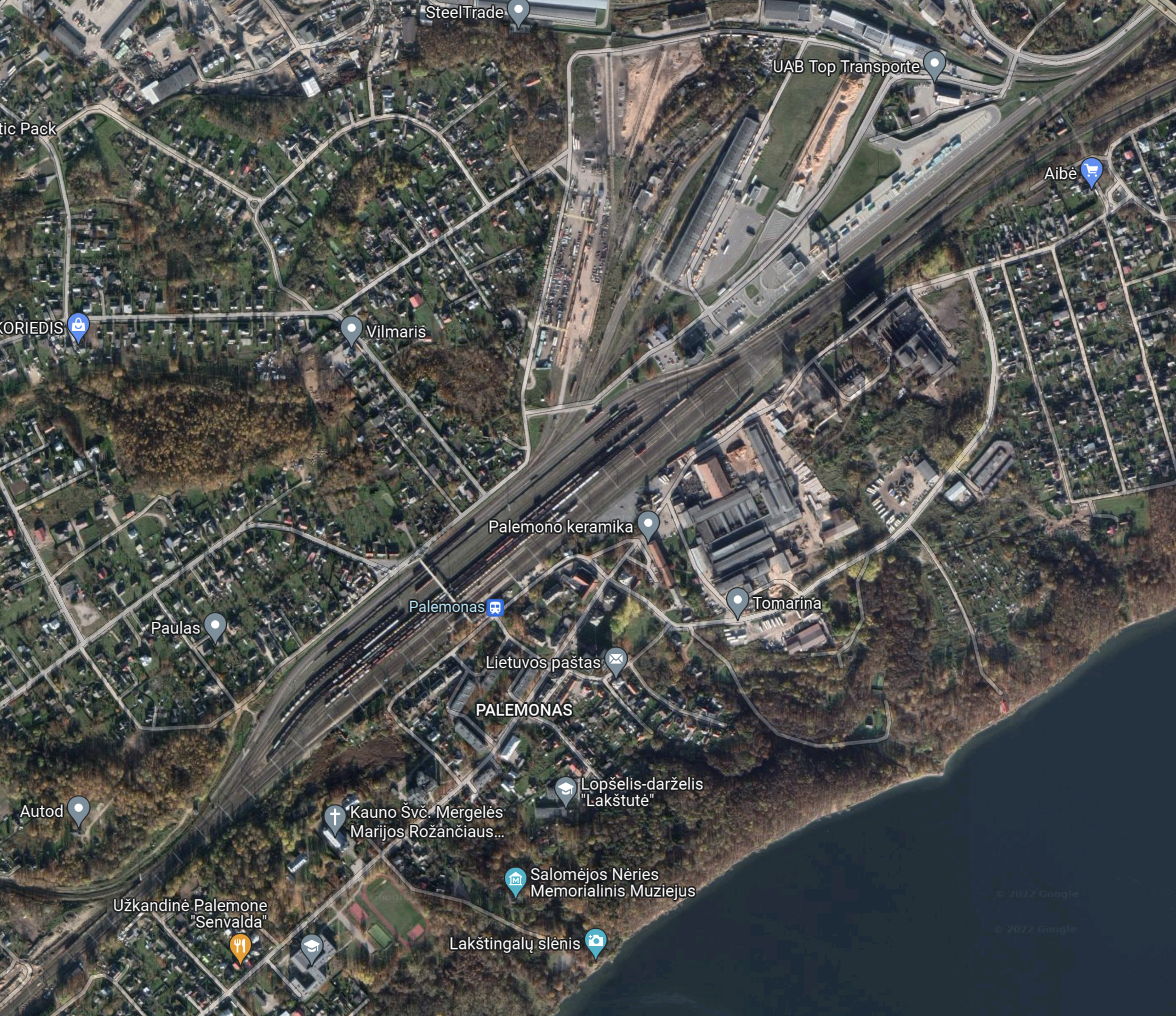
Note the rail yards in the middle of the map, have both Russian and standard gauge tracks.
Rail Baltica
The route taken is the standard gauge route of Rail Baltica, which is an EU project.
- It will run between Helsinki and Warsaw.
- Intermediate stops will be Pärnu, Riga, Riga International Airport, Panevėžys, Kaunas and Bialystok
- Vilnius will be served by a branch from Kaunus.
- The line will be double track.
- The line will be electrified with 25 KVAC overhead.
- Passenger trains will operate at up to 249 kph.
- Freight trains will operate at up to 120 kph.
- A tunnel will be built later between Helsinki and Tallinn.
Completion of the route between Warsaw and Tallinn is planned for 2026.
Rail Baltica I
Rail Baltica I is the first section of the route to be opened and is described like this in Wikipedia.
The name Rail Baltica is also sometimes used to mean the first phase of European gauge railway construction from the Poland-Lithuania border to Kaunas in Lithuania.
It opened in October 2016.
The new freight service will use this route to connect to Bialystok and Warsaw.
Conclusion
I have been on the roads in this area of Poland and rail freight services are needed to take the pressure off the roads.
Dual-Fuel Class 37 And 66 Locomotive Concepts Unveiled
The title of this post, is the same as that of this article on Railway Gazette.
This is the first paragraph.
G-volution and SBL-Rail have produced design concepts for dual-fuel versions of Class 37 and 66 locomotives, which would be able to run on diesel with biomethane, biopropane or hydrogen.
Note.
- There are about sixty Class 37 locomotives in service or stored.
- 480 Class 66 locomotives were originally produced and over 300 must still be in service.
- Both locomotives have electric transmissions.
- G-volution are developing a dual-fuel Class 180 train, that I wrote about in Grand Central DMU To Be Used For Dual-Fuel Trial.
- Two of the design concepts involve replacing the current diesel engines with modern Cummins engines, that meet current emission regulations.
- Fuel savings of ten percent are mentioned for one engine conversion.
This is said about the dual-fuel conversions.
Biomethane and biopropane dual fuel engines would offer significant carbon and cost savings verses diesel. Hydrogen has the potential to do so if produced from renewable sources, but would need to be ‘much cheaper’ than it is today.
The article then gives a table, which shows the various savings.
The article comes to these conclusions.
- Biomethane and biopropane prices are expected to fall, as production increases.
- Green hydrogen is too expensive, but costs will come down.
- More rises in the price of diesel, will tilt costs towards alternative fuels.
I feel that to get the emissions and costs down, there would need to be a bit of cheating.
Look at this picture of a Class 66 locomotive under 25 KVAC electrification.

I wonder, if a pantograph and all the electrical gubbins could be fitted to a Class 66 locomotive to create a genuine electro-diesel locomotive.
- It would use electrification, where it exists.
- It would use the existing electric transmission.
- I do suspect though that the Class 37 locomotive may be more difficult to convert because of its age.
It should be noted that in GB Railfreight Plans Order For Future-Proofed Bi-Mode Locomotives, I talk about how GB Railfreight are proposing to purchase a fleet of new electro-diesel freight locomotives, that appears will have Class 66 locomotive performance on both electrification and diesel.
The Involvement Of Cummins
Cummins, who are one of the world’s largest manufacturers of diesel engines, could have a lot to lose from the move to zero-carbon.
- But they have adopted an if-you-can’t-them-join-them philosophy to hydrogen.
- They have bought up hydrogen companies like Hydrogenics.
- They are developing internal combustion engines that can run on hydrogen.
- Cummins have claimed to me, that they will try to fill any niche market with their engines, so it would be likely, they would apply that philosohy to hydrogen.
I believe that Cummins will not give up their market share without a fight.
I would expect, Cummins will actively support G-volution’s plans, if it would sell upwards of fifty large engines.
Conclusion
I have four main conclusions.
- I believe that this study could lead to a very significant and worthwhile updating of a Class 66 locomotive.
- The locomotive would need to be modified so it could use electrification.
- But I am more dubious, that this could be done with the Class 37 locomotive.
- I also believe that Cummins will be part of the solution.
In the wider world, I also believe that to retain their turnover and market share, Cummins and the other big diesel engine manufacturers will come up with increasingly innovative solutions.
Caterpillar, Cummins, Deutz, JCB, MTU and others will not give up multi-billion businesses without a fight.
Brighton Buses – 30th March 2022
I had a short ride up from the sea-front back to Brighton station on a bus, as the climb is a bit much for me on some days.
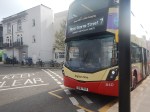

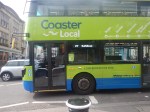


Note.
- The bus I travelled on had two doors like London’s, which makes entry and exit so much more efficient.
- Brighton seems to have contactless ticketing, where you touch-in and touch-out, as you do on the London Underground.
- The two buses in the pictures have the route on the side.
I was very surprised that there were no stops on the sea-front, where you can get a bus to the station, as not all visitors to the city, are in the first flush of youth.
There wasn’t even any instructions about how to find a bus.
Gatwick Airport Station – 30th March 2022
Gatwick Airport station is being upgraded and I took these pictures as I passed through twice today on my way to and from Brighton.
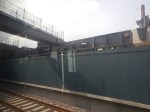
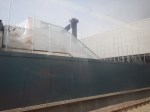





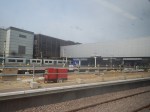

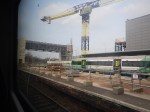

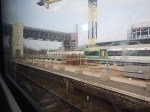
It will be a much bigger and better station when the upgrade is complete.
London’s Other New Underground Line
In the middle of next month, Phase One of London’s other new Underground line will open.
The Bank station upgrade may only be a short section of new Southbound tunnel and track for the Northern Line and a much expanded station, but it promises to do proportionally for the City of London, what Crossrail will do for the whole of London.
The lucky Ian of IanVisits has been allowed to descend into the depths of the new section of the station with his camera and has posted this report on his web site, which is entitled Behind The Scenes At Bank Tube Station’s Huge Upgrade Project. The report contains twenty-four revealing photographs.
If ever there was a must-read, then Ian’s article must be it.
Old Street Station – 28th March 2022
More beams have gone up at Old Street station in the last ten days.





Several beams have now been erected.
West Midlands To Run ‘Largest Hydrogen Bus Fleet’ Due To New Funding
The title of this post, is the same as that of this article on the BBC.
These are a few points from the article.
- The region is set to get 124 new hydrogen vehicles.
- The West Midlands is set to run the UK’s largest hydrogen bus fleet after securing new funding.
- The region will get 124 new buses after it won £30m from the Department for Transport to fund a switchover.
- Twenty four of the new vehicles will be articulated tram-style buses set to run on a new bus priority route between Walsall, Birmingham and Solihull.
Does the last statement mean, that they will buying a hundred double-decker hydrogen buses?
A few thoughts.
Riding Birmingham’s New Hydrogen-Powered Buses
These are a few pictures from Riding Birmingham’s New Hydrogen-Powered Buses.
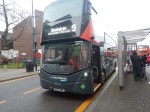

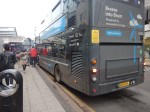

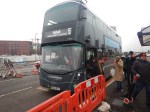
They were excellent buses from Wrightbus.
The Tram Style Buses
The Belgian firm; Van Hool have a product called Exquicity. This video shows them working in Pau in France.
These tram buses run on rubber types and are powered by hydrogen.
Similar buses running in Belfast are diesel-electric.
Could these be what the article refers to as tram-style buses?
It should be noted, that the West Midlands and Pau have bought their hydrogen filling stations from ITM Power in Sheffield.
So has there has been a spot of the Entente Cordiale between Pau and the West Midlands?
Will The West Midlands Buy The Other Hundred Buses From Wrightbus?
There doesn’t seem to be any problems on the web about the initial fleet, so I suspect they will.
It should also be noted that Wrightbus make the following types of zero-emission buses.
- StreetDeck – Hydroliner FCEV – Double-deck hydrogen bus
- StreetDeck – Electroliner BEV – Double-deck battery bus
- GB Kite – Hydroliner FCEV – Single-deck hydrogen bus
- GB Kite – Electroliner BEV – Single-deck battery bus
These would surely enable the West Midlands to mic-and-match according to their needs.
 The Anonymous Widower