More On Batteries On Class 802 Trains
In the December 2021 Edition of Modern Railways, there’s an article called Battery Trial For TPE ‘802’.
Class 802 trains are now involved in two battery trials.
- One involves Great Western Railway (GWR) trains, which I wrote about in Hitachi And Eversholt Rail To Develop GWR Intercity Battery Hybrid Train – Offering Fuel Savings Of More Than 20%.
- A second involves TransPennine Express (TPE), which I wrote about in Hitachi Rail And Angel Trains To Create Intercity Battery Hybrid Train On TransPennine Express.
This article puts some flesh of the bones of the two trials.
It is hoped that replacing one diesel engine (generator unit) with a battery pack will enable the following.
- Reduction of carbon emissions by at least 20 %.
- Reduction of fuel consumption.
- The ability to rely on battery power when entering and leaving stations to reduce noise pollution and emissions.
This paragraph explains a possible way the trains will be operated.
Another option is to use the battery to provide ‘classic’ hybridisation efficiency, allowing most diesel running to be done fuel-efficiently under two engines rather than three. In this case, the battery module would provide top-up power for peak demand and give regenerative braking capability when operating in diesel mode, which the trains currently do not have.
This is one of the aims of the GWR trial and I suspect anybody, who has owned and/or driven a hybrid car will understand Hitachi’s thinking.
The next paragraph is very revealing.
To fully test the 6m-long, 2.2m-wide battery module, the intention is for it to be flexibly programmable in order for different approaches to charging, including from the overhead line power supply, diesel engines and during braking , to be evaluated.
It looks to me that Hyperdrive Innovation will earn their fees for the battery design and manufacture.
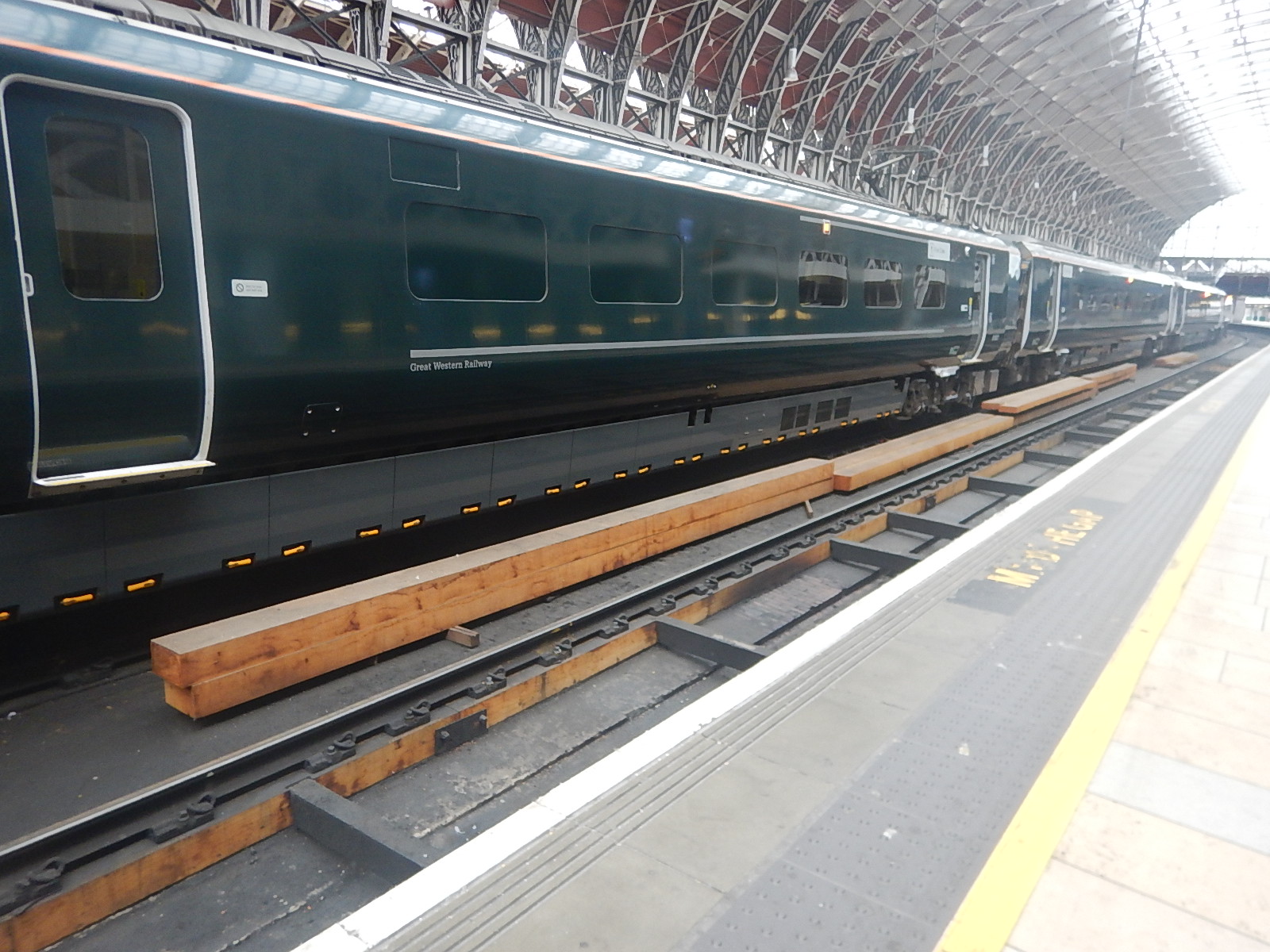
This picture shows the underneath of a Class 802 train.
Note.
- The car is 26 metres long
- The car is 2.75 metres wide.
- The MTU 12V 1600 diesel engines, fitted to a Class 802 train, each weigh around two tonnes.
- The engines have a power output of 700 kW
I would think that the 6 x 2.2 m battery would fit under the car easily.
As an engineer, who has evaluated all sorts of weight and balance problems, I would make the battery similar in weight to the diesel engine. This would mean that the existing mountings for the diesel engine should be able to support the battery pack. It would also probably mean that the handling of a car with a diesel engine and one with a battery pack should be nearer to being identical.
Tesla claim an energy density of 250 Wh/Kg for their batteries, which would mean a battery with the weight of one of the diesel engines could have a capacity of around 500 kWh.
As a Control Engineer, I believe that Hitachi and Hyperdrive Innovation have a tricky problem to get the algorithm right, so that the trains perform equally well under all conditions. But with a good simulation and lots of physical testing, getting the algorithm right is very much a solvable problem.
The article says this about the reliability of the diesel engines or generator units (GU) as Hitachi call them.
Whilst reliability of the generator units (GU) has improved, operators of the bi-mode sets still report frequent issues which see sets ending their daily diagram with one out of use.
I wonder, if battery packs will improve reliability.
From statements in the article, it looks like Hitachi, MTU and the train operating companies are being cautious.
The article also says this about the design of the battery packs.
The battery pack has been designed so it is a like-for-like replacement for a GU, which can maintain or improve performance, without compromising on seats or capacity.
I have always said it would be plug-and-play and this would appear to confirm it.
How Will The Batteries Be Charged?
I showed this paragraph earlier.
To fully test the 6m-long, 2.2m-wide battery module, the intention is for it to be flexibly programmable in order for different approaches to charging, including from the overhead line power supply, diesel engines and during braking , to be evaluated.
GWR and TPE run their Class 802 trains to several stations without electrification. and they will probably need some method of charging the battery before leaving the station.
This is Hitachi’s infographic for the Hitachi Intercity Tri-Mode Battery Train.

Note.
- This infographic was published with the Hitachi press release announcing the development of the tri-mode train for GWR.
- One diesel engine has been replaced by a battery pack.
- Charging the battery can be under wires or 10-15 minutes whilst static.
- At some stations like Exeter St. Davids, Penzance, Plymouth or Swansea, heavily-laden services might need the assistance of batteries to get up to operating speed.
The infographic released with the Hitachi press release announcing the trials for TPE.
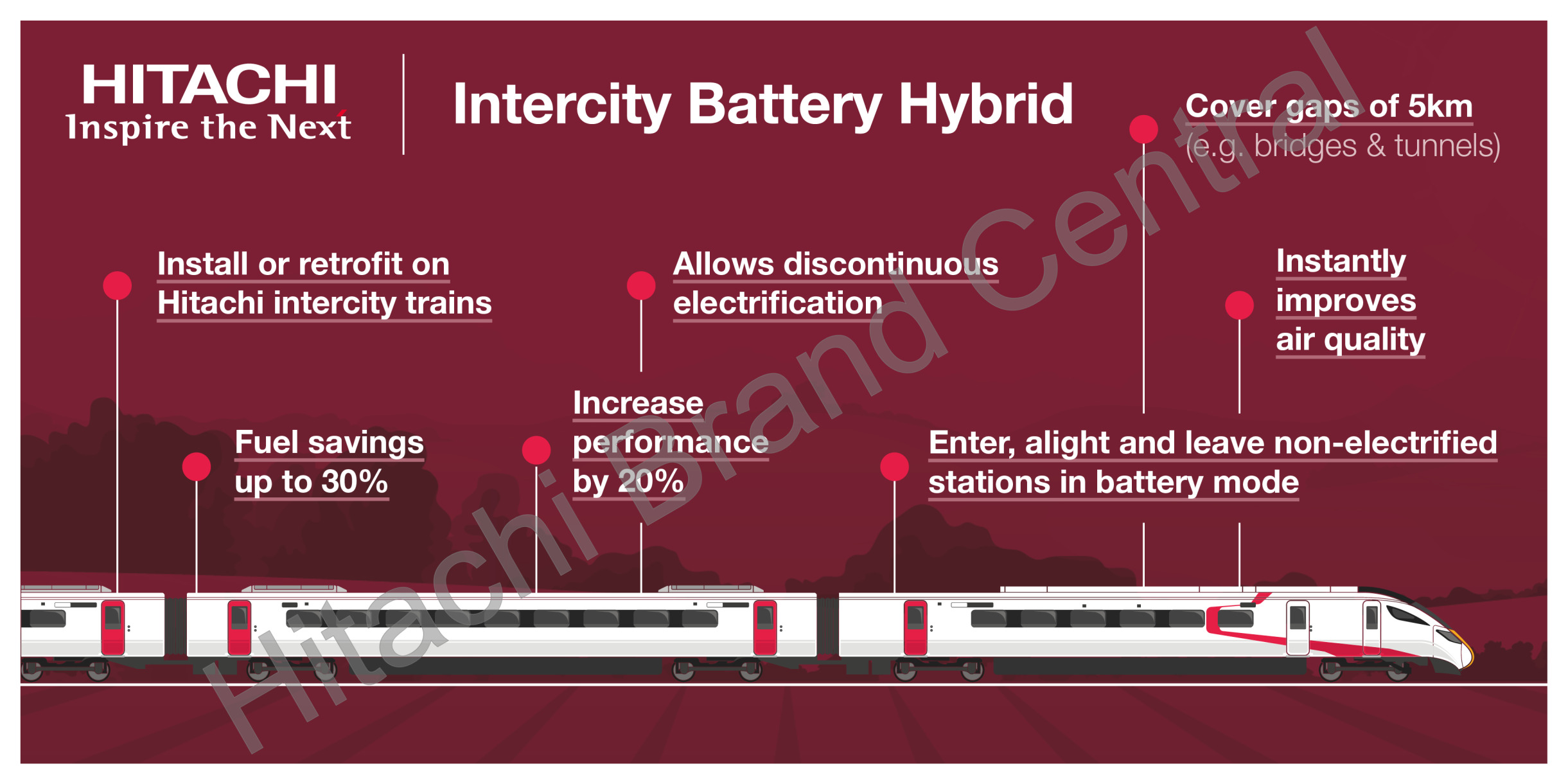
It is similar, but it says nothing about charging.
So how will these trains be charged in stations like Hull, Middlesbrough. Penzance, Scarborough and Swansea, so they leave on their return journey with a full battery?
Consider.
- The formation of a five-car Class 802 train is DPTS-MS-MS-MC-DPTF.
- Pantographs appear to be on both driver cars.
- The middle three cars have diesel engines.
- Only the middle three cars have traction motors.
- There is probably a high-capacity electrical bus running the length of the train, to enable electricity to power all the cars from either or both paragraphs, when running on an electrified line.
The simplest way to charge the batteries would probably be to install a short lengthy of 25 KVAC overhead electrification in the station and then to charge the batteries the driver would just raise the pantograph and energise the electrical bus, which would then feed electricity to the batteries.
I wrote about Furrer + Frey’s Voltap charging system in Battery Train Fast Charging Station Tested. This charging system would surely work with Hitachi’s designs as batteries can be charged from overhead electrification.
Conclusion
I suspect that Hitachi will achieve their objectives of saving fuel and cutting emissions.
But there is more than this project to just replacing one diesel engine with a battery pack and seeing what the savings are.
It appears that the battery packs could have an effect on train reliability.
If the battery packs are truly like-for-like with the diesel engines, then what will be effect of replacing two and three diesel engines in a five-car Class 802 train with battery packs.
Will it be possible to develop an ability to setup the train according to the route? It’s only similar to the way Mercedes probably set up Lewis Hamilton’s car for each circuit.
But then the speed Formula One cars lap Silverstone is not that different to the maximum speed of a Hitachi Class 802 train.
Hitachi And Eversholt Rail To Develop GWR Intercity Battery Hybrid Train – Offering Fuel Savings Of More Than 20%
The title of this post is the same as that of this press release from Hitachi.
The press release starts with these bullet points.
- Batteries replacing an engine to cut fuel usage and reduce carbon emissions
- First time a modern UK intercity train, in passenger service, will use alternative fuel
- Tri-mode train can improve air quality and reduce noise across South West route’s non-electrified stations
They follow these with this introductory paragraph.
In a UK-first, Hitachi Rail and Eversholt Rail have signed an exclusive agreement aimed at bringing battery power – and fuel savings of more than 20% – to the modern Great Western Railway Intercity Express Trains that carry passengers between Penzance and London.
After a couple more paragraphs, the press return returns to the Penzance theme.
GWR’s Intercity Express Train fleet currently calls at 15 non-electrified stations on its journey between Penzance and London, all of which could benefit from trains running on battery-only power.
The press release then sets out their aims.
The projected improvements in battery technology – particularly in power output and charge – create opportunities to replace incrementally more diesel engines on long distance trains. With the ambition to create a fully electric-battery intercity train – that can travel the full journey between London and Penzance – by the late 2040s, in line with the UK’s 2050 net zero emissions target.
Penzance gets another mention, but the late 2040s for a fully electric-battery intercity train between Penzance and London, is not an ambitious target.
Hitachi Intercity Tri-Mode Battery Train
Hitachi have called the train the Intercity Tri-Mode Battery Train and the specification is shown in this infographic.
Note that fuel & carbon savings of at least 20 % are claimed.
Penzance To London In A Class 802 Train
It would appear that Penzance and London has been chosen as the trial route.
These figures were obtained from Real Time Trains figures for the 1015 from Penzance on the 14th December 2020.
- Penzance to St. Erth – 5.65 miles – 8 mins – 42.4 mph – 1 mins stop
- St. Erth to Camborne – 7.2 miles – 10 mins – 43.2 mph – 1 mins stop
- Camborne to Redruth – 3.65 miles – 5 mins – 43.8 mph – 2 mins stop
- Redruth to Truro – 9 miles – 10 mins – 54 mph – 2 mins stop
- Truro to St. Austell – 14.7 miles – 15 mins – 58.8 mph – 1 mins stop
- St. Austell to Par – 4.5 miles – 6 mins – 45 mph – 1 mins stop
- Par to Bodmin Parkway – 8 miles – 11 mins – 43.6 mph – 1 mins stop
- Bodmin Parkway to Liskeard – 9.2 miles – 12 mins – 46 mph – 1 mins stop
- Liskeard to Plymouth – 17.8 miles – 25 mins – 42.7 mph – 9 mins stop
- Plymouth to Totnes – 23.1 miles – 25 mins – 55.4 mph – 1 mins stop
- Totnes to Newton Abbot – 8.8 miles – 9 mins – 59.3 mph – 2 mins stop
- Newton Abbot to Exeter St. Davids – 20.2 miles – 18 mins – 71.3 mph – 2 mins stop
- Exeter St. Davids to Tiverton Parkway – 16.5 miles – 14 mins – 70.7 mph – 1 mins stop
- Tiverton Parkway to Taunton – 14.2 miles – 11 mins – 77.4 mph – 2 mins stop
- Taunton to Reading – 106.7 miles – 76 mins – 84.2 mph – 5 mins stop
- Reading to Paddington – 36 miles – 25 mins – 86.4 mph
The route can be broken neatly into four very different sections.
- Penzance and Plymouth – 79.5 miles – 112 mins – 42.5 mph – 75 mph operating speed
- Plymouth and Exeter St. Davids – 52 miles – 57 mins – 54.7 mph – 100 mph operating speed
- Exeter St. Davids and Newbury – 120.4 miles – 95 mins – 76 mph – 100 mph operating speed
- Newbury and Paddington – 53 miles – 36 mins – 88.3 mph – 100-125 mph operating speed
Note.
- The speed builds up gradually as the journey progresses.
- Only between Newbury and Paddington is electrified.
How does Penzance and Paddington stand up as a trial route?
- Penzance and Plymouth has eight intermediate stops about every nine-ten miles.
- The nine minute stop at Plymouth, is long enough to charge the batteries, should that be incorporated in the trial.
- The Cornish Main Line is generally double track, with an operating speed of 75 mph.
- Plymouth and Exeter includes the running by the sea, through Dawlish.
- Exeter could be given an extended stop to charge the batteries.
- Exeter and Newbury is a faster run and the batteries may help with performance.
- The Reading and Taunton Line has an operating speed of 110 mph.
- Remember the trains are designed for 140 mph and they achieve nothing like that on diesel.
- At each of the fifteen stops, the performance, noise and customer reaction can be evaluated. Strange, but my experience of battery trains, says that they are very much quieter than similar electric trains.
The route has a good selection of the types of routes, that Great Western Railway has in its network.
It would appear to be a good route to sort out the good and bad points of the train.
I have a few thoughts.
Possible Destinations For A Intercity Tri-Mode Battery Train
Currently, the following routes are run or are planned to be run by Hitachi’s Class 800, 802, 805 and 810 trains, where most of the route is electrified and sections do not have any electrification.
- GWR – Paddington and Bedwyn – 13.3 miles
- GWR – Paddington and Bristol Temple Meads- 24.5 miles
- GWR – Paddington and Cheltenham – 43.3 miles
- GWR – Paddington and Great Malvern – 76 miles
- GWR – Paddington and Oxford – 10.4 miles
- GWR – Paddington and Penzance – 252 miles
- GWR – Paddington and Swansea – 45.7 miles
- Hull Trains – Kings Cross and Hull – 36 miles
- LNER – Kings Cross and Harrogate – 18.5 miles
- LNER – Kings Cross and Huddersfield – 17 miles
- LNER – Kings Cross and Hull – 36 miles
- LNER – Kings Cross and Lincoln – 16.5 miles
- LNER – Kings Cross and Middlesbrough – 21 miles
Note.
- The distance is the length of line on the route without electrification.
- Five of these routes are under twenty miles
- Many of these routes have very few stops on the section without electrification.
I suspect that GWR and LNER have plans for other destinations.
What Is The Kinetic Energy Of A Five-Car Class 802 Train At Various Speeds?
I will do my standard calculation.
- Empty train weight – 243 tonnes (Wikipedia for Class 800 train!)
- Passenger weight – 302 x 90 Kg (Includes baggage, bikes and buggies!)
- Train weight – 270.18 tonnes
Using Omni’s Kinetic Energy Calculator, the kinetic energy at various speeds are.
- 60 mph – 27 kWh
- 75 mph – 42 kWh
- 80 mph – 48 kWh
- 90 mph – 61 kWh
- 100 mph – 75 kWh
- 110 mph – 91 kWh
- 125 mph – 117 kWh – Normal cruise on electrified lines.
- 140 mph – 147 kWh – Maximum cruise on electrified lines.
A battery must be large enough to capture this kinetic energy, which will be generated, when the train stops.
Acceleration And Deceleration Of A Five-Car Class 802 Train
The first Intercity Tri-Mode Battery Trains will be conversions of Class 802 trains.
This page on the Eversholt Rail web site, has a data sheet for a Class 802 train.
The data sheet shows the following for a five-car Class 802 train.
- It can accelerate to 120 kph/75 mph in 100 seconds in electric mode.
- It can accelerate to 160 kph/100 mph in 160 seconds in electric mode.
- It can accelerate to 120 kph/75 mph in 140 seconds in diesel mode.
- It can decelerate from 120 kph/75 mph in 50 seconds in electric mode.
- It can decelerate from 160 kph/100 mph in 90 seconds in electric mode.
Note.
- 75 mph is the operating speed of the Cornish Main Line and possibly the Highland Main Line.
- 100 mph is the operating speed for a lot of routes in the UK.
- It would appear that trains accelerate to 75 mph forty second faster in electric mode, compared to diesel mode.
- In diesel mode acceleration slows markedly once 100 kph is attained.
Can we assume that performance in battery mode, will be the same as in electric mode? I will assume that this is valid.
Battery Use In A Station Stop
Suppose the train is travelling at 75 mph with a full load of passengers and makes a station stop, without the use of the diesel engines.
- If the train is decelerating from 75 mph, there must be space for 42 kWh in the battery.
- Because regenerative braking is not 100 % efficient, only perhaps 80 % would be stored in the battery. This is 33.6 kWh.
- To accelerate the train to 75 mph, the battery must supply 42 kWh, as diesel power will not be used for this purpose.
- The train will take 50 seconds to decelerate, 100 seconds to accelerate and perhaps 60 seconds in the station or 210 seconds in total.
- Let’s say the battery will need to supply 2 kWh per minute per car for hotel power, that will be 35 kWh for the 210 seconds.
Adding and subtracting inputs and outputs to the battery gives this equation 33.6 – 35 – 42 = -43.4 kWh
The energy in the battery has been reduced by 43.4 kWh, at each 75 mph stop.
Repeating the calculation for a 100 mph stop, which takes 310 seconds, gives an equation of 60 -51.7 – 75 = -66.7 kWh.
Note that in this calculation, I have assumed that the efficiency of regenerative braking is 80 %. These are a selection of figures.
- For 60 % efficiency, the stops would cost 51.8 kWh from 75 mph and 81.7 kWh from 100 mph.
- For 80 % efficiency, the stops would cost 43.4 kWh from 75 mph and 66.7 kWh from 100 mph.
- For 90 % efficiency, the stops would cost 39.2 kWh from 75 mph and 59.2 kWh from 100 mph.
So it is important to raise the efficiency of regenerative braking to as near to 100 % as possible.
It should also be noted that with an 80 % efficiency of regenerative braking, hotel power has an effect.
- With 1 kWh per minute per car, the stops would cost 25.9 kWh from 75 mph and 40.8 kWh from 100 mph.
- With 2 kWh per minute per car, the stops would cost 43.4 kWh from 75 mph and 66.7 kWh from 100 mph.
- With 3 kWh per minute per car, the stops would cost 60.9 kWh from 75 mph and 92.6 kWh from 100 mph.
It is important to reduce the hotel power of the train, as low as possible.
With a 90 % regeneration efficiency and hotel power of 1 kWh per car per minute, the figures are 21.7 kWh from 75 mph and 33.3 kWh from 100 mph.
London Paddington And Penzance By Intercity Tri-Mode Battery Train
Listing the stops between London Paddington and Penzance and their speeds gives the following.
- St. Erth – 75 mph
- Camborne – 75 mph
- Redruth – 75 mph
- Truro – 75 mph
- St. Austell – 75 mph
- Par – 75 mph
- Bodmin Parkway – 75 mph
- Liskeard – 75 mph
- Plymouth – 75 mph
- Totnes – 100 mph
- Newton Abbot – 100 mph
- Exeter St. Davids – 100 mph
- Tiverton Parkway – 100 mph
- Taunton – 100 mph
- Reading – Electrified
This is nine stops from 75 mph, five from 100 mph and one where the electrification is used.
- Each 75 mph stop needs 43.4 kWh from the battery.
- Each 100 mph stop needs 66.7 kWh from the battery.
To achieve Hitachi’s aim of low noise and pollution-free station stops between London Paddington and Penzance will need 724.1 kWh of power from the battery.
With 80 % regeneration efficiency and hotel power of 2 kWh per minute per car gives a figure of 724.1 kWh.
With 90 % regeneration efficiency and hotel power of 1 kWh per minute per car gives a figure of 361.8 kWh.
The battery must also have sufficient capacity to handle the regenerative braking. I would suspect that provision will be made for a stop from 125 mph, which is 117 kWh.
So will the battery for the route be somewhere between 500 and 1000 kWh?
Note that each of the three MTU 12V 1600 diesel engines, fitted to a Class 800 train, weigh around two tonnes and Tesla claim an energy density of 250 Wh/Kg for their batteries.
This would mean a battery the weight of one of the diesel engines would have a capacity of 500 kWh.
A train with a full 500 kWh battery at Newbury could arrive in Penzance with some juice in the battery, if regenerative braking could be efficient and the demands of the train to run internal systems were at a low level.
Hitachi’s Increasing Efficiency Of Class 80x Trains
The next variant of the Class 80x trains to come into service, should be the Class 803 trains for East Coast Trains.
- These trains will be all-electric like LNER’s Class 801 trains.
- They are designed for a four-hour limited-stop service between London Kings Cross and Edinburgh.
- They will be one-class and average single fares will be £25,
This sentence from Wikipedia, describes a big difference between Class 803 and Class 801 trains.
Unlike the Class 801, another non-bi-mode AT300 variant which despite being designed only for electrified routes carries a diesel engine per unit for emergency use, the new units will not be fitted with any, and so would not be able to propel themselves in the event of a power failure. They will however be fitted with batteries to enable the train’s on-board services to be maintained, in case the primary electrical supplies would face a failure.
I wouldn’t be surprised to find out that the Class 803 trains have been put on a diet to increase their acceleration to meet the demanding schedule, which has been promised by East Coast Trains.
Hitachi has also given out clues to other efficiency improvements.
- Class 807 trains for Avanti West Coast, will have no diesel engines or batteries.
- Class 810 trains for East Midlands Railway will have a revised nose and different headlights. Is this for better aerodynamics?
- Class 810 trains, also have slots for four diesel engines. I can’t see why they would need all this power on the relatively-flat Midland Main Line. Will two of the slots be used by batteries to reduce fuel consumption and/or increase efficiency?
Hitachi are only doing, what all good engineers would do.
Low-Carbon Between Plymouth and Penzance
In How Much Power Is Needed To Run A Train At 125 mph?, I estimated that an all-electric Class 801 train needs around 3.42 kWh per vehicle mile to maintain 125 mph.
It will need less power to maintain the 75 mph of the Cornish Main Line. I would suspect that as air resistance is based on the square of the speed, that the energy consumption of the Class 802 train could be something under 2 kWh per vehicle. Or even less!
The Cornish Main Line is 79.5 miles between Plymouth and Penzance, but the Intercity Tri-Mode Battery Train, will not be on diesel all the way.
- At each station stop deceleration and acceleration, the train will not be using diesel. This could take a mile away for each station.
- All braking will be regenerative to the battery.
I suspect that by using the gradients on the route to advantage and by using diesel in selected areas, that a good driver or a well-written driver assistance system giving advice could safely navigate an Intercity Tri-Mode Battery Train all the way to Penzance on a minimum amount of diesel.
It’s not as if the train will be stranded, as they would have two onboard diesel engines.
I have a suspicion, that with a top-up at Plymouth, if Hitachi can raise efficiencies to a maximum and power consumption to a minimum, that on one battery, the train might be able to run between Plymouth and Penzance for much of the way, without using diesel.
The question also has to be asked, as to what would be the performance of the train with two diesel engines replaced by batteries?
I suspect this is something else to be determined in the trial.
Will Hitachi’s Intercity Tri-Mode Battery Train And Regional Battery Train Have The Same Battery Packs?
The specification of Hitachi’s closely-related Regional Battery Train is described in this Hitachi infographic.

The Regional Battery Train is stated to have a battery range of 90 km/56 miles at 162 kph/100 mph.
Operating speed and battery range have not been disclosed yet for the Intercity Tri-Mode Battery Train. I await them with great interest.
I would expect that it is likely, that Hitachi’s two battery trains and others that follow, will use identical battery packs for ease of manufacture, services and operation.
In their press release, which announced the Battery Regional Train, Hitachi said this.
Hitachi has identified its fleets of 275 trains as potential early recipients of the batteries for use in the UK, as well as installing them on new metro and intercity trains that will be needed in the coming years to replace ageing diesel fleets.
Battery trains produce no greenhouse gases, air pollution and are a far quieter, offering passengers cleaner air in stations, less noise disruption and a carbon-free way to travel. Installing batteries on to existing fleets can also extend their range and allow passengers to reach stations on non-electrified branch lines without having to change train.
They didn’t exactly say all battery packs will be the same, but they were close to it, by saying that they can already be fitted to 275 trains. I would read those paragraphs to say, that a series of trains would use the same technology for different purposes.
What Will Be The Battery Range Of A Hitachi Intercity Tri-Mode Battery Train?
This page on the Eversholt Rail web site, has a data sheet for a Class 802 train, which says that a five-car Class 802 train has an operating speed of 110 mph on diesel power.
According to Wikipedia and other sources, a Class 802 train has three diesel engines.
If the Regional Battery Train has replaced three diesel engines with battery packs in a five-car train like a Class 802 train to get the 90 km/56 mile range, would this mean?
- Replacing one diesel engine with a battery pack, give a range of thirty kilometres or about nineteen miles.
- Replacing two diesel engines with battery packs double the range to sixty kilometres or thirty-eight miles.
It looks like a Hitachi Intercity Tri-Mode Battery Train with one of the same battery-packs should easily reach several of the destinations in my list.
But they would need charging before return or some assistance from the two remaining diesel engines.
I talk about charging the Intercity Tri-Mode Battery Train in Charging The Batteries On An Intercity Tri-Mode Battery Train.
Conclusion
It sounds like a worthwhile train to me and I await the results of the trial with interest.
More On Alston’s Hydrogen Aventra and Porterbrook’s HydroFLEX
The December 2021 Edition of Modern Railways has a small article, which is entitled Alstom To Build Hydrogen Aventras.
This is an extract.
Fuel cells will be roof-mounted, and the trains will be powered by hydrogen in conjunction with batteries, without any additional power sources such as overhead electric or diesel. They could be in service in 2025.
I am surprised that the trains can’t use electrification, as surely this would be a great advantage.
Especially, as according to another article, which is entitled New HydroFlex Debuts At Cop, which describes Porterbrook’s converted ‘319’ says this.
The original HydroFlex unit, which like the latest version has been converted from a Class 319 EMU, made its main line debut in September 2020. Porterbrook has invested £8 million in HydroFlex with the new version built over the last 10 months.
Porterbrook says its ability to operate under hydrogen, electric and battery power makes it the world’s first ‘tri-mode’ train. One carriage within the train is given over to the ‘HydroChamber’.
The contents of the ‘HydroChamber’ are given as.
- Storage for 277 Kg. of hydrogen in thirty-six high pressure tanks.
- A 400 kW fuel cell system.
- A 400 kW lithium-ion battery, which can be charged by the fuel cells in 15 minutes.
Does this mean that the battery is a 100 kWh battery that can supply energy at a rate of 400 kW?
This sentence from the article describes the train’s performance.
Porterbrook says the train carries sufficient hydrogen to offer a range of 300 miles and a top speed of up to 100 mph.
A few years ago, I had a chat with a Northern driver about the Class 319 train, which he described as a fast train with good acceleration and superb brakes.
Have Porterbrook and the University of Birmingham just added the ‘HydroChamber’ as an on-board electricity source or have they gone for a full integrated system with new traction motors and regenerative braking to the battery?
The original Class 319 trains worked well without regenerative braking, so I suspect that the simple approach has been used.
But this would make the train ideal for branch lines and extensions without electrification from electrified lines. The following routes come to mind.
- Blackpool South and Colne via Preston
- Manchester Airport and Windermere
- Ipswich and Felixstowe.
- The Borders Railway in Scotland.
The Alstom Hydrogen Aventra might be better on lines without any electrification at all.
Conclusion
My feeling is that both these trains have their good points and limitations and I suspect both will find their niche markets.
Tube Strikes: Passengers Warned Of Widespread Disruption
The title of this post, is the same as that of this article on the BBC.
I can see a scenario, where the Tories put something in their next General Election manifesto to bring a little bit of sense to the RMT and there is a total National rail strike during the election.
It would be Starmer’s worst nightmare!
As it is this morning, I’ll probably have difficulty getting to Moorgate for my gluten-free full English breakfast and do my food shopping for the weekend in Marks and Spencer.
A Few Hours In Okehampton
Today, I took a trip by train to Okehampton and spent a couple of hours in the town.
I took the 10:04 from Paddington and after changing at Exeter St. Davids, I arrived in Okehampton at 13:11
Coming back, I took the 15:24 from Okehampton and arrived in Paddington at 18:24.
So the journeys took about three hours.
These pictures show Okehampton station.



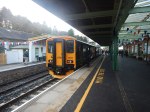

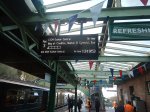

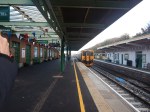
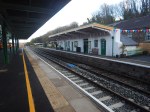

Note.
- The train was two Class 150 trains coupled together.
- I suspect the platform is long enough to take a GWR Castle train
- The bus in the pictures is the 118, of which more later.
- It looked like a buffet was under construction.
- The new train information displays.
I took the bus down to Okehampton, where I took these pictures, as I walked around.












Note, that the first three pictures show the museum and the cycle works cafe, where I had a coffee and a delicious gluten-free flapjack.
I have a few thoughts on my journey, both now and in the future.
The 118 Bus
The 118 bus runs between Tavistock and Okehampton station.
- It serves the villages in between.
- It meets the trains from Exeter and takes them to Okehampton Town Centre.
- It picks people up from Okehampton Town Centre and takes them to the station just before the trains leave for Exeter.
- It accepts contactless payment.
It is a well-designed bus route that links passengers with the trains to and from Exeter.
Many other towns could follow Okehampton’s lead.
Walking Between Station And The Town Centre
I could certainly walk down the hill, but one of the locals said that it rather a stiff walk up the hill that takes about fifteen minutes, if you’re up to it. He also felt a taxi would be about a fiver.
Could A Battery Train Work The Service between Exeter And Okehampton Station?
Consider.
- It is 24.8 miles between Exeter St. David and Okehampton stations.
- It is a rise of under 200 metres.
- The Class 150 trains climbed the hill at around 30 mph, but in places it was lower.
- Hitachi, Stadler and Vivarail are talking about battery-electric trains with a range of fifty miles.
- I was talking to one of the Great Western Railway staff and he said in the days of steam, the trains used to roll down the hill into Exeter.
- There is the 18 MW Den Brook Wind Farm close to Okehampton.
- With regenerative braking rolling down would recharge the batteries.
I suspect, that designing a battery-electric train to climb the hill is possible.
My rough estimate says that a battery of around 500 KWh could be enough.
Are The People Of Devon Going To Use The Train?
I took these pictures as I joined the train back to Exeter.


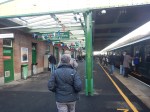
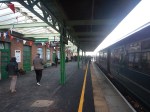
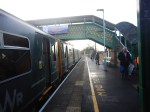


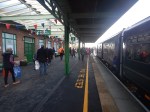
The people were a mixture of those arriving from Exeter and those returning to Exeter, but most seats were taken on the way back.
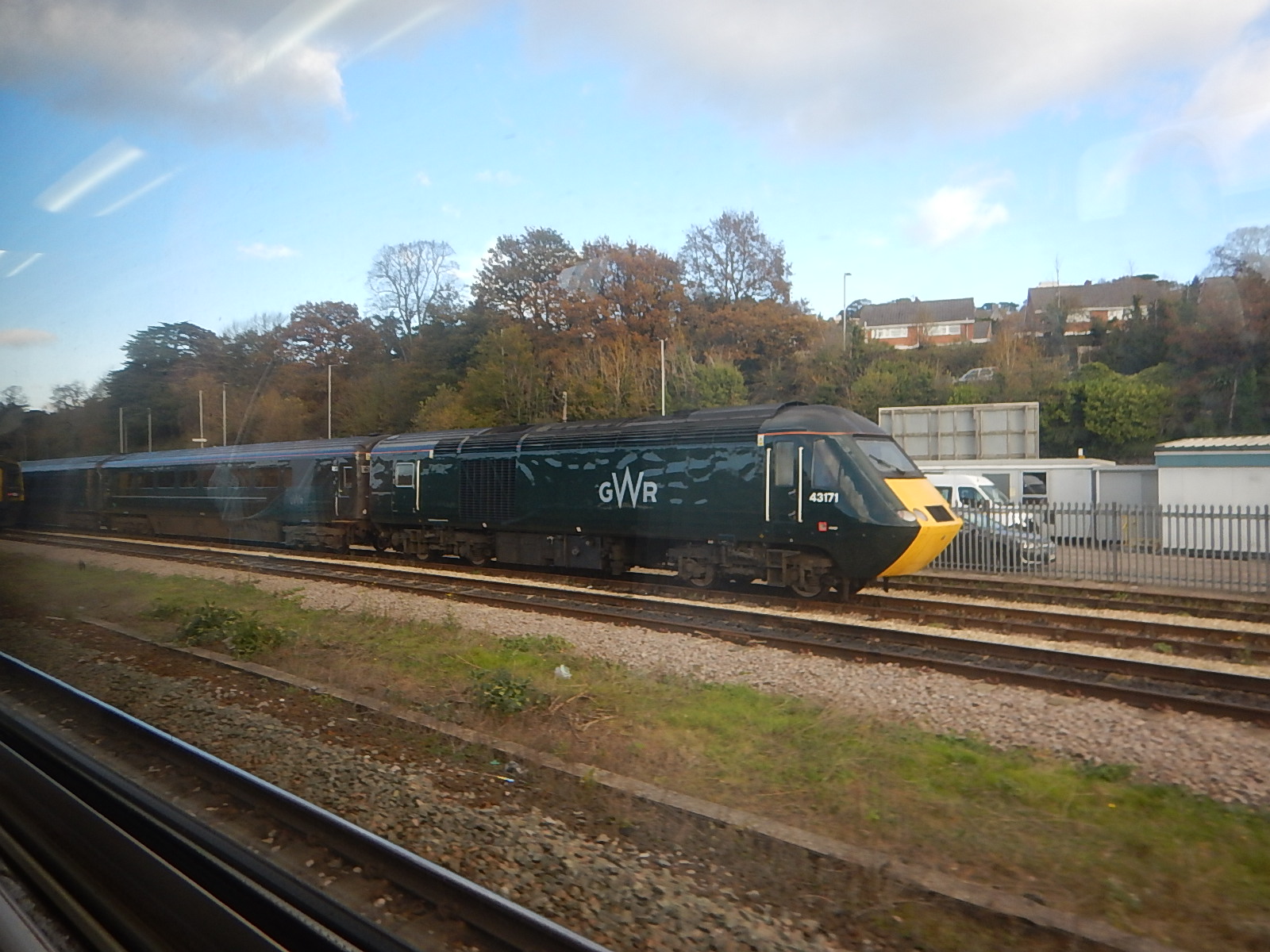
I can see Great Western Railway running Castles, like the one in the picture, for services on this route in the Summer, both to attract passengers and to cope with their numbers.
Local Reaction
I talked to several local people and they were all pleased that the service has been reinstated.
The only complaint was that it should have happened sooner.
Is A Day Trip Possible?
Suppose you live in London and your mother or other close relative lives in Okehampton.
Would it be possible to be able to visit them on their birthday for a good lunch?
Consider.
- At the present time, trains from London, connect to the Okehampton service about every two hours.
- The first connecting service leaves Paddington at 08:04.
- Trains take around three hours between Paddington and Okehampton.
- From probably May 2022, there will be hourly connections to Okehampton.
- The last London train leaves Exeter at 20:46.
If you wanted to be a real hero, you could always take the Night Riviera back to London, which leaves Exeter at 0100.
I would say that if they planned it properly, a day trip from London to Okehampton by train, is feasible for a special occasion.
Will Great Western Railway Ever Run Direct Trains Between London Paddington And Okehampton?
I doubt this would be a regular service but I do believe that it is technically feasible.
- Trains would need to reverse at Exeter St. Davids.
- Trains would probably be limited to five car Class 802 trains.
- Okehampton station could probably accommodate a five-car Class 802 train.
- I estimate that the journey time would be a few minutes under three hours.
It should be noted that Paignton gets around three trains per day (tpd) from Paddington.
It might be that if the demand was there, a few trains per day could be run to and from London, by splitting and joining with the Paignton service at Exeter St. Davids.
- If both services were run by five-car trains, there would be a ten-car service to and from London.
- It certainly looks that GWR wouldn’t have to spend a great deal to implement the service.
- The extra capacity of the five-car train might help commuters into Exeter.
It is likely that this service wouldn’t run until Okehampton Parkway station is opened, which would attract travellers from the West, who would arrive at the station along the A 30 dual-carriageway
I can certainly see a service leaving Okehampton at around seven in the morning and getting into London about ten, paired with a late afternoon/evening train home.
It should be noted, that First Group with their Lumo service between London and Edinburgh, seem to negotiate for paths that create revenue.
But I do wonder, if one of the reasons , that Great Western Railway, Network Rail, Devon County Council, the Department of Transport and the Government were all very much in favour of reopening this route, is that it creates a valid alternative route between London and Plymouth and all places to the West, should the main route via Dawlish be breached again by the sea.
Okehampton station and the future Okehampton Parkway station are both close to the A30 which would allow express coaches to Plymouth and all over West Devon and Cornwall to bypass the trouble.
Hopefully, because the alterative route has been enabled the worst won’t happen.
Conclusion
Exeter and Okehampton is a well-thought out reopening, that will be welcomed in the South West of England.
An Express Service On The Overground
On Thursday, last week, I was travelling between Highbury & Islington and Willesden Junction stations on the North London Line of the London Overground. From Willesden Junction I intended to get the Bakerloo Line to Paddington for my trip to Okehampton.
There had been a problem and the train was rather full.
The surprise was that after Camden Road station it went non-stop to Willesden Junction.
It got me thinking.
- The Class 378 train sped along, as does the occasional Class 800 train, that is going to and from Hitachi’s North Pole Depot.
- It has been proposed to turn back some trains at Camden Road to increase frequencies through East London, which I wrote about in Will Camden Road Station Get A Third Platform?.
- There is a spare rarely-used bay platform at Willesden Junction station with short-distance step-free access to the two platforms that serve the Watford DC and Bakerloo Lines.
- I seem to remember that original plans for the North London Line including extending some services to Willesden Junction.
Could an express service be run between Stratford and Willesden Junction stations?
- It would stop at all stations to the East of Camden Road.
- It would terminate bay platform at Willesden Junction.
- It would improve the interchange at Willesden Junction station for many travellers.
I suspect though, it would need improved signalling, which is probably the reason it has never been implemented.
Is There A Case For A Round-The-Wash Service Between Doncaster And Ipswich/Norwich?
I suggested this service in The Integrated Rail Plan For The North And Midlands And The East Coast Main Line.
Effectively, it would join East Midlands Railway’s Doncaster and Peterborough service with Greater Anglia’s Cambridge and Ipswich service.
- The service could go via Scunthorpe, Grimsby Town, Cleethorpes, Grimsby Town, Market Rasen, Lincoln, Sleaford, Spalding, Peterborough, March, Ely, Cambridge North, Cambridge, Newmarket, Bury St. Edmunds and Stowmarket.
- There would be reverses at Cleethorpes and Cambridge.
- There may be extra stops in Lincolnshire and across Suffolk.
- The service would not use the East Coast Main Line, but would use the new Werrington Dive-Under and the Great Northern and Great Eastern Joint Line to the East of the East Coast Main Line.
- The frequency would be one train per two hours (1tp2h).
- Ideal trains could be Class 755 trains, perhaps running on batteries or hydrogen.
It would be paired with a new Doncaster and Norwich service, that could partly replace East Midlands Railway’s Liverpool and Norwich service.
- The service could go via Scunthorpe, Grimsby Town, Cleethorpes, Grimsby Town, Market Rasen, Lincoln, Sleaford, Spalding, Peterborough, March, Ely, Cambridge North, Cambridge, Cambridge North, Ely, Thetford, Attleborough and Wymondham.
- There would be reverses at Cleethorpes and Cambridge.
- There may be extra stops in Lincolnshire and across Norfolk.
As with the Ipswich train it would not use the East Coast Main Line and have a frequency of 1tp2h.
The Objectives Of The Service
I believe this service could have several objectives.
Remove Slower Trains From The East Coast Main Line Between Peterborough And Doncaster
There aren’t many except freight, but this plan could provide a better solution to the Liverpool and Norwich service.
Providing Better Connections To The Biggest Growth Point In The UK – Cambridge
Cambridge needs better connections, so that it can bring in the staff and workers, that the high-tech capital of the UK needs.
Better Connection Of East Anglia And Lincolnshire To Northern England And Scotland
In Peterborough and Doncaster the route has two main interchanges to bring about these connections.
Promoting Tourism
For a start the route has five cathedrals; Bury St. Edmunds, Ely, Lincoln, Norwich and Peterborough and the historic city of Cambridge.
But I do believe that there are numerous places, where tourists might stay on the route and use it to explore the East of the country.
A Few Questions
These are a few questions.
Would The Route Be Electrified?
I don’t believe it will be fully electrified for two reasons.
Freight locomotives will increasingly become hydrogen-powered and also be able to use electrification, where it exists.
Plans by the likes of Hitachi ABB Power Grids and Furrer and Frey are likely to enable discontinuous and battery-electric trains to be able to work the route.
This philosophy would avoid all the disruption and reconstruction of structures of electrification and probably be much more affordable.
Would York Or Leeds Make A Better Northern Terminal For The Route?
Both have possibilities.
- York would need running on the East Coast Main Line.
- Leeds would probably need trains capable of 125 mph running.
On the other hand both Leeds and York would have superb connectivity.
Conclusion
I feel this would be a very valuable new service and it could be created without building any new infrastructure other than perhaps some strategic stations.
Trial Operation Begins On London’s Crossrail
The title of this post, is the same as that of this article on Railway Gazette.
Trial running is one of the last stages before opening.
Hopefully it will open early in 2022.
The Integrated Rail Plan For The North And Midlands And The East Coast Main Line
Note that this is not a finished post.
To read the The Integrated Rail Plan For The North And Midlands (IRP), click this link.
There is a section in the IRP called Serving Leeds, York and North East England.
It is a section of six paragraphs and I shall describe their contents in detail separately.
Paragraph 3.41
This is said in the IRP.
Under the original plans, HS2 trains would have served Leeds, York and North East England via the West Midlands, with the Eastern Leg branching off from the Phase One line just north of Birmingham Interchange.
This is a significantly longer route than the current East Coast Main Line from King’s Cross, which goes directly up the eastern side of the country.
Due to capacity constraints north of Doncaster HS2 trains to Newcastle and York could also only be accommodated at the expense of existing services, potentially reducing or removing connections between the North East and Doncaster, Newark and Peterborough.
Unlike the West Coast Main Line, there is also potential to lengthen existing trains by up to three carriages, increasing the number of seats on those trains by around 40%.
Geography wins and I’ll discuss the train lengthening later.
Paragraph 3.42
This is said in the IRP.
The IRP has concluded in favour of a significant package of upgrades to the East Coast Main Line which could deliver similar journey times to London and capacity improvements for York and the North East as the original proposals – but many years sooner, and with operational carbon savings because trains will be taking a shorter route.
Speed is important in both project delivery and running of the trains.
Paragraph 3.43
This is said in the IRP.
We are therefore taking forward a substantial package of investment for the East Coast Main Line between London and Leeds and the North East, subject to future business case. Development work will consider interventions from both NPR designs undertaken by Network Rail, mainly focussed on York and northwards, and work undertaken by Mott MacDonald for the Department for Transport focused on the line south of York. North of York we will look to increase the number of paths for long distance high speed trains from 6 to 7 or 8 per hour. In addition to the already planned roll-out of digital signalling, work is expected to include looking at opportunities to improve rolling stock performance; power supply upgrades to allow longer and faster trains; route upgrades to allow higher speeds, including of up to 140mph on some sections; measures to tackle bottlenecks, for example south of Peterborough and at stations and junctions such as Newark, Doncaster, York, Northallerton, Darlington and Newcastle all of which limit speed and capacity; and to replace level crossings where needed.
We will ask Network Rail to now take forward these proposals, including considering any alternatives which may deliver better outputs and/or more cost-effective solutions.
I’ll discuss a lot of this later in more detail.
Paragraph 3.44
This is said in the IRP.
This package is intended to:
-
- Cut journey times from London to a range of destinations, including Leeds, Darlington, Northallerton, Durham, and Newcastle by up to 28 minutes, bringing journey times closer to those proposed by HS2, much earlier than previously planned;
- Allow the introduction of longer trains, increasing the number of seats;
- Provide 7–8 long distance high speed paths per hour north of York to Newcastle, compared to the current 6 paths (and so allowing a minimum of two fast Manchester to Newcastle services each hour alongside other ambitions);
- Improve performance and reliability, enabling faster and more reliable services for passengers.
I’ll discuss a lot of this later in more detail.
Paragraph 3.45
This is said in the IRP.
Journey times from London to Newcastle under this plan could be as little as 2 hrs 25-28 minutes (subject to stopping pattern), about 21-24 minutes faster than now and 8 minutes slower than under the full HS2 plans.
Journey times to York and Darlington under this plan would be about 15 minutes faster than now and 12-14 minutes slower than under the full HS2 plans.
Journey times from London to Leeds, at around 1 hour 53, would be about 20 minutes faster than now, but 32 minutes slower than under the full HS2 plans.
I’ll discuss a lot of this later in more detail.
Paragraph 3.46
This is said in the IRP.
Journey times from Birmingham to Leeds would be around 30 minutes faster than the current typical time, and, subject
to further analysis, York and the North East could be would be around 30 minutes faster than the current typical time,
via HS2 Western Leg, Manchester and NPR (based on indicative train service).
I’ll discuss a lot of this later in more detail.
My Thoughts
These are my thoughts.
Longer Trains
This is said in Paragraph 3.41
Unlike the West Coast Main Line, there is also potential to lengthen existing trains by up to three carriages, increasing the number of seats on those trains by around 40%.
The Hitachi Class 800, Class 801, Class 802 and Class 803 trains, that run the routes out of King’s Cross come in lengths of five, nine and ten coaches.
- The maximum length of an individual train is twelve cars according to this Hitachi document.
- All destinations with the possible exception of Harrogate, Lincoln and Middlesbrough can handle the current nine-car trains.
- Lengthening a five-car train by three cars would increase capacity by 60 %. You’d just run a current nine-car train.
- Lengthening a nine-car train by three cars would increase capacity by 33.3 %. Poor maths but possible.
- Lengthening a ten-car train by three cars would increase capacity by 30 %. Two trains would have to be lengthened, as ten-car trains are a pair of five-car trains.
It looks to me that the IRP is talking about running twelve-car trains.
- The Hitachi trains are all plug-and-play.
- The main stations on the route are Doncaster, Edinburgh, King’s Cross, Leeds, Newcastle and York.
- Some platforms would need to be lengthened, but some like Edinburgh, Leeds and York are probably already long enough.
But what about the important London terminus at King’s Cross?
These pictures show the Northern ends of the platforms at King’s Cross station.
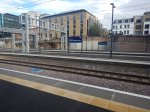
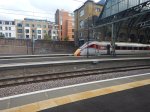
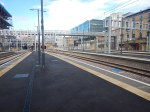
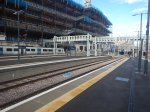
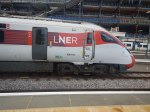
The two trains are both nine-car Hitachi Class 800 or Class 801 trains and I was standing in line with their noses.
I wonder what is the maximum length of trains that can be handled in these platforms.
- They can certainly handle ten-car trains, as LNER run these to Leeds.
- Looking at maps, I suspect that eleven-car trains could be the largest that can be handled.
I suspect it will be tight, but I suspect with a simple platform extension, twelve car trains could be accommodated in King’s Cross station.
Journey Times
These times come from High Speed Two’s Journey Planner and the IRP.
- London and Edinburgh – Three hours and forty-eight minutes – Four hours and nineteen minutes – Three hours and fifty-eight minutes – My estimate based on IRP figures
- London and Newcastle – Two hours and seventeen minutes – Two hours and forty-nine minutes – Two hours and 25-28 minutes
- London and Durham – Two hours and sixteen minutes – Two hours and fifty-five minutes – Two hours and forty minutes
- London and Darlington – One hour and fifty minutes – Two hours and twenty-two minutes – Two hours and seven minutes
- London and York – One hour and twenty-four minutes – Two hours and ten minutes – One hour and fifty-five minutes – My estimate based on IRP figures
- London and Leeds – One hour and twenty-one minutes – Two hours and thirteen minutes – One hour and fifty-three minutes
Note.
- The first time is that from High Speed Two, which assumes the Eastern Leg of High Speed Two has been built.
- The second time is the current best time via the East Coast Main Line.
- The third time is the IRP’s estimate via an upgraded East Coast Main Line.
- Where the estimates are mine it is noted.
London and York and London and Leeds are under two hours, London and Newcastle is under three hours and London and Edinburgh is under four hours.
Are these times fast enough for modal shift from the Air and Roads to Rail?
Project Delivery
Rail projects in the UK have a variable record in the delivering of projects on time and on budget.
I haven’t done the full analysis, but I do believe that smaller projects have a better record of delivery, based on media reports.
In Railway Restored: Regular Trains To Run On Dartmoor Line For First Time In 50 Years, Network Rail have delivered an important smaller project, for which I said.
Network Rail have set themselves a good precedent to open the line in nine months and £10 million under budget.
As the improvement of the East Coast Main Line is more of a succession of smaller projects, rather than one large project does this mean it is more likely to be delivered on time and on budget?
Extra Paths
This is said in Paragraph 3.43
North of York we will look to increase the number of paths for long distance high speed trains from 6 to 7 or 8 per hour.
One of the min reasons for building High Speed Two, but here we have extra capacity being created on the East Coast Main Line.
One extra path would be very good, but two would be excellent.
Power Supply Upgrades
In the last eighteen months, I’ve written two articles about updating of the power supply on the East Coast Main Line.
- East Coast Main Line Northern Power Supply Works Funded
- East Coast Main Line Electrification Research Agreement
The second article talks about the involvement of the University of Leeds to get the power supply to a high standard.
It does appear that Network Rail are doing all they can to enable the East Coast Main Line to handle the eight electric trains per hour
140 mph Running
There are several elements to the successful achievement of 140 mph running on a railway.
- The trains must be capable of running safely at 140 mph.
- The track must be able to support trains at that speed.
- The signalling must be in-cab and fully tested.
- The electrification must be designed for running at the required speed.
- The drivers must be fully trained.
Note.
- There are certainly 140 mph trains in service and there are tracks in the UK, where they can be tested at that speed.
- I wouldn’t be surprised as we have been running 140 mph InterCity 225 trains on the East Coast Main Line for thirty years, that a lot of the track is already profiled for 140 mph running.
- The digital signalling is being installed.
- The electrification on the East Coast Main Line has been dodgy for years, but is now being upgraded.
- Drivers are probably the least to worry about, as they probably know the route well and are honing their skills in simulators.
I can see 140 mph running being delivered in stages and on time.
Darlington Improvements
In First Phase Of ‘Transformational’ Darlington Rail Station Upgrade Approved, I said this about the improvements at Darlington station.
This upgrade is on the Eastern side of the current station and will include a new entrance, station building, concourse and three new platforms.
This design should allow the following.
-
- LNER, High Speed Two and other expresses not stopping at the Darlington station to pass through at speeds of up to 125 mph or more.
- Expresses stopping in the station will slow and accelerate in less time than they do now.
- It will probably allow more local trains to Bishops Auckland, Middlesbrough and Saltburn
A seventy-five percent increase in platforms probably offers other advantages.
This could knock several minutes off journey times.
York Improvements
I describe this problem and my solution in Improving The North Throat Of York Station Including Skelton Bridge Junction.
My solution won’t happen, as I advocate replacing the historic Skelton Bridge with a modern four-track bridge.
Effects On Lincoln Service
It will be interesting to see how the improvements to the East Coast Main Line effect LNER’s service between King’s Cross and Lincoln.
Any time improvements South of Newatk will surely be reflected in the time between King’s Cross and Lincoln.
Conclusion
The plan seems feasible to me.
 The Anonymous Widower